Category Archives: Kg-2nd

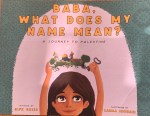
Baba, What Does My Name Mean? A Journey to Palestine by Rifk Ebeid illustrated by Lamaa Jawhari

Standard
Baba, What Does My Name Mean? A Journey to Palestine by Rifk Ebeid illustrated by Lamaa Jawhari

img_7233

This lyrical journey through Palestine’s major cities, shares historical facts, geographical information, cultural richness, and love for a homeland that will inspire and educate all readers. There is a lot of information pressed in to 32 pages and at times the rhyming text, illustrations, and maps are powerful, and at other times overwhelming. The 8.5 x 11 horizontal paperback bound book needs to be bigger to hold all that the pages contain, and hard back to hold up to the details that need to be poured over to be appreciated. The content about the names and places in Palestine is priceless and well done, but I really wanted to love the book a bit more than I ended up feeling for it. I think trying to make it all rhyme was just a bit too much for my liking, but I would buy this book again in a heartbeat to share with my children. Even though we are not Palestinian, I think all Muslims have a piece of Palestine in our hearts and feel a deep need to celebrate the culture, fight for their freedom, and demand a quality of life that they are brutally being denied by their oppressors.

img_7234

The book starts out at bedtime with a little girl, Saamideh asking her baba what her name means. He explains to her that it means “one who is patient, persistent and one who perseveres.” She is named this because she is Palestinian, he explains and then he shows her the key to their ancestral home in Palestine. He asks her to close her eyes and imagine a white dove, named Salam, taking her on tonight’s journey.

img_7235

Salam and Samamidah prepare to journey across Palestine’s mountains, hills, deserts, and plains. They start in Areeha, one of the oldest cities in the world, and one one of the lowest points on Earth.

img_7236

They journey next to Al-Quds, the capital. They see the old city, Al-Aqsa, and more, before heading off to Nablus, Yafa, Haifa and the Akka. Learning about the cities, the food, and the history of each.

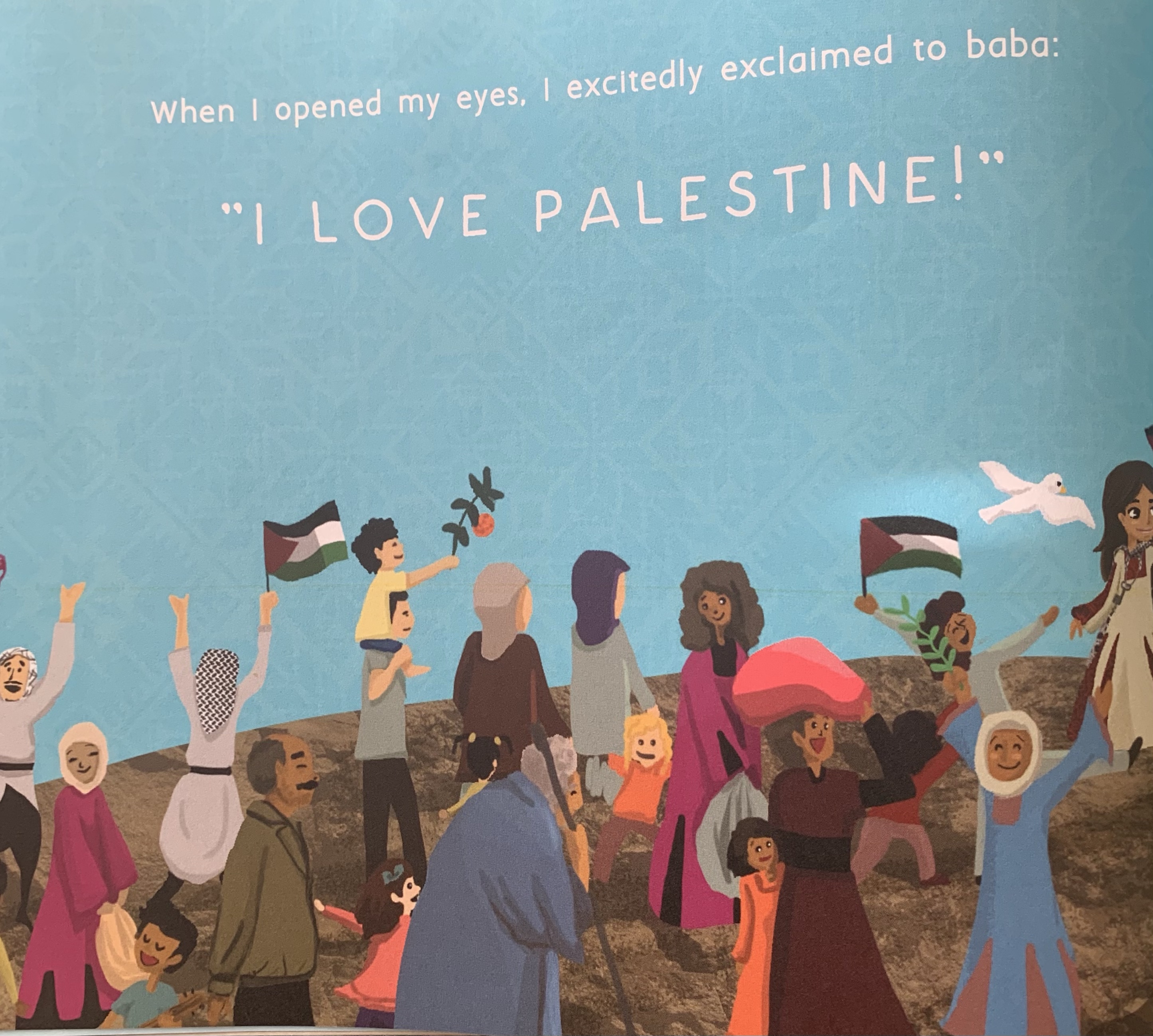
They learn about the dabkah, and the weaving in Gaza and head to Bait Lahem too. They learn about glass blowing in Al-Khalil at the Ibrabhimi Mosque, and finally they conclude their journey with the little girl dreaming of flying around the world to use her key and open people’s hearts and minds.
img_7239

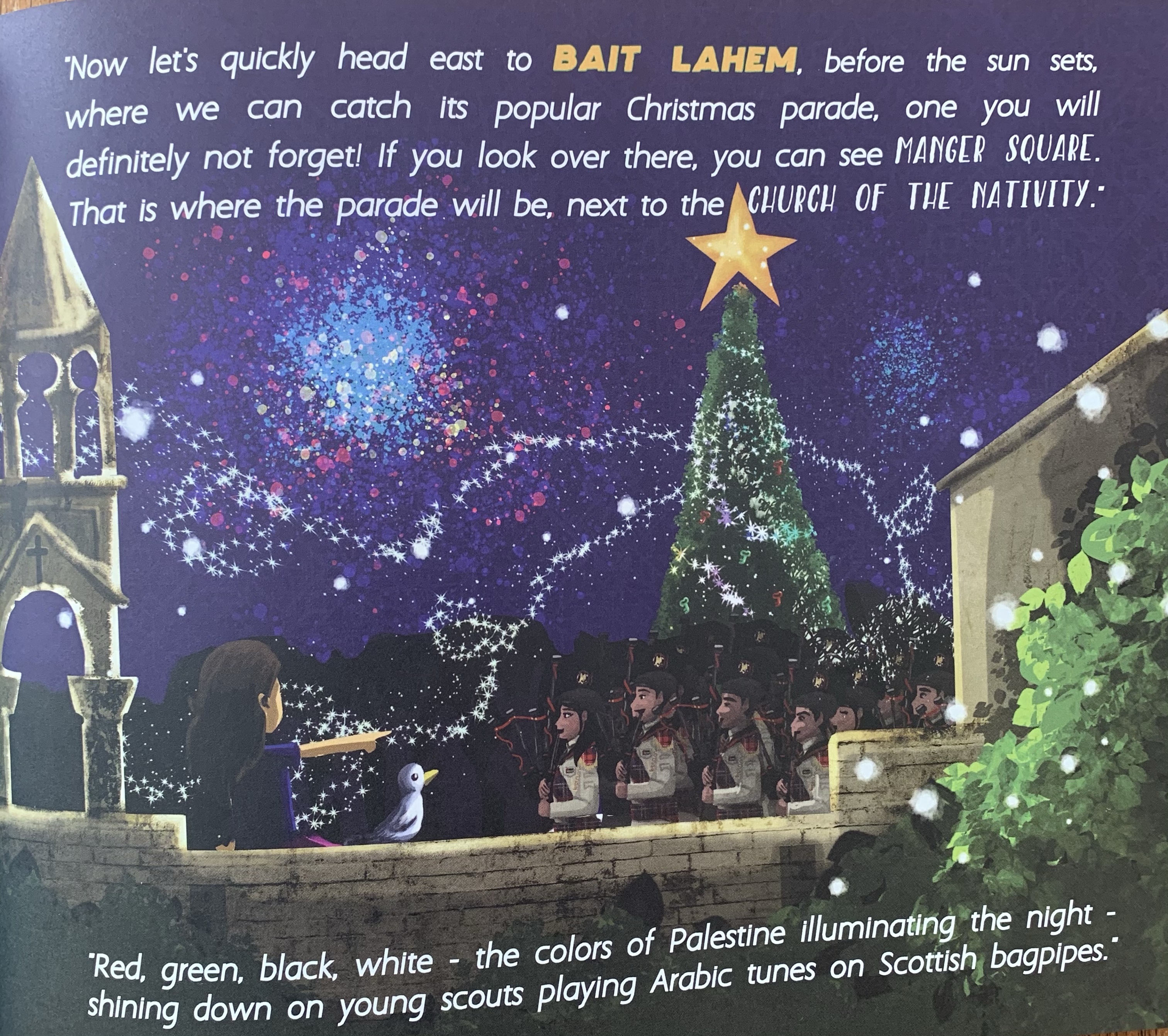
She proudly exclaims her love of Palestine and her and her baba pray that one day they will be able to return. Saamidah then asks her baba why they are refugees, and he promises to save that conversation for tomorrow’s beditme story.
img_7240

The book concludes with a list of the city names in Arabic, trasliterated in English, and then the English names. It then has discussion questions at the end.

The book is not outwardly political, nor critical. It is a celebration of a people, a culture, and land. Happy Reading!
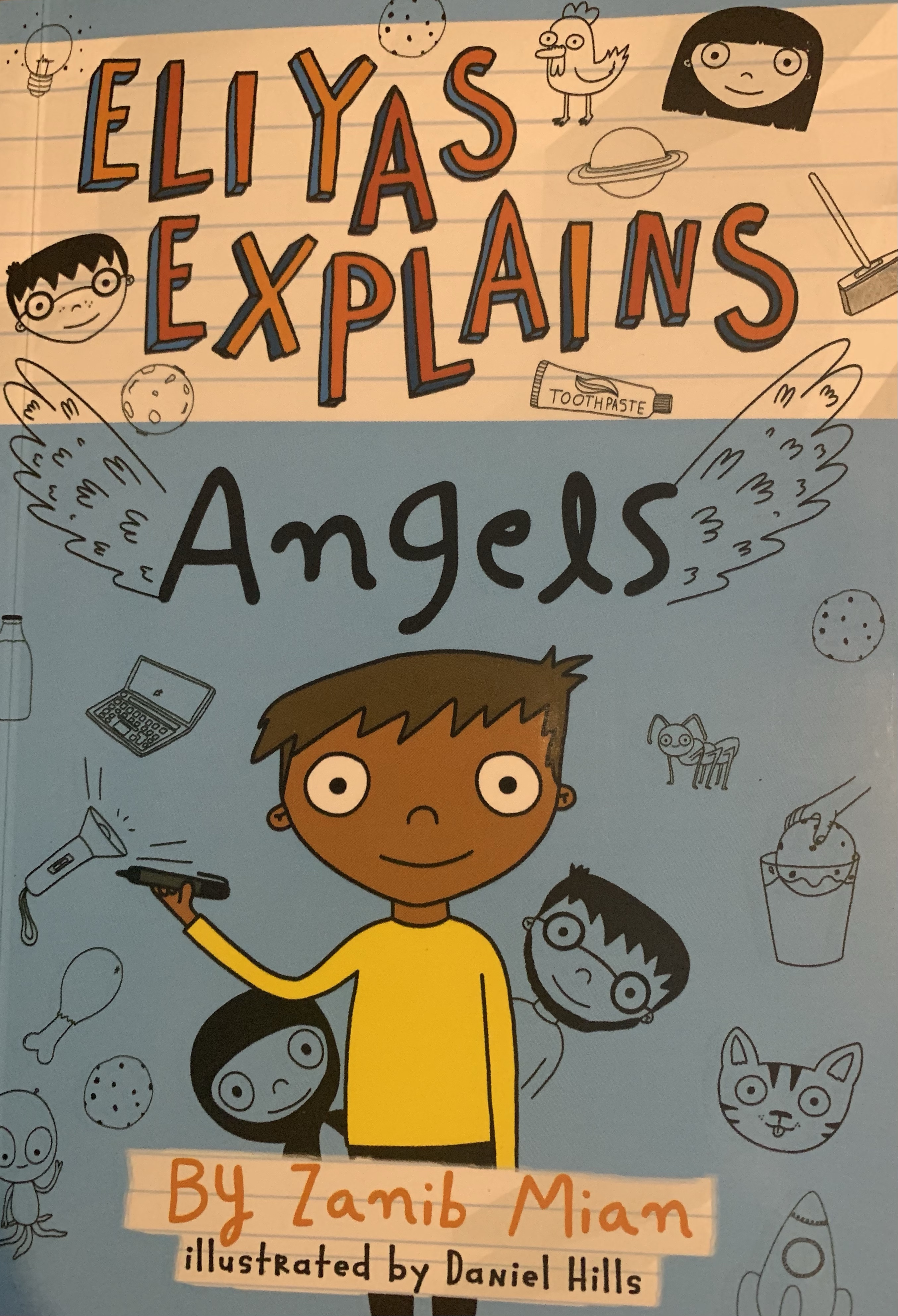
Eliyas Explains: Angels by Zanib Mian illustrated by Daniel Hills

Standard
Eliyas Explains: Angels by Zanib Mian illustrated by Daniel Hills

img_7130

This last Ramadan I tried every day to listen to Sheikh Omar Suleiman’s Angels in your Presence series with my kids and discuss Angels with them.  I learned so much and got to wondering, why other than the 10 or 15 facts we all learn as children do we not talk about Angels more.  So when I saw the first in a new series by the absolutely fabulous Zanib Mian was about Angels I was so excited, then I forget to review it, and here we are.  The book embodies her sweet spot for personas as she writes as Eliyas, a little boy telling about what he knows about Angels with sincerity, clarity, excitement and humor.  Perfect for ages six and up, I think all children should spend a few minutes with this 81 page doodle filled book to remind us of Allah’s magnificence, Alhumdulillah.

img_7132

SYNOPSIS:

Eliyas starts the book by introducing himself and some things about him before diving in, or rather encouraging you to go put socks on so that what he is about to tell you can blow your socks off!  It starts off with him not being able to sleep so he sneaks out of bed to get cookies, because cookies solve everything, and then his dad joining him and them discussing aliens, which leads to outer space, and the knowledge of outer space being filled with angels.

Eliyas then learns about the number of wings the angels have, how strong the angels are, and some of the specific angels that do specific tasks ordered upon them by Allah swt.  The task of protecting us, appeals to Eliyas and the concept of angels the size of mountains praying with us, blows his mind.

We learn through Eliya’s dad about angels coming to Earth in human form and about angel Jibreel (as) specifically.  We also learn a dua to say when leaving the home so that the angels protecting you respond.

img_7131

WHY I LIKE IT:

I love the way that the information is presented.  It is a mix of fact and story and tied together with humor and relatability.  If you haven’t read Zanib Mian, please do, her Migo and Ali books, Hadith and Duas are all great Islamic resources, and her Planet Omar and Alien book are hilarious and warm.  I pray that the series continues, it really is a lot of fun.

img_7133

FLAGS:

None

img_7134

TOOLS FOR LEADING THE DISCUSSION:

I think this would be great to have a Sunday school class read and discuss or an Islam class offer up as extra credit.  It probably wouldn’t work as a book club selection, but it definitely has a ton of value in a classroom and in a home library.

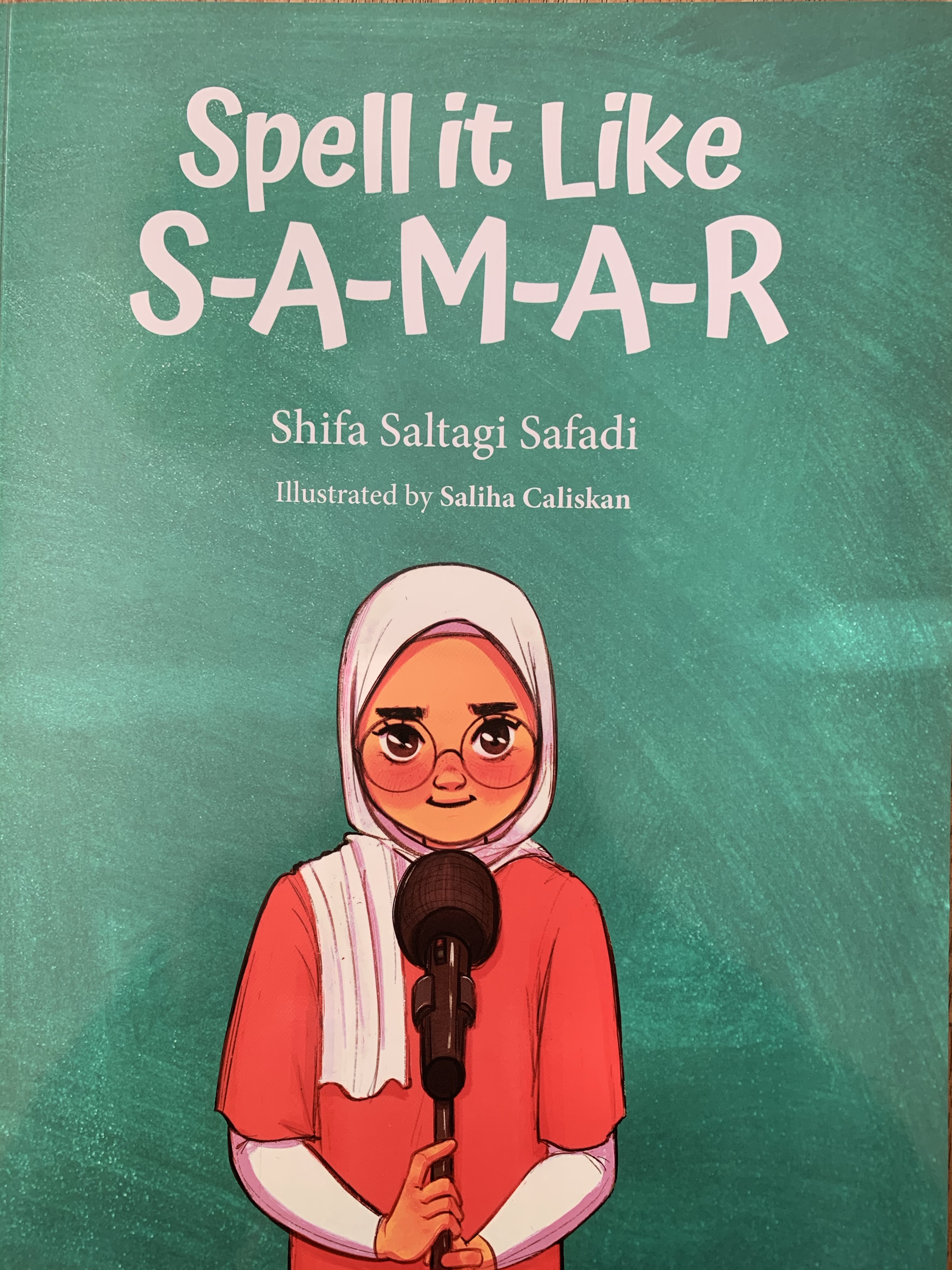
Spell it Like S-A-M-A-R by Shifa Saltagi Safadi illustrated by Saliha Caliskan

Standard
Spell it Like S-A-M-A-R by Shifa Saltagi Safadi illustrated by Saliha Caliskan

img_7225

This 36 page book for kindergarten and up shows the role perseverance, confidence, and believing in yourself can play in conquering bullies, carving out a space for yourself and finding success.  While the book is a little predictable on the surface, older kids will understand that by winning the spelling bee, Samar didn’t just benefit by standing up to the bully, but in proving to herself what she is capable of and ultimately being more confident of her place in a new country.  The book is presented on large 8.5 by 11 full color glossy pages and features discussion questions at the end.

img_7227

Samar is in 3rd grade after recently moving to America from Syria, where she was the best student in her class.  ESL wasn’t difficult, but mainstream class is proving to be a challenge, mostly because of Jenna, the class bully.

img_7228

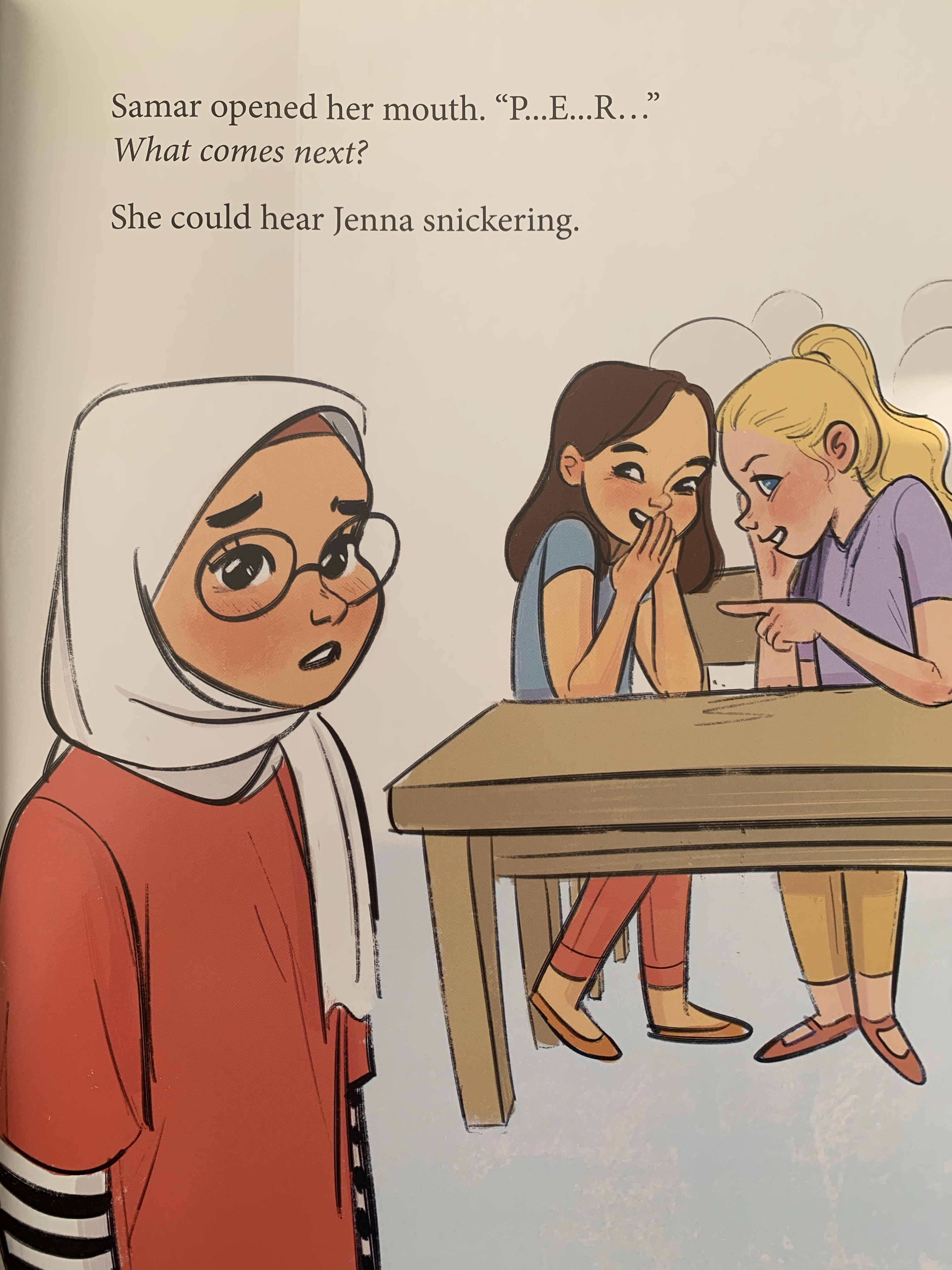
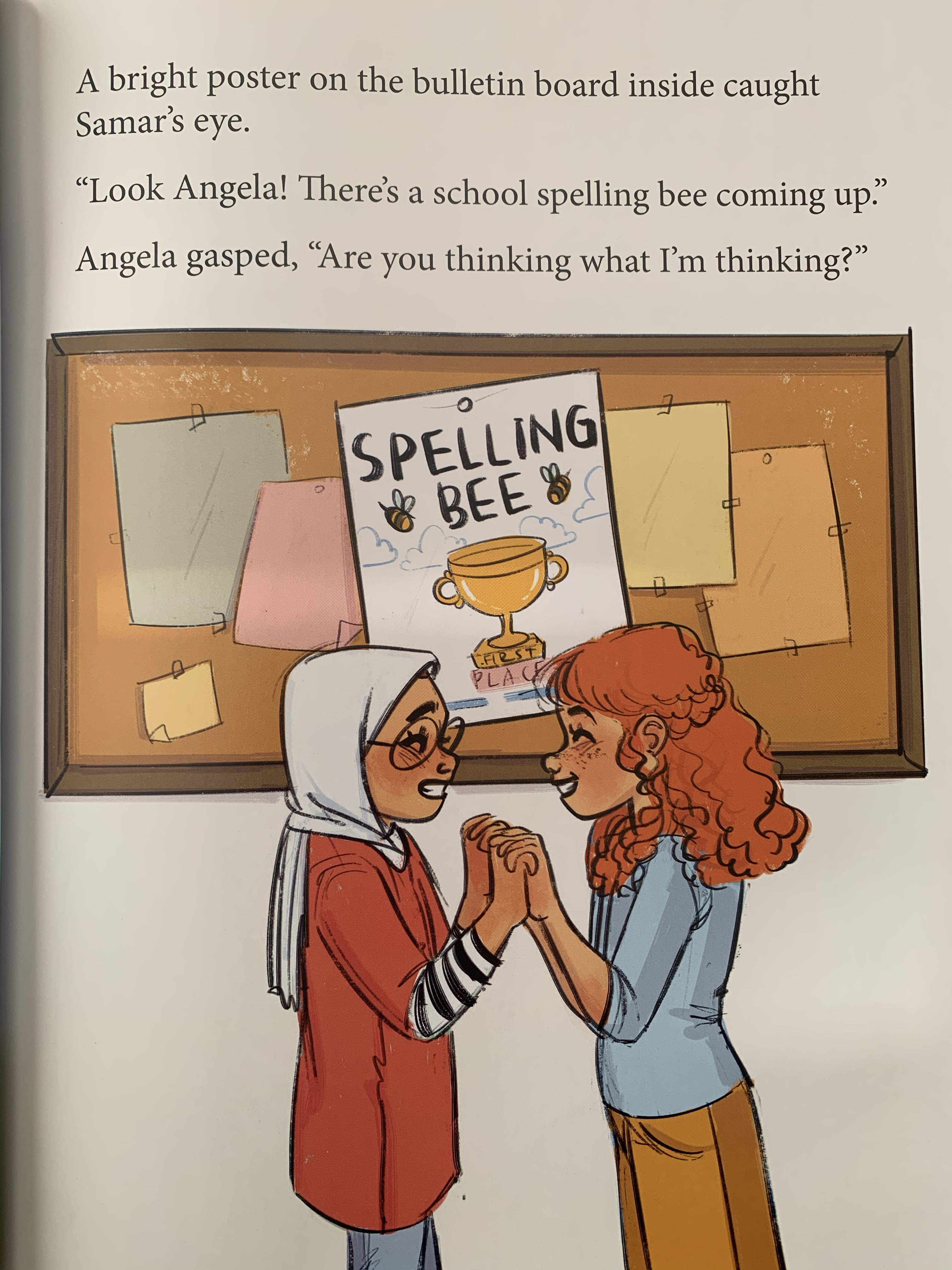
Jenna, snickers when it is Samar’s turn to spell words in front of the class, she teased her about her jump rope songs not being in English, and she makes fun of her for her accent.  With the help of a kind friend, Angela, the two girls decide the school spelling bee will be the best chance to prove how smart Samar is, by winning.

img_7229

The first step Samar must do is convince her teacher, Ms. Bryan to help her study.  To  show her commitment she offers to give up her recess to study.  The teacher agrees, but on the way home Jenna teases her saying she’ll never win when she can’t even speak English properly.  Deflated, when Samar gets home, she doesn’t study the flashcards and opts to watch cartoons instead.

img_7230

When later in the week her teacher quizzes her, Samar admits she didn’t study.  Ms. Bryan encourages her by sharing her own story of coming to America and having to learn English.  When Samar gets home she sees her mother, a former dentist in Syria, studying for the exams to be a dentist in America. This is the spark she needs and she studies hard, everywhere, and with anyone who will help.

On the day of the bee, Samar spells word after words correctly and after saying bismillah before spelling the final word, wins the competition and beats Jenna. The audience cheers and the next day Samar and Angela are jumping rope and Samar is singing in Arabic.

img_7231

I love that Samar and her mom wear hijab while out, but not at home, that they speaks Arabic, and Samar says bismillah.   Samar’s mom is clearly highly educated and determined and mom and dad are supportive.  I love that Samar’s drive, however, comes from her own determination, no one forces her or guilts her, it is her leading the way and understanding what her mother is going through and her teacher has gone through, and using that as inspiration.  I love that at the end she doesn’t rub it in Jenna’s face that she won, and the symbolism of Jenna just disappearing from the story makes this clear as Samar steps in to her own.  I truly love that for every Jenna in the wold there is also an Angela.  Be kind, be supportive, be a good friend!

I got this book from http://www.Ruqayasbookshelf.com and it can also be found at my favorite book store http://www.crescentmoonstore.com as well.  Happy Reading!

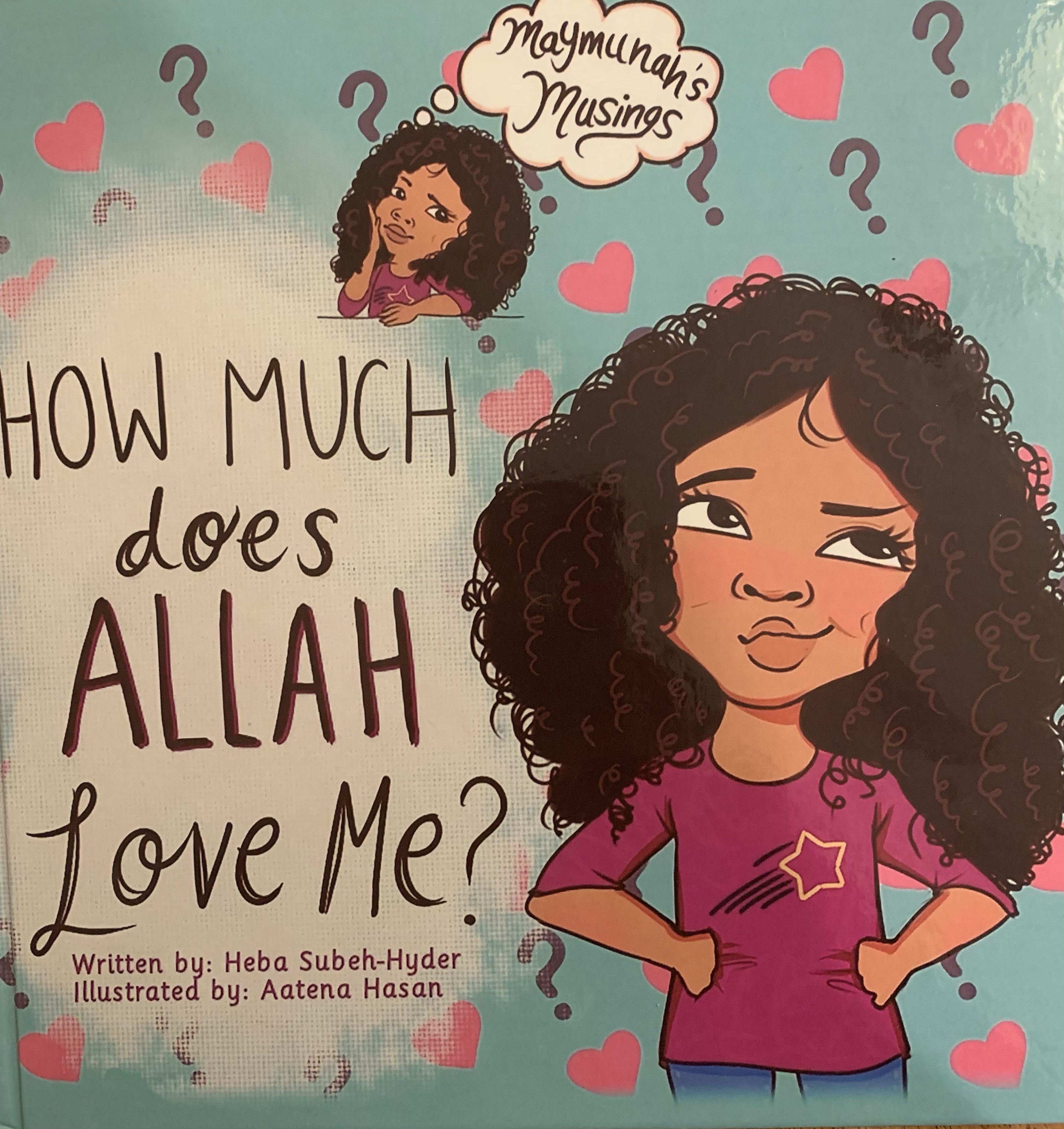
How Much Does Allah Love Me? by Heba Subeh-Hyder illustrated by Aatena Hasan

Standard
How Much Does Allah Love Me? by Heba Subeh-Hyder illustrated by Aatena Hasan

img_6988

I waited to review this book to see if my initial response would change, and before I got around to writing up the review, the second book in the Maymunah’s Musings has come out.   So I am admittedly a bit late and quite a bit behind, and based on other people’s review I’m in the minority on my opinions.  This 40 page book is wonderfully presented with a multicultural girl asking her mother about Allah’s love for her.  I wanted to absolutely love the text as much as the playful illustrations, but I felt like it was a bit wordy in places, a bit out of order in the mom’s explanation to the little girl making it somewhat repetitive, and ultimately I wanted a bit more.  More ayats or references or even specific examples.  There is truly nothing wrong with the book, but at its price point I was a bit disappointed.

img_6989

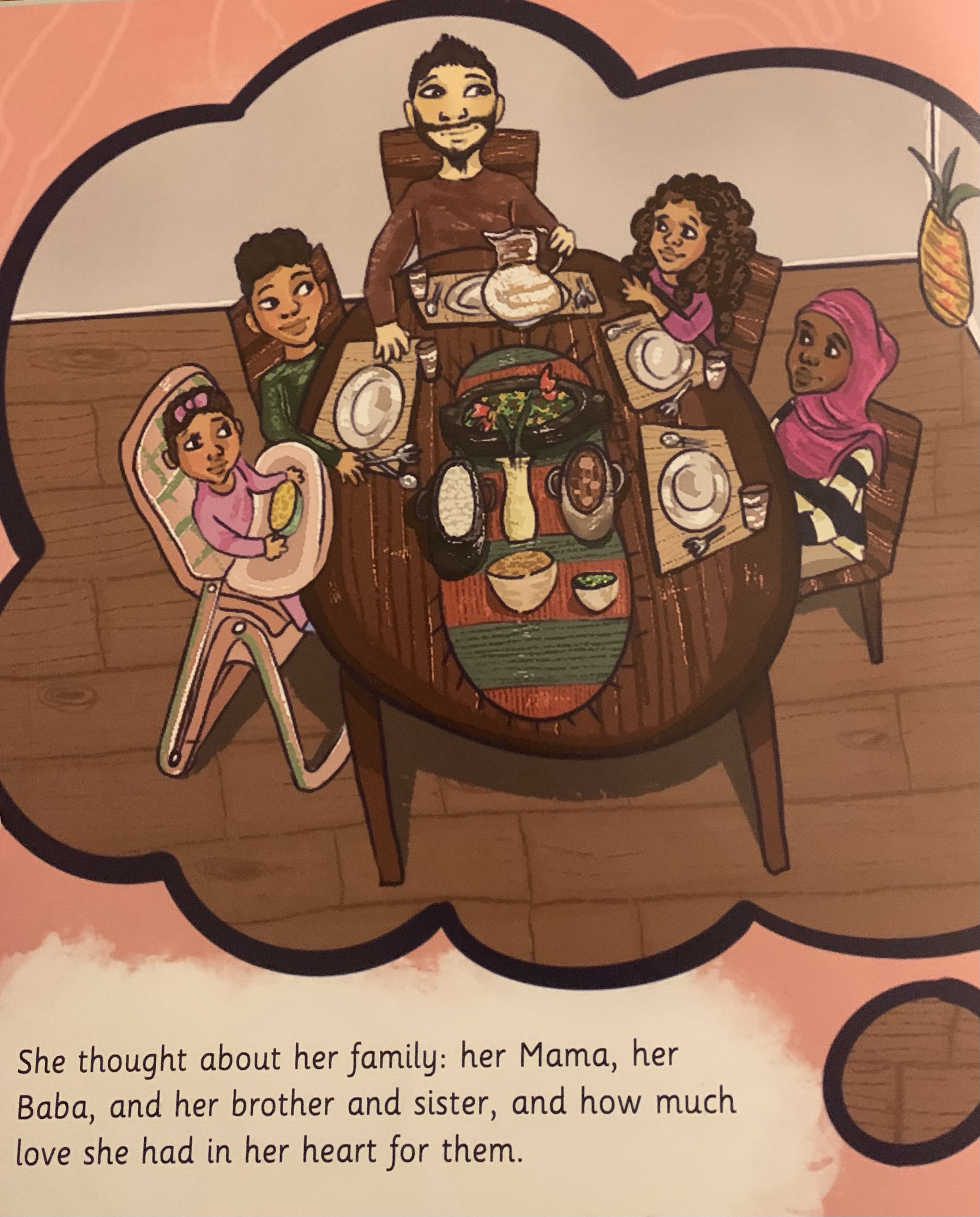
Maymunah is looking out the window and thinking about Allah swt: what she has learned in Sunday school and about His remarkable creations.  She recalls the amazing animals, the vast number of stars in the sky, the different type of trees, and her family.

img_6991

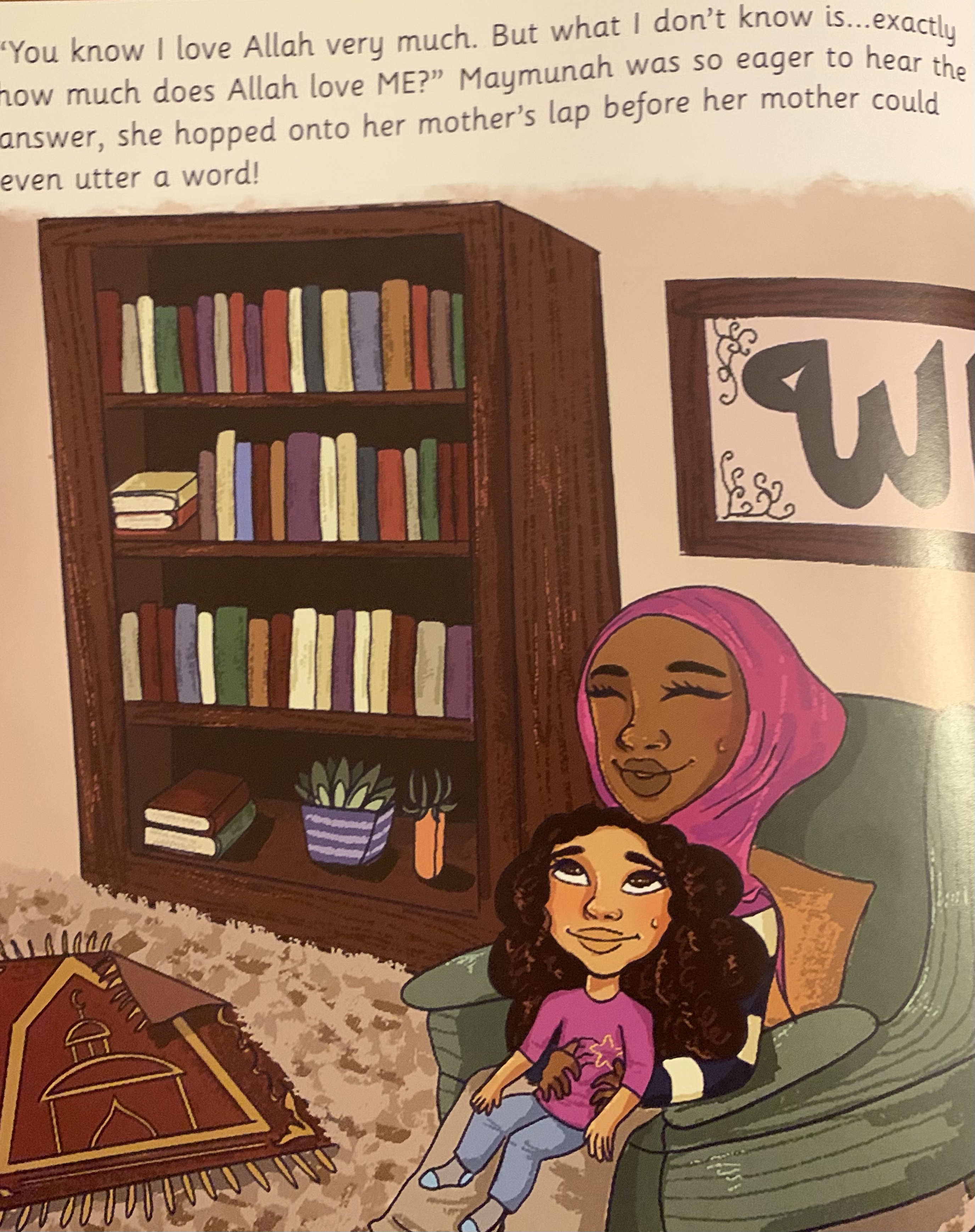
She loves Allah, and wants to know how much He loves her.  So she rushes to find her mother, the only person that can answer that question (I’m not sure why no one else can).  Her mother lovingly and patiently situates herself with Maymunah in her lap to answer the important question.

img_6990

Maymunah’s mom explains that Allah loves her more than the billions of stars in the sky, more than all the fish in the ocean, more than all the raindrops that fall, more than the billions of people in the entire world, more than all grains of sand on the beach, and blades of grass in the meadow.

img_6993

Then Maymunah’s mom asks her if she knows how much Mama loves her. Maymunah repeats back all the examples her mother has just given for how much Allah loves Maymunah.  The mom then says and Allah loves you more than that.  

Maymunah is satisfied and reflects on how much Allah loves her and then remarks that her love for her mother and her mother’s love for her is bigger than the whole wide world. The last page of the book mentions that her love for Allah is more than that and that Allah’s love for her was even bigger, but it seemed muddled to me as it started stressing how big a mother and child’s love is.   

img_6992

I felt like the natural order would be to explain to a child how much a mother loves them, then say Allah loves you even more.  Not tell all the ways Allah loves you, then talk about how much Mama loves you with the exact same examples and then say Allah loves you more.  It doesn’t even say Allah loves you ‘the most.’  

If you don’t read it over and over and take it on the surface it is probably fine, and I realize I might be overly harsh, but with only a single ayat at the end, I really wanted to feel that a child’s curiosity would be satisfied with this book, and I think it ultimately fell short for me and my children.

Ultimately, despite all this, I don’t regret buying the book from the wonderful Crescent Moon Book Store, and I will be buying the new one too inshaAllah.  I hope this review helps you to determine if this book is right for your toddlers and preschoolers.  

Watermelon Madness by Taghreed Najjar illustrated by Maya Fidawi

Standard
Watermelon Madness by Taghreed Najjar illustrated by Maya Fidawi

watermelon

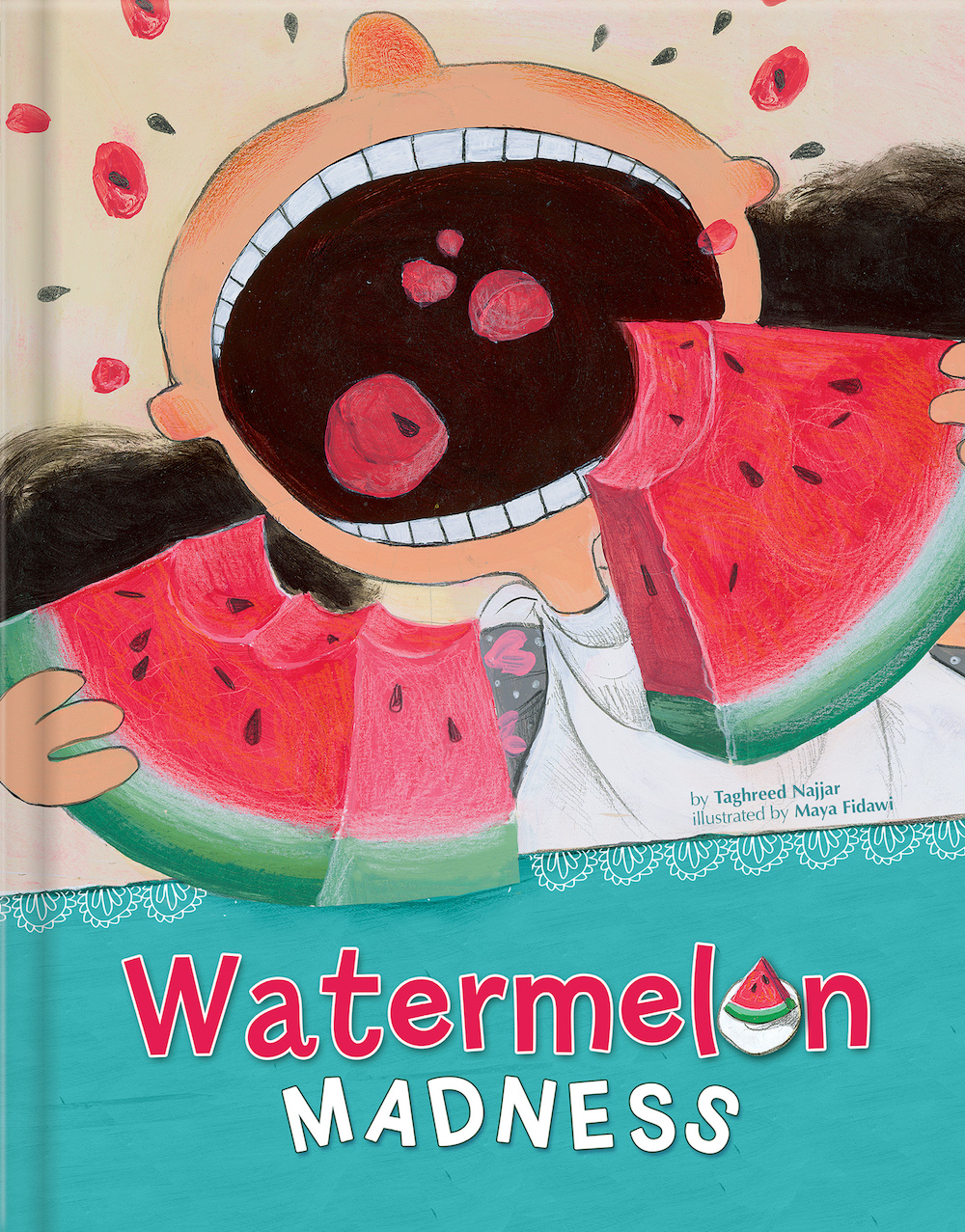
This 32 page picture book for preschool and up is silly and fun.  There is nothing Islamic in the text or illustrations by this Muslim author, but there is Arab culture as it mentions molokhiya and zaatar. The large 8.5 x 11 hardback book is wonderfully illustrated with detail, color and expression.  The playful font and text makes reading it fun and enjoyable for little ones, who will get the message, and laugh along the way.

4E8AC43F-8392-44DF-A6DF-C9C37601C69B

Noura loves watermelon. She eats it in the morning and in the afternoon and in the evening too.  At dinner she doesn’t want to eat her chicken, rice and molokhiya, she just wants watermelon. 

3F1BEF48-B723-4654-A0F4-9D14D36B8D2F

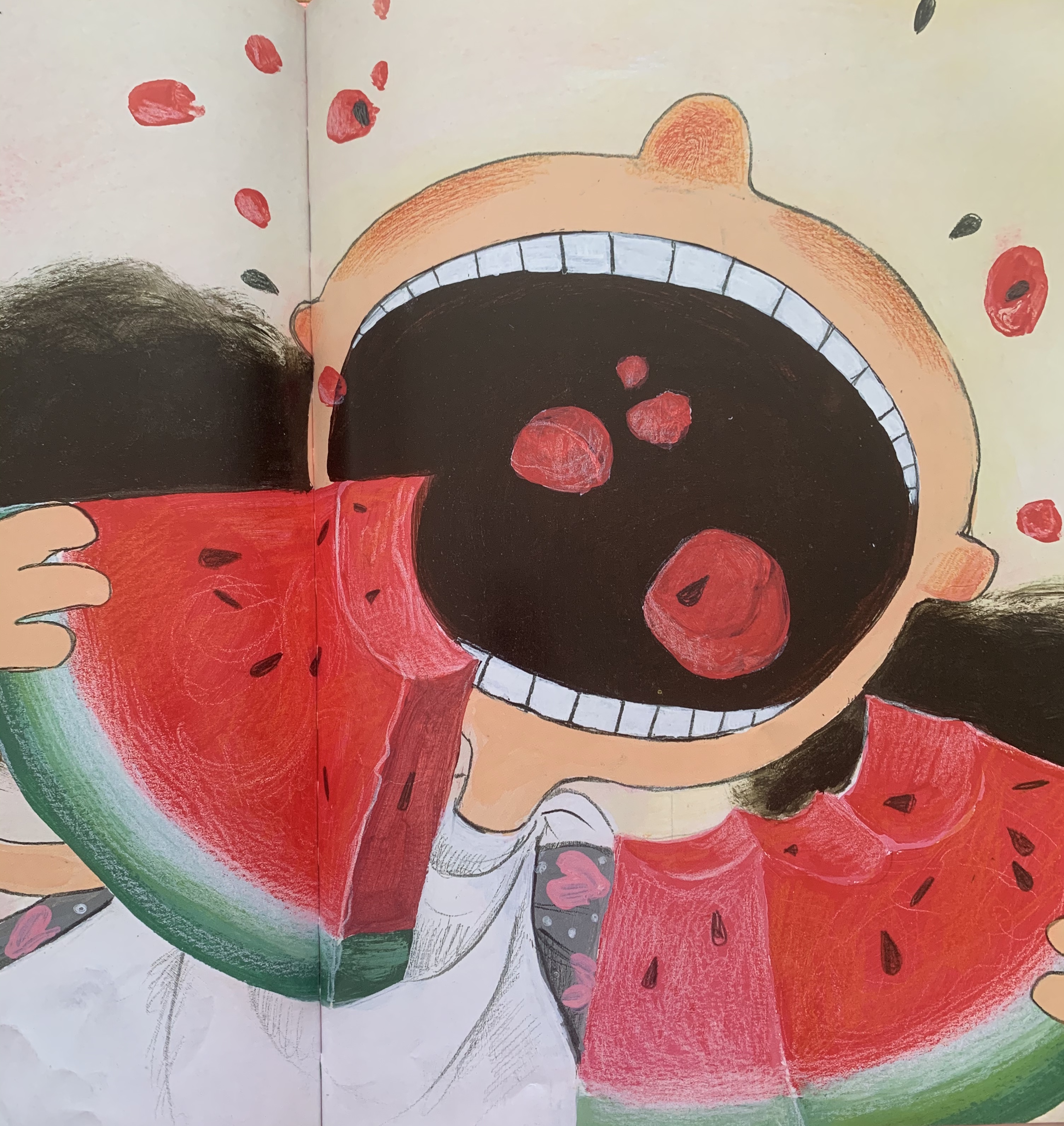
That night after dinner she sneaks to the kitchen, sees a huge watermelon on the table, and decides to take it up to her room to enjoy all by herself.  She puts the watermelon under her bed, and dreams wonderful watermelon dreams.

9BCAB418-5387-4965-BD7E-08E23A60FEBC

The watermelon gets bigger and bigger, and there is a door! She goes inside the watermelon and eats until her hearts content.  But as she gets bigger, the watermelon gets smaller.  She is trapped and her tummy is hurting.  
E420F713-D3EB-4B28-A013-A15E5E2345C6

Her mother rushes in to find a watermelon under the bed and Noura screaming from a bad dream.  Resolved to deal with the magic watermelon in the morning, Noura goes back to sleep having learned her lesson (without being reprimanded), and happily eats her breakfast of a fried egg and zaatar.  

B4149161-55C2-46E8-87AB-E8BD937DB47D

The book concludes with some information about watermelons and info about molokhiya and zaatar.  

The Salams: Cranky Kareem Says Alhumdulillah by Kazima Wajahat illustrated by Chaymaa Sobhy

Standard
The Salams: Cranky Kareem Says Alhumdulillah by Kazima Wajahat illustrated by Chaymaa Sobhy


img_6616

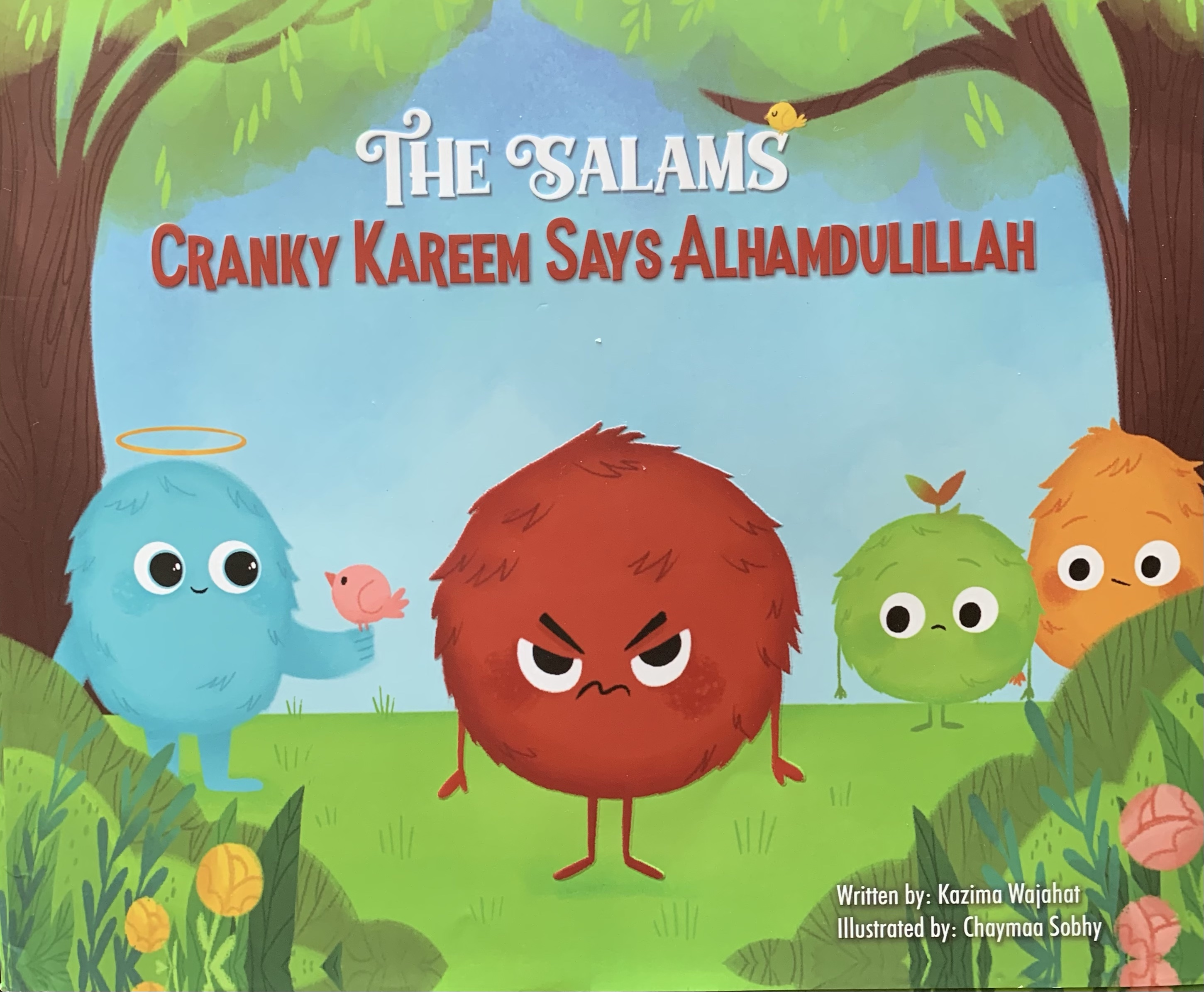
Part of me is tempted to channel my own Cranky Kareem and say how awful this book is, just because I know that the author reads my reviews of her books with bated breath, but alas I cannot lie even in jest as the book is truly adorable.  This 40 page book in a new series highlights and starts to fill the gap in children’s Islamic fiction that is so needed.  There are a number of books and series for toddlers teaching them to say Bismillah, Assalamualaikum, and MashaAllah and all the praise-filled Islamic expressions, but they are very basic, this book, and hopefully the rest of the series, goes a bit deeper.  It shows how to truly mean what you say, how to glorify Allah not just in your words, but in the way you think about things, handle stresses, and carry on.  The concepts and amount of text probably will most appeal to mature kindergarteners to early second graders at bedtime or in small groups.  I do wish that Cranky Kareem apologized to Happy Hamdi after he relentlessly attacked him at the masjid, but in much the way Oscar the Grouch gets away with being so negative, the characters in the book and the readers alike will have to settle for Kareem finally learning the lesson, in this case, of being grateful to Allah (swt) for everything.

img_6611

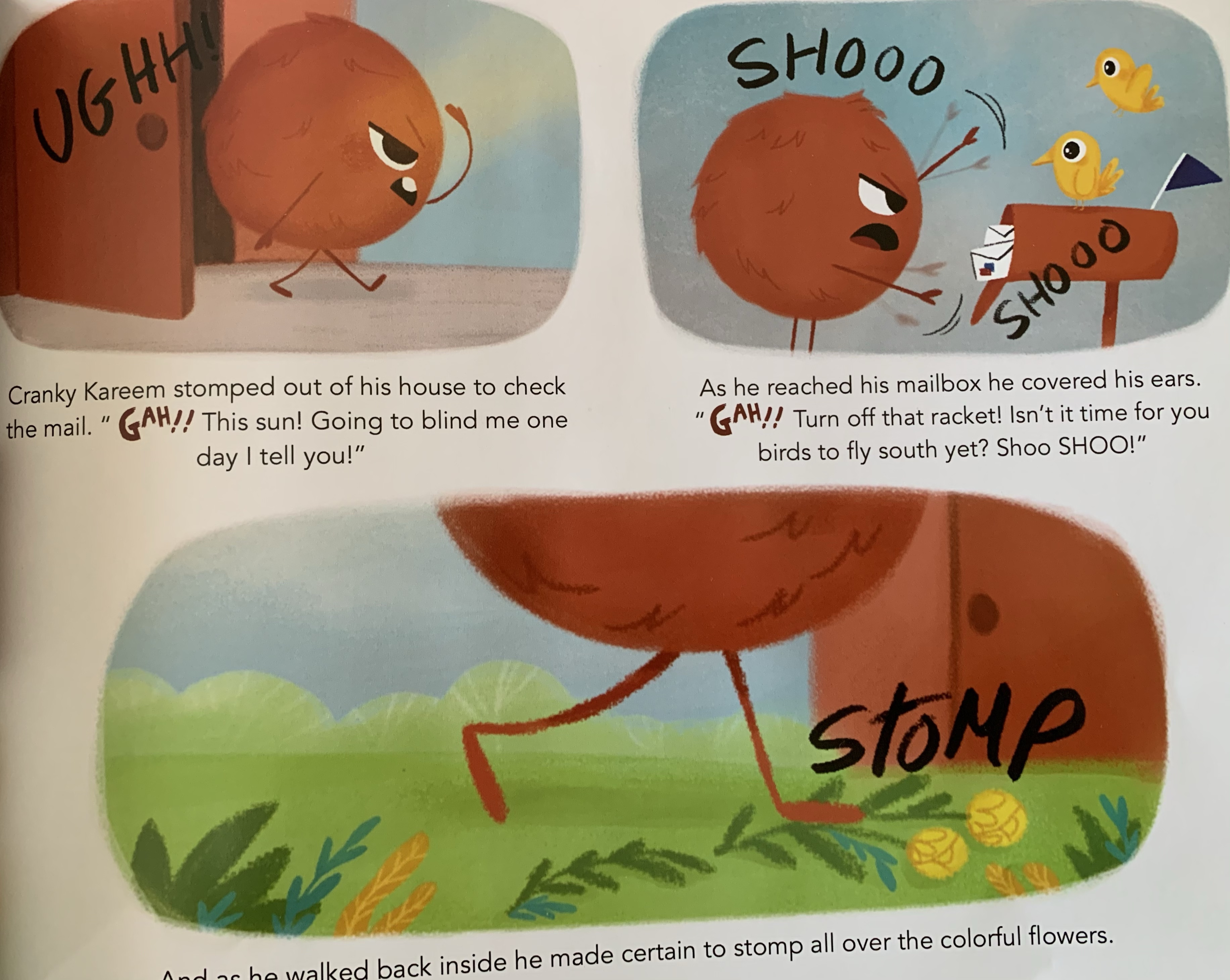
The book starts out with Happy Hamdi waking up in Salamville and praising Allah in appreciation of the fresh air, birds, flowers, and allergy medicine that works.  Across town Cranky Kareem is having the opposite kind of morning.  The sun is blinding, the birds annoying, coffee bitter, and he’s out of milk for his cereal.

img_6612

When Kareem finally finds some peace and quiet on a bench at the park he is disturbed by Happy Hamdi and all his happiness.  As Hamdi and bounces off to talk to Greedy Gamal and Healthy Hassan, Cranky Kareem gets an idea.

img_6614

When Happy Hamdi heads to the masjid, Cranky Kareem sticks out his foot to trip him.  Hamdi falls and gets a bruise on his nose, but still says Alhumdulillah. He then knocks sticky baklava on him and again he responds with Alhumdulillah, he then dumps a bucket of ice water on Hamdi, and Happy Hamdi says Alhumdulillah once more.  When he leaves the masjid, Hamdi’s car is not working and he has to walk home.

img_6613

Kareem can’t take it anymore and confronts Hamdi.  Happy Hamdi explains that he was hungry and didn’t mind the syrup, then the water washed the syrup off and now that he is walking home, his fur is drying.  Flabbergasted by Happy Hamdi, Cranky Kareem stomps off.

img_6615

Convinced that Hamdi’s happiness is an act, Kareem pauses to ponder how his plan failed.  Healthy Hassan jogs by and bumps in to him, knocking him off the train track and causing Kareem to twist his ankle, just before a train goes swooshing by.

Realizing that the bump saved his life, Cranky Kareem expresses his appreciation to Allah swt by saying Alhumdulillah.

I love the illustrations and the horizontal layout of the book.  The book is cute and I can’t wait to share the rest of the series with my kids.  Thank you to Crescent Moon Store for having this, and so many wonderful books available.


I am Brown by Ashok Banker illustrated by Sandhya Prabhat

Standard
I am Brown by Ashok Banker illustrated by Sandhya Prabhat

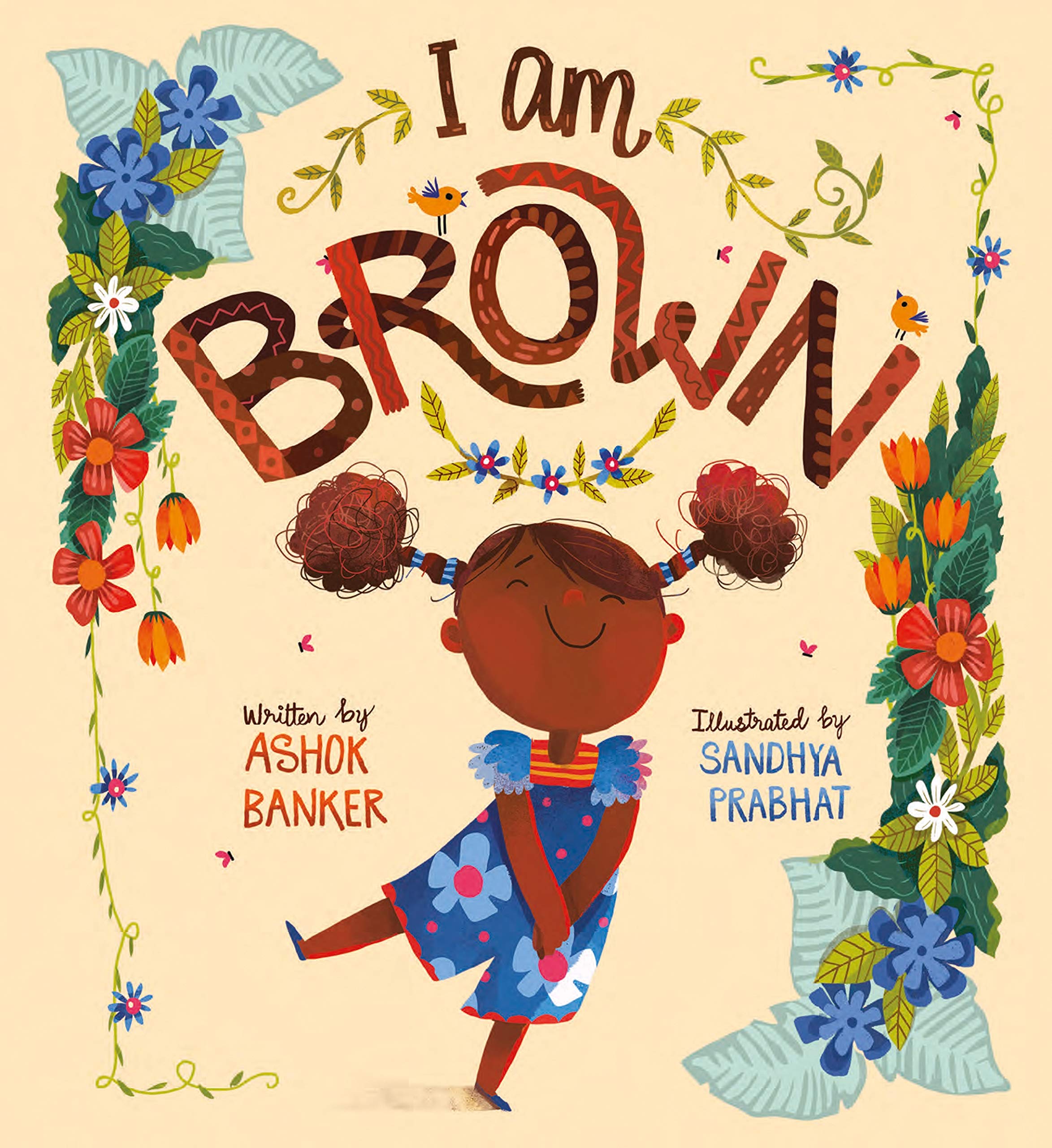
This 40 page celebration of diversity within the label “brown” is a sweet and powerful book that shows how the color of our skin is beautiful and perfect while at the same time making it clear that who we are and what we can be is not defined by our appearance.  The book shows adorably illustrated brown children finding strength in different cultures, clothing, religions, languages and dreams, which will hopefully empower children everywhere (and of all colors) to take labels that may have negative connotations and turn them in to positive affirmations of identity and strength.  There isn’t a story with a plot, but with the regular inclusion of a girl with a scarf on, and the mention of a mosque, I thought to highlight it.  The book is perfect for preschool and up.  

img_6226

The book starts with a little girl identifying herself as brown, beautiful and being perfect.  It then stretches to her being love, friendship and happiness.

img_6228

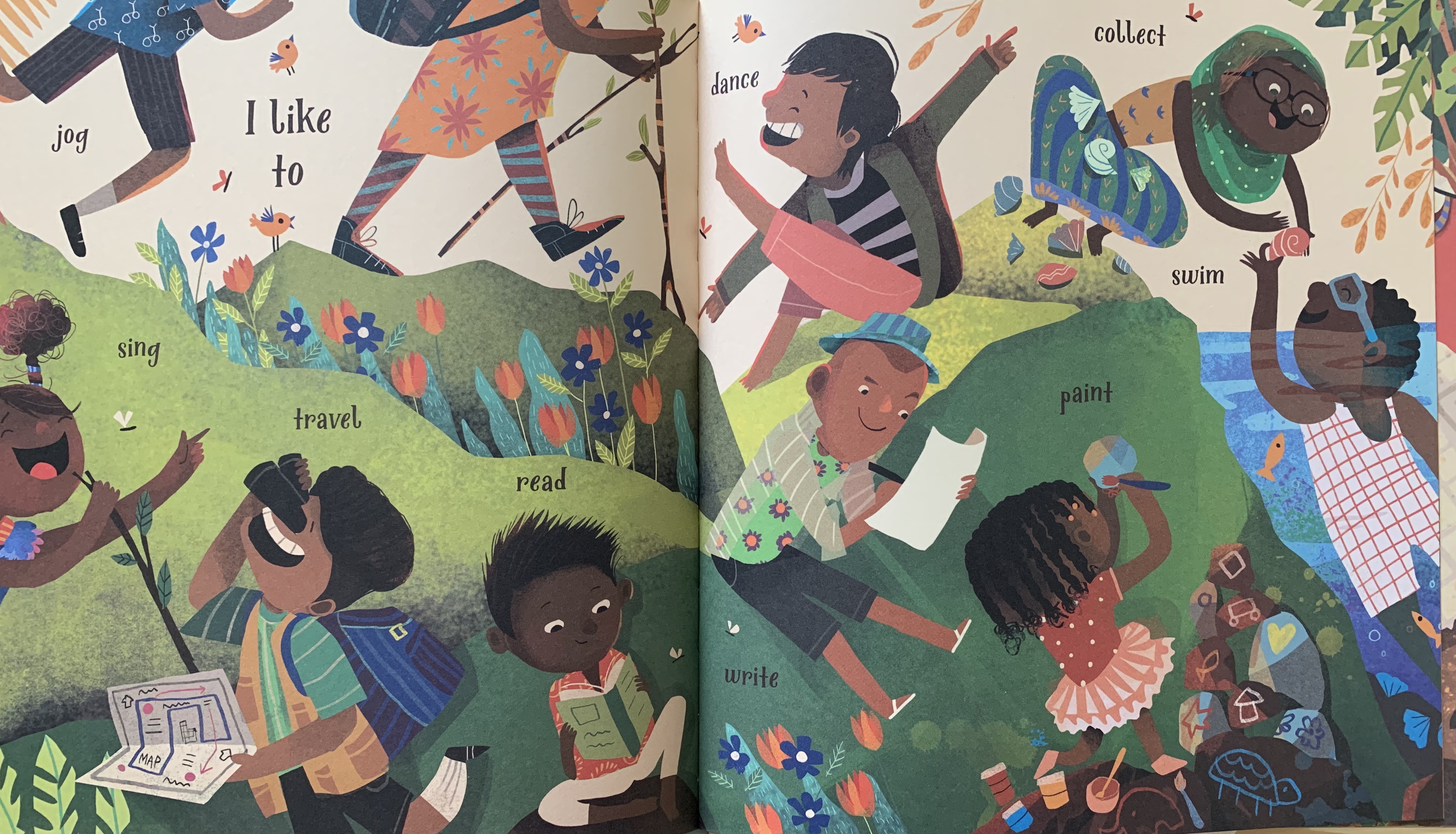
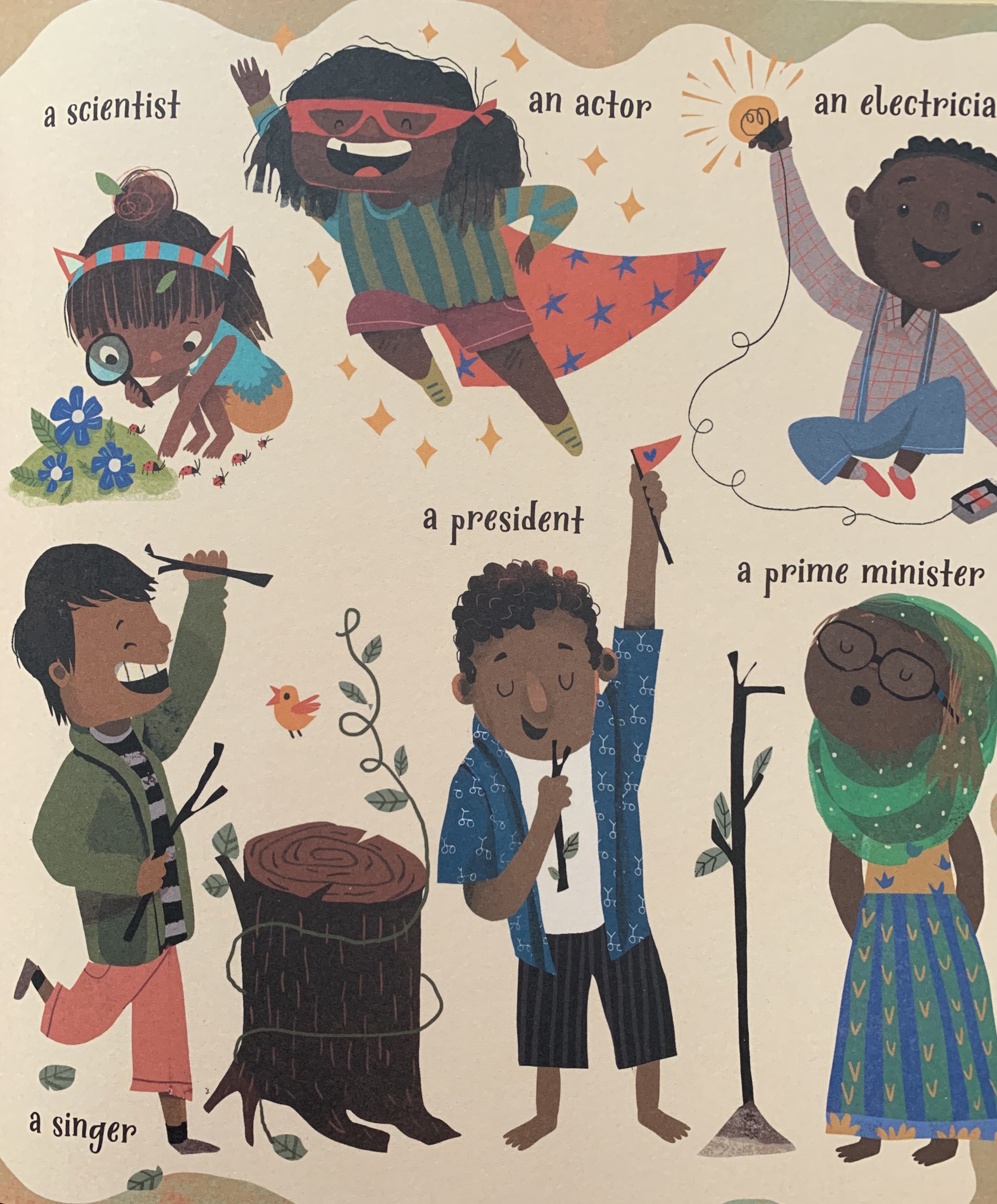
From there it branches out to a whole cast of kids identifying the variety of things they can be, from a writer to an electrician to a prime minister. the same kids then do and make and work on things before identifying where they come from and what languages they speak.  

img_6227

The kids all have different hair on their heads and faces and even no hair at all. They live in different dwellings, they like to do different things. 

img_6229

Brown people are not a monolith, the kids show that they eat different foods in different ways, that they wear different clothes.

img_6230

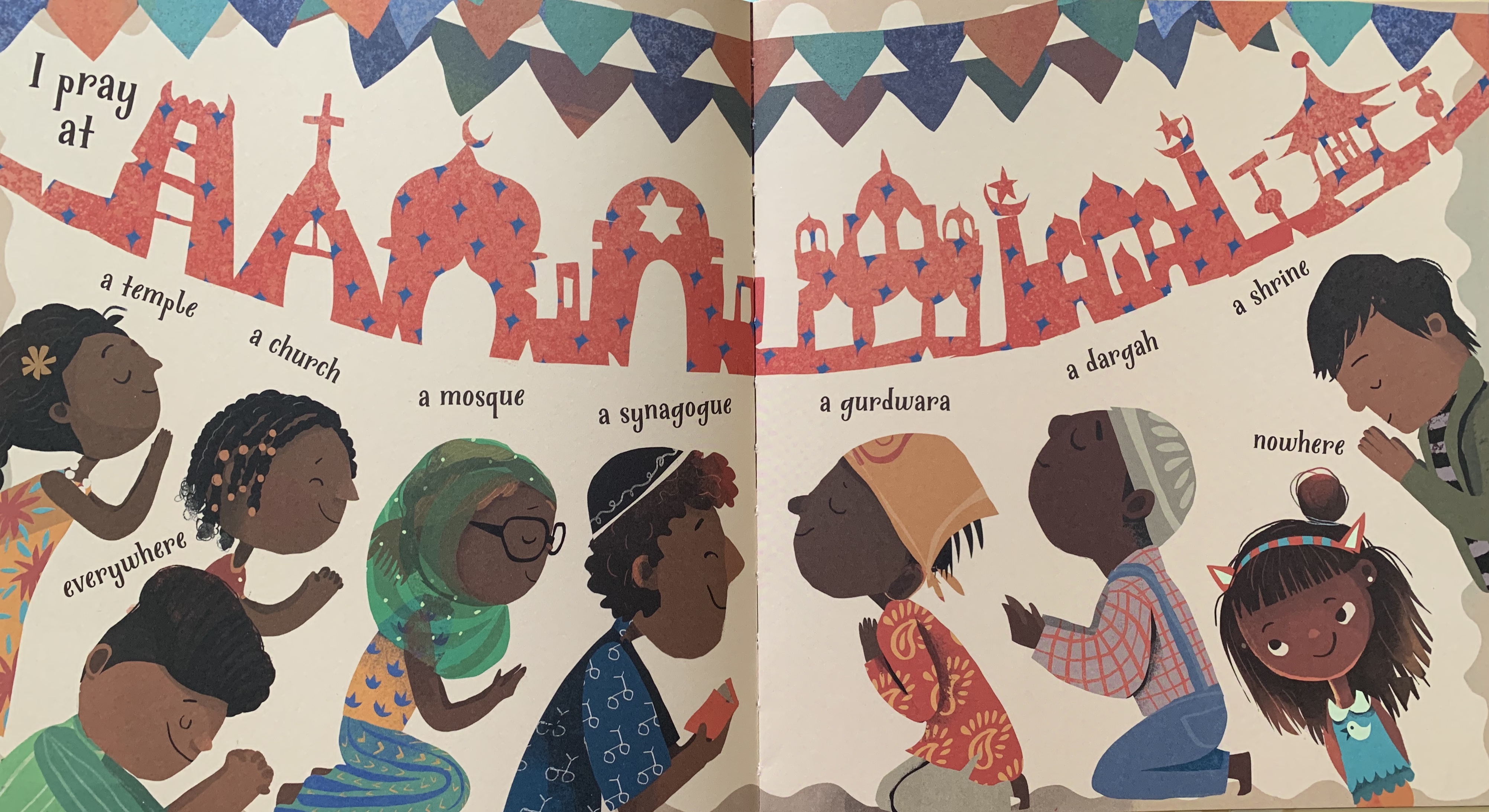
People with brown skin are roommates and teachers and friends and classmates.  Some go to temple or church, others a mosque or shrine, some not at all. 

img_6231

The book ends with a close up of three smiling faces proclaiming, “I am brown.  I am amazing.  I am You.”

img_6232

I’m sure people will argue that if you switch out white for brown the book would be deemed racist, and you are correct it would be.  But as a group that is marginalized as “other” and often the darker brown you are with in the brown subset moves you “value” and “worth” down, makes a book celebrating the strength and beauty of “brown” so necessary and heart warming.  I personally am the lightest “brown” imaginable being only half Pakistani.  So, believe me I have privilege in the desi community, but I don’t find this book offensive at all.  I’ve read this book at least a dozen times and my impressions alternate between beaming with pride and tears that so many beautiful people feel less than because of skin color and yes, anger too,  that people are MADE to feel less than.   May we all be more inclusive, more loving, and more open to the diversity of the human being. Ameen.

Littering Stinks by Summayyah Hussein illustrated by Eman Salem

Standard
Littering Stinks by Summayyah Hussein illustrated by Eman Salem

img_6510

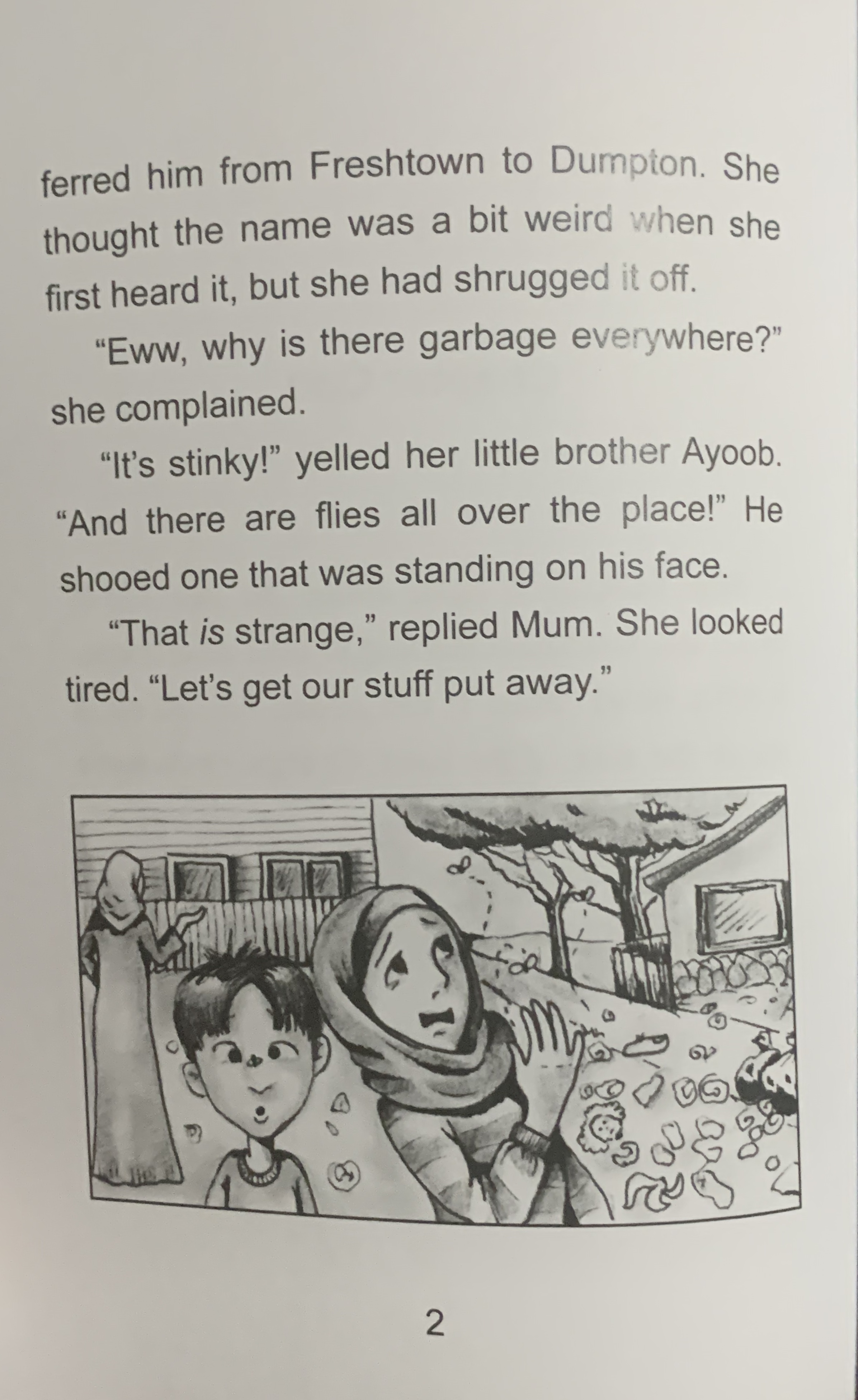
This 36 page early chapter book is a good introduction to the concept that one person can make a difference.  The seven chapters flow easily, and while the names of the cities, Freshtown and Dumpton are a little on the nose and the premise a bit of a stretch, fluent 1st and second grader readers will enjoy the story and delightful pencil illustrations of a kid changing things for the better and making a difference.  One blatant hole for me was the lack of outright Islamic preaching.  For a book that is not available in mainstream outlets here the US and only through Islamic book stores, I expected more than just a Muslim family with hijabi characters and Islamic names.  I wanted cleaning up the environment and doing good deeds to have hadith and ayats quoted and referenced throughout, but alas there are none.  So, I suppose the book isn’t “Islamic Fiction.” but, in my opinion it really could and should be.

img_6514

SYNOPSIS:

Aliyah and her family have just moved to a new city, Dumpton.  Transferred by her father’s work, the family is shocked by the trash, smell, garbage and flies everywhere.  The kind neighbor lady brings them a pie and welcomes them to the neighborhood, but is later seen throwing a candy wrapper out the window.  Aliyah is shocked that such a nice lady is also a litterbug.  Aliyah calls a family meeting to come up with a plan to clean up Dumpton.

Each day Aliyah tries something new: cleaning up the street she lives on by herself, letting people know about littering, putting up signs, and finally on day four forming a clean up crew.  But nothing works.  Aliyah gets discouraged, but her parents encourage her to do the right thing no matter what.

The night before the first day of school Aliyah has an idea, she grabs a bunch of solid color t-shirts and a permanent marker and makes herself some shirts to encourage people to take care of their trash.  Every day she wears a different one with a different saying and by the end of the week people are starting to ask her about them.

The following Monday, her brother joins her and wears a matching shirt to start the cycle again, but when she gets to school the two of them aren’t the only ones wearing yellow t-shirts that say “Littering Stinks.” Everyone is!

The principal calls her into the office to discuss the potential of children to change the pollution in their city and slowly but surely they get the city cleaned up.

img_6513

WHY I LIKE IT:

I love that it encourages everyone, no matter how small, to make a differences and do what they can to make things better.  I love that it doesn’t just happen and that she gets frustrated and has to power through and stay true to herself. The main character wears hijab, but there is no mention of religion or faith which would have added some depth to her as a character finding motivation from belief in a higher cause and a responsibility to the care of the Earth.  Even some concern with starting at a new school as a hijabi would have possibly added some relatable connection to her personal strength and why she is willing to trust herself with the littering task at hand.

The premise that no one born and raised in the town seems to have a problem with the littering and pollution or that people from the outside haven’t been completely disgusted by it, but rather joined in over time, is a bit far fetched.  Sure you could make the argument that in other countries this is how it is, but it seems like a bit of a leap given the setting of the book and the target audience.

img_6512

FLAGS:

Clean, haha pun intended?

img_6515

TOOLS FOR LEADING THE DISCUSSION:

This book is an early chapter book, not to be confused as being a book for early readers.  The sentences and diction and vocabulary are for fluid readers that are just moving into short chapters and need a few illustrations, spaced lines and a bit larger font.  There are questions at the end which would make the book a great small group reading to discuss, but definitely for early elementary.  Would be a great inclusion in a unit on leadership, project planning, or Earth Day.

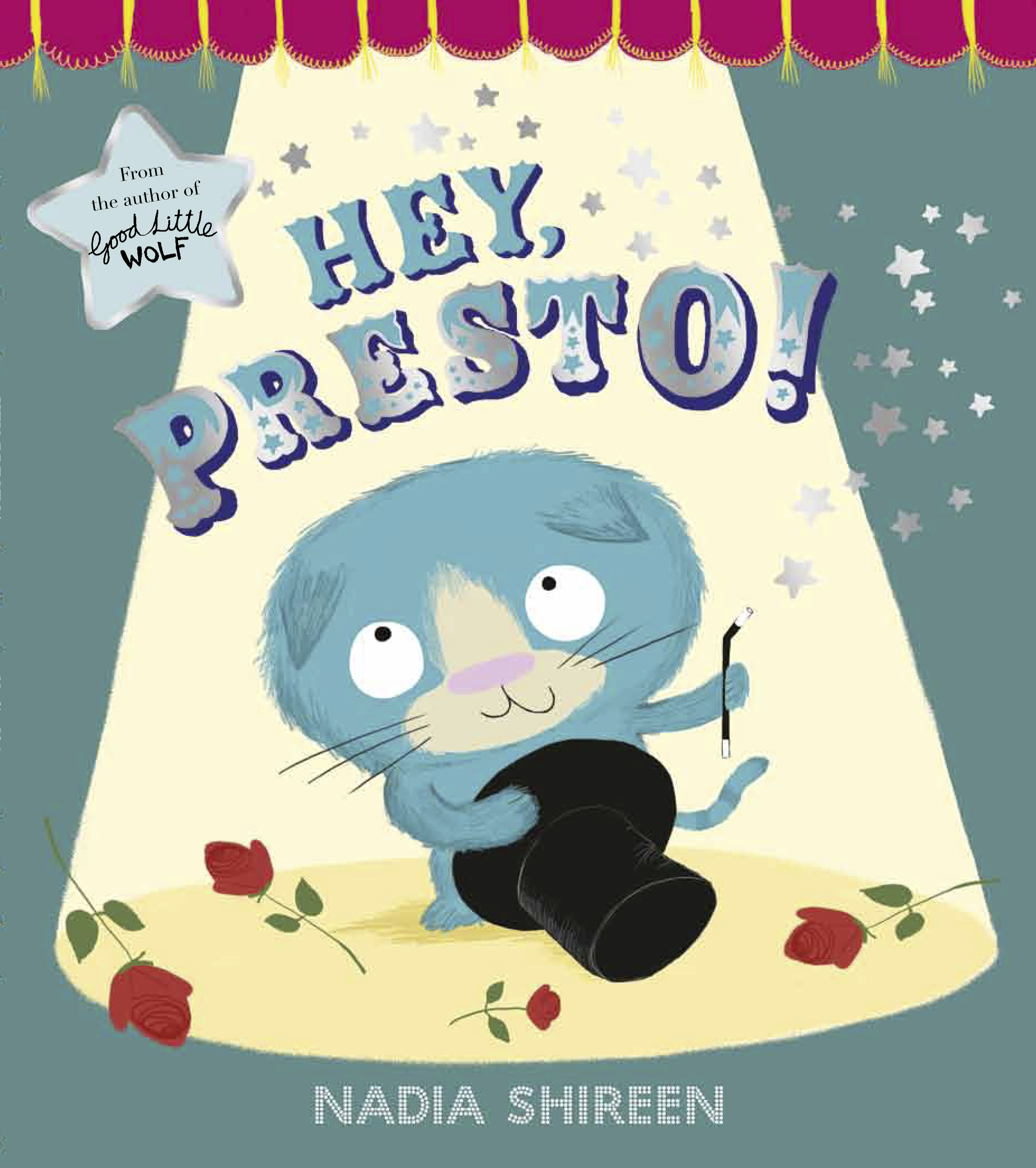
Hey, Presto! by Nadia Shireen

Standard
Hey, Presto! by Nadia Shireen

presto

This 32 page picture book about friends learning to appreciate each other is both silly and sweet.  An AR 2.6 the book is great for preschool through third grade and gives lots of teachable moments along the way if you want to make it more than just a fun book.  There is nothing religious, but I believe the author, who is also the illustrator, is Muslim.

3D98CA51-5683-4B47-AA1D-D2D59EC0534B

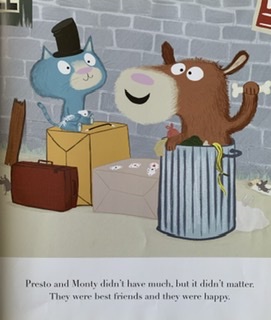
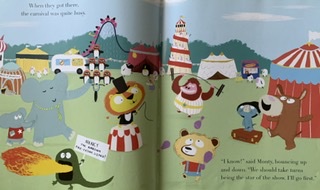
Presto and Monty are best friends.  Presto is a brilliant magician and Monty is good at singing, eating ice cream and making funny faces.  When the carnival comes to town the two decide to put on a show and become famous.

A14B6C11-5B00-402D-AC0B-6471AD953433

Monty suggests they take turns being the star of the show, and Monty decides to go first.  Monty isn’t a magician, so Presto stays behind the scenes to make sure the tricks work.  Somehow, this is how it ends up going night after night after night.  Presto never gets his turn.

BD1712A8-2E13-4AA5-9E7A-902456DD1820

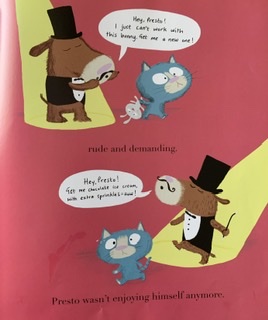
Monty gets bossier and bossier, demanding things of Presto and being rude.  Presto is no longer having fun.  When Monty signs a contract to go on TV with his magic show, Presto has had enough and leaves.

C0366580-AF19-4A17-A787-22C33A3CBF90

When showtime rolls around, Monty realizes Presto has left and has to try and learn magic real quick.  The show doesn’t get off to a good start when none of the magic tricks work.  As the show goes from bad to worse Monty realizes how bad of a friend he has been.

5DF12A03-2366-4EE7-A7F9-FA6BD355C730

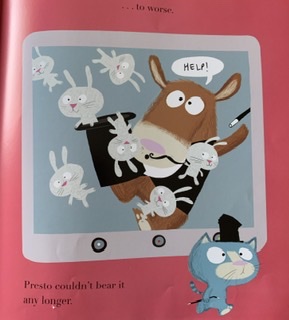
Presto watching from home can no longer bare it and rushes to save the day.  Monty promises things will be different and the two of them cook up a new act and realize together their show is perfect.

1A295E46-CE70-46DF-AC17-976B023930AA

My Monster and Me by Nadiya Hussain and Ella Bailey

Standard
My Monster and Me by Nadiya Hussain and Ella Bailey

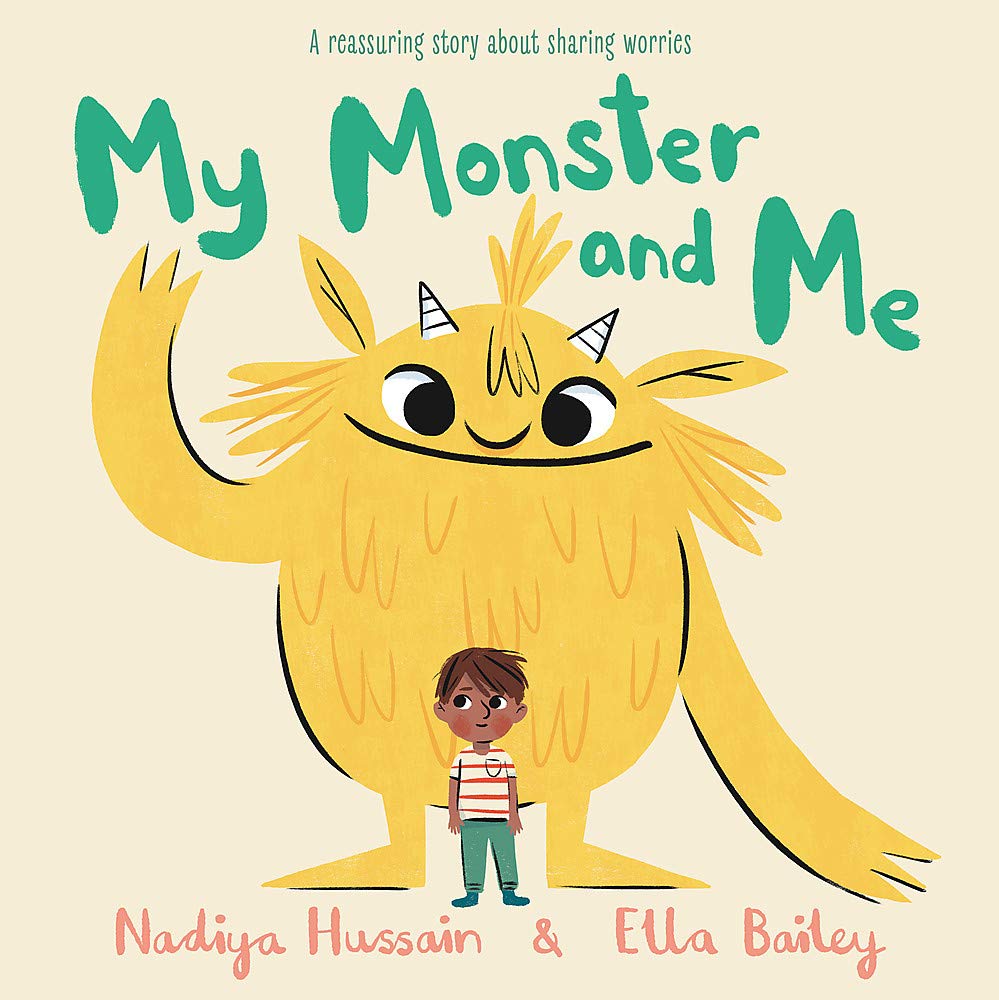
This adorable 32 page book about facing worries, anxiety, and fears is told in story format and meant for ages four and up. The personified monster isn’t scary, but he is big, and the little boy learns to talk about him to get him to shrink. The book is engaging, fun, and powerful. I had my teenager who has anxiety read it and she loved it, a few days later as she was forcing herself to get out of the car, she mentioned that she needed to make her monster small. Normalizing mental health, feeling like you aren’t alone, finding the words to explain to others how you feel, having empathy for those that are facing challenges, are all things the book conveys without being preachy or condescending. I think every child, parent, and caregiver, needs to be aware of what children are facing and find ways to be like the gran in the book and listen, so that children suffering aren’t doing so alone. The fact that the author is a Muslim celebrity chef in Britain and the protagonist is a boy with brown skin, makes the message that much more universal.

The book starts out with an unnamed boy introducing himself and his much bigger monster. He doesn’t know when the monster arrived, but it seems he has always been there, and the monster knows all about him.

The monster is big, and when he stands infront of the little boy, the little boy can only see his tummy. At night he snores too. When he asks his mom or dad or brother to take the monster away, the monster hides.

Over time the monster has gotten bossier. When the little boy is getting dressed or brushing his teeth or when he wants to play, the monster is always there, blocking him.

One day after school the monster was there and the little boy tried to lose it, but couldn’t. Gran asked what was wrong when he showed up crying, and the little boy told his grandma all about his monster.

Gran listened quietly and the more the little boy talks, the smaller the monster gets. Pretty soon the boy realizes he can make his monster go away. When he finds the monster later, the little monster is confused, so the boy puts him in his pocket.

The monster is always there, but the little boy can make him behave and he isn’t scary any more. At the end the boy is big, and the monster is little.

I love that the boy finds someone to talk to, and that he accepts that the monster may never leave. Even if you don’t have anxiety or worries, the book is a great metaphor that even little kids can understand to help them cope when stresses do occur. I love the large size of the book, the minimal text and the bright illustrations. Truly a great book that needs to be in classrooms and homes and anywhere kids are.