Category Archives: Kg-2nd

Zara’s New Eid Dress by Nafisah Abdul-Rahim

Standard
Zara’s New Eid Dress by Nafisah Abdul-Rahim

img_8802

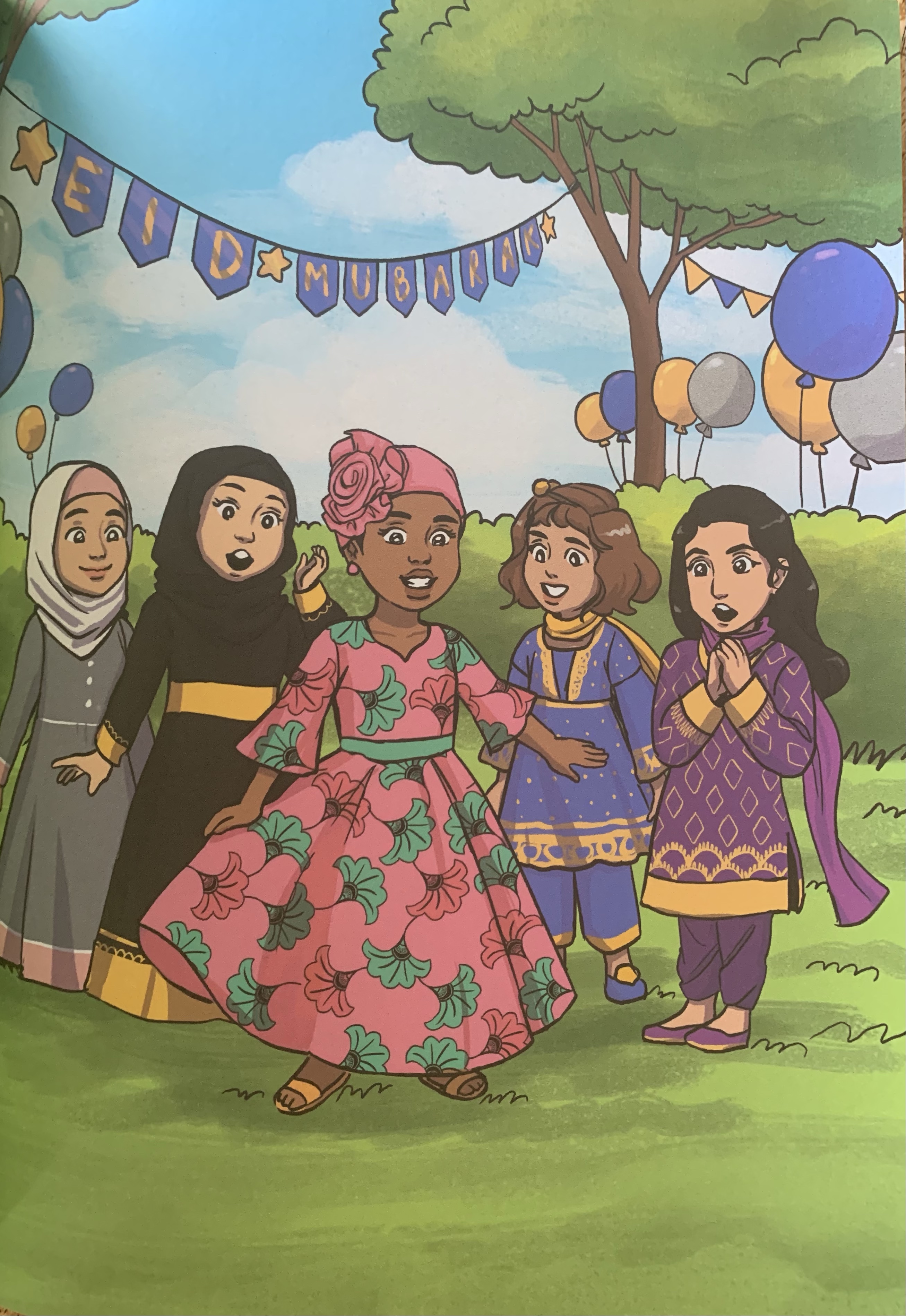
The search is on for an eid dress that reflects Zara’s African American Muslim culture.  This much needed representation highlights more of looking for a dress and the process of having one made, than providing information about Eid or the African American Muslim experience over its 30 pages.  Iftar is mentioned on one page in parentheses, so if you omit that word it could reflect either Eid preparation.  The book is cute if you are looking for a slice of life and coming together of a child, mother, and grandmother over the creation of a dress that has what Zara is wanting: pink, fluffy and containing flowers.  It falls short if you are looking for a book to learn about Eid, Ramadan, what a cultural African American Muslim dress would look like, or a peek into an under represented culture.  The illustrations are sufficient.  I felt the girl looked younger in some of the depictions, and I was surprised that the girl’s rain boots and clothes were worn over multiple days in her search for a dress, picking out fabric and inside her house when the dress is completed.  Similarly, on Eid day while her dress is stunning and fabulous, her friends are wearing the same eid clothes they wore at the start of the book from years past.

img_8804

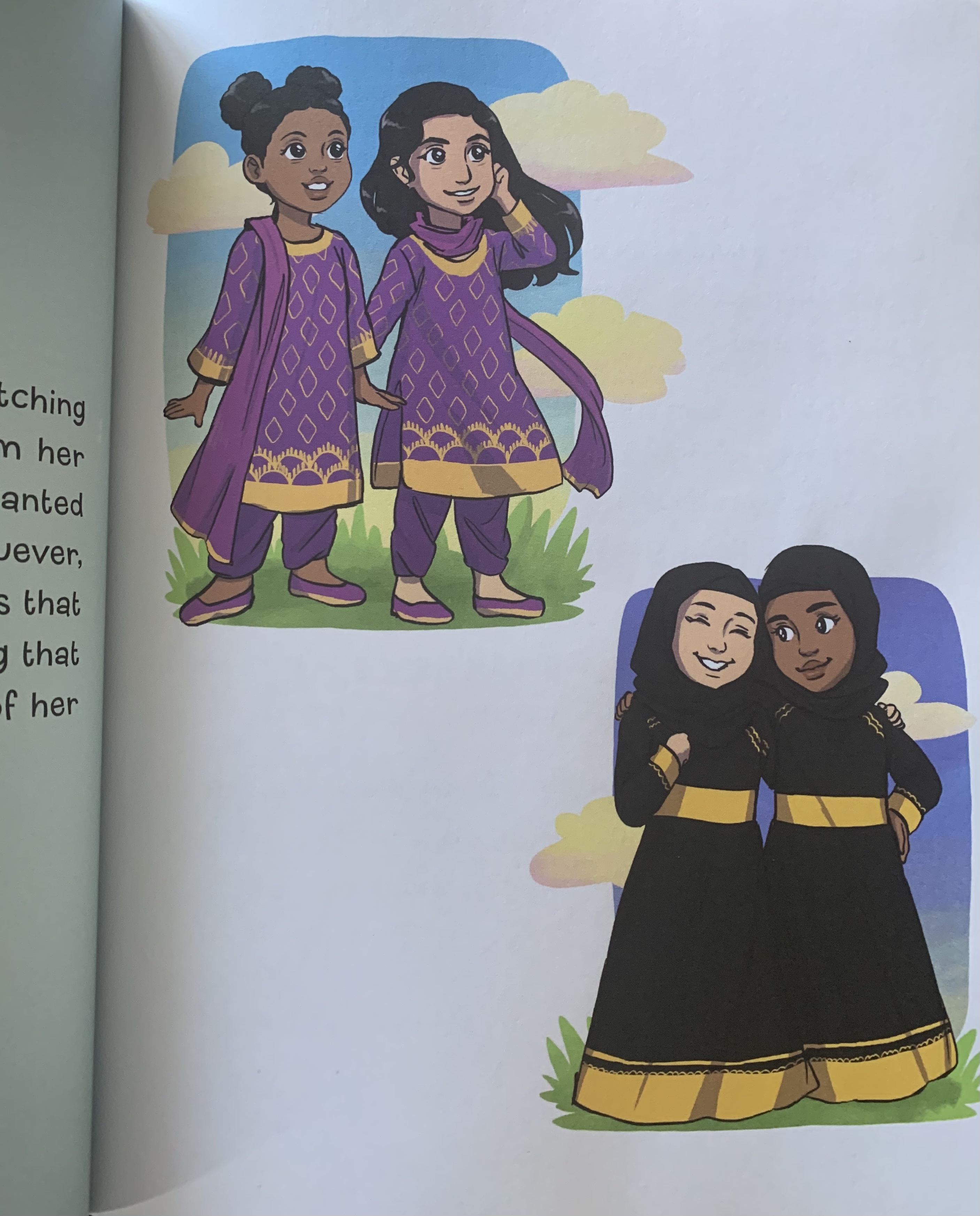
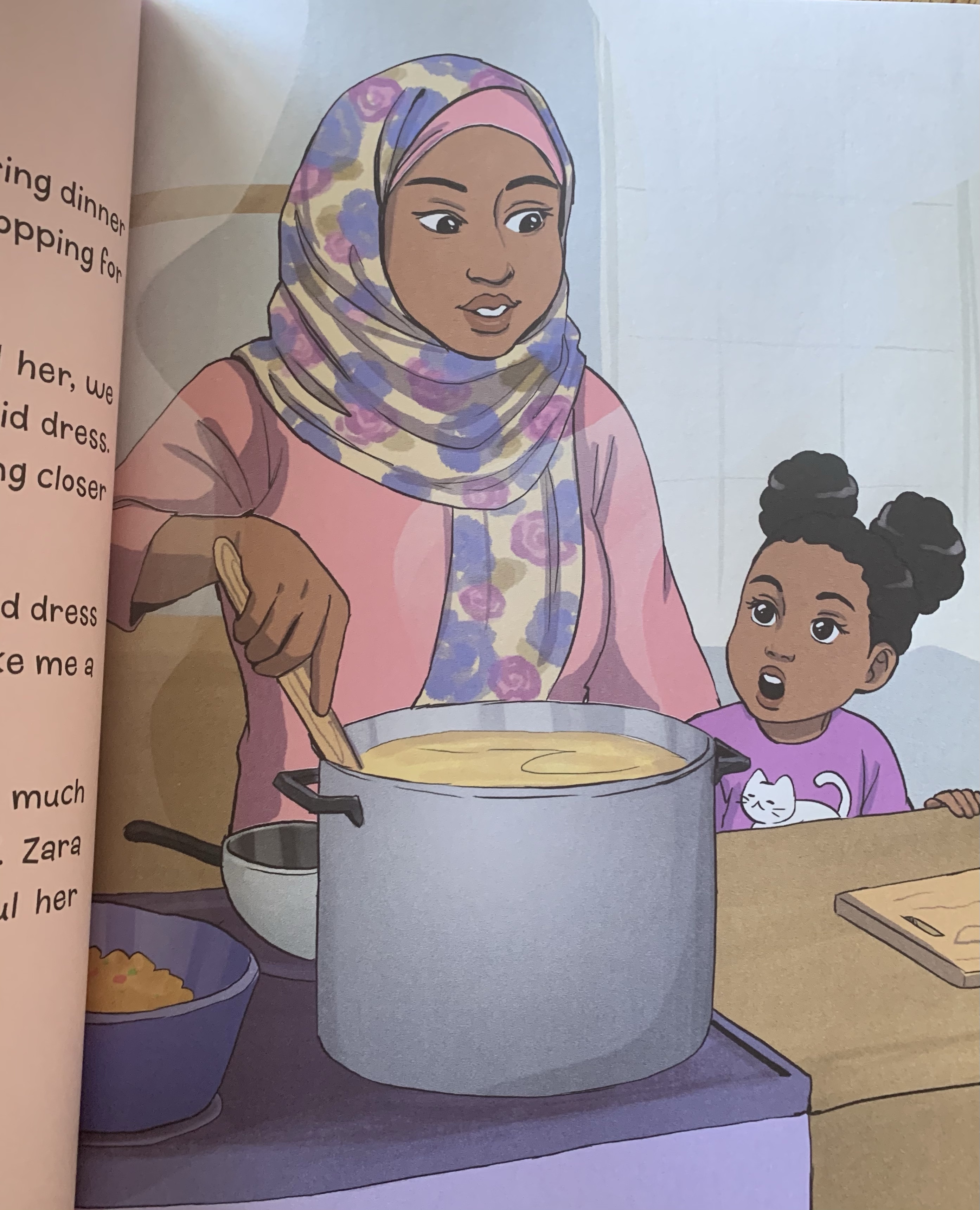
Zara has worn a salwar kameez from Pakistan with her friend Sana, an abaya like her friend Noura one year too, but this Eid, she wants a dress that shows “her own style, her heritage, a reflection of her culture as an African American Muslim.  As her mom is preparing iftar she asks when they can start shopping for her Eid dress.  She knows it won’t be easy to find and convinces her mother to start looking this weekend.

img_8805

She pulls on her rainboots as they head out the door to find “something bright, pink, fluffy, and has flowers on it.” They go to several stores and kind find anything just right.  Her mom suggests asking Nana to make it.  Zara’s mom recalls the fabulous dresses her mom used to make her to wear on Eid.

img_8806

Nana and Zara head out to the fabric store the next morning. First they find the pattern, then they find the fabric.  After a few days of hard work for Nana, the dress is complete.

img_8808

On Eid day, Zara meets up with her friends in her dress that is uniquely her own.

img_8812

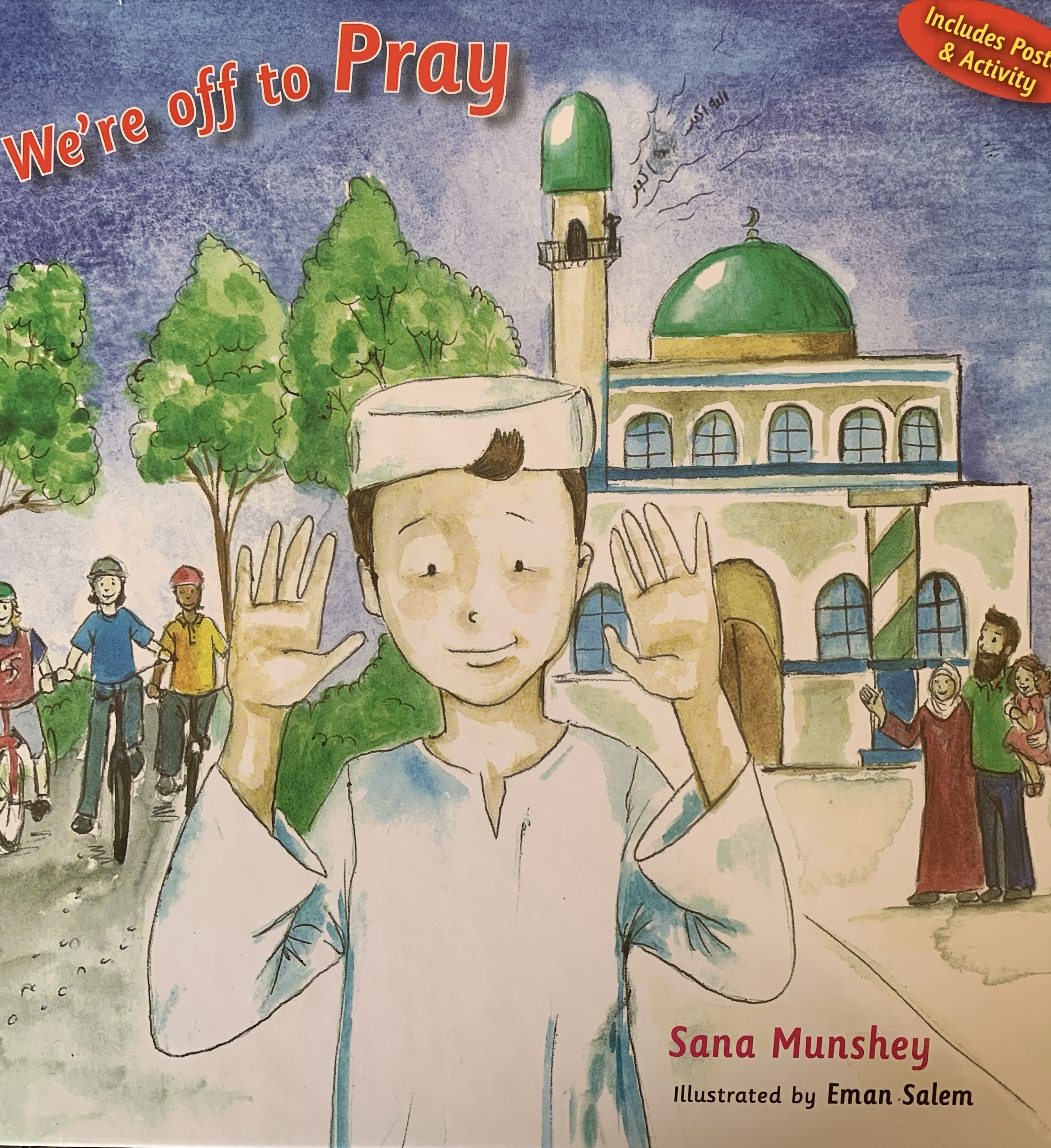
We’re off to Pray by Sana Munshey illustrated by Eman Salem

Standard
We’re off to Pray by Sana Munshey illustrated by Eman Salem

img_8684

This 8×8 hardback rhyming book for ages 4 and up is filled with detailed pictures that will remind children of all ages how important salat is despite how tempting it often is to neglect it.  I think six and seven year olds will benefit the most from this 30 page book that also has an activity poster included, as they start to take on the responsibility of praying on time and making good choices.  The gentle parents, the relatable scenario and the adorable little sister, bring this story to life, and will hopefully be a benefit for young muslims and their families.

img_8685

A small family of a mom, a dad, a brother and a sister are out working in the garden when the athan is heard.  The five prayers are mentioned as they set off to pray just like the Prophet (saw) did.

img_8686

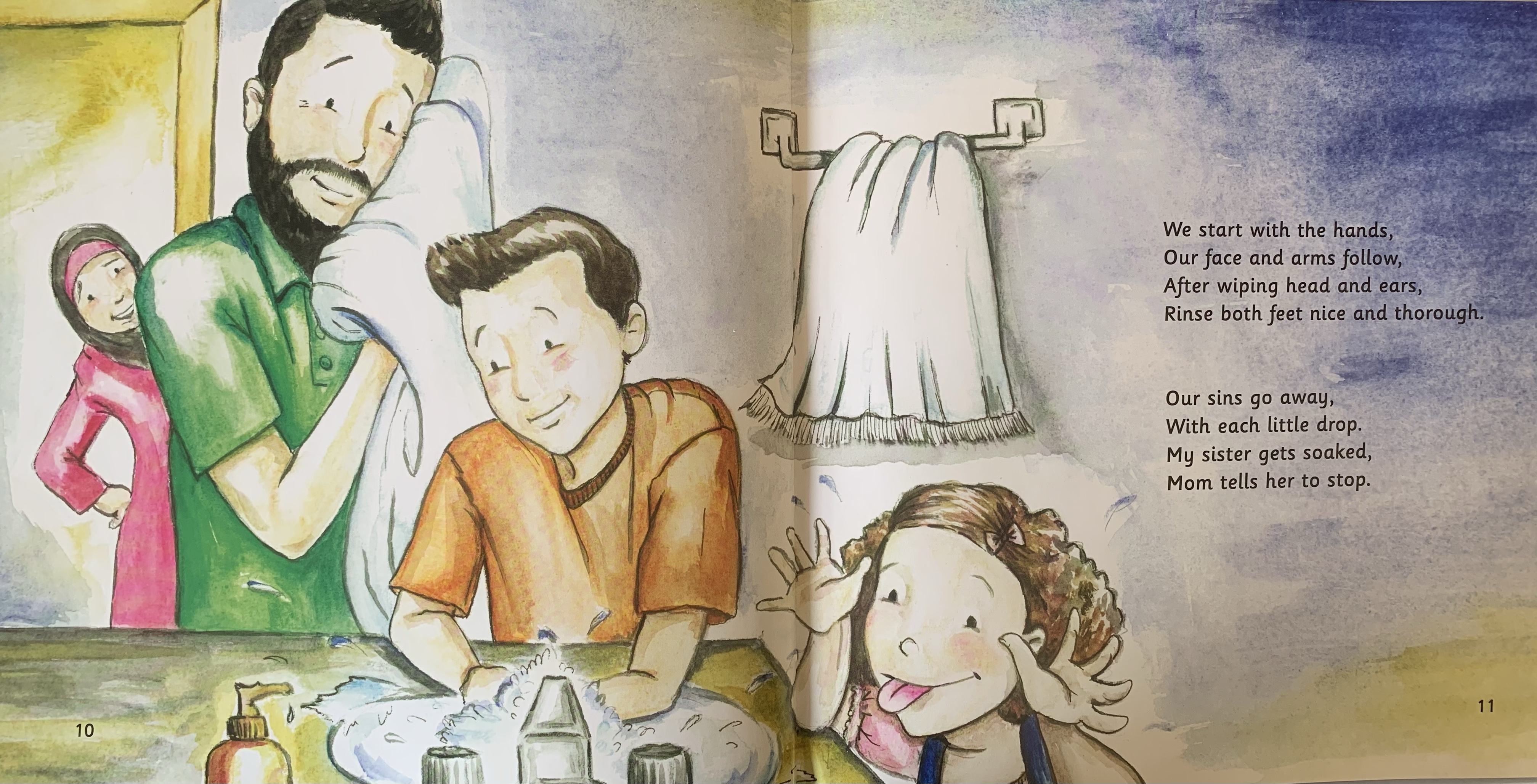
They all head in to make wudu as wudu and salah go hand in hand.  They start with bismillah before going through the simplified steps to wash their sins away.  They are about to start, when the doorbell rings.

img_8687

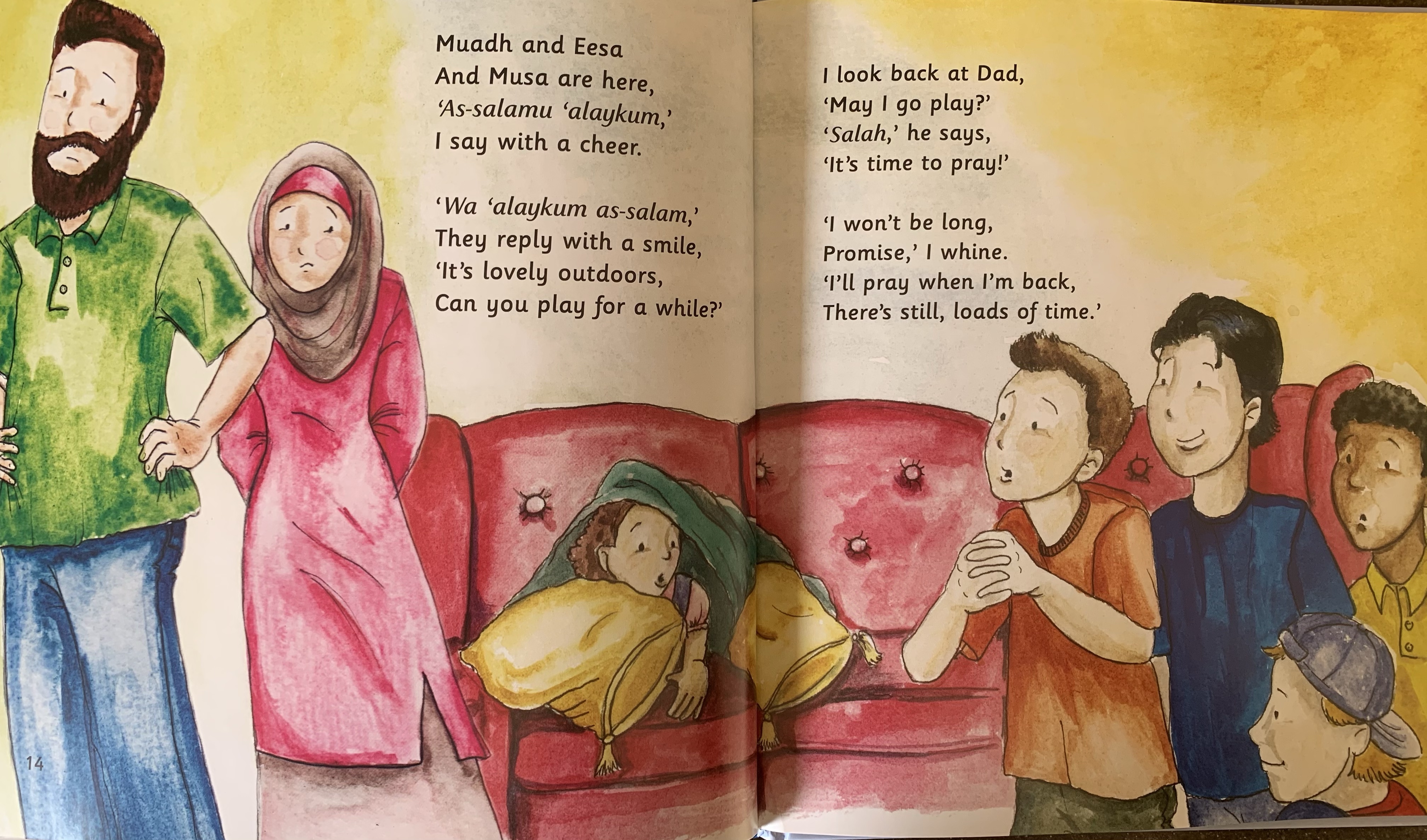
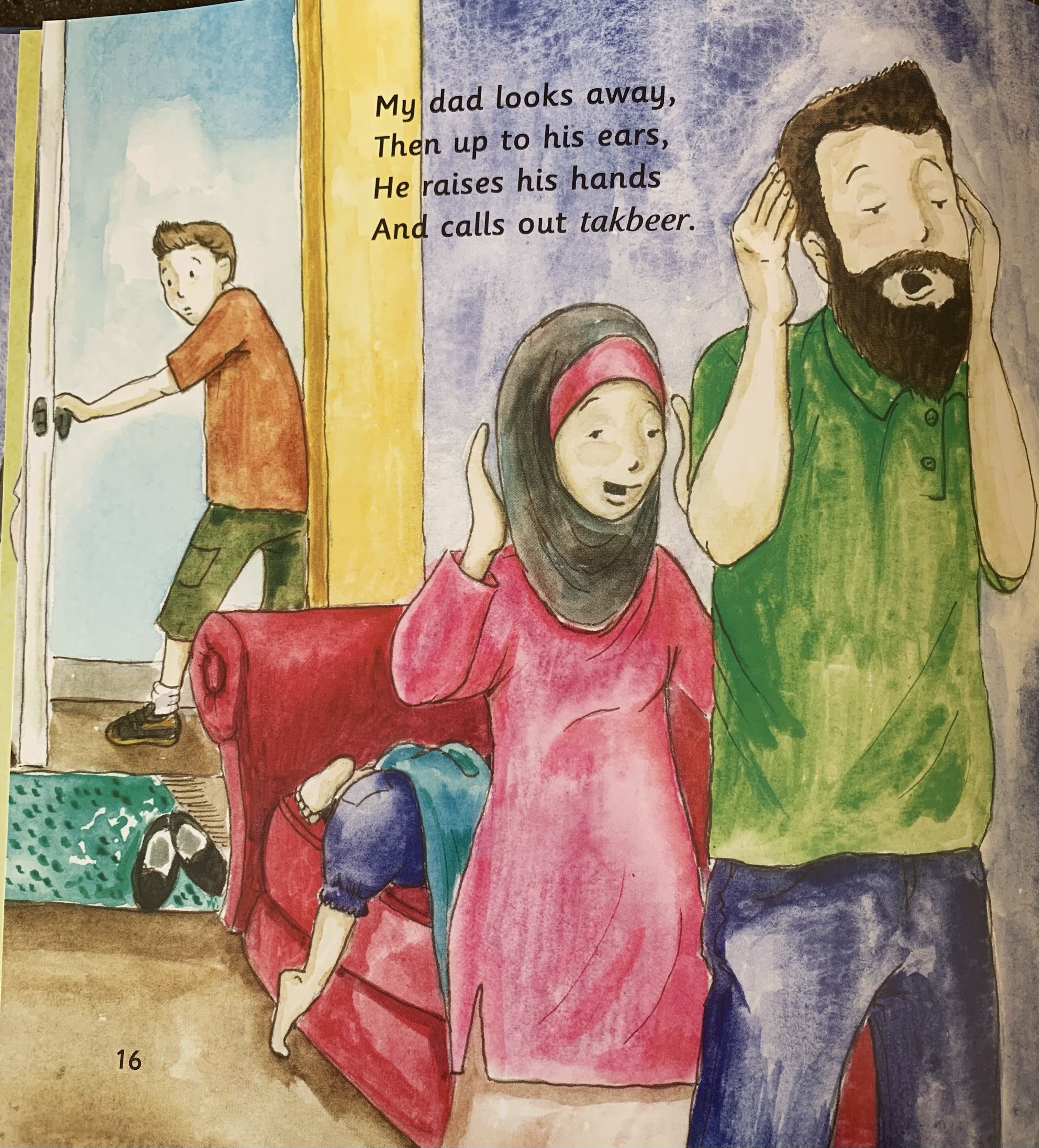
Friends have come to play.  Mom and dad tell the boy to pray.  The boy says there will be time after they play.  Once takbeer is called, the boys slip out on their bikes.  The boy wants to have fun, but something is nagging at him and he wonders what the Prophet (saw) would have done.

img_8688

Whispers urge him to enjoy the beautiful day, but he realizes what he must do, and when his friends ask what is wrong he suggests they go pray.  Aqeemus salah!

img_8689

They head back to the boy’s house, make wudu and pray together. The steps are named and explained and after concluding he sees his proud parents watching.

img_8690

There is a glossary at the end and the poster has the steps of wudu and salat as well as an activity to put the steps in order.

img_8691

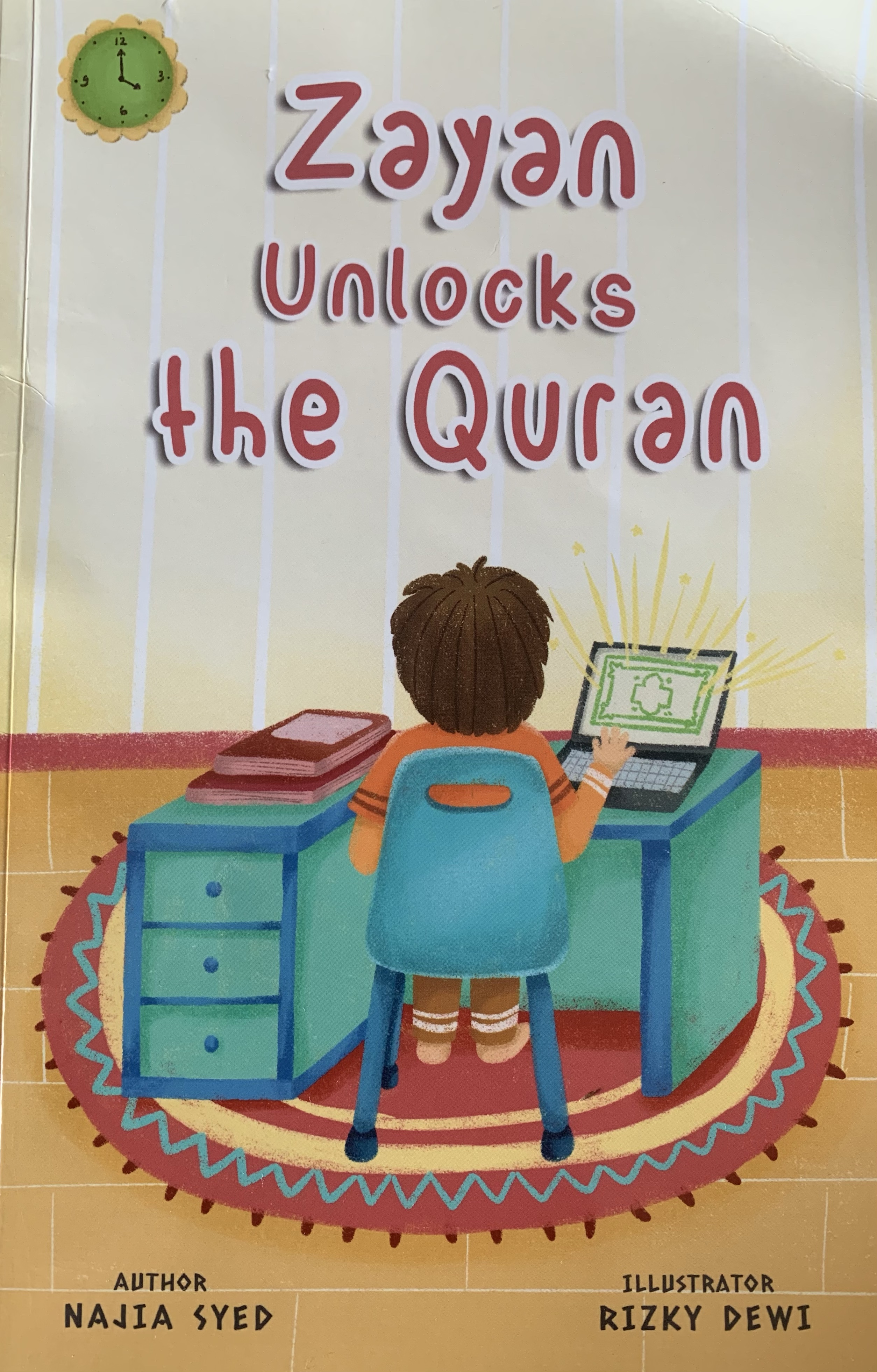
Zayan Unlocks the Quran by Najia Syed illustrated by Rizky Dewi

Standard
Zayan Unlocks the Quran by Najia Syed illustrated by Rizky Dewi

img_8703

There is a lot of good information and relatable lessons in this 45 page didactic book encouraging children to get to know the Quran, and to not just recite and memorize it, but the presentation just doesn’t do it any favors.   I can’t imagine that seven and eight year olds are going to identify with the five year old protagonist learning how to add and getting in fights over crayons at school, nor that five year olds are going to have the patience for the explanations and understand the story.  The word story in and of itself is a stretch, it is a bunch of ayats from the Quran that are explained to teach young Zayan lessons that reflect his daily life and how he can succeed and inshaAllah earn jannah in the akhira.  The intention is really good, I just wish there was a bit more plot and that the book’s appearance made more sense.  Having the book look and feel like a leveled reader on the outside, but be completely tiny text filled, save a few entire page generic full-color pictures and green bannered meaning of the Quran’s translation, the book and its seven chapters are intimidating.  Space it out, make it an early chapter book in look and feel, revise the premise that a child has no idea what the Quran is, and is completely shook by learning from the kind and patient Qari Sahib that the Quran has lessons and rules to make us better.  It is a stretch to get the book going, it has some wonderful points along the way, and leaves a warm feeling when completed, but I can’t figure out the intended readers age, nor can I imagine many kids will willingly picking it up.  Like the character in the book dreading Quran class, I’m afraid getting kids to read this would similarly be met with dread, which is a shame, because the lessons are strong, the story and presentation just need a bit of polishing.

img_8704

SYNOPSIS:

Zayan does not want to leave his toys for Quran class which he attends one-on-one on the computer with his teacher, Qari Sahib.  Reading the Arabic is hard and confusing, he doesn’t understand what he is reading and he would rather be playing.  He has just built a fort and is afraid if he leaves it for class, his sister will destroy it, (over the first few pages I was convinced his sister was younger than him, and a little confused to learn that both are older).  When he begrudgingly logs on, Qari Sahib can tell he is upset and tells him that being kind to his siblings is a good deed and that many good deeds are in the Quran.  Zayan is shocked.  Qari Sahib offers to read some ayats to him and he can just listen before they resume reading Surah Fatiha.  Zayan is blown away at how pretty the Quran sounds when recited and his eyes sparkle when he learns that the Quran contains directions to get to jannah.

Chapter two explores how the ayats in the Quran about kindness can relate to Zayan’s life.  Being kind to your parents, speaking in a low voice, and not making fun of each other.  Ayats are pulled and connections made so that Zayan can inshaAllah implement his new knowledge in his life.  Zayan returns to playing after class and tests out what he has learned.

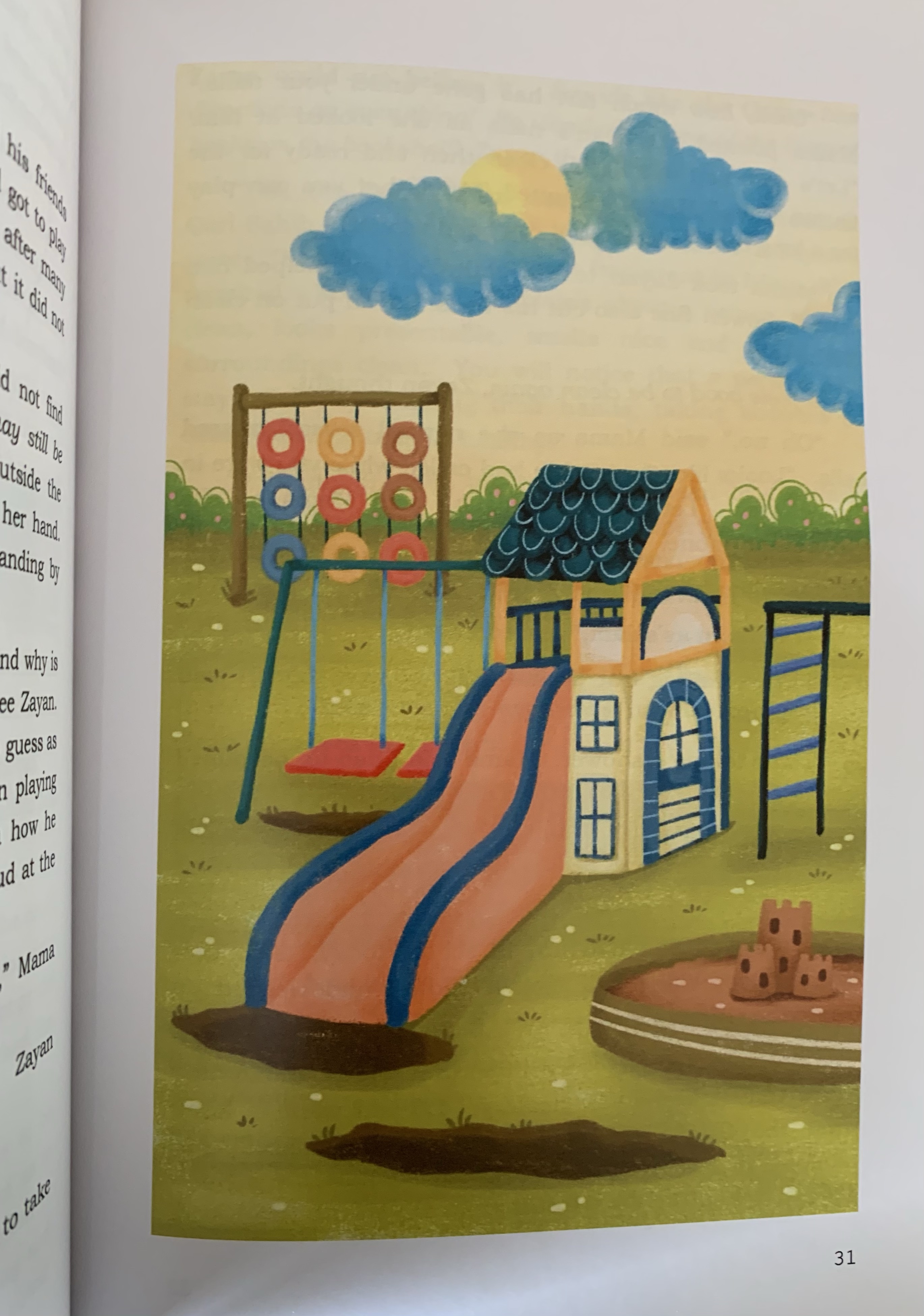
This pattern continues with chapter three discussing respect, then anger and forgiveness, cleanliness, and honesty.  The parables come when he doesn’t listen to his mother about finishing his grapes, a fight at school involving crayons, playing in the mud and lying about feeding his pet cat. At one point he remarks that much of what his teacher explains to him from the Quran are things that his mother also tells him, almost like she has read the Quran.
img_8705

WHY I LIKE IT:

The first few lines are so relatable.  The dread of the child putting the entire family on edge, it is real.  I love that Qari Sahib is kind and gentle and patient.  When the mom mentions things to him about Zayan he finds ways to talk to him about it, without lecturing or reprimanding.  I think the Qari Sahim is the real hero in the book.  I particularly like when he went in to detail about our responsibility to care for animals.  I’m glad Zayan has him to guide him because clearly his parents have failed.  Yes, I’m being judgey.  The kid doesn’t know what the Quran sounds like, doesn’t know why he is being forced to read it in Arabic, doesn’t know what it even is about? I’m not so much judging the fictitious parents, more the inconsistent writing.  If Zayan doesn’t know that his mom has read the Quran how does he know what jannah is and who shaytaan is?

FLAGS:

none

TOOLS FOR LEADING THE DISCUSSION:

Obviously not for a book club selection, but I’ve been trying to figure out if maybe my five year old and I could discuss some of the chapters together.  I wouldn’t want to read the whole book because my child loves the Quran and doesn’t dread reciting, I have five children, I know tomorrow it can change, I’m not naive, I’m just saying for him particularly right now, it isn’t a chore and I think if I presented it as a boring thing, he will start to mimic that frame of mind (my older kids know not to ever bash certain teachers, concepts, spiciness of food etc. in front of their younger siblings for this very reason).  But, while some of the lessons are really well thought out, they are just too much for a five year old.  The pictures don’t engage and the text overbearing.  I asked my 10 year old to read it and he found it really childish and didn’t finish.  If the book works for you, alhumudillah, I’m glad, it is a benefit, I wish it worked for me too.
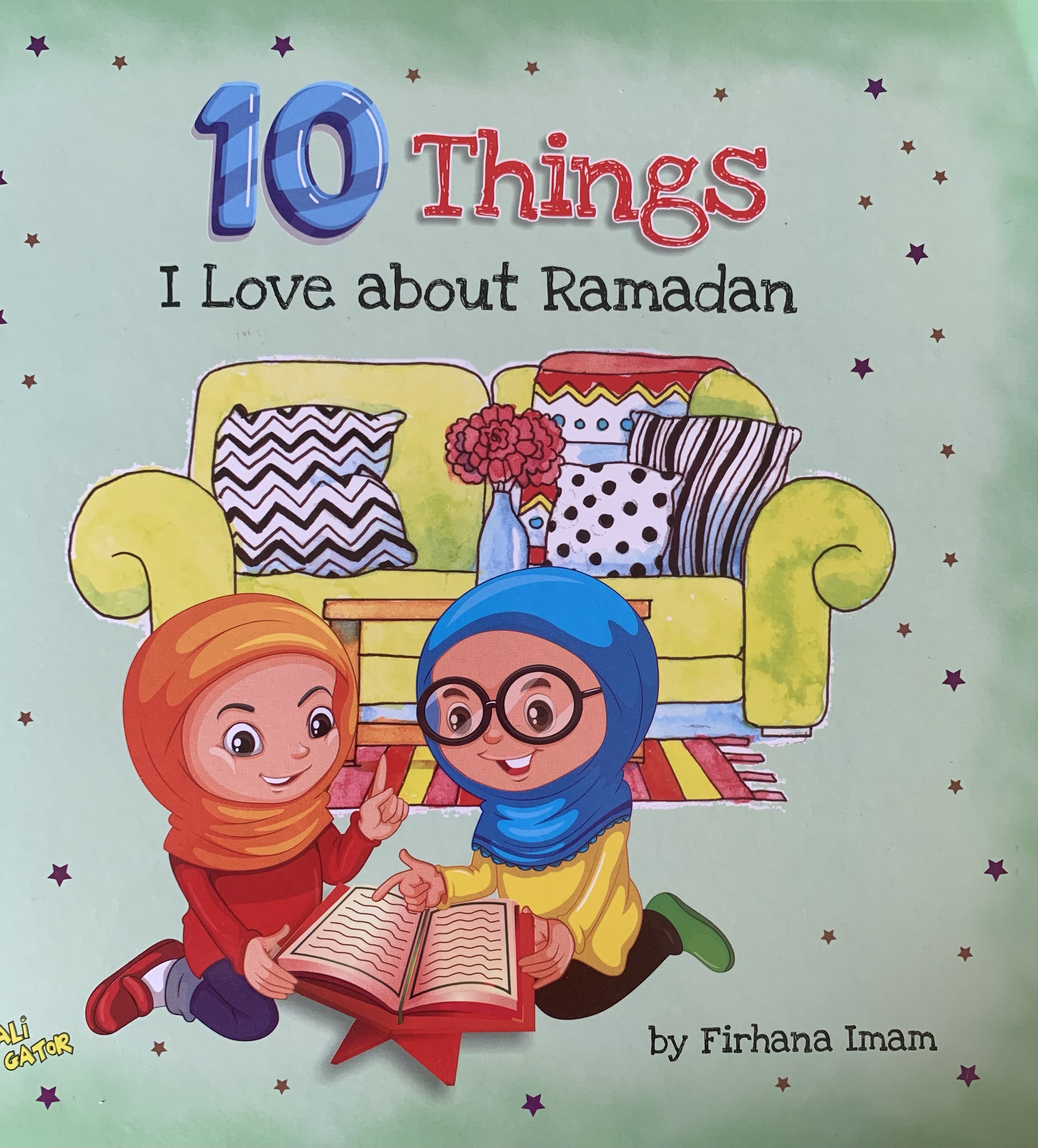
10 Things I Love about Ramadan by Firhana Imam illustrated by Ali Gator

Standard
10 Things I Love about Ramadan by Firhana Imam illustrated by Ali Gator

img_8692

After a while a lot of Ramadan books seem repetitive with the information being more or less the same, this 24 page kindergarten and up book however, manages to present the information in a numbered format that allows for the information to flow without being constrained by an overly forced story.  The result is a fun little read that children will enjoy as they master some of the key concepts of Ramadan.  This book doesn’t have activities at the end, but would lend itself very easily to games, memorization challenges and discussion topics if read frequently for even the littlest Muslims. It would also work as an introduction to the month for non Muslims.  I know I get asked a lot for suggestions of books to be read to children’s classes in public schools, and this would definitely work for that too.

img_8694

The book starts out with an introduction to Nabeela as this is her list of 10 things that she loves about Ramadan.  She starts with Assalamu Alaikum before diving in with some facts and getting started with number one.  Each number is a two page illustrated spread, there are footnotes for any Arabic or religious terms used, and the bright colors and large fonts make the book easy for early readers to follow along with and attempt on their own.

img_8695

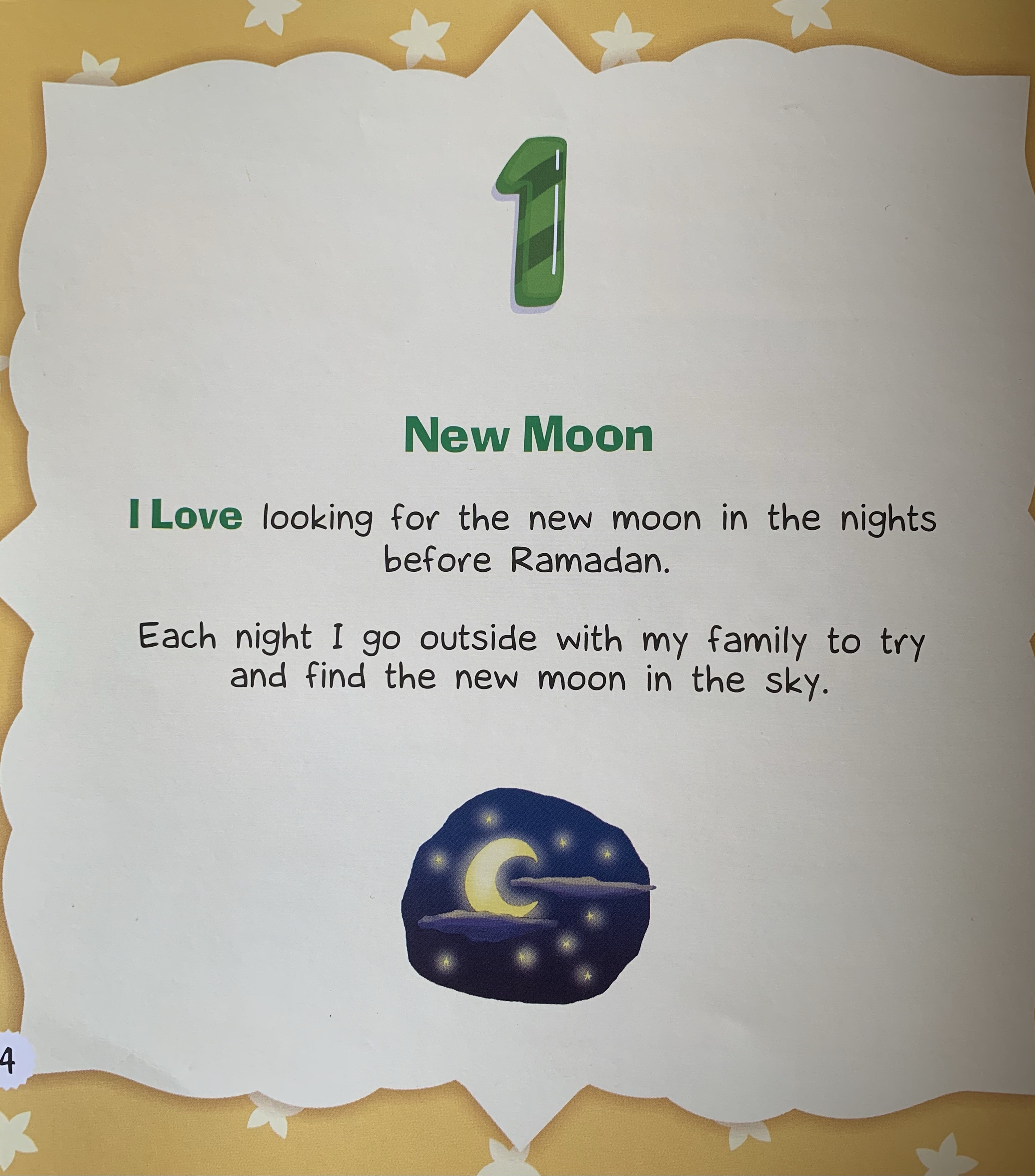
She starts by loving the new moon that her family looks for before the start of Ramadan. She loves Suhur: helping prepare for it the night before and eating her favorite pancakes early in the morning.

img_8696

Number 3 is iftar.  She loves pies and samosas and explains to us that she always has dates and water because that is the Sunnah.  Along the way she shares her love of family, making du’a because a fasting person’s du’as are always accepted, and reading Qur’an even though it is difficult because she knows she will get more rewards for trying so hard.

img_8699

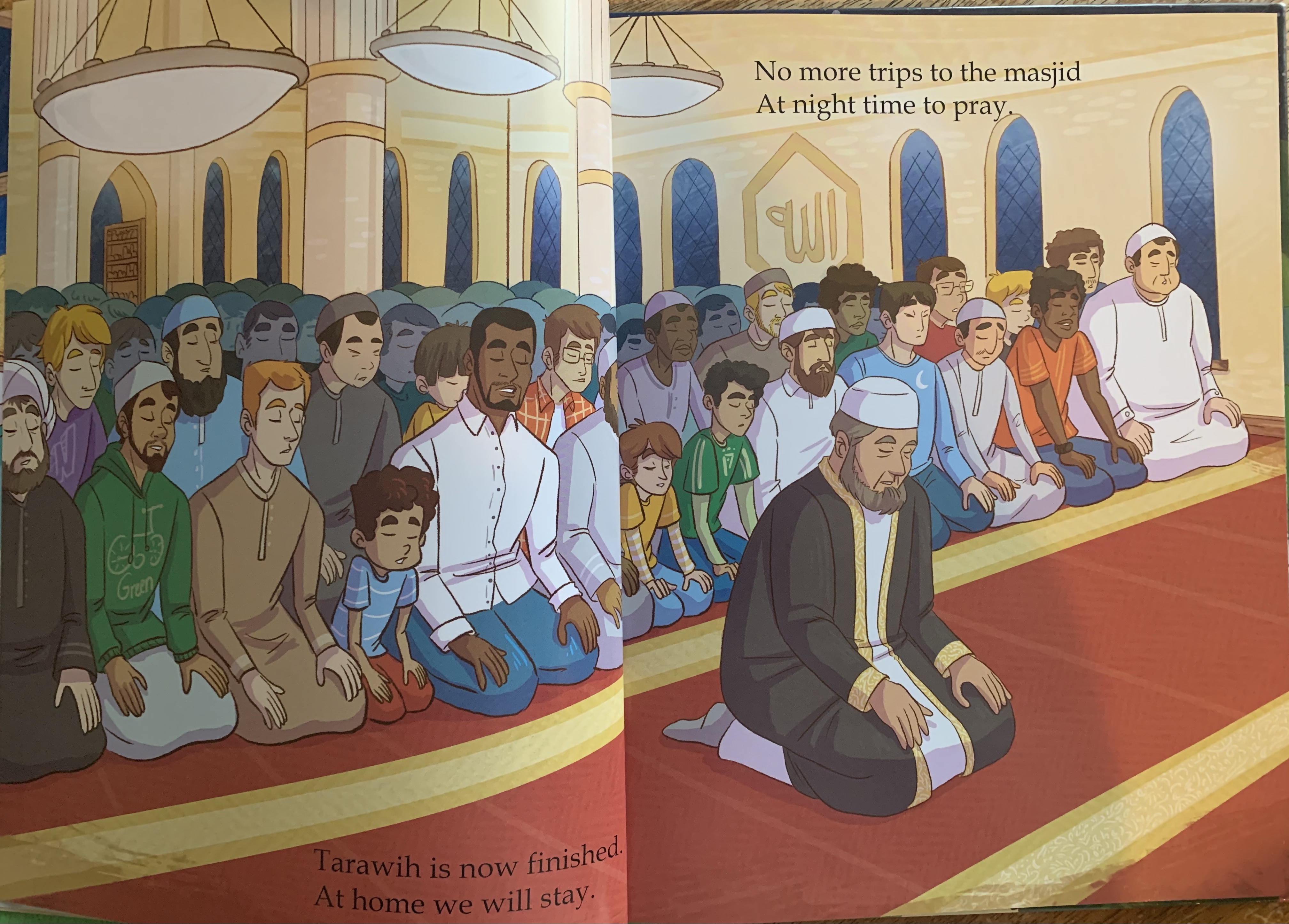
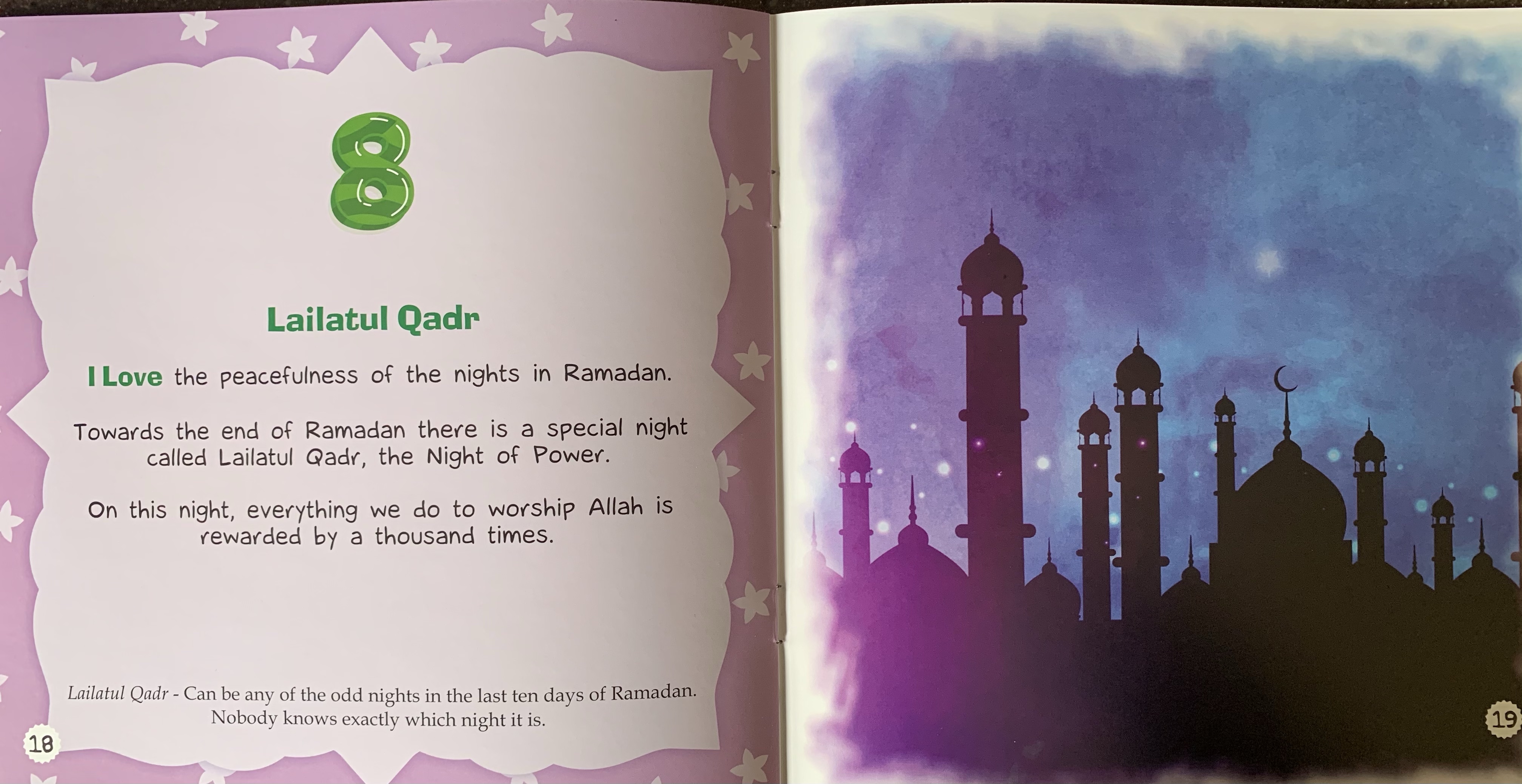
She also loves Tarawih prayer whether at the mosque or at home, and the peacefulness of Lailatul Qadr.  She loves that her father and brother stay at the mosque the last ten nights of Ramadan in Itikaf and finally at number 10 is Eid!

img_8700

The book concludes with some verses from the Qur’an about Ramadan in English.  I thoroughly am impressed at how succinctly so much is conveyed and the adorable manner in which it is done, Alhumdulillah!

Amira’s Picture Day by Reem Faruqi illustrated by Fahmida Azim

Standard
Amira’s Picture Day by Reem Faruqi illustrated by Fahmida Azim

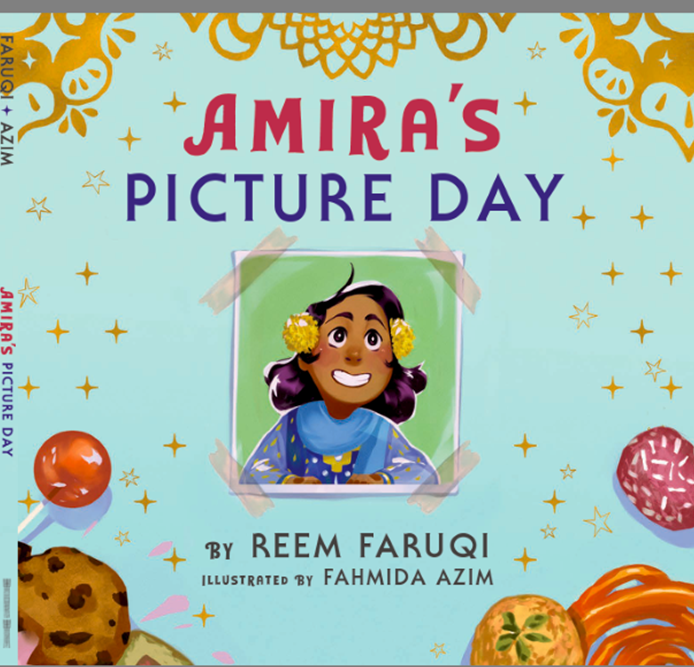
amira's picture day

This book is the mirror so many kids are desperate to find in literature. A young Muslim girl is excited to celebrate Eid, while at the same time is sad knowing she is missing school picture day with her class. Not knowing what day Eid will be, not having it a scheduled day off in most school districts, and always feeling like you have your foot in two different doors starts early for children in non Muslim majority countries. This early picture book touches on those emotions, and even if you can’t always get a test rescheduled or a project due date moved, at least readers that face these dilemmas at any age and stage in life, will feel seen in this 32 page book perfect for ages 5 and up.

amira4

Amira and her brother Ziyad start the book looking out the window for the moon. They see it, which means Eid is tomorrow and Amira is going to have her mom put decorative Mehndi on her hands. She has her mom include a dolphin in the green swirls and hopes that by morning the color will be dark and beautiful. Ziyad is excited that they get to skip school.

amira1

Mom recruits the two kids to make goody bags and count out lollipops for the kids at the masjid, when the flyer for picture day catches Amira’s attention. Devastated that she will miss the class picture having already picked out a pink-striped dress for the occasion, mom reassures her that she will get to wear her new shalwar kameez, and they will take lots of pictures at the masjid.

amira5

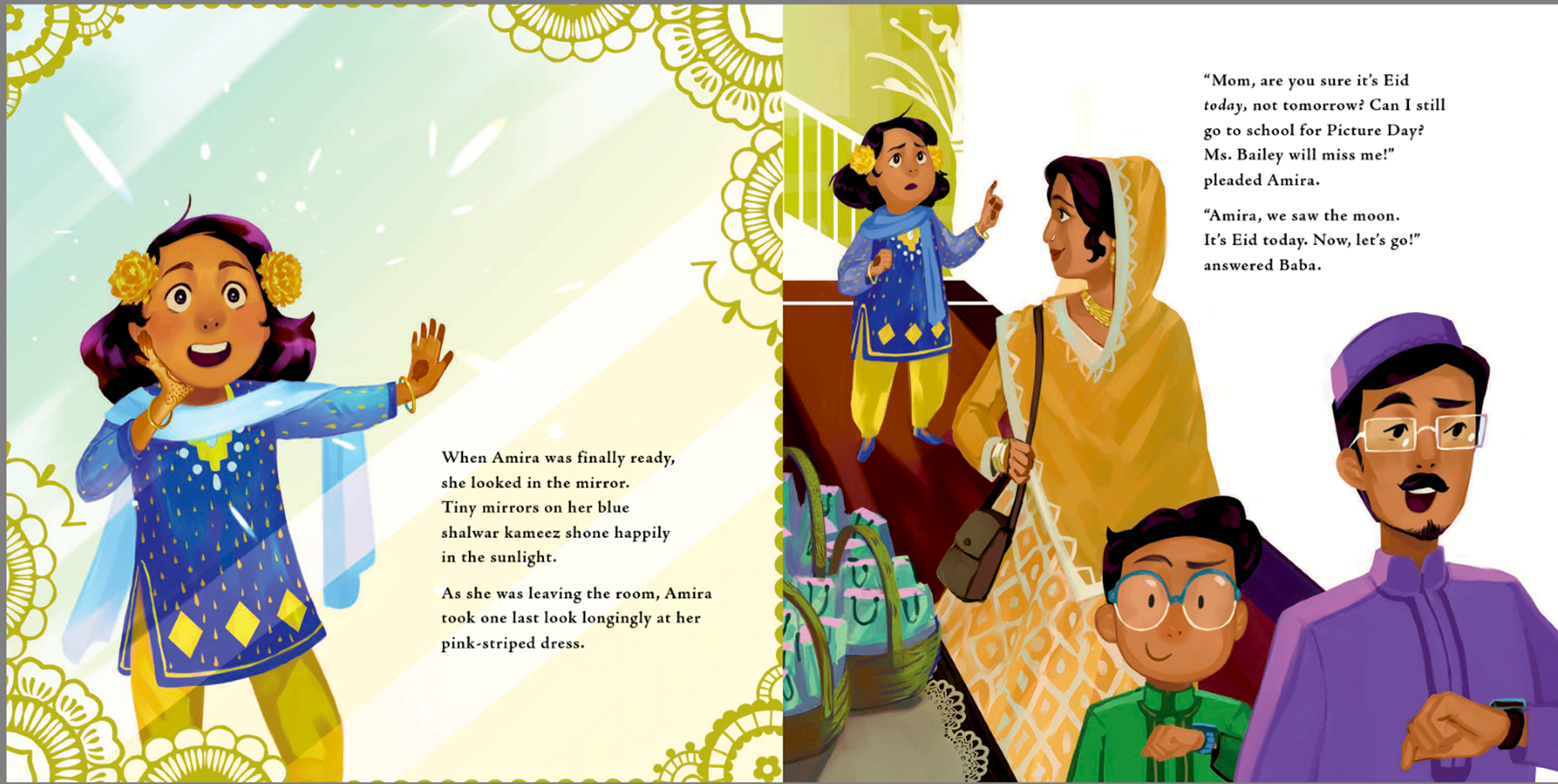
Amira loves going for prayers and the party after, but she is kept awake at night worrying how her classmates will remember her if she isn’t in the picture. The next morning she is excited, it is Eid, but seeing her pink dress hanging next to her blue Eid outfit makes getting dressed a heavy process.

amira6

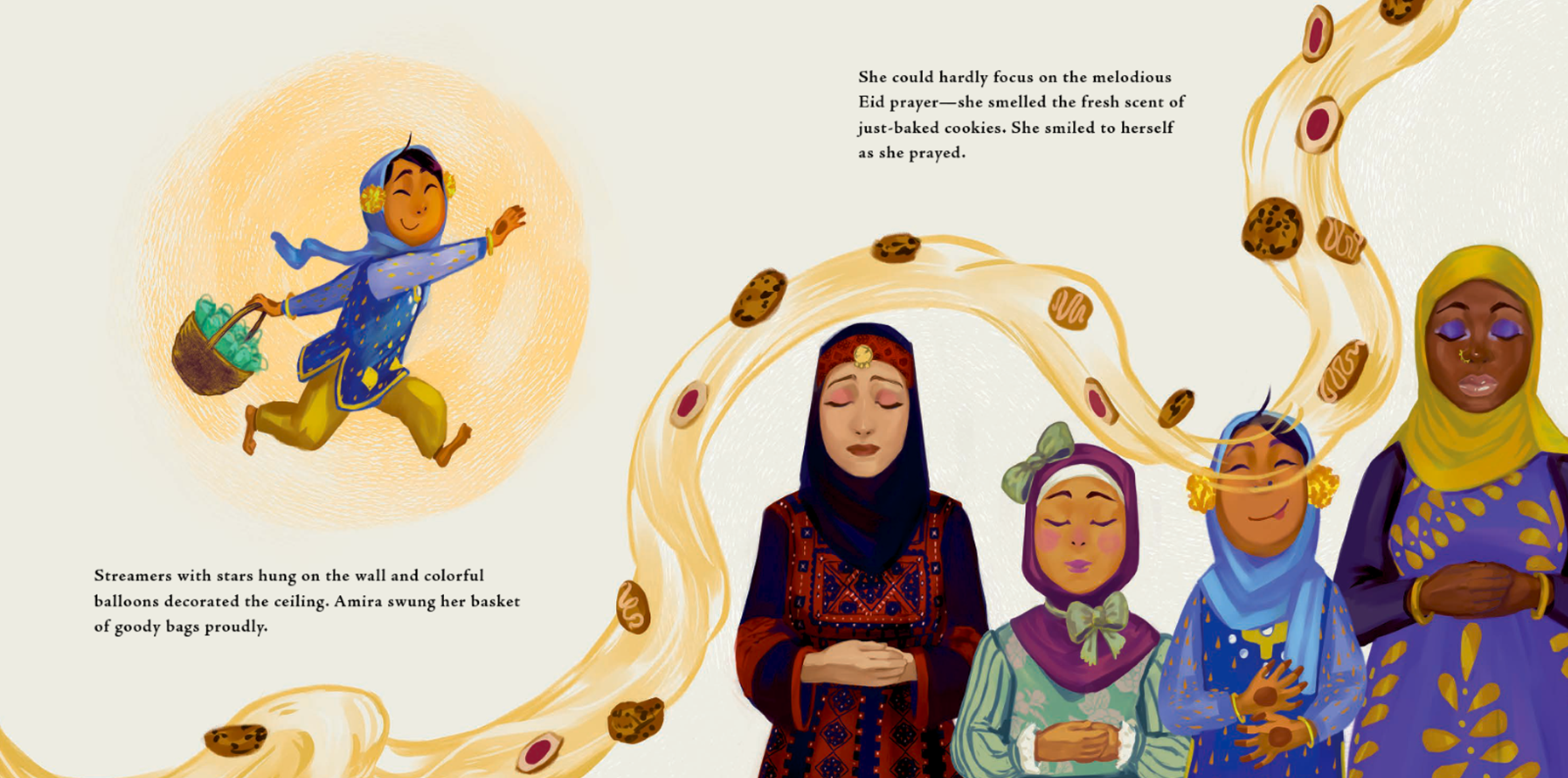
When they get to the masjid, Amira hardly recognizes it, it is all decorated and everyone looks beautiful. The smell of baked goods makes focusing on her prayers difficult, and after when everyone is taking pictures she remembers what she is missing and feels deflated.

amira3

On the way home Amira works to hold back the tears, when she suddenly has an idea to take the remaining goody bags to her classmates, and maybe catch her class pictures. Her parents agree and they stop at the school.

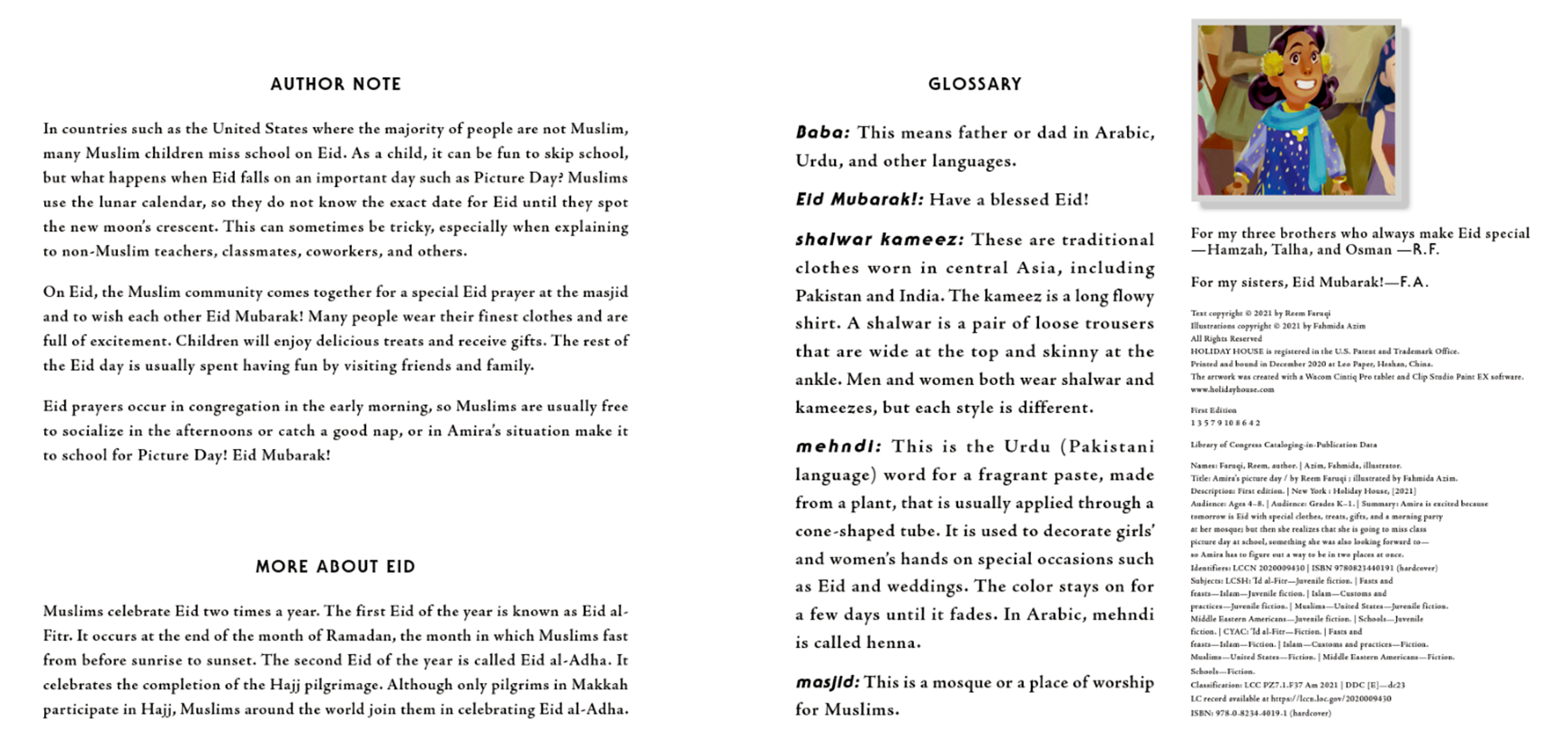
I won’t spoil if she made it in time, but the kids in her class love her clothes, and her mehndi designs. The book concludes with an Author’s Note, More about Eid and a Glossary.

amira2

I absolutely love the illustrations, little Amira is infectious and endearing. I wish the mom would have been a little more in tune with Amira’s feelings though, she definitely is upset and while I’m glad the family stopped after the Eid party, I feel like more could have been done beforehand to acknowledge Amira’s feelings, and see what could be done to accommodate both activities.

amira7

I love the diversity and brightness of the book to convey the absolute joy and happiness of Eid outside of presents. I think the book works for all children of all backgrounds and is a much needed addition to the repetitive Eid books available.

Sadiq and the Ramadan Gift by Siman Nuurali illustrated by Anjan Sarkar

Standard
Sadiq and the Ramadan Gift by Siman Nuurali illustrated by Anjan Sarkar

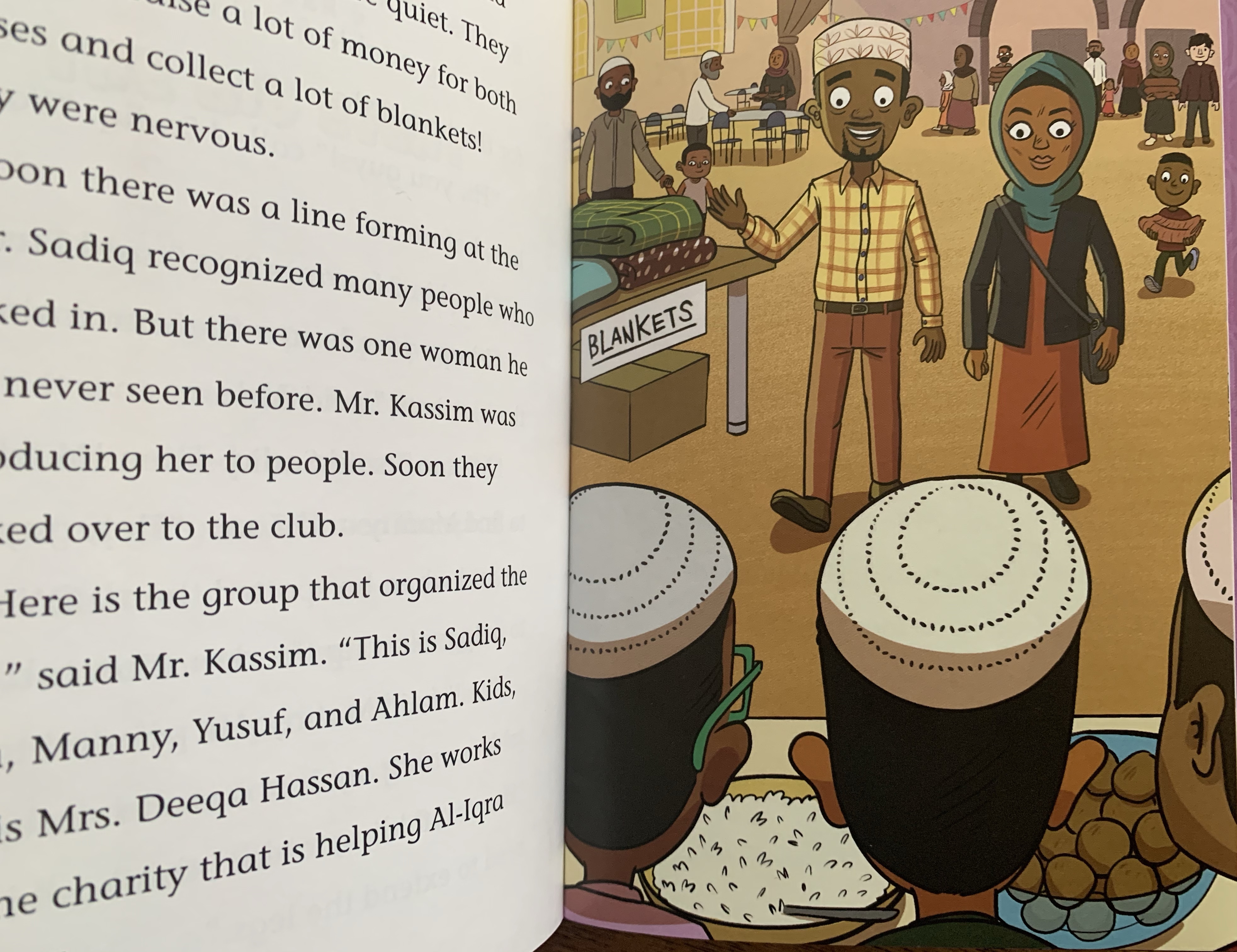
img_8554This 65 page early chapter book in the Sadiq Series does a great job of introducing Ramadan, giving a glimpse of Somali culture, and conveying a relatable and engaging story about friends with a lesson/reminder about the values of communication.  A group of boys hosting a fundraising iftar to help a school in Somalia have to figure out the logistics, the marketing, the cooking, and the execution, as they become socially aware and active in helping meet the needs of their community, both locally and afar.  This OWN voice tale doesn’t shy away from authentically drawing on religion and culture to make characters and a plot that all readers can enjoy.  The book is not preachy, but the characters know who they are in their manners, dress, speech, and environment.  A great book any time of year for first grade and up.

img_8555

SYNOPSIS:

With Ramadan starting in a few days, Sadiq and his friends at the Dugsi are reviewing the importance and values of Ramadan.  This year the masjid is raising money for a school in Somali and the students are encouraged to help, as sadaqah, or charity, is especially important during Ramadan.  The boys decide to host a fundraising iftar at the masjid and with parental help to coordinate with the Imam, the kids have to figure out how to get enough food, get the word out, get set up to take donations and more.  They make flyers, set up a website and shoot a small video.  The once excited Zaza, however, is no longer very enthusiastic in the Money Makers Club and Sadiq can’t figure out why, but with so much to do and little time to get it done, more friends and family are brought in to help, and things continue on.  When Zaza tries to tell Sadiq he wants to do his own fundraiser, Sadiq doesn’t want to listen.  I’m not going to spoil if the two friends work it out and how they handle the two ideas, but it is a good lesson in friendship, communication, and charity, Alhumdulillah.

img_8556

WHY I LIKE IT:

I love that the story starts with information about Somalia and words in Somali as well as a picture of the family.  There are activities and questions at the end as well as a glossary of religious, cultural, and English vocabulary words. The book doesn’t assume that the reader knows anything about Islam or Somalia, nor does it assumer that the readers don’t.  It strikes a balance of not talking down to the reader or getting too wordy.  It simply provides the information needed if you are curious, but allows the story and the boys dilemma to take center stage.  The whole series is remarkable in showing diversity and relatability with good quality story telling.  I think this is the only book in the series that has a religious theme, I could be mistaken.  The illustrations show the boys in kufis and the women in hijab.

img_8557

FLAGS:

None

img_8558

TOOLS FOR LEADING THE DISCUSSION:

Every elementary school library and every first through third grade classroom library should have this series.  I know my public library has it, and the copies I get from there seem to be worn and loved.  The age is too young for a book club, but would be great in small groups or for outside reading with the short chapters and engaging illustrations.

Ramadan by Lori Dittmer

Standard
Ramadan by Lori Dittmer


img_8544

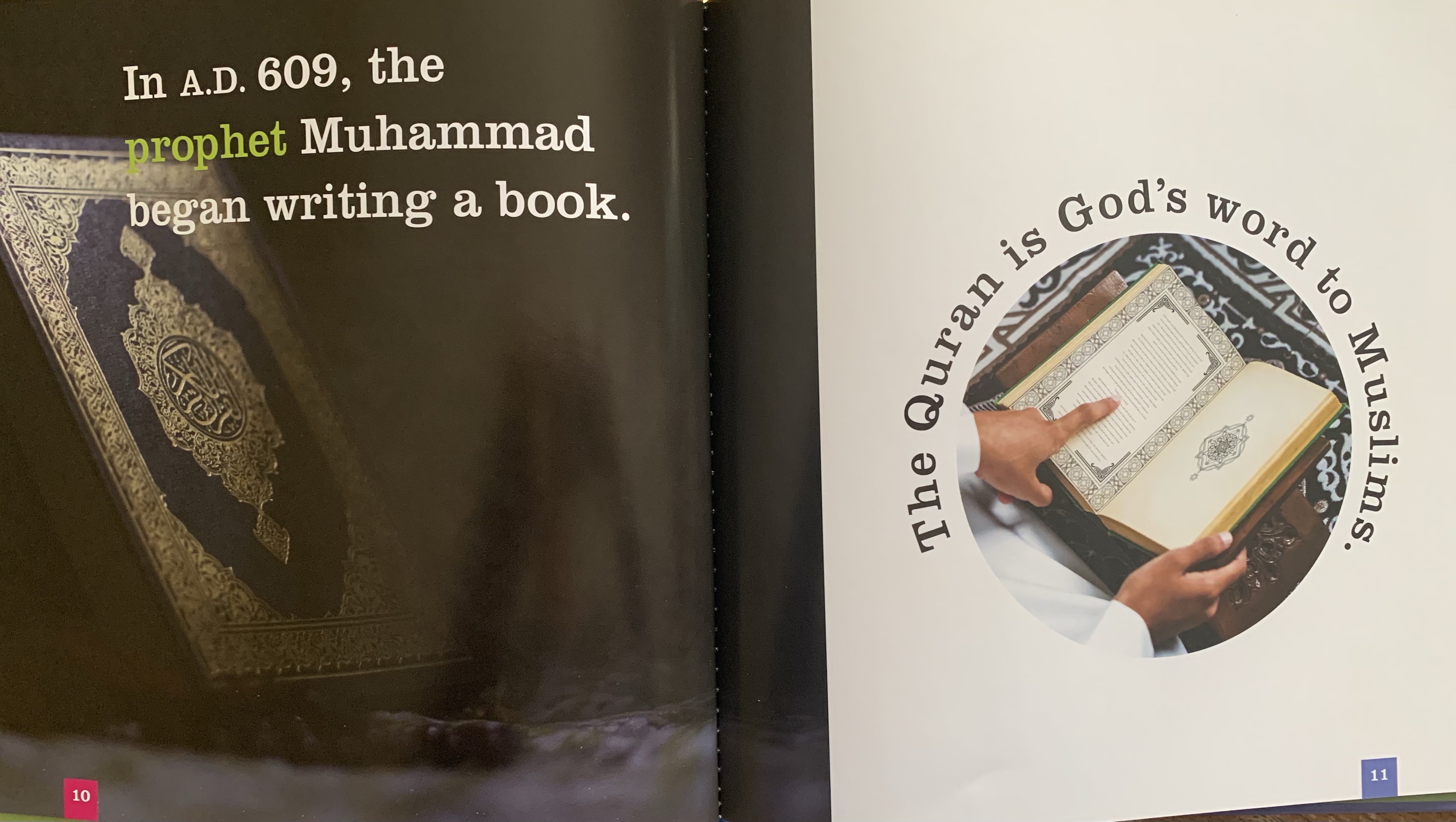
I understand and appreciate that every time a series of holiday books come out Ramadan is bound to be included, but this 2021, 24 page kindergarten geared nonfiction book really offers nothing new.  In fact, while the realistic photographs on each two page spread are nice, I take issue with the page that says, “In A.D. 609 the prophet Muhammad began writing a book.  The Quran is God’s word to Muslims.” First of all, Prophet Muhammad (capitalize the P please), didn’t write the book and the Quran is for all people.  

img_8539

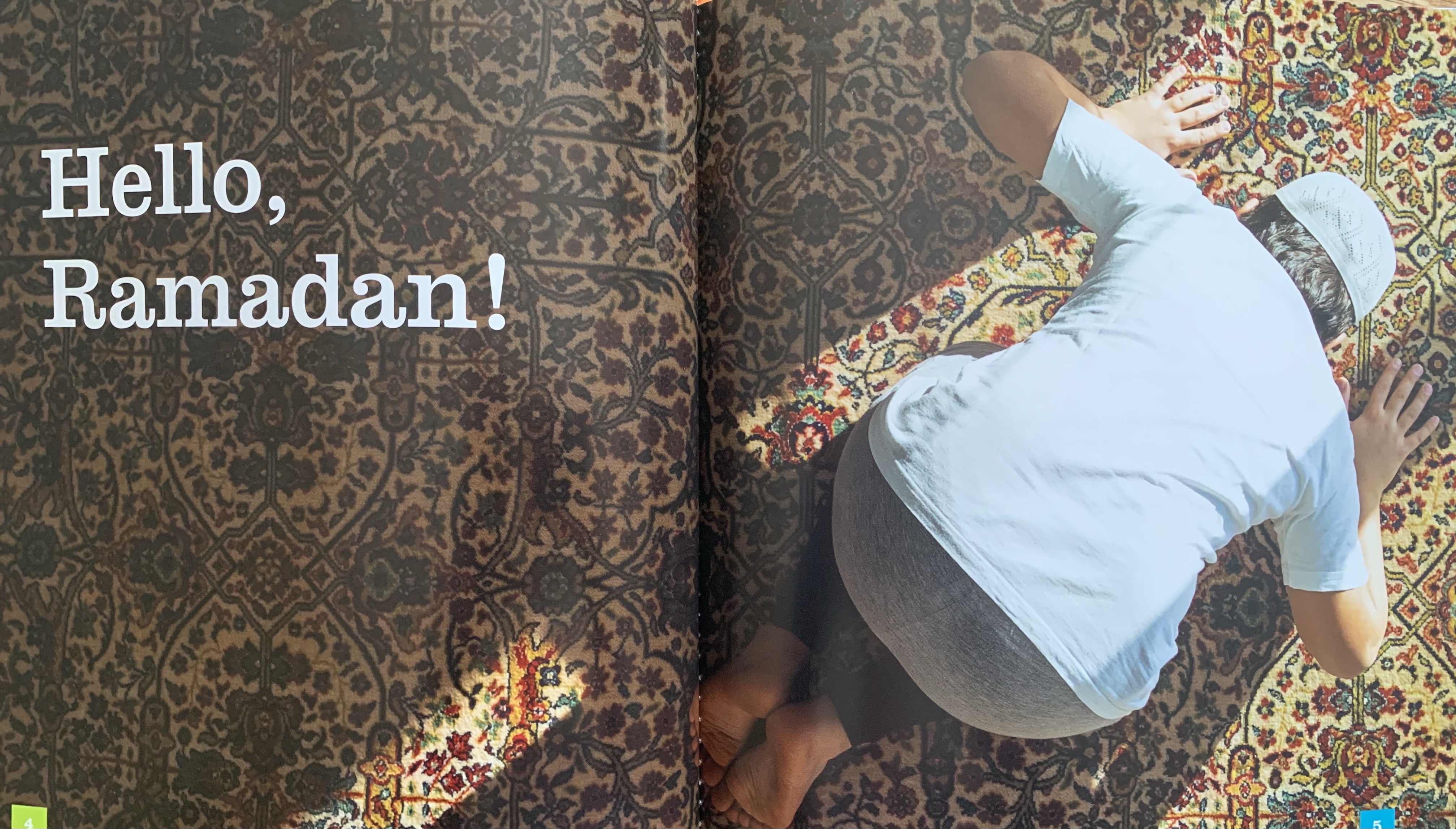
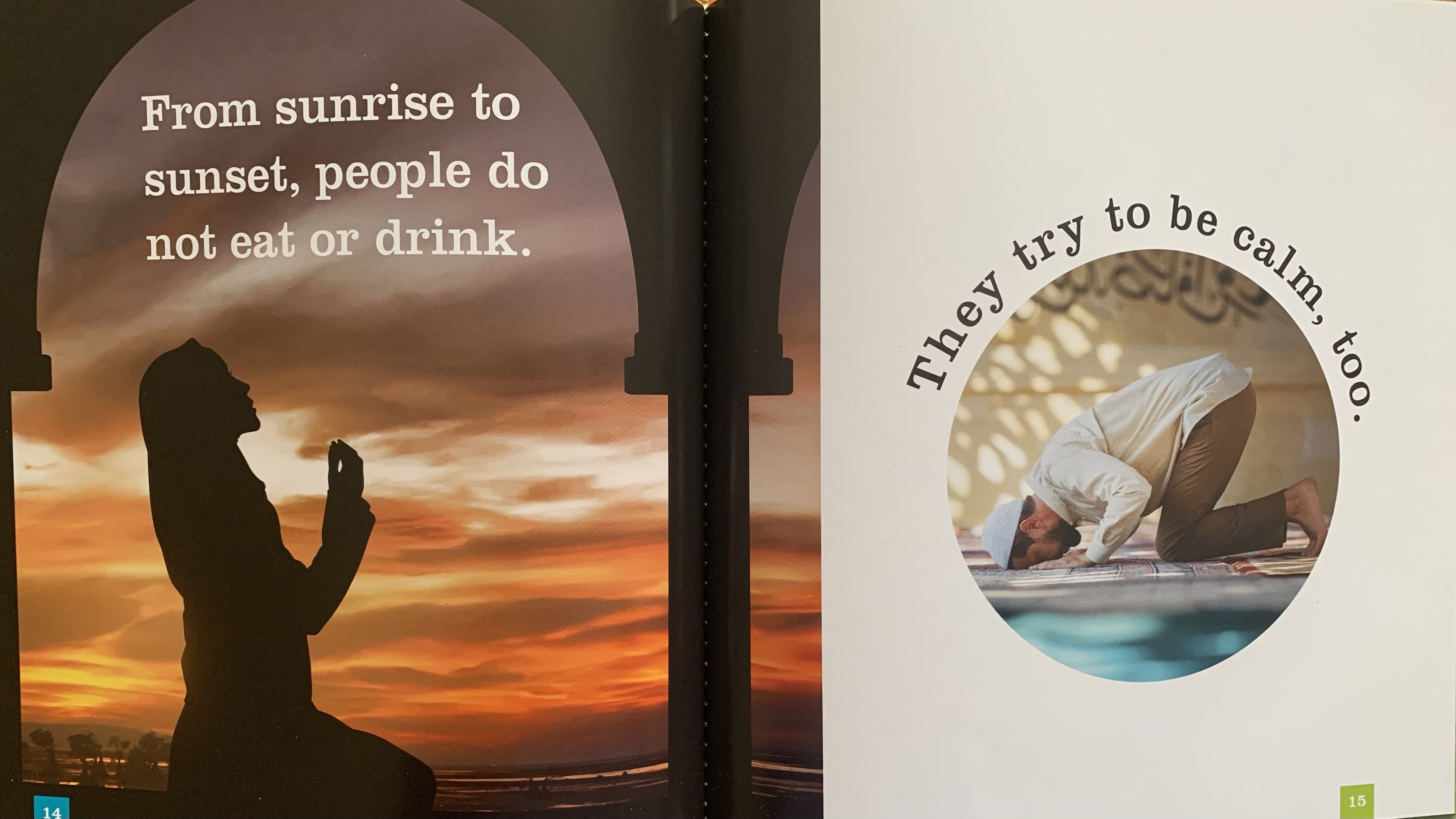
The book starts out welcoming Ramadan and showing a child in sajud, without explanaition, I wonder and worry how a non Muslim child woud understand this act.  Would they take it as an act of worship? Not sure.

img_8542

The next page mentions Ramadan as a time of prayer and thinking of others before explaining that it is the ninth month of the Muslim year and starts with the new moon.

img_8543

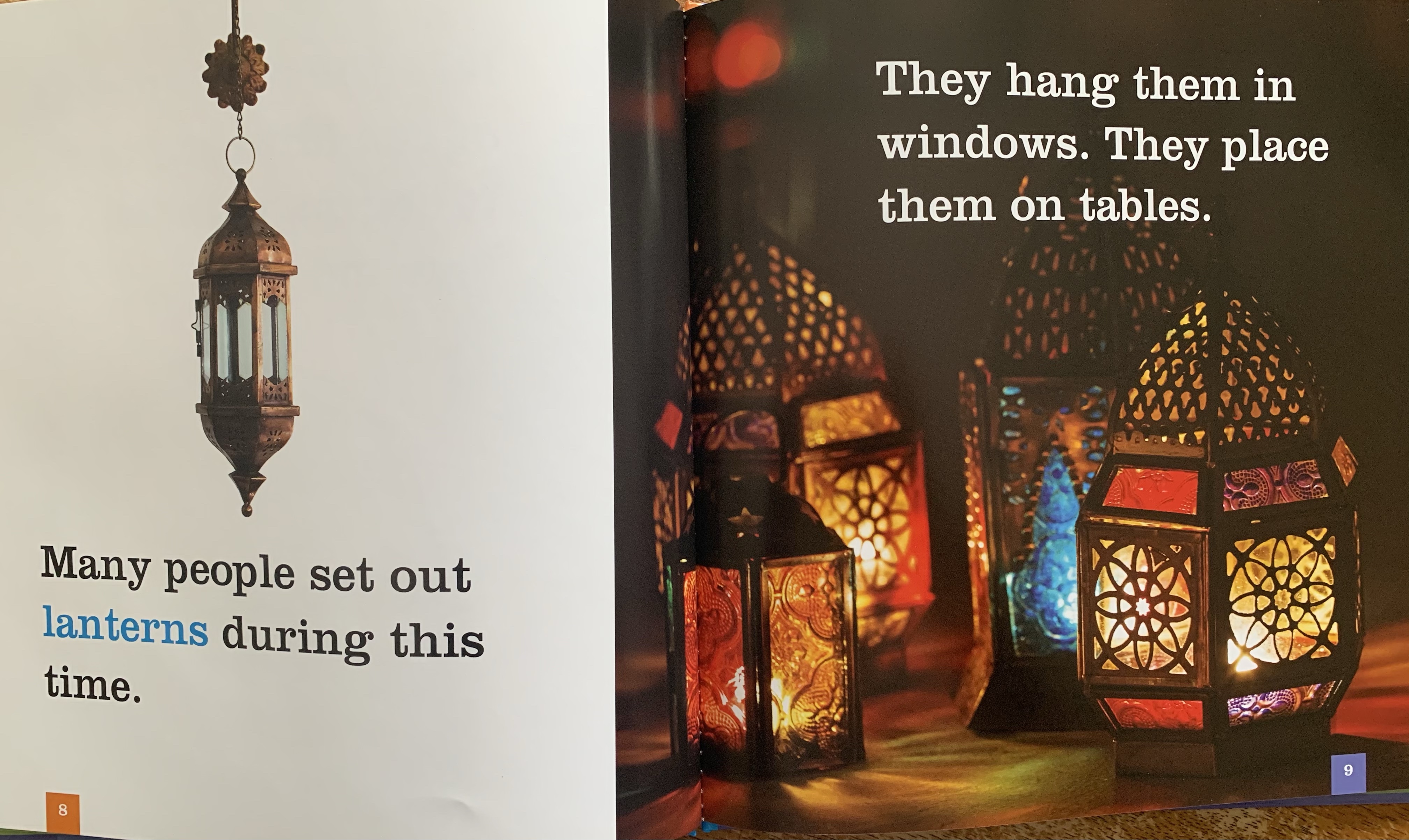
It then details that lanterns are set out and hung in windows by many, but doesn’t tell why or hint at cultural reasoning.  The problamatic page follows, and then it shows an older man reading Quran and says that some repeat the whole Quran during the blessed month.

img_8540

I like that it mentions that from sunrise to sunset people do not eat or drink and that they try to be calm.  At night people eat dates and drink water and share a meal called iftar.

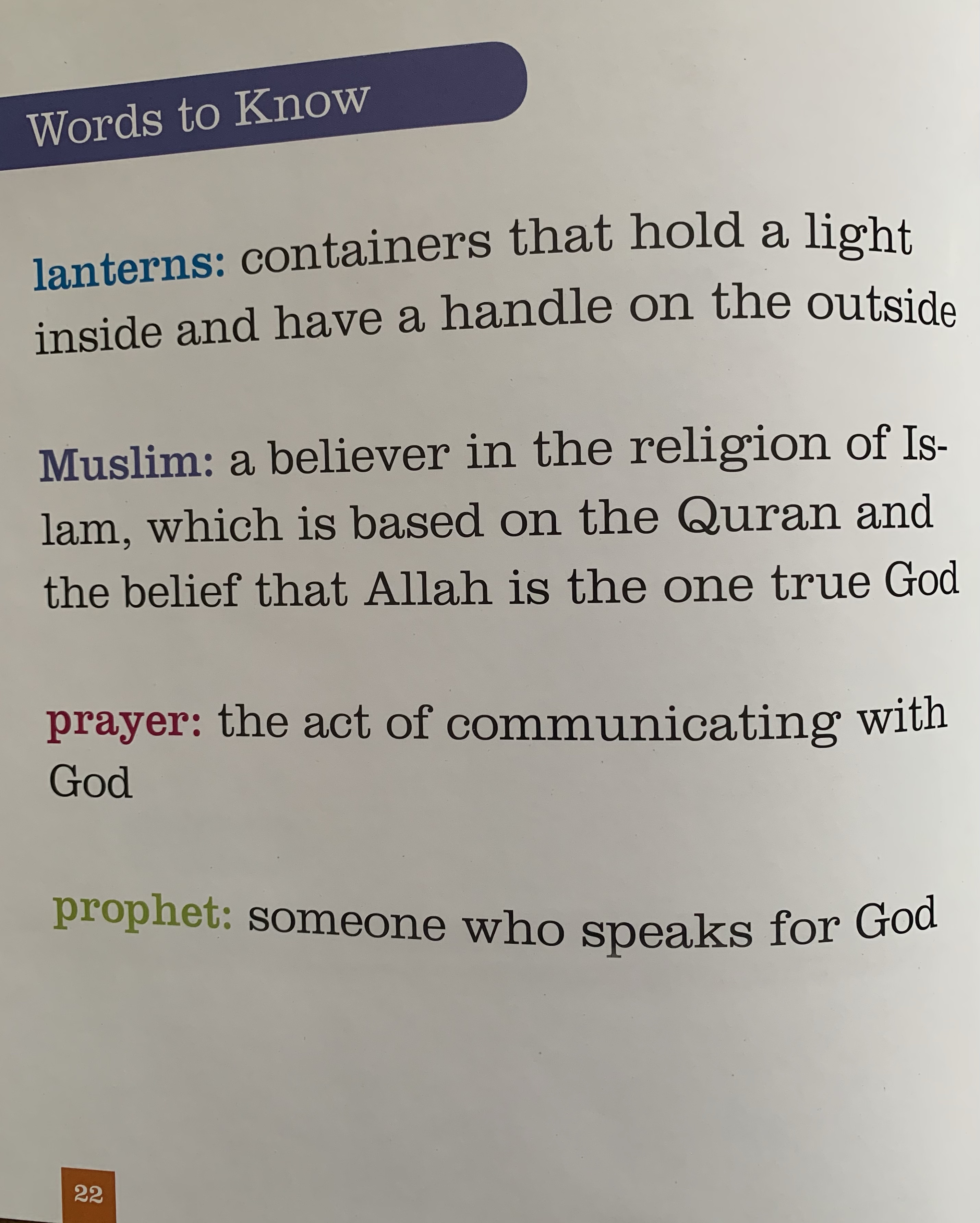
There are then pictures of Ramadan, a lantern, iftar, dates and Quran, before a page of vocabulary, further reading suggestions and an index conclude the book.  The definition for prophet, seemed a little off for me, “someone who speaks for God.”  Why not say someone who spreads God’s message?

img_8541

I wouldn’t encourage this book be shared with little ones, or in interfaith, like I said, there are much better fiction and nonfiction books about Ramadan for this age level.


Red Shoes by Karen English illustrated by Ebony Glenn

Standard
Red Shoes by Karen English illustrated by Ebony Glenn

img_8529

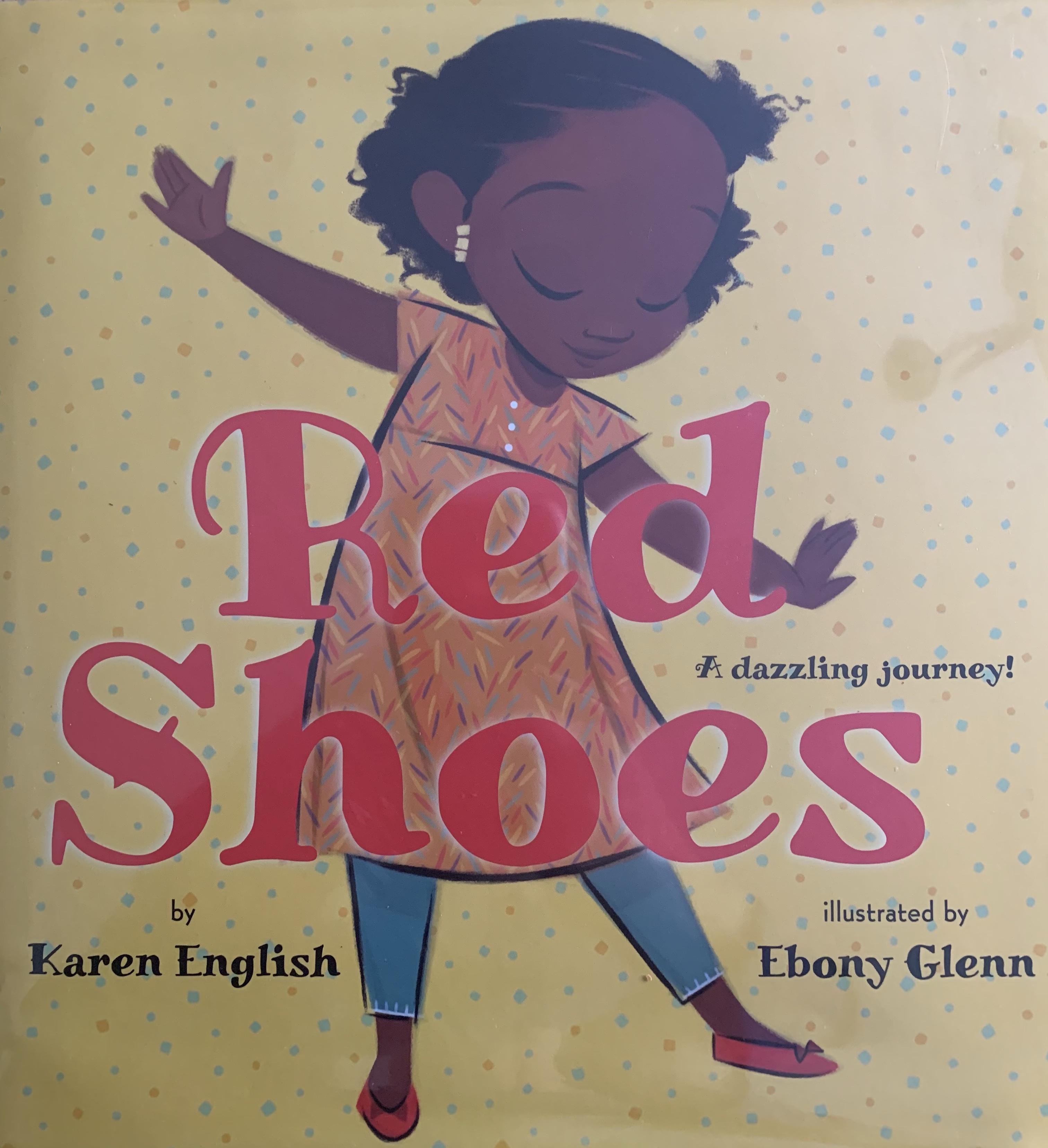
This delightful 32 page picture book links two girls, two ends of the world, two cultures and two stories together with a pair of red shoes.  The short sentences pop with action and the perfectly illustrated two-page spreads convey relatable emotion and joy.  The beloved shoes travel on the feet of one character to a wedding, Christmas dinner, and birthdays, they are then are donated and journey to West Africa to be given as a gift for a little girl who fasted half of Ramadan.   The message I hope children ages three and up will get from the story, is that we are more alike than different, that we should take care of our things (amazingly the shoes weren’t worn out), and that we should donate things of good quality that we ourselves value.  I hope it doesn’t lend itself to perpetuate the stereotype that we can send our castaway items to Africa, being the author comments in her bio on the back flap that her husband is from West Africa and that she frequently visits there, I’m hoping that this is just me being overly cautious in the messaging, and nothing is being implied or negatively taken from a casual reader.

img_8530

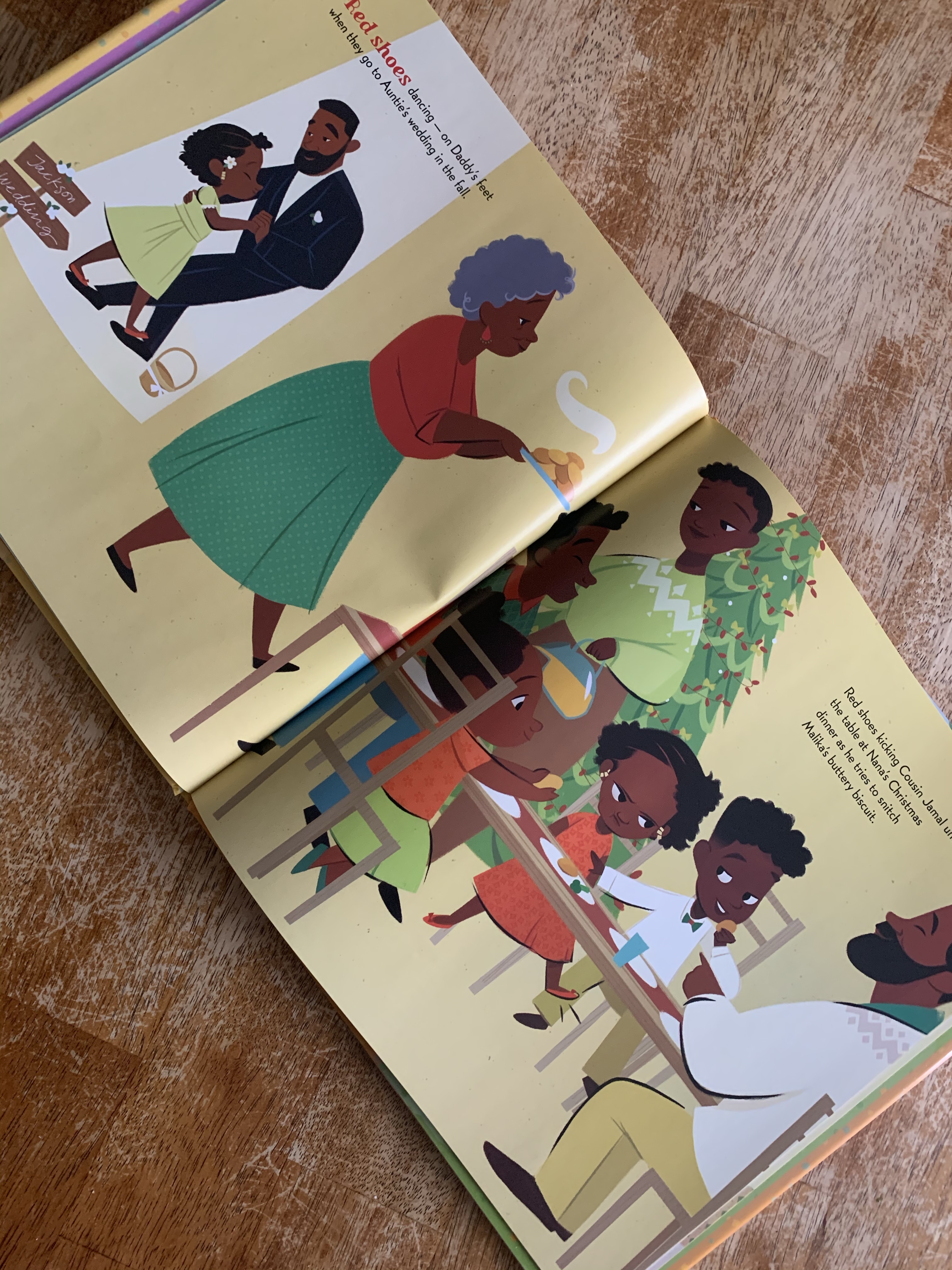
Malika and her Nana see a pair of dazzling shoes perched in the window, and Malika is enamored. Her grandma later surprises Malika with the shoes.  She quickly tries them on and tests them out.  She keeps them safe from the rain and dances with them on at her Auntie’s wedding.  She kicks her cousin Jamal with them on, under the table at Christmas when he tries to steal her biscuit.

img_8531

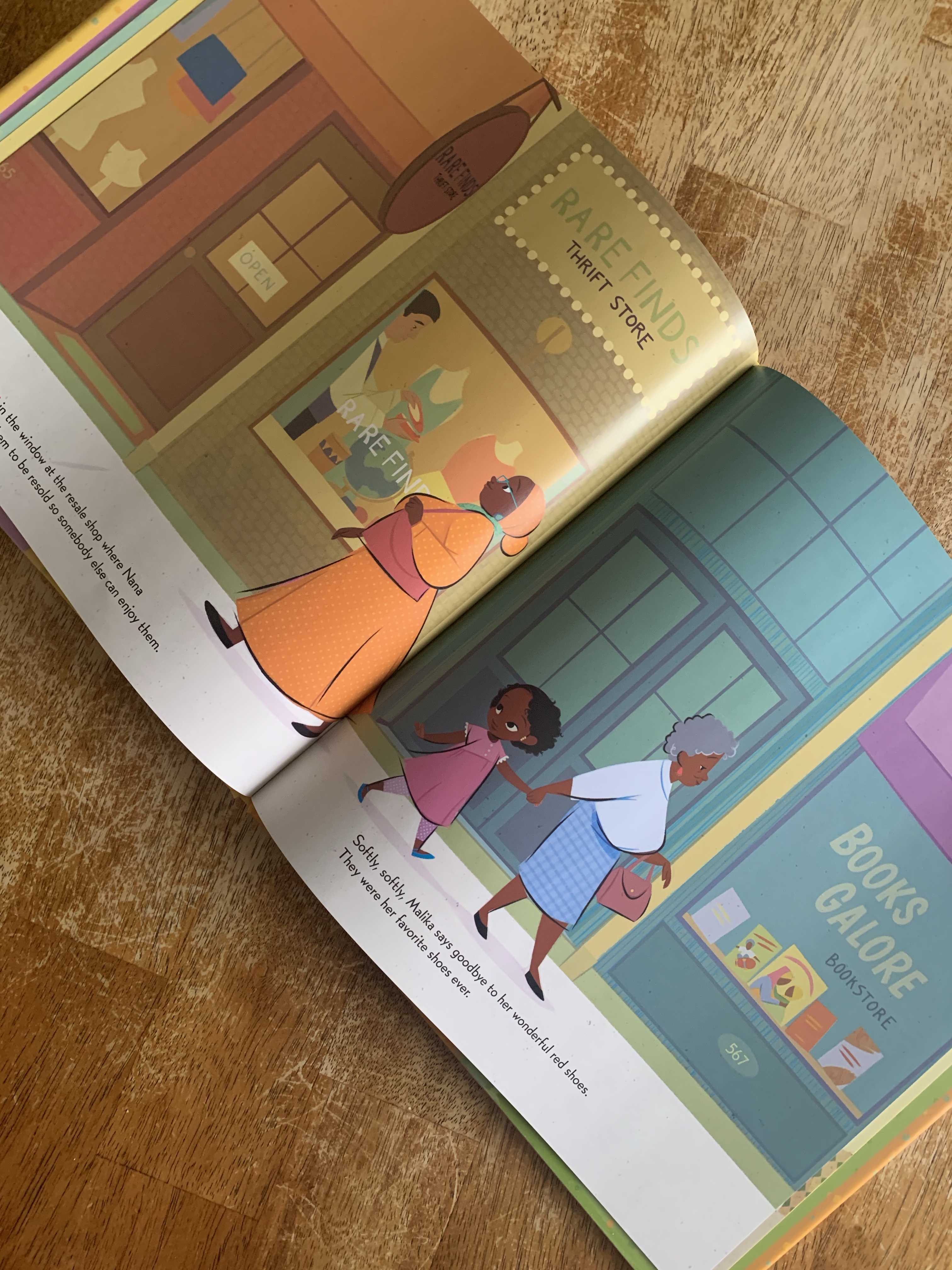
She stomps away from her best friend in her red shoes, and jumps double Dutch with them on when she makes up with her friend at her birthday party. But at Nana’s birthday, “the shoes don’t let her forget that her feet have grown.” Nana and Malika take the shoes to the thrift store to be resold.  A sad Malika says goodbye to them, they were her favorite shoes ever.

img_8532

Inna Ziya sees the shoes in the window and knows just the little girl who will love them.  She squeezes them in to her suitcase and they are off to Africa. They wait under a table selling claypots in a market waiting for the girl who fasted half the month of Ramadan.

img_8534

When Amina comes holding her mother’s hand, Auntie Inna Ziya delivers the promised gift.  Amina thinks they are beautiful and lovingly carries them in the box on her lap as they fide the tro-tro home.  Amina’s little sister Halima, can’t wait to see the gift as she too hopes to one day fast in Ramadan.

img_8535

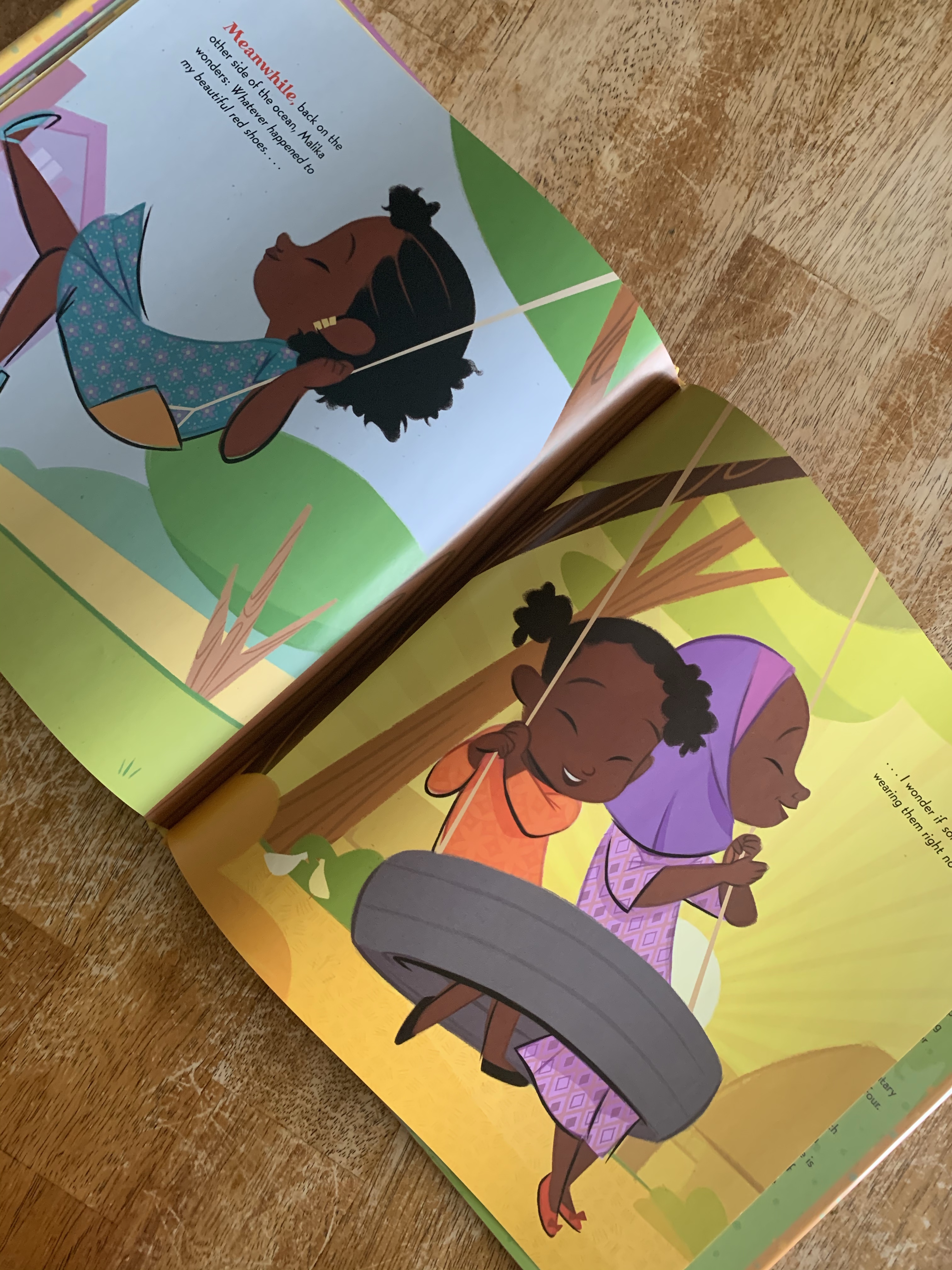
Amina lets her try them on and when she outgrows them she plans to pass them on to her.  Meanwhile, Malika is wondering whatever happened to her beautiful red shoes, and if someone else is wearing them.

img_8536

There is no mention of Islam nor is Ramadan explained.  There are women in hijab in America and in Africa, even in the books in a shop window there is representation.  I particularly love the shout-out in the illustrations to “Mommy’s Khimar.”

img_8533

The front of the book has Malika, and the back, Amira.

img_8537

Samira’s Trip to the Masjid by Yara Kaleemah illustrated by Aveira Cartoon

Standard

img_8520

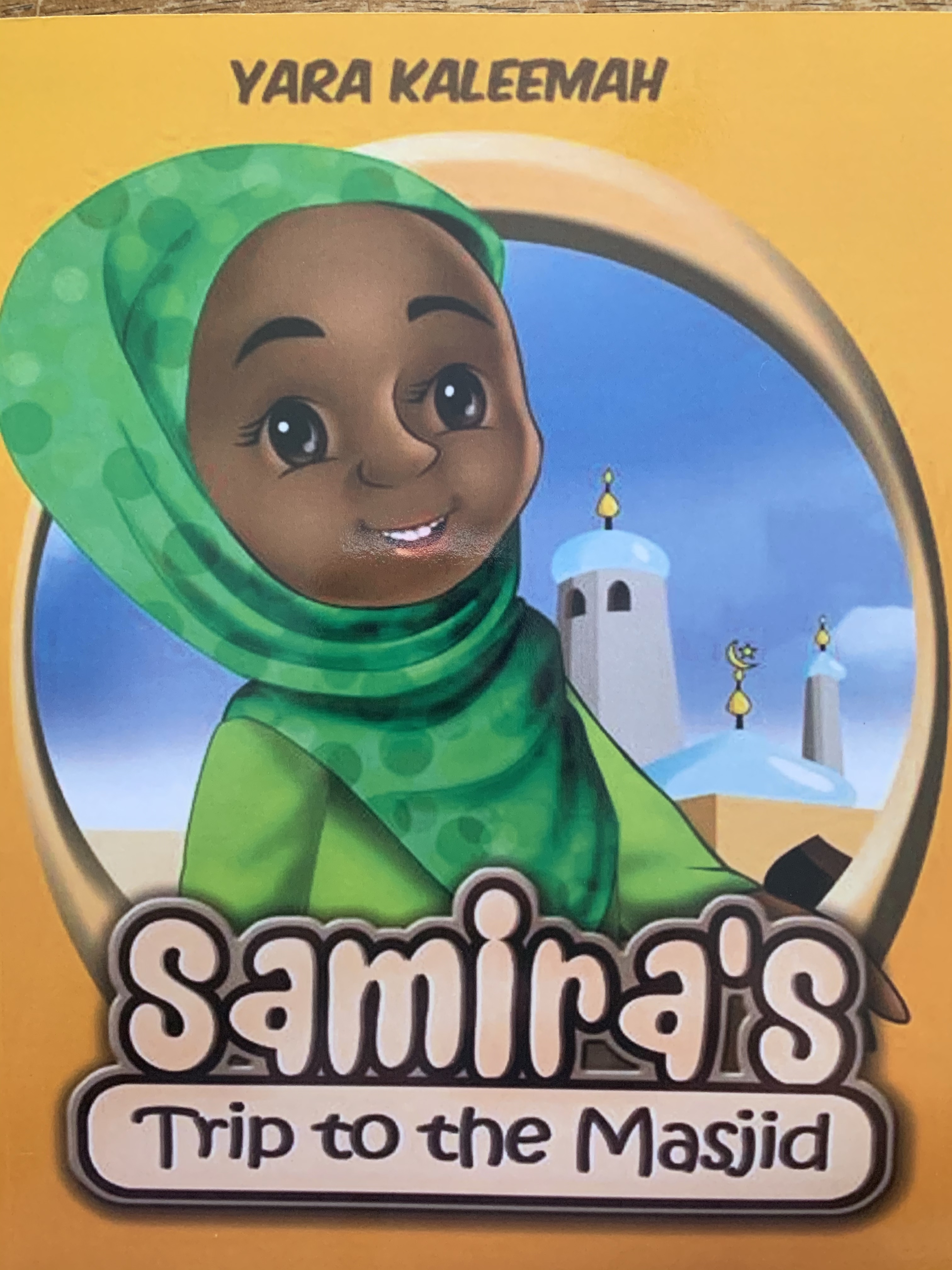
I’m a big fan of books featuring BIPOC leads in everyday situations, but when the quality of the product is subpar, I truly am conflicted if I should mention the book, or just tuck it away and pretend I never read it.  I’ve had this book tucked away for a while now, but I am pulling it out to bring attention to the importance of editors, proofers and revising.  The bar has been raised, Islamic fiction is becoming more and more mainstream.  The quality of many self published books rival and exceed traditionally published options, that to be putting out content that contains grammar errors (missing words, punctuation, random line breaks), spelling errors, voice and point of view inconsistencies, illustration errors, and content mishaps in a 26 page picture book, is not acceptable.  I feel like you are hurting the goal of representation and reflection, more than boosting it, when it is not well done.  I know that is harsh, but sadly minorities always have to do things better, it isn’t right, but it is the way it is.  You can argue my opinion that the story is too wordy or text heavy, but the technical components and final package in a $12 book, really need to be resolved.  The overall concept of the story is lovely: the Islamic details, the reminders about the sunnahs of Jummah, the little girl being excited to wear her favorite scarf and see a friend at the masjid, it really had a lot of potential.

img_8522

Samira greets the reader with As Salaamu Alaikum, as the fourth wall is breached and introduces herself as being a Muslim.  She then explains what being a Muslim is and tells the reader it is Jummah.  She asks her Ummi why we go to the masjid on Friday, before chiming in with all the information she in fact does know about Jummah.

img_8524

The next page details wudu as she prepares to go to the Masjid.  She then explains hijab as she tries to find her favorite green khimar with polka dots.  The words hijab, scarf and khimar are used interchangeable, causing a bit of confusion,  She explains that hijab is required by Allah swt to guard your chastity and that He also requires us to wear a khimar to the masjid.  I wish it would have clarified that we have to be covered when we pray, not necessarily just going to the masjid as she is a child, and many masjids are more than just places to pray, often having community halls and gyms.

img_8525

As the story continues she cannot find her favorite khimar no matter where she looks.  Ummi tries to give her some places to check, but in typical mom fashion, Samira can’t find it anywhere, and mom can find it immediately.  Samira shares some information about wearing your best clothes and they are off to the masjid not wanting to be late and hoping to get to the masjid first as the angels keep a record.  She finds her friend, and settles in to listen to the khutbah (misspelled as “Iman’s lecture” in the book).

img_8527

The conclusion of the book says “that even though Samira couldn’t find her favorite khimar, she was happy to take a trip to the masjid…”.  But she did find her favorite khimar? And on the very last page she is wearing the same shirts as she was at the masjid, but the polka dots have vanished from her green scarf?

img_8526

I’m hoping the author, illustrator, and publisher will clean up the book and someday republish it, we need these voices and images.

The Great Hair Exchange by Asmaa Hussein illustrated by Milton Bazerque

Standard
The Great Hair Exchange by Asmaa Hussein illustrated by Milton Bazerque

img_8398

I don’t know if twins plot and plan to trick people, but I think those of us that are not twins, and don’t have any in our immediate family, all assume that switching places with someone who looks exactly like us, would be a regular prank with hilarious outcomes and convenient benefits. Two twin Muslim girls with different hair and vastly different personalities learn to love themselves, appreciate how God made them, and get reminded that sneaking has consequences, all while evoking giggles from the reader throughout their adventurous day in each other’s shoes (hair?). This 32 page full-color, high-gloss, fantastically illustrated book is filled with silliness and lessons that will appeal to children five and up.

img_8392

Bushra and Roda, are nearly identical, except Roda has curly hair, and Bushra’s is straight.  They often want to try different hairstyles, but their parents tell them they should appreciate how God made them and they can experiment when they are older.  The girls decide that their parents, with their perfectly wavy hair, just don’t understand and sneak in to their parents’ bathroom before school to straighten and curl their hair accordingly.

img_8393

Surprised at the final results, “You look like me!”The girls realize they are going to get in trouble and decide to switch clothes and backpacks and head off to school.  At school the girls are ushered in to each other’s classes by their teachers despite their protests that they aren’t who they look like.

img_8394

The girls carry on as each other struggling in classes they normally excel in, get annoyed by their hair, and suffer through lunches that they don’t like.  Roda even fools herself as she bumps into a mirror thinking she is going in to hug her sister, and Bushra is startled by a spider that Roda loves.

img_8395

After school their dad drops them off at their after school activities and still doesn’t suspect a thing. Roda goes to Bushra’s soccer game and Bushra to Roda’s girl scout hike.  When it starts to rain, the girls’ hair returns to its natural state and when they get picked up, they have a lot of explaining to do.

img_8396

The girls are reminded that hair gadgets require supervision, that God made us all unique and being dishonest is not ok.  From here on out the girls still prank their friends and teachers, but do so with their parent’s knowledge.

img_8397

The book is fun and silly and for both Muslim and non Muslim’s alike.  It uses the word God, not Allah, and while the mom wears hijab, and the girls do on the last page, there is nothing Islamic or even Islamic specific in the book.  I feel like the grammar on the last page is off, but nothing too major.  The book ends with five discussion questions.