Category Archives: Elementary Fiction

The Prophet’s Pond by Zaheer Khatri

Standard
The Prophet’s Pond by Zaheer Khatri

prophets-pond.jpg

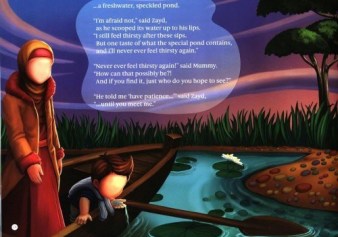
Based on the hadith as narrated by Saheeh Al-Bukhari, “Remain patient until you meet me by the pond.”  The book follows a little boy (and his mom) searching for the pond mentioned in hadith as the place Prophet Muhammad (saw) will be waiting for us in the hereafter.

the_prophets_pond_2.jpg

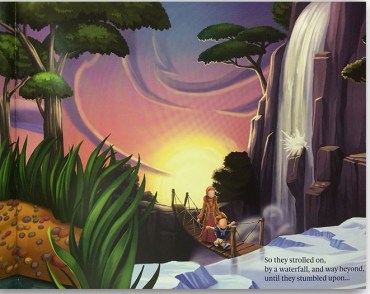
The beautiful, faceless pictures, radiate with beauty and light as they journey from pond to pond in search of one that has all the characteristics of the one described to us.  One that takes a month’s journey to cross one of the sides, one that is whiter than milk, smells better than musk, is colder than ice, is sweeter than honey, that has as many cups to drink from as stars in the sky, and one that if you drink from it you will never be thirsty again.  theprophetspondinside3.jpg

The mother is brought along on this journey to help, and it takes her a few ponds to figure out who her son is hoping to meet in this 23 page hardbound book.  But alas, the rhyming stanzas come to an end and she advises her boy, and the reader, to live the way the Prophet instructed to, inshaAllah, in the akhira meet him by his pond.

The book is perfect for 3  to 7 year olds, with older children enjoying a reading or two as well.  

the_prophets_pond_3.jpg

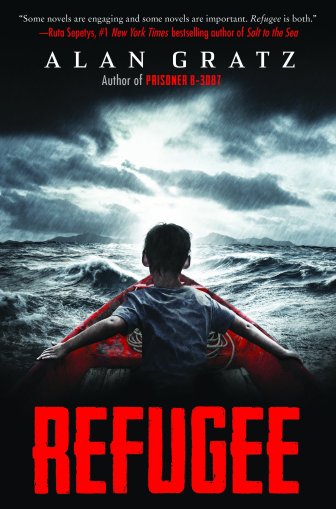
Refugee by Alan Gratz

Standard
Refugee by Alan Gratz

refugee.jpg

I debated whether I should read this book, or listen to it as an audio book with my children, ages 2,7,8,11.  The AR level is 5.3 and Common Sense Media suggests 10 and up because of the intensity, but knowing my kids are aware of some of the heartbreak the book discusses from other fictional works and the news, I decided to share this emotionally powerful book with them.  Tears were shed, discussion occurred, and the stories I pray will haunt and bother my children for years to come, inshaAllah resulting in compassion and action.  

The book is 338 pages with maps, references, ways to help, and acknowledgements at the end.  The audio book is just over seven and a half hours.

SYNOPSIS:

Three kids stories are told in pieces as they occur in different time periods, in different parts of the world, and for different reasons, but the heart of the stories are not the differences, but the similarities that all three share.  The real life parallels of each horrific event, and how small the world suddenly seems, is amplified by the ties that connect these fictional stories to one another.

Josef is a Jewish boy living in 1930 Nazi Germany.  When his father is released from a concentration camp; he, his mom, and younger sister Ruthie board the MS St. Louis headed for Cuba to try to find a new life.  However, Cuba refuses to let them in, and Josef’s father cannot escape the ghosts from his time in a concentration camp.  Returned to war in Europe, the family is once again on the run from Nazis and not all survive.

Isabel is a Cuban girl in 1994. Unrest is growing in Havana and when Fidel Castro says people can leave, her family: Grandfather, dad, and pregnant mom, join their neighbors in their makeshift boat to try to reach El Norte.  The shark filled waters, tankers, getting blown off course, and a temperamental boat engine, all pose as obstacles for the family trying to get on dry land to avoid being sent back to Cuba by the US Coast Guard.  

Mahmoud is a Syrian boy in 2015 who’s life has been altered by the civil war, but when their home is destroyed by explosians, they must leave right then.  His parents, younger brother Waleed, and baby sister Hana,  begin walking, their journey will travel through many countries as they seek the promised land of Germany.  Along the way they will be held at gun point, be forced into detention centers, walk for days and put their lives at the mercy of the Mediterreanean Sea in a flimsy rubber dinghy. 

WHY I LIKE IT:

I love that this book takes huge pivitol historic events in our life time and gives them a face.  Numbers are often numbing as they are difficult to grasp, and political motivations are often so hard to understand in their complexities, that this book does a marvelous job of making it about the person, about the humanity at stake.  I challange any one, especially those opposed to letting refugees in, to not cheer these three on, to not get irrated by those that willingly can help and chose not to, and those being relieved when people finally do see them and do help.  Its amazing how far a little kindness can go, and seeing it in tangible terms is powerful.  Yes, taking into your home a refugee is a huge kind step, but so was the giving of water and asprin to Isabel and her family, or giving of clean clothes and a ride to Mahmoud and his family, or removing the protrait of Hitler from the Social Hall during Josef’s Bar Mitzvah, all little kindnesses that hopefully we can rememember.

I love that the author got Mahmoud’s religion right.  They stop and pray, they make duas, their cell phone apps for salat times all ring at once, they are Muslim and their religion is mentioned as they practice it, not as a storyline.

Overall, I was impressed at the book.  Many reviews online found issue with the structure of the stories being broken up and seperated, but listening to it, atleast, made them feel incredibly connected.  I absolutely enjoyed seeing the parallels of each story and the humanity of each chacter shine through.

FLAGS:

The book has a lot death, and violence, and it is intense, but, it is not glorified and it isn’t too graphic.  It is done tastefully to make a point and keep it real, but not to overwhelm the audience or sensationalize the events, although I don’t know that any fiction, could be worse than the reality endured during these time periods.

TOOLS FOR LEADING THE DISCUSSION:

A map, would be awesome, a big one.  I like that the author gives some tips to help, but I think more on hand would be beneficial as the urge to help others is pretty intense after listening to/reading the book.  Especially ways to get involved in Syria, as the struggle is still ongoing.  

There are lots of tools online as the book is published through Scholastic. 

https://www.scholastic.com/teachers/lesson-plans/17-18/refugee-discussion-guide/

Book Unit Ideas: http://bookunitsteacher.com/wp/?p=5858

Author’s page: https://www.alangratz.com/writing/refugee/refugee-discussion-guide/


I Promise by Zanib Mian illustrated by Maria Migo

Standard
I Promise by Zanib Mian illustrated by Maria Migo

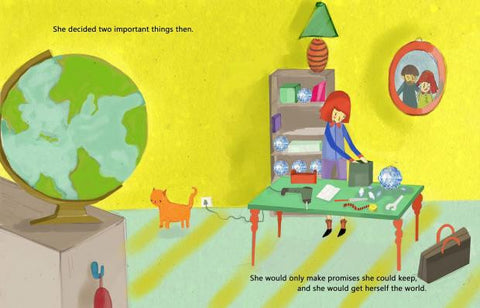
Don’t let this 32 page book with minimal text fool you in to thinking that big ideas, strong emotions, and tremendous self empowerment are not effectively conveyed, because despite my initial feelings toward the book, they really are.  I would say the target audience is 4 to 8 year olds, but I know plenty of adults that could use the reminder that promises should be kept, especially ones made to one’s self. 

On my first reading of the book, I didn’t love the pictures, and while I loved the way the emotions were conveyed when the little girl had to deal with the broken promises, I thought that the jump to being promised the world by another, was a bit abrupt and mature.  However, the ideas stayed with me, and the whimsical pictures grew on me, and the more I thought about how so much of our culture revolves around messages of, “happily ever after” and being “saved” that it can never be too early to articulate that we can be in control of our dreams, our happiness, and our futures.

There isn’t anything Islamic in the book, so that caught me off guard as this was the first Zanib Mian book I’ve read that didn’t have at least a main character illustrated as Muslim.  It doesn’t articulate if the boy who promised her the world is a husband or a boyfriend, or even what happened to him, as this isn’t his story.  He is just one more example of someone who broke a promise.

Overall, a nice large book with a good strong message that shows how if you want the world, you have to go get it yourself, and only make promises you can keep.


Mommy’s Khimar by Jamilah Thompkins-Bigelow illustrated by Ebony Glenn

Standard
Mommy’s Khimar by Jamilah Thompkins-Bigelow illustrated by Ebony Glenn

mommys-khimar-9781534400597_lg

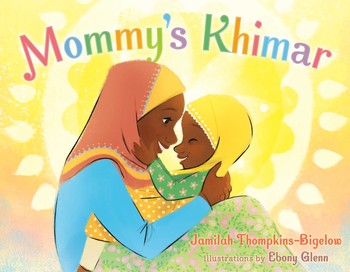
Children playing dress-up with their mother’s clothes is a universal activity, that most can relate to.  Playing dress-up in your mother’s khimar is what makes this book both familiar and stereotype breaking in a way that is actually pretty powerful.

mommy3_grande.jpg


In this 40 page hardback book targeting 4-8 year olds, Salaam Reads, once again brings Muslim characters to the masses, without alienating or talking down to either Muslim or non Muslims readers.

mommy2_grande.jpg

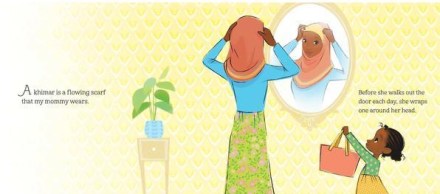
The story starts off with a little girl explaining that “A khimar is a flowing scarf that my mommy wears.  Before she walks out the door each day, she wraps one around her head.”  She then marvels at the variety of scarves her mother has, commenting on the colors, and prints, and designs, that by the time she is ready to use them as her favorite make-believe accessory, readers will be wishing they too could have such an assortment.

download

From using a khimar to be a queen with a golden train, to being a shooting star, the reader also along the way learns that she loves the connection the khimars offer her of her mother, when she isn’t near.  The ladies at the masjid are also part of that connection so that when she dreams of all the fantastical pretend things she can be, she also knows they too are with her.  Even her grandma, Mom-Mom, who exclaims “Sweet Jesus” when she sees her in her yellow khimar, and loves her although she doesn’t go to the mosque like the little girl does, is a part of the love and support the little girl feels by those around her when she is wrapped up in her mother’s khimar.  download (1)I love that it stresses even though her grandma is not Muslim they love each other because they are family.  Muslims and Islam are never mentioned outright, just the mosque and the ladies saying Assalamu alaikum, hint at the khimar being worn for religious reasons.

download (2)

Perhaps the best part is the pictures.  The illustrations with their yellowish hues radiate warmth and the faces and smiles are good for the soul.  You can feel the love the little girl both receives and gives to those around her through the pictures that perfectly compliment the simple text.

The diversity of the book in the main character being a girl, a child of color, and a Muslim, is such a beautiful thing to see.  Stories like this are powerful tools when children see themselves in books with positive messages, and remind us all how much more diversity it needed in literature to both highlight our differences, and celebrate our similarities.


Ticket to India by N.H. Senzai

Standard

In terms of plot and and believability, this 274 page 6.3 reading level book has moments of unrealistic twists, but the historical flashbacks and context make up for it as it delves into Pakistan, India partition without getting overly bogged down in politics and bitterness.  You can tell that the author writes from a place of love and warmth, as she talks about all sides involved: Pakistan, India, Great Britain.   The stories, fictional and historical, that weave through the novel make it informative and entertaining irregardless of one’s prior knowledge.

SYNOPSIS:

Maya is 12, and a little shy, especially compared to her older sister Zara.  The book starts with her writing a journal entry about her visit to Pakistan in an airplane somewhere over the ocean.  Maya, her older sister Zara, and their mother are heading to Karachi from America because of the death of Maya’s beloved grandfather.  Frequent visitors to Pakistan, Maya is familiar with the sights, traditions, and language.  As other family members arrive, Maya and Zara overhear their elderly grandmother planning to runaway to India to retrieve family heirlooms that were left during partition.  The plan had been in the works for the whole family to go, visas were already obtained, but with the unexpected death, the urgency is amplified.  Grandma wants to find a ring to bury with her husband.  In Islamic custom burials happen very very quickly, often the same day, so the delay and sending the body to America, is something you just have to go with as the reader.  Rather than convince Grandma to stay, the girls threaten to tell their mother if she doesn’t take them along, and the next thing you know the trio are off to India and on a treasure hunt.  There is a map at the beginning of the book, which is very helpful.  However, the adventure isn’t straightforward, not only in the trio’s adventures, but in that grandma ends up in the hospital, Zara and Maya decide to pursue the lost items on their own, and then Zara and Maya get separated.  Twelve-year-old Maya then is forced out of her shell as she is kidnapped, and running for her life, trying to keep her promises, and also in desperately trying to save her family from having to pay a ransom to save her.  A lot happens, and the intensity amplifies as it starts out as a elementary aged family story and turns into a middle school adventure.  A long the way are beautiful passages about the scenery, amazingly simplified, but factually and emotionally accurate explanations about partition and ultimately, through Maya, about finding your voice. 

WHY I LIKE IT:

The framing of the fictional story and the historical context is wonderful.  Partition, is such a pivotal moment for those that lived through it, but has less and less relevance to today’s generation that lives abroad.  So, to find a book that makes the gist of the events come through, is why I love using fiction to connect people and ideas.  I am making my daughter read this tomorrow, no question. She needs to know what her own grandmother endured, what decisions her family had to wrestle with, and this book allows us to have those discussions in an informed way.  I’m sure many would disagree and say that the reader should know about partition before reading the book, but I think the tidbits and delicate way the author convey the horrors, the agony, the manipulation, and the struggles in todays time, is far better than I could do to a sixth grader. 

Maya’s abilities seem to grow overnight, so while she was an ok protagonist, she might annoy some.  I actually had to google in the middle of reading how old Maya is, at times she seems like she is eight or nine and at other times like she is 15.  I do like that Maya constantly remarks how alike India and Pakistan are, a reality that today’s generation definitely agrees with, but is often afraid to voice to their parents.  I also like that there are good and bad everywhere, a theme that doesn’t get old, especially in books that deal with cultural and religious elements as presented to a wide audience.

There isn’t much religion in the book, the characters don’t stop and pray or wear hijab, but the setting does allow for mention of masjids, and a kind Imam back in California, the characters identify as Muslim and they discuss Muslims as a minority and political entity regularly.  One of the treasures the grandma is looking to retrieve is an old Qur’an with the family tree drawn within.  The book talks about how intertwined the two countries and many religions of India are, and Maya’s name articulates many of these crossroads.  In the end, perhaps the best lesson from the book, is how much alike we all really are.

There is a wonderful Author’s note in the back, along with a glossary.

FLAGS:

The book has some violent images as it discusses trains coming from India to Pakistan with only a few living aboard and vice versa.  The intensity as Maya is robbed, and then kidnapped, and then held hostage, could also be jarring for some younger readers. 

TOOLS FOR LEADING THE DISCUSSION:

Like all her other books, I would absolutely include this in a Book Club, there is a lot to discuss, lots to understand, and lots to enjoy.

Author’s website: http://www.nhsenzai.com/ticket-to-india/

Reading Group Guide: http://www.nhsenzai.com/wp-content/uploads/2017/09/Ticket-to-India_ReadingGuidePDF.pdf

YouTube book trailer:

I’m New Here by Anne Sibley O’Brien

Standard
I’m New Here by Anne Sibley O’Brien

Im-New-Here-by-Anne-Sibley-OBrien-on-BookDragon

Three new kids, not just at school, but to America as well. Maria is from Guatemala, Jin from Korea, and Fatimah from Somalia.  All three telling about what they are faced with as they settle in to their new life and routine, and all tell a bit about how things were back home.  FullSizeRender (48)

This book is not entertaining or fun, it is educational.  Written for ages 5-8 this book is very straightforward as the three characters stories are interwoven to show the growth and settling in that they experience.  The simple sentences, allow the reader to learn real, tangible ways that this children are finding the transition hard.  It also alleviates any sense of pity as it shows the full lives they had before coming to America. 

FullSizeRender (49)

I love that the other kids in the class are involved in real life ways to help welcome the new kids to class. Sometimes we are harsh on kids that don’t show empathy or compassion, forgetting that often they don’t know how.  This book works for adults and children in all situations.  We all need to put ourselves in other peoples shoes and see what struggles they are facing, we all need to help one another, and we all need to facilitate environments where these actions can take place.

FullSizeRender (50)

The book in many ways would fit well with One Green Apple, as it gives the perspective from the character who is new and articulates some of the obstacles they are facing, while also showing the interactions that help one to feel welcome and comfortable.

The pictures are crucial to the story as they show the feelings of the children and give context to the simple storyline.  I love that their is so much additional diversity in the illustrations: children of all body shapes, there is a student in a wheel chair, Fatimah wears a hijab, and there are male and female teachers in the book.

FullSizeRender (51)

The Author’s Note at the end of the 32 page story tells of her experience as a white American child living in South Korea, and some of her feelings and thoughts of being in a new country.  There is no mention of Islam, just implies Fatimah is a Muslim based on her dress, her mother’s clothing, and her country of origin.  

My Mummy’s Tummy by Suzanne Stone illustrated by Suzanne Stone and Omar Faruq

Standard
My Mummy’s Tummy by Suzanne Stone illustrated by Suzanne Stone and Omar Faruq

mummy-tummy.jpg

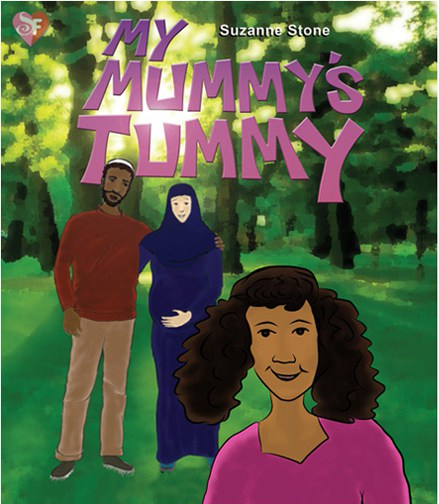
The copy I have is called My Mummy’s Tummy, but the binding says My Mummy’s Fat Tummy, I would assume that they are the same book except for this one word, and I’m hoping they opted to remove it at the last minute.  Actually, while on the title, it only  works well for the first four pages and yes, it sets up the story of a new sibling, by page five, the baby is born and mom’s tummy is the least of big sister, Maryam’s worries.

mummy tummy

The 24 page rhyming book, is a good introduction to what kids ages 3-6 can expect with a new sibling.  From Mummy’s large tummy, to having to stay with an Aunt when Mummy’s tummy starts hurting, Maryam is excited to have a new baby sister, except it ends up being a baby brother.  And while she is promised someone to play with, initially all he does is cry and sleep.  With gentle prodding by her parents and islamic reminders of patience and kindness, by the end of the book the baby is nearly one and his favorite person is his big sister Maryam, alhumdulillah.

mummy tummy

I love the diversity of the parents, and the acknowledging that changes are hard without being condescending or dismissive.  The book stays positive and hopeful and reminds us to keep Allah close to us when dealing with challenges and dreaming of the future.


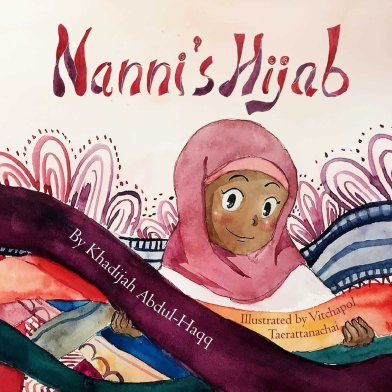
Nanni’s Hijab by Khadijah Abdul-Haqq illustrated by Vitchapol Taerattanachai

Standard
Nanni’s Hijab by Khadijah Abdul-Haqq illustrated by Vitchapol Taerattanachai

Nanni's Hijab

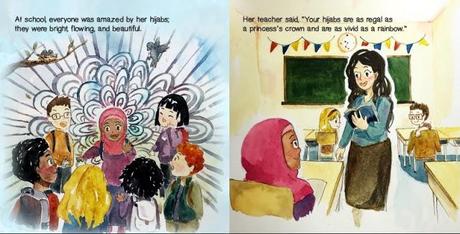
MashaAllah, there are so many things to like about this 36 page, brightly illustrated, elementary aged story.  Nanni, the main character, is spunky.  Not only is she strong enough to wear hijab to school, but she also is brave enough to confidently handle a bully on her own.  Surrounded by a supportive teacher, friends, classmates, and her mom, Nanni’s creativity and understanding that Allah swt will help her find a way to handle her predicament results in a happy ending, and many empowering messages.

nannis-hijab-childrens-book-review-L-Yo6YBS

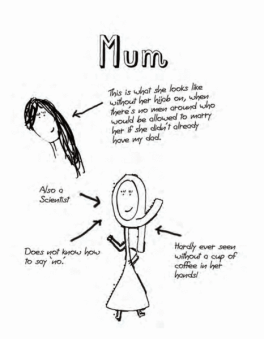
The book would work for most children, but I think second grade and up would get the most out of it.  The girl might be young to be wearing hijab, but it seems like she wears it because she wants too.  I like that the illustrations have her and her mom uncovered at home, and that there is a glossary at the back, opening up the book to muslim and non muslim kids alike.

DVBz_rcVwAILbLM

I also really like the larger messages of acceptance, trying new things, and doing better when you know better.  The supporting cast in the book resonates with muslims who go to schools where they are the minority, but have support and encouragement to practice their faith none-the-less.  Nanni’s teacher remarks that her “hijabs are as regal as a princess’s crown,” and the other students like seeing what color or design she is wearing each day.  Although a children’s book, the author does very clearly explain that the hijab is part of Nanni’s faith, although not mentioned by name, and that it is an act of worship. Nanni wants to handle the problem on her own, and for as bad as she wants to punch Leslie, she knows it isn’t the right thing to do.  As she wrestles with what is the best approach, she puts her trust in Allah, swt, which perhaps is the greatest lesson for us all in the book, alhumdulillah.

The Muslims by Zanib Mian

Standard
The Muslims by Zanib Mian

the muslims.png

After reading this book, I really, really want to meet (and be friends with) the author, she writes from the point of view of Omar, a nine year old boy, and his perspective and voice are so authentic and relevant that while the book targets 3rd through 5th grade, I am certain kids and adults, Muslims and non-muslims, boys and girls, and everyone else, will all thoroughly enjoy this laugh-out-loud 164 page book.  

muslims mum.png

SYNOPSIS:

Omar is starting at a new school, we don’t know why, and while he is nervous, he has a good attitude about it.  His parents are supportive scientists and he has an older sister, Maryam who can be a bit mean in a big sister way, and a little brother Esa, who he secretly loves.  All are practicing muslims who remind me a lot of the people I know.  We say our duaas, we pray, we laugh at the funny stereotypes and just try and be good neighbors and people.  Omar’s neighbor is hilarious, Mrs. Rogers, doesn’t like Omar’s family, or “the Muslims” as she calls them, but they just keep being themselves and when she falls and gets hurt, she starts to realize they are good people who care about her.  She even starts showing up for iftar every night in Ramadan and counts down like a space ship launch until it is time to eat. 

Using his Islamic upbringing, and seeing how is family handles problems, gives Omar a lot of tools for starting at a new school.  But Omar is the protagonist, the hero, so he also has a super imagination that involves H2O, his dragon, that shows up to help him out when things get rough.  And unfortunately, a bully by the name of Daniel makes things rough for Omar.  He tells Omar that all Muslims and all Asians are going to be kicked out of the country, and this really sticks with Omar.  He verifies it with a cousin, and learns it could be a possibility.  So, the underlying anxiety is there, but most of the book that focuses on the bullying aspects involve the day-to-day comments, physical pushing, and efforts of Omar to avoid Daniel.  When they do meet up, however, the result is often comical, as Omar and H20 confidently navigate the situation at hand.  Between visiting a different mosque in London each week, learning to read the Quran, celebrating Ramadan, and just being a kid with new friends and a fun family, Omar eventually does win Daniel over after the two of them get lost in the London Underground.  And all of us that came along for the ride are better for it, alhumdulillah.

FullSizeRender (46)

WHY I LIKE IT:

There is so much to love about this book.  Seriously.  The accuracy of family life depicted is spot on and the Islamic elements are so interwoven that non Muslims would truly learn about Islam through learning about Omar, but not in a preachy way, and Muslims will see themselves on every. single. page.  I love that Omar doesn’t ever seem embarrassed to be who he is.  He is a cool kid for his confidence alone, and being able to laugh at a bully and not have it shake your core belief and self image is so powerful.  The characters are well developed, from little Esa to Omar’s teacher, by viewing them through his eyes, you see enough of their personality to remember them, and appreciate them.  The only exception to this was Maryam, I really didn’t feel like I got much on her, but I have a feeling there will be more books, and she will develop too.  The book reads like a diary, until a tinge of foreshadowing of the changing relationship between Omar and Daniel pops up to setup the climax.  The chapters are short, the fonts and doodles endearing and engaging, and the size of the book, really makes it fun for elementary aged children.  The only possible gripe for American children, is that it is a British book, and you might have to google or ask what a few things are, yeah we are selfish like that, but its good for us to learn what pains au chocolate are, or crumpets, or nappies.  

FullSizeRender (47)

FLAGS:

The book is clean. 

TOOLS FOR LEADING THE DISCUSSION:

Oh this should be required reading for every kid.  I know I will be trying to implement this every where I go.  This would be awesome for a elementary book club, and especially great in Islamic schools for struggling readers.  In much the same way that teachers use humor to engage students, this book has heart and humor and a surprising amount of information, that I can see it being connected to a lot character building supplements in various curriculums, at least I hope it is, we need voices like this, both within our community and to serve as a representative of us to the larger society.

Book Trailer:  https://www.youtube.com/watch?v=AIKtoxt3InM

Author’s website: http://www.muslimchildrensbooks.co.uk/


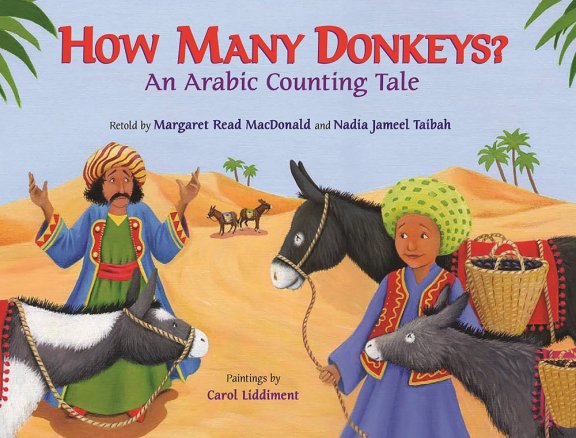
How Many Donkeys? An Arabic Counting Tale retold by Margaret Read MacDonald and Nadia Jameel Taibah illustrated by Carol Liddiment

Standard
How Many Donkeys? An Arabic Counting Tale retold by Margaret Read MacDonald and Nadia Jameel Taibah illustrated by Carol Liddiment

how many donkeys

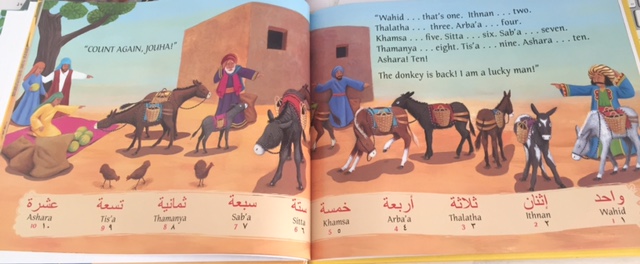
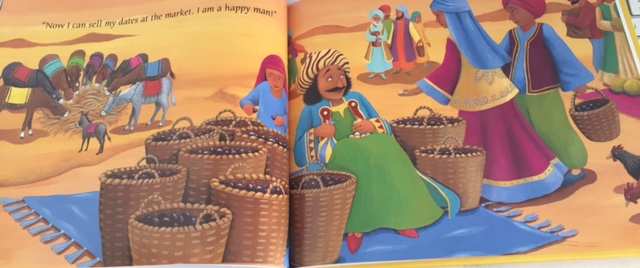
Whether you know a little bit of Arabic or none at all, this incredibly repetitive counting book will have you able to count to ten in Arabic by the end of its 32 pages.  FullSizeRender (35)Even if you know how already, your little one will enjoy figuring out why the main character Jouha can’t figure out how many camels he has in his caravan.  While Jouha thinks, it has to do with whether one runs off while he is riding, and comes back when he is walking, hopefully by the second or third time, most kids will realize that he isn’t lucky or unlucky, he is just forgetting to count the one he is riding atop of.  Probably good for ages 3-7, the book is silly in its repetition, and the beautiful painted illustrations bring the characters emotions to life.
FullSizeRender (37)

There isn’t anything Islamic, but it is definitely cultural as it retells an Middle Eastern folk tale.  The character, a wise fool, is also seen as Goha in Egypt and similar to Nasredeen Hodja in Turkey, all this background is stared at the beginning of the book.  There is also information to hear the story online in a read along program http://www.av2books.com, or to hear the author say the arabic numbers at http://www.margaretreadmacdonald,com.

FullSizeRender (36)