Category Archives: 6th grade and up

Magnus Chase and the Gods of Asgard: The Sword of Summer by Rick Riordan

Standard
Magnus Chase and the Gods of Asgard: The Sword of Summer by Rick Riordan

The_Sword_of_Summer.jpg

Yes, that is a Rick Riordan book cover you see.  Yes, it is about Norse mythology.  Yes, the whole book is about fake gods and fictional demigods.  Yes, you are on the correct blog. 

Brace yourself, if you haven’t heard about Magnus Chase, son of the god Frey, whose series is now on book three, it is ok, Rick Riordan has brought a lot of mythology back to pop culture in a fairly short amount of time.  But this series stands out because get this, the Norse god Loki, (yeah the one featured in popular Marvel Avengers movies), in this series, has a daughter…named Samirah Al-Abbas…who wears hijab…and is a valkyrie…and is an Iraqi immigrant, and is a main character, and is really awesome.

The book is 497 pages and is also a pretty fun audio book.  It is an AR 4.8.

SYNOPSIS:

So, the basic plot is much like Percy Jackson, in that a young boy, in this case a homeless orphan, Magnus Chase, finds out that he is demigod and has to basically find some friends and save the world while learning about the given mythology that they belong to.  For Magnus, he learns about his father, Frey, the god of spring and summer, when he dies and is taken to Valhalla, a paradise for warriors in the service to Odin.  The whole book is about Magnus, who is now an einherjar, a member of Odin’s eternal army , trying to prevent ragnarok from happening.  Among his group of friends are Jack, the sword, Blitzen, a dwarf, Hearthstone, an alf, and Samirah (Sam).

WHY I LIKE IT:

By and large, Sam is pretty well developed as a practicing Muslima.  She is being raised by her grandparents and feels bad sneaking out to perform her valkyrie duties.  She is not at all comfortable being alone with males one-on-one, nor being seen with males as she has an arranged marriage to Amir Fadlan, her second cousin, when she gets older.  She wears a green hijab that doubles as a camouflage cloak, and she mentions going to the mosque with her grandma.  (In later books, according to my daughter, she also talks about fasting, how she is a practicing Muslimah and the daughter of Loki who handles all that Norse mythology throws at her.)  She is proud and strong, and really the only thing that makes no sense to me is why she takes off her hijab so freely when not in life threatening scenarios, I get when she uses the camouflage to hide in emergencies.  She apparently explains later that she considers the einherjar her extended family, but that wouldn’t make them her mehram, so it is still a bit sketchy.

Here is an interview question from Entertainment Weekly to Author Rick Riordan about Sam, and his answer: (http://ew.com/article/2015/10/14/rick-riordan-magnus-chase-interview/)

Speaking of Loki, one of my favorite characters in the book is Sam, or Samirah Al-Abbas. I think she’s a great example of a diverse character — not a white man, not a woman who’s there to be a love interest. She’s also seamlessly woven into the history of this myth. Can you talk about the conception of her character?

The idea for her started with the primary sources. The story that Sam tells in The Sword of Summer about an ambassador from the Caliph of Baghdad visiting the Vikings in Russia – that’s true. It really is one of our best sources because the Arabs of the time were reading and writing when nobody else was. That connection back then – that the world was a whole lot more connected even back then than we think of, that these cultures did not exist in these hermetically-sealed little bags, they were blending together all the time – that fascinated me. I thought, what would it be like to have a modern Muslim-American character who still had that connection to the Viking world like the Caliph of Baghdad did all those years ago?

And then again I started pulling on stories from students I’ve had in the past. One very powerful memory I have was being in my American history classroom on 9/11 and one of my students was a Muslim-American girl. She burst into tears when she heard the news, because she knew that her world, her life, had just changed, and had been defined for her in a way that she did not want and could only do so much to control. That really was powerful for me, and it inspired me to learn a lot about Islam and what the tradition actually was, as compared to what we hear about in the media and how it’s often distorted, and to honor her experience. Samirah kind of came out of that confluence of things.

FLAGS:

Obviously the whole story features multiple fake gods.  I don’t think it is celebrated though, they are beyond ridiculous, but if your kids can’t understand the idea of mythology or you think it is beyond the scope of fiction, that is your call. 

There is a ton of violence, as they prepare for ragnarok and just killing in general, some is gruesome. The book is not dark at all, however, it is in fact laugh out loud funny.  

There are some giants that get drunk, mention of mead, some jokes about Hel in reference to Helheim and the goddess of Helheim, Hel.  There are some “damns” scattered in as well. 

The stories of some of the gods is a bit scandalous, but for the most part the book doesn’t give much detail.  It does discuss Freya marrying dwarves for a day for their jewels and having kids with them.  There is flirting and mention of kissing.  There is also some mention of males being moms and animals and monsters being born of human parents, it is all very confusing.  But it is there. Also, my source, my 11 year old daughter, mentions that the rest of the series does have a gender fluid character named Alex.

TOOLS FOR LEADING THE DISCUSSION:

I doubt I’d do this as a book club book, but as any teacher or librarian knows, Rick Riordan fans are committed and enthusiastic.  I still keep in touch with many kids that weren’t big readers until the read Percy Jackson, and once they read the series multiple times, they then jumped to his other series.  So, while I wouldn’t use this as a book club book, there is a ton of kids that would love to discuss it with you, so read it, the bonding as a result will be well worth it.
The House of Wisdom by Florence Parry Heide and Judith Heide Gilliland illustrated by Mary Grandpre’

Standard
The House of Wisdom by Florence Parry Heide and Judith Heide Gilliland illustrated by Mary Grandpre’

house of wisdom

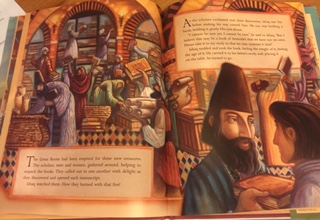
This 37 page, non fiction book written on a AR 5.1 is a beautiful telling of 9th century Baghdad and the quest, collection, and love of knowledge.  It follows the true story of Ishaq, a young boy who’s father translates books and documents in the House of Wisdom, the intellectual center of everything.

FullSizeRender

Ishaq has a lot to learn from his father and the books in this majestic place, before he can lead one of the Caliph’s expeditions to search for books.  However, while he acquires his knowledge or Aristotle, Galen, Plato, and Hippocrates, and more, he doesn’t feel the fire, so to speak, of a powerful burning to seek knowledge.

FullSizeRender (1)

He finally gets his chance to lead an expedition and he travels the wold for three years, learning, collecting, and experiencing things.  Walking the streets of the great teachers of long ago and readying himself to be a scholar upon his return to Baghdad.

Upon his return, Ishaq’s father presents him with a book by Aristotle and when he opens it he finds the flame consume him.  Ultimately, history will credit Ishaq with translating the entire known works of Aristotle and he and his father Hunayn, and the Caliph al-Ma’mum, with carrying the torch of civilization to the rest of the world.

The book does not mention religion or Islam, but Muslim children at least should recognize names, and words like caliph, and geography enough to know that this is indeed their history.  Non-Muslim children probably will not make the connection, and in some ways, possibly selfish ones, I find that unfortunate.

The illustrations are beautiful and rich in both texture and detail.  They compliment the text wonderfully and really bring the grandness of the story to life.

Ticket to India by N.H. Senzai

Standard

In terms of plot and and believability, this 274 page 6.3 reading level book has moments of unrealistic twists, but the historical flashbacks and context make up for it as it delves into Pakistan, India partition without getting overly bogged down in politics and bitterness.  You can tell that the author writes from a place of love and warmth, as she talks about all sides involved: Pakistan, India, Great Britain.   The stories, fictional and historical, that weave through the novel make it informative and entertaining irregardless of one’s prior knowledge.

SYNOPSIS:

Maya is 12, and a little shy, especially compared to her older sister Zara.  The book starts with her writing a journal entry about her visit to Pakistan in an airplane somewhere over the ocean.  Maya, her older sister Zara, and their mother are heading to Karachi from America because of the death of Maya’s beloved grandfather.  Frequent visitors to Pakistan, Maya is familiar with the sights, traditions, and language.  As other family members arrive, Maya and Zara overhear their elderly grandmother planning to runaway to India to retrieve family heirlooms that were left during partition.  The plan had been in the works for the whole family to go, visas were already obtained, but with the unexpected death, the urgency is amplified.  Grandma wants to find a ring to bury with her husband.  In Islamic custom burials happen very very quickly, often the same day, so the delay and sending the body to America, is something you just have to go with as the reader.  Rather than convince Grandma to stay, the girls threaten to tell their mother if she doesn’t take them along, and the next thing you know the trio are off to India and on a treasure hunt.  There is a map at the beginning of the book, which is very helpful.  However, the adventure isn’t straightforward, not only in the trio’s adventures, but in that grandma ends up in the hospital, Zara and Maya decide to pursue the lost items on their own, and then Zara and Maya get separated.  Twelve-year-old Maya then is forced out of her shell as she is kidnapped, and running for her life, trying to keep her promises, and also in desperately trying to save her family from having to pay a ransom to save her.  A lot happens, and the intensity amplifies as it starts out as a elementary aged family story and turns into a middle school adventure.  A long the way are beautiful passages about the scenery, amazingly simplified, but factually and emotionally accurate explanations about partition and ultimately, through Maya, about finding your voice. 

WHY I LIKE IT:

The framing of the fictional story and the historical context is wonderful.  Partition, is such a pivotal moment for those that lived through it, but has less and less relevance to today’s generation that lives abroad.  So, to find a book that makes the gist of the events come through, is why I love using fiction to connect people and ideas.  I am making my daughter read this tomorrow, no question. She needs to know what her own grandmother endured, what decisions her family had to wrestle with, and this book allows us to have those discussions in an informed way.  I’m sure many would disagree and say that the reader should know about partition before reading the book, but I think the tidbits and delicate way the author convey the horrors, the agony, the manipulation, and the struggles in todays time, is far better than I could do to a sixth grader. 

Maya’s abilities seem to grow overnight, so while she was an ok protagonist, she might annoy some.  I actually had to google in the middle of reading how old Maya is, at times she seems like she is eight or nine and at other times like she is 15.  I do like that Maya constantly remarks how alike India and Pakistan are, a reality that today’s generation definitely agrees with, but is often afraid to voice to their parents.  I also like that there are good and bad everywhere, a theme that doesn’t get old, especially in books that deal with cultural and religious elements as presented to a wide audience.

There isn’t much religion in the book, the characters don’t stop and pray or wear hijab, but the setting does allow for mention of masjids, and a kind Imam back in California, the characters identify as Muslim and they discuss Muslims as a minority and political entity regularly.  One of the treasures the grandma is looking to retrieve is an old Qur’an with the family tree drawn within.  The book talks about how intertwined the two countries and many religions of India are, and Maya’s name articulates many of these crossroads.  In the end, perhaps the best lesson from the book, is how much alike we all really are.

There is a wonderful Author’s note in the back, along with a glossary.

FLAGS:

The book has some violent images as it discusses trains coming from India to Pakistan with only a few living aboard and vice versa.  The intensity as Maya is robbed, and then kidnapped, and then held hostage, could also be jarring for some younger readers. 

TOOLS FOR LEADING THE DISCUSSION:

Like all her other books, I would absolutely include this in a Book Club, there is a lot to discuss, lots to understand, and lots to enjoy.

Author’s website: http://www.nhsenzai.com/ticket-to-india/

Reading Group Guide: http://www.nhsenzai.com/wp-content/uploads/2017/09/Ticket-to-India_ReadingGuidePDF.pdf

YouTube book trailer:

The Muslims by Zanib Mian

Standard
The Muslims by Zanib Mian

the muslims.png

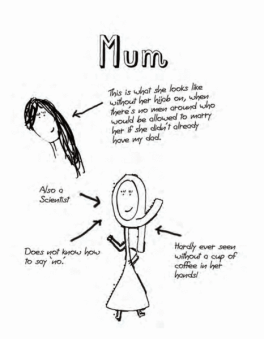
After reading this book, I really, really want to meet (and be friends with) the author, she writes from the point of view of Omar, a nine year old boy, and his perspective and voice are so authentic and relevant that while the book targets 3rd through 5th grade, I am certain kids and adults, Muslims and non-muslims, boys and girls, and everyone else, will all thoroughly enjoy this laugh-out-loud 164 page book.  

muslims mum.png

SYNOPSIS:

Omar is starting at a new school, we don’t know why, and while he is nervous, he has a good attitude about it.  His parents are supportive scientists and he has an older sister, Maryam who can be a bit mean in a big sister way, and a little brother Esa, who he secretly loves.  All are practicing muslims who remind me a lot of the people I know.  We say our duaas, we pray, we laugh at the funny stereotypes and just try and be good neighbors and people.  Omar’s neighbor is hilarious, Mrs. Rogers, doesn’t like Omar’s family, or “the Muslims” as she calls them, but they just keep being themselves and when she falls and gets hurt, she starts to realize they are good people who care about her.  She even starts showing up for iftar every night in Ramadan and counts down like a space ship launch until it is time to eat. 

Using his Islamic upbringing, and seeing how is family handles problems, gives Omar a lot of tools for starting at a new school.  But Omar is the protagonist, the hero, so he also has a super imagination that involves H2O, his dragon, that shows up to help him out when things get rough.  And unfortunately, a bully by the name of Daniel makes things rough for Omar.  He tells Omar that all Muslims and all Asians are going to be kicked out of the country, and this really sticks with Omar.  He verifies it with a cousin, and learns it could be a possibility.  So, the underlying anxiety is there, but most of the book that focuses on the bullying aspects involve the day-to-day comments, physical pushing, and efforts of Omar to avoid Daniel.  When they do meet up, however, the result is often comical, as Omar and H20 confidently navigate the situation at hand.  Between visiting a different mosque in London each week, learning to read the Quran, celebrating Ramadan, and just being a kid with new friends and a fun family, Omar eventually does win Daniel over after the two of them get lost in the London Underground.  And all of us that came along for the ride are better for it, alhumdulillah.

FullSizeRender (46)

WHY I LIKE IT:

There is so much to love about this book.  Seriously.  The accuracy of family life depicted is spot on and the Islamic elements are so interwoven that non Muslims would truly learn about Islam through learning about Omar, but not in a preachy way, and Muslims will see themselves on every. single. page.  I love that Omar doesn’t ever seem embarrassed to be who he is.  He is a cool kid for his confidence alone, and being able to laugh at a bully and not have it shake your core belief and self image is so powerful.  The characters are well developed, from little Esa to Omar’s teacher, by viewing them through his eyes, you see enough of their personality to remember them, and appreciate them.  The only exception to this was Maryam, I really didn’t feel like I got much on her, but I have a feeling there will be more books, and she will develop too.  The book reads like a diary, until a tinge of foreshadowing of the changing relationship between Omar and Daniel pops up to setup the climax.  The chapters are short, the fonts and doodles endearing and engaging, and the size of the book, really makes it fun for elementary aged children.  The only possible gripe for American children, is that it is a British book, and you might have to google or ask what a few things are, yeah we are selfish like that, but its good for us to learn what pains au chocolate are, or crumpets, or nappies.  

FullSizeRender (47)

FLAGS:

The book is clean. 

TOOLS FOR LEADING THE DISCUSSION:

Oh this should be required reading for every kid.  I know I will be trying to implement this every where I go.  This would be awesome for a elementary book club, and especially great in Islamic schools for struggling readers.  In much the same way that teachers use humor to engage students, this book has heart and humor and a surprising amount of information, that I can see it being connected to a lot character building supplements in various curriculums, at least I hope it is, we need voices like this, both within our community and to serve as a representative of us to the larger society.

Book Trailer:  https://www.youtube.com/watch?v=AIKtoxt3InM

Author’s website: http://www.muslimchildrensbooks.co.uk/


Ayesha Dean: The Istanbul Intrigue by Melati Lum

Standard
Ayesha Dean: The Istanbul Intrigue by Melati Lum

ayesha dean.png

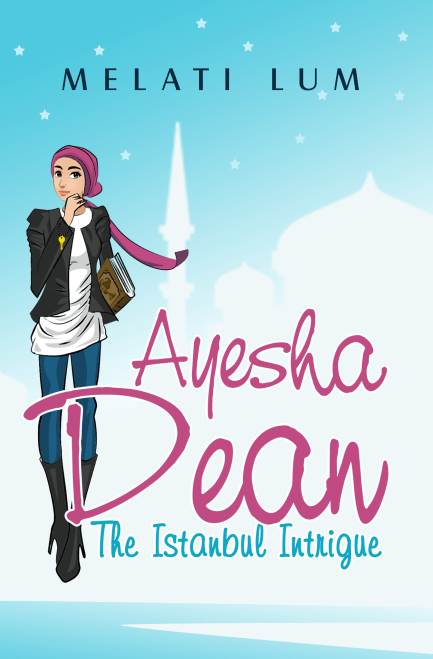
I’ve tried numerous times to get my preteen daughter to read a Nancy Drew book with little success, yet she devoured this mystery and is eagerly waiting for more.  The protagonist is relevant, resourceful, fun, and a practicing Muslimah too.  At 240 pages, the spacing and large font make the book easily accessible, and tempting to dive in to.  The pacing is pretty good, and while there are a few hiccups with storytelling style, the book overall is worth adding to yours and your child’s reading list.

SYNOPSIS:

Ayesha’s parents are deceased, but her Uncle Dave has raised her as a Muslim following her parent’s wishes.  Having graduated high school she is off on a celebratory trip with her two closes friends: Jess and Sara, her uncle and her friend’s dad to Istanbul, Turkey.  The adults have a business conference and the girls are hoping to explore and enjoy all the sights of the Turkish Bazar, the Hagia Sophia, the Blue Mosque and more.  While looking for a book to gift Uncle Dave, Ayesha and her friends discover a secret message sewn into an old book of maps and set off to collect clues and solve a 100-year-old ibn-Arabi mystery.  Obviously, I don’t want to give too much away but there are villains, and shady characters, and dear friends, and lots of yummy food.

WHY I LIKE IT:

I love that the heroine is a hijab wearing, salat praying, Tae Kwon Do trained, fashionable, kind, young lady.  She has integrity and resourcefulness, that make the reader want to cheer her on.  Her friends are significantly less developed, I really couldn’t tell you much about them, and honestly had to look back to recall their names.  I understand why they are in the story for Ayesha to play off of, but I’m hoping that they will have a bit more substance in future novels.  Other side characters had more depth than Sara and Jess did, and even getting them out of the way for the climax seemed to further diminish their roles and importance.

I loved learning about Turkey through the characters, the history, architecture, the food.  The author really shined when talking about Islamic history as well.  When Ayesha and Emre explore the Sultan’s Privy Chambers at the Topkapi Palace, and look at Prophet Muhamad’s (saw) sword and bow, the excitement and reflection is palpable.  In other places however, I felt like the narrator’s voice was completely jarring and distracting to the engaging story at hand.  In the midst of pursuing a lead, the story comes to an almost standstill to say, “the friends chatted amiably as they walked, admiring the city as they went (69).”  The majority of the descriptions are so vivid that the few places where they cease are noticeable and awkward.

I also loved the diversity of the friends, even Ayesha’s own personal makeup adds some depth and appreciation that she has chosen to practice Islam.  Ayesha prays and tries to make sure she is not alone with a boy, she is conscious of her hijab and notes the Islamic elements in her own life and in her environment.  Obviously the book takes place in Turkey and she is unraveling an Islamic mystery of sorts, but I think the book works well for Muslim and non Muslim middle schoolers alike.  The book is not preachy, and the translations of prayers and poetry are framed in a historical or inspiring, not doctrine manner.  Similarily, I think you might be able to get boys to read it too.  It inspires girls who perhaps can identify with the main character, but I think even boys will be impressed with what Ayesha can accomplish.

FLAGS:

The book is fairly clean, there is some intense moments with kidnapping and having guns drawn, but nothing too haunting.  Ayesha obviously makes a good “friend” but nothing happens or is even detailed as wanting to happen between her and Emre.  Just Emre’s dad regularly teasing them as he looks for a wife for his son.  The only real flag for me was the exploring of the harem at the palace and the mention of concubines, and eunuchs.  A lot of detail is not given just that the women must have felt trapped, but it is a heads up if your child asks you about it, to be ready to answer.

TOOLS FOR LEADING THE DISCUSSION:

I think this would be a fun book club book to explore deeper some of the sites and history of Turkey.  I would have to explain the harem before hand I think, but I think it can be done factually to avoid to much over thinking for the young readers.  I think to track the clues and “map” out the trail in a group completely with pictures of the real places would really bring the story to reality.

Interview with the author: http://mvslim.com/meet-melati-lum-criminal-lawyer-who-also-has-a-passion-for-writing/

Why we need more heroines like Ayesha Dean: http://www.muslimkidsguide.com/why-do-we-need-more-muslim-heroines-like-ayesha-dean/


Twenty-Two Cents: Muhammad Yunus and the Village Bank by Paula Yoo illustrated by Jamel Akib

Standard
Twenty-Two Cents: Muhammad Yunus and the Village Bank by Paula Yoo illustrated by Jamel Akib

22CentsCover

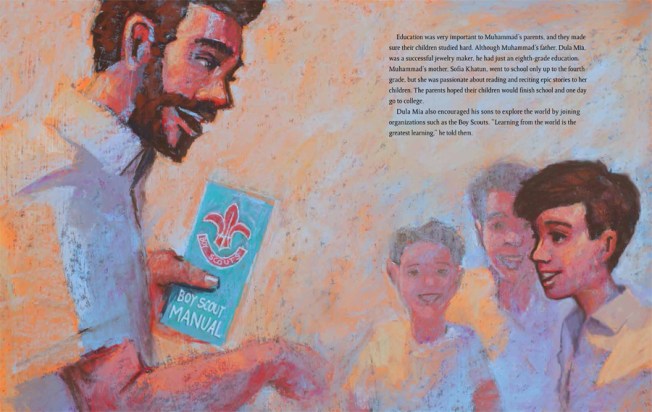
This 40 page biography written on an AR 6.5 level, tells the story of Nobel Prize winner Muhammad Yunus and his microcredit banking initiative.  The book topic is inspiring and for the most part the author does a good job of bringing it down to a middle school level. You can tell the author tries to flesh out Muhammad Yunus by starting the book with him as a boy, and relaying how he was raised and how his parents and boy scouts shaped him.  Despite her efforts however, at times it reads more like a resume, not a children’s picture book.

22_cents_3

Other than his accomplishments, and work history, I didn’t learn anything about him that made him relatable as a person, nor did I learn much about Bangladesh, or Islam.  And yes, I know it is a biography, but it felt like it was a void that needed filling.   I did learn about the program he started, a few of the obstacles that had to be overcome and I particularly liked that those receiving the microloans also had to learn about money, finance, and banking to pass a test before getting approved  And that 94% of those receiving the help have been women.  Grameen Bank is now a global bank, and the help he has given to so many is truly inspiring and something our youth should understand through humanitarian, economic, and compassionate lenses.

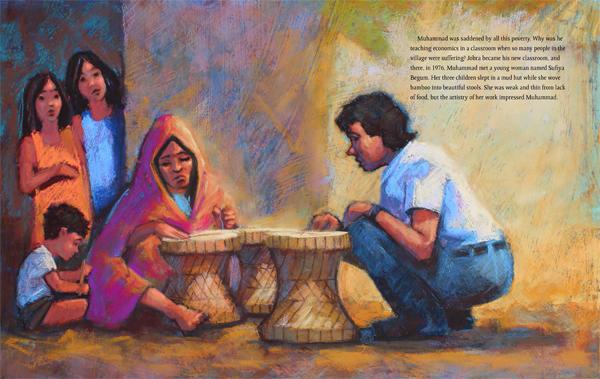
The title comes from the incident that brought Muhammad Yunus’ desire to help to fruition. He saw a woman weaving a beautiful basket, and learned that she could not afford the supplies to weave the basket, to sell in the market and as a result needed a loan.  Banks would not loan the equivilant of 22 cents because it was too small, and money lenders would charge so much interest, that after the basket sold, and the money lender repaid, there was scarce enough funds to purchase enough food for the family, let alone enough to buy new supplies, and thus the cycle was unbreakable.  He wanted to make her and those like her independent, not needing charity or the kindness of others to get her ahead, and thus the seven day course, test, and microcredit system evolved.

22 inside

The illustrations I think are both rich and well done.  The effect of the watercolors flesh out the text heavy pages with detail, but don’t create a distraction from the concepts and accomplishments being presented.  Following the story is a two page afterward telling additional awards and continuing the story of Muhammad Yunus with two real life photographs.


Brave by Svetlana Chmakova

Standard
Brave by Svetlana Chmakova

bravecover.jpg

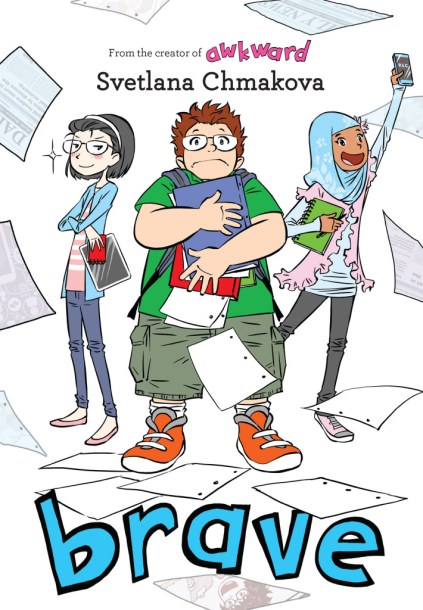
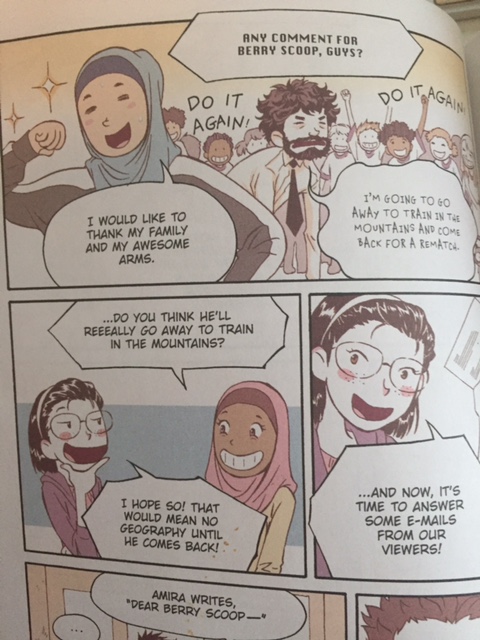
Often these days, minority groups are feeling more and more marginalized in a blaring world that is increasingly divisive and polarized.  So to see a book in my child’s Scholastic Magazine with a muhajaba on the cover, and not a main character, in a book about bullying, where she isn’t the instigator or recipient, made my minority heart swell with hope.  This 238 page graphic novel (AR 2.8) is a quick, quick read for middle schoolers, and one with a good message, that is more self empowering than preachy.  A companion book to Awkward (which I haven’t read, but hope to soon), the author takes us into Middle School through the eyes of Jensen, a kid who is struggling to find his place and escapes into his daydreams to conquer every day stresses.


SYNOPSIS:

Jensen wants to be a NASA scientist, but he isn’t good at math.  He loves to draw, but the Art Club is consumed with an upcoming event he knows nothing about, he is harassed by two bullies every chance they get, and occasionally he is asked by the newspaper staff to do menial work.  Yet, somehow despite having no friends, and a constant barrage of things going against him, he doesn’t see himself as a victim or as the recipient of bullying.  Rather, he falls into regular day dreams where he is the main character in a video game and all these battles have to be overcome to reach the end.  The surrounding characters have their own little stories, and you get to know a bit about them through Jensen, but the author doesn’t let any of them be painted with a singular stroke.  You see the athletes, being kind and sticking up for kids getting picked on, one being a math wiz.  The journalism staff of Jenny, Akila, and Felipe, run the school, but have their own stresses and internal struggles.  The circle of activity comes to a head when a student is expelled over the dress code, and all the various groups in Jensen’s world have to come together to make change.  In the process he realizes that he is being bullied, and that something needs to be done.  He also realizes nobody has it all together and he has a part to do to help others as well.

WHY I LIKE IT:

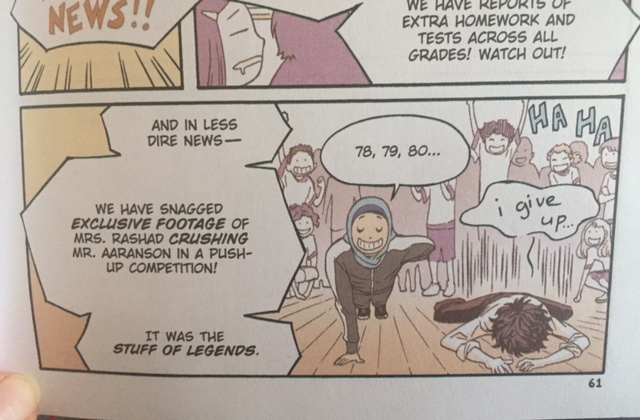
First I like it because there are Muslims in the book, that are just characters in the book.  They don’t represent all Muslims, they aren’t “different” or “other.”  Akila wants to be a journalist and she is smart, and she is kind, but she fights with her best friend, the bossy Jenny, and it is Jensen that has to help them see their errors.  I also like that the P.E. teacher, Mrs. Rashad, is a hijab wearing Muslim, that beats the social studies teacher in push-ups. I mean what an amazing way to break a hundred stereotypes, by not mentioning them, and just showing them as normal. A muslim woman, working, being physical fabulous, and being modest, ya we need more of this. There is no mention of their religion, their clothing, their hijabs, nothing.

FullSizeRender (27)FullSizeRender (28)

I also like that the students in some cases didn’t realize that they were bullying.  I think this happens a lot, where maybe someone won’t let you sit by them because they are saving a seat for someone else, but the second or third time it happens, the recipient feels alienated, where the aggressor may not even be aware.  The book explores lots of ways of bullying, but because it is filtered through the character, it leaves a lot of room for discussion about how people treat us, and how we treat others, and where a lot of pain can come from the misinterpretation on both ends.

There is a lot of diversity in the book, boys, girls, skin tones, body sizes, physical abilities, handicaps, intelligence, etc. that come up to varying degrees, but do at least offer the readers real ways to see themselves in the pages.  The book has a very tidy, happily ever after feel, which is ok I think for middle school. The book has a specific audience. Elementary will just find everyone mean, high schoolers will find it childish, but as social relationships get more challenging in middle school, I think this demographic will often have to find the courage to be brave to get through unscathed.

FLAGS:

None. One character has a boyfriend, maybe. But it is clean with pretty much everything, it even says for All Ages ont he back.

TOOLS FOR LEADING THE DISCUSSION:

I would love to do this as a book club book.  I don’t think it would need any prompting or guides. My 6th grade daughter said it was “ok” yet has brought it up at least ten times since she read it, and has come and sat by me to watch me read it.  I think, she has had some similar issues and to be able to talk about them through the characters, has been liberating for her, and furthered my conviction that fiction has power.

The Author’s website: https://svetlania.com/


The Magic Horse by Idries Shah illustrated by Julie Freeman

Standard
The Magic Horse by Idries Shah illustrated by Julie Freeman

the magic horse

I didn’t get it.  I read it to my kids they did’t get it. I know it is written on an AR 5.8, but even with that, we didn’t get it.  I had to google it to see what the deeper meaning of the story was and all I found is that it is a teaching tale of two princes and how one found his heart’s desire in a fish and the other in a horse.  Which, I did get, but didn’t really get more than that.  The details in the story seem to wander and meander around to no point and not in an entertaining way. I never felt a connection to the characters, so their side stories didn’t appeal to me.  It is possible that I would have viewed it more favorably as a short story rather than as a really long picture book, but its hard to say.  I guess I feel like if forced, I could write an essay explaining all the small lessons, and moral guidance, but as a children’s book, I don’t want to dig so deep or spend hours at bed time trying to convince my children that the story made sense.  Ideally the book should have been shorter and more streamlined, or longer and fleshed out.

horse1

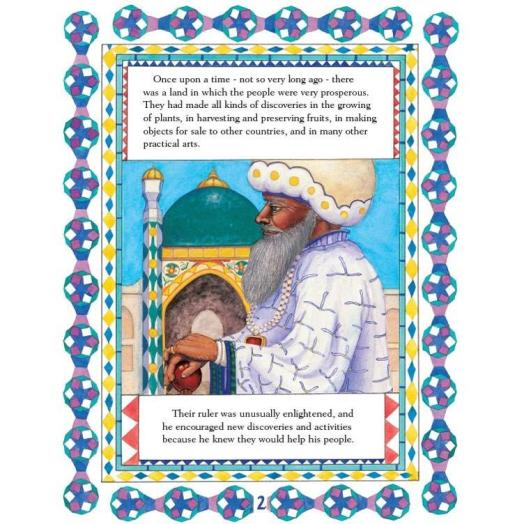
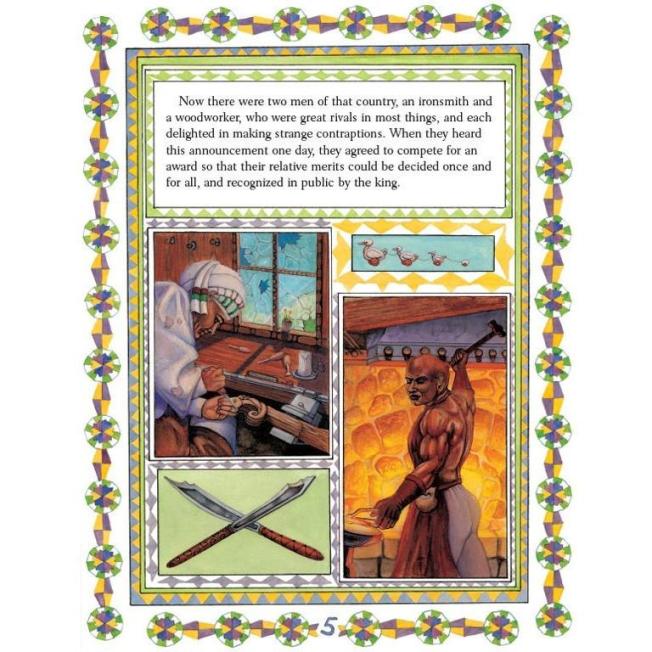
It starts out with an enlightened king encouraging his subjects to make new discoveries to promote quality of life, wealth and knowledge. He has two sons, one is an expert in strange devises and one is a dreamer.  The king puts out a call to have something new made, and an ironsmith makes a fish out of metal than can fly and swim and carry things.  A woodworker makes a magic horse that interprets the desire of the rider and carries the rider toward it.  The king suddenly becomes cruel and finding this a waste of time has the woodworker tied up.

horse

The dreaming Prince Tambal rides the horse on many adventures, which kind of disjoints the story and makes it like a fairy tale about Tambal falling in love and trying to persuade a king to let him marry his daughter, and in turn having to trick the intended suitor instead. Along the way there are poisonous fruits, turning into a beast, and eventually returning home to prove that, “Those who want fish can achieve much through fish, and those who do not know their heart’s desire may first have to hear the story of the wooden horse.” Huh? Exactly.

Malcolm Little: The Boy Who Grew Up to Become Malcolm X by Ilyasah Shabazz illustrated by AG Ford

Standard
Malcolm Little: The Boy Who Grew Up to Become Malcolm X by Ilyasah Shabazz illustrated by AG Ford

malcolm-little-9781442412163_hr.jpg

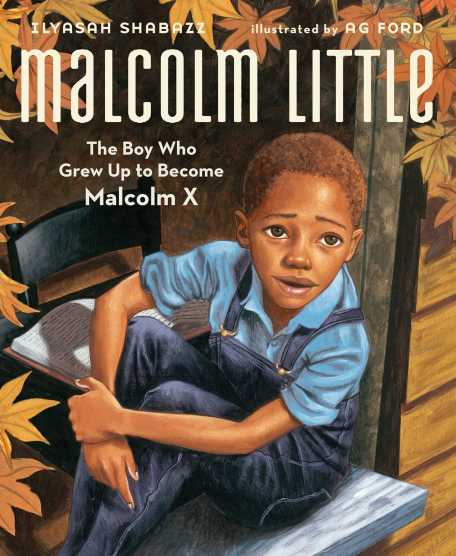
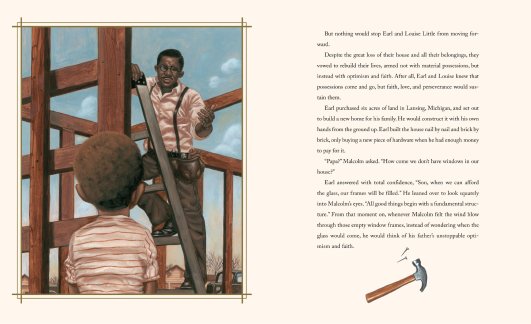
I had hoped to have a handful of selections to review for Black History Month, but alas I started too late in collecting titles, inshaAllah next year I will be better organized.  I did want to share this beautiful book though, as a great story of hope and love, that I don’t think is often included when we study Malcolm X or talk about him today.  This is the story of his parents and the philosophy of equality they tried to raise him in before hatred and bigotry destroyed his family, before he went to prison, before he became “Detroit Red,” a member of the Nation of Islam, before he became a civil rights leader, a Muslim, before he became Malcolm X.  This is a story, based on love, written by his daughter to give children of all ages something to think about.

malcolm-louise-300x300

The story of Malcolm Little, is a story that I feel cannot be rushed, it is very heavy in text and at 48 pages, the warm beautiful pictures make it accessible in pieces to younger children, but it is written on an AR 6.5 level (sixth grade fifth month).  The book tells about how his mother and father met, believed in universal equality and justice, and started a family where these values took center stage.  The family suffered for their beliefs and their home was burnt down, but they rebuilt and the family continued to find strength and see the power of possibility.  The books shows the lessons taught in everyday activities such as raising a garden, doing laundry, reading books, doing homework, and even fishing.

When Malcolm’s father was killed, however, and his mother taken away, the family was forced to separate and Malcolm to deal with an unwelcoming world, more or less alone.  The book ends with Malcolm in 7th grade so, to young readers who have maybe only heard his name in passing the book is full of hope and roots for the man he would become.  It is almost a fairytale start to a man who would be cut down in his prime years later.  They will understand how unfair society treated his family, how warm and educated and strong his mother, Louise was, and how inspiring his father as a preacher was. The takeaway will be how Malcolm’s upbringing and personality allowed for him to rise up and refuse to stay down during horrific events in his life.

malcolmx.jpg

For older elementary and middle schoolers it is a story of possibility, of how quickly things can change, and the effect of hate.  They should also see how institutionalized and normative the oppression of African Americans was and how it really wasn’t that long ago.  When Malcolm’s English teacher Mr. Ostrowski tells Malcolm that he as an African American should not have such high expectations, readers should realize that the acts of the Ku Klux Klan may be viewed as “extreme” but society as a whole was systematically enabling such bigoted acts.  The lessons passed on to Malcolm by his parents are universal themes of hope and love and equality that still have to be stood up for today, and even young listeners can grasp that, and also grasp that because of their skin color alone they were seen as second class citizens.

The book shows depth to a historical character that gives some insight to what made him so dynamic.  Many young readers will be surprised at how quickly Malcolm’s world unraveled, and some of the reasons why, while empathizing with the injustice of it.  The Author’s Note at the end is also fascinating as it details the family members and their stories about the characters in the book.   I liked the softness of the book and the smaller lessons for children that it presented.  It didn’t shy away from the violence and prejudice that the Little family faced, but presented it through a lens of optimism to hopefully inspire children to carry on with the social activism that still needs to be done.


Invincible Abdullah: The Deadly Mountain Revenge by Haji Uthman Hutchinson

Standard
Invincible Abdullah: The Deadly Mountain Revenge by Haji Uthman Hutchinson

invincible-abdullah-the-deadly-mountain-revenge-workbook-aziza-and-uthman-hutchinson-2

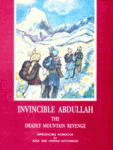
I’m pretty sure I’ve seen and handled this book hundreds of times in my involvement in four Islamic Schools, as a teacher, a librarian, and host of book fairs.  So, it is a little embarrassing to admit that this is the first time I actually cracked open the cover and read the book.  Written in 1992 with a less than attention grabbing cover, I had minimal expectations, but with a newborn and down time, I thought I needed to give it a chance, and I’m glad I did.  The book is definitely geared to boys (there isn’t even a female character in it), and is pretty action packed and quick paced.  You know the boys will get out of the predicament at hand, he is “Invincible” after all, and there are three more books in the series, but you don’t feel bad reading it anyway, because it is sufficiently entertaining.  The book isn’t amazing, but it holds its own largely because it doesn’t talk down to the reader.  The characters are independent and thoughtful and yes they are teenagers battling drug carriers in the tribal areas of Pakistan, and yes they are wielding guns and hiking over glaciers, but mind you they never miss their salat or fail to thank Allah (swt) for their success which kind of makes the book that much more fun.  The book is 218 pages with a glossary at the back.  It is not an AR book, but I probably will make it into one at about a fourth grade fifth month level (4.5).  I also am considering doing it for book club, but might wait and read the rest of the series to see which one will have a wider appeal.

SUMMARY:

Abdullah travels to Pakistan from England to visit his cousin Hasan.  At the airport Abdullah’s bag gets switched with someone else’s and the boys find themselves getting accosted by the rightful owners who have a half a million dollars in their suitcase.  The boys talk to the police and learn that the money is part of a heroin operation going on in the tribal areas and that the inadvertent switch messed up the police’s sting to catch the criminals.  The boys run in to the drug runners again in the bazaar, and after an all out brawl decide when an opportunity to go into the tribal areas presents itself, that they should take it and do what they can, to put a stop to the criminal’s drug ring.

WHY I LIKE IT:

There is drugs, violence, and guns, but it is all done for the right reasons, in an action filled manner.  The “good” guys are all religious, and while the “bad” guys have religious sounding names, clearly are not, which lends it self to a decent discussion about what makes a good person and what makes one religious, clearly not just their name or culture.  It also lends itself to a realistic conversation about drugs, their effects on the users, and on drug culture as well.  The guns, well the guns are there to make threats, and to hurt people, at best it gives you a seg-way to discuss your views on guns with your children, but in the book, it is what it is, not a moral or religious issue as the drugs are made out to be.  The boys, the heroes of the book, are all very devout mashaAllah, and their actions, manners, and thoughts reflect this.  I like that this is consistent with their character.  They are respectful to their families, to each other and are ever mindful of themselves as Muslims in all facets of their adventures.

FLAGS:

Just the content of drugs, violence, and death. Mild compared to most TV shows or movies, but present, none-the-less, nothing a third grade and up can’t handle. (Spoiler, only one person dies and it isn’t directly at the hands of anyone, nature steps in to save the day).

TOOLS FOR LEADING THE DISCUSSION:

There is a workbook that apparently can be purchased to accompany and teach the book: http://www.islamicbookstore.com/b9648.html

The author gives pause as the characters have to decide what to do next and to weigh the pros and cons and possible repercussions of their decisions.  These moments would lend themselves well to a book club discussion to find out what the students would do, what they would be willing to risk, and at what cost.