Category Archives: 3rd grade and up

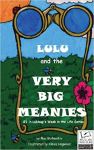
Lulu and the Very Big Meanies by Mac McGooshie illustrated by Alexis Hogwood

Standard
Lulu and the Very Big Meanies by Mac McGooshie illustrated by Alexis Hogwood

Lulu.jpg

I don’t know what is more frustrating: quality books that are poorly packaged (binding, illustrations, font, spacing, etc.) or beautiful books that miss the mark in storytelling and basic writing skills.  Both are equally annoying, and while yes, a good story should be the basis, this book is really well written that the presentation of it just makes me sad.  At 116 pages, the book is perfect for 3rd graders.  My daughter and son read it a few years ago when I first picked it up.  I made them read it.  And last week when I pulled it out to read myself, both remarked that it was a good story.  The fact that they remembered it and remembered liking it are huge pluses, and made the fact that I had to make them read it all the more disheartening.  I’m certain if you can get your kids to read eight maybe 10 pages they will zoom through the rest of the book.  It is the getting them to pick it up and start, that is the tricky part.  The book is paperback, thick and glossy, but the cover looks homemade almost.  If you thumb through it the font is too small, spaced too tight and the illustrations mean well, but don’t deliver.  Unfortunate, because like my children, I too think the story is fun and I’m disappointed that the book was published in 2013 as #1 in the Lulubug’s Week in the Life Series, and no further books have come out.

SYNOPSIS:

Laila (Lulu), and her family are American Muslims living in Southern Virginia.  Lulu’s mom is a lawyer and a convert, her dad is from Egypt and owns an Italian restaurant, and her older twin brothers are 12 and keep an eye on her.  Being incredibly bright Lulu has skipped third grade and is having trouble with some bullies in her new fourth grade class: Veronica B. and Veronica C.  aka the Veries.  Using help from her brothers, her neighbor and friend Toni, and some friends in class, a trap is set to get the bullies to confess to their evil mischief, but that unfortunately isn’t the only thing Lulu is going through this week.  Throw in her parent’s sudden decision to move closer to the masjid in another city, a litter of kittens abandoned on the side of the road, and some weird noises coming from the woods behind their house, and Lulu has a lot to deal with.

WHY I LIKE IT:

I love that it shows the day-to-day of a typical Muslim family in a normal presentation.  They pray together, they watch what they eat, they know their neighbors and worry about each other.  It doesn’t idolize the family, making them better than anyone or preachy, but makes them very relatable and likable in a realistic way.  When bees are discovered or the kittens need carrying for, sunnahs and ayats are identified, but very seamlessly, that non Muslim kids will learn a bit about Islam and Muslim kids will be excited to see themselves.  My favorite scene regarding this is when the mom finds out there will be a middle-school dance, and even though the boys are not planning to go, know that it isn’t for them, and don’t even seem tempted by it, they still have a family meeting about it, to discuss.  I also like that at one point Lulu meets another Muslim girl and they don’t hit it off right away, the girls work through it, but it is nice to see some diversity in even the way Muslims are presented and possibly misunderstood even amongst one another.

There is a lot going on in the book in terms of action items, but there still is a lot of character development and dimensions to Lulu.  Lulu has to navigate relationships with her family and friends that ring true and aren’t over simplified.  Her friend and neighbor, Toni, expects Lulu to act different at school now that they are in the same class, but returns to her silly self once they are home.  Lulu clashes a lot with her mom, but can smile and get her way super easy with her dad and manipulates that a lot.  She has to balance her sassiness with her teacher and principal, pick her battles with the Veries, and abide by other adults’ rules and expectations.  The book reads in a similar vein as Junie B. Jones, or Clementine, just maybe a more mature and less obnoxious reincarnation.

I wish the adventure involving the backyard noises, was a bit more dramatic, and maybe even the unveiling of the trap involving the dye was more resolved.  At times the book seemed rushed to wrap up all the stories introduced and I think they deserved a little more time to be explored and enjoyed.  If the font and spacing and pictures could be tweaked I think the book would really speak to kids in a fun way.  Third and fourth graders can easily handle a 150-160 page book that has good pacing and is packaged in a tempting, non intimidating way.  I’m holding out hope that maybe the author will write some more, tweak this one, and give it the chance at reaching an audience that would benefit from the smart, fun, grounded life of Lulu.

FLAGS:

Clean, it does mention that Toni likes a boy, but Lulu thinks that boys are trouble.

TOOLS FOR LEADING THE DISCUSSION:

If I still did an elementary book club, I think this book would work.  I think kids need a nudge to give it a try, but once the book gets going, girls and boys alike will enjoy it.  I may read it for a Lunch Bunch choice (I read once a week to 4th and 5th graders while they eat their lunch).  Kids will love seeing themselves, their stresses, their families, and their faith presented well.

The Young Muslim’s Mindful Book of Wellbeing by Zanib Mian

Standard
The Young Muslim’s Mindful Book of Wellbeing by Zanib Mian

wellbeing.jpg

This tiny book (5.5 inches square) is non fiction and I’m reviewing it, because I think it has a lot of value and will appeal to the parents that check out this site for book suggestions for their middle grade children.  The flower on the cover and the topic, might naturally turn away boys, but the depicted character that presents the information is a boy and while it is a token gesture, it is a nice one, to try and make the book and it’s contents appeal to all children.  Irregardless of if you have teens, or tweens, or toddlers, girls or boys, I think parents should read the book and use the concepts and framing presented when talking with their children.  At least that is what I hope to do.  One doesn’t need to wait until their child comes home crying from friend drama, or losing out on something they desperately wanted, to implement the lessons and reassuring bits of mindfulness, it should be the established foundation of how to handle emotions in a healthy way, inshaAllah.

SYNOPSIS:

The book is broken into 14 chapters based on topics covered, and the directions encourage the reader to read them all in order the first time through, then going back to certain sections as needed.  The headings include: How to be happy, A Way Out of Every Problem, How to Feel OK If You Wanted Something, but Didn’t Get It, Friends, Feeling Sad, and Talking to Allah.  The information is presented in a positive reassuring manner that helps the reader to feel like others have felt this way too, and to try some of the suggestions.  It doesn’t belittle or talk down to the feelings one might be having which is great, as the concept of Allah (swt) is incorporated onto every page.  Strengthening ones relationship with Allah as a way to cope with stresses and know that He is always there, is the central theme throughout.

The book offers advice on dealing with negative people, negative thoughts, and finding your own positivity and strength with the help of Allah no matter what.  The book isn’t dry though, it engages the reader and uses examples children can relate to and comparisons that are tangible.  At one point the book talks about shields that reflect back whatever you are giving off.  So when you are shining from the inside, you feel better, and so do others around you.  When talking about seeing the bigger picture, the book urges the reader to consider seeing an entire room through a key hole and likening it to how we see our own lives seeing only what is happening right now.

The book also takes into account that somethings may take work to feel better, and that it isn’t an easy fix to feel good, but inshaAllah worth the effort.  The end summarizes in two points what the previous 36 pages articulate and explore, concluding how to make you shine and be your best self.

WHY I LIKE IT:

I love that we are talking to and with children, not just toddlers, about their feelings.  We aren’t telling them to just cheer up or be happy or get over it.  We are giving them tools that they can carry throughout their lives, inshaAllah.  The pages are text heavy, granted the book is small, but the book is thick and the amount of words on the pages could intimidate some, but like I said earlier, even if the child won’t read it, parents will benefit from it and implementing it in the home.  Also just having the book sitting around will urge kids to pick it up and thumb through it, I would almost guarantee it.

My critiques are the presentation.  I am no expert on the content and what I read seemed logical, and I liked it.  Vague I know, hence I don’t review non fiction often, because what do I know?  As for the physical annoyances of the book, it is too small.  It doesn’t need to be huge, but for the topics covered, it is trivialized by the size, in my opinion. 

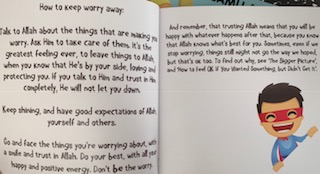
I don’t mind the font, I mind that it changes size so often and for no other reason it seems than to fit everything on the page.  Nearly every chapter is a different size font, but sometimes its even within the same chapter.  A few times for example the page on the left appears to be a size 14 font and the text in the same chapter on the right is like an 11, making it seem inconsistent and jarring..  If the idea needed to be bolded, or shouted or whispered, I support playing with font size, but this is not the case, it is so that the picture and text can all fit without having to turn the page, and its not the best solution I feel, its too distracting. 

IMG_2672.jpg

The other inconsistency that I found a bit odd, are the illustrations.  The little boy on the cover with his yellow flower and yellow shirt take you through maybe 80% of the book, but on occasion other characters pop up, which is fine, when they are drawn in the same manner, like the frog.  But the random appearance of the full color super hero, reminiscent of My Dad’s Beard book, and the full color Migo and Ali looking bears, there’s also a one time appearance of a girl in full color, seems bizarre.  I don’t see the cameos as adding a shoutout to the content and author, but more like the books from the 90s that used free clipart to illustrate the pages that otherwise would be text only. 

FLAGS:

None

TOOLS FOR LEADING THE DISCUSSION:

I think this would be a great book for a school counselor to use as a guideline for group discussions.  I think it could be done from the library, but a counselor and students would really benefit from the book and the manner in which the material speaks and empowers youth to shine.

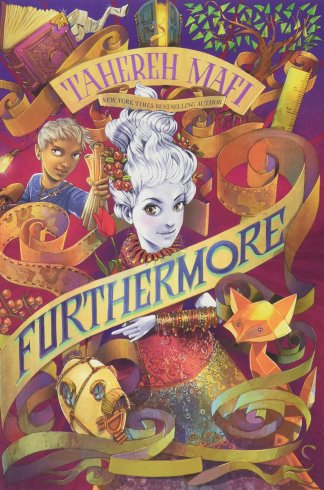
Furthermore by Tahereh Mafi

Standard
Furthermore by Tahereh Mafi

furthermore.jpg

I put off reading this book (I read the companion, Whichwood, first) because I had heard that the audio book was great and I wanted to listen to it with my kids.  Read by Bronson Pinchot, Cousin Balki from Perfect Strangers, the audio book takes 8 hours to cover the 401 page book, and it is delightful.  While Mafi’s circular repetitive world building, takes some slowing down to get used to, listening to it made the story move along when a physical book may have been abandoned.  An AR 5.5 the book is clean, but not gripping until about two-thirds of the way through.  As the main character grows in maturity, the story gets better and better, a mix between Alice and Wonderland and A Wrinkle in Time.  The book will require some determination to get through, but the journey will be worth it in the end.

SYNOPSIS:

Alice Alexis Queensmeadow is missing her father who left 3 years ago with only a ruler in his pocket, and hasn’t been seen or heard from since.  Her life is a bit messy as she is being homeschooled by a mother who she doesn’t really think likes her and thus spends most of her days outside eating flowers and trying to avoid wearing clothes.  Alice lives in a world of magic and color, but Alice has no color, at least not externally, her magic, which she must learn to accept is to add and manipulate color to the world, to anything and everything, except herself.  As a 12-year-old she must surrender her magic and be given a task to prove her place in her world.  She thinks her best gift is dance and her surrender goes terribly wrong.  With no where to go after her humiliating performance, she decides to take Oliver Newbanks up on his offer to go with him to help him on his task, he is 13 years old, and find her father.  Their unlikely assistance to one another is fraught with mistrust and bickering as they journey to a world Alice didn’t even know existed, Furthermore.

In the land of Furthermore, magic is used very differently then in Ferenwood, and on their journey where up is down and paper foxes rip limbs off, and Time is actually a person.  The two companions will have to learn to be honest with one another as well as themselves in order to survive, let alone to find Alice’s dad.  With the threat of death and being eaten constantly plaguing them, they journey from village to village where the rules are different and the laws of logic ever changing, with the hopes of completing the task and reuniting a family.

WHY I LIKE IT:

The details in the story are luscious and beautiful, and once you fall into it, you really do want to stay and look around a while.  There were times when listening to it, that the kids would get bored, yet now that we have finished it, all have mentioned that maybe we should get the book so they can reread parts again.  Mafi’s writing style is very thick that you don’t feel like you are making any progress, yet when you start to digest what you know, you realize in fact you have.  

At the beginning Alice is very annoying, and she stays that way for a while.  Her whiney nature isn’t sympathy evoking, but rather gets you irritated with Oliver as well, that he doesn’t just tell her stuff.  Both combined need to be bopped on the head.  Seriously, a bit of communication would really have taken out a lot of the unnecessary frustration the readers feel for the characters, and let the personal stuff they were hesitant to share with each other have more value.  It is a middle grades book, the empathy of understanding Alice and Oliver’s own fears and reticent in opening themselves up is a great lesson to explore through fictional characters, but because the kids have such poor communication skills about anything, their own fears lose potency.  The pacing of the story, is just as random as the villages they pass through as well, while they always seem in a rush, some of the places they stop they could chat at, rather than while they are running to save their lives, or while they are walking they could talk to give description through their eyes, to build up the characters, not just the world they are in.

Like in Whichwood, the narrator talks to the reader which is fun, and provides information that otherwise couldn’t be shared.  The characters names in each of the villages are clever and while the story could be mapped pretty straightforward, girl journeys to a new world to find her father with the help of a boy, who will become her friend, the twists and details, make the book memorable and worth the strain to get to the climax. 

I know this review sounds back and forth, and I think a lot of it stems from what you expect from the story before you begin.  I had tried to read the book and got a little discouraged, but I had a good feeling the audio book wouldn’t disappoint, so I plugged through and found myself enjoying and loving the story.  If you are expecting an action packed fully fleshed out rational story, you will be let down.  If you can just enjoy the whimsy on the surface and let the little tidbits of the larger story come at different times to complete the larger puzzle, you will love Alice and Oliver’s magical world and the fantastic journey that they go on.

FLAGS:

The book is clean.  A bit disturbing is that the people of Furthermore want to eat Alice and Oliver to absorb their magic.  It isn’t vulger, but it is silly that Alice doesn’t like wearing clothes.  While one could be nervous that Alice and Oliver develop a romantic relationship, rest assured they do not, they become friends and are 13 and 12 years old, so phew.

TOOLS FOR LEADING THE DISCUSSION:

I can see me doing this as a book club selection, although I’d probably lean more to Whichwood, in an Islamic School environment because of the names. I think young Either one though, I’m positive Muslim kids will enjoy seeing a hijab wearing Muslimah pictured on the back flap and seeing that she can write a mainstream engaging fantasy novel about whatever she likes.

Author’s website: http://www.taherehbooks.com/book/furthermore/
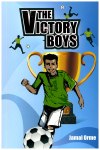
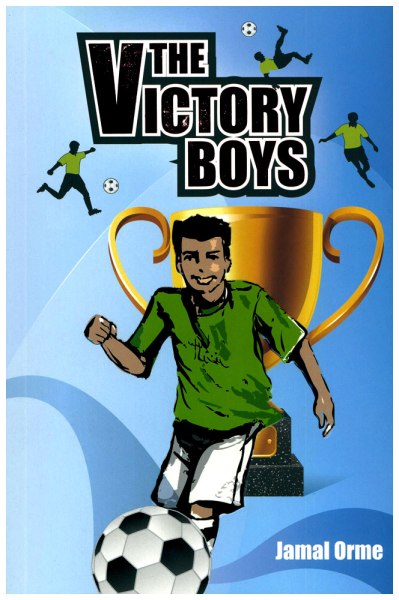
The Victory Boys by Jamal Orme illustrated by Eman Salem

Standard
The Victory Boys by Jamal Orme illustrated by Eman Salem

victory boys.jpg

I’m not sure why Amazon states the book is for pre-school and up, when the publisher, Kube, posts this book for ages 7 and up.  I think 3rd or 4th grade soccer/football fans will enjoy the book.  There are some slightly mature ideas presented and worked through, and the soccer lingo assumes the reader knows the sport.  Plus the quality of the illustrations and the small font isn’t going to entice someone not already excited to read the book based on the content within.  My boys, ages 8 and 9, enjoyed the book, as did I, once the story got going.  It doesn’t really grip you from the first sentence, but as the story progresses and the way Islam is woven in makes for some learning experiences in the midst of a few intense football matches.

SYNOPSIS:

The boys at the Sunday Madrasa do not enjoy their time there.  They find the Imam boring and thus are not inspired to learn. When they sneak a football into break time however, they suddenly feel more engaged and present in their lessons.  A change the Imam notices and appreciates, but doesn’t know the reasoning for as he strictly forbids football and finds it a waste of time.  Outside of Madrasa, Junayd is having a hard time at home.  He has to help out a lot at his father’s restaurant and his older brother Saleem has gotten in trouble with the police.  His mom prays for the kids, but is also at a loss as to how to help with the stresses at home.

During a secret game of football in the masjid courtyard, an arrant ball breaks the neighbor’s greenhouse window, and the boys are forced to come clean about their covert game.  The Imam demands the kids stop playing and that they tell their parents what they have done, so that they may earn some money to replace the window.  As the kids come through with the money and the Imam sees the kids resort back to their lackluster attitudes to learning.  He gets an idea to start a football club after madrasa classes.  The only problem is that he knows nothing about the sport and no parents are willing to help.

Saleem by chance comes to collect his brother one day, and as he hollers advice from the sidelines, the Imam recruits him to coach the team.  In response the Imam ever so gently uses football to teach not only the madrasa kids, but Saleem as well.  When the boys learn of an upcoming tournament, the Madrasa enters an A and B squad and the Shabab Al-Nasr, Victory Boys, will be tested not only in their play, but also in their manners, and understanding of what it means to be a team and Muslim.

WHY I LIKE IT:

I love that the Imam grows and changes.  I mean it is a kids book about soccer, but really it is the adult in the story that shows the most heart.  He goes out of his comfort zone, reevaluates his opinions, and admits when he is wrong.  High five Imam!  I also like that he didn’t give up on Saleem, and the way he leads him is with such kindness and compassion, that even youngsters, will be impressed.  

The book does not talk down to the reader, which is nice, but at the same time I think it pushes the age appropriateness a bit with the detail devoted to alcohol being sold at the restaurant, Junayd’s father’s flaws, and even Adam’s dad’s tantrum of sorts.  There really aren’t any nice parents in the book.  We don’t learn much about the moms, but none of the dads seem too supportive.  Really the only nice adults are the Imam and the neighbor who’s window they broke.

The timeline isn’t entirely smooth, the kids come together and play well as a team remarkably fast for how intense the tournament is, and how well they perform. And some of the characters could have used some fleshing out, I couldn’t really tell you much about them.  The font is really small and the spacing often forgotten.  The book is about 95 pages with a glossary and an acknowledgement at the end, fortunately the 2nd book in the series seems to space the words and lines out more and is 155 pages.

The story is solid and for the most part well written.  I read it in one sitting and thoroughly enjoyed the lessons learned and then put into practice.  The book isn’t preachy, but you are glad to see the Imams words given life in the other characters’ actions.  Saleem changes quickly, but the author and story account for it in a way that is believable for the audience and the message of not giving up on one another comes through loud and clear.  There is a lot of technical detail about the sport, but it doesn’t drag on, it adds to the excitement even if you just know the basics.

FLAGS:

The talk of alcohol, of Saleem being with a group of kids and a stolen car, there is some yelling and aggressiveness from the adults.

TOOLS FOR LEADING THE DISCUSSION:

The story is a bit short for a book club selection, but I would definitely consider it for Lunch Bunch (where I read to 4th and 5th graders while they eat lunch).  And I think most Islamic School libraries and classrooms should stock the series.  

https://thevictoryboys.com/
The Boy at the Back of the Class by Onjali Q. Rauf illustrated by Pipa Curnick

Standard
The Boy at the Back of the Class by Onjali Q. Rauf illustrated by Pipa Curnick

boy at the back.jpg

A perfect introduction to the refugee crisis for upper elementary aged kids.  The story is told from the perspective of an unnamed 9 and 3/4 year old narrator about her friends and how the filling of an empty chair in the back of the room changed their lives.  Ages 7 through 12 will enjoy the plotting and planning of the friends, the awesome climax and the gentle opening of their eyes to the atrocities and bigotry around them.  At 297 pages, with a few pictures and some engaging notes and tidbits at the end, the book is both big, yet completely non intimidating at the same time.  

SYNOPSIS:

Right near the end we learn that the narrator’s name is Alexa, and not too much before that, I learned that she is a girl.  I kind of like that vagueness of it, especially as we also learn that she is half Indonesian and half Austrian.  You realize that it doesn’t matter, that it doesn’t change anything, and that we all bring our own assumptions to the story and learn a bit about our selves as the narrator’s identity is revealed.  But really, thats a tiny bit of the book, the book is really about a group of diverse friends battling bullies, bully teachers, and trying to help the new kid in their class Ahmet.

Ahmet is a refugee from Syria, but the information isn’t easy to establish, he doesn’t talk to anyone, he disappears at lunch and recess, so Alexa, Josie, Tom, and Michael, first have to figure out who he is, and how they can be his friends.  Along the way we learn the Tom is from America, the book takes place in England.  Josie is the best football player and her parents are nervous to have her interacting with Ahmet, Michael is incredibly wealthy and his parents are Nigerian and French, and Alexa lives with her mom a librarian who works really long hours, her dad passed away and money is incredibly tight.

Once friendships are established, Alexa learns that Ahmet’s mom and dad are missing and that his sister and cat died while fleeing Syria.  When she learns that the government is planning to close the borders to immigrants and refugees, the group of kids come up with plans to keep the gates open until Ahmet’s parents can be found and they can come to the United Kingdom.  The kids come up with a variety of plans, but “The Greatest Idea in the World,” is the one they decide to go with.  It involves a lot of danger, but the general gist is to get a message to the Queen of England, who will keep the gates open, find Ahmet’s parents and reunite the family.  

Naturally, there are a lot of moving parts to the plan, and a lot of naivety on the part of the 9 year olds, but they do get the Queen’s attention, and they do have a wonderful support system of parents and teachers and while their are bullies around every corner, they do come together to make the world a bit better for Ahmet and for us all.

WHY I LIKE IT:

I love that it is realistic, with the plotting, and understanding of war, alike.  The war and Ahmet’s journey is very very simplified, but the tone, introduces kids to the intensity without overwhelming them.  Just like the plot to get the Queen’s attention is not celebrated, but appreciated.  What the kids did was wrong and dangerous and they lied, and the kids don’t ever know after if they are in trouble or being praised.  I like that the integrity of both situations is upheld and the book doesn’t get too far fetched.  Similarly, the book is fun and adventurous, and in many ways Ahmet is just a catalyst for the kids to come together to solve a problem and save the day. 

There aren’t a lot of details about his life in Syria, because he doesn’t speak English, there isn’t anything about Islam, except he draws his mom with a scarf on her head.  But there is a lot of learning to accept each other, and stick up for whats right and to not give up on people.  I love the diversity of the friends and how they don’t expect each other to change, they accept each other and move along.  

There is a slight typo on page 3, “…could be half as useful as a Tintin’s dog, Snowy,” that had me afraid that this book was going to be unrefined, but alhumdulillah I was wrong.  The book reads easily and wonderfully, and my children loved it as much as I did.  The author is a first time writer, and I hope she has a bunch more stories in her, because I look forward to reading them.  

FLAGS:

The book is clean and reads believably from a 9 year old’s perspective.

TOOLS FOR LEADING THE DISCUSSION:

I would do this in an elementary book club in a heartbeat. I’ve suggested it to many and I hope to read it aloud to my 4th and 5th grade lunch bunch crew. It is well written, timely, and memorable.

Teacher’s Notes: https://www.hachetteschools.co.uk/wp-content/uploads/2018/07/The-Boy-at-the-Back-of-the-Class-Teachers-Notes.pdf

A bit about the author: http://beingthestory.org.uk/speakers/onjali-q-rauf


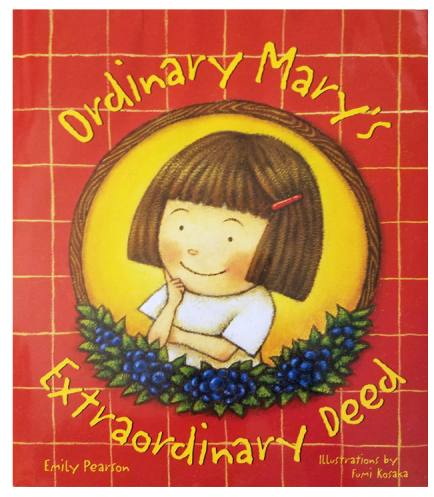
Ordinary Mary’s Extraordinary Deed by Emily Pearson illustrated by Fumi Kosaka

Standard
Ordinary Mary’s Extraordinary Deed by Emily Pearson illustrated by Fumi Kosaka

ordinary-mary.png

Once again I picked up a book for the message that it explored, making a difference, and found myself smiling triumphantly when a flip of a page revealed a Muslim lady depicted in an illustration, and her culturally Islamic name gracing the page. 

The book is an AR 4.2, and while there are a lot of words on each of the 32 pages, and the concept of an act multiplying might be hard for little ones to grasp, I think patient kindergarteners and first graders will grasp enough to make the story enjoyable.

IMG_2114

Ordinary Mary is so very ordinary, but she changes the world.  It all starts when she leaves berries for a neighbor.  And that neighbor, Mrs. Bishop, takes the berries and makes blueberry muffins and secretly gives them to five people.

IMG_2113

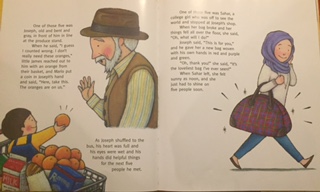
Each of those five people in turn give or do something kind to five people and over 30 billion people are impacted.  But there are not that many people on the planet, so there is love left over and extra to give.

IMG_2112

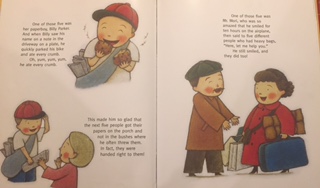
The book doesn’t follow all 30 billion obviously, but it picks and follows one person to show how the chain works before showing the mathematical growth in numbers.  Mrs.  Bishop gave a plate to the paperboy Billy Parker, who handed the next five people their newspaper personally instead of tossing it in their bushes.  One of the people that got their newspaper smiled for 10 hours on his flight, and helped people with their bags, etc etc.  

IMG_2109

The book shows that giving something can be something tangible, or a compliment, or a phone call, or a smile.  Over long distances,  the kind deed comes back to Mary and the message too, comes full circle.

IMG_2110

Along the line is Sahar, a college student who’s bag breaks and she benefits from a kind man who was just gifted oranges at the grocery store when he didn’t have enough money.  She in turn compliments a woman on a boat who is distraught and unsure. An important character in the link, and an import illustration of inclusion.

IMG_2111

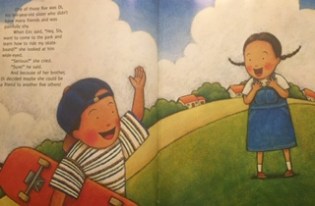
There author mentions a variety of names, male and female, and the illustrator represents a fair amount of diversity of age, color, gender, religions, socio economic, ethnicity and mobility.  Truly, we all have the potentially to change the world.


Iqbal and His Ingenious Idea: How a Science Project Helps One Family and the Planet by Elizabeth Suneby and Rebecca Green

Standard
Iqbal and His Ingenious Idea: How a Science Project Helps One Family and the Planet by Elizabeth Suneby and Rebecca Green

iqbal

It is a bit odd that this story is fiction, when it reads so much like a piece of nonfiction.  It is a picture book, but has an AR level of 4th grade 4th month.  So, while the story is great and highlights a country and culture, Bangladesh, not often seen, I don’t know that this book would appeal to many kids.  The kids that it does appeal to though and that can find it in a library or bookstore (not sure where it would be shelved), I think will not just like it, but possibly find it both inspiring and worth reading again and again.

IMG_2086

It is monsoon season in Bangladesh and the rains make Iqbal’s mom have to cook indoors.  As a result, she and the baby, Rupa are constantly coughing from breathing all the smoke from the woodburning stove.  Iqbal’s father mentions a propane stove he saw in the market, but the family cannot afford it, despite wishing that they could. 

Iqbal’s school has just announced the School Science Fair and the winners get cash prizes, if Iqbal can win, maybe he can buy his family the new stove.  His little sister Sadia offers her services to help him win and be his assistant.

IMG_2087

After a lot of thinking, pondering, and dreaming, Iqbal decides on the perfect project: a stove that didn’t produce smoke.

With the help of his teacher at school to find ideas and articles and plans on the internet, Iqbal and his sister build a solar cooker with foil and an old umbrella. 

IMG_2088

The science fair is a success, Iqbal wins, the family buys the stove and propane with the winnings, and when it isn’t raining, the family is able to use the solar stove Iqbal and Sadia built.

The book draws on ideas of sustainability, pollution, economic viability, problem solving, and education.  The culture provides the backdrop making all of these issues relevant and real, and mentioning Ramadan, Eid, and prayer provides some depth to the characters and adds to their culture.

IMG_2089

A lot of reviews online criticize that the mom is cooking and that the kids test an egg on the solar cooker and call her to eat it if it is supposed to be Ramadan, but I personally promise you, during Ramadan, we are always cooking.  And if she is nursing the baby, the mom wouldn’t be required to fast, there’s a lot of other reason she couldn’t/wouldn’t be fasting, but really, it is such a small portion mentioned in passing, no detail needs to be given, and it didn’t bother me at all.

Another complaint about the book is that if money is so tight the kids wouldn’t be at a school where they can just make copies, and buy eggs on their own.  I think there is some truth to this, but maybe a wealthy doner funds the school.  I think you could argue it either way.  I don’t know that the family is poor, it is the overall society, so kids could have pocket money, a propane stove is probably imported at least from a larger city so the expense would be more, similarily the infustruction of electricity and gas lines could hint more at why they cook the way they do.  Needless to say the family is smiling in the pictures, they have food, and they seem to be doing ok.  So the fact that the school printed a few articles and the kids bought some eggs without asking permission, didn’t bother me greatly.

IMG_2090

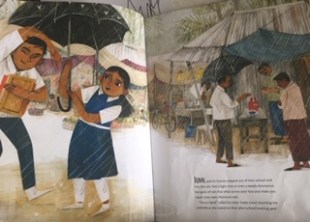
The illustrations are expressive and show the family connections and emotions.  I like that they bring to life a country many wouldn’t know, even if I wish it weren’t a work of fiction, but based on some child actually there.  

The end of the book has information about clean cookstoves, how to build one yourself, and a glossary.  The large 9×12 hardbound book would hold up well to multiple readings, and the amount of text on the pages would work well as a read-a-loud to younger kids who would find the subject matter interesting.  

IMG_2091


Power Forward: Zayd Saleem, Chasing the Dream by Hena Khan illustrated by Sally Wern Comport

Standard
Power Forward: Zayd Saleem, Chasing the Dream by Hena Khan illustrated by Sally Wern Comport

power forward

I enjoy Hena Khan’s books, I love basketball, and I love that this three book series is written for 3rd-5th graders.  I didn’t love the cover, however, which I attribute to the reason I waited so long to start reading the book, I know, lame.  But luckily the books were in the public library and I had a few hours on my hands and was able to consume the first two books, and look into ways to get the third one ASAP!  Written on an AR 3.8 level the 126 pages fly by, the second book On Point is 130 pages and an AR 4.0, and the third book in the series, Bounce Back comes out in October.

SYNOPSIS:

Zayd Saleem is in 4th grade and is desperately trying to move from the D squad basketball team to the Gold team with his best friend Adam.  The only problem is he is a pretty scrawny kid, and he has committed a lot of his day to practicing violin.  His desperation forces him to be less than honest and the consequences that follow may strip him of the chance to even try out for the team at all.  The basketball story is intertwined with a rich cultural Pakistani-American backdrop and familial characters that are relatable and fairly fleshed out.  Zayd’s mamoo, maternal uncle, has agreed to meet someone to consider marriage, which brings out some humor as the whole family, including grandma and grandpa, have big roles to play.  Zayd also has to figure out why he gets such stomach aches as he makes regular notes in his food diary, and has to balance the universal themes of friends, school, and homework, as well.

WHY I LIKE IT:

The font and spacing is wonderful for the target demographic, sprinkle in the illustrations and the book is not intimidating in length or size.  The book is very real and relatable, kids of all backgrounds will relate to the basketball storyline and the video games and players mentioned.  I loved the cultural environment.  My kids absolutely loved the mentioning of the Pakistani food that they eat, and customs they participate in, and dynamics they know all too well.  I don’t know that a non Desi (someone from the Indian subcontinent) will get it, love it, and not be turned off by it.  The books are published through Salaam Reads and I would imagine the author and publisher know what they are doing, and the library has numerous copies, so clearly, I’m over thinking it, but I really want to get feedback on the cultural aspect, because it is done really well and I think it would show promise for future books.  

I love that the book is about a boy and basketball, but it isn’t limited to being a boy book or a sports book.  The story moves seamlessly through all facets of the characters life that makes it pretty memorable for what could have just been a sports story with a moral.  The “life lessons” are clear and obvious, but not overly elevated.  The little mistakes that Zayd makes are a part of his life, as are the consequences, but his family helps him through them, and help him learn.

There isn’t anything preachy or blatant about Islam in the book, but the characters are Muslim and it mentions that the parents are heading to the mosque at one point to help with a fundraiser.  

FLAGS:

There is lying, but that is kind of the lesson being worked through.

TOOLS FOR LEADING THE DISCUSSION:

I recently agreed to help a teacher with her “Lunch Bunch.”  Once a week students can opt to eat lunch in the library and have a book read to them.  They must commit for the duration of the book and I think for a 4th and 5th grade group this book would be a lot of fun.  It would probably only take two sessions to read and with the diverse class I can see if they get the cultural stuff or if it just bogs down the story to them.

Author’s website: https://www.henakhan.com/power-forward/


Love by Matt de la Pena illustrated by Loren Long

Standard
Love by Matt de la Pena illustrated by Loren Long

love.jpg

This 40-page-book may have a simple title, but most of us know, there is nothing simple about love, and this book shows love in many forms from a child’s perspective as they grow.  Sometimes picture books are basic and inspired to teach, or simply entertain.  Sometimes when picture books try to do more, the audience is confused when the pictures and amount of text on page don’t seem to align.  And sometimes, large pictures, with thoughtful poetry make the pages come to life and sing.  The book is written on an AR 3.7, so people thinking this book is for preschool aged children seem to be upset by the concepts hinted at and illustrated, but for older kids, this book has amazing power, and beauty that can show just how complex this universal feeling is.  

Love is your parent’s voice, love is burnt toast, love is the stars after your house burns down, love is in your grandpa’s wrinkles, love is staring back at you in the bathroom mirror.  But sometimes love also burns out and love is shielding you from things that might hurt you, and love separates people too. 


As humans, we can all relate to the same emotions, whether we give and receive love the same, the book shows the value and meaning it has to us all.  Hurray for illustrator Loren Long, because page after page, shows diversity of color, mobility, socio economics, age, and religion.  On a page where the love of the child is keeping her from seeing the TV that the family is crowded around a cross is present, and then a few pages later,bam, there is a girl in hijab looking up at the trees and listening to the love shared in their rustling. 

IMG_1901

I had no idea this illustration was present, and gasped aloud.  I said nothing to my daughter, finished the book, and handed it to her to read.  She turned the page and gasped aloud as well saying, “there’s a muhajaba, haha, we are in it too.”  Granted she is my daughter, so environment and genes account for something, but EVERY PAGE I think resonates with someone, and that gasp in my living room from me, from her, could come from anyone who turns a page in this book and bam suddenly feels represented, feels included, feels validated.  That my friends, is LOVE. 

IMG_1900

We are more alike than different.


The Worst-Case Scenario Ultimate Adventure Novel: Amazon & The Worst-Case Scenario Ultimate Adventure Novel: Mars by Hena Khan and David Borgenicht

Standard
The Worst-Case Scenario Ultimate Adventure Novel: Amazon & The Worst-Case Scenario Ultimate Adventure Novel: Mars by Hena Khan and David Borgenicht

There is nothing Islamic or religious, with either of these books, but I wanted to review them, as the author Hena Khan, who has brought such lovely picture books to our book shelves (Night of the Moon, Golden Domes and Silver Lanterns, Crescent Moons and Pointed Minarets), inspiring elementary books to the mainstream (Amina’s Voice, On Point, Power Forward), and who showed Curious George what Ramadan is all about, is Muslim.  She has done a tremendous job of blending culture and religion with everyday life making her stories relatable and found on bookshelves across America.  She also has written books that are just good books void of any religion and culture, that hopefully they remind our youth that you can write books about anything, appeal to everyone, and be successful as well.

Both books are like the “Choose Your Own Adventure” books that I remember from the 1980s except these are much better written, and I think I might have learned facts about Mars, space travel, and the Amazon from them, without even realizing it.  Aimed at 3rd to 5th graders, these two books were checked out from the library and read countless times by my kids and myself alike.  They are entertaining and not easy to predict.  It is worth noting that while I did make it the entire length of the Amazon, after four tries I gave up trying to survive the journey to Mars and back.

IMG_1796

SYNOPSIS:

In both books the cast of teammates is given at the beginning and shows a good diversity of men and women from all over the world with a variety of skills and backgrounds to be on the expedition.  The books then give the set up of where you are going, and how you got chosen.  You then are advised to flip to the back of the book to look through the files and notes that will give you knowledge about what you will encounter.  These pages are in full color and are in diary, note style.  The adventure then begins and you make choices that lead you down different paths to success, or demise, it is up to you to decide how to survive.  

WHY I LIKE THEM:

I love that you learn while making decisions and attempting to make the story continue.  The books are fun and most of the choices aren’t obvious, naturally a few are, but they are well done.  There are comic book style pictures sprinkled throughout and regular black and white illustrations on many of the pages.  I particularly liked that the kids read them more than once and learned a bit about space travel, mars, what would be needed to set up a colony, the Amazon, various animals, and survival skills in the rain forest.

FLAGS:

You might get burned up, or bitten by a snake, but nothing too graphic, as you are the reader and obviously know it isn’t real.  

TOOLS FOR LEADING THE DISCUSSION:

These books wouldn’t work as book club selections, but I think 3rd and 4th grade classrooms and school libraries would benefit from having these fun books on hand.  Struggling readers will enjoy the fast pace and the number of pages (about 200 each), irregardless of if they are read or not, and advanced readers will enjoy trying again and again to reach the successful end.