Tag Archives: Story Time

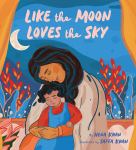
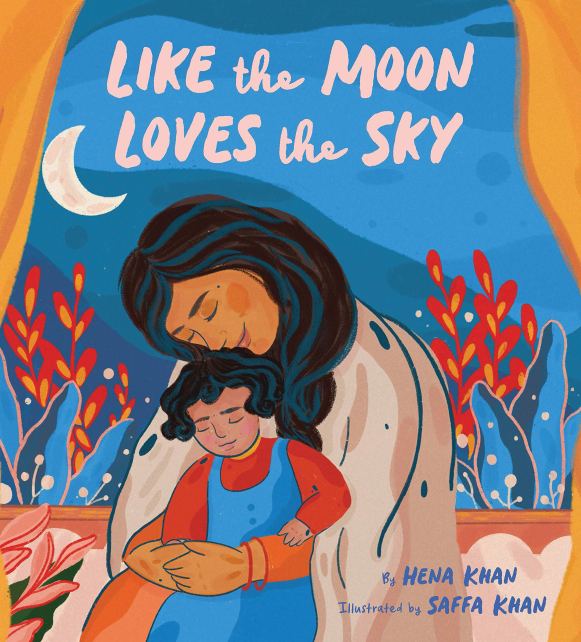
Like the Moon Loves the Sky by Hena Khan illustrated by Saffa Khan

Standard
Like the Moon Loves the Sky by Hena Khan illustrated by Saffa Khan

moon

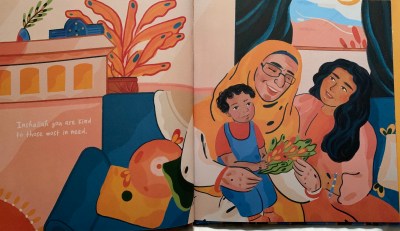
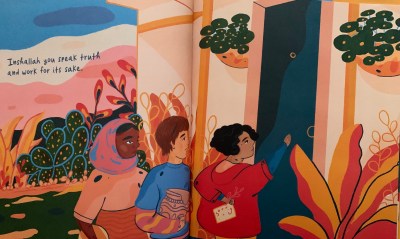
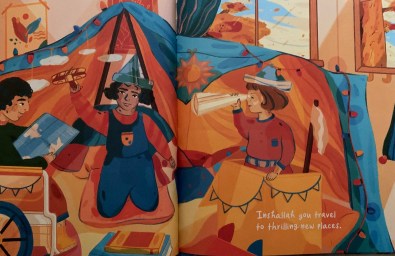
This 40 page book of prose begins each stanza with “InshaAllah” and reads as a beautiful prayer from parent to child.  Each two page spread is filled with warm vibrant colors and illustrations that radiate love while complementing the slow pace the book is meant to be read with.D900B288-5527-4519-8EDF-EE830D3A464D

The book is clearly from an Islamic perspective, yet I think any religious family would find beauty in the book.  The author has a note on the title page that defines inshaAllah as meaning God willing in Arabic and explains how it is a common wish/prayer for people of other cultures and faiths as well.  She also explains that that each line is inspired by the Quran, but universal for people everywhere.

94EE8AC2-8754-46F4-AF50-9CDB7BDFF145

Some of my favorites are:”InshaAllah you seek knowledge, reflect, and read, InshaAllah you speak truth and work for its sake. InshaAllah you have faith that won’t waiver or bend. InshaAllah you are kind to those most in need.”

287D37BD-90E8-4464-B075-524E842A4B43

The illustrations show a family that at times wears hijab and at others does not.  It shows multiple generations, and diverse characters in terms of skin color and mobility.  The illustrations at first weren’t my favorite, but they definitely grow on you.

70D903DA-9763-44CA-B765-2FE15AE34C10

Over all the story reads like a lullaby, and is soft and sweet at bedtime particularly.  The 10 x 10 size would make it work well in groups as well, and I could see it used to lull kids to sleep at nap time with great success for the youngest baby to early elementary.

F6B4AB6F-E13A-4C05-836B-24CD28BAC21C


Common Threads: Adam’s Day at the Market by Huda Essa illustrated by Merce’ Tous

Standard
Common Threads: Adam’s Day at the Market by Huda Essa illustrated by Merce’ Tous

Common-Threads-Book-Cover.jpg

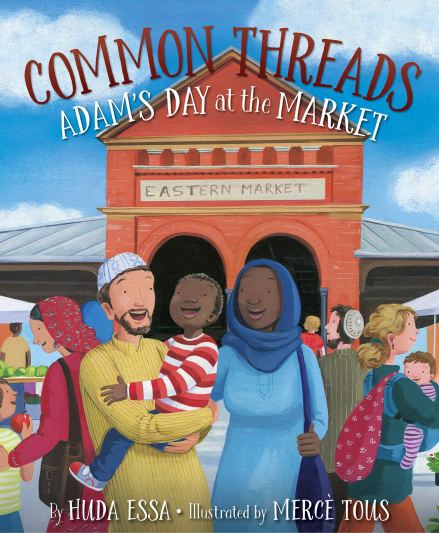
A lot of story is conveyed in this 13 word book for preschoolers about diversity, similarities, and love.  In 32 picture rich pages you meet a little family at an outdoor market, see Adam lose track of his parents as he follows a bird, and meet a lot of kind people as he mistakes them for his parents based on the clothing they are wearing.

A7AC0F6A-D891-4F4F-A537-0A10BA8F19A4

Naturally it has a happy ending, and it appears all the characters come together to get to know one another.  The pictures are beautiful and radiate with light and colors.

The market in general is diverse and the characters Adam meets show clothing similarities.  His mother wears hijab and he mistakes a nun in a habit for her, and then a lady in a kanga.  He thinks he sees his father, but it is a man with a yarmulke and a gentleman in a similar color shalwar kameez looks a lot like his dad’s kurta, but isn’t him either.

This is truly a picture book with sparse words of “Mama?” and “Baba?” being the bulk of the text.  It is visual and conversation sparking in its minimal and simplistic text.  By not having the author fill in the conversation, a preschooler gets to do it themselves, and hopefully broaden their mind in the process.

The beginning of the book has a beautiful Note to Readers urging children and adults to engage in diverse collaborations to increase empathy, innovation, social justice, and understanding to the benefit of us all.

6304D0EE-6710-44B9-9CF1-F6E5AD9359DC

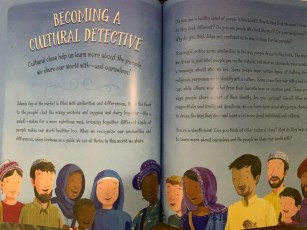
The book concludes with a challenge to children to become cultural detectives.  It notes that what we wear sends a message about who we are, but it is just what you see on the outside.  It encourages us to ask questions respectfully and kindly to learn about one another.

E48812D3-A399-40B9-B903-3D366414827A

If Allah Allah Wills by Dr. Oz illustrated by Mariya Khan

Standard
If Allah Allah Wills by Dr. Oz illustrated by Mariya Khan

if allah wills

Not all books need to teach something, but when the book would lend it self so easily to dropping a fact or two, it seems like it would take it.  In 40 pages, preschoolers are taken on a highly imaginative journey to the Ka’ba, yet no information about the history of the Ka’ba, or any mention of Umrah or Hajj is shared, not even in passing.
IMG_6336

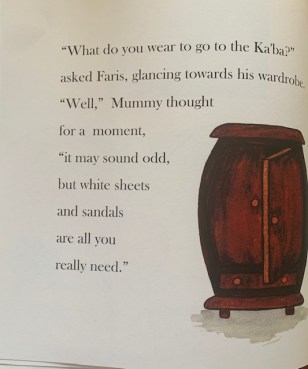
Faris wants to go to the Ka’ba but it is nearly his bedtime, so he has to act fast.  He asks his mom what he needs to wear, obviously knowing special clothes are required, but his mom prefaces the answer of white sheets as being “odd” and then adds that you need sandals.  For a book that wants to normalize Islam for children, I don’t understand why the mom would say that ihram is odd, why the word ihram isn’t used, why it doesn’t even specify the number of white pieces of unstitched cloths and why sandals would be included.
IMG_6337

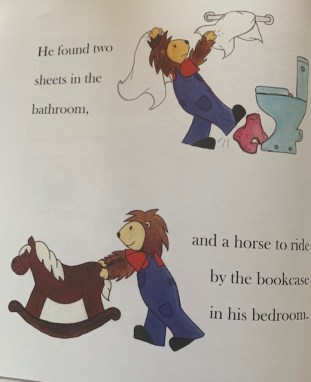
Faris then finds two white sheets, but the illustration shows him getting towels out of the bathroom (possibly showing his imagination, but kids will just think it is an error, mine did), packing some food and jumping on his rocking horse to head off for the Ka’ba.

Faris finds himself among the stars without a map and starts to worry that he won’t find his way.  He then sees a flock of birds and wonders how they know where to go.  The book however, doesn’t answer how birds know, and just has him land and find someone to ask.

IMG_6338

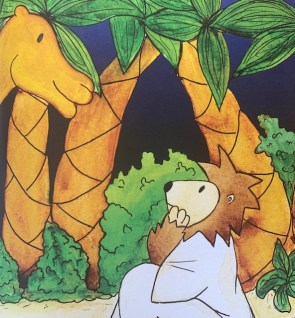
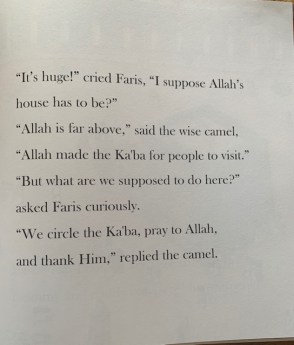
Luckily Faris finds a camel to ask, and luckily he is a nice camel and he shows Faris to the Ka’ba.  Faris is surprised at how big it is and then supposes that Allah’s house has to be.  But he asks it as a question, which makes it a little off grammatically.  The camel points out that Allah swt is above and that the Ka’ba is for people to visit.  Faris asks what is supposed to be done at the Ka’ba and the camel answers, “We circle the Ka’ba, pray to Allah, and thank Him.”  This seems like a great place to sneak in some facts about who built the Ka’ba and why or mention Hajj or Umrah, it seems so misguided to just say we circle it.
IMG_6339

Faris makes some prayers that he can return for real one day with his parents before he finds a place to eat his snack and share his food with his camel.  It is nice that he shares with his new friend, but odd that when they part Faris asks him his name and he says he doesn’t have one.  Maybe give him a name, and detail its meaning or don’t include the exchange at all.  I seriously don’t understand the purpose of the exchange.
IMG_6340

Faris makes is home with a crash and his mom tidies him up and they say InshaAllah that Faris’ prayer inshaAllah will come to fruition.

The book has a great premise of imagination and tying in the Ka’ba, but truly there is no information about Islam or the Ka’ba or even Allah swt, it gives a mood of worship, but that is about it.  I get that it is for little kids and the book is supposed to be whimsical and light, but sneak in some facts, kids can handle it.

As for the illustrations, they are just ok.  They would have benefitted from being a little smoother and not looking home-done, but there is nothing terribly wrong with them aside from the towel and sheet imagery.    The glossary cover and large font inside is age appropriate, some pages are a bit text heavy, but overall sufficient.

IMG_6341

Lubna and the Pebble by Wendy Meddour illustrated by Daniel Egneus

Standard
Lubna and the Pebble by Wendy Meddour illustrated by Daniel Egneus

lubna.jpg

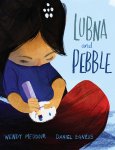
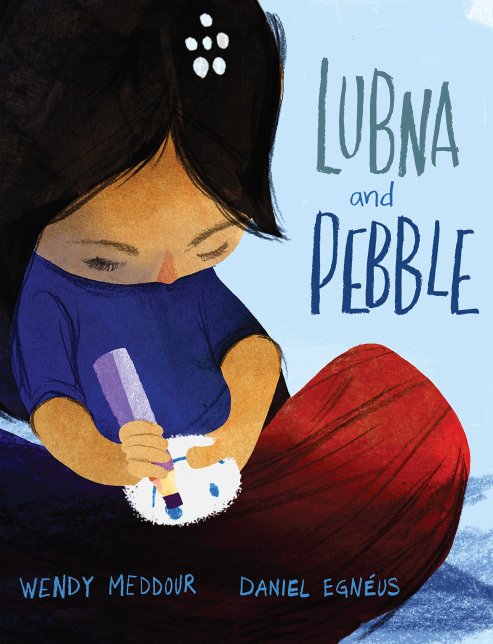
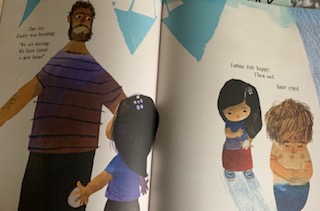
This beautifully illustrated book with simple text and story, is heartwarming and powerful in conveying emotion about child refugees. 

IMG_4993

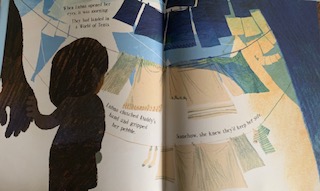
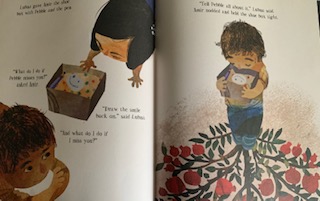
The 32 pages tell the story of young Lubna who has escaped something horrible and picks up a pebble when she and her father reach their new home, a World of Tents.  She finds a felt tip pen and draws a face on the pebble and the pebble becomes her friend.  She tells it her secrets, her dreams, she keeps it warm as winter approaches.

IMG_4994

Then a little boy arrives, Amir, and Lubna and he become friends and she introduces him to Pebble.  One day Lubna learns she is leaving the tents to go to a new home and even though Pebble is still her best friend, she knows Amir needs him more.

IMG_4995

This book is truly a picture book, as the text is made magical because of the pictures.  The simplicity and love that Lubna feels for a rock reveals how much pain she has seen without details having to be given.  The fact that Amir doesn’t laugh or find being friends with a rock odd, cements the idea that these children have seen too much.  The compassion that Lubna displays by passing on her beloved Pebble also shows how much love and comfort they have, we all have, to give.

IMG_4996

The book has many layers, and the superficial one makes it a sweet story for children as young as four, the deeper understanding would appeal to kids up to 2nd or 3rd grade.  There is no mention of religion, culture, or a specific country.  I think Muslim children will assume Amir and Lubna are Muslim, but really the names could be from any culture or faith.

IMG_4997


Mommy Sayang by Rosana Sullivan

Standard
Mommy Sayang by Rosana Sullivan

sayang.jpeg

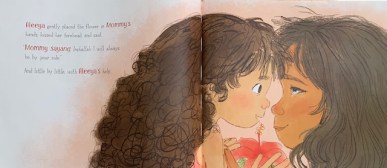
A Pixar Animation Studios Artist Showcase book which beautifully illustrates the bond of a mother and daughter.  Set in Malaysia, this diverse book shows a rich culture that readers will learn about, as well as relate to in 48 large 9 x 11 pages.

IMG_4975

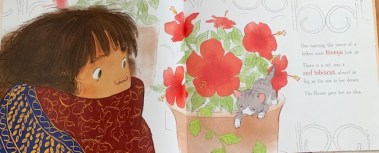
The simple text shows Little Aleeya watching her dear mother, Mommy sayang, pray five times a day, them doing chores together, cooking side by side, eating with friends and family, and smiling through it all.  Little Aleeya even dreams of her and her mother at night among the hibiscus flowers.

IMG_4976

Mommy Sayang, however, gets ill and Aleeya waits and waits for her to get better.  Day after day Aleeya grows sadder and sadder until one day she gets an idea of how she can help her mother.

IMG_4977

The change of perspective from Aleeya needing her mom, to her mom needing Aleeya is sweet and empowering.  The book doesn’t detail what makes her mom sick or why up until Aleeya’s idea takes form is she not able to hang out in her mother’s room with her.

IMG_4978

Listeners as little as 4 or 5 will enjoy the story and the tone provided by the minimal text and illustration style, older independent readers up to 2nd grade or so will learn new vocabulary and get a peek at a possibly new culture.

IMG_4979

I like that the mom wears hijab when they are out and about doing chores or people are over, but that when she is home in her bed she is not covered.  The illustrations are fabulous and gentle, as is the message.

IMG_4980

There is a small glossary of four words on the dedication and copyright page and there is a bit about the author, her inspiration, and what movies she has worked on at Pixar at the end.

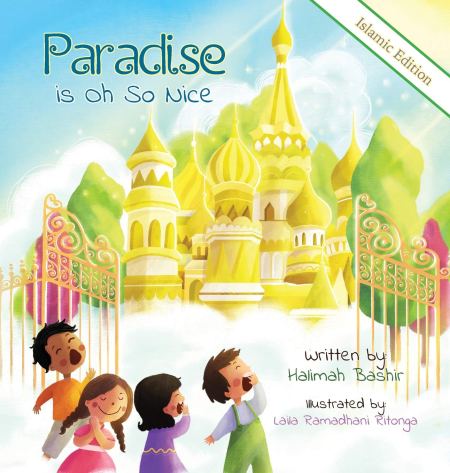
Paradise is Oh So Nice (Islamic Edition) by Halimah Bashir illustrated by Laila Ramadhani Ritonga

Standard
Paradise is Oh So Nice (Islamic Edition) by Halimah Bashir illustrated by Laila Ramadhani Ritonga

paradise is oh so nice.jpg

This adorably illustrated 40 page rhyming book about jannah explores just how generous and amazing the ultimate goal of obtaining paradise can be, as seen from a child’s perspective.  Preschool and up will enjoy the illustrations and cadence the book tries to adhere to, as well as the silly manifestations of everything and anything the characters in the book can imagine.

IMG_4612

According to the publisher, Prolance, there are two versions of the book: “In the Islamic edition, we’ve included verbiage that relates to the Muslim audiences, added a fun Quran search activity & a song!”  Additionally, the word Allah is written in Arabic and there is an ayat from the Quran at the beginning of the book.

IMG_4613

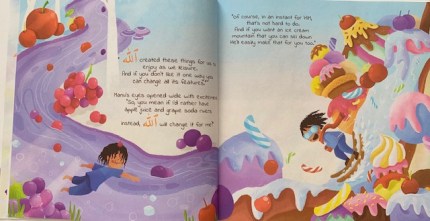
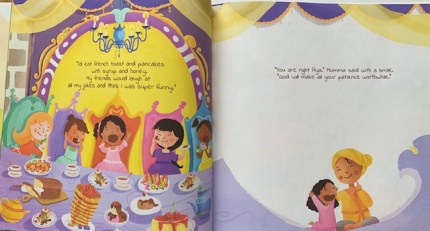
There isn’t really a story it is more a glorified list of all the things you could have (inshaAllah) in paradise.   The set-up is a mom discussing it with her two small children at bedtime. The book doesn’t give too much information about what you have to do to get to heaven aside from mentioning being patient and being believers.

IMG_4614

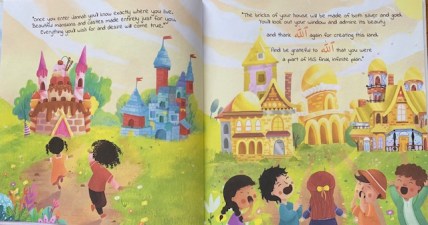
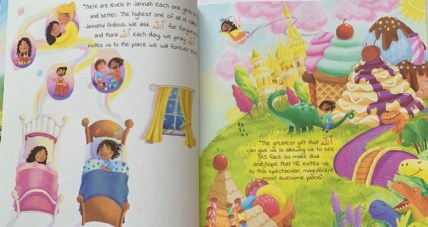
The book surprisingly does a pretty good job of not getting too silly or carried away with it self.  It manages to include that there will be rivers made of milk and honey, that there are levels of jannah, that there will be castles and we will know which is ours, and that the greatest gift will be to see Allah swt.

IMG_4615

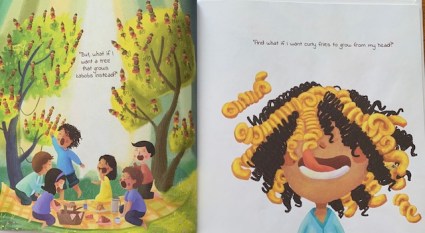
Naturally, it seems with every kids book about heaven, the majority anyway, focus a ton on food, this one does branch out a bit from the dreams of ice cream mountains  and curly fries for hair, to flowers growing shoes and dinosaurs for pets, but not a whole lot.

IMG_4616

The book is fun, but with most Prolance books it seems, the price is a bit steep.  The book is hardback, the inside pages are not glossy, but have a decent weight and feel to them.  The 8.5 x 8.5 pages make it work better for bedtime than a large group as the illustrations are the best part of the book and they are pretty detailed and small in places.

The Gift of Ramadan by Rabiah York Lumbard illustrated by Laura K. Horton

Standard
The Gift of Ramadan by Rabiah York Lumbard illustrated by Laura K. Horton

IMG_3804

A new 32 page hard back Ramadan book that shows a little girls excitement isn’t enough to get her to abstain from food and drink for the whole long day of fasting, but that there are other ways to enjoy the gift of the blessed month.  A great book that shows how Ramadan is a month of growing and learning and sacrificing and coming together too.  Perfect for ages 4 and up to be read in small groups or at bedtime.  The pictures are delightful and show diversity, and while the little girls love of sparkles might appeal more to little girls, I think the message will allow boys to enjoy and benefit from the book as well.

IMG_3806

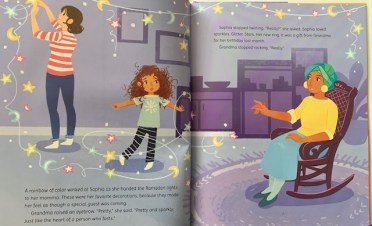
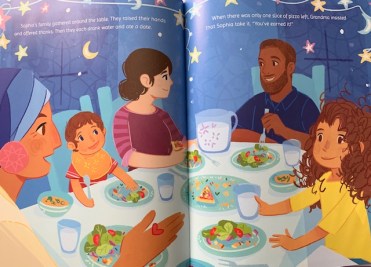
Sophia is helping her family decorate for Ramadan and when they see the crescent moon, they know that fasting will start tomorrow.  Excited to be included Sophia can’t wait.  Sahoor, however, is really early and she is really tired.  She eats a little, but by fajr time she can’t even keep her eyes open and falls asleep in sajood.

IMG_3807

When she wakes up it is almost noon, and even though she is hungry she decides keeping busy will help the time pass.  Reading, cleaning, drawing, nothing is working.  Her little brother runs around waving a cookie, and Sophia can’t get away fast enough. 

IMG_3808

She caves and starts eating cookies, her grandma finds her and consoles her.  “There’s always tomorrow and the day after and the next.  You have a full month to keep trying.” The two then discuss other ways to enjoy the month.  Sophia knows her mom reads Quran, but Sophia can’t on her own.  Her father helps others and gives charity, but Sophia doesn’t have any money.  She is about to give up, but then sees her grandma’s hands covered in flour and realizes she can help her make iftar for those that are fasting.

IMG_3809

She helps with the salad and the pizzas for iftar, but when some of the pizzas burn, Sophia will have to show what she has learned and understood to make iftar a success and make everything sparkle.

IMG_3810

There are a lot of Ramadan books out there, but I like that this one doesn’t have the adults saying she can’t fast, but just the same grandma is there to encourage her to do what she can and take advantage of other parts of the month.  I also like that she doesn’t succeed.  Fasting especially on these long summer days can be hard and acknowledging that, and encouraging kids to persevere I think is a very valuable lesson.  Sophia also comes up with a way to help on her own.  Parents are tired and entertaining ways for the kids to be engaged in Ramadan is great, but can be exhausting.  This shows that kids with the right understanding of the month, inshaAllah can find ways on their own too.

IMG_3811

There is an Author’s Note at the end explaining Ramadan, and the book would work and appeal to Muslim and non Muslim kids alike.  Sophia reminds me a bit of Pinkalicious and Fancy Nancy and will probably appeal most to kids that also like those characters. The grandma covers her head, the mom does not, but does when praying and reading Quran.  It mentions and shows praying and breaking one’s fast with water and dates, yet stays focused on the story and does not get preachy or dry.


The Jinni on the Roof: A Ramadan Story by Natasha Rafi illustrated by Abdul Malik Channa

Standard
The Jinni on the Roof: A Ramadan Story by Natasha Rafi illustrated by Abdul Malik Channa

IMG_3592

This 37 page culturally Pakistani Ramadan story is super sweet and fun.  There is so much I feel like my critical self should not like about the story, but by about page 15 each time I read it, I find my self full on smiling and thoroughly enjoying little Raza’s antics and his endearing grandma’s method for dealing with him.

IMG_3594

Raza is too young to fast, but with a house full of relatives gathered for Ramadan, Raza awakens to the sound of his uncle snoring before the siren to signal the start of fasting and the azan calling the worshippers to pray echo through Lahore.  Before he can go back to sleep, however, he hears the cook heading up the stairs to wake up grandma and then the smell of the food hits him and he wants a paratha more than anything.

IMG_3595

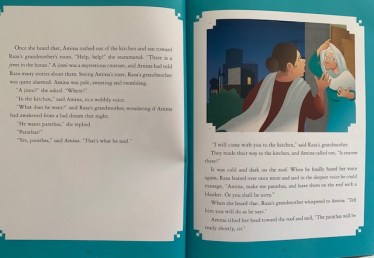
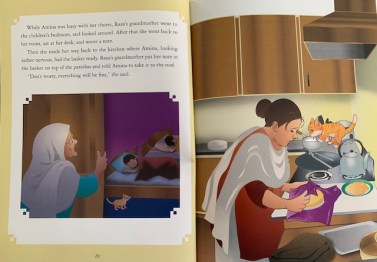
Raza embarks on a mission that involves him sneaking up to the roof, pretending to be a jinni and scaring Amina the cook through the chimney to convince her to send up food and a blanket.  

Scared out of her wits, Amina gets the grandma, culturally wards off evil, and delivers the goods to the jinni on the roof.  But the joke is on Raza who is out-witted by his grandma and gets the punishment of washing dishes for the rest of Ramadan, and learning that fasting a whole day will take a lot of will power, if he couldn’t even wait a few hours to get his beloved parathas.

IMG_3596

The book informs the reader that the following year Raza is able to successfully fast, that he is rewarded with gifts and that all is well and forgiven.  There is a glossary, information about Ramadan and a recipe at the end of the story as well.

I love that the plan just happens, it isn’t premeditated or considered, so it takes the reader along for the ride as it is unfolding.  It isn’t a deep story, but there is room for discussion as to whether Raza was naughty, or just caught up in the moment.

IMG_3597

The book is illustrated well and with big 8.5 x 11 pages, the book is engaging for first and second grade readers and listeners, as there is a lot of text on the pages.  The book takes a bit to find its stride as the author tries to use Urdu words, show their Arabic counterparts and then describe them in English. 

IMG_3598

There is a lot of cultural stage setting with everyone in grandmas house, the traditions of the family, of Ramadan, etc.  I think Desi familiar kids will get the most out of the book, but theoretically Muslim kids and non Muslims too could learn and enjoy it too.  I wish jinn and jinni were explained just a bit in the text, not just in the glossary, along with why an 8 year old wouldn’t be fasting or be required to do so. 

IMG_3599

My own kids, aged 8, 9, and 12, struggled on the first two pages, but when I told them to keep reading they zoomed through the rest smiling and ended saying it was good while giggling and shaking their heads.  We are Pakistani American and I think they enjoyed seeing familiar words and phrases in the book and sympathizing with Raza as well, and his sneaky plan that almost nearly worked.


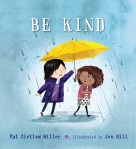
Be Kind by Pat Zietlow Miller illustrated by Jen Hill

Standard
Be Kind by Pat Zietlow Miller illustrated by Jen Hill

be kind

I usually post chapter books on Fridays, but on this one week anniversary of the horrific Mosque attacks in New Zealand, my fragile heart is being kept together by the pictures and notes shared on social media about the kindness people are bestowing on one another.  Company’s setting up prayer spaces for Muslim employees, communities standing guard outside masjids, friends leaving flowers for their Muslim acquaintances, strangers donning hijabs in solidarity, individuals carrying signs of welcome and unity, truly the list goes on and on.  Muslims and non-Muslims reaching out to one another, Kiwis and the rest of the world coming together.  And yet I know so many people are at a loss at what to do, and how to respond to their feelings in an appropriate manner.  I know I often am.  Thats why books like this one are so important for children to learn how to be kind.  We often tell them to be nice or kind, but what does that mean? What does that look like? How do we know if it worked? As adults we often don’t know, so while this book isn’t written or illustrated by a Muslim, there are Muslims in it, and that is why after seeing another blogger a few weeks ago mention it, I want to share it with all of you.  The illustrations show a little girl saying hi to a desi garbed man named Omar, and two hijab clad girls in her view of the world, amongst so many other diverse faces and characters, because that’s the point right? We are one, each of us responsible to one another to be kind.  

IMG_3389

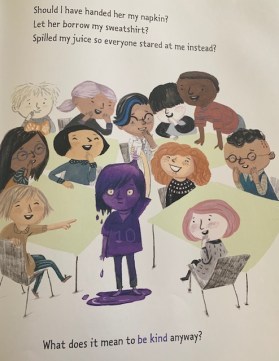
The book starts off with Tanisha spilling grape juice all over her new dress and a classmate being at a loss as to how to console her.  She makes what she thinks is a reassuring comment to Tanisha, but it isn’t received that way, and the little girl ponders and reevaluates what it will take to be kind to Tanisha and what kindness is in general.

IMG_3386

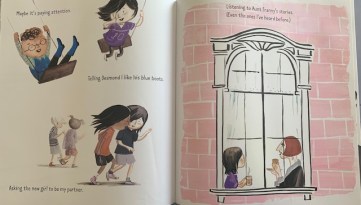
As she works to unravel what kindness is, she explores also what it can look like.  I love that it is seen in terms of action, giving ideas to stay with the reader.  It discusses that sometimes it is easy like saying hello, or not littering, and how important just using a persons name can make someone feel.

IMG_3388

But, it also talks about how sometimes kindness can be hard, requiring patience and a little bravery. I can only imagine how brave people had to be to enter a mosque for the first time and step out of their comfort zones to offer their support.  
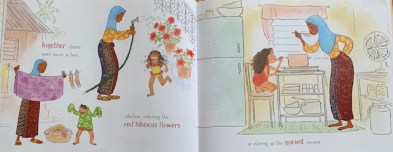
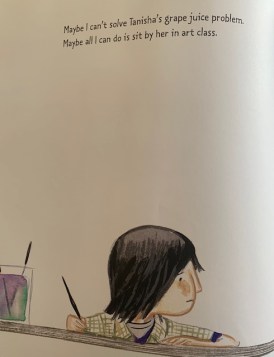
The book then takes an important pause when it acknowledges that maybe all this little girl can do to help Tanisha is to sit by her.  I think Muslims around the world are in awe of the Prime Minister of New Zealand for all she is doing, but also for just showing up and hugging people and listening.  A rare gift in todays wold of soundbites.  
IMG_3390

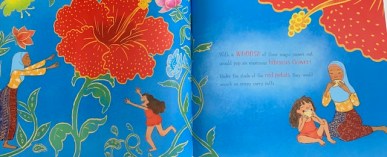
The little girl then imagines her small acts of kindness joining others and making the world a better place.  My favorite part is actually the end.  Tanisha never smiles and tells the little girl thank you, there is no big praise for being kind.  In fact, I bet the little girl doesn’t even know the power her actions had on the little girl.  We the reader know because we see Tanisha hanging the picture up in her room.  But, that let down is real life.  We can’t be kind because of the reward, we must learn to be kind because it is the right thing to do.  And often when people are kind to us, the effect isn’t instantaneous, its weight manifests in the dark when we are looking for hope and reassurance and for this book to contain all of that, in 32 pages with only few words (AR 2.2) is truly amazing.

IMG_3391

The illustrations are gorgeous and engaging.  The hardback 9×10 format makes this book a great addition to any library and should be read regularly.  It isn’t enough to not be mean, action and intention need to be taught so that we all might be more kind, inshaAllah.


The Blessed Bananas: A Muslim Fable by Tayyaba Syed illustrated by Melani Putri

Standard
The Blessed Bananas: A Muslim Fable by Tayyaba Syed illustrated by Melani Putri

IMG_1798.jpg

 A fable with lessons of kindness centered around the Salawat, definitely is a great premise and for the most part I really enjoyed the book. 

IMG_1799

The 8.5 by 8.5 hardcover, 50 page book feels great in your hands and the illustrations are sweet and expressive.  The book is long, and is text heavy so I’d say the target audience is maybe 6 to 10 years old.   The font is incredibly small and irritating.   It should have been larger and more inviting to children in my opinion.  It doesn’t match the size, binding, and illustrations, and actually becomes a distraction if trying to read it in a group setting.  

IMG_1801

The story itself is smooth and intentional.  Rico, a blessed, yet ungrateful monkey, lives atop an ever abundant banana tree.  However, he attributes his blessings to his own hands and does not thank Allah swt.  He is mean and greedy toward people and animals alike.  Yet, something is missing in his life and he doesn’t know what. 

IMG_1800

When a little mouse, Chico, comes to him to ask for a banana and gets scolded at instead.  Chico makes dua for Rico asking Allah to guide the monkey to goodness.

IMG_1802

Tucana, a toucan, then stops in Rico’s banana tree after a long flight to be rebuffed by a foul tempered monkey who wants to be left alone.  When Tucana  leaves she forgives Rico for his rudeness and asks Allah to be merciful to him as well.

IMG_1803

Rico then makes signs to keep people and animals away.  Which works for a while, but along comes Simon, an elephant, one afternoon to ask the monkey to climb his tree and help direct him back to his herd.  Rico of course refuses, and Simon reminds him that they are brothers in Islam and to please help. He begins shouting at the elephant to leave, and as Simon is pacing back and forth, he slips on the banana peels, grabs the tree to support himself and shakes the tree back and forth in the process.

IMG_1806

Rico begins hollering for help and sure enough the animals he had turned away previously, return to help him.  They had forgiven him as they hope Allah will forgive us all.  To calm the monkey, chico shouts, “Salawaat’alan Nabi!” in Simon’s ear and when he recites “Allahuma sali’ala Sayyidina Muhammad,” peace and calmness is restored.

IMG_1811 (1)

With all the bananas on the floor, many mushy and trampled, Rico has to decide if he learned a lesson, and how he will put his new knowledge into action, or if he will resume his life of ungratefulness.

IMG_1807

The book ends with each animals favorite banana recipe, information about the author and illustrator and benefits of reciting Salawat and an ayat from the Quran.

IMG_1810

The story and how it weaves Islam into the lessons is beautifully done, my only hiccup is the constant refrain of Rico counting his bananas.  I realize it is a fable, and maybe with talking animals interacting with humans, reality is notably suspended.  But, it seems misplaced to me.  How do you constantly count a perishable item? Does Rico only eat a certain amount a day? How many new ones grow a day? What is the number that he is adamant to have at all times? So, many questions, that I didn’t get why he was counting them, why he was irritated when he lost count, and why this detail was in the story and a big part of the story none-the-less.  Like the font, its a minor detail, but a distracting one for me unfortunately.  Clearly, however, I’m in the minority as the book has won the Moonbeam Children’s Book Award and the Islamic Writer’s Alliance Creative Story, so give it a read, and let me know your thoughts, jazakhAllah kher.

IMG_1809