Tag Archives: Refugee

Muzoon: From Refugee to Leader by Muzoon Almellehan illustrated by Asma Enayeh

Standard
Muzoon: From Refugee to Leader by Muzoon Almellehan illustrated by Asma Enayeh

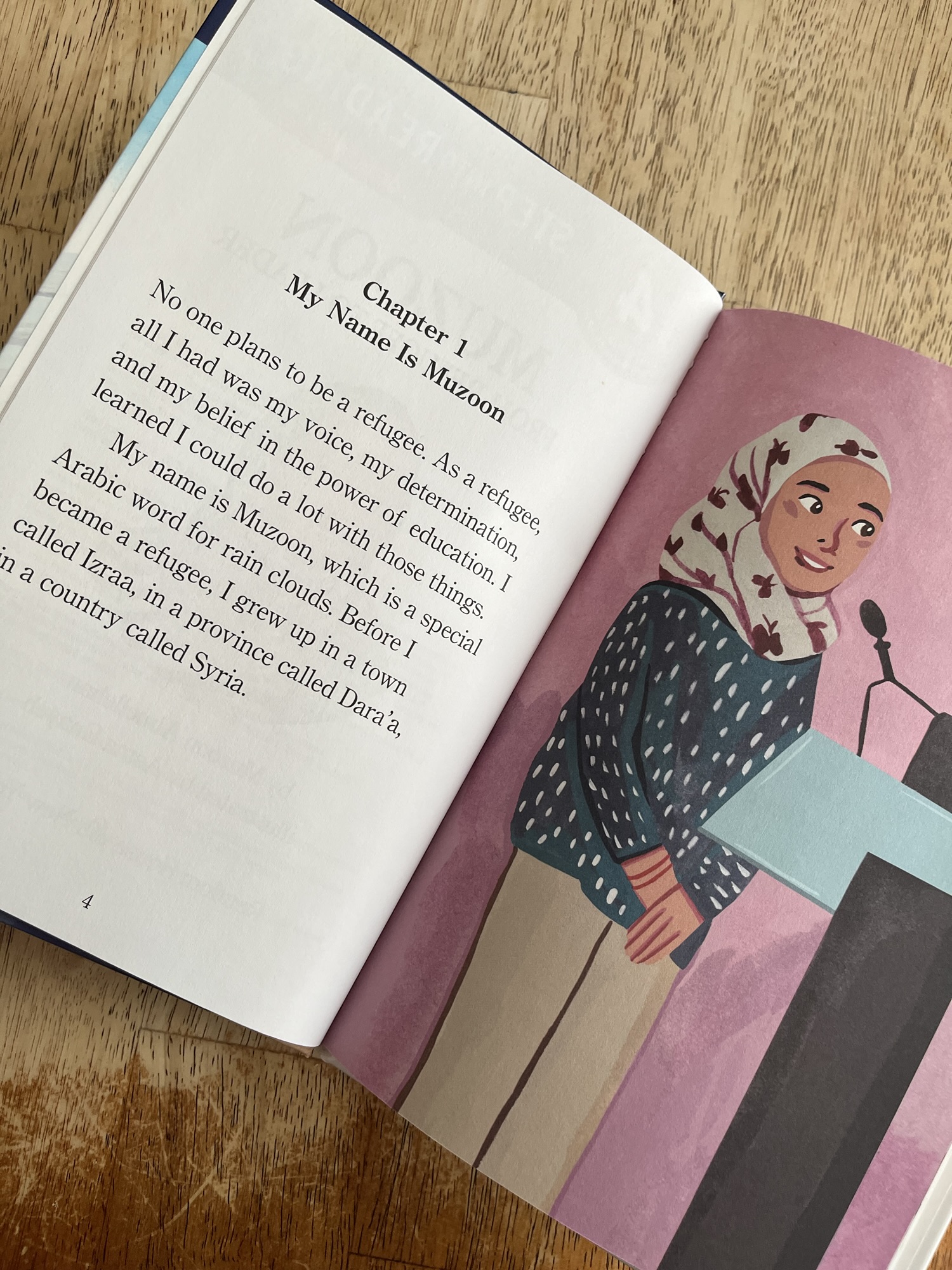
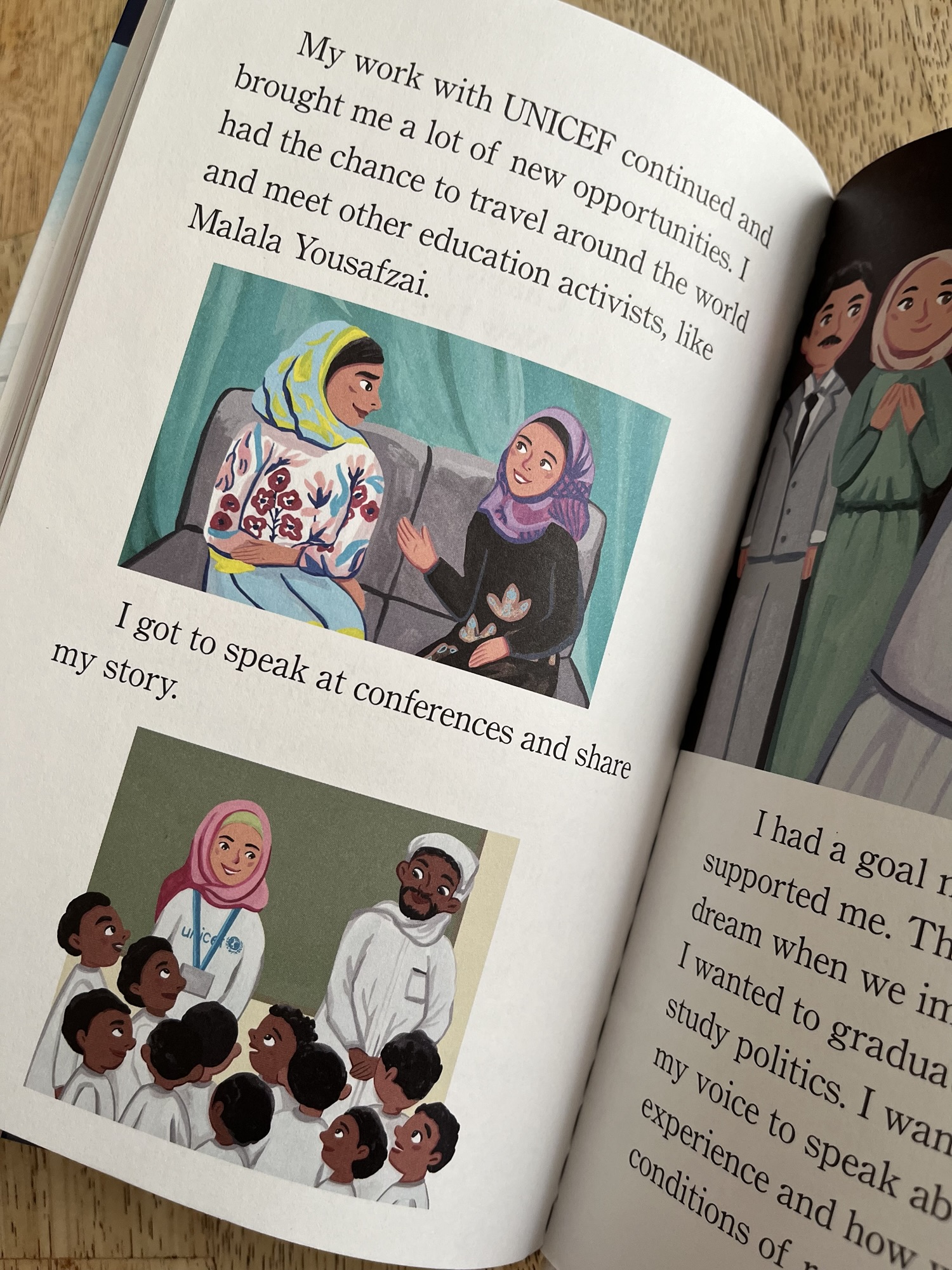
Such a delight to see Muzoon’s story coming to children in the West in the form of a Step into Reading Biography. The approachable format aimed at second and third graders reading paragraphs tells Muzoon’s story with quotations from her middle grade biography, Muzoon: A Syrian Refugee Speaks Out.  From her life with extended family, playing soccer, studying and enjoying Ramadan, to the changes that turned her country unsafe and forced them to become refugees. It follows her to refugee camps trying to find routine and hope and the role education and encouraging other’s to study plays in her life.  Eventually her activism and efforts catch the attention of UNICEF and today she works as a UNICEF Global Goodwill Ambassador and travels the world advocating for education and refugees and rebuilding Syria.

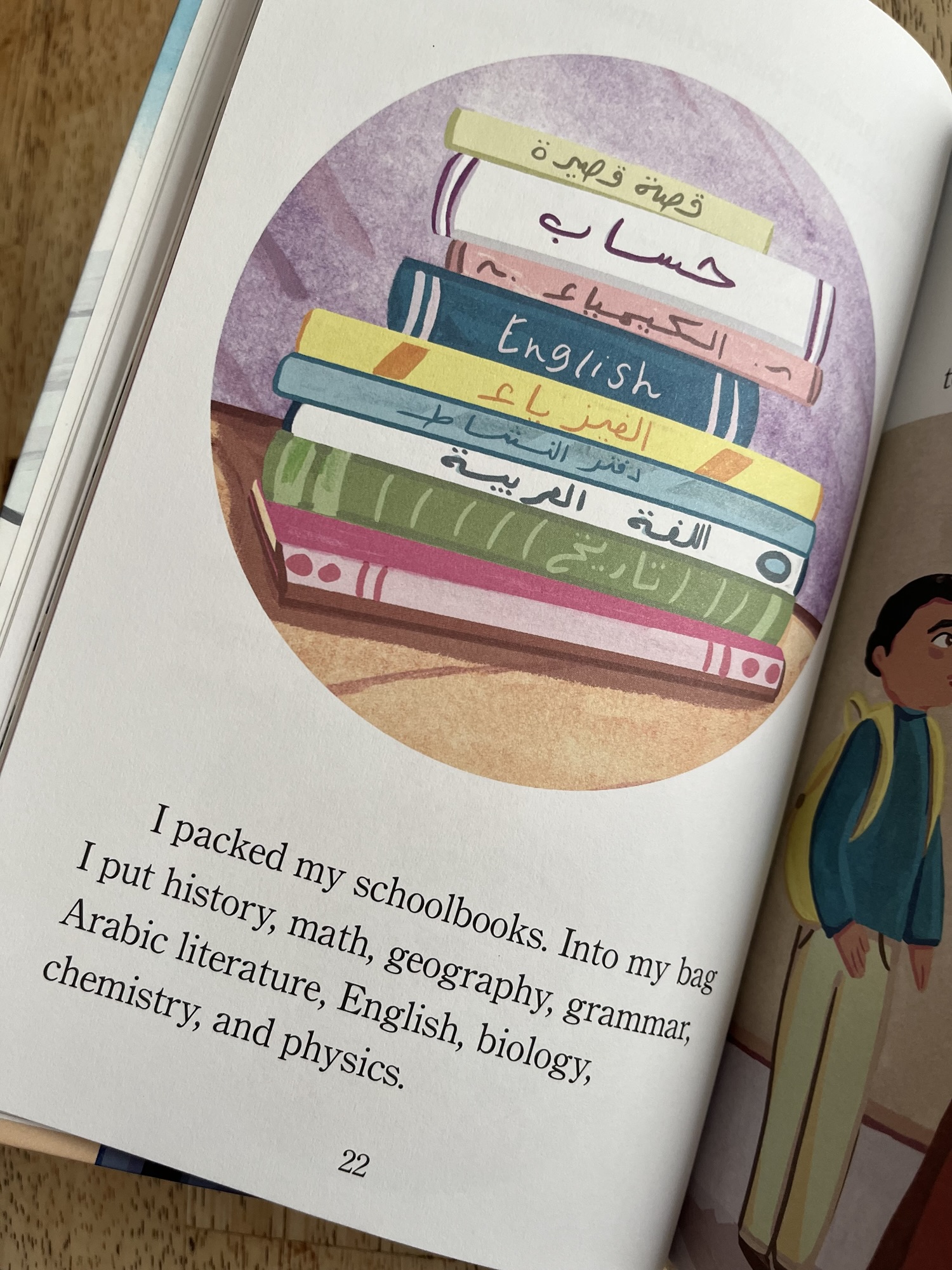
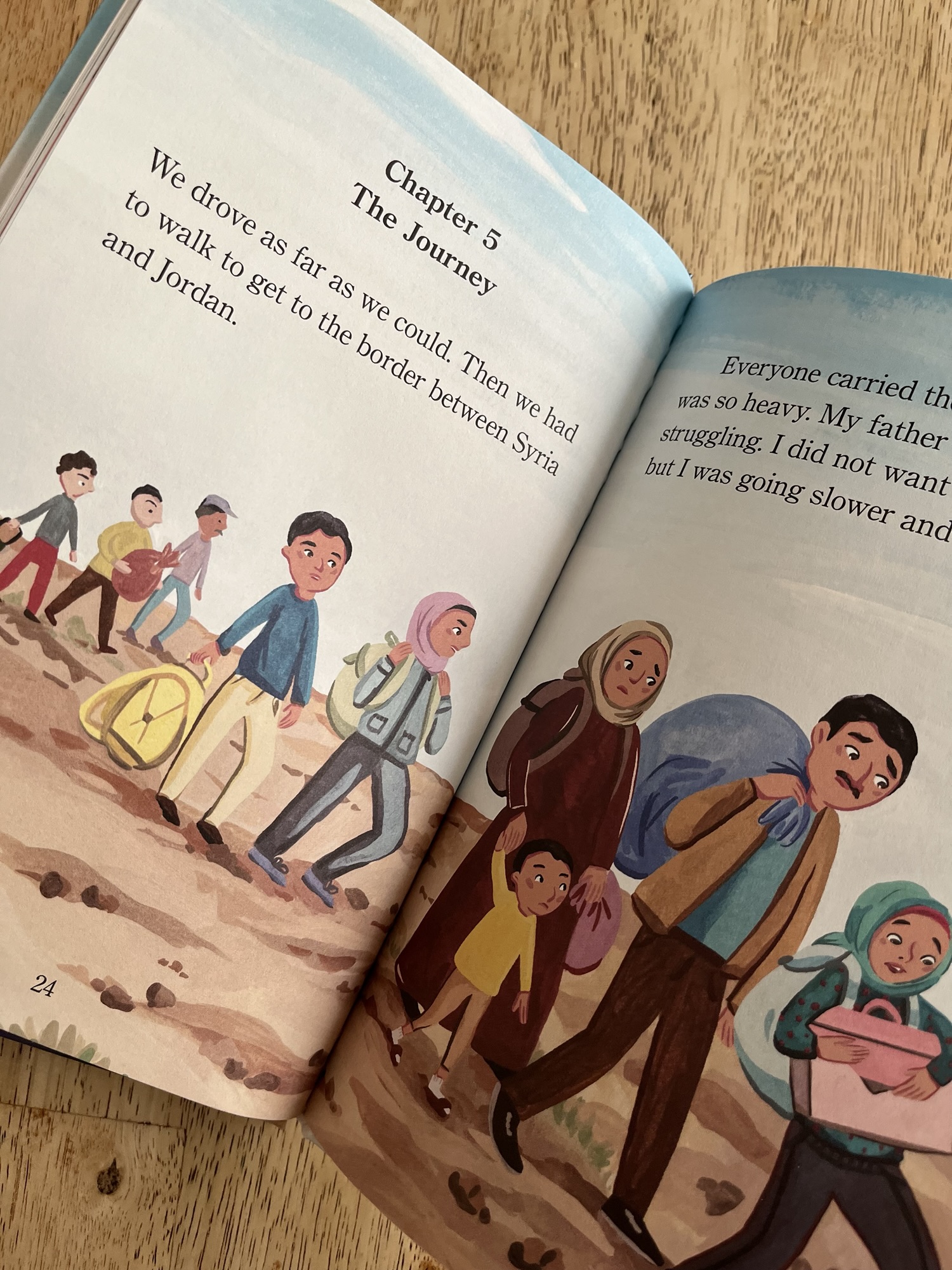
Divided into eight chapters, the 48 page book shows how relatable Muzoon’s life is and how the political events forced her family to abandon all they knew.  The presentation, in both the text and the illustrations, show the unexpected and hardships Muzoon and her family face as they make their way to the refugee camps and work to adjust. The book is not graphic, but the weight is conveyed as readers also see the power education and learning has in providing hope and opportunity. In a fictional story, a protagonist using their voice for the good of society is something to cheer, to see it from a real life person in the middle of a war, is something to admire and be inspired by.

I particularly like the inclusion of Ramadan in the story and the details showing her family joyfully gathering to break their fast together, as well as conveying some details about the Islamic holiday.

Mariam’s Dream: The Story of Mariam Al-Shaar and her Food Truck of Hope by Leila Boukarim illustrated by Sona Avedikian

Standard
Mariam’s Dream: The Story of Mariam Al-Shaar and her Food Truck of Hope by Leila Boukarim illustrated by Sona Avedikian

This 44 page biographical picture book set in the Palestinian refugee camp, Bourj Al-Barajneh in Lebanon, centers the story of Mariam Al-Shaar and her determination to start a restaurant and food truck despite the restrictions of refugees and women. Her drive and persistence leads to the creation of Soufra, the home of not just good food, but also community, hope, dreams, and change. the The illustrations, the heart of the story, the backmatter, are all well done, yet for some reason, the emotional impact seemed lacking for me.  I didn’t “feel” inspired, or moved.  I didn’t feel her pain, her grit, her joy when it all came to fruition. For a biography, I didn’t feel like I got to know Mariam, or why this was her dream.  The book explains being a refugee, and not having full rights, but it doesn’t show the reader. We are told Mariam wants to do “something,” but the “something” she finds, is what other women want. “We want to cook,” they tell her.  “We are good at it.” The reader though never is shown, why they want to cook, or what is stopping them from cooking, and even if Mariam wants to cook too.  It is clear the struggles Mariam faces when she wants to branch out and start taking the food to those outside of the refugee camp by way of a food truck, but lines such as “They tell her not to risk it,” fall flat when the reader doesn’t know what is at risk.  The absent context makes it hard to cheerlead and understand why this is so revolutionary.  Ultimately, it is a lot of telling, not showing. The story is fine on the surface, but I don’t think it will linger and illuminate refugee struggles, Palestinian struggles, or women’s struggles beyond the page because we are not show what those are, and how inspiring it is that Mariam Al-Shaaar overcame them.

The book starts with prose that describes that Palestinian refugees “live between worlds.”  The camp is not just physical walls, but also walls that keep her from living her dreams. She decides to do something about it, but doesn’t have to do it alone, she reaches out to others and “Soufra is born! A feast.  A table full of food.”  It is a way for women to come together to cook, earn a living, and be among friends.

People around the camp flock to Soufra and the women “have changed.  Their children have changed. Mariam has changed.” Mariam wants to take Soufra beyond the camp, and is determined to buy a truck, learn how to drive, and share their food.  More walls can’t keep Mariam down, after two years, the food truck is a reality. 

The book concludes with an Author’s Note about the author interviewing Mariam Al-Shaar, a beautiful Food Glossary, details about Refugees and Refugee Camps, and a Selected Bibliography.  The author is not Muslim, but Mariam is and she and many of the illustrated women wear hijab and are visibly Muslim. 


Amina Banana and the Formula for Friendship by Shifa Saltagi Safadi illustrated by Aaliya Jaleel

Standard
Amina Banana and the Formula for Friendship by Shifa Saltagi Safadi illustrated by Aaliya Jaleel

img_8365-1

I have five children, I have taught second grade, I have shelved, recommended, and read aloud a number of early chapter books for the better part of the last 20 years, so when I say that this book changes the standard of what a book (series) for this demographic can and should be, I do not say it lightly. Yes, I am bias, the author is a dear friend, but Amina has layers, growth, insight, struggles, warmth, heart, and all the other glowing adjectives normally associated with beloved books and characters for older readers. This book is the first in a series of four, and each book is somehow better than the previous. At 126 pages with a robust backmatter that includes scientific extensions, a recipe for ful mdamas, and a note from the author, I am confident that children of all ages, everywhere, caregivers, parents and educators alike will all fall in love with Amina, cheer for her, laugh with her, and be enamored with her attitude, perseverance, and joy.

SYNOPSIS:
Amina loves having a plan, a formula in fact, and when she arrives in Indiana as a refugee from Syria she is determined to make friends in 3rd grade.  Things don’t always go as expected, but alhumdulillah Amina doesn’t stay down: classmates, family, and determination combine to help the clever, yellow-loving protagonist find a way to rework her experiments, accept what she can and cannot control, and succeed in making this new country feel a little bit like home.

WHY I LOVE IT:
I adore the humor, unapologetic Islam, the rich Syrian culture woven in, and Amina’s approach to life.  So often early chapter book protagonists are obnoxious, annoying, crude almost, bratty, arrogant, and repetitive, Amina is none of those things.  She is vulnerable and strong, confident, yet nervous, hopeful, but worried, she is tangibly real in a way that readers will see themselves and relate.  I love the humor of idioms being confusing, and the heart of seeing what the parents have sacrificed and are willing to sacrifice by starting over in a new place.  The illustrations add to the experience of drawing reluctant readers in and will help those transitioning from picture books to chapter books be immersed by the story.  As always the author’s writing is impeccable and the story well-crafted.

FLAGS:

There is some teasing, reflections on why Syria was left, the journey to America, and hardship.

TOOLS FOR LEADING THE DISCUSSION:
This book is ideal for classroom, library, and home shelves.  It would be a wonderful classroom read aloud and works equally as well at bedtime.  My children college to elementary have all read and loved Amina, and I highly encourage preordering so that your children will get a chance to fall in love with her too.


The Home We Make by by Maham Khwaja illustrated by Daby Zainab Faidhi

Standard
The Home We Make by by Maham Khwaja illustrated by Daby Zainab Faidhi

img_5134-1

This 48 page picture book follows a family as they leave their home under siege and journey to America.  Through the eyes of the young girl the thread of what is home, where is home, and is it a place or a feeling weave through the emotional unknown that the family faces throughout.  Even once settled the feeling of security at home is threatened, and the family must persevere.  The little girl’s joy and hope that whatever comes will be faced together with her parents, keeps the book hopeful and at times even joyful.  The lyrical writing is occasionally makes the book feel text heavy, but because the reflection of memories and inclusion of emotions is used in conjunction with the story moving forward, I think elementary aged children with guidance will benefit from reading and discussing the book. As a former journalist, I truly believe one can research a topic and write an accurate story or an article presenting what they learned for others to benefit from.  At the same time as a lover of fiction, I enjoy OWN voice and the authenticity that it brings to the experience.  So, when I read the Author’s Note at the end, and found the author is not a refugee, and that there is no named sources of the author’s friends who are refugees, in fact there are no references whatsoever, I felt deflated.  It in some ways makes me uncomfortable that what looks much like a Syrian refugee story on the pages, is perhaps so mainstream, that a fictionalized account can be shared and accepted without authenticating it.  No country is named in the book, the author is an immigrant so there undoubtedly is a level of OWN voice, and she disclosed she is not a refugee- truly nothing “wrong” has been done, but nonetheless I feel like I should share that here for you to decide how you feel about it before reading the book.

The book starts with rockets falling outside a family’s home while they pack essentials in the red glow.  They then leave their home, and the house key behind as they start their journey. They begin walking past destroyed buildings, the girl’s school, branches that seem to not want to let them leave.  They arrive at the docks, spread the same blanket they once took to the beach during happier times, and wait for the boats.

There are not enough lifejackets, but her parents make sure she gets one.  As the boat bobs along, the young girl imagines astronauts in space and wonders if they too miss home.  The angels in blue vests get them from the boats to the camp, where they stay and wait, while they complete paperwork and dream of finding a new home. When that day comes, the goodbye is hard, but they board a plane to America with hopes and dreams.

img_5139-1

In America there is an apartment, help to learn the language, and reminders that they are lucky they have made it this far.  But, there are also people who do not want them here, that make them feel unsafe in their new home, and the family will have to work hard to find their place and make the puzzle pieces fit.

img_5140-1

The full illustrations bring the book to life, and compliment the text, establishing a tone that is seamless in conveying both fear and happiness on a kid appropriate level. 


If You See a Bluebird by Bahram Rahman illustrated by Gabrielle Grimard

Standard
If You See a Bluebird by Bahram Rahman illustrated by Gabrielle Grimard

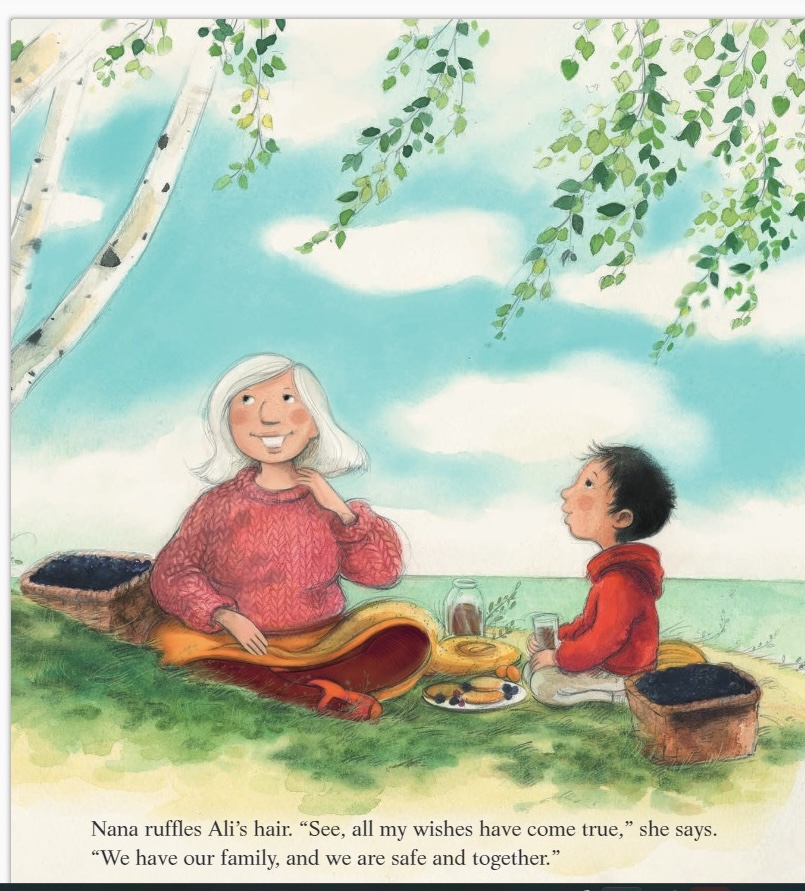
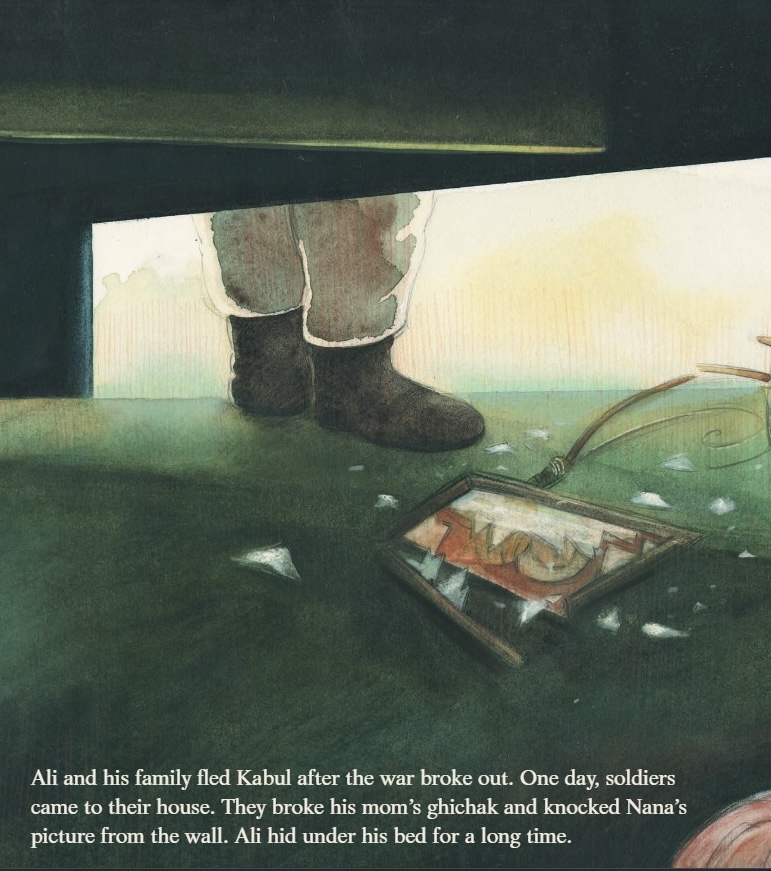
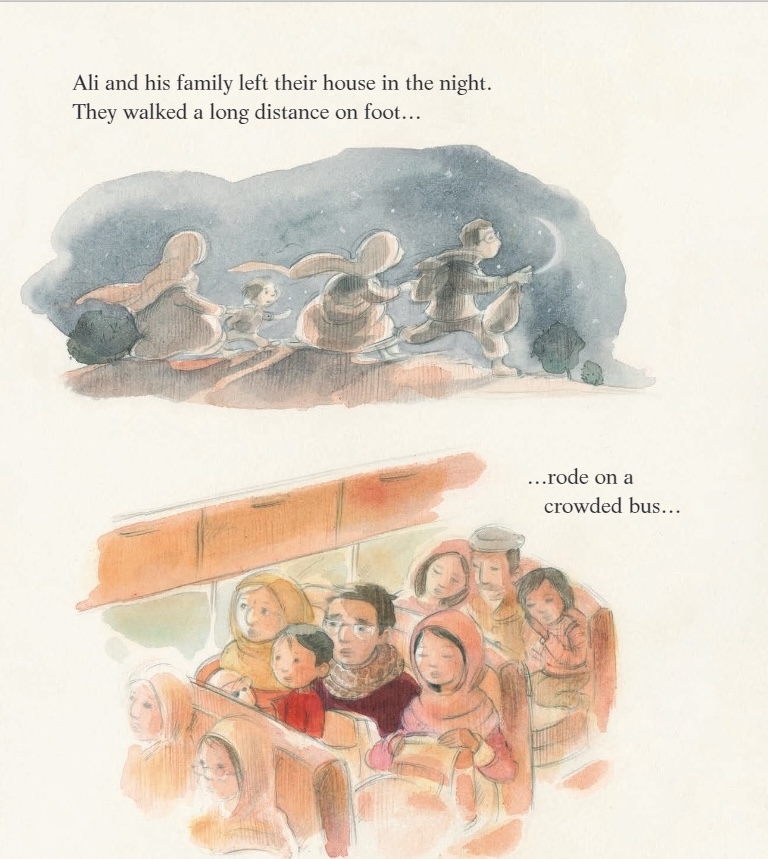
This cultural picture book shows life of an Afghan family before fleeing the country and after.  In the flashbacks the women are wearing hijab, now in the west they are not.  I debated if I should do a complete review or just a Muslim in the illustration tag, and ultimately decided to do a review so that I might document what I fear is a new trend.  In the last ten years most Afghan books addressed international involvement, the Taliban, and refugees, but seemed to still feature Islam and the characters as Muslim.  This book carries the refugee theme, but Islam is seen in the “before” illustrations only.  Another recently published book, The Carpet: An Afghan Family Story, similarly contained no Islam, but interestingly also kept it out of the illustrations.  Realistically, I know that two books don’t make a trend, but with the change of politics in Afghanistan, I think the OWN voice narratives are important to watch and be aware of.  In the past an Afghan book would be conflated with also being an Islamic rep book, and I don’t know if that will continue to be the case.  I also don’t know what the take away impression would be upon a kid if they were to pick the book off the shelf.  Would they find the head coverings in the unsafe country and the lack of hijabs in the safe country as a message about Islam, would they understand the politics, would they even notice?  The sweet story of a boy picking berries with his grandma involves music, wishing on birds, and reflecting on the violence that forced them to leave Afghanistan.

The book starts with Ali and his Nana waking up early to pick blackberries.  They don’t want to wake his exhausted parents, and quietly pack a lunch and get on their bikes and head out.  The blackberries are not as sweet as the mulberries he remembers from Afghanistan.  Suddenly he misses home.

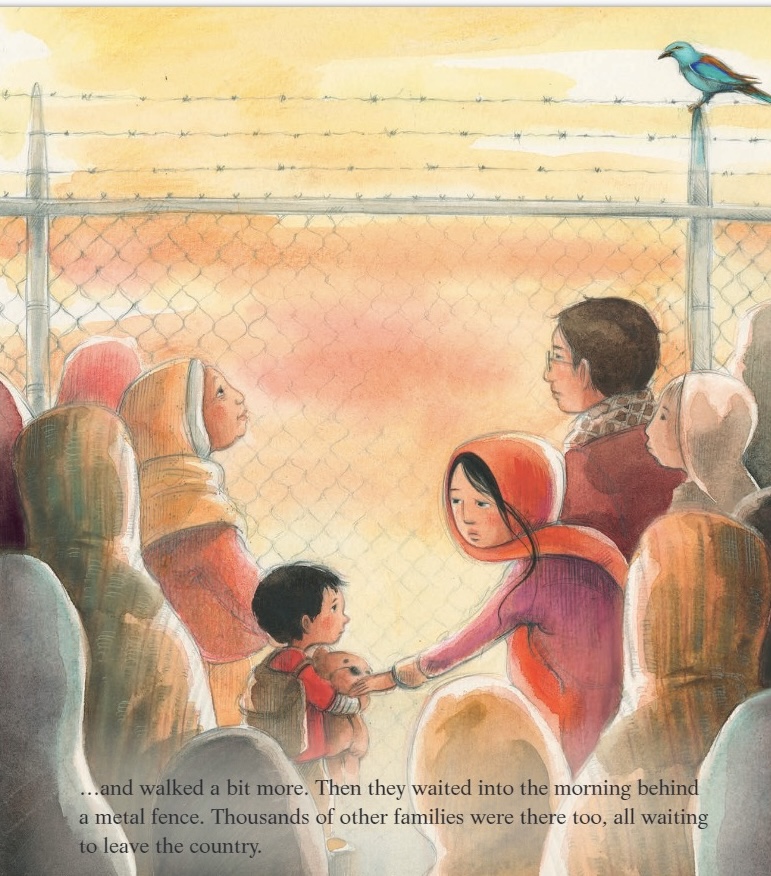
The family left Kabul after soldiers came to their house and they knew it wasn’t safe anymore.  He couldn’t bring both of his stuffies and the family left on foot at night.  They rode a bus and waited behind a fence before they boarded a plane.


Back in the present the two eat their picnic, when a bluebird arrives, Nana tells Ali to make a wish before it flies away.  Nana says all her wishes have come true: the family is safe and together.  Ali is whisked back to sitting beneath the mulberry tree with his parents laughing and his toys around, he wishes for home.  Nana explains that home is not a place, it is the love you have.  The book concludes with Ali appreciating his loving family and his new “home.”

Eleven Words for Love: A Journey Through Arabic Expressions of Love by Randa Abdel-Fatteh illustrated by Maxine Beneba Clarke

Standard
Eleven Words for Love: A Journey Through Arabic Expressions of Love by Randa Abdel-Fatteh illustrated by Maxine Beneba Clarke

img_7491

It has been a long time since I took Arabic in college, so I read the book, then read it again, then wrote down all the Arabic words and realized that there are 11 words in addition to “al Hob” the word for love, and that al Hob is mentioned three times in the manner of a poetic refrain.  I also didn’t grasp the first time that the book is a journey of a refugee family and the types of love are them in different phases of their journey.  Once I got it, I’m not sure how I missed it, but I think the layers that the book allows for actually widens the appeal to a larger audience.  I know for many Muslims seeing a 40 page picture book about love will raise some eye brows and wonder about what relationships are shown.  There are a few phrases that imply romantic love most illustrated abstractly, one shows a bride and groom on their wedding day (al-Ishq), there are also an elderly hetero couple in front of the Dome of the Rock (Showq). The story follows one family and their suitcase is rainbow colored and when depicting loving one’s neighbors (al-Mahabba), there are rainbow stripes on the fence, if a rainbow means or doesn’t mean something to you I simply share what is there. There is friendship love (al-Wud) and familial relationship love, and love from pets (al- Walaa’) and love felt for those gone too soon (al-Haneen).  The Arabic script for each word of love and the lyrical English string together the concept of different forms of love with the illustrations telling the story.  There is nothing particularly Islamic in the book, but there are visible Muslims in the illustrations and the masjid in Palestine.

I’m obviously not an Arab speaker, so if I misunderstood a term, forgive me, I don’t want to list all the terms, because that would give away too much of the book, but as a non Arab the book is heartfelt and moving and I’m sure for Arab speakers the feelings would be amplified.

The book was released in Australia in 2022 you can purchase it from Book Depository and will be released in America in 2023, you can preorder it here.

Crescent Moon Friends by Wadia Samadi & Mo Duffy Cobb illustrated by Lisa Lypowy

Standard
Crescent Moon Friends by Wadia Samadi & Mo Duffy Cobb illustrated by Lisa Lypowy

img_6247

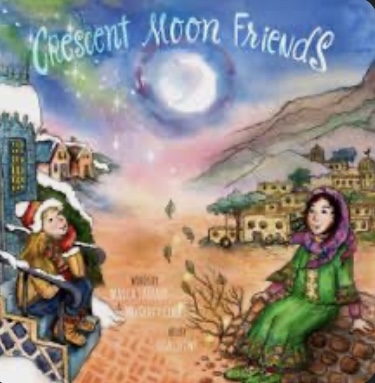
This 32 page book does not read like a new release, it looks like something you would have found in the early 2000s when the recent war in Afghanistan started and books about refugees from the region were popping up.  Admittedly back then, I probably would have been more forgiving that the smiling illustrations showed Islam in action and two characters from different cultures coming together through dialogue, respect, acceptance, and fun, but for reasons I’ll articulate, this book reads very superficial, dismissive and erroneous at times.  I am not Canadian or Afghani, I am a neighbor to both as a Pakistani American, and the book is OWN voice, so if I am just being overly picky, or sensitive, and am wrong, I am happy to acknowledge it, but before you push back, please read the entire review.

The description of the book says:

Crescent Moon Friends introduces the reader to two best friends Amelia and Aisha. While the pair is from Canada and Afghanistan, the girls reconcile their differences through exploration of the values they share. This book initiates a family conversation about Islam, explores tradition and language, and brings the girls closer together as a result. It is our hope that the book will be used as a teaching tool to help children understand the cultural backgrounds of others, and to create a warm environment for refugees resettling in Atlantic Canada from the Middle East.

This picture book is for both non- Muslims who are living in the West, and Muslims who are living outside their home countries. The focus of the book is on tradition, not religion, it also captures the significance of Islam. This is a valuable title for library and classroom use.

So first of all, I feel like the foundation of the book is othering Islam in making it seem that this book is an introduction of Islam to non Muslim with the premise being that Islam is what, a foreign religion? Numerous Canadians are both Afghani and Muslim in 2022, before I even began the book I was already fearing the framing.  Then it identifies Afghanistan as the Middle East, which just made me really question the accuracy.  Somehow after that first paragraph, the book then tries to say that the book is not about religion, but traditions.  While part of me appreciates that distinction, the second part of the sentence saying that it wants to capture the significance of Islam really shows the poor focus of the book.

Let me pause here though and answer a question I’m sure many of you are wondering, “why review a book that is not well written, and is not widely promoted or known about.” The answer is simple, a book such as this may not sell in big numbers and be regularly seen online and in stores, but they often do find their way into libraries and classrooms.  They are often shelved to fill “diversity” or “inclusion” quotas and thus their messaging does often reach our children.  I also highlight books like this, not just to pick on this particular book, but to show that OWN voices doesn’t make something automatically correct.  If this is the author’s own experience or is a memoir, there is some leeway, but saying that Afghanistan is in the Middle East or that Salam is Dari, not Arabic, or that it is “naan tandori” instead of “tandoori naan,” just makes the book seem inauthentic.  Often publishers, editors, agents perhaps don’t want to push back and appear uncultured or racist, so they don’t question details, is the only thing I can think of as to why this trend continues to perpetuate.  Which is also why the importance of having a piece sensitivity read cannot be overlooked, even when the author is writing about their own religion or culture. Yes, I too am only one person saying I have issues, but beta and sensitivity readers such as @muslimbookreviewers are four people and we discuss based on what we know and between the four of us there are a lot of singular specialties and a lot of  overlapping expertise that really help books get it right. Sorry for my rant, back to the book at hand…

The book starts with the white Canadian girl camping with her family and wondering what the upcoming school year will bring.  The text says. “she loved to look at the crescent moon.”  Already the writing is clearly weak, who loves to look at a particular phase of the moon, does she not like the waxing gibbous or whole moon? The next spread introduces Aisha, she is standing in the foreground with a mosque behind her and the text says she loves the moon too.  “There was a crescent moon on top of the mosque where her family went to pray.” Aisha has her hair loosely covered, and immediately we are connecting Aisha to her faith and to Amelia through their love of the crescent moon.  Interestingly, Aisha who would presumably love the crescent as it symbols holidays and month changes in the lunar calendar is presented as liking the moon because of it decoration aesthetic. It is where her family went to pray, sure it reminds her of home, but chances are she didn’t often go to the masjid as culturally most women don’t, so I’m not sure that this spread really has any accuracy or value, it just sounds good…if that.

The next spread is the first day of 6th grade with the teacher introducing a new friend to the class.  If it is the first day of school, aren’t they all new to the class? Aisha recalls that she left Afghanistan because there was a war in her country and school wasn’t safe, if she is twelve or thirteen, I’m not sure what caused the change in real life for the war timeline being referenced.  On a more relatable note it mentions that she missed swinging in her grandfather’s garden with cousins as well.

The next page showing the girls being silly with pencils to look like a bunny and walrus is sweet.  It shows language isn’t necessary, that silliness is universal and it is cute.  The girls then show how they share things unique to their culture with one another.  Aisha teaches her how to say Salam, hello in Dari, how to dance the Attan, about Eid, the most important Muslim holiday, and about a game with stones called anjaaq panjaaq.  But this is wrong, Salam is Arabic, Eid is Arabic for festival or holiday so what Eid is the book referring to? Also why not tell how to play the game, or how to do the dance or how Eid is celebrated? If the book is to build cultural (or religious) bridges, thus far I’ve only learned how to stick pencils in my mouth to look like a walrus or behind my head to look like a rabbit.

It is then Amelia’s turn to share Canadian culture and the book picks: ghosts, goblins, Santa Clause and the Easter Bunny.  I find this a bit offensive on Canadians’ behalf, really their holidays are what make them who they are?  Later we will learn that Amelia is not religious, yet the symbols for religious holidays of Easter and Christmas are what are being presented.  Additionally, the holidays mentioned are not even unique to Canada: Christmas, Halloween, and Easter, are the same in America at the very least.

The next spread shows their moms becoming friends and the girls playing in Aisha’s mom’s scarves, hijabs, shoes and make-up.  I find the joy sweet, but I wonder if the book as stated in the details by the author/publisher is to help refugees- is this a bit misleading- that they are settled and have an abundance of clothing accurate?  Often refugees need assistance, will a book like this send the wrong message about helping those fleeing war get established, by not just avoiding talking about need, but celebrating surplus?

Aisha is then shown helping Amelia with math and when Aisha needs help with a Halloween costume, Amelia is there.  The book really is doubling down on the importance of Halloween to Canadian culture, which again feels off.  But also most Muslims don’t celebrate pagan holidays, so I’m not sure I like the positioning that it is cultural to celebrate and that to be Canadian one must engage in the rituals.  Whether you see it as pagan or just assimilation, either way it doesn’t sit right for a book aimed at finding common ground between diverse individuals.  Math is neutral and universal, why not have Amelia help Aisha with something also less controversial?
img_6242

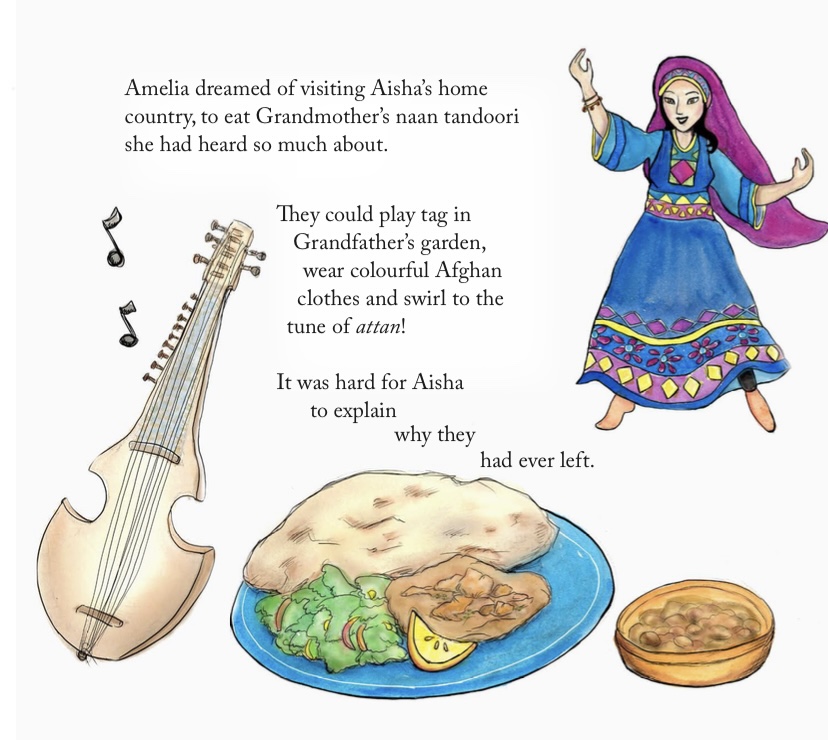
The next spread shows Aisha missing Afghanistan, and Amelia being a supportive friend and wanting to visit Afghanistan too.  Unfortunately, once again the weak writing has her sounding like an adult missing the laughter in the air and hope and flowers, not a kid talking.  When Amelia joins in, naan tandori is mentioned, which is backward, if it is the same as in Urdu it should be tandoori naan.  She also wishes they could wear colorful Afghani clothes and dance the Attan, which are two acts not limited to Afghanistan.  They can put on traditionally clothing and dance in Canada.

The story then takes a huge pivot and shows Aisha and her mom praying with the very vague text of her mom “described her way of life, Islam as the peace in her heart, and said turning to Allah in prayer would keep Aisha happy.”  The text seems misplaced and the messaging completely pointless, why not frame it as what Aisha believes or what her faith teaches her? It almost comes across as her mom forcing the belief on her and this being the first Aisha has heard about it.  The next page is set up the same, but shows Amelia’s faith to be kindness and compassion while they sit in nature.  I think the intent was to be positive, but when you have two people representing entire populations, all sorts of stereotypes come in to play that either have to be so general as to be accurate or more specific to the two characters at hand.  In this case I feel the takeaway is that holidays define Canadians, even religious holidays, but they are fine to participate in because Amelia is not part of organized religion.

Thus the next spread of Aisha’s family celebrating Christmas with Amelia makes sense in the story, but I find alarming because it normalizes abandoning your own religious convictions and adopting another faiths in order to fit in and assimilate.  Imagine a teacher reading this book to a first grade class and little Muslim children who demand that Christmas and Easter stay out of public schools are hearing messaging normalizing the holidays for people of all faiths.  Imagine a recent immigrant or refugee further feeling pressured to adopt these practices because they want to be seen as “good citizens” or be accepted by the larger community.  The contrast of Aisha’s family celebrating Christmas is Amelia helping make star and moon shaped cookies for Eid.

The story comes back to the girls love of the moon, one as a dreamer, the other as a scientist.  It tells of other firsts Aisha experiences and Amelia learning about Aisha and her faith.  I’m not sure what a genie lamp has to do with Islam, but it is in the illustration with a hamsa hand, a book, a tasbih, and a crescent with a minaret coming out.

Aisha then starts to wear hijab and Amelia learns how to wear one too. No details about what or why hijab is worn or given, and in the illustrations it doesn’t completely cover anyone’s hair. The girls ski together and drink hot chocolate and living in Canada allows Aisha “to be the girl she was meant to be.”  I’m not sure what that means, but that seems to be the resolution to the book before it circle backs to the mom and concludes.

I think on the very surface the book is a nice idea, but the conflation of what it means to be Canadian with observance of holidays and the lacking details of what it means to be Muslim Afghani make the book miss so much and ultimately do more harm than good if shared.
The Next New Syrian Girl by Ream Shukairy

Standard
The Next New Syrian Girl by Ream Shukairy

next new syrian

This culture rich, American set, upcoming 416 page YA book proudly shows the characters’ Islam as it shares a story of pain, privilege, guilt, adversity, hope, and family dynamics.  The book is an easy read that is hard to put down, and is remarkably clean for the threads of romance, war, and mental health that permeate the pages (note that here are triggers of loss, separation, death, suicide, drowning, trauma, hate, and bullying).  There, however, are also some plot holes, contradictions, and weak threads that I feel obligated to note, but ultimately don’t make the book a bad read.  I think 16 year old readers, both Syrian and not, as well as Muslim and non Muslims will benefit from the characters sharing their lives and peeling back surface layers to show an intimate account of expectation and obligation for Syrian American girls in today’s world with the backdrop of war in Syria.  The book’s first few pages are powerful in their Islamic centering and unapologetic normalizing of salat and hijab and identity. The Islam in the forefront fades as the story progresses and I don’t think I can sign off on the relationship between two characters as being “halal,” but starting the story with fears of praying on the side of the road as a mom’s concern is next level.  Most book parents are trying to get their kids to pray, in this family- prayers are happening five times a day and on time, so the worry is knowing where you are when Maghrib time hits, because it obviously won’t be missed or delayed, alhumdulillah.

SYNOPSIS:

Khadija’s mom is queen bee in the tight knit Syrian community in Detroit and Khadija does not fit the mold of what the queen’s daughter should be.  It isn’t that Khadija is a rebel, she loves her mother, her faith, her roots, and well, boxing.  Khadija is wealthy, and privileged and so much of what is expected is for appearance sake only.  Khadija knows this, and takes boxing lessons for free in exchange for helping keep the gym clean as to establish this as her own thing, no strings attached.  When Khadija’s mom takes in a Syrian refugee and her daughter, Leene, Khadija has to figure out if she is threatened, jealous, or impressed by the new arrivals and what that means about her own family.

Leene shares the narrative with Khadija and shares her transition to life in America and in the Shaami home along with her past.  The loses she has faced, the obstacles overcome, and the secrets she keeps in order to face each new day show glimpses into the destruction of the Syrian war on a way of life and the beauty lost. 

The two girls are at odds with each other for much of the book, but as their stories start to intertwine, they find themselves with similarities and strengths that show they are a benefit to each other, despite their stubbornness and fiercely independent personalities.  In a race to reclaim what was once lost, the girls start to trust each other, and when family is further threatened the two girls allow themselves to be vulnerable and work together to save what matters.

Clearly I am trying not to spoil the book, nor takeaway from the climax, but I think most that start the book, will find themselves glued to the pages and will understand why I am choosing not to disclose too much.

WHY I LIKE IT:

The first chapter completely blew me away, I loved the idea of such a strong hijabi girl boxing and being so unapologetic about her Islam and culture.  I must admit I cried at the end as well.  It was tied up very neatly, arguably too perfectly, but there were tears none-the-less and no matter what I critique about the book, I was moved by it. The writing is engaging, and entertaining, no doubt, but alas, I have some questions, lots of questions in fact: How did the mom’s meet? One is super posh and high class, the other refugee with very little, how did their paths cross? How did Leene convince her mom to let her travel even if the ‘why’ was kept hidden? After everything they have been through wouldn’t being left to travel to the Middle East be a huge obstacle that needed to be overcome, it reads inconsistent and unbelievable. How hard was it for the “girls” to leave the “boys,” I would imagine it was devastating, yet it didn’t even get a mention.  

What changed so much about the family dynamic when they stopped going to Syria, the author shows the joy of Syria and being together for the family, but I think if you are not Syrian and do not know Syrians well, some of this thread, is going to fall short.  I talked to @muslimmommyblog and could see the reflection of the characters for her, but if I didn’t have her shared experience to flesh out the characters, I don’t know that I would have understood the weight of the guilt, the helplessness, and the frustration.  Similarly, only through talking to Shifa did I understand the pressures of being an American Syrian girl, if I’m being honest, Khadija the majority of the time, just reads whiney. Other family dynamic questions involve the dad and brother.  Was the dad always so absent? It must not have happened overnight, right? And exactly how old is Zain? He reads like he is 12, but he is in high school? Additionally, high school graduation is very important for both girls for very different reasons, but their is no talk of college or career plans, which was noticeably missing from the book.

Then there is the angsty storyline of Younes.  The perfectly selfless guy who doesn’t center his Islam as much, but does want to have a prolonged engagement.  What does that even mean, and how will that be ok Islamically, with them already laying on the 90s Bollywood style glances and loving confession?  Also why does Khadija frame morality through an Islamic lens for most things, but for the relationship resorts to worrying about what her mother will be ok with?  And was the family ok with Younes? How is he at the BBQ? Speaking of places he shouldn’t be, how was he at the party Nassima isn’t Arab enough for, when she at least speaks Arabic and he does not?

I think it best to just enjoy the story for what it is, not look too deep, not ask questions, and just enjoy the rep, the story, the characters, and the emotions released with the climax and conclusion.

FLAGS:

Romance, crushes, road rage, bullying, Islaophobia, mental health, death, killing, war, destruction, suicide, drowning, abandonment, separation, loss, grief, rebellion, angst, lying.

TOOLS FOR LEADING THE DISCUSSION:

This would not work for a middle school book club, and I really should say that this wouldn’t work for a high school book club either, but I know many older high school girls that would absolutely love this book and I think it might be possible to convince them that the relationship is more than the text shared, and was approved by the families and made halal.  Considering so many holes exist, it might be possible to control the narrative in a book club setting on the permissibility of the relationship.  It would definitely depend on the girls reading the book and I would strongly suggest that whether you read this book in a group or hand it to a teen, that you make it clear what a halal relationship looks like and that this is a work of fiction.

The book releases in March 2023 and as always to show support for OWN voice Muslim character filled stories please consider pre-ordering the book: you can do so here on Amazon.  And once the book releases please purchase, checkout from your library, and encourage your schools to shelve titles to encourage similar books to be published and made available, thank you.

Salih by Inda Ahmad Zahri illustrated by Anne Ryan

Standard
Salih by Inda Ahmad Zahri illustrated by Anne Ryan

salih

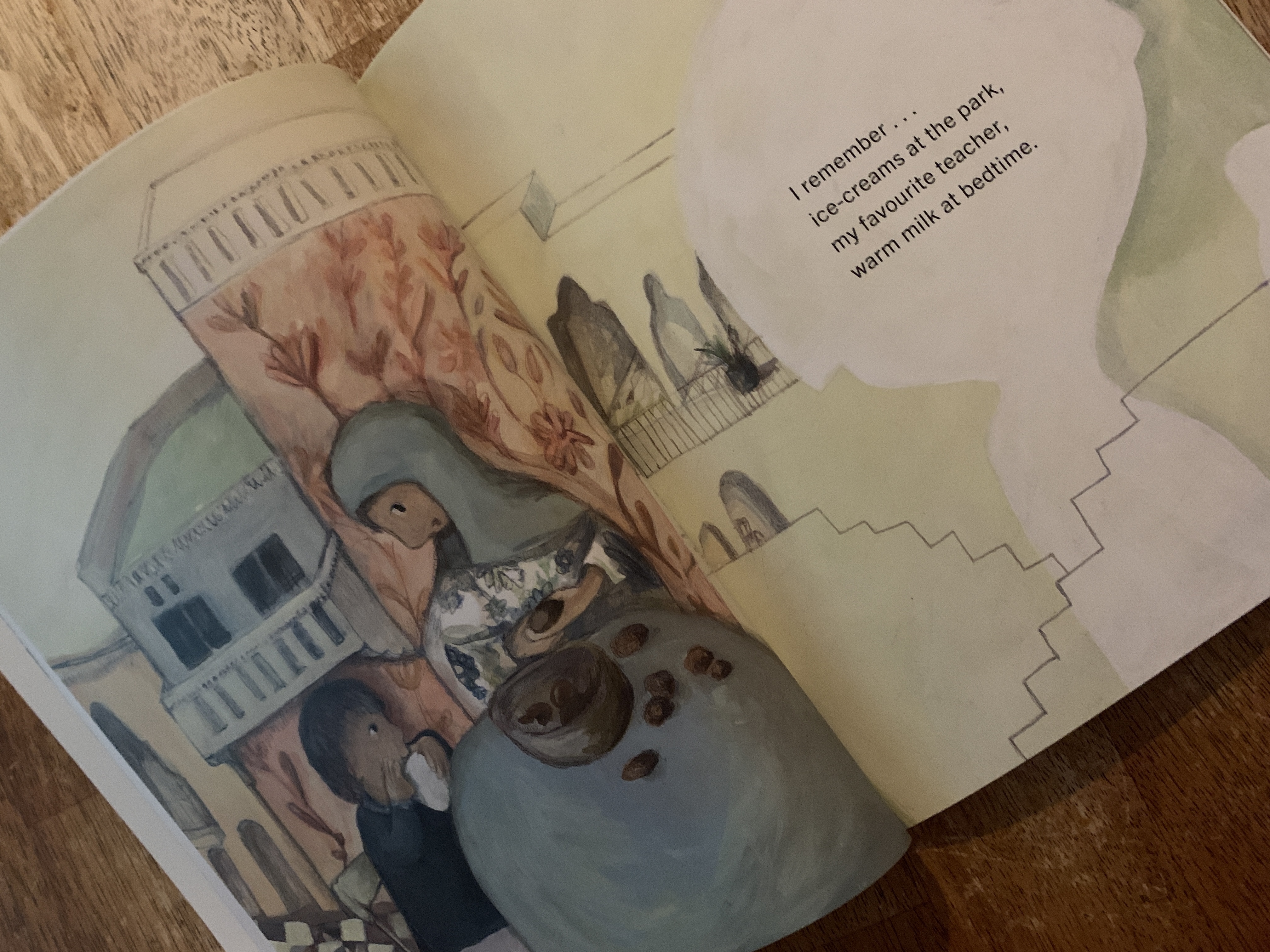
This is an example of a picture book that should not be categorized as being only for children.  The passages of short simple text and the expansive illustrations that pull the reader in, combine to set a powerfully moving tone that holds you in it’s grips until the final page.  The names and hijab clad women could make this book a refugee tale with #muslimsintheillustrations, but because the author is Muslim, and the book so beautiful, I wanted to do a full review.  Some of the vocabulary is a bit advanced for younger children, so I think the best application of this book is not to hand it to a small child to read independently, but rather to read it to a child and let the words tickle their hearts while they immerse themselves in the pictures.  I look forward to sharing this book at story time to kindergarten through third grade.  I think the imagery, concepts, and emotion will resonate and open minds and hearts.

img_2168

Salih is like a turtle, he carries his home on his back. He and others are heading to the sea.  He tries to remember when things were better, and forget the bad times.

An old man shows him how to paint.  Salih shares this creativity with others.  Then he slips all the paintings into bottles and when he is on the rough sea, the bottles float away.

The storm rages, but then it calms, and land is seen, and hopes and dreams return.

We, collectively, have become numb, apathetic even, to the plight of refugees.  I have been trying for a while to get this book from Australia, and even though I am over a year late since its publication, it is still timely.  It will always be timely.

img_2170

We cannot be so arrogant to dismiss the plights and challenges faced by those in our world.  That is why I say, yes it is a children’s book, but people of all ages, need to be reminded.  It isn’t the worst of the worst incidents that need to only be shared, or the over the top happy stories.  We need to not let our hearts grow so hard. And this gentle book, with a sweet boy and turtle shell imagery has a lot of potential to remind us of the human element of global conflict.
Available to purchase in the USA here

img_2172

As Long As the Lemon Trees Grow by Zoulfa Katouh

Standard
As Long As the Lemon Trees Grow by Zoulfa Katouh

as-long-as-the-lemon-trees-grow

Anything I write about this YA book will fail miserably in conveying how powerful, beautiful, lingering, moving, emotional, and overall masterfully written every one of the 432 pages are; it just might be my favorite book of the year.  I do know that this will be my new standard for Muslim OWN voice stories, as the authenticity was absolutely engulfing, I’m not Syrian and I could feel it and naturally, I also verified it.  There is no pandering to a western gaze, the story and characters pull you in and show you Syria from the ground, there is no telling, there is no lecturing, it is mesmerizing storytelling at its finest.  The book has mental health issues, war, and a sweet “halal” romance, that I think upper YA, 16 plus, can handle and appreciate.  I hope every adult will spend time with this book, it truly is incredibly well done, alhumdulillah.

SYNOPSIS:

Homs is under the protection of the Free Syrian Army, but that isn’t enough to keep pharmacy student Salama and her family safe.  Her mother is killed, her father and brother taken, and so she moves in with her best friend Layla, her pregnant sister-in-law, her only family left.  Working as a doctor in the hospital where anyone remaining is given responsibilities far above their skill level, education, and experience- every day is a struggle to survive.

Haunted by the physical manifestation of her fear, “Khawf,” who urges her to fulfill her promise to her brother of keeping Layla safe and getting them out of the country, Salama at eighteen years old has to find a way.

Before all the pieces come together to escape, a boy enters the picture, Kenan, who gives Salama hope, who distracts her from the death and destruction that has consumed their lives.  A boy unwilling to leave his beloved homeland.

WHY I LIKE IT:

I’m a crier, but this book brought out ugly angry tears, shocked tears, heartbroken tears, sentimental tears, you get the point, this book held me in its grasps and never let go. I.COULDN’T. PUT. IT. DOWN. If this is the author’s debut novel I can’t even fathom what is yet to come.

I love that the characters are Muslim, and that they pray together, that they plead with Allah (swt) and meet at the mosque.  It is who they are, it is not up for debate or in need of explanation, it is what it is and it is not anything to discuss.  The parts where a character pleads with Allah for death over being taken, absolutely wrecked me.  Just as efforts to keep everything halal between Salama and Kenan made me beam.  (If I’m completely honesty, I did on occasion get frustrated, I mean come on they are being shot at, bombed, nearly sexually assaulted, scoop her up in your arms and console, her, I know haram, but it is fiction and I was invested, and there is a war.  Thankfully, I am not an author and she kept it all clean and her characters much stronger and mindful of the shortness of this world.)

I love that there are political voices, but that it isn’t a political book trying to give back story to the conflict.  In so many ways the news has failed to keep a light shining on Syria and books such as this, remind those of us outside Syria without strong connections to the land, that the conflict is still raging.  If this was a journalistic article it would be a human interest piece, it is character driven.  Readers see themselves in the characters that live lives that most of us of privilege could never imagine, yet here we are spellbound by the characters, their choices, their dreams, and their safety.  This book shows the power of fiction in opening our eyes to the horrors that are happening in our time, by giving us a face and a character to care so deeply about, that we are spurred to action and determined to not remain apathetic.

FLAGS:

Death, torture, physical abuse, sexual assault, fear, loss, coercion, war, murder, torture, child abuse, crimes against humanity, starvation, mental health, PTSD.

TOOLS FOR LEADING THE DISCUSSION:

I would love to use this book in a high school book club.  The story and themes of the book would open themselves up to discussion so effortlessly and the beauty of the writing would be a gift to share with students.