Tag Archives: Jenny Molendyk Divleli

Here’s Our Religion by Jenny Molendyk Divleli illustrated by Dasril Iqbal Al Faruqi

Standard
Here’s Our Religion by Jenny Molendyk Divleli illustrated by Dasril Iqbal Al Faruqi

This HUGE 14 page board book is such an engaging, teachable, and shareable book for toddler to early elementary aged children.  Similar to the author’s First Words in the Qur’an I can see this book being shared at story times and in classrooms regularly.  Each two page spread is literally a board book in and of itself.  With headings of: Ummah, Shahadah/Qur’an, Salah, Ramadan, Zaqat/Sadaqa, Hajj, and Prophet Muhammad (saw)/ Sunnah, kids will be able to deduce from the pictures and simple captions how the details relate to the theme, learn new information, review what they already know, and delight in the illustrations.

I don’t know that I would sit down with a toddler or preschooler and just read the book straight through very often, but when I was doing multiple story times a week, I had planned books for every theme highlighted in this book. I would have loved to be able to pull it out after a few stories had been read and used it as a review, where I could point to a picture and the kids could holler out what the illustration was teaching.  The large size would have saved me from having to make story board pieces, and the critical thinking would encourage comprehension and retention.  Example: learning about salah, and then opening to the salah spread, kids could see the vacuuming child and decode that we pray in clean places, that the picture of four people praying together is to learn/remind/teach that it is better to pray together.  


What Shape is Your Mosque? By Jenny Molendyk Divleli illustrated by Zeynep Begüm Şen, Ayşenur Kazan, Hümeyra Yograncı, Hatice Leyla Arslanbenzer, Gökhan Özdemir, Özlem Güneş, Rumeysa T. Karaca, Şüheda Başer Yılgör, Aybüke B. Aslanoğlu, M. Ahmet Demir, Fatma Betul Akbal

Standard
What Shape is Your Mosque? By Jenny Molendyk Divleli illustrated by Zeynep Begüm Şen, Ayşenur Kazan, Hümeyra Yograncı, Hatice Leyla Arslanbenzer, Gökhan Özdemir, Özlem Güneş, Rumeysa T. Karaca, Şüheda Başer Yılgör, Aybüke B. Aslanoğlu, M. Ahmet Demir, Fatma Betul Akbal

Framed the same as the author’s book entitled What Color is Your Mosque? The readers are taken all over the world to see masjids in a variety of shapes: conical, spiral, oblong, flower, boat shaped and more.  Each two page spread has a child introducing themselves, where they are from, the name of the mosque and some bits of information to engage the reader.  It isn’t a literary masterpiece, but I don’t think it attempts to be.  It is a fun informative book to show children the diversity of architecture, the universal practice of Islam, and be motivated by the prompt at the end to ponder how they might design their own masjid. I particularly like that the author points out that the first mosque she ever prayed in was a converted house.  This book is great in small groups and story times, where the pictures can be looked at, and lends itself to further research of looking up pictures of the mosque’s included, building mosques with blocks or legos, or paired with a similarly inspired craft.

The book starts with a note to parents, some hadith, a dedication, and then the author, Jenny introducing herself to the reader, and starting the journey.  The book shares mosques in Kuwait, Qatar, Indonesia, Germany, Pakistan, Saudi Arabia, Croatia, Kazakhstan, China. Each spread is illustrated by a different artist, but all are beautifully done.

I found the pages smile inducing, as I Googled to see real photographs of the mosques mentioned.  One of my favorites was the Rijeka Mosque in Croatia that was designed by a sculpture and changes shapes depending on the vantage point.  And I was shocked I had never seen or heard, or somehow noticed, the Kashti Wali Masjid in Karachi, Pakistan.  I masjid that is boat shaped and very near to my familys’ homes.  

I purchased my copy from Crescent Moon and if you use code ISL (my initials) at checkout you can save 10% on your entire order.

First Words from the Qur’an by Jenny Molendyk Divleli illustrated by Sena Aydogan

Standard
First Words from the Qur’an by Jenny Molendyk Divleli illustrated by Sena Aydogan

img_7527-1

This large, LARGE (10 x 13.5), 16 page board book is joyful and informative for our little Muslims to look through.  Each two page spread starts with a topic that is followed by an ayat from the Quran and then adorable illustrations are splattered around with comments, questions, facts, or definitions.  In some ways it reminds me of the Richard Scarry books that don’t have a story, and don’t have to be read front to back. You can, or you can just pore over the pages and point things out to your little ones.  The book also helps caregivers that might not do voices and Broadway style productions at story time, by offering little prompts with each picture that allow the child to engage, have their attention directed, or offer up their connections in an intuitive manner.  The size and quality definitely make the book stand out on the shelf, and I think for babies to early elementary the Islam centered focus will appeal to more than just toddlers.

The book features Animals in the Qu’ran, Plants in the Qur’an, People in the Qur’an, Nature in the Qur’an, Places in the Qur’an, Objects in the Qur’an, Blessings int he Qur’an, and  Color’s and Shapes in the Qur’an. The last page features a baby safe reflective “mirror.”

More Hands by Jenny Molendyk Divleli illustrated by Ekinsu Kocaturk

Standard
More Hands by Jenny Molendyk Divleli illustrated by Ekinsu Kocaturk
img_6180-1

This 32 page picture book blends food and the concept that teamwork makes things better, when a young boy asks his grandfather why his pishmaniyah is so delicious, and Grandpa Yahya offers to share his secret ingredient. The book is a fun bedtime or story time read as the more hands needed builds and builds. As someone though who has now read the book over a dozen times, I do wish there was more backmatter. I would love a recipe for the cotton candy type sweet, maybe some history of what pishmaniyah is (I had to Google it), and how it is traditionally prepared. The text dances around the pages, and the fun illustrations will appeal to children and help explain the process. There is a “bismillah” in the book and it mentions “baraqah” on the back cover, athere are also a few hijabis in the illustrations, but the book is universal for all readers toddler and up.


The book jumps right in with Sami asking his grandfather about his pishmaniyah. It is unclear if grandpa was planning to make it, or if it was a question out of the blue, but either way, Grandpa Yahya offers to share the secret ingredient. The ingredients are pulled out, and then more hands are needed, and then more and more and more. Once the whole family, and neighbors, and their kids are all involved it is time to eat and enjoy the dessert together.


As an adult I wonder what would have happened if so many people were not available to help, and did they wash their hands, and how big is their house, but kids won’t care, kids will just think it is funny. And that is ok too, books that show family, community, and teamwork with humor are always great additions to share with our littles.

img_6185-1

A Letter to the Beloved: Dear Prophet Muhammad (saw) by Jenny Molendyk Divleli illustrated by Rumeysa Abis

Standard
A Letter to the Beloved: Dear Prophet Muhammad (saw) by Jenny Molendyk Divleli illustrated by Rumeysa Abis

img_5332-1

I was a little skeptical about a 32 page rhyming letter to our beloved Rasullah, illustrated in book format, but it is cute and it won me over.  The rhythm keeps the rhyme from feeling too forced and allows for some forgiveness when it misses the mark, it also makes the book appeal to a wider audience. Even my preschooler could sit through it pretty well.  The book being the letter without any stilted framing, has a lovely authentic voice of a young boy, also named Muhammad, asking the Prophet (saw) questions and chatting in a very stream of conscience sort of way. It blends facts that the young boy knows with his stresses and asking the Prophet for advice.  The font is meant to look like a child wrote it, but it is a little cumbersome for children to read, and even adults (me) during read alouds.  I do wish the book was sourced, nothing really seemed wrong, but having it sourced or approved by a scholar is just a reassurance to the reader, and in my view a responsibility of the author.  The only line I didn’t like was near the end, when the boy hopes “that you will remember me, from this letter I am writing you.”  I feel like it will confuse kids, is the letter being sent? How would he know you when you’ve never met? What will be done with the letter once written? The illustrations are hit or miss, some are absolutely lovely, others a bit off, for example a music book on top of a picture of Masjid an Nabawi and the Kaaba, some also easier for small groups to see than others.  For kids there really aren’t a lot of books about Prophet Muhammad saw that are not textbook like in their portrayal, so I like the approach this takes, I just wish a few things were tweaked.

The book dives right in, with Muhamad introducing himself to our Prophet, he writes that he was named after him, and all about his family.  He then starts to tell what he knows about Prophet Muhammad, and questions he would like to ask.  Its a one sided discussion about siblings, smiles, appearances, kindness, and generosity.

The little boy then wants to know about Buraq, splitting the moon, talking to angels, standing out numbered at Badr.  It then turns to food and the little boy wondering about if RasulAllah would like mustard and relish, and burgers.  

img_5336-1

He imagines the Prophet visiting and leading his family in prayer and the scent that would then linger.  The boy hopes to meet him in Jannah, and promises to do his best to follow Allah’s decree. He signs off and sends salawat upon the Prophet. There is then a place for readers to write their own letters to the Prophet.  

Colours of Al Quds by Jenny Molendyk Divleli illustrated by Merve Ozcan

Standard
Colours of Al Quds by Jenny Molendyk Divleli illustrated by Merve Ozcan

img_0810-1

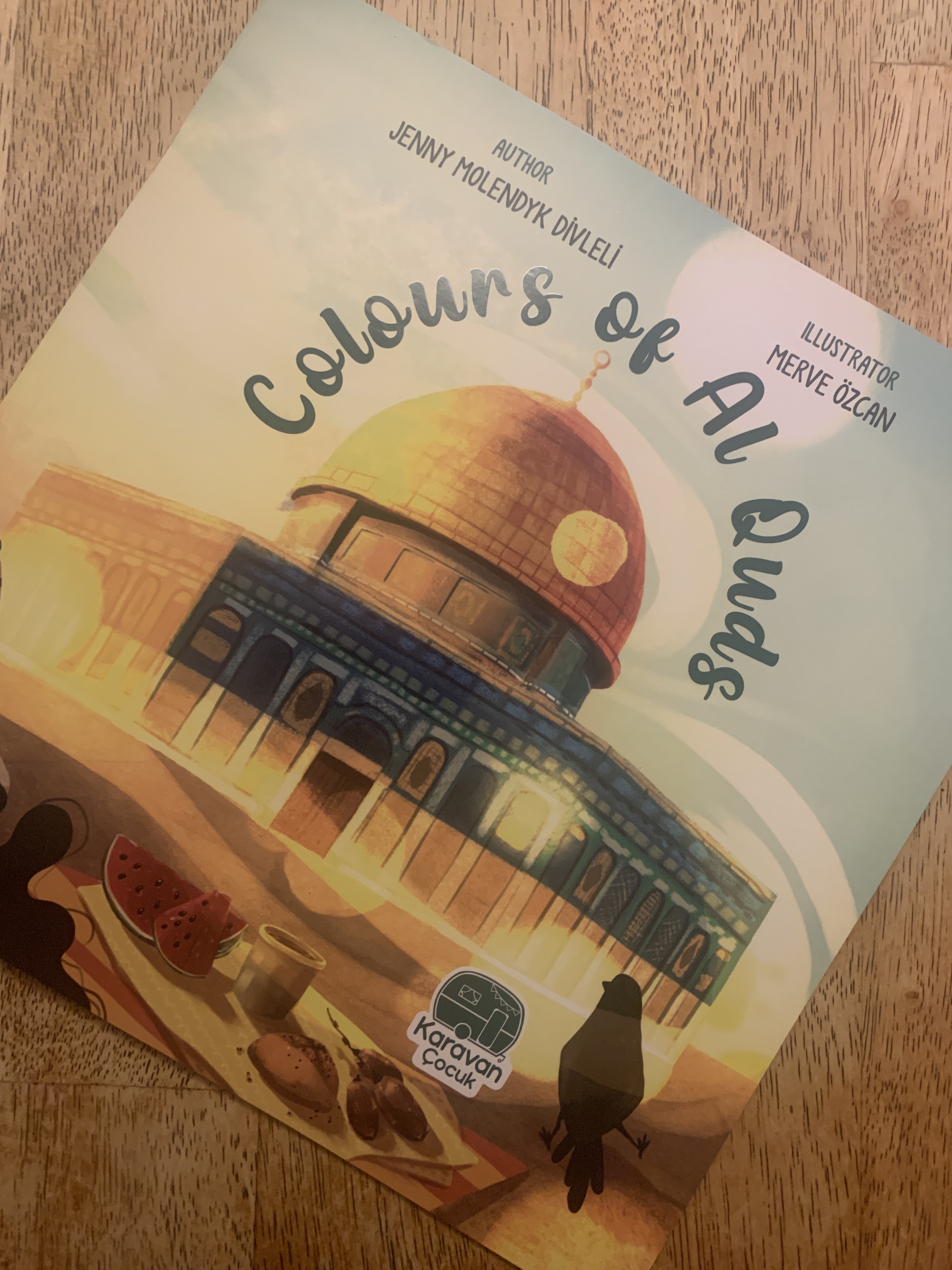
I have not posted a review since the latest genocidal escalation in Gaza, my heart just cannot carry on as before, but I keep being asked about Palestinian books that I have featured in videos, but not reviewed, so here we are.  This rhyming book is not OWN voice, but I think these days we are all Palestinian, and the tone of this book is accurately love, and beauty, and strength.  It is based around colors with beautiful illustrations for each two page spread focusing on one color.  Meant for toddlers and preschoolers this book works well in small groups and story times alike.

The book starts with an introduction to the narrator, Iman, from the land of Falasteen.  The first page spread talks about olive trees and the color green, then the blue of Dome of the Rock, orange of Quds Ka’ak and brown dates.  Over 32 pates, it also presents the keffiyeh, Masjid al Aqsa, knafeh, kaftan, keys, and Masjid al Qibly. The picture glossary at the end focuses on the Palestinian points, not the colors, keeping the focus on Al Quds.

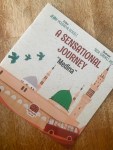
A Sensational Journey “Medina” by Jenny Molendyk Divleli illustrated by Seda Cubukbi Antli

Standard
A Sensational Journey “Medina” by Jenny Molendyk Divleli illustrated by Seda Cubukbi Antli

img_8808

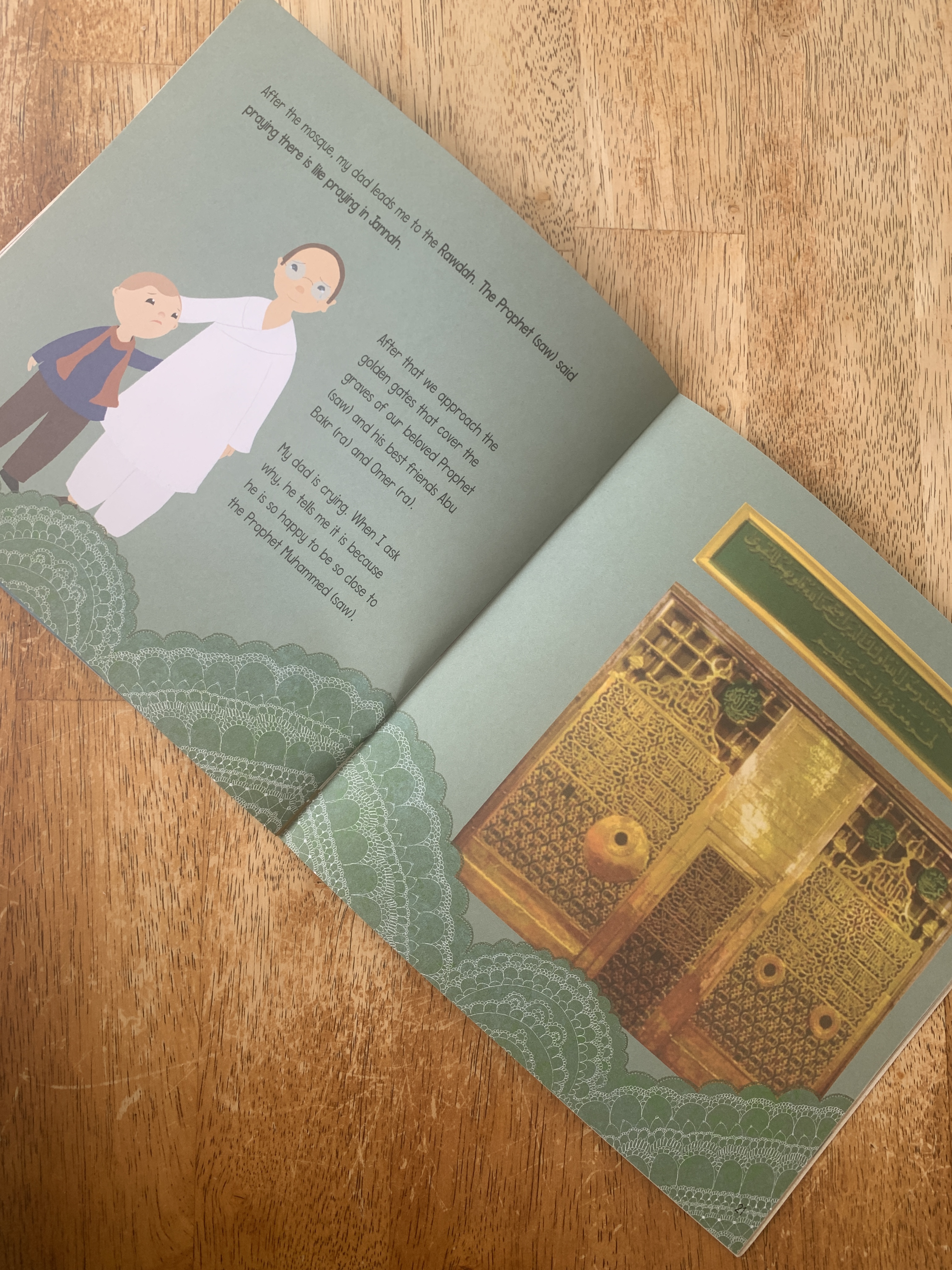
A journey to and through Medina with a focus on the five senses is a lovely concept for a book and the book is an enjoyable read for young children with the internal map, details about he Rawdah, the inclusion of Masjid Quba, Masjid al-Qiblatian, Mount Uhud, Archers Hill, and ajwa dates. The book is a little text heavy, as a decent amount of information is shared, but the illustrations are enjoyable and will help hold the attention of early elementary children.  The use of sight, smell, taste, feel and sound are woven into the story, they are not highlighted or the organizing format of the book.  Bonus material includes a QR code to listen to “Tala ‘al Badru ‘Alayna,” a glossary, and follow up activities.

The book starts with a little boy headed from Mecca to Medina, “the city of Prophet Muhammed’s (saw) mosque and grave, and a hope to find out why “everyone says Medina feels ‘special.'”  As he sees Bedouins in the desert he wonders what they eat and how they survive.  He then sees a gas station lit up like an amusement part.

img_8809

As they get closer to Medina they listen to “Tala’al Badru ‘Alayna.” When they arrive at the hotel they smell oud and fall asleep.  The next morning he wakes up to the sound of the athan and they walk the streets taking in the sights and smells. The color of the green dome is noted and the rose smell of the carpet when they make sujood included.  

The Rawdah and the umbrellas each get their own two page spread, and then a tour guide takes them to Masjid Quba, Masjid Al-Qiblatayn, and Mount Uhud. The tour finishes with a visit to the date orchards and playing and napping in the mosque.

img_8811

I wish it used the word Masjid every time, it uses both, and I’m not sure why it doesn’t just say Fajr instead of the morning prayer.  I appreciate framing it as a story, but the beginning with the Bedouins and the gas station seemed to slow the story down and my littles wanted answers as to why there were so many lights and how the people in the desert survived.  I also would have liked if the backmatter detailed more about Masjid al Quba and Qiblatayn, and Uhud, ultimately I wish there was more showing the little boy feeling why Medina is special and not just saying he now understands.  

 I’m not sure why I only ordered the Medina book and not the Mecca one as well, they are stand alone reads, but the Medina one references that that they have come after being in Mecca so consider if you are getting one to get both.  I ordered mine here. Use code ISL (Islamic School Librarian initials) at checkout to save 10%.

img_8810

Ramadan Nights by Jenny Molendyk Divleli illustrated by Halime Nur Sevim

Standard
Ramadan Nights by Jenny Molendyk Divleli illustrated by Halime Nur Sevim

img_6768

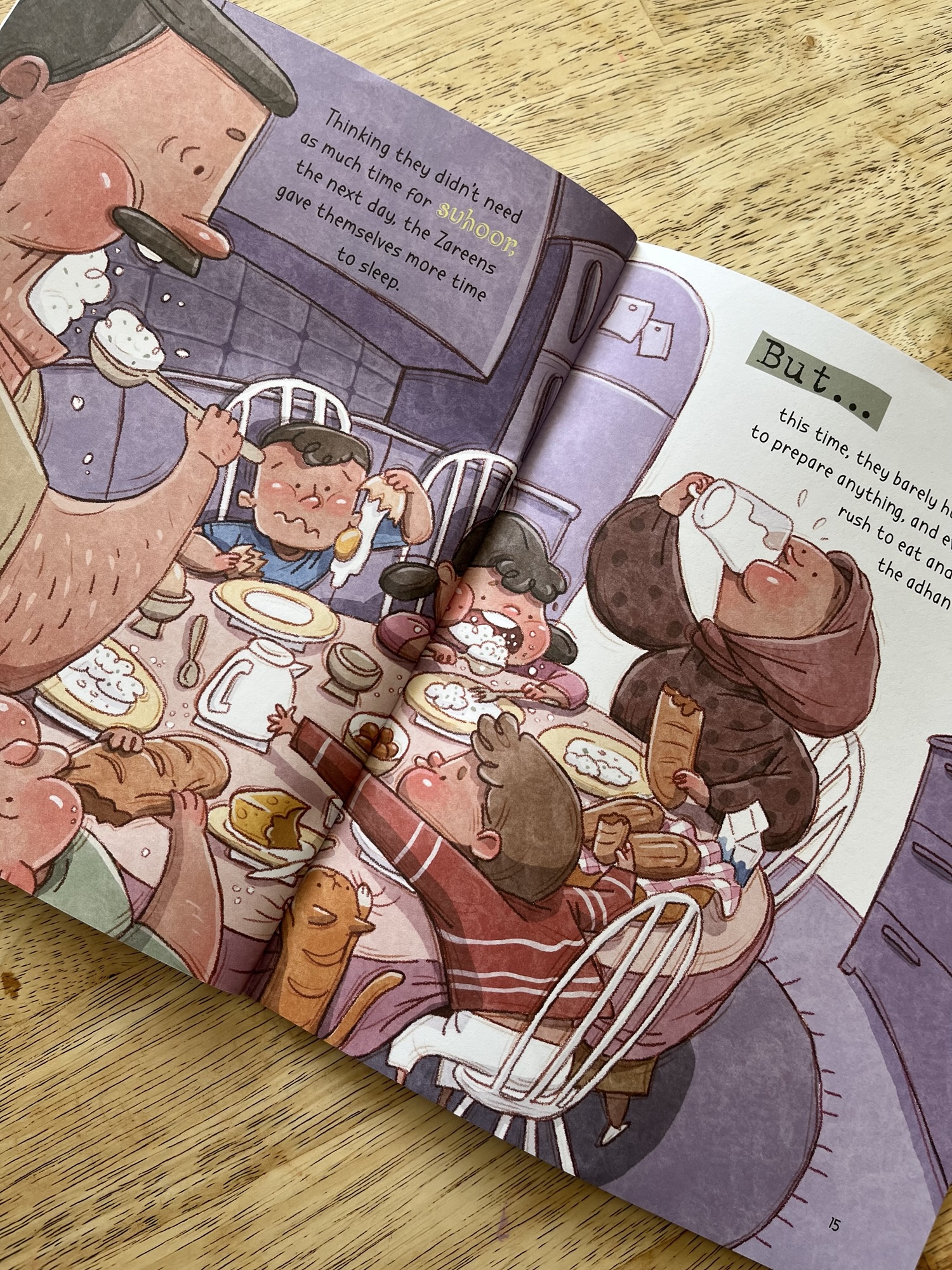
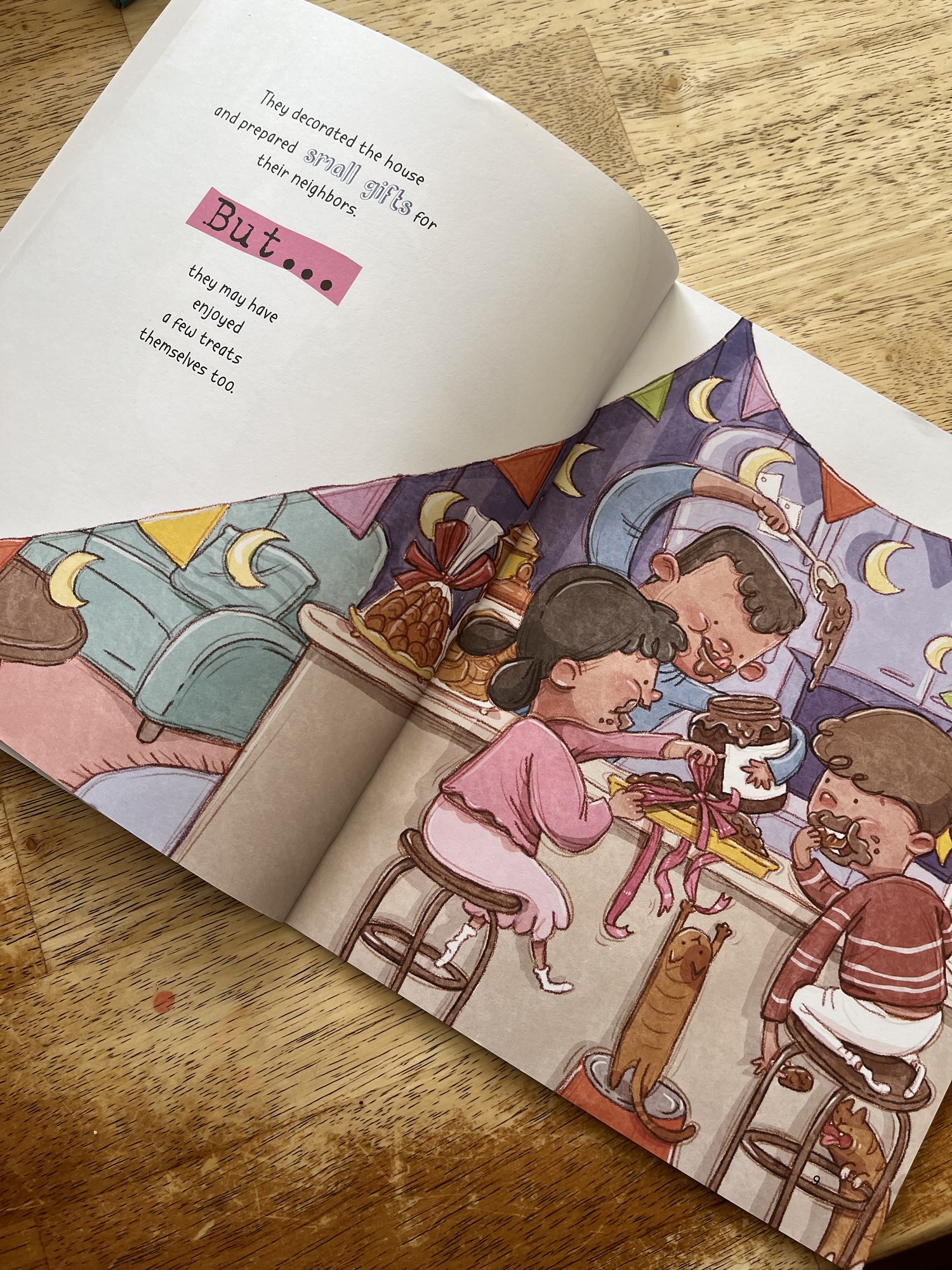
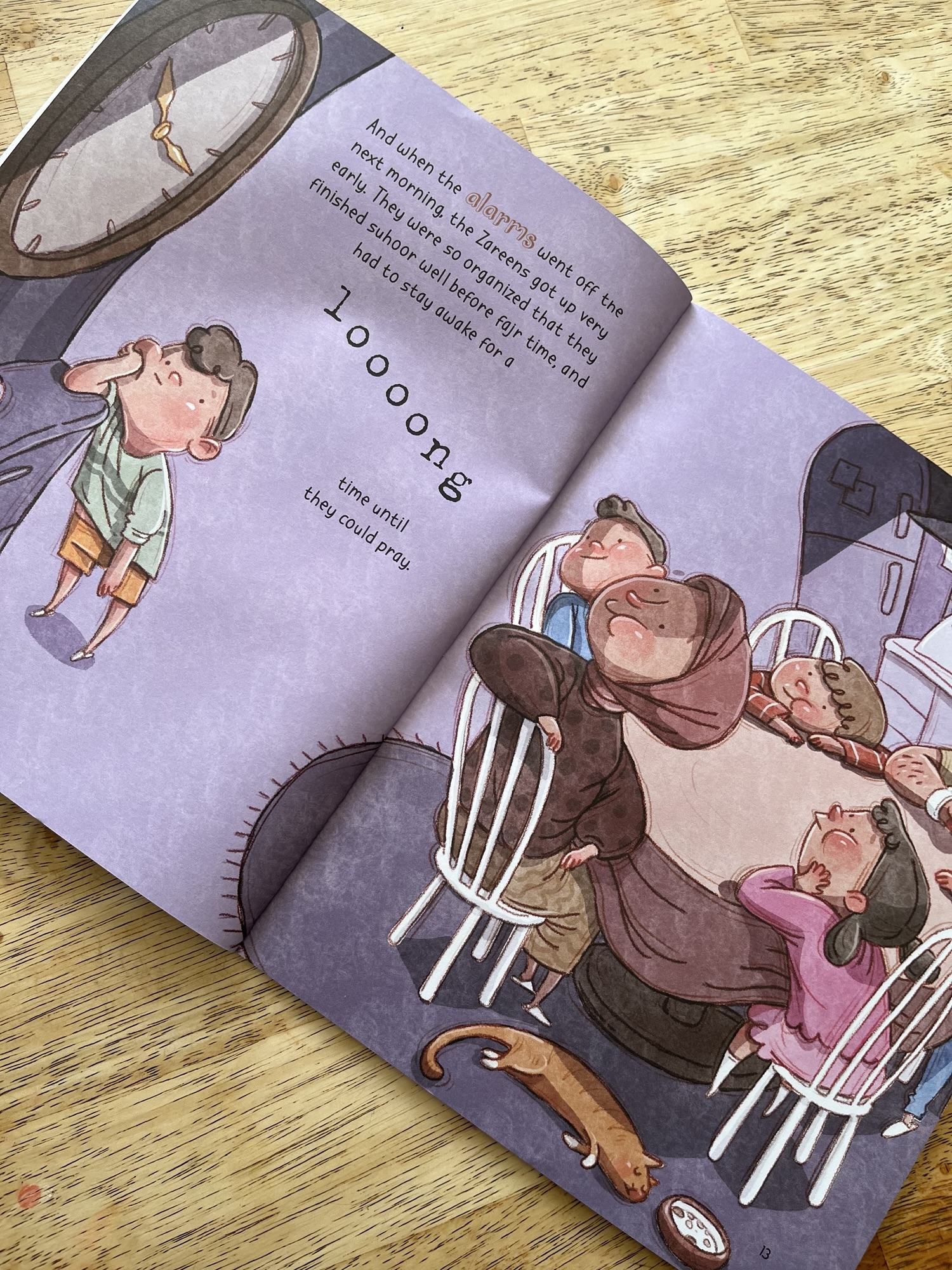
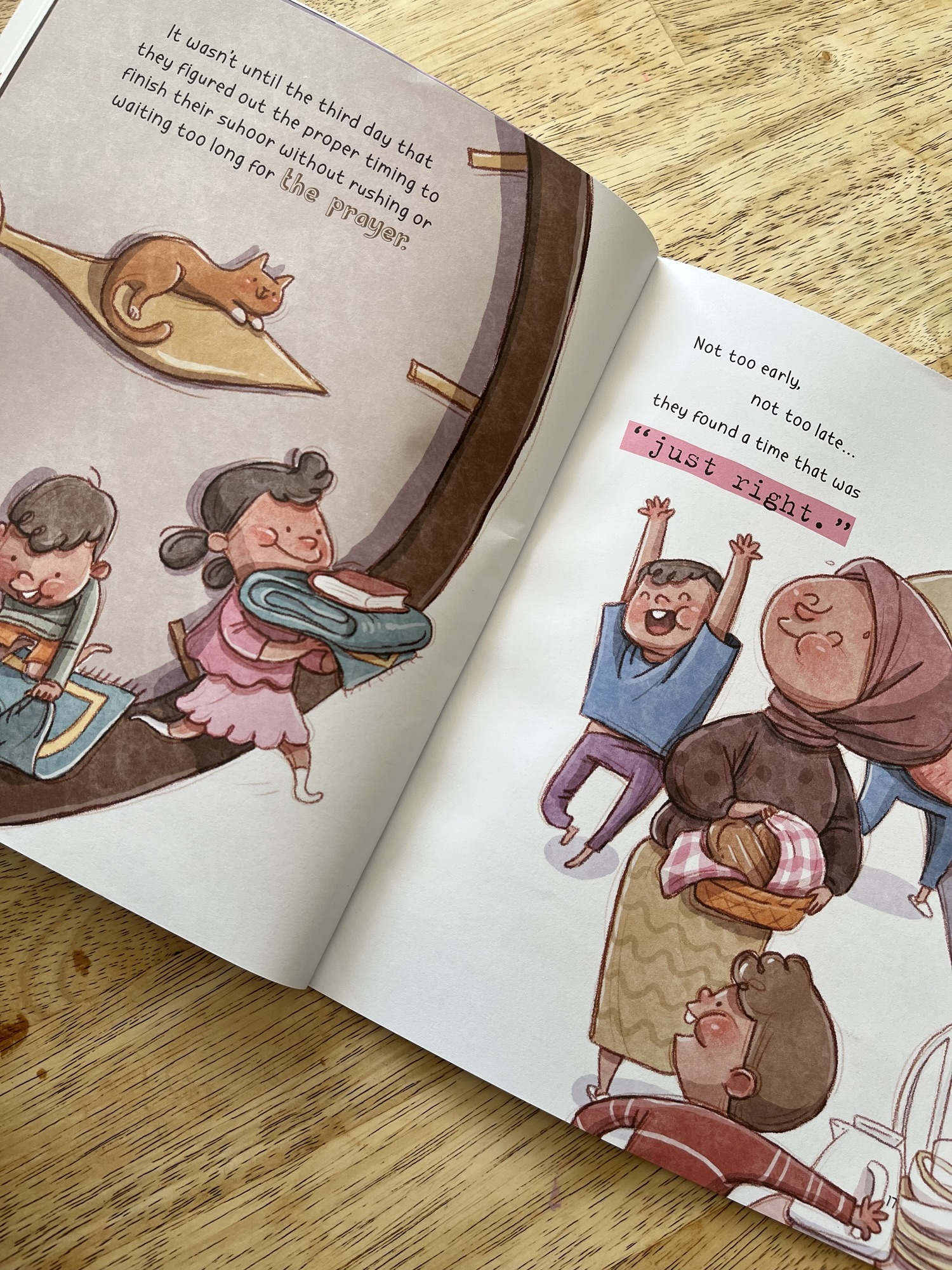
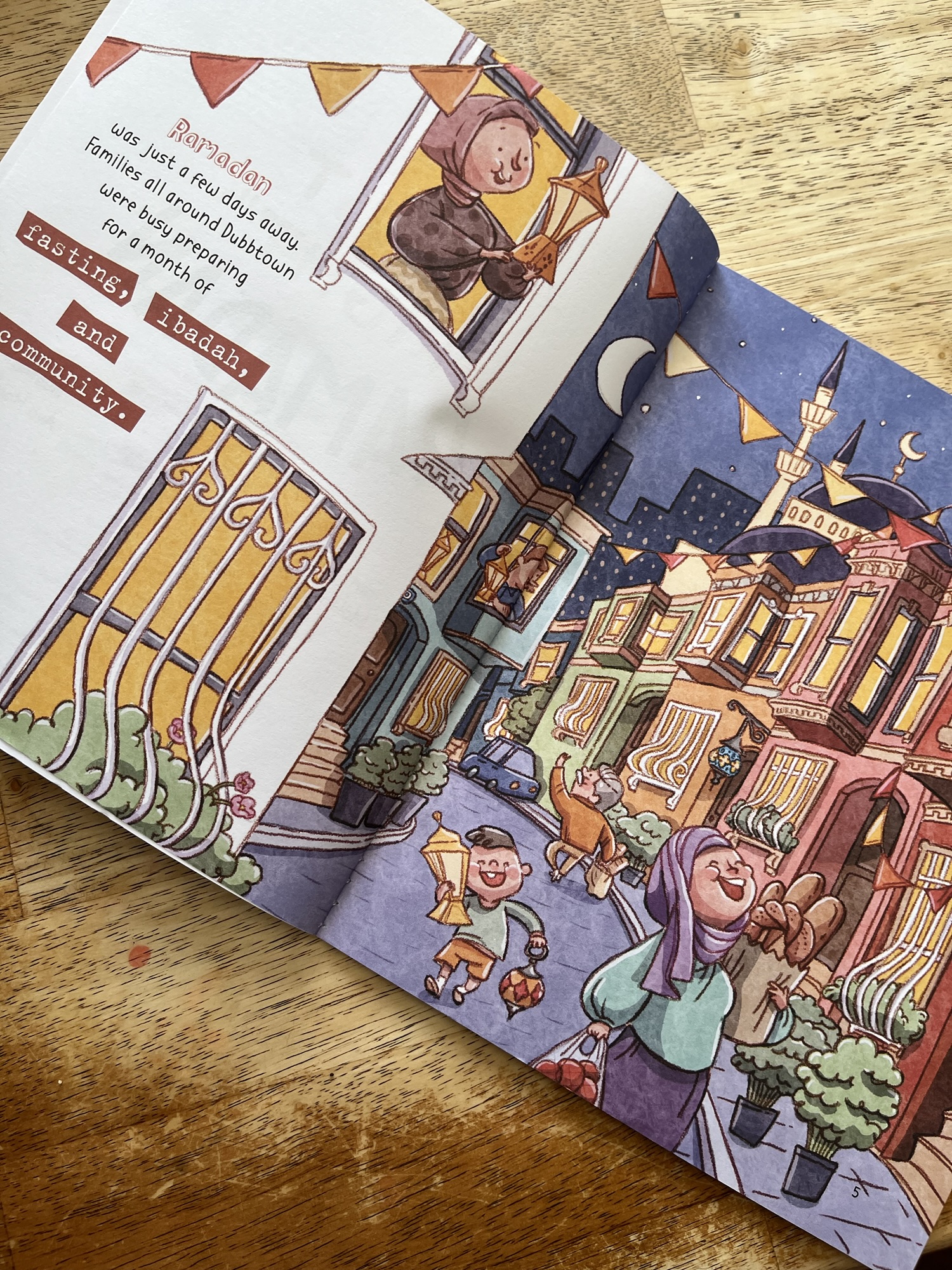
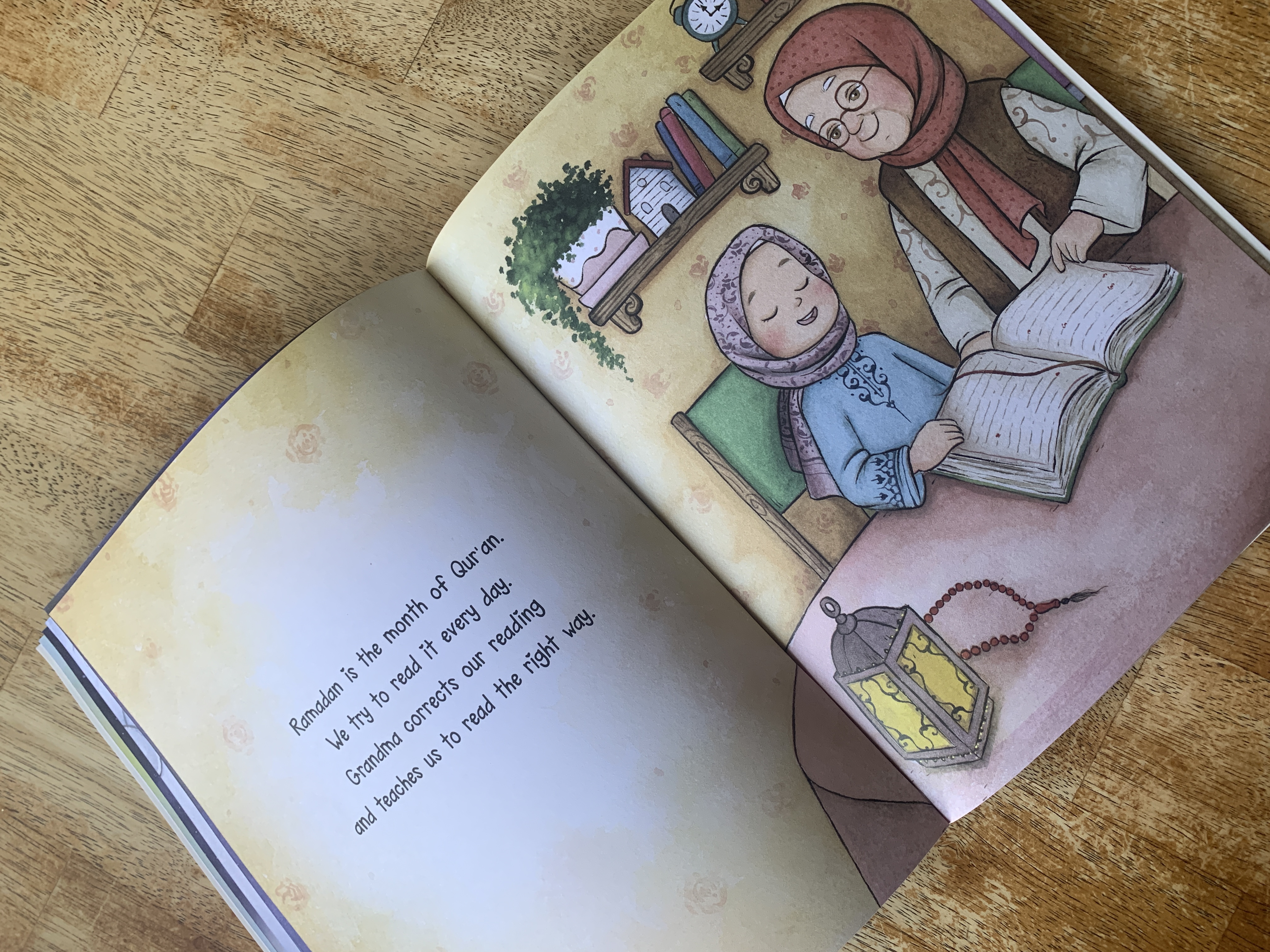
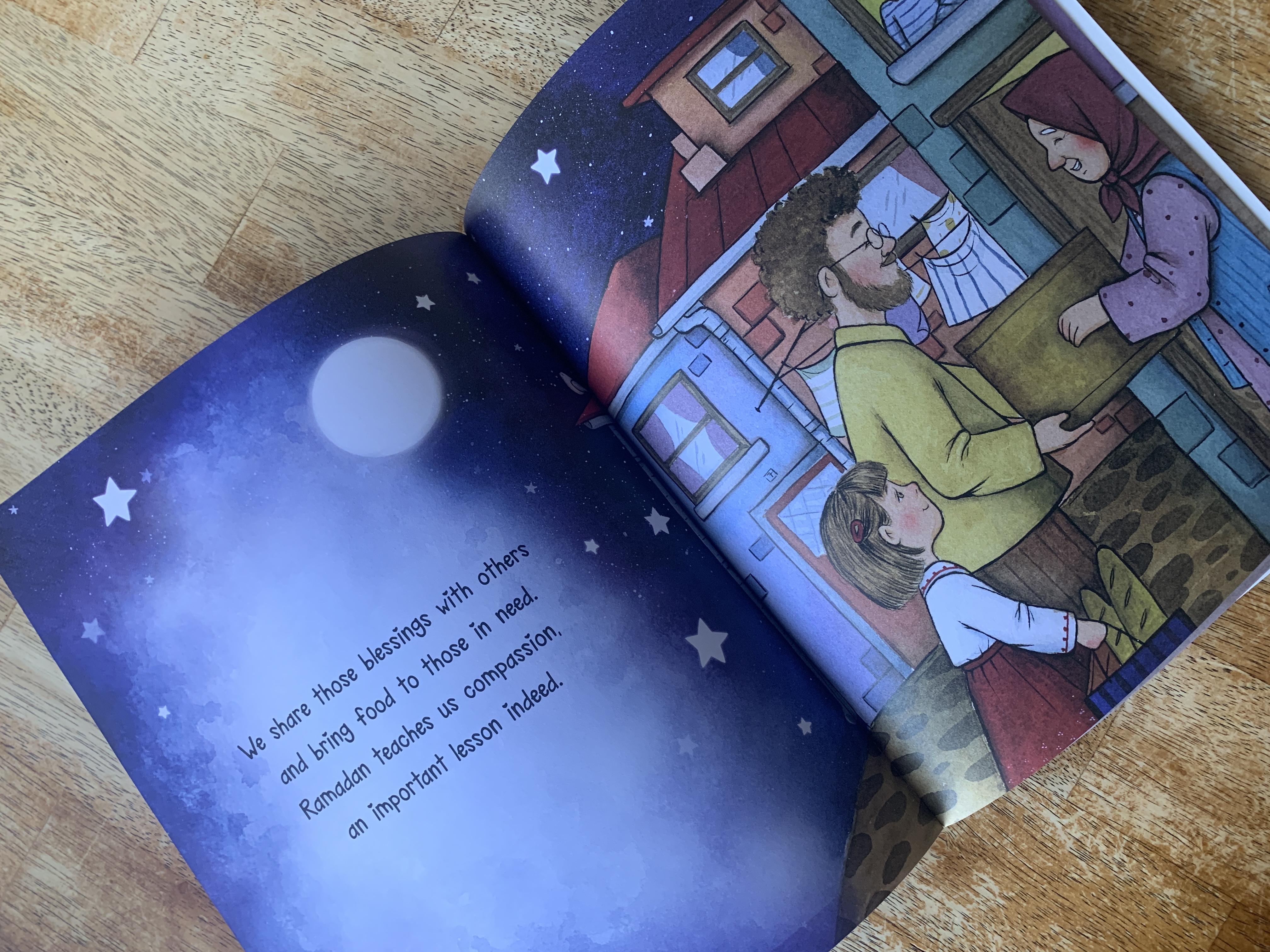
This rhyming softcover picture book sets the tone of the month with its large heartfelt images on cardstock thick pages.  The book mentions tarawih, reading Quran, suhoor, iftar, compassion, Laylatul Qadr, eid, but does so in a way that reflects what Muslim kids know and love about the month.  It is not overly descriptive, nor does it define the terms. It shows Muslim kids in Ramadan living their lives and draws out the emotional joy felt in acts of ibadah, not in the gifts and parties alone.  The rhyme works and isn’t terribly forced and the 8.5 by 11 size and the introductory framing of major Ramadan activities makes the book a good addition for toddlers and up. I plan to use this for a masjid story time for Muslim kids ages 4-9, but it can be used in non Muslim settings easily as well.

img_6770

The book starts out with decorating the home for Ramadan, as the city decorates outside too.  Ramadan has arrived, the moon has been seen with binoculars, and Tarawih at the mosque is where everyone is praying, and kids are playing.  Mornings start with the Ramadan drummer waking people up for suhoor, but mom is already up cooking.  The first few days of fasting are hard waiting for iftar, implying it gets easier.

img_6771

The kids and their parents make duas and thank Allah for their blessings as well as share their blessings with neighbors as they learn compassion.  The kids practice reading Qur’an every day with Grandma and before you know it, it is the last ten nights and Laylatul Qadr and then eid, alhumdulillah.  The 32 page book ends with prayers of gratitude and hope that Ramadan will be seen again.

img_6773

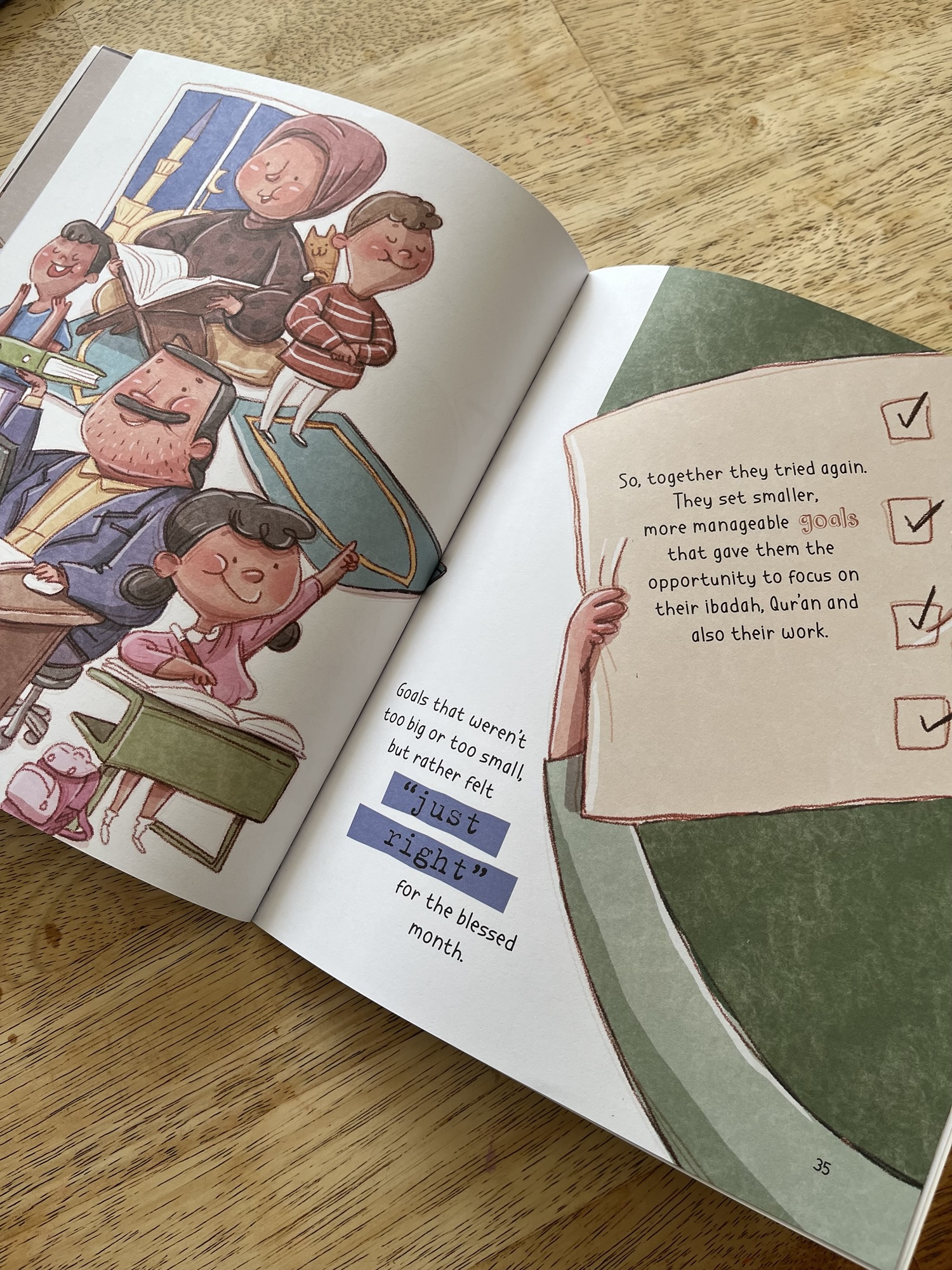
The book really is well done, there is no plot or story, but it introduces the month to little ones, reminds older ones what to expect and does so with accuracy and mirroring.  The book will lend itself to spark discussions about what a readers’ family can look forward to in the month, how one should behave in a masjid, perhaps some Quran goals and some appreciation for parents.  The poor mom helps decorate, stays up early to cook suhoor, cooks yummy iftar, and lays out Eid clothes all while wearing hijab.  InshaAllah a point to mention when reading how amazing moms (and dads) are in making Ramadan memories while fasting themselves.

img_6772

I purchased mine from https://crescentmoonstore.com/ if you use my initials at checkout ISL (Islamic School Librarian) you can save 10% or click this link directly to go to the book.

Ramadan Mubarak!

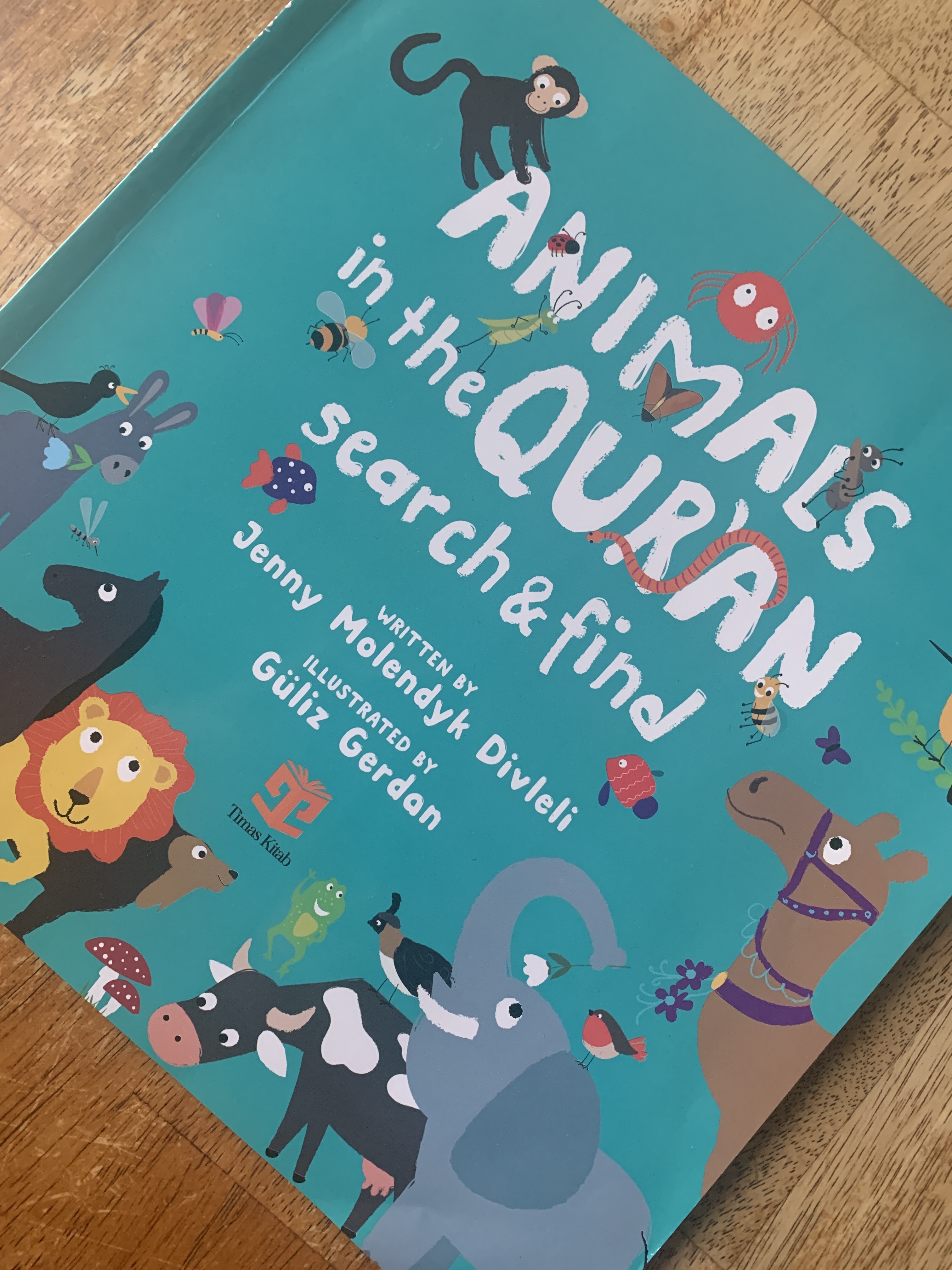
Animals in the Qur’an Search & Find by Jenny Molendyk Divleli illustrated by Guliz Gerdan

Standard
Animals in the Qur’an Search & Find by Jenny Molendyk Divleli illustrated by Guliz Gerdan

img_6282

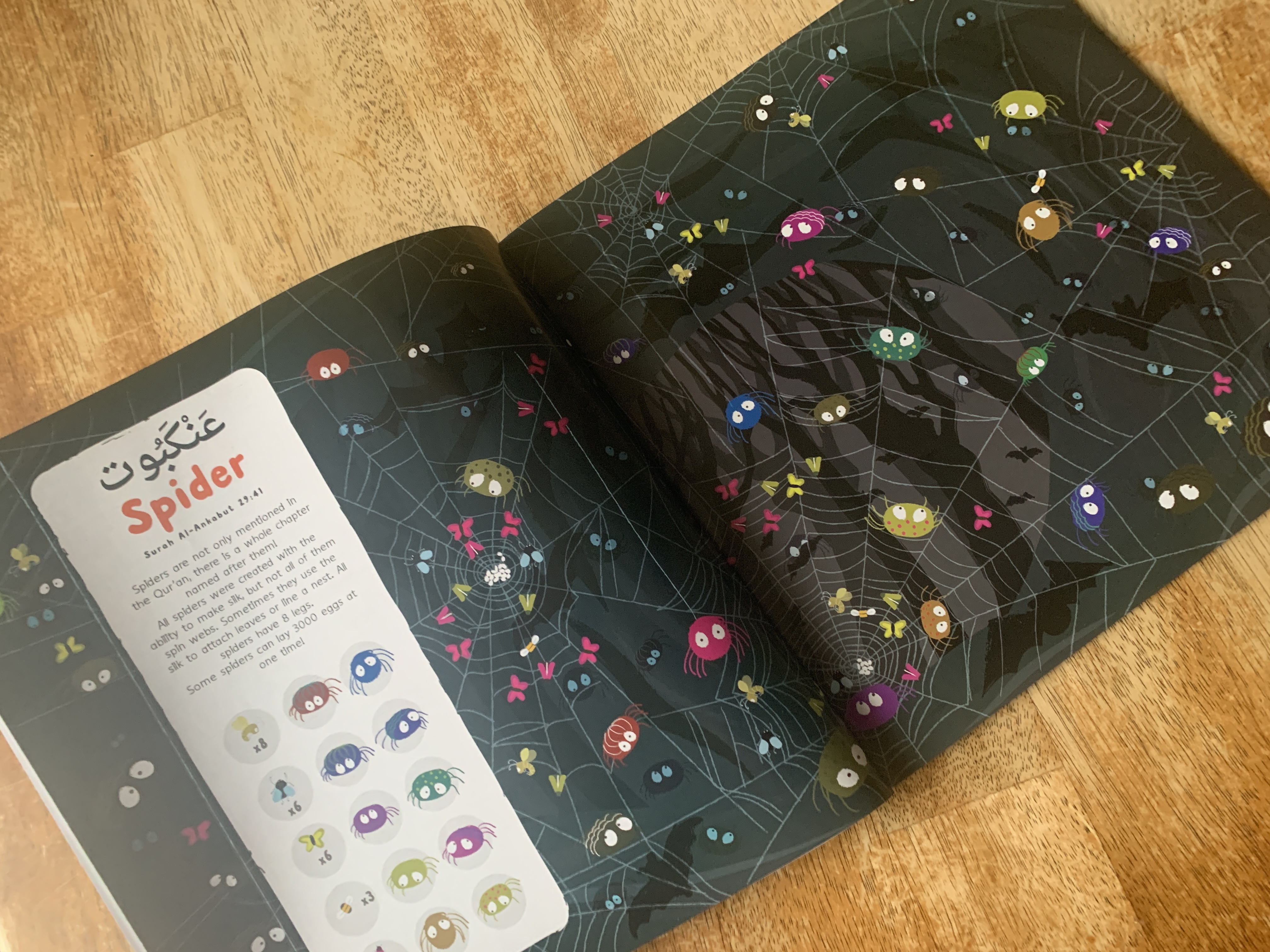
This book is targeted to preschoolers, but with the minor details the book sends readers looking for, I think children up to third grade will enjoy the mix of fun and learning that this book offers.  The book uses animals in the Qur’an as the theme for each two page spread, tells what surah the animal is mentioned in, and some Islamic context, as well as some basic facts about the animal.  Over 45 pages kids will learn about bees and snakes, donkeys and wolves, and dive in to the challenge of finding a spider with spots looking to the left or a fish with strips swimming to the right.  My three year old can not differentiate between some of the more specific markings of this cow or that, but he still loves the illustrations and benefits from the brief factual text. This book is a great addition to school, masjid, and home libraries with its Islamic foundation, beautiful large execution, and wide audience appeal.

The book starts with the Arabic ayat of verse 45 in Surah Nur and the English meaning of the translation.  It then establishes the format of the book, and then lists the 20 animals featured, where they are found in the Qur’an and on what page number, in the table of contents.

Each page offers the animals and some nature elements to be found on the large 10 x 10 pages.  The pictures are playful and colorful with the print quality glossy and a sturdy thickness.

img_6287

I enjoy the book and think most families with young elementary aged children will as well.  You can purchase a copy here from Crescent Moon Store and if you use my initials “ISL” at checkout, you will save 10%

What Colour is your Mosque? By Jenny Molendyk Divleli illustrated by Aybüke B. Mumcu, Damla Koçak,  Fatma Betül Akbal, Gökhan Özdemir, Gülşah Irmak, Hümeyra Yorgancı, M. Ahmet Demir, Menekşe Özdemir, Özlem Güneş, Şüheda Başer Yılgör, Zeynep Alptekin, Zeynep Begüm Şen  

Standard
What Colour is your Mosque? By Jenny Molendyk Divleli illustrated by Aybüke B. Mumcu, Damla Koçak,  Fatma Betül Akbal, Gökhan Özdemir, Gülşah Irmak, Hümeyra Yorgancı, M. Ahmet Demir, Menekşe Özdemir, Özlem Güneş, Şüheda Başer Yılgör, Zeynep Alptekin, Zeynep Begüm Şen  

img_5113

Sometimes the idea and presentation of a book make it stand out even if the writing is a bit bland and erroneous.  This book with bright colorful illustrations from 12 different illustrators highlighting the bold colors and designs of 12 masjids around the world is one such book for me.  I think young children will delight in seeing such beautiful masjids and appreciate that Muslims are found all over the world.  Adults and older children will also learn about mosques I’m sure they had never heard of before.  I kind of wish the book was a board book for little hands learning colors to enjoy, but the 8.5 x 8.5 style does suffice for story time and bedtime. 

img_5117

The book starts with an introduction to the author, Jenny and her sharing her favorite mosque in Turkey, Hagia Sophia. Each two page spread after that is a child introducing themselves, telling where they are from, and sharing their favorite mosque in their home country.  From Sri Lanka’s Jami Ul Alfar that looks like candy to the purple lights of Mohammed Al Ameen Mosque in Oman.  Some masjids stand out for their colors, others for their 99 domes, and some look like castles or are built out of mud.

img_5115

The illustrations reflect the beautiful buildings and radiate with joy from the smiling children introducing them.  I think the text is translated from Turkish to English which might account for some of the errors, but spelling Kabbah with two b’s doesn’t seem right in any language. 

img_5116

Despite it all, I’m happy with the book, I think we need to make a more intentional point to instill a sense of global community in our children and celebrate the beauty that our architecture and culture can result in for the worship of Allah swt.

The book is available from here from Crescent Moon Store.

img_5114