Tag Archives: egyptian

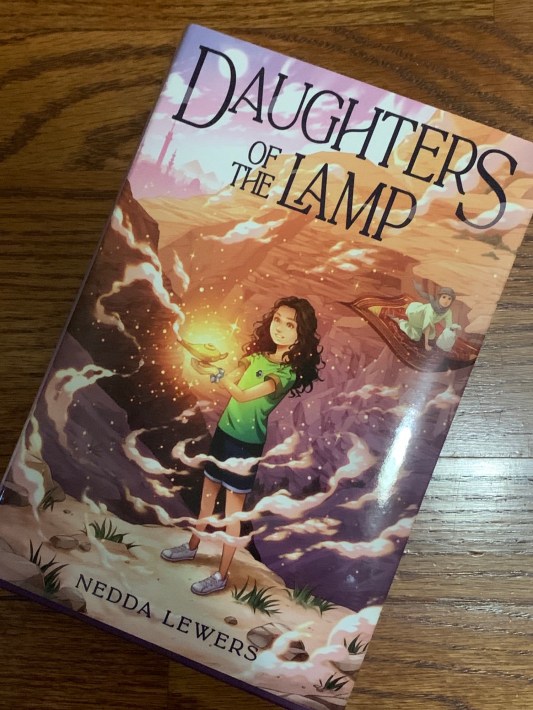
Daughters of the Lamp by Nedda Lewers

Standard
Daughters of the Lamp by Nedda Lewers

img_2600-1

This 352 page middle grade fantasy grounded in Egypt and America didn’t initially impress me.  In fact the first few chapters felt a little forced, the voice a little off, and the threads of Islam were making me a little bit nervous, but I was advised to keep reading by a trusted friend (@muslimmommyblog), and so I did.  And I really don’t know when it happened, perhaps when Sahara finally got to Egypt, but truly the slow quiet book won me over.  It has a lot of heart and I found myself throughout the day thinking about the story, trying to sneak a few minutes here and there to read just a little bit more, and staying up past my bedtime to finish.  That isn’t to say the book is perfect, but it is a solid read despite some plot holes, and a 12-year-old protagonist who seems to not really practice Islam even though her dad and family do. If you do not feel that Islam allows for fantasy books with magic, then steer clear of this.  If you are fine with it or on the fence, know that the book quite often articulates that Allah swt is always the creator in charge of everything, but there are magical elements, fortunes told, and evil deception.  I’ve never seen anyone read tea leaves or coffee grounds, let alone believe in them, if it is something that culturally you have seen and find reflect sihr, know that it is present in the story, but it absolutely clarifies, that Allah swt is the one who controls the future.  I don’t think any reader of any age would think this story is or could be real.  I would be comfortable with middle graders reading this book.  It is long, and a bit dense for early middle graders, but it is clean, and really centers family, being a good friend, and working together to save the day.

SYNOPSIS:

Sahara Rashid is tired of being teased as being the only kid who hasn’t gone to Merlin’s Crossing, when 6th grade comes to an end, she is hoping the surprise her dad has for her is a trip to the amusement park.  Instead they are going to Egypt, her first trip there ever.  Her maternal uncle is unexpectedly getting married and her dad and her haven’t been back since her mother died giving birth to Sahara.  Shocked by the news and desperately disappointed, Sahara goes to bed and dreams of her mother. When she awakes, her aunt, her father’s sister and mom’s friend, has a necklace for her and a message that matches her dream.  Interspersed with Sahara’s story is Morgana’s.  A girl long ago who is a servant to a mawlay, Ali Baba, who has been tasked to guard treasures: lamps, apples, flying carpets, and the like.

When Sahara gets to Egypt her adventures begin, she meets her cousins, Fanta and Naima, and Sittu, her grandma, who she has always feared blames her for her mother’s death, but finds instead a loving matriarch who welcomes her wholeheartedly.  She also meets the bride-to-be a woman named Magda, a woman the cousins call, El Ghoula, the witch.  When someone tries to break into the family’s grocery store, Sahara’s necklace goes missing, and El Ghoula starts to act suspicious, Sahara and Naima formulate a plan that backfires tremendously and will test their trust, determination, and ability to save the day.

WHY I LIKE IT:
I love that Islam is woven in, but I truly do not understand how Sahara’s dad prays five times a day, her aunt in the USA who lives with them prays, but not regularly, but Sahara doesn’t pray.  Her mom wore hijab, but she doesn’t know much about hijab, yet is incredible self-conscious that she doesn’t wear it, while simultaneously being comfortable in shorts.  She also questions her dad why she needs to cover her head in front of the imam, and she brings it up a lot with her cousin Naima, who does cover.  It feels like it comes from a place of love and respect, and probably real conversations, but it seems stilted and vague which I feel like some sensitivity reading perhaps would have helped with.

The beginning of the book really sounds outdated, but I’m not sure why.  It reads like an older person trying to write a young protagonist contemporary voice and it doesn’t work, it is even cringey at times.  Once the action picks up, the voice and tone and pacing is fine, but truly the first few chapters of Sahara are cumbersome.  I do not understand why Sahara is constantly homesick.  She is on vacation and is not going to be in Egypt for two weeks, and the regular insertion that she is missing home and counting down days, is very odd.  If she was suddenly living there, or staying months, perhaps it would make sense, but truly it initially really makes liking Sahara yet another obstacle in the early chapters, that has to be overcome.  By the end, she is very likeable, but those early chapters don’t connect her to the reader which is unfortunate.

The story and action are fun, the relationship building with the family is very tender and sweet.  Her helping her cousin in a street dance battle and feeling the love from her grandma are cathartic and memorable.  Plot wise there are some holes, like how did all the sleeping victims get home, where is the dad’s family, why didn’t the mom know the family secret, why did the family let Sahara’s mom leave, how did Sahara’s mom and her paternal aunt know each other, and why doesn’t Sahara pray and why hasn’t she ever heard the fajr athan before?

FLAGS:
Magic, lying, music, dancing, evil, plotting, scheming, killing, murder, dying, theft, poisoning, attempted kidnapping, slander.

TOOLS FOR LEADING THE DISCUSSION:

This would be a fun book to read aloud in a classroom setting during lunch when it is too cold to go outside.  I think it would be fun for an upper elementary book club as well.  I think kids will reach for it, and with a recommendation will get through the first few chapters to be swept away on a magic carpet,  enjoying the story.

The Jasad Heir by Sara Hashem

Standard
The Jasad Heir by Sara Hashem

jasad

When I requested this book, I really thought it was YA, when I saw it was 528 pages I went online to see what I missed, and sure enough it is considered an “Adult Fantasy” and in the process I read some of the (negative) reviews about the book.  I grew nervous as I’m not naturally a fantasy fan, mg fantasy is more my level, with occasional YA entrapping me.  I told myself 25% is the least I could do, and if it wasn’t clicking, I’d know I gave it a genuine shot.  By about 21% I couldn’t put it down.  I think not expecting the complexities of an adult book was a benefit.  The book has no Islam, it contains Egyptian cultural references, but religion is not present, and thankfully that means no djinn either (they seem over represented these days).  The protagonist is in her early twenties, it has an enemies to lovers trope, and magic is central to the storyline, but aside from frequent unremorseful murder and torture, an intimate make-out scene at the end, and some drinking of ale, the book is fairly clean. I feel like there might have been some plot holes, but I honestly was so swept up in the story and proud of myself for understanding the world building and politicking, that I am just going to assume I missed something or it will be addressed in the next book of the series.  The author is Muslim and while it is labeled Adult, I think high school juniors and seniors and up, can and will, love Sylvia and Arin and sorting through the lies and deception to see the Jasadi heir rise.

SYNOPSIS:

The book follows Sylvia a young woman apprenticing with the village chemist, living in a keep (aka orphanage) and hiding her magic, or rather hiding that she is Jasadi, her magic is useless with the invisible handcuffs placed on her as a child before the kingdom burned in the Blood Summit.  She is unkind, harsh, and selfish, but somehow a few other orphans have not been scared off and on her birthday she is forced to acknowledge that people in her life might care about her.  There are four kingdoms that remain (Lukub, Omal, Orban, and Nizahl) and every three years they participate in the Alcalah, a battle to pay honor to the founding siblings who were entombed to cease their magic from destroying others and going mad.  The tradition makes no sense as the champions often end up dead (think Hunger Games), and the people acknowledge it, but none-the-less, they all get caught up in the excitement and entertainment.  Since the destruction of Jasad, the magic kingdom, magic everywhere has been outlawed.  Originally all people had magic, but it was lost over time.  Sylvia is the heir of the Jasad kingdom, and with no magic and no sense of obligation to Jasadis that have scattered, she carries on hoping to one day take over for the aging chemist.  When the son of the Supreme responsible for the death of her loved ones and all of Jasad crosses her path, deals will be made, a champion will be crowned and love will felt. Sylvia will also have to reexamine people from her past, her selective memories, and decide what type of future she wants to fight for.

WHY I LIKE IT:

Phew, even writing that lame summary was challenging, the book weaves a lot together and I loved the politics and world building, but clearly don’t feel confident enough to discuss it.  I think the slow burn romance was a little obvious, but I also think the author knew it would be obvious and rather than try and disguise it, she embraced it, and provided actual obstacles in their coming together (they cannot touch), not just that they want to kill each other.  I am assuming that the physical copy (I read an electronic arc), will have a map and perhaps a list of the kingdoms and characters.  It wasn’t hard to keep it all straight, but it will definitely add to the overall packaging.

I would have liked a little more explanation at points, even if it is my own weakness requiring it, but I didn’t understand the magic mining, the handcuffs, and would have liked a little more back story on the warring magic factions, their splintering timeline, and Soraya’s fallout.  I also would have liked more about Sylvia’s parents relationship and how that union came to be across two kingdoms.  Honestly I didn’t even quite get Sefa and Marek’s relationship.  I probably needed to slow down and read, but I couldn’t it was action packed, fast paced, and I needed to know what was coming next.  The climax was a little weak and the book ended on a cliff hanger as a book two is already forthcoming, but the fact that I read it and enjoyed it, speaks volumes as to the characters, story quality, writing, and approachability of the book.

FLAGS:

Mention of rape, whores, sexual assault, sex, a character is asked if a character’s needs are met by a man or a woman, an intimate male/female passionate scene at the end, using physical flirting as a distraction, theft, killing, lying, torture, murder, poisoning, breaking of a back, stabbing, it is an adult fantasy, there is all sorts of deviant behavior, but I really think 17 and up even in an Islamic school can handle it.

TOOLS TO LEAD THE DISCUSSION:

The backmatter and author reference the book to Egypt, yet aside from the names and some foods and clothing, there isn’t a lot that a casual reader would catch.  I think discussion about the Arab Spring and linking the plot to real politics could make for a fun discussion in a high school book club setting.  There is some Arabic sprinkled in that I would assume is accurate and would enjoy having translated by students as well.

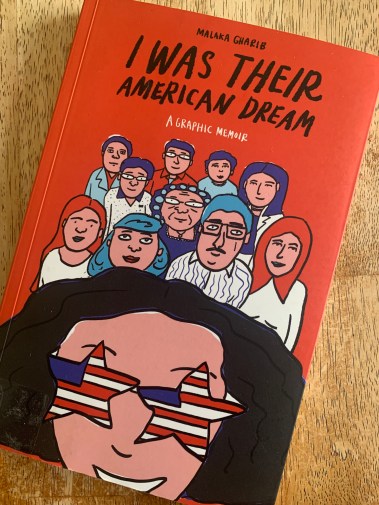
I Was Their American Dream: A Graphic Memoir by Malaka Gharib

Standard
I Was Their American Dream: A Graphic Memoir by Malaka Gharib

img_7800

I was hesitant to read the book, afraid it would pit the author’s two cultures (Egyptian and Filipino) and faiths (Catholic and Muslim) that her parents identified with against each other.  Raised as the daughter of immigrants from very different backgrounds in California I was very pleasantly surprised that the book leads with heart and positivity for the unique, yet universal feelings she experienced in her life.  The short 156 page red, white, and blue filled pages are funny, poignant, and reflective, that I think high school readers and up will enjoy spending time in Cerritos and Egypt through the eyes of Malaka.  It is easy to say that you can’t be Muslim and Catholic, but she doesn’t opine on the right or wrong of it in large terms, she discusses her life and her own situation.  As a teacher I would see students that would attend Islamic school five days a week and then go to church on Sundays, whether you agree with the choices this author/character makes is not what I intend to review, it is her life, but rather the manner in which it is shared.  There are many kids out there from “conflicting” backgrounds, and to see someone take the love and benefits offered to forge their own path in creating their own American dream, was a nice twist on the immigrant identity finding narrative.

SYNOPSIS:

The book starts with introductions to the characters, her family members that influence her, and then begins the tales of what brought her Filipino mother and Egyptian father to America, how they met, married, started a family, and divorced. Malaka exists outside her family in school, balancing her heritage and coming of age.  Raised during the school year by her mother and extended Filipino family, she spends summers in Egypt where her father resides with his new wife and children.  Coming of age as an immigrant, balancing cultures, religions, school, and dreams, the book concludes with her marrying a white Southerner and adding to the mix.

WHY I LIKE IT:

Even though she identifies more as Filipino American and goes to Catholic school, there is a fair amount of Islam and Egyptian culture included in the book.  I love that she loves her step mom and step siblings and finds beauty in Islam, learns to pray, read Quran, and mentions her love of Prophet Muhammad saw.  Sure as an Islamic school librarian, I wish she chose Islam, lived it and centered it in her life, but this is not a character, this is a real person, and to see her lovingly showing the goodness in Islam and how it has positively influenced her, is nice to see nonetheless.  There are a few storylines I didn’t quite understand, the skateboarding in Egypt a big one, but the quick pace of her narrative life-story flows well and is easily consumable.  Often stories like this are overly dragged down by dated pop cultural references and over criticizing “othering” paradigms, but this book contains enough to keep it grounded without it alienating contemporary readers.

FLAGS:

Stereotypes, lying, relationships, periods, music, dancing, nothing really stands out, there might have been some language, I read it a few days ago and honestly don’t recall anything overly problematic, but content wise it is a mature teenage read with retrospection and marriage being a part of the narrative.

TOOLS FOR LEADING THE DISCUSSION:
I don’t know that I would shelve or teach this book, but I think it is one to file away in my head for people I might encounter looking for a book about blended faiths and cultures benefitting from the many worlds they have one foot in and one foot out of, and those ultimately looking for a place to see their experiences mirrored.

I found my copy of this book at my local public library and it is also available here from Amazon.

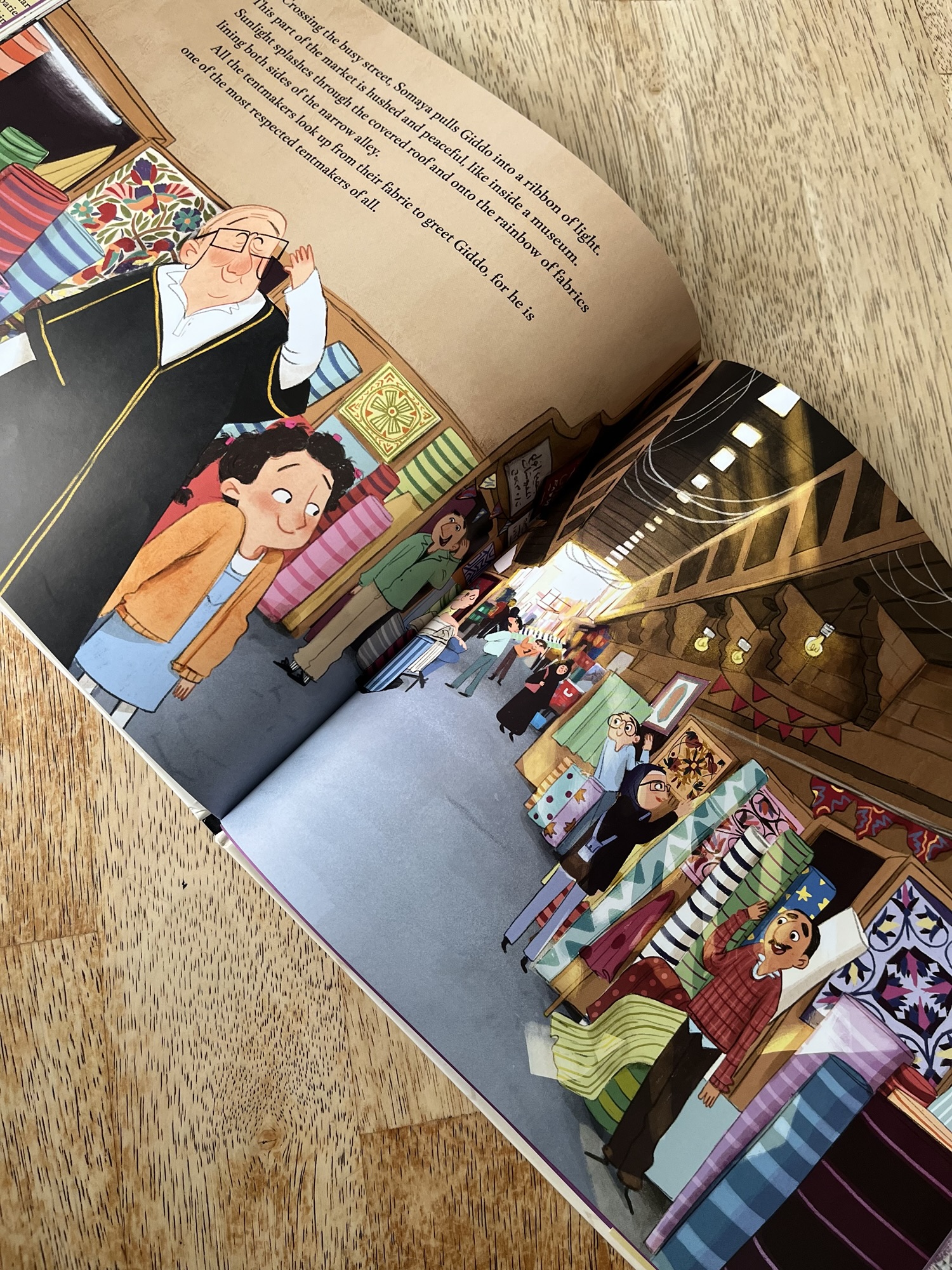
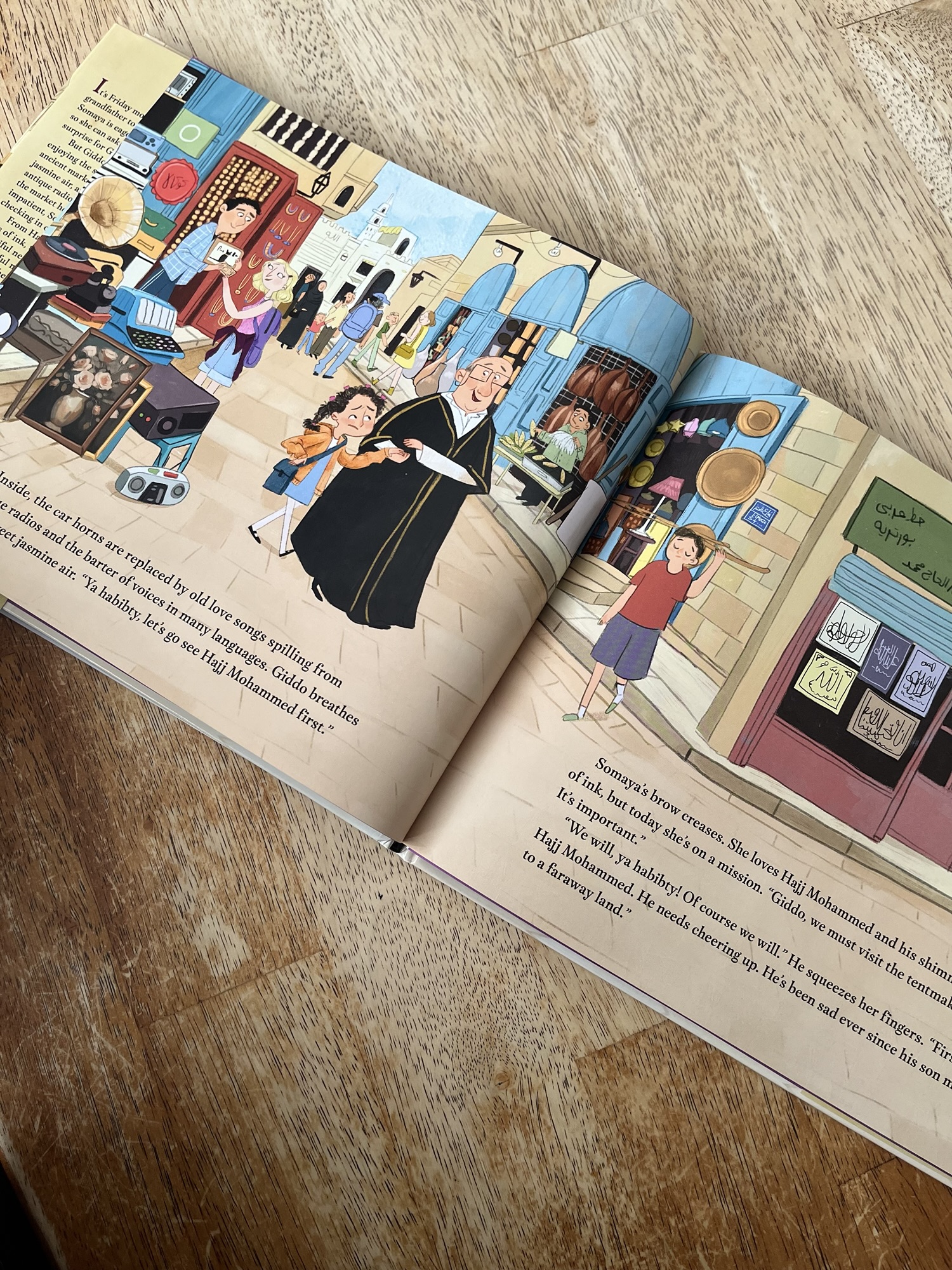
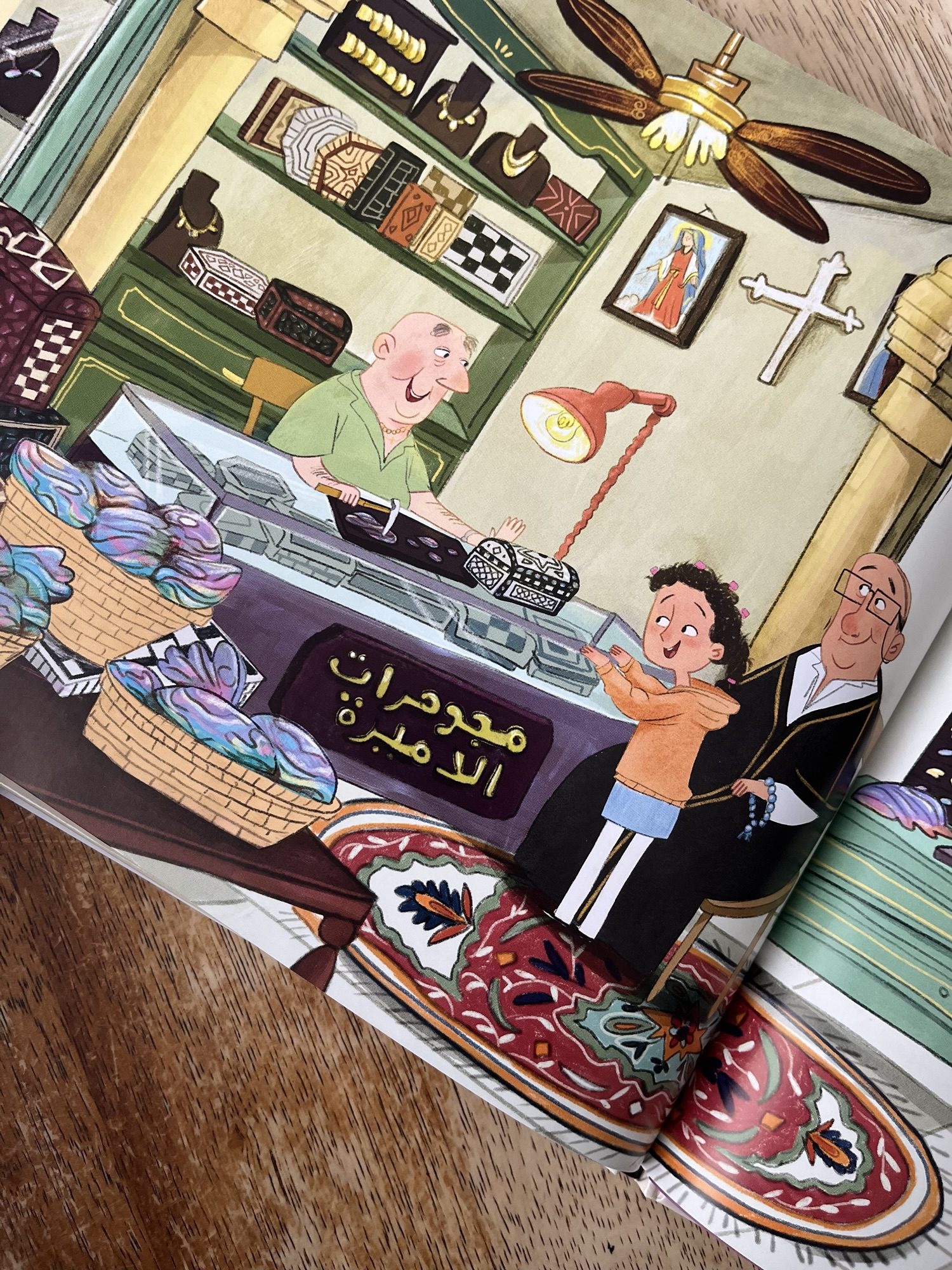
The Night Before Eid: A Muslim Family Story by Aya Khalil illustrated by Rashin Kheiriyeh

Standard
The Night Before Eid: A Muslim Family Story by Aya Khalil illustrated by Rashin Kheiriyeh

img_7123

This 40 page early elementary picture book is set the night before Eid and radiates with love from a boy to his Teita, traditional ka’ak, and the family’s Egyptian culture.  The robust and personal backmatter shares a glimpse into the threads from the author’s real life that the story touches upon, and makes the book extend beyond the pages.  It is worth noting that this book does not articulate if it is for Eid al Fitr or Eid al Adha and thus works for both.   There is nothing religious in the book except a reference to something happening after Eid prayer in a memory, and the shape of the cookie being round like the Ramadan moon, Eid day is not mentioned, it is simply the catalyst for this warm family story about a boy and his grandma making a special treat for the first time and sharing it at school.  The large hardback book with fun illustrations is ideal for both story time and bedtime readings alike.

img_7124

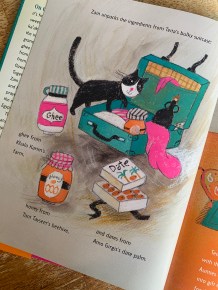
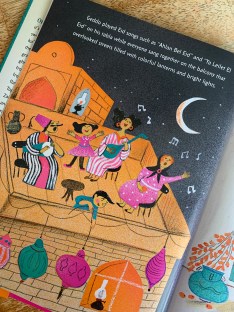
It is the night before Eid and Teita has arrived from Egypt.  Zain can’t wait to make ka’ak to take to school and share with his friends.  The beloved powdered sugar cookies are steeped in tradition, both in Zain’s family and in Egyptian history.  Once the suitcases is unpacked and the special ingredients found, Teita and Mama share memories of baking with cousins, painting henna designs on hands and putting eidiya in envelopes.  The family recalls singing together on the balcony while Geddo played the tabla and lights and lanterns filled the streets below, after Eid prayer they would hand out the ka’ak.

img_7125

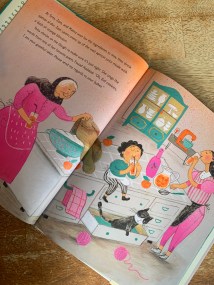
Zain wants the ka’ak to turn out perfectly so his teacher and friends will like them.  Teita tells him that ka’ak is as old as the ancient pharaohs, and that recipes were found in the pyramids.  At one time rulers would even put gold coins in the cookies.  Zain and his Teita mix and add the required ingredients, and drink iced apricot juice as they wait for the dough to be just right.  Getting the cookies pressed with the molds though is harder than it looks, and Zain gets frustrated. Teita’s love and patience and Zain’s clever thinking get the treat making back on track.  The ka’ak doesn’t have a gold coin filling, but they are filled with tradition.

img_7126

The timeline is a bit off for me with the grandma coming before Eid and then the cookies going to school on Monday, and then Monday evening when Zain is writing down the recipe with Teita he is telling her Eid Mubarak and that it is the best Eid ever.  So, it seems that he went to school on Eid, not to Eid prayers, which is fine, just a little sad that there was no Eid celebration or prayers.  I don’t know that kids will be bothered by it, but the lack of mirroring and stressing how joyous Eid is does somehow get lost and mitigated, in my opinion, by skipping acknowledgement of the religious holiday.   In the backmatter the author remarks that she has “outgrown the magic of Eid,” so perhaps it is intentional that the day is not included in the text.

img_7127

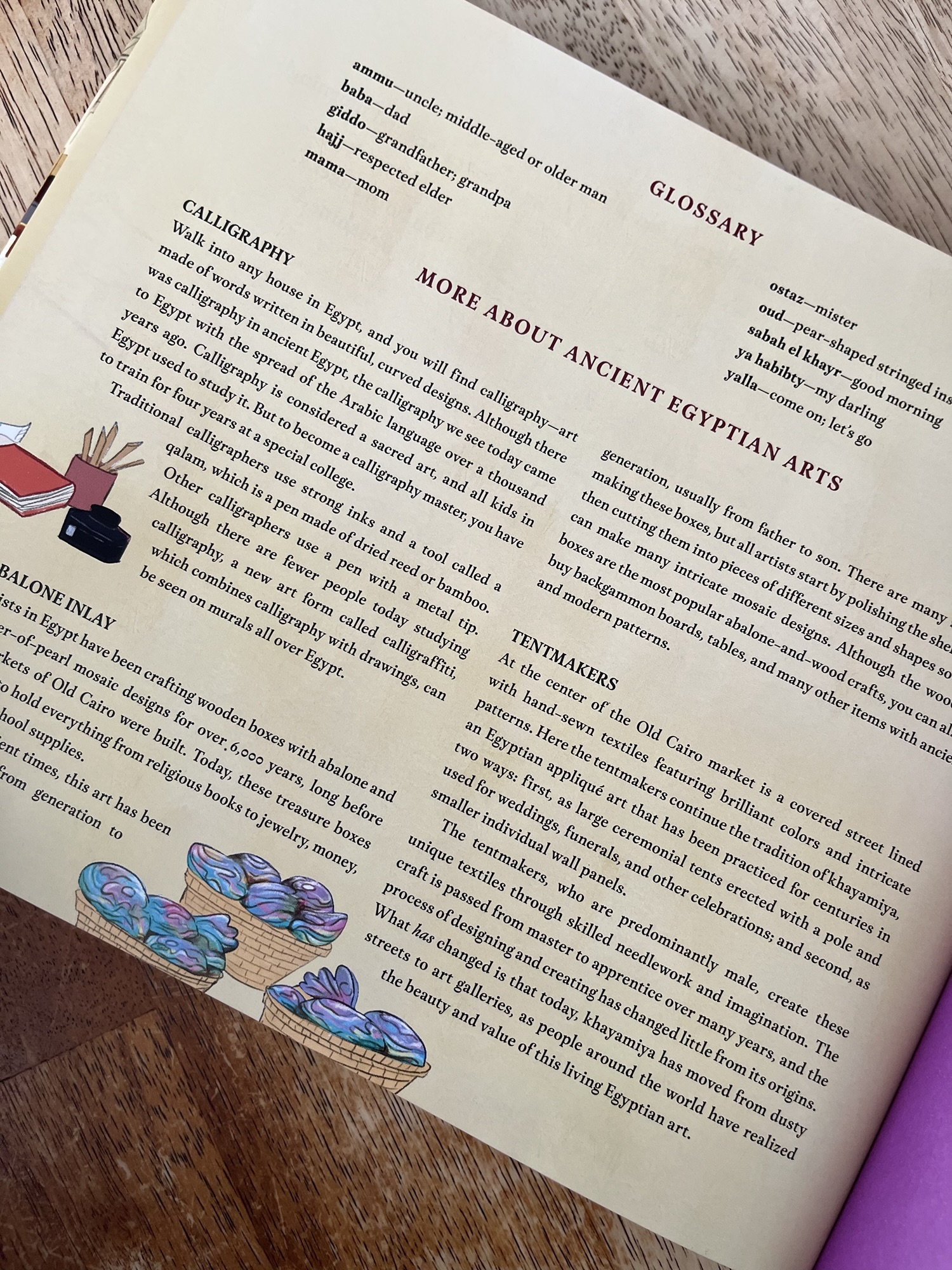
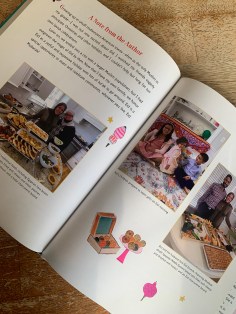
The last six pages of the book are filled with informative and engaging information about What is Eid, Ka’ak Time Line, A Note from the Author with photographs of her and her family celebrating Eid, a Simple Ka’ak Recipe and Additional Resources.

I purchased my copy from Crescent Moon Store where if you put my initials ISL (Islamic School Librarian) in at checkout you will save 10% or is available here on Amazon where the book currently has a coupon for $3.80 off.