Tag Archives: Adult

The Matchmaker by Aisha Saeed

Standard
The Matchmaker by Aisha Saeed

There is no Islam, save being told a wedding took place in a mosque, in this 320 page adult book by a Muslim author.  The thriller, mystery, romance, is fairly clean, save some drugs, killings, kissing, and normalized dating, yet I would probably be fine with mature teens reading it, if so inclined.  By the end, I enjoyed the book, but it took me three attempts to get past the 30% mark as the opening was painful with its numerous characters being name dropped, the setting being established, and getting the characters into position.  But then slowly the exposition gave way to story telling and intrigue, and the second half was a decent read.  Honestly, my biggest problem with the book is that I just didn’t like the main character, or any of the characters really, and I don’t know why.  They didn’t have some clear flaw or annoying habits, they just felt distant and bland, which resulted in the plot carrying the book, and me not really caring if the protagonist was killed or harmed, I know- harsh.  I cannot deny though, that what kept me reading was to see who was behind it all and I did figure it out, but continued on just the same to be sure, and that is a testament to the author’s writing skill, even if it took a minute for the pacing, plot, twists and climax to pull me in.

SYNOPSIS:
Nura Khan runs an elite matchmaking service in Atlanta, from hands on to a dating app, her and her team match people of all backgrounds and faiths.  She herself has a long time friend who acts as a fiancé for image purposes, and a recently retired aunt who’s bad days have meant family dynamics have changed.  As a third generation matchmaker, Nura is in charge and knows what she is doing, until suddenly her image, her reputation, and her matches start faltering.  Not confined to just heartbreak, there is also stalking, threatening notes, kidnappings, and attempted murder, which suddenly thrust Nura into a world she is ill prepared for, and one that seems to put her in the crosshairs of someone determined to see her demise.

WHY I LIKE IT:

It wasn’t a heavy thriller or heavy romance, it was an easy read that didn’t “other” desi culture and I found that refreshing. That being said, I always wish her books had Islam in them.  I also liked that the climax and second half honestly didn’t feel overly forced, I’m not a writer so take it with a grain of salt that I complain that the beginning was dry and too much telling, but then the second half flew by and loose ends were more or less tied up in a satisfactory way. I’m aware that the second half was a result of what was a established in the first part, but none-the-less I hope future books will make the two halves less cumbersome and inconsistent. I also really hope future books will have more character appeal.  There was a lot of potential to care deeply about the main characters, from the aunt, to the best friend, to Nura herself, but they lacked spark, and sadly just felt like vehicles for a plot that wasn’t dependent on them, their experiences, their flaws, and their personalities.

FLAGS:

Dating and relationships of all faiths, persuasions and labels, kissing, attempted murder, killing, plotting, lying, scheming, kidnapping, drugging, physical abuse, assault, deception.

TOOLS FOR LEADING THE DISCUSSION:

With no Islam I wouldn’t do this as a high school book club, but amongst friends it would be a fun group read.

Yours, Eventually by Nura Maznavi

Standard
Yours, Eventually by Nura Maznavi

It has been a while since I’ve read Austen’s Persuasion, and I should probably remedy that, but alas, here I am reviewing another adult, Desi-fied, Muslim tinged retelling, and am embarrassed to admit I was absorbed and invested, as if I had no idea how it would play out. Sure there were author liberties, but the heart of the story hits the same beats (that I recall) and works so well when adapted for our faith and culture. It isn’t halal halal, nor is it Muslim focused, the culture and cultural expectations are definitely more centered for the Pakistani American Muslim cast. The characters are all Muslim, a few wear hijab, they abstain from alcohol, date with intent to marry, attend Bismillahs, but they aren’t shown praying, or viewing life through an Islamic lens, or Muslim conscience. There are a few kisses and hand holds, and male/female close friendships, but for an adult read, the Muslim authored 400 page novel is pretty notably clean.

SYNOPSIS:
Asma is in her final year of Emergency Medicine residency and the pressure to get married is ever mounting. With her father making poor financial choices, he and Asma’s oldest sister Iman, are moving out of their Palo Alto mansion and heading back to Sacramento. Culture won’t let Asma live alone, so she is forced to crash on an air mattress at her youngest sister, Maryam’s house in the room of her three year old twin nephews. Asma feels it is her responsibility to take care of everyone since her mother passed away, but with the family splitting up, she has to decide for once, what she wants. Eight years ago she did what she was told and broke off her engagement with Farook. Unfortunately, she has regretted it every day since and never moved on. When of all people, Farook’s sister moves into Asma’s old house, a chance encounter brings the two face to face. When Farook starts courting Maryam’s sister in law, things get particularly tense. Throw in a dozen or more side characters, amp up the drama, and settle in to see how it all unfolds.

WHY I LIKE IT:

If my recollection of the original source material holds, it takes a while to get all the characters in their desired place and position for the story to sweep the reader away, and this version does the same. At times I worried that threads and characters were being overlooked, but by the end, most everything felt resolved. I did feel Fatima’s story was underdeveloped and showed Asma as being a bit of a bad friend, and there is no way three year olds would recognize someone from a picture taken 8 years earlier, but I know, romance books require some suspension of reality to work. The premise of the plot is even a bit shaky, but once you are rooting for the characters you aren’t too worried about why they need a second chance. For the most part the writing is fairly smooth, a fair amount of characters the author managed to keep annoying, but not completely unredeemable, and I appreciated the restraint. The pacing at times was a little sluggish, with a lot of characters that the reader needed to connect with resulting in telling and not showing, so I was a bit disappointed that end felt rushed. I wanted to bask in the resolution of all that angst, longing looks, and obstacles being overcome.

There is quite a bit of commentary about pushing back on stereotypes, expectations, and cultural weight. There are aunties doing the match making and gossiping, and plenty of folks chasing wealth above all else, it doesn’t weigh down the storyline, but it at times does get a bit repetitive and shallow.

FLAGS:

Romance, kissing, hugging, holding hands, lying, death, pyramid scheme, alcohol, consumerism,

TOOLS FOR LEADING THE DISCUSSION:
I might let this be in a school library, it is clearly adult with the characters nearly 30 years old, but high school romance lovers will enjoy this, and it isn’t overly mature for ages 16 and up.

Hidden Fires by Sairish Hussain

Standard
Hidden Fires by Sairish Hussain

I will not be getting over this book any time soon. It broke my heart, and all my other critical organs, in the most delightfully well-done way possible, and undoubtedly I am better for it. I don’t read a lot of adult fiction these days, and with some diabetic retinopathy concerns, I couldn’t read the 384 page adult book about generational trauma, partition, the Grenfell Tower fire, family dynamics, bullying, self-harm, and resilience, but was pulled in to the audio book version instead. The Desi-British voices of Yusuf, Rubi, and Hassan were refreshing to my American ears.  The multi-perspective book told in parts richly develops the characters, their relationships, and their current, past, and future struggles.  The author is Muslim, as are the characters, and while they all practice in their own way, it is undoubtedly who they are, and their Islamic identity is not questioned, feared, blamed, or apologized for.

SYNOPSIS:
The book weaves three distinct voices. Yusuf, is an 80 year old an immigrant who lived through partition, raised his family in the UK, has lost his wife a year prior, and is struggling with haunting memories of the past, failing health, regular loss of friends, and loneliness.  Hassan, Yusuf’s youngest son is a workaholic who is married to a non Muslim, non Desi who is suffering from fibromyalgia and who’s mother unexpectedly passes away in Spain.  Rubi, is Hassan’s 16 year old girl who is overweight, bullied, lonely and about to take her GCSE exams when she is dumped on her grandfather Yusuf’s door while her parents head to Spain.  The book opens in Ramadan the night of the Grenfell Tower fire and the horrific event affects them all, stirs memories, and shapes futures.  From there the layers of each character slowly unravel as they cope with the swiftly changing present as they desperately work to break free from the past.  As dementia plagues Yusuf, Rubi finds purpose in being needed, and Hassan is forced to re-prioritize his life before it is too late.

WHY I LIKE IT:
The book takes a slow approach to building up the characters and their back stories. It is almost feels like world building as a book would if it were a fantasy, it doesn’t info dump, but at some point the hooks are so deeply embedded that you really cannot leave the characters and their world and you have to finish the book, just to ensure they are ok.  Because I listened to the book, I feel like there might have been some Islamic content that was not completely ok, but again I was having vision issues and couldn’t note where to go back and check.  I think it is fine, and because it is an adult read, I think the audience can discern accuracy, but please know, I’m not 100% green lighting the Islamic rep.  It is undoubtedly well done and fasting and praying are a part of the characters, but their relationship to their faith and their understanding of it, is presented as theirs, it doesn’t get preachy or make broad statements about Muslims everywhere or Islamic doctrine.  

FLAGS:
There is body shaming, self-harm, trauma, death, torture, killing, lying, abuse, fear, guilt, dementia, bullying, assault, physical violence, drug use (mentioned), attempted suicide (mentioned), music, theft, make-up, close male and female relationships, Muslim marrying a non-Muslim, hallucinations.

TOOLS FOR LEADING THE DISCUSSION:
I think mature high school seniors or possibly even juniors could benefit from this book with discussions.  I think Rubi’s voice tied to her father and grandfather, will really open up youngsters perspectives, and provide a great vehicle to hear their thoughts, fears, worries, concerns about body image, self harm, aging grandparents, accessibility to parents, etc..

The Boy and his Sand Castle: A Journey of Redemption by Zakaria Amara

Standard
The Boy and his Sand Castle: A Journey of Redemption by Zakaria Amara

img_7416-1

This 213 page memoir is sad, so very sad. I don’t have the ability to review it, it is personal, and raw, and not to be forgotten. But “what” it is, is not so easily defined. It is poetry, prose, humor, reality, dreams, heartache, loss, vulnerability, redemption, introspection, faith, advice, hope.  From the introduction written by his sister, to the photographs of his childhood scrapbook, if nothing else, the pages are filled with humanity and a situation that is so unique, illuminated with threads that all readers will see at times themselves in. The book is not excuses, pointing fingers, rage filled or defensive, it transcends that to a place of true reflection and rediscovery through poetry.

SYNOPSIS:

The poetic introspection of the author touches on his marginalization, radicalization, and 17 year imprisonment. It has pieces inspired by events occurring in his life as well as pieces for his daughter, dreams, analytical pieces, and humorous coping anecdotes.  After reading the book, I don’t feel I know the facts about the case, the methods of the radicalization, the other 17 members, the judicial process experienced, or the daily struggles, but I feel some of the lessons, the humanity and surrendering are shared.  The book isn’t linear, it is snapshots of a variety of emotions, that leave the reader feeling similarly vulnerable and humble, subhanAllah.

The book is divided into 10 parts: Desolation, Despair, Hope, Near and Dear, Meaning, Selfhood, Joy, Modernity, Surrender, and Home. There are small images on the pages, some AI, some art, some drawings by fellow prisoners.  There are also some photographs.

This book was nominated for the 2024 Muslim Bookstagram Awards and I am grateful that it was.  I’m better for reading it and I feel I will revisit it in the future, perhaps not reading it from front to back, but thumbing through it, pondering the words, and being reminded out how temporary this world is.

The Last Man in Paradise by Syed M. Masood

Standard
The Last Man in Paradise by Syed M. Masood

paradise

I’ll be honest, if I would have read the blurb (see below) about this book from another author, I probably would not have read the book.  From the description alone, I could assume that it will undoubtedly be uncomfortable, it is an adult read, it is going to be irreverent, and I will disagree with probably whatever messaging the impossible situation the characters are placed in, come out with. But, having read his two YA books, and really liking More than Just a Pretty Face, despite the raised eyebrows I get from Muslim book fans when I say that, I felt pretty confident that Islam would not be othered or villainized, and that the writing quality would make the cringey situations worth getting through to hear the commentary that would be forth coming.  I’ve felt with the author’s other work that the Muslim characters, own their flaws as individuals, not as representatives of their faith, so, I was willing to give this book a read.

The first quarter of the book was a little stilted, but by the midpoint, I could not put the book down, as the writing did not disappoint.  Would I recommend this book? No, not to the majority of followers of my platform, much like the satire of Zarqa Nawa’s Jameela Green Ruins Everything, I know that this style of ridiculous situations to reveal humanity, consideration, and introspection, while being entertained by very Islamic concepts, is not for everyone. Did the make-out scenes in the masjid parking lot, child abuse, sleeping around, drinking alcohol, talk of pubic hair and board games, grandpa on masjid grounds watching porn, hate crimes, involuntary manslaughter, and impersonating an imam giving khutbahs and performing ghusl, cross lines? Probably, but it is fiction, it is raising the stakes to show extremes, and let the reader opine on their perspective when faced with it. And no, I won’t write my typical review about Islamic rep, because reviewers like me got called out for that too, about policing representation and confining Muslim experience to looking like one thing.  The author went really meta and called himself out for the ending of his other adult book (that I haven’t read, but probably should), The Bad Muslim Discount, so clearly no one was out of the line of fire.

Suffice it to say, this book literary wise is an easy read, the craft is on point, it flows and is compelling (except for the end, SPOILER, who was going to look after Baba, that thread just dropped), for Muslims though it will be very uncomfortable. For non Muslims, or Muslims that don’t read to see themselves represented with the fervor that I do, I think Islam is not painted in a negative light or insulted by the text.  The characters are messed up, their flaws their own, but because they are Muslim, religion is part of their understanding and view of their existence.  I do wish there was at least one Muslim character that had it together, that might hint that as a whole we are not all one extreme or another.  I don’t like labels of “liberal” or “extreme” and the book provides commentary and nuance to those flawed dichotomies as well. The book is not heavily moral, (SPOILER) the protagonist does not come back to Islam (might not have been an identity to even come back to), but identifies as Muslim, there is no YA or MG revelation or singular take away. The book centers Islam, but somehow is not Islamic rep, it simply has Muslims dealing with the messiness of life, expectation, family, relationships, and honesty.

————————————————

Blurb copied from Goodreads:
A decade ago, Azaan, a rebellious teenager with dreams of becoming an actor, was exiled from Redding, California to a religious academy in Egypt by his imam father. His crime? Getting caught kissing Madison, the girlfriend he isn’t supposed to have.

But while letting his family believe he is studying to become a preacher, Azaan ditched school and embarked on an acting career. Given that he has minimal contact and nonexistent plans to return home, he figured no one would ever know. Now, however, Azaan’s grandfather has a dying he wants to see his grandson one last time. In order to maintain the story he’s told his family for years, Azaan decides to become a fake imam. Playing at being a religious leader, he finds a community in Redding on the brink of a scandal involving his family. It’ll be the most challenging role of his life.

Navigating his new identity and old relationships, Azaan reunites with Madison, connects with old friends, and uncovers a shocking truth about his family history that threatens to expose his father as a fraud. It turns out, Azaan isn’t the only one pretending to be something he isn’t.

Before he can finish weighing the consequences of exposing his father or protecting him, an untimely death shakes Azaan’s priorities. He is forced to grapple with his religion, future, and family in a way that is sure to break hearts, but might heal a few along the way.

Courting Samira by Amal Awad

Standard
Courting Samira by Amal Awad

img_2245-1

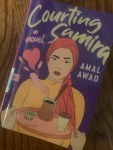
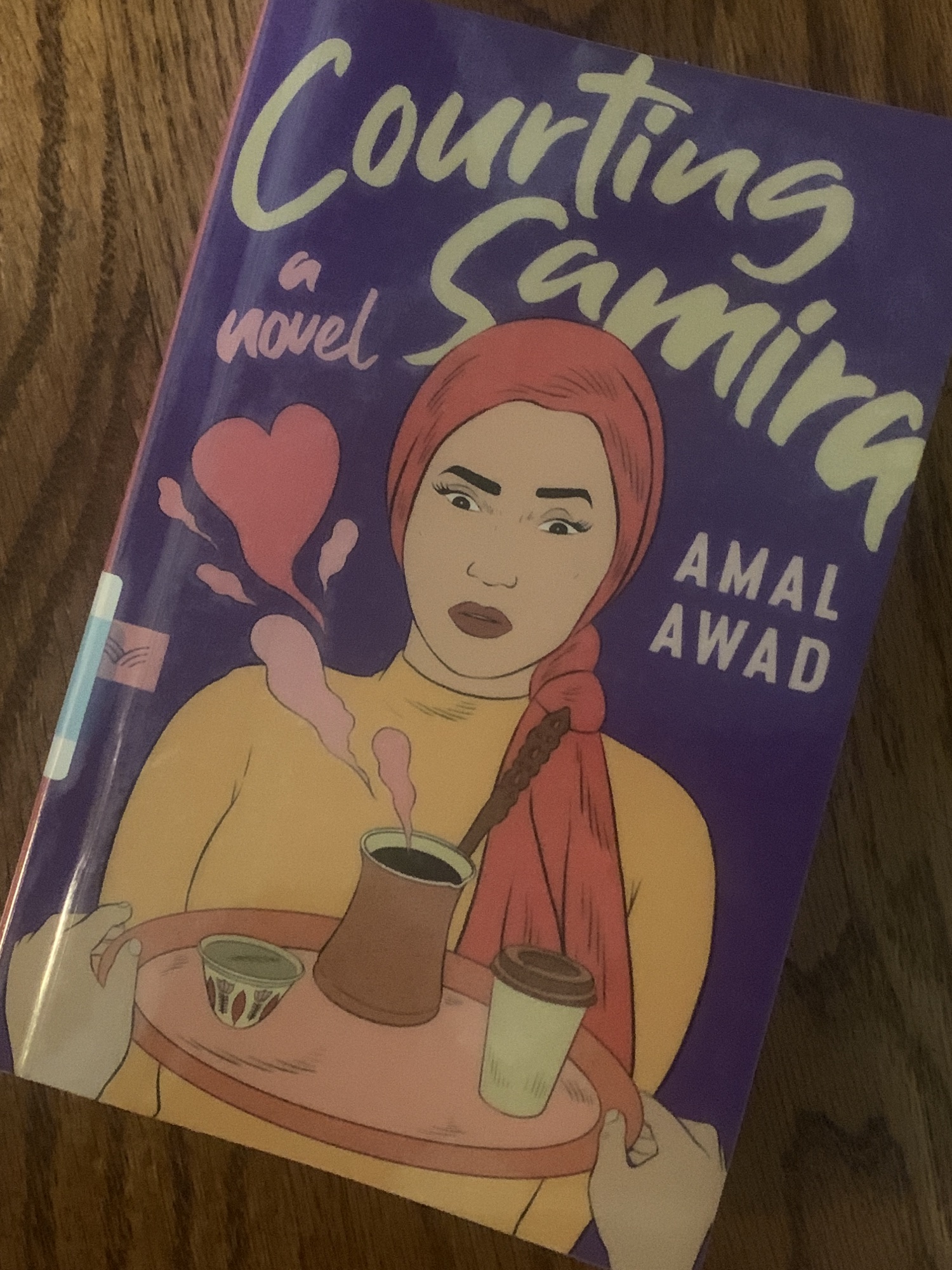
Authored by a Palestinian-Australian and featuring a protagonist of the same background, this adult rom-com, is pretty halal all things considered.  The book is not preachy, hijab and not drinking alcohol are all discussed as being religious decisions, but there is no insight as to how or why they are part of Islam, they just are, and because the characters are Muslim that is what they do.  I found myself reading while cooking, which means I was invested enough to keep reading, but if I missed a line or two, to pull something out of the oven, I didn’t need to go back and find my exact spot.  It reads a lot like a Confessions of a Shopaholic or Bridget Jones Diary, Islamically it is on par with a Hana Khan Carries On or Finding Mr Perfectly Fine, where the characters are Muslim and that sets parameters, their culture adds the flavor, and the love triangle and writing adds the plot, yeah it is tropey, but most people wouldn’t be picking this up for literary insights, it is meant to be fun, and it is.  Three things bothered me with this book that gets a lot right. One, the cover, I find it ugly, additionally it mentions multiple times in the book that her eyes are blue, clearly on the cover they are brown.  Second, the labeling of “moderate,” “conservative,” “liberal,” and “fundy” Muslims.  There isn’t internalized Islamophobia, every one of the main side characters practices Islam in their way, the other characters accept it, and the stereotyping that the religious one is mean or critical is not present at all (alhumdulillah), the labels just bother me.  Finally the kiss at the end before marriage, they are engaged, and it probably is still better than many YA Muslamic romances out there, but as an Islamic school librarian, I have to mention it.

SYNOPSIS:
Samira works at a Bridal magazine, writing on occasion, but mostly getting coffee.  The book opens with her mid door-knock, looking at the manga hair of a yet another prospective husband, come to drink coffee and eat biscuits with his parents to meet her and hers in another meeting that will end with no match made.  Her parents don’t force her, she plays along willingly, venting to her cousin Lara who refuses to humor her parents, and her co-worker Cate who’s own dating dramas show Samira she isn’t really missing out.  When evil cousin Zahra is suddenly getting engaged, Samira is sucked in to familial obligations and involvement.  Menem, a guy she met at a team building activity, works near her, and they keep meeting, the icing on the cake is that his brother is Zahra’s groom. As things start to heat up with Menem, old family friend Hakeem starts acting weird, and Samira finds herself caught in a love triangle.

WHY I LIKE IT:

There are a lot of tropes of being 27 and unmarried, being a disappointment for having a liberal arts degree and the like, but at least there are not mean parents, forced religiosity, or the what will everyone say storylines present. A lot of the fun is found in the references to pop culture, that surprisingly didn’t bother me.  I was, however, annoyed when suddenly 80 pages in the fourth wall was broken.  It broke the tone, but it didn’t become a regular things, so I carried on.  A side character asks if Samira’s actions are Muslim or Arab and I like that, that distinction is presented.  I wish there was more culture, Samira is Palestinian, Menem is Lebanese, but there isn’t a lot of cultural sprinklings throughout that are specific to the two cultures. There are also a lacking of salams/assalamualaikums in their daily interactions.  It does mention Samira praying quite frequently, which I most definitely appreciated though.

Plot and character development was decent for the genre.  The pacing makes this book a quick read, I read it in two days (while cooking).  I never quite felt a connection to Lara, or rather why Samira and her were so close other than for a lack of options.  She just kind of annoyed me throughout, and never seemed to be a great friend (cousin).  A few times the book would seem to hint at something and nothing would come from it, take Zahra touching her stomach while picking out ice cream, or why Hakeem says he knows Samira can’t call her brother when she has car trouble.

FLAGS:

A kiss, a few hugs, hints at haram acts in earlier days, alcohol, music, belly dancing, texting, emailing, chatting freely with opposite gender.

TOOLS FOR LEADING THE DISCUSSION:

I wouldn’t use this as a book club book, but I would be ok having it on the library shelf for high schoolers.

Palestine: The Special Edition by Joe Sacco

Standard

img_2164-1

Written between 1993 and 1995, and compiled as a complete set in 2001, this 285 page adult non-fiction graphic novel is not really something I can review, even if I knew how.  As we have passed 100 days of the escalation in Gaza, on top of the ongoing horrors of Israeli occupation, I am hoping to broaden my literary awareness to include not just children’s fiction and non-fiction about Palestine, but also adult works by those living it, those moved by it, and those reporting on it.

This particular “special edition” has a forward by Edward Said, and an introduction by the author and illustrator.  Once I started the actual story, I’ll be honest it took a few attempts to hook me, with the starting being in Cairo and being a little aggressive with alcohol and talk of women, but once I decided to just keep going, the book finds a bit of a rhythm.  It shows the author himself shaping his own opinion as he interviews, and sees, and reports on the events around him.  It is non-fiction, it is written by a journalist, at some points he acknowledges his bias, but the overall picture presented, is heart wrenching.  That the humiliation and torment and occupation of a people has been so well known and documented and ignored, in light of current events, and even in isolation, is devastating.  The exhaustion the writer feels just witnessing it, is palpable, and the complete ignorance of Israeli, former IDF soldiers none-the-less is stark.

The book is both a reflection of the time with internal political factions playing roles differently than they do in todays conflict.  There are also views about Iraq and Saddam Hussein, which might surprise readers today.  But the power of this book is what hasn’t changed, the torture, the imprisonment of children, checkpoints, illegal settlements, humiliation, restrictions from working, from moving, from being treated as equal.

I’m glad I read it, and spent time among the the ink filled pages. I am certain that many of the stories, particularly the ones from inside the prisons will stay with me and haunt me as I read headlines and scroll endlessly through the statistics occurring in real time.  How can we be so blind, for so long, how can a people endure so much and keep fighting, how does any of this make sense?

Every Rising Sun by Jamilya Ahmed

Standard
Every Rising Sun by Jamilya Ahmed

The lush writing and ever present threads of Islam captivated me from the first page of this Shaherazade retelling.  I truly could hear my own voice in my head reading each word, and falling into the masterful story-telling of the protagonist/author.  With about a third of the book left though, I was sadly stopped abruptly in my tracks.  I found myself annoyed by Shaherazade, and having to convince myself that even though this is an adult read, she is very much coming of age and finding herself, only she doesn’t evolve and grow, and doesn’t have a character arc, and by the end I felt deflated.  Is the book good? Yes.  Would I recommend it to readers 18 and up that enjoy OWN voice, strong female, historical fiction? Absolutely.  But I find myself frustrated, because when the book was good, it was so good, but as the end drew closer, I realized there were holes, big ones, that could so easily have been fixed.  The author has the skill, the knowledge, all the tools, but alas, I didn’t appreciate Dunyazade because she is largely absent.  I didn’t know the interworking of her assistants and friends so I didn’t care about them, side characters were so painfully underdeveloped. And with 50 pages left, I was for the first time perhaps ever, glad that the narrative moved from showing to telling (I know, who am I even). I needed the articulation to connect the dots particularly of Shahryar and Shaherazade’s relationship.  The 423 page book could have, and should have, been a hundred pages longer to not feel so rushed at the end, and there should have been a map.  The book has adult themes but they are handled in almost a YA manner.  The beheadings, affairs, wedding nights, battles, war, are not detailed, but rather identified and moved on from even though they are so central to the plot.

SYNOPSIS:

In twelfth-century Persia the daughter of the Malik’s adviser stumbles on the Khatoon and her lover, she anonymously alerts the King to the affair and the beheading of wives begins.  To keep the country from revolting at their mad king, Shaherazade offers to become his next wife, to assuage her guilt for what she set in motion, on the hope that her storytelling will keep her alive come morning.  Life doesn’t pause however, as Shaherazade spins her tales, but rather amplifies.  She accompanies her husband, Malik Shahryar as they join Saladin in the Third Crusade.  The caravan, the journey, the battles, the romance, all bring the climax of returning home to a Kirman under siege will test Shaherazade’s story-telling abilities to the brink and with it the Seljuk Empire.

WHY I LIKE IT:
The prose is on point, time stood still while getting lost in a world of history, imagination, and the author’s skill.  The constant presence of Islam in the characters life was incredible. It was not established and then left to the side: the times are marked by prayers, the athan is ever-present, the duas are heartfelt.  Yes the characters drink wine, and sleep around, but they also fast and treat their prisoners of war with compassion.

I really struggled with how little I cared about people dying, there should have been more connection and more emotion for the side characters, and as the story progressed, I became increasingly irritated that I wasn’t forced to care about them, to know them, to appreciate what they meant to Shaherazade.

I also felt that the majority of the story took place over one year.  How do you forget that you are telling stories to save your life and (SPOILER) start sneaking around with some other guy.  You have a guard detail that follows you everywhere, you are in a caravan and you live in a tent, everyone knows everything!  Shaherazade is also clueless a lot of the times asking soft questions and then told how intelligent she is and allowed to plot and scheme with various rulers.  I love that she has a voice, she isn’t silenced, that she is never apologetic for being opinionated and her very presence is never a kindness, she takes up space and doesn’t look back, but the inconsistencies in her judgement needed some smoothing out.  Show her understanding grow, and increase her intellect to wisdom, don’t have her charming and manipulating leaders one minute and then being so naive the next.  She should have been so much smarter by the end of the book than she was shown to be in her personal dealings.  Her political knowledge was strong, and she was a force, and that level of insight into her own life would have been a character arc to see.

The book is adult, but it almost reads YA and I’m not sure why, it is sourced, the historical presence is exciting, the words and flavors intoxicating.  I normally love when the characters are shown and the reader doesn’t have to be told things, but the only reason I finished to the end was honestly because I got some telling.  I was relieved to hear from Shahryar what he knew, what he felt, what he could own up to.  Perhaps had there been more showing of the intricacies of palace life with the side characters the book would not have gotten to that point, but the lush writing could only carry the book so far.

FLAGS:

Relationships. sex, kissing, fornication, killing, beheading, lying, hangings, war, battle, drinking wine, scheming, kidnapping, attempted rape, it is Adult, but nothing is overly detailed or glamorized.

TOOLS FOR LEADING THE DISCUSSION:

I would love to chat about this book, I think I could be swayed to love it, or play the devils advocate and argue for the sake of arguing.  Being how highly recommended this book came to me from a dear friend, I’m ready to battle and anxious to discuss!

I got my copy from the library, but can be purchased here.

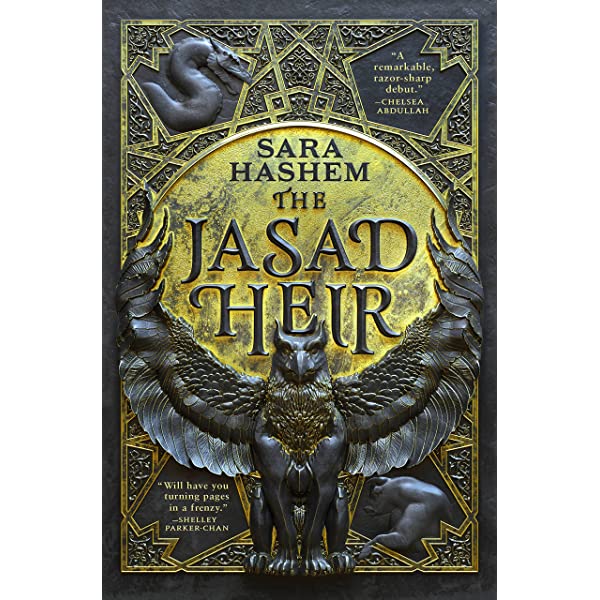
The Jasad Heir by Sara Hashem

Standard
The Jasad Heir by Sara Hashem

jasad

When I requested this book, I really thought it was YA, when I saw it was 528 pages I went online to see what I missed, and sure enough it is considered an “Adult Fantasy” and in the process I read some of the (negative) reviews about the book.  I grew nervous as I’m not naturally a fantasy fan, mg fantasy is more my level, with occasional YA entrapping me.  I told myself 25% is the least I could do, and if it wasn’t clicking, I’d know I gave it a genuine shot.  By about 21% I couldn’t put it down.  I think not expecting the complexities of an adult book was a benefit.  The book has no Islam, it contains Egyptian cultural references, but religion is not present, and thankfully that means no djinn either (they seem over represented these days).  The protagonist is in her early twenties, it has an enemies to lovers trope, and magic is central to the storyline, but aside from frequent unremorseful murder and torture, an intimate make-out scene at the end, and some drinking of ale, the book is fairly clean. I feel like there might have been some plot holes, but I honestly was so swept up in the story and proud of myself for understanding the world building and politicking, that I am just going to assume I missed something or it will be addressed in the next book of the series.  The author is Muslim and while it is labeled Adult, I think high school juniors and seniors and up, can and will, love Sylvia and Arin and sorting through the lies and deception to see the Jasadi heir rise.

SYNOPSIS:

The book follows Sylvia a young woman apprenticing with the village chemist, living in a keep (aka orphanage) and hiding her magic, or rather hiding that she is Jasadi, her magic is useless with the invisible handcuffs placed on her as a child before the kingdom burned in the Blood Summit.  She is unkind, harsh, and selfish, but somehow a few other orphans have not been scared off and on her birthday she is forced to acknowledge that people in her life might care about her.  There are four kingdoms that remain (Lukub, Omal, Orban, and Nizahl) and every three years they participate in the Alcalah, a battle to pay honor to the founding siblings who were entombed to cease their magic from destroying others and going mad.  The tradition makes no sense as the champions often end up dead (think Hunger Games), and the people acknowledge it, but none-the-less, they all get caught up in the excitement and entertainment.  Since the destruction of Jasad, the magic kingdom, magic everywhere has been outlawed.  Originally all people had magic, but it was lost over time.  Sylvia is the heir of the Jasad kingdom, and with no magic and no sense of obligation to Jasadis that have scattered, she carries on hoping to one day take over for the aging chemist.  When the son of the Supreme responsible for the death of her loved ones and all of Jasad crosses her path, deals will be made, a champion will be crowned and love will felt. Sylvia will also have to reexamine people from her past, her selective memories, and decide what type of future she wants to fight for.

WHY I LIKE IT:

Phew, even writing that lame summary was challenging, the book weaves a lot together and I loved the politics and world building, but clearly don’t feel confident enough to discuss it.  I think the slow burn romance was a little obvious, but I also think the author knew it would be obvious and rather than try and disguise it, she embraced it, and provided actual obstacles in their coming together (they cannot touch), not just that they want to kill each other.  I am assuming that the physical copy (I read an electronic arc), will have a map and perhaps a list of the kingdoms and characters.  It wasn’t hard to keep it all straight, but it will definitely add to the overall packaging.

I would have liked a little more explanation at points, even if it is my own weakness requiring it, but I didn’t understand the magic mining, the handcuffs, and would have liked a little more back story on the warring magic factions, their splintering timeline, and Soraya’s fallout.  I also would have liked more about Sylvia’s parents relationship and how that union came to be across two kingdoms.  Honestly I didn’t even quite get Sefa and Marek’s relationship.  I probably needed to slow down and read, but I couldn’t it was action packed, fast paced, and I needed to know what was coming next.  The climax was a little weak and the book ended on a cliff hanger as a book two is already forthcoming, but the fact that I read it and enjoyed it, speaks volumes as to the characters, story quality, writing, and approachability of the book.

FLAGS:

Mention of rape, whores, sexual assault, sex, a character is asked if a character’s needs are met by a man or a woman, an intimate male/female passionate scene at the end, using physical flirting as a distraction, theft, killing, lying, torture, murder, poisoning, breaking of a back, stabbing, it is an adult fantasy, there is all sorts of deviant behavior, but I really think 17 and up even in an Islamic school can handle it.

TOOLS TO LEAD THE DISCUSSION:

The backmatter and author reference the book to Egypt, yet aside from the names and some foods and clothing, there isn’t a lot that a casual reader would catch.  I think discussion about the Arab Spring and linking the plot to real politics could make for a fun discussion in a high school book club setting.  There is some Arabic sprinkled in that I would assume is accurate and would enjoy having translated by students as well.

The Adventures of Amina Al-Sirafi by Shannon Chakraborty

Standard
The Adventures of Amina Al-Sirafi by Shannon Chakraborty

sirafi

It has been a long time since I have stopped reading a book because I simply do not want it to end.  Clearly I have no self control, so a day later I picked it back up and finished the 496 pages, but oh what a treat to be swept away aboard a magnificent tale with rich history, Muslim characters, Islamic references, developed fantasy world building, complex side characters, excitement, plot, adventure, and everything else you would expect from the author of the Daevabad series.  The book is an adult read, and I really can’t suggest it to YA readers, the protagonist is a middle aged mom with a foul mouth and a bad knee, there is cursing, and killing,  hetero, gay and demon love interests among the main characters, a transgendered character, sex mentioned, drinking, and magic, it is all part of the story, but it isn’t so in your face that older mature Muslim readers will be uncomfortable.  So why am I reviewing it here, I honestly don’t know.  Clearly it is not to be shelved in the Islamic School Library, but there is so much authentic Islamic centering on every single page, that I want to give it space to remind/encourage us all that we don’t have to hide or water down our faith in mainstream books- not if the writing, story, and characters are so incredible.  I really thought a historically set pirate fantasy would be hard to read, that the vocabulary and references would leave me lost and confused, but it is written so beautifully that the pages fly by and you forget you are reading; it is as if you are watching the story unfold in front of you.  Please consider preordering this book so that publishers know support exists for authentic OWN voice Muslim character led books, I have an e-version, but have also preordered a physical hard back copy here.

SYNOPSIS:

It has been a decade since the infamous nakhuda Amina al Sirafi has taken to the Indian Ocean to plunder and sail. The stories of her have grown and traveled in her retirement, but life is now more about protecting her daughter and fixing her leaking roof.  When her previous life finds her and threatens her, however, she must return to her Marawati, call on her old friends, and put together a crew.  Told through a storyteller, with banter between Jamal and Amina, the fourth wall is broken and the reader knows that the hero will survive, yet the adventures of outsmarting Aden’s defenses, peris, demons, Franks, pirates, and marids to prevent the Moon of Saba from being manipulated is a fast paced chaotic adventure that pulls you in from the first page.  The fairly linear story from one point of view (mostly), connects the haunting past to the trials at hand, as the crew and characters are understood through their captain.  I don’t want to give anything away, but the side characters are nuanced and developed in a way that you feel just as close to them as Amina does, and as she becomes frantic to save them, the reader too is invested in their choices and actions.  Pirate adventure, saving the day, a mom as a hero and a missing demon husband refound, yeah, don’t read summaries of this book, just read the book.

WHY I LIKE IT:

I was surprised at the religious redemption arcs and details that were included on truly every page, from the meaning of the translation of Ayat ul Kursi, to acknowledging past sins and striving to not repeat them, Amina al Sirafi practices her Islam in her five daily prayers, regular supplications, regular repentance, and view of the world and her place in it.  She isn’t preachy, and much of what she faces tempts her to drink wine and fornicate again, but her struggles are really refreshing to see.  It isn’t that she is Muslim and that is the framing for the al-ghayb elements alone, it is so part of her and thus of the book, that you can’t help but feel seen.

The gay character’s lover is mentioned, neither are Muslim, but it is only a few lines in the entire book.  The transgendered character starts off uncomfortable with being forced to marry and hints that she doesn’t feel feminine, Amina pieces together what she is saying and then at the end it shows that she is now identifying and carrying herself as a man.  It isn’t a big part of the text, it has a strong effect on the story and it does touch on God’s view of such things, as the character is Muslim.  The demon love interest SLIGHT SPOILER is Amina’s husband that she thought she had killed, she has had a lot of husbands, but when he turns up alive, she realizes technically they are still married.  He asks her quite often to have sex.  It is usually is just that blunt with no romance or longing, and when they do partake in the act, it isn’t overly graphic, it is “closed door.”  There is killing and murder and deceit and lying and drinking, all things assumed would be in a pirate story.  None of it is overly glorified, but it is normalized.

I really just love the characters and the fast paced action, the book leaves off implying there will be more tales to come and I hope there are.  (I keep writing what I love about the book and deleting it, because you know….spoilers, ahh).

FLAGS:

As previously mentioned: cursing, sex, hetero and gay relationships, magic, fantasy, killing, murder, lying, drinking, drugs, jinn, peris, marids, fantasy, occult, demons, death, loss.

TOOLS FOR LEADING THE DISCUSSION:

I would never do this for a school book club, but would do it in a heartbeat for an adult book club!