Category Archives: History

We are Palestinian: A Celebration of Culture and Tradition by Reem Kassis illustrated by Noha Eilouti

Standard

img_1887-1

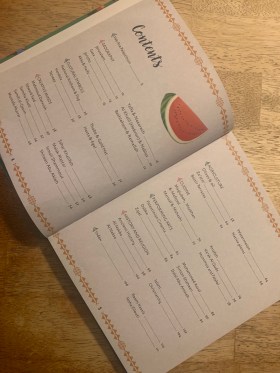
The book is non fiction, the author not Muslim, but here I am reviewing this book because, we are all Palestinian and my heart enjoyed reading this 112 page book that covers Geography, Cultural Symbols, Creative Minds, Agriculture, Cuisine, Performing Arts, and History and Religion for middle graders and up.  The book is a celebration rooted in information and expressed with beautiful illustrations, fun facts and text blurbs to break up the text.  I do wish it was sourced, and I desperately wanted a map, particularly in the section on geography- it seems odd in fact that it doesn’t have one.  The book contains information about the nakba, but doesn’t let it control the narrative or overshadow the culture that thrives in Palestine and in all Palestinians. Undoubtedly, this is an important book to spend time with and share, especially as the global media is currently working overtime in attempts to erase the richness, joy, and even basic humanity of an entire population.
img_1888-1

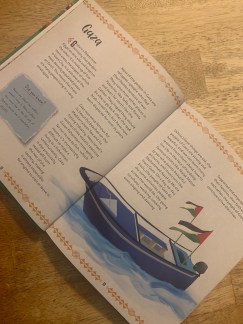
The section on Geography covers Jerusalem, Gaza, Jericho, Akka, Haifa, Yaffa, Nazareth, Hebron, Nablus, Bethlehem, and Ramallah.  Some cities are combined and are featured on a full two-page spread after an introductory page for the section.
img_1889-1

Cultural Symbols covers the national anthem and flag, Handala, tatreez, thobes and gold hat, hatta and egal.  I enjoyed learning more about cultural items that have become increasingly familiar, but whose origins, importance, and displays were new.

img_1891-1

The Creative Minds section focuses on people both currently still living and deceased.  I always struggle with books that highlight important people because how they are chosen is always such a mystery, and this book at least acknowledges that this is just a tip of the iceberg cross-section of people influential, talented, and noteworthy.

The Agriculture and Cuisine sections are a celebration of food and resources that most of us who have been privileged to have Palestinian friends sharing their lunch and dinner with will find particularly enjoyable.
img_1892-1

Performing Arts was informative and new to me, and I think further shows the depth and richness of the culture.  It highlights specific people, dances, cinema, and instruments in this section.

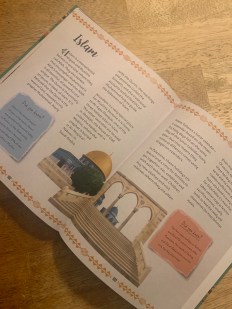
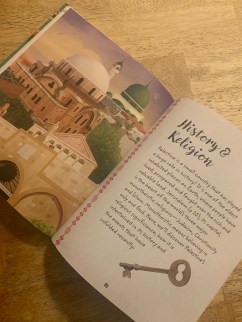
The final section of History and Religion starts with ancient history, followed by the Nakba, al Naksa, and then a two page spread on Islam and a two page spread on Christianity.
img_1893-1

Notably not mentioned in the entire book is Israel, and in the religion section there are no other faiths shared except Christianity and Islam.  The author seems to be making a point, by what is included, and what is focused on, and keeping the light shined on Palestine. There is an index, but no sources.

Muhammad Ali and Malcolm X: The Fatal Friendship by Randy Roberts and Johnny Smith adapted by Margeaux Weston (A Young Readers Adaptation of Blood Brothers)

Standard
Muhammad Ali and Malcolm X: The Fatal Friendship by Randy Roberts and Johnny Smith adapted by Margeaux Weston (A Young Readers Adaptation of Blood Brothers)

bloodbrothers

A lot of us Muslims name drop Muhammad Ali and Malcolm X in discussions about civil rights quite often, and at least, speaking for myself, I thought I had the general idea about the relationship between these two iconic figures. I have read a fair amount of books in my quest to identify books that show how Islam shaped the men as opposed to those that tend to gloss over their eventual conversion to Sunni Islam, but I read this book as if it were fiction and I didn’t know what was going to happen next.  I have not read the original Blood Brothers, but this young readers adaptation is well done in conveying the politics, environment, struggles, and humanity of these two men.  Their flaws and growth, their tests, their friendship, it really is a compelling read. The focus on their friendship puts Nation of Islam as the focus, but the book does a good job of identifying it as being different than Islam.  As their friendship falters, Malcolm X goes for Hajj and is seen to change, and choices made by Cassius Clay show the men quite distant at the time of el-Hajj Malik el-Shabazz’s assassination, even though eventually their paths proved quite similar. The 240 page book is MG, but I think middle school readers (in classrooms, book clubs, and on their own) will better appreciate the intersection of these two giants, the events of their time, and the legacy they have left for us all.

SYNOPSIS:

The book is a snapshot in time, sometimes focusing on Malcolm X, sometimes on Cassius Clay, sometimes of their time together.  It starts with background insight and then shares the rise of both of them in their respective worlds, Nation of Islam and boxing.  Threaded through it all is the influence that Elijah Muhammad had on them, and key events they experienced that shaped their thoughts and opinions on race relations, politics, religion, and life.  It shows Malcolm X as the teacher, and leader taking in Clay and believing in him against the Nation’s wishes and thus when Muhammad Ali pushes him away the reader sees the Champ in a different light.  It shows deception and manipulation, as deep and riveting as the best fiction out there, but is very vulnerable in showing regret and both individuals’ ability to keep learning and growing.  The conclusion highlighting Muhammad Ali reaching out to Malcolm X’s daughter Attallah, and the forgiveness that took place in restoring the love between the two men and their families, really was a cathartic release that reminds readers that for as idolized as these two figures are in pop culture and history, they were very real people.  The book has a Biography at the end that breaks down sources by Government Documents, Archival Collections, Newspapers, Magazine Articles, Books, and Websites.  It is a “Selected Biography” that is seven pages long.

FLAGS:

Racism, manipulation, assassination, hate crimes, stereotypes, propaganda, oppressions, abuse, police brutality, assault, bombing, arson, attempted murder, fear, threats, killing.

TOOLS FOR LEADING THE DISCUSSION:

I have preordered a book for my own children to read and one for the school, I really think this book needs to be easily accessible for middle school students in libraries, classrooms, and homes.  I would love to do this as a middle school book club, I think the authentic perspective will give our youth who have heard of Malcolm X and think they know Muhammad Ali some insight into really spending time with what they did, what they faced, and how remarkable their friendship was.

Sitti’s Key by Sahar Khader Ali illustrated by Noor Alshalabi

Standard
Sitti’s Key by Sahar Khader Ali illustrated by Noor Alshalabi

sitti key

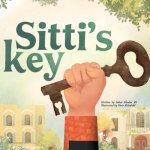
I try and buy, read, and review every children’s book about Palestine that is published, it is the least I can do.  I also try not to compare them to each other as they present different aspects of oppression, perspectives of strength, examples of joy, and messages of hope, even among many similar themes of food, keys, traditions, and culture.  I really appreciate that this book though is incredibly blunt.  It isn’t lyrical, it isn’t poetic, and as Israel is bombing Jenin as I write this I’m glad it doesn’t mince words about the Nakba. I do think caregivers though, should probably read it first as it might be a little triggering for sensitive children.  The story is OWN voice and probably best suited for middle elementary aged children.  It is perhaps also worth noting that the book could be seen as making Jews synonymous with Zionists.  The characters are Muslim, Islamic phrases and Arabic terms are sprinkled throughout, and even despite the pain the family has endured, the book stays hopeful and proud.

Sitti is coming and Amal is excited, it has been two years since she last saw her.  She loves how excited her mom and grandma are to unpack gifts of olive oil, dates, and zataar from friends.  Amal isn’t sure what to do with the “old lady thoub” she has been gifted, but she smiles in appreciation none-the-less.  When Sitti pulls out an old key, Amal starts to ask her about it, but her mother shuffles her off to bed.

The next day at school, Amal has to work on a presentation about “culture,” but there are no Palestinian books in her school library, so she just watches the other kids.  At home they eat and listen to Sitti’s stories of long ago in Haifa, and Amal asks her why she left Palestine.  Despite her mother trying to redirect, Sitti says it is time she knew about the Nakba.

Sitti tells about living on the land for generations and how the Jews believed the land belonged to them.  In 1948 the British decided Palestine would be the homeland for the Jews.  Armed men came and arrested anyone who tried to stay in their homes. Sitti’s brother was handcuffed and never seen again.  The family grabbed what they could including the key to their home as they made their way to a refugee camp in Lebanon.  They stayed for three years, before making their way to America.

When Sitti concludes her story she hands the key to Amal and her hope that she will return to their home inshaAllah.  Feeling the pride and warmth of home, Amal has a determination to reclaim her heritage and share her “culture” with her classmates.

The illustrations are sweet, the mom and Sitti wear hijab even in the home, and the inshaAllahs and salams come naturally. The book does not stop to define zataar or marimya, which helps the flow. I also like how it shows that there aren’t books about Palestine in the school library, it is strong and important detail.  I don’t understand where Sitti is coming from though, it would seem Palestine as she is bringing gifts from friends, but in the story it says after Lebanon they made their way to America, so I’m not sure where Sitti lives, and how the logistics of the family work to be honest.  I also kind of wish there was a  recipe for zataar in the book and lyrics with translation for the song the family sings.

Book is available on Kindle or can be ordered from www.littlehibba.com

Stand Up and Speak Out Against Racism by Yassmin Abdel-Magied illustrated by Aleesha Nandhra 

Standard
Stand Up and Speak Out Against Racism by Yassmin Abdel-Magied illustrated by Aleesha Nandhra 

stand

The very first page of this practical Muslim authored, visible Muslim featured, how-to book draws you in with the author’s conversational tone and approach.  She presents life as being a mountain we all are born to climb and articulates that we are all given different tools to do so.  The book sets out to understand how race and racism affect the climb, how we can make it more fair, and uses questions from kids in the UK as the general organization of the 128 page book for middle grade readers and up.  As a Black Sudanese born, Australian raised, immigrant London woman who speaks Arabic, is Muslim, has authored five books, is an engineer and social justice advocate, she acknowledges privilege, and injects plenty of InshaAllahs, Alhumdulillahs, and global perspective to racism, its history, and what we can do to stand up and speak out about it.  I do wish the book was sourced, but the first person perspective, and her own intersectional identities, carry confidence and OWN voice power in making the world a better place for all.

SYNOPSIS:
The book starts with a section about how racism started, then moves into what racism looks like today and how it shows up and affects us all.  It then concludes with a focus on the action of standing up and speaking up.  The book spends time reassuring the reader that the contents might create strong emotions and to breathe acknowledge your feelings and find a safe way to express them. Chapter 6 discusses religions, even though the book is about race and says it does so because it is the same social construct of grouping a very diverse group together because of something “other” that they share.  It spends time on anti-Semitism, and Islamophobia.  The book doesn’t have to be read cover to cover, it can be read in sections, in any order, there is also a glossary and index at the back to find particular topics to look at.

WHY I LIKE IT:
As an American, I love that the book is global in focus and shows the effects of colonization and attitudes, and thus realities.  I also like that it takes time to discuss internalized racism, as well as interpersonal, institutionalized, and systemic.  Pointing out schools and how many of your teachers or principals look like you, really drives the points home.  I love that there is a whole page on hijab and truly that you see the author regularly bringing in Islam to the conversation which is great.  The action steps of what to do if you see racism, what to do if it is aimed at you, are well presented in metaphors that are easy for kids to see why the course of action suggested is doable, logical, and important.  It doesn’t shy away from acknowledging that pushing back on racism escalates the situation, and encourages individuals to be safe and do what they can. There are pull-out boxes, comic strip scenarios, bolded and bulleted text, and colorful engaging illustrations and infographics that connect with 9 year old and up readers independently or in small groups.

FLAGS:

The book discusses an emotional topic, but I don’t think there are any particular flags to be noted for 4th grade and up  There are important conversations to be had based on what is shared, but nothing is overly graphic or sensationalized.

TOOLS FOR LEADING THE DISCUSSION:

I think this book would be great to share with students regularly and often.  It should be on library and classroom shelves and should be used in small groups, large groups, and one-on-one.  The variety of methods that the information are conveyed make a useful tool when concerns arise, and a great reflective piece to encourage children to think deep, better themselves, and be aware at all times about the privilege and effects of their thoughts and actions.

Available for preorder on Kindle here https://amzn.to/3PH98u2

These Olive Trees: A Palestinian Family’s Story by Aya Ghanameh

Standard
These Olive Trees: A Palestinian Family’s Story by Aya Ghanameh

these olive

This stunningly illustrated OWN voice Palestinian book for early elementary kids is an important story and I love that it is coming out to the world, but I do have some issues with the literary aspects and target demographic.  The story bounces around from being factual about the brining and curing process of turning the bitter olives into numerous things, to Oraib’s present life in the refugee camp, to memories of the family’s life in Al Tira.  When war once again drives the family from their home in the Balata refugee camp, Oraib, plants seeds and vows to return one day to harvest the fruit.  The language at times is very mature and complicated for ages 5-8, I felt uncomfortable with the family moving being attributed to war and not occupation, and at one point it clearly articulates there are many olive trees located outside the camp and that they are leaving the seeds that would be later planted, so why is the climax her asking the earth permission to plant one more and for the sky to water and care for it until she can return? The backmatter allows the book to be used to spread awareness about Palestine and the process of harvesting olives, but the illustrations will appeal to younger readers, and the concepts contained seem more geared for slightly older ones.  There is nothing religious in the book, there is depiction of the Dome of the Rock in an illustration and I believe the author/illustrator identify as Muslim.

img_8540

The writing style of the book is fairly surface level with concepts not fleshed out to allow difficult concepts to reach younger readers.  When describing the taste of the fresh olives, Oraib wonders if long ago people were, “pleasantly surprised by its acidity.”  No insight into what that acidity tastes like, or bitterness, or what curing and brining means.  Often the paragraphs seem long winded and repetitive, adding very little to advance the story.

img_8541

There is little lyricism in the text, and the first time some tries to peek out, the metaphor is quickly abandoned, and it is notable that it doesn’t return.  The occasional enjoying of the bitter fresh olives is juxtaposed with the surprising joy occasionally found in the camp, it seems that with the uprooting of the family once again at the end, this thread would have been a natural inclusion to reinforce the patience for something better to occur.

img_8544

The dramatization of asking the earth and sky when planting a seed upon their departure, didn’t make much sense to me.  It is noted there are olive trees already there, the illustrations show the ground littered with seeds that were to be planted had they stayed, so why not have the little girl pocket some of the seeds to take with her wherever they go.  That is after all what the mother is doing at the beginning.  Why not have the little girl invest in the cause herself and share in that ownership that they will always endure and prosper. The personification of the earth, sky and rain also doesn’t seem to fit the flow of the story, so much is internal observation and reflection of the main character, that this seems like an attempt to bring it back to a child’s level that instead just reads disjointed.

img_8545

I might have missed something as I am not Palestinian, but the book to look at is incredibly beautiful, I just don’t think it will be read and remembered by young children.  One of my first thoughts when reading it was that it was an early draft, but it is to be published soon and this review is based on the most recent version sent to me. I also wondered in the back of my mind if the book was allowed to be used to check a box, and wasn’t given the editing and polishing that it deserved on purpose.  It depresses me to even think that, and I guess I’ll never know, but I would love to hear your thoughts, and I do hope you will request your local libraires to shelve the book as a show of support to authentic Palestinian voices.

img_8546

We’re in this Together (Young Reader’s Edition of We Are Not Here to be Bystanders) by Linda Sarsour

Standard
We’re in this Together (Young Reader’s Edition of We Are Not Here to be Bystanders) by Linda Sarsour

linda

I don’t have strong feelings one way or another about Linda Sarsour, so I read the book primarily to see what the messaging would be from a well-known Muslim activist to a mainstream audience, and I must say I was pleasantly surprised.  This YA adaptation of her adult book weaves together personal experiences with larger pushes for justice reform. It is not all memoir, there are historical blurbs, educational backstories, and centering of Palestinian occupation and Islamic tenants.  I feared that the book would be entirely self-promoting and it wasn’t, it shows her as a person, and her struggles, but the spotlight is bigger than her, as she talks about the efforts and accomplishments of others in promoting police reform, social change, elevating women’s voices, and working with Black Lives Matter.  The 229 page book is sourced and reads easily.  I think ages 13 and up will benefit from seeing the intersectionality of many current social struggles sprinkled in with historical landmarks that they have learned about in school, told through the lens of a personal, relatable Muslim, Palestinian, American voice.

SYNOPSIS:

The book starts with the Women’s March as the culmination of her status and then takes the reader back to show the pivotal moments that got her to that stage: the immigration of her parents to America, her childhood, her family’s bodega, trips to Palestine and finding her voice.  The book shows her in various stages of her life while showing what is currently happening regarding police brutality, national politics, and relatable historical movements.  It shares close relationships she has had professionally, as well as mentions her getting married, becoming a mother, and the loss of a close family member and mentor.

WHY I LIKE IT:

I was happy to see how much Islam and culture shaped her activism and identity, as both are generously sprinkled in, and are unapologetically presented.  The book is a memoir and many characters are introduced and shown to enhance her understanding or presenting her with opportunities,  yet I don’t feel I really got to “know” her or any of them.  The book is centered more on events and how she lent her voice in this arena or that.  I still don’t know that I have much of an opinion on her personally or on her work, or even felt motivated to take action because of her enthusiasm, but the book was an easy read, it was informative and reflective.

FLAGS:

Racism, oppression, murder, police brutality, car accidents, hate crimes, death, assault, systemic racism, slurs, misogyny, occupation, hate.

TOOLS FOR LEADING THE DISCUSSION:

I probably wouldn’t read this book in a book club setting, but I think it would be a good addition to a school or library shelf.  I think you could require it in a history or civics or current events class and readers would find it compelling and relatable and be able to add their own life experiences to any discussions that would follow. It shows that the struggle in history books for justice and equality is not over, it is still ongoing and still very very real with horrific consequences.

Hold Them Close: A Love Letter to Black Children by Jamilah Thompkins-Bigelow illustrated by Patrick Dougher with photography by Jamel Shabazz

Standard
Hold Them Close: A Love Letter to Black Children by Jamilah Thompkins-Bigelow illustrated by Patrick Dougher with photography by Jamel Shabazz

Hold+Them+Close

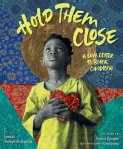
The power, the lyricism, the images, the layers- this book is not just for children, it is for everyone.  I have spent time with this book and it cannot be rushed, it needs to be felt and explored and reflected upon to feel the emotion that seeps from each and every page.  The book is remarkable in the amount of hope and warmth combined with history and social activism present.  It weaves together the personal with the community with the struggle past and present so flawlessly, but for me it is the pictures that complement the text so well that make this book spectacular on so many levels.  It is not a book for me to review, it is a book for me to support and elevate in any way I can.  The author is Muslim, there is nothing Islam specific in the text, aside from mentioning Malcolm X, and it should be required reading and sharing for everyone.  May Allah swt make us better to one another and actively work against oppression, ameen.

The book is framed as a letter, encouraging happy things to be held close.  For the young and old with stars in their eyes to be be held and elevated.  For stories of greatness to be passed down.  Stories of Kings, of Sojourners and Malcolms.  

The book encourages pushing away the disappointments, but to let the tears come. To not forget the lynchings, slavery, police brutality, oppression.  To stand and make it heard that you matter.

The illustrations are a mix of photographs and collage style layers.  The joy in a child that is very real, carrying those that came before.  Images of the past pulled to be seen in the present, very much a part of today.  The colors, the expressions, the hope, it radiates off the page with the coaxing of the text and becomes a feeling of both being held, and feeling support to take the next step.  Absolutely beautiful from beginning to end.

img_3903

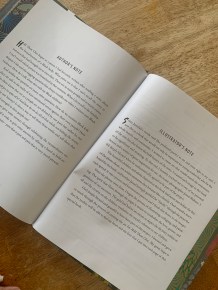
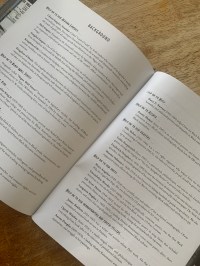
The backmatter contains an Author’s Note, Illustrator’s Note, Background information, and Selected Sources.

img_3904

Available in libraries and book sellers, including here.

img_3905


They Called Me a Lioness: A Palestinian Girl’s Fight for Freedom by Ahed Tamimi and Dena Takruri

Standard
They Called Me a Lioness: A Palestinian Girl’s Fight for Freedom by Ahed Tamimi and Dena Takruri

lioness

The writing style makes this book easy reading, but the content contained is absolutely horrific, heart breaking, and hard to truly comprehend.  If this was fiction it would be overkill, barbaric, cruel; the fact that it is factual, current, and ongoing is inexcusable.  There is no humanely possible way that we can still be ignorant or apathetic to the plight of the Palestinians.  It is an occupation.  It is apartheid.  It is oppression.  I often don’t review adult non fiction, but because this is ongoing and we have the power to do something, BDS, I’m reviewing this book.  The book describes torture, death, abuse, cruelty, you name it, but I think mature young adult readers can and should read it, along with every adult. A history of major events in Palestine interwoven with Ahed Tamimi’s own experiences in the last few years, she was 16 when imprisoned, so the recent past, as lived by her and understood by her, is powerful, moving, and inspiring.

SYNOPSIS:

The book shares a lot of facts, but because the facts are contextualized you feel yourself absorbed by what it means to have your land taken, your home bulldozed.  It isn’t just statistics of growing settlements, it is being cutoff from the Mediterranean Sea that you can see from the hills in your village, but cannot access because of checkpoints and armed guards, and walls.  It is understanding why throwing a rock, or slapping and kicking are a form of defiance, not terrorism.  It is truly seeing the situation from someone living it every day.  There is nothing for me to critique or opine about in her story, nor in the book and presentation. It is hard to read, it is harder yet to know that it still persists.

WHY I LIKE IT:

I love that I sobbed and clenched my fist and Googled again what companies and organizations to Boycott, Divest and Sanction (BDS).  That is what the book is asking those of us who support the Palestinian cause to do.  She says they don’t want our pity, they want our action.  They want us to look at South Africa and realize the power of economic efforts by the global community on an issue. They want us to be educated about what they endure and educate others.  They want us to help stop the erasure of Palestine and Palestinians.  I’m so grateful that the book pointed out the direction we should take, a bleeding heart is not enough.

I love that Ahed owns her own learning and growth as she got to know Israeli Jews sympathetic to the right of Palestinians, that protested with her and her village, that fought the legal battles using their privilege to help the oppressed. I love that the book is personal and that she doesn’t apologies, that she addresses the criticisms against her, that she calls on her own people to unify, and that she is so so fierce. 

I can’t imagine what her life is like, and it is truly humbling to imagine yourself in her shoes, in her mother’s shoes, her father’s.  It isn’t a life anyone would chose, it isn’t a spotlight you would want.  No parent would willingly push their child to this, so that she at such a young age had to endure and become what she is today, is humbling.   

Islam is not a big part of the book, but Ramadan, and jummah prayers, janaza and praying salat are occasionally included.  

FLAGS:

Death, fear, torture, killing, murder, oppression, loss, hate, racism, everything you can imagine and then some.  There is also mention of two men having sex and a man stripping, while on prison to court transport.

TOOLS FOR LEADING THE DISCUSSION:

I would love to attend a book club or panel discussion by Palestinians in the community using the book as a starting point for telling their own stories.  I think a high school book club could handle the book, but nothing younger than that. Please purchase a book, check it out from your library, request your library to shelve it, and spread the word about this memoir that is both personal and informative.


Where Butterflies Fill the Sky: A Story of Immigration, Family, and Finding Home written and illustrated by Zahra Marwan

Standard
Where Butterflies Fill the Sky: A Story of Immigration, Family, and Finding Home written and illustrated by Zahra Marwan

butter

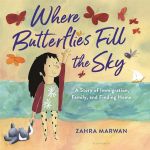
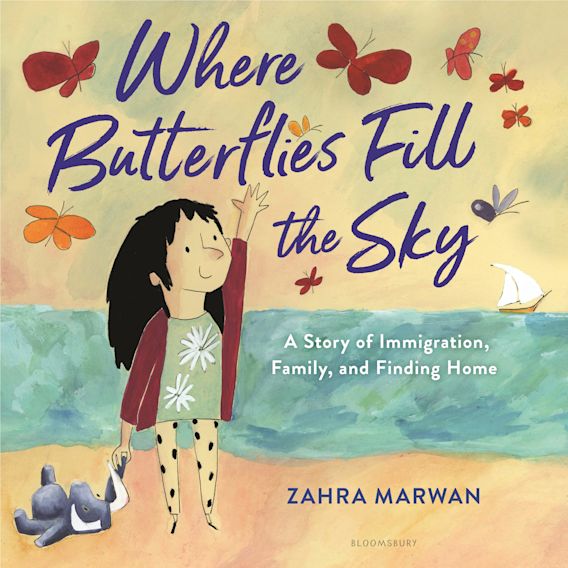
This 48 page picture book shows the journey of a young girl from one desert to another.  The soft water colors in this author illustrated book tell so much of the story and illuminate the prose.   For me the most powerful part of the book was the backmatter.  The learning why the family had to move from Kuwait to New Mexico was new and interesting and gave the story a lot of depth.  I read it to my 6 and 3 year old and it couldn’t hold their attention, the book is not text heavy, but is is long.  I think had I read the author’s note at the end first, before sharing it with my kids, we could have discussed the pages a bit more.  I think the added framing and context would have increased connection and engaged them.  The book shows one aunt in hijab, Allah swt written in Arabic and a picture of the kaba hanging on the walls of their home, a hand of Fatima as well.  There is music and dancing and connections between family, strangers, cultures, and people.

The book starts by establishing the rich and loving life the little girl enjoys in her home: butterflies, swimming in the sea, family.  It then fades to being held close and the stress of people saying they don’t belong.  The next step is the family having to leave their extended family and say their good-byes.

They arrive in a new place, not talking like others, questioning the connections of their ancestors in this far away land.  Eventually there are some similarities, and then the music of a guitarron is heard and people dance and there is joy.

The shift opens up a feeling of home, and connections are not lost, and a new comfort is felt in a place where hot air balloons fill the sky.

As an adult I appreciated the paradigm shift of not being welcome in their home elsewhere and being welcome in America, it is subtle but a nice change.  I love a lot of details come full circle.  I think the book would be a good tool not for the intended 4-8 crowd, but for older kids in a teaching setting.  There are a lot of subtle story telling techniques that could be discussed, stereotype assumptions challenged in a nudging way, and offer social studies and political discussions.

Ordinary People Change the World: I am Muhammad Ali by Brad Meltzer illustrated by Christopher Eliopoulos

Standard
Ordinary People Change the World: I am Muhammad Ali by Brad Meltzer illustrated by Christopher Eliopoulos

muhammad ali

I think this 2022 published biography of Muhammad Ali just might be my favorite.  At 40 pages long and meant for first graders and up, it actually mentions that he is Muslim in multiple places.  So often these biographies about him or Malcolm X fail to incorporate their religion and just relegate their name changes to a footnote or after thought.  The book is engaging, informative, it is sourced, and the illustrations adorable.  My kids and I have read the book multiple times and are still enjoying the detailed illustrations (they even include #muslimsintheillustrations) and text.  Sports fans and even those that are not will appreciate what Muhammad Ali achieved, overcame, and accomplished.

The biography starts at Muhammad Ali’s birth and ends with his fight in Zaire- detailing his personality, growing up, how he got into boxing, becoming Muslim, refusing to go to war, and his biggest fights.  It weaves in how he worked against racism, standing up for his religion, and living life on his terms, at every step.  As the chronological story fades, it shows him lighting the Olympic flame in Atlanta, and the text starts to focus on the lessons that Ali fought to highlight, by encouraging us to continue his legacy.

The illustrations show how his message is still powerful and inspiring to athletes, kids, ordinary people-everyone, the world over.  Ali stays depicted as a small child throughout, and the author captures his charisma, charm, and entertaining persona.  The final spread before the sources and further reading suggestions show a timeline of Muhammad Ali’s life and a few photographs of his life.

I need to read the other books in the series to see if they are just as engaging.  Undoubtedly Muhammad Ali’s story is entertaining and inspiring even when poorly written, but I have a feeling this particular biography really shines because the author and the subject matter came together.  I highly recommend this book for families, schools, and classrooms alike.

You can order it at Amazon and if you use this link, I get a few pennies! Thanks!

img_1293