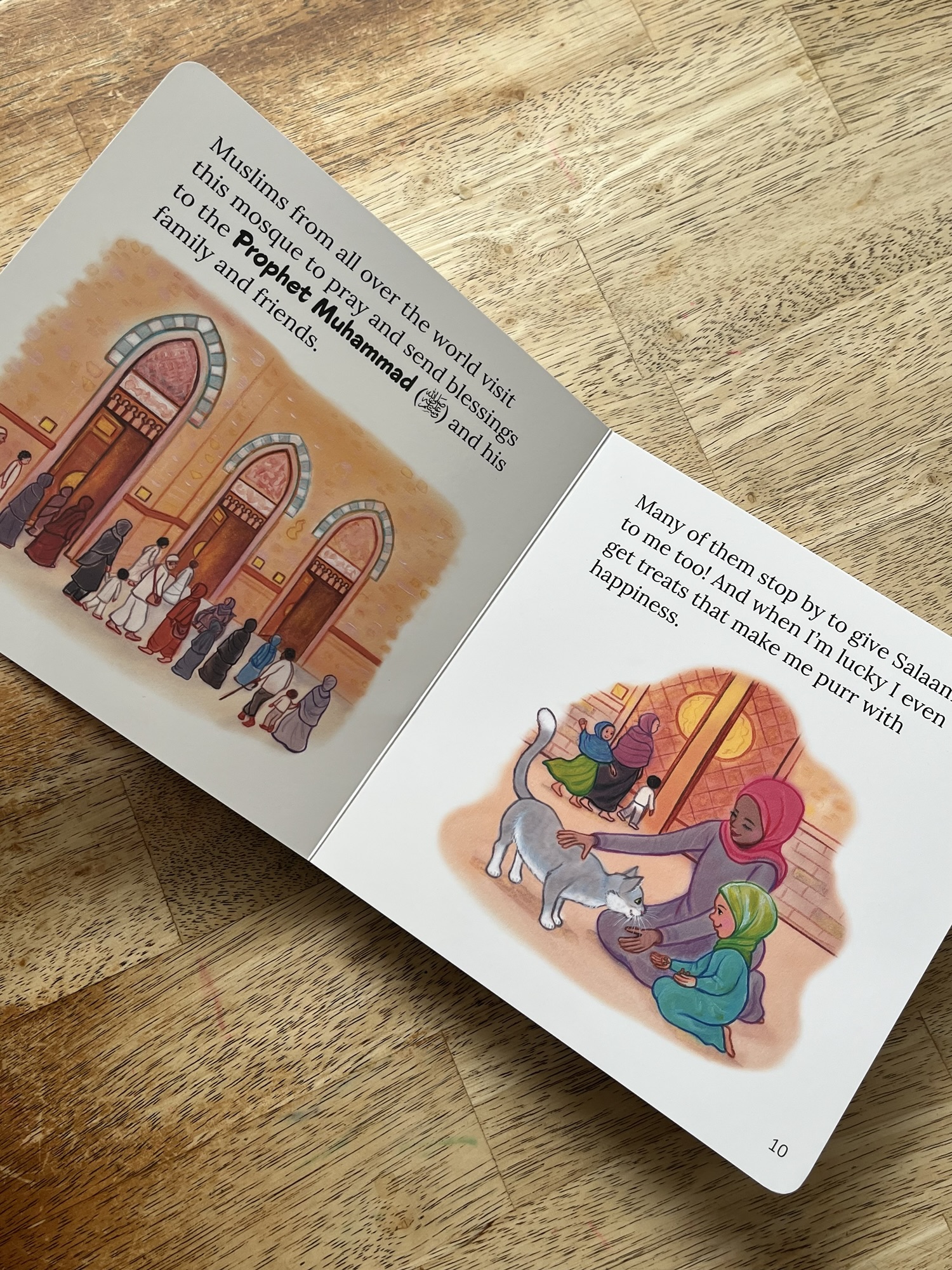
Author Archives: islamicschoollibrarian

My Prophet ﷺ , Myself by Dana Nass illustrated by Zainab Arshad

Standard
My Prophet ﷺ , Myself by Dana Nass illustrated by Zainab Arshad

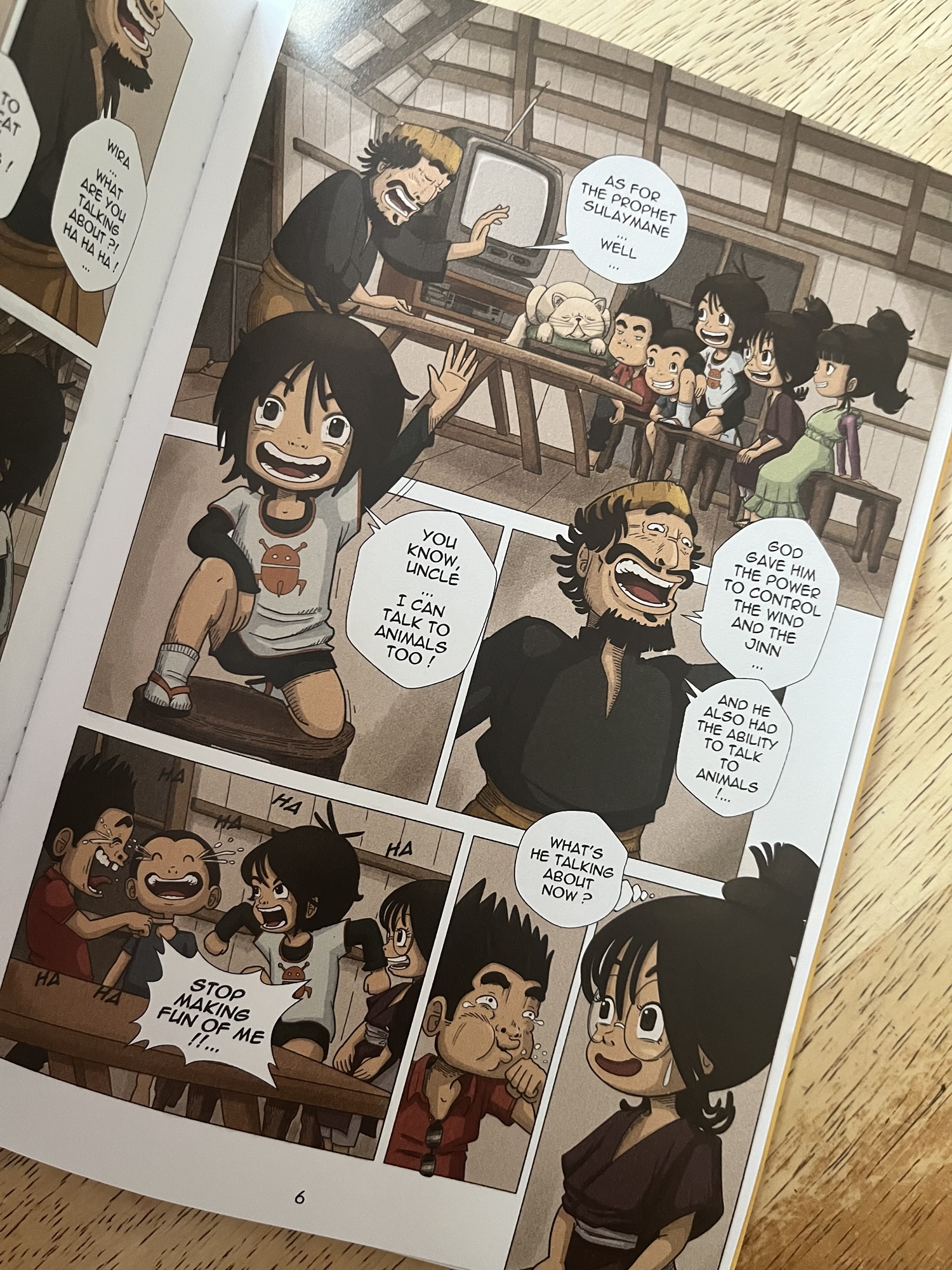
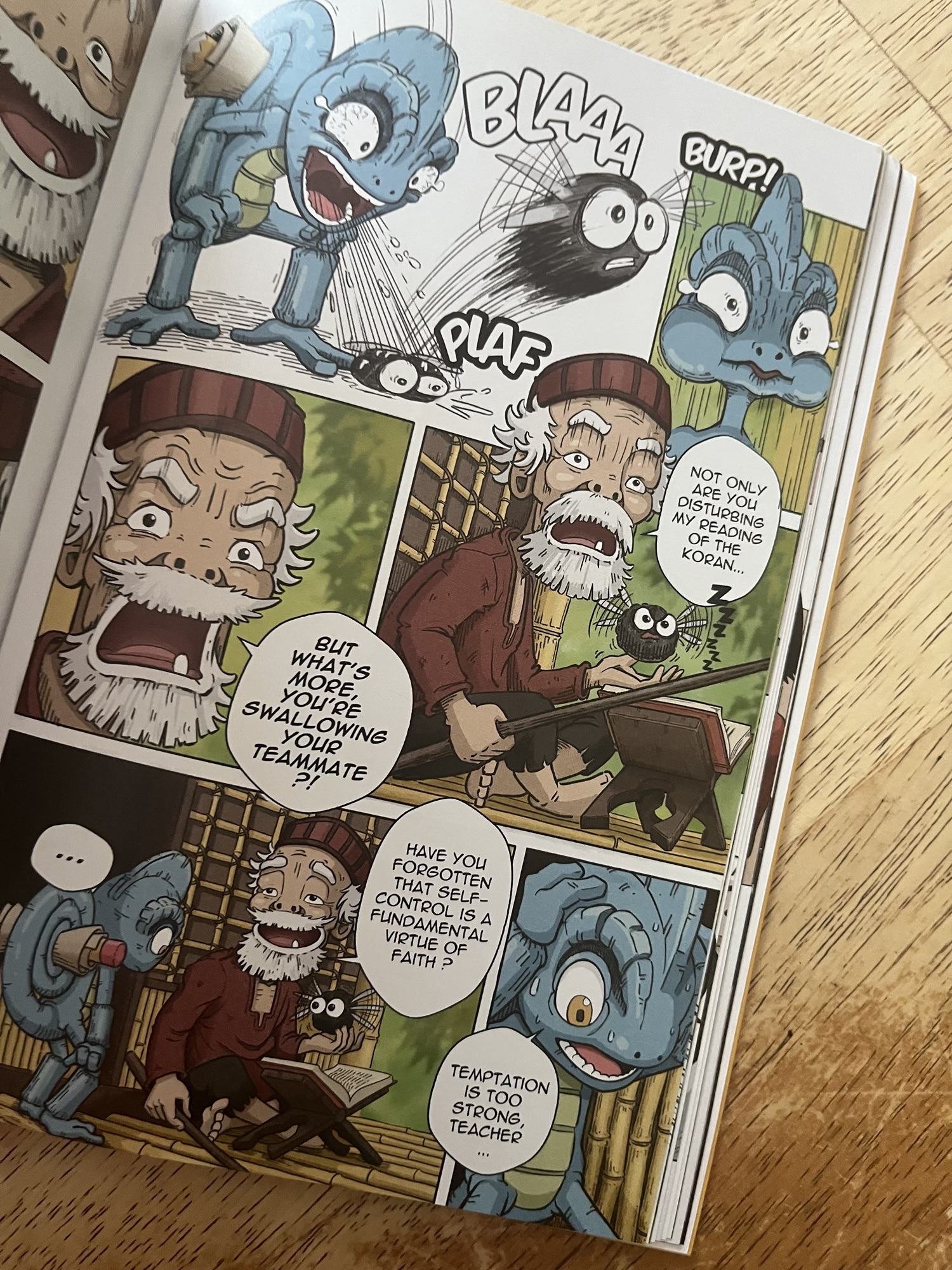
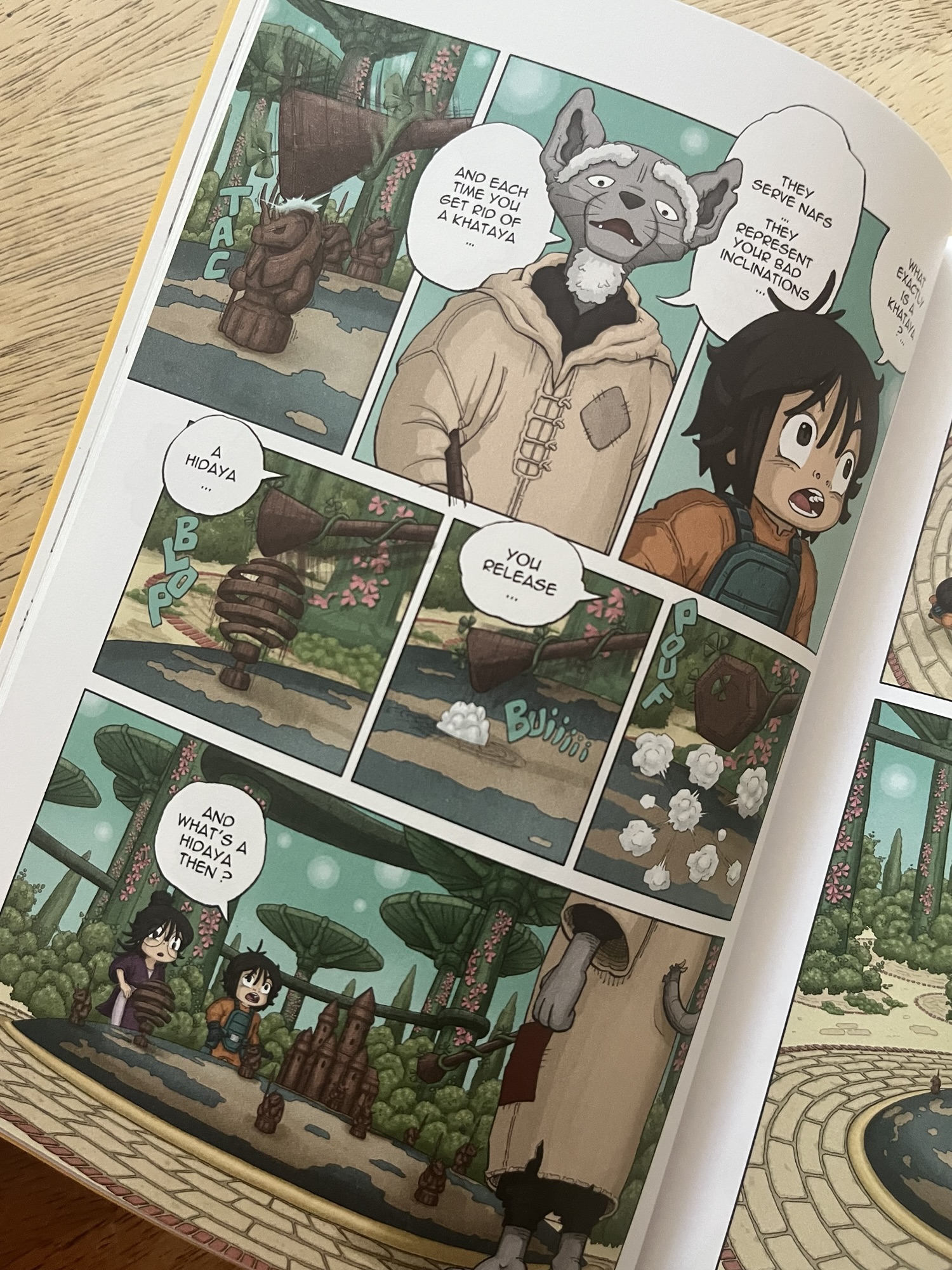
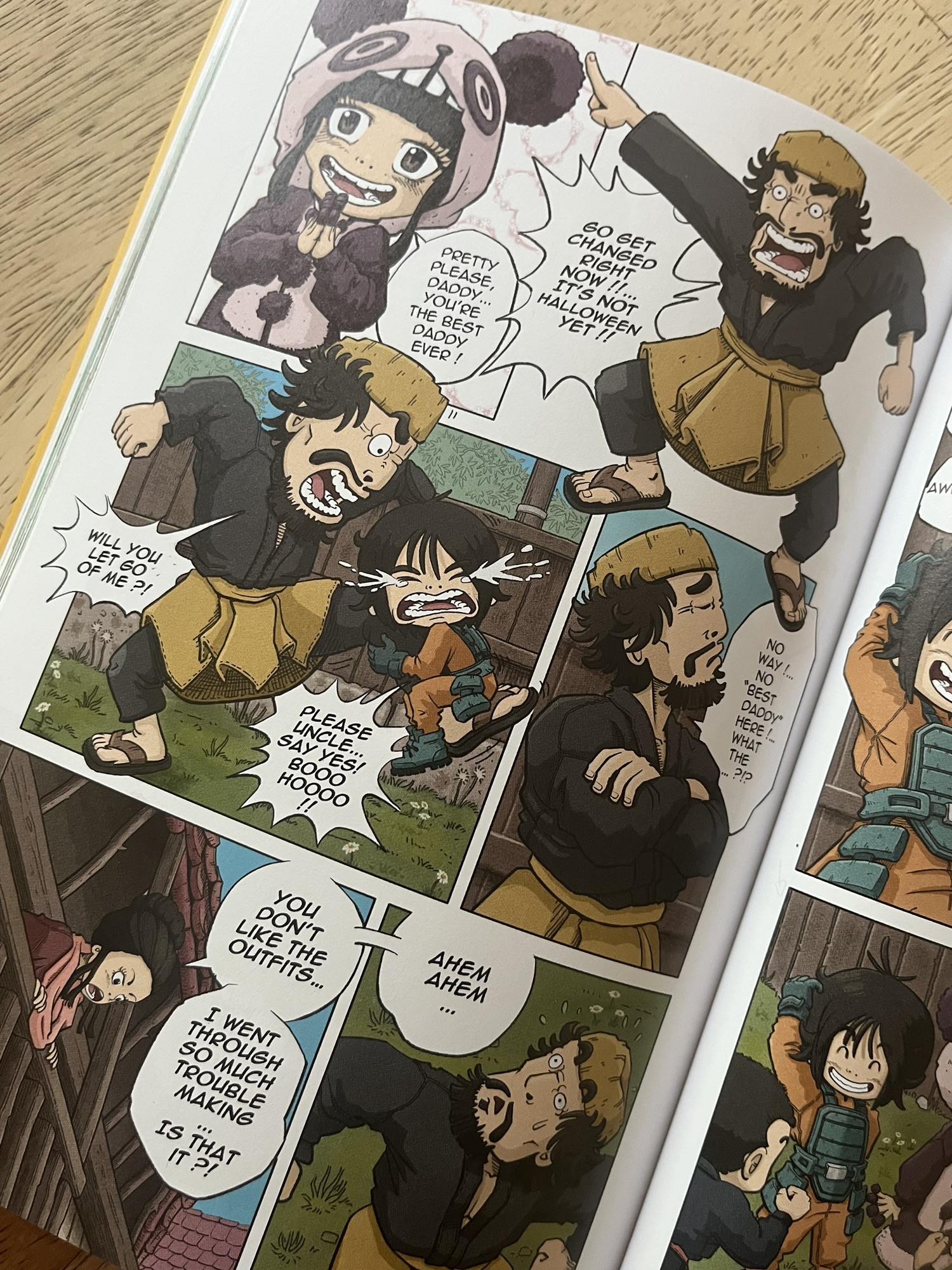
I truly cannot figure out this title, and am hoping someone can explain it to me. With that being said, the book, shukr Alhumdulillah, at least has a Bibliography. For nonfiction reads, I have begun to check that first, and then decide whether to read the book. After a few chapters though, the book was reading a little stilted, so I read the author’s bio on the back, and then it started to make more sense.  The book is divided into 21 virtues, and little vignettes of RasulaAllah’s life are shared that support the theme of the chapter, but there isn’t a lot of discussion, or hand-holding. Each chapter defines the virtue, shares a bulleted list of how Prophet Muhammad ﷺ practiced the given topic, shares some example snapshots, then asks a few “Practical Application Questions.” Nothing wrong with it, the writing is decent, the stories of our Beloved obviously incredible, but when I saw that the author writes curriculums, it made more sense to me that, while this book might be for 6-12 year olds, it doesn’t necessarily mean most in that age range will sit down and read it cover to cover.  After reading the book, I found it to be a very useful tool though.  I can see teachers of after school programs, or Muslim summer camps, or Sunday schools working through a lesson a class period khatira style, or in a discussion where the children can discuss what they understood about the stories shared of the Prophet, their understanding of the virtues in their own lives, and how they can be more aligned with the life of the best teacher and example, inshaAllah.

The book is 128 pages and the soft back binding is large 11 x 7, making it easy to hold and read if addressing an audience.  There are a few illustrated pages to break up the text, and the little, presumably Rabata Firefly, buzzing around most pages.  The 21 virtues are Empathy, Trustworthiness, Self-Control, Contentment, Seeking Knowledge, Responsibility, Maintaining Ties of Kinship, Courage, Fairness, Generosity, Confidence, Grit, Honesty, Inclusivity, Loving for the Sake of Allah, Honoring Our Parents, Teamwork, Leadership, Kindness, Respect, and Gratitude.
Living with the Qur’an: A Yearlong Journey to Falling in Love with Allah’s Words by Aliyah Umm Raiyaan

Standard
Living with the Qur’an: A Yearlong Journey to Falling in Love with Allah’s Words by Aliyah Umm Raiyaan

by Aliyah Umm Raiyaan 

I had heard that this book contained numerous transliteration and translation errors, that the humble brags and social media references affected the tone of the book, and the insight stayed pretty surface level.  I wasn’t too worried about the lack of depth, as I’m not particularly knowledgeable, but since I had preordered this book with the hopes of spending time with it in Ramadan, and I was really looking forward to it having enjoyed her previous books, particularly her Power of Du’a one, I was determined to find a way to benefit from it.  The logical choice for me, was to then not read the book, but listen to the audio book, as to not get hung up on any errors.  And alhumdulillah it was a great decision.  The author reads the book herself, so when the personal reflections are shared, it simply feels like a conversation and her referencing her own life as it relates to the topic at hand, the stories of other people are received as if she were talking about a friend who went through something similar, and the recitation of the Quran by  Sumayah Hassan, was beautiful and thus no transliteration was needed.  I also did not spend a week on each of the 52 chapters, I simply had it on when I got in the car and turned it off when I got out.  The actionable items will need revisiting at some point, but I was moved by a sufficient amount that have already been put into action, and a few passages that struck a chord, I did reread in the physical copy and highlight. Just because I didn’t use the book as intended, I overall did enjoy the book, benefit from it, and connect with the organization and messaging, alhumdulillah.
Each chapter is meant to be put into action a week at a time for the entire year.  The chapters have a theme, a verse from the Qur’an in Arabic, the transliteration in English and the meaning in English, a few paragraph description or detail tying it all together by the author, a story from some outside individual, a “Pause and Reflect” section highlighting what the author wants you to gleam from the story and how it relates to the topic of the chapter. There is then a “Live with His Words,” section that are action based tasks to engage the reader/listener with the Qur’an in practical ways.  Next is “A Question for your Heart,” where you are pushed to consider or reflect about your own relationship with the Qur’an, and finally a section called, “Fall in Love with The Author,” where Allah’s (swt) name or names are connected to the content of the chapter.  


The tone is personal and encouraging, the stories shared were by far my favorite part, as they ranged from relatable to incredible. I can see myself thumbing through the chapters in the future, or relistening on a road trip. I would love to hear how others engaged with the book, if anyone is working through it a chapter a week as intended, or if anyone else opted for the audio version, and why?


Mini Muslim Minds: Heart Germs & Gems by Zanib Mian illustrated by Hilmy an Nabhany

Standard
Mini Muslim Minds: Heart Germs & Gems by Zanib Mian illustrated by Hilmy an Nabhany

These are not books that you hand to an elementary aged child to read independently, they are meant to facilitate conversation, gently guide, and be a tool in shaping awareness and emotional intelligence for our little believers.  I love that once again the author has filled a gap in our repertoire and made the information accessible, age appropriate, and easy to engage with.  We often use words like generosity, gratitude, stinginess, and fail to properly explain what they mean, what they look like, what they feel like, and how to counter them or make them grow.  These are not fictional stories with heavy moral themes, these are non-fiction self help books for little kids, that require the adults to share and tailor to the child(ren) or situation at hand.  With Eid around the corner I have spent a few evenings going through the generosity and gratitude books with my six year old and referencing it as his Eid list continues to grow out of control. And the format and voice, even though text heavy, work great one-on-one, I can also see this series working well in small groups and classrooms as they are short and relatable in presenting emotional intelligence. InshaAllah these are just the first three installments of the series.
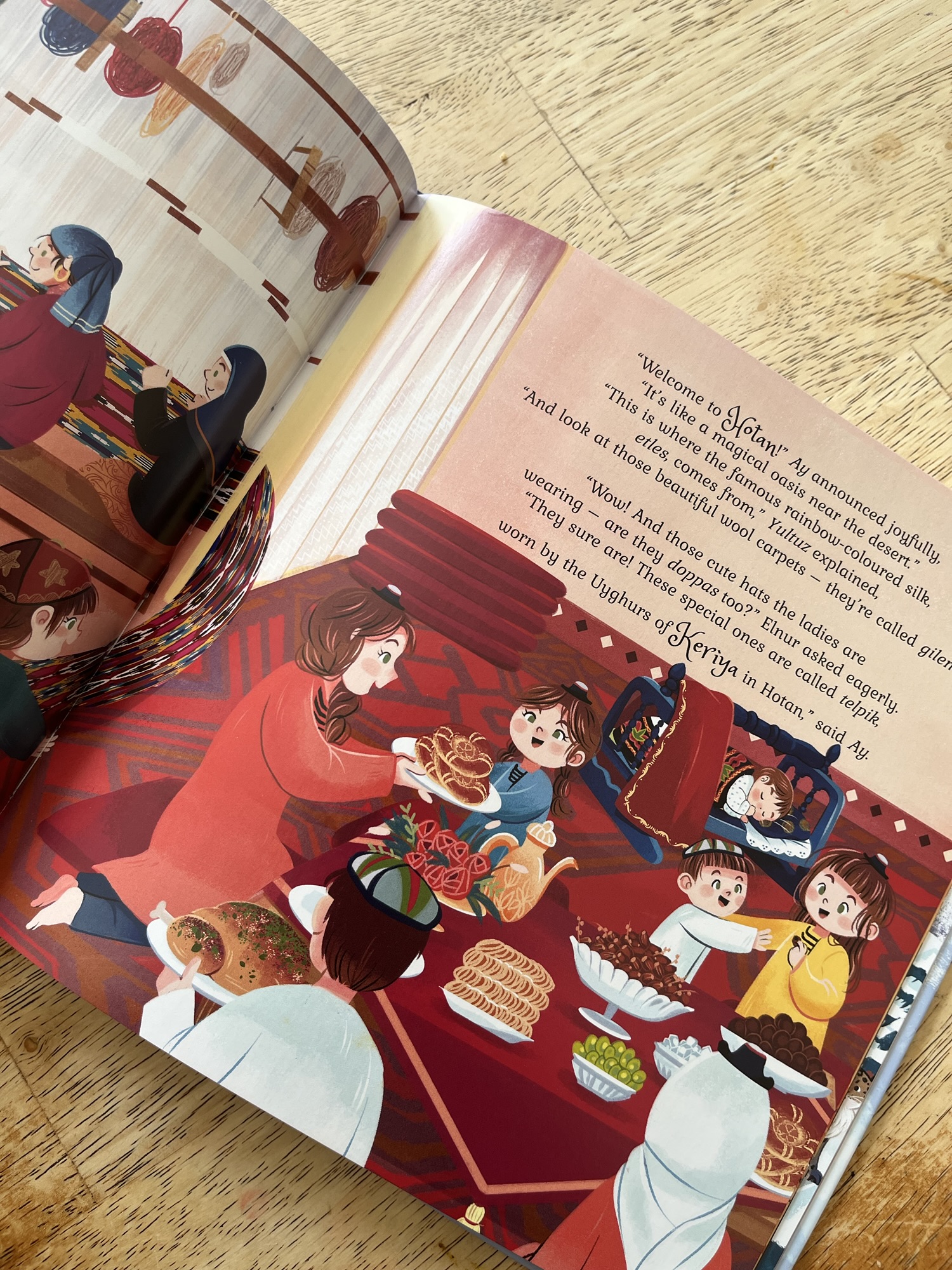
The first few pages of each 24 page book are the same: A reference to a Hadith regarding good character admitting people into Paradise, explaining the concept of Heart Germs and Heart Gems, and giving time to explaining that there is the heart that beats, and the one that is the “place where all our big emotions happen.” The format has the illustrations on the left and the text on the right in the small 7.5 x 8 soft bound books.
Heart Germs & Gems: Generosity: The book first explains the concept of stinginess and links it to being afraid that you won’t have enough.  It shares ways to help determine if you are being stingy, and how it makes you feel. It then explores how to cure that Heart Germ with Generosity.  It provides little ways to start small and how it brings joy to others, pleases Allah swt and can lighten the heart, as you truly learn that everything comes from Allah swt.
Heart Germs & Gems: Gratitude: Alhumdulillah is not just knowing that everything is a gift from Allah swt, it is feeling happy and thankful for all of it. The book explains gratitude and then the opposite, the germ in the heart, of being ungrateful. It provides ways to be more grateful, encouraging that one notices the blessings in life.  There is an English translation of the verse in the Qur’an, Surah Ibrahim, “If you are grateful, I will give you more,” and then explains it in action and highlights how true happiness does not come from riches, but from gratitude and contentment.

Heart Germs & Gems: Anger: The book starts with how to calm your anger by first understanding why you got angry, how it feels, and how to calm it before it grows. It then takes a page explaining why controlling one’s anger is important, and what can happen when we don’t. It teaches Audhoobillhi minashaytan nirajeem as a tool to help along with taking deep breaths, changing our position, and making wudu. It then normalizes that anger is a something that everyone deals with and references that controlling it makes Allah swt happy and that Prophet Muhammad saw, said that those that can control their anger are strong. The book also shares that anger isn’t always bad and can motivate us to stand up for what’s right, and as long as we are in control of the emotion, it can be good.

My Super Fun Niqabi Mum! by Red illustrated by Abz Hakim

Standard
My Super Fun Niqabi Mum! by Red illustrated by Abz Hakim

This large 10 x 10 inch, 24 page rhyming normalization and celebration of niqab, is loads of fun. Seriously, the book is delightfully told by a child with full confidence and love for his amazing mom who wears niqab.  The book does not go into why she wears it, but addresses some of the stereotypes as it smashes through them.  The book is meant for toddlers, but is such a good reminder for Muslims and non Muslims that what you see on the outside, is just a tiny piece of all that a person is, feels, and is capable of.  I do wish there was some Islam in the book, or mention that she wears it outside her home, as the illustrations show her wearing it all the time, but I get that, that would overly complicate such a joyous concept book. There is a scannable QR code to hear the audiobook included, and no faces are shown in the illustrations.

The book is really just rhyming lines of a little boy proclaiming how fabulous his niqabi mom is, and what she does that makes her amazing like all moms.  It does empower that what she wears is her choice and does not limit her, and that he recognizes that she is different.  But there is no apologizing or over explaining, which keeps the tone exactly where it should be for praising of his dragon slaying, mountain climbing mom, who happens to wear niqab, and doesn’t mind when people ask her how she eats (but no, it doesn’t answer that question).

So good to see niqab being celebrated in a picture book through the lens of a mother and her child.

The Swallows of the Cube House by Sana Kamyar illustrated by Azam Vazehi

Standard
The Swallows of the Cube House by Sana Kamyar illustrated by Azam Vazehi

With vibes of a folktale or myth, the imaginative story of how the swallows took up residence at the Kaaba is a sweet story with beautiful illustrations.  How the story actually reads though, is a bit awkward for me.  Told from the personified perspective of a swallow, it seemed a little odd that the names of the birds: Redbreast, Skytail, Whitewing, did not start appearing until page 12, the Kaaba is never named, and there really isn’t any religion articulated. The language is lyrical, which conveys the emotions of some of the worshippers that the swallows see, but also leaves it all so very vague.  The birds giggle and laugh (yes the word giggle appears frequently), happy that they found a new home that is like the mountains, the beach, and cities, this, along with kids playing, are the main takeaways, not even hinting that the Kaaba is a place that has everything to fill one’s heart or that the acts are being done in worship to Allah swt.  The culmination of it I felt needed to be stronger, why the swallows too are circling the house of Allah, swt, but it once again is so vague, and the final page breaking the fourth wall, unfortunately just seems unnecessary, it could have been done better with informative backmatter.

The book starts with a swallow telling the reader that, “One day it finally happened.”  Not sure what it is, the story then tells how the swallows fly from location to location liking certain aspects of the mountains and coast and forest and cities, and how being in one place though, makes them miss the other places.  They come to the “cube house” and all there needs are met by the sounds, the tears, the giggles, the playing of children, etc. and so they stay.

I could see the book being a decent starting point for discussion if it crossed in to talking about how animals worship the creator, or if it gave any backmatter about swallows and their environmental or migratory tendencies, so that readers could appreciate them settling in Makkah, or even if it talked about the parts of hajj or umrah, but as just a story imaging why they settled where they did, to me feels a little short.  That it is based on a real flock of birds is amazing and I just don’t think the text gets readers to truly appreciate it, and the illustrations, while wonderful, can’t do it all on their own.


A Good Morning for Giddo by Dahlia Hamza Constantine and Irene Latham illustrated by Basma Hosam

Standard
A Good Morning for Giddo by Dahlia Hamza Constantine and Irene Latham illustrated by Basma Hosam

Hold on, it is Friday morning, not super early, the sun is up, Giddo and Somaya stop in to visit a friend and when the athan is called from multiple minarets, the men pause to pray in his shop? At the end of the book, it is still morning, the parents are in their pajamas, so um, WHAT SALAT WAS THAT? Why mention that it is Friday if they are not going to salatul Jummah? Yeah, I review from an Islamic perspective, I know this is not the point or plot or theme of the book, but it is an early detail in a 32 page picture book, and I’m having a hard time getting past it, clearly. The book is beautifully illustrated by a Muslim, and the cultural story is by one Egyptian and one author who has visited Egypt, so I have no reason to question the OWN voice accuracy, but none-the-less, it doesn’t make sense and makes me wonder why we can’t get basic Islamic rep correct in a picture book.  The story itself is a shout out to Egyptian culture showing calligraphy, tourism, mosaic handicrafts, tentmaking, friendships amongst people of different religions, a sweet grandfather and grand daughter relationship, all in their morning quest to get to the tentmakers at the market. The plot unravels though at the end for me, I think it sounds good to have SPOILER Somaya need a little help with her surprise birthday gift for her Giddo, but it seemed rushed in its conclusion for as flowy as the build up was. And that she needed help with a final knot, seemed a little weak of a premise for the urgency to get to the tentmakers at all. I know I’m being picky, but sensitivity readers exist precisely for these details, and it should not go unchecked.  The end has a “Glossary” and a “More About Ancient Egyptian Arts” section, but I really was hoping for something about the one upping thread of greeting that is present throughout the book, “good morning,” “good morning with roses,” good morning with roses and jasmine,” etc. as I think that is a tidbit of Arab culture that readers will wonder about while reading, but maybe not quite fully grasp.

The book starts with Somaya rushing into the kitchen to great her Giddo and get to the tentmakers with him.  Her grandfather though is not in any real hurry.  They head in to the old market, taking in the sights an sounds and then head in to Hajj Mohammed’s shop.  He has been sad since his son moved, and after he encourages her to write, and he and Giddo pray (not sure why Somaya does not join them), they are back in the market heading toward the tentmakers.  But first they wave to Ismail on his bike, and then stop in “for only one minute” to have tea with Ostaz Gergis and Mariam and see their abalone inlays.

When they finally reach the tentmakers in the market, it is revealed that Giddo is a most respected tentmaker, and when someone asks him a question, Somaya uses the distraction to get help with a final knot on a piece she has been working on.  The pair head home and are greeted with Mama and Baba holding a cake and wishing Giddo a happy birthday. Somaya gifts her piece to her grandfather and proclaims that she too is now a tentmaker.

The story is sweet, the illustrations adorable, it just needed a lit more polishing, some tweaking to get the Islam right, and more fleshing out of the ending, so that it felt satisfying and not rushed.


Nadia Islam on the Record by Adiba Jaigirdar illustrated by Avani Dwivedi

Standard
Nadia Islam on the Record by Adiba Jaigirdar illustrated by Avani Dwivedi

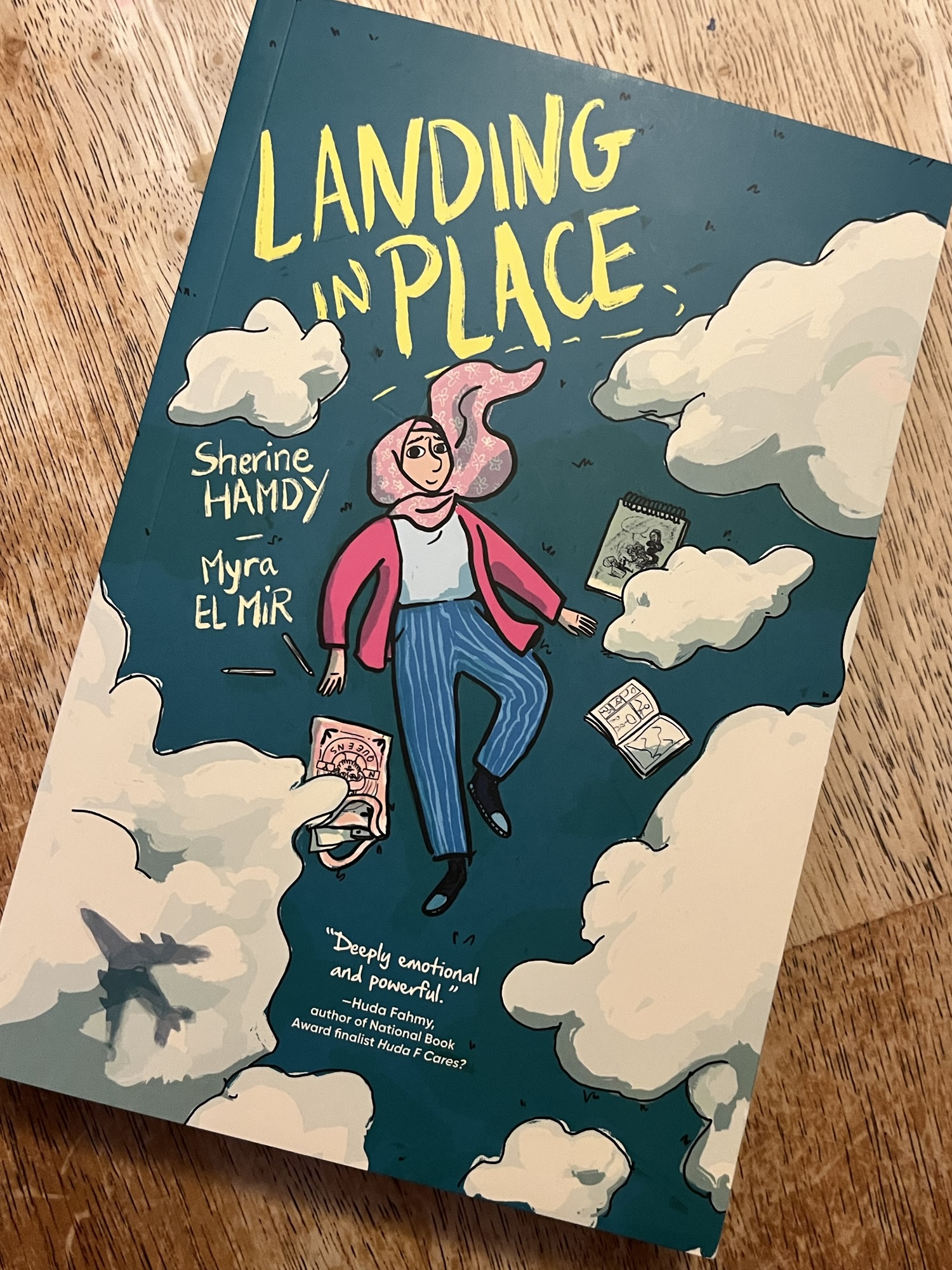
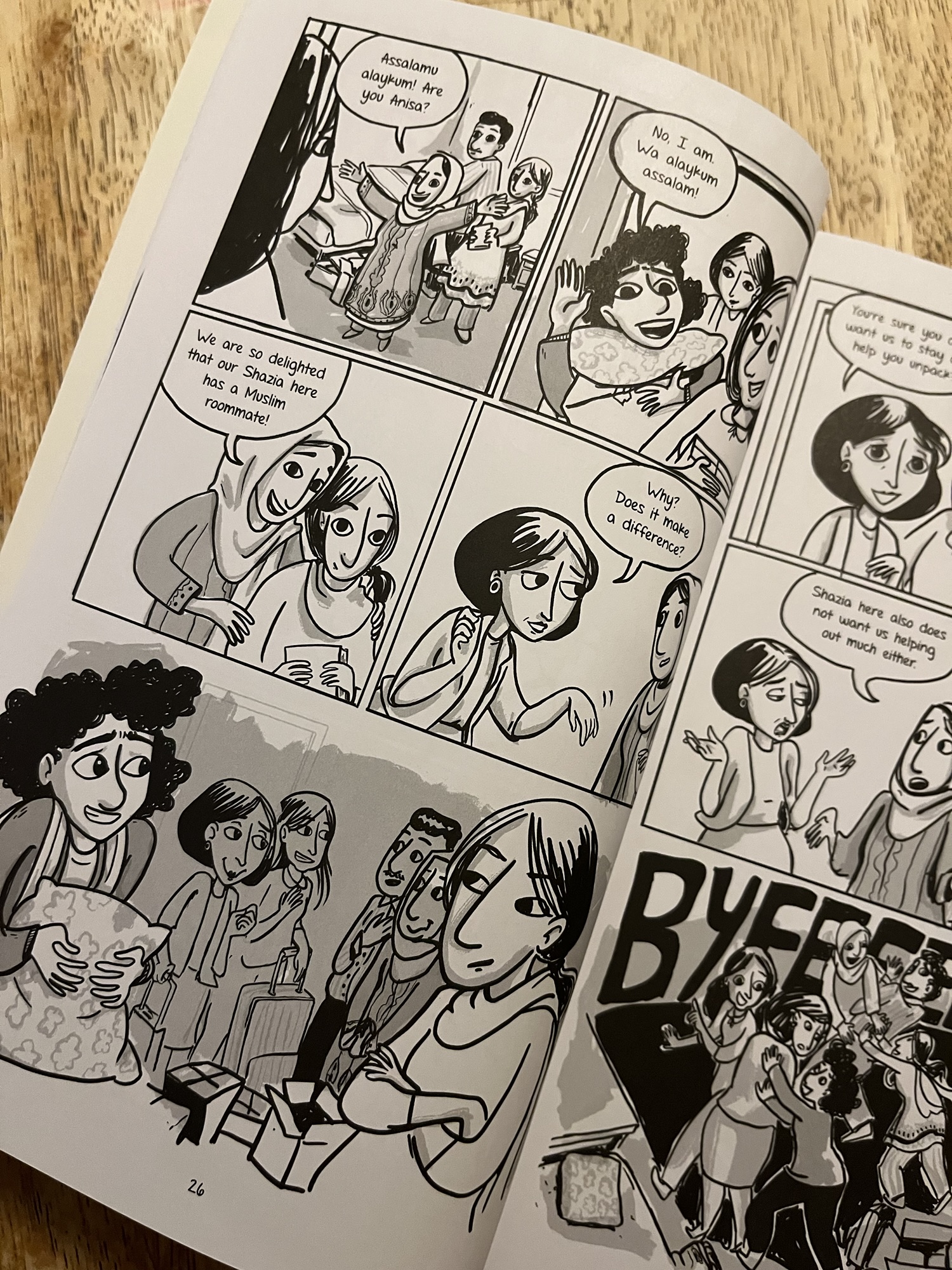
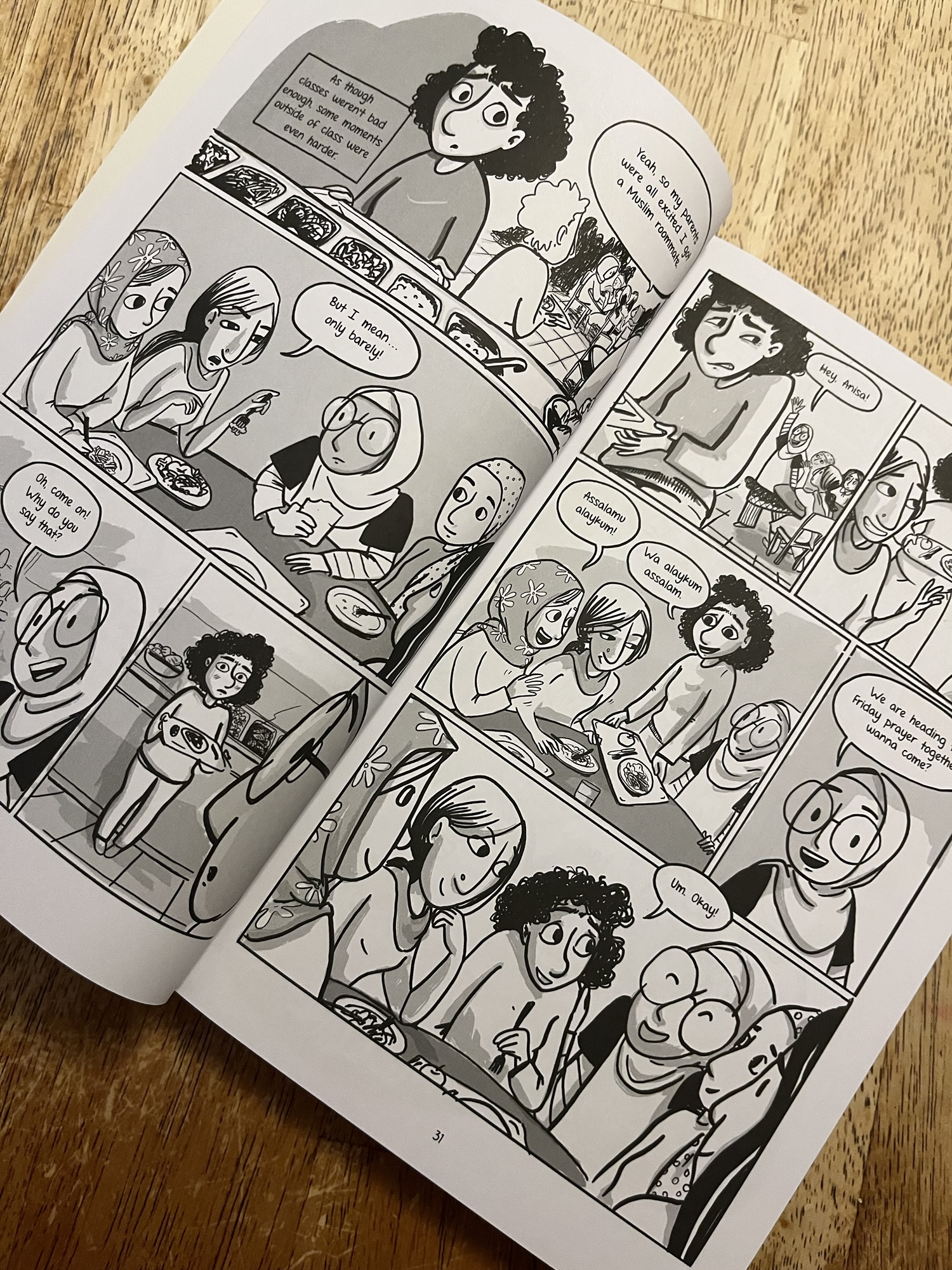
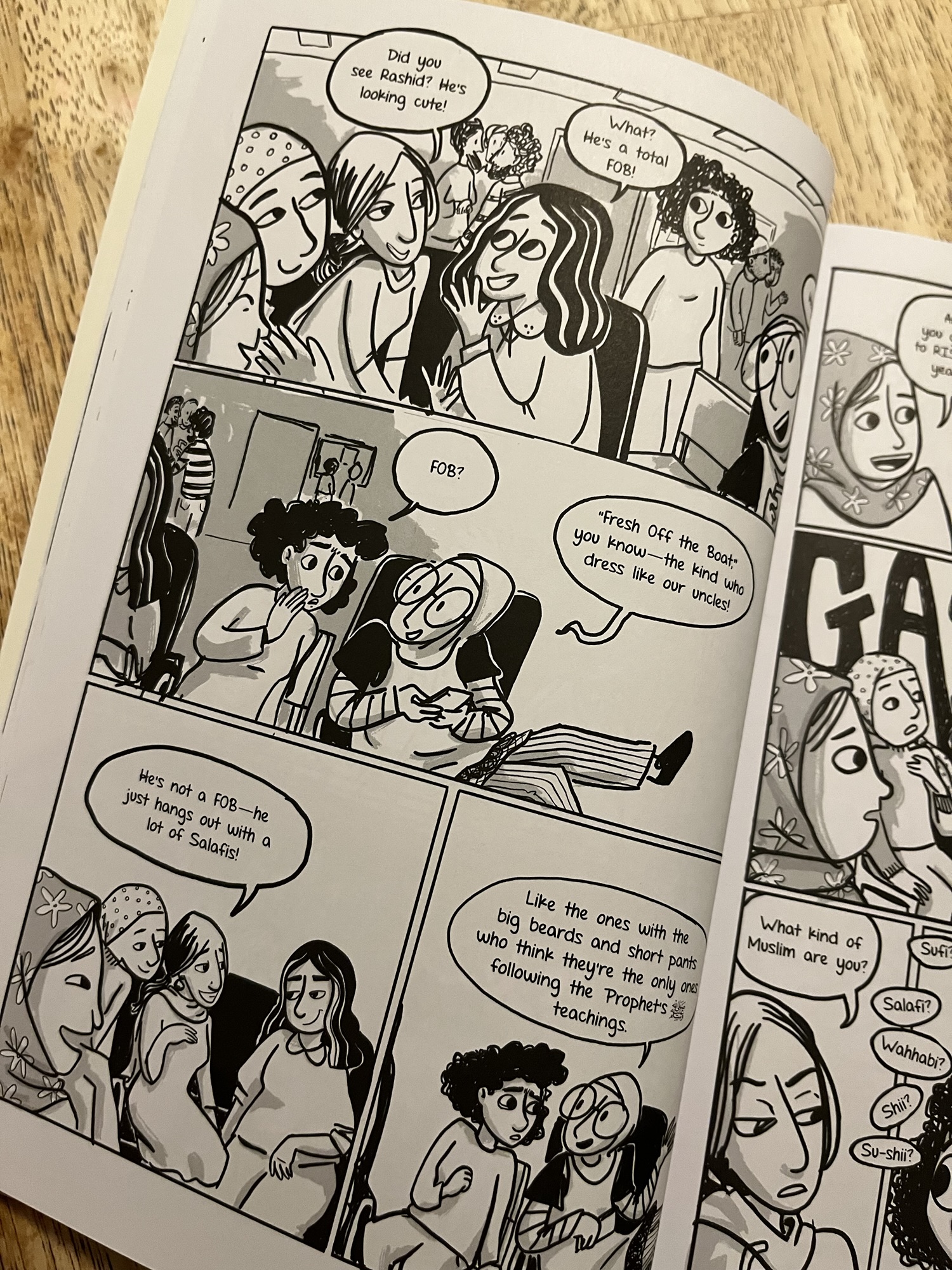
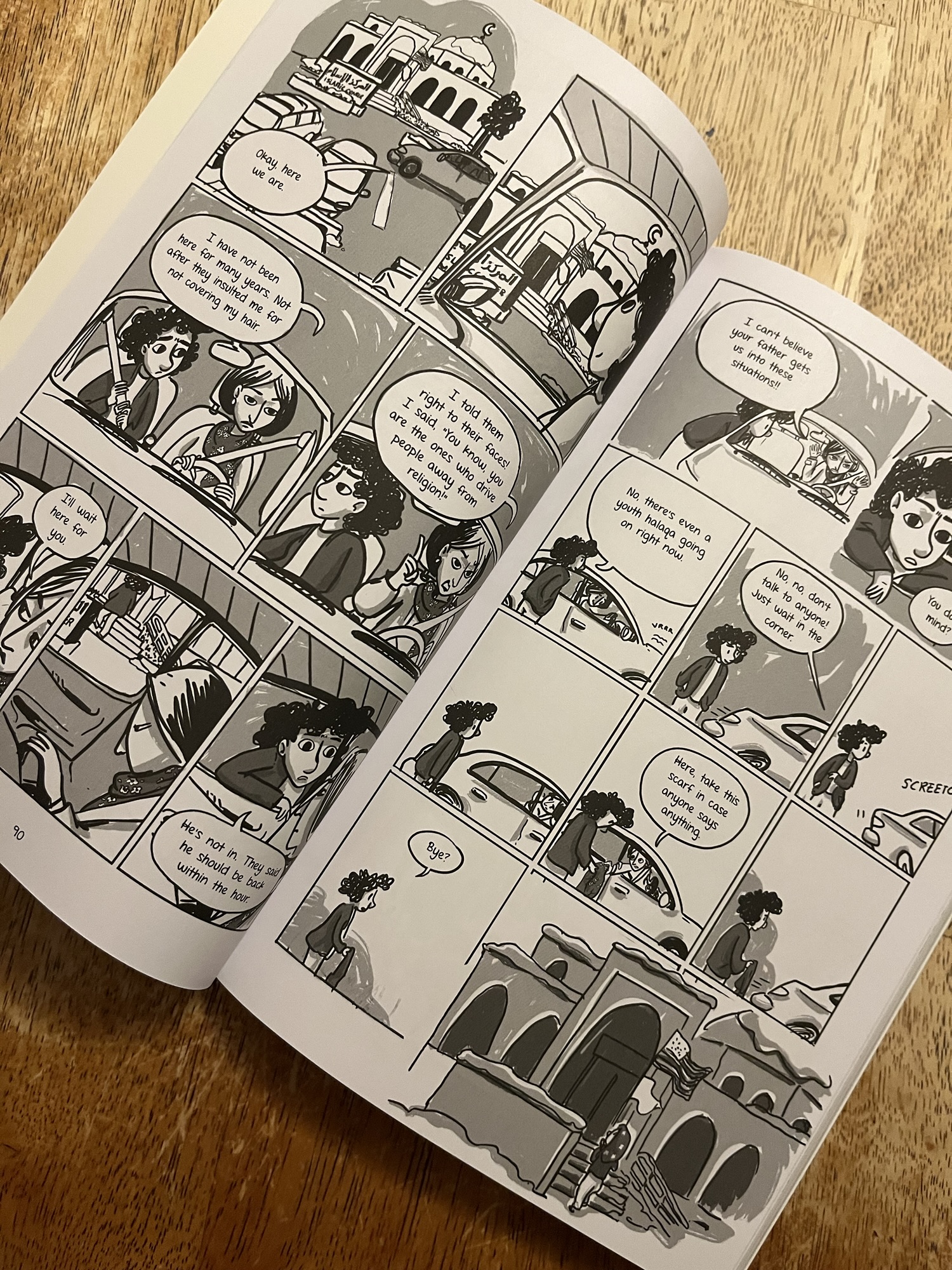
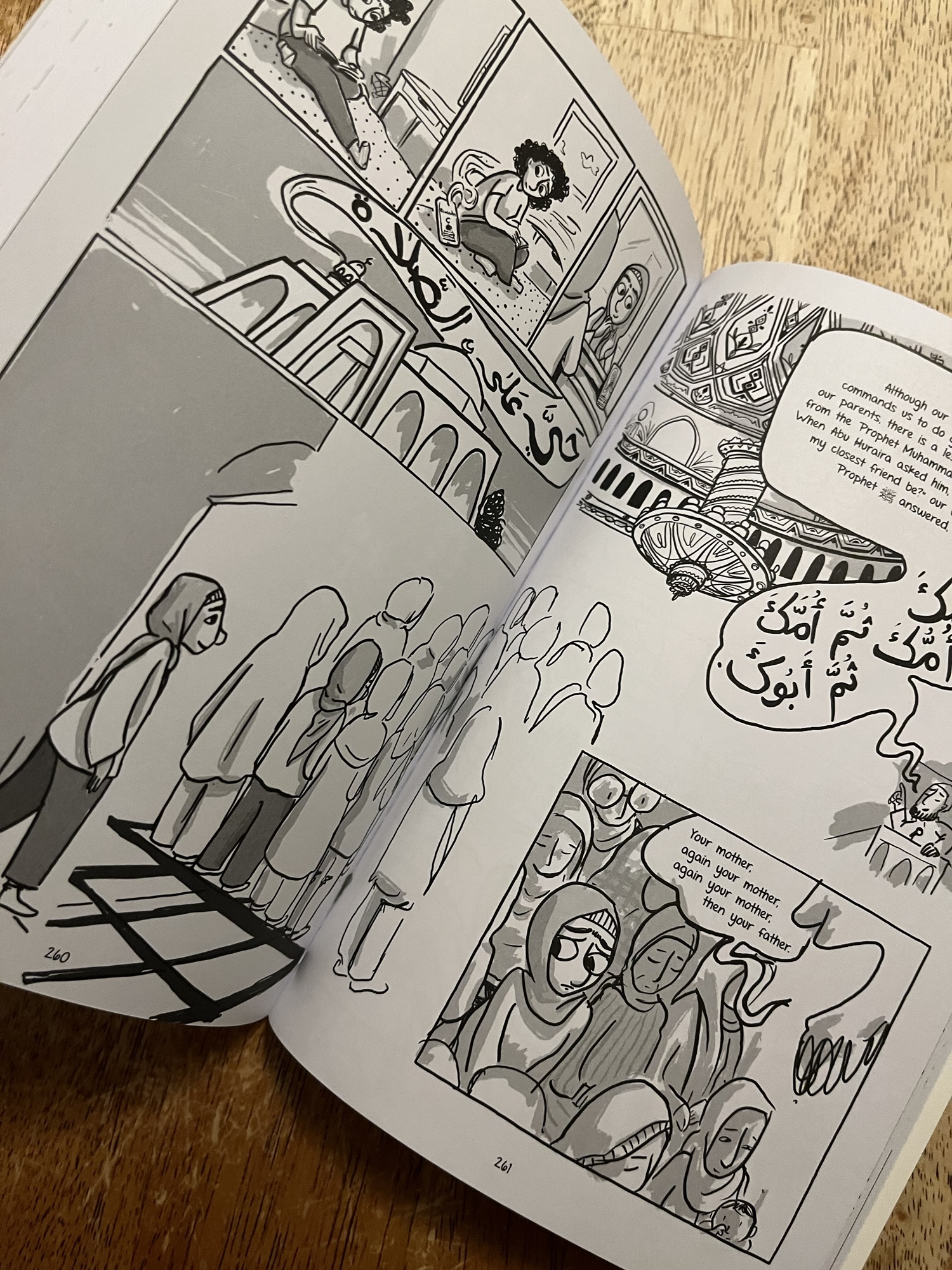
Having not liked the author’s YA books, I was on the fence about reading this, but when I saw it at the library I could hardly resist a Ramadan book about a girl visiting Bangladesh, wanting to be a journalist, and learning about climate challenges.  And alhumdulillah, the 304 page middle grade book is clean, Islam centered, and flag free.  Not so great though for me was the story craft itself.  I think it tried to do too much from a 3rd grade protagonist voice which resulted in a lot of telling, very little showing, and no connection to the characters.  My 10 year old read a few chapters, but couldn’t be persuaded to pick it up again as the plot is rather weak, journalism isn’t an exciting field to kids these days, there is no back matter explaining climate concerns, or flooding, or even a map of Bangladesh, and even he couldn’t understand why the book kept using the phrase, “first Ramadan,” even though it was just her first time fasting. I wanted to cheer Nadia on in her endeavors and her growth, the arc was there, I just never felt I got to know her.  Unfortunately, her voice and characterization were underdeveloped, resulting in her not being particularly relatable and likeable.

SYNOPSIS:

Nadia is planning to fast her first Ramadan with her best friend Yasmin, but a quickly decided trip to Bangladesh has her heading to her parents’ homeland for the first time to meet family members over her summer holidays.  Luckily her journalist aunt is going with them, and with Nadia’s sights set on being the editor-and-chief of her school paper, she is looking forward to learning what she can.  Her Khalamoni is working on a story about the flooding in the area, and Nadia tags along to interview a family that is helping care for the displaced families.  When she sees that even a kid not much older than her can make a difference, she is determined to spread light on the unreported environmental problems happening and their devasting effects.  All this is happening during Ramadan, and the heat of Bangladeshi summer, the length of the days, and the secret race Nadia and her cousins are battling in to fast the most amount of days, allows for Nadia and the reader to learn that Ramadan is more than just fasting.

WHAT I LIKE ABOUT IT:

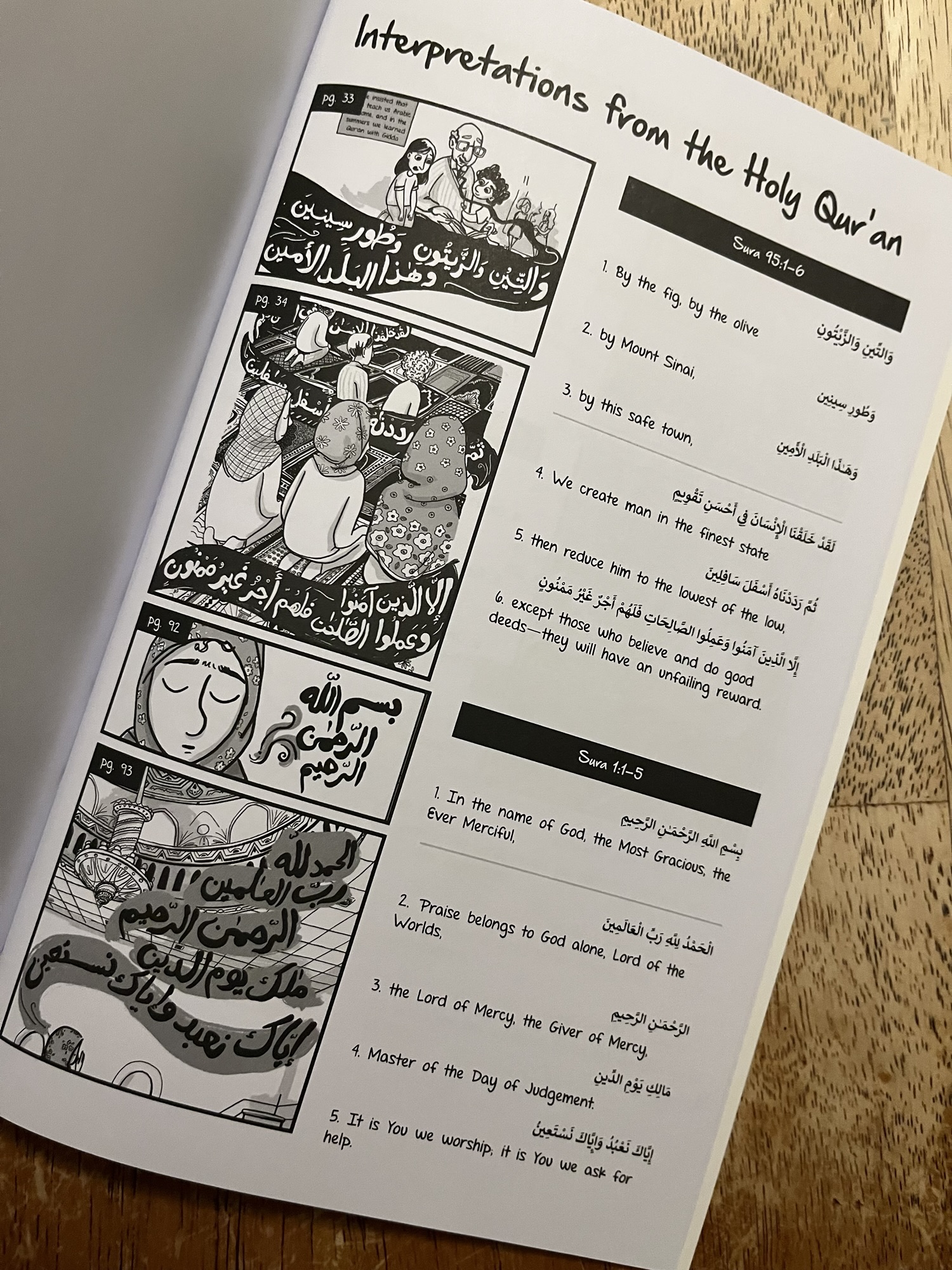
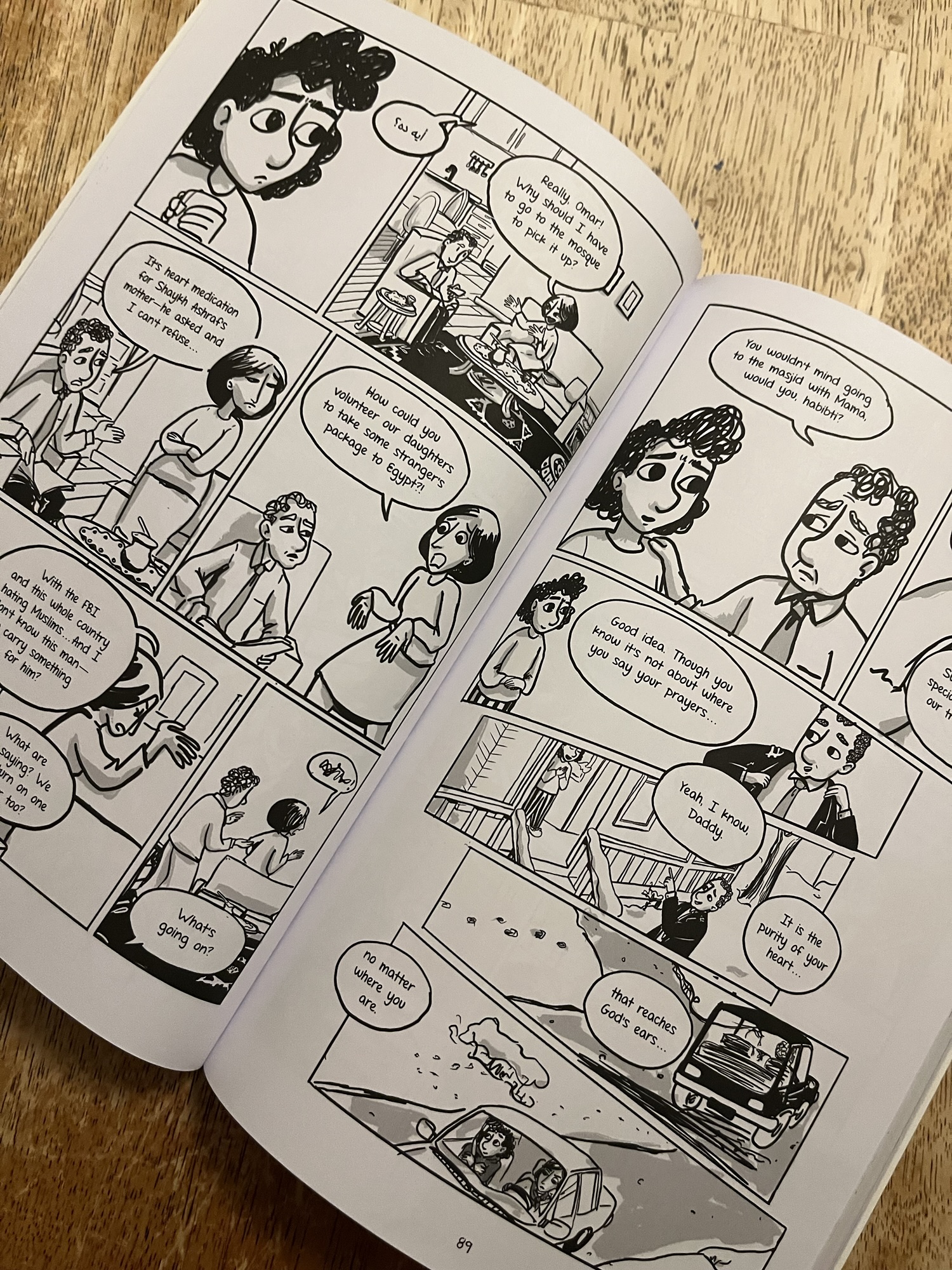
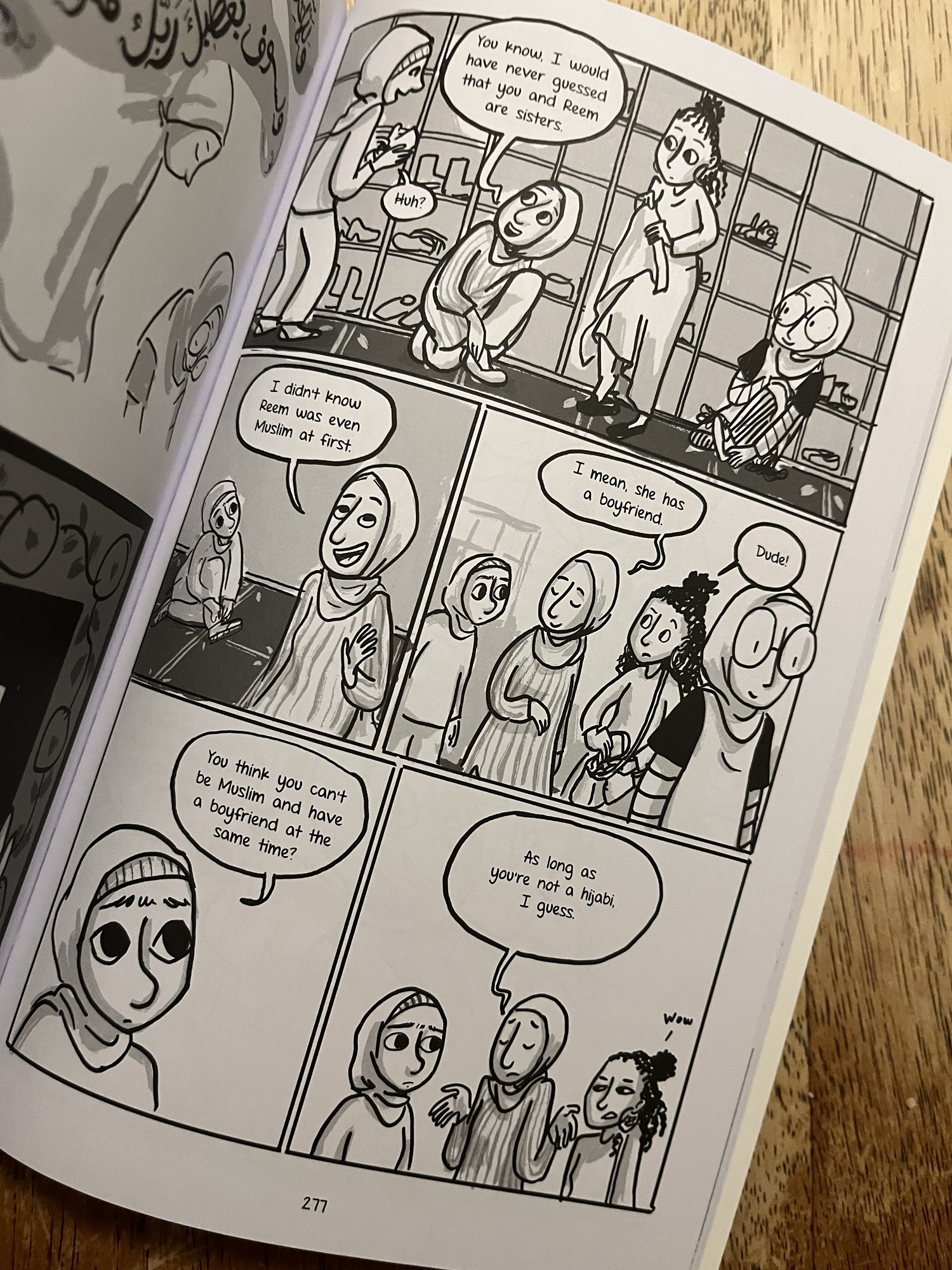
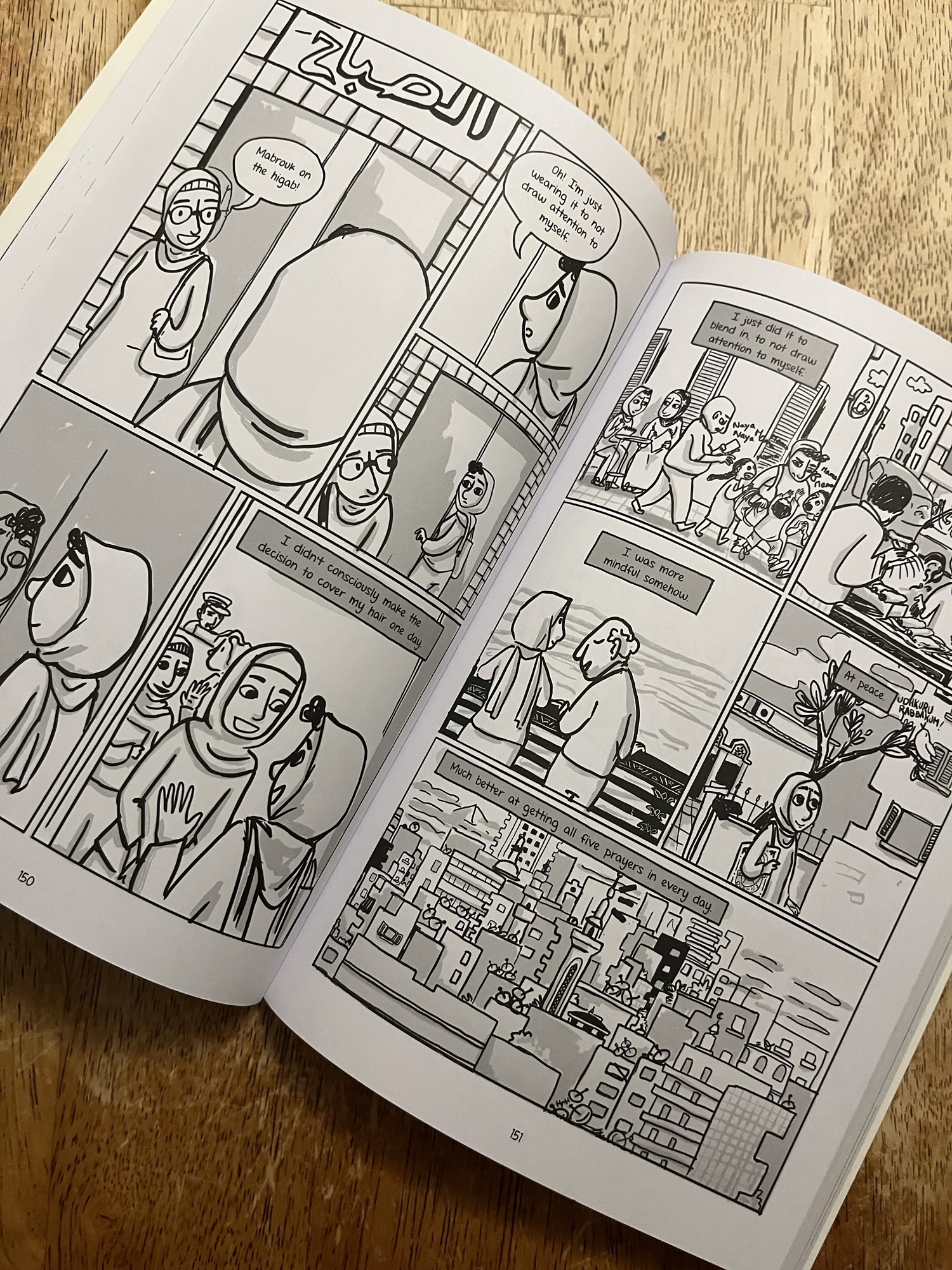
I really like that the story shows praying and reading Quran threaded in with the fasting, even if it is mostly just from the adults.  The arc of Nadia learning about self control and intentions is also nice to see.  It seems a little off that she has never even fasted a half day or part of a day before and that she has made being 8 years old and her first Ramadan such a landmark event.  In insolation, all of the story lines and the rep (see the pictures I’ve enclosed), sound great, but for some reason it just felt like it was too much and thus nothing resonated. So many concepts meant surface level details were all that the pages could address, and if it went deeper it felt like info dumping, resulting in no character connection between the fictional characters, or with the reader.

FLAGS:

Clean

TOOLS FOR LEADING THE DISCUSSION:
The book would be a solid teachable book so that the discussions could be fleshed out and understood with relation to climate change and the environment, geography, and news cycles.  I would love to see a kid pick it up and see it through to the end, but ultimately I don’t know what there is enough pull to keep most kids reading to see how the story pans out for Nadia if it wasn’t a required assignment in a classroom.


Just Right Ramadan by Jenny Molendyk Divleli illustrated by Ava Haghighi

Standard
Just Right Ramadan by Jenny Molendyk Divleli illustrated by Ava Haghighi

This 44 page picture book is delightfully illustrated and oh so relatable.  As we are still early in the month of Ramadan, my large family at least, is still working out routines, and this book was reflective of the joy, the struggle and the determination to take advantage of it all. Yes, in Ramadan we need to push our selves, to pray more, read more Qur’an, be more generous, more kind, but when you have kids of all ages, it can take some constant rebalancing so there is minimal waste, enough time at suhoor, adequate sleep to drive and function safely, encouraging the littles to fast just a little bit longer each day, setting some boundaries about going to Tarawih every night if they start to crash out and make it hard on the others.  At times the story is a little overboard, but the heart really does open the door to discussions in finding what works for your family. My 6 year old and I laughed, talked, and have found ourselves referencing this book a lot as we strive each day to increase our ibadah and hopefully at the end be able to say, we had a “just right Ramadan.”

The book starts with a family setting goals, making plans and checklists to get the most out of the blessed month.  They don’t always agree, and even the most well intentioned plans are often harder to actually put in to practice.  The Zareen family made treats for their neighbors, but enjoyed a few too many themselves, they want to wake up early for suhoor, but waking up too early makes them have to wait a long time for fajr and waking up late means they are rushing.  A little like Goldilocks and the Three Bears finding one extreme or the other unsuitable and settling for something in the middle, the family has to navigate how much food to prepare, how much to drink before tarawih, how late into the night to worship, and ultimately find what works for them.

The tone is light and sweet and doesn’t tell the reader what they should do.  It shows a family finding balance while striving to take advantage of the blessings of the month, and hopefully will encourage the readers to do the same.  I like that story is a different take on the month, that the kids are right there with their parents, there is no first fast or identity stresses, no searching for the moon, so for me and my kids the book stands out as being silly, relatable, and unique, a combination that is increasingly hard to find in holiday books, alhumdulillah.

The Ramadan Kitchen: Nourishing Recipes from Fast to Feast by Ilhan Mohamed Abdi

Standard

At 223 pages, this Ramadan inspired cook book, is organized with the holy month in mind, but provides recipes that will work the whole year through.  With a few pages of text, reflection, and background before each of the eight sections: Suhoor, Iftar, Mains, Breads, Spices & Chutneys, Dessert, Drinks, and Eid, the author allows for the pages filled with the recipes themselves to be clear and less cluttered.  The individual recipes feature a description for a header, with some encouragement and guidance of how to change the recipe up and make it your own.  Some recipes have pictures, some are just text, and some are followed by two page spreads that show plating, pairings, or guidance for preparation.  The book stays focused on food with minimal religious inclusions aside from the religious framing, nothing that would make the book limited to a Muslim kitchen.  I liked the organization and found it intuitive and look forward to trying many of the Somali dishes that stand out to me in making this a unique collection, and a benefit to my shelf.

The book feels authentic in both the way Ramadan is presented and celebrated, and the approach and constraints of preparing meals. The personal commentary is very relatable and does a good job of conveying the factual with the spiritual, the goals with the reality, the food with the nourishment, and the multitudes that exists at different stages of life and even a different times of the blessed month as tiredness and excitement compete. Whether you pick up the book to thumb through and read, or grab it to find inspiration for a meal, the book has a lot to offer and return to.

Too Soon for the Moon by Ayshah Ismail illustrated by Rizkia Gita

Standard

Yep, another story about the moon, at least this one attempts humor and doesn’t completely neglect religion. So as I write this, I’m reminding myself that most folks don’t read as many Ramadan and Eid books as I do, and thus won’t be comparing or rolling their eyes at the familiar plot points. The book is for the younger crowd, as its premise is that it is too soon in the day to see if the moon is shining to indicate that Ramadan is over and Eid is here.  The little boy also doesn’t know what the crescent moon looks like, so Mama tells him it is like a smile and draws a curved line in the flour as she bakes.  With that, Khalid is off looking for the moon, and being told that it is too soon to see it whenever he mistakes something else for the moon, clearly not knowing what they mean by “too soon.”  I do like that Khalid and his Baba go to the mosque to pray, but I’m again wondering why everyone at the mosque praying maghrib does not look for the moon as a community.  There was a similar book I reviewed with the same exact premise and this same exact oversight, it also really stretched out the time window available to see the moon, which has me wondering if it is not the same for us all? I do like that the book comes full circle and he does find the moon in a funny place, spoiler, reflecting on the ground in a puddle.  I also like that there is a scannable QR Code for a free audiobook version and that it gets creative with not depicting faces.

The book starts with Khalid helping Mama bake baklava in the kitchen asking about the Eid moon.  Concluding that the sooner it is found, the sooner they can enjoy the treats and gifts, he is determined to find it.  The holiday lights outside obscure his view with Baba, so he heads up to his sister’s room for a better vantage point, but the cat’s collar reflecting is all he sees out the window, the glint of his aunt’s bowl back down in the kitchen also doesn’t help him find the moon, and they all keep telling him that it is “too soon.”

Baba and Khalid head to the mosque to pray, it is still too soon to see the moon, and when they are done, it is raining.  A sad Khalid sits dejected, but when the clouds part and the moon’s reflection hits the puddle, the joy of seeing the Eid moon finds the protagonist, and all is well.

The large 10 x 10 size makes the book suitable for bedtime or story time, and while it might have been better as a board book with a premise of a child not knowing what the moon looks like and where to find it. I found it more troubling that the rest of the family and masjid community didn’t take looking for the moon more serious.