Tag Archives: modesty

My Perfect Family by Khadijah VanBrakle

Standard
My Perfect Family by Khadijah VanBrakle

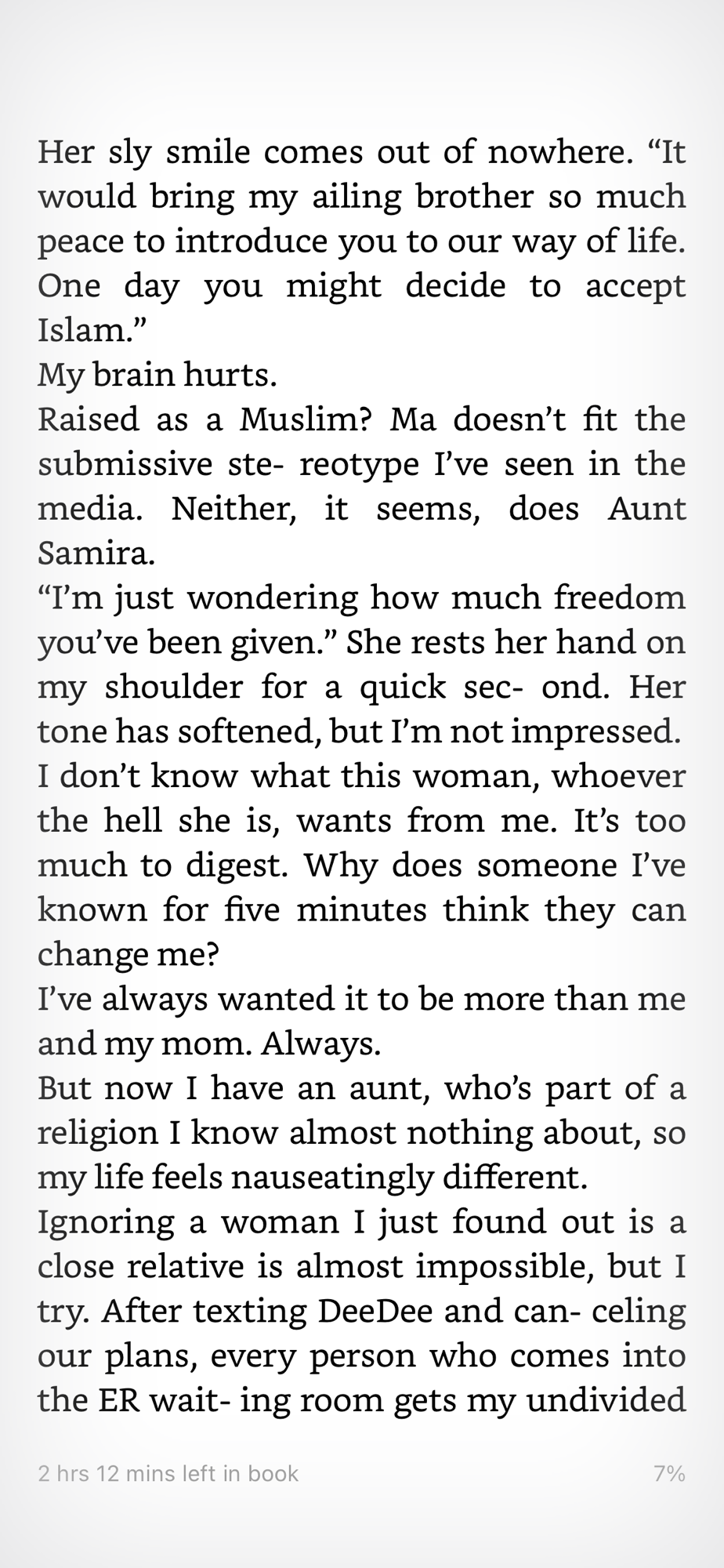
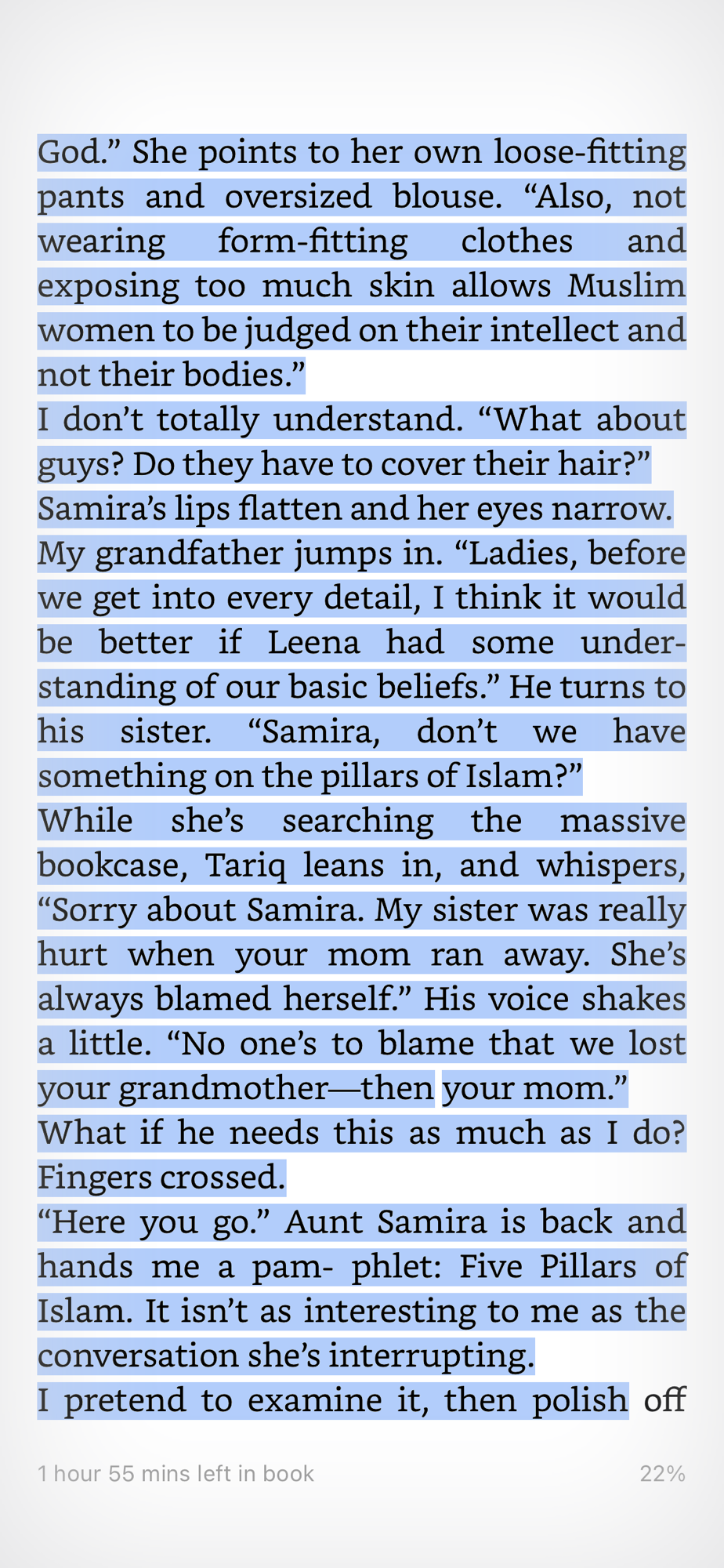
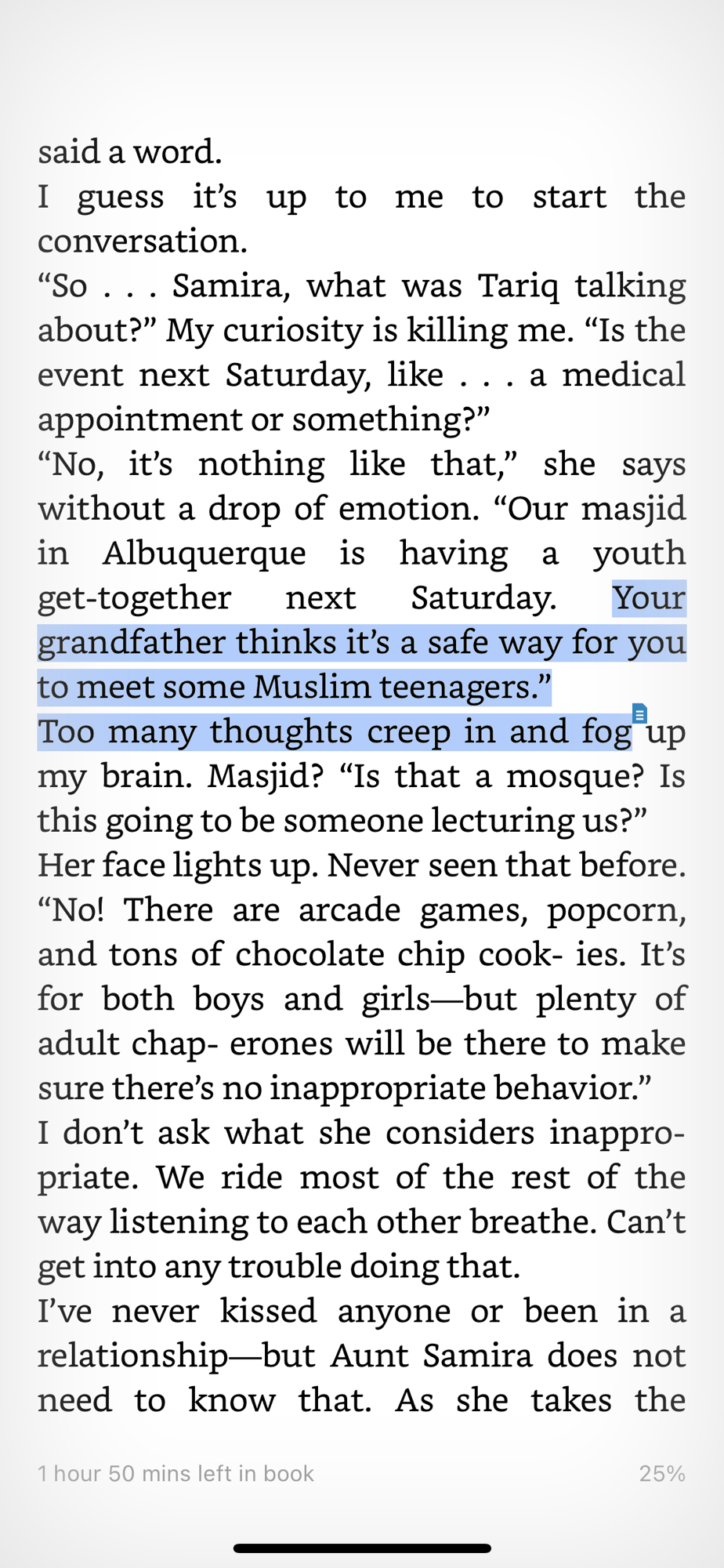
Oh Dear. The very premise alone of this book requires the author to expertly thread the needle of numerous pitfalls, which in my opinion did not occur.  A girl, Leena, learns about family members at age 16, who are Muslim, and the practice of Islam being the “reason” her mother ran away from her family when she herself was 16, means that for Muslim readers the representation needs to be clear that the family’s interpretation is to blame and not the religion itself.  It also means that as Leena learns the reader learns, and non Muslims (or honestly even Muslims) are not going to want a heavy handed preachy 256 page YA book. The Islam “taught” to Leena has to align with the readers interpretation or show why the characters believe as they do, and the conclusion regarding religion and identity needs to make sense for the character aside from what reader wants to have happen.  Unfortunately the copy I read contained numerous errors, repetitive paragraphs, a weak resolution, dropped plot threads, and had me cringing at how harsh Islam was being presented through the great aunt character, that honestly if Islam was just presented as no dating and dressing modestly, or else you will get married off, I can see why one would run away.  The book contains a lot of cursing, and features dating, having a child out of wedlock, death, and gambling by non Muslim characters.

SYNOPSIS:
Leena has always wanted a big family, but her and her single mom, Asiyah tackle life together.  Leena and her best friend Deidre are employed by Asiyah’s in home daycare and are as close as sisters, but she wants more.  When Asiyah finds out her father has had a heart attack, Leena learns she has a grandfather and great aunt that live an hour away, in Santa Fe.  From the moment Leena sets foot in the hospital, under the gaze of her Aunt Samira, the judgmental overtones begin regarding clothing, education, food choices, and dating.  As a result Asiyah is reassured that she made the right decision all those years ago to leave Islam and her family.  Leena however, has had her entire world changed, and is willing to endure the abrasive Samira to get to know her grandfather Tariq.
WHY I LIKE IT:
I like that family drama and secrets were teased, even if I didn’t think that they were presented and resolved well. I wish they took more of the focus and that Islam being a reason for the animosity was downplayed.  I think religion could and should have been one of many factors, having it be the ONLY factor put a lot of pressure on the presentation, which fell short.  It also means that the resolution needed to resolve the Islam hanging in the air, SPOILER,  it didn’t.  The conclusion has Asiyah realizing her father never stopped loving her, but how did that resolve the relationship with her and Samira? And suddenly Samira just backed off her singular Islamic identity? A bit of whiplash with it all happening off the page, left me unsatisfied.  Speaking of pages, the book spends a lot of page space having characters drive the one hour one way to have conversations that are less than 15 minutes and could have been done over the phone or even texted.  Nothing exciting or revealing comes from these drives, they just make the story drag. Tariq should have ridden along, so we could see why he was “such a great man,” see why Leena kept enduring the harshness of her Aunt to get to know him, and have the family she always dreamed of.

Islam is presented through the harshest of harsh characters, a few side characters are brought in that make Islam more realistic in practice and fleshed out, but it really feels like it is too little too late.  I think a non Muslim would feel Islam is just modest dress, no interacting with boys, marrying early, and rigid rules.  Leena is harassed from the first moment she meets her family, no easing in to it, she is even handed brochures on her first visit to her grandfather’s home.  Yet, Leena never shows any interest in learning about Islam, she could Google it if she was curious, even when at the masjid, she doesn’t go and watch them pray, no connection to Allah is ever discussed, it is just dos and do nots.  Consistently throughout it feels like Islam is weaponized and perhaps that is the author’s experience or intent, but it is odd coming from a Muslim writer in a fictional setting.  We get enough of that stereotyping from the non Muslim real world.

The emphasis on Islam being the only thing that matters for these characters means that whether they are religious or not, the characters are painted very one dimensional. Leena is a terrible friend, she counts on Deidre to drive her around, she never follows up on asking about her dates or reciprocating the effort for her other than feeding her.  Asiyah has an ex-boyfriend show up, and then goes out with a friend, but there is no context for their abrupt arrivals and then departures from the story, they do not serve as a foil to reveal any pertinent information or connection. A plot device used quite often in the book, and one I am not a fan of, is when things can be solved by characters simply having a conversation.  It is never the right time, they will talk later, even the fruition that started the family fracturing could have been eased by, you guessed it, the characters talking, not even agreeing, just talking.  While I’m running through my top gripes, might I add, that I have spent a few too many minutes on the cover as well.  Presumably Leena is in the middle, her young single mom Asiyah on the right, but who is the young hijabi? Her aunt does not read young at all, and she would not have her neck showing, that would go against her core characterization. So before you come at me that I have no right to my opinions and that I’m too mean, please solve the mystery of who is on the cover, thank you.

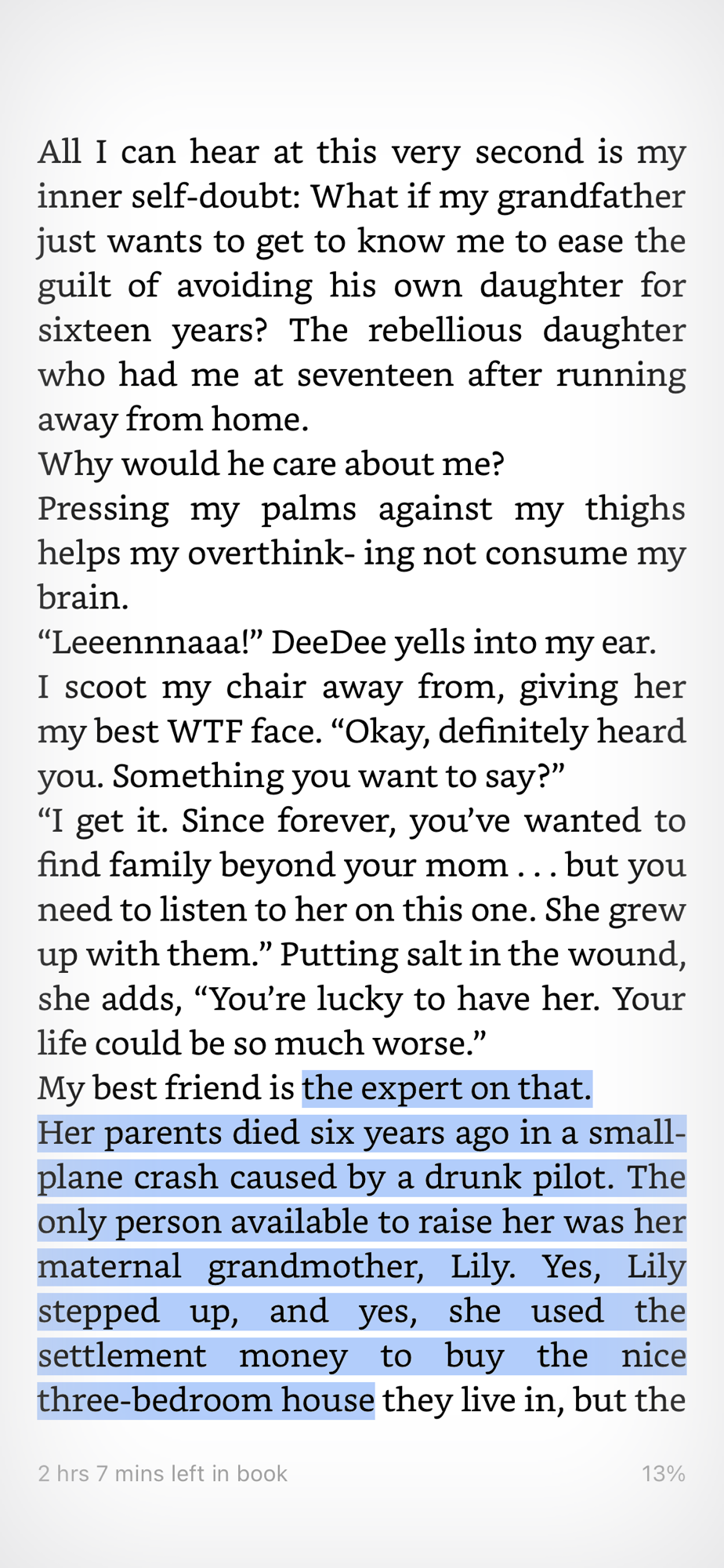
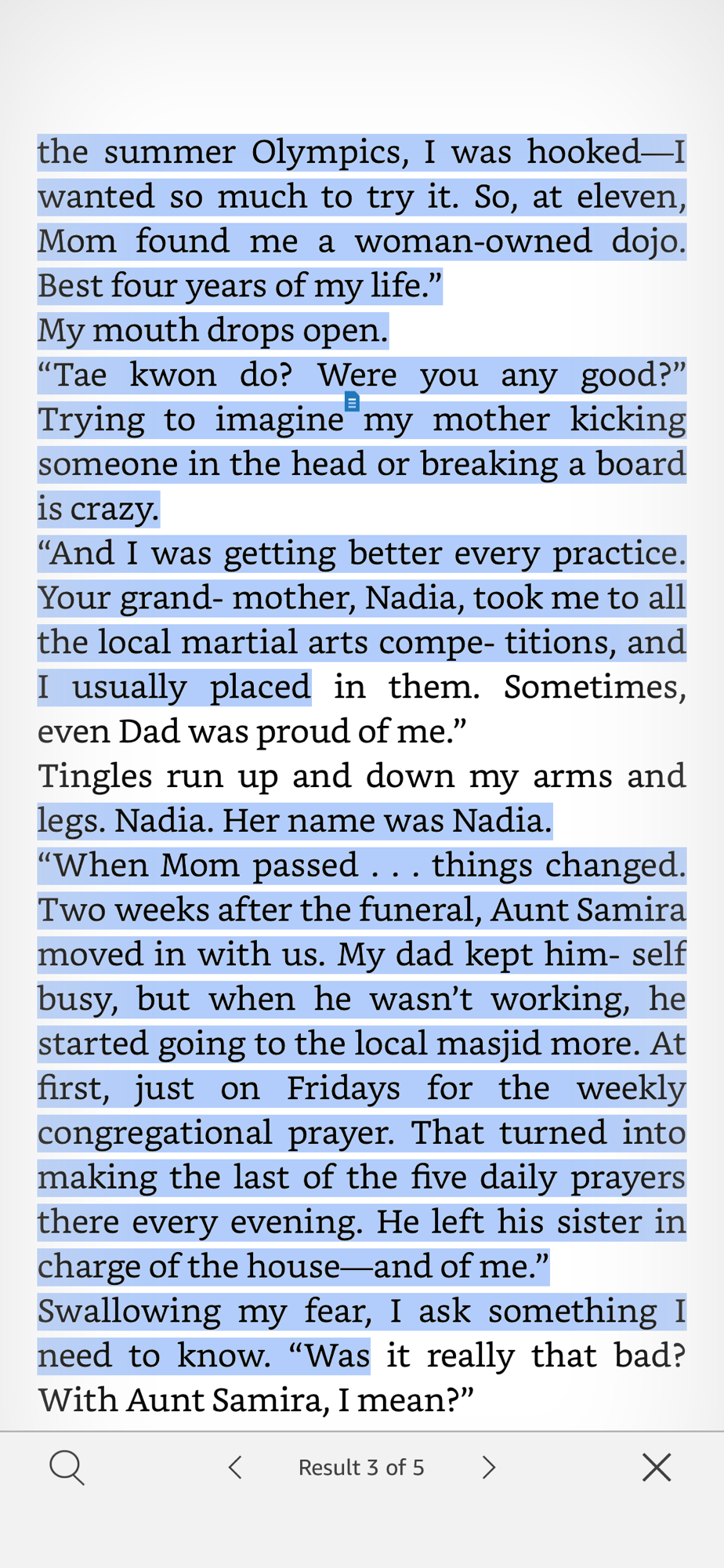
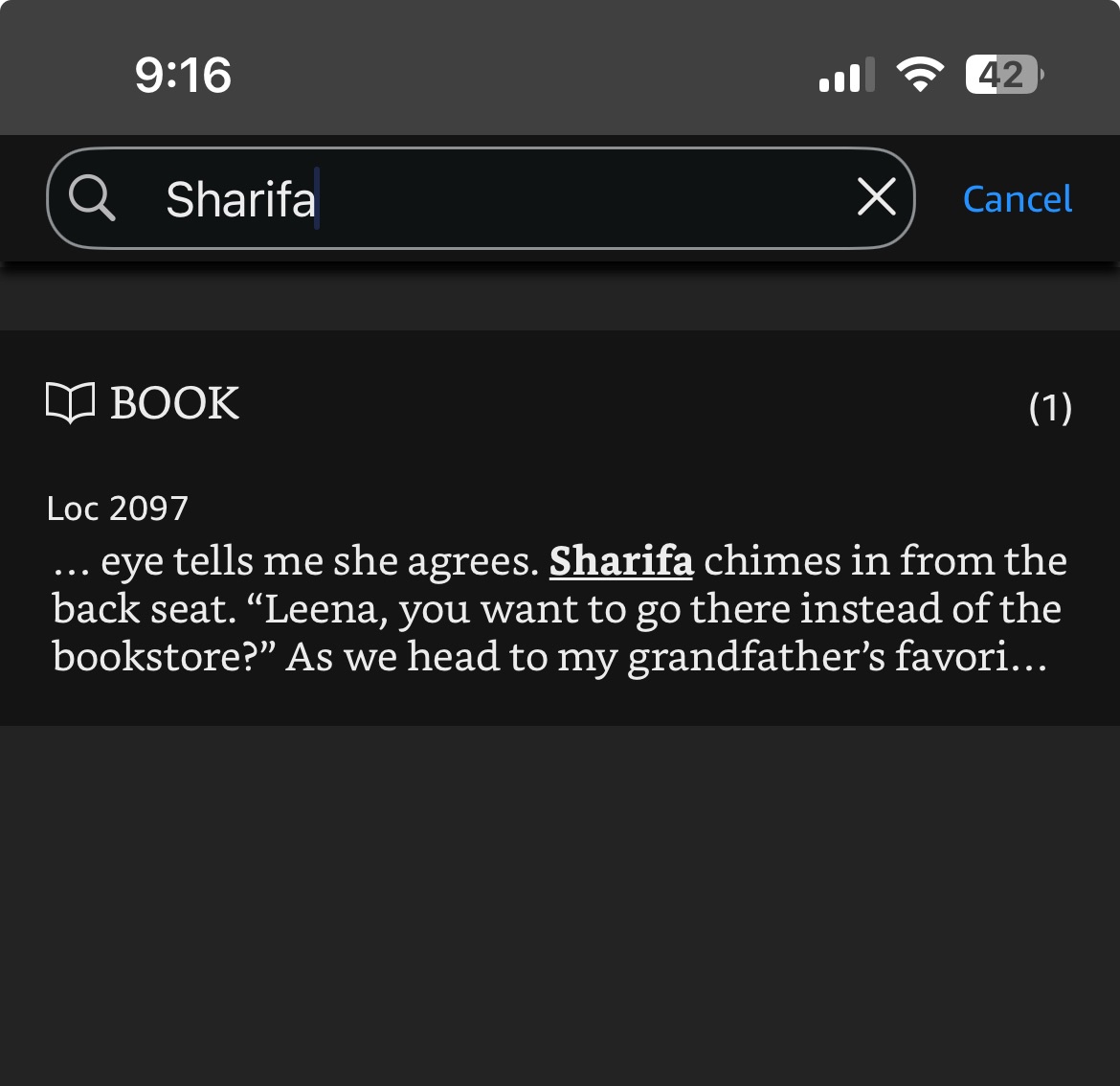
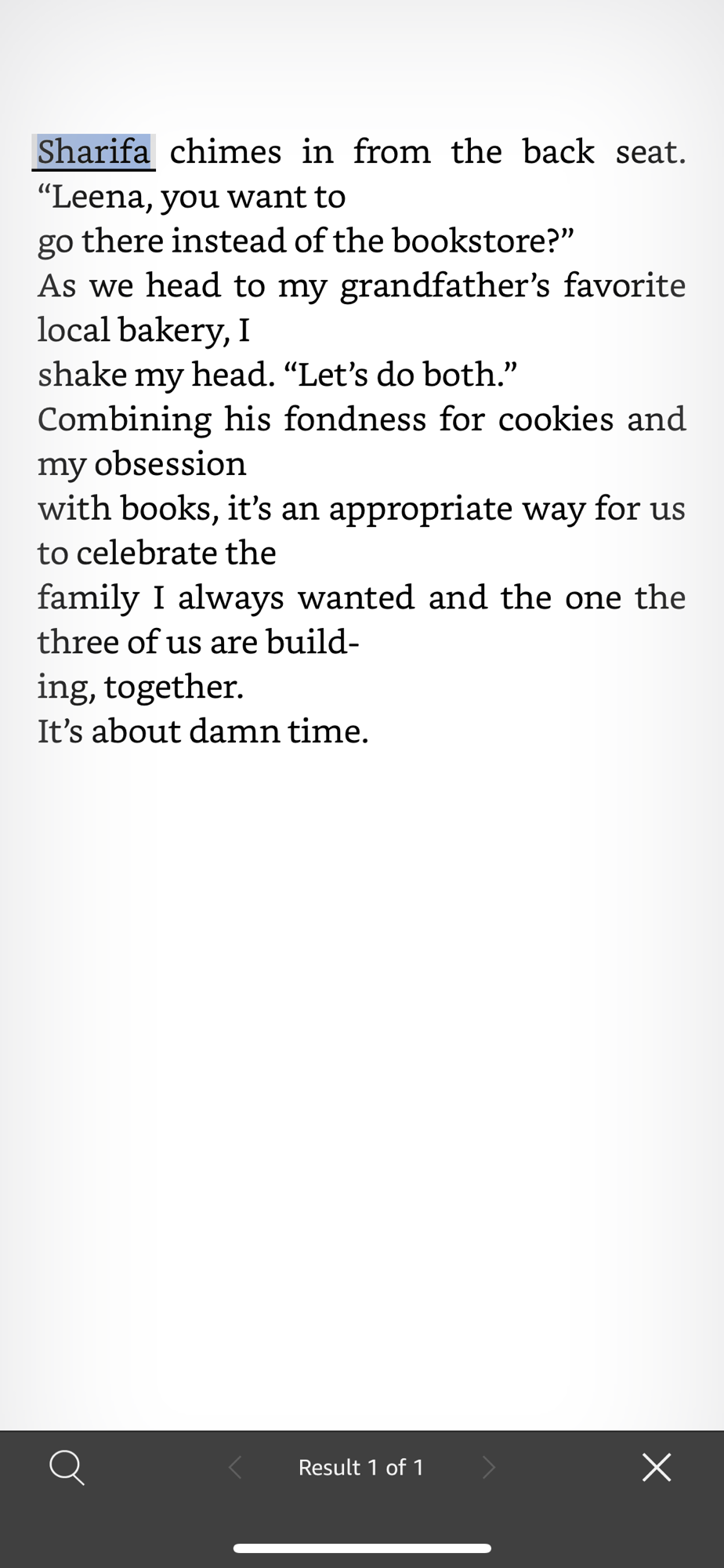
I read an ARC so I am aware that changes could have occurred, I’ve requested the book from my library and it is on order, and I will come back and correct this paragraph if needed.  The story of tae kwon do is repeated in two different spots almost word for word as if the information that Asiyah was good at tae kwon do both times is news to Leena.  Clearly it is in error.  It also has Deidre’s grandmother getting their house with the insurance money from Deidre’s parents dying and then a few lines later saying how the grandma doesn’t let Diedre forget that the spare room was changed to a bedroom for Diedre when she moved in.  A friend, Rheem, is brought in guide Leena academically, and is described as being homeschooled and changing to an online program for her senior year to also take dual enrollment classes, a few chapters later they are going to her Islamic High School for a party.  Side note, the sign on the high school says, “ALHIDAAYAH ISLAMIC SCHOOL: Grades sixth through twelfth.  We want our children learning it’s okay to be both American and Muslim.” The last page of the book also has a “Sharifa” in the back seat, and there is no Sharifa previously mentioned in the book.
FLAGS:
Cursing, judgement, dating, running away from home, anger, death, loss, lying, flirting, gambling, child out of wedlock, cutting family ties, clothing shaming, music, othering.

TOOLS FOR LEADING THE DISCUSSION:
I wouldn’t shelve or use this book for a book club read.  I think Muslim kids would be annoyed by the way Islam is presented.  I think they would be ok that Leena SPOILER didn’t take an interest in Islam, but I think they would be bothered by the flat, angry portrayal that it has in the book.

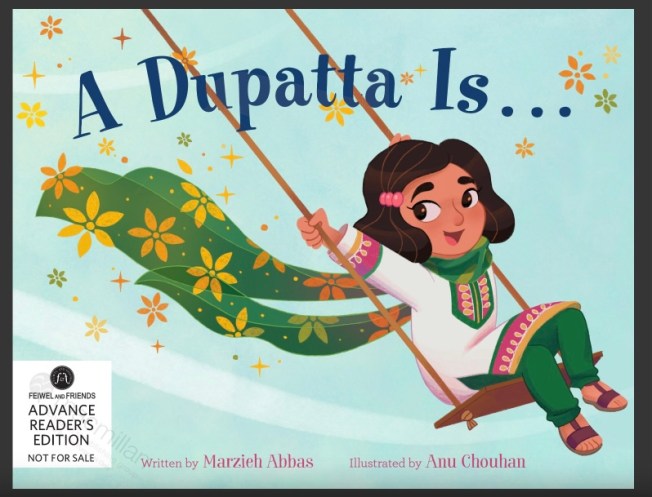
A Dupatta Is…by Marzieh Abbas illustrated by Anu Chouhan

Standard
A Dupatta Is…by Marzieh Abbas illustrated by Anu Chouhan

img_6073

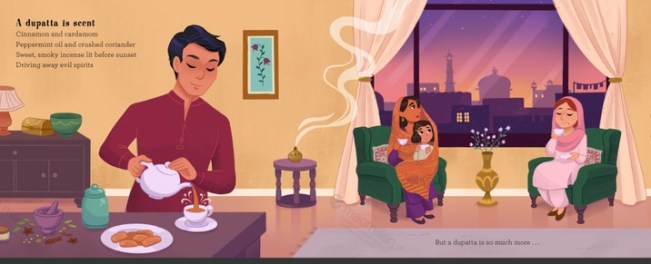
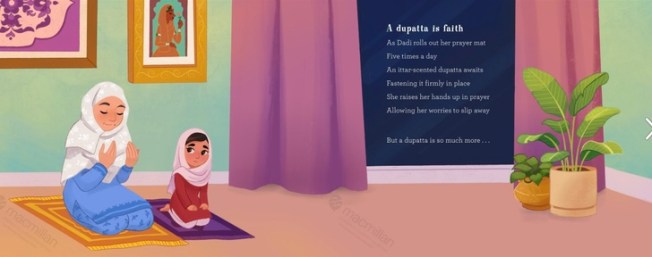
I read this 30 page early elementary book a few times before writing this review and honestly my cheeks hurt because I cannot stop smiling.  The lyrical writing radiates warmth and pride, culture and tradition, legacy and identity, while acknowledging both the playfulness and solemnness of a piece of fabric.  My heart breathed with the clarity and articulation that is felt and contained within the fabric that perhaps all Pakistanis feel, but cannot convey so poetically.  The book may be meant for children four to eight years old, but all readers will appreciate the text and illustrations that seamlessly flow like a favorite dupatta grabbed while running out the door. I struggled with picking only a few images to share, as every page became my new favorite as the book progressed.  Admittedly though, one page did give me pause as it conflated incense burning with getting rid of evil spirits which comes across as a religious belief, but is a cultural practice.

img_6074

The book starts out with the actual physical description of what a dupatta is and how it is adorned.  It then moves on to describing the color, the sound, the smell, the place, the function, the art, the beauty, the fun, the faith, the legacy, and the identity.  Each spread ends with the words, “but a dupatta is so much more…” seamlessly weaving so many facets of what a dupatta is together to create a true understanding of it from a tangible, to cultural, to practical perspective.

img_6076

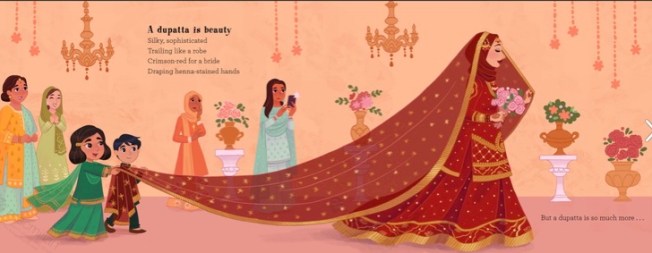
I love that there is a page about faith, and praying five times a day with a dupatta being worn, it is a little odd that there is a portrait decorating the wall behind the two characters making dua, but at least it is clearly behind them.  I absolutely loved that so often the wearer of the dupatta was also wearing a hijab, particularly the bride picture- which is absolutely gorgeous.  It signals without words that a dupatta can be worn to cover a Muslim woman’s head, but it is also often not.  The backmatter further details that it was once worn as part of the national dress and as a form of modesty, but now is often worn as an accessory.

img_6077

One summer in Pakistan, a friend and some cousins and I started trying to formulate 101 Things to do with a dupatta (wipe noses, pull things out of the oven, catch fish), it was the year of net dupattas so clearly covering your head was not one of them.  Sure we were being silly, but to see the book also highlight wiping sticky hands, and wrapping it up like a sari, and using it as a cradle to rock a baby was very, very accurate and heartwarming.

img_6079

Please pre order this book, it signals to publishers that these books are in demand and is a way to show what type of books we want to see.  I preordered  mine here.

Ayesha at Last by Uzma Jalaluddin

Standard
Ayesha at Last by Uzma Jalaluddin

ayesha at last.jpg

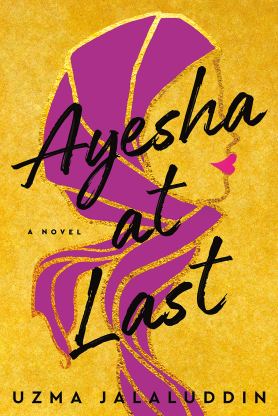
This is not a YA book.  The back of the book and about 75% of the story could really make it seem ok for mature middle school and early high school readers, but I’m reviewing it as a “public service announcement,” that it really isn’t appropriate for a young adult demographic.  No where does the book claim to be YA, I’ve just seen a lot of people online ask if their 13-16 year old (ish) daughters would like it.  That being said, the 351 pages of halal romantic comedy a’ la Pride and Prejudice inspiration, really is a fun light summer read that I enjoyed and feel young college age girls and up will too.

SYNOPSIS:

Set in Canada, Ayesha is 27 and still sorting out what she wants in life while considering expectation, obligation, and passion.  Born in India, she came to Canada after her father died in secretive circumstances, and with a workaholic mom against marriage, a Nani who once studied to be a police officer, a Nana who quotes Shakespeare at all times, Clara, a best friend, and a flighty beautiful younger richer cousin, this cast of characters cheer her on, gently nudge her, and support her, giving a diverse and nuanced view of what a Muslim family looks like and how they interact.  Then throw in Khalid.  A very black and white character in his views on Islam, and culture and pretty much everything, and you have a storyline with a lot of potential, twists, and interconnections.  

Khalid works with Clara, lives across the street from Ayesha, and has an incredibly controlling mom who has just sent a marriage proposal to Ayesha’s flighty cousin Hafsa.  When a conference at the masjid forces Ayesha and Khalid to work together after meeting earlier, tension and sparks fly, and to top it all off Ayesha is pretending to be Hafsa. 

Khalid has his own team of supporting characters, Amir an alcoholic- womanizing-homeless colleague who for some reason is considered a friend, a sister who was banished to India and forced into an arranged marriage 12 years earlier, an Islamaphobe boss, and his own baggage regarding his father’s sudden death. 

Bring in the Wickham character of Tarek and the cast of characters is complete for all the action to go down at the mosque and give the Aunty Brigade a whole lot of gossip to process and spread.

WHY I LIKE IT:

The book is fairly predictable in the major story arcs, but there are a lot of twists that keep you hooked, and the author’s writing is smooth and fluid.  Being it is a loose retelling of a classic, I wasn’t expecting much and was pleasantly surprised how well the story would stand alone as an OWN voice piece about growing, maturing, changing and willing to challenge oneself. 

I love that every Muslim and desi character in the book is different and unique and not a cookie cutter of stereotypes and tropes.  Most of the females cover, but they are nuanced in how they do it, what it means, how they carry themselves etc., some shake hands with males some don’t, some are comfortable in bars, some are more reserved, some have never had a boyfriend, some have, and they really show the reader that Islam is a deeply personal conviction and the rules are interpreted and challenged differently for each person.  It also shows different male approaches and the internal struggles of doing what you want to do and what you know you should or shouldn’t do in a very realistic non preachy way.

My favorite relationship by far is that of Ayesha and Clara, I love that Ayesha’s non Muslim friend knows that Khadijah (RA) proposed to Prophet Muhammad (SAW) and jokes about rishtas and frequently asks “What would Nana do.”  Seriously, as someone of  Paki background, who started covering in high school, who is half American and proud to be Muslim, this is friendship goals!

The book is perfect for the beach, or a day at the pool, it is light and silly and really you just go with the outrageousness of some of the details.  There are a few thought provoking themes, but really it is just fun and sweet.

FLAGS:

I was really impressed how halal the main story romance remained, however a few of the side stories are a little intense for younger readers and don’t really appear until about 2/3rds of the way into the book.  Yes, Clara has a live in boyfriend and there are a few jokes and situations involving  hooking up, virginity and porn, along with some characters smoking and drinking and being around alcohol, but then the climax really puts more mature situations on center stage. 

Khalid’s sister had an abortion resulting from a pre-marriage relationship and thus was sent to India.  Amir shows Khalid a porn website where hijabi and niqabis strip and pose, a website that is discovered Tarek runs and Hafsa is featured on. The website and the pregnancy/abortion really are the crux of the book and it becomes a big portion of the last third of the book.  It isn’t that the content is overly detailed, it just what the concept presents.  It isn’t salacious or pornographic or titillating in presenting the information to the reader, but the mere presence of it in the story would make it inappropriate for a YA book or younger readers.

TOOLS FOR LEADING THE DISCUSSION:

No way the book could be taught in an Islamic school book club setting, however, if the teachers wanted to start a book club, this one would be a great candidate.


Jameelah Gets Dressed by

Standard
Jameelah Gets Dressed by

FullSizeRender (62)

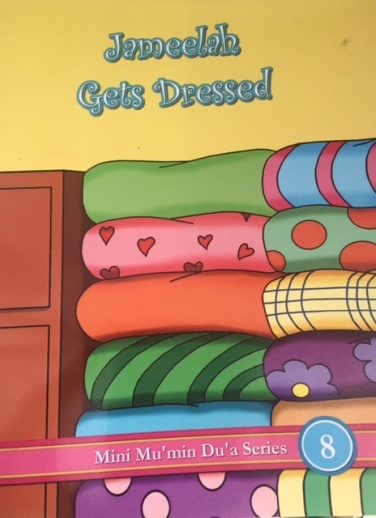
These books in the Mini Mu’min Dua Series are a great way to introduce familiar concepts in an Islamic framework to preschoolers and teach them the accompanying duas for them.  I previously reviewed Sajaad is Sick, which pleasantly surprised me, and this book proved that the series has consistency and value.

FullSizeRender (63)

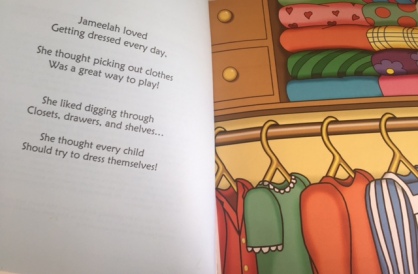
The pictures are colorful, but basic, there are no faces or people included.  The text rhymes, yet has a nice cadence that doesn’t seem overly forced throughout the 38 pages.  The book is large, 8×10, with a glossary cover, and decent weight and binding.

This book includes a few footnotes: defining hijab, giving the ayats for the commandment to draw your veil over your bodies, the hadith about starting with your right, etc.  There are four duas included, the one for getting dressed, the one for wearing something new, the dua for when someone else wears something new, and the dua for getting undressed.

FullSizeRender (64)