Tag Archives: Love

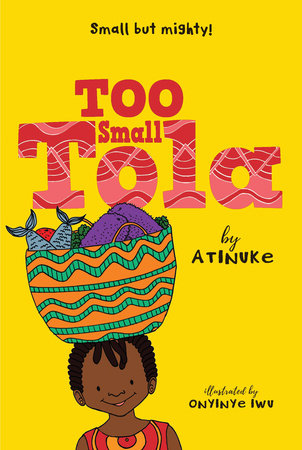
Too Small Tola by Atinuke illustrated by Onyinye Iwu

Standard
Too Small Tola by Atinuke illustrated by Onyinye Iwu

9781536211276

This AR 3.6, 89 page early chapter book features three stories set in Lagos, Nigeria.  The main character and her family are Christian, but many of the neighbors are Muslim, and the third story is set in Ramadan with Easter and Eid falling at the same time.  The sense of community throughout the book, the OWN voice detail and charm make this book silly, warm, and delightful for first through third grade readers.

img_9777

SYNOPSIS:

In the first story Tola heads to the market with her Grandmommy.  Not the fancy mall, but the muddy market further away.  Her older brother Dapo is too busy playing soccer to help, her older sister Moji is busy with homework, that leaves little Tola to carry the items on her head with her tough as nails little grandmother.  Everyone says she is too small, but Grandmommy knows she can do it.  As they purchase the items, and neighbors call to have them pick up items for them too, the duo have to take lots of breaks on their way home, but Too Small Tola does it and proves to herself and others that she might be small, but she is strong.

The second story once again focuses on life in Lagos and the one bedroom apartment the family shares.  One morning both the power and the water are out and the jerry bottles need to be filled at the pump.  When some bullies trip Tola and the water spills, an elderly neighbor lady patiently waits for the right time to get her revenge on Tola’s behalf, and when the bully challenges the woman, the entire line stands together.  Tola may be small, but she stood for something and made a difference.

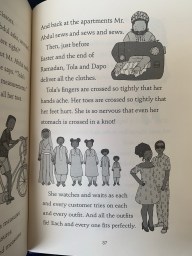
The final story involves the neighbor, Mr. Abdul, the tailor who lives downstairs, coming to measure Tola and her family for their new Easter clothes.  He let Tola measure everyone last year and praises her as the best measurer in Lagos, and Tola is eager to take the measurements this year.  When the tailor breaks his leg, he is worried he will not be able to ride his bicycle to his clients and will not be able to prepare the Eid feast and pay rent.  Tola knows they have been fasting all Ramadan and between her, Grandmommy, and Dapo they come up with a plan to help.  Dapo will peddle the bike and take Tola to measure everyone for their orders.  Tola may be small, but she can save the day for the Abdul family.

WHY I LIKE IT:

I love little Tola and her sassy grandma.  The book would lend itself so wonderfully to be read aloud as it bursts with personality and dialogue.  I love the sense of community in such a day-to-day life that would seem to stark and hard to most western readers.  Tola’s draws on those around her to find her strength, from her Grandmommy, to her neighbors, they may tease her that she is too little, but they also build her back up and stand with her.  I love the diversity in Tola’s world.  She seems so excited that Eid and Easter will be aligned and that after her services they will be joining the Abdul’s feast, such a great lesson of tolerance and respect without being preachy about tolerance and respect.  Young readers will enjoy Tola and the insight into Nigeria.

FLAGS:

Grandmommy lies when a neighbor calls her in the market to ask her to pick up his TV, she pretends the battery dies as she and Tola laugh at how ridiculous them carrying a TV would be in addition to everything else they are carrying.  There is bullying when Tola is tripped and then when Mrs. Shaky-Shaky trips the bully.
img_9781

TOOLS FOR LEADING THE DISCUSSION:

This wouldn’t work for a book club, but would be ideal in small groups, or to be read aloud.  There would be a lot to discuss as children would relate to Tola and find themselves cheering her on.
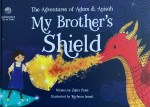
The Adventures of Adam and Anisah: My Brother’s Shield by Zahra Patel illustrated by Reyhana Ismail

Standard
The Adventures of Adam and Anisah: My Brother’s Shield by Zahra Patel illustrated by Reyhana Ismail

img_8580

Based on the idea that “Fasting is a Shield (ibn Majah),” this adorable book brings Ramadan not just to life, but makes those that fast into absolute superheroes!  Over 32 pages of simple large rhyming words, little Anisah shares her wonder and amazement toward her brother, and his shield that he wields during Ramadan.  The beauty of her admiration for her older sibling combined with the message, illustrations, and presentation, make this book (there is also an accompanying workbook) perfect for ages three and up.

img_8581

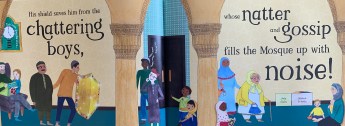
It starts with a secret.  Adam is a superhero.  When Ramadan arrives, the shield comes out and Adam carries it all day.  He doesn’t eat or drink when he has it.  It makes him brave and saves him from tempting biscuits.  It gives him peace when he reads Quran. It keeps him calm when there is a foul during a soccer game. It even keeps him away from gossip at the mosque.

img_8582

When they break their fast, they pull out their magic carpet to fly.  And when Ramadan is over the shield goes away until it is needed again. Anisah patiently marks off the days on the calendar until Ramadan will arrive, because she has another secret.  She is training to be a superhero too.

img_8583

The book concludes with how the story came about, discussion questions and some activities to help learn through practice. The illustrations show diversity and whimsy and toddlers and preschoolers, I’m certain will be begging for this story all year around.

img_8584


Red Shoes by Karen English illustrated by Ebony Glenn

Standard
Red Shoes by Karen English illustrated by Ebony Glenn

img_8529

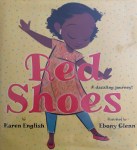
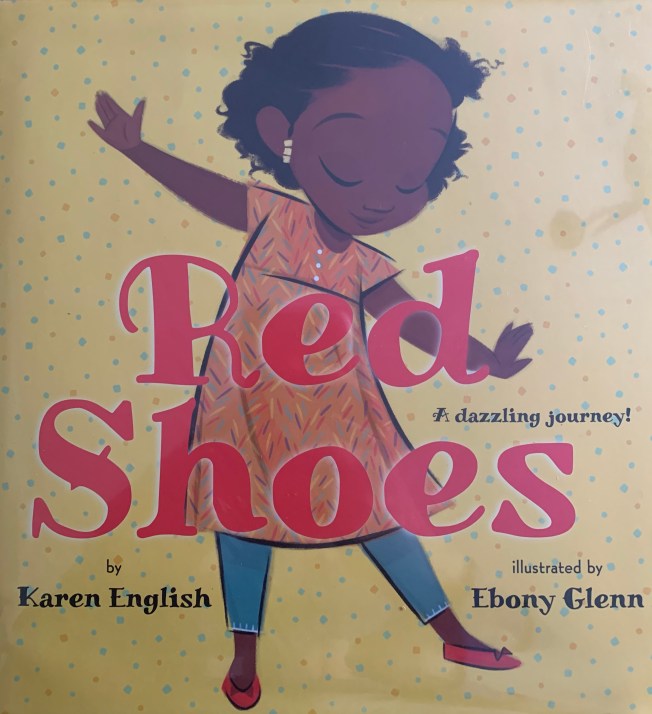
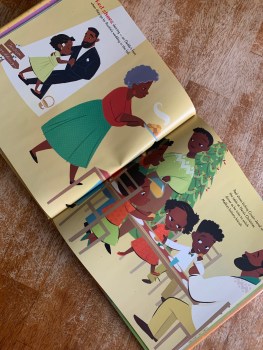
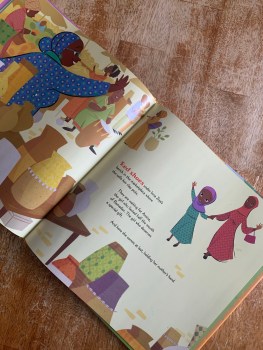
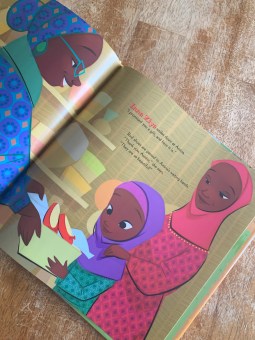
This delightful 32 page picture book links two girls, two ends of the world, two cultures and two stories together with a pair of red shoes.  The short sentences pop with action and the perfectly illustrated two-page spreads convey relatable emotion and joy.  The beloved shoes travel on the feet of one character to a wedding, Christmas dinner, and birthdays, they are then are donated and journey to West Africa to be given as a gift for a little girl who fasted half of Ramadan.   The message I hope children ages three and up will get from the story, is that we are more alike than different, that we should take care of our things (amazingly the shoes weren’t worn out), and that we should donate things of good quality that we ourselves value.  I hope it doesn’t lend itself to perpetuate the stereotype that we can send our castaway items to Africa, being the author comments in her bio on the back flap that her husband is from West Africa and that she frequently visits there, I’m hoping that this is just me being overly cautious in the messaging, and nothing is being implied or negatively taken from a casual reader.

img_8530

Malika and her Nana see a pair of dazzling shoes perched in the window, and Malika is enamored. Her grandma later surprises Malika with the shoes.  She quickly tries them on and tests them out.  She keeps them safe from the rain and dances with them on at her Auntie’s wedding.  She kicks her cousin Jamal with them on, under the table at Christmas when he tries to steal her biscuit.

img_8531

She stomps away from her best friend in her red shoes, and jumps double Dutch with them on when she makes up with her friend at her birthday party. But at Nana’s birthday, “the shoes don’t let her forget that her feet have grown.” Nana and Malika take the shoes to the thrift store to be resold.  A sad Malika says goodbye to them, they were her favorite shoes ever.

img_8532

Inna Ziya sees the shoes in the window and knows just the little girl who will love them.  She squeezes them in to her suitcase and they are off to Africa. They wait under a table selling claypots in a market waiting for the girl who fasted half the month of Ramadan.

img_8534

When Amina comes holding her mother’s hand, Auntie Inna Ziya delivers the promised gift.  Amina thinks they are beautiful and lovingly carries them in the box on her lap as they fide the tro-tro home.  Amina’s little sister Halima, can’t wait to see the gift as she too hopes to one day fast in Ramadan.

img_8535

Amina lets her try them on and when she outgrows them she plans to pass them on to her.  Meanwhile, Malika is wondering whatever happened to her beautiful red shoes, and if someone else is wearing them.

img_8536

There is no mention of Islam nor is Ramadan explained.  There are women in hijab in America and in Africa, even in the books in a shop window there is representation.  I particularly love the shout-out in the illustrations to “Mommy’s Khimar.”

img_8533

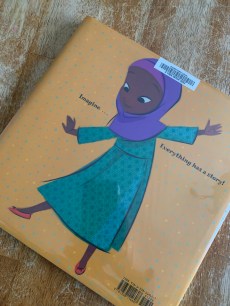
The front of the book has Malika, and the back, Amira.

img_8537

Baba, What Does My Name Mean? A Journey to Palestine by Rifk Ebeid illustrated by Lamaa Jawhari

Standard
Baba, What Does My Name Mean? A Journey to Palestine by Rifk Ebeid illustrated by Lamaa Jawhari

img_7233

This lyrical journey through Palestine’s major cities, shares historical facts, geographical information, cultural richness, and love for a homeland that will inspire and educate all readers. There is a lot of information pressed in to 32 pages and at times the rhyming text, illustrations, and maps are powerful, and at other times overwhelming. The 8.5 x 11 horizontal paperback bound book needs to be bigger to hold all that the pages contain, and hard back to hold up to the details that need to be poured over to be appreciated. The content about the names and places in Palestine is priceless and well done, but I really wanted to love the book a bit more than I ended up feeling for it. I think trying to make it all rhyme was just a bit too much for my liking, but I would buy this book again in a heartbeat to share with my children. Even though we are not Palestinian, I think all Muslims have a piece of Palestine in our hearts and feel a deep need to celebrate the culture, fight for their freedom, and demand a quality of life that they are brutally being denied by their oppressors.

img_7234

The book starts out at bedtime with a little girl, Saamideh asking her baba what her name means. He explains to her that it means “one who is patient, persistent and one who perseveres.” She is named this because she is Palestinian, he explains and then he shows her the key to their ancestral home in Palestine. He asks her to close her eyes and imagine a white dove, named Salam, taking her on tonight’s journey.

img_7235

Salam and Samamidah prepare to journey across Palestine’s mountains, hills, deserts, and plains. They start in Areeha, one of the oldest cities in the world, and one one of the lowest points on Earth.

img_7236

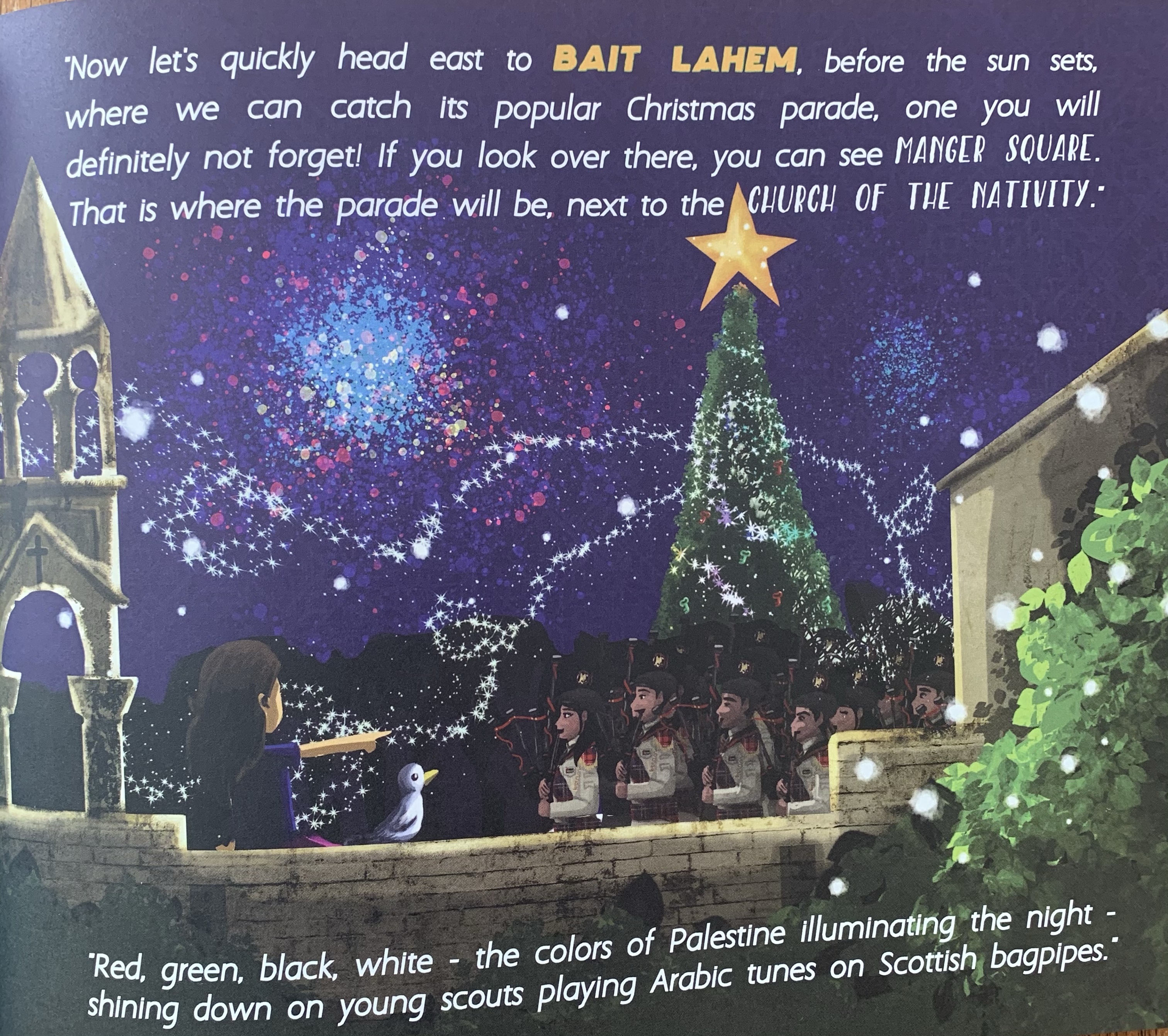
They journey next to Al-Quds, the capital. They see the old city, Al-Aqsa, and more, before heading off to Nablus, Yafa, Haifa and the Akka. Learning about the cities, the food, and the history of each.

They learn about the dabkah, and the weaving in Gaza and head to Bait Lahem too. They learn about glass blowing in Al-Khalil at the Ibrabhimi Mosque, and finally they conclude their journey with the little girl dreaming of flying around the world to use her key and open people’s hearts and minds.

img_7239

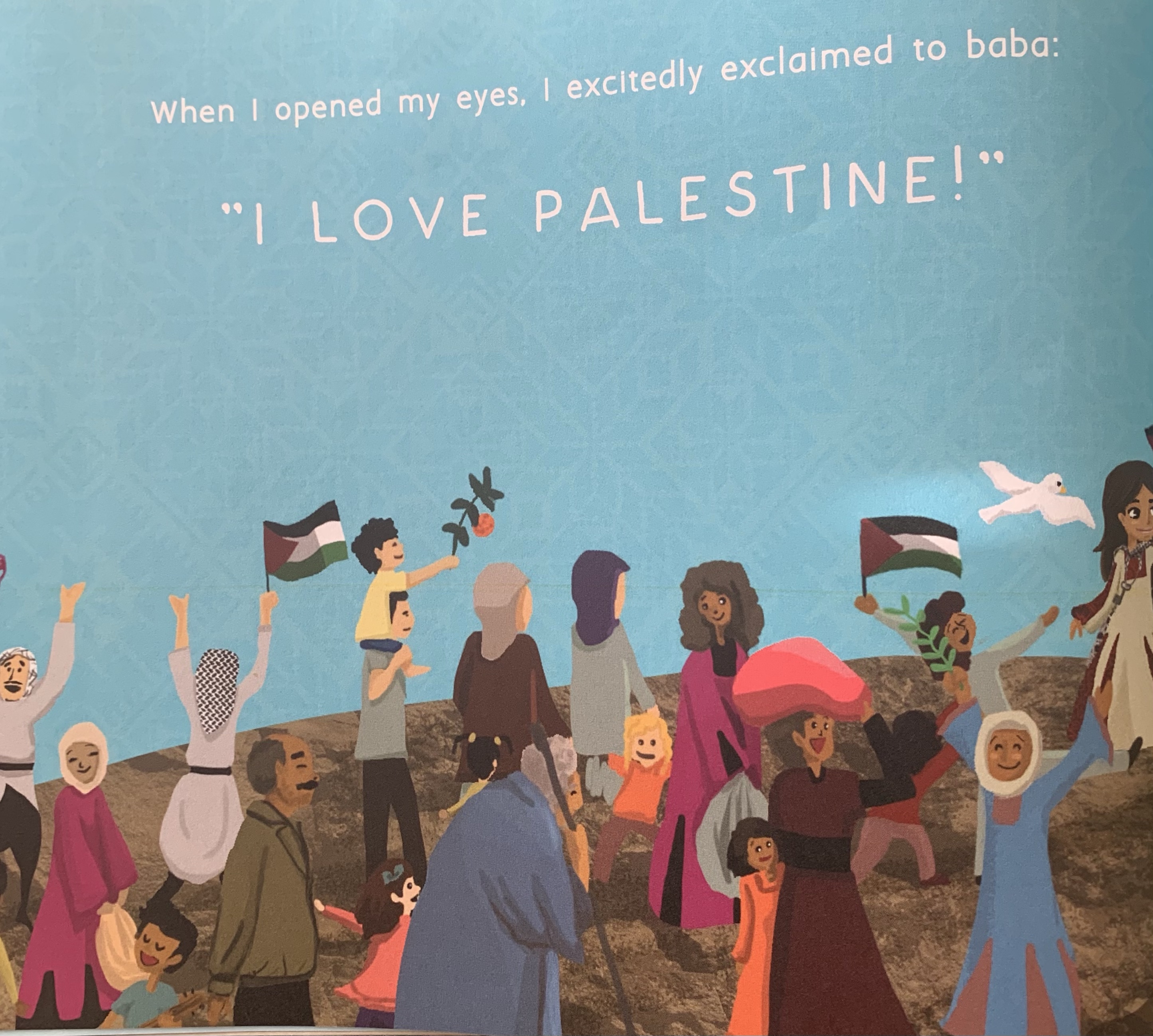
She proudly exclaims her love of Palestine and her and her baba pray that one day they will be able to return. Saamidah then asks her baba why they are refugees, and he promises to save that conversation for tomorrow’s beditme story.

img_7240

The book concludes with a list of the city names in Arabic, trasliterated in English, and then the English names. It then has discussion questions at the end.

The book is not outwardly political, nor critical. It is a celebration of a people, a culture, and land. Happy Reading!

The Servant by Fatima Sharafeddine

Standard

img_6859This 157 page young adult book is translated from Arabic and while at times the story seems intentionally choppy, at other times it seems that the translation is making it more jarring than it needs to be.  I found the book interesting and powerful, in much the way a short story can be, but the length was awkward, as it was too long for a short story, and not long enough to really read as a novel with detail and depth and connection.  I love the growth and retaking of control that the protagonist embodies and I absolutely love the ending being left intentionally unresolved.  There is no mention of religion in this story set in Lebanon, until nearly the end when it states that she is Muslim.  I wonder if the translation took out some of the ‘Salams’ and ‘inshaAllahs’ that would have clarified it a bit even if prayer, or the athan or any outward signs of being a Muslim are clearly absent.  The book is probably fine for ages 13 and up.
SYNOPSIS:

Faten is essentially sold in to servitude by her family.  Her family lives in a village outside Beirut and when money gets tight she is forced to go and work as a house keeper/maid for the Zein family.  Once a month Faten’s father comes and collects her salary showing little to know affection for the eldest of his children. The small Zein family has two daughters and lives in a flat.  While the girls are in school, Faten cooks and cleans and dreams of being a nurse.  The family is not particularly cruel to Faten, they often refer to her simply as ‘girl,’ but they are not particularly kind to her either.  The highlight of Faten’s day is watching a young man across the street that drives a dark blue car, come home, study, and play piano.  On occasion she catches his eye, so he knows she exists, but the two know nothing about one another.  On Faten’s 17th birthday she decides she is going to gift her self something, and writes a letter to the blond man across the street.  She has her only friend in Beirut, Rosalynn, a much older house servant in the apartment downstairs from Sierra Leon, deliver the letter which asks the boy to meet her so that she might seek his help in a very important manner.

When Faten and Marwan meet, Faten asks him to obtain information about how she might study nursing and change her future.  The two secretly meet with Rosalynn’s help on Sunday’s, Faten’s one day off.  Faten borrows May’s books to study as she learns what exams she must take to make her dream a reality.  Marwan helps her with questions she needs assistance with and Faten and Marwan become close friends, with both feeling some attraction for one another just beneath the surface.  One day however, they are discovered by a friend of Mrs. Zein at a beach side cafe, drinking coffee and Faten is forbidden from leaving the apartment as a result.  With the oldest girl, May, married now, and nothing to look forward to on her days off, Faten dives in to her studies and is more determined than ever to pass her exams.

To even take the multiple day exam requires a few lies, a few favors, and the willingness to take a huge risk.  When the Zein’s find out she is let go, and now must face her parents back in the village.  With the help of her childhood friend, Faten clings to hope, confidence in her ability, and determination to pave her own way on her own terms.

WHY I LIKE IT:

I love that while Faten is the victim of cruel parents, and an unfortunate circumstance, she rises up and fights for control.  I love that she has feelings for Marwan, but that they don’t overshadow her future goals, nor does she become overly dependent on him.  I really love her strength in handling the situation with him when it is good, when it is tested, and when she has to walk away.  There are elements of it being a love story, but that is just one thread of the book, her charting her own path is much more the central story line.  I wish her religion and his religion would have come to the surface more, and sooner.  Lebanon is a diverse place and just saying they were of two different faiths could have provided a lot of insight and fleshing out of the culture and the dynamics the two would have faced.  The classism is a bit obvious, but even when that is explored it provides a better understanding to the characters and to the arc they are moving on.  I like that her childhood friend and family are so loving and that her mom is not completely written off as a passive flat character.  Overall, I like the story and the book, set in the 80’s it really could have gone a lot of ways, but it held close to the theme and provided enough side details that it felt grounded, believable and ultimately was enjoyable to read.

FLAGS:

When May is entertaining suitors there is some ogling that young kids might question.  There is a lot of lying and deception and the possible romance between Faten and Marwan that in the text is pretty clean, but there is some hand holding if memory serves and implied desire for the friendship to be more.

TOOLS FOR LEADING THE DISCUSSION:

The book offers a lot in terms of classism and forced labor to be discussed and the cliffhanger ending between Marwan and Faten would allow the readers to decide if they could be together despite their different faiths, economic status and families, or not.  I probably wouldn’t do it as a book club, but if I were a high school teacher, I might offer some sort of extra credit assignment involving the book, as the ending really lends itself to the reader projecting the characters’ futures based on their own perspectives which would be fascinating to hear.

I am Brown by Ashok Banker illustrated by Sandhya Prabhat

Standard
I am Brown by Ashok Banker illustrated by Sandhya Prabhat

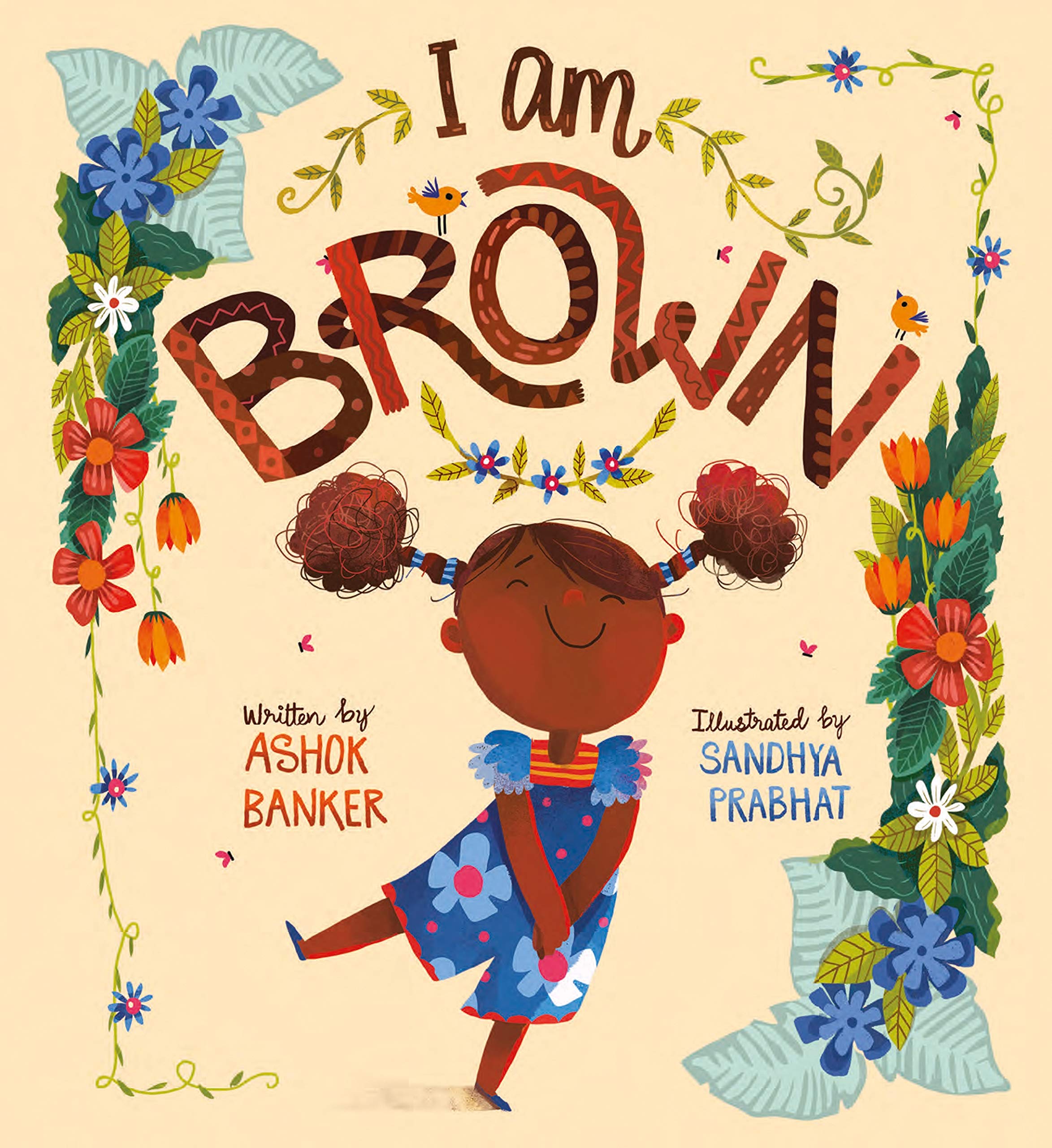
This 40 page celebration of diversity within the label “brown” is a sweet and powerful book that shows how the color of our skin is beautiful and perfect while at the same time making it clear that who we are and what we can be is not defined by our appearance.  The book shows adorably illustrated brown children finding strength in different cultures, clothing, religions, languages and dreams, which will hopefully empower children everywhere (and of all colors) to take labels that may have negative connotations and turn them in to positive affirmations of identity and strength.  There isn’t a story with a plot, but with the regular inclusion of a girl with a scarf on, and the mention of a mosque, I thought to highlight it.  The book is perfect for preschool and up.  

img_6226

The book starts with a little girl identifying herself as brown, beautiful and being perfect.  It then stretches to her being love, friendship and happiness.

img_6228

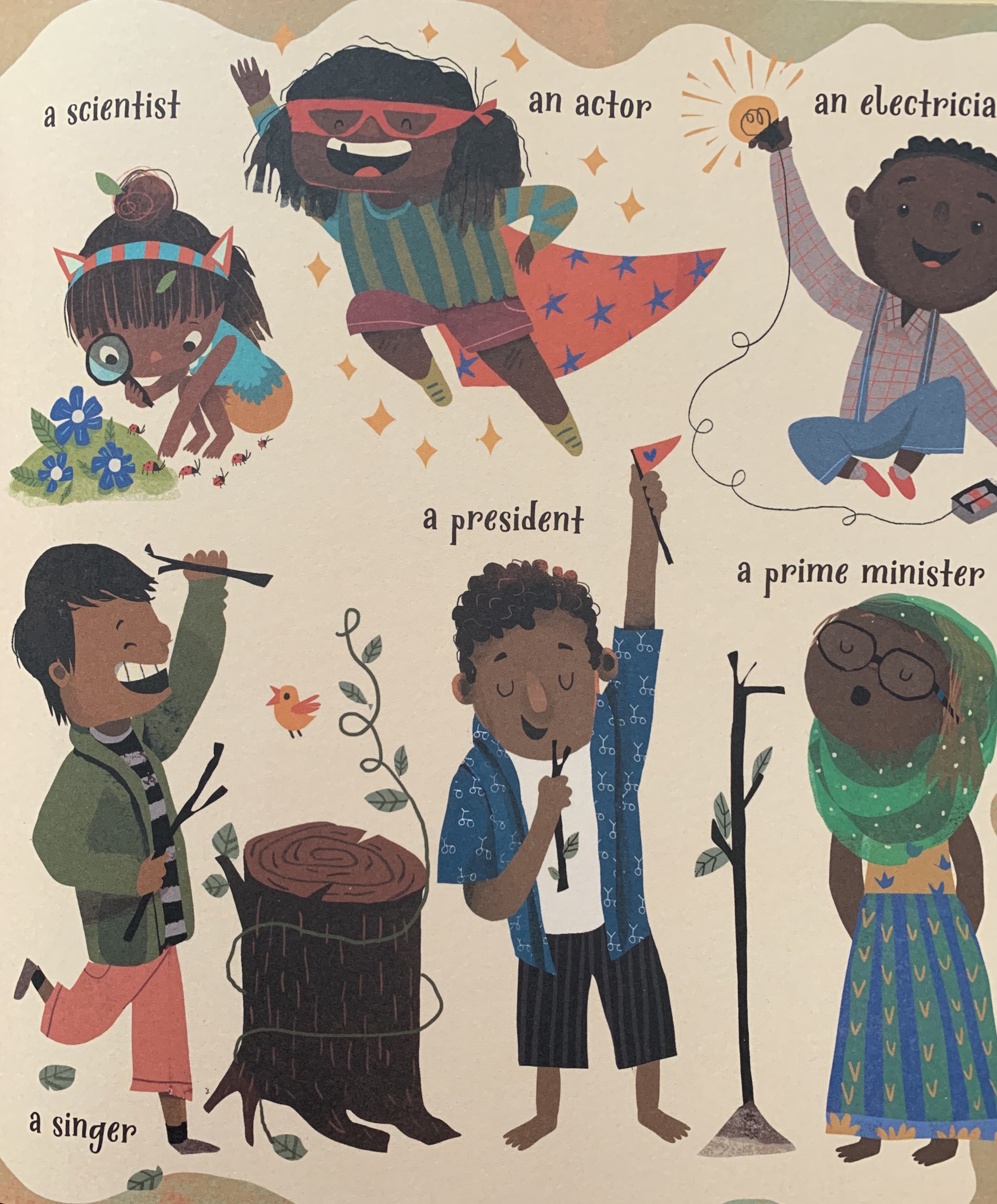
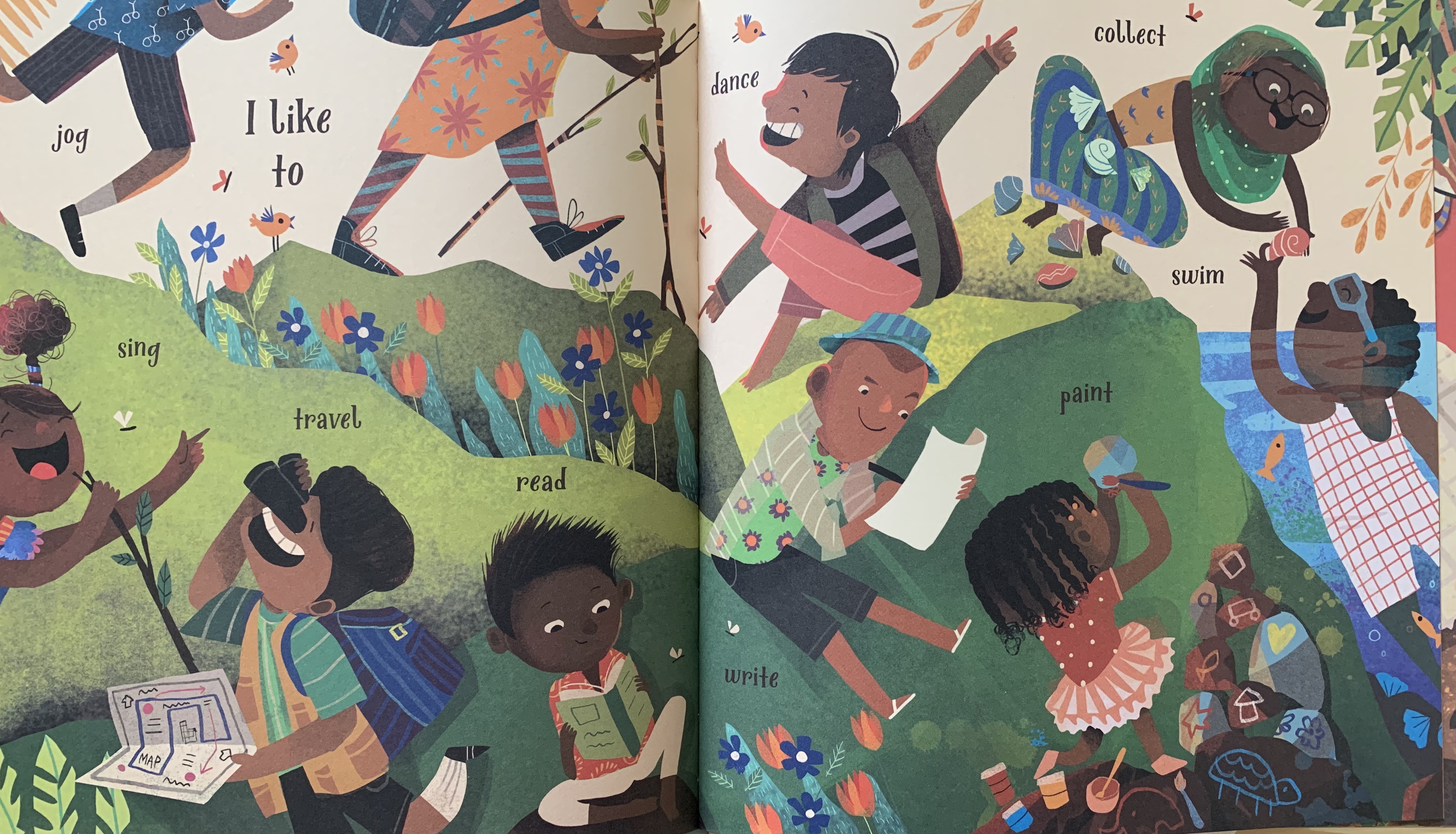
From there it branches out to a whole cast of kids identifying the variety of things they can be, from a writer to an electrician to a prime minister. the same kids then do and make and work on things before identifying where they come from and what languages they speak.  

img_6227

The kids all have different hair on their heads and faces and even no hair at all. They live in different dwellings, they like to do different things. 

img_6229

Brown people are not a monolith, the kids show that they eat different foods in different ways, that they wear different clothes.

img_6230

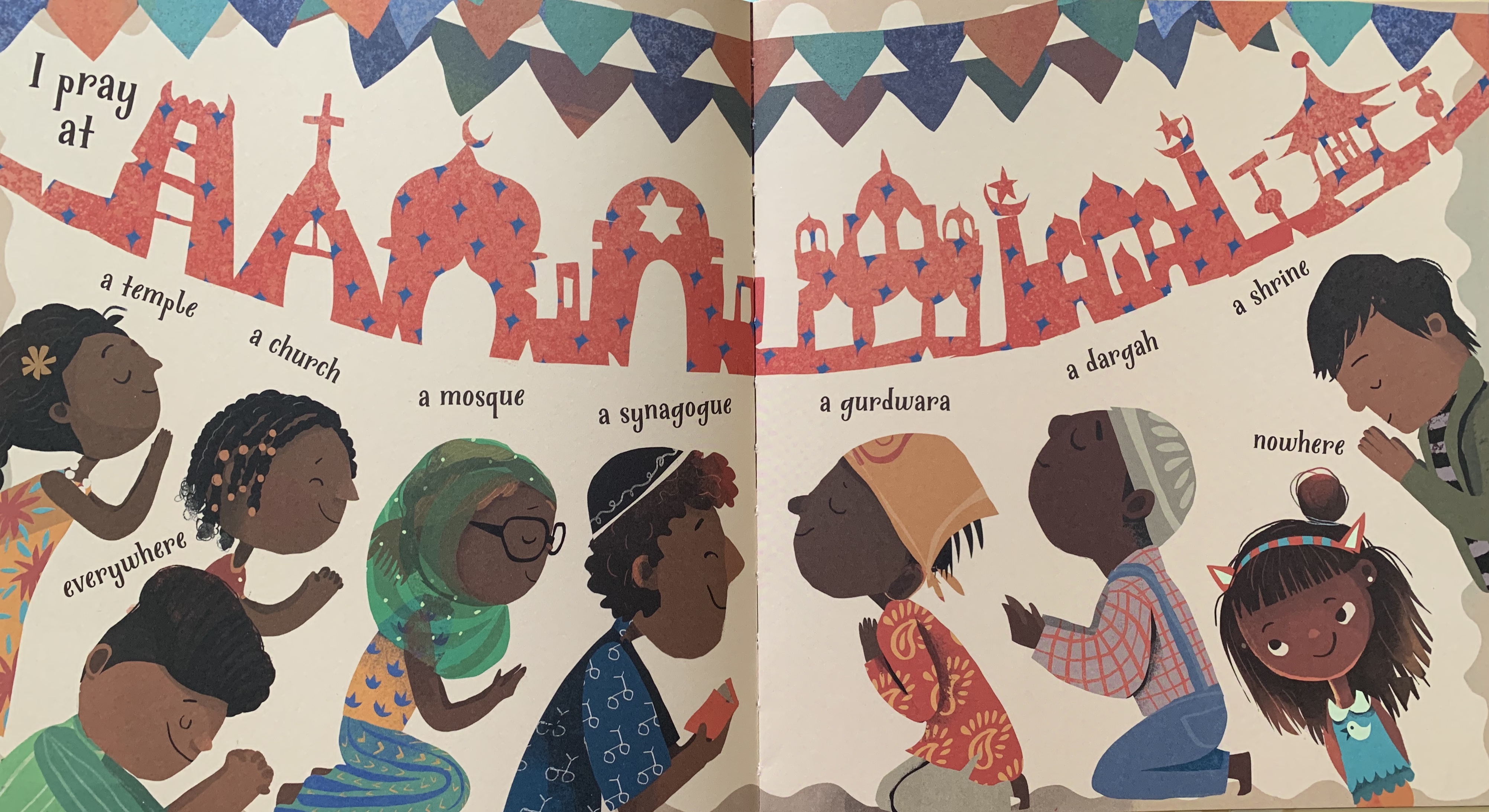
People with brown skin are roommates and teachers and friends and classmates.  Some go to temple or church, others a mosque or shrine, some not at all. 

img_6231

The book ends with a close up of three smiling faces proclaiming, “I am brown.  I am amazing.  I am You.”

img_6232

I’m sure people will argue that if you switch out white for brown the book would be deemed racist, and you are correct it would be.  But as a group that is marginalized as “other” and often the darker brown you are with in the brown subset moves you “value” and “worth” down, makes a book celebrating the strength and beauty of “brown” so necessary and heart warming.  I personally am the lightest “brown” imaginable being only half Pakistani.  So, believe me I have privilege in the desi community, but I don’t find this book offensive at all.  I’ve read this book at least a dozen times and my impressions alternate between beaming with pride and tears that so many beautiful people feel less than because of skin color and yes, anger too,  that people are MADE to feel less than.   May we all be more inclusive, more loving, and more open to the diversity of the human being. Ameen.

Betty Before X by Ilyasah Shabazz with Renee Watson

Standard
Betty Before X by Ilyasah Shabazz with Renee Watson

betty

This 248 middle grades (AR 4.9) fictionalized biography of Betty Sanders, later to be Betty X and then Betty Shabazz, is the early years of her life in Detroit during the 1940s and how she understood her place in her family, and in the community.  Written by her daughter, the book hops around to major events in her life and doesn’t detail a lot of the whys, but rather keeps an 11 year-old-perspective, allowing readers to identify with her family stresses and anger at the racial discrimination and violence that is rampant.  Showing disagreements within the black community allows young readers to broaden their horizons and not see the civil rights as a monolithic point on a timeline, but something that is still ongoing and part of culture still today.  There is nothing Islamic in the book, as this is a glimpse of her childhood long before Nation of Islam, her conversion to Sunni Islam or her Hajj, in fact the majority of the book focuses on her involvement in the Bethel African Methodist Episcopal Church.

SYNOPSIS:

Betty was born in Georgia, as the story goes, but before she was even a year old, Betty’s grandma took her away from her mother and gave her to her aunt, Fannie Mae, to raise.  Having seen a bruise on the baby girl’s neck Grandma Matilda didn’t feel that the young mother was capable to care for Betty.  Fannie Mae showered Betty with love and consistency and treated her like her own daughter.  Betty saw her first lynching while in Fannie Mae’s care and the image stayed with her her whole life.  When Betty was seven her aunt died and Betty went to live with her biological mother, Ollie Mae, in Detroit.

In Detroit, Ollie Mae has married and has three daughters with her husband, Arthur, who also has two sons.  A full house that is religious and disciplined, but for Betty not full of love.  She prays that her mother will look at her the way she looks at her sisters, but that never seems to happen. The family attends Bethel AME church and at age 11 that is when the story gets going.  Betty and her friends sneak out of church to get candy and the cost will probably be a whipping.  Luckily a few of the church ladies like Betty and realize how hard Ollie Mae is on her.  They work to get Betty permission to hang out with girls her own age and try and convince her mother to let her join the Jr. Housewives’ League.  Ollie Mae doesn’t agree with the work of the Housewives, a strong group of women that work to convince others to only support businesses that hire Negroes.  This organization is a major division within the community and the church.  Mrs. Malloy and Mrs. Peck are leaders in the organization, and one of Betty’s friends is for it, while another is against it. This rift affects Betty in many ways.

At age 11 Betty leaves home to go and live with the Malloy family.  A husband and wife who have no children and own a shoe repair shop.  One night turns into two and then she is living there full time and only seeing her siblings and mom at church on Sunday.  She even gets to calling Mrs. Malloy, Mother.  As she comes of age with a new family, and splintering friendships she seeks to make her own family with those that love her, and seeing violence targeted against blacks when a young boy is shot by police in the back, and working with civil rights activists- the icon and leader we know Betty Shabazz to be, is shaped and inspired.

WHY I LIKE IT:

I love that she gets her own story and own voice, not just to be left as someone’s wife.   She is a force before she meets Malcolm and after he is murdered.  Her story is shaped by so many outside influences, but ultimately it is her own and even in her early years the reader feels that.  She seeks out those that love her the way she should be loved, but she doesn’t give up on those that try and leave her either.  She fights for her mother’s praise and doesn’t abandon friends that believe differently than her, which is powerful to see from an 11 year old.  She sees the world around her and takes a stand against that which is wrong, she feels and hurts and doubts, but she gets back up.

I like that she questions if what she is fighting for will make a difference, while simultaneously doesn’t want to take racism quietly.  The day-to-day nuances flesh out the struggle of the civil rights and give a unique perspective that biographies that cover adult lives or larger portions of one’s life don’t necessarily spend time on.  Seeing activism affect a young girl’s friendships will stay with readers,  as well as how desperate she is for her mother’s love, just as seeing how she is treated on a shopping trip will create a sense of universal struggle that make equality in society resonate as being the responsibility of us all, not just those that are being oppressed.

FLAGS:

Racism, violence, murder, lynching, abuse, Betty being born out of wedlock.

TOOLS FOR LEADING THE DISCUSSION:

The book would work for a book club, and would definitely be a great historical fiction touchpoint to bridge with the Black Lives Matter movement.  A classroom discussing Civil Rights and Malcolm X would perhaps get more value from it than a half hour lunch chat, but either way the book should be read, the ideas discussed, and people made aware of Betty Shabazz’s life.


Your Name is a Song by Jamilah Thompkins-Bigelow illustrated by Luisa Uribe

Standard
Your Name is a Song by Jamilah Thompkins-Bigelow illustrated by Luisa Uribe

song

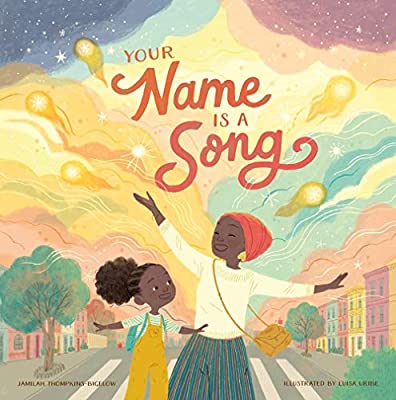
An amazingly empowering simple story that breathes pride and beauty in to names and our identities.  The 40 pages are a celebration of the rhythm of our names and the dreams and hopes that they contain for us.  Perfect for kindergarten to second graders, readers of all ages will find something valuable in this book.  Those with “common” names might reevaluate what their names mean or why they were so named, children with “unique” names will find the music and confidence to ask others to learn their name correctly, older kids might reconsider shortened nick names, and we all inshaAllah will make more of an effort to get people’s names pronounced right.

3A20341F-991D-4929-9A52-D9794E284880

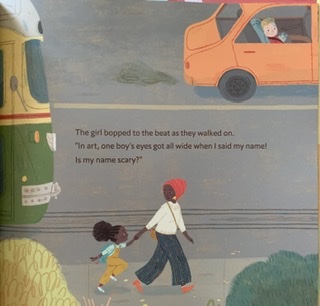
A little girl has had an awful first day of school.  As she stomps toward her mom at dismissal.  No one could say her name.  Not even the teacher, it got stuck in her throat.  Her mom gently reminds her stomping is only for dancing, and tells her that her name is a song.

034DED6F-D931-4FB1-ADC0-15006AC8EAC2

The little girl is skeptical, but as they say people’s names on their way home, and find the magic and rhythm and beat in each one, they address the horrible things that have happened to the girl that day regarding her name.  At lunch girls pretended to choke on her name, and later one boy said her name was scary, some even tell her, her name sounds made up.

86E8B8E7-5336-4D72-BAC3-174F2B5B9AA2

Her mother explains that some names come from deep in the heart, not the throat and cannot be choked on, that names are fire and strong, and that names are made from the sky when our real names were stolen and so new ones have to be dreamed.

8D42050F-B9BA-4813-8BD6-CB543566748A

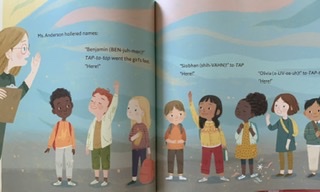
All the way home they go through names, diverse names, beautiful names.  The next day she doesn’t want to go to school, but she has a song to teach.  When her teacher starts calling  out names, the little girl starts tapping the rhythm, when Ms. Anderson starts to struggle on the little girl’s name, she starts to sing it.  She explains that her name is a song, and that she will teach it to them.  The other children then ask her to sing their names. And with a smile on her face, it is music to Kora-Jalimuso’s ears.

58B39FE0-63CA-4196-9452-4C64B517BAAA

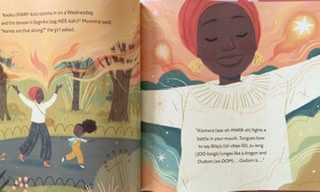
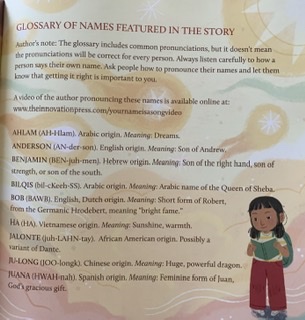
I love that there are three pages of the names mentioned in the story and their origins and meanings listed.  I also like that the little girl’s name is not revealed until the end.  The pronunciation of the names is in the text, all of them, even Bob.   And when I read the name Trayvon, I felt an added weight of saying people’s names, breathing them into our lives and not forgetting them.

74247213-AEE1-464E-A8C4-DE0ECB824335

The family could be Muslim based on the mom’s head wrap.  The author is Muslim and there are Arabic and Islamic names included in the story.

The Day Saida Arrived by Susana Gómez Redondo illustrated by Sonja Wimmer translated by Lawrence Schimel

Standard
The Day Saida Arrived by Susana Gómez Redondo illustrated by Sonja Wimmer translated by Lawrence Schimel

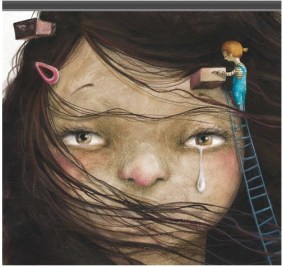
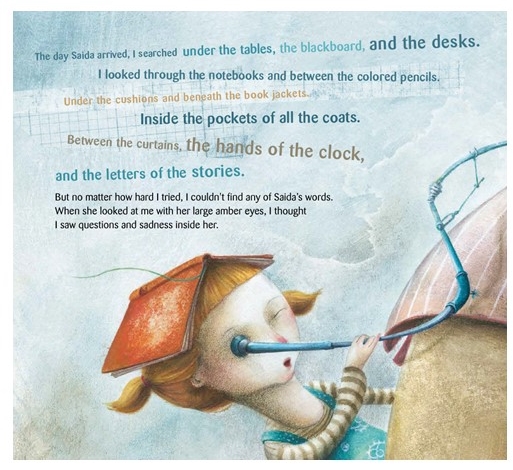
saidaThis absolutely gorgeous lyrical book will sweep you up and hold you tight as you imagine a world where more people take the time to get to know one another through the power and beauty of language.  Over 32 pages that are exquisitely and whimsically illustrated the words dance and come to life in English and Arabic as a friendship is formed.  Perfect for preschool through 3rd graders, older children and adults alike will be softened by the kindness and example shown between two little girls.
saida1

Told from the perspective of a little girl that meets a new girl in school named Saida and decides right away that they are going to be friends.  Unfortunately Saida speaks only Arabic, and the little girl only English.

saida2

But it is no problem, because the little girl is going to help Saida find her words.  She is going to look everywhere to let her get rid of her tears and throw away her silence.  So that she doesn’t see questions and sadness locked up in her.

saida4

That night at home, the little girl’s parents tell her about Morocco and find it on the globe.  They explain that Saida’s words don’t work here and that her words wouldn’t work in Morocco.

saida5

Undeterred the two girls start teaching each other words in their languages.  Some stick, some float away, but the two learn and communicate and connect. They find friendship in learning each other’s words.

They recite a poem by Jacqueline Woodson and tells stories about Marrakesh. The two girls plan to travel the world together. The book concludes with both alphabets shared and the reader wishing to join the little girls on their adventures.

saida 3

I was blown away by the presentation of the book and the feeling of compassion and cultural appreciation depicted.  Such a beautiful approach to welcoming someone different in to your life.

There is nothing Islamic or religious in the book, or really even cultural, aside from language.

Not Quite Snow White by Ashley Franklin illustrated by Ebony Glenn

Standard
Not Quite Snow White by Ashley Franklin illustrated by Ebony Glenn


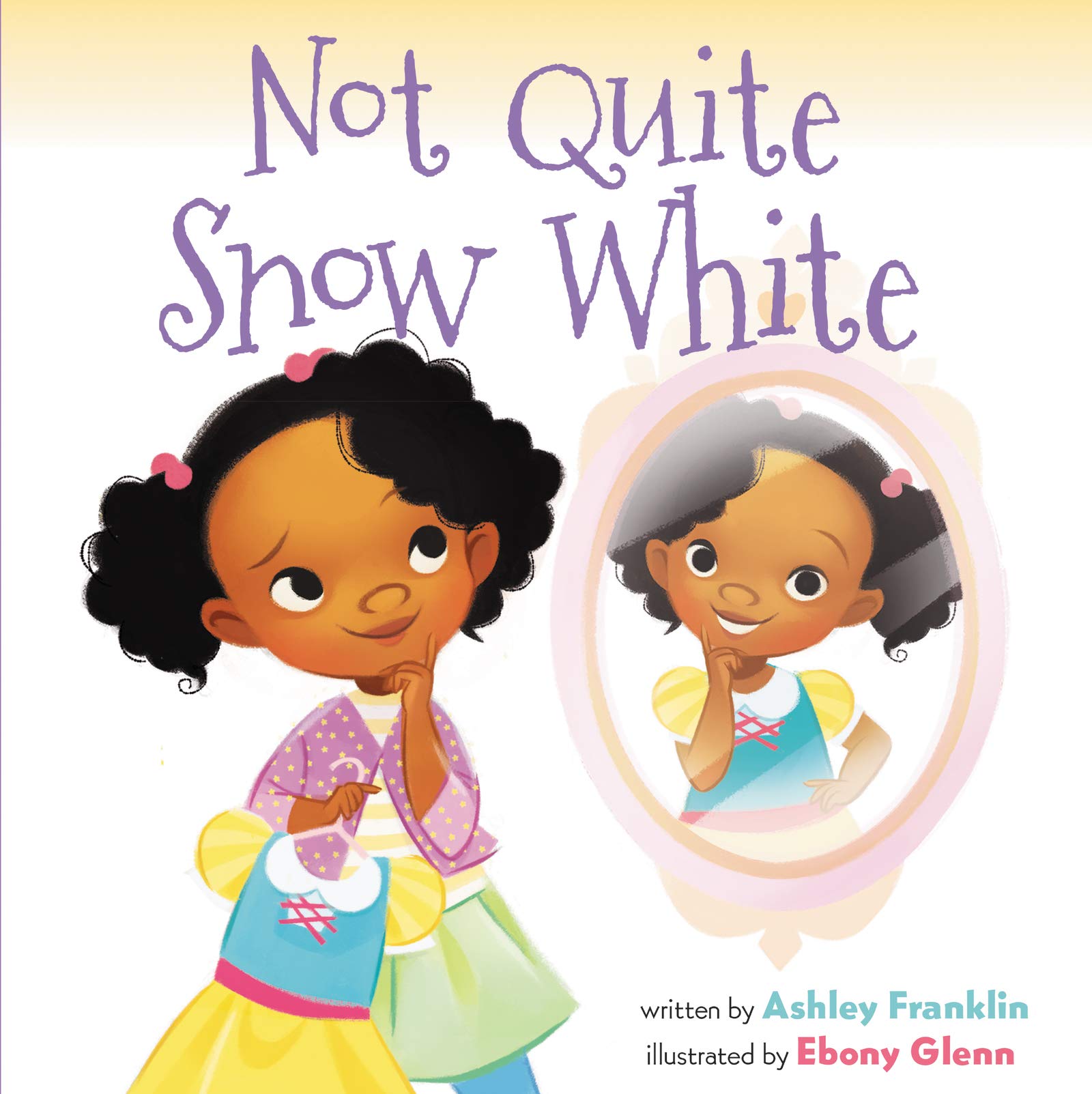
not quite snow whiteThis 32 page picture book meant for preschool to 3rd grade really should be required reading for EVERYONE.  So many lessons, so beautifully conveyed in the simple text and beautiful illustrations that I made each of my kids read or listen to it and then discuss: self confidence, nay sayers, self esteem, race, passion, body image, kindness, and perseverance to name a few. Accelerated Reader Level is 3.2 as older kids will understand a bit more than the younger ones, but I truly believe all will benefit.  Written by a Muslim woman of color, featuring a girl of color and illustrated by a woman of color, this OWN voice book has it all for girls and boys alike.
67C6C849-8C74-438C-B57D-15648F8E6136

Tameika loves to sing and dance and be on stage in front of an audience (stuffed and unstuffed).  She feels like she can be anything she wants and when her school puts on a production of Snow White she can’t wait to audition to be a princess.

3A1948AB-AD83-42E1-8133-AB27C3708705

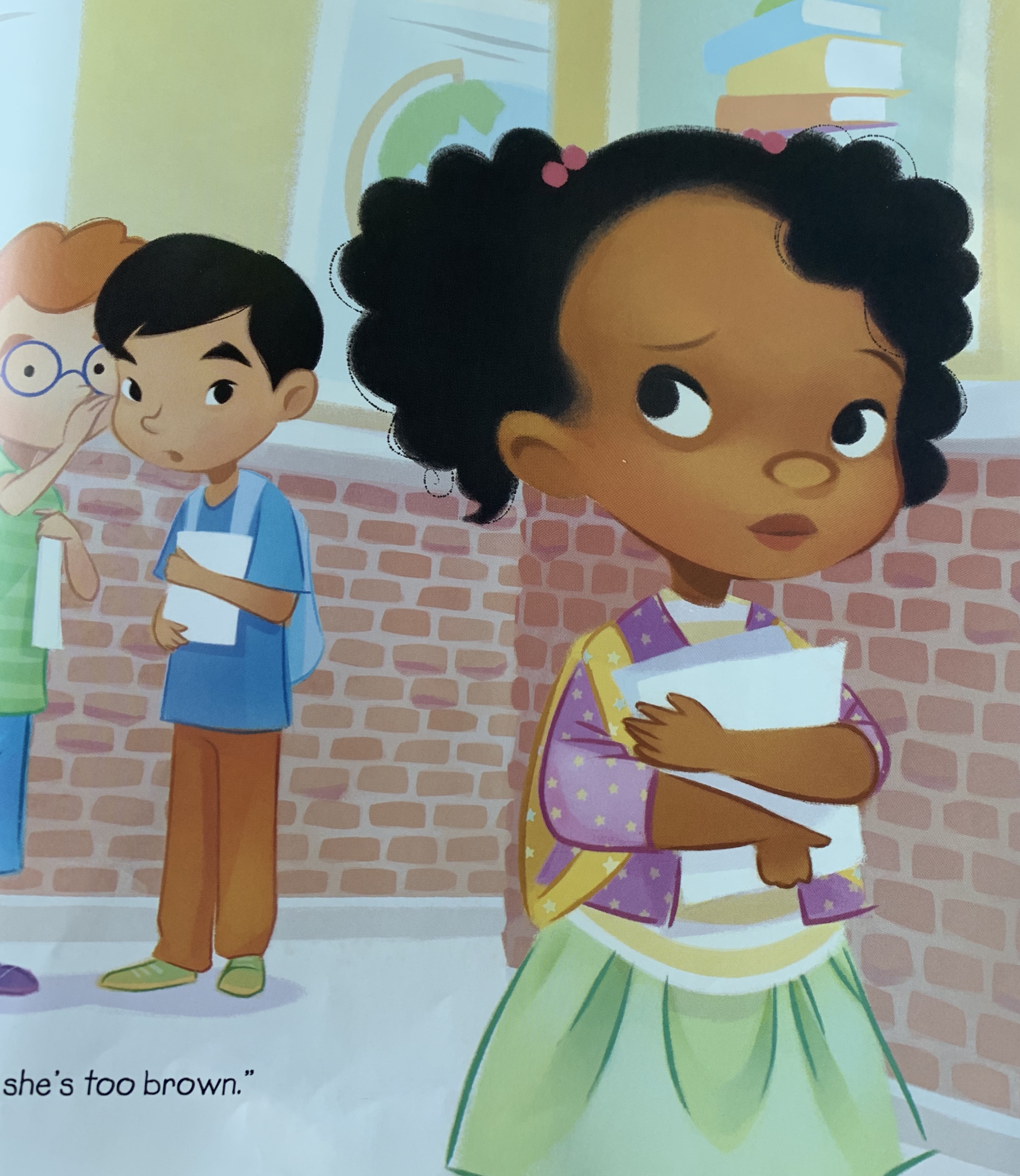
She arrives early the first day of auditions and helps her friends with their lines and nerves.  But then she hears them whispering that she can’t be Snow White.  “She’s too tall, too chubby, too brown.”

6639ED62-4406-41EB-8957-69B6268E8C75

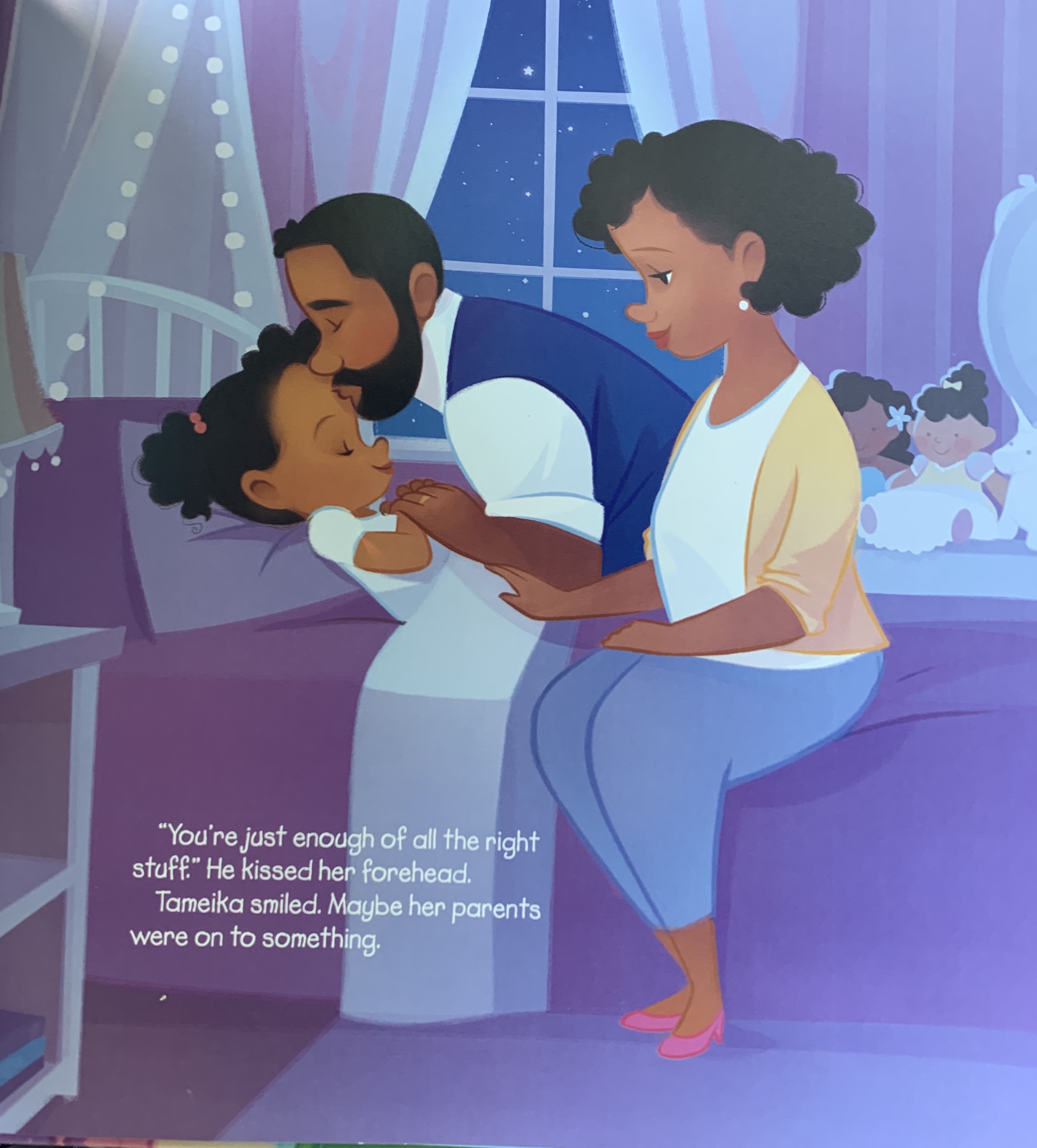
Their words deflate her as she internalizes their thoughts about her.  She doesn’t feel like singing or dancing and she questions her appearance.  Her mom tries to build her back up.  Her father reinforces her qualities, and slowly she starts to think maybe her parents are on to something.

A06D6FE9-87FC-4A83-8F09-14D627BE9902

The next day she has to face her fears and when she steps out on to the audition stage.  She knows what she loves, she knows the joy it brings her and she has to dig deep to push the negative away and shine.

E0144101-5394-4BDC-B0AE-0441ED085ACB

Yes, I’m going to spoil the ending, she gets the part and she rocks it, ok I’m projecting based on her smile.  But it truly isn’t about getting the part and excelling at it, it is trusting that you are perfect as you are and confidently owning it.

The book is available everywhere, even the library, so please go get it, read it with your kids and get discussing! Fiction is a great start to talk about racism and fat shaming and all the other things that you think are hard, but kids need to hear and see and talk about from a very early age.