Category Archives: Story Time

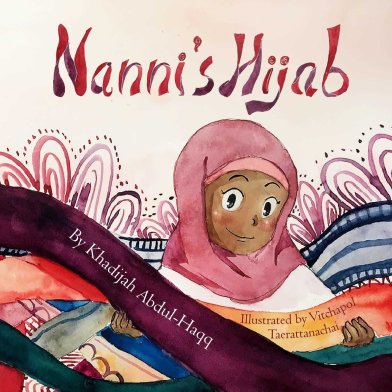
Nanni’s Hijab by Khadijah Abdul-Haqq illustrated by Vitchapol Taerattanachai

Standard
Nanni’s Hijab by Khadijah Abdul-Haqq illustrated by Vitchapol Taerattanachai

Nanni's Hijab

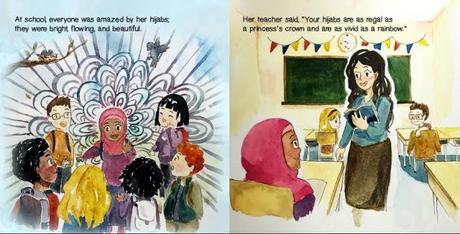
MashaAllah, there are so many things to like about this 36 page, brightly illustrated, elementary aged story.  Nanni, the main character, is spunky.  Not only is she strong enough to wear hijab to school, but she also is brave enough to confidently handle a bully on her own.  Surrounded by a supportive teacher, friends, classmates, and her mom, Nanni’s creativity and understanding that Allah swt will help her find a way to handle her predicament results in a happy ending, and many empowering messages.
nannis-hijab-childrens-book-review-L-Yo6YBS

The book would work for most children, but I think second grade and up would get the most out of it.  The girl might be young to be wearing hijab, but it seems like she wears it because she wants too.  I like that the illustrations have her and her mom uncovered at home, and that there is a glossary at the back, opening up the book to muslim and non muslim kids alike.

DVBz_rcVwAILbLM

I also really like the larger messages of acceptance, trying new things, and doing better when you know better.  The supporting cast in the book resonates with muslims who go to schools where they are the minority, but have support and encouragement to practice their faith none-the-less.  Nanni’s teacher remarks that her “hijabs are as regal as a princess’s crown,” and the other students like seeing what color or design she is wearing each day.  Although a children’s book, the author does very clearly explain that the hijab is part of Nanni’s faith, although not mentioned by name, and that it is an act of worship. Nanni wants to handle the problem on her own, and for as bad as she wants to punch Leslie, she knows it isn’t the right thing to do.  As she wrestles with what is the best approach, she puts her trust in Allah, swt, which perhaps is the greatest lesson for us all in the book, alhumdulillah.

How Many Donkeys? An Arabic Counting Tale retold by Margaret Read MacDonald and Nadia Jameel Taibah illustrated by Carol Liddiment

Standard
How Many Donkeys? An Arabic Counting Tale retold by Margaret Read MacDonald and Nadia Jameel Taibah illustrated by Carol Liddiment

how many donkeys

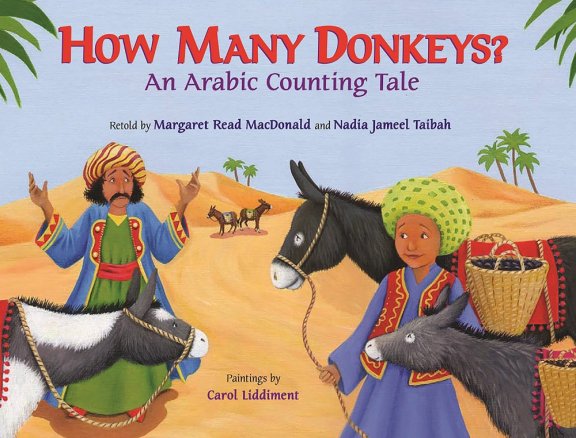
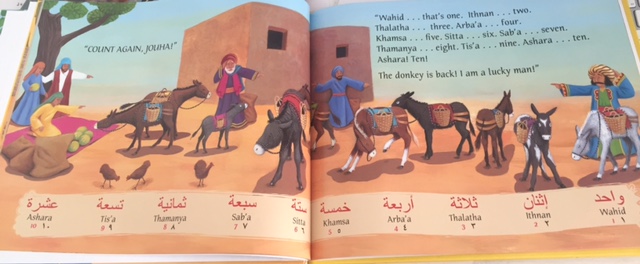
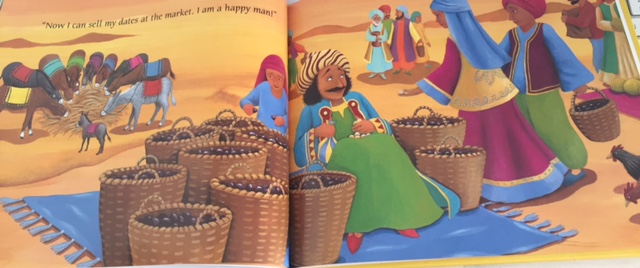
Whether you know a little bit of Arabic or none at all, this incredibly repetitive counting book will have you able to count to ten in Arabic by the end of its 32 pages.  FullSizeRender (35)Even if you know how already, your little one will enjoy figuring out why the main character Jouha can’t figure out how many camels he has in his caravan.  While Jouha thinks, it has to do with whether one runs off while he is riding, and comes back when he is walking, hopefully by the second or third time, most kids will realize that he isn’t lucky or unlucky, he is just forgetting to count the one he is riding atop of.  Probably good for ages 3-7, the book is silly in its repetition, and the beautiful painted illustrations bring the characters emotions to life.
FullSizeRender (37)

There isn’t anything Islamic, but it is definitely cultural as it retells an Middle Eastern folk tale.  The character, a wise fool, is also seen as Goha in Egypt and similar to Nasredeen Hodja in Turkey, all this background is stared at the beginning of the book.  There is also information to hear the story online in a read along program http://www.av2books.com, or to hear the author say the arabic numbers at http://www.margaretreadmacdonald,com.

FullSizeRender (36)

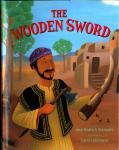
The Wooden Sword by Ann Redisch Stampler illustrated by Carol Liddiment

Standard
The Wooden Sword by Ann Redisch Stampler illustrated by Carol Liddiment

wooden sword

A Muslim Afghani Shah tests a poor Jewish man in this “softened” Jewish folktale.  I say softened because the author’s note at the end implies that she is retelling a well-known story in the Jewish tradition that often features mean-spirited characters.  In this version, however, the interaction between the rich Shah and the poor man, the Muslim and the Jew, are framed in contrast to show mutual respect, similar values, and the trust one has in God.  

sword3

This 32 page, AR 4.6 picture book, is beautifully illustrated and would work fabulous in interfaith settings, as well as in any lesson teaching how we should trust God in all things.  For children not of Islamic, or Jewish, or Afghani backgrounds, there is very little preaching and would still work very well as a moral narrative or even as a culture lesson, as it is a folktale.  From a current events standpoint, it would also do well with older children, as it shows that Muslim and Jews co-existed quite nicely once upon a time in Afghanistan as well.  

sword

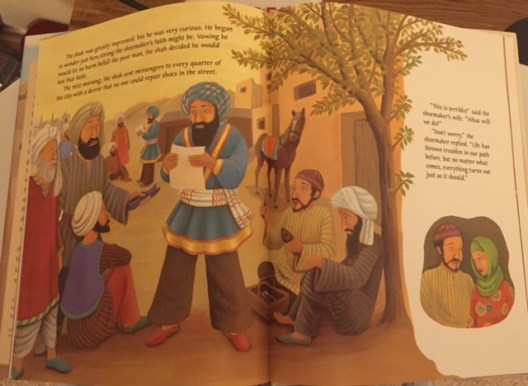
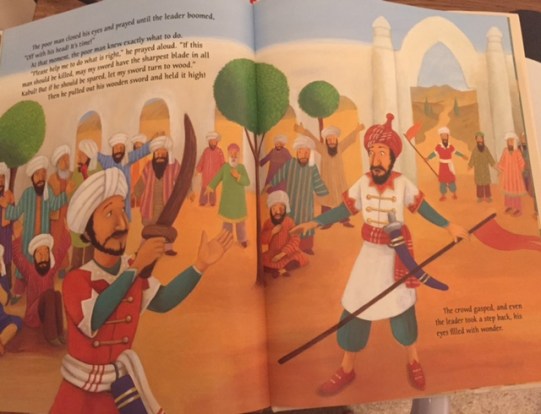
The plot is warm, although the Shah is clearly abusing his power as he meets a poor shoemaker and passes royal decree after royal decree to test the man’s faith that “everything turns out just as it should” and that God will provide.  The Shah decrees no one can repair shoes in the street, followed by banning the selling of water in the streets, and so on, until finally the poor man finds him self in the Shah’s Royal Guard without a sword, ordered to kill someone.  Not wanting to spoil how he handled the prediciment, I’ll suffice to say, in the end the poor man is made the shah’s advisor and presumably all is well. 

sword1

Throughout the tests, we also meet the poor man’s wife, who is supportive and very hospitable as they feed the Shah dressed as a peasant and offer him what little they have.  Her clothing is incredibly similar to what Muslims in Afghanistan wear, and makes me want to research this aspect for accuracy and to satisfy my own curiosity.    

Overall, a sweet interfaith folktale that I hope to share at our next interfaith storytime.

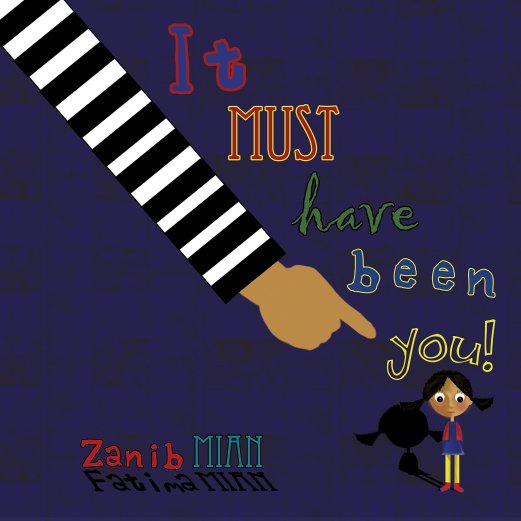
It Must Have Been You! by Zanib Mian illustrated by Fatima Mian

Standard
It Must Have Been You! by Zanib Mian illustrated by Fatima Mian

it must have been you.jpg

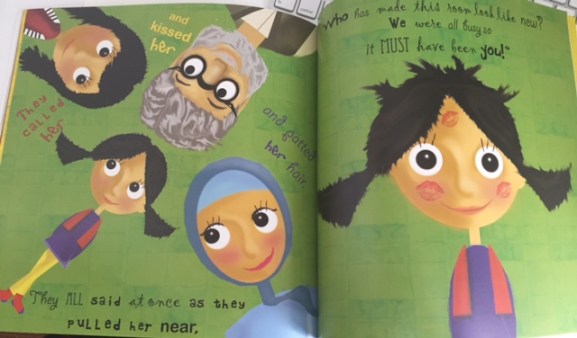
This rhyming 32 page book follows around a small girl, “about the same age as you,” who seems to make a mess every where she goes.  She never lies or even responds to the accusations of her unintentional messes, as she gets caught each time by someone in her family who points their finger and identifies the clues that led them to their answer. Luckily, she uses this pattern to her advantage as she cleans up and makes her family a card resulting in hugs, kisses, and love.

FullSizeRender (34)

Written for younger kids (4-6), the book is bright and colorful and very well done.  Even two and three year olds will enjoy the sing-song rhythm and chunky engaging illustrations.  The pages are thick and the binding solid, especially for a soft back book.  The 10 x 10 square size works well for story time and bedtime alike.  However, because the text is incorporated into the illustrations, if you are reading to a group, you will want to read it a few times before you present.  Looking at it straight on, the word order is much more clear and if you are reading it with emerging readers, I would recommend pointing to the words as you read, so as to help guide your listeners.  The fonts get a little crazy, which is part of the fun, but again may require some assistance to help the younger readers decipher the words.  Older independent readers (up to age 7 perhaps) might like the slight challenge of figuring out what word comes next, so that the story makes sense.

FullSizeRender (33)

The mom wears hijab and that is the only islamic reference or overt implication.  A fun book that thus far with multiple readings has yet to get monotonous and boring, yay!

FullSizeRender (32)

The Man with Bad Manners by Idries Shah illustrated by Rose Mary Santiago

Standard
The Man with Bad Manners by Idries Shah illustrated by Rose Mary Santiago

bad manners.jpg

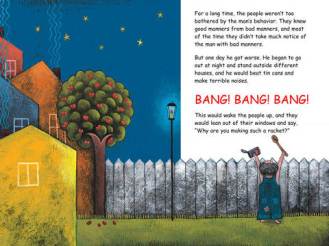
This story has a good moral, but the path there is a little twisted.  A village is annoyed by a man with awful manners and when he leaves for vacation, a clever boy convinces everyone to teach him a lesson and get him to change his ways when he returns.  They replant his field, paint his house, and rearrange his furniture to convince him upon his return that this is not his village or home or fields.  

bad manners1

When he does come back, he is confused and sad that he doesn’t know where he comes from, at which time the village tells him what they did, and agree to put everything back if he promises to change.  

bad manners2

The 32 page brightly illustrated book tells an Afghani tale in a western setting.  The chunky cartoonish illustrations show great imagination and encourage the reader to look at the effects of bad manners in a different way.  The clever boy, also goes about things in an extreme manner, which hopefully gets the reader to question if it was successful and perhaps how they would have handled the situation.  Another book that urges, thinking outside the box, with some discussion and reflection.  There is some lying, breaking and entering and other questionable actions, but I think most kids will realize it to be a silly story to teach a lesson, and all is forgiven because in the end they did live happily ever after.

bad manners4

The book is not AR but easily works for Kindergarten to 3rd grade.  There is nothing in the text or illustrations that suggests the book has any religious or cultural ties.

manners


The Silly Chicken by Idries Shah illustrated by Jeff Jackson

Standard

silly-chicken.jpg

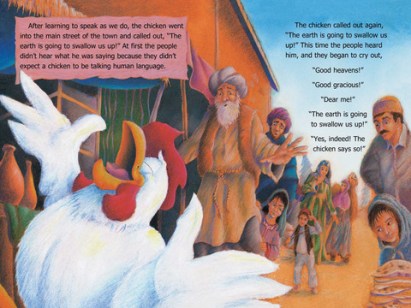
This story reads wonderfully aloud as it is silly, repetitive, and the message is more clear than in some of Idries Shah’s other Sufi inspired teaching books.  Written on an AR 4.0 level with 32 pages.  Some pages are heavily text laden while others just sprinkle a few words across a beautifully illustrated page.  Like his other books, the illustrations are truly spot on.  The lively faces on the characters, and colorful scenes bring the story to life and keep the audience engaged and giggling.

chicken

A man decides to learn how to speak “chicken,” when that doesn’t work, he teaches the chicken to speak our kind of language.  Fluent and conversational, the chicken then tells the villagers that, “The earth is going to swallow us up!”.  Everyone runs in all directions, up the mountain, down the mountain, across the meadow, around the world, but they can never get away from the earth.  When they return, they are upset with the chicken and ask how he knows that the earth is going to swallow them up, to which he replies that he doesn’t.  After they recap all the trouble he has put them through he poignantly laughs at them and asks, ” You think a chicken knows something just because he can talk?” Realizing how foolish they have been the chicken begins telling more outlandish things, just to make the people laugh, and isn’t taken seriously again.

silly chicken1

The message is clear, the characters funny, and the illustrations engaging. I finally found an Idries Shah book that I like! Yay, I guess for me they are hit or miss, and this one was definitely a hit!

chick

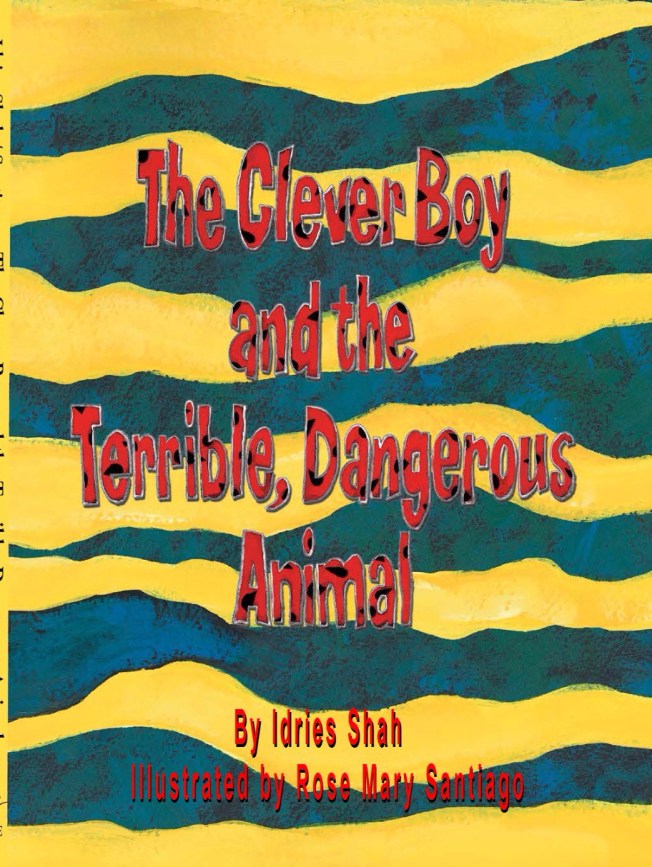
The Clever Boy and the Terrible, Dangerous Animal by Idries Shah illustrated by Rose Mary Santiago

Standard
The Clever Boy and the Terrible, Dangerous Animal by Idries Shah illustrated by Rose Mary Santiago

clever-boy.jpg

This book makes me forgive the author for his other books that left me puzzled as to his popularity.  This is wonderful, timeless and so simplistic, yet full of wisdom, lessons, and reflection that I’m thinking of gifting it to many of my teacher friends.  In its 32 pages written on an AR third grade, 2nd month level, the simple and powerful lesson of how ridiculous it can be to be afraid of what you don’t know is driven home.

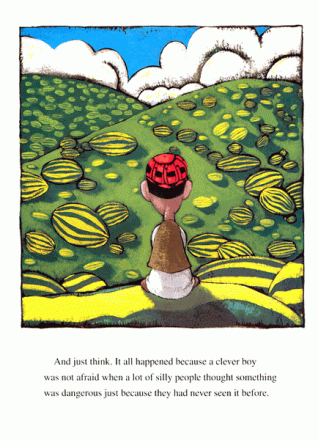
And just think. It all happened because a clever boy was not afraid when a lot of silly people thought something was dangerous just because they had never seen it before.

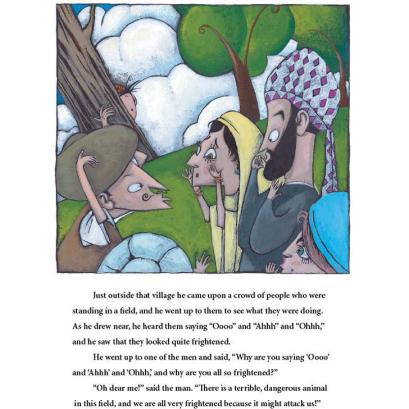
A boy goes to a neighboring village and finds the villagers afraid of, wait for it, a watermelon.  The boy laughs and laughs, and pulls out a knife to cut it and enjoy its sweet juices.  The villagers then fear the boy, until experience and knowledge about what it is and how to grow it, change everyone’s opinion and the village renames itself Watermelon Village. Oh, the power of knowledge.

clever 2

I can see this book being so great to introduce kids to how a little knowledge, asking questions, trying something can do everything from finding something you like, to breaking down stereotypes, to shifting your paradigm.  I feel like Islamaphobia, among so many other things, could be done away with by and large if people would just get to know us!

clever 3

The villagers depicted wear kufis and hijabs and kurtas, and the author writes to share his stories from his oral Sufi tradition, but there isn’t anything overtly Islamic in the text.  The kids as young as preschool will enjoy this at storytime.  They will find being afraid of a watermelon preposterous and silly, making the point that much stronger.

I like that the cover doesn’t given much away, and most children will take the title at its word and think that it is an animal.  Getting student’s ideas of what the terrible animal will be adds to the creative thinking and discussing after as well.  The pictures are wonderful and endearing and many editions come in two language formats.

clever1

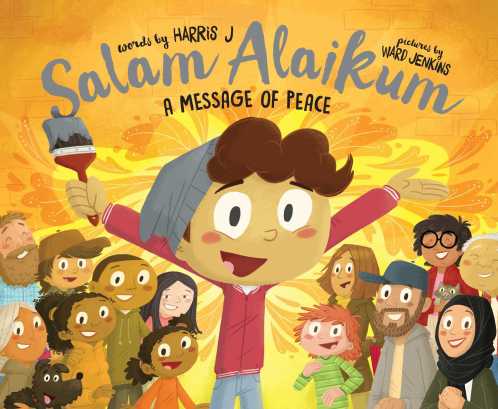
Salam Alaikum: A Message of Peace by Harris J illustrated by Ward Jenkins

Standard
Salam Alaikum: A Message of Peace by Harris J illustrated by Ward Jenkins

salam alaikum.jpg

Harris J’s song by the same name gets stuck in my head because it seems like “Salam Alaikum,” is the only words in the song, so when I heard that he had written a book based on the lyrics, I was a little skeptical. But, total credit to the illustrator, the book is adorable, and the lyrics aren’t too bad either.

salam1

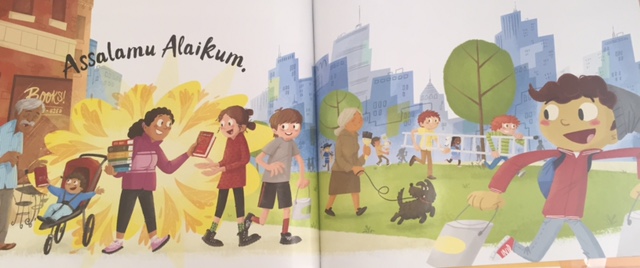
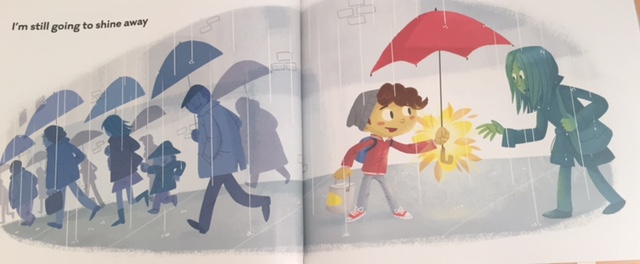
Thirty big pages, that radiate with light and happy faces and a big clear font that celebrates peace, love, and coming together.  The words “Salam Alaikum”  is a Muslim greeting, but there is nothing overtly religious. There is one muhajaba that appears on a few pages, but with the content matter, there is a lot of diversity in the book.  A variety of skin tones, ages, clothing, genders, sizes, all come together to hold hands and work for peace.

salam2

The content isn’t ground breaking, but the number of words on the page are good for 3-6 year olds.  And it does introduce that the world is more fun when we all work together and are kind.  Kids will like the illustrations and return for them undoubtedly.  It is hard to know if the books these days are truly better, or are just done better.  But, while I checked this one out from the library, I think I just might want a copy of my own.

salam3


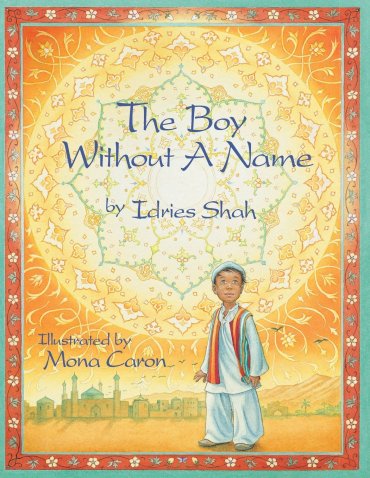
The Boy Without A Name by Idries Shah illustrated by Mona Caron

Standard
The Boy Without A Name by Idries Shah illustrated by Mona Caron

the-boy-without-a-name_orig.jpg

It is hard to know what a child would get out of this 32 page 3.2 AR level, but even if they just get lost in the pictures, and swept away by the idea of a boy searching for his name and a dream, I suppose there is value.  Some, ok most of Idries Shah’s, Sufi teaching stories are beyond my comprehension, but they are lyrical and often silly just the same. He has written over 30 and the libraries have quite a few, and people online seem to love so many of them, so perhaps I’m just not clever enough or philosophical enough to grasp them.  Which is neither here nor there, but maybe don’t buy one until you read one and see what you get out of them.  I keep checking them out and hoping I too will fall in love with one, I’ll keep you posted.

no name1

Before they can name their son an old man comes and tells the parents to not name him and to wait.  The boy grows up searching for a name, hoping someone has one he can have.  At one point he is made aware that he has nothing, even to trade for a name.  He responds that he has an old dream he no longer wants.  He and his friend Anwar then go to the wise man and he receives his name and a new dream.

The synopsis claims that patience and determination is learned, but I couldn’t get over the fact that the parents just didn’t name their child, and I never felt like I learned why he was such an important boy.

boywithoutname2

The pictures are wonderful with the scenic village’s tall minarets and colorful hijab clad women in the market place.  I particularly like the magic spilling out of the boxes in the old man’s house when the boys are finding names and dreams.  There is nothing overtly Islamic in the text, I’m not aware of how strong the Sufi origin is, not being Sufi, or having studied it.  But the illustrations definitely place the book in an Islamic cultural environment and the names reinforce this.


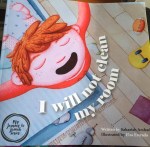
I Will Not Clean My Room by Saharish Arshad illustrated by Elsa Estrada

Standard
I Will Not Clean My Room by Saharish Arshad illustrated by Elsa Estrada

FullSizeRender (22)

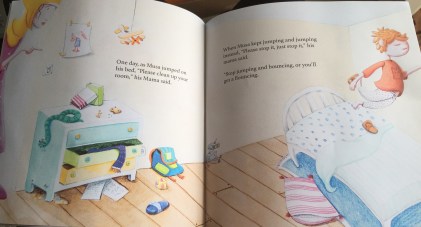
What a great premise for a children’s book, a little boy, Musa,  does not want to clean his room, and imagines all the better things he will get to do in Jannah (heaven) instead. Luckily for his room, his sister comes to help him tidy it up, as well as his mom and dad.  FullSizeRender (25)

The rhyme scheme and the kids’ imaginations at how wonderful Jannah will be, go hand in hand and make the book silly and fun.  The cartoonish illustrations also help sneak in messages of listening to your parents, cleaning your room, being kind to your siblings, helping each other, and ultimately doing things even if they are hard or boring to please Allah swt.  

FullSizeRender (24)

The book is a 28 page, 8×8, paperback.  The price is a little steep, $12, for its structure, in my opinion and is meant for Muslim readers.  The only real issue I had is when the mom threatens to flounce Musa. “Stop jumping and bouncing, or you’ll get a flouncing,”  seems excessive to me, and not consistent with how loving the family is throughout the rest of the book. It was probably included to maintain the rhyme scheme, but I took it to be a threat of violence, which I’m not ok with.

FullSizeRender (26)

The pictures show the mom in hijab, the word Jannah instead of heaven is used, the characters’ names are Islamic and Allah is mentioned throughout.  Musa’s thoughts on the last page are particularly sweet (see picture below).  I plan to read this to a group of kids at story time and will just omit the flouncing line, as it does well in appealing to ages 4 and up.  Three year olds may not understand it, but because of the rhyming, I think they will be equally entertained.

FullSizeRender (23)