Category Archives: Picture book

Ramadan Rain by Jamilah Thompkins-Bigelow illustrated by Aliaa Betawi

Standard
Ramadan Rain by Jamilah Thompkins-Bigelow illustrated by Aliaa Betawi

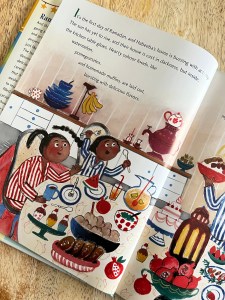
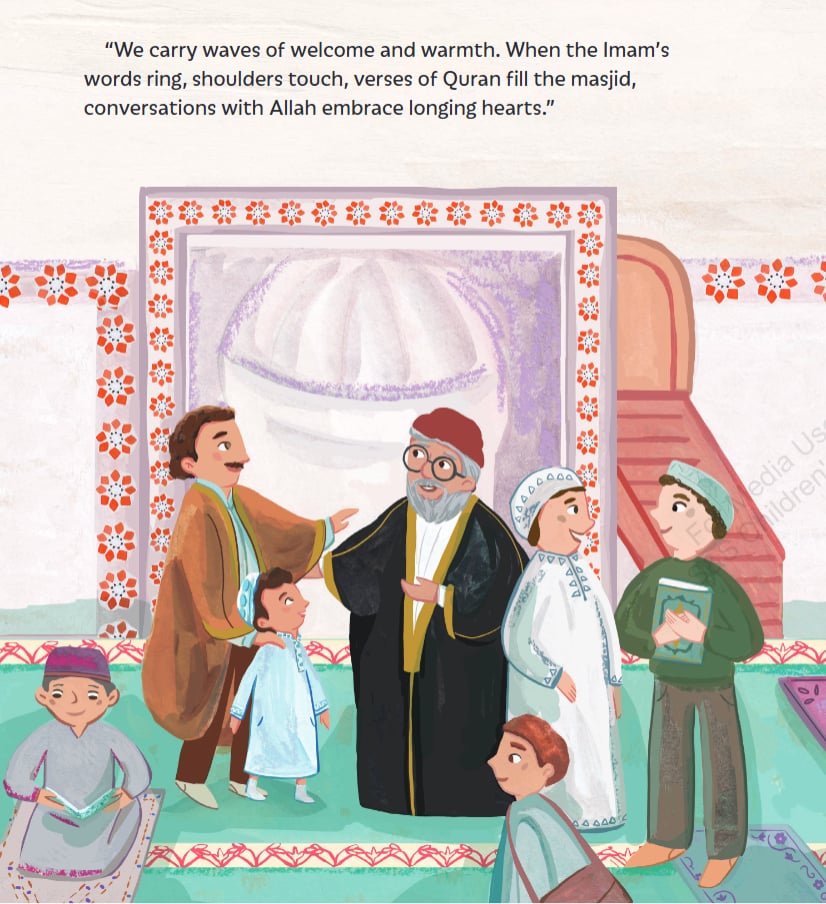
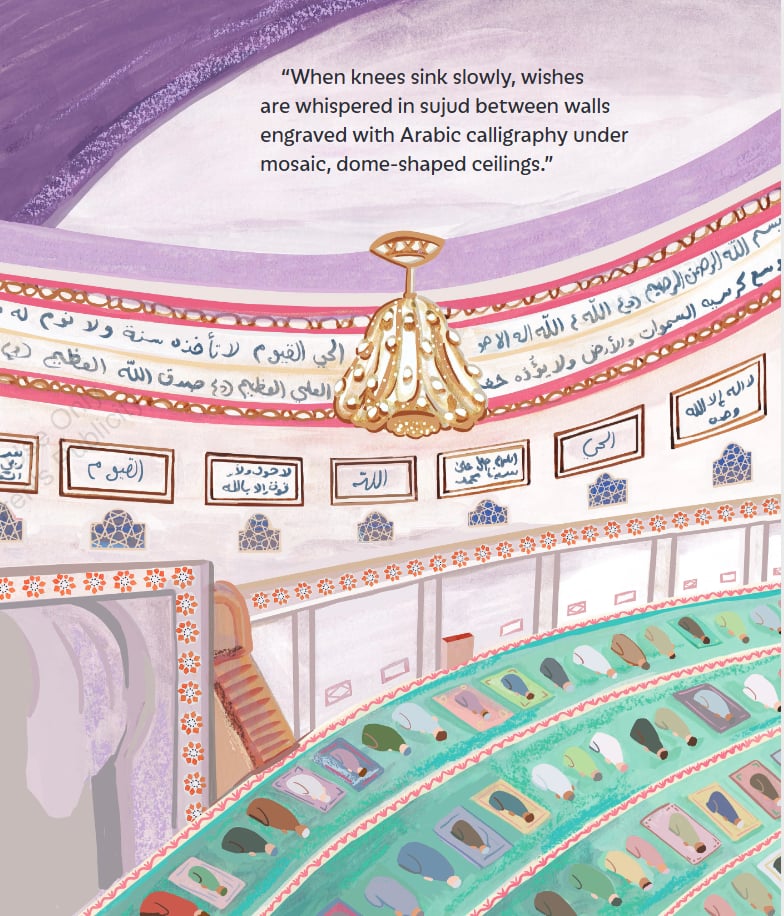
This 40 page book is all the feels as little Haneen’s Ramadan duas change from the material to the heartfelt while the rain pours down, taraweeh prayers are made, fun is had, and hearts are touched.  In true Thompkins-Bigelow fashion the book presents in layers that pull the emotional threads without turning didactic and preachy. The adorable illustrations complement the text and by the page when the characters are crying, I too, found tears in my eyes. I love that praying, duas, and practicing Islam is not sidelined, as current Ramadan and Eid books seem to do, but rather centered and celebrated as a source of comfort and joy. For the most part the external catalyst moving Haneen’s internal change were seamless, but the page with the little boy pointing and calling the drawings on her card naked, seemed a little jarring to the tone, even though I can see the function it served. I also acknowledge that a physical version might not make it as abrupt. Additionally it is worth noting the very nature of reviewing is to over think, so to be completely honest, by about the fifth reading I began to wonder, did her perspective change? There was no pivotal moment that set it in motion, it seemed she just got carried away in making the Eid card and never got to articulate what she really wanted to her mom. The initial dua is for the shoes that the family can’t afford, which I already felt was inconsistent because when asking Allah swt nothing is impossible, and the whole premise is that it is Ramadan and on top of that raining, but that aside, even when she first draws them, she states that it isn’t what “she really wants.”  So now, I’m wondering if anything really changed at all, or she just never clarified and thus the reader as well  her mom are taken along from Ramadan night to Eid day.  Also in the arc I read, it seemed a word was missing on page three that will hopefully be fixed in the final version. I love the tone and the warmth, and I know most won’t read it as deep as me, but the publication is not until March and I wonder, and hope, a few tweaks might still take place.  When my pre order arrives, I will revisit the review if need be, and yes, even with my critiques, I think this is a book that will delight all ages this Ramadan and give plenty to reflect on throughout the year.

The book starts with a grumpy Haneen sitting on a bus, walking in the rain, and arriving at the masjid a little wet and muddy recalling when they had a car and things were easier.  She starts to complain but catches herself knowing that they can’t afford things, and Momma tells her that, “rain brings blessings.”  She also reminds Haneen that duas said on a rainy day get answered, especially during Ramadan.

Once in the masjid, Momma reads Quran and Haneen starts to make duas for the shoes she wants but knows they can’t afford when she is distracted by friends, and they start making Eid cards. They children work together, and when it is pointed out that Haneen’s stick figure has shoes, but no cloths, she marvels at the different dressed women around her, before adding her favorite to the picture, wondering if she can get new clothes for Eid.  The pattern continues, she sees the twins with plush toys, and thus plushies are added to her wants, and filled in on her Eid card, as the congregation moves from athan, to iftar, to salat, to taraweeh.

When Eid comes, SPOILER gifts come from unexpected places, and a new card, showing what Haneen really wanted and prayed for that rainy Ramadan night are revealed, alhumdulillah.

Shining Hearts: Sahabah Stories for Kids by Marium Uqaili illustrated by Mirha Asim

Standard
Shining Hearts: Sahabah Stories for Kids by Marium Uqaili illustrated by Mirha Asim

This book contains ten Sahabah stories, five males and five females, conveyed over 121 large 9×12 pages in an easy engaging manner for elementary aged children.  The stories are told one at a time, with simple illustrations, easy to read font, and pullouts featuring engaging blurbs that increase understanding, connection, or challenge the reader to think about something further.  The conversational tone and breaking of the fourth wall helps keep the readers interested while focusing on engaging bits and not a Sahabah’s entire biography.  Inclusion of hadith and ayats and seeing that a named Shaykh has written the forward really makes this book a great one to have in one’s home to read at story time, and to keep on the shelf as a resource. 

The Sahabahs included are: Mus’ab Bin Umair, Salmaan Al-Faarisiy, Abu Dharr Al-Ghifaariy, Jafar Bin Abi Talib, Bilal Ibn Rabaah, Sumayyah Bint Khayyat, Safiyyah Bint Abdil Muttalib, Asma Bint Abi Bakr, Umm Ayman (Baraka Bint Tha’laba) Lubabah Bint Al-Harith, may Allah swt be pleased with all of them.  The first page of each section has the Sahabahs name and one line description before the story begins.  Each section concludes with a dua to Allah swt to make us like the Sahabah we have just learned about in a specific way.  The pages about the Sahabah contain what they are most known for, some attributes about them, and function as a snapshot for young children to grow familiar with these “super heroes” and how we can emulate them in our own lives.

The tone is similar to the staple Migo and Ali Prophet Stories, and proves how desperate we are for Islamic texts that appeal to our children (and how few quality English resources we have).  The pictures aren’t great, but they are sufficient, and I appreciate that there are no faces or depictions. Even an image that could be seen as Sumayyah (rA) has an arrow saying “your grandmother” so there is no confusion. The binding is a bit weak, I was warned before starting, so I read the first few times for review and picture purposes at a table, before handing to my children and reading to my youngest at bedtime.  I’d encourage wrapping the book in contact paper upon receiving it. I appreciate all the letters of approval at the start, and the simple activities at the end, and am impressed overall with the book and how it engaged my children, alhumdulillah.  

The Land of La La La by Sana Saghafi illustrated by Azam Vazehimogadam

Standard
The Land of La La La by Sana Saghafi illustrated by Azam Vazehimogadam

This gorgeous and powerful 36 page picture book goes back in time to a Palestine where the struggles of today are still found, along with the resilience of the people, determination of the women, ingenuity of the children, love and hope.  The book is so strongly unapologetic in its portrayal of marbles representing strategy of kids to battle the giants aka soldiers, of children being imprisoned, of the occupiers being outsmarted by the people, and the joy that persists despite the attempts of erasure. The story within a story…within a story(?), doesn’t name Palestine until the very end, after the stories at hand have wrapped up, and doesn’t disclose that it is based on a true story, except for in the blurb.  It is also worth highlighting that the book is not OWN voice or sourced.  I still am sharing though because it is positioned as happening long ago, and thus hopefully not further erasing a Palestinian voice, but rather sharing a story to prevent it from being lost.  I do not know the author, illustrator, or publishers’ intent, this is simply my view and I am happy to be corrected if I have arrogantly overstepped.  


The book starts with a lullaby lilting through the air, the la la las, connecting the women caring for their children. Mama Laya is busy so Big Brother Bilal is playing with the children, marking which soldiers have been defeated on the paper that matches the marble game in the lane. When the giants take him away the children run to find Daddy Salim.

The searching children and family find Bilal in prison, and the giants don’t speak the language of the people to be reasoned with, so they must figure out a way to free him on their own.  Mama and the children have a picnic outside the prison and secret filled lullaby conveys the plan right under the giants’ noses. With Bilal free, the women gather to teach each other a secret way to communicate, to resist, to hope, in the lullabies that they sing.

There is no religion mentioned, but the title page begins, “In the Name of God,” and numerous characters are depicted wearing hijab.  I read a digital arc and I hope the printed version has backmatter to highlight that the author is not Palestinian, when this would have taken place, and if it is accurate.  Authenticity and accuracy are important, and I hope the book clarifies what is real, what is imagined, an where the information came from.


Here’s Our Religion by Jenny Molendyk Divleli illustrated by Dasril Iqbal Al Faruqi

Standard
Here’s Our Religion by Jenny Molendyk Divleli illustrated by Dasril Iqbal Al Faruqi

This HUGE 14 page board book is such an engaging, teachable, and shareable book for toddler to early elementary aged children.  Similar to the author’s First Words in the Qur’an I can see this book being shared at story times and in classrooms regularly.  Each two page spread is literally a board book in and of itself.  With headings of: Ummah, Shahadah/Qur’an, Salah, Ramadan, Zaqat/Sadaqa, Hajj, and Prophet Muhammad (saw)/ Sunnah, kids will be able to deduce from the pictures and simple captions how the details relate to the theme, learn new information, review what they already know, and delight in the illustrations.

I don’t know that I would sit down with a toddler or preschooler and just read the book straight through very often, but when I was doing multiple story times a week, I had planned books for every theme highlighted in this book. I would have loved to be able to pull it out after a few stories had been read and used it as a review, where I could point to a picture and the kids could holler out what the illustration was teaching.  The large size would have saved me from having to make story board pieces, and the critical thinking would encourage comprehension and retention.  Example: learning about salah, and then opening to the salah spread, kids could see the vacuuming child and decode that we pray in clean places, that the picture of four people praying together is to learn/remind/teach that it is better to pray together.  


Sameer and Snazzy: Kindness Counts by Emma L. Halim illustrated by Herry Prihamdni

Standard
Sameer and Snazzy: Kindness Counts by Emma L. Halim illustrated by Herry Prihamdni

The 32 page faceless picture book for toddlers and up, is set in Australia and follows Sameer and his cat Snazzy on a bushwalk.  At first I felt like it might be a little bit like the classic, “And to Think that I Saw it on Mulberry Street,” but the structured story with a repetitive refrain adds in Islamic phrases, silly encounters, and examples of kindness that make it unique.  Add in a fun surprise at the end, and like many other books by the author, be prepared to have it memorized as your little ones ask for it over and over again.

The book starts with Sameer look forward to his grandpa coming to visit, but wishing he had something exciting to share with him.  Snazzy suggests he shares that he can talk to animals, but Sameer knows no one would ever believe that, so the two set off on a bushwalk to find something exciting.

When they hear an “A-choooooo!” in the trees, the fun is just getting started with Miss Koala sneezing and making eucalyptus leaves fall. The duo finds a way to help, but the fallen leaves mean ants are stuck in their home and can’t get out.  Once again, Sameer and Snazzy, find a way to help.  After each episode the refrain of, “‘Imagine if I told Grandpa this!”‘ I say to Snazzy.  ‘He’d never believe you! he smiles.  ‘NO-ONE WOULD!’ We laugh together and continue along the path, when suddenly…”
The book ends with a surprise, that I won’t spoil. The backmatter has a reference to Surah An-Naml and explains that Prophet Sulayman peace be upon him, really could speak to animals.  There is also a glossary of the Islamic phrases and a QR code to continue to the fun after the story ends.

The book is a bit more text heavy than some of her others, but the illustrations are fun, and will keep kid’s attention.  It does not rhyme, but has a cadence that makes reading it aloud easy. The small size makes the book better suited to bed time, but could work in a story time, and would be wonderful tuned into a story board/felt board read aloud.  The book is a universal story, but at some point in Islamic fiction self published and small published books, I think we will need to have open dialogue and discussions if having characters that are not the same race as the author or illustrator is appropriate and beneficial, or is misleading and better to avoid.

***EDIT: The author reached out to me asking me to remove this generalized opinion of me calling upon the need to have discussion, I opted to amend, as I think we need to have conversation and believe intention and purpose in whatever one decides is a benefit.  So, to avoid errors in interpreting her ask, I will simply post the screen shots, and my response.  Please note I did not tag the author in my Instagram post, she reached out to me.  I purchased the book, it was not gifted.

Home Away from Home by Nazneen Akbari illustrated by Rashin Kheiriyeh 

Standard
Home Away from Home by Nazneen Akbari illustrated by Rashin Kheiriyeh 

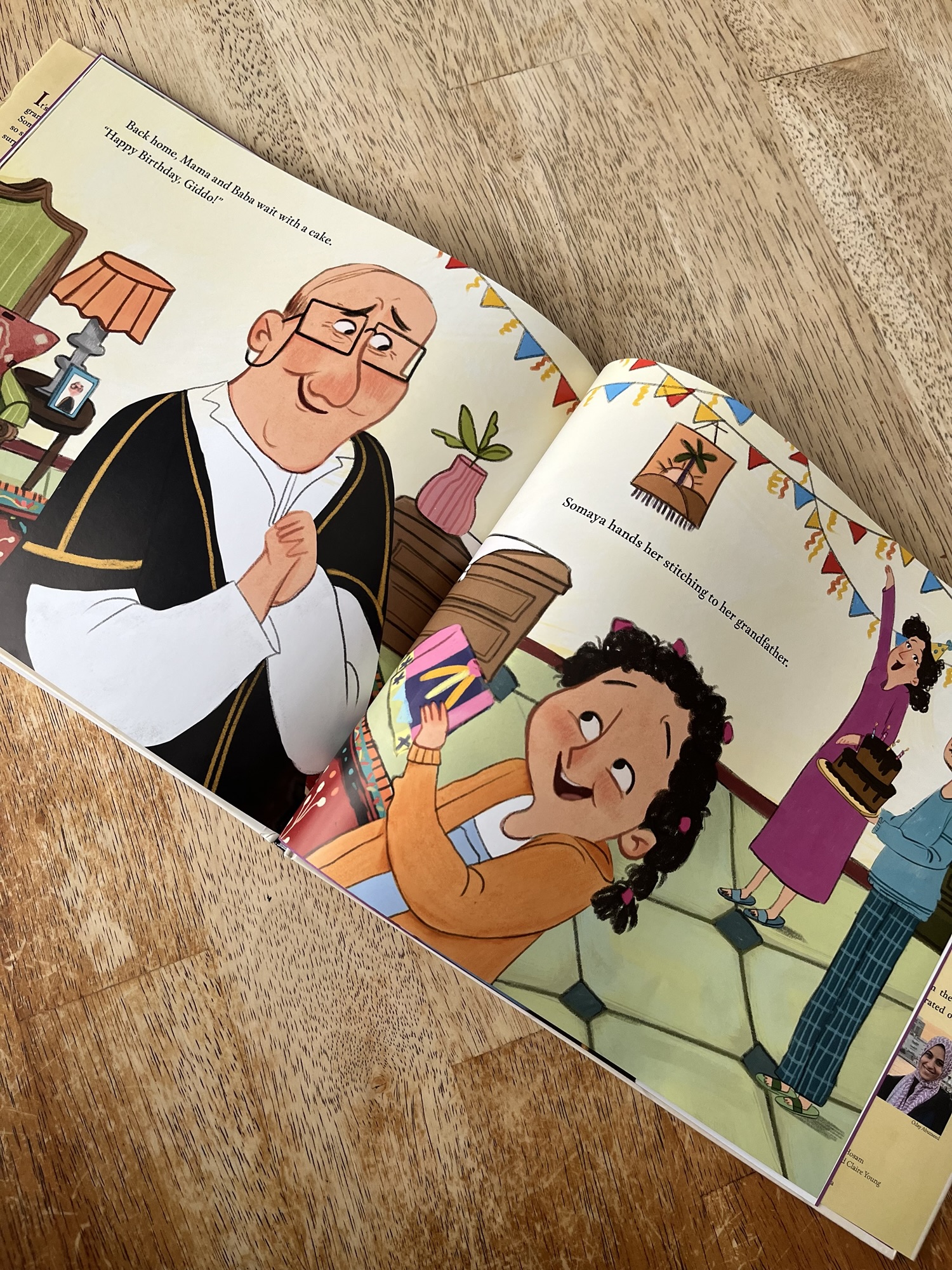
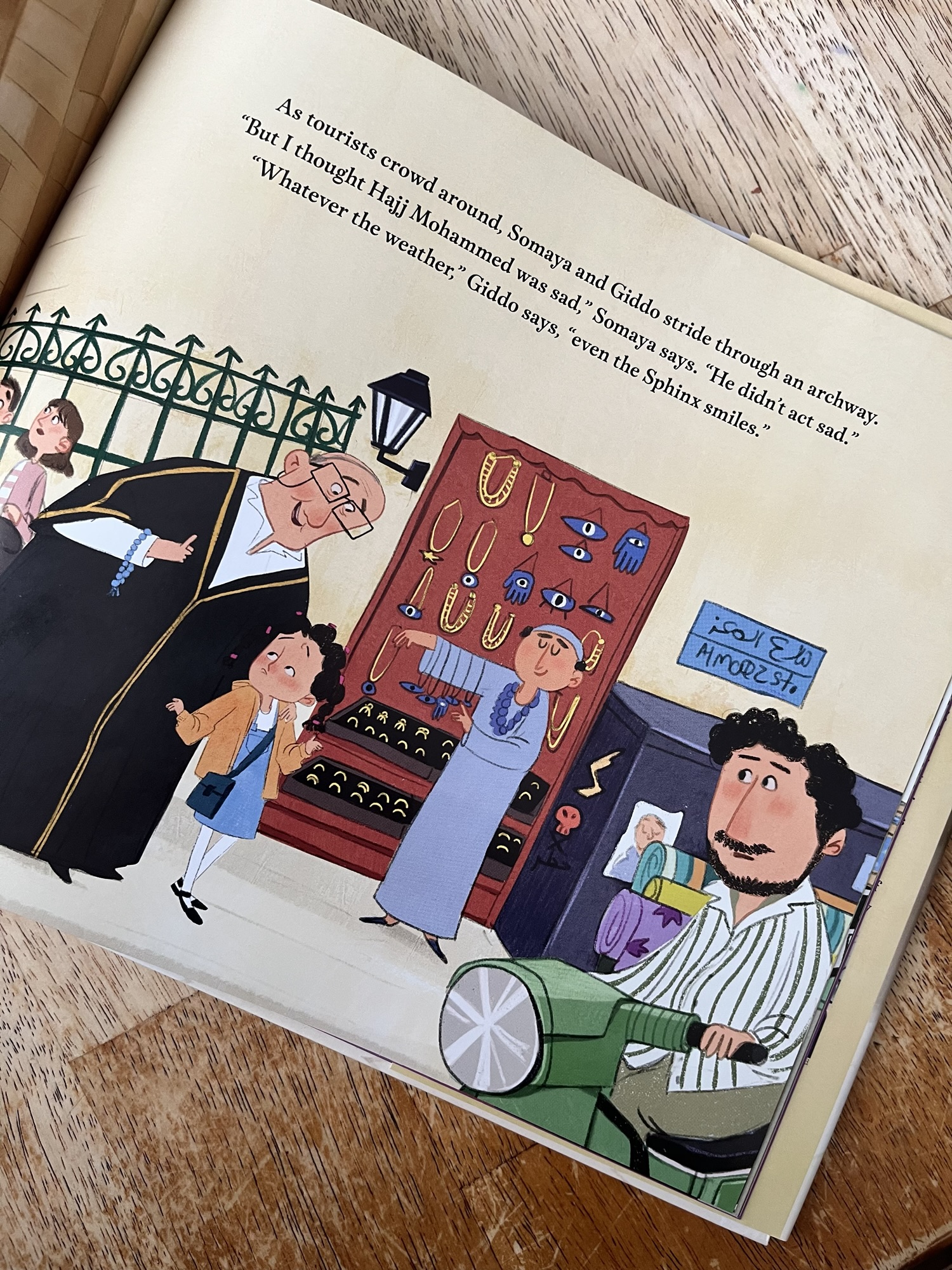
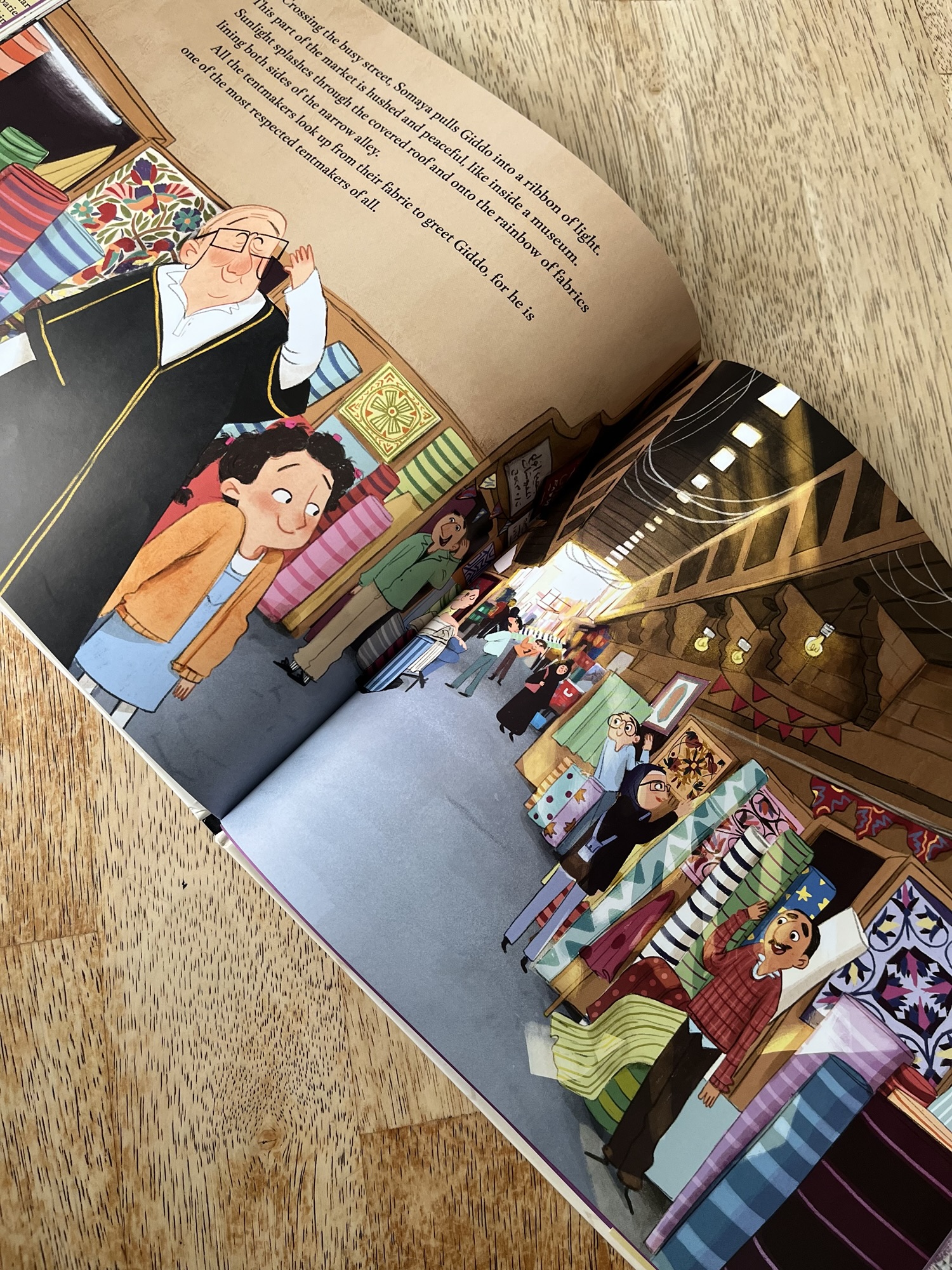
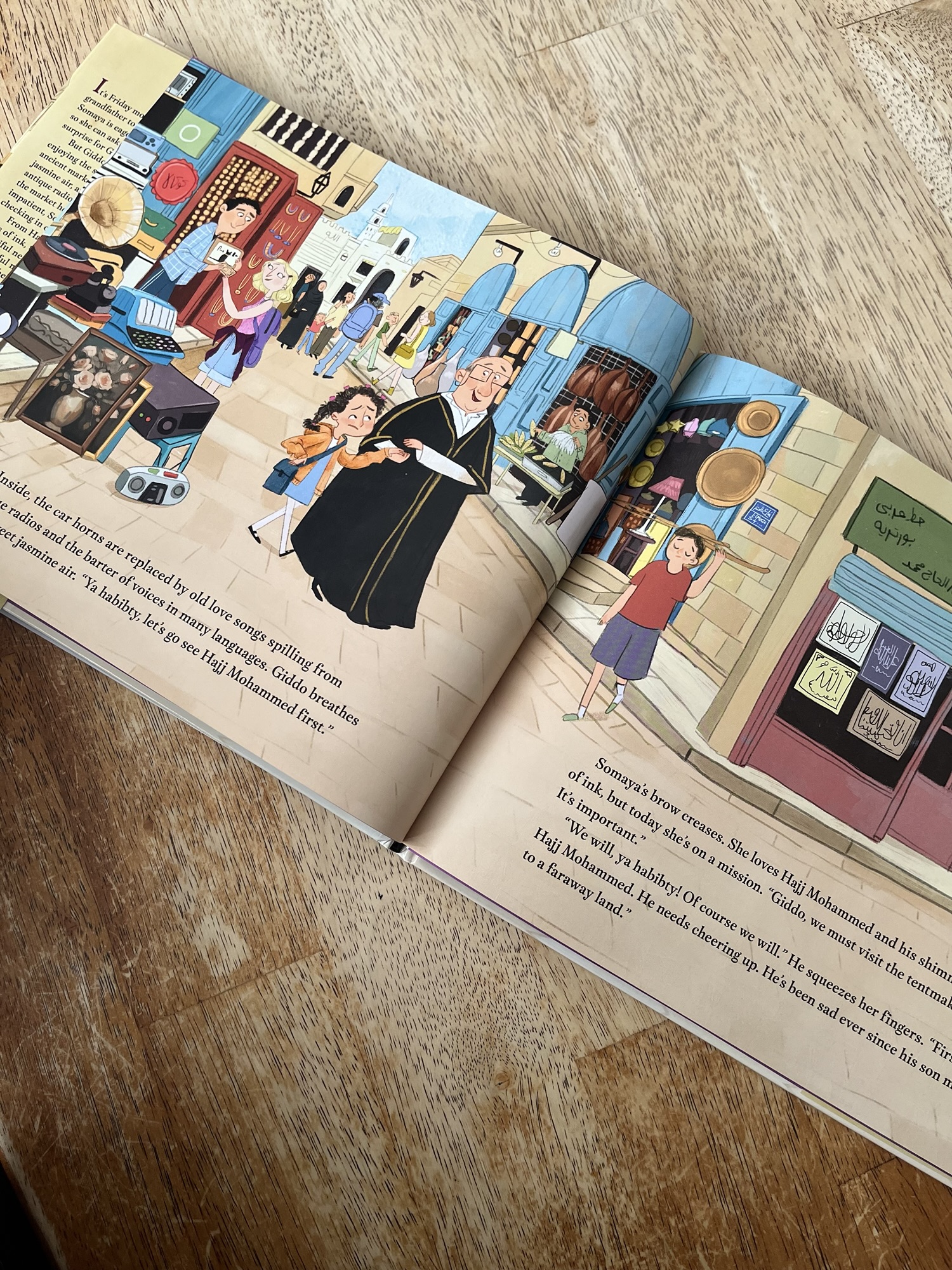
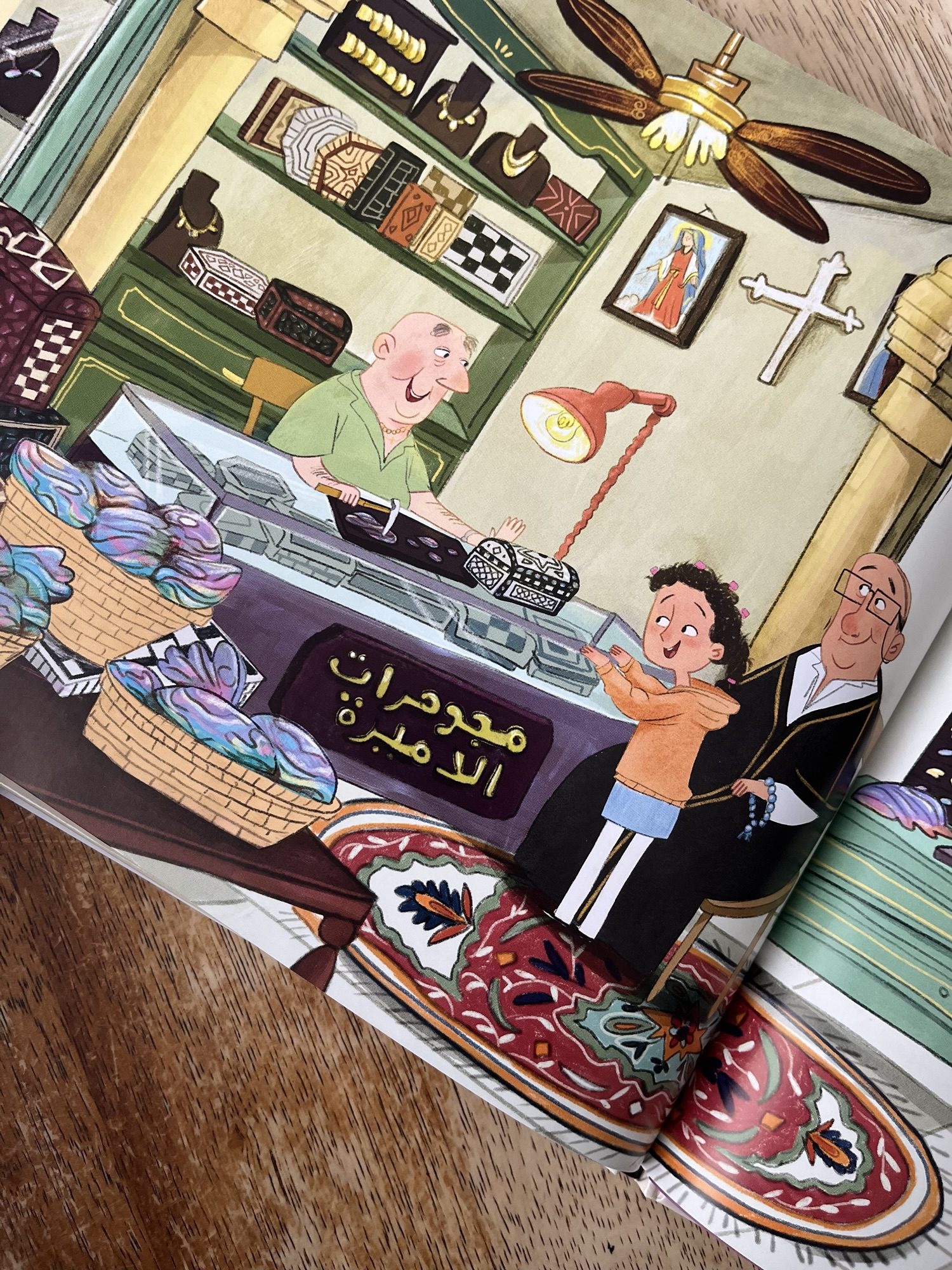
Set in Oman, this 32 page picture book shows family, connections, trying new things, and similarities as the concept of home is expanded. The illustrations bring the text to life as Nuha travels to Oman with her mother without the reassuring presence of her belove doll Mary, and into the souk with her grandma who slowly nudges her into finding joy and fun and her home away from home.  The illustrations show Jadda and other characters in hijab, and greeting of Assalamu Alaikum being shared, the call to prayer is heard and a blue mosque is marveled at. I am not sure if the author is Muslim, she is not Omani but lived there according to the Author’s Note. The backmatter, also highlights the culture and Christian and Muslim respect for the names Mary and Maryam.  The beautiful book is heartfelt in showing the relationship between a young girl and her grandmother, as well as her culture.  With few books focusing on Oman, I’m excited to add this to my collection when it releases in February, and share it at story times and bed times with children ages four and up.

The book starts with Nuha not looking forward to an upcoming trip to Oman.  She doesn’t really know her Jadda, and is going to miss Baba and her home for the summer.  She finds reassurance in her doll, Mary, that at least she will have something familiar to hold on to.  When Mary gets left in the car, Nuha arrives in Oman grumpy and sad.

Grandma knows just what to do and scoots Nuha off to the souk to look for a new doll and where the sights, sounds, and smells, eventually win Nuha over.  From the nibbles turning into bites of shawarma, to henna being applied to their hands, to drums being played and danced with, Jadda and Nuha spend the day hand-in-hand.  When an Omani doll is finally chosen as they head home from the market, Nuha settles on the name Maryam, so that Mary and Maryam can represent ALL of Nuha.

Steet Puppy, Masjid Cat by Moniza Hossain illustrated by Wastana Haikal

Standard
Steet Puppy, Masjid Cat by Moniza Hossain illustrated by Wastana Haikal

I was a little nervous opening the book, I didn’t know if it was going to be a “Lady and the Tramp” type retelling, and I was unsure how dogs would be presented, but I sure was not prepared for the absolute adorableness that unfolded.  The simple rhyming lines contrasting the street puppy’s life to that of the pampered cat in the masjid, to their meeting, and the sweet imam leading with kindness warmed my heart.  The real chef’s kiss is the backmatter that doesn’t source, but references the sunnah of “acts of charity to every beast alive,” and notes that dogs, unlike cats, are not allowed in the mosque for religious reasons.  I love that “masjid” is in the title, that the author’s note and glossary explain adhan, imam, and the Quran, and ultimately that friendship amongst differences is the takeaway for all readers.  I don’t love that the adhan in the text is described as ringing and the imam as singing, but I acknowledge my pickiness.  And while I love that Prophet Muhammad saw is mentioned in the author’s note, I do wish salutations were given afterward.  The illustrations on every one of the 32 pages are delightful, and I love that the image on the jacket is different than the one on the book itself.  For ages 3 and up, and even emerging readers, this book has a lot of heart, and my 6 year old has read it aloud so many times, I just might have it memorized.

The book starts with simple rhyming lines showing the contrasting life of the cat and the dog, from their daily activities, to how other’s treat them.  When they meet, the cat is not too welcoming, but the imam shows the puppy kindness and the cat follows suit.  As simple as sharing and giving each other a chance, creates a friendship between the two animals, and a beautiful conclusion even the littlest children will understand.

The book is not didactic, and the role of the imam and setting of the masjid, for Muslim kids will be such a spark of joy, but in no way will it limit non Muslim children from connecting with the story.  The benefit for all is seeing a masjid environment and a Muslim in action, normalizing both, and inshaAllah reminding us all to be a little kinder to our animal friends.

Zamzam for Everyone: Sharing Water at Hajj by Razeena Omar Gutta illustrated by Bassent Dawoud

Standard
Zamzam for Everyone: Sharing Water at Hajj by Razeena Omar Gutta illustrated by Bassent Dawoud

This joyful 32 page picture book is both adorable and educational. Layers of Hajj and Zamzam threaded through with the global reach of Islam, generosity, food, language, and a little girl with a big smile brightening every encounter, is heartfelt and tender. Each reading has me smiling and marveling at the illustrations, amount of information simply conveyed, and the way it all comes together to offer both a window and a mirror for readers of all ages, particularly 3 and up.  The robust backmatter allows older readers to benefit, and with pronunciation guides, cultural and religious oversight noted, this book will be a favorite at bedtime and story times in Islamic and public schools, libraries, and gatherings.  SubhanAllah, the book is really well done and such a gift to us all to see Hajj and Zamzam unapologetically and proudly presented through little Mariam’s eyes.  It will leave children feeling like they just had a warm hug, and inshaAllah making dua’a that they too will be invited to Hajj soon.  

The book starts with Mariam feeling blessed to be one of the millions of people at Hajj. Her mother encourages her to be good, share, and be grateful all while staying hydrated, as it will be tiring.  She tries to come up with what she can do to get blessings, in addition to smiling, when she realizes sharing her Zamzam water will be the most beneficial. 

She helps an old lady find a seat and gives her some Zamzam, the Pakistani lady says, “shukria” and gives her dates in return. When she shares with some Indonesian sisters and is told “Terimah Kasih” she is handed some pandan cookies in gratitude.  This continues all throughout her Umrah with pilgrims and workers from different countries thanking her in different languages and sharing something back with her.  

It carries on through the steps of her Hajj, even when Makkah is far away. And even when she returns to her home, she shares the Zamzam to bring a part of Hajj to those that stayed at home.

The backmatter tells the story of Zamzam, information about the treats mentioned from around the world, information about Hajj with a glossary as well as the steps of Umrah and Hajj, information about the author and illustrator, and who helped insure accuracy of all the cultural and religious content included.

The book comes out in January 2026, and appears to be available in both hardback and paperback, please preorder to show support.


All the Ways to be Pretty by Shamaila Khan illustrated by Reyhana Ismail

Standard
All the Ways to be Pretty by Shamaila Khan illustrated by Reyhana Ismail

The premise of this book is fabulous, an Islamic approach to internal beauty to counter the societal emphasis on external appearance, by drawing on the examples of Ai’shah (RA), Khadija (RA), Sumayyah (RA), Maryam (RA), Hajar (RA), and Rufaidah (RA), may Allah swt be pleased with them all.  The illustrations are decent, focusing on the girl understanding what her mother is saying and her imaging herself with those qualities.  The part that I struggled with, is I flipped through it before I started reading it, and the pages are often walls of text.  Additionally, I didn’t realize it is rhyming text over 34 pages.  SubhanAllah though, somehow, it works.  I can see this book being shared at preteen gatherings in masajids, homes, and schools everywhere.  The rhyme at times is forced and lacking, but the flow makes the walls of text zoom by and the information shared is not overwhelming and Alhumdulillah, it doesn’t stray too far from the central messaging. You could share it with younger readers, but I think it works best if the audience knows some of the women and facts highlighted, and the information shared is a mix of reminder and new tidbits urging further exploration. The publisher lists the reading age at 7-10 which is probably a good fit based on the amount of text, but the rhyme, mirrors at the end, and starting point of battling beauty standards on the screen and “Princess” messaging is a bit of a target audience disconnect, which is why I point it out so consumers are aware.

The book starts with a lengthy author’s note before the rhyming scene of a mother and daughter walking to school and discussing what the daughter would like to be.  The girl doesn’t answer a profession, but rather responds that she wants to be pretty, and gives some justifications.  The mother gently then encourages her not to just want to be pretty, but rather pretty smart, pretty wise, pretty brave, pretty pious, pretty resilient, and pretty kind, before concluding with the girl throughout the day thinking of how to be like them, and her mother, to earn Allah’s pleasure.  Each attribute is a two page spread with one of the historical women featured.  The book ends with a hadith and six mirrors with the characteristics beneath them.

I like that the book does not try to give an entire biography about the women featured.  I also like that Islamic references are also brought in, some explained some not. It is “Islamic fictionalized non fiction” it is meant for Muslims with Islamic framing, not just Muslim characters, and it has substance.  Lately so many self published or even Islamic published books seem to not feature Islamic foundational themes, and I realize how much I have missed reading books that do.  Yes, I normally would have a solution to offer as to how to make the pages less text filled and I know I should say that maybe it shouldn’t rhyme, because it makes for some awkward phrasing, over explaining, and useless lines, but alas, I have no suggestions.  We need books that present our Sahabas and Prophets in a manner that allow our kids to know them and think of them and emulate them. Alhumdulillah, I can see this book being read and shared and discussed, and that to me is a “pretty “good thing.

The Prince of Stars: Ulugh Beg’s Quest to Map the Stars and Seasons by M.O. Yuksel illustrated by Zelma Firdauzia

Standard
The Prince of Stars: Ulugh Beg’s Quest to Map the Stars and Seasons by M.O. Yuksel illustrated by Zelma Firdauzia

This gorgeous 40 page picture book biography is both flowing in its storytelling and informative in its sourced details of a fairly unknown, underappreciated figure.  I was humbled reading this book and learning about the accomplishments of someone I had never heard of before.  Truly this book, bringing to the attention of our young and old ones alike, such a remarkable figure, is a much needed gift.  The publisher suggests the book for 4-8 year olds, but I think it also will appeal to older readers familiar with Copernicus, Galileo, and Ptolemy and who will appreciate the efforts driven by curiosity from someone so long ago. The diction in a few lines did give me pause, but nothing that overshadows how well the author has once again proven to master the storytelling of non fiction Muslim accomplishments in an engaging, accessible, exciting way for today’s audiences.

The book opens with a map of the Timurid Empire in 1405, before showing the reader a young prince, Ulugh Beg, gazing out and the stars and wondering how many there are.  The next spread makes no sense to me, but I acknowledge others might not be bothered, how can the young boy be watching days fade into weeks, into months, into years, and then wonder how many days are in a year? Seems that either those terms weren’t yet around, or some details about the generalized meaning made him curious about the specifics.  Either way, him wanting to know how many days in a year and the changing of seasons, along with counting the stars are the questions he wonders about as a child and works to answer throughout his life.

The king of the Timurid Empire, Ulugh Beg’s grandfather, insured his intelligent grandson had the best teachers and was allowed to travel, learn, and follow him curiosity.  At 15, when Ulugh Beg became the ruler of Turkistan, he built a madrasa and invited scholars, artists, students, philosophers, and inventors to attend making Turkistan “a mecca of learning.”  Yes, the usage of mecca here made me laugh.  I know it is appropriate, but it seemed a little on the noise in a book where Mecca, the direction we pray is also mentioned.  The book then details the controversy of studying the stars, as astrology and astronomy at the time, were seen as one and the same.  And with only God knowing the future, he had to assert that he was curious about the science of the stars and planets.

I love that faith and Islam is centered and that the inscription on his school is “Seeking knowledge is the duty of every Muslim man and woman.” But it alludes that this is a hadith, and while I agree it is inspired by a saying of Prophet Muhammad (saw), I think adding the man and woman part, where to the best of my knowledge the hadith is just “every Muslim,” is something that should be clarified. None-the-less, that it was Ulugh Beg’s motto, so to speak, and that he made a point to articulate “woman” is remarkable.  He determined the exact time of the five daily prayers, the direction to Mecca, and the dates of holidays.

He also built the world’s largest observatory, and numerous tools, including the Fakhri sextant to measure the location of the stars and movement of planets.  He encouraged being challenged and challenging others’ findings, and over 17 years wrote a star catalog of more than 1,000 stars. He answered how many days in a year, down to the seconds, why the seasons change, and inspired future astronomers and scientists.

As incredible as the story is, the backmatter is equally impressive with an Author’s Note, Ulugh Beg’s Biography, a Glossary, Astronomical Timeline, Bibliography, Further Reading, and Acknowledgements.

The illustrations are the cherry on top, somehow I don’t love the cover, but the inside spreads are nice and match the tone of the words and the detail of what he was accomplishing.  The book is on preorder and I hope, teachers, librarian, and families will prioritize learning about him, and giving him credit for what he helped us to understand, about our world.