Category Archives: Muslim Author

Internment by Samira Ahmed

Standard
Internment by Samira Ahmed

internment.jpg

The premise of this book is amazing, the writing and execution of it, unfortunately, falls flat.  The failure to set the stage, develop characters the reader cares about, and create a world in the near future that is both riveting and horrifying doesn’t come through in the book’s 387 pages written on an AR 4.7, but meant for high school aged readers grade nine and up.

SYNOPSIS:

Indian-American Layla Amin is 17 and since the census that her family honestly filled out and identified themselves as Muslim, their life under the new president has been shattered to say the least.  Her poet father lost his job as a professor, her chiropractic mother has lost numerous patients, Layla has left high school and they all live in fear.  With curfews and people they’ve known their whole lives turning on them openly, the book opens with Layla chooses to sneak off to see her Yemeni Jewish boyfriend, David after curfew.  The next day suits arrive to take the family to an internment camp in the desert, near the old Manzanar detention camp used to house Japanese Americans during WWII.

The new camp, Mobius, is the first one to house Muslims and the first of many slated to be built.  The detainees are divided by ethnic background, Layla’s FEMA trailer is in a block of other Desi families, Arabs a few blocks away, LatinX, converts, etc., all given minders to control them from within their own community.  As Layla whines about her cell phone being taken away and how much she misses David, a guard, Jake, takes pity on her and regularly risks his own position and Layla’s, as he sneaks her access to phones, gets her burner cell phones and even sneaks David in so the two can make out.  Somewhere along the way it seems Jake and Layla develop feelings for each other, but it really isn’t explored.  Layla makes friends and somehow becomes a revolution leader with her writing notes about life on the inside and having Jake and David get them to the media.

Those that speak out against their situation or complain, disappear and never return.  The Director of Mobius, ensures it.  In their refusal to eat dinner one night, and their protest at the front gate in front of protestors and the media, eventually Layla gets taken, but with her friendly guards, she finds she isn’t completely alone and that she just needs to be brave a little longer, stand up at the right time and get incredibly lucky to be successful in the revolt.

WHY I LIKE IT:

The President in the book is undoubtedly Trump, and I love the passages that reflect how the fictitious America didn’t become racist overnight, but that the leadership allowing it, ignited the ugliness that already existed.  It mentions making America great again and really sets the foundation of a simple “what if” that really could happen very easily.

The parts that struggle are the story elements, I really didn’t find myself cheering or even liking Layla, I didn’t find her charismatic or interesting, she was really whiney and flat to me.  I didn’t care one bit about her and David’s relationship, it seemed forced and completely not necessary.  A friend or concerned neighbor might have been more hope inspiring than a high school boyfriend she is brooding over to save her.  Her sneaking out and sneaking him in, all seemed selfish and juvenile for a character who in other arenas seemed pretty mature and level headed.  The disconnect is pretty prominent and I really cringed at all of the passages involving the two of them.

There are flash backs to life before the new President, but it isn’t engaging and doesn’t really highlight how horrific life is now, because the lack of character development and world building, everything seems like it has to be said, not shown.  Random characters at the camp would show up and then disappear, and we knew nothing about them, so there was no emotional connection or attachment to what happens to them, it really had so much potential to have heart and fear and insanity and it just doesn’t.

Layla identifies as Muslim, and lovingly recalls ayats and duas of her grandmother, but the family firmly believes that “there is no compulsion in religion” and thus doesn’t hide who they are, but don’t visibly display it in their clothing, or actions much either.  They don’t have a problem with their daughter having a boyfriend and they support it.  Layla and her mom don’t cover, but Layla does show massive respect for the Muslims that do.  Layla’s parents seem to pray, Layla doesn’t, but she doesn’t seem against it.

FLAGS:

Lots of kissing between Layla and David, a gay couple that disappears in the camp, flirting between various other characters, violence, oppression, language, death, beatings.

TOOLS FOR LEADING THE DISCUSSION:

I actually feel like this could work as a book club book because the discussion would be so great.  Yes, there are flags, but the relationship stuff is so annoying and awkward, I don’t think any kids will find it titilating or compelling at all. The writing is subpar, but the issues brought forth are important, and the students would have infinitely better plot lines for the characters that I think could make the books premise reach closer to its potential.

A letter from the Author: https://www.hachettebookgroup.com/articles/a-letter-from-samira-ahmed-author-of-internment/

Book Club Guide:https://www.hachettebookgroup.com/wp-content/uploads/2018/07/InternmentNovlBookClubGuide.pdf

Review podcast: https://teachnouvelle.com/internment-by-samira-ahmed/

There is a ton online, just google it and Happy Reading


Ibn Yunus: The Father of Astronomy by Ahmed Imam

Standard
Ibn Yunus: The Father of Astronomy by Ahmed Imam

ibn yunus.jpg

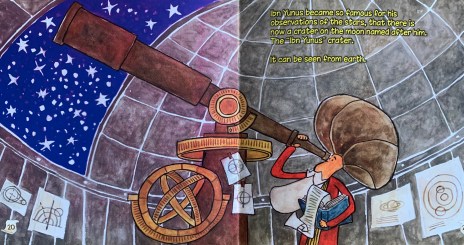
This book is part of a new Muslim Scientist Series featuring 24 glossy colorful 8×8 pages highlighting a great Muslim from the Golden Age of Islam.  Meant for Muslim children ages 4-7, the book sets out to teach and inspire little Muslims, and does a pretty decent job of presenting it in a memorable easy to understand way.  Adults might have to explain and help out a bit, but the book accounts for that too.

C6059DA8-08CC-41FE-9088-086C38EE07AC

The book starts off with some “Notes to Parents and Teachers” about supplemental activities and conversation starters to make the book relevant, and show how beneficial their contributions to science were and still are today.

A3210097-9DBA-49CC-B370-25187E4DCA3E

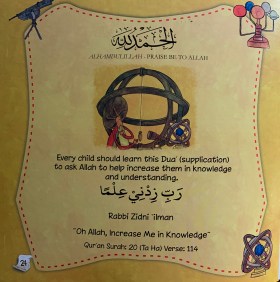
The book is a simplified biography of Ibn Yunus, and I would imagine the other books: Ibn Majid, Ibn Battuta, Ibn Al-Batar, follow the same pattern.  It tells about where he was born and when, and what he is famous for, before telling a bit about his family, an ayat from the Quran that inspired him is then given in English and Arabic and translated, before it shows how he worked toward his goal, and the accomplishments he made in his lifetime that still are used today.

938B76A9-E626-4B09-936E-446183F3141D

The fun illustrations make Ibn Yunus’s field of study easier to understand and will keep the littler listeners interested.  Adults will hopefully also learn something in the reading, and feel the same pride and inspiration of Muslim’s contributions to science.

13D95DDB-5EE2-4354-801D-85E561DABC86

It is critical to teach our children about the accomplishments and discoveries of Muslims, and this non fiction series is a great introduction to Muslim scientists, scholars, and adventurers, that they might not otherwise learn about.

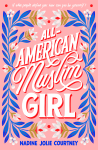
All-American Muslim Girl by Nadine Jolie Courtney

Standard
All-American Muslim Girl by Nadine Jolie Courtney

Book-Cover-All-American-Muslim-Girl

The power of own voice books is that while you may not agree with everything presented, you appreciate that it is being presented.  This 417 page high school young adult book is authentic and relatable and regardless of if you agree with the characters’ approaches, decisions, and understanding, you see and learn something about fictional characters that feels so real that you hopefully will find yourself in “real” life being a bit more understanding, kind, and accepting.

SYNOPSIS:

Allie is 16 and with her red hair and fair skin, she can pass for an all-American teen.  The only child of a college history professor and child development psychologist her family moves around a lot, but her dad’s extended family congregates in Dallas, and that is the anchor of family and love that warms the book.  Allie’s father Muhammad aka Mo is Circassian and his family speaks Arabic, including Allie’s grandma, Teta, who doesn’t speak any English.  Allie’s mom is a convert, but neither practice religion, and while Allie’s mom appreciates it, it is an incredibly hands off topic for Mo.  And Allie, well, she doesn’t speak Circassian or Arabic and knows nothing of Islam, and reinvents herself in each new school and city she finds her self in.

With Islamaphobia on the rise and Allie using her white privilege to neutralize a situation on an airplane, the reader sees as soon as they start the book, that Allie has a lot of skills to read people and understand how to handle complex situations, but that she hasn’t yet found her self.  As someone who can blend in and transform, the book is her journey to understand her heritage, her beliefs, what she wants in life and move toward finding her voice.  Much like Randa Abdel Fattah’s books which often turn the narrative from a Muslim girl rebelling against her faith and parents, this book has a young protagonist rebelling and turning to her faith.  The book seems to stem from a auto biographical place and the journey of learning about yourself, accepting yourself, and growing is universal.

Desperate to learn about Islam, Allie starts reading the Quran and hanging out with Muslims. While she knows Islam is not a monolith as she has family who cover, some that don’t, some that pray, some that don’t, some that fast, parents who drink, she still feels on the outside when she begins meeting with some Muslim girls at their weekly Quran study group.  As she gets to know the girls, she realizes how truly different Islam is for all of them, and how their experiences shape their views as well.  There is a convert, a black Muslim, a lesbian, some girls that cover, some that can’t read Arabic, some that find praying behind men misogynistic, some that feel unmosqued, they listen to music and read horoscopes, and Allie has a boyfriend.
Allie’s boyfriend, Wells, isn’t just incredibly cute and sweet, and accepting as he learns about Allie’s faith and her journey to understand it, but he is also the son of a cable shock jock toting that refugees should be stopped, and Muslims banned, yeah it is complicated.  As Allie learns more about who she is, she finds her self lying to everyone, and as she finds the courage to speak her truth, she must accept the consequences it has on those around her that she cares about.  Interwoven is a beautiful story line about her and her Teta’s relationship that is heartfelt and genuine and emotionally taxing when tragedy strikes.

WHY I LIKE IT:

I love that this book exists, and that it is written for Muslims and non Muslims alike. I think non Muslims will see that there are all types of Muslims, and we should be reminded that everyone has their own tests and is on their own path.  Paradoxically I love that it isn’t preachy, but desperately wish there was more emotional connection to Allah swt and RasulAllah, because honestly its a gaping void that makes some of the story fall flat for me.  I get that Islam is different for everyone, but while the book pushes so much that Allie wants to know about it to connect and fit in with her family, I feel like there isn’t much “spirituality” to her approach which kind of makes someone accepting religion seem lacking.  Her approach to prayer and fasting is almost robotic, and yes she says she likes it, but there isn’t any emotional resonance in her perhaps having an internal dialogue with God, or crying out to Him when her grandmother is in the hospital, instead it is read this passage from the Quran, or say this prescribed supplication, which makes her conundrum about her boyfriend, seem arbitrary.  Allie’s non believing, non practicing parents seem to have a softer spot for God, as Allie’s mom says something to the effect of it is hard to stop believing once you start, and Allie’s mom asserting multiple times that while she doesn’t practice she converted for herself, no one else.

I also kind of struggle with the attempt of getting every type of Muslim in the book to show that there isn’t a good Muslim bad Muslim dichotomy to the larger audience, but as a result seems to make the point that Islam can be changed to fit today’s world and that line makes me a bit nervous.  It is fiction, it is quite possibly the author’s own experience,  but I felt like the part of continued growth and working to follow the tenants of Islam got left out.  We all have our tests, and we all sin, but to just say ok, this is me and this is my Islam and stop there, halts the journey and character’s arc rather abruptly.

I love that the book really does a good job of laying out that there are problems, misogyny, racism, stereotypes, everywhere, not just Islam or religion, but in societal structures too, it is really shown across platforms and very seamlessly.  I like that a fair amount of side characters are fleshed out, and compassion extended even when opinions differ.  There is a lot of acceptance consistently shown from the characters and those that don’t show it are called out on it as well.

I wanted more on Allie’s dad though, to know what exactly his religious complexity entailed, I felt like I missed something, maybe I did, but just to say his relationship with religion is complicated or complex, left me wondering and wanting for details.

As it seems with so many of these YA books with female Muslim protagonists, the non Muslim boyfriends are absolutely amazing with their understanding, and patience (think A Very Large Expanse of Sea, The Lines We Cross, The Acquaintance), truly fictionalized high school boys, high five.

FLAGS:

There is Islamaphobia, kissing, drinking, death, racism, sexism, LGBTQ characters and discussions.  There is lying and talk of sex.

TOOLS FOR LEADING THE DISCUSSION:

This book is a bit advanced for middle school, the concepts and the acceptance of those concepts might not be conducive to Islamic School book clubs of high school level either.  That isn’t too say that kids can’t handle it or shouldn’t read it, but I think when presented from a school, it is assumed that you are endorsing an interpretation or practice of Islam, and this book might push that for some.

There aren’t a lot of author interviews or teaching guides, online, but if you do choice to read and discuss, you will be fine, there are a lot of layers, a lot to celebrate, and a lot to relate to in Allie’s story.


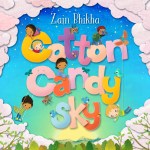
Cotton Candy Sky by Zain Bhikha illustrated by Amir Al-Zubi

Standard
Cotton Candy Sky by Zain Bhikha illustrated by Amir Al-Zubi

cotton candy sky.jpg

So glad to see another Zain Bhika song hit the mark and bring the beloved lyrics to life in book form. Ages 2 and up will enjoy the 28 page book even if they haven’t heard the song, and parents will enjoy watching the kids sing-read the pages independently if they have.

IMG_8895

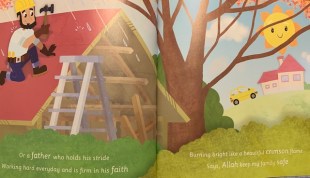
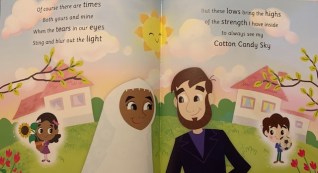
The illustrations are sweet and diverse with the characters and their families changing with each verse.  But all celebrating in their appreciation for the light of Allah’s blessings and the patience of waiting for the rain to pass.

IMG_8896

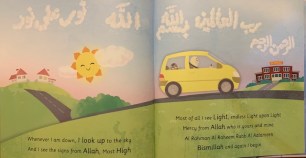
I particularly enjoy the Arabic in the clouds on the pages explaining what the character does whenever he/she feels down and looks up to the sky to see Allah’s signs.

IMG_8897

The hardback book is sturdy with a playful large font on the pages, and is meant for Muslim kids with the concept coming from Surah An-Noor (24:35).

IMG_8898

Once again, thank you Crescent Moon Store (https://crescentmoonstore.com/products/cotton-candy-sky?_pos=1&_sid=c94d58757&_ss=r) for fast friendly service and great prices!


I Say Bismillah by Noon H. Dee Iput translated by Shera Diva Sihbudi

Standard
I Say Bismillah by Noon H. Dee Iput translated by Shera Diva Sihbudi

i-say.jpg

Another adorable board book teaching the concept of saying Bismillah to the littlest Muslims. The illustrations are really sweet, and the text large and playful on their 5.5 square pages.  The story is simple, but because there is a story, and the word repeated, it does just what it intends to do and shows Bismillah being said before you start something.  It is worth noting though, that it never articulates why you say it.

IMG_8870

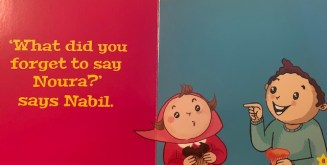
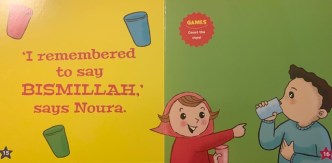
In this 20 page story brother and sister, Nabil and Noura are about to eat some yummy cupcakes.  Noura forgets to say Bismillah and her brother Nabil reminds her.  They both say Bismillah and then Noura says it before she drinks her milk.  Proud of herself for remembering, Nabil praises her as well, and they both head off to play after saying Bismillah again.

IMG_8871

I like that the siblings encourage each other and no one gets in “trouble” for not saying it, but rather they are gentle in their approach and it comes not from a parent or authority figure but from one another.

IMG_8872

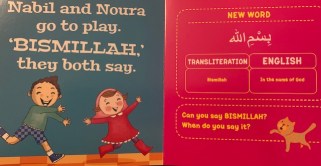
There are a few “games” sprinkled in on two of the pages: say the colors of the cupcakes, count the cups.  There is also the word Bismillah written in Arabic at the end along with the English transliteration, English meaning and two questions: can you say Bismillah, and when do you say it, to verify comprehension.

IMG_8873

Thanks once again to Crescent Moon Store (www.crescentmoonstore.com) for their fast and friendly service and great prices.  There are four books in the series and they carry them all.

The ABC of Allah Loves Me by Learning Roots

Standard
The ABC of Allah Loves Me by Learning Roots

abs-of-allah-loves-me.jpg

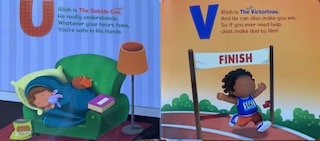
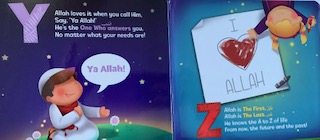
You really wouldn’t think there is much to review in an alphabet board book, but this particular one tries to do more than just pluck a random Islamic word or concept for each of the 26 English letters.  It attempts to give each of the letters one of Allah (swt)’s beautiful names explained in English, but written in Arabic too.

IMG_8773

Each 5 x 10 page features a four line description in a rhyming format to flesh out the highlighted word or phrase.

IMG_8774

Some letter to corresponding Asma al Husna are spot on, but some are a little more of a stretch and some don’t even seem to try.  Overall though it is well-done and delightful.

IMG_8778

The people illustrated don’t have visible eyes, but many have smiles, noses, or closed eyes.  They are bright and warm and engaging.  The binding and thickness of the pages is sturdy.

IMG_8777

Perhaps my favorite part of the book is that the while the rhyming is forced, as is nearly always the case in these type of books, the diction stays on level.  Little kids will understand the words used and emerging readers will be able to sound out and read many on their own as well.

IMG_8776

A great book for your toddler to preschool collection and a reasonably priced book from Crescent Moon Store http://www.crescentmoonstore.com.

Bibi’s Blessing by Lela Usama Goldsmith illustrated by Samantha Morazzani

Standard
Bibi’s Blessing by Lela Usama Goldsmith illustrated by Samantha Morazzani


IMG_8209

A wonderful lesson packaged in a sweet story about a girl learning to thank God for blessings, especially ones that don’t seem like blessings at all.  The 36 page book is meant for children age 4 and up and with its large 8.5 x 11 glossy full color pages it works well at bedtime and in small groups at story time.

IMG_8211

On the island of Lamu, Mwana lives with Bibi, her grandma who’s livelihood depends on making Mofa bread every day.  It is Mwana’s job to sell the sorghum ground bread in the streets for people to enjoy at tea time.

IMG_8210

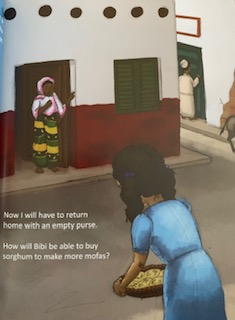
One morning a braying donkey frightens Mwana and she trips, spilling all the mofas on the ground.  When she tells her grandma what happened and how they have not made any money for the day, her grandma responds, “Thank God for this blessing.”

IMG_8212

Not believing Bibi, but being too excited to visit a friend, she doesn’t argue.  But then the power goes out and she can’t visit her friend and she gets grumpy. Grandma tells her to “Thank God for this blessing” and explains that sometimes not getting what you want is also a blessing.

IMG_8213

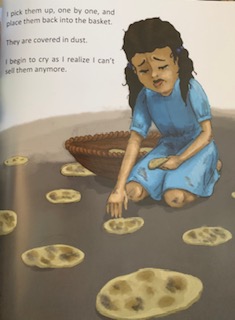
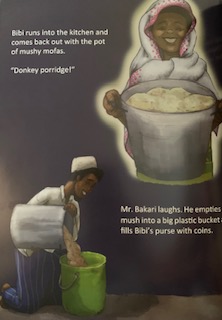
With nothing else to do, Mwana goes off to soak the rice pot, but instead accidently soaks the dusty mofas, to which her grandma again says it is a blessing.  She starts to feel she can do nothing right, and can’t believe there is any blessings in a pot of mushy mufas.

IMG_8217

But, with the power out many shops close and the owner of the donkeys has nothing to feed his animals.  He knocks on his neighbors door and Bibi and Mwana have just the thing.  He pays them for the food and alhumdulillah all is well, so many blessings from God.

IMG_8216

I love that the setting is a place many of us have never heard of and that there is information about Lamu at the end of the book along with a glossary.  The author is Muslim, the characters dress Islamically in the illustrations, and have Muslim names, but there is nothing Islamic specific in the text.

IMG_8214

Some of the sentences are worded awkwardly, for example, “We live in a small island by the Indian Ocean called Lamu.”  You typically say you live “on” an island not “in” it, and islands are in the ocean, not by them.  And some sentences read almost as run ons because of multiple conjunctions and their lack of punctuation.  I don’t love the illustrations.  The faces on many of the pages are really distracting and inconsistent, but the overall story is well done that I’m willing to over look my own critical opinions, and encourage y’all to give the book a try.


The Star Outside My Window by Onjali Q. Rauf

Standard
The Star Outside My Window by Onjali Q. Rauf

star outside.jpg

Woah! Domestic abuse, foster care, murder, astronomy, and above all hope and bravery. It is so, so much, and so beautifully dealt with from the perspective of a child, that I’m still living in Aniyah’s world and praying she is doing ok.  As the beginning of the book states, it is a story written for everyone, but it then goes on to say that there could be triggers and difficult things to read. So please, while it may be written for ages nine and up, you should know what your child can handle before suggesting they read such a heartbreaking 306 page book, and if they aren’t able to handle it yet, make a mental note to have a discussion when they are ready, it is important.

SYNOPSIS:

The book starts with a map of London and the chapters start with constellations, maps to the stars, and a little girl who wants to be a star hunter.  Drawing on Simba from the Lion King and wholeheartedly believing that stars are people who’s hearts were so big that when they die they light up the night, she maps the stars outside her foster house window, on the lookout for a new star, her mom.  Not remembering all the details that brought her to this foster home, she and her little brother Noah are trying to figure out their new life, the foster home rules, the loud pain they felt, and if they are winning the game of hide-and-seek with their father.

Unable to speak, Aniya, breaks her silence when a news story on TV tells of a star breaking the rules of gravity and flying by Earth.  Convinced it is their mom, Aniyah and Noah with the help of fellow foster kids Travis and Ben hatch a plan to go 73.6 miles from Waverly Village to the Royal Observatory in Greenwich, to make sure the star hunters name the star the correct name, and not the random computer generated one the contest rules dictate.

WHY I LIKE IT:

The book is inspired by the author’s aunt who was a victim of domestic abuse and killed by her husband.  The love and pain she feels at her loss, I believe is conveyed through the pages and felt by readers of all ages.  I had my 10 year old son and my 12 year old daughter read the book, because this book’s topics are heavy and weighty, but handled with such sensitivity and childlike innocence that it is a great introduction to the topic, without being overly heavy and weighty.  The author is amazing, and I was curious how she would follow up her amazing debut novel The Boy at the Back of the Class, and I think this one is just as powerful, if not more so. 

All of the foster kids suffer from some form abuse and there is even a note at the beginning about how the author does not like the term “domestic abuse” and there are resources and information at the end of the book for children or adults suffering or how to help someone they know suffering abuse.  There is also a page about Herstory, the constellations, and some personal anecdotes about the author’s aunt.

The book is truly heartbreaking because as an adult reading the book I could easily figure out what happened, that the father killed the mother, and that the games the mom would have the kids play were not games at all, but ways to mask what was going on. The book is very subtle in how it talks about what the mom and kids endured and some kids will not get it, and others will, either way, parents should be aware and available to discuss that abuse is never ok and that if their friends or someone they know is suffering/surviving, there is help.

The book is powerful also in the way the foster kids for the most part stick together, I think the way they are so willing to help and risk their own chances at adoption is selfless and memorable.  Also the way they put up with Noah, a little kid, who gets annoying, but handled lovingly,  because family means so so much when you don’t have one. 

On the surface though, it is an adventure story, can a ragtag diverse group of kids with little money, injuries and a deadline travel nearly a hundred miles to name a star?  Its fast paced, interesting, and emotional on many levels.

There is nothing Islamic in the book, not even a Muslim name in passing, but the author is Muslim and the story universal.

FLAGS:

Halloween is when they run away.  There is a lot of lying, but they know it.  Lying when the mom covers her bruises and marks, and how she is doing, lying when the kids run away and steal the bikes and sneak on a bus without paying, and break in to the observatory.  The kids feel guilty and know right from wrong in every instance, but when they opt to do something uncouth they rationalize it because they have to name that star!

TOOLS FOR LEADING THE DISCUSSION:

I’m seriously considering reading this as a middle school book club selection.  It is written for a younger audience, but I think I want to open up the topic of abuse and have the school counselor come and listen to the discussion.  The book is that good, and that important, and that powerful, that a discussion and lessons, will keep these characters’ stories in the middle schoolers’ minds as they grow and hopefully teach them empathy, compassion, appreciation, and patience.


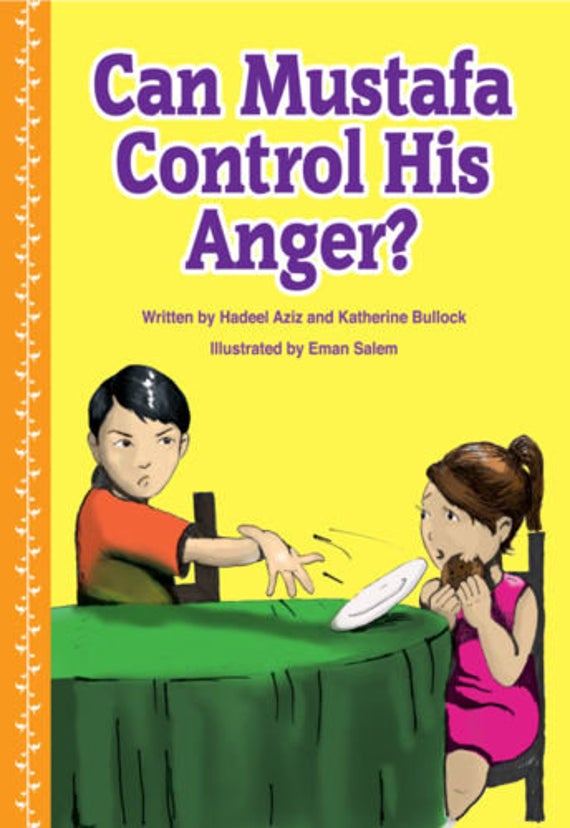
Can Mustafa Control His Anger? By Hadeek Aziz and Katherine Bullock illustrated by Eman Salem

Standard
Can Mustafa Control His Anger? By Hadeek Aziz and Katherine Bullock illustrated by Eman Salem

mustafa.jpg

When I finished the 27 page Islamic fiction early chapter book, I thought, “It reads like a child wrote it.”  And sure enough as I flipped to the bio page I learned that indeed it is written by a secondary school senior.  I don’t want to be overly critical as a result of learning this, but as a published book that I paid for, I really wish some would have “corrected the book” and smoothed it out.  It has a lot of potential, and a good message, it just slightly misses the mark in details, some awkward tense changes, and crossing the line of what Mustafa does and says when he lashes out.  He doesn’t apologize and physically assaults people without consequences other than kids not liking him, and considering its for independent readers seven and up, that is a bit concerning.

SYNOPSIS:

Mustafa is a nice boy, except for when he isn’t.  Unfortunately he loses his temper a lot and as a result has no friends.  Whether it is losing a game, having someone not believe him, or even someone taking a treat he wanted, Mustafa resorts to physical violence and hateful words.  No parents or adults seem to ever correct him, so other kids just steer clear of him.

When a teammate won’t pass him the ball in soccer he punches poor Humza and when he goes to throw another punch he gets pushed off and bumps his head.  He storms off into the forest feeling alone, but not remorseful when a little red creature pops up and tells him he will be weak until he can control him.  Determined to show the creature he is strong he chases after it only to be scooped up by a giant named brother Haneef.

Brother Haneef and his giant friends live in a mud house in Makkah.  Shocked at how he got to the desert, he learns from his giant friend to ignore taunting, when another giant says you cannot learn Surah Al-Falaq in an hour.  Later when the giants race and Haneef loses, he says Audhu bilallahi min ash-shaitan ar-rajm and to sit down if standing and lay down if sitting as per the Prophet (saw) advice.  A giant girl gives Mustafa a strawberry tart and when he reaches to get a chocolate cupcake and someone else takes it, both he and Haneef scream, but Haneef goes and makes wudu reminding Mustafa of another hadith.  When Mustafa asks Haneef why he shouldn’t be mean to people that make fun of him or leave him out, Haneef tells him the hadith about how the strong man is the one who controls himself when he is angry.  As the giants go off to pray at the Kabaa, Mustafa finds himself at home in his bed with his sister waking him up and asking him where he has been.

41582EA9-516C-41FA-A337-C668F29C9F3A

WHY I LIKE IT:

I love the topic and that hadith are used and referenced in the book, as well as other resources. I also do like that it was written by a teen.  The pictures in the book are well done for the style and audience of the book, and the six short chapters are appropriate and inviting as well.

Oddly, the tense of the story changes at an awkward place on page 6 and I think it was intentional to go from telling about Mustafa to experiencing his “adventure” with him in the present tense, it just needs to be smoothed out.  Similarly, Mustafa is the protagonist, and we know his thoughts, but randomly at one point we know Haneef’s.  It isn’t technically wrong, but again, it is awkward as it is a short book, and everything else focuses on Mustafa asking Haneef to know things, not suddenly being in Haneef’s head.  I also felt like some resolution with shaytan, the red being, leaving or saying I’ll be back or something to continue his arc and role in the book is needed.  The details are hit or miss, vague descriptions about the giants lumps them all together, why they were at the Kabaa seems a bit random as well.

The biggest concern I have is a common one with these type of books, think Ahmed and Layla Deen books.  To make the point that he has a problem with his anger, the story goes way overboard.  Mustafa is genuinely hurting people, with kicking, punching, pushing, and throwing.  He lashes out and tells his little sister to shut up and calls her an idiot, and never once does he apologize even after his time with the giants.  Haneef makes the point that we all lose our temper, and need to simmer down, but Haneef also never apologizes for yelling or getting upset.  This is not ok, if you are teaching with the Prophetic method then that is a fairly large hole to have in the story.

There are no parents or adults which could make the point that kids won’t play with him stronger, but I feel like it really just means he gets away with a lot, and as a bully, that is not reassuring at all to the other characters in the book.  Some immediate consequences would be nice, or delayed guilt, something to make Mustafa not just seem like an awful person.  The moral is that he has learned his lesson, but I wasn’t convinced, nor where my 9, 10, and 12 year olds.

FLAGS:

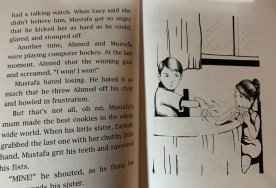
Language and violence. Mustafa says, “shut up” and  “idiot,” he kicks a girl, throws a kid off a chair, throws a plate at his sister, punches a teammate,  and yells at everyone.

TOOLS FOR LEADING A DISCUSSION:

I wouldn’t recommend this book as a book club book, or even one to spend library or classroom library shelf space on.  It isn’t awful, there are just much better books out there and this one if not discussed might leave kids with the wrong impression.

3F32BB71-B114-48E9-978F-8B6031A2F88F


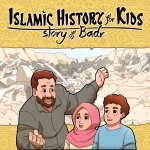
Islamic History for Kids: Story of Badr by Qasim Riaz

Standard
Islamic History for Kids: Story of Badr by Qasim Riaz

badr.jpg

This fictional story of a non-fiction-historical event over 37 large, 12×12, pages really brings the battle of Badr to life for readers ages seven and up.  The book is engaging and keeps chidden focused, excited, and clear as to what is unfolding, why the battle was important for Muslims, and why it still has lessons today.  Unfortunately, there are no source notes, bibliography, or references in the book, so I’m not sure how accurate the details are, and I haven’t yet had a chance to have someone more knowledgeable than I check it for accuracy.  The ayats from the Quran quoted are identified in text and yes, I understand it isn’t a reference book, but even having some imam or scholar give their approval would reassure people considering purchasing the book.  Additionally, fairly prominently there is a disclaimer at the beginning of the book that says, “The characters in this book are entirely fictional.  Any resemblance to actual persons living or dead is entirely coincidental,” which is a common disclaimer, but in a book of this nature, it did strike me as odd.  So, you may want to read it first yourself before presenting it to your child as fact.

3A02CEE2-B385-4AF0-8091-BB9E54CBE579

There is also a typo that my children discovered rather quickly and pointed out to me, I was a little disheartened when I asked about it, to discover the author knew about it before mailing it out, but for some reason didn’t find it necessary to put a note or let the customer be aware of it. I put a post-it note in mine to show all of you, and will be taking a black marker to it shortly.  Mistakes and typos happen, but I felt that they should have let the consumer know, once they knew that it was there, for accuracy sake.

85C78105-8FD8-4B2F-B031-A49272D287DF

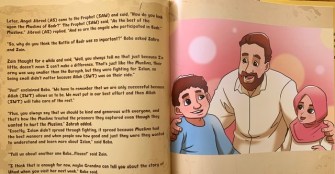
The book starts off with a brother and sister fighting, Zain and Zahrah.  When the father goes to stop them, Zain tells him that Prophet Muhammad (SAW) used to fight, and the father concedes the point, but points out it was not something he wanted to do.  He tells them that for the first 13 years he didn’t fight back even when the Quraysh made fun of him.

DA52115E-5314-4E5A-BE6B-9E38E6E88817

The kids ask who the Quraysh are and why they didn’t believe the Prophet, to which the father lovingly answers their questions before telling him about the verses revealed allowing them to fight from Surah Al-Baqarah.

They learn about Abu Sufyan returning from Syria with a large caravan and how the Prophet wanted to surprise them. Only to learn that Abu Sufyan had arranged a much larger army from Mecca to come and attack the Prophet and his Companions.

There are details about how they determined the size of the army based on how many camels were being eaten, and how the Muslims camped near the wells to control the water.  The story reads smoothly and pulls out when the children have questions seamlessly.

FF278825-CA1F-4904-9F20-DF21DA7085BE

As the battle is set 1000 soldiers against 313 Muslims, the book explains how the battle starts with three duels and explains how Utbah, Shaiba and Walid battle Hamza (RA), Ali (RA), and Ubaydah (RA).  The Ansar win all three battles and the Quraysh charge.

5F4EFF83-0553-4FD0-919A-45814B973E9F

Prophet Muhammad (SAW) makes duas, and Allah (SWT) answers sending a thousand angels following one after another to help.

715028DE-D6FB-436D-88A1-65ACCA437AB2

When the dust settles the Muslims are victorious and the order is given for the prisoners to be treated kindly.  They are given food, rides, and the opportunity to pay a ransom for their freedom or they could teach 10 Muslims to read and write in exchange for their release.

With the story concluded the father then makes sure the children understand some of the many lessons from the battle.  Including having Allah on your side, trusting Allah, putting in your best effort, and being kind and generous even to those against you.

DE00F1A5-8C32-4CF9-8B6D-D880A4C77726

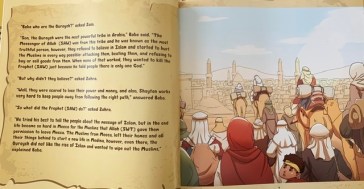
There is no illustrator listed, but the pictures are done really well showing modern relatable, squabbling kids getting drawn in to a historical story by their father.  The emotion on the characters faces adds depth to the story and engages the readers in seeing and understanding a desert battle so long ago.

The text on some pages varies quite noticeably, with some pages barely having a line to spare and some only being a line or two long.  It does slightly affect the rhythm (and aesthetic) of the book, but it is manageable as long as you remember to give the kids enough time to see the picture on the short pages, as the overall size makes the book perfect for story time to large and small groups.  The book stays on level, which is nice, and there is a glossary of abbreviated terms (AS, RA, SAW, SWT) at the end.

The company: Ghazi Production is planning Uhud to be the next book, and informed me a bibliography will be included in that one.  InshaAllah!