Category Archives: High School

Neither This Nor That by Aliya Husain

Standard
Neither This Nor That by Aliya Husain

neither this nor that

This 251 page novel reads like a biography that has no climax or real conflict in its linear retelling of the protagonist from 3rd grade to a junior in college.  If you are part or all Desi, raised in America in the ’80s and ’90s and have fond memories of NBC’s Must See TV, rolling your pants up, your family packing Corning Ware sets to take to the homeland, and the joys of TJ Maxx, you might enjoy the nostalgic similarities you too experienced, but even at that, with no plot or character arcs, the book is easily forgettable and you might forget to finish it.  For all my critiques of Muslim stories that don’t read authentic, this one definitely does, she doesn’t rebel, she doesn’t ever go against Islam, but because she is similarly not ever tempted to, I think most readers won’t relate to this fictional girl, who’s biggest worry is smelling like her mother’s cooking.  The book seems to just want to tell her life story, and getting through it is the point of the book, not making emotional connections, giving the reader something to think about or even inspiring others, which is ultimately a missed opportunity that this book could and should have capitalized on.

SYNOPSIS:

It is the first day of school for Fatima Husein the eldest of many daughters in her Indian American suburban home.  With a mother who doesn’t speak much English and parents that don’t seem to understand Fatima’s desire to fit in, the stage is set that will carry through the entire book of Fatima loving to study and separating herself as the girl at school pretending to be more American than she really is, and the girl at home pretending to be more Indian than she feels.  As the book follows the character through college, along the way Fatima and her family have extended maternal family move to America from India and then move back, they take a trip to India which is not enjoyed at all, her dad’s family then moves from India and settles near them, they move to be closer to the masjid, and they go for Hajj.  Characters bounce in and out: school friends, community friends, cousins, etc.. The only real constant is Fatima’s love of school and her paternal grandmother grumbling about her getting married. There are the ups and downs of life that are shared, most very specific to a ABCD (American Born Confused Desi) living in the ’90s.  Fatima is religious and Islam is important to her and she never waivers in her black and white view of things.  It does take her a little while to wear hijab, but there is no real self reflection and catharsis, it is just states she wants to fit in and isn’t ready.  The conclusion is she finally accepts a proposal from the son of an old family friend who lives in Chicago.  Not so much because she likes him, but more because she has no reason not to say yes and her parents are in favor it.

WHY I LIKE IT:

If this were a biography and it was someone famous, the minutia of day to day living might be compelling, but as it is fiction and you have no idea where the story is going, it just seems to tell a story about a typical girl doing typical things.  It has value in that it shows how normal and boring even, a normal Muslim family is, but it gets really preachy at times and really dry.  None of the side characters are memorable.  I have no idea how many sisters Fatima has, when her grandfather passed away I felt nothing, when two who families died in a car accident Eid morning on their way to prayers, I had to flip back to see if the characters had ever been mentioned before.  It seems like the whole point is to get to the end, and more heart and less tedium would have made this book an amazing example of American Muslims in America.  The first page mentions friends and there is no follow up to where they are or what happened to them, and this happens all through out the book, there are no emotional connections, nor attachments among the characters to include the reader into their plight as well.  The protagonist one must assume gains her voice from the author’s experiences herself, but it just lacks internal dialogue and conviction.

Fatima lives through the Gulf War and makes big changes and has to find her place, yet the book just tells us all this, it doesn’t show us how she internalizes and processes and emerges from the experiences shared, it just gives an example and then comments on it.  The font and layout visually looks like a text book, and at times, the internal structure reads like an essay, sharing an anecdote, backing it up, and moving on to the next event on the time line.

I feel like I know the character, it definitely comes from a place of shared experience and credibility, but you have no idea where it is going, and just like I doubt anyone would want to read my life story, the book needs a little direction and editing.  In the author interview posted below in the “Tools to Lead the Discussion” she mentions that mainstream publishers wanted more rebelling and she wouldn’t compromise.  I agree with her, we need books that don’t follow that assumed track, I think that the presentation of the story, however, as it is, is lacking.  The integrity is there, but the character is really flat, and there are plenty of literary tools that could enhance the story without compromising Fatima’s character to drugs and alcohol and boys.  The book was self published in 2010 and I really hope at some point the author will re-edit it, to make it relevant to preteens and teens today and more personable.  Ultimately making it so that the successes Fatima has are cheered on by the reader, who are also inspired by her accomplishments while staying true to her beliefs.

FLAGS:

Considering how many pages are dedicated to how she and her sister are to behave in India as to not seem naughty or as arrogant Americans, the curse words flow pretty regularly in the book, and the way she speaks to her elders and in front of her elders is not always kind.  There are side comments about hooking up, STDs, and drinking, nothing any of the characters engage in, but judgments regarding these topics for those that do is present. She also talks about her mom’s failure to discuss menstruation before hand, to exemplify how things are only discussed once they need to be dealt with.

TOOLS FOR LEADING THE DISCUSSION:

I don’t know that as a book club selection today’s youth would voluntarily pick up and read this book.  There might be some ability for a teacher to assign it and then turn around and make the students write something similar about their experiences in a fictionalized form.  I think students would struggle to relate to Fatima with the outdated references and the lack of conflicts and climaxes in the narrative.
 

Yes No Maybe So by Becky Ablertalli and Aisha Saeed

Standard
Yes No Maybe So by Becky Ablertalli and Aisha Saeed

yes no

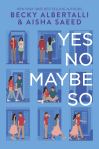
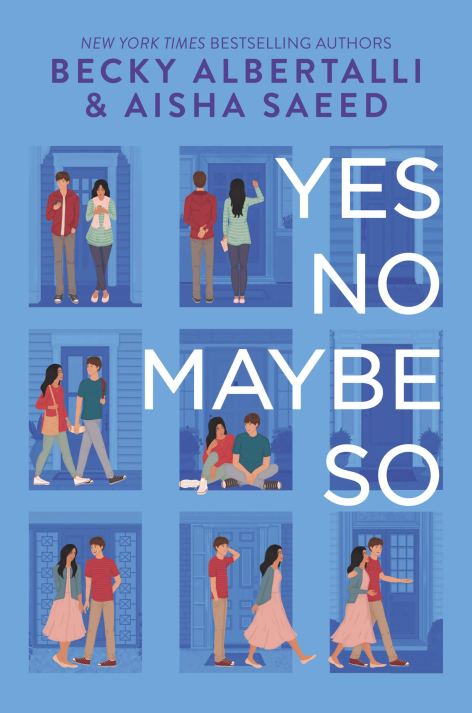
This new rom com in book form with a Muslim female character written by a Muslim author, sets itself apart by being co-written by a Jewish author and the other half of the love story being told by a Jewish boy’s point of view.  This YA book is very relevant as a special election in Georgia served as the catalyst of the two authors coming together and fictionalizing the effects of white supremacy, Islamaphobia, and antisemitism for the book, while real headlines were urging the two to canvas, get involved, and make a change against the increased showing of hate with the election of Trump.  The presentation of Islam is probably realistic, but definitely not ideal, and with the kissing, multiple LGBTQ+ supporting characters, the profanities, and 436 page length, the book is probably best for 15 year old readers and up.

SYNOPSIS:

Jamie Goldberg is 17 and is spending his summer helping his cousin work on a special election campaign for a Democratic candidate in an incredibly red district in Georgia.  A very nervous kid, who hates public speaking and talking to girls in general, he would rather be behind the scenes or hanging out at Target.  His little sister, Sophie’s bat mitzvah is coming and things at home are crazy with pre party planning.  His grandma, an Instagram sensation uses him for tech support and video filming, and his easy going demeanor means he spends a lot of time, being bossed around.

Maya is the 17 year old only child of a lawyer mom and physician dad and has just found out that they are separating.  With her one friend too busy with work and starting at the University of Georgia, US born, Pakistani-American Muslim Maya, is not having a very good Ramadan.  When an interfaith event reunites her with a childhood play-date friend, Jamie, her mom convinces her to help him canvas to keep busy and sweetens the deal by bribing her with a car.

Naturally the two spend a lot of time together vounteering for Jordan Rossum, stuffing envelopes, canvassing, and putting up signs.  Along their way they become good friends, and invested in the election as a House Bill banning head coverings, and antisemitic bumper stickers start getting plastered around town.  The end of Ramadan, the election, the hate the two encounter, and families changing, bring Jamie and Maya together.

Maya’s parents are pretty chill about boys, and only caution her about unnecessary complications by dating in high school, when Maya throws it back on them, that their relationship is pretty complicated, she seems to not find an Islamic reason not to make-out with Jamie.  The whole book is angsty and the two feign cluelessness, but based on the cover of the book alone you know where it is going.  The true climax is how much the relationship can be used for political gain, and if they can get their candidate elected.

WHY I LIKE IT:

I like the political setting, it is a different and very relevant slant.  It might be a little alienating to readers outside the United States, because the political process isn’t really detailed, but the characters involvement in their small slice is a major aspect of the book.  The book is definitely pro Democrat, but addresses the gas lighting, hate speech, and views of those on both sides.

I also like that two minority authors came together to share an OWN voice perspective of life today.  For the most part the story telling is smooth with the two characters getting alternating chapters to tell their story from their point of view.  A few times, I felt details were missing, for example what Maya wore for Eid, when space was given to detail that she didn’t wear ethnic clothes to an iftar, and her picking a dress for Sophie’s bat mitzvah.  Similarly, Maya’s parents seemed flat for their trial separation being a major part of Maya’s stress.  Jamie’s grandma was probably my favorite side character, and one of the most fleshed out.

I am fully aware that some Muslims pick and chose what to follow and that not everyone is strict about boy/girl relations, but I felt like for a book that is set in Ramadan, uses religion as a catalyst for civic action, Maya’s mom wearing hijab, and an opening scene being set at the masjid, there is really nothing Islam in the defining aspects of the characters or story.  It is so watered down and almost catering to non Muslims to feel comfortable, that it left me annoyed.  And I think non Muslims too will wonder why Maya’s mom covers and Maya doesn’t and how that works, or why Maya switches to having one reason for not dating and then a religious one.

The book sets out to do a lot in terms of humanizing the effects of laws and policy on average people, but I don’t know that most Muslims hoping to see a mirror to their experience will find that in Maya.  I can’t speak about Jamie, and the Jewish experience, but Maya is rather forgettable in my opinion.

FLAGS:

There is a lot of cursing, and the F word at that.  In the dialogue set in Ramadan, it becomes a joke to substitute it for something else, but once the month is over, the language resumes.  There is kissing, and making-out with the main characters.  There is talk of hooking up, but nothing explicit.  There are is a side character friend that is gay and he and his boyfriend are affectionate.  After the bat mitzvah Sophie comes out to Jamie.

TOOLS FOR LEADING THE DISCUSSION:

I don’t think that I could do this as a middle school selection, the rationale for Jamie and Maya dating, isn’t ok for an Islamic School message.  I really wish just once, a book like this would have the main character, being like, “nope, sorry.”  It is getting predictable and while I know it is countering the oppressed woman view, it is becoming equally one dimensional in its presentation of Muslim women.


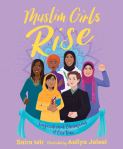
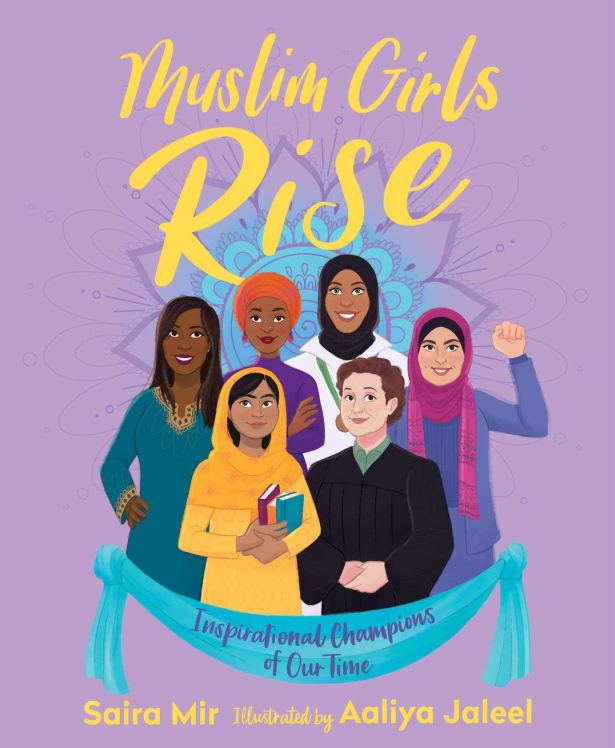
Muslim Girls Rise: Inspirational Champions of Our Time by Saira Mir illustrated by Aaliya Jaleel

Standard
Muslim Girls Rise: Inspirational Champions of Our Time by Saira Mir illustrated by Aaliya Jaleel

rise

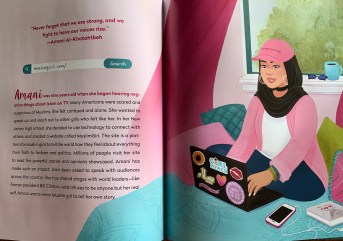
Women you have heard of, some you are meeting for the first time. Some you like, some you disagree with, women that cover, women that don’t, some young, others older, some athletic, some academic, some a little bit of both.  One fictional, a few political, but in the end, all strong women of today, all Muslim, all unique, from all over the world, all known for paving the way for others to follow.

C51C5834-B3C5-4D19-94B3-99B21ADF83EA

In 42 pages, 19 females are highlighted and illustrated to inspire Muslim and non Muslim boys and girls alike, but really Muslim girls will get the most out of it.  Sure a female gets mentioned here or there in other compilations of influential people of our time, but this one, well, this one seems mostly for us.

2D8175C8-0798-4AC1-BF15-D0A9C284AEA9

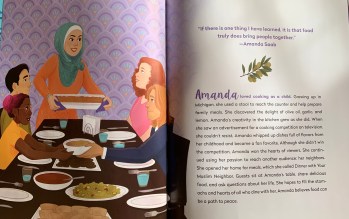
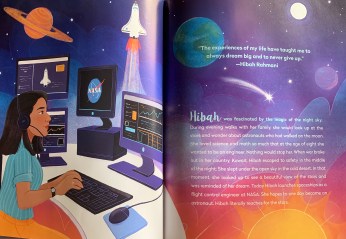
There are famous females in science, activism, fashion, film, sport, education, media influencers, make-up artists, you name it, and Muslim’s participate, so finally a book shining a light on the best of the best.  With each person getting a full two page spread, a few tidbits about who they are and what they are “famous” for are detailed in easy to read sentences that inspire, and if you haven’t heard of them before, enough general knowledge to get acquainted.  A few felt a little generic, but once you have a name, Googling them or researching them, is obviously, not difficult.

6D798E55-709C-442A-8DFF-4BA184C960E1

I wish there was a bit more information detailing who was chosen and why.  At first I thought it was  US or “western” movers and shakers, but then you have Maria Toorpakai Wazir, the tennis player in Pakistan, and Shirin Ebadi from Iran.  So then I thought ok, they are all contemporary, but Maryam Mirzakhani passed away in 2017.  Needless to say, one could argue that the list is arbitrary, and I think I would agree.

85FF7A9C-FD80-4F37-A1DE-B8726762E9CB

One could also argue, that these women may make history for notable things, but that they might say or do things that you might take issue with, and again, I agree.  They are people, they are fallible, and diverse, and have different perspectives and life experiences, but that’s ok, infact I think that might even be the point.  We all have different passions, and paths, and views and yet at the end of the day we should be able to lift each other up and inspire.  I think every person who reads this book will find someone that sounds or feels or looks like them, and that is a good thing, no, a great thing!

9C6EB606-F612-40BF-A947-092D2B76F1FE

My favorite was the Kamala Khan entry, because I didn’t realize the G. Willow Wilson was Muslim.  I erroneously assumed the other co-creator, Sana Amanat gave Kamala’s back story and home life its sense of OWN Voice, and I love that I learned I was wrong from a book.

2EC5EAF4-87F4-406C-B4D1-C95341536B66

The illustrations are right on and do an amazing job of conveying the character and the inspiration of the collection.  The book is much needed and I hope they do a similar style book for Muslim women in other time periods.

Special gratitude and appreciation to Gayartri Sethi (IG @desibookaunty) for gifting me this book for no other reason than to share the power and strength of women, and being a leader in that, by sending me a beautiful book.  May I learn from your generosity and pay it forward! Thank you.

Shatter Me by Tahereh Mafi

Standard
Shatter Me by Tahereh Mafi

shatter

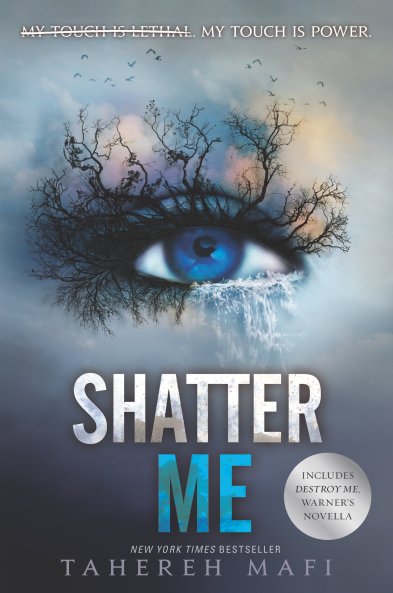
In many ways this 338 page dystopian YA fiction book focuses more on romance than the super human powers the 17 year old protagonist has and the role she will play in the resistance.  That isn’t to say the book is bad, just that it isn’t as high action, or reform-a-broken-world, or even use-my-super-powers-to-save-myself-and-those-around-me as I had hoped. It is more a lot of self loathing, desire, and anger.  That being said, I am on the fence about reading the rest of the series, as this is the start of a six book series, with two “half” novellas interjected in and being told from other characters’ perspectives.  If this was a show pilot, however, I would let Netflix automatically start the next episode until I had binge watched the entire season, not necessarily because the story is great, or the characters amazing, or the writing stellar, but because it is easy and fun and you really want to suspend belief and know who all these attractive mutated teens running a broken world are, and yes you will roll your eyes at the syrupy sweet lust filled pages, but it is YA so maybe I’m just overly cynical and 15 year olds and up will enjoy it.  It is an AR 4.3, but the language, violence, and romantic build ups should not be read by 4th graders.

SYNOPSIS:

The book starts with Juliette counting how many days she has been locked up in a cell, 264, void of human interaction of any sort and hinting at the reason her parents feared her and turned her in.  She is then joined by a male cellmate, Adam, one she slowly realizes she remembers from her youth and is in love with.  As he asks her questions we learn a bit about her power and the state of the world.  Juliette can kill people with her touch and apparently has killed someone, a child.  Her parents, along with everyone else, have always feared her, and not being hugged or touched her whole life has definitely been a painful existence for her.  Adam is a soldier and can touch her, he is also planted to learn about her as part of his job.  Warner, another teen, is in charge of a soldiers in the Reestablishment and has been following Juliette for a long time trying to see how they can weaponize her and use her for their cause.  Adam was playing a role, and now Juliette will have to play one in a world where the food is fake, the clouds the wrong color, and artifacts of culture and life before it all fell apart are destroyed and deemed illegal.  Along the way she will have to see the world in shades of gray and be willing to forgive and understand that people are not just for or against the way things, are, that sometimes you just have to do things to survive and protect the ones you love.

WHY I LIKE IT:

With all the talk of Iran in the news, I felt compelled to read a book with a Persian character, or at least by a Persian author, so I revisited the works of Iranian-American Muslim Tahereh Mafi.  The book reminds me of a Bollywood drama from the 90s where the hero and heroine do everything suggestive, except kiss, in this book they do a lot, but I guess don’t quite cross a line.  The scenes with Adam and Juliette are too much at times, where the story building about her understanding herself, her world, and what her powers can be, too little. The stage however, is set for the book and characters to grow in the series and with that optimism of knowing that the story stretches on, I have to hope the twists and turns make for a more interesting ride than this first book presents.  Most of the drama is already spelled out on the back cover, she can kill people just by touching them, she wrestles with seeing herself as a monster, or as being more than human.  It really doesn’t start getting good until she finds others like her, but then she is bored of them and the book ends.  The book has a huge following, so much like perhaps the Twilight series, maybe I’m just too cynical, and not in the target demographic, or maybe I need to keep reading.

FLAGS:

There is violence, *SPOILER* Juliette accidentally kills a child.  There is language, there is suggestive talk, there are romantic passages with kissing and touching.  For a book about a character who can’t touch, I feel like the majority of the book is about her touching and being touched.

TOOLS FOR LEADING THE DISCUSSION:

I wouldn’t do this as a book club, because I feel like it really is just a book setting the stage for what more is to come and because it ends so abruptly it feels almost like a teaser, yes a 300+ page teaser.  I was hoping that I could at least suggest it to readers of Hunger Games, City of Ember, The Giver, etc., but I don’t think it spends enough time on the crisis of the world at hand, and the adjustments made by a select few to appeal to the same readers.  It really is a romance, at least thus far, and the destruction of life and the environment just a back drop for their storyline.

Internment by Samira Ahmed

Standard
Internment by Samira Ahmed

internment.jpg

The premise of this book is amazing, the writing and execution of it, unfortunately, falls flat.  The failure to set the stage, develop characters the reader cares about, and create a world in the near future that is both riveting and horrifying doesn’t come through in the book’s 387 pages written on an AR 4.7, but meant for high school aged readers grade nine and up.

SYNOPSIS:

Indian-American Layla Amin is 17 and since the census that her family honestly filled out and identified themselves as Muslim, their life under the new president has been shattered to say the least.  Her poet father lost his job as a professor, her chiropractic mother has lost numerous patients, Layla has left high school and they all live in fear.  With curfews and people they’ve known their whole lives turning on them openly, the book opens with Layla chooses to sneak off to see her Yemeni Jewish boyfriend, David after curfew.  The next day suits arrive to take the family to an internment camp in the desert, near the old Manzanar detention camp used to house Japanese Americans during WWII.

The new camp, Mobius, is the first one to house Muslims and the first of many slated to be built.  The detainees are divided by ethnic background, Layla’s FEMA trailer is in a block of other Desi families, Arabs a few blocks away, LatinX, converts, etc., all given minders to control them from within their own community.  As Layla whines about her cell phone being taken away and how much she misses David, a guard, Jake, takes pity on her and regularly risks his own position and Layla’s, as he sneaks her access to phones, gets her burner cell phones and even sneaks David in so the two can make out.  Somewhere along the way it seems Jake and Layla develop feelings for each other, but it really isn’t explored.  Layla makes friends and somehow becomes a revolution leader with her writing notes about life on the inside and having Jake and David get them to the media.

Those that speak out against their situation or complain, disappear and never return.  The Director of Mobius, ensures it.  In their refusal to eat dinner one night, and their protest at the front gate in front of protestors and the media, eventually Layla gets taken, but with her friendly guards, she finds she isn’t completely alone and that she just needs to be brave a little longer, stand up at the right time and get incredibly lucky to be successful in the revolt.

WHY I LIKE IT:

The President in the book is undoubtedly Trump, and I love the passages that reflect how the fictitious America didn’t become racist overnight, but that the leadership allowing it, ignited the ugliness that already existed.  It mentions making America great again and really sets the foundation of a simple “what if” that really could happen very easily.

The parts that struggle are the story elements, I really didn’t find myself cheering or even liking Layla, I didn’t find her charismatic or interesting, she was really whiney and flat to me.  I didn’t care one bit about her and David’s relationship, it seemed forced and completely not necessary.  A friend or concerned neighbor might have been more hope inspiring than a high school boyfriend she is brooding over to save her.  Her sneaking out and sneaking him in, all seemed selfish and juvenile for a character who in other arenas seemed pretty mature and level headed.  The disconnect is pretty prominent and I really cringed at all of the passages involving the two of them.

There are flash backs to life before the new President, but it isn’t engaging and doesn’t really highlight how horrific life is now, because the lack of character development and world building, everything seems like it has to be said, not shown.  Random characters at the camp would show up and then disappear, and we knew nothing about them, so there was no emotional connection or attachment to what happens to them, it really had so much potential to have heart and fear and insanity and it just doesn’t.

Layla identifies as Muslim, and lovingly recalls ayats and duas of her grandmother, but the family firmly believes that “there is no compulsion in religion” and thus doesn’t hide who they are, but don’t visibly display it in their clothing, or actions much either.  They don’t have a problem with their daughter having a boyfriend and they support it.  Layla and her mom don’t cover, but Layla does show massive respect for the Muslims that do.  Layla’s parents seem to pray, Layla doesn’t, but she doesn’t seem against it.

FLAGS:

Lots of kissing between Layla and David, a gay couple that disappears in the camp, flirting between various other characters, violence, oppression, language, death, beatings.

TOOLS FOR LEADING THE DISCUSSION:

I actually feel like this could work as a book club book because the discussion would be so great.  Yes, there are flags, but the relationship stuff is so annoying and awkward, I don’t think any kids will find it titilating or compelling at all. The writing is subpar, but the issues brought forth are important, and the students would have infinitely better plot lines for the characters that I think could make the books premise reach closer to its potential.

A letter from the Author: https://www.hachettebookgroup.com/articles/a-letter-from-samira-ahmed-author-of-internment/

Book Club Guide:https://www.hachettebookgroup.com/wp-content/uploads/2018/07/InternmentNovlBookClubGuide.pdf

Review podcast: https://teachnouvelle.com/internment-by-samira-ahmed/

There is a ton online, just google it and Happy Reading


All-American Muslim Girl by Nadine Jolie Courtney

Standard
All-American Muslim Girl by Nadine Jolie Courtney

Book-Cover-All-American-Muslim-Girl

The power of own voice books is that while you may not agree with everything presented, you appreciate that it is being presented.  This 417 page high school young adult book is authentic and relatable and regardless of if you agree with the characters’ approaches, decisions, and understanding, you see and learn something about fictional characters that feels so real that you hopefully will find yourself in “real” life being a bit more understanding, kind, and accepting.

SYNOPSIS:

Allie is 16 and with her red hair and fair skin, she can pass for an all-American teen.  The only child of a college history professor and child development psychologist her family moves around a lot, but her dad’s extended family congregates in Dallas, and that is the anchor of family and love that warms the book.  Allie’s father Muhammad aka Mo is Circassian and his family speaks Arabic, including Allie’s grandma, Teta, who doesn’t speak any English.  Allie’s mom is a convert, but neither practice religion, and while Allie’s mom appreciates it, it is an incredibly hands off topic for Mo.  And Allie, well, she doesn’t speak Circassian or Arabic and knows nothing of Islam, and reinvents herself in each new school and city she finds her self in.

With Islamaphobia on the rise and Allie using her white privilege to neutralize a situation on an airplane, the reader sees as soon as they start the book, that Allie has a lot of skills to read people and understand how to handle complex situations, but that she hasn’t yet found her self.  As someone who can blend in and transform, the book is her journey to understand her heritage, her beliefs, what she wants in life and move toward finding her voice.  Much like Randa Abdel Fattah’s books which often turn the narrative from a Muslim girl rebelling against her faith and parents, this book has a young protagonist rebelling and turning to her faith.  The book seems to stem from a auto biographical place and the journey of learning about yourself, accepting yourself, and growing is universal.

Desperate to learn about Islam, Allie starts reading the Quran and hanging out with Muslims. While she knows Islam is not a monolith as she has family who cover, some that don’t, some that pray, some that don’t, some that fast, parents who drink, she still feels on the outside when she begins meeting with some Muslim girls at their weekly Quran study group.  As she gets to know the girls, she realizes how truly different Islam is for all of them, and how their experiences shape their views as well.  There is a convert, a black Muslim, a lesbian, some girls that cover, some that can’t read Arabic, some that find praying behind men misogynistic, some that feel unmosqued, they listen to music and read horoscopes, and Allie has a boyfriend.

Allie’s boyfriend, Wells, isn’t just incredibly cute and sweet, and accepting as he learns about Allie’s faith and her journey to understand it, but he is also the son of a cable shock jock toting that refugees should be stopped, and Muslims banned, yeah it is complicated.  As Allie learns more about who she is, she finds her self lying to everyone, and as she finds the courage to speak her truth, she must accept the consequences it has on those around her that she cares about.  Interwoven is a beautiful story line about her and her Teta’s relationship that is heartfelt and genuine and emotionally taxing when tragedy strikes.

WHY I LIKE IT:

I love that this book exists, and that it is written for Muslims and non Muslims alike. I think non Muslims will see that there are all types of Muslims, and we should be reminded that everyone has their own tests and is on their own path.  Paradoxically I love that it isn’t preachy, but desperately wish there was more emotional connection to Allah swt and RasulAllah, because honestly its a gaping void that makes some of the story fall flat for me.  I get that Islam is different for everyone, but while the book pushes so much that Allie wants to know about it to connect and fit in with her family, I feel like there isn’t much “spirituality” to her approach which kind of makes someone accepting religion seem lacking.  Her approach to prayer and fasting is almost robotic, and yes she says she likes it, but there isn’t any emotional resonance in her perhaps having an internal dialogue with God, or crying out to Him when her grandmother is in the hospital, instead it is read this passage from the Quran, or say this prescribed supplication, which makes her conundrum about her boyfriend, seem arbitrary.  Allie’s non believing, non practicing parents seem to have a softer spot for God, as Allie’s mom says something to the effect of it is hard to stop believing once you start, and Allie’s mom asserting multiple times that while she doesn’t practice she converted for herself, no one else.

I also kind of struggle with the attempt of getting every type of Muslim in the book to show that there isn’t a good Muslim bad Muslim dichotomy to the larger audience, but as a result seems to make the point that Islam can be changed to fit today’s world and that line makes me a bit nervous.  It is fiction, it is quite possibly the author’s own experience,  but I felt like the part of continued growth and working to follow the tenants of Islam got left out.  We all have our tests, and we all sin, but to just say ok, this is me and this is my Islam and stop there, halts the journey and character’s arc rather abruptly.

I love that the book really does a good job of laying out that there are problems, misogyny, racism, stereotypes, everywhere, not just Islam or religion, but in societal structures too, it is really shown across platforms and very seamlessly.  I like that a fair amount of side characters are fleshed out, and compassion extended even when opinions differ.  There is a lot of acceptance consistently shown from the characters and those that don’t show it are called out on it as well.

I wanted more on Allie’s dad though, to know what exactly his religious complexity entailed, I felt like I missed something, maybe I did, but just to say his relationship with religion is complicated or complex, left me wondering and wanting for details.

As it seems with so many of these YA books with female Muslim protagonists, the non Muslim boyfriends are absolutely amazing with their understanding, and patience (think A Very Large Expanse of Sea, The Lines We Cross, The Acquaintance), truly fictionalized high school boys, high five.

FLAGS:

There is Islamaphobia, kissing, drinking, death, racism, sexism, LGBTQ characters and discussions.  There is lying and talk of sex.

TOOLS FOR LEADING THE DISCUSSION:

This book is a bit advanced for middle school, the concepts and the acceptance of those concepts might not be conducive to Islamic School book clubs of high school level either.  That isn’t too say that kids can’t handle it or shouldn’t read it, but I think when presented from a school, it is assumed that you are endorsing an interpretation or practice of Islam, and this book might push that for some.

There aren’t a lot of author interviews or teaching guides, online, but if you do choice to read and discuss, you will be fine, there are a lot of layers, a lot to celebrate, and a lot to relate to in Allie’s story.


Lissa: A Story about Medical Promise, Friendship, and Revolution by Sherine Hamdy & Coleman Nye illustrated by Sara Bao & Caroline Brewer

Standard
Lissa: A Story about Medical Promise, Friendship, and Revolution by Sherine Hamdy & Coleman Nye illustrated by Sara Bao & Caroline Brewer

lissa-1440x2122

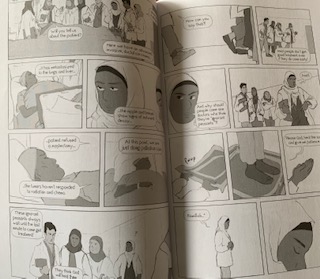
When I first started teaching I wasn’t a big fan of graphic novels, slowly I saw their benefit for struggling readers, and eventually I came to appreciate them as an enhanced tweak in story telling for everyone.  This book however takes the concept to the next level, for me anyway.   As the inside flap claims, it is a book “that brings anthropological research to life in comic form, combining scholarly insights and accessible, visually-rich storytelling to foster greater understanding of global politics, inequalities, and solidarity.” As a coming of age story of two friends at its core, yet taking on breast cancer, kidney failure, parental loss, different cultures, different religions and with a back drop of the Egyptian revolution, I’d say the book is meant for high school and up.  Not so much for content as for understanding and appreciation of all that went it to creating this ethnographic book.

SYNOPSIS:

Unlikely friends Anna and Layla cross economic, religious, and cultural differences to build a life long friendship.  The book is divided into three parts: Cairo, Five Years Later, and Revolution.  In the first part we see Layla’s family serving as the caretakers of a building and the two young girls bonding over pranks, arrogant tenants, and just being silly.  Anna’s family is American and the father works for the oil companies, thus they are financially very well off, however, the father is rather distant and the mother is dying of cancer.  The section concludes with the passing of Anna’s mom and the family going to Boston for the funeral.

Five years later finds the girls in college.  Layla in medical school and Anna at a university in Boston.  Layla’s father is suffering from renal failure and is unwilling to consider a transplant.  While Anna is trying to see if she carries the same genes as her mother and if insurance will cover it.  She also has to decide if she would want to have a complete double mastectomy, if she would want her breasts reconstructed, if she should do it now or later.  She gets a lot of opinions, but ultimately decides to find a way to pay for it and have it done.  Her father doesn’t understand, and Layla dismisses it forcing Anna to have to handle it alone.  But when news come that Layla’s father isn’t going to make it, she rushes back to Egypt to offer her support.

In the final section, the revolution has spread and Dr. Layla is helping those injured in Tahrir Square during the protests, and Anna is helping to identify bodies despite being attacked for being a foreigner and part of the problem.  Anna has kept the secret of her mastectomy from Layla and Layla assumes she has cancer.  At odds with their roles in the revolution, and with keeping secrets from each other and their differences in financial opportunities coming to a head, Anna returns to Boston.  When Layla’s brother is shot and loses an eye, however, Anna returns to Egypt and the two friends work to keep their relationship.

IMG_8951

WHY I LIKE IT:

The book is grounded in so much conflict and turmoil, but fights hard to keep a character based narrative.  With two illustrators and two authors trying to convey medical approaches, two cultures, two religion, two friends, and a revolution, the last 70 pages of the 302 page book are details about how the book came about, interviews with the various contributors, a timeline of the revolution, discussion questions, key references and a teaching guide.  The book at times was confusing to me, and I’m not sure why, it quickly resolved itself or a flip back a few pages would clarify it, but I think some of the illustrations were just off enough that it complicated things.  Anna by and large is depicted oddly on a few pages along with her family as well.

IMG_8950

Layla’s family is definitely religious and at times has to challenge their thoughts to understand Anna and their own circumstances too.  I think it is handled really well and allows the reader to consider things without answers being clear cut, is it Allah’s will to not have a transplant and accept death as being written for you or to have the transplant and ask Allah to make it successful?  By and large the book poses questions through the juxtaposition of the two characters and the experiences they endure, and while it shows the choices they made, it draws the reader in to wonder what they would do in their shoes without judgement.  The book provides a lot of facts and leaves them there making it more thought provoking than a simple story.

The characters are often composites of real characters the academic author’s learned about, yet some are directly based on activists and leaders of the revolution.  The graffiti artwork is attributed and powerful.  There is a lot of information in the notes after the comics end.

FLAGS:

There is death and revolution, Layla’s brother is taking Tramadol, and their are sketches of breasts as Anna learns about her disease and prognosis.

TOOLS FOR LEADING THE DISCUSSION:

I wouldn’t do this as a book club as I don’t know how much middle schoolers would get out of it and the book is pretty pricey.  I would recommend people read it though as it gives a different perspective on numerous things many of us take for granted.

Home


Down and Across: A Novel by Arvin Ahmadi

Standard
Down and Across: A Novel by Arvin Ahmadi

down and across

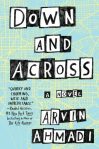
This 320 page book featuring an Iranian American lead written by an Iranian American is a coming of age story written on an AR 5.2 level, that I don’t think most reading this blog would want their child to identify with.  It is an OWN voice book from what I can gather in the author’s interviews online, and sure many Muslims definitely receive the label of “Muslim” more from others than from their own self identity, but I don’t know that many would want their children seeing themselves in the main character who runs away from home, hangs out in bars getting drunk, picks up girls as a challenge, and basically tells one lie after another, especially while being completely endearing and quirky and someone you really find charming.

SYNOPSIS:

Sakeet Ferdowsi aka Scott, is an only child of Iranian immigrants who really love him and want him to do well in life.  The story opens with 16 year old Scott chatting with his dad at McDonalds about his lack of direction, his lack of interest in his summer internship, and his parents leaving him alone for the summer as they journey to Iran.  Sakeet’s dad tells him of a professor at Georgetown University who writes about “grit” and how grit, not wealth or IQ is the greatest predictor of success.  With a track record of not seeing things through, Scott is told he needs to find some grit and some direction in life.  Drawn to this idea, Sakeet lasts a few days at his mouse poop research internship before become obsessed with grit, jumping on a greyhound bus and heading from Philadelphia to Washington, D.C. to get help face-to-face with Professor Cecily Mallard.

On the bus, he tries to position his backpack to prevent having a seatmate, but a college girl, calls his bluff and forces him to chat with her.  Fiona is not like most people with her free spirited ways and her love of crossword puzzles, and with her now in his life, Scott’s four week DC adventure is set to be memorable.

While in DC Scott learns a lot about himself from the people he meets, the situations he finds himself in, and in general the freedom from his parents.  He is mistaken as a college student and keeps the ruse running to everyone he meets outside of Fiona, Professor Mallard, and Trent.  Trent saves Scott after he crashes a stolen bike (he didn’t know it was stolen) and is being chased by its owner.  They quickly discover they both know Fiona and the big hearted southern helps Scott get a fake ID to get in to bars, and a job working behind the bar to pay for his time in DC.   Trent dreams about working with his favorite senator, which is a big part of the climax, as is the fact that he has been cut off by his well-to-do family because he is gay.  Throw in an ultra conservative “girlfriend” who Sakeet picks up on a dare at the National Zoo and Sakeet to discover if in fact he has grit.

WHY I LIKE IT:

The book reads really easy and smooth, hence the middle grade AR level, but I don’t think any elementary kids should read it, or even middle school for that matter.  As a coming of age book, early high school would probably be the best fit, but with such a focus on drinking and bars, and sex I kind of feel like the rave reviews are coming from adults who find the antics quaint and idyllic as a way for Scott to grow, not as something they would want their own child to identify with.  Online reviews praise the person of color protagonist and the Muslim representation, but really I don’t find either of them overtly influential in the story.  Yes, Scott is straddling two worlds as a child of immigrants and must balance parental expectation with his own mysterious wants (he doesn’t know what he wants), but I don’t know that culture or religion shape him other than his parents not letting him go to overnight camps growing up.

When he is called a terrorist by a drunk guy, or dumped by a girl for being Muslim, he takes it, he doesn’t deny it, but he doesn’t let it really rile him either.  At one point Scott amends Fiona’s statement of calling him a Muslim.  “‘ish,’ I said.  ‘A long time ago I asked my parents what religion I was, and accepted what they told me.  Haven’t gotten around to reevaluating it or whatever.'”  Other’s call him a Muslim, but I don’t know that he every really says it himself, which ironically I kind of appreciate.  In a few phone conversations with his parents he says “Salam” or “inshaAllah,” but there is no Islamic practice or conscious or even expectation in the book.  I think for readers they will respond to Sakeet and his faith based on where they are in life.  For Muslims, they may find such a careless label frustrating and belittling, or possibly relatable.  Non Muslims may understand Sakeet’s practice means Islamic rules are not followed, and those that do follow them more “extreme.”   Islam is fluid and we are all flawed, so I don’t expect a fictional or real character to be perfect, I’m just pointing out what my concerns would be to have this book in an Islamic school library.  As a reader, I appreciated that the author had the character articulate that he is Muslim-ish only, and have other people call him Muslim and have him not constantly use his faith and culture to set himself apart.  He is fallible and growing and he has a lot of parts to his persona not just these markers.  Incidentally the parts he is exploring and questioning and learning about himself as he looks to his future don’t involve Persian culture or Islam.

FLAGS:

Alcohol, getting drunk and hungover, cursing, some violence, theft, nudity, kissing, talk of sex, sexting, talk of making out, a gay character, lying, drug addiction, getting high.

TOOLS FOR LEADING THE DISCUSSION:

I wouldn’t use this book as a book club selection because of the themes and inconsistency of values, also because of the inconsistency of topics and writing style.

Author’s website: https://www.arvinahmadi.com/

Interviews with author:

https://mashable.com/article/mashreads-podcast-down-and-across-arvin-Ahmadi/

https://ew.com/books/2017/08/03/the-hate-u-give-author-angie-thomas-interviews-arvin-ahmadi/

https://www.npr.org/2018/01/27/580837850/a-puzzled-teen-seeks-answers-and-finds-crosswords-in-down-and-across


Tried & Tested by Umm Juwayriyah

Standard
Tried & Tested by Umm Juwayriyah

66C2F327-DA67-4853-AF6A-03998C5C0C30

In 337 pages I fell in love with the Johnson family and all their drama and hardships, while marveling at their resiliency, love of family, and determination to own their mistakes, right them, and move forward.  I don’t know that this Urban Islamic Fiction book is classified as YA (the author didn’t respond when I reached out), but I think high school juniors and up will appreciate either/both seeing themselves in it or/and reading an engaging story about indigenous American Muslims.

SYNOPSIS:

A naïve teen, Iman Johnson, ran away from home and her Islamic life to be with a boy offering her the world.  After twelve years of being away from home, she sees a window to escape the oppression and abuse of her husband and return to her family who she has had no contact with in Pittsburg, PA.  The story is linear as it follows Iman as she deals with the stresses she currently faces while dealing with the consequences of her actions and mistakes of her past. She must reconcile her family, deal with the passing of her father, the failing health of her mother, the tumultuous relationship her younger sister is in, the incarceration of her older brother, and the impending arrival of her little brother’s first child.  Ultimately she must also face her husband to get a divorce, keep safe from his mafia like family of drugs and violence and control, find a job, get her alcohol addiction in check, and forge ahead.  She also must reconnect with Allah swt, her community and find herself.

WHY I LIKE IT:

It has been over a week since I finished the book, and I can’t decide if the author failed to be consistent with a certain character, or if she made him fallible intentionally to show that there are no saviors and we all have our own weaknesses and humanity, or if I’m just really irate with a fictional character and his poor choices, ahem Jibril.  That being said the characters really stay with you, and I feel like I could chat about them as if they are real and I am ready to go start a gofund me campaign to help them out.

The characters at every single step are Muslim and the book feels like a labor of love from the author.  I don’t think this is a book that could be researched or written from outside, I’m guessing the author has loved this community and been loved by them in return.  For all the Islam in it, I think a non Muslim could read it and enjoy the story, but if you are Muslim you are in for a treat.  From the Eid morning bathroom schedule, to the annoyance of having a brother in law staying over and thus forcing you to cover when you run to the kitchen for a snack.  Yes, at times, there might be too much information, like how many times does it say she relieved her self and made wudu, but the consistency makes it all so worth it.

I’m being vague about some of the details and not telling too much about the characters, because you really have to immerse yourself in it, and thankfully the author does a great job in keeping it clear who all the characters are, how they are related and what life experiences they bring to the table.  Every single character has issues, no one is perfect, yet somehow the story is never sad or hopeless.  No one is looking to be saved or playing the victim card, they are all fighting the fight, and taking it one day at a time.  It is really impressive.

Sure, most of it is predictable and I wanted more of a showdown between Iman and her ex, Mateo, but yet somehow I was sad when the book ended and I had to leave the characters and their world. I absolutely love how the brothers take turns guarding Iman as if they do this all the time for their sisters.  Sure it may not be realistic that they can find someone free at all times, and whatnot, but I really want this to be true.  That people still look out for one another, and not perfect people who don’t have their own issues, but real people, family, just people who have made it a priority to care.

FLAGS:

There is lying, deceipt, affairs, drugs, drinking, violence, abuse, smoking.  But, nothing is glorified or detailed, it is mentioned to make a point and then the story moves on.   The book is about succeeding despite all the negative and finding your way to hold on to your deen, no matter what.

TOOLS FOR LEADING THE DISCUSSION:

I think this would be a great book club for like young college girls.  There is a tint of romance, a whole lot of pulling yourself up and moving forward, and conversation about what tempts us, and how to persevere.  I hope if you read it you’ll shoot me a message, I’d love to hear how much of it rings true for you, and what characters you cheer on and are most annoyed with as well.


Jasmine Falling by Shereen Malherbe

Standard
Jasmine Falling by Shereen Malherbe

jasmine

This 184 page book about a girl figuring out her past, to accept her present, and plot her future. is not marketed, or perhaps even written as a YA novel, but I’m reviewing it because while the protagonist is in her 20s the book could be enjoyable to ages 15 or so and up, if they are willing to stop trying to understand a lot about the book and are content to just go along for the heartfelt ride.

SYNOPSIS:

Jasmine is half Palestinian and half British and when her wealthy mother passes but stipulates to claim her inheritance Jasmine must find her father, the book leaves England and heads to Palestine.  To further complicate things she has only 10 days to find a father who has been missing for years, in a land she has only visited once before many years ago.

Once in Palestine, the story takes her from one city to the next and one village to another with pit stops at various historical sites along the way.   With lots of fragmented memories, the shadow world of Jinns, and a race against time and around the obstacles of the occupation, Jasmine rediscovers Islam, her family history, and the fears that haunt her.  She also meets Josh, a character of questionable allegiances, motives, and background himself, that constantly finds himself able to help Jasmine and possibly himself.

From Jericho and Jerusalem and Batien, Jasmine hears stories about her father from people that know her family,  as she pieces it all together and reunites with her family members, she understands her past and works to determine what path her future should take.

WHY I LIKE IT:

I love the backdrop of Palestine and the history and the richness of culture that is brought to light in a surprisingly non political way.  The interaction of the different faiths among the villagers and the love of the land is truly palpable.

The part I struggled with was the holes in the story telling, for each page that brought Jasmine closer to answering her one question of where her father is, the reader was given 27 new ones that would never be answered.  Where did the wealth come from, how did Jasmine’s parents meet, what were the circumstances that made Jasmine’s dad leave, who is Richard, who was Ali, how old is Jasmine, why are there so many Jinns every where, why is there secret passages in the mountain, how come she trusted Josh, how could Josh get from one city to another in record time, why did the soldiers at the check points know of her family and specifically her father, and most importantly why every time she meets someone that knows her family, why does she run away.   It is incredibly frustrating that every time the story hints at what makes her father so famous, or sought after or memorable, or hint at why he disappeared, something interrupts them and the reader is left in the dark, only to have the book end and no really understanding conveyed.

I get why the story is told in pieces, but really the story is confusing in how it is told, and it doesn’t need to be.  The author can write and the last 50 pages are really great.  For as confused as I was so often, I kept reading because the story is good.  There is just a tad too much with diving in to the past to understand the present, the supernatural of the jinn, the reemergence of faded memories and dreams, the political climate, the letters from World War II, that the character dynamics are lost until the end.  I care about Jasmine and am curious about Josh, but a little more detail to the relationships the two main characters have with all the other minor characters that they encounter would really make the story soar, and clarify so much.

One thing I didn’t love was the presentation of Jinns, I know it is to add cultural richness and a bit of muddled confusion, but really the story I think is strong enough without the supernatural and character building could have benefited in its place. I also really, really, really wished there was a map and an afterward telling what parts about Palestine and history and the Holy Cities is fact, for those of us that have never been.

FLAGS:

Jasmine attempts suicide, jumping out a window.  Jasmine also gets drunk a few times in the book before deciding to stop drinking as she doesn’t like who she is when she does.  There is some violence and killing talked about but not overtly detailed.

TOOLS FOR LEADING THE DISCUSSION:

I don’t think I would do this as a book club book, but I definitely would encourage those with connections to Palestine to read the book.  And I am really hoping that someone, anyone, that has read the book will chat about it with me.  For all the questions I have, I’m optimistic that I just missed the answers and that they were in fact there.