Category Archives: Elementary Fiction

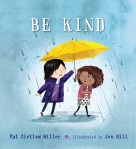
Be Kind by Pat Zietlow Miller illustrated by Jen Hill

Standard
Be Kind by Pat Zietlow Miller illustrated by Jen Hill

be kind

I usually post chapter books on Fridays, but on this one week anniversary of the horrific Mosque attacks in New Zealand, my fragile heart is being kept together by the pictures and notes shared on social media about the kindness people are bestowing on one another.  Company’s setting up prayer spaces for Muslim employees, communities standing guard outside masjids, friends leaving flowers for their Muslim acquaintances, strangers donning hijabs in solidarity, individuals carrying signs of welcome and unity, truly the list goes on and on.  Muslims and non-Muslims reaching out to one another, Kiwis and the rest of the world coming together.  And yet I know so many people are at a loss at what to do, and how to respond to their feelings in an appropriate manner.  I know I often am.  Thats why books like this one are so important for children to learn how to be kind.  We often tell them to be nice or kind, but what does that mean? What does that look like? How do we know if it worked? As adults we often don’t know, so while this book isn’t written or illustrated by a Muslim, there are Muslims in it, and that is why after seeing another blogger a few weeks ago mention it, I want to share it with all of you.  The illustrations show a little girl saying hi to a desi garbed man named Omar, and two hijab clad girls in her view of the world, amongst so many other diverse faces and characters, because that’s the point right? We are one, each of us responsible to one another to be kind.  

IMG_3389

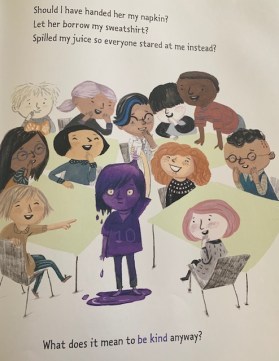
The book starts off with Tanisha spilling grape juice all over her new dress and a classmate being at a loss as to how to console her.  She makes what she thinks is a reassuring comment to Tanisha, but it isn’t received that way, and the little girl ponders and reevaluates what it will take to be kind to Tanisha and what kindness is in general.
IMG_3386

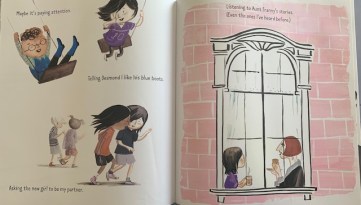
As she works to unravel what kindness is, she explores also what it can look like.  I love that it is seen in terms of action, giving ideas to stay with the reader.  It discusses that sometimes it is easy like saying hello, or not littering, and how important just using a persons name can make someone feel.
IMG_3388

But, it also talks about how sometimes kindness can be hard, requiring patience and a little bravery. I can only imagine how brave people had to be to enter a mosque for the first time and step out of their comfort zones to offer their support.  

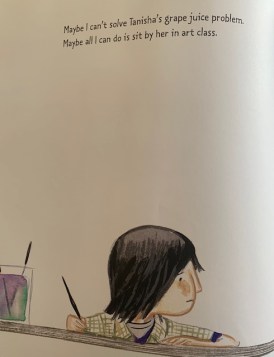
The book then takes an important pause when it acknowledges that maybe all this little girl can do to help Tanisha is to sit by her.  I think Muslims around the world are in awe of the Prime Minister of New Zealand for all she is doing, but also for just showing up and hugging people and listening.  A rare gift in todays wold of soundbites.  
IMG_3390

The little girl then imagines her small acts of kindness joining others and making the world a better place.  My favorite part is actually the end.  Tanisha never smiles and tells the little girl thank you, there is no big praise for being kind.  In fact, I bet the little girl doesn’t even know the power her actions had on the little girl.  We the reader know because we see Tanisha hanging the picture up in her room.  But, that let down is real life.  We can’t be kind because of the reward, we must learn to be kind because it is the right thing to do.  And often when people are kind to us, the effect isn’t instantaneous, its weight manifests in the dark when we are looking for hope and reassurance and for this book to contain all of that, in 32 pages with only few words (AR 2.2) is truly amazing.

IMG_3391

The illustrations are gorgeous and engaging.  The hardback 9×10 format makes this book a great addition to any library and should be read regularly.  It isn’t enough to not be mean, action and intention need to be taught so that we all might be more kind, inshaAllah.
 

Bashirah and the Amazing Bean Pie by Ameenah Muhammad-Diggins illustrated by Amir Doumy

Standard
Bashirah and the Amazing Bean Pie by Ameenah Muhammad-Diggins illustrated by Amir Doumy

bashirah

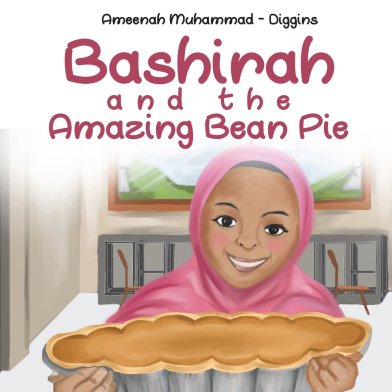
Oh, how glorious to learn something new while having things you know presented so well at the same time.  In 42 pages the reader will feel all the excitement of Eid (it doesn’t specify which one, nor does it really matter), sharing your culture with your classmates, participating in a family tradition, cooking with your grandfather, sharing with neighbors, and learning some life lessons about diversity from the Quran.  Ages 5 and up will enjoy the story and seeing Eid being celebrated, and older kids that know about Eid will love learning about bean pies and appreciate the African American Muslim culture, if they don’t already know about it, and those that do will hopefully feel proud to see it represented.  The best part is that there is a recipe at the end, that I can’t wait to try.

IMG_3237

It is the end of the school day and the teacher is reminding the students that Monday is Culture Day and they need to bring a dish to share, over the weekend it is also Eid.  Bashirah is excited that this is the first year she will get to make her own bean Pie with her Pop-pop who is going to teach her the family recipe.

IMG_3238

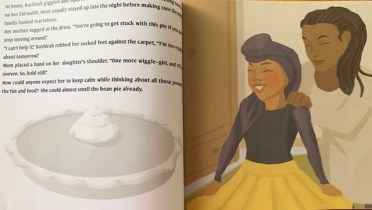
At home Bashirah can’t stay still as her mom puts on the finishing touches of her Eid outfit, she is so excited for all the fun about to happen.

IMG_3239

Early the next morning the family all heads out to the Masjid for Eid Salat in their beautiful clothes.

IMG_3240

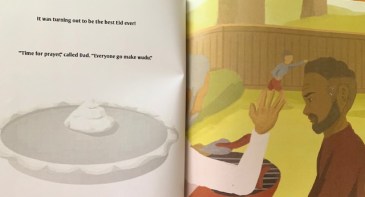
After prayers its cooking and eating time as Bashirah and Pop-pop make the pies and enjoy a big meal as a family.  Three generations make salat together, food is taken to the neighbors, and then the big reveal.  All the desserts, including Bashirah’s are served, and alhumdulillah it is delicious!

IMG_3241

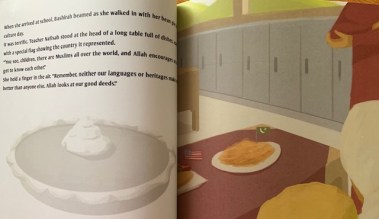
Back at school on Monday the teacher reminds them all that, “neither our languages or heritages make us better than anyone else.  Allah looks at our good deeds.” She quotes Surah Hujurat, ayat 13 “Oh, mankind indeed we have made you into nations and tribes, that you may know one another.  Indeed the noblest of you in the sight of Allah (swt) is the best in conduct.” And they all dive in to the delicious desserts including Bashirah’s wonderful pie.

IMG_3243

My only criticisms of the book are the margins and the amount of text on the pages.  I have a hard time reading the book aloud to small groups as the margins are so small and run in to the binding.  Also, some pages have one sentence on them, some have nearly a half a page of text.  This disparity can be off putting at the start of the book to appeal to younger listeners and early readers.

IMG_3244

The illustrations are warm watercolor complimentary pictures.  There is nothing wrong with them, but I wish they were just a tad more defined and vibrant like the picture on the cover.  I love the warmth they radiate, but a little more detail would give the listeners something more to look at on the text heavy pages.

IMG_3242

All in all a great book that I am glad I own and can share with my own children and those in my community, now if I can convince someone to make me a bean pie I’ll really be set, alhumdulillah!


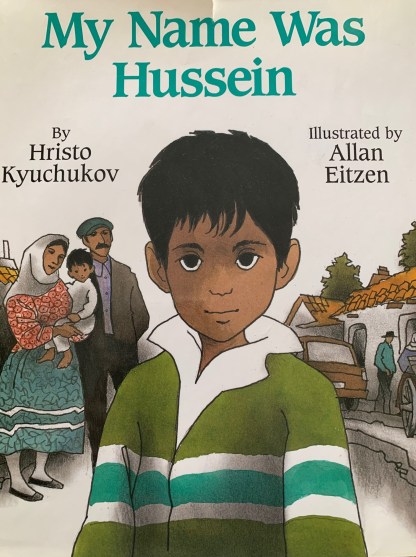
My Name was Hussein by Hristo Kyuchukov illustrated by Allan Eitzen

Standard
My Name was Hussein by Hristo Kyuchukov illustrated by Allan Eitzen

IMG_3215

It isn’t often that a 32 page AR 2.4 picture book will haunt you after you read the last page.  Especially a book with short simple sentences, that is poorly organized and reads like two separate nearly disjointed stories, but alas this book has stayed with me for months and upon rereading it to write this review, the images and empathy and reflections stirred have not lessened.  This is an important book to read, to think about, and to return to sporadically as your children and their understanding of the larger world grows and evolves.

IMG_3217

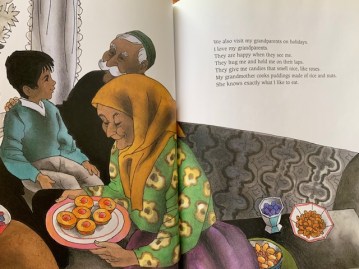
Hussein is a Roma, or a gypsy living in a small village in Bulgaria.  Their ancestors migrated many years ago from India and they are Muslim.  Hussein and his family love Ramadan and the delicious smells of food and warmth of grandparents and family all year round, but particularly during the blessed month.  

IMG_3218

Eid is the best, with family and fun and new clothes.  Hussein loves his life and his name.  It was his grandfather’s name and his grandfather’s grandfather’s name.  But then one day all that changes.

IMG_3219

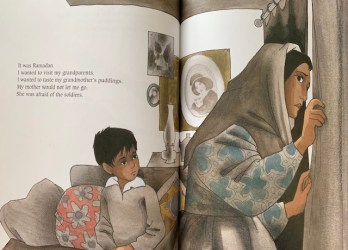
Tanks and soldiers with guns come to their village and close that mosque and tear up their identity cards and tell all the minorities that they must choose Christian names and give up their culture and identities.

IMG_3220

Hussein and his family do not want to give up Islam and their names and their traditions, but they don’t know what to do.  Feeling like they have no choice they change their names and Hussein asks the reader at the end if you would call him Hussein or Harry?  

IMG_3221

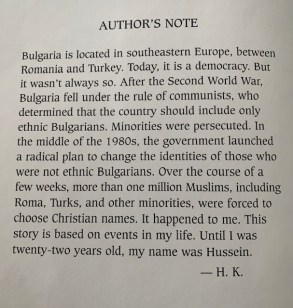
The last page of the book is an author’s note, and tells that this is based on his own life story.  That in the 1980s Bulgarian minorities were forced to change their identities.  That more than one million Muslims, including Roma, Turks and other minorities were forced to choose Christian names and that until he was 22 years old, his name was Hussein.

The illustrations are illuminating to the images that the simple words discuss.  Truly they are a powerful and integral part of the story.  The women wear hijab and the use of color to set the tone is spot on.  The book is hardbound and the 8×10 size allow the pictures to be enjoyed fully.

IMG_3222

The book published in 2004, was not easy to find which is unfortunate as it really sheds light on a recent history not known in the US at all, and one that should be known and remembered.  The first part of the book reads like a Ramadan story detailing iftaar and Eid and how Ramadan is celebrated by this culture, but the second half goes back to Ramadan and how it is different with the soldiers and the pressure to give up who they are.  There aren’t a lot of details about who the soldiers are or why they have come or what they are going to do to the Romas, but the fact that in recent history and this was what people were faced with, should be a powerful reminder to us all at how fragile this world is and make us appreciate that we aren’t forced to make such a decision.


The House of Ibn Kathir: The Competition Begins by S.N. Jalali

Standard
The House of Ibn Kathir: The Competition Begins by S.N. Jalali

IMG_3210

At 254 pages this boarding school story beautifully blends Islamic information, mystery, and compelling characters embarking on a new stage of their lives.  I was pleasantly surprised at how easy and engaging this book for upper elementary aged children reads and would strongly recommend it for grades 3-5.

SYNOPSIS:

Eleven year old Yusif is about to begin his first year at the prestigious Dar Al Ilm Academy a few hours away from his family, friends, and home.  Nervous to be on his own, he is excited to be giving his dream of memorizing the Quran the chance to become a reality.  When he arrives at the old mansion turned beautiful campus, he is paired up with Reda, a student to help him get situated and before you know it the two are fast friends.  When they get put in the same house, Ibn Kathir, with Warsoma and Daud, the four friends embark on a year of adventure and bonding as well as growth and learning.  Along the way they learn some Islamic history, they understand important hadith and Quranic Ayats and are challenged to live according to the sunnah even when tempers and frustrations abound.  When items start to go missing the boys and their house will have to keep their cool, not accuse anyone, but figure out what is going on all at the same time.  When the culprits are uncovered, they will be further tested to hold a grudge, offer forgiveness, or even extend an invitation to friendship. 

IMG_3211

WHY I LIKE IT:

This idyllic story and predictable mystery will appeal to impressionable readers that can’t see what is coming and can still be inspired by the beauty of such a protected environment.  The window might be small for such readers, but well worth the attempt as the book is well written and the characters well developed.  The boys are diverse and kind and helpful and all the things we want our children to be, especially when they are away from us.  Each character has their strengths and weaknesses and the friends accept them and celebrate one another rather than try and force them to change. The four houses and the characters vying for year captain and having fun along the way reminds me of a Harry Potter spinoff, but alas I think that is just my ignorance of the British school system.  I love that the four houses and their namesakes are detailed at the end as well as there being a glossary of terms.  There are illustrations every chapter or so that are appealing and offer a nice visual of the boys’ world.  The text, line spacing, chapter breaks and all are perfect for the demographic and while the fictional story is solid, I am happy to report I learned a number of things as well. 

IMG_3212

FLAGS:

None, alhumduillah

TOOLS FOR LEADING THE DISCUSSION: 

I can’t find much on the author or even on any future books, which is unfortunate because I think it would be great for an elementary book club selection, and I may read it to my 4th and 5th grade Lunch Bunch group after we finish The Great Race to Sycamore Street.  I think it should be in Islamic School Libraries and classrooms as its cover will hold its own and compel kids to pick it up off the shelf.

Book trailer: http://www.ibnkathir.co.uk/trailerfullhd.html

Book website:http://www.ibnkathir.co.uk/index.html


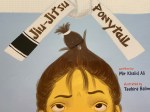
The Jiu-Jitsu Ponytail by Mir Khalid Ali illustrated by Taahira Halim

Standard
The Jiu-Jitsu Ponytail by Mir Khalid Ali illustrated by Taahira Halim

IMG_2909

A determined girl battles her ponytail, her own self-doubt and her opponents on the jiu-jitsu mat in 38 beautifully illustrated pictures and clear every day language.  Perfect for little girls and their dads ages five and up.

IMG_2910

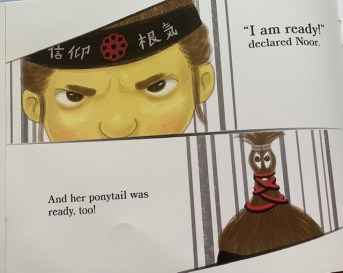
Noor has been counting down the days until her first jiu-jitsu tournament, but the morning of the tournament a battle first takes place between her and her unruly hair.  Determined to tame it on her own, even when her father offers her help, she steps on to the mat for her first fight.

IMG_2911

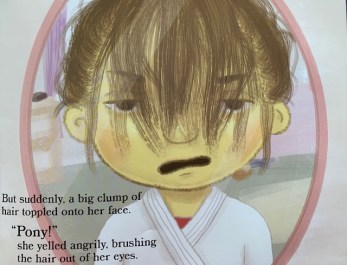
Squirming with nerves, her ponytail breaks free from the desperate tape used to keep it contained and covers Noor’s eyes forcing her to tap out and concede the match.

IMG_2912

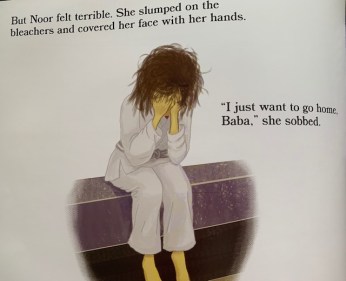
Walking off the mat, Noor’s Baba hugs her and compliments her on her bravery.  Noor is having none of it and just wants to go home.  Rather than argue with her, Baba goes to talk to her coach giving Noor some space to battle her self-doubt on her own.

IMG_2913

Deciding she has worked hard and trained hard, and been supported every step of her way she asks her baba to help her tie up her hair.  Together her and her jiu-jitsu ponytail take on the remaining opponents and persevere.  

IMG_2914

The book shows great heart in the supporting cast each of us have around us, in this case the father takes his cues from his daughter, never wavering in his support, but not forcing her to do anything either.  The little girl is determined, but also learns that it is ok to ask for help and above all to not give up on yourself.

IMG_2915

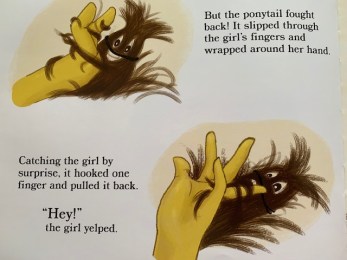
The personification of the ponytail adds a layer of humor to the story that works well for little kids that might just take the story on face value.  Even they will learn something about jiu-jitsu with the visual displays of the different moves and of martial arts tournaments in general.  Two of my children thought the ponytail hilarious, and two slightly creepy.  The subtlety of its personification allows its role of being a separate entity and just feeling like it has a mind of its own to be determined by the reader.

IMG_2916

There is nothing Islamic in the book, but the author and illustrator are Muslim, and the use of the little girls name, Noor Kareem, and her calling her father Baba will have a special appeal to Muslim children (plus her name written in Arabic on her bedroom wall), just as children who do jiu-jitsu will find themselves in the pages.  The book appeals to all children and reminds them they can overcome and inshaAllah be supported in the process.

IMG_2917

The illustrations in this 8 x 10 horizontal hardback book are beautiful and detailed.  They allow the reader to understand what is going on without the book being overly burdened with text.  The font is clear and well sized making the book ideal for both bedtime and story time, alhumdulillah.

IMG_2918

Peeper and the Peeping Boy by Ayesha Marfani illustrated by Aisha Aamir

Standard
Peeper and the Peeping Boy by Ayesha Marfani illustrated by Aisha Aamir

peeper.jpeg

I see the author regularly posting positive feedback for this book and after feeling let down by the last book of hers that I read, that had a great premise, I tentatively reached for this one.  The book is meant for children in grades 2 through 5, but the writing seems a bit all over the place and some of the vocabulary is above that level. The book is 67 pages and reads like a rough draft that has so much potential to be fleshed out, enhanced, and cleaned up.

SYNOPSIS:

The book takes place in Pakistan and is told from the perspective of Akram, an 11-year-old boy and a Jinn who he names Peeper.  Akram is apparently funny looking and behaves old for his age.  Those around him find him too contemplative and off compared to his peers.  He seems to be an only child and his family is middle class, but they live in a really weird neighborhood and while they have a maid, they are really tight with food and money.  Akram has a passion for peeking in on old houses and imaging stories for the inhabitants. 

Peeper is a Jinn, a good one, who doesn’t like to see suffering of small children.  He sneaks on Akram and sees what praying is and what being a Muslim is.  When he says “no” to his tribe to help plan a party for shaytan, he is punished and made human.  And as a human he and Akram explore the six abandoned houses next to Akram’s house snooping, making assumptions, involving the police and ultimately saving the day.

WHY I LIKE IT:

I love the premise of a boy and a jinn learning about Islam and trying to help those around them who are suffering.  I like that the foundation of being Muslim is what shapes both boys perception of the world as they pray and use AllahuAkbar as a super word to protect themselves.  Unfortunately the author’s writing style is very befuddled and these lessons are not clear.  The tenses change through out as does the point of view, with sometimes it being the characters being in the story and sometimes them preaching to the reader.  There is a lot of repetition of ideas, often disconnected random ideas, and in such a short book it really stands out.  Similarly, everything is really vague, no characters other than the main two are named, numbers of people aren’t identified, “…came in with 10 to 15 people, (page 62).”  Everything is very fluid and not in a helpful way.  The verdict of Peeper getting expelled from his tribe should have been a major plot point, but it is so quick and anti-climatic, that it really makes no impact. In a fantasy story, world building is critical, and there is nothing understood about the world of the jinns.  It says they are evil and horrid, but Akram misses them and wants to go back, which makes no sense and their are no details to show why he would think some in his tribe are good and kind, so when at the end they take shahada, it is completely fuzzy and confusing how one concept links to another.  Even the point of the story is befuddling, sneaking is wrong, but their intentions were pure, they got all their assumptions wrong, so they get medals and get rewarded and are encouraged to sneak more, but with permission? So, ya, all over the place.  The happy ending is that the mom is suddenly praying and religious, but no explanation of what changed her is given, so it falls rather flat.

Aside from my own thoughts on the story, there are blatant contradictions that aren’t explained.  Peeper says he wish he knew Arabic, but he came from Syria, Afghanistan, and Iran, so how does he know English, but not Arabic from Syria?  Peeper also says on page 28 he doesn’t understand fajr, but on page 23 he says he watched Akram pray all 5 daily prayers.  The whole premise of Akram and Peeper being drawn to each other is their nosy curiosity and their compassion for others, but the whole scene with how they let the maid take the fall for the missing food is so out of character, and then when Akram is rude to Peeper about what his parents would say if they saw him is very jarring to how the character has previously been presented.  Neither situation is really resolved either and I really am worried that the maid lost her job and Akram didn’t even try to fix it.  The author tells us they are nice, but shows us two examples when they are not, so it isn’t very convincing that they truly are nice until they try to help the neighbors.  The inhabitant in one of the abandoned bungalows they assume is poor and deliver biscuits to him, but they note that he has bars of gold in his cupboards, so obviously he isn’t poor.  It is noted that Peeper can deliver the mail secretly with no one knowing where they came from, yet the police know that Akram is the one that alerted them to everything going on in the six bungalows, another contradiction that isn’t explained.

Some of the vocabulary was also troublesome for me.  The glossary at the end of the story and before the activity coloring and word search pages, jinn is defined as ghost, but they aren’t dead human spirits, so I disagree with that.  At one point the book mentions “elders of Islam” which is vague and odd, as well.  There are poems at the beginning of each of the 21 chapters, that are very forced rhyme and use words I had to look up:  hoary, momento mori, atavistic, not saying that kid’s can’t handle hard words, but there are many passages that have words more middle school in nature and with unconnected concepts, context clues are rather non existent.

There are little illustrations scattered throughout, but they are inconsistent in style and the copy quality is a bit poor, so they are not really helpful.  Akram does not have a face drawn in, but the jinn does. 

FLAGS:

There is nothing alarming.

TOOLS FOR LEADING THE DISCUSSION:

I wouldn’t do this as a book club book, and I wouldn’t stress having a copy on a library shelf as I don’t think a child would willingly read it and understand it.  


Under My Hijab by Hena Khan illustrated by Aaliya Jaleel

Standard
Under My Hijab by Hena Khan illustrated by Aaliya Jaleel

UNDER MY HIJAB final front cover JPEG.JPG

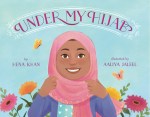
I know, (sigh) another hijab book, but I promise it is good and you won’t be sad you bought…”another hijab book,” and  alhumdulillah, it’s a Hena Khan book, so public libraries will have it or at least they should be willing to order it if requested.  

IMG_2878

Written in rhyming four line stanzas the story is told from a young girl’s perspective about the women in her life.  The first two page spread shows the strong female as she interacts in the world and covers her self, with the following two page spread, showing her in her home, uncovered.

IMG_2879

From Grandma, to Mama, to Auntie, to troop leader, to siblings and friends, the reader sees hijabs wrapped in styles as different as the person wearing them.  They also see Muslim women as doctors, artists, Tae Kwon Do students, bakers, leaders, and everything in between.

IMG_2880

The illustrations are beautiful and perfect.  They radiant warmth and familiarity, while adding details to make the pages hold your attention a few minutes longer and smile with the diversity presented. The martial art scene is spot on!

IMG_2876

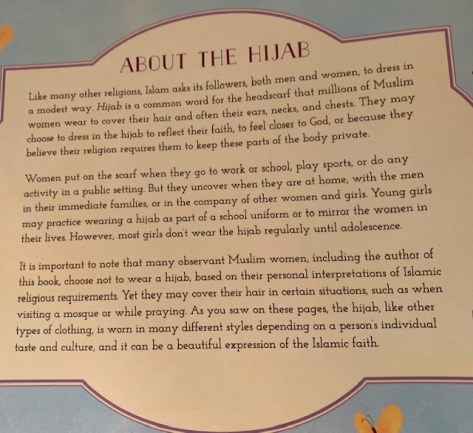
I wish they showed a niqabi, and maybe someone that doesn’t cover all the time, but at certain times of prayer or entering a mosque, like the author, who talks about herself and hijab in general in the afterward entitled: About the Hijab.  

IMG_2882

I love that the book is for children and I desperately hope adults will read it too.  It breaks down so many stereotypes, and answers so many questions in a seemingly effortless presentation.  How many times have all hijabis been asked if we sleep in our scarves or shower in them.  I love that there are shades of brown skin tones, and blond haired hijabi’s too.  

IMG_2877

And most importantly I love that it shows Muslim women to be strong and varied and to have full, independent beautiful colorful lives.  That hijab is a choice and it is strength and beauty and personal.

IMG_2881

The book does not talk about the reasons for wearing hijab, or get into the religion.  The book is a great size for story time and bedtime at 10 x 8 horizontal, hardbound, and 32 pages.  Ages four and up will enjoy this book repeatedly,  and older kids, especially girls considering covering or just starting to cover will enjoy it as well.

Alhumdulillah! Well done!

Forgive the glare in the pictures, they aren’t in the book 🙂

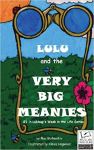
Lulu and the Very Big Meanies by Mac McGooshie illustrated by Alexis Hogwood

Standard
Lulu and the Very Big Meanies by Mac McGooshie illustrated by Alexis Hogwood

Lulu.jpg

I don’t know what is more frustrating: quality books that are poorly packaged (binding, illustrations, font, spacing, etc.) or beautiful books that miss the mark in storytelling and basic writing skills.  Both are equally annoying, and while yes, a good story should be the basis, this book is really well written that the presentation of it just makes me sad.  At 116 pages, the book is perfect for 3rd graders.  My daughter and son read it a few years ago when I first picked it up.  I made them read it.  And last week when I pulled it out to read myself, both remarked that it was a good story.  The fact that they remembered it and remembered liking it are huge pluses, and made the fact that I had to make them read it all the more disheartening.  I’m certain if you can get your kids to read eight maybe 10 pages they will zoom through the rest of the book.  It is the getting them to pick it up and start, that is the tricky part.  The book is paperback, thick and glossy, but the cover looks homemade almost.  If you thumb through it the font is too small, spaced too tight and the illustrations mean well, but don’t deliver.  Unfortunate, because like my children, I too think the story is fun and I’m disappointed that the book was published in 2013 as #1 in the Lulubug’s Week in the Life Series, and no further books have come out.

SYNOPSIS:

Laila (Lulu), and her family are American Muslims living in Southern Virginia.  Lulu’s mom is a lawyer and a convert, her dad is from Egypt and owns an Italian restaurant, and her older twin brothers are 12 and keep an eye on her.  Being incredibly bright Lulu has skipped third grade and is having trouble with some bullies in her new fourth grade class: Veronica B. and Veronica C.  aka the Veries.  Using help from her brothers, her neighbor and friend Toni, and some friends in class, a trap is set to get the bullies to confess to their evil mischief, but that unfortunately isn’t the only thing Lulu is going through this week.  Throw in her parent’s sudden decision to move closer to the masjid in another city, a litter of kittens abandoned on the side of the road, and some weird noises coming from the woods behind their house, and Lulu has a lot to deal with.
WHY I LIKE IT:

I love that it shows the day-to-day of a typical Muslim family in a normal presentation.  They pray together, they watch what they eat, they know their neighbors and worry about each other.  It doesn’t idolize the family, making them better than anyone or preachy, but makes them very relatable and likable in a realistic way.  When bees are discovered or the kittens need carrying for, sunnahs and ayats are identified, but very seamlessly, that non Muslim kids will learn a bit about Islam and Muslim kids will be excited to see themselves.  My favorite scene regarding this is when the mom finds out there will be a middle-school dance, and even though the boys are not planning to go, know that it isn’t for them, and don’t even seem tempted by it, they still have a family meeting about it, to discuss.  I also like that at one point Lulu meets another Muslim girl and they don’t hit it off right away, the girls work through it, but it is nice to see some diversity in even the way Muslims are presented and possibly misunderstood even amongst one another.
There is a lot going on in the book in terms of action items, but there still is a lot of character development and dimensions to Lulu.  Lulu has to navigate relationships with her family and friends that ring true and aren’t over simplified.  Her friend and neighbor, Toni, expects Lulu to act different at school now that they are in the same class, but returns to her silly self once they are home.  Lulu clashes a lot with her mom, but can smile and get her way super easy with her dad and manipulates that a lot.  She has to balance her sassiness with her teacher and principal, pick her battles with the Veries, and abide by other adults’ rules and expectations.  The book reads in a similar vein as Junie B. Jones, or Clementine, just maybe a more mature and less obnoxious reincarnation.

I wish the adventure involving the backyard noises, was a bit more dramatic, and maybe even the unveiling of the trap involving the dye was more resolved.  At times the book seemed rushed to wrap up all the stories introduced and I think they deserved a little more time to be explored and enjoyed.  If the font and spacing and pictures could be tweaked I think the book would really speak to kids in a fun way.  Third and fourth graders can easily handle a 150-160 page book that has good pacing and is packaged in a tempting, non intimidating way.  I’m holding out hope that maybe the author will write some more, tweak this one, and give it the chance at reaching an audience that would benefit from the smart, fun, grounded life of Lulu.

FLAGS:

Clean, it does mention that Toni likes a boy, but Lulu thinks that boys are trouble.

TOOLS FOR LEADING THE DISCUSSION:

If I still did an elementary book club, I think this book would work.  I think kids need a nudge to give it a try, but once the book gets going, girls and boys alike will enjoy it.  I may read it for a Lunch Bunch choice (I read once a week to 4th and 5th graders while they eat their lunch).  Kids will love seeing themselves, their stresses, their families, and their faith presented well.

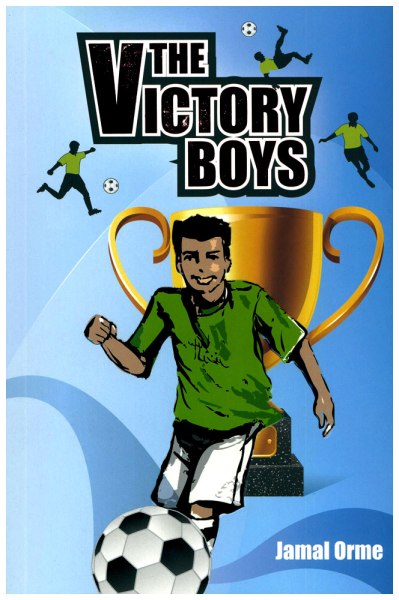
The Victory Boys by Jamal Orme illustrated by Eman Salem

Standard
The Victory Boys by Jamal Orme illustrated by Eman Salem

victory boys.jpg

I’m not sure why Amazon states the book is for pre-school and up, when the publisher, Kube, posts this book for ages 7 and up.  I think 3rd or 4th grade soccer/football fans will enjoy the book.  There are some slightly mature ideas presented and worked through, and the soccer lingo assumes the reader knows the sport.  Plus the quality of the illustrations and the small font isn’t going to entice someone not already excited to read the book based on the content within.  My boys, ages 8 and 9, enjoyed the book, as did I, once the story got going.  It doesn’t really grip you from the first sentence, but as the story progresses and the way Islam is woven in makes for some learning experiences in the midst of a few intense football matches.

SYNOPSIS:

The boys at the Sunday Madrasa do not enjoy their time there.  They find the Imam boring and thus are not inspired to learn. When they sneak a football into break time however, they suddenly feel more engaged and present in their lessons.  A change the Imam notices and appreciates, but doesn’t know the reasoning for as he strictly forbids football and finds it a waste of time.  Outside of Madrasa, Junayd is having a hard time at home.  He has to help out a lot at his father’s restaurant and his older brother Saleem has gotten in trouble with the police.  His mom prays for the kids, but is also at a loss as to how to help with the stresses at home.

During a secret game of football in the masjid courtyard, an arrant ball breaks the neighbor’s greenhouse window, and the boys are forced to come clean about their covert game.  The Imam demands the kids stop playing and that they tell their parents what they have done, so that they may earn some money to replace the window.  As the kids come through with the money and the Imam sees the kids resort back to their lackluster attitudes to learning.  He gets an idea to start a football club after madrasa classes.  The only problem is that he knows nothing about the sport and no parents are willing to help.

Saleem by chance comes to collect his brother one day, and as he hollers advice from the sidelines, the Imam recruits him to coach the team.  In response the Imam ever so gently uses football to teach not only the madrasa kids, but Saleem as well.  When the boys learn of an upcoming tournament, the Madrasa enters an A and B squad and the Shabab Al-Nasr, Victory Boys, will be tested not only in their play, but also in their manners, and understanding of what it means to be a team and Muslim.

WHY I LIKE IT:

I love that the Imam grows and changes.  I mean it is a kids book about soccer, but really it is the adult in the story that shows the most heart.  He goes out of his comfort zone, reevaluates his opinions, and admits when he is wrong.  High five Imam!  I also like that he didn’t give up on Saleem, and the way he leads him is with such kindness and compassion, that even youngsters, will be impressed.  

The book does not talk down to the reader, which is nice, but at the same time I think it pushes the age appropriateness a bit with the detail devoted to alcohol being sold at the restaurant, Junayd’s father’s flaws, and even Adam’s dad’s tantrum of sorts.  There really aren’t any nice parents in the book.  We don’t learn much about the moms, but none of the dads seem too supportive.  Really the only nice adults are the Imam and the neighbor who’s window they broke.

The timeline isn’t entirely smooth, the kids come together and play well as a team remarkably fast for how intense the tournament is, and how well they perform. And some of the characters could have used some fleshing out, I couldn’t really tell you much about them.  The font is really small and the spacing often forgotten.  The book is about 95 pages with a glossary and an acknowledgement at the end, fortunately the 2nd book in the series seems to space the words and lines out more and is 155 pages.

The story is solid and for the most part well written.  I read it in one sitting and thoroughly enjoyed the lessons learned and then put into practice.  The book isn’t preachy, but you are glad to see the Imams words given life in the other characters’ actions.  Saleem changes quickly, but the author and story account for it in a way that is believable for the audience and the message of not giving up on one another comes through loud and clear.  There is a lot of technical detail about the sport, but it doesn’t drag on, it adds to the excitement even if you just know the basics.

FLAGS:

The talk of alcohol, of Saleem being with a group of kids and a stolen car, there is some yelling and aggressiveness from the adults.

TOOLS FOR LEADING THE DISCUSSION:

The story is a bit short for a book club selection, but I would definitely consider it for Lunch Bunch (where I read to 4th and 5th graders while they eat lunch).  And I think most Islamic School libraries and classrooms should stock the series.  

https://thevictoryboys.com/

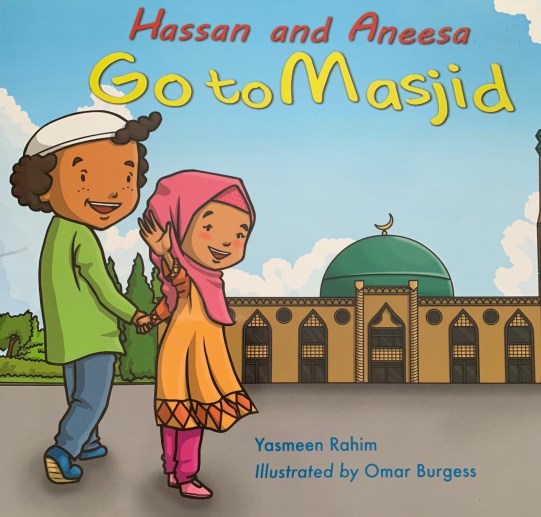
Hassan and Aneesa Go to Masjid by Yasmeen Rahim illustrated by Omar Burgess

Standard
Hassan and Aneesa Go to Masjid by Yasmeen Rahim illustrated by Omar Burgess

IMG_1911

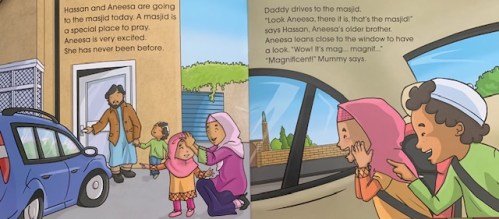
I don’t often do two books in the same series, let alone three, but for as much as I enjoyed Hassan and Aneesa Love Ramadan and Hassan and Aneesa Celebrate Eid, I was a little disappointed in this story.  For starters, the title seems like it should read, Go to “the” Masjid, no? 

IMG_1912

The story starts off with the notion that this is Aneesa’a first time to the masjid, which seems bit off.  Presumably mom and Hassan have been before, but mom’s excitement, and Hassan’s questions through the book, and knowledge about masjid etiquette make you wonder if it is their first time too.  A little odd, if you’ve read their other books, but ok, I’ll accept it and move on.

The family starts by marveling at the exterior architecture.  They enter and separate, Hassan going with his dad and Aneesa going with her mom, as it points out that men and women pray in separate areas.  It is a good tidbit of information, but again, it just seems a bit off in the way it is phrased that Aneesa wouldn’t know this.  

IMG_1913

The tone of the book is almost negative, again, a striking contrast to the other stories.  Aneesa splashes and wastes water when making wudu, doesn’t she make wudu at home? And the mom gets her clothes ruined in the process making her upset.  The illustration shows her to look really mad!

I would think a little context about not wasting water or even sharing the hadith about not wasting even if making wudu in a river, would have been a great lesson to convey, but instead the pictures show a lot of water by others also being wasted, and only mom looking really frustrated.

IMG_1914

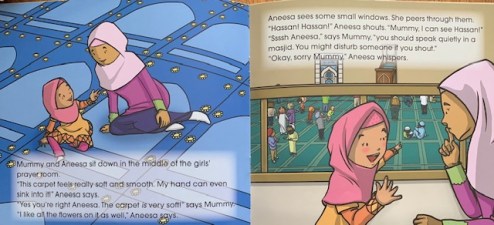
The two of them, put their shoes up and marvel at the dome and the soft carpet.  Aneesa then sees that the ladies prayer area over looks the mens and she begins screaming for Hassan.  Her mom corrects her and points out that “you should speak quietly in a masjid.  You might disturb someone if you shout.”

IMG_1915

Hassan turns and waves, and then rushes off to see a school friend.  But, first he is reproached for nearly walking in front of someone praying.  Again a good tidbit, but the phrasing of how the information is shared is rather negative, and these repetitive reprimands don’t make the book joyful.

IMG_1916

Hassan then learns about he mihrab and the mimbar before the athan is called and they all pray.  After salat they put some sadaqa in a box and the family heads home.

The illustrations are as sweet as ever, and the price very reasonable, but this book, compared to others in the series, is really wordy and there is a lot of text on EVERY one of the 20 pages.

IMG_1917

The framing of the book is awkward, thus making some of the behavior issues come off as negative, it is a minor thing that keeps the book from being great.  If the premise would have been maybe the kids talking about their favorite things about the masjid and reminding themselves to talk quiet and not waste water, the tone overall would have been lighter while still being really informative.

IMG_1918

If this is your first Hassan and Aneesa book, you might not be bothered, but if you find it a little off putting, try the other two.  The books says for ages 2 and up, but I think it would be better for 4 and up.  The younger kids you could tell them the story while showing them the pictures: what to expect at the mosque and how to behave, but there are too many words, and they will probably have a hard time staying focused.  Older four and five year olds, will enjoy seeing things they recognize and maybe learning some of the vocabulary for the architecture and being reminded on proper behavior at the masjid.