Tag Archives: taraweeh

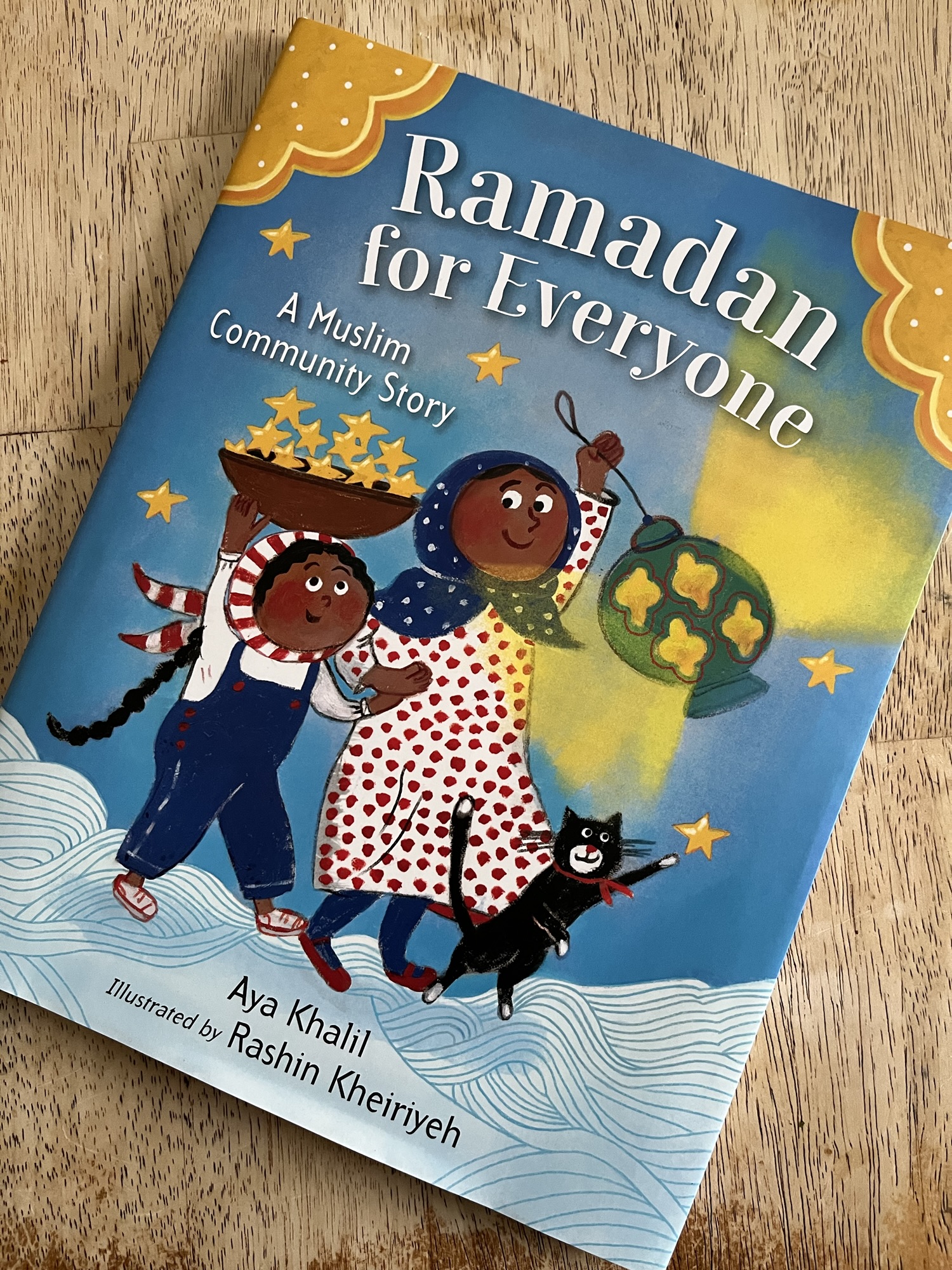
Ramadan for Everyone: A Muslim Community Story by Aya Khalil illustrated by Rashin Kheiriyeh

Standard
Ramadan for Everyone: A Muslim Community Story by Aya Khalil illustrated by Rashin Kheiriyeh

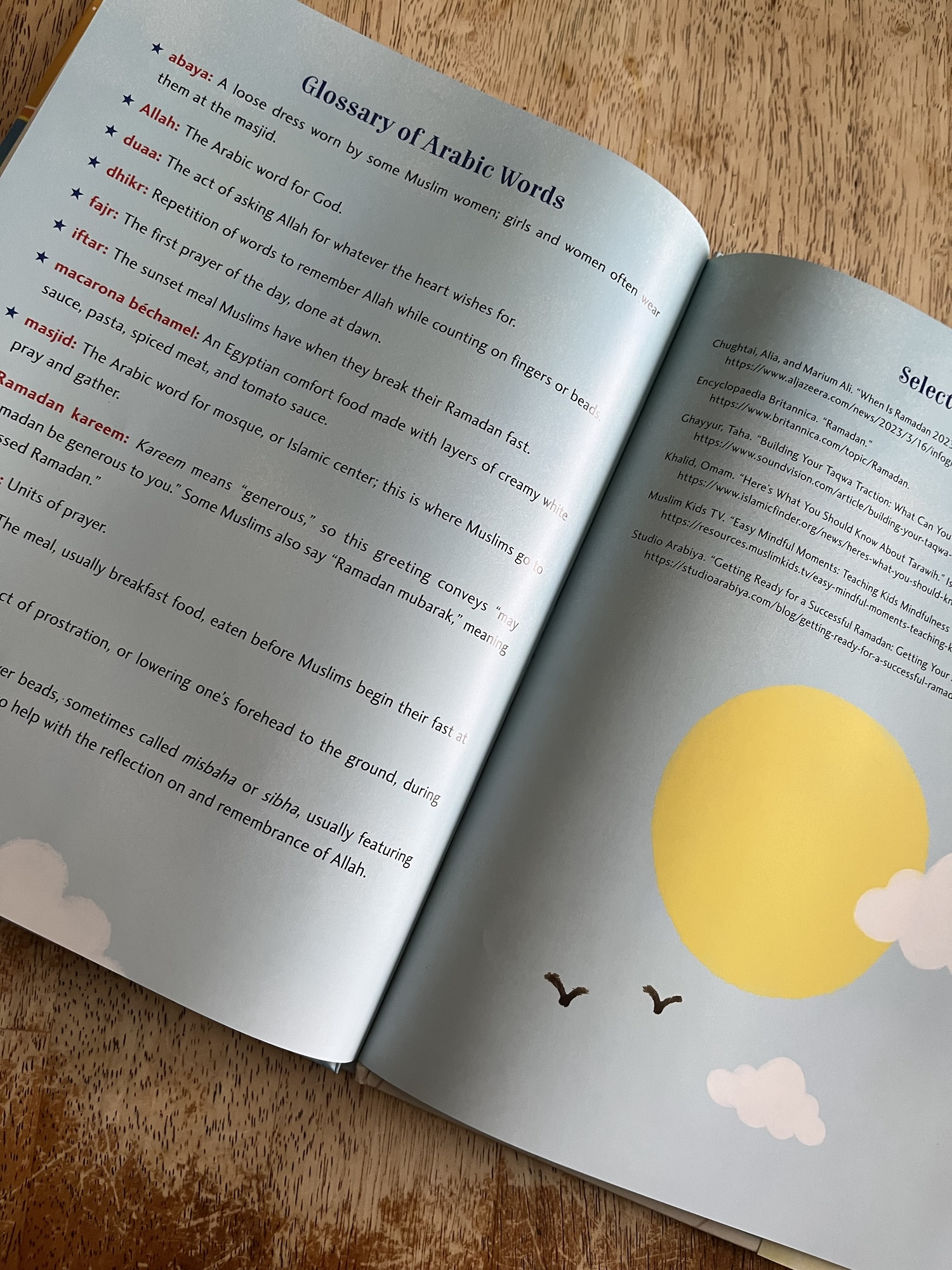
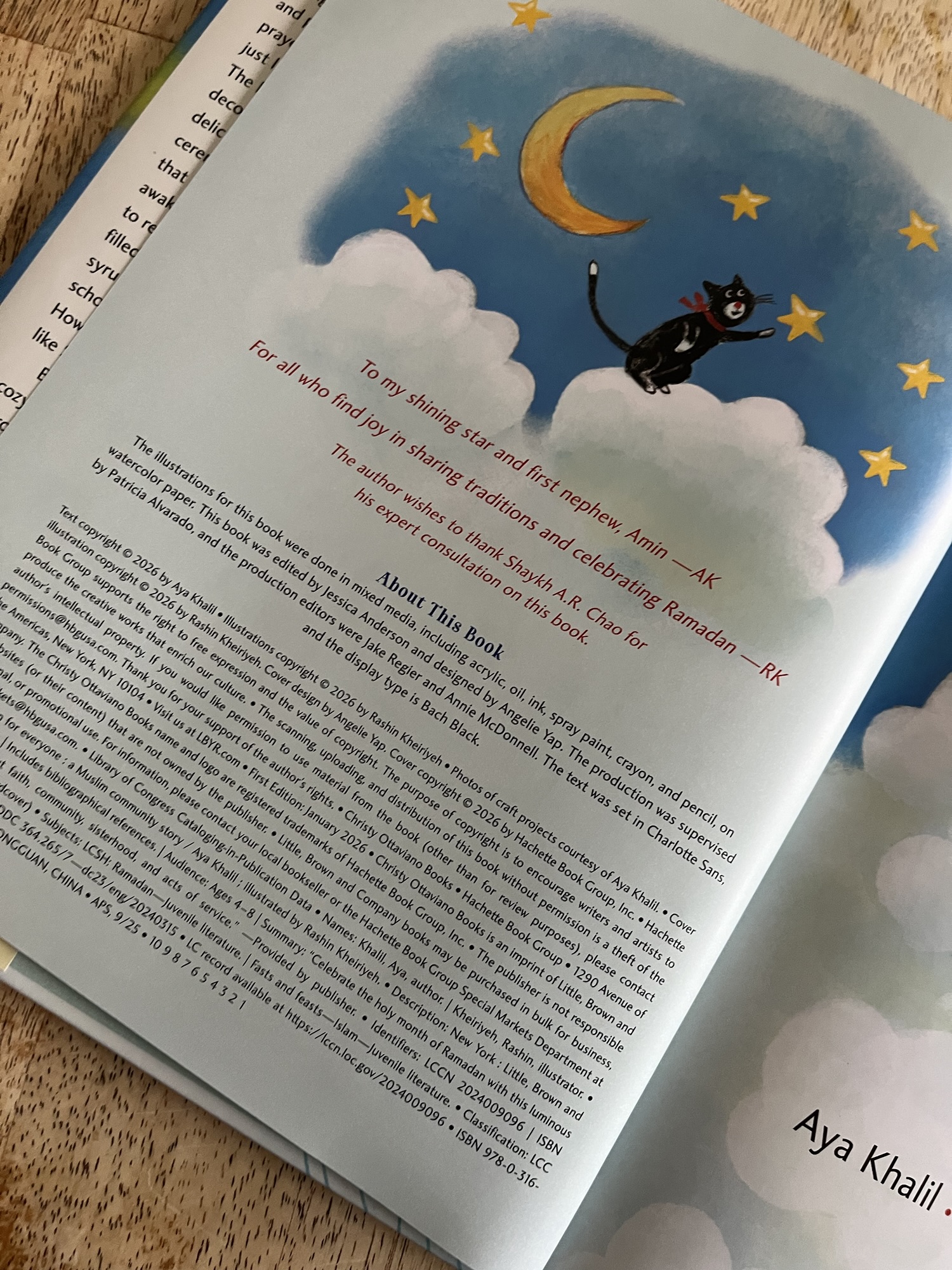
This adorable 40 page book will be a great read to classrooms to see Ramadan in action from a little girl trying her best to fast and pray without internalized Islamophobia or info dumps cluttering a flimsy plot. The bright illustrations bring the story to life and will captivate preschool to early elementary readers and listeners.  The story shows the religion and leans into the concept of Taqwa as a reason for fasting, something to strive for, and prompting the little girl to give to her community.  There is a robust backmatter with sources, a glossary, two crafts, and information about Ramadan, taqwa, moon and stars, and being mindful.  It should be my favorite Ramadan book ever, with when we start fasting correct, adding a twist to the trope of a first fast, and centering Islam- unfortunately, the story tries to do a lot, too much in fact, resulting in the book missing the emotional element that makes Ramadan stories memorable and beloved.  I think the author’s style is also something subjective that I just don’t vibe with, so while I will provide rationale for my opinions as I continue my review, I am aware that fans of her previous books, will absolutely fight me on my thoughts, which I welcome. Even with my critiques, I’m glad I preordered the book and have spent time reading and sharing it.
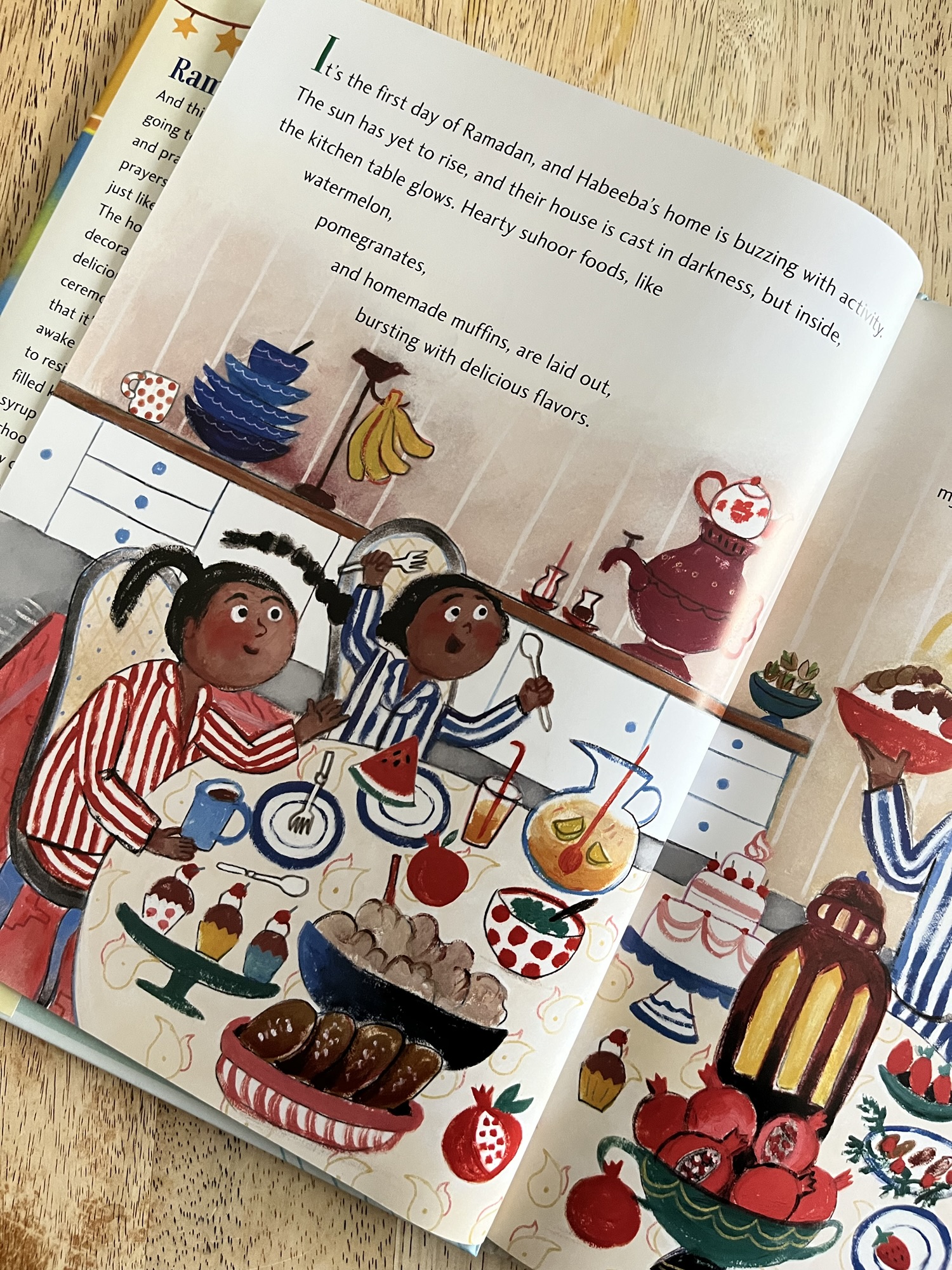
The book starts with Habeeba’s kitchen busing with activity in the dark morning.  The first day of Ramadan has Baba and his two daughters eating and planning a month of fasting every day and praying taraweeh every night. Big sister Sumaya encourages Habeeba to come to the library at lunch time.  Once at school the teacher reads a Ramadan story, in the library, the librarian encourages Habeeba with stickers, and the two sisters look at books together.

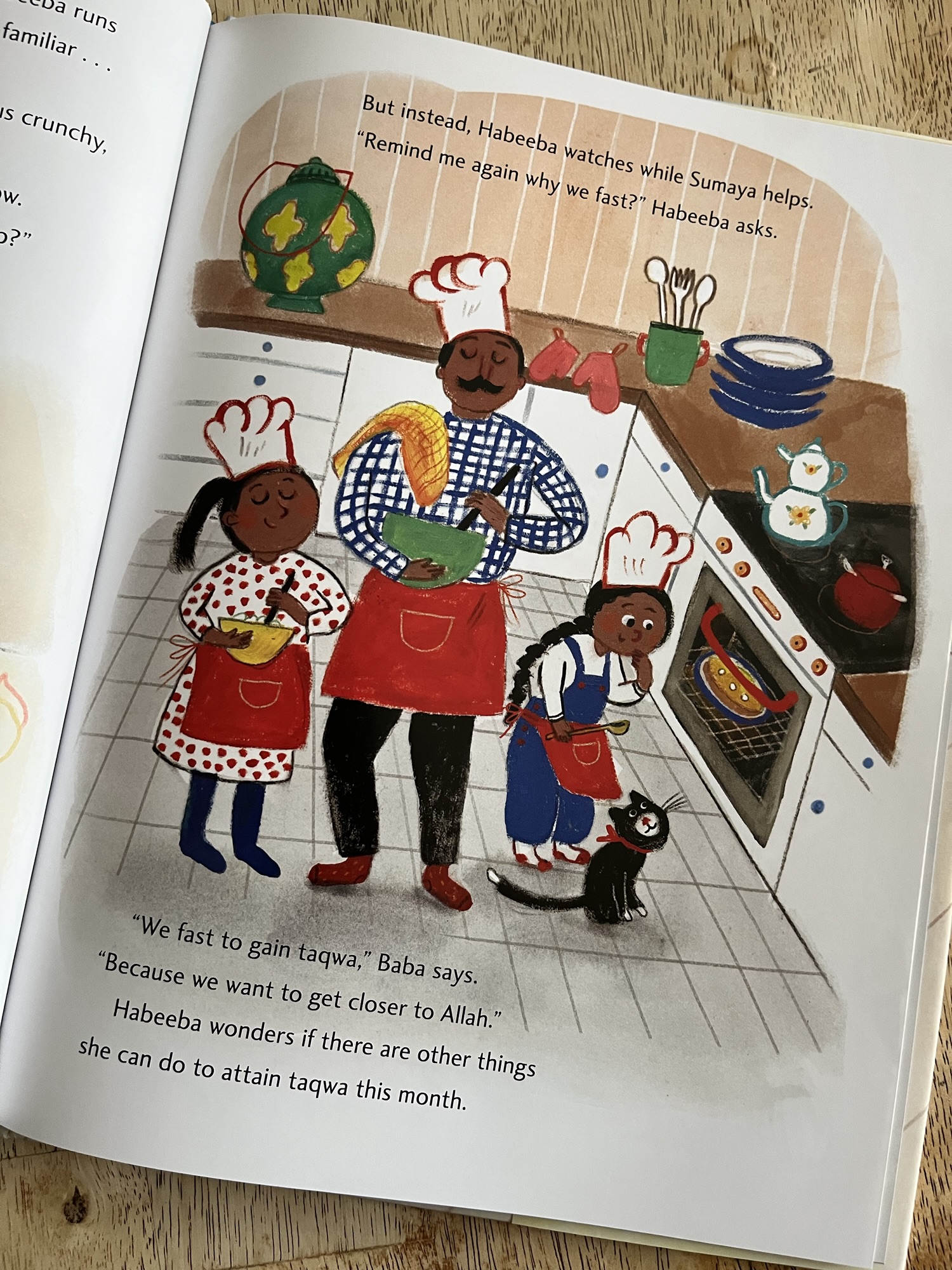
Once back home though, chef Baba’s kunafa tempts Habeeba. Baba reminds her that fasting is to gain taqwa, “because we want to get closer to Allah.”  Habeeba starts to wonder what else she can do to gain taqwa, but the thought seems lost as she makes a special prayer, and breaks her fast early.

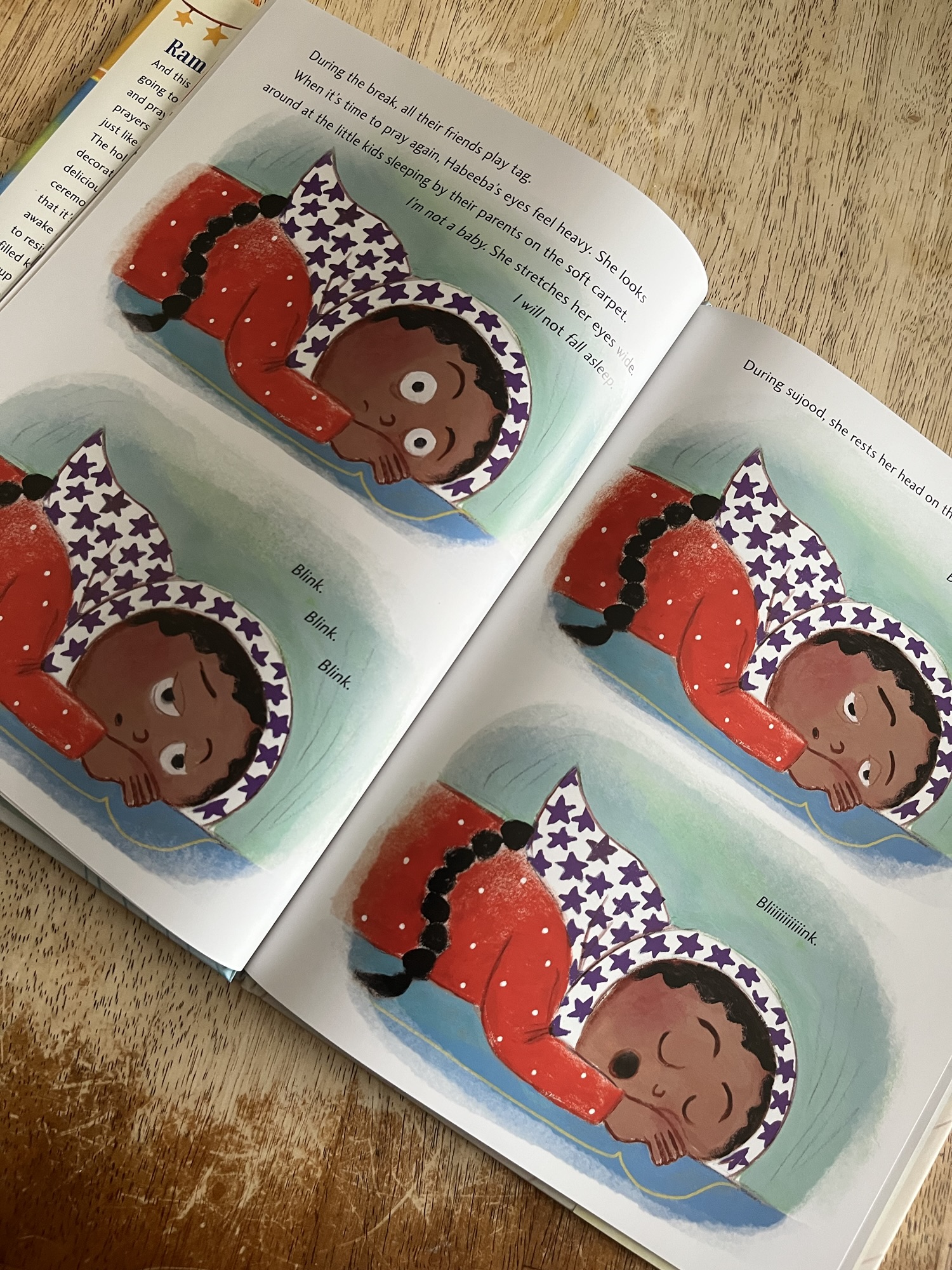
Later at the masjid, the little boy in front of Habeeba makes focusing on duaa hard, and when she is in sujood, she finds herself drifting off to sleep. Day after day she struggles with the temptations of delicious treats, and slipping off to sleep in the comforts of the masjid at night.

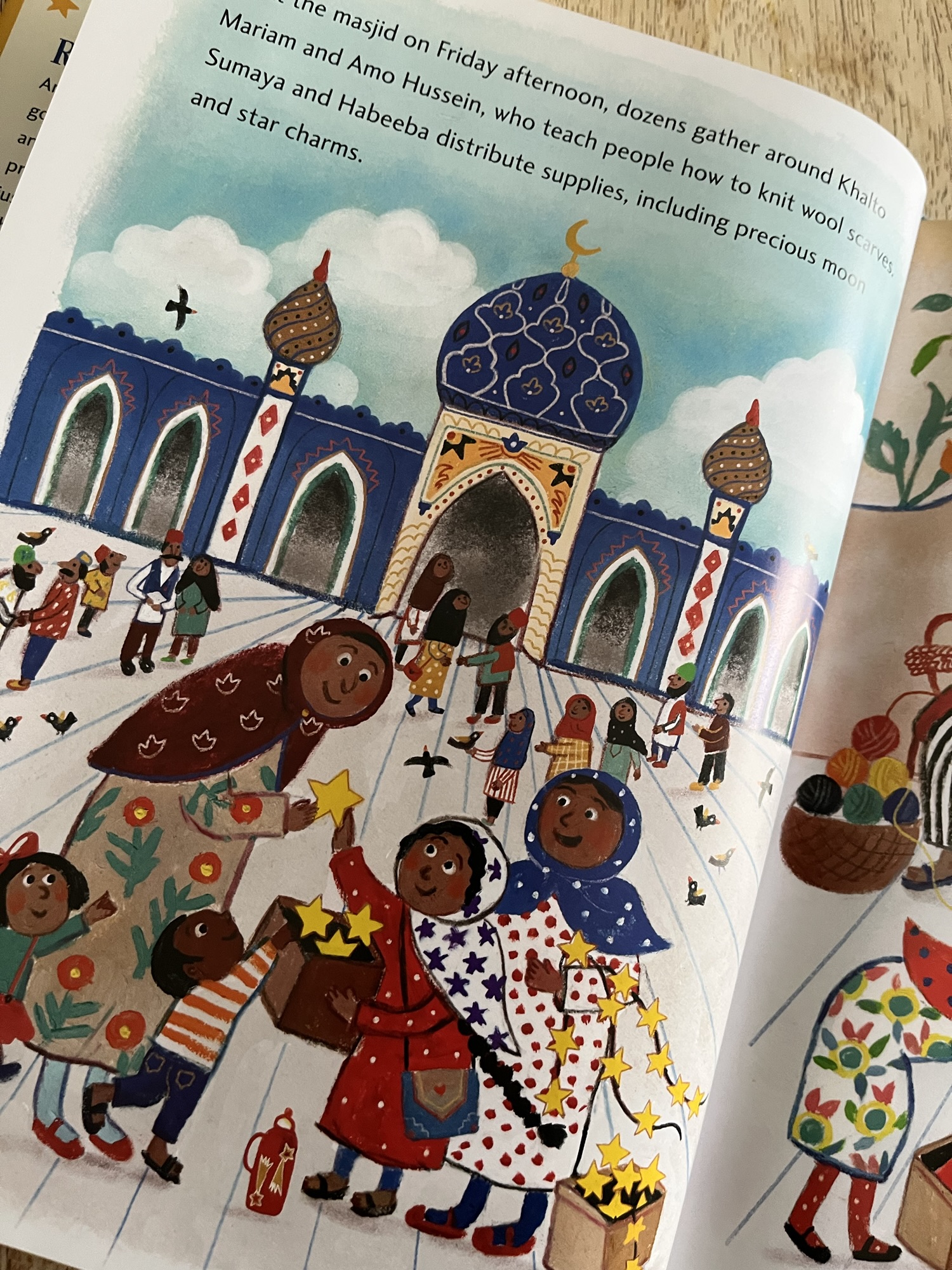
The last week of Ramadan, Habeeba breaks down to Sumaya who tells her she is doing great, and that remembering Allah “also means being mindful of their community.” Together they plan to participate in a service project to help the community and give back.  Before the end of the month, Habeeba fasts a whole day and with her family’s encouragement, hopeful that in time she will fast everyday and stay awake in prayer.
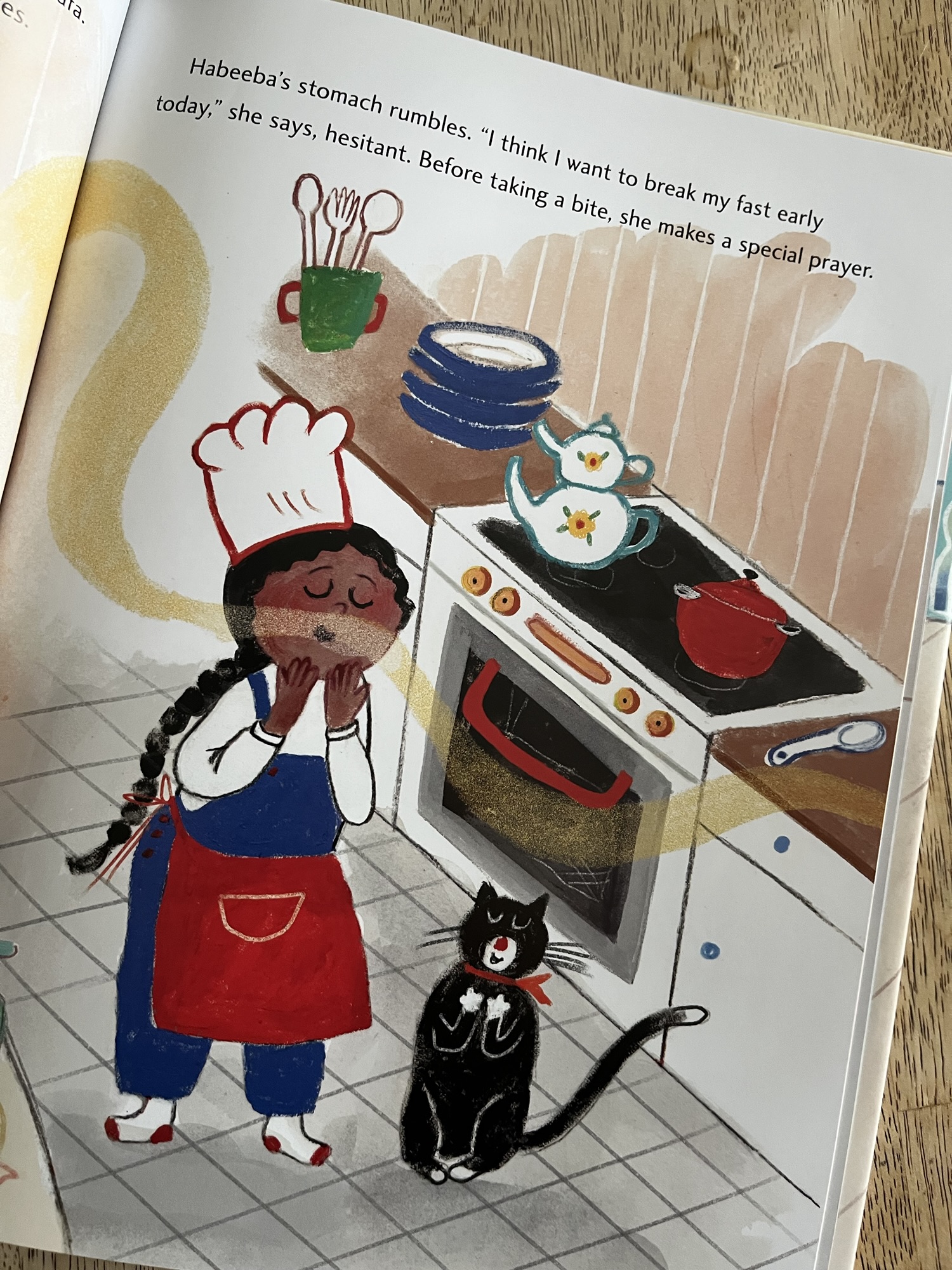
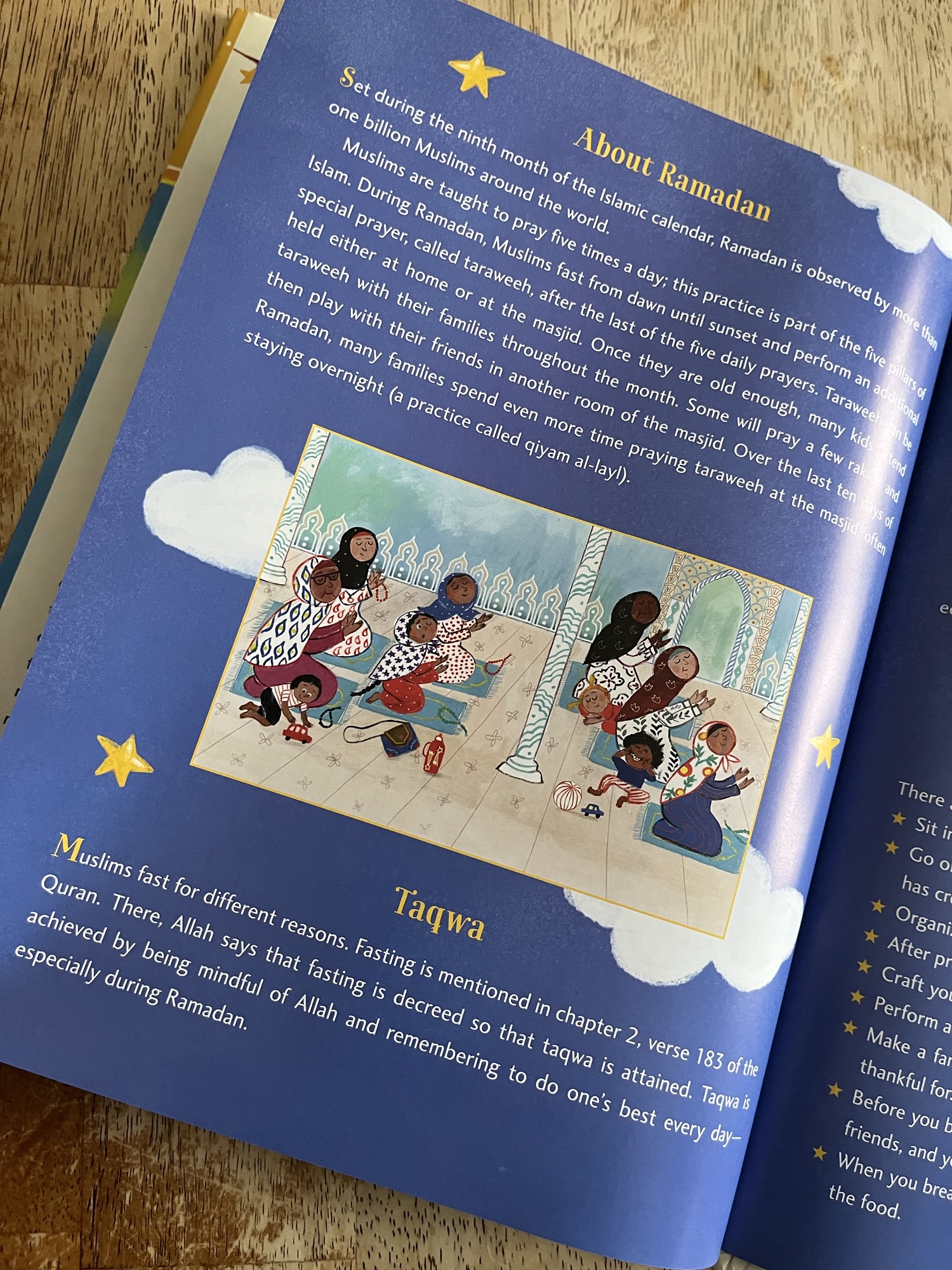
The first page did not set the tone as a polished read, I am terrible at grammar, but “like watermelon, pomegranates, and homemade muffins.” What foods are like watermelon and pomegranates, those are the foods on the table, so maybe “such as” or drop the comparison word all together and just say what is on the table and what we are seeing in the illustration. Throughout it felt like sentences were choppy, and when read aloud commas were missing. The diction also seemed off to me in describing taqwa, not wrong, just stilted and not relatable to the demographic as it is stated, but not really shown. Do six year olds understand mindfulness? It goes from fasting is to gain taqwa, because we want to get closer to Allah, to it being hard to concentrate and practice mindfulness, to “Remembering Allah during Ramadan also means being mindful to their community.”  The backmatter says “Taqwa is achieved by being mindful of Allah and remembering to do one’s best every day- especially during Ramadan.”  I feel like words and phrases are being used interchangeably and not in a way that connects dots of understanding for the reader.  A bit more on level articulation is needed.  And I know I don’t like exposition, but it needs smoothing out and clarity. A few signposts to tie back to the theme, with word choice that kids will understand.  They don’t need to be hit over the head that fasting and praying and charity is worship, but they should grasp that little Habeeba is pushing herself to keep trying day after day to gain taqwa.  Perhaps if Baba at the end would have been proud of her efforts to keep trying instead of saying, “I am most proud of you for sharing Ramadan with everyone.” The point of Ramadan and taqwa would have come through.  I realize it needed that line to make the title make sense, but honestly that is not what the book is about.  Only four pages address the community.  I have no idea why the first day Habeeba wonders about other ways to get closer to Allah swt, sidenote there is no attribution in the story or backmatter, and it is abandoned until the end of the book and the last week of the month.  It very easily could have been threaded in and would have fleshed out the title and the different aspects of Ramadan, growing closer to Allah, and finding ways to help the community.
I did love the school community, from the teacher to the librarian, it is delightful to see support from the larger community in our lives, and models how simple and easy it can be to create a safe and encouraging environment.  The relatability of the characters being so excited and ambitious the first day, going back to sleep after fajr, finding distraction annoying, and getting so tired during salat was also relatable.  To be seen in such familiar acts will bring smiles to readers and reassurance that we are all so very similar in so many ways.

I felt the star and moon motifs were overdone for no effect, what even are “moon and star charms?’ It seemed tropey and superficial, same with the goody bag and the beginning being a sign of babies and then lovingly embraced at the end.  If meant to show the sisters relationship coming full circle it missed the mark for me, as truthfully I didn’t find the sisters relationship to be a proper characterization of the story at all. Habeeba compares herself to Sumaya, wanting to be as good as her, but Sumaya is rather kind and just used as a foil. She spends time at the library with her, encourages her and helps her. It is not a sibling relationship focused story, and adding a crumb here and there, just seemed like the book didn’t know where it wanted to go.

Had the book not been checked by a named Shaykh who consulted on the story, I’d be a little more worried  about the messaging that we fast for taqwa and not that we fast because Allah swt commands it, and that when we do fast we foster that closeness to Allah.  I also found it odd that the backmatter says Ramadan is “set during the ninth month.” Ramadan is the ninth month.

The first reading or two will be joyful and fun, I have no doubt, few will read it as often as I did. I also doubt anyone will take the time to be this critical. But I do hope at the very least, if you have a little one trying to fast, you will not have tempting treats and desserts out every afternoon after school.  And that you did notice the one day she wasn’t home, Habeeba was able to complete her first fast.
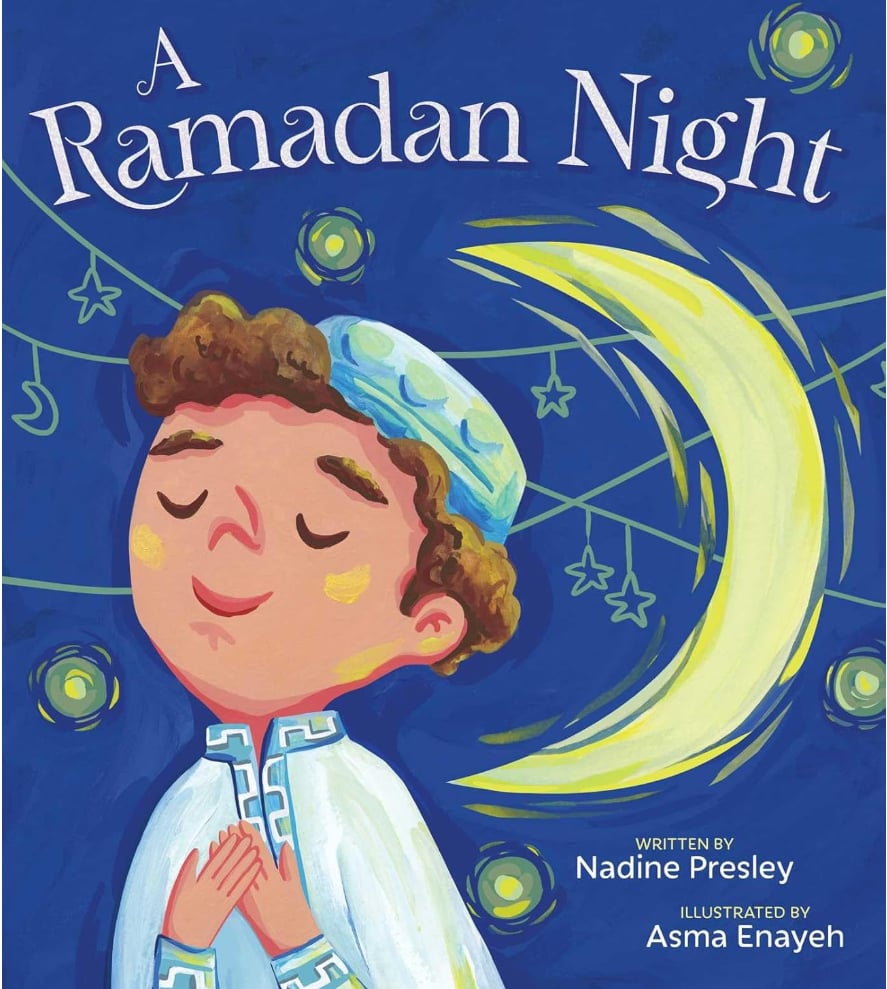
A Ramadan Night by Nadine Presley illustrated by Asma Enayeh

Standard
A Ramadan Night by Nadine Presley illustrated by Asma Enayeh


This 40 page picture book balances prose and lyrical language with touchpoints that young children will recognize and relate to.  Using the senses of sound, sight, and smell, a young boy, Sami, seeks to understand what his father means by his remark, that it “feels like a Ramadan night,” as they head off for Taraweeh at the masjid.  The silliness of the little boy asking the moon, the sidewalk, the echoes, the carpet, and more personified inanimate objects, unearths a deeper more resonate layer of faith, community, and connection. The joy felt in Ramadan through acts of fasting all day, praying all night, giving charity, and being with others, is not easy to articulate. And this book not only takes you on a journey through Sami finding his answers, but with a little prodding, will urge Muslim children, and adults, to try and describe their own emotional attachment to the blessed month, while at the same time, also being a wonderful choice to share with non Muslims who often cannot understand that even children are genuinely excited for the worship in Ramadan, that is not yet required of them.  The bright engaging illustrations and the culminating universal climax of sweets, brings the occasionally overly flowery language back to a child’s level and grounds it.  Sami finds his answer as the night unfolds moving the story along and with the unapologetic Islamic centering of the religious month, I can’t wait for my physical preorder to arrive, so that I can share it with my community this Ramadan.  The book releases in a few days and I hope you too will preorder, or request from your library, to signal to the publisher that we want unapologetic Islamic representation, and will support the books that are well crafted, appealing, and Islam centered. 


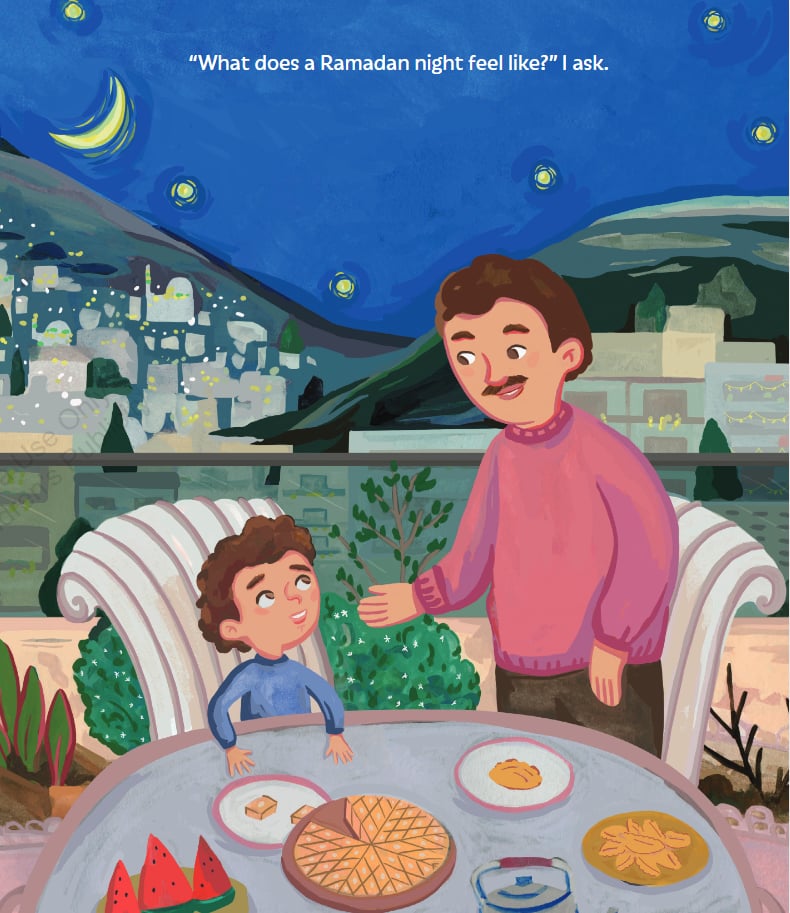
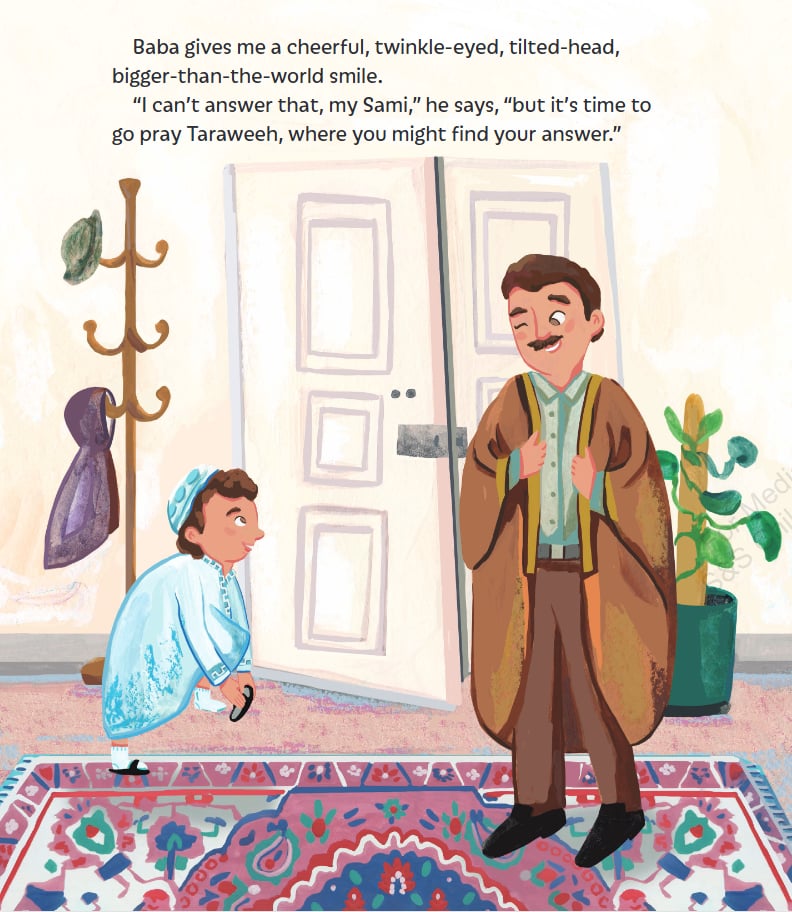
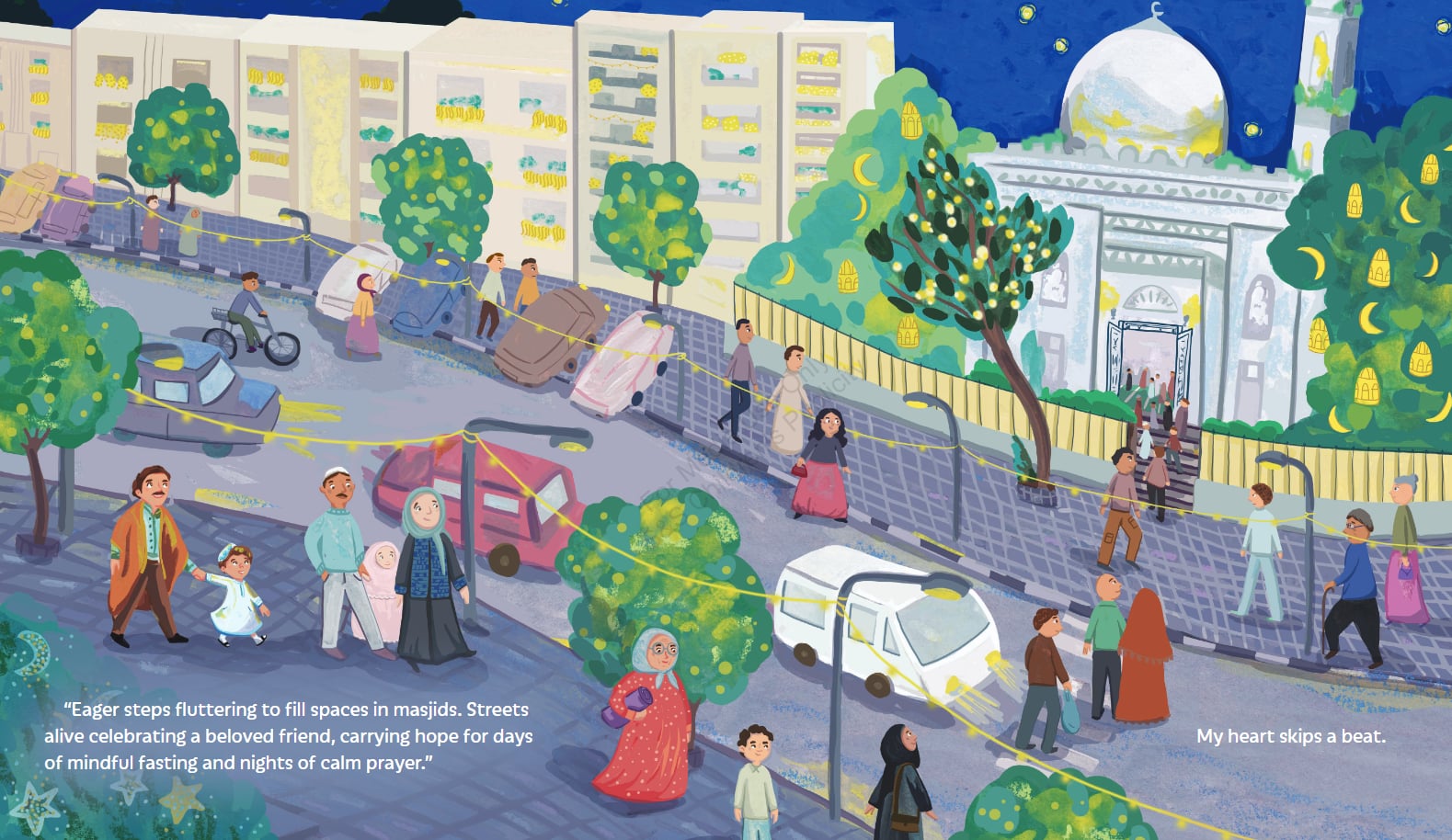
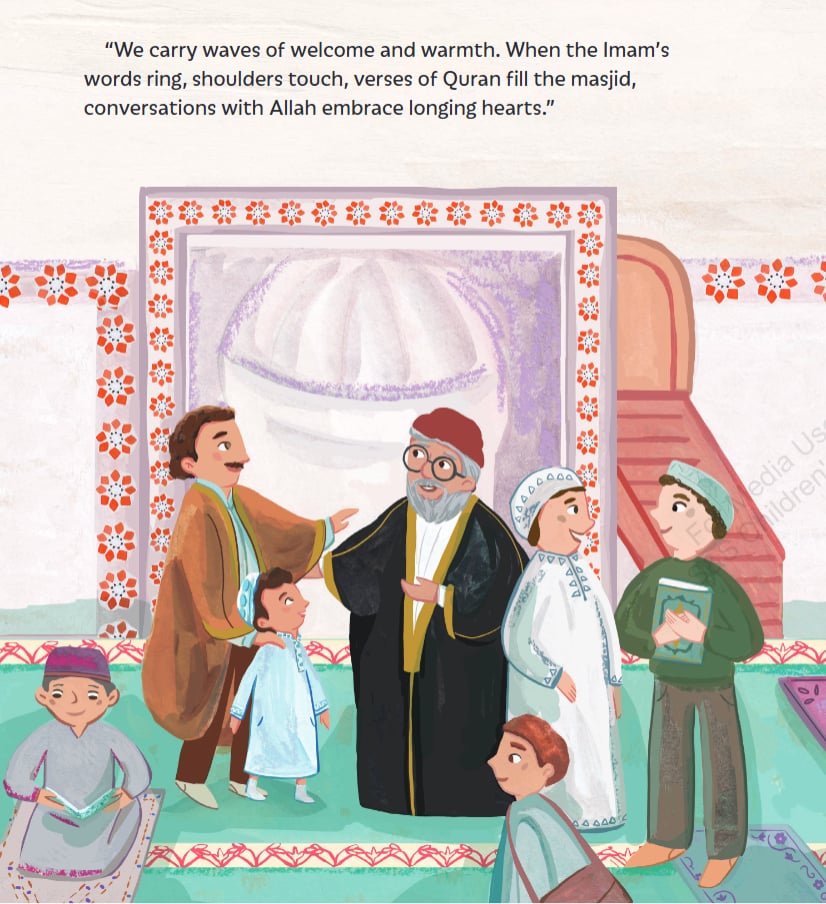
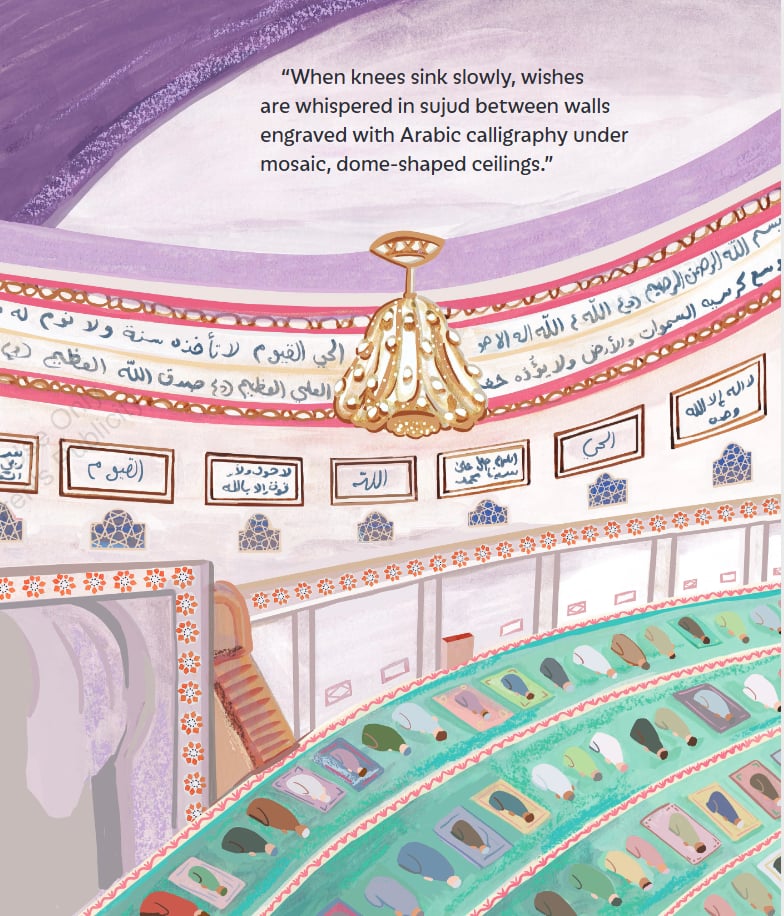
Set in Syria, the book starts with Sami and his father sitting outside eating together, when Sami’s father says that it “feels like a Ramadan night.” Sami isn’t so sure, but his father isn’t about to offer a simple reply, and instead urges him as they head out the door to Taraweeh, to find his own answer.  So Sami asks the crescent moon, who tells him that, “Ramadan nights are lights.” Sami isn’t so sure, but but he sees the golden lanterns glittering, and faithful hearts shining and eyes twinkling as his foot steps make noise on the sidewalk. This has him ask the sidewalk next.  Where he is made aware of the eager steps, and celebrating streets full of hope. His own feet bring him closer to the masjid where echoes of laughter are heard.  The echoes, when asked, speak of peace, and so Sami’s journey continues through salat, playing outside, and delighting in sweets, before returning to his “hug of a home” and knowing in his heart what a Ramadan night feels like to him.


The heartfelt warmth, contentment, and love of Ramadan radiates through the book’s language and illustrations. The melding of story, with Islamic centering, and a little boys journey makes the book authentic and delightful, alhumdulillah. 

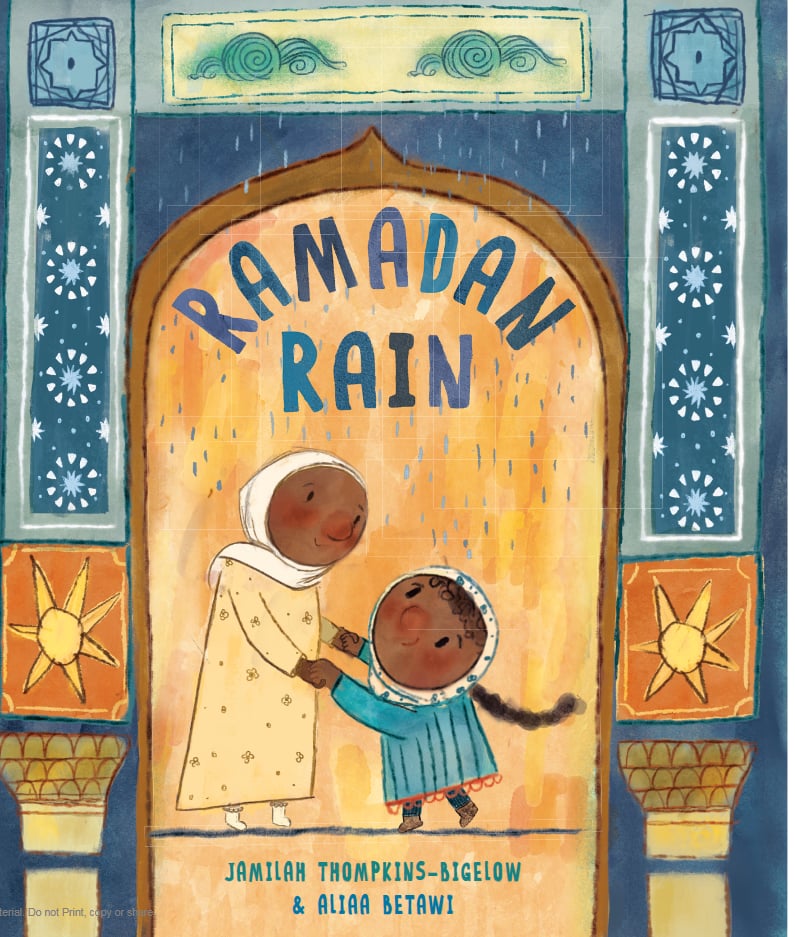
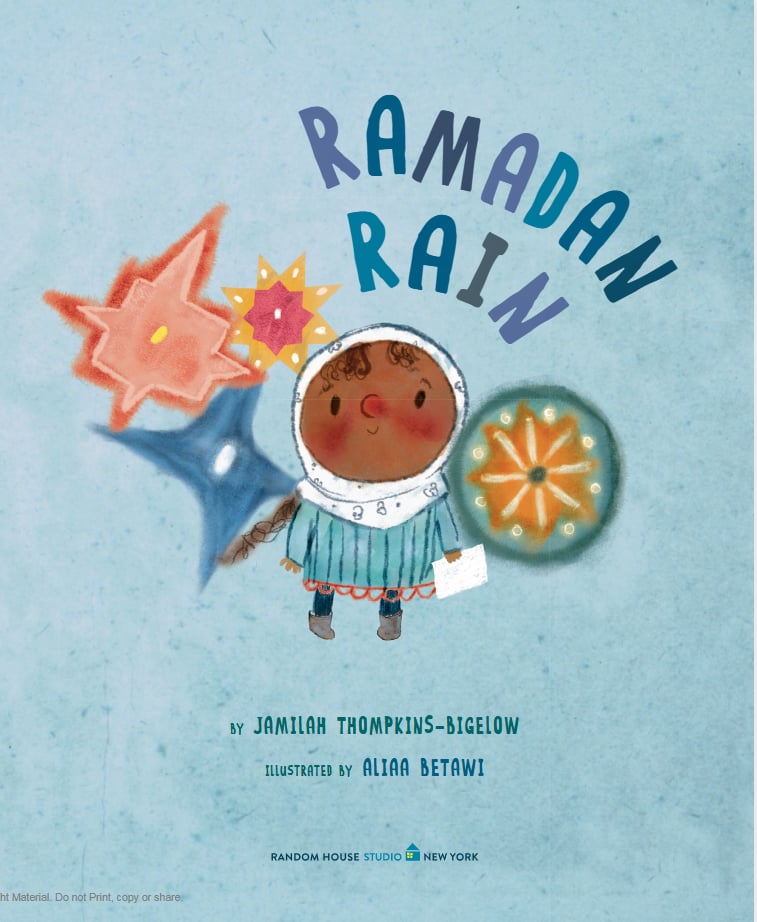
Ramadan Rain by Jamilah Thompkins-Bigelow illustrated by Aliaa Betawi

Standard
Ramadan Rain by Jamilah Thompkins-Bigelow illustrated by Aliaa Betawi

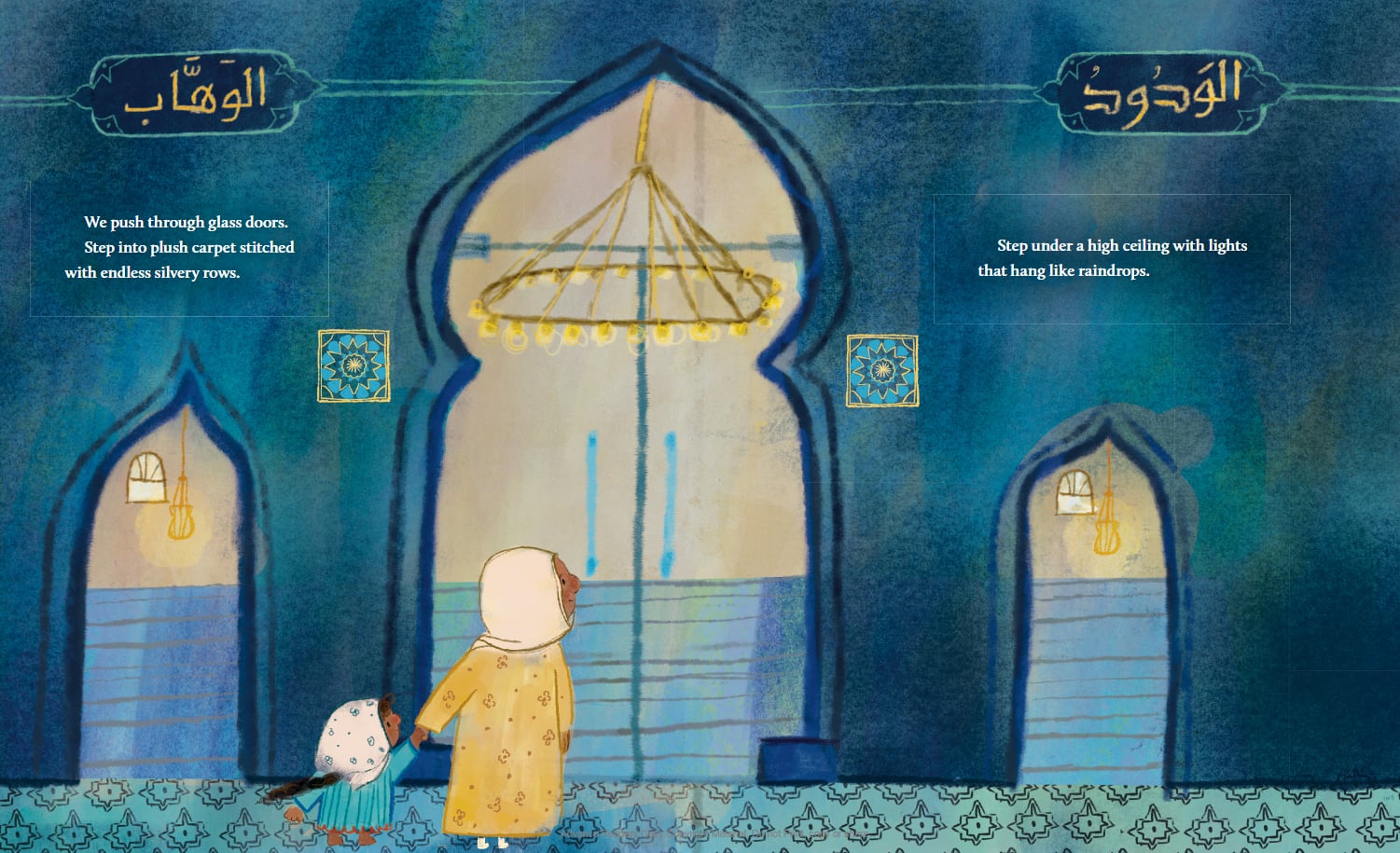
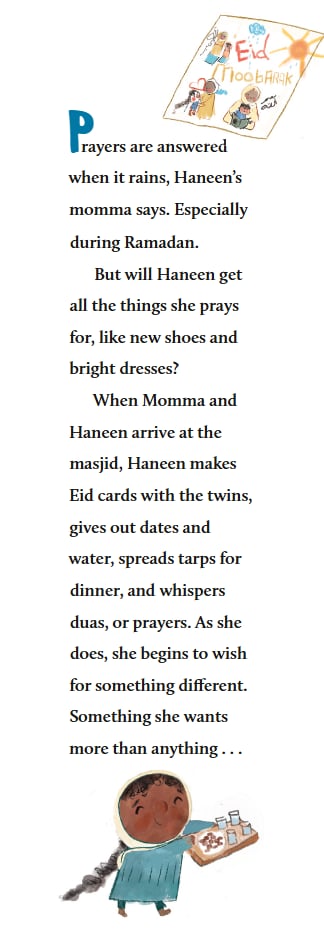
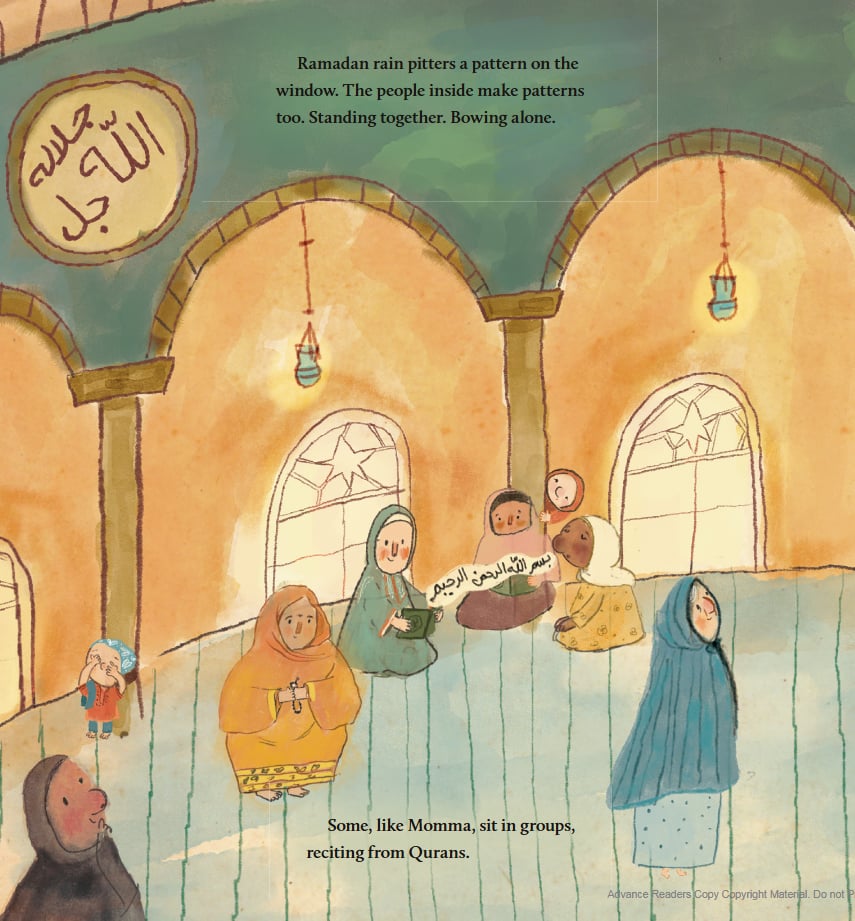
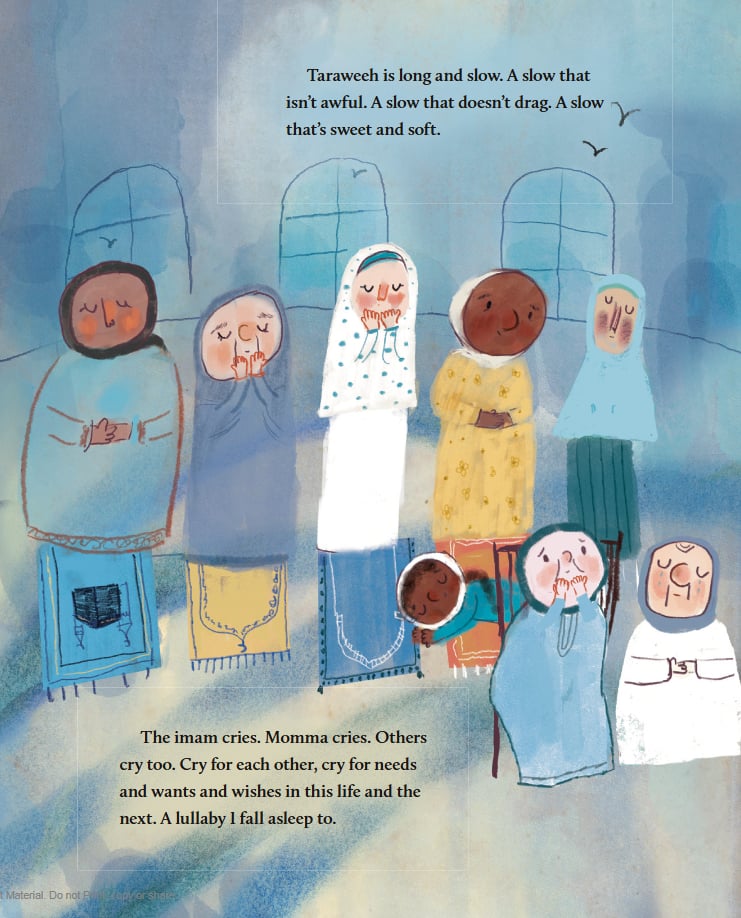
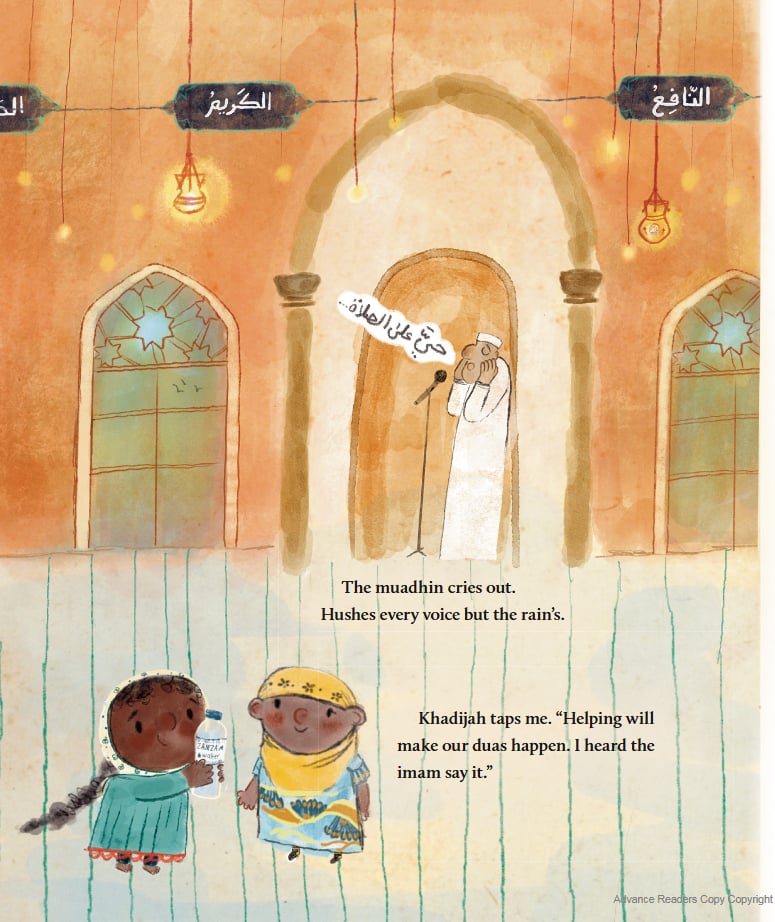
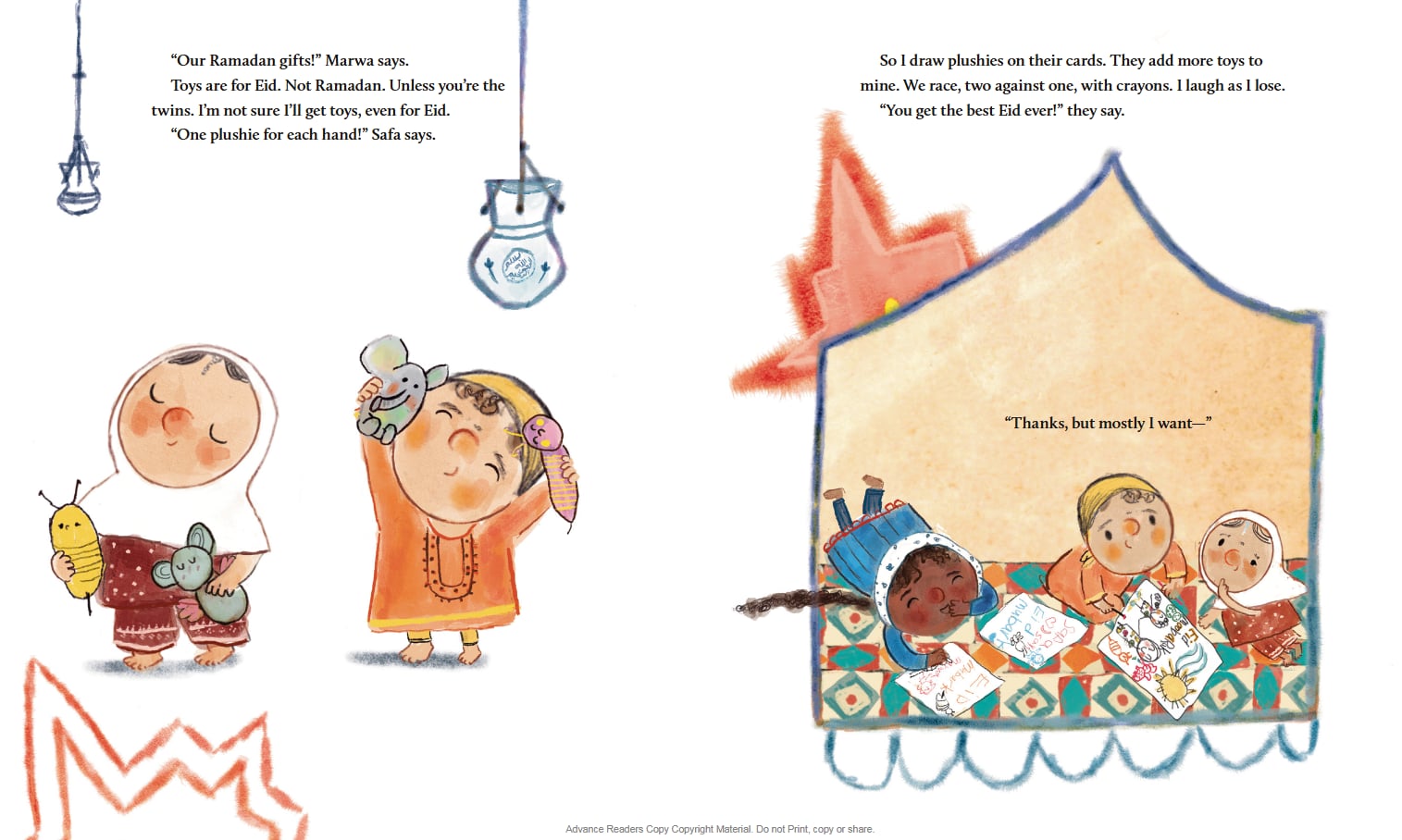
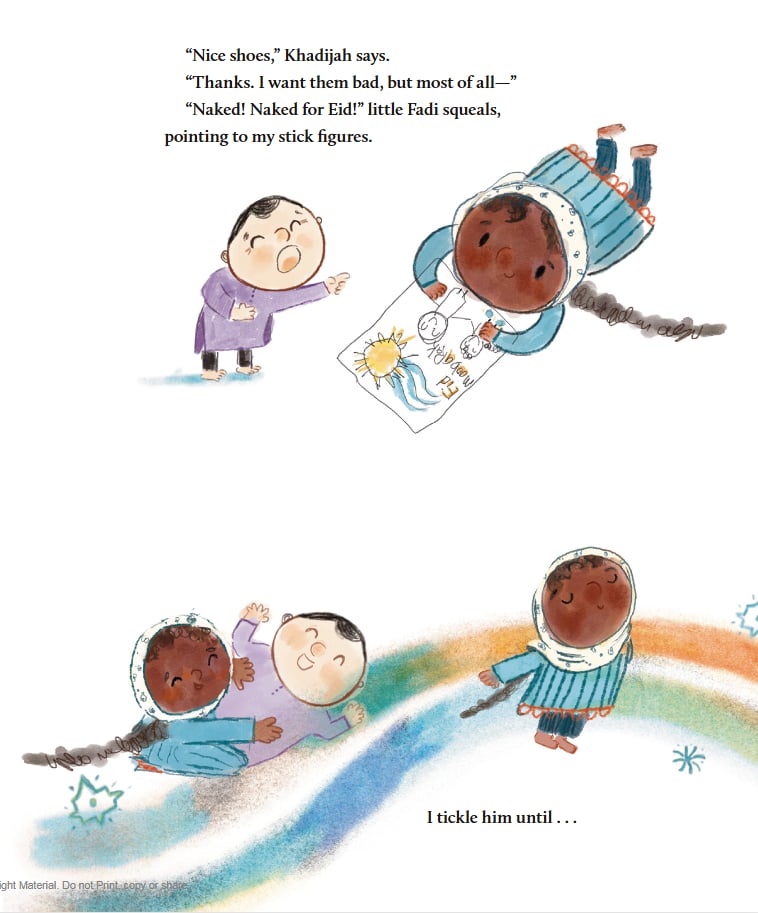
This 40 page book is all the feels as little Haneen’s Ramadan duas change from the material to the heartfelt while the rain pours down, taraweeh prayers are made, fun is had, and hearts are touched.  In true Thompkins-Bigelow fashion the book presents in layers that pull the emotional threads without turning didactic and preachy. The adorable illustrations complement the text and by the page when the characters are crying, I too, found tears in my eyes. I love that praying, duas, and practicing Islam is not sidelined, as current Ramadan and Eid books seem to do, but rather centered and celebrated as a source of comfort and joy. For the most part the external catalyst moving Haneen’s internal change were seamless, but the page with the little boy pointing and calling the drawings on her card naked, seemed a little jarring to the tone, even though I can see the function it served. I also acknowledge that a physical version might not make it as abrupt. Additionally it is worth noting the very nature of reviewing is to over think, so to be completely honest, by about the fifth reading I began to wonder, did her perspective change? There was no pivotal moment that set it in motion, it seemed she just got carried away in making the Eid card and never got to articulate what she really wanted to her mom. The initial dua is for the shoes that the family can’t afford, which I already felt was inconsistent because when asking Allah swt nothing is impossible, and the whole premise is that it is Ramadan and on top of that raining, but that aside, even when she first draws them, she states that it isn’t what “she really wants.”  So now, I’m wondering if anything really changed at all, or she just never clarified and thus the reader as well  her mom are taken along from Ramadan night to Eid day.  Also in the arc I read, it seemed a word was missing on page three that will hopefully be fixed in the final version. I love the tone and the warmth, and I know most won’t read it as deep as me, but the publication is not until March and I wonder, and hope, a few tweaks might still take place.  When my pre order arrives, I will revisit the review if need be, and yes, even with my critiques, I think this is a book that will delight all ages this Ramadan and give plenty to reflect on throughout the year.

The book starts with a grumpy Haneen sitting on a bus, walking in the rain, and arriving at the masjid a little wet and muddy recalling when they had a car and things were easier.  She starts to complain but catches herself knowing that they can’t afford things, and Momma tells her that, “rain brings blessings.”  She also reminds Haneen that duas said on a rainy day get answered, especially during Ramadan.

Once in the masjid, Momma reads Quran and Haneen starts to make duas for the shoes she wants but knows they can’t afford when she is distracted by friends, and they start making Eid cards. They children work together, and when it is pointed out that Haneen’s stick figure has shoes, but no cloths, she marvels at the different dressed women around her, before adding her favorite to the picture, wondering if she can get new clothes for Eid.  The pattern continues, she sees the twins with plush toys, and thus plushies are added to her wants, and filled in on her Eid card, as the congregation moves from athan, to iftar, to salat, to taraweeh.

When Eid comes, SPOILER gifts come from unexpected places, and a new card, showing what Haneen really wanted and prayed for that rainy Ramadan night are revealed, alhumdulillah.

The Month that Makes the Year: A Joyful Celebration of the Spiritual Practices of Ramadan by Inda Ahmad Zahri

Standard
The Month that Makes the Year: A Joyful Celebration of the Spiritual Practices of Ramadan by Inda Ahmad Zahri

img_7355

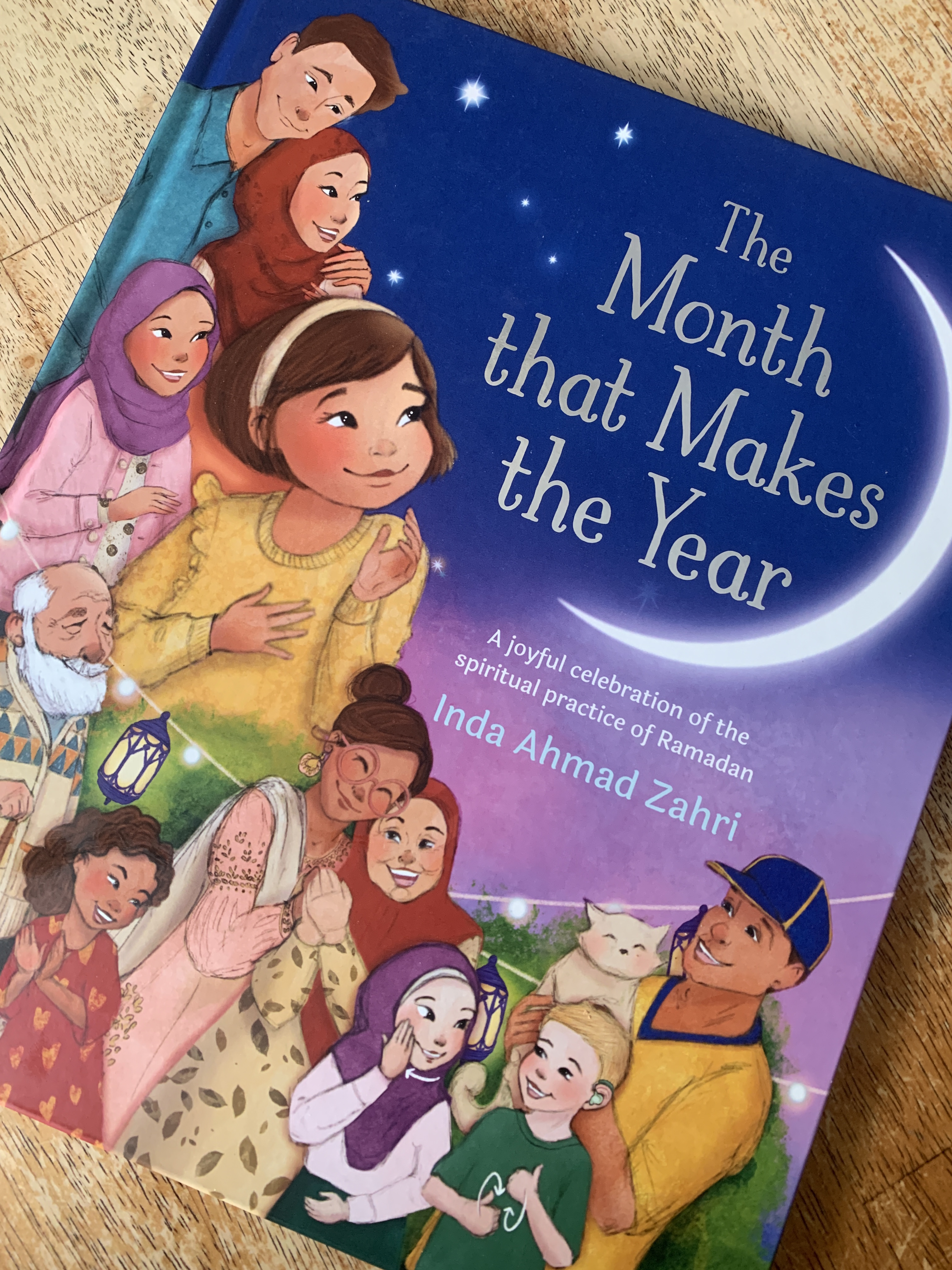
This book was definitely worth the wait, alhumdulillah.  For all the complaining I do about books regurgitating facts, or Ramadan joy books leaving out the religion, and presentation feeling like it is more for non Muslims than for our own little children; this book does a great job of sharing key points about Ramadan with authenticity and heart that Muslims and non Muslims alike will benefit from the light story, engaging and adorable illustrations, and Muslim child centering.  This 32 page book works well for preschool to early elementary readers and listeners at bedtime, at story time, and in settings were introductions to Ramadan are shared.

img_7358

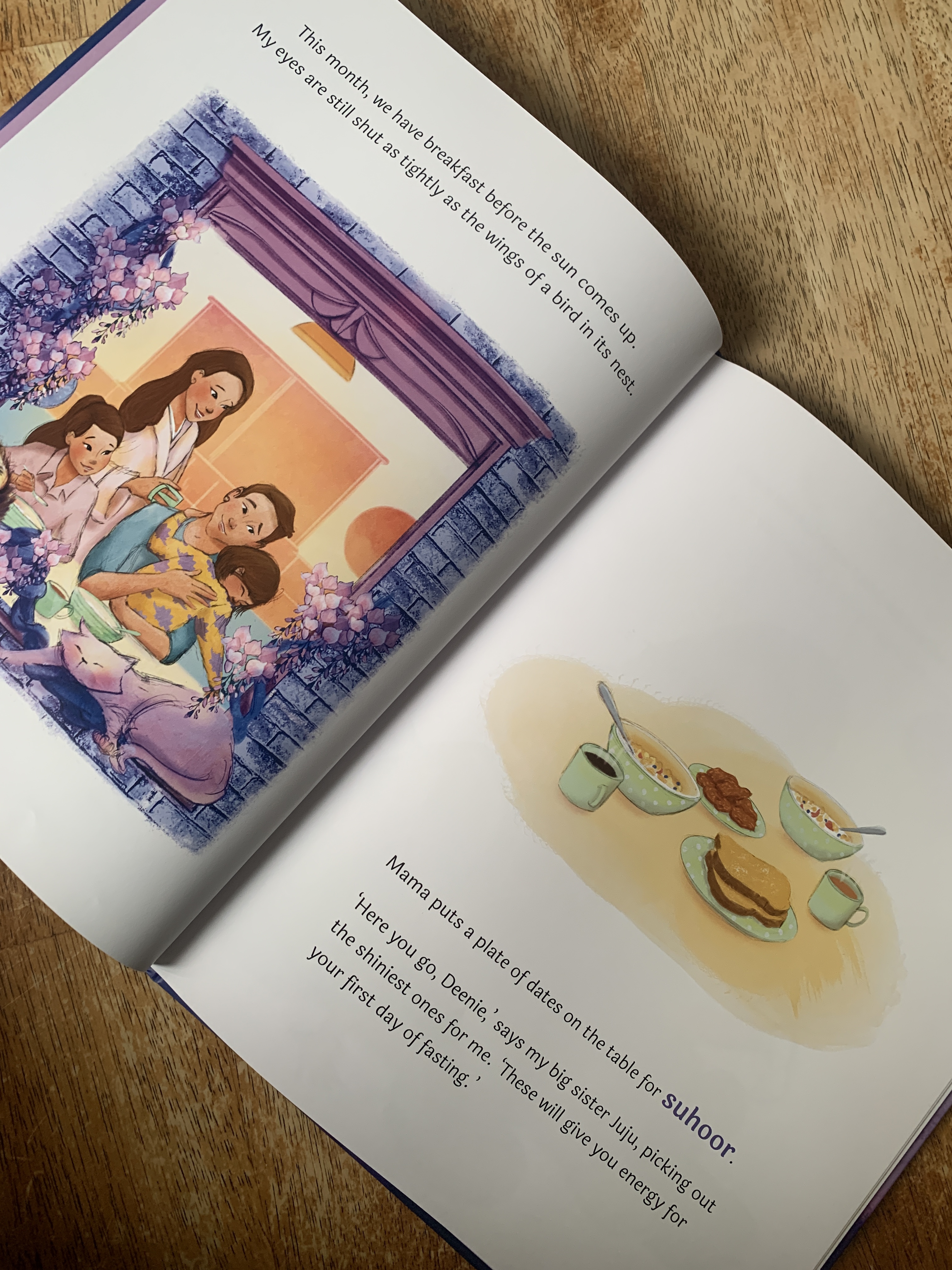
I was a little nervous that this book was framed as a child’s first fast, but a few pages in my concerns disappeared.  Little Deenie knows what Ramadan is, her family is encouraging her to try and fast for a few hours, and she knows that she can’t hide in a cave and sleep like a hibernating bear because Ramadan is so much more than going without food and drink.

I love the shelving of tempting snacks and bad habits of unkind words, waste, impatience, and that little changes lead to big changes one at a time: kindness, love, attention, gratitude.

img_7361

Deenie goes a little longer each day, and her tummy rumbles, but where she once felt lonely in the quite spaces, she is finding new things that otherwise would have been missed.  She helps the coach off the pitch at soccer, the family connects without screens, the “ordinary feels extra-ordinary.”

img_7357

The mosque opens its arms for tarawih, and extra prayers are “a chance to look inwards and upwards.” A chance to belong.  There is sadaqah and Zakat, and being thankful, learning about traditions and connecting with others.  There are non Muslim friends changing a lunch date to a gallery stroll, and realizing the kindness is not required, but appreciated none-the-less.  The human body is amazing, and Deenie is growing stronger with each Ramadan day.  Eid is a time of celebration, but Ramadan is missed, and we are not the same people we were before the blessed month..

img_7356

The book starts with an Author’s Note and ends with a Glossary.  The hardback 11 x 9 book is a great size to allow kids to truly enjoy the sweet illustrations that add to the text and bring the feelings to life.  There are a variety of skin tones, mobilities, clothing styles and head coverings, or not covered characters shown.  There are so many smiling faces, and relatable scenes.  This book is really well done and an absolute joy to read and share.

I personally needed to see that my expectations for a Ramadan read were not unrealistic, and this book alhumdulillah, not only proved that good representation can be beautiful and heartfelt and unapologetic, but raised the bar.  I can’t wait to share this for our Masjid Ramadan story time, I only wish it was easier to obtain in the USA.  I preordered mine from Book Depository, but since publication the price has gone up, inshaAllah if we all show our support, local stockists will find a way (www.allenandunwin.com).

Musa & Friends Do Ramadan by Zanib Mian illustrated by Daniel Hills

Standard
Musa & Friends Do Ramadan by Zanib Mian illustrated by Daniel Hills

musa ramadan

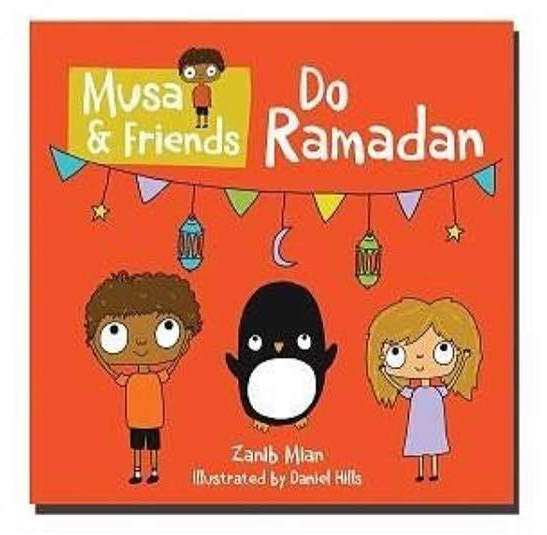
Zanib Mian has really set the standard for quality affordable children’s Islamic books title after title.  So, I really was on pins and needles waiting for these Musa & Friends board books, and then I got one (thank you Crescent Moon Store) and part of me is really disappointed, and part of me is wondering what I’m missing.

They are at cheapest $8 a book, and there are 8 pages.  Yes, the binding and page thickness is awesome, and the 5.5 square size is adorable in a toddler’s hands, but I guess I wanted more.  More pages, more feeling or tone of Ramadan, a little more substance.

IMG_4711

The illustrations are super fun and Zanib Mian has a history of writing toddler and preschool appropriate books, so needless to say I was surprised that I didn’t love this book.  Granted I’ve only seen the Ramadan book, and maybe the others in the series are much more satisfying, or maybe when you have all four together, they round each other out, which I’m really hoping is the case.

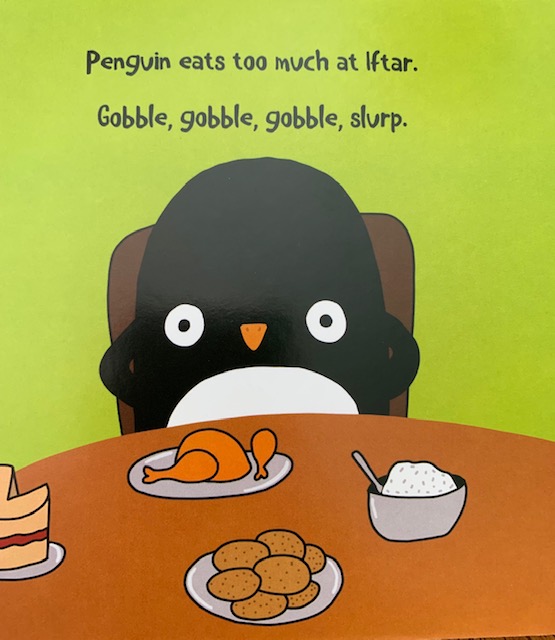
The text amount per page is great for littles, but the content is rather random in my opinion. They little diverse family and their penguin love Ramadan, they go to the masjid for taraweeh, they wake up for suhoor, they read Quran, they give money to the poor, they eat too much iftar and they love eid.

IMG_4712

The book is meant for Muslim children as no details are given about what iftar or suhoor mean or that Ramadan involves fasting.  The illustrations won’t help much either in explaining the terms or even teaching concepts as the page on giving to charity has Musa and Penguin putting money in a jar, Musa’s dad is reading Quran, even though the text says, “Well done, Musa,” and even the penguin says “Gobble, gobble, gobble,” when eating(?).

IMG_4713

The books are cute and if you aren’t overly critical and you receive the book as a gift you will probably be very happy.  I just expected more and after the smallness of size of “A Young Muslim’s Mindful Book of Wellbeing” combined with the shortness of these books, I won’t just blindly order a bunch of Muslim Children’s Books without considering if they are worth it anymore, which makes me sad.