Tag Archives: New Adult

When a Brown Girl Flees By Aamna Qureshi

Standard
When a Brown Girl Flees By Aamna Qureshi

when a brown girl flees

I was both nervous and excited to read this contemporary book having loved the author’s fantasy, but unsure how a Brown Muslim Pakistani American girl running away from home would be presented.  Alhumdulillah, the author approached the story from a place of love.  There is no internalized Islamophobia, self othering, or in broad strokes even an identity crisis. The protagonist has made decisions, drastic ones, and is trying to piece her life back together on her own terms, but the love of culture, family and faith, is always upheld.  It reads like Islamic fiction, with very didactic passages and moral positioning, I’m still quite surprised that it is traditionally published.  The version I read had grammar errors, so I’m hoping that they will be corrected when the book releases in a few weeks.  The story is engaging, but the writing a bit monotone.  Much of the story is telling, not showing, and because of the surface level spoon feeding of so much of the plot, when the catalyst or rationale is not provided, the book seems underdeveloped, or lacking, unfortunately.  I would not recommend this book for the target audience of YA readers (12/13 and up) it contains sex, slut shaming, self harm, depression, suicidal thoughts, physical and emotional abuse, profanity, and mentions drug use.  I do think though, early college age readers will enjoy and benefit from reading the book.  At a time in the reader’s life when they are defining themselves on their own terms, owning up to their own mistakes and laying out a future path, this book will provide relatability amplified by religious and cultural touchstones.  The heart of the story is the connection of a girl with Allah swt after she has sinned, the guilt and regret she feels, and how she finds herself, and returns to try and fix things with her family.  The characters are flawed and the overall messaging beautiful, hopeful and uplifting.  Unfortunately, it just reads like an early draft and I wish it had a bit more refinement.  Keeping that in mind though, it does have a place, and I’m glad to see our “new adults”  can find reflections of  themselves in a piece of literature that amplifies their Islamic identity instead of criticizing or questioning it.

SYNOPSIS:

The book starts with Zahra deciding to run away from home.  She parks her car, leaves her phone and catches a flight to New York from California.  The reader doesn’t exactly know why she is running, only that a few days after high school graduation she is escaping a toxic home life, an impending wedding, and misery.  As the story peels back layers we start to see some of the nuance of what she is running from as characters from her past find her and physical space allows her some perspective to see her own role in her “old” life.  When she arrives in New York, it isn’t the city life that she seeks, but rather the nature and pace of Long Island that offers her a fresh start.  She heads to the masjid, makes a friend, and starts to put her life together without parental obligation, outside interference, and self loathing.  She cannot run forever though and she cannot escape herself.  She must confront her past, own her mistakes, be honest with her new friends, and find peace with her family, not because she has to as a Brown daughter of immigrants, but because she trusts Allah, loves her family, and wants to “fix” things.

WHY I LIKE IT:

I’m a sucker for books that show redemption through the love and mercy of Allah (swt).  Yeah her new friends were idyllic in their family life, relationships and worship, but we all want friends that make us better Muslims, so I let it slide. Islam is centered, she wears hijab, she reconnects with salat, it is her identity even when she is just going through the motions. The author at times conflated culture and faith, but it never issues blanket statements or falls into universal stereotypes for Desi culture or Muslims.  She does a good job of keeping the negatives to the people and the critiques to the failure to push back on dangerous expectations. My issues weren’t the character flaws either, I’m onboard with the messiness of being human and the ability to seek and receive forgiveness from our creator.  I just wanted to feel things more.  So much was just told when it should have been shown.  I wanted to see the stress and anguish of her family life, not simply told it was depressing.  I wanted to see her cutting life long friends out and being isolated, not told she had lost her friends.  The book focuses on her running, and why she ran, but a big plot point for why she ran, having sex, needed more fleshing out.  Why was she driven to such an act? I know that she was depressed, I’m not belittling that, but what pushed her to such a strong stance, when she was already allowed on the school trip, she hadn’t yet been given the ultimatum and over and over the book says “I miss my family,”” I miss my home,” “I miss my mom.”  I didn’t feel the connection or understand what she was feeling, thinking, and it seemed like a huge hole in the book.  For all the themes of mental illness, faith, generational trauma, misogyny, abuse, expectation, depression, lying, culture, life choices, higher education, family dynamics, self harm. the book never quite felt rich with emotion or deeper than the surface level story.  At the beginning the author says she first wrote the book when she was a senior in high school, and while that may have made the main character’s perspective and voice ring true, as a successful author now, I wish she would have added the nuance, the insight, the subtlety that would have drawn the reader in and allowed them to get inside Zahra’s head and heart to see her and perhaps even themselves.

FLAGS:

The author and book identify triggers in the book “please be mindful of TWs: depression, anxiety, emotional abuse, physical abuse, self-harm, suicidal ideation, slut-shaming, PTS.”

There is also music, boys and girls alone in cars together, lying, cursing, generational trauma, misogyny, abuse, expectation, depression, anxiety, guilt, life choices, higher education, family dynamics, cutting, a brother who is often high or smells like weed/pot, it mentions partying, a sexual event, deceit, physically assaulted by a parent.  Nothing haram is glorified, but it is there and it is detailed, and not everything is resolved.

TOOLS FOR LEADING THE DISCUSSION:

I would not be able to shelve or teach this book in an Islamic school library, but in a college MSA book club or a youth group of a similar age this book would be incredible to read and discuss.

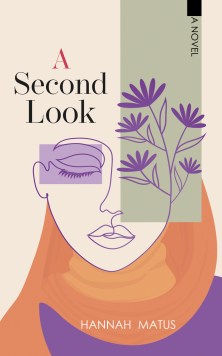
A Second Look by Hannah Matus

Standard
A Second Look by Hannah Matus

a second look

Ok, so y’all, don’t be like me, don’t judge this book by it’s cover, its inside font and spacing, or even the blurb on the back.  Judge it based on this sentence: A modern ISLAMIC Libyan cultural retelling of Jane Austen’s classic Pride and Prejudice, that is done so, so well.  It is seriously so well written and so effortlessly adapted that for those that know the original by heart you will giggle and be giddy with anticipation of how the characters and plot points are turned Islamic.  And those that have never read or watched the original or any of the many adaptations, will be sucked in and swept away by the story at hand.  Oh sure it needs a few tweaks here and there, but truly this hidden gem sat untouched on my shelf with it’s unattractive cover for way too long.  Alhumdulillah for @bintyounus giving the book a start and squealing with glee until the entire @muslimbookreviewer crew dropped everything and read the book.  Not that it was hard, once started, this book stayed glued to me as I tried to sneak minutes at dismissal, at work, while cooking, and talking on the phone to stay in the world so masterfully created.  The book is  halal, but the characters for the most part are in their twenties and I think I wouldn’t object to older teens reading it, but it is an Adult or New Adult book, in both characters’ ages and readers’ interest and appeal.

SYNOPSIS:

The five sisters in the BenTaleb family are all unmarried, balancing life, school, jobs, and daily stresses as varied Muslim Libyan young women in America. With so many girls, the parents of Jana, Elizza, Maryam, Leedya, and Kawthar are known in the small Midwest community as Abu l’Banaat and Umm l’Banaat.  When two young businessmen from Libya come in to town to teach at the local university, the eligible bachelor’s are sough after and all the drama, angst, longing, and courtship comes to fruition. Throw in a distant cousin who is an imam, a scandal with a younger sister, social media updates, and cultural expectations, and you have yourself a book full of laughs, tears, cheering, and joy.

WHY I LIKE IT:

I love how seamless the retelling is, the pop culture references, and how relatable and rich the writing is.  I was blown away by the beautiful strong Islam present that somehow never comes across as preachy, but is so thoughtfully present in presenting ideology, cultural pushback, western conflict, that Muslims and non Muslims will enjoy the story.  I’m fairly certain every Muslim Jane Austen fan has thought how similar books written so long ago mirror the courting etiquette of Muslims, and this book delivers all of those hopes and imaginings: the names of the characters, the opposing perspectives of the sisters- I really can’t stop gushing, and haven’t since I finished the 200 page book.  There is so much Islam, swoon, and it is presented so well.

FLAGS:

As an Adult book it is clean, even as a New Adult book it is clean.  I hesitate to call it Young Adult because it is about marriage, and there is a scandal with a sister, and mention of wedding nights, and STDS and lingerie, nothing is explicit, but for as halal as it all is and how practicing the character’s all are, these few mentions elevate the story from suitable for a 13 year old, to being ok for older teens.

TOOLS FOR LEADING THE DISCUSSION:

I think everyone should read it and come gush with me.  You can purchase the book here.

Moonlight Hope: A Muslim American Coming of Age Story by Nora Salam

Standard
Moonlight Hope: A Muslim American Coming of Age Story by Nora Salam

moonlight hope

This 354 page New Adult read is truly Islamic fiction, and as long as you know what you are getting in to, you probably will thoroughly enjoy it.  It is Islamic centered, it is preachy, it is idyllic, it counters many stereotypes about Muslims and various cultures, while simultaneously falling into other tropes that define the genre, it has mature framing that is not suitable for younger readers, but doesn’t detail anything that is super “haram.”  If you are looking for a potentially halal romance between YA and Adult ages with Islamic messaging this book is a solid choice.  If however, you will be annoyed by any of the aforementioned labels, this book will not hold your attention or beg to be finished.  It reminds me a lot of Umm Zakiyyah’s If I Should Speak and A Voice books where the story has its own twists and character arcs but it spends a lot of time preaching and setting itself up to tout an Islamic perspective, or concept as well.  I wanted to read two books in the “New Adult” category and see if I could spread my reviews to include them, and with this being the second,  I think I should resist the temptation, and stick to what my library background familiarized me with.

SYNOPSIS:

Told in alternating voices of Intisar and Majed, two individuals in New York City, at different places in their life, but finding that when they hit rock bottom, Islam is the answer.

Intisar is graduating nursing school when the story opens and has only one goal in mind, get married.  She has strict Sudanese parents and has put all of her dreams on finding freedom in the perfect spouse.  She meets a guy at a friend’s house and they secretly date, kiss, and hold hands.  When he ghosts her, she is devastated and reluctantly finds herself agreeing to marry a much older man of her parent’s choosing.  Loosing herself in the idea of marriage, she finds herself heartbroken, ostracized and falling apart.  She starts to put herself back together slowly by finding Islam, her confidence, and some much needed perspective.

Majed has a famous family: his mother a model, his father and siblings singers, and he manages their careers.  After passing out from drugs and alcohol more than once he really starts to examine his life and the road he is on.  He sneaks away to rehab and in the process stumbles on to Islam.  He is Egyptian, but the family is not religious at all, and infact stop talking to him when he converts.  The trials of being a Muslim in New York with no family are not easy, but he feels it is worth it and his journey to Hajj and through loss brings him closer to Allah (swt).

The two stories are parallel and collide slightly in the periphery, but the book ends with them finally coming together and the ever dreaded words of “to be continued,” leaving the reader hanging.

WHY I LIKE IT:

I do like that the story shows struggles when one comes (back) to Islam, it isn’t always a walk in the park, it has challenges and stresses.  The book starts each chapter with a verse from the Quran and is very open about what it is.  So, while at times, the preachiness did get to me, it was very clear what type of book it was from the beginning and I kept reading.

Some of the side characters I felt needed to be fleshed out a bit.  I didn’t understand many of the random friends, how they affected the main character often seemed off, or completely underdeveloped in what was revealed about them: particularly Izzedine, Parita, the girl that married Mansour, the uncle at the Masjid that thought Majed was a spy, etc..  I also really struggled with the presentation of Uncle Munir and his calling Majed, baby, and how he just happened to bump in to him outside the bar, and the kisses.  I’m guessing it was meant to show him as over the top affectionate, but it just read as odd.

I like that the book addresses hypocrisy, mental health, and expectations.  It doesn’t paint all Muslims as good or bad, nor society at large.  The book reads as a journey, and many characters are given a chance to correct their errors and be seen in a new light.

The majority of the book is written well, but right away the book gave me pause as Intisar and her friends chat all through the Jummah khutbah, I get that it is trying to show her disregard for intentional practice of her faith and her “boy crazy/marriage” obsession, but you cannot speak during the khutbah, it isn’t just dirty looks, you truly cannot talk for it to count, and it isn’t even remarked upon, and it made me skeptical of the book for a while.  There is a word missing from a sentence on page 161 and at one point a brother in the prayer hall aims a shoe to throw.  But you wouldn’t be wearing shoes in the room where you pray, and the mosque has hallways and a glassed off section for women, so this seemed like an obvious oversight that should be fixed.

FLAGS:

Drugs, alcohol, lying, overdose, sneaking out, kissing, hooking up, physical affection, violence, temptation, sexual predatory behavior, it is an adult book, so I’m not going to continue listing everything. Nothing haram is overtly detailed or glorified. Ages 17 and up, could handle it.

TOOLS FOR LEADING THE DISCUSSION:
Too mature for my book club crew, but I wouldn’t mind it on a shelf in the school library.

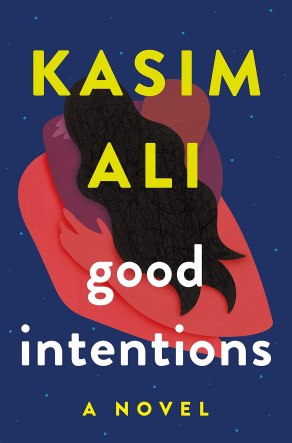
Good Intentions by Kasim Ali

Standard
Good Intentions by Kasim Ali

good intentions

There is a reason that I read juvenile fiction: from board books to YA, but lately the “New Adult” category has really been tempting me.  Muslamic romance novels, often really need the protagonist to be looking to get married to make the plot work with some authenticity,  which means the main character usually needs to be a bit older than in their teens.  I decided to start my tiptoeing into the genre with this book, because I was intrigued at the racial and mental health themes that the blurb teased.  Sadly after reading the 288 page story, I still was waiting for more racial and mental health insight or enlightenment or perspective or deeper appreciation or anything really.  I kept reading hoping for more character growth, and to find out if the relationship worked.  I understand after finishing, that the book was intentionally more subtle and nuanced, and part of me appreciates it, but I still felt the book ultimately provided too little in either regard for me to feel satisfied or content that I had spent time with the characters.  The abruptness and harshness of the first few chapters, seemed disjointed from the dialogue filled introspective remainder of the book that showed so much potential, but left me feeling strung along for no real purpose.  The book covers mature themes of sexuality, drug use, racism, co-habitation, relationships, culture, mental health, and more.  The characters’ identify as Muslim, but aside from Eid prayers, iftar, and mentioning once that they should pray more, there is nothing religious practiced, mentioned, or contained in the story.

SYNOPSIS:

Told in a variety of timelines that all follow the relationship of Nur and Yasmina, the story begins with Nur finally after four years getting up the nerve to tell his desi parents that he has a Black girlfriend, and wants to marry her.  He leaves out that they have been living together for years, and the book then flips back to how they met and bounces around filling in the gaps that bring them back to the big reveal.

While in college, Nur had just broken up with Saara, but still goes to her fairly regular house parties.  At one such party he meets Yasmina, as a small group at the party sneak off to smoke pot, and he is immediately crushing.  His hungover broken-hearted gay friend Imran calls him out on it immediately, and his roommate Rahat chastises him for going to his ex’s parties.  Nearly all the main characters are met early on, and the rest of the book focuses on Nur and Yasmina growing closer through college, after school, through their early years of jobs and grad school, and the overshadowing of the fact that Nur has yet to tell his family about Yasmina, while Yasmina’s family is fully aware and fully supportive that they are living together.

All the characters are Muslim, but practice is pretty minimally detailed.  Yasmina tells Nur at their first meeting that she wishes she prayed more, and later it is mentioned that her parents were raised strict so they have raised their own children less so.  It is possible that Nur’s mom wears a scarf, but not clear either way, and they don’t seem to be bothered that she is living with her boyfriend.  Nur on one of his visits home goes for Eid prayers with his father, his mother and sister do not go, and it mentions that they are fasting.  Rahat does not find dating is for him, and wants to have a traditional arranged marriage, but it does not disclose if this is because of religious or cultural views.  Imran discusses his family praying and that he had to square away his sexuality with Allah swt more or less.

Nur and Yasmina’s younger sister have mental health afflictions.  Nur has anxiety attacks, and Hawa severe depression.  It does not label or identify or diagnose, this is my assumption, it does detail their experiences though, and how they affect those around them.

WHY I LIKE IT:

I actually enjoyed the writing style and the ease in which it flowed-save the beginning of the book. The beginning was a little crass, almost like the author was trying too hard to get the characters’ environment to read that they were in college.  The crude talking about sex and them talking about their parents’ intimacy and smoking and drinking and being vulgar, was in such contrast to the very subtle nuanced rest of the book that tried to show the layers of Nur and Yasmina’s relationships and lives.  Once I got through it, I genuinely wanted to know if they could make the relationship work.  No I’m not going to spoil it, but that really is why I kept reading.

I was disappointed that the book didn’t draw mental health out in the open.   I also wanted some religious based push back on racism.  It is a big thing in our communities and the book really could have had the characters argue it and make their points, right or wrong, for the disconnect between faith and culture.  It didn’t have to be preachy, or even mean that anyone changed their opinions, but it mentions numerous times, something to the effect of Nur’s parents being racist, but doesn’t detail why that is the suffocating presence in disclosing his relationship.  In four years I would imagine the opportunity to correct his parents way of thinking would have arisen, and he could have challenged it.  I get that might negate Yasmina’s point that Nur is racist, but I think it should have been made more clear then that he didn’t speak up when opportunities presented, otherwise it just seems unexplored and we, the reader, are expected to just accept the characters on face value, when the book really very easily could have nudged us, to self reflect and look inward.

FLAGS:

There is sex, and drugs, and lying, and racism, and all the other flags that adult books often have.  There is one “steamy scene” between Nur and Yasmina, but the rest of the relationship is very mild.  Nothing else is graphic in detailing their day-to-day living, or the day-to-day relationships of the other characters in the book: gay or straight.

TOOLS FOR LEADING THE DISCUSSION:

No. Would never, could never encourage unmarried Muslims living together, fictionally or otherwise.