Tag Archives: Learning

Wishtree by Katherine Applegate

Standard
Wishtree by Katherine Applegate

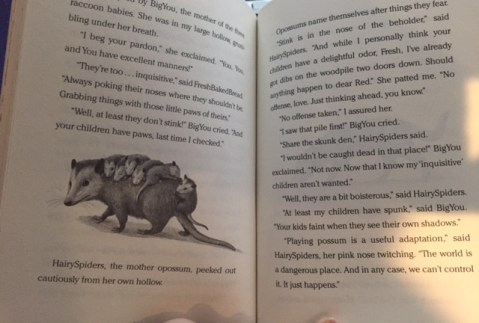
wishtreeI saw this book on Scholastic when I searched for “Muslim” on the website, a regular endeavor of mine, and was surprised to see it pop it since the synopsis on the back doesn’t mention Muslims or Islam.  So I researched it a bit, and sure enough the discrimination of a Muslim family in this tree’s neighborhood is the catalyst of this giant Oak Tree, sharing her story and enlightening the characters and readers with her wisdom.  At 215 pages, this slow and thoughtful book is a short read on an AR 4.2 level.  The pages are well spaced and the black and white drawings keep the reader engaged. And while I bought the beautiful hardback book, I didn’t read it, I listened to the two and a half hour audiobook version, and it was fabulous as well.

FullSizeRender (40)

SYNOPSIS:

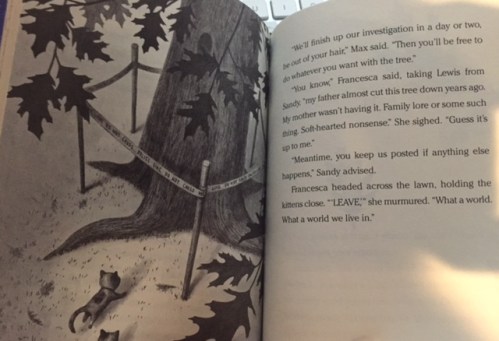
Aside from maybe Shel Silverstein’s The Giving Tree, I can’t recall too many books being narrated by a tree, but like The Giving Tree, the lessons and wisdom come through loud and clear and stay with you long after the story has ended. Red, is an old Oak Tree that has been around for over 200 years.  She has many stories that she shares with her inhabitants: the possums, the raccoons, the skunks, the birds, her best friend a Raven named Bongo, but never humans, for they must not hear her speak, that is kind of a rule.  But when 10-year-old Samar’s family moves in and people don’t respond well to the new Muslim neighbors, the tree considers getting involved.  Samar spends a lot of time near the tree, and the animals enjoy her presence, while most people tie wishes to the wishing tree on May 1st (Wishing Day), trees are good listeners and Samar tells Red that she wishes for a friend.  This coupled with the act of vandalism someone commits against Red by carving “LEAVE” into her trunk, pushes the tree to ponder what makes people friends and how can she help Samar.  When the owner of the home who’s land Red resides on decides to have her cut down, Red throws caution to the wind and speaks.  Hoping to bring two kids together that need one another, and by extension their families and the whole neighborhood, Red has her work cut out for her.  Luckily she isn’t alone, her animal friends are up for the challenge and the lucky reader gets to laugh with the funny animals, ponder roots, and inclusion, and friendship, and diversity through the loving gentle manner of a tree.  It may be written for fourth graders, but I think everyone can draw upon the lessons, the depth, and the compassion needed to help Samar, to save Red, and to learn to be better to one another.  

FullSizeRender (43)

WHY I LIKE IT:

It flows like prose, the deliberate manner in which the story is told, grabs hold of you and halts time.  I love the relevance of inclusion and differences, there isn’t a magic wand, that makes everyone like everyone at the end, but there is hope.  And sometimes that is more powerful.  I listened to the book with my daughter, a 6th grader, and it was nice to chat about it with her after.  What makes people friends? How do people become friends? We move a lot, so she was really insightful about how sometimes friends are just friends because of proximity or because their parents are friends, she really had to think about what has kept certain people in her life, and I loved that this book gave us a starting point to have such a meaningful dialogue.  There isn’t much about Islam in the book other than that the Samar’s family is Muslim and that her mom wears hijab.  

FullSizeRender (42)

FLAGS:

None. It’s clean.

FullSizeRender (41)

TOOLS FOR LEADING THE DISCUSSION:

I would absolutely do this for a 3rd to 5th grade Book Club.  It has so many lessons presented in a non preachy way that the students would add themselves so naturally and effortlessly into the narrative and grow from it.  The book has won numerous awards, and the author is well known, so it also will encourage children to read other books of hers.

Author’s website: http://wishtreebook.com/

Teacher’s Guide: https://images.macmillan.com/folio-assets/teachers-guides/9781250043221TG.pdf


Khadijah: Mother of History’s Greatest Nation by Fatima Barkatulla

Standard

khadijah.jpg

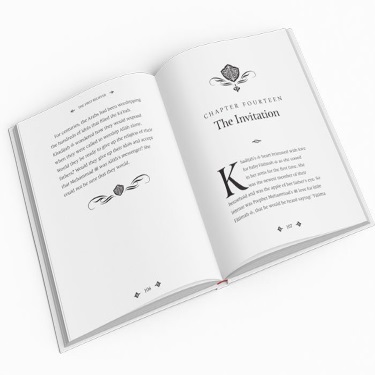
I depart from the Islamic Fiction that I enthusiastically seek out and read, to share and review a work of non-fiction that swept me off my feet.  Perfect for children eight and up, and particularly ideal for girls, this book is absolutely physically beautiful and the content is as well.  This 176 page book flows like a story not a history book, and at times a love story between Khadijah (RA) and our beloved Prophet (SAW).  The font and spacing invites young readers to absorb each word without feeling rushed or overwhelmed.  

SYNOPSIS:

The book is a biography of our mother, Khadijah bint Khuwaylid.  It starts just before she is made aware of Muhammad and ends with her death, followed by a few reflections of RasulAllah missing her.  For the most part the story keeps her at the focus and for the age group the slips into seerah are no problem.  But I wanted more about her.  I learned that she was married twice before she wed Prophet Muhammed, but I wanted to know more of her children with these other men.  I wanted to know if they ever accepted Islam.  I wanted to know of Khadijah’s childhood and her parents, and her tribe.  I wanted to know more about her sister who sounded like her, and if she had any other siblings.  It scratched the surface, and even my 10-year-old daughter wanted more, in a good way.

It covers their marriage, and it reads like a sweet fairy tale that is absolutely full of noor and love.  It shares how she supported the Prophet at every turn and the hardships of the boycott.  It drops names and places, but not in an over burdening way. In many places I actually wanted more detail as to how they all fit together in time and place. As she has children and grows ill and time passes, the story comes to an end.  Almost too quickly, as her day-to-day life as a mother and wife are missing, and I was hoping there would be more.  Yes the  growth of Islam and the plots of the Quraysh are so important, but I wanted more Khadijah, in a book claiming to teach us about our “legendary mother.”

WHY I LIKE IT:

Obviously the story is great, and really the way it is presented is how our kids need to know our history: with love and compassion and enthusiasm.  You feel the love between Khadijah (RA) and Prophet Muhammad (SAW) you see how patient and devoted she is in a very emotional way.  Truly the author has given life to a story many of us know, and filled us with a connection and relationship that is very personal and inspiring in nature.  When you finish the book, you feel like Khadijah is a friend, an amazing friend, but someone you know intimately and proudly, not just as a historical figure.

innerpages2_1024x1024

FLAGS:

None

TOOLS FOR LEADING THE DISCUSSION:

I would absolutely do this for like a 4th -6th grade book club.  I think it should be mandatory reading.  I would probably invite someone well versed in the seerah and Khadijah to answer the children’s questions.  How wonderous it would be to hear the kids discussing her life and offering parallels, lessons, and inspiration to one another from their new found knowledge of Khadijah (RA).


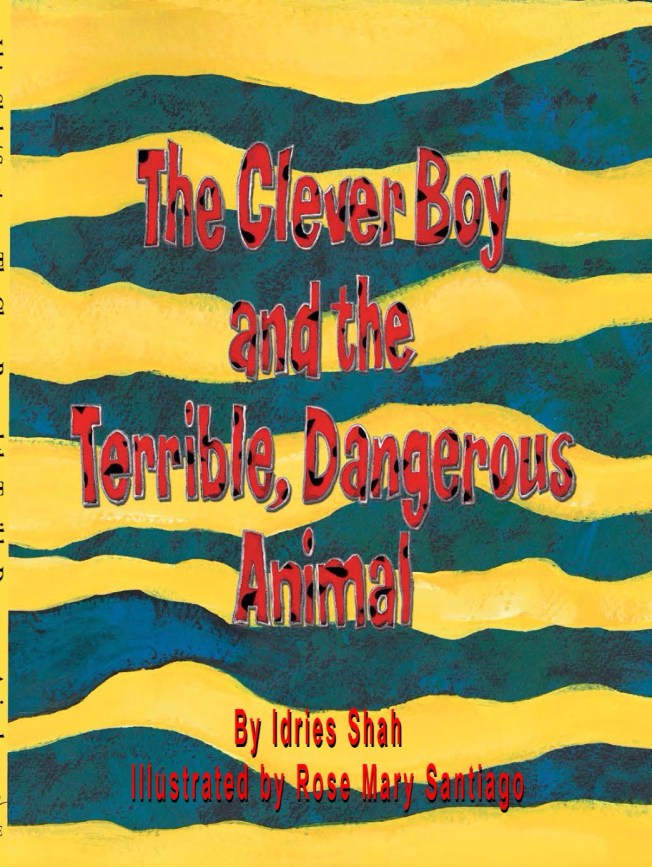
The Clever Boy and the Terrible, Dangerous Animal by Idries Shah illustrated by Rose Mary Santiago

Standard
The Clever Boy and the Terrible, Dangerous Animal by Idries Shah illustrated by Rose Mary Santiago

clever-boy.jpg

This book makes me forgive the author for his other books that left me puzzled as to his popularity.  This is wonderful, timeless and so simplistic, yet full of wisdom, lessons, and reflection that I’m thinking of gifting it to many of my teacher friends.  In its 32 pages written on an AR third grade, 2nd month level, the simple and powerful lesson of how ridiculous it can be to be afraid of what you don’t know is driven home.

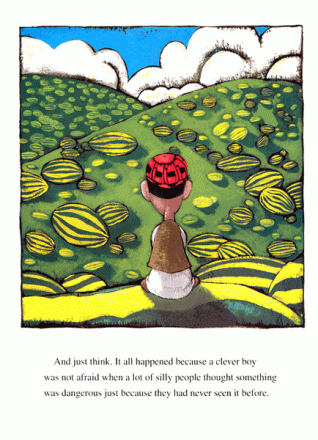
And just think. It all happened because a clever boy was not afraid when a lot of silly people thought something was dangerous just because they had never seen it before.

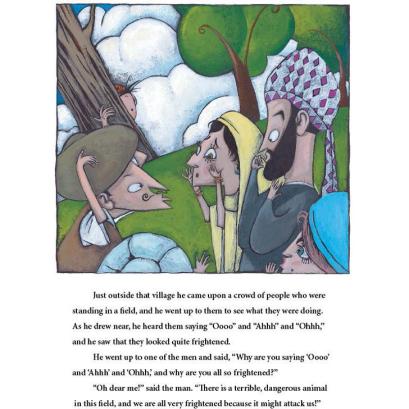
A boy goes to a neighboring village and finds the villagers afraid of, wait for it, a watermelon.  The boy laughs and laughs, and pulls out a knife to cut it and enjoy its sweet juices.  The villagers then fear the boy, until experience and knowledge about what it is and how to grow it, change everyone’s opinion and the village renames itself Watermelon Village. Oh, the power of knowledge.

clever 2

I can see this book being so great to introduce kids to how a little knowledge, asking questions, trying something can do everything from finding something you like, to breaking down stereotypes, to shifting your paradigm.  I feel like Islamaphobia, among so many other things, could be done away with by and large if people would just get to know us!

clever 3

The villagers depicted wear kufis and hijabs and kurtas, and the author writes to share his stories from his oral Sufi tradition, but there isn’t anything overtly Islamic in the text.  The kids as young as preschool will enjoy this at storytime.  They will find being afraid of a watermelon preposterous and silly, making the point that much stronger.

I like that the cover doesn’t given much away, and most children will take the title at its word and think that it is an animal.  Getting student’s ideas of what the terrible animal will be adds to the creative thinking and discussing after as well.  The pictures are wonderful and endearing and many editions come in two language formats.

clever1

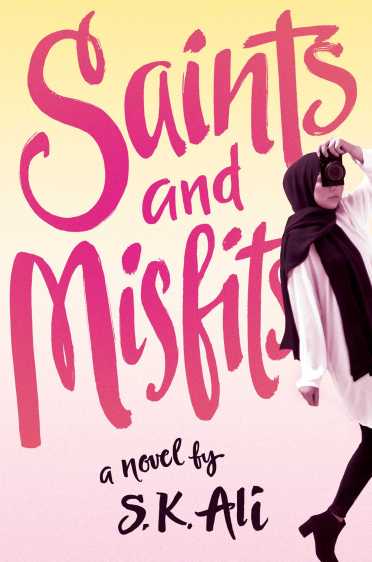
Saints and Misfits by S.K. Ali

Standard
Saints and Misfits by S.K. Ali

saints-and-misfits-9781481499248_hr.jpg

I enjoyed this book a lot. I had a bag of halal gummy bears, a rainstorm raging outside, and an excuse to snuggle in bed with a book, and I couldn’t put it down, even when I ran out of gummy bears.  I think mature 16 year olds and up could read it, and probably should, it is an important book, but I don’t know that I could recommend it to a young adult Muslim. Maybe, but probably college and up.  Not because high school students don’t read a lot about heavy stuff in English class. I mean Scarlet Letter, I Know Why the Caged Bird Sings or anything by Toni Morrison or Shakespeare are heavy, but they are removed from most Muslim teens.  They are old books, or about people from a different time and place. This book is real, and relevant, and relatable, and in 325 pages you feel connected to the characters as if you know them, or knew them, or more importantly for me, a 36-year-old Muslim American born and raised in America, as if they knew me.

SYNOPSIS:

Jannah Yusuf is 15 and in the opening chapter, less than 5 pages, she has to defend her choice to wear a burkini to her father, who assumes his ex-wife, her mom, has forced it upon her.  In the second chapter, we see that she has gone to visit her father to get away from a monster, her friend’s hafiz cousin Farooq, who attempted to rape her.  From there Jannah pursues a relationship with her crush, Jeremy, with the help of her best friend at school, Tats.  This pursuit involves intentionally having Jeremy see her without her hijab in gym class, and sneaking off to meet him.  Throw in the fact that he too is friends with the monster, Farooq, and the tension, anxiety, guilt, and shame that Jannah feels about her suddenly drama filled life is palpable.  Feeling increasingly isolated from her very amazing friends and family, she finds strength and support from a group of kids she is on an Islamic Quiz competition team with and an elderly Hindu man she helps once a week.  Eventually finding her voice, and reclaiming her strength to face her attacker is like a caterpillar coming out of her cocoon and you hope she soars and flourishes in reaching new heights and happiness.  The message of standing up against such acts and standing by those victimized by sexual predators helps puts the blame and shame where it should be, on the attacker, not the victim.

WHY I LIKE IT:

I like that it shows everyone in shades of gray. No one is good or bad or right or wrong, everyone is somewhere in the middle.  Even the most religious can be scum, and friends can both surprise you for good or for heartache.  At one place, Jannah considers telling her non-Muslim friend Tats about what is going on. “Almost.  The 60 percent reason that I hold back has to do with something I’m 100 percent sure of: I can’t handle people thinking I come from a messed up community.  I’d rather close the hamper lid on that one.” I think this is kind of where we are right now in real life and in literature. We want to be seen as complex characters, we aren’t a monolith, but we don’t want to celebrate our failures either.  This book does this really well, most of the time.  There is a girl who has memorized the Quran and wears niqab (a face veil) and has a vlog of stirring up stereotypes.  She helps Jannah get her revenge, and it doesn’t work, but at the same time she is never really nice.  Her friend Fizz, Farooq’s cousin, seems almost like family, but when told what has occurred, doesn’t believe her lifelong friend, and becomes rather disappointing and shallow.  Some of the friends, seem pretty stereotypical for the genre, the great non muslim side kick that supports and celebrates the protagonist, the endearing, yet annoying brother, the friend turned romantic interest when the dust settles, the Asian girl good at math, and the elderly neighbor who is wise, etc.. Yet, somehow I really wanted to know what happened to all of them.  I understand that for literary reason’s the book ended where it did, and there isn’t an epilogue, but from a reader point of view, I would like to know if Jannah’s brother got married, if her mom did, what course of action Jannah took against her assailant, what happened between her and Fizz, and if Jeremey and her became friends.

I think it is important to note, that Jeremy was awesome, like really a great respectful guy who knows about Islam and even that the hotdogs should be halal.  Jannah is figuring out who she is, and what direction to go in, which reinforces the female empowerment, but I think his attitude also deserves some credit in not taking her story and control away from her. The story doesn’t wrap up in a nice and tidy way, but I’d like to think they remain friends.  The reason the book gives that they can’t be more than that, is that he isn’t Muslim. It is echoed throughout that if he were Muslim, it would somehow magically be ok.  So, when at the end she realizes her feelings for the funny supportive friend Nuh, everyone seems ok with it.  Well, I’m not, yes I get that in real life people date and marry on their own and often people of different faith backgrounds. But, she is a Sophomore, who obviously isn’t looking to get married. She prays and covers, and seems to be an active and intentional Muslim. So, again, I get that it is more the norm than not, in the real world, but this is where I feel nervous about suggesting a teen to read it.  Muslims still are not regularly represented in print, and when you see an active and engaged Muslim doing so much, I feel like that does subconsciously form a connection to a reader and the line between right and wrong is blurred as a result.  Yes, I realize this contradicts the whole, we are not a singular entity, but I don’t know that many Muslim parents would encourage dating to their high school daughters as long as the boy is Muslim, despite it happening often.  I think we still want to see good idealistic messages from fictional Muslim characters in books that we suggest our children read.  And while we would want them to be inspired by Jannah’s strength to speak out against the crime commited against her, we may not want to give the message that we would also want them to be doing some of the other things she does.  Yes she is fictional, yes, most YA novels don’t have a moral theme, but like Jannah, I still want to keep the hamper lid on it all, even though I know that isn’t realistic.

There are a few plot inconsistancies, like how Jannah’s dad cuts the funding for her brother’s education, but when they are in Chicago visiting, their doesn’t seem to be any tension.  Saint Sarah’s background and motivation for change seemed a little choppy to me and the mom could have been fleshed out a bit more.  Overall though, even the visitors to the Mosque’s Open House ring relatable and comically true.  You can tell the author knows what she is writing about because it is familiar and funny, yet not judgemental.  I love that her characters are flawed and that it doesn’t define them wholey.  I love the way the author sneaks bits of practical Islam into the website updates Jannah does for her uncle and I love how the friends at school don’t read like an after school special.  Some attempts at getting people to change work, and others don’t, furthering the relatabilty of the book and keeping the preachiness at bay.

The book would work for Muslims and non Muslims and is a good entertaining read. There isn’t a religious or moral agenda that the author is trying to convince the reader of, but rather it is about reclaiming your voice when someone has tried to take it.  A message that never gets old.

FLAGS:

There is profanity, sexual assault, boy girl relationships, lying, mention of drugs and alcolhol, and bullying.  Its got it all.

TOOLS FOR LEADING THE DISCUSSION:

I wouldn’t do it as a book club read, not a youth one any way, adult one possibly.  But if a teen read it and wanted to discuss it, I would jump at the opportunity.  I think the book speaks pretty well for itself, but I’d love to speak to a teen to know it through their eyes.  To see what they found believable or far fetched, what they could relate to, how they process the crime and the recourse, what they would have done in a similar situation, what kind of friend they would have been, and ultimately what stereotypes the book forced them to confront.

I read something the other day that the way Muslims judge other Muslims on hijab is so inconsistent with our thoughts on praying or fasting or any other act of worship. If someone messes up we encourage them to try again, or ask for forgiveness or say it is none of our business and we will pray for them, but why with hijab do we feel justified in criticizing if they “try it out” or change their mind? For me, this book really drove the point home.  She is 15 and she lets a boy see her hair, I was bothered, and had to realize that, that really said more about me, than the fictional character I was reading about.  I like books that challenge my thoughts.  Like I said, I’d reserve suggesting someone read it, but I hope they find it and read it none-the-less, and then contact me so we can tear open a bag of gummy bears and discuss.
The One: A Children’s Storybook about Allah by Manaal Jafrey-Razaque illustrated by Tanya Emelyanova

Standard
The One: A Children’s Storybook about Allah by Manaal Jafrey-Razaque illustrated by Tanya Emelyanova

one.jpg

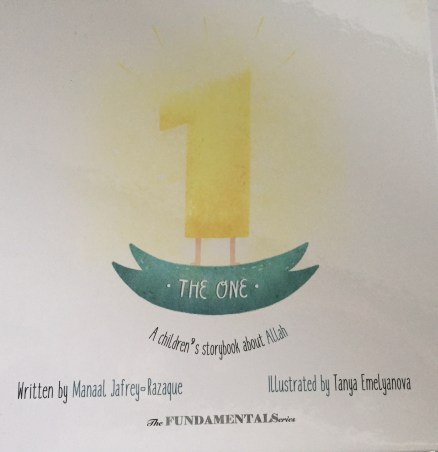
This book is beautifully done, with its hard back binding and happy little illustrations.  Everything has a happy face drawn on.  The topic is Allah, and one can predict what the content is, there is nothing surprising in the rhyming pages that stress how Allah created everything and Allah is the one, singular.

the one 2

What I found nice, and in many ways expanded the audience from just being for small toddlers, but to elementary age Muslim children as well, is the reassuring tone in the second half of the book that Allah is always there for you, no matter what.

the one 3

The names of Allah in English are used and highlighted in a different colored text with a list of the Arabic and English meaning in the back.

the one

The book is 32 pages and meanders around in a light lilting manner.  Its simple illustrations and warmth make it fun at both story time and bedtime, and offer plenty of places to organically pause and get your child’s feedback, thoughts, and understanding.

I Will Not Clean My Room by Saharish Arshad illustrated by Elsa Estrada

Standard
I Will Not Clean My Room by Saharish Arshad illustrated by Elsa Estrada

FullSizeRender (22)

What a great premise for a children’s book, a little boy, Musa,  does not want to clean his room, and imagines all the better things he will get to do in Jannah (heaven) instead. Luckily for his room, his sister comes to help him tidy it up, as well as his mom and dad.  FullSizeRender (25)

The rhyme scheme and the kids’ imaginations at how wonderful Jannah will be, go hand in hand and make the book silly and fun.  The cartoonish illustrations also help sneak in messages of listening to your parents, cleaning your room, being kind to your siblings, helping each other, and ultimately doing things even if they are hard or boring to please Allah swt.  

FullSizeRender (24)

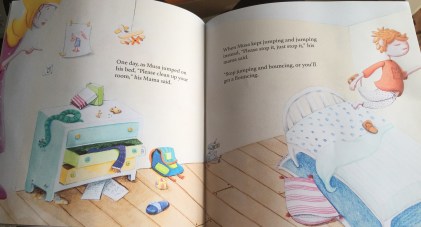
The book is a 28 page, 8×8, paperback.  The price is a little steep, $12, for its structure, in my opinion and is meant for Muslim readers.  The only real issue I had is when the mom threatens to flounce Musa. “Stop jumping and bouncing, or you’ll get a flouncing,”  seems excessive to me, and not consistent with how loving the family is throughout the rest of the book. It was probably included to maintain the rhyme scheme, but I took it to be a threat of violence, which I’m not ok with.

FullSizeRender (26)

The pictures show the mom in hijab, the word Jannah instead of heaven is used, the characters’ names are Islamic and Allah is mentioned throughout.  Musa’s thoughts on the last page are particularly sweet (see picture below).  I plan to read this to a group of kids at story time and will just omit the flouncing line, as it does well in appealing to ages 4 and up.  Three year olds may not understand it, but because of the rhyming, I think they will be equally entertained.

FullSizeRender (23)

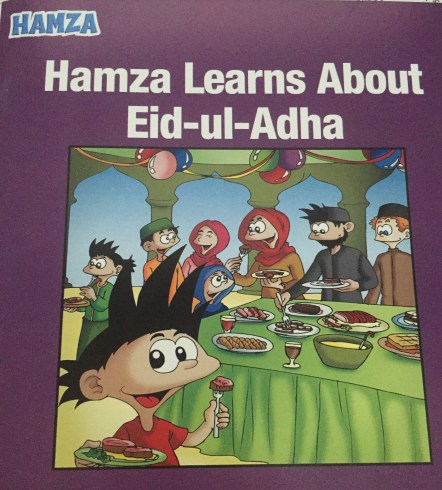
Hamza Learns About Eid-ul-Adha by Asna Chaudhry

Standard
Hamza Learns About Eid-ul-Adha by Asna Chaudhry


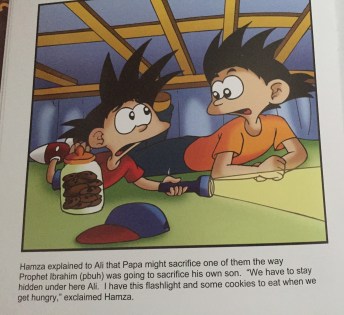
FullSizeRender (20)Hamza returns in this book to learn about Eid-ul-Adha, and the story is hilarious, and on point for ages three and up.  The sentences and paragraphs are short, the pictures are bright and colorful like always, and the basics of Eid are conveyed.  The age of the reader or listener will greatly depend on what they get out of the story, as some may need help understanding concepts like sacrifice, slaughter, sacred, commemorate, counting sheep to sleep, and why the book is silly.
FullSizeRender (21)

Hamza sees his older sister Aisha decorating the house for Eid-ul-Adha and wants to learn more about the holiday.  He goes to find his mom who starts to explain that it is a day of feasting “to commemorate when Prophet Ibrahim (pbuh) was going to sacrifice his son according to Allah’s command.”  Unfortunately for Hamza, mom then gets a phone call and Hamza runs for his life thinking that he too will be sacrificed.  When Hamza’s brother Ali finds him hiding under the bed, Ali explains that only animals are sacrificed, and tells him about how Allah swt commanded Prophet Ibrahim to sacrifice his son Ismail.  

FullSizeRender (19)

Hamza then worries about the animals that are sacrificed and Ali explains that when done in an Islamic manner, they feel little pain and that the meat is to be shared.  With his heart at ease, Hamza is ready to enjoy Eid-ul-Adha.

Hamza Learns About Hajj by Ameena Chaudhry

Standard
Hamza Learns About Hajj by Ameena Chaudhry

FullSizeRender (18)

This isn’t my favorite Hamza book, which is unfortunate, because it presents some really good information in a way different than all the other children’s Hajj books I’ve read. Hamza want’s to know if there is a swimming pool at Hajj or if big machines were used to build the Kabaa.  All pretty accurate questions for how a 4 year old processes what is going on, but it takes Hamza and the reader forever to get any information.  He hears about Hajj from his parents, then goes to ask his sister Aisha who tells him its one of the pillars, then goes to ask grandpa, then is glad he has learned so much about hajj, then eager to learn more…it seems like all the book does up until this point is have Hamza asking to learn, wanting to learn, and glad he has learned, but nothing he is learning is being shared with the reader!

Eventually we do learn that the Kabba is a house of worship built thousands of years ago, that it is the direction that we pray, and that Prophet Ibrahim (pbuh) and his son built it.  About Hajj we learn that you have to wear white two-piece outfits, that millions of people go, and that you can only go during a special time of year.  Not a lot of information, but at the same time, for little ones, that can be a good thing.  Sometimes learning  all the names of places and rituals is cumbersome and off-putting. 

FullSizeRender (16)

The amount of text on the pages is minimal, and the pictures, as always, are endearing, Hamza even imagines himself bald!  I do question when the book claims, that going to Medina to visit Masjid al Nabawi is part of Hajj.

Hamza gets excited for Hajj and I think that is conveyed to the readers.  Little kids will giggle and remember that the Kabba was built by people’s hands, and that it is far away. Not bad for 3 and 4 year olds, but not enough to engage older kids, or those with some understanding of Hajj.

FullSizeRender (17)

Stepping Stones: A Refugee Family’s Journey by Margriet Ruus Artwork by Nizar Ali Badr

Standard
Stepping Stones: A Refugee Family’s Journey by Margriet Ruus Artwork by Nizar Ali Badr

stepping stones

I usually have a running lists of books to check and see if the library has in their catalogue, and another list for when I have a few extra dollars and/or a reason/excuse to purchase books for my own.  I’ve seen this book recommend by countless critics, educators, refugee resettlement volunteers etc., and was thrilled that I could get it from the local public library.  However, it isn’t enough to have this book and mull over the artwork and prose for three weeks, it deserves a permanent place on the shelf.  Or better yet, open hands to pass the book around to within your home, to reflect on the humanity that binds us all, and the plight of so many in the world.

FullSizeRender (12)

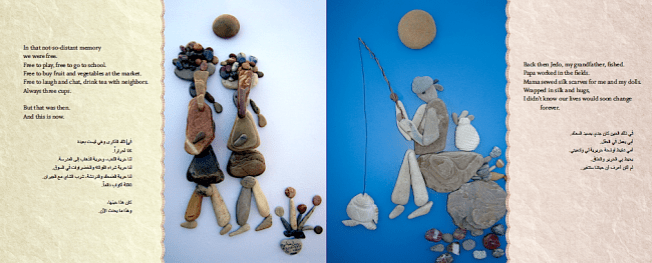
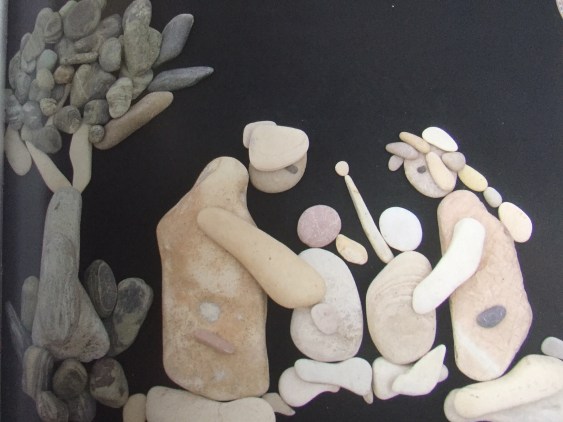
The story is fairly simple, Rama and her family have a good life in Syria and the war changes that, forcing her and her family to flee on foot to Europe with what they can carry.  The emotions on the other hand, are not that simple.  The book is illustrated in stone, but the reader would have to have a heart of stone to not be moved.  Written on an AR 3.2 with 28 pages, the book is written in both English and Arabic.  The book is not sensational, but it does discuss the shortage of food, and going hungry, how they are not free, not really, how bombs fall and kill people going to the market,  and it does show that people were lost in crossing the sea.  The family has to walk, there is no going to the airport or cars to take them across borders so easily, this is contrasted to the beginning of the book where Rama was free to play and go to school, things the reader can relate too.

stones

Ultimately the book is full of hope.  The fictionalized account of a horrific reality still on going, pales only to the story of how the book came to be.  The Foreword is wonderful and gives the book so much more warmth and heart.  How the author saw the artisans work, sought him out, and built the story around his pieces, gives even the youngest reader a sense of reality for an unfathomable situation.  After the story is more information about the author and the illustrator, as well as a list of resources to volunteer, donate and help.  Portions of the book sales go to help resettlement organizations across North America.

stones2

The publishers page gives info and has a youtube book trailer as well: https://steppingstonesthebook.com/

FullSizeRender (11)

The book would be great at story time or in a classroom setting followed by an activity with making pictures with stones previously collected.  At bedtime the book is great to read aloud and let the words sweep your listener toward empathy and compassion.  Check your library first, and if it isn’t there, I don’t think you’ll regret your purchase.

Nightly News with Safa by Helal Musleh illustrated by Hatem Aly

Standard
Nightly News with Safa by Helal Musleh illustrated by Hatem Aly

nightly news

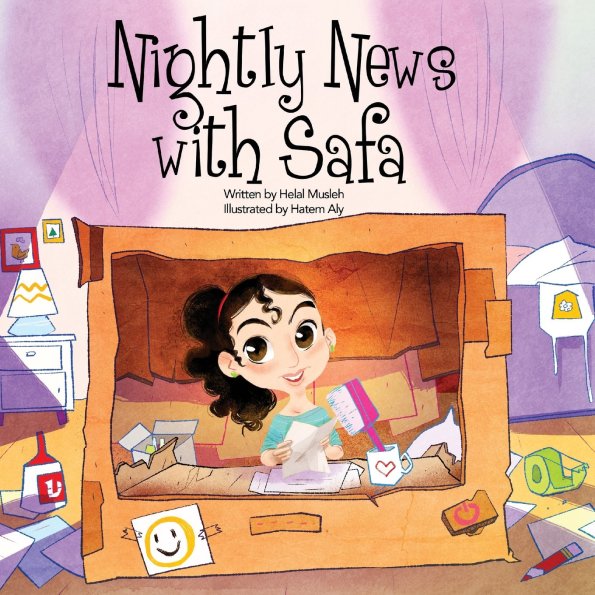
Having Really liked Zaid and the Gigantic Cloud, I convinced myself to spend $15 on a 20 page book by the same author.  I knew it was paperback and 8×8, but I loved the message in Zaid, and the summaries of Nightly News with Safa online all talked about how a little girl creates her own newscast with a positive spin to tell her mom about her day. A lot of positives for me: a creative girl, problem solving, imagination, and journalism.   So I ordered it, and when it came, I thumbed through it, and counted only 10 pages of story, yes that is right, 10 pages.  The rest of the pages tell about the author, the illustrator or are colorful, but blank, before and after the story.

nightly2

Price and length aside, the book is really cute and clever.  The target audience is probably first grade to third grade, and the pictures are colorful, detailed and very well done. A girl, Safa, doesn’t like when her mom watches the news as it is sad, serious, and angry, so she builds a tv, puts herself inside and tells her mom about the happy highlights of her day at school in a news format.  Very creative, but that is it, there isn’t a message or really a point, or any story about Safa and her mom.

nightly1

With guidance and oversight, however, the book is a great starting point for how kids can be problem solvers, and is a great springboard for encouraging creativity and thinking outside the box to get your way.  The publishing company even has a free “Book Study Package” on their website http://www.myeverydayclassroom.com/2016/02/book-study-freebie-nightly-news-safa/  The package is 13 pages, it is longer than the book.  Which is funny to me, but not surprising, as there is a lot to discuss after reading the book.  My 10 year old enjoyed it and tried to convince my 6 year old who didn’t get any of it, all the lessons it alludes to.  It would work great in a classroom setting where you read the book, divide the class up and have them make their own newscast to talk about their day, or as a social studies or literature activity.

There is no mention of Islam in the book, the characters are not visibly muslim, there are no Islamic words, or references.  The character’s name is Safa, which may or may not signify faith.