Tag Archives: Jerusalem

Birthday Kunafa by Rifk Ebeid illustrated by Noor Alshalabi

Standard
Birthday Kunafa by Rifk Ebeid illustrated by Noor Alshalabi

img_4902-1

This 50 page wordless picture book allows readers to make up their own words to describe the progression of what is shown in the illustrations. With no right or wrong, the backmatter helps give context and points out key images that allow the story to resonate on multiple levels.  On the surface it is a birthday girl who is upset she cannot have kunafa, but when you truly look at the pictures, and see what is preventing her from moving from Jerusalem to Nablus, the reader is shown, she is not just a child wanting something she can’t have, but that she is being denied basic rights by an occupying force.  I love that the little girl represents so much more than just herself, and that her determination to cross checkpoints, is not just about acquiring dessert.  The book starts with a little girl on her birthday that could represent a little girl with her friends and family anywhere, but as the pages are turned you witness how beautiful Palestinian joy is, how much we take for granted the freedom to move, and how desperately we need to stand up for a free Palestine.  With no words, Islamic representation is limited to two hijabis in the illustrations.  The author and illustrator are Muslim. The book centers a birthday, there is dancing dabkah and an oud shown leaning up against a wall.

So often when thinking about Palestine, not just since October, we all find ourselves speechless.  There are no words, only tears when watching the news, reading headlines, or scrolling, and I find it incredibly timely for a wordless picture book about Palestine to be published.  There are a few labels so to speak throughout the book that I didn’t particularly find necessary, but they do not distract from the story, so they didn’t bother me.  I like that the book showed restraint in terms of the oppression that could have been shown.  It allows for the story of the little girl and her family to maintain the narrative.

The story that I understood the images to be telling is that it is a little girl’s birthday, the family is having a party, they have a birthday cake, but she wants kunafa, she tries to get some and along the way sees joy everywhere, until the checkpoints turn the images gray, and prevent her from moving forward.  So mama and her problem solve, they try and make their own, but it is not the same, so they devise a plan, and they try again.  They do not give up. There is no giving up.

The backmatter provides a recipe for kunafa, a two page spread about “Why Wordless Picture Books,” another spread about “Context Matters” giving information about Zionism and Palestinian resistance.  It is then followed by four pages entitled “Did You See?” where symbols are shown that appear in the pages and described.  Warning there are numerous sweet and savory foods shown, and it will make you very hungry.

The book is available here from Crescent Moon or here from Amazon.

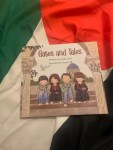
Gates and Tales by Sally Zaki illustrated by Arwa Ali

Standard
Gates and Tales by Sally Zaki illustrated by Arwa Ali

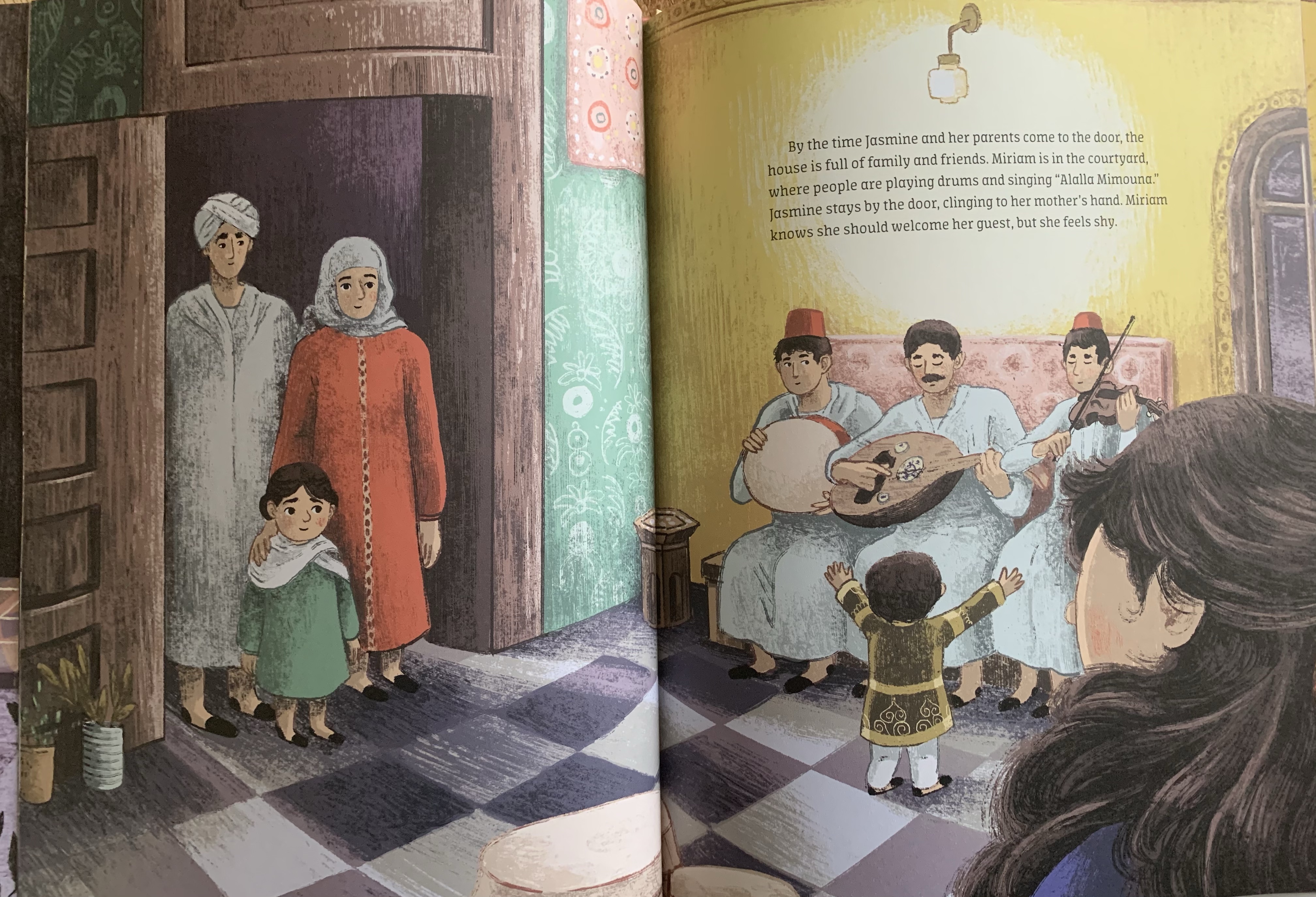
This 34 page picture book is adorably illustrated as it focuses on the gates leading to Masjid Al-Aqsa and sprinkles in culture, sights, and history about Palestine along the way.  I love the concept, it is unique, and I love that there are maps throughout of the masjid compound.  I truly learned a lot even though it is for early readers, naturally I wish there was a scannable QR code to learn more, but as an adult, with my kids, or in a classroom it would not be hard to search up Bab Al-Amud, Qubbat Al-Sakhra, Bab Al-Sahira, Salah Al-Din, Masjid Al-Qibli, Bab Al-Khalil, Al-Quds Citadel, Qaitbay’s Fountain, Bab Al-Asbat, or Qubbat Al-Silsilah.  Islam is also woven in, not just in the architecture or history, but also in mentioning the sunnah of fasting on Thursdays, quoting an ayat from the Quran in the text, and the kids meeting up to pray.  The writing isn’t super great,  it breaks down the fourth wall regularly, calling the readers “friends” and asking them to find things in the illustrations, their missing friends, and about foods and the flags of their country.  I’m not sure why the book hopes the readers are “from countries surrounding Palestine,” I found that a little off putting, and I’m not sure why we are supposed to memories the “gates by heart,” or how at the end we are now “victorious heroes.”  Even the defined words at the end, are a bit haphazard: za’atar, falafel and sido, being the only words highlighted, in a book with many Arabic words present. Presumably the reader found all the friends so they did reunite, it seemed to kind of falter, I thought they would show something they all love, or share some snacks, but the book, just kind of ended.  I like that the book is joyful and upbeat, I do appreciate that the last lines do mention that “Palestine is occupied today.  One day, insha’Allah, it’ll be free,” inshaAllah, inshaAllah, inshaAllah.

The book starts with Nidal introducing himself to the reader and letting you know he is going to take you on a special journey through four different gates.  He then asks the reader if they know where we are, before showing us Palestine on the globe.  He is going to “meet his pals at Masjid Al-Aqsa nestled east of the Old City of Al-Quds and includes the entire area inside the wall surrounding the Masjid.”  I love that it explains the area within the walls and the map on the opposite page is helpful.  

His mom has prepared him some snacks to share with his pals, and he puts on his Palestinian flag backpack before heading off.  He goes through Victory Gate.  Then his friend Aisha takes over and tells what gate she is entering through, shares details about the flower carved at Bab Al-Shira, and that her Sido would tell her about Salah Al-Din when they walked down Salah Al-Din street together to get to Masjid Al-Qibli, with its gray dome. Khaled and Jihad follow the same format and the book ends with the kids sitting in front of the Dome of the Rock asking what gate the reader will come through.  

I purchased my copy from Crescent Moon Bookstore here and if you use code ISL at checkout you will save 10%.

A Sweet Meeting on Mimouna Night by Allison Ofanansky illustrated by Rotem Teplow

Standard
A Sweet Meeting on Mimouna Night by Allison Ofanansky illustrated by Rotem Teplow

img_0532

A story about the Morrocan Jewish holiday, Mimouna, that marks the end of Passover introduces readers to a small but growing Jewish celebration from Northern Africa.  Stemming from the historical fact of Jews often borrowing flour from their Muslim neighbors to make the traditional Maufletot, thin pancakes, after a week of not eating flour.  The story focuses on a Jewish girl and a Muslim girl meeting each other, celebrating with each other, and finding similarities between Ramadan and Mimouna.  Over 36 pages, kindergarten to second grade readers will get an introduction to two different faith holidays and see that friendship and kindness are possible everywhere.

img_0526

It is the last day of Passover in Fes and Miriam is tired of eating quickly baked unleavened matzah crackers, she is ready for the sweet dough pancakes of Mimouna, and she is willing to help her mom make them.  But before Passover, all flour was removed from the home, and she asks her mother where they can get flour tonight before the  party.

Mom and Miriam begin to walk.  They leave the part of town that Miriam is familiar with and Miriam sees a building with a dome and minarets.  “What is that?” she asks.  Her mother replies, “It is a mosque, where our Muslim neighbors pray.”

img_0529

They then enter a courtyard where a woman and her daughter about the same age as Miriam appear and invite them in for tea.  The two women say salaam and kiss each other’s cheeks.  Miriam’s mom gives the other lady a jar of fig jam and invites her and her family to come to the house to celebrate Mimouna with them. When the women are done drinking tea, Jasmine is asked to go to the store room for two bags of flour and Miriam is sent to help.  Jasmine is told one bag is for them, and one is for their guests.  The two shy girls go get the flour, and when Miriam trips, Jasmine catches the bag just in time.

img_0525

On the way home, Miriam has so many questions about the lady and how her mother knows her and how come they don’t have a jasmine vine. But, when they get home there is a lot of work to be done before the guests start to arrive.

By the time Jasmine and her parents come the house is full and music is being played and songs are being song.  The first plate of maufletot goes to Miriam’s grandfather, and when she trips and they go flying it is Jasmine who catches them.  The girls giggle and Miriam teaches Jasmine to play the song, “Alalla Mimouna” on her tambourine.

img_0524

The party moves from house to house and at one home green wheat is dipped in milk and sprinkled over everyone’s head as a blessing for the upcoming year.  By the time the girls get back home they are tired, and as they share one last pancake, Jasmine tells Miriam about the nightly feasts of Ramadan after a day of fasting.  She invites Miriam to join them, and Mariam is excited, but Mariam’s mom explains that they are moving to Jerusalem.

img_0527

The following year on Mimouna Night, Mariam heads to the store to buy flour, but thinks of her friend Jasmine back in Morocco as she smells the jasmine growing in her home, and wonders if her friend is also thinking about her.

img_0528

The author is an Amerian Israeli, and I was nervous that there would be political overtones, but she deliberately wanted to avoid that and focus instead on presenting this little known Jewish holiday in an interfaith manner.  There is an info section at the end of the book explaining Mimouna and a recipe for moufletot.  In author interviews you can read more about how the story came to be, and what her hopes were in telling it: https://jewishbooksforkids.com/2021/03/14/interview-with-allison-ofanansky-author-of-a-sweet-meeting-on-mimouna-night/

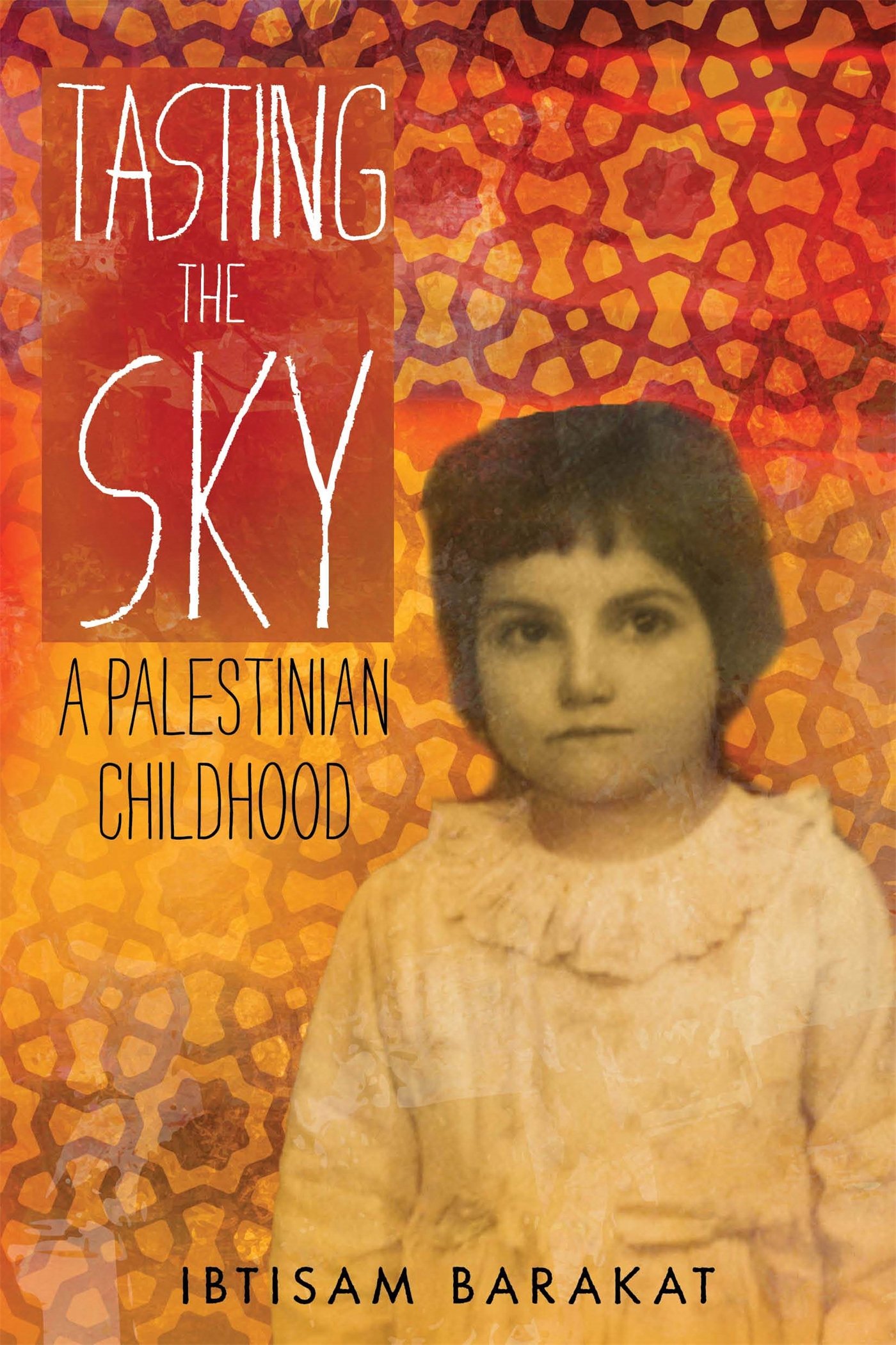
Tasting the Sky: A Palestinian Childhood by Ibtisam Barakat

Standard
Tasting the Sky: A Palestinian Childhood by Ibtisam Barakat

tasting the sky

This memoir may qualify as non fiction, but the majority of this 176 page book is told from the perspective of the author when she was three years old, so much of it reads to me as somewhere between historical fiction and autobiography.  No matter how you categorize it though, this AR 5.8 book is better suited for middle school and up. I love that this is is a Palestinian perspective of the Six-Day War and the immediate aftermath, but after reading it, I’m not haunted by the atrocities of the Israeli occupation so much as, some of the choices her family made.  I got my copy through Scholastic and in excitement, purchased multiple copies that I sadly think will sit in a box as I doubt I’ll find many students that will enjoy this book.

SYNOPSIS:

The book is divided into three parts with the first and third being short letters written in 1981, and the second part being the majority of the story taking place between 1967-1971.

The first part is a high school Ibtisam getting detained at a checkpoint after heading out to check a PO Box that she uses to keep in touch with her pen pals from around the world.  She reveals what life is like and shares the joy of learning about the outside world from her correspondence, but that she rarely talks about her childhood and her life during the war.  Part two is her sharing that.

The Barakat family lives removed from neighbors and a city, but Ibtisam loves her two older brothers and younger sister and at three years old is happy.  When war comes, the family decides to run, in the process Ibtisam doesn’t have time to find a shoe, and then she gets separated from her family and swept up with the people running for the caves to escape the bombings.  Once reunited with her family, they along with numerous other Palestinians make their way to Jordan and some safety.  Safety comes at a cost though and the family is separated as her father leaves to find work.  When the war ends, the family moves from the shelter and finds a small room to rent until they can return home.

Once the family returns home, things do not return to normal as the Israeli army begins training near their house causing Ibtisam’s mom to worry constantly in her attempts to keep the children inside and away from the windows.  Eventually, the mom takes the children and herself to an orphanage in Jerusalem saying that their father cannot keep them safe.  Ibtisam is close to her father and this dramatic change does not sit well with her.

In the orphanage, the boys get separated from the girls and eventually their father promises the mother to build a wall and make repairs to the home and purchase a goat if they come home.  They do, and the kids are grateful to be together again.  The boys then start school and the goat has a baby and life carries on.   Ibtisam grows close to the baby goat and their father promises that he will remain the children’s pet and will not be slaughtered.  But, when the boys are 8 and 9 they get circumcised and the feast involves the goat.

The next major event in young Ibtisam’s life is when she finally gets to go to school.  Incredibly smart, her mother essentially equates her love for her daughter with her success in school and with that motivation and predisposition to learn and excel, she does very well.  One day on the way home, she is sexually assaulted by an older boy, and makes arrangements to always have her brothers with her when walking.  Her parents are not made aware of the offense, and don’t seem to investigate Ibtisam’s change in attitude toward school.  When an Israeli soldier attempts to assault her mother, the family moves once again and part three is a teenage Ibtisam quarreling with her parents and once again excelling at school.

WHY I LIKE IT:

I like that tidbits of memories are woven together to give an overall impression of the author’s childhood.  The book is a quick read and is compelling enough to hold one’s attention.  The family is culturally religious, but the book makes a point that the father prays, not indicating that the rest of them do or even know how.  I love how the freedom and hope that Ibtisam has comes from learning the first letter of the Arabic alphabet, alef.  The love of language and the power found in reading and writing, is celebrated in its reverence to the learning of the letters.

I don’t get the mother, and while I get that war is a horrific time, and she is 24 when Ibtisam is 3 and has like four kids, so her life is definitely not easy, I still find it disturbing to me that she would lose a one shoe-ed daughter, take her kids to an orphanage to live while both parents are alive and well, and be so cold to her daughter.  The father seems to be loving to the kids, but he still slaughtered their pet, and I’m guessing culturally circumcisions are done at that age, because that seems incredibly cruel.

FLAGS:

War, loss, sexual assault, details about the circumcisions.

TOOLS FOR LEADING THE DISCUSSION:

I won’t do the book as a book club selection and while I know the book is in many libraries and classrooms I doubt many kids would be compelled to pick it up and read it based on the cover and synopsis on the back.  I have a few Palestinian friends that I will ask to read the book to see if they find it an accurate representative of life during the six-day war and even today as it could definitely be used to teach about the region, the conflict, and writing a biography about life for others to learn from.


The Chronicles of Bani Israil: The King, Queen, and the Hoopoe Bird by Dr. Osman Umarji illustrated by Sama Wareh

Standard
The Chronicles of Bani Israil: The King, Queen, and the Hoopoe Bird by Dr. Osman Umarji illustrated by Sama Wareh

the king

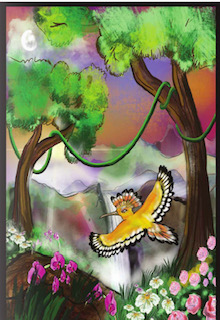
At 134 pages the fictionalized retelling of Prophet Sulaiman’s (AS) kingdom and interaction with Queen Bilqis comes to life from the point of view of a Hoopoe bird.  The book is marketed as a “Quranic fantasy adventure,” which I found a bit misleading.  The book is rooted in Quran and Hadith facts according to the author, and colored in to try and tie a story together, but even for 3rd and 4th graders I don’t know that there is much adventure or suspense.  As a prophet story it is pretty solid, but as an adventure book it seemed a bit scattered in its attempts to give history, draw in unrelated anecdotes and make it seem intense, when the dialogue suggested otherwise.

IMG_9137

SYNOPSIS:

The book starts with the narrator setting the stage to tell his story of being in Prophet Sulaiman’s army nearly 3,000 years ago in the land of Sham.  Told in first person and  limited to what he saw, the Hoopoe bird (Hud-hud) addresses the reader and begins his tale.  He first gives some information about Hoopoe birds and Prophet Dawud (Prophet Sulaiman’s father), before lovingly describing Jerusalem and how the Bani Israil came to the land of Sham.

The first real glimpse of what kind of ruler Prophet Sulaiman is, is given with the detail allotted to how he repaired Masjid Al-Aqsa.  The bird then tells of Prophet Sulaiman’s many powers and gifts from Allah (swt), the ability to control the wind, control liquid metal, speak with animals, and of course the Jinn.  Slowly, the reader begins to understand how impressive Prophet Sulaiman’s kingdom is, not just by being told, but being shown, so to speak, and reminded pointedly by the Hoopoe that despite so much power how humble towards Allah swt, Prophet Sulaiman remained.

There is a tangent about his love of horses, before the Hud-hud takes center stage again as a spy in the powerful army of men, jinn, and animals. The story of the ants is shared and about half way through the book it is on one of the bird’s scouting missions that he sees a Queen and her people worshipping the sun.

The back and forth between Prophet Sulaiman and Queen Bilqis as Prophet Sulaiman urges the Queen to allow her people to worship Allah or risk invasion is a familiar tale and one the author asserts he tried to use only Islamic sources to include.

The book ends after the Queen has visited, embraced Islam, more anecdotes about Prophet Sulaiman’s wisdom are shared and how even in his death he attempted to show the doubting people the power and oneness of Allah swt.  The revelation of the termite breaking his walking stick and the retirement of the bird who had lived a most wondrous life, conclude the story before an Author’s Note at the end of the book.

IMG_9117

WHY I LIKE IT:

I love Prophet stories and especially ones that are easy to read, memorable, and factual.  I think the book does a decent job in a fictionalized retelling of getting a lot of the important information in, albeit sometimes a bit forced, but keeping it on level for upper elementary and being clear and concise.  I didn’t stumble on grammatical mistakes or find parts confusing, it was well told and presented.  More than once in the book, I felt like it would have made a better oral story than written one.  The bird had to articulate how he knew stuff if he wasn’t there, and he kept asking the reader questions or telling them to pay attention.

The book is meant for Muslim kids and I wish there would have been footnotes or sources.

The illustrations were nice, they are full color but I am admittedly bias as I grew up writing letters to the illustrator who was my penpal for a few years.

IMG_9043

FLAGS:

None

IMG_9092

TOOLS FOR LEADING THE DISCUSSION:

Doesn’t fit my book club criteria, but definitely think kids would benefit from reading the story and discussing how the author shared the information, what they think the Hud-hud’s life was like and then maybe trying to retell a story of their own from a different perspective.