Tag Archives: grandpa

Sameer and Snazzy: Kindness Counts by Emma L. Halim illustrated by Herry Prihamdni

Standard
Sameer and Snazzy: Kindness Counts by Emma L. Halim illustrated by Herry Prihamdni

The 32 page faceless picture book for toddlers and up, is set in Australia and follows Sameer and his cat Snazzy on a bushwalk.  At first I felt like it might be a little bit like the classic, “And to Think that I Saw it on Mulberry Street,” but the structured story with a repetitive refrain adds in Islamic phrases, silly encounters, and examples of kindness that make it unique.  Add in a fun surprise at the end, and like many other books by the author, be prepared to have it memorized as your little ones ask for it over and over again.

The book starts with Sameer look forward to his grandpa coming to visit, but wishing he had something exciting to share with him.  Snazzy suggests he shares that he can talk to animals, but Sameer knows no one would ever believe that, so the two set off on a bushwalk to find something exciting.

When they hear an “A-choooooo!” in the trees, the fun is just getting started with Miss Koala sneezing and making eucalyptus leaves fall. The duo finds a way to help, but the fallen leaves mean ants are stuck in their home and can’t get out.  Once again, Sameer and Snazzy, find a way to help.  After each episode the refrain of, “‘Imagine if I told Grandpa this!”‘ I say to Snazzy.  ‘He’d never believe you! he smiles.  ‘NO-ONE WOULD!’ We laugh together and continue along the path, when suddenly…”

The book ends with a surprise, that I won’t spoil. The backmatter has a reference to Surah An-Naml and explains that Prophet Sulayman peace be upon him, really could speak to animals.  There is also a glossary of the Islamic phrases and a QR code to continue to the fun after the story ends.

The book is a bit more text heavy than some of her others, but the illustrations are fun, and will keep kid’s attention.  It does not rhyme, but has a cadence that makes reading it aloud easy. The small size makes the book better suited to bed time, but could work in a story time, and would be wonderful tuned into a story board/felt board read aloud.  The book is a universal story, but at some point in Islamic fiction self published and small published books, I think we will need to have open dialogue and discussions if having characters that are not the same race as the author or illustrator is appropriate and beneficial, or is misleading and better to avoid.

***EDIT: The author reached out to me asking me to remove this generalized opinion of me calling upon the need to have discussion, I opted to amend, as I think we need to have conversation and believe intention and purpose in whatever one decides is a benefit.  So, to avoid errors in interpreting her ask, I will simply post the screen shots, and my response.  Please note I did not tag the author in my Instagram post, she reached out to me.  I purchased the book, it was not gifted.

Hidden Fires by Sairish Hussain

Standard
Hidden Fires by Sairish Hussain

I will not be getting over this book any time soon. It broke my heart, and all my other critical organs, in the most delightfully well-done way possible, and undoubtedly I am better for it. I don’t read a lot of adult fiction these days, and with some diabetic retinopathy concerns, I couldn’t read the 384 page adult book about generational trauma, partition, the Grenfell Tower fire, family dynamics, bullying, self-harm, and resilience, but was pulled in to the audio book version instead. The Desi-British voices of Yusuf, Rubi, and Hassan were refreshing to my American ears.  The multi-perspective book told in parts richly develops the characters, their relationships, and their current, past, and future struggles.  The author is Muslim, as are the characters, and while they all practice in their own way, it is undoubtedly who they are, and their Islamic identity is not questioned, feared, blamed, or apologized for.

SYNOPSIS:
The book weaves three distinct voices. Yusuf, is an 80 year old an immigrant who lived through partition, raised his family in the UK, has lost his wife a year prior, and is struggling with haunting memories of the past, failing health, regular loss of friends, and loneliness.  Hassan, Yusuf’s youngest son is a workaholic who is married to a non Muslim, non Desi who is suffering from fibromyalgia and who’s mother unexpectedly passes away in Spain.  Rubi, is Hassan’s 16 year old girl who is overweight, bullied, lonely and about to take her GCSE exams when she is dumped on her grandfather Yusuf’s door while her parents head to Spain.  The book opens in Ramadan the night of the Grenfell Tower fire and the horrific event affects them all, stirs memories, and shapes futures.  From there the layers of each character slowly unravel as they cope with the swiftly changing present as they desperately work to break free from the past.  As dementia plagues Yusuf, Rubi finds purpose in being needed, and Hassan is forced to re-prioritize his life before it is too late.

WHY I LIKE IT:
The book takes a slow approach to building up the characters and their back stories. It is almost feels like world building as a book would if it were a fantasy, it doesn’t info dump, but at some point the hooks are so deeply embedded that you really cannot leave the characters and their world and you have to finish the book, just to ensure they are ok.  Because I listened to the book, I feel like there might have been some Islamic content that was not completely ok, but again I was having vision issues and couldn’t note where to go back and check.  I think it is fine, and because it is an adult read, I think the audience can discern accuracy, but please know, I’m not 100% green lighting the Islamic rep.  It is undoubtedly well done and fasting and praying are a part of the characters, but their relationship to their faith and their understanding of it, is presented as theirs, it doesn’t get preachy or make broad statements about Muslims everywhere or Islamic doctrine.  

FLAGS:
There is body shaming, self-harm, trauma, death, torture, killing, lying, abuse, fear, guilt, dementia, bullying, assault, physical violence, drug use (mentioned), attempted suicide (mentioned), music, theft, make-up, close male and female relationships, Muslim marrying a non-Muslim, hallucinations.

TOOLS FOR LEADING THE DISCUSSION:
I think mature high school seniors or possibly even juniors could benefit from this book with discussions.  I think Rubi’s voice tied to her father and grandfather, will really open up youngsters perspectives, and provide a great vehicle to hear their thoughts, fears, worries, concerns about body image, self harm, aging grandparents, accessibility to parents, etc..

My Olive Tree by Hazar Elbayya

Standard
My Olive Tree by Hazar Elbayya

img_7154-1

I love that this author illustrator traditionally published book shows the ways that olive trees and their fruit connect people.  The little girl, Salam, can’t wait to grow her very own tree, but it takes a while, and when it finally sprouts, it is trampled by soldiers.  Heartbroken to lose her plant, her community shows her how they are like their beloved olive trees: their roots are deep, and they are a part of the land.  The tender illustrations, the poignant symbolism, and the love and unity that radiates through, makes this book an important read for children and adults of all ages and backgrounds.  There are no countries mentioned in the text (Palestine appears only in the author’s note), nor any religion, there are visible Muslims in the illustrations, even the soldiers are unnamed, but the setting is clear.  Picture books take years to be published and that it released at this point in history, shows how long the struggle for freedom has been taking place, and how strong and resilient Palestinians are.  This book that will be read over and over, shows even in the sadness, the feeling of hope abounds.

The book starts with Salam noting how old her grandpa is, and that only the olive trees are older than Sido.  Sido then explains to his granddaughter how the olive trees connect them all: farmed, picked, pressed, oil used to cook, olives sold to eat, added to dishes, and made into soap.  Salam goes to plant her seed and be part of the connection. She waters it and waits, but it doesn’t seem to be growing.

Finally a spout, and then a little plant, and then the soldiers march into their lands and destroy everything in their path, even Salam’s olive tree.  Sido reassures her that she will plant more olive trees in her lifetime, but Sido also wants to show her that she is not alone.  Friends, family, and neighbors, come together to show her, “just like the olive trees, when they try to break us, we grow back stronger.”

A truly beautiful hopeful book, subhanAllah.

img_7144-1


Growing Giddo’s Hair by Sumayyah Hussein illustrated by Milton Bazerque

Standard
Growing Giddo’s Hair by Sumayyah Hussein illustrated by Milton Bazerque

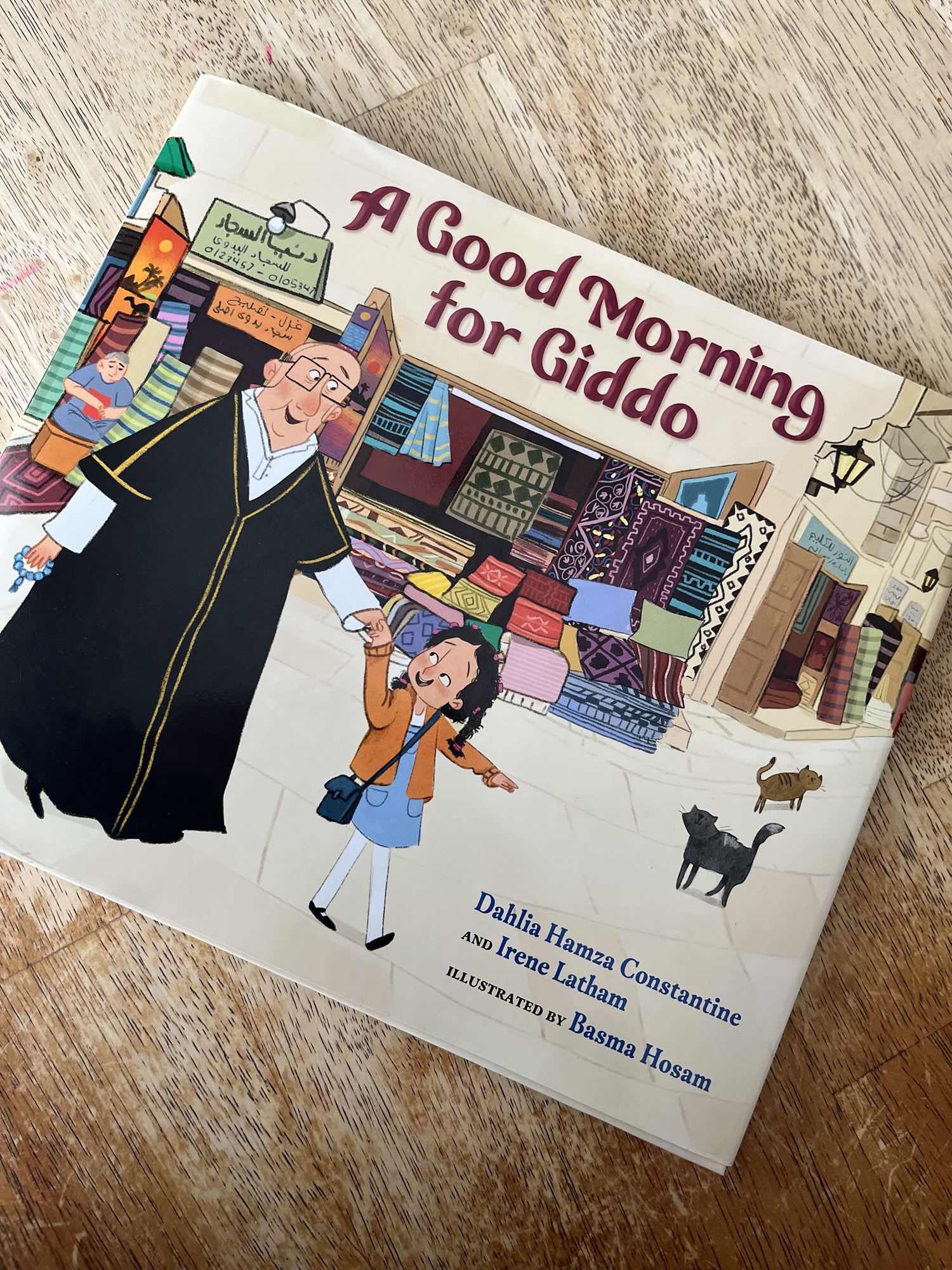
The latest batch of Ruqaya’s Bookshelf books have arrived at my house, and this was the first book my youngest picked to have read to him.  The book is silly, over the top and an easy read. The little boy shows initiative and creativity in trying to surprise his grandfather by sneakily applying hair regrowing serum on his Gido’s bald head.  It, as expected, causes a bit of mayhem, but I think 4-8 year olds will recognize the comedic intent of it all, as the love Nuh has for his Gido comes through the silliness.  I was a little surprised that it centered a birthday, it isn’t just the setting, it is the  main foundation of the book, and I was also a little surprised that the Muslim authored, Muslim published book, contained no Islam in the text.  The only featured Islam was the mom in hijab in the illustrations.

The book starts with Nuh trying to figure out what to get for his grandfather who is turning 70 in a week.  He contemplates a 70 layer cake with candles, 70 pairs of shoes, even a 70 flower bouquet, but nothing seems right until he stumbles on a picture of his grandfather years ago, when he had hair!  Later that night he sees a TV commercial for hair growth gel, and Nuh knows just what to get and can’t wait for the surprise.  Once it arrives, the biggest obstacle is getting it on Gido’s head without him noticing.  But Gido doesn’t stay still and the hair product has unintended results as it doesn’t just grow on one’s head.

The book in all its silliness, does offer a few “teachable moments” if desired: false advertising, lying, sneaking your parent’s credit card, etc..  My kindergartner thought it was silly, and enjoyed the illustrations.  For the most part so did I, although, the page of the razor shaving the hair on the tongue definitely makes me squirm and my tongue itch…yeah, my son found that pretty funny as well.

More Hands by Jenny Molendyk Divleli illustrated by Ekinsu Kocaturk

Standard
More Hands by Jenny Molendyk Divleli illustrated by Ekinsu Kocaturk
img_6180-1

This 32 page picture book blends food and the concept that teamwork makes things better, when a young boy asks his grandfather why his pishmaniyah is so delicious, and Grandpa Yahya offers to share his secret ingredient. The book is a fun bedtime or story time read as the more hands needed builds and builds. As someone though who has now read the book over a dozen times, I do wish there was more backmatter. I would love a recipe for the cotton candy type sweet, maybe some history of what pishmaniyah is (I had to Google it), and how it is traditionally prepared. The text dances around the pages, and the fun illustrations will appeal to children and help explain the process. There is a “bismillah” in the book and it mentions “baraqah” on the back cover, athere are also a few hijabis in the illustrations, but the book is universal for all readers toddler and up.


The book jumps right in with Sami asking his grandfather about his pishmaniyah. It is unclear if grandpa was planning to make it, or if it was a question out of the blue, but either way, Grandpa Yahya offers to share the secret ingredient. The ingredients are pulled out, and then more hands are needed, and then more and more and more. Once the whole family, and neighbors, and their kids are all involved it is time to eat and enjoy the dessert together.


As an adult I wonder what would have happened if so many people were not available to help, and did they wash their hands, and how big is their house, but kids won’t care, kids will just think it is funny. And that is ok too, books that show family, community, and teamwork with humor are always great additions to share with our littles.

img_6185-1

The Turtle of Michigan by Naomi Shihab Nye

Standard
The Turtle of Michigan by Naomi Shihab Nye

turtle

This is not a religious story, it is part cultural, but it is really all heart.  The sweet relationship between a boy and his sidi stole my heart in The Turtle of Oman, and in this stand alone companion book, I once again was swept away by the admiration and relationship of the two.  This lyrical middle grade book is slow and enveloping with its cadence and detail.  There is no real climax, but the character driven story will linger long after the last of the 322 pages are read.  The book is clean, and never states the characters are Muslim, but it hints at it.  It celebrates Oman and America, and would be a great read aloud in a classroom or at bedtime with its poetic passages, lists, and emails back and forth across the ocean.

SYNOPSIS:

Aref has finally left Oman for Michigan and as he and his mother board the plane and start their adventure to America to join their father who has gone ahead to set everything up, Aref’s heart aches for all he has known in Oman, and for his beloved grandfather.  Once in Michigan, his days are filled with tagging along with his parents to their university classes, exploring Ann Arbor, making friends, and getting to know the neighbors.  Everything in America is new and different, but sometimes the same too.  He writes messages catching his Sidi up on all that he is taking in, and Sidi writes back, but it isn’t the same.  From new flavors of ice cream, the first snow, celebrating Christmas for the first time, and giving a speech on Martin Luther King Jr Day in an Omani hat, there are so many new things Aref feels his Sidi is missing, if only he would come and visit.

Sidi on the other side of the world is lonely.  He is trying to take computer classes so he can email his grandson, he can’t figure out how to message on his smart phone, and tries to avoid going anywhere that reminds him of Aref.  But he and Aref went everywhere in his jeep, so Sidi doesn’t go out, and is not doing well as a result.  It will be three long years before they return to Oman, and Sidi might need to be brave and board a plane.  The reunion is not a surprise for the reader, only for Aref, but it is tender and warm and worth the journey for them both.

WHY I LIKE IT:

I wish there was some clear Islam, there is mention of not celebrating Christmas normally, a prayer room at the airport, peace be upon him when there is a death, and prayer beads, so it is possibly there if you search, but it isn’t at the same time.  I know I say this a lot in books like this, but it seems that when the religion and culturally religious words are withheld it seems a bit hollow.  A family coming straight from Oman to America doesn’t say Assalamualaikum ever, or make dua when hardships arise, or say InshaAllah or MashaAllah? It seems watered down and overly dismissed. I guess the way Christmas is framed is understandable, they are trying so many new American things they decide to give each other one gift to try it too, I wish though Ramadan would have been mentioned or Eid.

All that being said, I absolutely love Aref and the world through his daily actions.  He is endearing and his love for his grandpa is goals.  I love that Aref’s new school is so diverse and that everyone is celebrated and accepted, it isn’t a story of him being the new kid, but rather them all bringing something unique to the school experience.  The first graders as conflict resolvers is either a bit hard to believe or based on something real and absolutely brilliant, I am still undecided about that. Also as an adult reader, I couldn’t help but notice how money never seems to be a problem, and while I don’t know if children will pick up on it, it seemed a little surprising for two parents that are professors to never stress about it.

The language and emotional pull the story has is remarkable, and I think the slower pace would be hard for kids to get used to initially, but it will win them over and the rhythm of the story will hook them and make it hard for them to put the book down once they get going.

FLAGS:

Some bullying discussions

TOOLS FOR LEADING THE DISCUSSION:

Too young for any book clubs I host, but definitely want it on the library shelf.

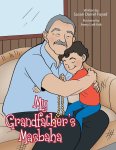
My Grandfather’s Masbaha by Susan Daniel Fayad illustrated by Avery Liell-Kok

Standard
My Grandfather’s Masbaha by Susan Daniel Fayad illustrated by Avery Liell-Kok

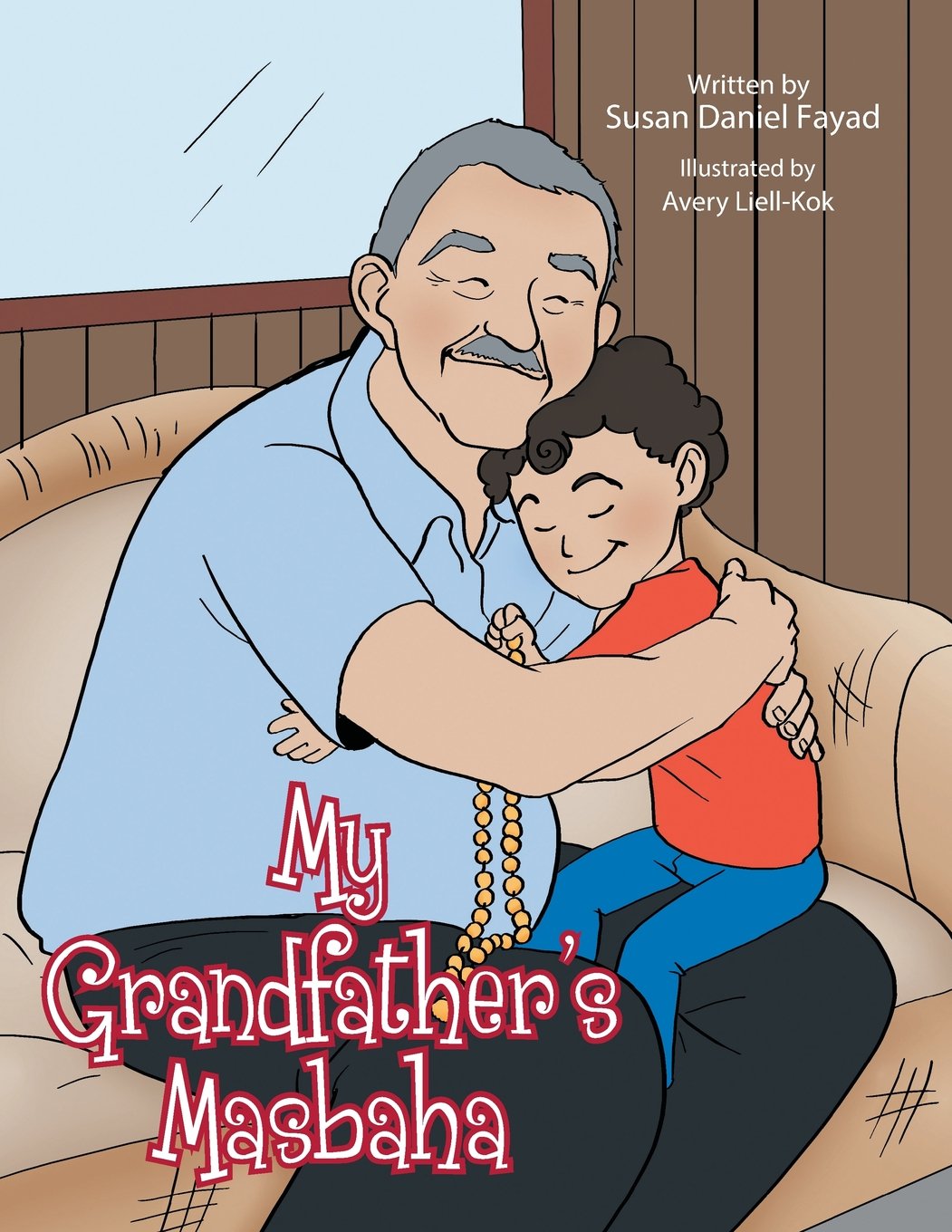
masbaha.jpgThis 20 page story is endearing and sweet for children aged 4 and up, with a great lesson.   At first I thought it was an Islamic fiction book, but after thinking about it, I’m not so sure.  Lots of faiths use prayer beads, although maybe only Muslims have 33, and the setting, Lebanon, is a pretty diverse place.  Regardless, the character’s names, and the lessons taught are universal and children will benefit from being reminded about how blessed they truly are, in a gentle loving way.
IMG_0113

When little Adam’s friends go home and he has nothing to do, he enters his grandparents house stomping and complaining.  In response, Adam’s Jidoo, grandfather, starts to laugh.  This only makes Adam more angry.

IMG_0114

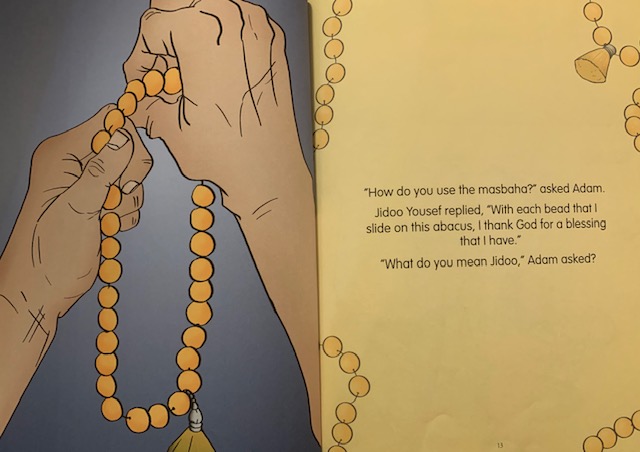
Jidoo Yousef then shows Adam his misbaha and explains that some people use it like an abacus to count, to mark prayers, some use it as decor, and that he uses it to remember God’s blessings.

IMG_0115

He and Adam, then go around and count all the blessings of toys, and people, and friends, and family, and food, and before Adam knows it, he is feeling blessed and thankful.

IMG_0116

The basic illustrations show the bond between Jidoo and Adam, but are nothing overly fabulous on the large 8.5 x 11 pages.  There is a lot of text on some of the pages, but it flows well and goes quickly.

IMG_0118

The book teaches a great lesson and if you get a chance to read it to your children, you definitely should.