Tag Archives: entertaining

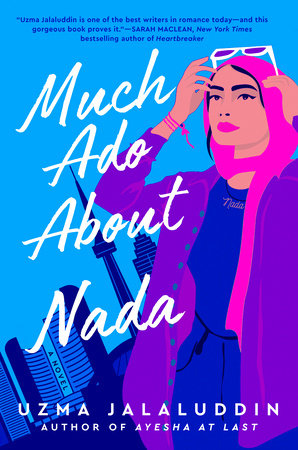
Much Ado About Nada by Uzma Jalaluddin

Standard
Much Ado About Nada by Uzma Jalaluddin

much

I get teased a lot by my Lit Sisters for enjoying Hana Khan Carries On so much, so I’m writing this review to convince them why I think this is Uzma Jalaluddin’s best book yet, and why they should preorder here and dive in ASAP! First note that is an adult read, it is not targeted to teens, the protagonist for the majority of the book is nearly 30 years old. It is a romance, it is not a hundred percent halal, but it is definitely halal-ish, and if you feel like you reach a point where it absolutely isn’t, please keep reading (you might be surprised).  The book for being what I thought would be an empty calorie rom-com guilty pleasure snack, tells the story of Nada in spiraling layers that keep the reader hooked.  Just when you think it is predictable and tropey, the next layer peels back a twist and depth that kept me ignoring my kids and glued to the pages for two days straight.  I furiously scribbled notes writing down “haram” deal breakers and most by the end where crossed off, so no this is not Islamic fiction, but there is no internalized Islamophobia, there is no liberal agenda, the author knows the lines and is abiding by them and occasionally breaking them in a fictional entertainment world for Muslim and non Muslim readers alike.  I hate to compare, but in many ways it reads like an adult S.K. Ali book.  There is social commentary on Islamic communities from a place of love and practice from the inside, there are relatable characters, there is humor, there is love, laughter, and warmth. On occasion there is skirting of the halal/haram line a bit here and there, and sure males and females are a little too friendly at times, but it isn’t the oppressive parents and identity crisis, it is joy. Muslim reality and stress, with true mirroring joy as well.

So why am I reviewing this book here? Simple so you can enjoy it.  So often I feel like reviewers particularly, but casual readers as well, become nervous while reading, that the book is going to take a turn and become haram or preachy that we can’t just get lost in the story.  So my gift to you, is that if you enjoy rom-coms and don’t usually go for “Muslamic” ones because of apprehension, you can dive in and enjoy this.  You can laugh when they ask for a doctor at an Islamic convention, you can roll your eyes when hijabi’s bring extra scarves to throw on the stage of the band (there is a guitar player, but mostly daf and vocals), you can be upset at the slight physical touching (keep reading), and you can nod along with the commentary on divorce, misogyny, wheelchair access, and mental health, but you can also just cheer for the protagonist to find her way to happiness and love too.

SYNOPSIS: (Will be brief because other wise there will be too many spoilers, and because of how the book is told, you don’t want spoilers, trust me, you want to enjoy)

The book opens with Nada trying to hide from both her mom who wants discuss her future and her best friend Haleema who is determined to have a girls weekend with her bestie at the Deen & Duniya Islamic conference in Toronto.  Cornered she finds herself at the conference organized by Haleema’s soon to be inlaws and face to face with a variety of characters from her past including past victims of her bullying, past love interest, past business partners, past camp roommates, college friends, startup mentors, and others- it is a very popular and large conference

Yep, that is all you are getting.

WHY I LIKE IT:

Again, to avoid spoilers I’m going to simply point out a few plot concerns I had with the book, because it is who I am, and I need to get them off my chest.

In some of the flashback scenes Nada’s voice reads the same as it does in the present.  Her articulation of Baz’s potential as a daf player at 11 years old is very mature and insightful and not realistic at all that she can opine on his skill and the role his hand size have on his mastery at that moment of the instrument.  She would probably just think, yeah he is good, or wow, he isn’t bad.

I found it odd that Marya’s husband had opinions on Nada’s makeup, it seemed a bit forward.  Also they were in line, then they left, the pacing of the scene was a little off, I read an arc, but I’m hoping it is cleaned up a bit, because it is an important scene.

Haleema is Nada’s college friend, but toward the end in college flashbacks she really disappears, and it was noticeable, because the reader is constantly told Haleema and Nada were good college friends, but never shown.  So in those scenes to not have her there, without note, is suspect.  Nada really isn’t a good friend to here either, at any stage of life save the conclusion, I’m not sure why Haleema does so much for her honestly.

There is a wedding scene without a wali, and there should be a comment as to why the wedding is performed without the religiously mandated staple or how they are getting around it.  It reads off for a book that gets so many details correct.  I am hoping that the final has it corrected! PLEASE!!!!!!

Also for a different wedding Sufyan is noted to have got an invite to help serve chai, but he is the groom’s cousin’s son, introduced earlier as a nephew, before the cultural chain of relation is given, so why wouldn’t he be at the wedding?

FLAGS:

Music, female and male close friendships, sneaking around, bullying, talk of sex, sex, kissing, talk of pregnancy, lying, stealing, theft, there might be a curse word or two, sorry, not sure.  For an adult book it is clean, these days for a YA book it would be considered remarkably clean.

TOOLS FOR LEADING THE DISCUSSION:

I wouldn’t suggest it for a school library or high school book club, but I wouldn’t put up much of a fight if it was on the shelf or schedule.

The Lady or the Lion by Aamina Qureshi

Standard
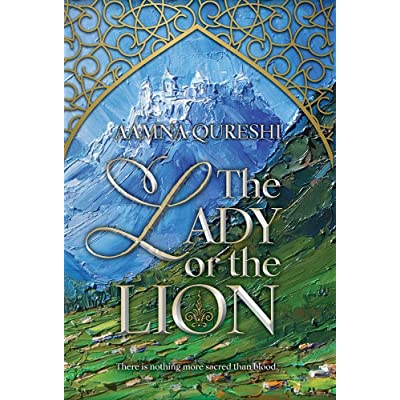
The Lady or the Lion by Aamina Qureshi

lion

I was kind of surprised how well done this YA culture rich 350 page romance story was in holding my attention.  I don’t know that I had any expectations, but I was genuinely engaged in the growth of the protagonist as she began to emerge from her naive political state, and I look forward to some resolution from the cliffhanger conclusion of this the first book in the Marghazar Trials series.  The characters are practicing Muslims who pray and mention Allah swt regularly, they also acknowledge when they make extreme departures from basic Islamic tenants such as drinking, dancing, murdering, exhibiting racist attitudes, and mixing freely with the opposite gender.  It doesn’t stop any of the characters from behaving as they wish, but at least it is noted. The Urdu words and Pakistani setting in this fictional reimagining is filled with warmth and love, and while there are some steamy scenes and outright cruelties, I think 15 year olds and up can handle the contents, and recognize the suspension of reality and moral laxities for the sake of telling a story.

SYNOPSIS:

The book makes clear from the onset that “In the very olden time, there lived a semi-barbaric king. . . This is not his story.” This is the story of 18 year old Durkhanai, an orphaned princess raised by her grandparents, the King and Queen of Marghazar.  Marghazar is a prosperous country that is waging war on two fronts and does not let outsiders in, ever.  When the book begins it is doing so begrudgingly to avoid war with the neighboring districts that are working to unify and have recently been attacked.  With ambassadors arriving to determine the guilt or innocence of the one district unaffected by the terrorist attacks, the foreigners are seeing the inner workings of the kingdom for the first time.  All the ambassadors are females of various ages and experience, save the one from Jardum.  Asfandyar is young, dark, and handsome, and immediately discriminated against by the Badshah for his complexion.  Additionally Shehzadi has been warned by many to stay away from Asfandyar, which naturally makes him a great character for her to be swept away by.  She holds out for a while, but with her people mysteriously getting ill, her betrothed melting in to the background, and cracks in her country making themselves obvious, Durkhanai will find herself struggling to understand her heart, her country, her family, and her future, and with the cliff hanger ending, no simple answers will be given to her, or the reader.

WHY I LIKE IT:
I love that there is a map at the beginning, and lots of supplemental offerings at the end.  There are a lot of Urdu words and phrases and while I am moving away from feeling like all OWN voice books need to include glossaries, I think non Desi readers will be appreciative in this particular book to have one available.  For someone with some knowledge of the language the inclusion of the titles and relations and phrases between the languages is expertly done and delightful. There is also an author Q & A, as well as reader discussion questions.  There is a content warning at the beginning alerting the readers to physical and sexual assault as well as racist behavior and language and makes clear that it is contained to the characters and the story and is not the reflection of the author and publisher.  I like that it is there, and I like that the princess makes a stance against the racism and the sexual assault that she witnesses.

The high school girls at our Islamic School are always wanting “halal” romance books.  Ok so really they just want romance books, but I try and keep their pickings halal, and so I am forever reading these books trying to find new titles to recommend.  The book is very 1990s Bollywood in terms of romance flags.  There is a lot of proximity and caressing of necks and longing, and familiar obligation.  There is some snuggling and kissing, so maybe 2000s Bollywood, but the characters thus far don’t cross “that” line.

I really appreciated that Durkhanai was fleshed out and relatable.  Even though the setting is long ago, and the genre is romance, she didn’t wait to be rescued, even when she was hurting or pining, she was still maintaining her obligations and moving forward.  I also love that it showed some depth to her emotions.  She recognized that Asfandyar would let her speak and would show his support by being there, but he pushed back on her and challenged her too.  Rashid on the other hand would speak for Durkhanai and would fawn over her in a very superficial way almost.  Sure neither relationship was ideal, but from her perspective at least she was able to see how various presentations made her feel.

I was a little lost in some places, but I was reading quick and had distractions so I’m not entirely sure if it is my carelessness or plot holes or if gaps will be filled in future books.  I needed more reasoning though, for why Durkhanai’s cousins, Zarmina and Saifullah, truly hated Asfandyar as much as they did, or what exactly Saifullah was plotting and how it connected to ratting out the princess.  For all that is seemingly going on, the Badshah and Wali always seem available to chat and are often just lounging around.  I know it is not their story, but the negotiations, the plotting, everything seems to be done very slowly and could really use some fleshing out to show some depth to the side characters.  Other than a few voices, the side details are lacking.

FLAGS:
Lying, killing, racism, sexual assault, physical assault, plotting, murder, kissing, manipulation, touching, caressing, sneaking around, theft, cruelty, cursing, romance.

TOOLS FOR LEADING THE DISCUSSION:

The book is not an Islamic story or even a moral one, it is entertainment and it could possibly be used for a book club if the participants relish in these kind of books, but it probably wouldn’t have wide enough appeal and would alienate nearly all the boys from joining.

Lala Comics: The Hilarious encounters of a Muslim Woman Learning Her Religion by Umm Sulayman

Standard
Lala Comics: The Hilarious encounters of a Muslim Woman Learning Her Religion by Umm Sulayman

Lala

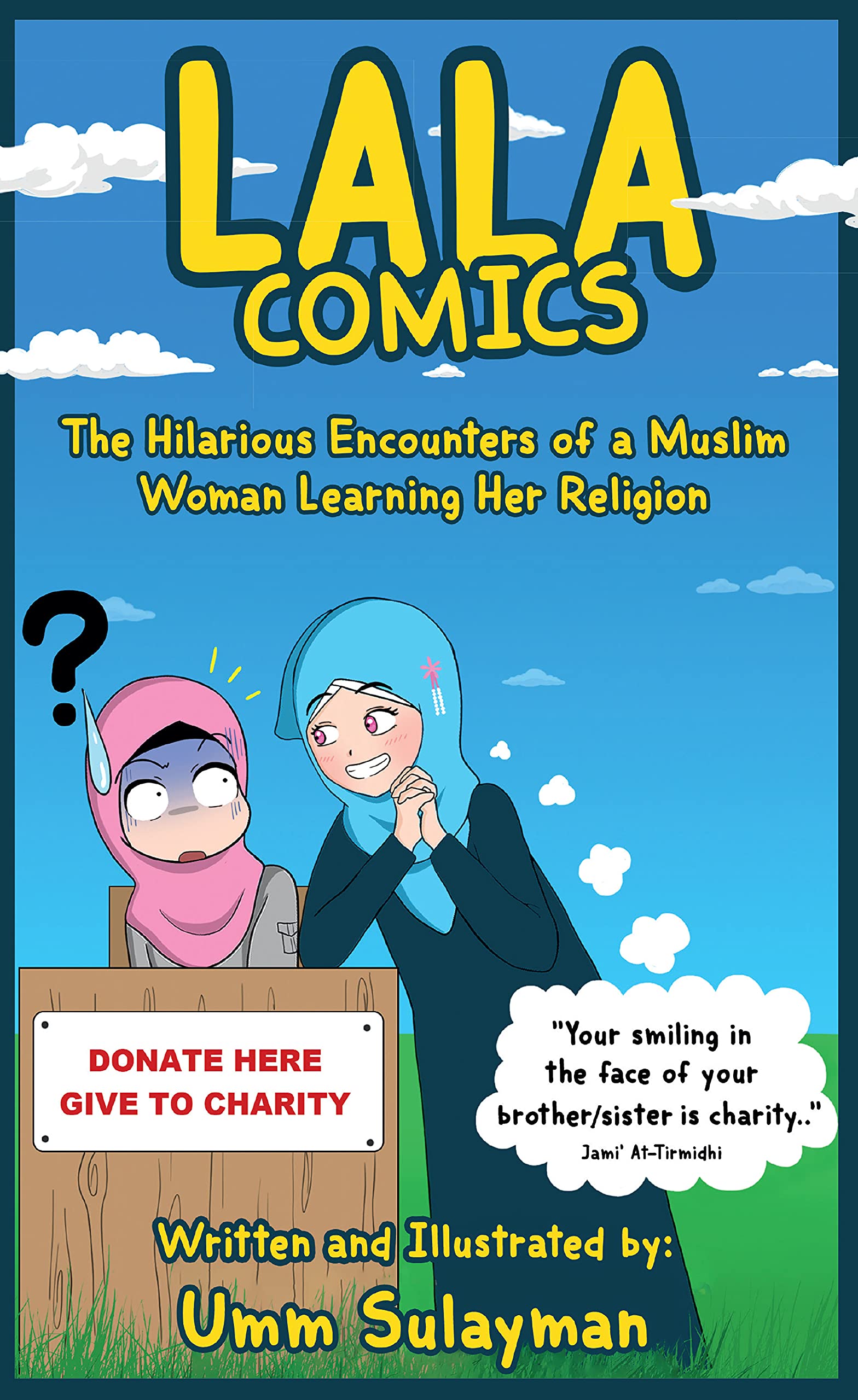
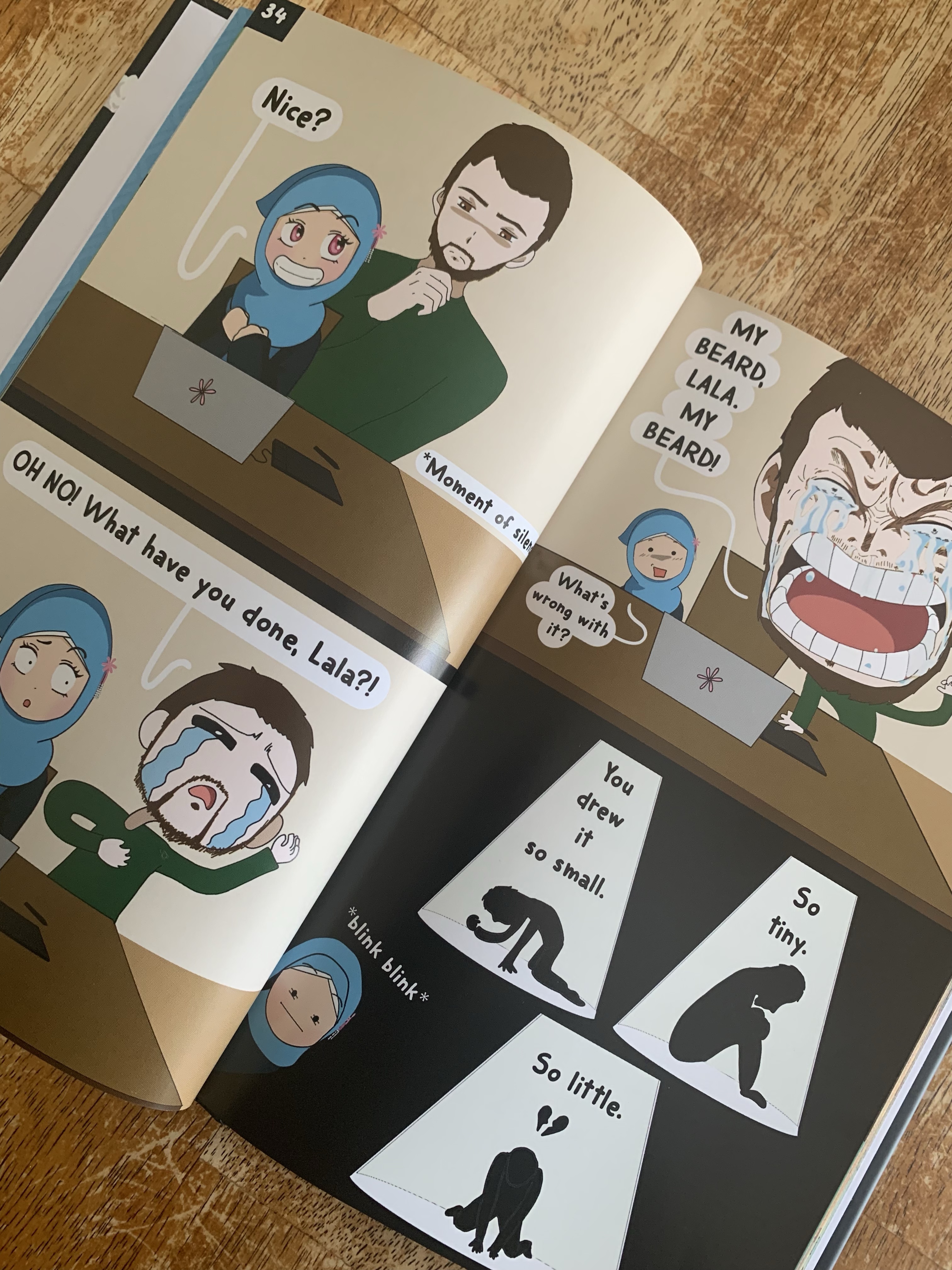
A mix of information and entertainment, this 124 page comic book is divided into thematic sections which further break down in to mini-episodes or comic strips that feature a situation, an Islamic advice often based on a Hadeeth or Quranic ayat that is noted, and a misinterpretation taken to a comical extreme. The book is a great way to remind ourselves and children, middle grades and up, aspects of our faith that we might know, or introduce us to specifics that we should know, by showing the concept in exaggerated action. Because the examples are relatable and come from everyday life, the humor is that much more enjoyable, and as a result makes the “lessons” that much more memorable.

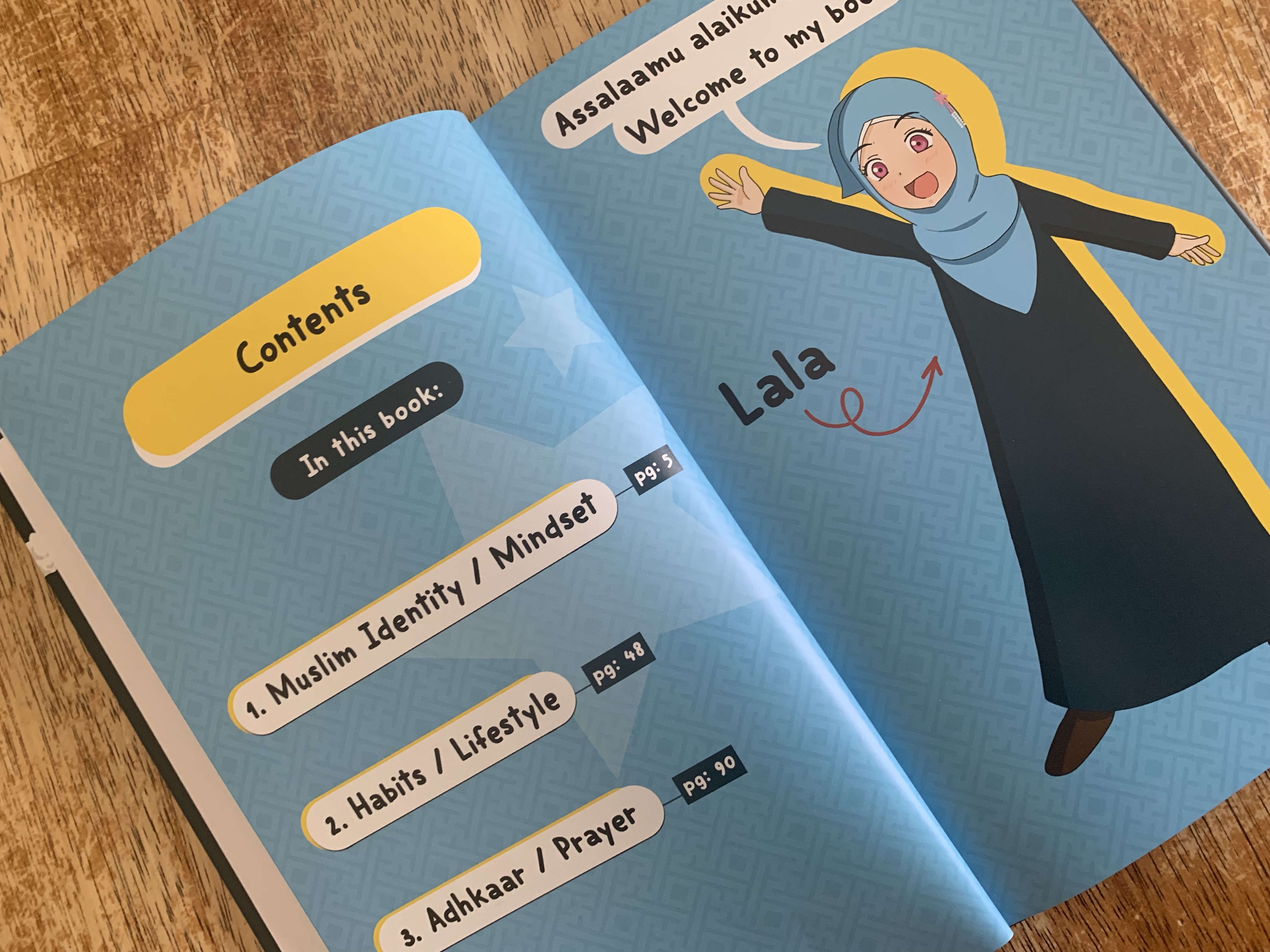
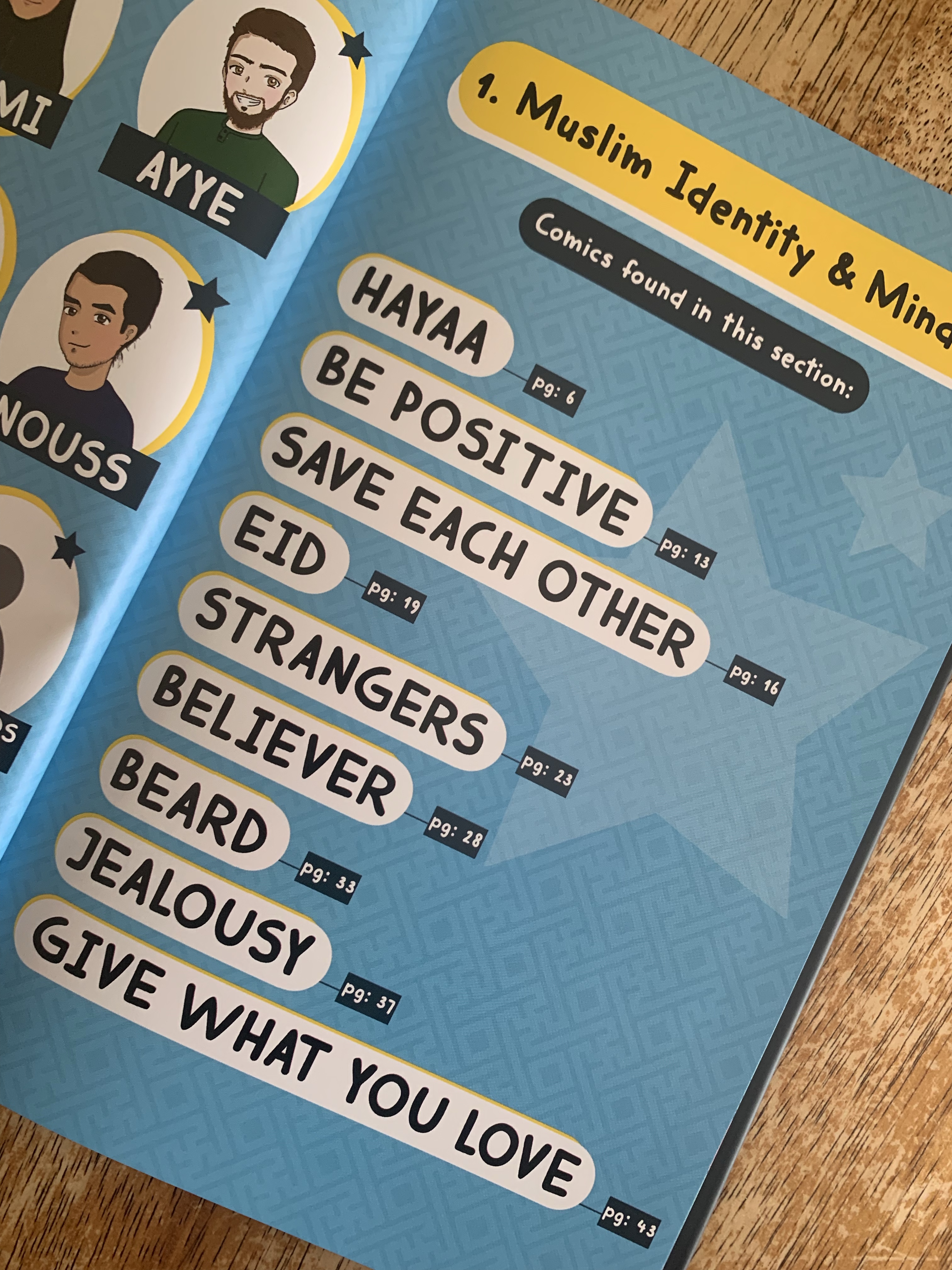
The three sections cover topics included in 1: Muslim Identity/Mindset, 2: Habits/Lifestyle, and 3: Adhkaar/Prayer, after an introduction of the characters, and the magic of the ‘Aalim Hat are explained, the stories begin. They are not sequential and can be read in any order, and are about four to 10 pages each. The book surprisingly does a good job of not getting overly predictable. Even though you know something is going to be taken incorrectly or to the extreme, it doesn’t drag on or get redundant. At times Ayye, is overly preachy, ok, all the time, but the persona is intentional and reads intentional, as his grounding of events is actually the point of the book.

The illustrations are clear and enjoyable. They are expressive and easy to follow. The glossy pages and full color print help keep the readers, especially the younger ones, tuned in to what the lesson is, and what silliness is ensuing. The hardbound 6 x 9 book is great to have around where it can be picked up and thumbed through. I read the entire thing in one setting, as did my 12 and 14 year old, and all of us have subsequently picked it up and flipped through it to muse over sections once again. A few of the pages seem to bleed into the binding and require some effort to see the cut off text, hopefully the book will have multiple reprints and this can be rectified. If you don’t follow the author on Instagram you should @LalaArtwork.

It is important to note that I am not a scholar, or anywhere remotely qualified to opine on the authenticity or interpretation of the points given in the book. The hadeeth are sourced, stating if it is a Saheeh hadith or found in Bukhari or Muslim for example or who narrated it. And ayats from the Quran tell the surah and verse. They are sourced when stated, there is not a bibliography at the end.

Potential concerns in the book: it does show a Muslim celebrating halloween and birthdays in a comic about Eid. In an episode about being strangers in this duniya, it mentions drinking and clubbing and nudity, boyfriends, etc. as things to avoid in this world. There is hyperbole and revenge, and bad judgement, but it is all in fun to make clear Islamic points and I think children nine and up will have no trouble understanding what is real and what is exaggerated, inshaAllah.

The Jinni on the Roof: A Ramadan Story by Natasha Rafi illustrated by Abdul Malik Channa

Standard
The Jinni on the Roof: A Ramadan Story by Natasha Rafi illustrated by Abdul Malik Channa

IMG_3592

This 37 page culturally Pakistani Ramadan story is super sweet and fun.  There is so much I feel like my critical self should not like about the story, but by about page 15 each time I read it, I find my self full on smiling and thoroughly enjoying little Raza’s antics and his endearing grandma’s method for dealing with him.

IMG_3594

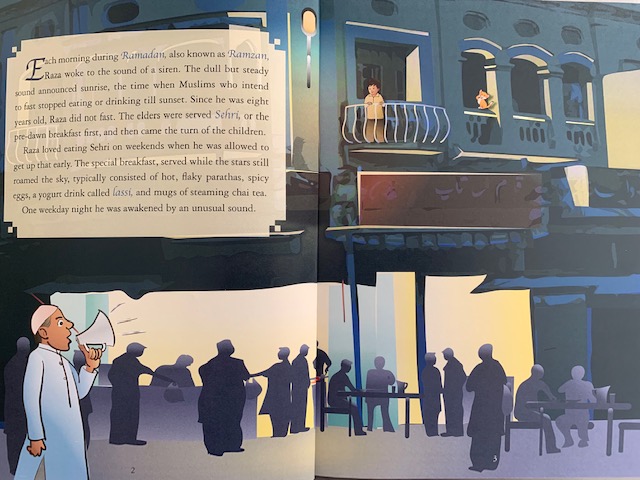
Raza is too young to fast, but with a house full of relatives gathered for Ramadan, Raza awakens to the sound of his uncle snoring before the siren to signal the start of fasting and the azan calling the worshippers to pray echo through Lahore.  Before he can go back to sleep, however, he hears the cook heading up the stairs to wake up grandma and then the smell of the food hits him and he wants a paratha more than anything.

IMG_3595

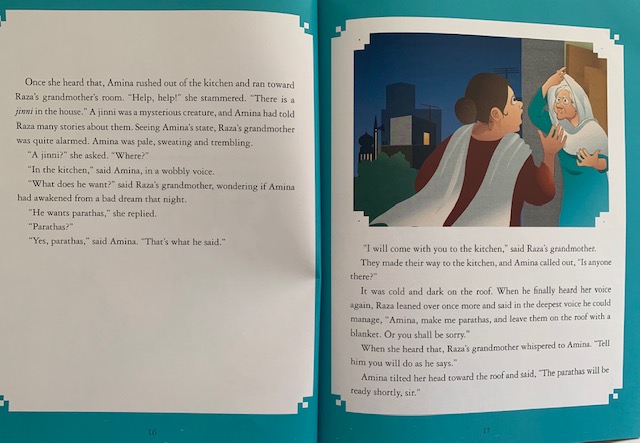
Raza embarks on a mission that involves him sneaking up to the roof, pretending to be a jinni and scaring Amina the cook through the chimney to convince her to send up food and a blanket.  

Scared out of her wits, Amina gets the grandma, culturally wards off evil, and delivers the goods to the jinni on the roof.  But the joke is on Raza who is out-witted by his grandma and gets the punishment of washing dishes for the rest of Ramadan, and learning that fasting a whole day will take a lot of will power, if he couldn’t even wait a few hours to get his beloved parathas.

IMG_3596

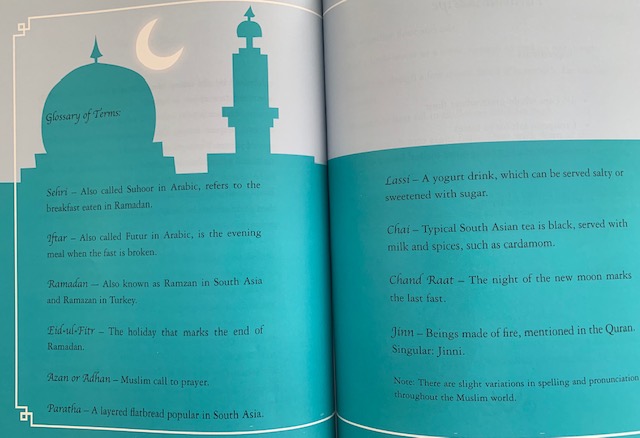
The book informs the reader that the following year Raza is able to successfully fast, that he is rewarded with gifts and that all is well and forgiven.  There is a glossary, information about Ramadan and a recipe at the end of the story as well.

I love that the plan just happens, it isn’t premeditated or considered, so it takes the reader along for the ride as it is unfolding.  It isn’t a deep story, but there is room for discussion as to whether Raza was naughty, or just caught up in the moment.

IMG_3597

The book is illustrated well and with big 8.5 x 11 pages, the book is engaging for first and second grade readers and listeners, as there is a lot of text on the pages.  The book takes a bit to find its stride as the author tries to use Urdu words, show their Arabic counterparts and then describe them in English. 

IMG_3598

There is a lot of cultural stage setting with everyone in grandmas house, the traditions of the family, of Ramadan, etc.  I think Desi familiar kids will get the most out of the book, but theoretically Muslim kids and non Muslims too could learn and enjoy it too.  I wish jinn and jinni were explained just a bit in the text, not just in the glossary, along with why an 8 year old wouldn’t be fasting or be required to do so. 

IMG_3599

My own kids, aged 8, 9, and 12, struggled on the first two pages, but when I told them to keep reading they zoomed through the rest smiling and ended saying it was good while giggling and shaking their heads.  We are Pakistani American and I think they enjoyed seeing familiar words and phrases in the book and sympathizing with Raza as well, and his sneaky plan that almost nearly worked.