Tag Archives: early elementary

Amar’s Fajr Reward by Amire Hoxha illustrated by Hilmy An Nabhany

Standard
Amar’s Fajr Reward by Amire Hoxha illustrated by Hilmy An Nabhany

As Muslim authored stories are increasingly more available, certain cultural Muslim stories continue to be limited or none existent. Since 2021, when four of us reviewers created the Muslim Book Reviewers and Muslim Book Awards space, we have constantly been encouraging Amire to work on her dream of being an author, and write a joyful Muslim Kosavar book. Through Ruqaya’s Bookshelf, her dream has become a reality, Alhumdulillah, in the form of this 32 page, 8.5 by 11, full color books for early elementary readers. In all my years of reviewing I have not ready many Kosavar books, and of those few, none have been OWN voice, and all have focused on the war.  Enter Amar’s Fajr Reward, a simple story of a boy and his Gjyshi, going for fajr at the masjid, finding the door locked, and the obstacles, determination, and results that transpire, not just for Amar but his grandfather as well.

The book starts with Gyjishi splashing water on Amar to wake him up for Fajr, while reminding him that “Prayer is better than sleep.”  Grandpa’s quick steps and a sleepy little boy, keep Amar hustling after his Gyjishi only to arrive at the masjid and find the door locked.  

Gyshi cannot be deterred by his grandson wanting to go home and pray, or a locked door and decides to jump the fence, something he has done in the past.  Calamity strikes, when he falls and hurts his foot and it is up to Amar to help.  But he can neither scale the wall or find anyone to help.  When the muadhin finally runs up the street Fajr can be made, Gjyshi can be assisted, and changes can be made so that hopefully getting locked out doesn’t happen again.

I love that there are pronunciation tips on the cover page of Gjyshi, grandfather, and Axhi, uncle, but I do wish there was some backmatter showcasing Muslims in Kosovo.  Are Muslim communities spread out in large diverse areas, or do they tend to have neighborhoods that are tied together by faith? As a place not often seen or heard about, a little layering of details would have deepened the story.  Especially, if the reasons are cultural or societal explaining why people don’t wake up until the athan is called, but were annoyed that Amar was knocking on the doors at that time, or maybe why the didn’t just pray outside the masjid, calling the athan and waking up the regulars that attend. Also about why the key to the masjid is “special.” Are places of worship regulated or only allowed to be open at certain times?  I also wish it would have given a little build up about Amar and this particular day. At the start he wants to pray at home as it seems like that is his norm, and Gjyshi going to the masjid seems to be the grandfather’s norm, so was this something special, a right of passage, are kids not typically seen in masjids is he visiting his grandfather? 

The book is sweet and warm, with a lot of heart and I love that it takes place in a masjid and threads in that salah is better than sleep, and that praying in congregation is 27 times the reward.  I also love that the author fulfilled her dream inspired by her own grandfather, and inshaAllah she will continue to write and bring Kosovar stories to our bookshelves, ameen.

Maymoona’s Moon: A Special Eid Story by Razeena Omar Gutta illustrated by Zayneb Haleem

Standard
Maymoona’s Moon: A Special Eid Story by Razeena Omar Gutta illustrated by Zayneb Haleem

I love the illustrations of this book and have been trying to get it since it released in Australia to no avail, it finally is being released here in America and the 32 page hardback book is so cute to look through.  The story is, well, sigh.  It isn’t bad or wrong, but for a religious centered book, it has no Islam, no Eid feels, no faithful reliance.  Rather than using religion to bring the sighting of the moon to little Muslims and non Muslims, and blending it with the protagonists desire to be an astronaut as the framing of the story, it just focuses on the celestial intrigue.  “Cosmic compasses,” “galactic goggles,” and a cheering squad are needed for “Operation Galaxy Gaze,” there are no “Bismillahs” or “Alhumdulillahs” when looking for the moon, and ultimately seeing it.  Again, it isn’t wrong, it just seems a little unfortunate.  This book will be read in Islamic and public schools, libraries, and everywhere else children, preschool to early elementary, gather with hopes of hearing a Ramadan or Eid story.  I’m just fairly confident, none will leave knowing what Eid is, or why it is important to Muslims.  They will get that Maymoona loves the stars, there is an “inshaAllah” when she dreams of being an astronaut some day, but even the backmatter entitled, “Why is Seeing the Moon so Important for Eid?” focuses on just that, the seeing of the moon, not the month of Ramadan ending and Eid joy prevailing.  I know I’m harsh when it comes to Islamic rep, this one just skirted the line of telling us about searching for the moon, leaving Ramadan behind, and the excitement of Eid, when it so easily could have shown us, and left a lasting impression long after the book closed.

The book starts with the sights and sounds of Eid approaching. There is only one thing left to do and that is something Maymoona takes very seriously, looking for the moon.  It is the most exciting part of Eid for her, as she dreams of being a future astronaut.  She assembles her team to plot and plan, her gear to give her the best chance of success, and she squashes her nerves and makes her ascent to the best vantage point.  And then she waits, patiently to see if the wind will move the clouds, if her dreams of landing on the moon will come to fruition, if tomorrow will be Eid.

The large 8.5 x 11 pages with a matte finish make this book easy to share in small groups or at bedtime, and really let the pictures charm the audience on each and every spread.

Bilal’s Bad Day by Neelum Khan illustrated by Alice Larsson

Standard
Bilal’s Bad Day by Neelum Khan illustrated by Alice Larsson

img_7727-1

I like the concept and presentation of this picture book that involves spinning a spinner at the midway point to determine what page you should “jump” to, to continue the story. I can see this being a great tool to introduce and practice different calming strategies to use when times are tough.  I love that some of the ideas of faith based, and some are not, and that a thorough introduction of how to use the book and strategies precedes the fictional story.  BUT, oh come on you knew it was coming, I don’t know if the information is sound.  Translation, I don’t have to use calming strategies, and the book does not disclose if the author is qualified to be giving them.  I can’t imagine the strategies would cause harm, and we can always benefit for de-escalating and centering, and truth be told I don’t even know if one would have to be “qualified” to give this advice.  I simply put it out there for you all to decide for you and your little ones.

The book starts with Bilal opening his eyes to the sounds of his siblings squabbling, breakfast disappoints when they are out of his favorite cereal, and dad’s joke about his hair is not appreciated.  Top it all off with news that guests with a baby were coming over for lunch, and Bilal knows it isn’t going to be a good day.  With cleaning, itchy clothes, and the smell of food building as the day passes, the doorbell ringing sends him over the edge and mum and dad need to find a calming strategy to help him.  This is when the reader gets to spin the arrow and jump to the page to see what and how to use the different options.

The book has whatever option picked work to calm Bilal down, but notes at the beginning that multiple options and repeats are often more the reality.  The story then has Bilal later that evening reflect on the day before asking the reader to reflect on their own similar experiences as well through six bulleted considerations. The 40 page book concludes with hadiths.

This book needs to be read and discussed before the moment of need arises, and be aware the spinner at bedtime is too much of a distraction.  The book is best with dialogue, understanding, and practice.

Folktales for a Better World: Stories of Peace and Kindness by Elizabeth Laird illustrated by Mehrdokht Amini

Standard
Folktales for a Better World: Stories of Peace and Kindness by Elizabeth Laird illustrated by Mehrdokht Amini

img_5848-1

The presentation, the tone, the vibe, the seven countries and stories selected, the illustrations and large size really make this book enjoyable.  With folktales from Ethopia, Sudan, Palestine, Yemen, Afghanistan, Syria, and Uighur, some contain Islam and Muslims, and some do not, but the messaging and lessons are for all.  Folktales are often used in classroom settings, and I appreciate that this book can be used in bits or all together.  Most of the selections are 6-8 pages, but contain large illustrations to help the readers engage with the lessons being conveyed. Having read a few books by the author, I think it is clear that the people represented in this collection is very intentional, and these old stories from the occupied, the oppressed, and the war torn in contemporary times, really show the universal humanity of stories, kindness and peace.

The introduction from the author sets the tone before the stories begin. The Dog Fight from Ethopia is a tale of conflict and perspective and pride.  Allah Karim from Sudan is trusting that Allah swt will provide, compassion for the homeless, and charity.  From Palestine, the folktale True Kindness shows the value of hospitality.  The Next Sultan from Yemen focuses on fairness and justice as does The Emir and the Angel from Afghanistan. From Syria the tale of The Woodcutter and the Lion focuses on friendship and being selfish, and finally The Nine Princesses of Kashgar, a Uighur story, shares a story of defending your land against occupiers.

Early elementary kids will enjoy the tales and relate to the lessons, they will get lost in the pictures, and recall the messages long after the book concludes.  This book reminded me of how few folktales I’ve read outside of teaching, and I look forward to sharing this at bedtime, story times, and gift it to teachers and librarians to do the same.  You can purchase the book here from Crescent Moon Store and save 10%.

Muhammad’s Recipe for Remembering By Maidah Ahmad illustrated by Shruti Prabhu

Standard
Muhammad’s Recipe for Remembering By Maidah Ahmad illustrated by Shruti Prabhu

img_4274-1

I feel like the idea and heart of this 40 page picture book is decent, but the story, presentation and takeaway are just really poorly executed.  The pitch is a Muslim Desi kid feeling left out when all his friends are rehearsing for the upcoming veterans assembly because he doesn’t have anything to share.  He then starts asking his family, and the Muslims and non Muslims hanging out at the mosque to find out about Muslim and Indian involvement in the World Wars.  A rarely explored topic, considering in the West WWI and WWII are taught from a Western centric perspective, no doubt.  Unfortunately, most early elementary readers, the book’s target audience is 4-7, have limited knowledge of the World Wars, let alone about the subcontinents own politics and that they were occupied themselves under colonial rule at the time, and this book does nothing to explain any of it.  The inconsistencies, plot holes, vocabulary and ultimate lack of sharing a single story from a descendant of someone who fought, make the book rather pointless and forgettable.  Truly the take away is that there were Muslims among the Indian army, they made roti and prayed.  No real idea what they experienced, saw, endured, or gained in return for being forced to fight for Britain on the global stage.

img_4275-2-1

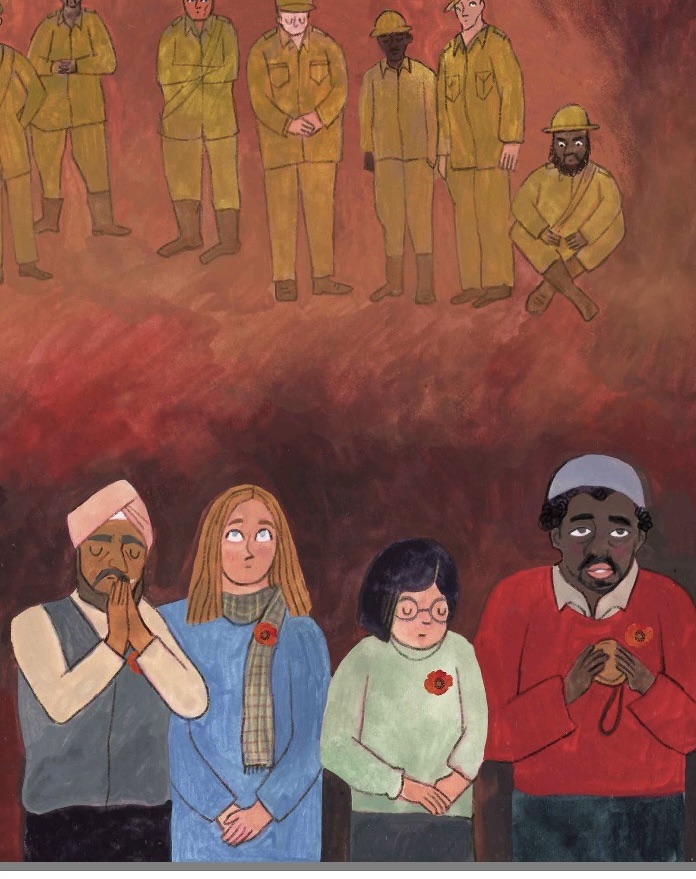
The book starts with Muhammad listening in to his classmates talk about their family members that are veterans and him feeling left out.  At recess they don’t let him battle in the reenactments and instead make him be the cook. When he gets home his dad is making rotis and Muhammad asks his dad if they have veterans in their family, they then go ask his grandfather if his great great grandfather fought in either World Wars.  Dada jaan recalls that “they sent my grandfather to France in World War One.”  But he never spoke about it except to mention that they shared rotis.  He suggests they go to the mosque the next night as that is where, “a kaleidoscope of people gather.” He learns from a Sikh uncle in a turban that whole villages went to fight and from Imam Rafiq that the soldiers fasted in Ramadan, prayed, and celebrated Eid.  No one has any visible tokens of their family’s service as they were lost over time.  Determined not to let the stories be lost, Muhammad shares roti at the assembly.

img_4277-1

Ok, buckle up, I have a lot to point out, but first the positive.  I like that the dad makes rotis.  Mom isn’t in the book, but there are a lot of pictures of a lady hanging on the walls of the house, so possibly she has passed and dad has to cook, no matter, it is nice seeing a Desi dad in the kitchen.  I also like that the mosque is central to the story, I wish it was called a masjid, and that it was explained why people that are not Muslim are hanging out there.  Brown people are generally lumped together and this seems to reinforce that stereotype, which makes me less than thrilled.  It seems like a social environment with ping pong tables and snacks happening, so why not say it is a social hall at the masjid where people of all faiths often gather.  A “kaleidoscope of people” does not explain people of different religions at a mosque to most four year olds.  The book claims the assembly is honoring veterans, so why is Muhammad only curious about WWI and WWII is never explained.  He is teased and forced to be the cook by his friends, with a very negative connotations and depiction in the illustration, but that notion is never pushed back upon, and is actually heightened with rotis being the thread that ties the entire book together.  A missed opportunity to be sure.
img_4279-1

I really struggle with the reality that the majority of Indians were forced to fight, and the book keeps it vague in the text with lines such as “joined the war effort,” and “they sent..” who is they? It sounds nice that Muhammad doesn’t want the stories, like the artifacts to be lost, but WHAT STORIES? If the book is about remembering, and stories are to be shared at the assembly, I feel short changed that the reader doesn’t get a single story about a Muslim or Indian that fought in one of the World Wars.  Isn’t that the point of the book? Yes the book has sources at the end, but it is fictionalized, make up a story, give the reader and Muhammad something to take pride in, to understand through, to imagine, what it was like for his great great grandfather.

img_4280-1

I struggled with the illustrations as well, Imam Rafiq looks off in the final image, I don’t get why Dada jaans memories seem to be on the TV either.  I also didn’t understand why rotis were the thread, but then it is paratha at breakfast that gives the idea, and who really is constantly spreading ghee on paratha or roti let alone at war, or at recess.

img_4278-1

War is not a trivial matter, and I kind of feel like this book reduced it to food, and allowed some racism, classism, and  Islamophobia, to go unchecked along the way.  I like that the backmatter has a recipe and an author’s note, but colonialism, service, war, are all heavy topics that are hard to bring down to an early elementary level picture book, and sadly this book is unable to connect and inform readers about this time in history.

Come To Prayer by Salwah Isaacs-Johaadien illustrated by Zeynep Yildirim

Standard
Come To Prayer by Salwah Isaacs-Johaadien illustrated by Zeynep Yildirim

img_3530-1

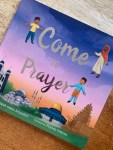
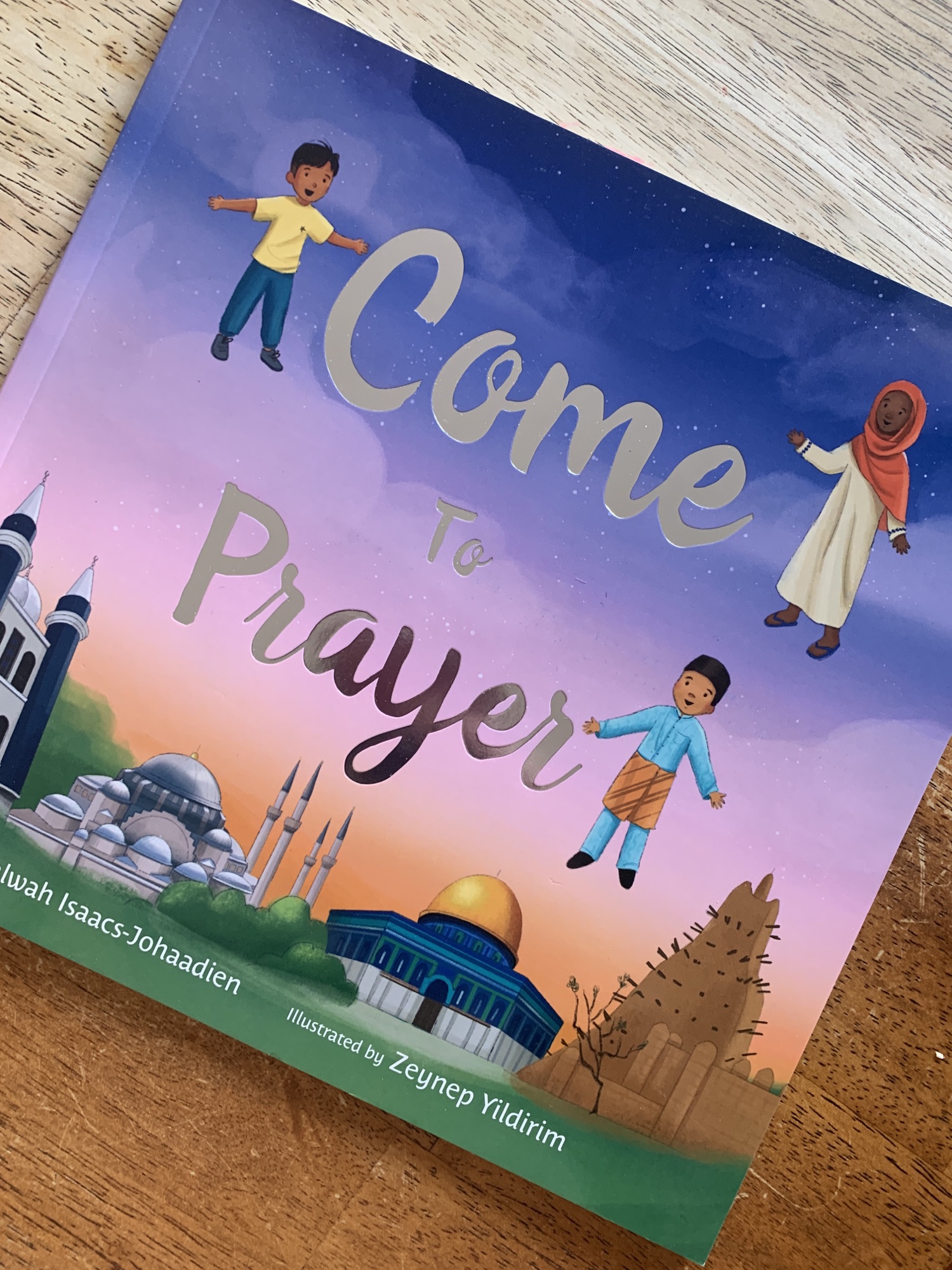
Framed around the five fard prayers, the rhyming 26 pages take readers all around the world with the refrain of “come to prayer, some to salah, come to success, come to falah” appearing after each two page spread.  Reykjavik, Honolulu, Rio, Timbuktu, Kuala Lumpur, and Makkah are shown as families gather to pray in each city.  It is hard to know if the locations were chosen for a specific reason, or to just help with the rhyming lines.  I appreciate the map at the end in showing 18 masjids in the world, but they are not the only ones pictured in the book, so honestly it was not intuitive why they were highlighted. Additional information about the masjids included and where they are located in the world would have been far more beneficial.  The rhyming at times is forced, but for the minimal lines on the pages, and the clear organization of the book, it didn’t bother me too much.  The illustrations compliment the text well and amplify the concept of Islam being a global faith through the connection of Muslims praying everywhere.  The Islamic fiction book is meant for toddlers to early elementary, and with the positive tone of salah being an invitation to success, I think it works well for the audience.

The book starts with little kids waking up in a snowy scene in Reykjavik and heading out with their parents to pray Fajr at the masjid.  Then it is rain in Honolulu that can’t stop a family of five from driving slowly to the masjid for Zuhr.  In Rio a family packs up at the beach to get to Asr salah on time.  For Maghrib, not even a sandstorm across the Sahara can keep a family in Timbuktu from getting to prayer.  And finally a family takes shelter in the masjid for Isha as thunder and lightning in Kuala Lumpur halt their tour. The story ends with everyone entering Makkah in ihraam to pray at the Kaaba.

The book is a thick paperback cover, with glossy 9 x 9.5 inch pages.  It works well for small group story times or bedtime.  It is available on Amazon here or from Crescent Moon Store here.

Behind My Doors: The Story of the World’s Oldest Library by Hena Khan illustrated by Nabila Adani

Standard
Behind My Doors: The Story of the World’s Oldest Library by Hena Khan illustrated by Nabila Adani

img_3557-1

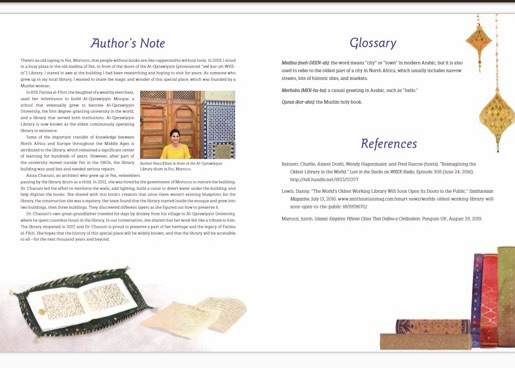
The world’s oldest library proudly stands in Fez, Morocco: started by a Muslim woman, restored by a Muslim woman, and in this 40 page book the library itself tells its own story in a book authored by a Muslim woman.  The personified library shares a few highlights from its early start as a corner in Fatima Al-Fihri’s masjid and university to collections spanning multiple buildings, from a bustling center of learning and knowledge to a place of disrepair and neglect.  Staying on an early elementary level, the informative author’s note and references make the book engaging for older readers as well, and an incredible addition to bookshelves everywhere.
img_3558-1

The book starts with the library introducing itself and welcoming the reader. “Merhaba! I am Al-Qarawiyyin Library–the oldest library in the world.” At over a thousand years old, the library begins at the hands of Fatima Al-Fihri in 859 who dared to dream big and created a space of learning and worship in Morocco.

img_3559-1

As the courtyards and collections grew, seekers of knowledge, from all backgrounds, gathered to discuss, debate, and learn.  Special rooms with special locks kept books safe: a Quran written on camel-leather, a philosophers drawings in gold ink.

img_3561-1

Nearly destroyed once by a fire, the library endured, but over time the rooms were no longer filled with the bustle of people.  One day a small girl, Aziza, paused at the door, but did not enter for many years.  When she did return, she came as an architect with a team to restore the library and invite people back in to read, learn, and dream.

img_3565-1

It delights me that such an important story is available to be widely learned from and appreciated.  You can preorder a copy here from Amazon.

img_3566-1

Mimi & Unicorn Get to Know Allah by Zanib Mian illustrated by Laila Ramadhani

Standard
Mimi & Unicorn Get to Know Allah by Zanib Mian illustrated by Laila Ramadhani

img_3480-1

Creating understanding and love of Allah swt is perhaps the most important type of Islamic fiction book available for young children, so I love that we have options to choose from. The framing of this book is nothing new, a child asking various people about Allah swt to learn about Him, is found in numerous books.  But, this 32 page book is particularly engaging because of the large brightly illustrated pages, and the author’s signature style of conveying facts in a simple relatable manner.  The comic relief of the unicorn and the adorable protagonist are great, and the added layer of it being checked by two named scholars really make this one of the best in a very populated category.

The book starts with Mimi wondering about Allah swt after hearing people say things such as, “Allah will take care of it,” and “Allah knows.”  She asks her imaginary friend, Unicorn, but she doesn’t know either, so they head off to ask different family members.

img_3484-1

Summaya, Mimi’s big sister tells her that  “if you know Allah, you love Him, and He loves you.” It is followed up with details that Allah swt knows us, because he made us. From Nana, Mimi and Unicorn learn that Allah swt is One, and he explains why we don’t know what he looks like.  From Nani we learn that “Allah swt has no beginning and no ending.” Baba explains that we turn to Allah swt when we need help, Unicorn wonders if we need a phone or Imam to do that. Finally she talks to her Mama who explains trusting Allah’s plan.

Each stop is beautifully articulated and examples are given, resulting in a Mimi who’s heart becomes light and warm, and who works to know more about Allah swt every single day.

The backmatter includes notes from the author and illustrator and various bookish people sharing their early understanding of Allah swt and his attributes.

img_3487-1

The book is available from muslimchildrensbooks.co.uk in the UK and here from Crescent Moon Store in the USA (she ships globally)

Until You Find the Sun by Maryam Hassan illustrated by Anna Wilson

Standard
Until You Find the Sun by Maryam Hassan illustrated by Anna Wilson

I don’t know that this book is particularly unique or mind blowing, but I read a digital copy a few weeks ago and was surprised when some tears fell, I read it when I got the physical copy to my kids and my throat caught again, and here I am writing this review and feeling all vulnerable.  It is as if I too am a little girl in a new place missing her grandfather on the other side of the world, which clearly I’m not.  The book is sweet, and moving, and I find myself emotionally invested every time I read through the 32 pages and get lost in the large sweeping illustrations.  The book is not Islamic, there are a few hijabis in the background and text that articulates friends saying salaam before the girl moves.  Additionally, the main character’s name is Aminah, and the author is of Pakistani decent, and has a Muslim sounding name.  The story though, at its core is universal, heartfelt, reassuring, hopeful, and lovely to share in all spaces. It begs to be read aloud and holds the attention of toddlers to early elementary aged children.

The book starts with a happy little Aminah in a bright sparkly environment of sunshine, mangoes, and salaams.  Every night she listens to Da’s stories of adventure as she snuggles next to her grandfather.  One day she finds out they are moving, going on an adventure.  Only Da won’t be joining them and Aminah is devastated.

The new home is gray, and cold, and no adventure at all.  She wants to go back, but Da reassures her during their nightly conversations that things will get better.  And sure enough, with a bit of bright yellow inspiration, she starts to discover the adventures awaiting in her new home.

Kids will find the end hopeful and resolved, but I somehow found it a little bittersweet.  Da loves his grand daughter and wants her happy, but the adult me, realizes their relationship will never be the same, and Da will miss her in many ways, alone, as she embarks on her own life.  I know I’m projecting, but the ability to see both perspectives adds a nice layer to the book.

The book is available here from Amazon and will be in local libraries in June 2024.

Ilyas & Duck: Spectacular Salah by Omar S. Khawaja illustrated by Mattia Cerato

Standard
Ilyas & Duck: Spectacular Salah by Omar S. Khawaja illustrated by Mattia Cerato

img_3321-1

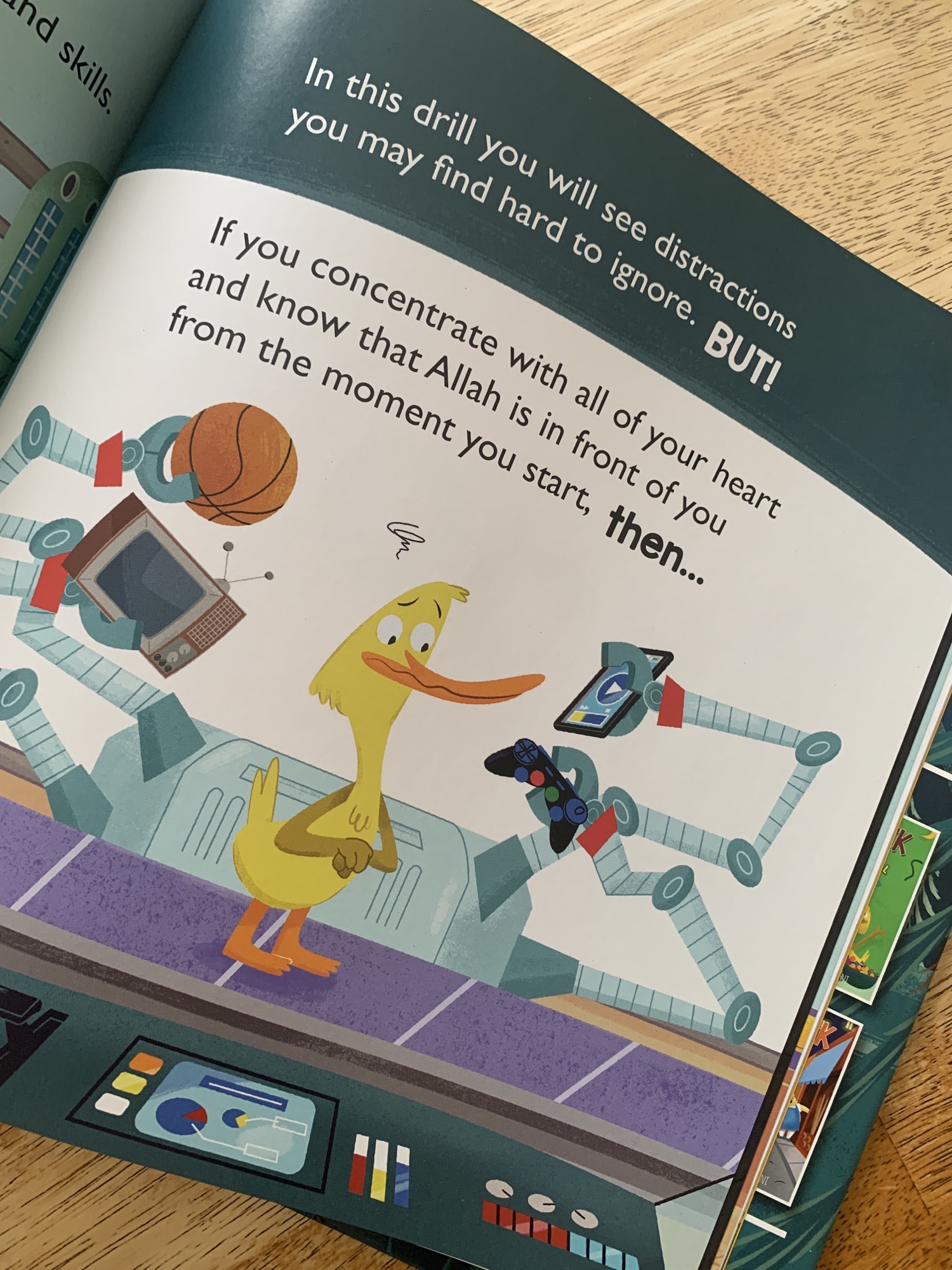
It has been a minute since we have had a new Ilyas & Duck book to read and share with our kids, and this one focusing on prayer is informative, fun, and was well worth the wait.  It is also long, 48 pages long to be exact.  There is a lot of information and works best for ages six or seven and up.  The clever rhyme and engaging illustrations tell about wudu, the times of the five daily prayers, Surah Al Fatiha, facing the Kabah, having the right intention, connecting with Allah, and not being distracted. I love the framing that salah is not just an obligation, but is an opportunity to talk to Allah swt and should be spectacular.  The author reads his books aloud a lot to kids, so if you have ever seen one of his readings, I highly recommend channeling the voices and energy, to hold the audiences attention if using the book at story time.  If reading at bedtime, or if handing to an independent reader, take the opportunity to discuss the points, check understanding, and reflect upon what Duck is learning.  As always the banter between Duck and Ilyas keeps the kids laughing, the story moving, and the information flowing, alhumdulillah.

The book starts with two verses from the Quran and the hashtag #freepalestine, before entering the world of Ilyas and Duck one summer afternoon,.  An alarm goes off and Ilyas heads off to make wudu and pray.  Duck couldn’t get up though, he prayed earlier, so he thought he was done.  Ilyas explains that there are five prayers in the day, and Duck is seriously worried that Fajr, Dhuhr, Asr, Maghrib, and Isha are going to cut in to his game time, snack time, and movie time.

When Ilyas tells Duck that prayers don’t take long and it is when you speak to Allah swt, Duck in his enthusiastic way is determined to make each and every prayer spectacular. He drafts a plan, learns the steps and what to say, finds the direction, makes his intention, says Allahu Akbar and starts training. 

He is praying all over the Earth whenever the time comes, but then he learns he can do more and goes to visit the Professor.  He learns about connection and closeness to Allah.  He also learns about using his heart and staying focused, before rushing back to tell Ilyas all that he has learned.

The book covers a lot of ground, and gets kids excited to pray.  I like that the information is a mix of highly detailed specifics, general knowledge, and humor.  The way the salah times are described and the emphasis on connecting with Allah swt and making your prayers heartfelt is not often seen in books for this age group, and I think it gives the book a wider lasting appeal.  My 8 year old did point out after reading it independently and laughing, that if Duck prayed Fajr didn’t he know a little bit about prayer already?  Also, given the length of the book, a line clarifying that infact not all places on Earth are ok to pray upon, would have been nice. 

img_3327-1

I hope this book signals more books in the series are heading our way.  I notice that the illustrator is not the same, but the pictures are similar enough I doubt most kids will notice. The book is widely available and can be purchased from Amazon here or from Crescent Moon here