Category Archives: YA FICTION

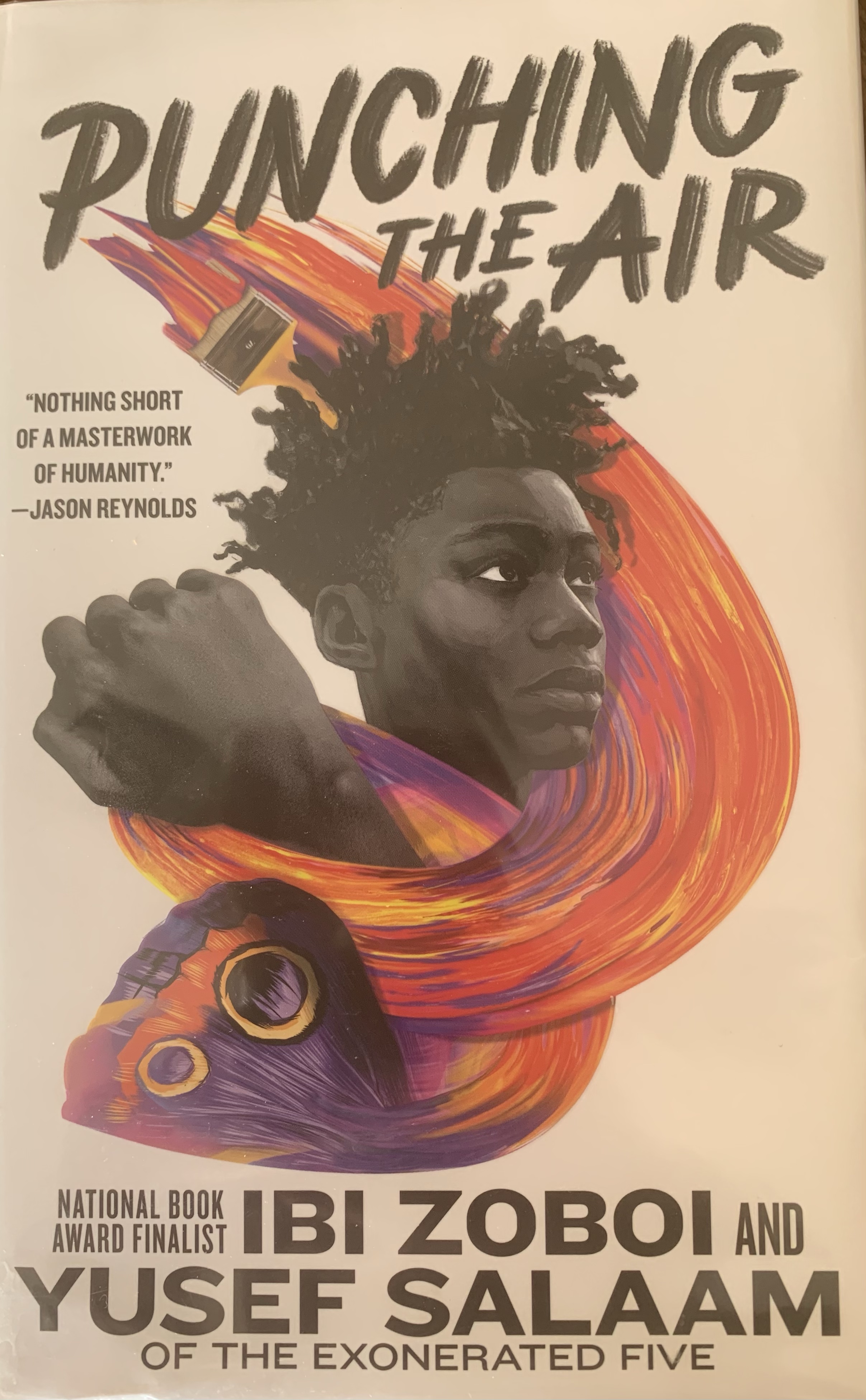
Punching the Air by Ibi Zoboi and Yusef Salaam

Standard
Punching the Air by Ibi Zoboi and Yusef Salaam

img_7268

Four hundred pages of painfully powerful verse that you will have to force yourself to slow down and not rush through.  Yes, you want to know what happens to the young, black, muslim teen writing his truth, but to read it too quickly will deprive you of feeling and contemplating and absorbing the message that if, you, like me are a white (ish) person of privilege, need to surround yourself regularly with to understand.  The OWN voice narrative is co-written by one of the Central Park Exonerated Five and should be required reading for everyone 14 and up.
img_7263

SYNOPSIS:

Amal Shahid is 16 years old, and maintains he is being wrongfully accused of a crime that has left a white boy unconscious.  He acknowledges he threw the first punch, but is adamant that he didn’t throw the last.   From his trial to his incarceration in a juvenile detention facility, the narrative pushes forward as he adapts to confinement with flash backs to pivotal moments in his life.  He is a gifted artist and writer and his creativity and ability to express himself is what will hopefully provide him a way to survive.

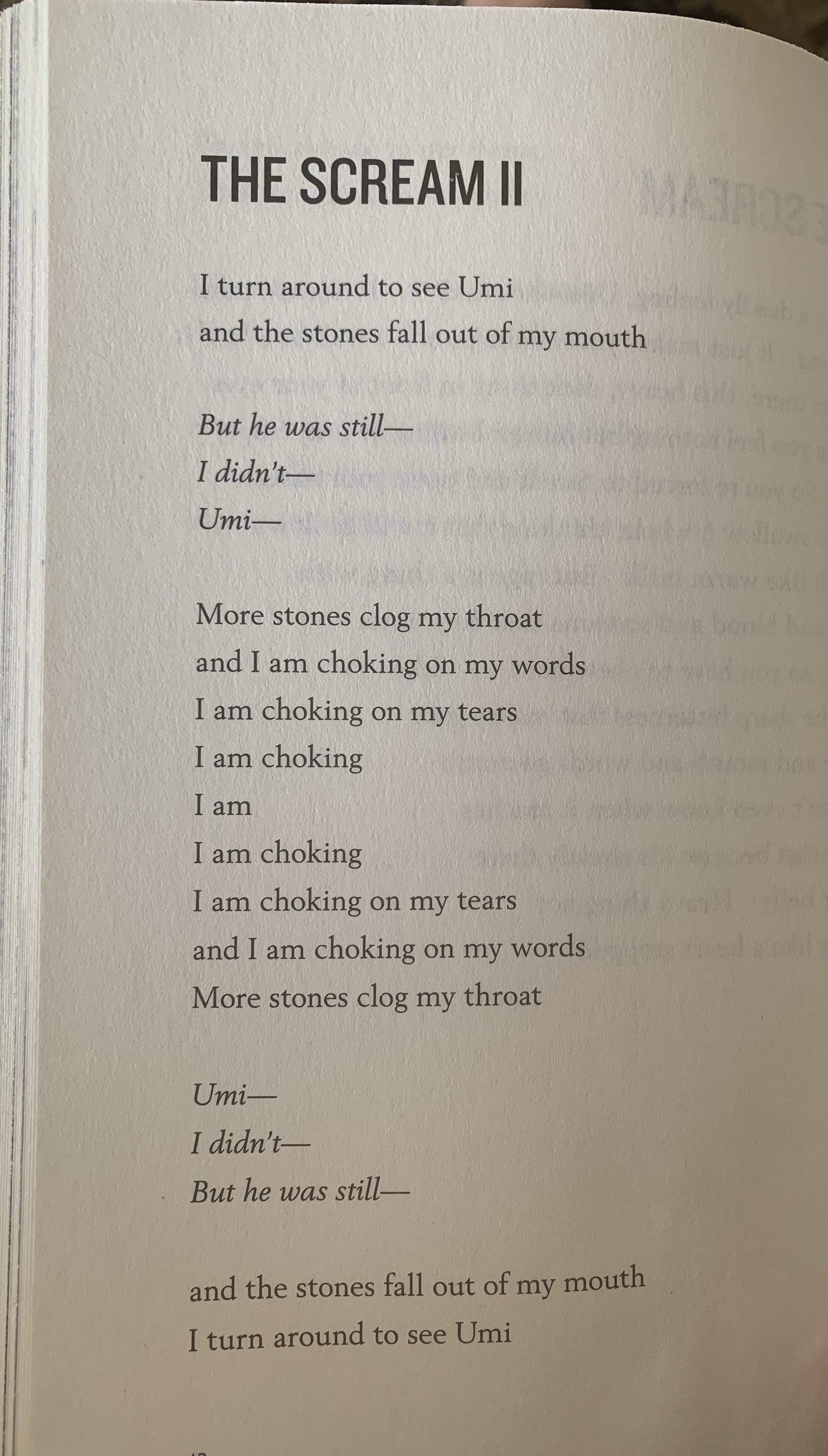
I know I’m leaving this vague, because truly I cannot do it justice.  I started taking pictures of powerful sections, and when I found myself taking pictures of nearly every page, I realized that the book is something to be experienced in its entirety and will include just a few internal pages to tempt you.


WHY I LIKE IT:

The book is impactful in that it claims only to share the protagonist’s truth, it doesn’t get off tangent from that, but allows for the reader to add to the narrative their own understanding to make it personal and resonate most profoundly.  His situation involves so many injustices plagued upon him only because of his skin color, and a system that is designed to keep racism alive and powerful.  He was at the wrong place at the wrong time perhaps, but while the book is heavy, hope is ever present.  I’d like to believe it is because of those that refuse to give up on Amal. I was swept away by the power of a mother’s love.  Truly, what strength for a young man in Amal’s situation to have the world betray him so often in his young life, to find unflinching love, support, belief, and determination in his mother.  

I love that his mother is a practicing Muslim, his grandmother attends church, and he loves them both and values their spirituality.  Allah, the Quran, and Islam are mentioned regularly.  It never is preachy, or gives much doctrine, but it is present, and is a tangible part of how Amal sees the world.

img_7266

FLAGS:

There is language and violence.  He has a crush on a girl and she writes him letters, nothing obscene.  There is racism, bullying, racial slurs.

img_7261

TOOLS FOR LEADING THE DISCUSSION:

There is so much to discuss in this book, and so many resources online.  I think the book might be too mature for my middle school book club, but I am suggesting it to the high school book club.  This book needs to be read, discussed, breathed in, and experienced.  Plus the author’s real life experiences should be incorporated into the discussion as well as the student’s understanding of how present racism is and how they can use their voices and influence to create real, lasting, change, inshaAllah.

The Theft of Sunlight by Intisar Khanani

Standard
The Theft of Sunlight by Intisar Khanani

img_7254

Breathe, deep breaths, exhale, phew.  This book is good, like really good, but it ends on a cliff hanger and I was not prepared for it because I read a digital copy and didn’t think 528 pages had gone by.  Needless to say I was not emotionally prepared for there not to be a resolution.  Then the afterward said it was a duology, and I may have freaked out and contacted the wonderfully patient author and had her talk me down, because such words could imply that Thorn was book one.  Also, when I’m frantic I don’t read clearly, but now all is well, she assured me there will be a conclusion, inshaAllah, to Rae’s story.  Picking up chronologically where Thorn left off, this book is a companion in the Dauntelss Path series, but follows a different protagonist and while I highly suggest reading Thorn first, it is not necessary to understand this original tale.  So, phew, I am breathing again, and happy to venture back to Menaiya to share my review of a lovely story, written by an amazing Muslim who once again weaves such an engulfing tale that doesn’t drag or have holes in the narrative, is filled with strong female characters, and text that reads so effortlessly it just sweeps you away.  Truly it is fun for middle school and up (13+), and clearly I’m not passionate about books and fictional characters and don’t need to get a reality check.  

SYNOPSIS:

The book opens in a small village where Rae is in the market with her littlest sister Bean and their friends, Ani and Seri, when the unspeakable happens: Seri goes missing.  This isn’t a tale of a child who has wandered off, it is about a child taken by the snatchers and the materialization that the rumors and horrors they have been hearing of children being taken, becoming very real.  Niya, Rae’s middle sister is a secret mage who tries to track Seri, but can’t break through the mark that keeps her hidden.  As the townsfolk exhaust all resources and resolve she is just another child lost, Rae gets an opportunity to find answers.  Her pregnant cousin has invited her to spend the summer at the royal court and attend the wedding of Prince Kestrin and Princess Alyrra.  Convinced that the palace must have more information about the snatchers, Rae reluctantly agrees to go and investigate what is being done to stop the country’s loss of children.  Rae is nervous to leave her horse ranch, afraid of the teasing she will receive because of her twisted clubbed foot, but above all desperate to help her friend’s family.  

Everything about Tarinon baffles Rae: the extreme poverty on the outer skirts of the palace, the vacant stares of the children, the ignorance of the courtiers, the politicking and secrets.  She doesn’t get much time to ease into this new role though, because she is thrust head first in to it when asked to be one of Princess Alyrra’s attendants. She once again reluctantly agrees, with the hope of getting answers to help recover Seri and other lost children.  After tests to gage if the princess can trust Rae, the two join together to secretly unravel what is going on.  This work in and of itself is incredibly dangerous as those that ask questions often go missing.  Her work is compounded when the princess sends her to get information from the head of a thief ring, Red Hawk, and his informants.  The closer Rae gets to answers, the more perilous situations she gets in and out of, often having to count on her bravery, determination, and wit to stay alive.  She finds an unlikely ally in Red Hawk’s right hand man Bren, help and friendship in an employee in the tax office, Kirrana, and the need for favors from a Fae mage and his Cormorant.  As the investigation progresses, it leads to battles with neighboring thief rings, Rae held hostage at one point, getting her finger chopped off at another, the Circle of Mages seeming guilty, and royalty within the palace duplicitously involved.  All this while a week long royal wedding is underway and the princess’s brother is attempting to kill the princess.  No wonder 500 plus pages still ends with a cliffhanger, eh?

WHY I LIKE IT:

I love the world building and detail and speed of the story, but I’ve really delayed writing this review as I try and pinpoint and articulate what it is about the characters that I truly am invested in.  And the answer is, I really don’t know, it probably it isn’t just one thing.  They are believable, and flawed, yet so very strong.  Rae in particular has her own self doubt and questioning, but she is a force and she makes mistakes, yet is still gracious and humble, she really is well rounded. There might be some romantic twinges between Rae and Bren, but she isn’t going to compromise one bit of who she is for him or anyone for that matter, which doesn’t mean though that she isn’t still growing and learning.  The book absorbs you right away, there aren’t dull parts that you skim over, or character’s that you mess up and have to go back and clarify.  Unequivocally, the writing is superb.    

The snatchers are inspired by the slave trade and child trafficking that unfortunately is not fiction and is all too real.  I think the edginess and intensity is heightened when that realization occurs for the reader to see that it isn’t just a fictitious conflict within a fantasy plot.

There is nothing Islamic in the book, the characters have their own religion that pops up as Speakers are involved in healing the recovered children and Alyrra goes to pray at one point, but it doesn’t detail what that looks like.  The author is Muslim.

FLAGS:

The book is remarkably clean, especially for the genre.  It does mention that some of the girls snatched end up in brothels, and the guards sent to investigate take advantage.

TOOLS FOR LEADING THE DISCUSSION:

I think I would absolutely do this for a middle school book club book.  To open the students eyes to quality writing, taking a real problem and nesting it in fiction to be sorted out, and just to see their response to the journey that Rae under takes would make for a great lunchtime discussion.  The book has not been released yet, so there aren’t a lot of reader’s guides or author interviews about it, but I suspect there will be soon.

The Servant by Fatima Sharafeddine

Standard

img_6859This 157 page young adult book is translated from Arabic and while at times the story seems intentionally choppy, at other times it seems that the translation is making it more jarring than it needs to be.  I found the book interesting and powerful, in much the way a short story can be, but the length was awkward, as it was too long for a short story, and not long enough to really read as a novel with detail and depth and connection.  I love the growth and retaking of control that the protagonist embodies and I absolutely love the ending being left intentionally unresolved.  There is no mention of religion in this story set in Lebanon, until nearly the end when it states that she is Muslim.  I wonder if the translation took out some of the ‘Salams’ and ‘inshaAllahs’ that would have clarified it a bit even if prayer, or the athan or any outward signs of being a Muslim are clearly absent.  The book is probably fine for ages 13 and up.
SYNOPSIS:

Faten is essentially sold in to servitude by her family.  Her family lives in a village outside Beirut and when money gets tight she is forced to go and work as a house keeper/maid for the Zein family.  Once a month Faten’s father comes and collects her salary showing little to know affection for the eldest of his children. The small Zein family has two daughters and lives in a flat.  While the girls are in school, Faten cooks and cleans and dreams of being a nurse.  The family is not particularly cruel to Faten, they often refer to her simply as ‘girl,’ but they are not particularly kind to her either.  The highlight of Faten’s day is watching a young man across the street that drives a dark blue car, come home, study, and play piano.  On occasion she catches his eye, so he knows she exists, but the two know nothing about one another.  On Faten’s 17th birthday she decides she is going to gift her self something, and writes a letter to the blond man across the street.  She has her only friend in Beirut, Rosalynn, a much older house servant in the apartment downstairs from Sierra Leon, deliver the letter which asks the boy to meet her so that she might seek his help in a very important manner.

When Faten and Marwan meet, Faten asks him to obtain information about how she might study nursing and change her future.  The two secretly meet with Rosalynn’s help on Sunday’s, Faten’s one day off.  Faten borrows May’s books to study as she learns what exams she must take to make her dream a reality.  Marwan helps her with questions she needs assistance with and Faten and Marwan become close friends, with both feeling some attraction for one another just beneath the surface.  One day however, they are discovered by a friend of Mrs. Zein at a beach side cafe, drinking coffee and Faten is forbidden from leaving the apartment as a result.  With the oldest girl, May, married now, and nothing to look forward to on her days off, Faten dives in to her studies and is more determined than ever to pass her exams.

To even take the multiple day exam requires a few lies, a few favors, and the willingness to take a huge risk.  When the Zein’s find out she is let go, and now must face her parents back in the village.  With the help of her childhood friend, Faten clings to hope, confidence in her ability, and determination to pave her own way on her own terms.

WHY I LIKE IT:

I love that while Faten is the victim of cruel parents, and an unfortunate circumstance, she rises up and fights for control.  I love that she has feelings for Marwan, but that they don’t overshadow her future goals, nor does she become overly dependent on him.  I really love her strength in handling the situation with him when it is good, when it is tested, and when she has to walk away.  There are elements of it being a love story, but that is just one thread of the book, her charting her own path is much more the central story line.  I wish her religion and his religion would have come to the surface more, and sooner.  Lebanon is a diverse place and just saying they were of two different faiths could have provided a lot of insight and fleshing out of the culture and the dynamics the two would have faced.  The classism is a bit obvious, but even when that is explored it provides a better understanding to the characters and to the arc they are moving on.  I like that her childhood friend and family are so loving and that her mom is not completely written off as a passive flat character.  Overall, I like the story and the book, set in the 80’s it really could have gone a lot of ways, but it held close to the theme and provided enough side details that it felt grounded, believable and ultimately was enjoyable to read.

FLAGS:

When May is entertaining suitors there is some ogling that young kids might question.  There is a lot of lying and deception and the possible romance between Faten and Marwan that in the text is pretty clean, but there is some hand holding if memory serves and implied desire for the friendship to be more.

TOOLS FOR LEADING THE DISCUSSION:

The book offers a lot in terms of classism and forced labor to be discussed and the cliffhanger ending between Marwan and Faten would allow the readers to decide if they could be together despite their different faiths, economic status and families, or not.  I probably wouldn’t do it as a book club, but if I were a high school teacher, I might offer some sort of extra credit assignment involving the book, as the ending really lends itself to the reader projecting the characters’ futures based on their own perspectives which would be fascinating to hear.

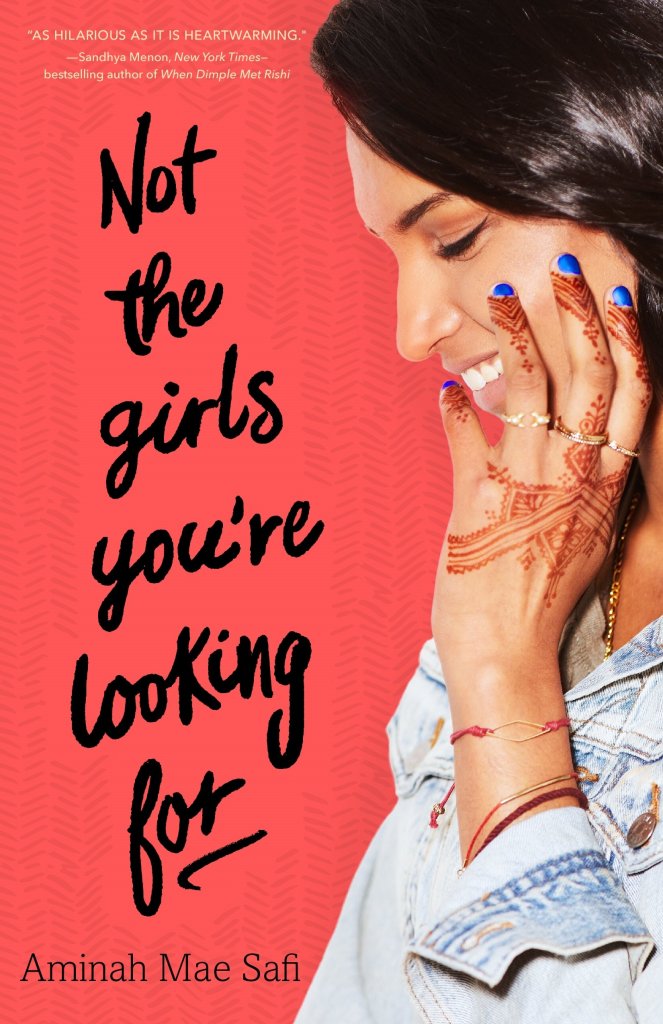
Not the Girls You’re Looking For by Aminah Mae Safi

Standard
Not the Girls You’re Looking For by Aminah Mae Safi

This book did not work for me. Despite the fact that the main character is Muslim and it is Ramadan, no matter how much I wanted to connect with this multicultural lead and her friends, and see myself in her as she navigates high school, I just could not. The writing was choppy 3rd person which distanced the main character for me, the crude language on every page, the drugs and alcohol in every scene, the detailed sexual encounters throughout, the lacking growth of the characters and the muddled point of the book in general made the book difficult to read. The book is an AR 4.9 but content wise is more suited for mature 18 year olds. Even this review might be a little too much, I’ll do my best to keep it clean. Ultimately this book missed the mark for me in showing females defining themselves, celebrating friendships and diversity, or even just creating characters to cheer for as they navigate life.

SYNOPSIS:

Leila is half Iraqi Muslim from her dad’s side and half American Catholic from her mother. She doesn’t know how to pray as her father isn’t religious, but celebrates Ramadan and Christmas and defines the world on her own terms. She is fearless and owns herself, hence she hates her name and goes by Lulu instead. The book opens with her making out with a boy in a closet which she kind of regrets and then goes to join up with her friends at the party to drink and get high and attack one another for their poor choices resulting in drama. In this instance Lulu’s anger pushes a boy in the pool, and then the four friends devise a way to get home and work out the lies they will need to tell to the parents involved. This scenario with only slight variations repeats five or six times in the book.

Lulu is the fearless one, Lo, short for Delores, is the leader, Audrey is an alcoholic math whiz and Emma, not to be underestimated and often is forgotten (literally) is coming out in her first lesbian relationship. Yes these labels are limiting and stereotypical, especially in a book calling for girl power or what not, but sadly that is really the only space they flesh out, not a whole lot more is known about them. The girls defend each other fiercely to outsiders, but are truly awful and angry to one another all the time. They break apart and Lulu doesn’t really know why, so the path back to one another isn’t really cathartic. They pull a prank to get back at a boy that crossed the line with Lulu, but it fizzles when the threat of what the prank could do is enough to keep him away and they don’t have to complete it completely.

Between the parties there are some sub plots that weave in and out. Lulu has to spend time with Iraqi family friends who don’t accept her and are critical, in Arabic, of her mother. This gives some cultural layer to the story, but the characters are pretty flat and petty and hypocritical. The bombings in Paris a few years earlier, and the resulting bullying by classmates hardened Lulu, but there isn’t much info on how awful they treated her or how it defined her, so not much sympathy is garnered by the event nor does it help the reader get inside Lulu’s head. There is also a sweeter love story brewing than the one night stands that define Lulu, but then she goes with her mother to get birth control so she can sleep with him all while making it clear that he isn’t her boyfriend, she just wants to have sex with him- which she does on her seventeenth birthday.

Eventually the girls are back together and gushing with tales of sorrow and personal growth and vows that they will always be like sisters.

WHY I LIKE IT:

I don’t mind the premise so much as the execution of it. I get that people practice Islam differently, but I really don’t get the need to even bring her religion in to such a story. Culture maybe, but even that is a stretch. I don’t know if the story would be better if it was first person, I would like to think so, as not connecting with the main character was such an obstacle for me. I wanted to see her grow and change or at least have clarity in her decisions even if I didn’t agree with them or couldn’t relate to them. I wanted to feel her remorse or the weight of her decisions, but was often just told in passing that something scared her or was hard for her, not shown it. The theme of not belonging anywhere is a legit one, but I don’t know that this book explored it, it just sort of brushed by it almost as a trial to see if the emotions would stick. Which for a character built up to be unapologetic and unafraid to suddenly want a victim label without any real emotional ties, didn’t work for me. There are such holes in the story, that at times things didn’t seem believable or details were so specific with no context that I didn’t get their purpose. I would have loved to know more about her brothers and the tests they went through, or why her family was so loyal to the Arabs around them. I desperately wanted something that showed a different side of Lulu not just the anger and “F everyone who wants to change me” mantra. People are scared of her and she enjoys that power, but I don’t get why they are scared and why she enjoys it. It seems like a big part of her story and of the book in general to miss. Yes she is independent, and I get that can be misread, but she almost seems one dimensional and flat which defies the concept of defining yourself on your own terms and carving out where you want to belong among groups that see you as other, right?

The character is pretty open that she knows little about Islam, she also claims she isn’t interested. She fasts not so much because it is a commandment but more to appreciate poor people. She says this, but actions don’t seem to back it up. She tries not to drink during Ramadan but she still smokes, gets high, makes out, and lies once the sun goes down. At one point she calls a bride and her mother whores, and refuses to apologize, so her dad gets a fatwa issued. Lulu’s mom mentions that something went all Shiite on the situation, so I’m not sure if the fatwa issuing for such a specific thing is a shiite thing or something I’m just not aware of or familiar with as a tool for handling family dramas.

FLAGS:

The whole book really. Sex, drugs, alcohol, sexual assault, lying, cheating, blackout drunk, vaping, talk of orgasms and going down, lesbian relationship, hetero relationships, sexual encounters, language etc etc etc.

TOOLS FOR LEADING THE DISCUSSION:

Would never cross my mind to share or suggest this book. Even religion representation issues aside, I don’t know that there is really a single “healthy” relationship highlighted among the main characters, some of the side characters maybe, but not enough information is given to really make that case. The characters just all seem so angry, not saying teenage years aren’t angry and messy, but this one doesn’t seem to add much perspective to that singular thought unfortunately.

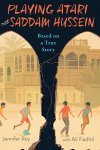
Playing Atari with Saddam Hussein: Based on a True Story by Jennifer Roy with Ali Fadhil

Standard
Playing Atari with Saddam Hussein: Based on a True Story by Jennifer Roy with Ali Fadhil

atari

This 165 page AR 3.9 book about the 42 days in 1991 that Iraq was at war with the United States is told from an 11 year old half Kurdish Christian boy’s perspective, but he mentions that he has friends that are Muslim and culturally and historically the book is relevant, important, and engaging as well.  I had my 9, 11, and 13 year old read it to gain perspective of the Gulf War, the difference between politics and people, and to see diverse religions co-existing despite stereotypes, especially in the middle east.

SYNOPSIS:

Ali gets the highest score on his Atari console the day that the bombs start falling.  Ali and his brothers Shirzad and Ahmed, and sister Shireen along with their parents retreat to the safest room in the upper middle class home to hopefully stay safe.  With experience of surviving the Iran-Iraq war which ended just three years earlier, the kids camp out at night in the room farthest from the nearby school and spend their days playing soccer in the abandoned streets.  The safe room was determined by knowing that Saddam uses his own people as human shields and places military installments in public service locations so that he can use propaganda to try and convince people that the enemy is bombing schools and hospitals intentionally to harm the innocent.

When the electricity goes out and the water cuts off, the family is forced to accept government rations.  Their dad is a dentist, but as he is essentially property of the state, he is forced to work as a medic and is often absent from home.  The family lives in Basra, which is in southern Iraq and near to the invaded Kuwait, thus all the troops pass through the city and the children spend their days keeping up their house, playing soccer with their friend Mustafa and trying to avoid the bullies Omar and Umar who’s father is in Saddam’s Ba’ath Party.

Ali speaks English because of his love of American TV and feels that if he can meet some US soldiers he will convince them that he should be in America not in Saddam’s Iraq.  He loves Superman, video games, soccer, his family, and his country, but the people, not the leader, he loathes Saddam, even though he knows he can’t ever speak ill of him.

A trip to get rations results in Ali seeing public executions and a colleague of his math professor mother’s getting hauled away.  A visit from their cousin gives them news that their father is missing. Life is not easy for the family, and yet they know they have it better than a lot of other people.  After the war, once again the family will have to put back together their lives and carry on.

The book concludes with a 14 year jump and Ali translating at the trial of Saddam Hussein where the leader who has been hiding is found guilty and sentenced to be killed by hanging.

WHY I LIKE IT:

I love that Ali is so relatable, he could really be a kid anywhere which makes what he sees and hears and experiences all the more intense.  The way that the book shows how the soldiers are forced to be soldiers, the citizenry at the mercy of the government, and the inability to speak freely so very real and frightening, is strong, but not traumatizing to the reading audience.  Even Ali being forced to observe the killing of  people in the street is handled with the target audience in mind.  They are Kurdish and had to deal with that within Iraqi society, which is a nice added layer to understanding that Iraqis are not a single monolith.  I love how the family had to go to the governor’s house and how nice his son was, even though, they are all Ba’ath Party members and part of the larger oppressive system.  It shows that things aren’t always black and white, and to convey all this to eight and nine year olds so clearly is quite remarkable.

I also like that the book holds up over time.  My kids had no idea what Atari is or was, but they could understand that it is a video game, and that it was an escape during the night for Ali to imagine he was playing a game trying to catch the falling bombs as a way to be brave and endure.

FLAGS:

Execution, death.

TOOLS FOR LEADING THE DISCUSSION:

I would consider this for a middle school book club, it is a bit short and definitely more middle grades, but it would allow kids to identify and imagine and discuss war through the fictional characters and voice their understandings of an authoritarian government structure, which would be interesting.

Author’s Reading Guide: http://www.jenniferroy.com/wp-content/uploads/2017/05/Playing-Atari-Teacher-Guide.pdf


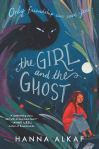
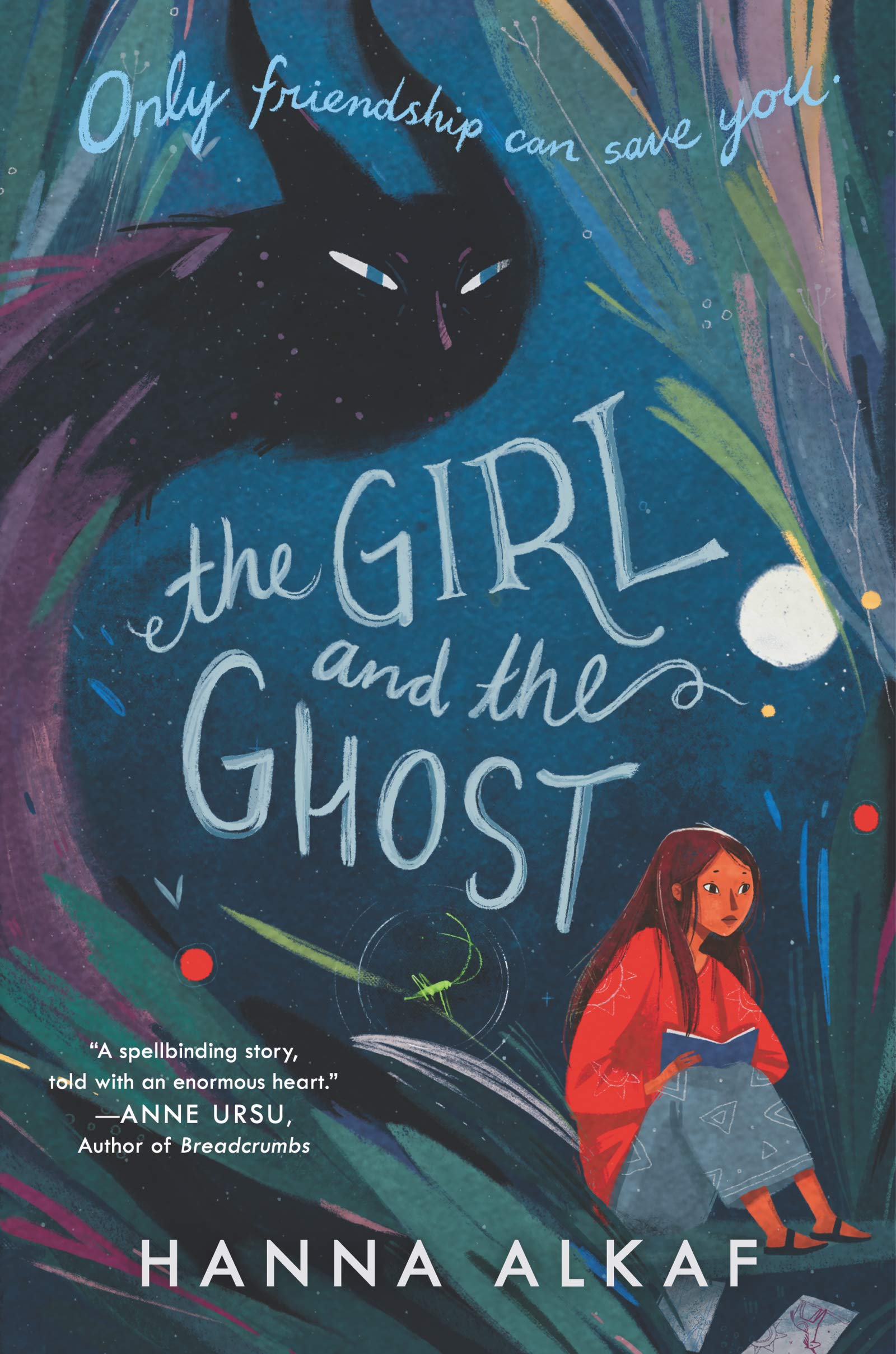
The Girl and the Ghost by Hanna Alkaf

Standard
The Girl and the Ghost by Hanna Alkaf

ghost

A book meant for middle grades, 8-12 year olds, that has depth and layers and culture and strength is not something you find very often.  Over 275 pages, the book is at times dark and haunting, but what is truly remarkable is that it doesn’t talk down to young readers and with its pop cultural references and relate-ability,  the book is not dreary.  In fact, the true “haunting” occurs after the book is finished and the concepts of friendship, being alive, and forgiveness stick around and require thought and consideration.  The book is based on a Malyasian folktale, how much is a fleshing out, or simply a starting point, I do not know, but I do know that the characters are memorable, the concept thought provoking, the writing flawless, and the intertwining of Malay culture, Muslim characters and the supernatural, a combination that makes for an enjoyable read.

SYNOPSIS:

When an old witch dies, her pelesit, her ghostly demon, is passed on to her granddaughter Suraya.  Suraya lives with her mother, a teacher, and is lonely and emotionally neglected.  An adventurous girl, the pelesit, keeps the small girl safe, but waits to reveal himself to her in the form of a grasshopper when she is older.  When he does reveal himself to her, she asks him his name, and he doesn’t know it, so she names him Pink.

Suraya and Pink become best friends, and he provides company for her as she receives very little from her mother and has no friends.  Suraya had no knowledge of her grandmother and Pink modifies the stories to leave out how evil, cruel and vindictive she was through him.  As an evil being with no heart these acts never bothered him, although he stopped enjoying them long before she died.  With Suraya however, he feels things.  He is sad that she is unloved by her mother, teased by the other children, and that she doesn’t have the things other kids have.  Suraya is kind, and forgiving, and tries so hard not to let things bother her.  Pink however, with a twitch of his antenna can make things happen.  Bad things.  Things that might at first seem like a part of life, but when Suraya catches on, she scolds Pink.  She makes him promise never to use his magic to hurt people, ever.  He reluctantly agrees, she is his master after all.  Unfortunately he doesn’t keep his promise.

On Pink’s prodding, Suraya makes friends with a new girl at school, Jing, and their friendship makes Pink jealous.  He harms Jing and Suraya decides she no longer wants to be his master.  As a result Pink is determined to make Suraya’s life miserable.  As desperation mounts, Suraya tells her mom about Pink and a pawang is called in to separate the spirit from Suraya.  Something seems off about the pawang, and when Suraya investigates, she realizes that she must save Pink from him.  Together with Jing, Pink and Suraya are off on an adventure against the pawang and might just learn more than Pink’s backstory in their efforts along the way.

WHY I LIKE IT:

I love that Suraya and her family are Muslim and that Jing is not and they are best friends.  Suraya and her family pray, celebrate Eid, give salams when at the graveyard, but obviously also believe in magic and ghosts, and somehow in the story it doesn’t seem to be contradictory or odd.  I love Suraya’s strength.  None of the relationships in her life are good.  Yet, she is good, and she forgives and fights to make those close to her better.  Pink is manipulative and controlling and abusive, but she still fights for him to be treated better and that says more about her, than whatever he is.  Suraya’s mom is distant and neglectful, but yet, there is still realistic hope that their future can be and will be better.  I love that all these layers are there and yet are subtle too.  Kids are smart and they will bring their own experiences, understanding, and expectations to decipher these relationships, and that is amazing.  I love that the characters in the story may be so different than the typical western reader, but they will still see themselves in this poor Malay girl from a small village, in her best friend Jing who lives and breathes Star Wars, or even in the religions pawang who is a power hungry charlatan; toxic friendships and family secrets make the book universal.

FLAGS:

Pink makes it look like blood is on a girls back side, implying a girls fear of leaking, but it isn’t explicit or named.  There is death and dying and supernatural and lying.

TOOLS FOR LEADING THE DISCUSSION:

I am thinking strongly about using this as a book club book, as the discussion would be delicious and varied among the participants.

Interview with the author: https://thequietpond.com/2020/08/20/our-friend-is-here-an-interview-with-hanna-alkaf-author-of-the-girl-and-the-ghost-on-writing-friendship-malaysian-childhoods-being-true-to-your-stories/


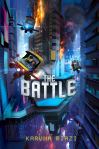
The Battle by Karuna Riazi

Standard
The Battle by Karuna Riazi

the battle

This claims to be a companion book to The Gauntlet, but it does rely heavily on details from the first to make sense of who some of the characters are as this book does little to explain them and advance their story.  In reality the book is very similar to the first book, but sadly not as fun.  I was disappointed in the 295 page AR 5.2 book, but my fourth and fifth grade boys enjoyed it as they had few expectations and the fast pace kept the book fun.

SYNOPSIS:

It has been four years since Bengali American Ahmad Mirza has left the game world, Paheli, with his sister Farah and her friends.  The old board game has been destroyed and the reboot focuses on a new video game setup.  This time around Ahmad is the main character and with his ADHD he finds himself getting in trouble a lot in school and desperate for a friend.  When a mysterious package holding a video game shows up and Winnie sticks up for him, things are possibly looking up. When all of New York freezes at the insertion of the game, however it clearly is not.  Winnie and Ahmed are off to battle the Architect and MasterMind to unfreeze their beloved city and escape Paheli.

Different battles and characters inch the duo closer to winning, but facing their fears and  being sidetracked by remnants of the last game trying to return make everything complicated.  Ahmed’s uncle returns to the game, giant mice try and help, crazy monkeys distract, and flying rickshaws populate the eastern inspired world filled with Bengali, and Arab references.

WHY I LIKE IT:

I love that it is a Muslim kid with some struggles at the helm, but there is really so very little character building that it ultimately doesn’t count for much in the long run.  Just like the first book, the characters are taken from the “real” world and transported to a game world and they must win the game to return home.  The book is fast paced and fantastical, but I constantly felt confused.  The challenges were disjointed, there wasn’t a clear objective, Ahmed didn’t recall being there before or that Vijay bhai had somehow come back with them, the mice help and then they are absent, and there wasn’t really a big reveal or explanation resolving any of it.  It felt all over the place and with little world building I didn’t feel like I could even picture what Paheli looked like, so forget feeling what the characters felt or imaging the intensity that that the game was running on.  It seemed like an updated version of the first book, but not done as well at all.

FLAGS:

Pretty clean, some intensity, some fighting/battling, death, nothing detailed nor grotesque.

TOOLS FOR LEADING THE DISCUSSION:

I think the book is great to have in a classroom or on a home book shelf especially if the Gauntlet was enjoyed, but I wouldn’t use it as a book club book because it doesn’t offer much to talk about.  There isn’t a cathartic release or even an under current of family and friendship and loyalty, it really is just surface level story telling.

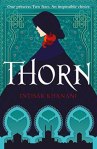
Thorn by Intisar Khanani

Standard
Thorn by Intisar Khanani

thorn

I finished this book, all 512 pages, and before closing it at 12:44 am, I picked up my phone and sent the author a thank you message on instagram.  Yes, it was that good and that fun, and so well written and so encompassing that I don’t feel like I read a book, I feel like I got to know a friend.  There is abuse, and death and sexual assault, but I think thirteen and up can handle and appreciate the crimes and the severity of them, as they are not taken lightly.  The book has magic and royalty, but is so much more about choice and justice and making life meaningful, that Thorn will stay with you as you imagine her life, long after you turn the last page.  ***I did not know it was a retelling of Goose Girl by the Brothers Grimm prior to reading the book, and only read it after writing this review, so forgive me for being so swept away by Falada and Kestrin and loathsome to Corbe’ and Valka, if it so irks you that I am.***

SYNOPSIS:

Princess Alyrra is set to marry Prince Kestrin in a neighboring country.  Unloved and unwanted by her own mother and abused by her brother, none of the royal family can figure out why the King of Menaiya would be coming to see her and appraise the match.  One possibility is because the royal Menaiyan family tends to disappear at alarming rates, and Alyrra might just be a princess that no one will miss.  When a Menaiyan mage comes to warn her and is pushed aside by a magic Lady, Alyrra may be leaving an abusive brother, but getting herself a much bigger nightmare to manage.

Alyrra is known for her honesty.  She stood up for a servant against a Lord’s daughter and prospective wife for her brother, and since then, the royals despise her and the servants adore her.  She spends her time with the holsters and cooks and they keep her aware of her cruel brother’s locations.  When the visiting entourage comes, they see her tormentor and give her a security detail, as well as see how she is beloved by the staff.

Once the match is arranged she is off to Menaiya with Valka, the girl she revealed to be a thief.  Along the way, the Lady presents herself again and switches Valka and Alyrra’s bodies, to give Valka another chance to be queen and to use the real Valka as a tool to destroy the royal family.  The only person in the traveling group aware of the switch, and that can see through it, is Falada a white talking horse, that only speaks to the real Alyrra and refuses to be ridden.

When the girls arrive at the palace, the pretend princess dismisses Alyrra, who has decided to rename herself Thoreena, Thorn.  She asks the king if there are any available positions and thus becomes the Goose Girl.

Thorn is still summoned to the castle to write letters home for the imposter and the prince and former security quad find something off with a former lady of the court finding such contentment in manual labor.  As she settles in to life with the other employees she finds laughter and companionship and only Falada prods her to reclaim her position as princess and save Prince Kestrin from the Lady.

When Falada is killed, and street justice is called on to avenge the brutal rape and killing of a friend, Thorn must decide to enjoy her quiet life or step up and be the change the people and royals of Menaiya need.

WHY I LIKE IT:

I love that it isn’t a sappy love story, it really could have been, but Thorn is calling the shots and she is enough without anyone or with everyone.  I love that she is secure in any role and that her sense of loyalty and obligation comes from within.  The writing is seamless, so often things are repeated and forced upon in a first person present tense story, but this read easily and held my interest.  I love the titles and some of the sprinkling of made up words, it gave depth and richness, as well as the struggle that Thorn had to go through to speak the language.  I loved that she had to work to acquire the skills to communicate and that it was a part of the story, it didn’t just happen, nor did it get swept aside.

Thorn is religious, but no idea what religion or what it means, she seeks going to the temple for peace and clarity, and we know she takes off her shoes, but that is about it.  The author is Muslim and the book is superb.  I had my daughter read it before I read it, and she in turn made me read it, even watching her younger siblings so I could sneak away.

FLAGS:

Death, murder, public execution, hanging, sexual assault, rape, abuse, violence.

TOOLS FOR LEADING THE DISCUSSION:

I am thinking to do it as a book club book if and when we return to school.  It would depend a bit on the group, but I think older middle school could handle it toward the end of the year.  There is a lot to discuss, a lot that readers could understand differently regarding the Lady, when her secret identity was blown, the value of love and choice, that I am confident that the conversation would be rich and enlightening.

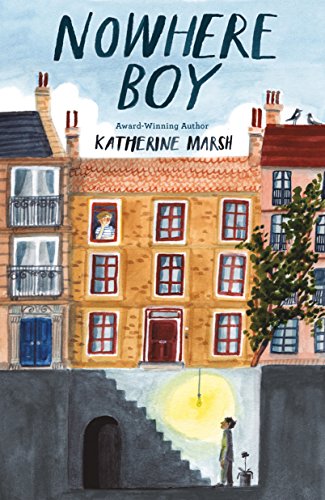
Nowhere Boy by Katherine Marsh

Standard
Nowhere Boy by Katherine Marsh

boy

I was not expecting to be so absorbed by this 362 page AR 5.4 book.  I knew it was about a Syrian refugee in Brussels and his friendship with an American kid living in Europe for a year, so I knew that Islamaphobia and immigration would all be factors.  I also knew that as a middle grade book it would be optimistic, and a bit of a stretch at times,  but when I had to pause in the first chapter to wipe the tears off my cheek, I knew that while it could be billed as, another refugee story, it really was going to be a poignant story about humanity and friendship and family and making a difference, so I settled in and was swept off to Belgium and the adventure of two determined kids.

SYNOPSIS:

The book opens with 14-year-old Ahmed on a boat with his father hoping to reach Greece from Turkey, when the boat stalls, his father and two other men, the only other people on the dinghy that know how to swim, jump into the sea to drag the boat.  When a storm swell hits them, his father is lost and Ahmed, who left Syria when an explosion killed his mom and sisters, is all alone.

Max is 13 and his parents and sister have just arrived in Belgium for a year.  Not a great student, Max learns that he will be going to a local school where French is spoken, and will be repeating 6th grade.  Less than thrilled with the news, he is additionally hurt that his parents didn’t tell him first.

The two stories start off separate with Max trying to find his footing in school and scouts where he understands very little, and has no desire to learn, and is also getting picked on by a kid named Oscar.  He learns about the history of his street and house during World War II from his after school tutor and a police officer that used to live in the house they are renting and makes regular checks on how it is being maintained.  

 Ahmed has been staying with Ibrahim and his family, another man that tried to drag the boat in the sea, but with news that they are probably going to be forced to return to Iraq, suggests that Ahmed register in as an unaccompanied minor so that he could find a place to stay.  Ahmed knows that if he registers in Beligium he will never make it to England, he hires a smuggler for 300 Euros to get him there.  When the smuggler steals his money and his phone, Ahmed worries his organs could be next, and jumps out of the moving car,  

Ahmed runs through a neighborhood looking for shelter and safety and some warmth from the frigid air.  Ahmed finds the basement of a house unlocked, he then finds a wine cellar room that is empty and decides to stay for the night as he figures out his next step. One day turns in to two and before he knows it, he has a routine of finding food upstairs during the night, which he records so that he can repay the family one day, caring for the family’s discarded orchids, and working on his English.  Then one day Max goes downstairs and discovers Ahmed living there.

Deciding he isn’t a terrorist, Max decides not to turn Ahmed in nor tell his parents, and the two become friends.  The two enlist Farah, a nice Muslim girl at school to help, and they get Oscar too, to forge papers to get Ahmed in to school.  While the biggest problem should be keeping a kid hidden in the basement, and keeping him fed and entertained, the situation is compounded as terrorist attacks by Muslim extremist plague the city and Europe, making everyone on high alert.  The police keep checking in and anti immigrant sentiment rises.  When Ahmed gets accused of being a bomb maker his secret is out, but can his knowledge of how a jewish boy was hidden in the neighborhood during the war keep him free? Nope, I’m not going to spoil it, you have to read it, trust me, you’ll thank me for it!

WHY I LIKE IT:

I love, love, love, the history parallel, and the truth in the story of Albert Jonnart and Ralph Mayer that is woven into this modern fictional story.  I love that Max so plainly says that the stories are the same and that laws that aren’t right shouldn’t be followed, yes! The book reads a lot like Refugee by Alan Gratz crossed with The Boy at the Back of the Class by Onjali Q. Rauf with the kids being so heroic and determined and awesome, throw in a dash of The Diary of Anne Frank, switching out a boy for a girl, a Muslim for a Jew, the basement for the attic, and a diary for a fictional story, and you have this book.

I love that the adventure and excitement shows how resourceful kids can be even when they don’t share common language.  Max speaks English and is learning French, he is helping Ahmed learn better English and some French, when they talk to Farah who speaks Moroccan Arabic /Berber, they often have to go through Oscar who speaks French and English.  Yay, for American television and kids who’s hearts are bigger than the obstacles they are taking on.  Additionally, when the kids hit a dead end, they reach out to Jews in America for help, knowing that the two religions have more in common than politicians and the media would like to think.  Seriously, kids should rule the world.

Ahmed is a religious boy that prays, refuses meat even when hungry to ensure it is halal, and makes sure that Max knows in Islam kindness and charity are the norm and commands, not the violence that people are doing in the name of his religion.  A lot of the moms of the kids at school where hijab, and the author gets the Islam right and believable.  It doesn’t get preachy, but a fair amount of information about Islam is shared.

FLAGS:

A lot of lying. Some violence, death, hate speech. There is mention of smoking and the adults I think drink wine at one point.

TOOLS FOR LEADING THE DISCUSSION:

I’m hoping to do this as a middle school book club selection, because it really is so good.

Author’s website: https://katherinemarsh.com/books/nowhere-boy/

Teaching: https://www.teachingbooks.net/tb.cgi?tid=60364


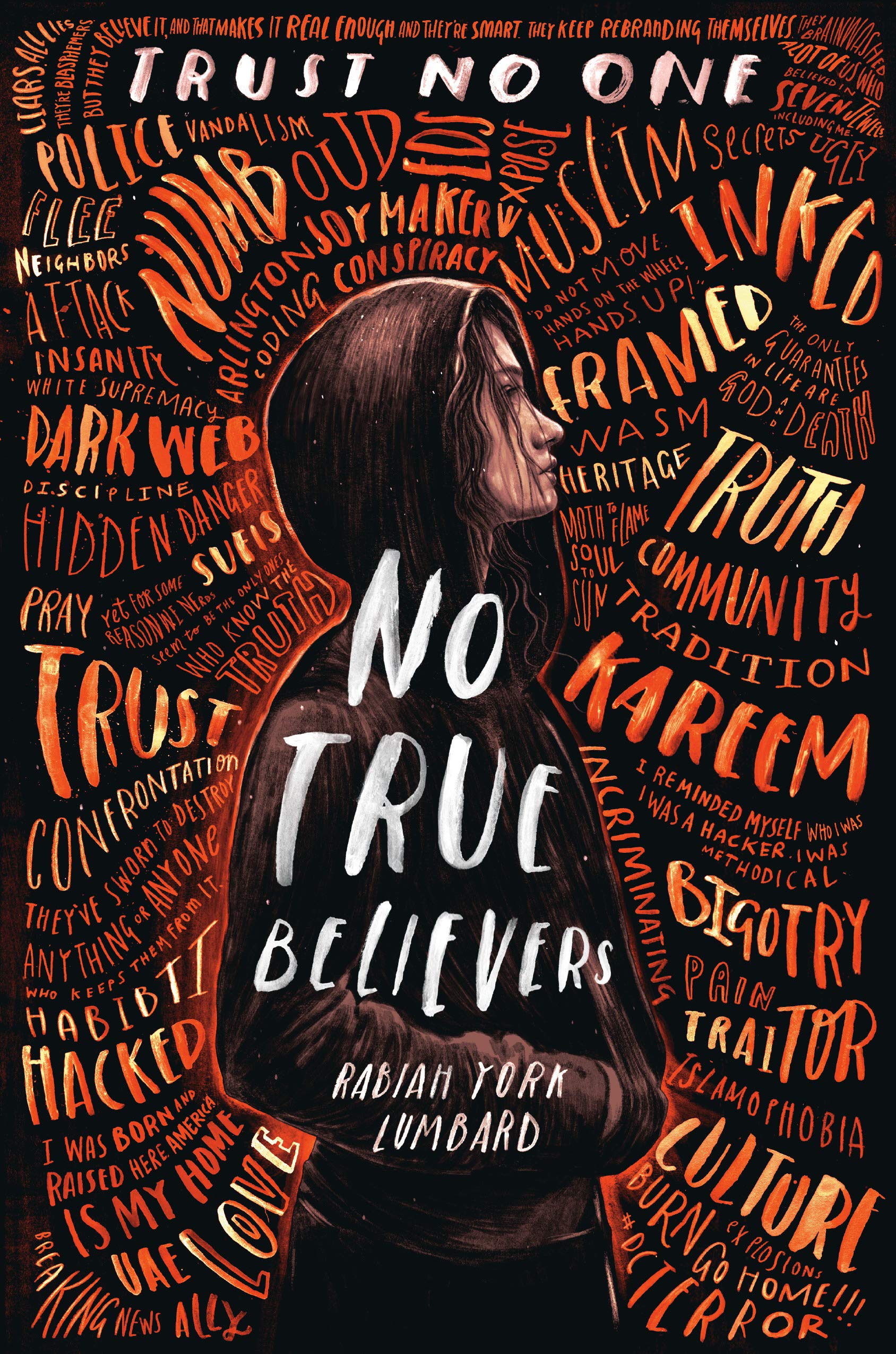
No True Believers by Rabiah York Lumbard

Standard
No True Believers by Rabiah York Lumbard

believers

This YA Fiction book by a Muslim author filled with many Muslim characters has a lot going for it, and while I didn’t love it, and felt that it was trying to do too much in 304 pages, I think most early high school readers will enjoy the cyber hacking plot, the islamaphobia and white supremacy themes that keep the book fast paced, relatable and timely.  The main character is a Muslim and has a Muslim boyfriend and all family members are fine with it, she also gets a tattoo with her mother’s permission and breaks the law, but usually with worthy motives.

SYNOPSIS:

Salma Bakkioui is the high school aged daughter of a North African father and convert mother.  They go to the mosque a few times a year, but don’t really practice, it is more heritage than actual intentional praying five times a day, yet somehow ayats from the Quran and hadith do float in and out of the story.  It is Ramadan, and the Muslims in the book are fasting except for Salma, who suffers from EDS (Ehlers-Danlos Syndrome) a connective tissue disorder, her best friend Mariam, who lived next door has just moved away because her father’s chiropractic business was failing due to racism and Islamaphobia.  Salma tried to use her hacker skills to send him more business, but ultimately they moved to the UAE.  Amir, the supportive boyfriend, oud player, and fellow Edward Norton fan is steady and good and constant.  As are her partying friend Vanessa, her physical therapist and her daughter, unfortunately, things are about to get really crazy, really fast.

When Salma and Amir go over to meet the new neighbors that have moved in to Mariam’s old house the blaring TV broadcasts a terrorist bombing nearby in DC.  The neighbors seem nice, but something is off about them, and Salma can’t quite figure it out.  From the dad and son’s matching number tattoos, the mom’s nervous behavior, and snippets of overheard conversations, it becomes apparent that something infact fishy is going on.  Salma and her younger siblings start getting bullied by classmates, and teachers and administrators turn a blind eye, cops interrogate Salma at school, and illegal snooping on the dark web reveal that the neighbors aren’t as innocent as they claim. As more and more is uncovered about the neighbors, Salma learns that she better have a plan to get out, as she is about to be framed for a lot of destruction as the new face of Islamic extremism.

WHY I LIKE IT:

I like that Salma is relevant and relatable, and while I know a lot about her family and friends, and illness, for some reason I don’t feel invested in her, and I am totally willing to conceded that that is on me, and others would really identify with her, but for some reason as much as I wanted to connect with her, I didn’t.  The supporting cast is fairly fleshed out, I’m not entirely sure why Dora and Boots are highlighted so much and I didn’t feel a tug on the emotional heartstrings of Mariam leaving, of Amir leaving, of Salma possibly saying good-bye.  I felt like even Salma and Amir being a couple and being connected through Edward Norton and Fight Club was a bit forced.  I didn’t feel it was organic or natural, it was almost like the author was trying to make a point of Muslim youth having relationships, and finding imams that were ok with tattoos. Rather than it being a plot point it seemed like it was trying to voice the author’s perspective whether it fit smoothly into the storyline or not.

I do like the tech and and the parallels between extremism whether Islamic or Christian, foreign or domestic, that drove the action of the book.  The unraveling of pieces and connections seemed a bit rushed, with unnecessary tangents affecting the pacing overall of the book, but at least there were answers to help it all make sense at the end, and make the story feel complete.

Having never written a book, I don’t know if some of the hiccups are first novel related, but I really hope the author keeps writing and keeps changing up what the mainstream Muslim protagonist lead consists of.  I love that Salma is smart and level headed and aware of her world, while still growing and owning up to her faults.  It isn’t a coming of age story, but she sets a great precedence for continued growth, loving your family and trusting yourself too. I particularly like the nuances in racism.  Some of the kids at school are jerks and bullies, some staff and teachers are bigoted and prejudice, but the right wing conspiracy groups are actively working, and their level of hatred and intelligence to mask it is great to see in a YA book.

FLAGS:

Relationships, kissing, references to marijuana brownies being consumed, violence, cursing, lying, illegal activity.

TOOLS FOR LEADING THE DISCUSSION:
I can’t use this book as a book club selection since the two main characters are making out in the first chapter, but the book really is more than a relationship story and I would be ok with my young teen reading it.  The illegal hacking is more problematic then helpful in the end, and the language, and other deviant behaviors exhibited aren’t done for shock value alone, I think a discussion after the book would be great: privacy, hate, conspiracy, faith, religion, friendships, etc.