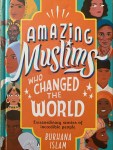
The 30 stories presented over 197 pages are inspiring, and this compilation so desperately overdue. The book is not chronological it is completely random, and at first I was confused, but as I made my way through the book, I actually grew to love not knowing who I would be reading about next. Yes, there is a table of contents, but the point being that you don’t have to be born into royalty, or be a warrior, or have lived a long time ago to be amazing, you just have to follow your passion. I learned so much about people I thought I knew about, and was tickled to learn about people I have never heard of: bakers, athletes, actors, educated slaves, architects, spies, singers, scientists and politicians.
At the end of each six page illustrated blurb is an “Interesting Fact” and at the end of the entire book are some activities in the “Amazing Extras” section. Readers can crack a code like Noor Inayat Khan who helped the Allies decode and send secret messages from France to Britain or write a poem like Rumi, a song like Yusuf Islam (Cat Stevens), draw a superhero like G. Willow Wilson, make a camera following the science of Hasan Ibn Al-Haytham, or color a picture of Muhammad Al-Idrisi.
My favorite biographies were those that I knew little or nothing about before hand. If I had to pick two favorite among all of those sections, I’d pick Khawlah bint Al-Azwar and Ayuba Suleiman Diallo.
In 600 CE Arabia, Khawah, the masked knight, learned how to fight along side her brother and eventually served with Khalid ibn Waleed in battle. It is said that she killed the Byzantine leader that captured her and then asked for her hand in marriage.
Ayuba Suleiman Diallo in the 1700s in modern day Senegal was a highly educated man who was captured and forced in to slavery in Maryland, USA, interacted with James Oglethorpe, found himself being sent to England and with the help of a Thomas Bluett was able to be freed and eventually return home a free man. SubhanAllah!
This book has it all: famous Muslim men, famous Muslim women, Black Muslims, Arab Muslims, European Muslims, American Muslims, Asian Muslims, African Muslims, Muslims who lived a long time ago, Muslims who are still alive all jumbled up and beautifully presented by a Muslim author and a handful of Muslim illustrators. This book is wonderful for 3rd graders to adults and would be a benefit on any book shelf. It is worth noting there are no sources given, and doesn’t explain how the people were chosen to be included in the book.
There is such a shortage of male Muslim protagonist middle grades books that I have been waiting quite impatiently to get my hands on this one, and alhumdulillah, it didn’t disappoint. I’m not sure if it qualifies as OWN voice, being it has a female author, but the authenticity in the little religious and cultural details would suggest that it should. The 320 page book is meant for ages 8-12, but the weight of Aziz’s father’s illness, the plot pivoting around three classic books (Holes, Bridge to Terabithia, and From the Mixed-Up Files of Mrs. Basil E. Frankweiler), and the clever reflections of Ahmed along with his quick wit and thoughtful choices, might make the book’s sweet spot be 5th to 7th grade readers (as well as us moms who are suckers for elementary literary references, teachers who are heroes, and kids realizing their potential). The book has a bully, but is clean and wonderful, and I thoroughly enjoyed it.
SYNOPSIS:
Twelve-year-old Ahmed is leaving the only home he has known in Hawaii to move to Minnesota. His dad has Cirrhosis, a result from a rare genotype of hepatitis C, and Minnesota is one of the top options for treatment. The family is nervous to move in general, but more so to move to Minnesota. It is where Ahmed’s dad Bilal grew up, and where his dad’s younger brother passed away at age 12. Ahmed’s younger sister, Sara, is perhaps the only one excited for the new adventure.
The family arrives and is greeted by Bilal’s old friends, and when school starts he realizes one of his dad’s best friends, is his English teacher, and somewhat of a legend at the school in getting kids to try and beat her at an end of the year quiz show like competition. The school is also where Bilal and his brother Muhammed went to school and a picture of Muhammed hangs right above Ahmed’s locker. The biggest stress at school is Jack. Jack who lives a few houses over, Jack who rides the same bus, Jack who is in Ahmed’s English group, and Jack who has a lot of followers at school. Jack is a bully. One who makes Ahmed’s life miserable at every turn, not just socially, but even the police.
Ahmed is a laid back kid that doesn’t like to read, but loves words, who wants to blend in yet is the only brown kid in a sea of white, who enjoys attending Jummah salat, but ultimately hates going because of the shoe chaos afterwards. Ahmed has no intention to read the books assigned in class, but some how the three classic books assigned do get read, and Holes, Bridge to Terabithia, and From the Mixed-Up Files of Mrs. Basil E. Frankweiler tie together and weave in and out of Ahmed’s epic year.
I don’t want to spoil much, but Ahmed’s dad is in the hospital a lot, there is a lot of plotting to survive being bullied, as well as getting revenge on the bully in Ahmed’s own way without involving parents. Ahmed slowly grows to love Minnesota, his small circle of friends, and his school while learning about his uncle and the kind of person he wants to be as he grows up.
WHY I LIKE IT:
Ahmed is Muslim and while his mom prays five times a day and his dad is an occasional prayer it doesn’t specify how often Ahmed prays or how he feels about religion, other than going for Jummah. At first Ahmed thinks he is being bullied by Jack because he is brown, his mom is an immigrant from India, his father the son of immigrants from India, but learns that Jack picks on anyone new. I like that for as much as Ahmed hates stereotypes and assumptions, he acknowledges that he makes them too. I like that Ahmed doesn’t like to read, but is smart, and eventually comes around to reading. He is tech smart and very mature in how he views the world and himself in it, cares for his sister and parents, handles things on his own, and builds others up. Ahmed is a good kid, not in that he doesn’t make errors or is a teacher’s pet, but in that he has a really good heart and a good head, and I think would make anyone better for knowing him. I love that the book is smart too. If you have read the three books mentioned you will love the discussions and questions about the books, if you haven’t read them, you will be tempted to after you finish this book. I wish there was a tad more religion, there is a sprinkling of culture, primarily the mom’s tragic cooking, but a bit more religion in a book that has illness and death would seem natural to me. The storytelling is superb, I was so curious where the father’s parents were, but alas it did answer that, I would have liked it sooner, but I was glad it made it in none-the-less. I would have liked a bit more from the parents about why they wanted Ahmed at his dad’s old school, or how they were comfortable constantly leaving the two kids home alone at night, but Ahmed like I said is pretty mature. I particularly love the brother sister relationship. Ahmed is a good older brother and it reminded me in some ways of my older brother, which made my heart warm, good siblings are a blessing.
There are multiple climaxes, but while I expected the dad’s health to be a big one and Jack getting what was due to be a close second along with the outcome of the literary contest, I was not prepared for the level of Jack’s torture to climb to, and was pleasantly surprised by the unresolved thread of Jack and Ahmed’s future relationship. Things in life don’t magically resolve and I love when middle grade novels keep that in mind.
FLAGS:
None
TOOLS FOR LEADING THE DISCUSSION:
I would absolutely do this in a heartbeat for a middle school book club selection. Even if the book is more middle grades, I think the students will enjoy it and be surprised by the emotional investment the dad character extracts. I think they will also benefit from the literary references, relatable characters, and the overall great storytelling.
A nonfiction picture book for teens that features amazing women from ancient times to the present day. Many of the women featured are Muslim and each entry receives a teasing summation page with a full page portrait from one of five international artists before a two page, more in-depth biography is presented. The 112 pages feature an introduction, and a map to start the book off, and acknowledgements and a glossary at the end. There are large time gaps that I wish would have been commented on, the geographical pool includes India which surprised me, and in one of the entries the way hijab is discussed seemed judgmental to me, but other than that the stories are absolutely remarkable. There are amazing women in every culture and throughout all time periods, but to see one that highlights a region that is stereotypically oppressive to women is a sight for sore eyes. I learned so much and marveled at the intellect, bravery and determination shown from being rulers of empires to intellectuals to scientists and artists everything in between.
The book starts with Nefertiti born in 1370 BCE and concludes with Zahra Lari, a hijab wearing ice skater from the United Arab Emirates born in 1995. There are “celebrities” such as Amal Clooney, Fairuz, Cleopatra, Sheherazade and many that might not be as well known.
I particularly enjoyed learning about Zenobia the 3rd century warrior queen who conquered a third of the Roman empire in just five years. Sufi mystic and poet Rabi’a al Adawiyya and her devotion to Allah swt. Eqyptian Shajarat al-Durr who was nicknamed Queen of the Muslims in the 13th century. And Hurrem Sultan from the Ottoman Empire.
Not every one featured was a ruler or married to one, and not are so far in the past, which in many ways gives the collection it’s charm. Somayya Jabarti was the first female editor-in-chief in Saudi Arabia in 2014 and Maha al Balushi is the first Omani woman to fly professionally for her country’s airline in 2010, examples of two women presented that cracked the glass ceiling by following their own dreams.
It is great to learn about the strength of the women from the past and see how to add to the legacy. The book is a great reference, as well as a source of inspiration for people of all backgrounds to enjoy and appreciate. I found the book at my local public library in the YA/Teen nonfiction women section.
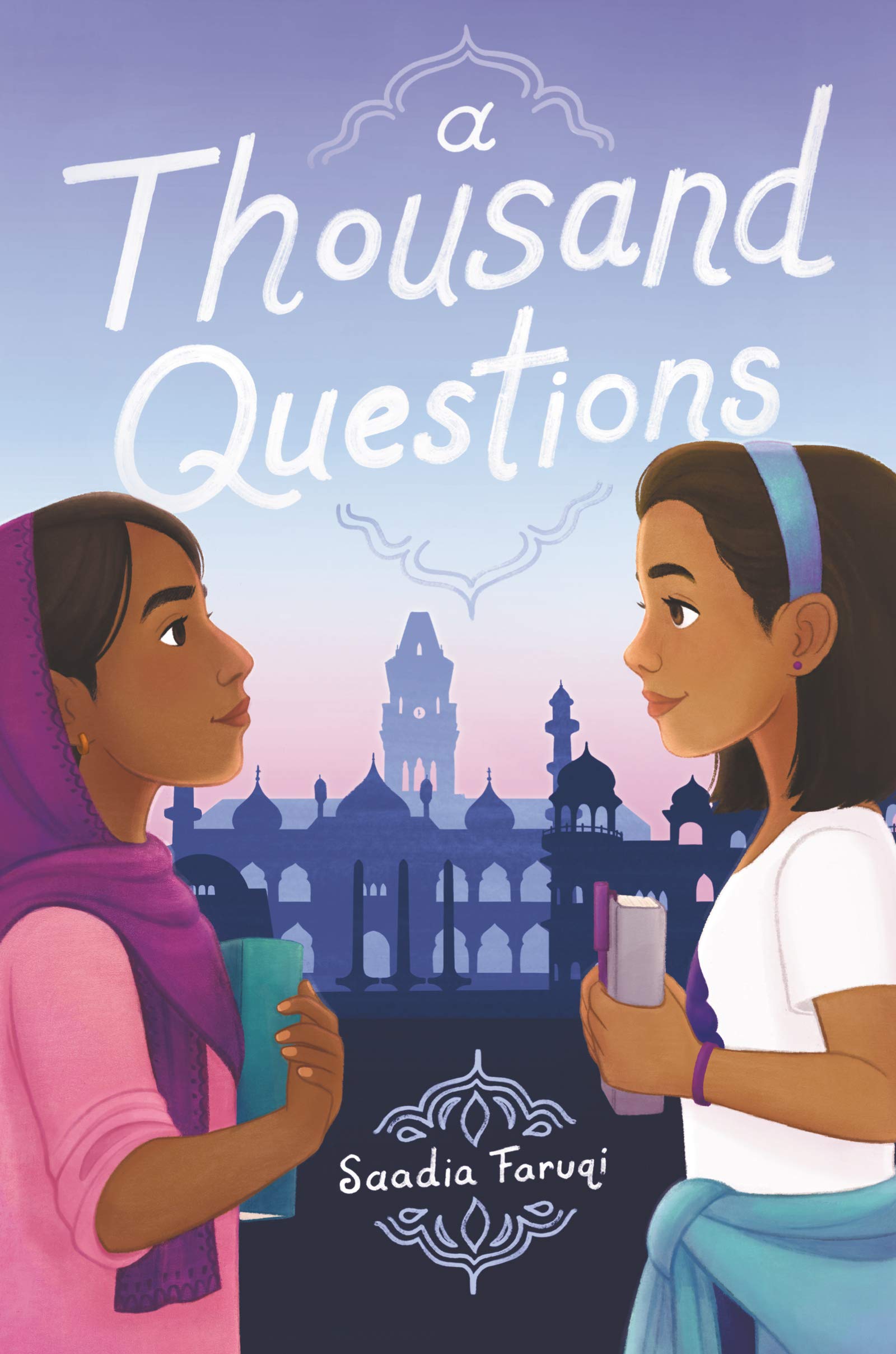
This 320 page middle grade novel with alternating point of view chapters engulfs you like a warm genuine hug. It does not have a clear climax, it is predictable, and some characters and cultural touch points could have used more detail, but honestly, I couldn’t put it down. As a half American kid who spent my summers in Karachi, so much of the author’s love of her homeland flows so effortlessly from the pages and took me back to my childhood and how the transformation of comparing the two countries moves to seeing the best in both causes growth within your heart and makes leaving so devastatingly hard. Readers of all backgrounds will seamlessly fall in to the story and enjoy the growth of the main characters, while learning a bit about a culture and the similarities of people.
SYNOPSIS:
The back drop is the sweltering heat of a Karachi summer in the middle of elections. Mimi, Maryam, is visiting Pakistan for the first time in her life. It is her mother’s home land, but her grandparents, and her mom aren’t close. They didn’t approve of Mimi’s dad and mom getting married, and even though they have been divorced for years and he has left, Mimi’s mom hasn’t been home in 12 years.
Sakina narrates the other chapters. She is the daughter of Mimi’s grandparent’s cook. She dreams of going to school, but needs help with her English to pass the admissions test. And even if she passes her family needs her income to survive, and her father’s failing health means that she has to take over his job too.
When Mimi arrives at her grandparents home, it is awkward at best. She doesn’t really know her grandparents, she has never had servants before, and her mother is rarely around. That leaves her to get to know Sakina. Sakina finds this odd as the owners of the home rarely “chat” with her and here this American girl wants to get to know her and is fine with helping in the kitchen. The two strike a tentative friendship as Mimi agrees to help Sakina with her english, and Sakina with the permission of Mimi’s grandmother and with the use of the driver, agrees to show her some of the city.
As Mimi takes in the traditional tourists sites she gives Sakina her first taste of ice cream and soda and other “luxuries” she has never experienced. Sakina introduces her to bun kabobs and other local foods. The budding friendship isn’t smooth, mostly because Mimi constantly compares Pakistan to America and Sakina doesn’t understand why Mimi doesn’t have a father. When the girls find out that Mimi’s dad, a journalist, is in Karachi covering the elections, the girls work together to try and find him.
Throughout all of this, Mimi keeps a journal and the entries are letters to her father.
WHY I LIKE IT:
I love that the girls have to navigate their friendship without and often despite interference from adults. I also like that while societal wise one girl is seen as economically privileged and one is not, the book gives enough for even elementary aged children to see that in America Mimi and her mom are financial struggling, but in Pakistan they are not and how that disparity is arbitrary. They also see that family and safety and security are also a part of life’s quality and not country specific. Things that one girl takes for granted are envied by the other, and it goes both ways.
Even for a middle grades book, there were some plot holes. If Mimi had been late night googling and plotting on a secret map all the places her dad had been writing articles from, she should have had a heads up about Pakistan. She knows so little about Islam and has like one shelwar kamees, so it seems a bit of a stretch that she speaks urdu pretty proficiently. I feel like some stumbling with the language or some back story on that would have been great.
Religion is handled as a cultural touch point, neither girl prays, but both find solace in visiting a masjid. Various characters are in sleeveless tops, the athan is heard in the back ground. I wish there would have been a bit more finding of Islam as Mimi found her culture too, but alas it isn’t there.
The majority of the book takes place within the grandparent’s home with the elections being a big part of why they can’t go out, yet the mom goes out a lot, which really rubbed me the wrong way. She took her daughter shopping once to meet an old friend and that is it. Who travels across the world to spend zero time with her kid. I didn’t like the mom at all, and wish there was some background or even some growth on her part. A lot of the minor characters seemed to fizzle as well in terms of having some depth.
There are some cultural and country facts at the end of the book, but within the text I was surprised that more wasn’t shared. I like that it mentioned Karachi was the original capital, but it should have also in the same sentence mentioned that Islamabad is the current, I think readers would assume that Karachi is still the capital of Pakistan.
The book is an OWN voice through and through and the value of that is felt in every sentence. It isn’t all positive and rosy, but it is genuine. The author loves what she is writing about and it shines through leaving the reader with a favorable sense of Pakistan: the country, the culture and the people.
FLAGS:
The book is clean, possibly some tense moments when Sakina’s family is robbed. There is also discussion of marrying someone your parents don’t approve of, divorce, and Mimi’s mom possibly having a boyfriend. Mimi’s mom is an artist and paints pictures of people. There is lying and scheming.
TOOLS FOR LEADING THE DISCUSSION:
I think the book would be a fine choice for an elementary book club, I think any one older will find the book a tad bit predictable. I plan to have my children read it so we can discuss points of view, experiences, universal traits and social economic classes. There are a lot of wonderful lessons wrapped up in a heartfelt story that I can see 4th and 5th grade children benefiting from over and over again.
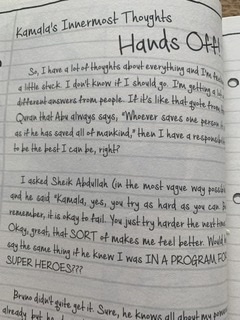
This is the first book in a new middle grade Marvel series told from Kamala Khan’s perspective. Part graphic novel, part screen shots, emails, diaries, fan fiction and doodles, the book features a diverse group of young marvel characters and even some quotes from the Quran. At 175 pages the book has action, humor and themes of team work, self improvement, friendship, second chances, and balancing life that will appeal to boys and girls that are fans of comics, but might be a little scattered for those that only know the main superheroes from pop culture.
SYNOPSIS:
Kamala Khan aka Ms. Marvel is doing a good job keeping villains out of her New Jersey neighborhood, but she is also causing damage to property in the process. When she gets caught on camera destroying a building, a letter from Captain Marvel follows with an invitation to join the Avengers Institute. Already balancing school, her writing of fan fiction and her super hero obligations, Kamala worries if she can handle one more thing and if she is up for making new friends. But, it is Carol Danvers asking, so she reflects on a quote from the Quran her dad always says and talks to Sheikh Abdullah, and ultimately decides to give it a try.
At the Institute she makes friends with Miles Morales (Spiderman) and Doreen Green (Squirrel Girl). The three of them are assigned to be a team for the Academic Decathlon at the end of the semester and to succeed they have to learn about trusting each other, team work, making smart decisions and communicating. Their biggest and most sinister rivals are Max Frankenstein, Kid Immortus, Death Locket and Kid Apocalypse. with the group leader, Kid Immortus being focused on Ms. Marvel and convinced that if he can clone her atoms he too can engorge. Kid Apocalypse however, has a class with Kamala and the two of them are kind of becoming friends. Throw in teachers like Beast from X-Men, Lockjaw teaching interdimensional travel and diplomacy, and an independent study class with Ant-man and there is a lot of fan girling going on.
WHY I LIKE IT:
I love that they are super heroes, but the book is about everyday real world struggles. The book doesn’t have a plot or climax so to speak, but more lays the foundation for the rest of the series and gives young readers a lot to relate to with new school awkwardness. There are strong themes of being a good friend, a good loser, seeing the good in others and really understanding what it takes to make a team work. There are some great lines, “politicians don’t have anything on aunties,” that speak to Kamala’s desi environment and I absolutely love that Kamala Khan mentions an imam, quotes the Quran twice, has a friend that wears hijab, and a mom that does too.
FLAGS:
The book is pretty clean.
TOOLS FOR LEADING THE DISCUSSION:
I don’t think it would work as a book club selection, but I think readers 3rd or 4th grade and up that love super heroes will enjoy the fun dynamic read.
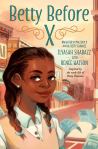
This 248 middle grades (AR 4.9) fictionalized biography of Betty Sanders, later to be Betty X and then Betty Shabazz, is the early years of her life in Detroit during the 1940s and how she understood her place in her family, and in the community. Written by her daughter, the book hops around to major events in her life and doesn’t detail a lot of the whys, but rather keeps an 11 year-old-perspective, allowing readers to identify with her family stresses and anger at the racial discrimination and violence that is rampant. Showing disagreements within the black community allows young readers to broaden their horizons and not see the civil rights as a monolithic point on a timeline, but something that is still ongoing and part of culture still today. There is nothing Islamic in the book, as this is a glimpse of her childhood long before Nation of Islam, her conversion to Sunni Islam or her Hajj, in fact the majority of the book focuses on her involvement in the Bethel African Methodist Episcopal Church.
SYNOPSIS:
Betty was born in Georgia, as the story goes, but before she was even a year old, Betty’s grandma took her away from her mother and gave her to her aunt, Fannie Mae, to raise. Having seen a bruise on the baby girl’s neck Grandma Matilda didn’t feel that the young mother was capable to care for Betty. Fannie Mae showered Betty with love and consistency and treated her like her own daughter. Betty saw her first lynching while in Fannie Mae’s care and the image stayed with her her whole life. When Betty was seven her aunt died and Betty went to live with her biological mother, Ollie Mae, in Detroit.
In Detroit, Ollie Mae has married and has three daughters with her husband, Arthur, who also has two sons. A full house that is religious and disciplined, but for Betty not full of love. She prays that her mother will look at her the way she looks at her sisters, but that never seems to happen. The family attends Bethel AME church and at age 11 that is when the story gets going. Betty and her friends sneak out of church to get candy and the cost will probably be a whipping. Luckily a few of the church ladies like Betty and realize how hard Ollie Mae is on her. They work to get Betty permission to hang out with girls her own age and try and convince her mother to let her join the Jr. Housewives’ League. Ollie Mae doesn’t agree with the work of the Housewives, a strong group of women that work to convince others to only support businesses that hire Negroes. This organization is a major division within the community and the church. Mrs. Malloy and Mrs. Peck are leaders in the organization, and one of Betty’s friends is for it, while another is against it. This rift affects Betty in many ways.
At age 11 Betty leaves home to go and live with the Malloy family. A husband and wife who have no children and own a shoe repair shop. One night turns into two and then she is living there full time and only seeing her siblings and mom at church on Sunday. She even gets to calling Mrs. Malloy, Mother. As she comes of age with a new family, and splintering friendships she seeks to make her own family with those that love her, and seeing violence targeted against blacks when a young boy is shot by police in the back, and working with civil rights activists- the icon and leader we know Betty Shabazz to be, is shaped and inspired.
WHY I LIKE IT:
I love that she gets her own story and own voice, not just to be left as someone’s wife. She is a force before she meets Malcolm and after he is murdered. Her story is shaped by so many outside influences, but ultimately it is her own and even in her early years the reader feels that. She seeks out those that love her the way she should be loved, but she doesn’t give up on those that try and leave her either. She fights for her mother’s praise and doesn’t abandon friends that believe differently than her, which is powerful to see from an 11 year old. She sees the world around her and takes a stand against that which is wrong, she feels and hurts and doubts, but she gets back up.
I like that she questions if what she is fighting for will make a difference, while simultaneously doesn’t want to take racism quietly. The day-to-day nuances flesh out the struggle of the civil rights and give a unique perspective that biographies that cover adult lives or larger portions of one’s life don’t necessarily spend time on. Seeing activism affect a young girl’s friendships will stay with readers, as well as how desperate she is for her mother’s love, just as seeing how she is treated on a shopping trip will create a sense of universal struggle that make equality in society resonate as being the responsibility of us all, not just those that are being oppressed.
FLAGS:
Racism, violence, murder, lynching, abuse, Betty being born out of wedlock.
TOOLS FOR LEADING THE DISCUSSION:
The book would work for a book club, and would definitely be a great historical fiction touchpoint to bridge with the Black Lives Matter movement. A classroom discussing Civil Rights and Malcolm X would perhaps get more value from it than a half hour lunch chat, but either way the book should be read, the ideas discussed, and people made aware of Betty Shabazz’s life.
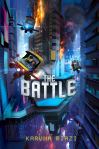
This claims to be a companion book to The Gauntlet, but it does rely heavily on details from the first to make sense of who some of the characters are as this book does little to explain them and advance their story. In reality the book is very similar to the first book, but sadly not as fun. I was disappointed in the 295 page AR 5.2 book, but my fourth and fifth grade boys enjoyed it as they had few expectations and the fast pace kept the book fun.
SYNOPSIS:
It has been four years since Bengali American Ahmad Mirza has left the game world, Paheli, with his sister Farah and her friends. The old board game has been destroyed and the reboot focuses on a new video game setup. This time around Ahmad is the main character and with his ADHD he finds himself getting in trouble a lot in school and desperate for a friend. When a mysterious package holding a video game shows up and Winnie sticks up for him, things are possibly looking up. When all of New York freezes at the insertion of the game, however it clearly is not. Winnie and Ahmed are off to battle the Architect and MasterMind to unfreeze their beloved city and escape Paheli.
Different battles and characters inch the duo closer to winning, but facing their fears and being sidetracked by remnants of the last game trying to return make everything complicated. Ahmed’s uncle returns to the game, giant mice try and help, crazy monkeys distract, and flying rickshaws populate the eastern inspired world filled with Bengali, and Arab references.
WHY I LIKE IT:
I love that it is a Muslim kid with some struggles at the helm, but there is really so very little character building that it ultimately doesn’t count for much in the long run. Just like the first book, the characters are taken from the “real” world and transported to a game world and they must win the game to return home. The book is fast paced and fantastical, but I constantly felt confused. The challenges were disjointed, there wasn’t a clear objective, Ahmed didn’t recall being there before or that Vijay bhai had somehow come back with them, the mice help and then they are absent, and there wasn’t really a big reveal or explanation resolving any of it. It felt all over the place and with little world building I didn’t feel like I could even picture what Paheli looked like, so forget feeling what the characters felt or imaging the intensity that that the game was running on. It seemed like an updated version of the first book, but not done as well at all.
FLAGS:
Pretty clean, some intensity, some fighting/battling, death, nothing detailed nor grotesque.
TOOLS FOR LEADING THE DISCUSSION:
I think the book is great to have in a classroom or on a home book shelf especially if the Gauntlet was enjoyed, but I wouldn’t use it as a book club book because it doesn’t offer much to talk about. There isn’t a cathartic release or even an under current of family and friendship and loyalty, it really is just surface level story telling.
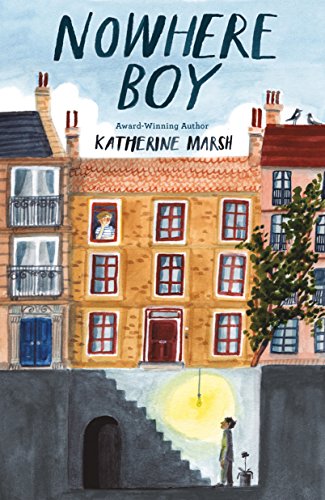
I was not expecting to be so absorbed by this 362 page AR 5.4 book. I knew it was about a Syrian refugee in Brussels and his friendship with an American kid living in Europe for a year, so I knew that Islamaphobia and immigration would all be factors. I also knew that as a middle grade book it would be optimistic, and a bit of a stretch at times, but when I had to pause in the first chapter to wipe the tears off my cheek, I knew that while it could be billed as, another refugee story, it really was going to be a poignant story about humanity and friendship and family and making a difference, so I settled in and was swept off to Belgium and the adventure of two determined kids.
SYNOPSIS:
The book opens with 14-year-old Ahmed on a boat with his father hoping to reach Greece from Turkey, when the boat stalls, his father and two other men, the only other people on the dinghy that know how to swim, jump into the sea to drag the boat. When a storm swell hits them, his father is lost and Ahmed, who left Syria when an explosion killed his mom and sisters, is all alone.
Max is 13 and his parents and sister have just arrived in Belgium for a year. Not a great student, Max learns that he will be going to a local school where French is spoken, and will be repeating 6th grade. Less than thrilled with the news, he is additionally hurt that his parents didn’t tell him first.
The two stories start off separate with Max trying to find his footing in school and scouts where he understands very little, and has no desire to learn, and is also getting picked on by a kid named Oscar. He learns about the history of his street and house during World War II from his after school tutor and a police officer that used to live in the house they are renting and makes regular checks on how it is being maintained.
Ahmed has been staying with Ibrahim and his family, another man that tried to drag the boat in the sea, but with news that they are probably going to be forced to return to Iraq, suggests that Ahmed register in as an unaccompanied minor so that he could find a place to stay. Ahmed knows that if he registers in Beligium he will never make it to England, he hires a smuggler for 300 Euros to get him there. When the smuggler steals his money and his phone, Ahmed worries his organs could be next, and jumps out of the moving car,
Ahmed runs through a neighborhood looking for shelter and safety and some warmth from the frigid air. Ahmed finds the basement of a house unlocked, he then finds a wine cellar room that is empty and decides to stay for the night as he figures out his next step. One day turns in to two and before he knows it, he has a routine of finding food upstairs during the night, which he records so that he can repay the family one day, caring for the family’s discarded orchids, and working on his English. Then one day Max goes downstairs and discovers Ahmed living there.
Deciding he isn’t a terrorist, Max decides not to turn Ahmed in nor tell his parents, and the two become friends. The two enlist Farah, a nice Muslim girl at school to help, and they get Oscar too, to forge papers to get Ahmed in to school. While the biggest problem should be keeping a kid hidden in the basement, and keeping him fed and entertained, the situation is compounded as terrorist attacks by Muslim extremist plague the city and Europe, making everyone on high alert. The police keep checking in and anti immigrant sentiment rises. When Ahmed gets accused of being a bomb maker his secret is out, but can his knowledge of how a jewish boy was hidden in the neighborhood during the war keep him free? Nope, I’m not going to spoil it, you have to read it, trust me, you’ll thank me for it!
WHY I LIKE IT:
I love, love, love, the history parallel, and the truth in the story of Albert Jonnart and Ralph Mayer that is woven into this modern fictional story. I love that Max so plainly says that the stories are the same and that laws that aren’t right shouldn’t be followed, yes! The book reads a lot like Refugee by Alan Gratz crossed with The Boy at the Back of the Class by Onjali Q. Rauf with the kids being so heroic and determined and awesome, throw in a dash of The Diary of Anne Frank, switching out a boy for a girl, a Muslim for a Jew, the basement for the attic, and a diary for a fictional story, and you have this book.
I love that the adventure and excitement shows how resourceful kids can be even when they don’t share common language. Max speaks English and is learning French, he is helping Ahmed learn better English and some French, when they talk to Farah who speaks Moroccan Arabic /Berber, they often have to go through Oscar who speaks French and English. Yay, for American television and kids who’s hearts are bigger than the obstacles they are taking on. Additionally, when the kids hit a dead end, they reach out to Jews in America for help, knowing that the two religions have more in common than politicians and the media would like to think. Seriously, kids should rule the world.
Ahmed is a religious boy that prays, refuses meat even when hungry to ensure it is halal, and makes sure that Max knows in Islam kindness and charity are the norm and commands, not the violence that people are doing in the name of his religion. A lot of the moms of the kids at school where hijab, and the author gets the Islam right and believable. It doesn’t get preachy, but a fair amount of information about Islam is shared.
FLAGS:
A lot of lying. Some violence, death, hate speech. There is mention of smoking and the adults I think drink wine at one point.
TOOLS FOR LEADING THE DISCUSSION:
I’m hoping to do this as a middle school book club selection, because it really is so good.
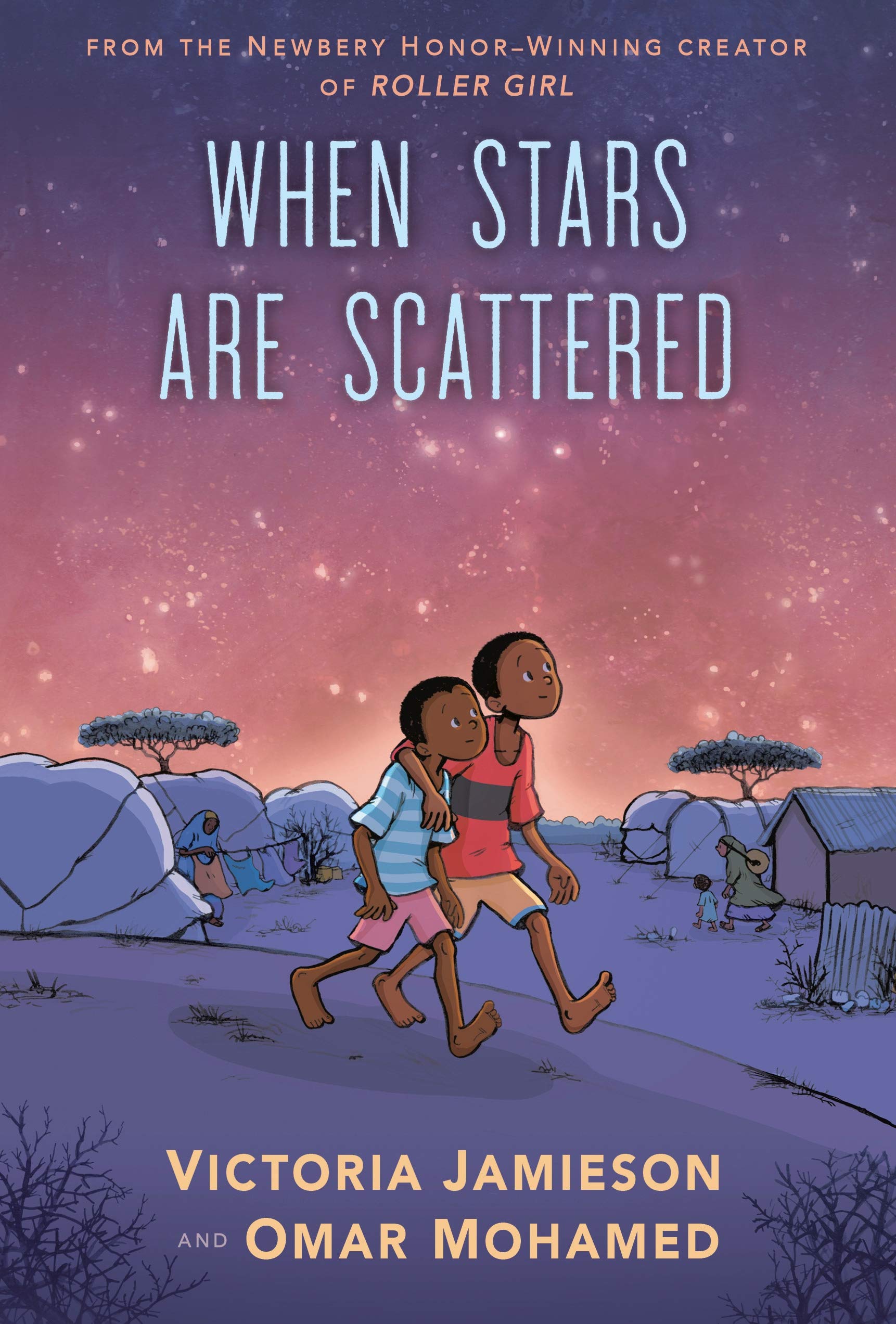
This graphic novel swept me off my feet and left me in tears, not because of the hard life and sadness that life in a refugee camp entails, I had braced myself for that, but because of the hope and humanity and beauty that is so powerfully expressed and conveyed in this 264 page book. Meant for 3rd graders and up, I think kids through middle school should be encouraged to read it. The illustrations and colors are incredibly well done and the story is based on a true story that needs to be told and shared. It is definitely in the top 10 books I’ve read this year and I keep catching my 11 year old re-reading this book repeatedly (like 5 or 6 times).
SYNOPSIS:
Omar Mohamed lives in Dadaab refugee camp in Kenya. His father was killed in the Somali war and his mother has not been seen after she sent Omar and his younger brother Hassan to run with the neighbors to escape the violence. Hasan suffers from seizures and doesn’t speak, save one word, Hooyo, mother in Somali. The two boys have an adopted mom Fatuma, who looks after the boys in the camp as if they were her own. Unable to go to school, Omar spends his days looking after his brother, playing soccer with plastic bags, and waiting in lines for water, food, and news of a better opportunity.
When Omar gets the chance to go to school (5th grade) he has to make the difficult decision of pursuing his own opportunities, with the hope of helping Hassan later, or living day to day and taking care of his younger brother. He is finally convinced that education will help them both, and that if the girls can find a way to do their chores and attend class, he can too.
Each transition from primary, to middle to secondary school requires testing, and only the top get to continue. Determined to stay in school, Omar studies while dealing with life’s many challenges and the daily additional challenges of living with little food and resources.
When Omar and Hassan’s names finally appear on a UN interview lists for resettlement, hope seeps in, but the wait and the uncertainty prove to be yet another test. Along the way there are side characters from the United Nations that show compassion, other families that show how generous and loving humans can be, female classmates show him how to take advantage of his privilege and friendships that move friends to family.
WHY I LIKE IT:
The book is gripping and has heart. I don’t know what I expected, but I truly could not put it down. The character’s stresses are felt and emotions are conveyed so powerfully, that I don’t know that you can read the book and forget it. The most emotional part for me was his honesty in dealing with his brother, the strength of his friends, particularly female, and the bond to Fatuma. Truly their living arrangements and loss of family is gut wrenching, but it was the little things that touched me the most. The honesty of Omar having to decide if he was tempted to not go to school because he was scared. Was he using his brother as an excuse to stay with something he knew. The emotional tipping point of no return for me was when he realized Fatuma would not be able to go to the second interview with the UN and would not be a part of what came after. Of course I knew that, but by that point I was so connected to the character, that when Omar realized it, I broke for him. To feel that connection in a graphic novel was new for me, perhaps a first, and alhumdulillah I am better for it.
The characters are Muslim and behave traditionally with praying and Ramadan and Eid.
FLAGS:
There is talk of khat, something the men chew on the side of the road to forget things. There is some violence, bullying, a young girl getting married before 6th grade and having a baby.
TOOLS FOR LEADING THE DISCUSSION:
Yes! I am hoping if and when we resume school I am starting with this book inshaAllah, for my middle school book club. There is so much to talk about and understand and empathize with.
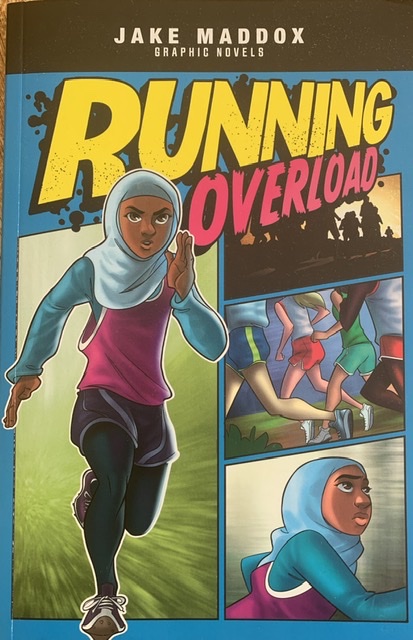
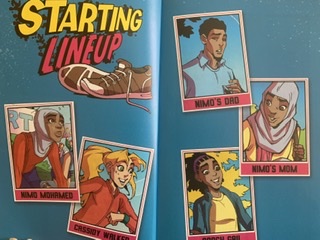
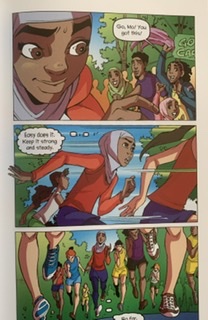
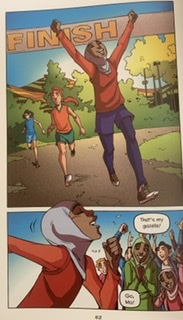
This 72 page graphic novel features a female Muslim protagonist trying to balance her desire to be a great cross country runner and the rest of her life. Meant for 3rd graders, the lessons are applicable and relevant for readers in middle school as well.
SYNOPSIS:
Nimo Mohamed has made the varsity track team, and is determined to keep up with the older girls. She is training too hard which her coaches and parents warn her against, but she doesn’t listen. As a result she is lying to her family about what she is doing, her grades are suffering, and her body is exhausted to say the least. After coming dead last in a meet, getting a D on an English test, and injuring her knee, the truth comes out and her dad has her quit the team. Can she convince him to give her one more chance? Can she learn to pace herself?
WHY I LIKE IT:
There is nothing Islamic in the book except for the main character’s family. The women wear hijab when out, not at home and they have Islamic sounding names. I like that she is modestly dressed when she runs and that no one seems to care that she is Muslim. This story is not about her faith, it is a universal story of balance, and the character highlighting the moral is Muslim. Her parents are divorced, but are on the same page regarding her running and school balancing act, and they come together to support her. I also like that the book is a sports book and has a female girl of color as the lead. There is a lot of very intentional diversity in the book and it is refreshing to see.
There are questions at the end, and running vocabulary and tips for running as well.
FLAGS:
None
TOOLS FOR LEADING THE DISCUSSION:
The book wouldn’t lend itself well to a book club, but would definitely provide one-on-one discussion opportunities. The short linear story is all about imparting teachable moments on the reader, which isn’t a bad thing, but I think the real strength is that the book is one of a larger series that should really be in every classroom and library to show how balance and integrity and strength and diversity are values that we need to hear over and over, not just in one running book, but from a lot of different sources.


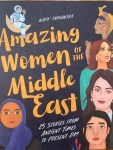
 A nonfiction picture book for teens that features amazing women from ancient times to the present day. Many of the women featured are Muslim and each entry receives a teasing summation page with a full page portrait from one of five international artists before a two page, more in-depth biography is presented. The 112 pages feature an introduction, and a map to start the book off, and acknowledgements and a glossary at the end. There are large time gaps that I wish would have been commented on, the geographical pool includes India which surprised me, and in one of the entries the way hijab is discussed seemed judgmental to me, but other than that the stories are absolutely remarkable. There are amazing women in every culture and throughout all time periods, but to see one that highlights a region that is stereotypically oppressive to women is a sight for sore eyes. I learned so much and marveled at the intellect, bravery and determination shown from being rulers of empires to intellectuals to scientists and artists everything in between.








 This graphic novel swept me off my feet and left me in tears, not because of the hard life and sadness that life in a refugee camp entails, I had braced myself for that, but because of the hope and humanity and beauty that is so powerfully expressed and conveyed in this 264 page book. Meant for 3rd graders and up, I think kids through middle school should be encouraged to read it. The illustrations and colors are incredibly well done and the story is based on a true story that needs to be told and shared. It is definitely in the top 10 books I’ve read this year and I keep catching my 11 year old re-reading this book repeatedly (like 5 or 6 times).





 Islamic School Librarian