Category Archives: Adult

Far Away from Here by Ambata Kazi

Standard
Far Away from Here by Ambata Kazi

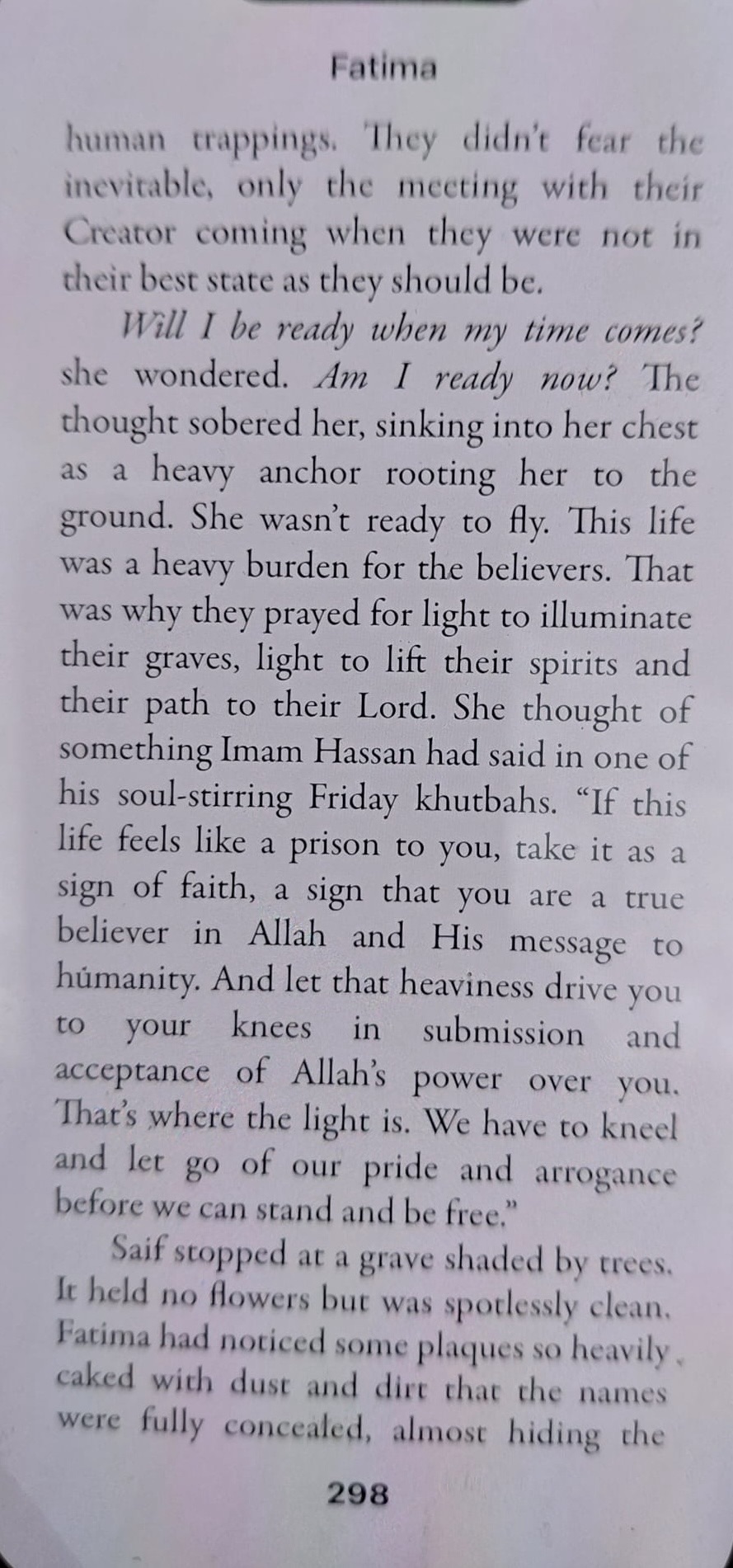
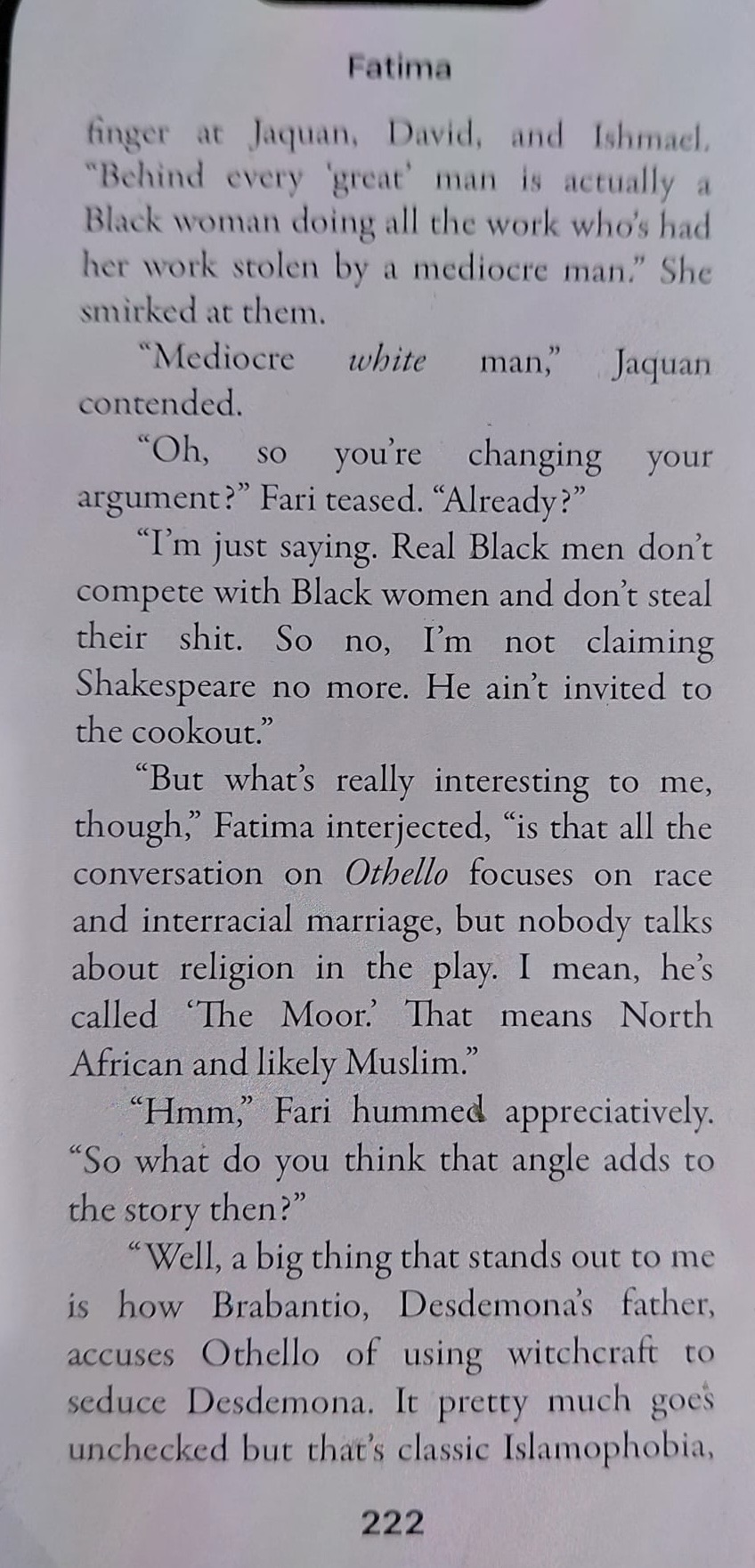
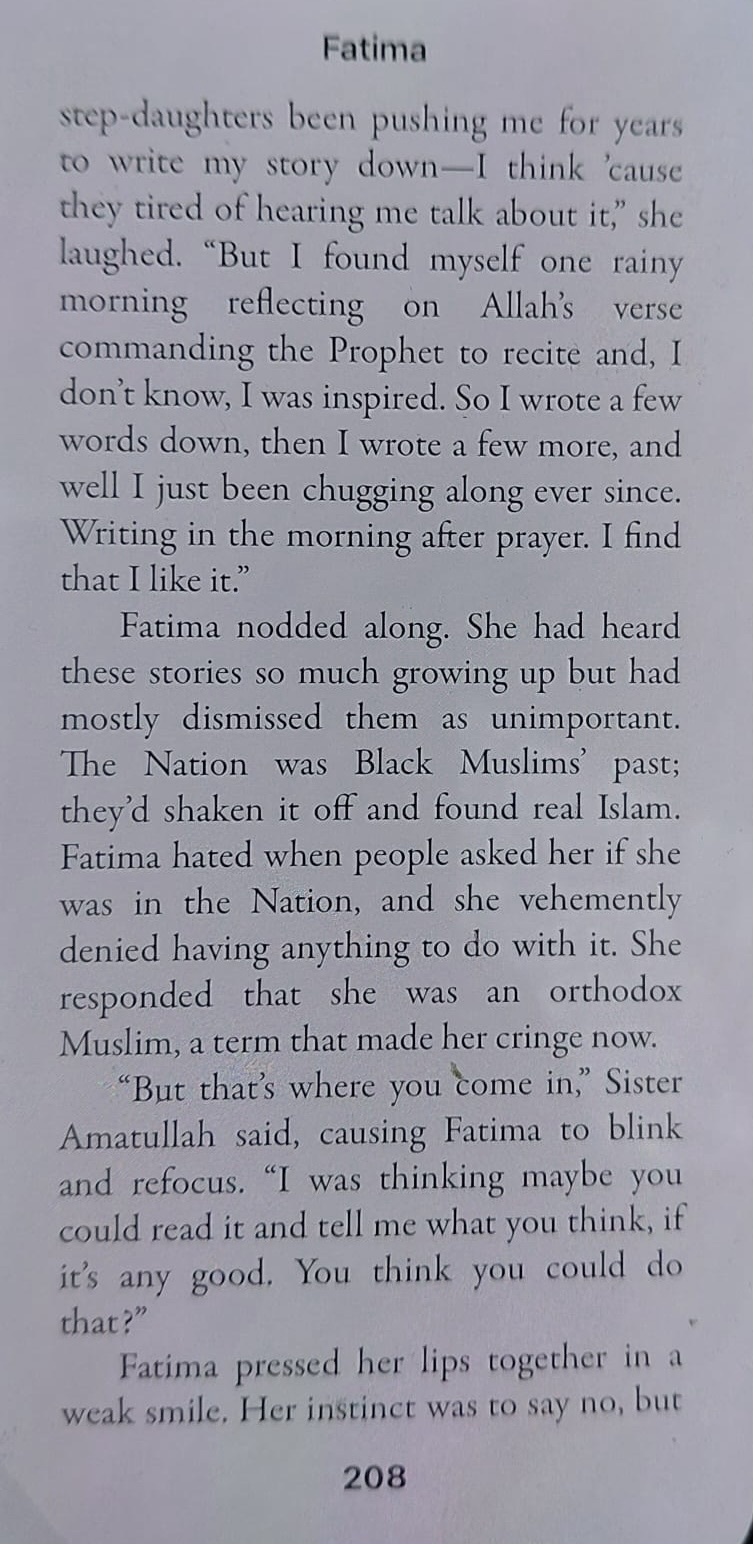
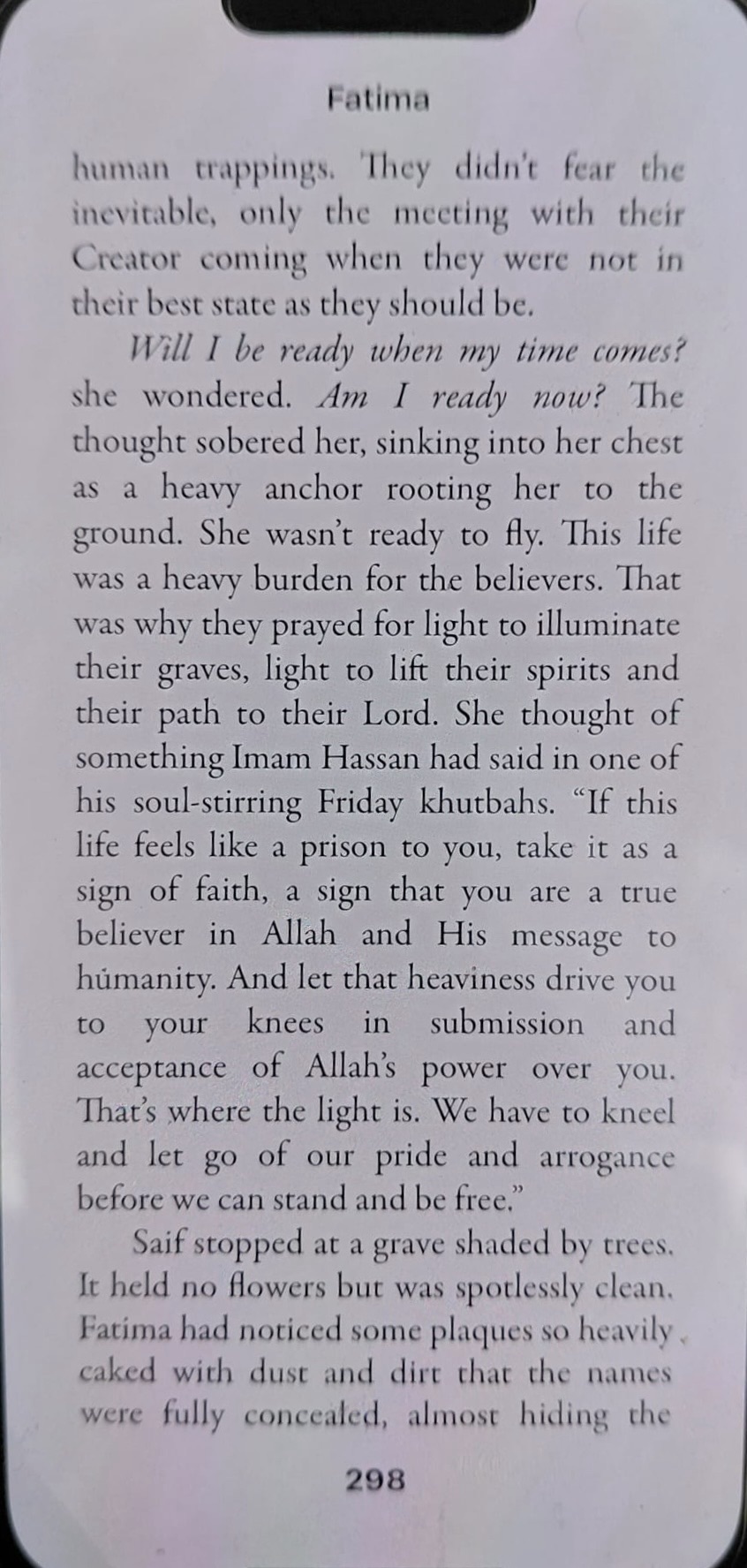
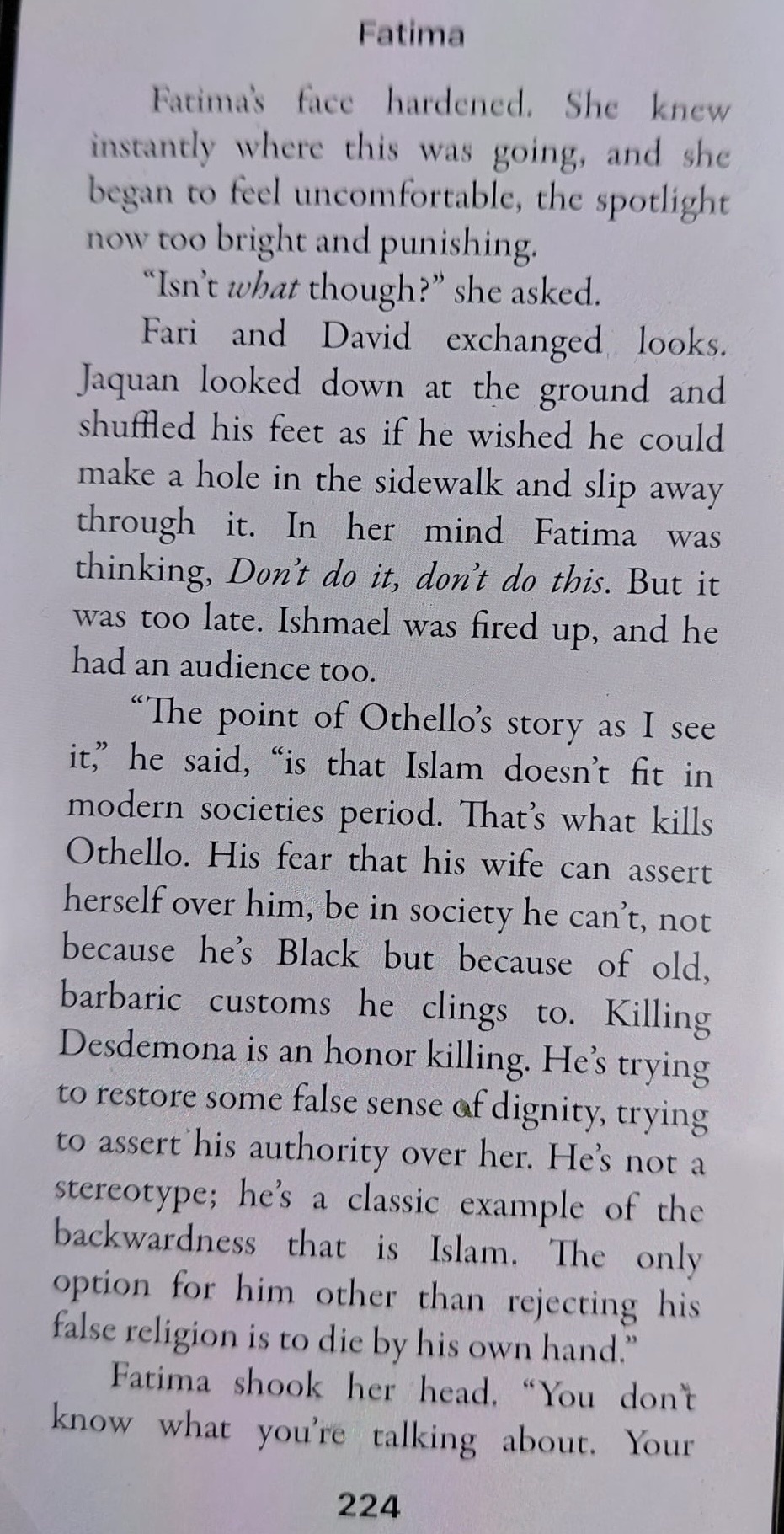
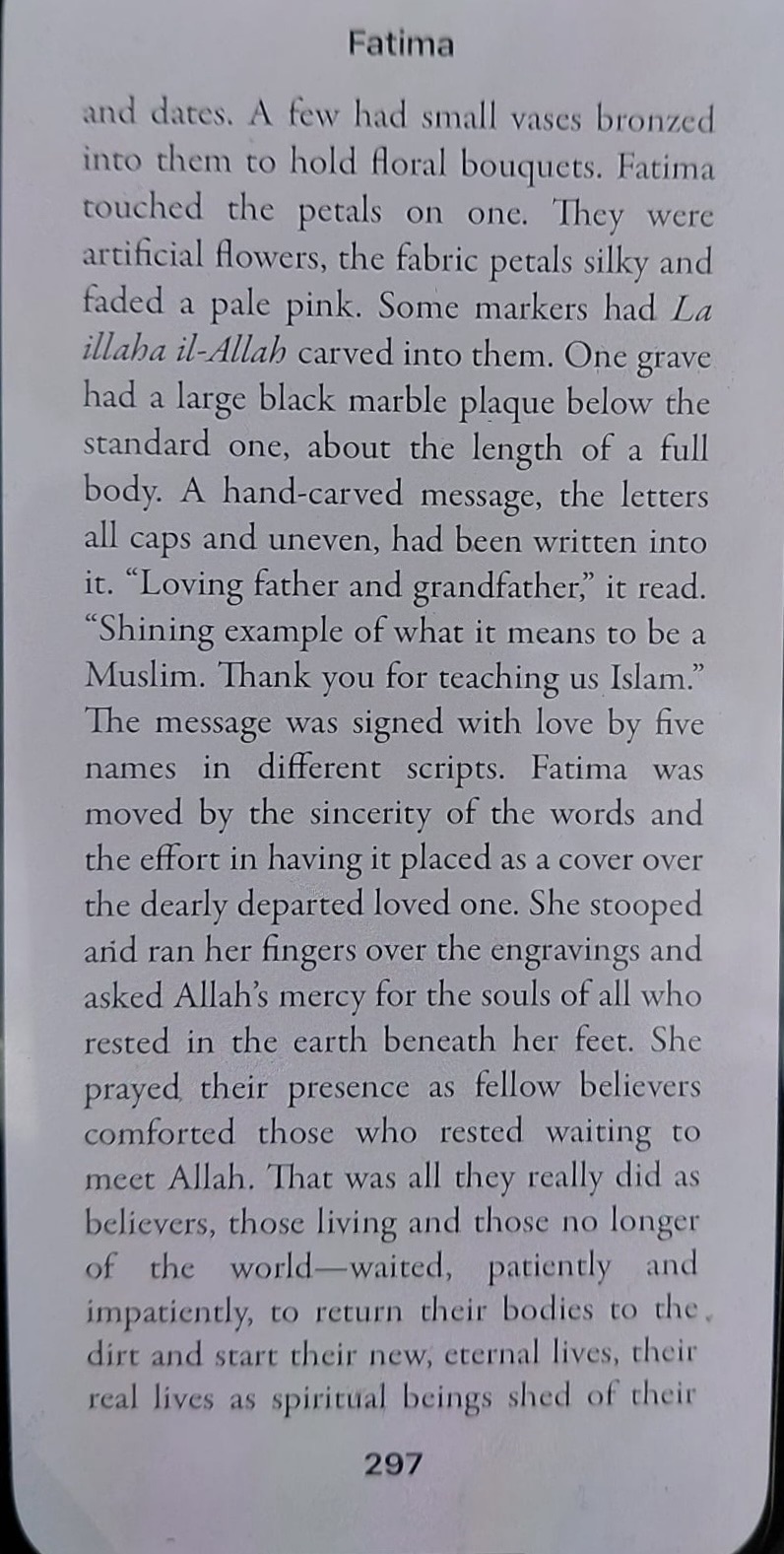
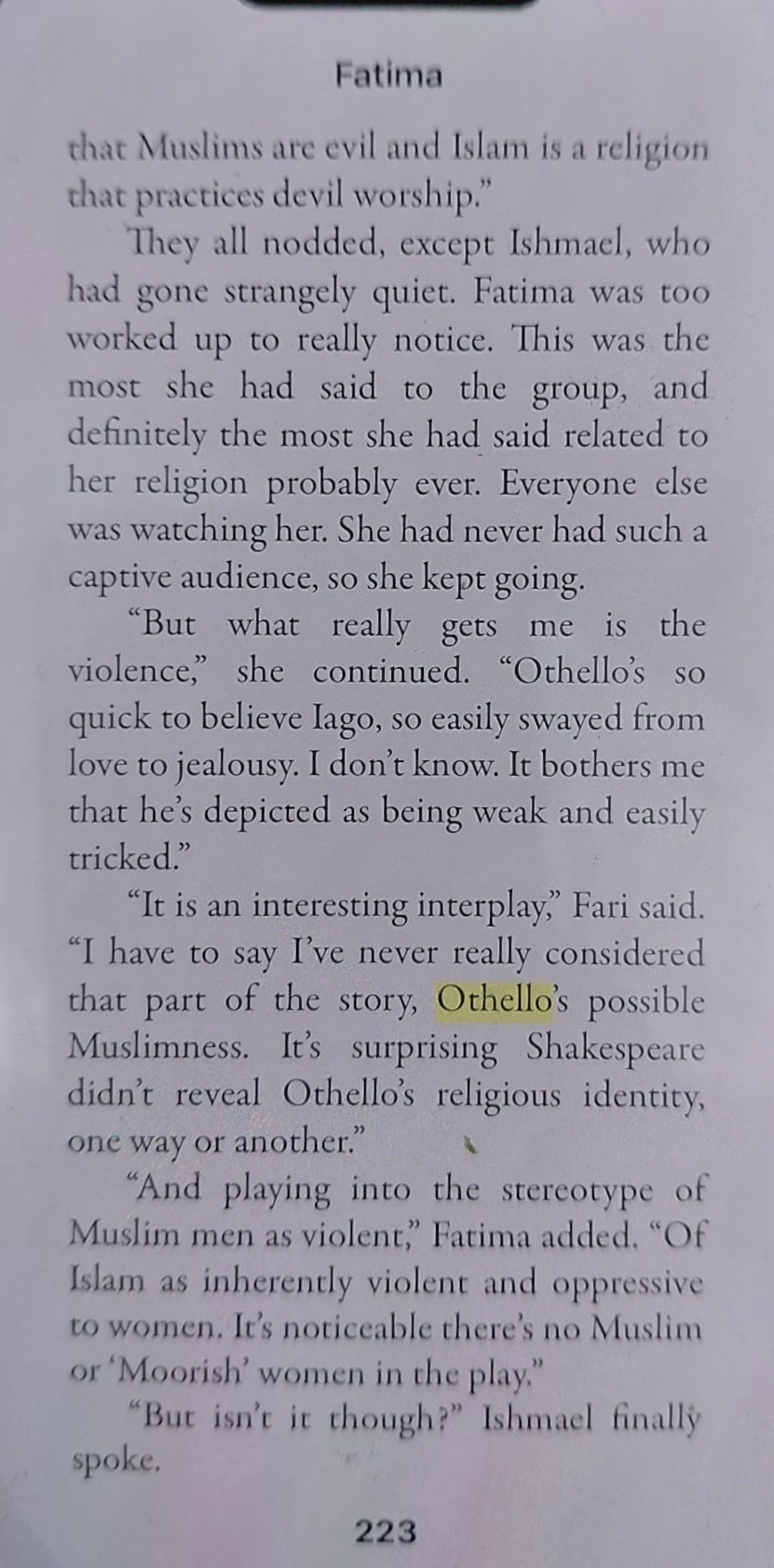
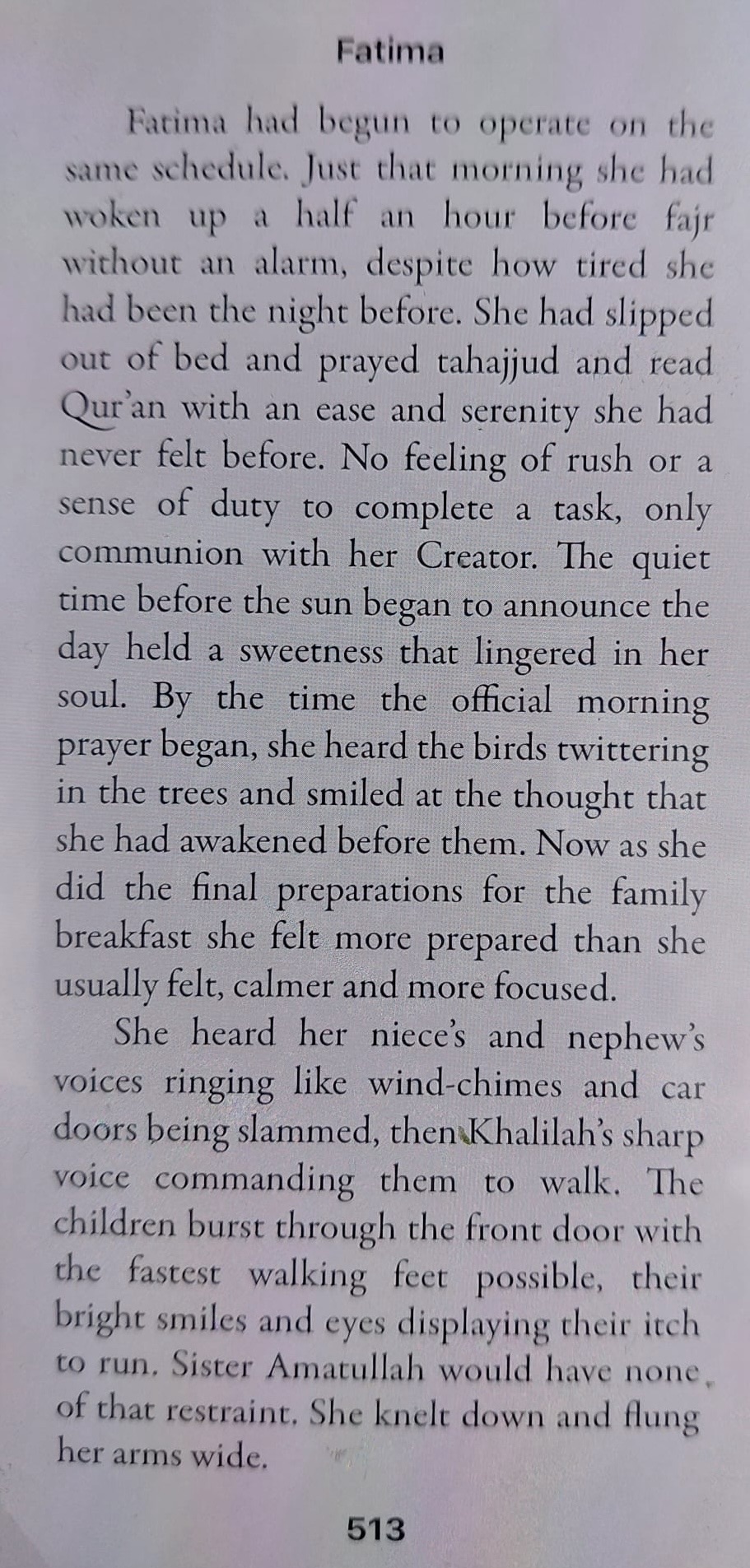
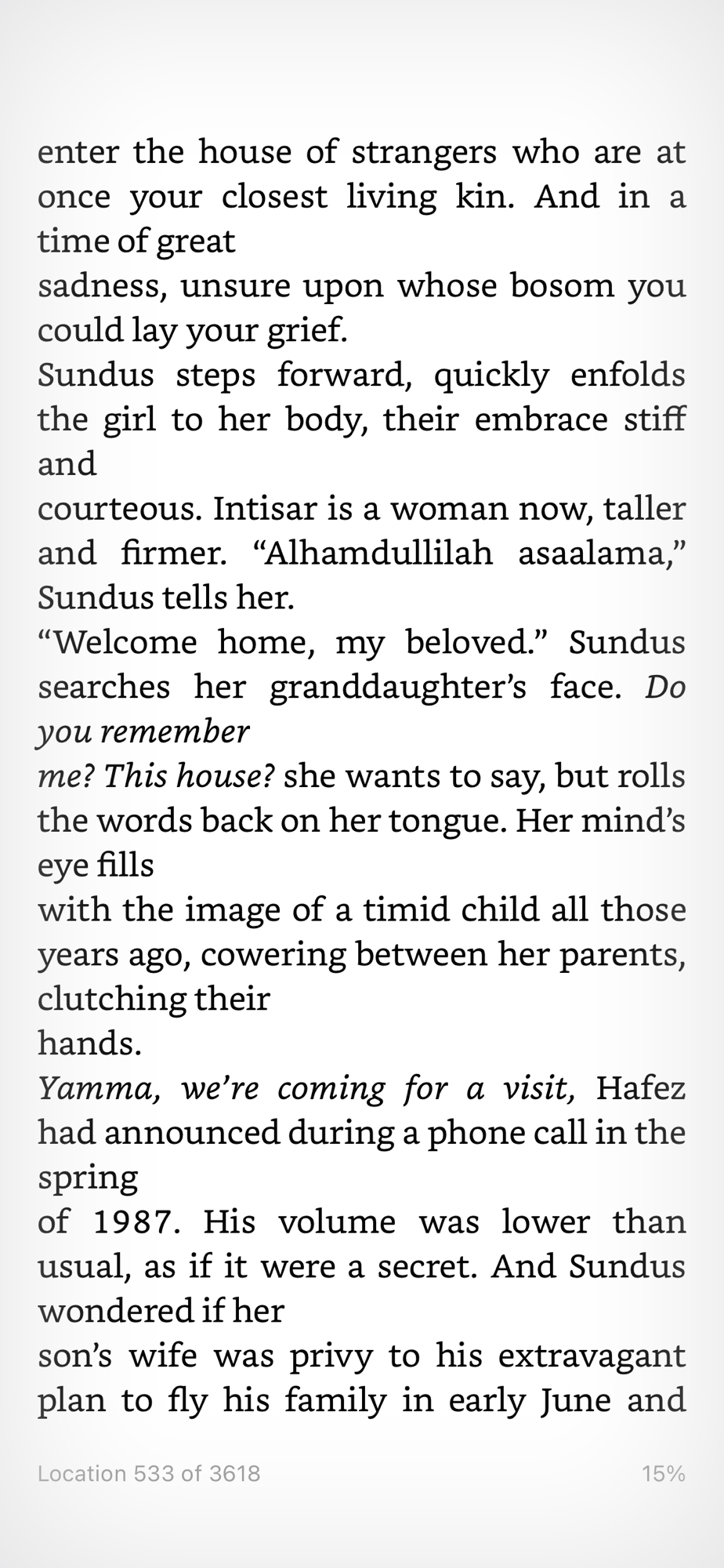
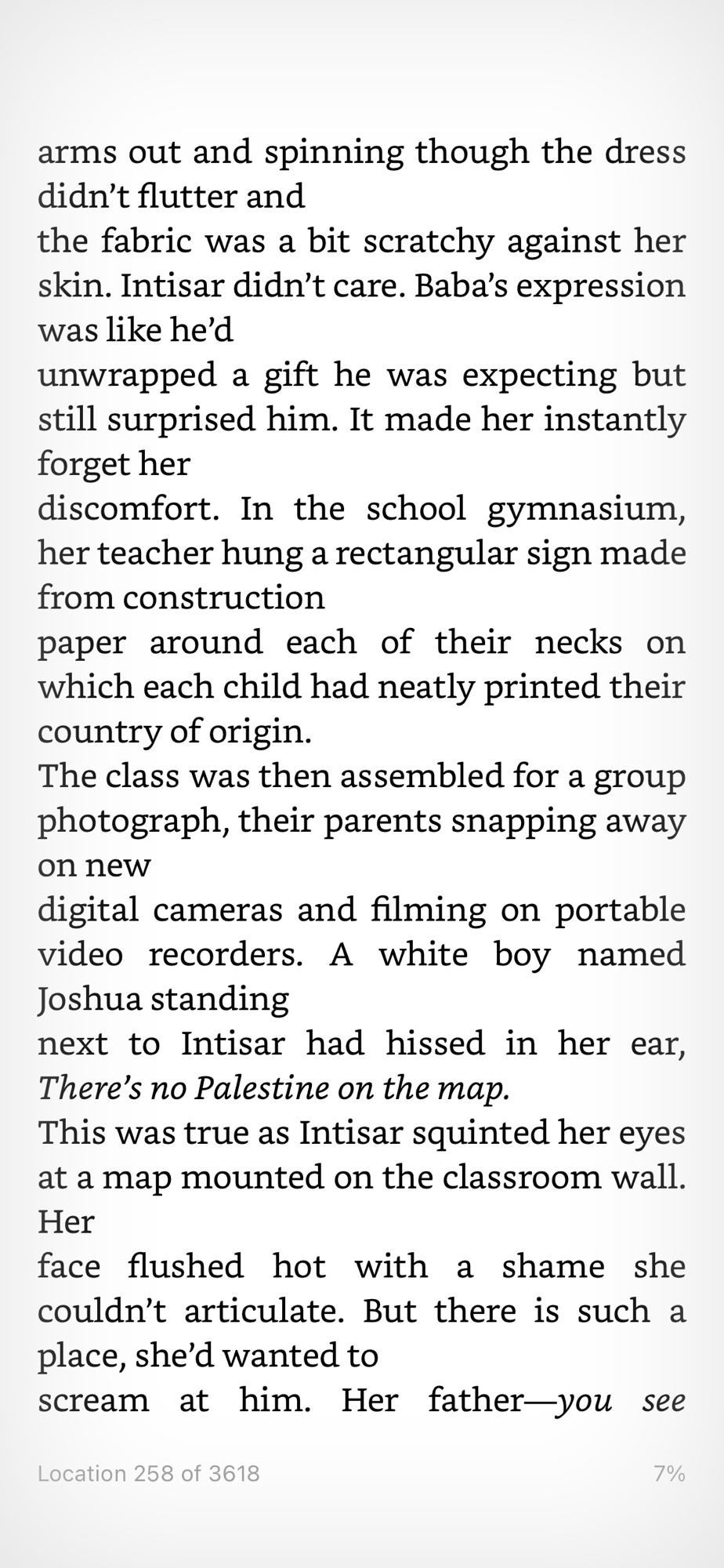
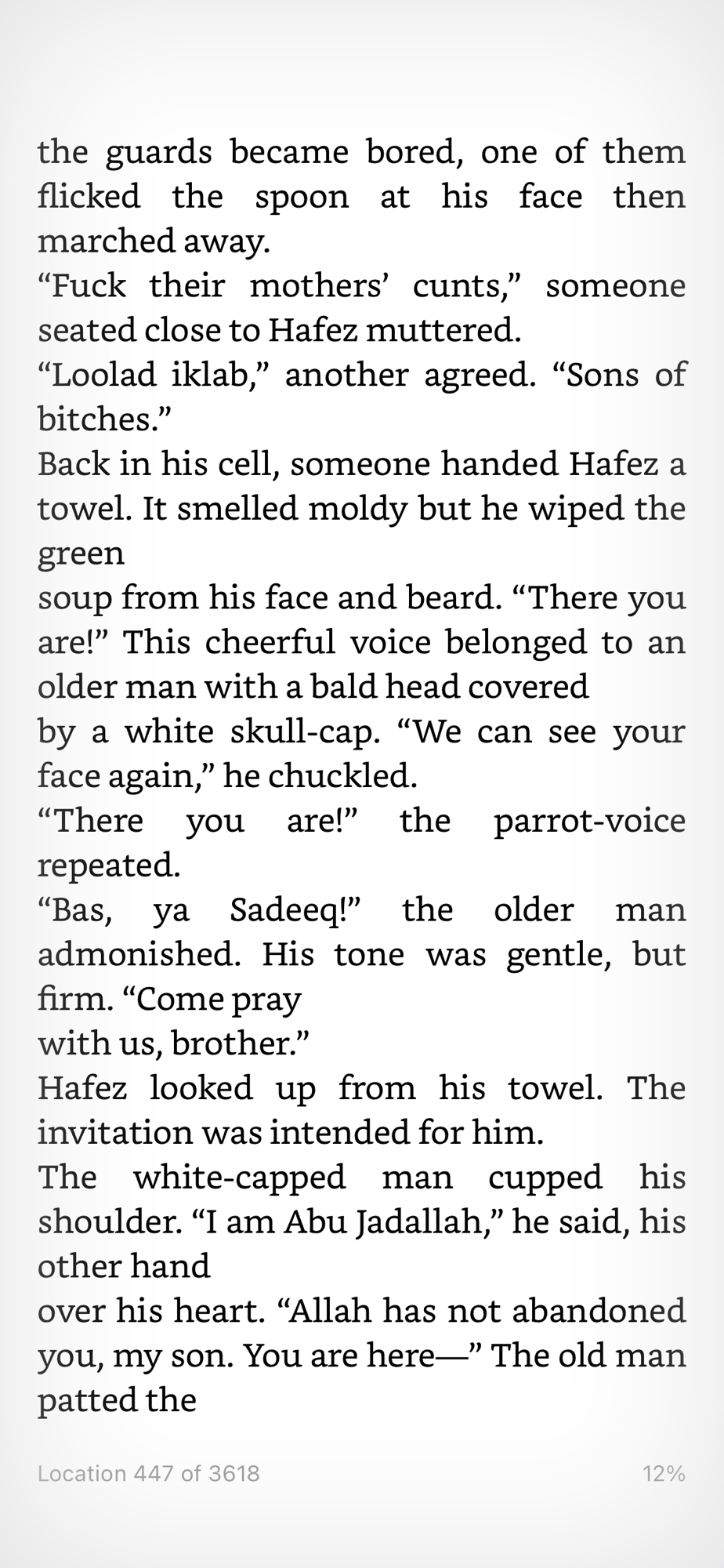
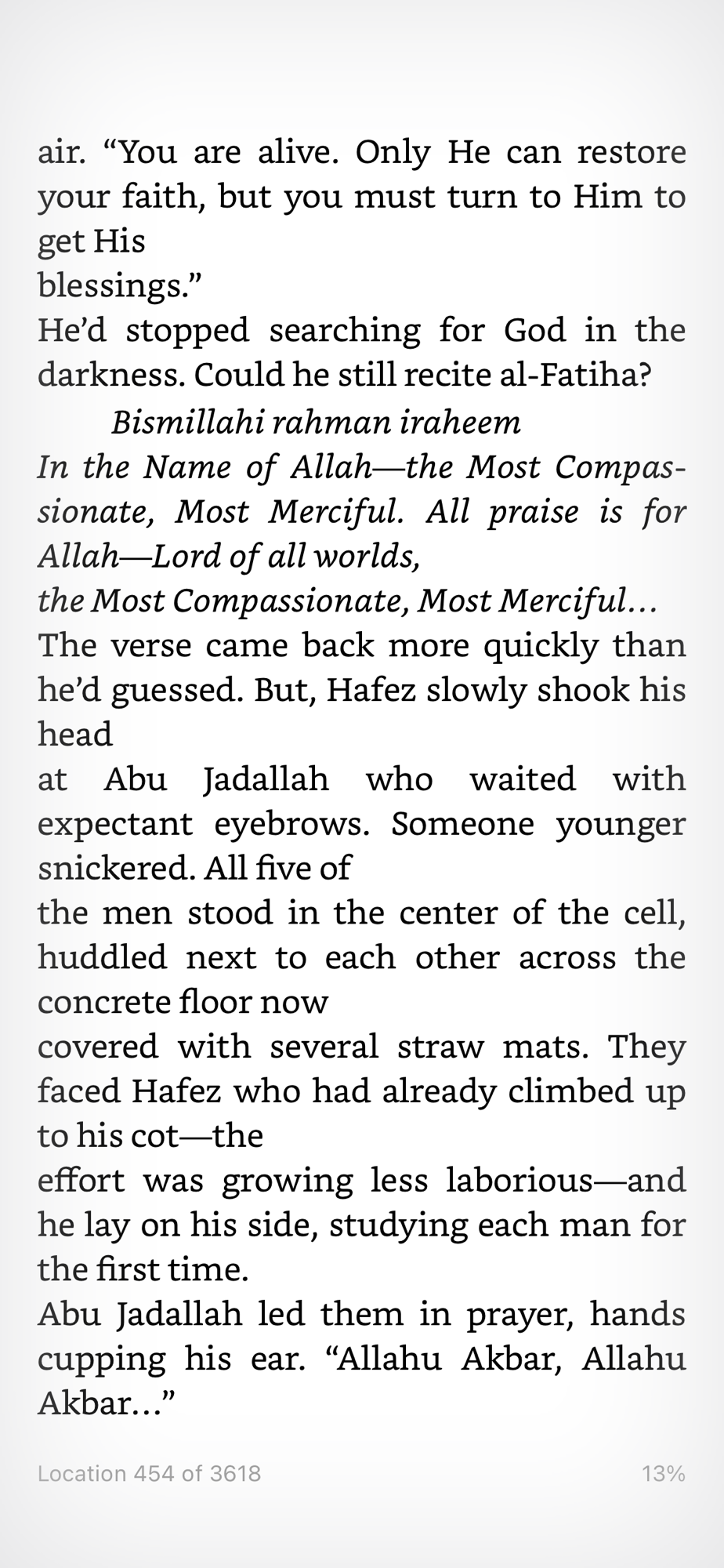
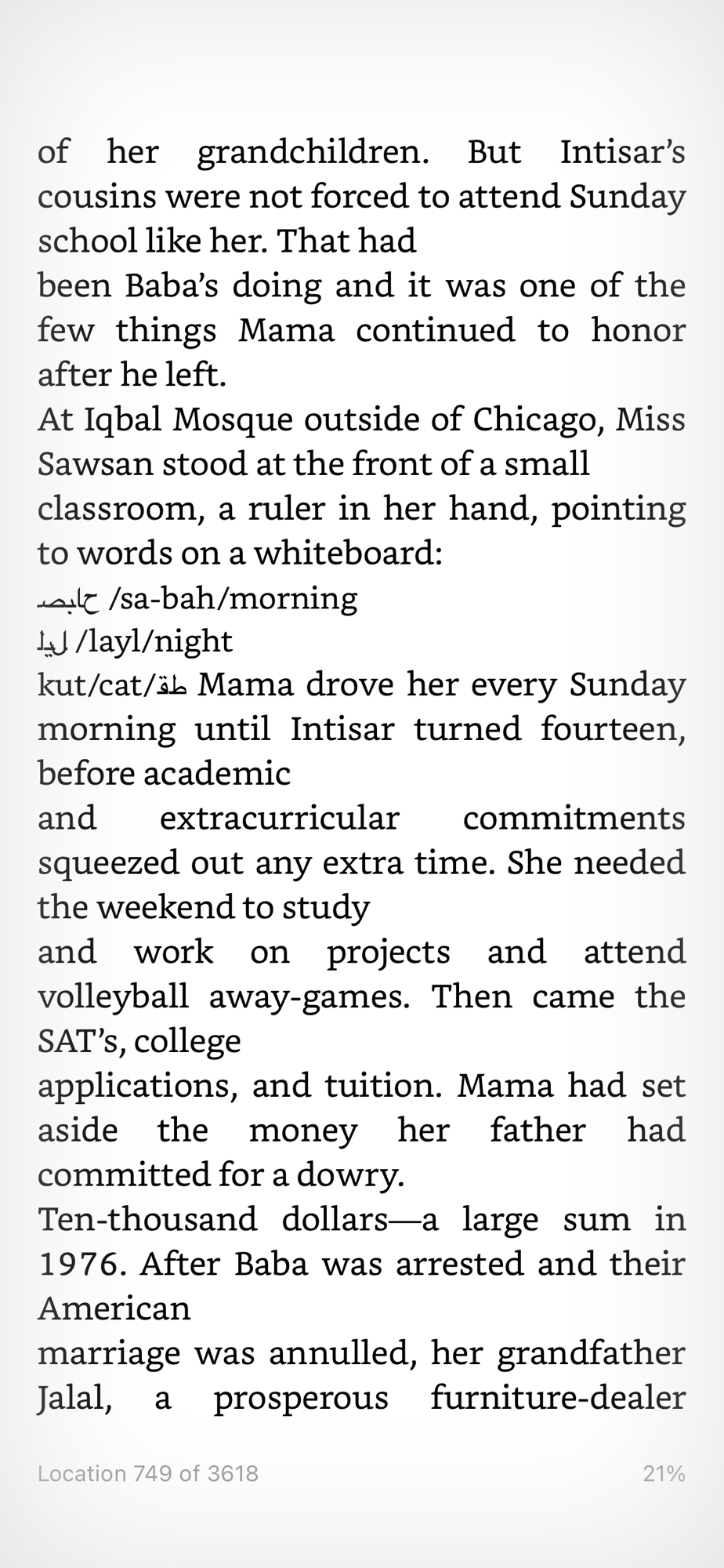
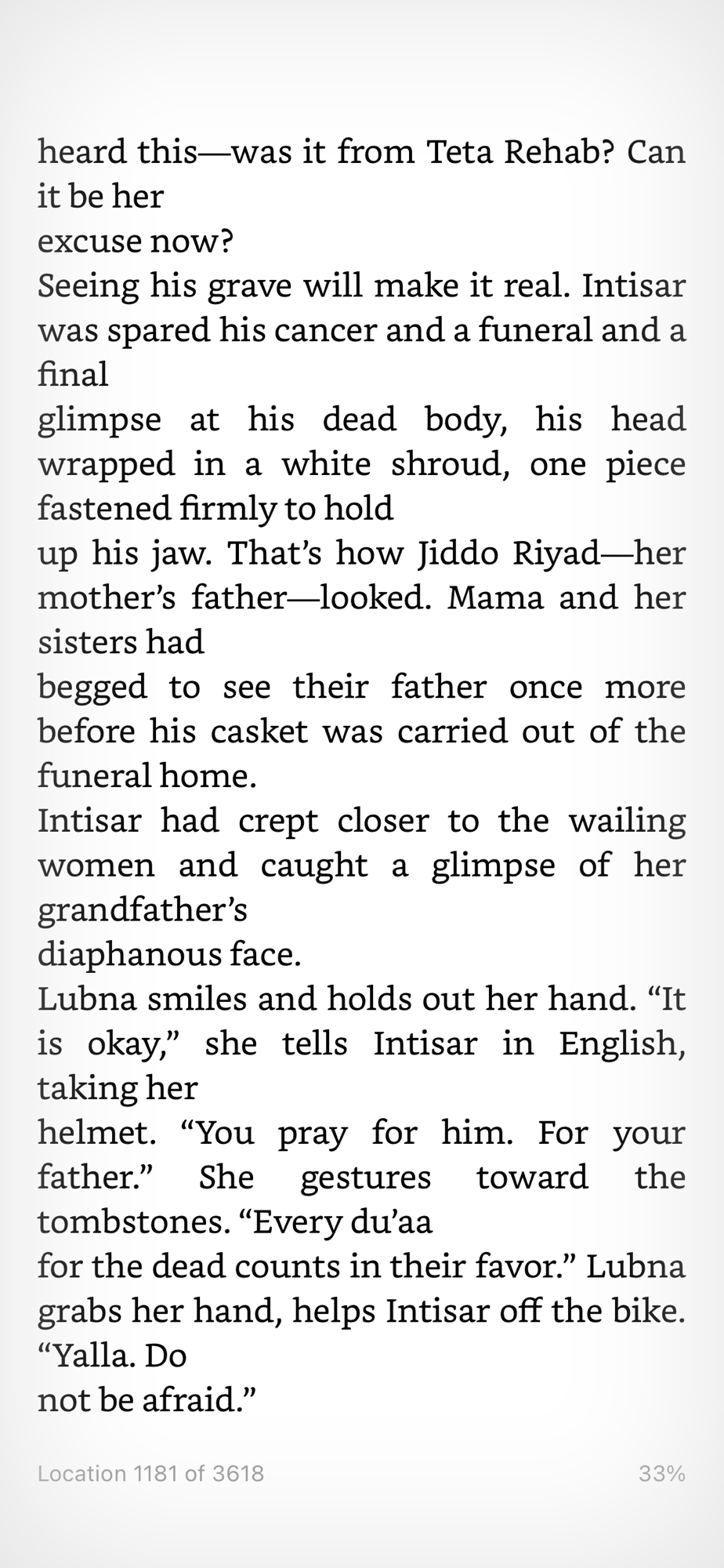
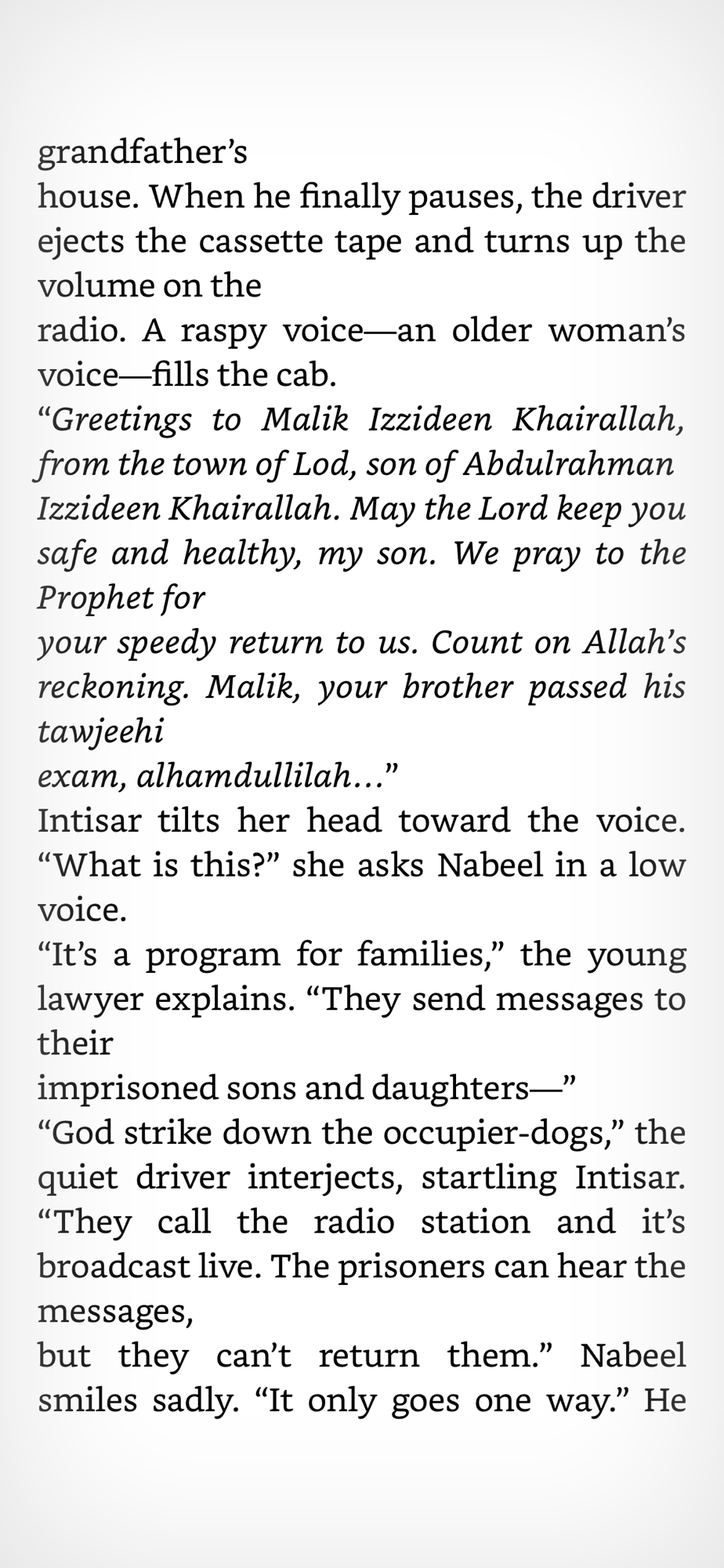
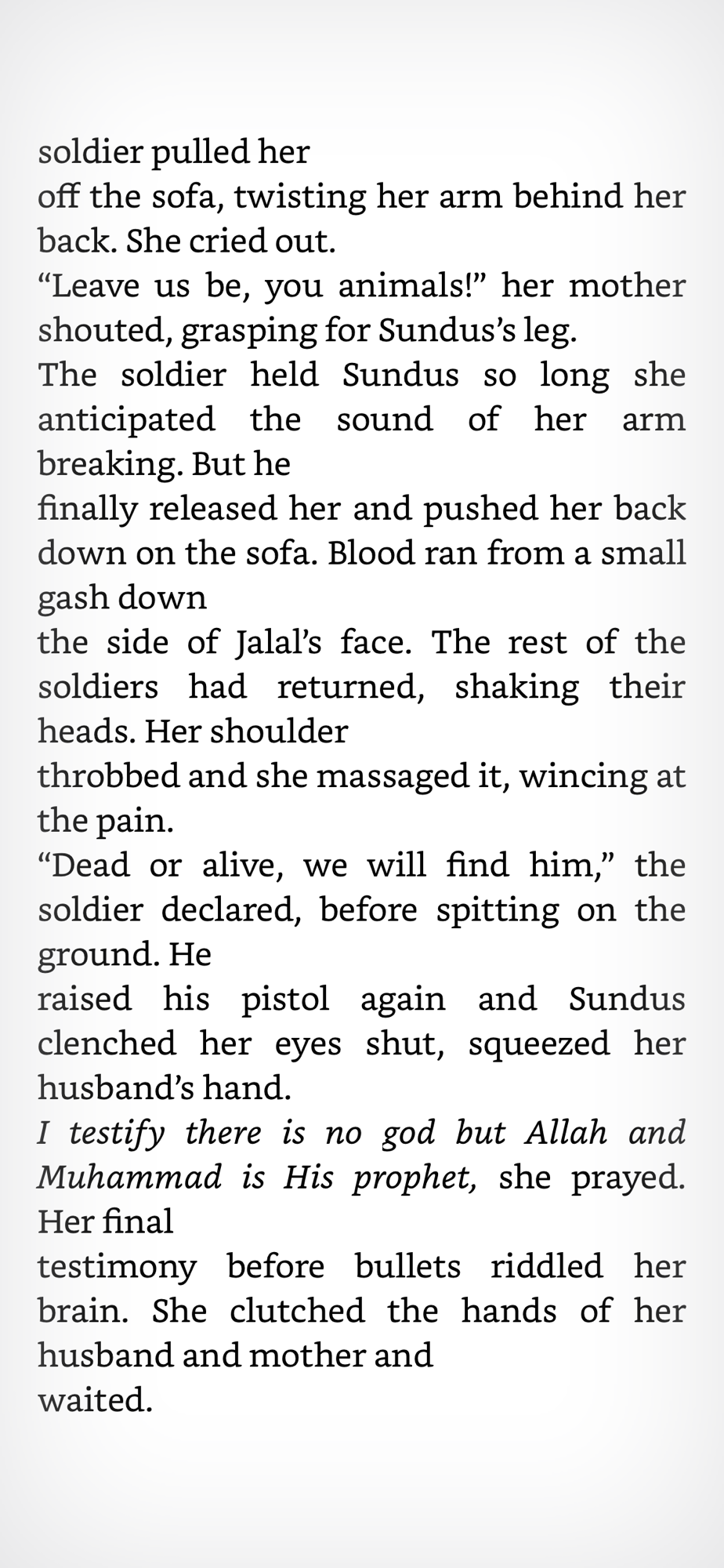
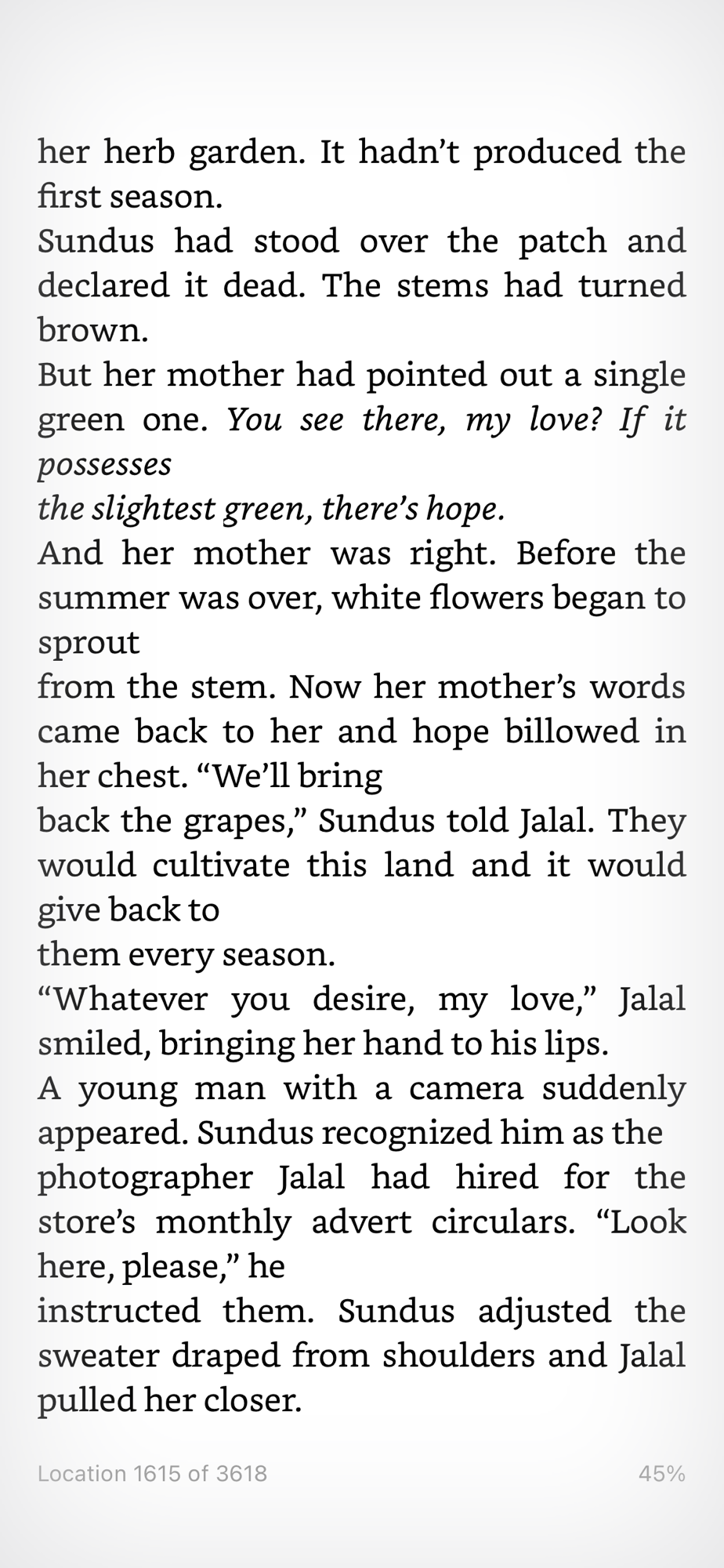
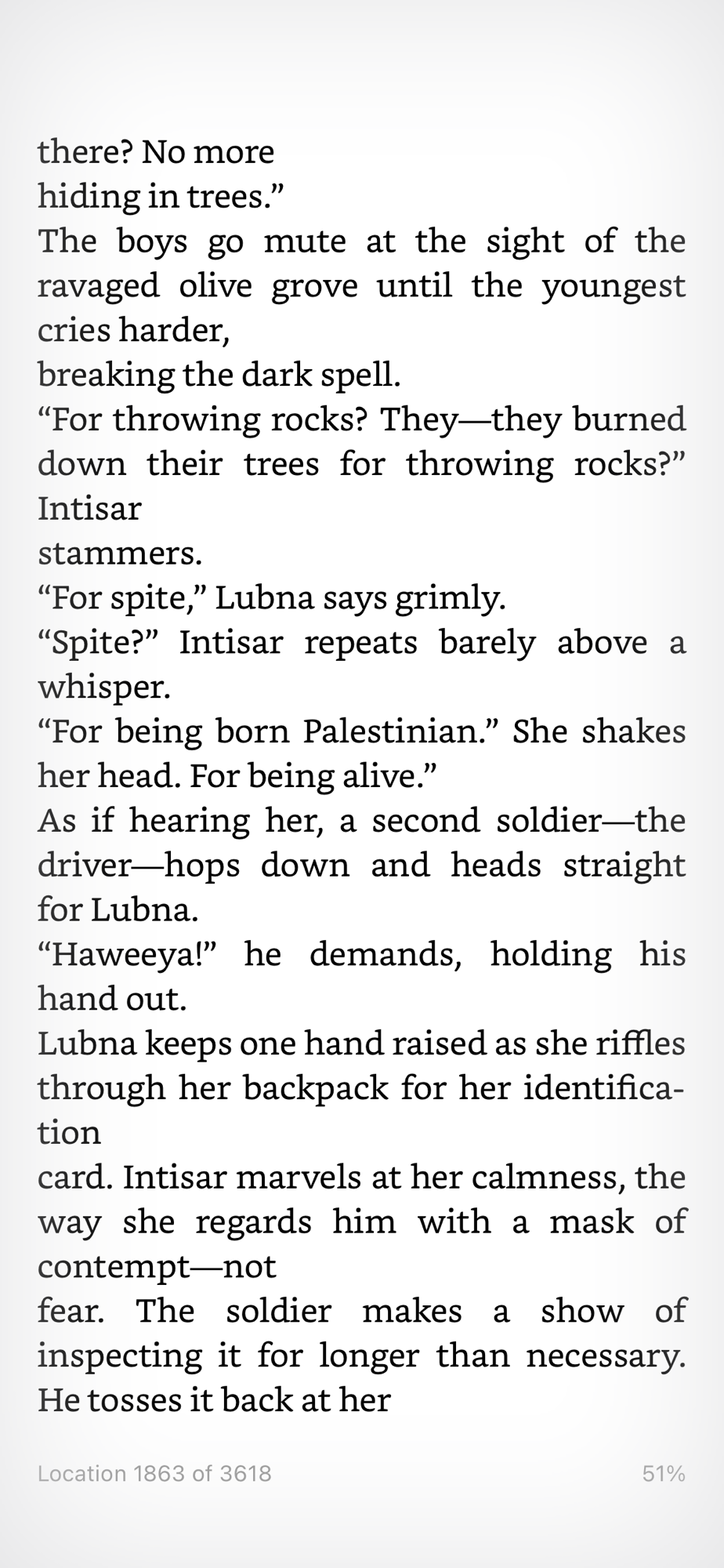
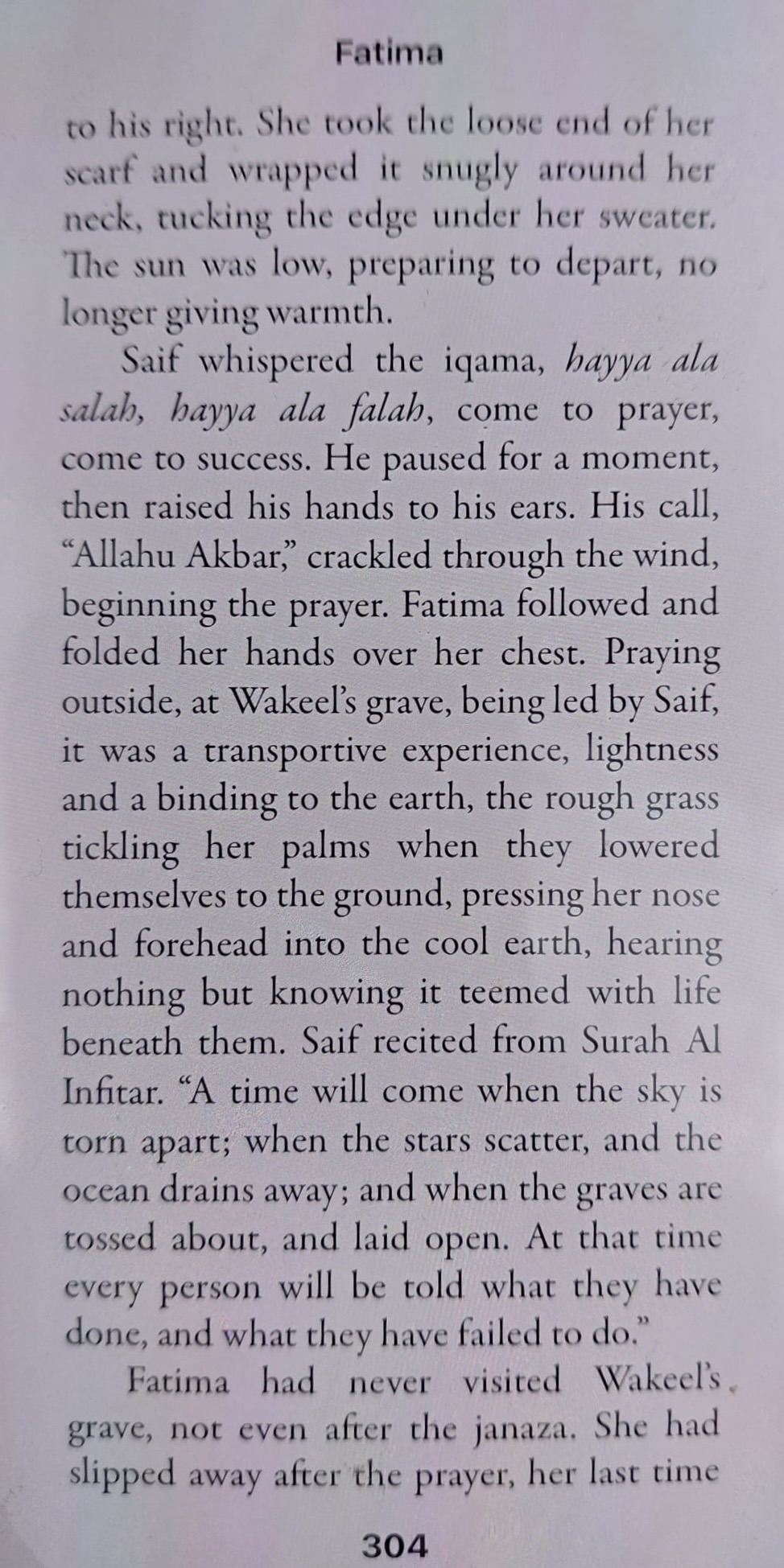
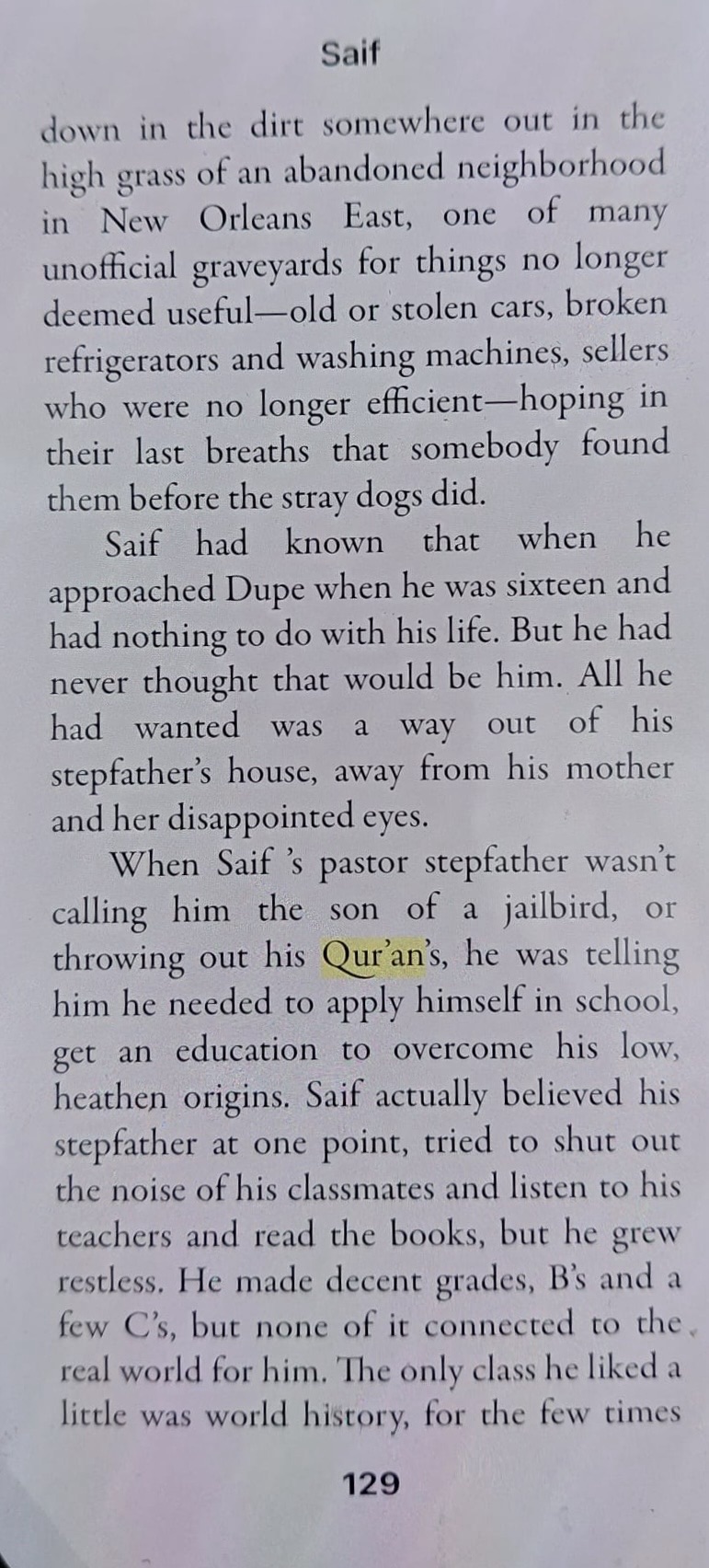
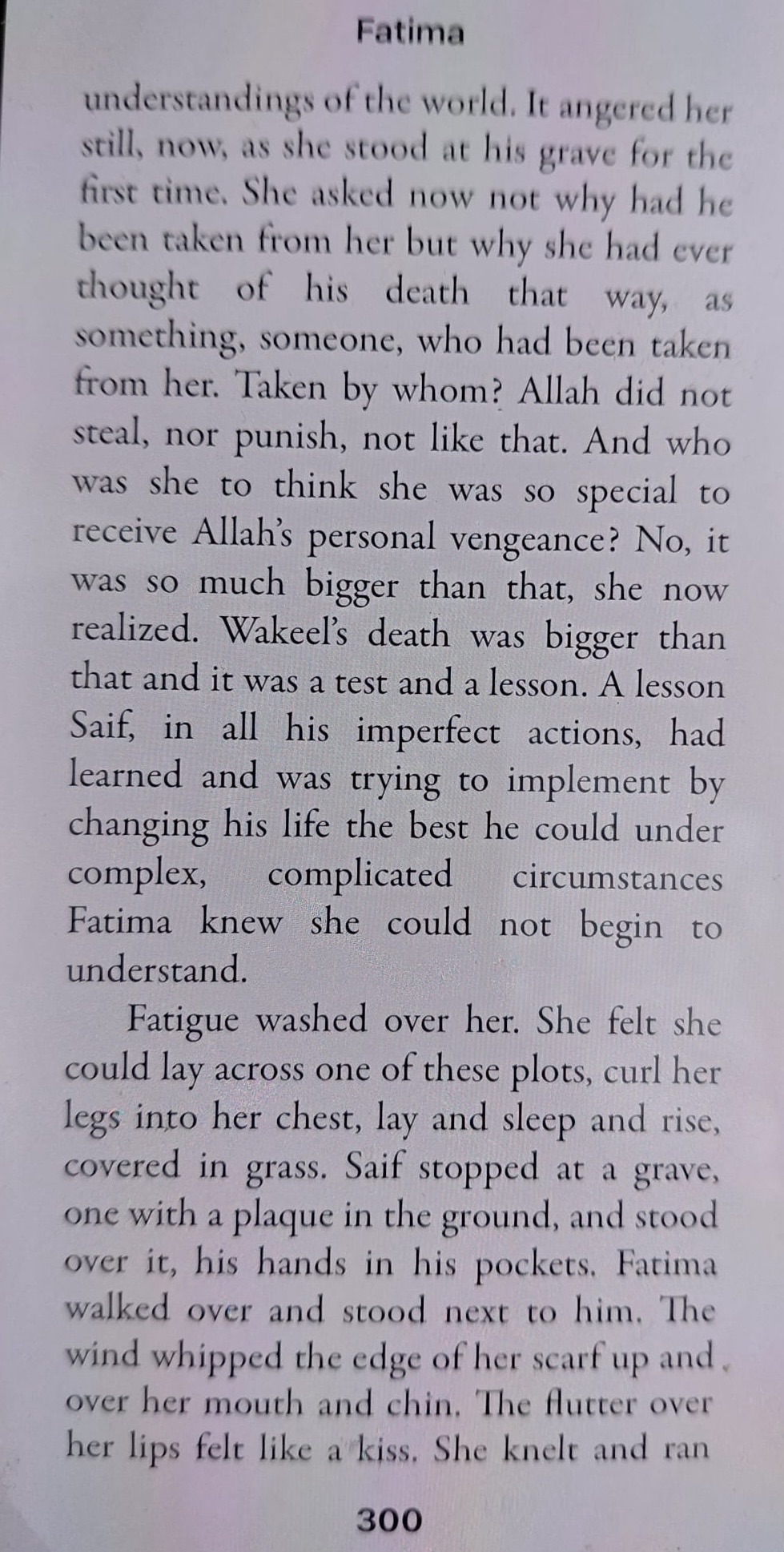
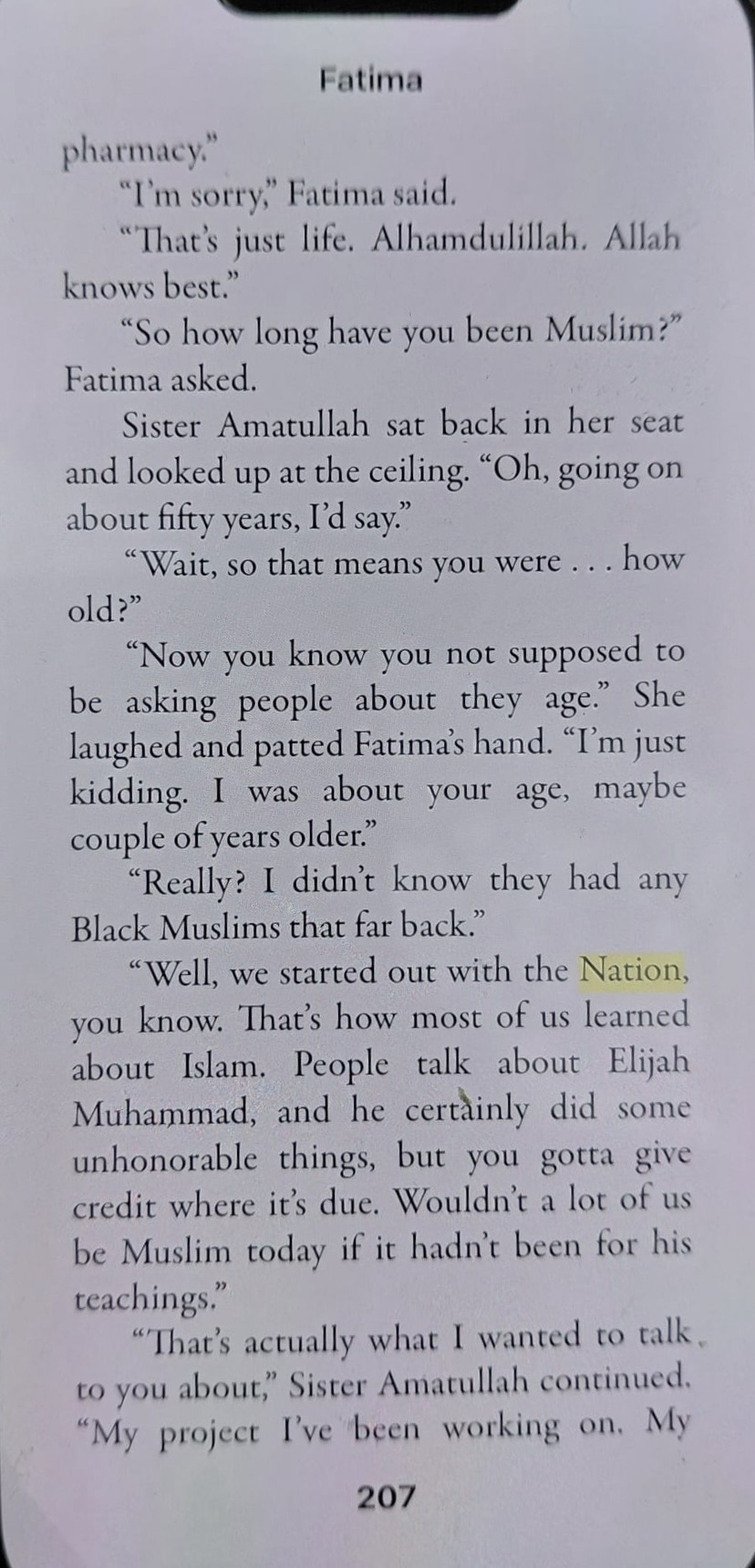
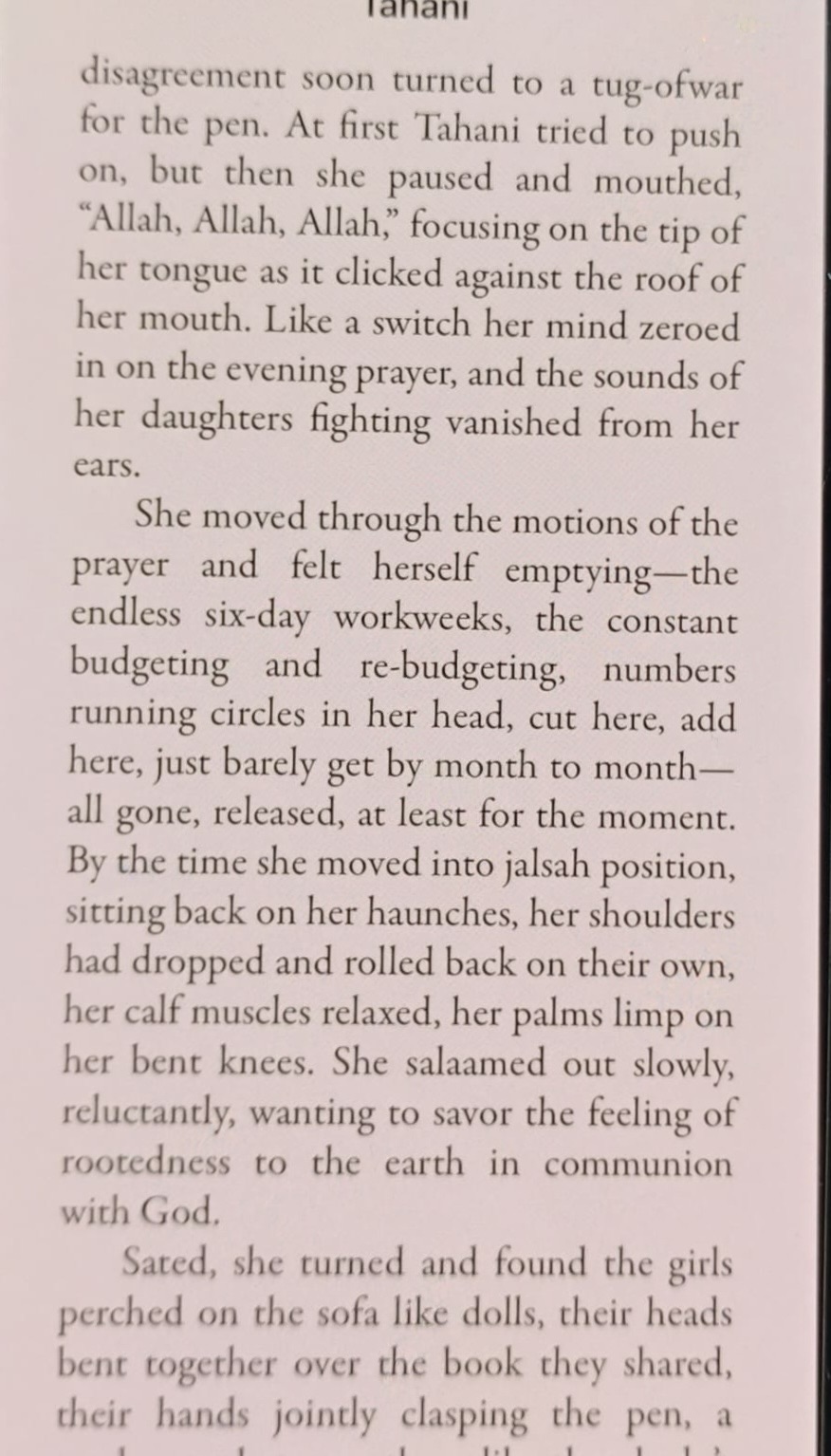
This character centered book takes the lives of three young adults, and through their own interwoven points of views shares their trauma, their choices, their dreams, and their fears in a poignant book that centers Islam and the characters relationship with their faith, their masjid community, and the concept of home.  The Islam in this OWN voice love letter to New Orleans is so much a part of the characters’ lives that I found myself snapping pictures on every page to share before quitting because it was taking me out of the story. The pictures I’m sharing, as a result are arbitrary as so many beautifully spoke to me. This adult book intentionally or not, forced me to confront my own assumptions, stereotypes, faults, and guilt, while tugging at my heart to see the growth and future possibilities for Fatima, Tahani, and Saif. The three distinct pov narratives feel real, the Black Muslim perspective so important, and the living breathing role of Islam so beautifully conveyed, that I’m just in awe of this book, and didn’t want to miss a beat recommending it to others.

SYNOPSIS:

The book opens from Fatima’s perspective as she leaves Atlanta for New Orleans.  She is returning to the place of her childhood and heartache, to care for her ex fiance’s mother in her final days.  Entering the home, reliving the memories of how Wakeel was killed, and facing Mama Tayyibah’s looming death, highlight her weakened faith and force her to confront the community and friendships she left behind.

Tahani, the only daughter in a large family of boys finds herself a single mother to two little girls when she rebelled against her mother and made her own choices.  She never really left Islam though, and the community who raised her is still a part of her life, even though her own family is not.  As she tries to chart her own career dreams and balance her daily survival, she is surprised to find her childhood friend Fatima once again part of her life.

Saif, straddles two worlds: the young man learning his deen as a respected member of the masjid community, and a seasoned criminal unable to stop selling drugs.  He blames himself for Wakeel’s death, and everyone else seems to agree that it should have been him gunned down, but Allah swt is All Forgiving and with Fatima’s return, perhaps if she can find a way to forgive him, he can forgive himself.
WHY I LOVE IT:
Oh my heart. The characters and their dichotomies brought tears to my eyes multiple times.  The drug dealer teaching the hijabi grappling with Allah’s will how to do tayammum, the young mom in revealing clothes waking up for fajr and taking her girls regularly to the masjid. What is in one’s heart is for Allah swt alone, and this message forced me to face my own assumptions, stereotypes, and judgmental paradigms without didactically calling me out, and I love the book for the fictional shaking.

The beauty of the convert stories, the history of Black Muslims in NOLA, the warmth and found family of the community, completely broke me in the best way possible.  None of the characters are having identity crisis as most literature depicts it, they are fighting their nafs, and other’s expectations, and to be shown their struggles, and yearning, in the proses gentle manner warmed my heart.

I wanted some epilogue space for Baba Kareem, and I honestly tried and failed to figure out the time line as the story circles around itself numerous times in its telling. But, I hope this author keeps writing and telling the stories we need as an ummah and larger community to hear, but to also feel so deeply.
FLAGS:

There is nothing sensationalized, but there are themes of drugs, killing, shooting, death, illness, dating, rebelling, rape, children out of wedlock, disowning, judging, fear, racism, Islamophobia.

TOOLS FOR LEADING THE DISCUSSION:

This is too adult for middle school, I do think upper high school could handle it, but it is solidly that “New Adult” category, with characters in their twenties.  At times they have some adult stresses, or coming of age options, and/or youthful possibilities. Often in multitudes they vacillate with what they have to face, and the limited experiences they have, with family expectations and independent choices.

The Slightest Green by Sahar Mustafah

Standard
The Slightest Green by Sahar Mustafah

This adult multi generational novel weaves a narrative that will stay with the readers for the warmth and depth it explores of a fictional family that over the course of 248 pages becomes very real, and in many ways familiar through its personal focus. The book is deliberately slow as it glides through different members of the family, their backstories and different points in time. The prose highlights the plight of Palestinians but not in a didactic or call to action sort of way. The characters and their stories, and their trauma and dreams are very tied to Palestine and the occupation, but the focus on the individual and the ripple effects is what will linger. I do not know when the book was written, (it is published in November 2025) as I read a digital arc which had very minimal backmatter, but this book is set before the recent genocide and is all the more important for today’s readers in pushing back against attempted erasure of Palestinian voice, culture, and history.

Intisar is a nurse in Chicago, the only daughter of divorced parents. She lives with her mother and has not seen her father in over 20 years. Not since he left the family to return to his home in Palestine, join the resistance and after a fateful mission is forced to serve a life sentence in Gahana Prison. When he is released to live his final days before he succumbs to cancer, Intisar heads overseas to see him one last time. Her grandmother Sundus additionally needs Intisar, the only heir, to fight for her to keep her land and home, a task that Intisar is not willing to pursue. As family history is shared, daily atrocities witnessed, Intisar starts to see herself differently, and considers if she could feel at home in her father’s homeland.

Again I read an arc, but there are a few sentences that really have me hoping line edits will still occur before the final version. The book is adult, it has a Muslim drinking and serving alcohol, there is assault, sexual and physical mentioned, and yet I didn’t feel like it was sensationalized, actually felt that the author was deliberately holding back to keep the story about the family and not the larger issues. Their is quite a bit of Islam, not from every character, but it is woven in and not an identity issue. Actually one line used frequently is my only real gripe with the book. “Pray to the Prophet,” is regularly said by a few characters, so I though perhaps it is something unique to them, up until about the midpoint, where many characters start to say it and I don’t like it. It makes it clear other places that Allah swt is One and who we pray to, it has the shahada in English and verses from the Quran, so I’m guessing it is a colloquialism perhaps, or maybe a poor translation, I honestly don’t know, but it bothered me, so I am sharing.

Balti Kings by Sudha Bhuchar and Shaheen Khan

Standard
Balti Kings by Sudha Bhuchar and Shaheen Khan

I don’t recall ever reviewing the script of a proper adult play before, and probably last read a play in college, needless to say it has been a while, and this 112 page script of a play performed 25 years ago, has me itching to dive back in to regularly attending live theater. Literary wise I love seeing the characters and plot develop with dialogue alone, and the power that every word on the page has. The play takes place in one day, in a Pakistani restaurant in Birmingham, England, and the stresses of an event happening that night is the catalyst that brings together the characters own lives, the chaos of the kitchen, the stresses of the times, and an inside view on immigrant life.

Set on Jummah, everyone seems to be religious when bosses come looking for their employees, but duas, and boundaries, and justifications also stem from Islamic practices. The owners of Balti Kings are trying to compete with Karachi Karahi in the neighborhood, their father has had a heart attack and the brothers are trying to relaunch the business with a Bollywood star studded Curryoke night and the start of their cheaper buffet. The attitudes and social hierarchy of immigrants is highlighted with the contrasting kitchen crew downstairs. A mix of ages and genders and skills, legal and soon to be illegal desi workers along with a Bosnian brother sister team, show racism and stereotypes in action.

Their personal lives spill in to the kitchen as the young Mariam finds herself expecting and coworker Nadeem denying it is his, while she is left warding off advances from her boss. The head cook is again threatening to leave for Karachi Karahi, the biriyani is burned, the stars are imposters, and the brothers have to accept the outcome of their choices.

I found myself smiling, getting irritated at characters, and appreciating the found family that the restaurant provides. I love the Foreword and Authors’ note that set the place in a time not that long ago, and show how perhaps very little has changed. The end features pictures of the play performances, as well as a glossary.

Detective Aunty by Uzma Jalaluddin

Standard
Detective Aunty by Uzma Jalaluddin

The author may have returned to her fictional Golden Crescent neighborhood, but with her best writing yet, the focus is not romance like in her earlier books, it is a murder mystery.  If you think of it, who better to solve a mystery than an unassuming Desi Aunty with a knack for observations, getting people to talk, and prying into other people’s business? I say it with love, this book was such a fun read, I’m sure I should have paid more attention to craft and arcs and writing style, but honestly I devoured the 336 pages in two settings, and genuinely hope that Kausar is just getting started. The adult read isn’t salacious, it does feature a murder, some marital dramas, crime, fraud and the like, I think mature teens that aren’t bothered by a grandmother protagonist will enjoy the read. The first chapter is a bit dry and feels like an info dump, luckily it isn’t a long chapter and I ultimately, appreciated it getting the stage set and then slipping out of the way so the story could get good. The telling and not showing takes a while to flesh out, the author does a good job of threading it through, and by the mid point you really get a feel for the characters and appreciate the early statements that set the tone, and the book’s ability to tie up nearly every thread it presents.  There isn’t a ton of Islam, many of the characters are Muslim; the traditions and cultural expectations are plot beats in the story, even if the action and expectations are not overtly seen through an Islamic lens or with Islamic boundaries.  

SYNOPSIS:

Kausar Khan has always noticed things around her, and when needed, used those observations to position certain outcomes.  When she gets a call from her daughter in Toronto that she needs her mom to come help with the kids as he is wanted for murder, Kausar Khan leaves North Bay and returns to a city filled with memories of tragedy to try and help.  Sana asks her mom not to get involved and to just help with the cooking, cleaning, and childcare, but old friends, new secrets, and the high stakes of a murder are not going to keep this Aunty from unraveling the truth.

WHY I LIKE IT:

I love the concept, the execution, and that it didn’t unravel at the end.  I read the last few pages with the same intensity as the climax, trying to figure out whodunit.  The play on traditions and stereotypes to lure suspects in, and the wit and charm of using the religion and culture to advance the plot were flawless.  Sure, I wish the characters threw in some commentary on men and women being alone together not being ok, or some Islamic insight into marriages and rights.  It seemed intentionally lacking, and that is unfortunate. I also felt the thread with the son coming from the UK was painfully underdeveloped, the heart of the book though was strong.  And I loved the side commentary on marriage and women’s roles.  It was insightful and added depth, it didn’t come across as angry or like the author had an axe to grind, which was refreshing.  

FLAGS: 
Murder, affairs, fraud, pyramid schemes, theft, racism, gentrification.

TOOLS FOR LEADING THE DISCUSSION:
The book won’t work for a school book club, but is a perfect summer read to giggle about and chat about with friends.

The Matchmaker by Aisha Saeed

Standard
The Matchmaker by Aisha Saeed

There is no Islam, save being told a wedding took place in a mosque, in this 320 page adult book by a Muslim author.  The thriller, mystery, romance, is fairly clean, save some drugs, killings, kissing, and normalized dating, yet I would probably be fine with mature teens reading it, if so inclined.  By the end, I enjoyed the book, but it took me three attempts to get past the 30% mark as the opening was painful with its numerous characters being name dropped, the setting being established, and getting the characters into position.  But then slowly the exposition gave way to story telling and intrigue, and the second half was a decent read.  Honestly, my biggest problem with the book is that I just didn’t like the main character, or any of the characters really, and I don’t know why.  They didn’t have some clear flaw or annoying habits, they just felt distant and bland, which resulted in the plot carrying the book, and me not really caring if the protagonist was killed or harmed, I know- harsh.  I cannot deny though, that what kept me reading was to see who was behind it all and I did figure it out, but continued on just the same to be sure, and that is a testament to the author’s writing skill, even if it took a minute for the pacing, plot, twists and climax to pull me in.

SYNOPSIS:
Nura Khan runs an elite matchmaking service in Atlanta, from hands on to a dating app, her and her team match people of all backgrounds and faiths.  She herself has a long time friend who acts as a fiancé for image purposes, and a recently retired aunt who’s bad days have meant family dynamics have changed.  As a third generation matchmaker, Nura is in charge and knows what she is doing, until suddenly her image, her reputation, and her matches start faltering.  Not confined to just heartbreak, there is also stalking, threatening notes, kidnappings, and attempted murder, which suddenly thrust Nura into a world she is ill prepared for, and one that seems to put her in the crosshairs of someone determined to see her demise.

WHY I LIKE IT:

It wasn’t a heavy thriller or heavy romance, it was an easy read that didn’t “other” desi culture and I found that refreshing. That being said, I always wish her books had Islam in them.  I also liked that the climax and second half honestly didn’t feel overly forced, I’m not a writer so take it with a grain of salt that I complain that the beginning was dry and too much telling, but then the second half flew by and loose ends were more or less tied up in a satisfactory way. I’m aware that the second half was a result of what was a established in the first part, but none-the-less I hope future books will make the two halves less cumbersome and inconsistent. I also really hope future books will have more character appeal.  There was a lot of potential to care deeply about the main characters, from the aunt, to the best friend, to Nura herself, but they lacked spark, and sadly just felt like vehicles for a plot that wasn’t dependent on them, their experiences, their flaws, and their personalities.

FLAGS:

Dating and relationships of all faiths, persuasions and labels, kissing, attempted murder, killing, plotting, lying, scheming, kidnapping, drugging, physical abuse, assault, deception.

TOOLS FOR LEADING THE DISCUSSION:

With no Islam I wouldn’t do this as a high school book club, but amongst friends it would be a fun group read.

Yours, Eventually by Nura Maznavi

Standard
Yours, Eventually by Nura Maznavi

It has been a while since I’ve read Austen’s Persuasion, and I should probably remedy that, but alas, here I am reviewing another adult, Desi-fied, Muslim tinged retelling, and am embarrassed to admit I was absorbed and invested, as if I had no idea how it would play out. Sure there were author liberties, but the heart of the story hits the same beats (that I recall) and works so well when adapted for our faith and culture. It isn’t halal halal, nor is it Muslim focused, the culture and cultural expectations are definitely more centered for the Pakistani American Muslim cast. The characters are all Muslim, a few wear hijab, they abstain from alcohol, date with intent to marry, attend Bismillahs, but they aren’t shown praying, or viewing life through an Islamic lens, or Muslim conscience. There are a few kisses and hand holds, and male/female close friendships, but for an adult read, the Muslim authored 400 page novel is pretty notably clean.

SYNOPSIS:
Asma is in her final year of Emergency Medicine residency and the pressure to get married is ever mounting. With her father making poor financial choices, he and Asma’s oldest sister Iman, are moving out of their Palo Alto mansion and heading back to Sacramento. Culture won’t let Asma live alone, so she is forced to crash on an air mattress at her youngest sister, Maryam’s house in the room of her three year old twin nephews. Asma feels it is her responsibility to take care of everyone since her mother passed away, but with the family splitting up, she has to decide for once, what she wants. Eight years ago she did what she was told and broke off her engagement with Farook. Unfortunately, she has regretted it every day since and never moved on. When of all people, Farook’s sister moves into Asma’s old house, a chance encounter brings the two face to face. When Farook starts courting Maryam’s sister in law, things get particularly tense. Throw in a dozen or more side characters, amp up the drama, and settle in to see how it all unfolds.

WHY I LIKE IT:

If my recollection of the original source material holds, it takes a while to get all the characters in their desired place and position for the story to sweep the reader away, and this version does the same. At times I worried that threads and characters were being overlooked, but by the end, most everything felt resolved. I did feel Fatima’s story was underdeveloped and showed Asma as being a bit of a bad friend, and there is no way three year olds would recognize someone from a picture taken 8 years earlier, but I know, romance books require some suspension of reality to work. The premise of the plot is even a bit shaky, but once you are rooting for the characters you aren’t too worried about why they need a second chance. For the most part the writing is fairly smooth, a fair amount of characters the author managed to keep annoying, but not completely unredeemable, and I appreciated the restraint. The pacing at times was a little sluggish, with a lot of characters that the reader needed to connect with resulting in telling and not showing, so I was a bit disappointed that end felt rushed. I wanted to bask in the resolution of all that angst, longing looks, and obstacles being overcome.

There is quite a bit of commentary about pushing back on stereotypes, expectations, and cultural weight. There are aunties doing the match making and gossiping, and plenty of folks chasing wealth above all else, it doesn’t weigh down the storyline, but it at times does get a bit repetitive and shallow.

FLAGS:

Romance, kissing, hugging, holding hands, lying, death, pyramid scheme, alcohol, consumerism,

TOOLS FOR LEADING THE DISCUSSION:
I might let this be in a school library, it is clearly adult with the characters nearly 30 years old, but high school romance lovers will enjoy this, and it isn’t overly mature for ages 16 and up.

The Djinn Waits A Hundred Years by Shubnum Khan

Standard
The Djinn Waits A Hundred Years by Shubnum Khan

img_8259-1

I didn’t realize how many characters this 308 page adult book has until I sat down to write this review.  The slow peeling back of layers into their backstories, motivations, perspectives, and insecurities, makes you get to know them in a way that feels real and deep, but in no way can be succinctly explained in a review.  First off to clarify, I feel the title is a bit of click bait, the djinn is there, but not a big part of the book, there is also a ghost, who is a more impactful character, so the vibe is more haunting than Islamic lens.  In fact, a few characters are Muslim, but that is about it.  The writing though, oh the writing is quite lovely and immersive.  The culture of desi characters in South Africa, the slivers of colonization and caste that get commentary, and the heartache of all those who have called, and do call Akbar Manzil home, will linger even if the details fade over time.  I listened to the audio book, so it is possible that triggers or flags might have been missed, for the most part the book is relatively clean, death, murder, attempted murder, and supernatural beings being the most obvious.

SYNOPSIS:

The main character is very much the grand estate of Akbar Manzil, a palatial home off the coast of South Africa that shaped lives and futures and hid horrors and loss.  In modern times it has been subdivided into apartments where lives and futures are still shaped and horrors and loss are also hid, and hid from.  When Sana and her father arrive to take up residence, the past and the present begin to unite, a djinn that has never left the house is stirred, and the more Sana pokes and prods, and the more she understands about the original inhabitants of the home, the more the house pushes back.

I don’t know how much to tell, as spoilers aren’t so easily defined in this book.  The family in the past is a man from India, Akbar, who falls in love with the area, builds a house despite his wife hating it all and desperate to leave, opens a sugar factory, his mother comes to live with them, they have two children, servants, friends, he stocks the gardens with monkeys, giraffes, a lion, and then one day he is enamored by a Hindu worker, Meena, at the factory and takes her as his second wife.  The jealously and family drama reaches a crescendo when she is pregnant and has a little boy.  Beyond the family storyline is a djinn also enamored by Meena, who takes up residence in the house to be close to her.

In present times, the other tenants in the house have their own baggage, loss, regret, and fears that cause daily squabbles and plottings.  Sana deals with the loss of her mother who hated her, and a dead sister who haunts her.  There is also Pinky in love with Shah Rukh Khan, Zuleikha a former famous pianist who has lost her edge, the Doctor who owns the home, a mother waiting for her son to visit, a parrot named Mr. Patel, Fancy, Razia Bibi, and so on. The house is occupied, but hollow, not full, and the the lingering djinn seems to always lurk just beyond the surface, in the corners and shadows that haunt them all.

WHY I LIKE IT:
I like that the writing keeps you hooked, even at times when there is no rising action, or conflict, you are genuinely drawn in and invested in just learning about the characters and how their lives, both those in the past and the present, intersect.  I didn’t like the fact that there is a djinn and a ghost, I feel like the ghost negates the realness that djinn.  It is possible that the ghost was a metaphor, or symbolism, but it was a little off to me, to have both as I understood it.  I don’t know how I feel about the vagueness of the final climax, yes I’m trying not to give anything away, but SPOILER: who set the fire?

FLAGS:

Loss, death, ghosts, djinn, murder, attempted murder, lying plotting, manipulation, music.

TOOLS FOR LEADING THE DISCUSSION:

I don’t know that this would work for an Islamic school book club, that doesn’t mean it wouldn’t work, but rather I need someone to discuss with me, so that I feel like I understood some of the lingering threads that are unresolved.  Basically, I would need to have someone explain parts to me, before I could help 15-16 year olds and up make sense of it all.

Hidden Fires by Sairish Hussain

Standard
Hidden Fires by Sairish Hussain

I will not be getting over this book any time soon. It broke my heart, and all my other critical organs, in the most delightfully well-done way possible, and undoubtedly I am better for it. I don’t read a lot of adult fiction these days, and with some diabetic retinopathy concerns, I couldn’t read the 384 page adult book about generational trauma, partition, the Grenfell Tower fire, family dynamics, bullying, self-harm, and resilience, but was pulled in to the audio book version instead. The Desi-British voices of Yusuf, Rubi, and Hassan were refreshing to my American ears.  The multi-perspective book told in parts richly develops the characters, their relationships, and their current, past, and future struggles.  The author is Muslim, as are the characters, and while they all practice in their own way, it is undoubtedly who they are, and their Islamic identity is not questioned, feared, blamed, or apologized for.

SYNOPSIS:
The book weaves three distinct voices. Yusuf, is an 80 year old an immigrant who lived through partition, raised his family in the UK, has lost his wife a year prior, and is struggling with haunting memories of the past, failing health, regular loss of friends, and loneliness.  Hassan, Yusuf’s youngest son is a workaholic who is married to a non Muslim, non Desi who is suffering from fibromyalgia and who’s mother unexpectedly passes away in Spain.  Rubi, is Hassan’s 16 year old girl who is overweight, bullied, lonely and about to take her GCSE exams when she is dumped on her grandfather Yusuf’s door while her parents head to Spain.  The book opens in Ramadan the night of the Grenfell Tower fire and the horrific event affects them all, stirs memories, and shapes futures.  From there the layers of each character slowly unravel as they cope with the swiftly changing present as they desperately work to break free from the past.  As dementia plagues Yusuf, Rubi finds purpose in being needed, and Hassan is forced to re-prioritize his life before it is too late.

WHY I LIKE IT:
The book takes a slow approach to building up the characters and their back stories. It is almost feels like world building as a book would if it were a fantasy, it doesn’t info dump, but at some point the hooks are so deeply embedded that you really cannot leave the characters and their world and you have to finish the book, just to ensure they are ok.  Because I listened to the book, I feel like there might have been some Islamic content that was not completely ok, but again I was having vision issues and couldn’t note where to go back and check.  I think it is fine, and because it is an adult read, I think the audience can discern accuracy, but please know, I’m not 100% green lighting the Islamic rep.  It is undoubtedly well done and fasting and praying are a part of the characters, but their relationship to their faith and their understanding of it, is presented as theirs, it doesn’t get preachy or make broad statements about Muslims everywhere or Islamic doctrine.  

FLAGS:
There is body shaming, self-harm, trauma, death, torture, killing, lying, abuse, fear, guilt, dementia, bullying, assault, physical violence, drug use (mentioned), attempted suicide (mentioned), music, theft, make-up, close male and female relationships, Muslim marrying a non-Muslim, hallucinations.

TOOLS FOR LEADING THE DISCUSSION:
I think mature high school seniors or possibly even juniors could benefit from this book with discussions.  I think Rubi’s voice tied to her father and grandfather, will really open up youngsters perspectives, and provide a great vehicle to hear their thoughts, fears, worries, concerns about body image, self harm, aging grandparents, accessibility to parents, etc..

The Power of Du’a by Aliyah Umm Raiyaan

Standard
The Power of Du’a by Aliyah Umm Raiyaan

img_8062-1

Having not read the author’s first book, Ramadan Reflections, I wasn’t sure what to expect with this non- fiction/memoir/anthology/self help/spiritual focused book. Alhumdulilah the tone is easy to read, the chapters consistent in their format, the quotes and passages sourced, the personal stories relevant, and the information often moving and inspiring.  At times it did feel repetitive, but ultimately the book has staying power, and now that I have read it once cover to cover, I can see myself picking it up and reading a chapter or two at random and being again drawn in again.  While nothing in the book seemed “off” I did find myself wondering though, what qualifications are needed to write a book such as this, and did not find the author’s bio satisfying in providing that information.  Yes, there is a statement of praise by Mufti Menk on the cover, but similarly I don’t know if that means he “checked” and “approved” the book, or just liked the concept of it.  Ultimately, I don’t know that it matters, but I do feel it is worth disclosing, since it did linger in my mind, and I would have appreciated some transparency in the matter.  The 258 page book is meant for adults, but older teens will find it valuable too, even if a number of the stories are related to pregnancy.  I love that this book is traditionally published in the UK, it is for Muslims by a Muslim, but the glossary at the back and the way it is written, would allow even non Muslims to be drawn to the beauty of conversing with our creator, subhanAllah.

The book is divided into four parts: Du’a of Need and Want, Before Du’a, The Du’a, After Du’a, and each of the parts has multiple chapters that explore, develop, and illuminate the concept heading.  Each chapter starts with an ayat, or hadith, or quote, then gives a personal reflection of what the chapter sets out to do, and how the story about to be shared came to the author.  A personal du’a story from a real person is then shared.  The author then uses examples from the story, along with hadith, examples from the Qur’an, and/or guidance from scholars to build the case of the chapter’s intended goal.  Often there are then action items in a pull out box of suggestions the reader can do to “Develop Your Du’a” or strengthen one’s connection.  The final paragraph of the chapter is, “Allah, Transform My Du’a” where an example is given of a how to phrase your du’a.

I love that you can implement every single bit of knowledge into your du’a and your day, immediately.  If you read a chapter, you have something to ponder and act on, if you read multiple chapters you have more.  The implementation is easy and accessible, because of how it is presented.

Many of the stories, and the lessons from them are emotionally humbling.  I often found tears on my cheeks as I saw my own vulnerability, fears, worries, and hopes expressed on the pages.  And the passages that moved me today, I could see having a different effect on me if I reread them in the future.  Similarly, pages I skimmed, I have no doubt could truly grip me in the future as well.

I’m glad I own the book, glad I read it, and can see me recommending it, suggesting it, and gifting copies to others. The importance of du’a and the balm it provides is something we all know, but how to go about it to make the most of it, is often something we need assistance with and can be facilitated by this book, alhumdulillah.

Vultures in the House of Silence by A.R. Latif

Standard
Vultures in the House of Silence by A.R. Latif

img_7966-1

This 312 page richly imagined Islamic fantasy is both engaging and compelling.  It is too advanced for me to review as it weaves a complex tale based on history, religion, fantasy, and imagination.  I do know that it was for the most part well written, I have some issue when the character’s diction would include words that felt too contemporary slang, but it didn’t happen too often.  The pacing though, unfortunately for me, was definitely off.  Undoubtedly the author has tremendous skill.  The emotional pulls, the world building, the consistent cliffhangers at the end of each chapter, kept me curious to see what would unfold.  The story beats just dragged more often than they should have for no clear reason in developing the plot, defining character arcs, or adding to the rising action.  I don’t think I ever stopped reading at the end of a chapter, those hooks were well placed, but when I stopped in the middle of the chapter, it often took four or five days for me to be motivated enough to open the book back up.  I truly think it just needs a good editor to help cut certain scenes, and smooth out the tempo.  The idea and layers are great, and if I, as someone who struggles with middle grade fantasy, couldn’t walk away from this YA/Adultish read, I’m sure lovers of fantasy, jinn, monsters, Islamic history, found family, gray characters and action, will find this book an enjoyable read, even the slow parts, that  I struggled with.  So no this is not a negative review,  I am hopeful my teenagers will read it and enjoy it, I just really hope the author will consider working with an editor to elevate the text as it truly has potential.

SYNOPSIS:

I don’t know that I can retell the story, it has a lot going on and I’ll probably inadvertently spoil something, so here is the summary from the back of the book:

“A boy wakes up surrounded by corpses. Unable to move, he is assaulted by vultures who stop pecking at him only when he speaks. To survive this nightmarish ordeal, he tells them the story of how he ended up on their menu…

What follows is the wild tale of the young gardener Khurafa, coping with the aftermath of the Mongol invasion of Baghdad and the death of his parents amidst the bloodshed. After a vivid dream and several supernatural encounters, he becomes convinced that an ancient group of nine sorcerers called the Servants are bent on world domination. Accompanied by his scholarly mentor Shaykh Nariman, and the sly, uncannily perceptive Zakiyya, he seeks saintly help against the Servants, but finds mostly monsters instead.”

WHY I LIKE IT:

I love the opening, it really grabs you, the emotion of Khurafa and the loss of his parents and his predicament with the vultures connects you to him and his vulnerabilities.  The twists are also well developed and keep the book interesting.  I feel like the end needed more, and the middle needed less.  SPOILERS: I didn’t get the cat, or the going from village to village.  All the names, and all the drama at each village, dragged for me.

It appears the book is meant to be a series, so I wonder if many of the characters that died will return, but I feel like the final battle was a little disappointing, and anti-climatic.  All the build up and then it went so quick.  I appreciated the full circle on the House of Silence, and the answering of some of the questions, but for all the emotion  at the start, the end didn’t mirror that in the cathartic way I hoped it would.

I say all this with full acknowledgement that I am not drawn to fantasy, I am not well versed in Islamic history, and it is absolutely possible, that I just don’t get it. In brief, I am not the target audience.

TOOLS FOR LEADING THE DISCUSSION:

I think this book could be a good book club selection, with some motivation to get to the end, I think readers will be happy that they did, and I would imagine they would be willing to read the next book in the series. For many I would imagine it would be the first Islamic fantasy they will have read that has the layers, richness, and intrigue that this book does, and inspire them.