Tag Archives: refugee camp

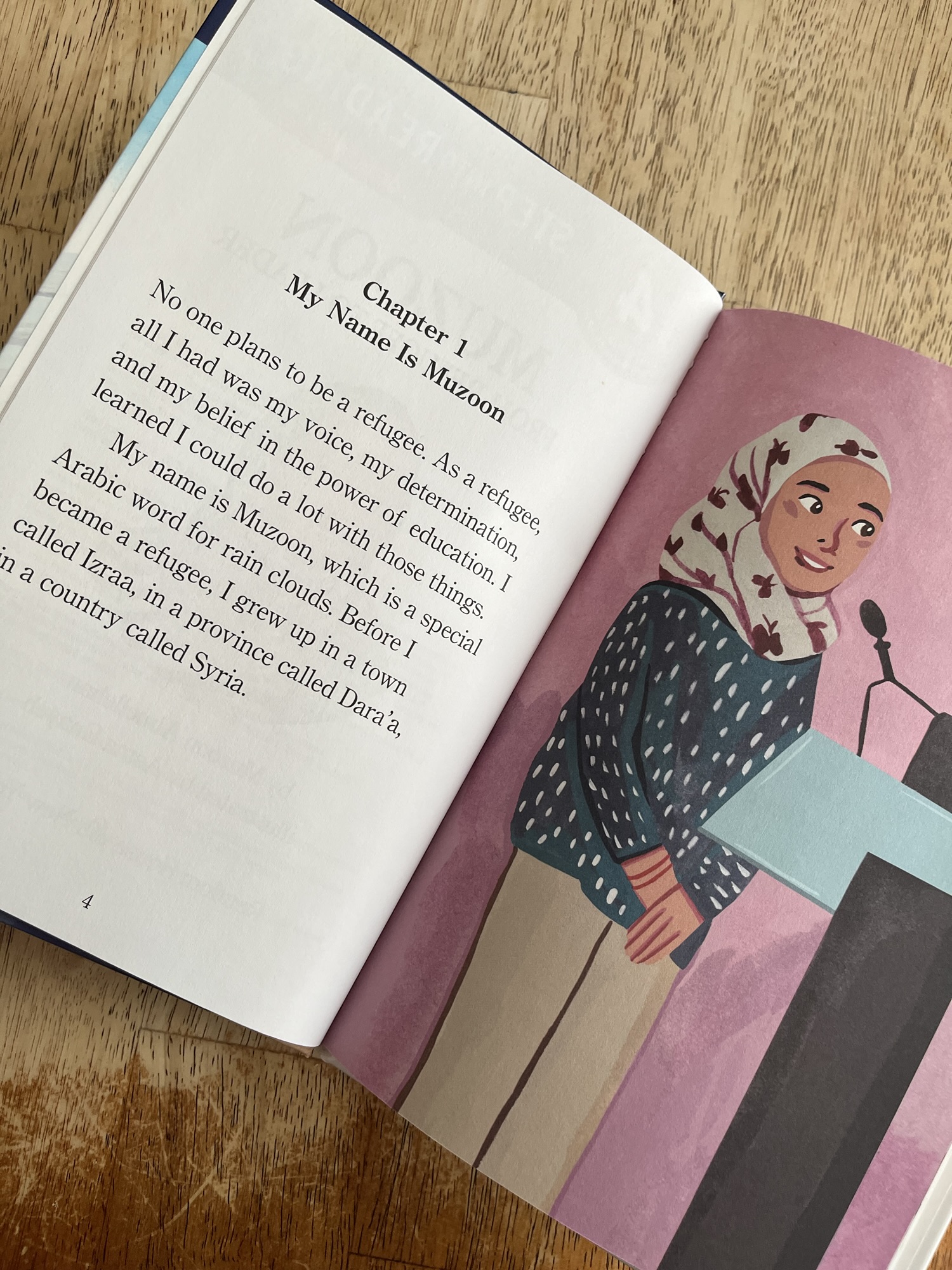
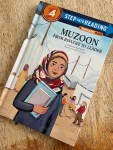
Muzoon: From Refugee to Leader by Muzoon Almellehan illustrated by Asma Enayeh

Standard
Muzoon: From Refugee to Leader by Muzoon Almellehan illustrated by Asma Enayeh

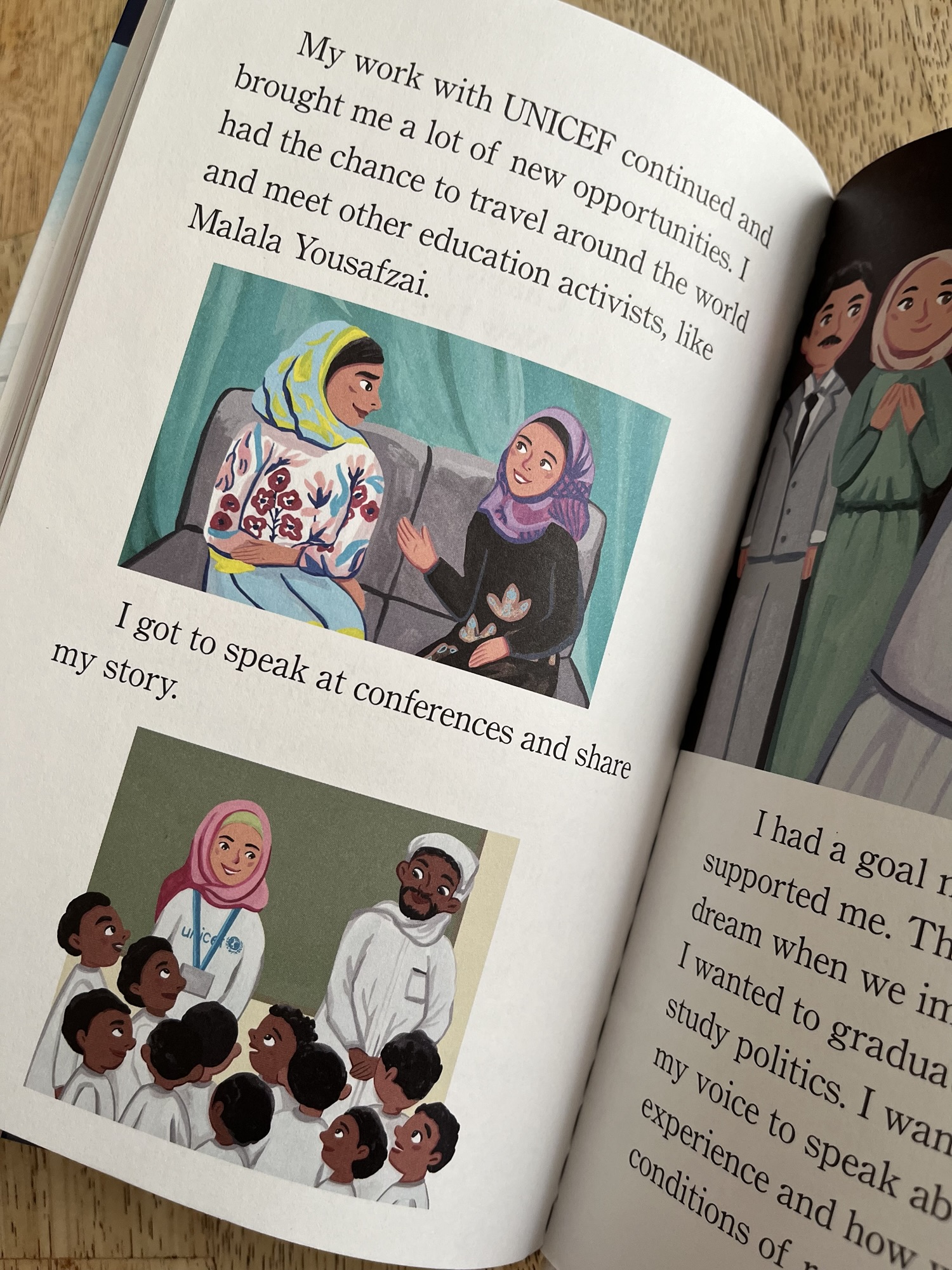
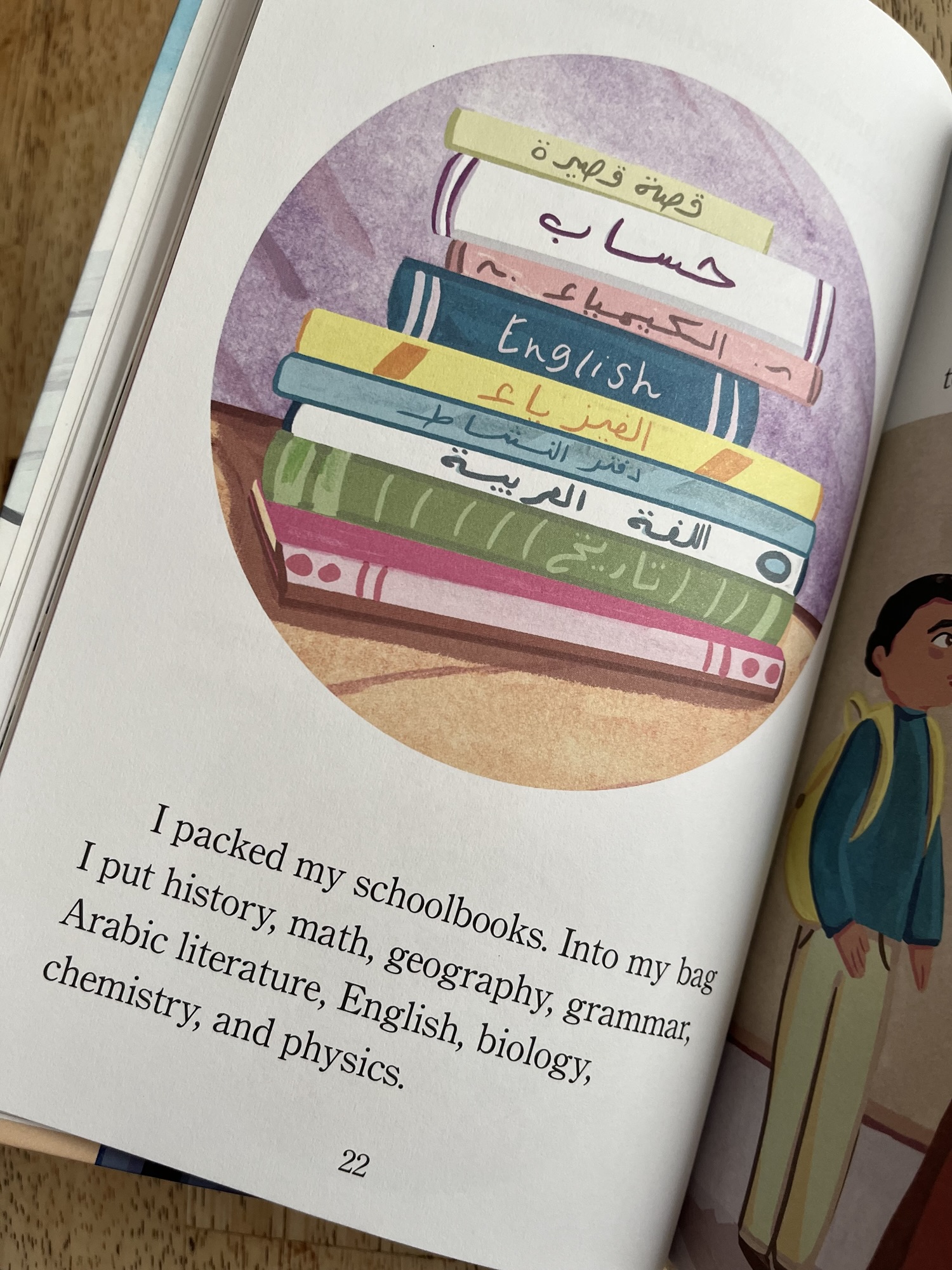
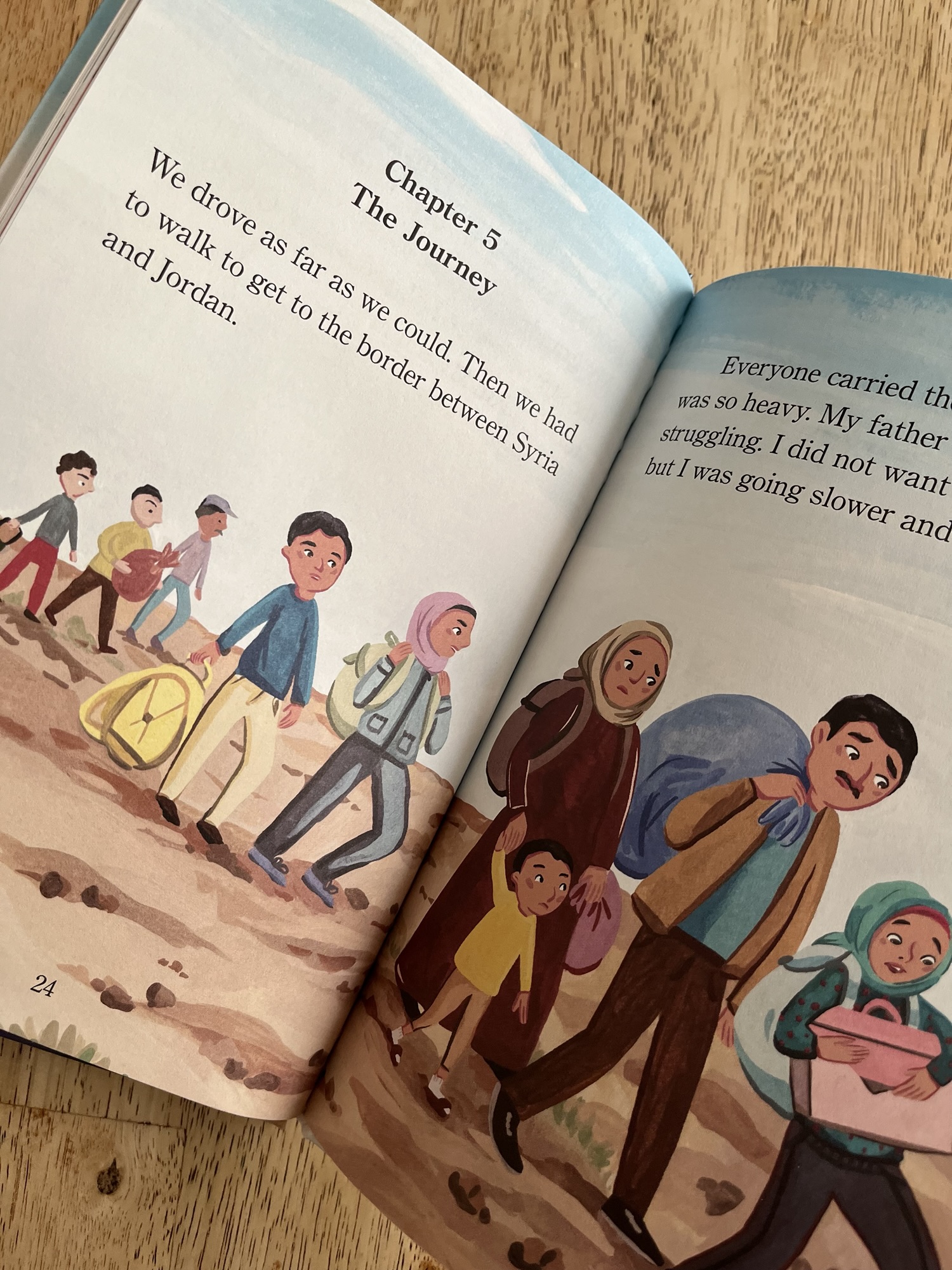
Such a delight to see Muzoon’s story coming to children in the West in the form of a Step into Reading Biography. The approachable format aimed at second and third graders reading paragraphs tells Muzoon’s story with quotations from her middle grade biography, Muzoon: A Syrian Refugee Speaks Out.  From her life with extended family, playing soccer, studying and enjoying Ramadan, to the changes that turned her country unsafe and forced them to become refugees. It follows her to refugee camps trying to find routine and hope and the role education and encouraging other’s to study plays in her life.  Eventually her activism and efforts catch the attention of UNICEF and today she works as a UNICEF Global Goodwill Ambassador and travels the world advocating for education and refugees and rebuilding Syria.

Divided into eight chapters, the 48 page book shows how relatable Muzoon’s life is and how the political events forced her family to abandon all they knew.  The presentation, in both the text and the illustrations, show the unexpected and hardships Muzoon and her family face as they make their way to the refugee camps and work to adjust. The book is not graphic, but the weight is conveyed as readers also see the power education and learning has in providing hope and opportunity. In a fictional story, a protagonist using their voice for the good of society is something to cheer, to see it from a real life person in the middle of a war, is something to admire and be inspired by.

I particularly like the inclusion of Ramadan in the story and the details showing her family joyfully gathering to break their fast together, as well as conveying some details about the Islamic holiday.

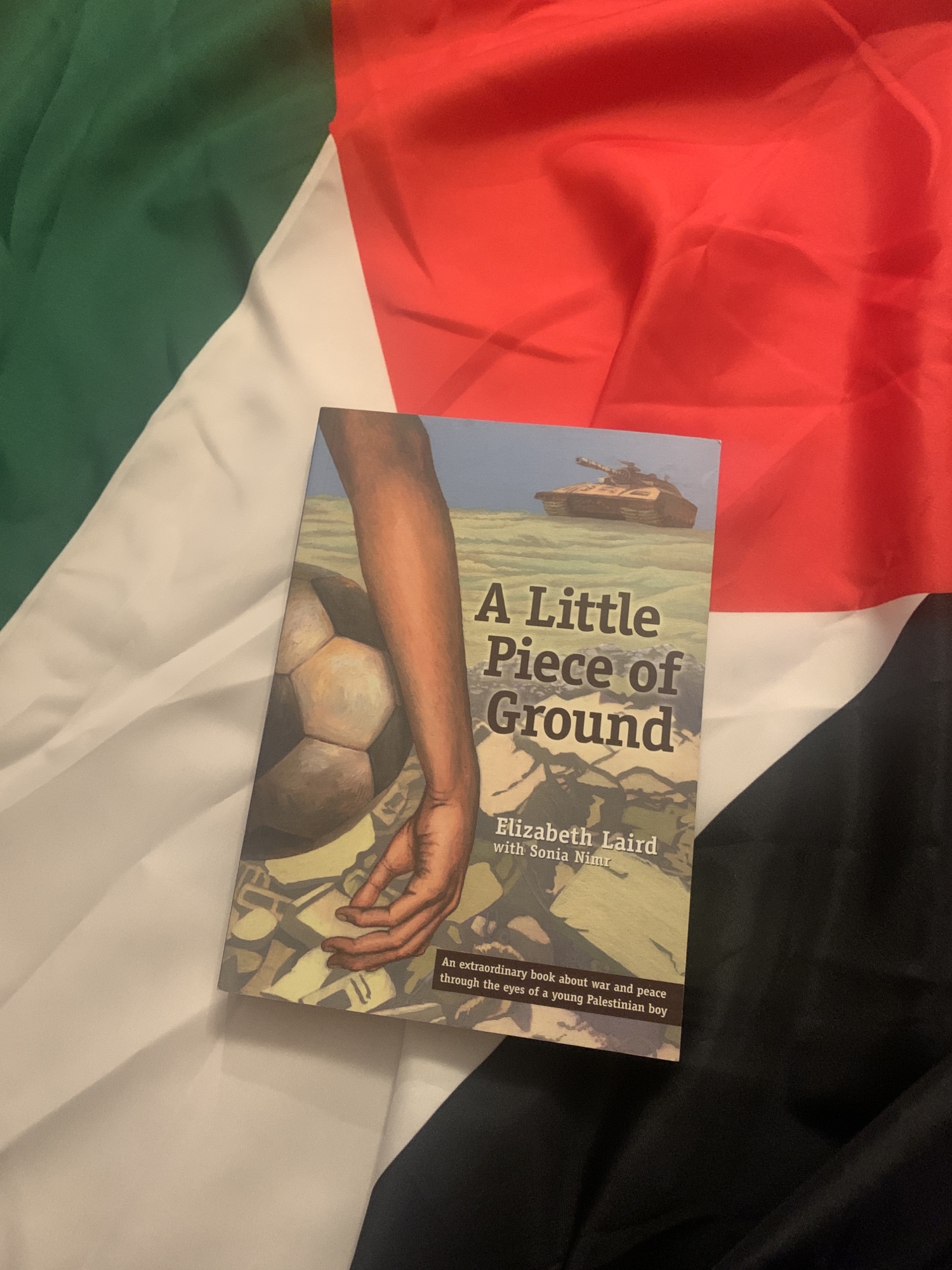
A Little Piece of Ground By Elizabeth Laird with Sonia Nimr

Standard
A Little Piece of Ground By Elizabeth Laird with Sonia Nimr

img_2165-1There are so few Palestinian middle grade books, so on that premise alone this 216 page book has a lot of value.  Because I am not Palestinian, I do not live, nor have I ever lived under occupation, I can argue some of the concerns from a point of privilege, and I acknowledge that is not my right.  I have been asked numerous times about this book and how it frames the suicide bombing mentioned in the text and blurbed about on the back of the book. It honestly is not a large part of the story, that being said, in my outside privileged view, I do not know that a 10 year old in the west will have context to understand the act of this level of desperation from the oppression and humiliation mentioned in the book. This is why I have held off my review.  The truth does not need to be defended or explained, and I fear my reservations will be taken as such, which is not my intention.  Would I let me 8 year old read this, yes, but we will read it together and discuss.  My children are aware of what is going on in Palestine, but Karim, the 12-year-old protagonist supports the bomber, and that notion is not clearly pushed back on. With discussion, absolutely, I think readers, will truly get Karim’s perspective that something has to be done to change the status quo.  The fear when Karim is alone and the target of soldiers, the settlers forcibly seizing the family land, the humiliation of strip searching men at checkpoints, the curfews, and constant fear of attack and imprisonment are all presented through the main character’s eyes, and would also do better with some discussion, so that empathy and duas and action can result.  But, the commentary as to the suicide bombing are minimal, there is even a prank package bombing that is presented as rebellion by a side character, and I would worry how a young child, without guidance, would internalize it.   Additionally, this is yet another difficult book for me to review, primarily because it was first published in 2003, and because I don’t know how much comes from a western gaze and how much the Palestinian voice played into it. Islam is clear on the prohibition of suicide.  In the early 2000 the news out of Israel was often about such attacks, but as an outsider, I honestly do not know if it was simply Israeli propaganda and stereotypes amplifying the idea as part of their public relations strategy or reality, seeing as now that Palestinians have direct outlets to share their daily life under an oppressive occupation, there is rarely talk of suicide bombing attacks. The author states on her website:

“I first visited Israel in 1968, and enjoyed a warm welcome from many Israeli friends. Later, I lived in Beirut with my husband and son during the civil war there, and became aware for the first time of the tragedy of the Palestinian refugees. I visited both Gaza and Ramallah, in the occupied territories, in 2002, while leading workshops for Palestinian writers. I was appalled by the circumstances in which people were living, and became aware that we in the West know very little of what life is like for Palestinians living under military occupation.

I have written A Little Piece of Ground in collaboration with Sonia Nimr, a Palestinian archaeologist, storyteller, writer and translator, who lives in Ramallah. We have tried to make our story as true to life as we can.”

The book is a hard read at times, but the joy is there.  Just as we as adults scroll through the devastation, the humanity persists.  The world may try and forget that they are attempting to erase a rich culture, but even in this book, their is laughter, and crushes, and sibling squabbles, and soccer games and friendship, and food, and joy.  There is a little Islam, not much, the main character is Muslim, a best friend is Christian.  It isn’t present in their everyday thoughts and actions, more just in identifying their faith.

SYNOPSIS:

Karim and his friends are not so much different than 12-year-olds everywhere, he loves video games, playing sports, isn’t so sure what he wants to be in the future, wonders what he will look like as he grows up, and is often annoyed with his family who he loves dearly.  Karim’s life in Ramallah is also unique, he lives under curfew, he doesn’t have freedom of movement, opportunity, or equal rights, and a simple family outing can be life altering.

The book follows Karim and his group of friend as they discover a patch of land they decide to turn into a soccer field, to claim as their own.  They work on it on days they can sneak away after school, in windows of time between curfews, and before long start to take pride in what the land can be. Adopting cats, learning about new friends from the refugee camp next store, teasing siblings about their crushes is all in contrast to Karim watching his father be stripped searched at a check point, being chased off their family land when they are harvesting olives by settlers shooting at them, and pranking soldiers in desperation of fighting back against oppression.

When soldiers roll in and occupy the land the boys have claimed, symbolic of their whole country, Karim gets stuck barricaded in an old abandoned car for days, with soldiers aiming their sights on him, and wondering if he will survive.

FLAGS:

Suicide, systemic abuse, oppression, humiliation, dehumanization, killing, beating, apartheid, genocide, violence, stripping, lying, crushes, occupation, shootings, injuries.

TOOLS FOR LEADING THE DISCUSSION:

This book does not need tools to be discussed.  It itself is a tool, to help middle grade kids be aware that this cruelty has been occurring for 75 years, this book took place 20 years ago, and today we just have social media sharing these stories more widely.  InshaAllah soon, Palestine will be free.

You can purchase this book here at Crescent Moon Store where code ISL at checkout saves you 10%
Sitti’s Key by Sahar Khader Ali illustrated by Noor Alshalabi

Standard
Sitti’s Key by Sahar Khader Ali illustrated by Noor Alshalabi

sitti key

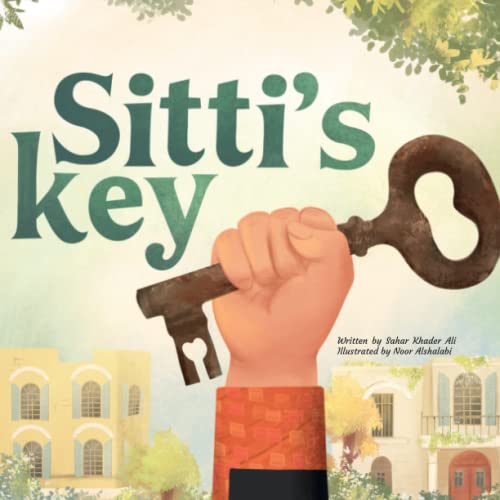
I try and buy, read, and review every children’s book about Palestine that is published, it is the least I can do.  I also try not to compare them to each other as they present different aspects of oppression, perspectives of strength, examples of joy, and messages of hope, even among many similar themes of food, keys, traditions, and culture.  I really appreciate that this book though is incredibly blunt.  It isn’t lyrical, it isn’t poetic, and as Israel is bombing Jenin as I write this I’m glad it doesn’t mince words about the Nakba. I do think caregivers though, should probably read it first as it might be a little triggering for sensitive children.  The story is OWN voice and probably best suited for middle elementary aged children.  It is perhaps also worth noting that the book could be seen as making Jews synonymous with Zionists.  The characters are Muslim, Islamic phrases and Arabic terms are sprinkled throughout, and even despite the pain the family has endured, the book stays hopeful and proud.

Sitti is coming and Amal is excited, it has been two years since she last saw her.  She loves how excited her mom and grandma are to unpack gifts of olive oil, dates, and zataar from friends.  Amal isn’t sure what to do with the “old lady thoub” she has been gifted, but she smiles in appreciation none-the-less.  When Sitti pulls out an old key, Amal starts to ask her about it, but her mother shuffles her off to bed.

The next day at school, Amal has to work on a presentation about “culture,” but there are no Palestinian books in her school library, so she just watches the other kids.  At home they eat and listen to Sitti’s stories of long ago in Haifa, and Amal asks her why she left Palestine.  Despite her mother trying to redirect, Sitti says it is time she knew about the Nakba.

Sitti tells about living on the land for generations and how the Jews believed the land belonged to them.  In 1948 the British decided Palestine would be the homeland for the Jews.  Armed men came and arrested anyone who tried to stay in their homes. Sitti’s brother was handcuffed and never seen again.  The family grabbed what they could including the key to their home as they made their way to a refugee camp in Lebanon.  They stayed for three years, before making their way to America.

When Sitti concludes her story she hands the key to Amal and her hope that she will return to their home inshaAllah.  Feeling the pride and warmth of home, Amal has a determination to reclaim her heritage and share her “culture” with her classmates.

The illustrations are sweet, the mom and Sitti wear hijab even in the home, and the inshaAllahs and salams come naturally. The book does not stop to define zataar or marimya, which helps the flow. I also like how it shows that there aren’t books about Palestine in the school library, it is strong and important detail.  I don’t understand where Sitti is coming from though, it would seem Palestine as she is bringing gifts from friends, but in the story it says after Lebanon they made their way to America, so I’m not sure where Sitti lives, and how the logistics of the family work to be honest.  I also kind of wish there was a  recipe for zataar in the book and lyrics with translation for the song the family sings.

Book is available on Kindle or can be ordered from www.littlehibba.com

These Olive Trees: A Palestinian Family’s Story by Aya Ghanameh

Standard
These Olive Trees: A Palestinian Family’s Story by Aya Ghanameh

these olive

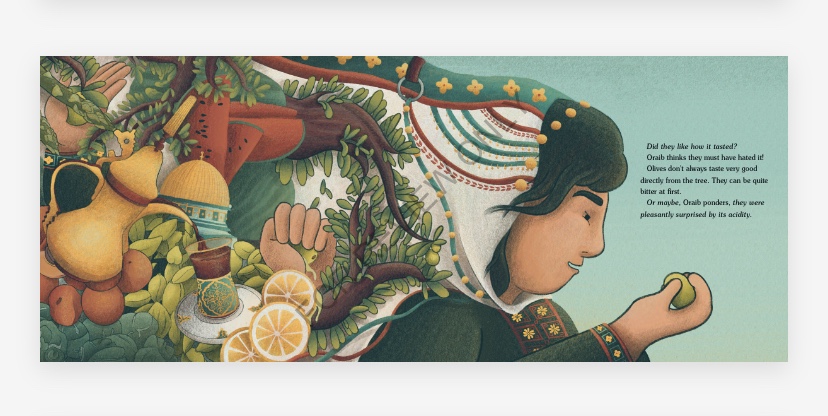
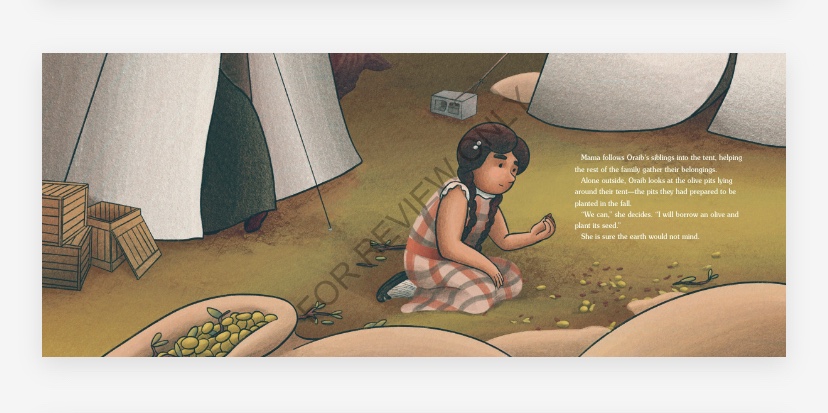
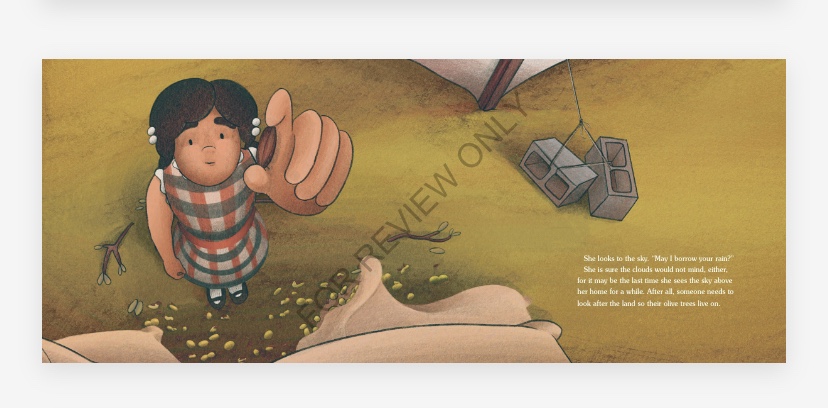
This stunningly illustrated OWN voice Palestinian book for early elementary kids is an important story and I love that it is coming out to the world, but I do have some issues with the literary aspects and target demographic.  The story bounces around from being factual about the brining and curing process of turning the bitter olives into numerous things, to Oraib’s present life in the refugee camp, to memories of the family’s life in Al Tira.  When war once again drives the family from their home in the Balata refugee camp, Oraib, plants seeds and vows to return one day to harvest the fruit.  The language at times is very mature and complicated for ages 5-8, I felt uncomfortable with the family moving being attributed to war and not occupation, and at one point it clearly articulates there are many olive trees located outside the camp and that they are leaving the seeds that would be later planted, so why is the climax her asking the earth permission to plant one more and for the sky to water and care for it until she can return? The backmatter allows the book to be used to spread awareness about Palestine and the process of harvesting olives, but the illustrations will appeal to younger readers, and the concepts contained seem more geared for slightly older ones.  There is nothing religious in the book, there is depiction of the Dome of the Rock in an illustration and I believe the author/illustrator identify as Muslim.

img_8540

The writing style of the book is fairly surface level with concepts not fleshed out to allow difficult concepts to reach younger readers.  When describing the taste of the fresh olives, Oraib wonders if long ago people were, “pleasantly surprised by its acidity.”  No insight into what that acidity tastes like, or bitterness, or what curing and brining means.  Often the paragraphs seem long winded and repetitive, adding very little to advance the story.

img_8541

There is little lyricism in the text, and the first time some tries to peek out, the metaphor is quickly abandoned, and it is notable that it doesn’t return.  The occasional enjoying of the bitter fresh olives is juxtaposed with the surprising joy occasionally found in the camp, it seems that with the uprooting of the family once again at the end, this thread would have been a natural inclusion to reinforce the patience for something better to occur.

img_8544

The dramatization of asking the earth and sky when planting a seed upon their departure, didn’t make much sense to me.  It is noted there are olive trees already there, the illustrations show the ground littered with seeds that were to be planted had they stayed, so why not have the little girl pocket some of the seeds to take with her wherever they go.  That is after all what the mother is doing at the beginning.  Why not have the little girl invest in the cause herself and share in that ownership that they will always endure and prosper. The personification of the earth, sky and rain also doesn’t seem to fit the flow of the story, so much is internal observation and reflection of the main character, that this seems like an attempt to bring it back to a child’s level that instead just reads disjointed.

img_8545

I might have missed something as I am not Palestinian, but the book to look at is incredibly beautiful, I just don’t think it will be read and remembered by young children.  One of my first thoughts when reading it was that it was an early draft, but it is to be published soon and this review is based on the most recent version sent to me. I also wondered in the back of my mind if the book was allowed to be used to check a box, and wasn’t given the editing and polishing that it deserved on purpose.  It depresses me to even think that, and I guess I’ll never know, but I would love to hear your thoughts, and I do hope you will request your local libraires to shelve the book as a show of support to authentic Palestinian voices.

img_8546

Baddawi by Leila Abdelrazaq

Standard
Baddawi by Leila Abdelrazaq

Baddawi-cover

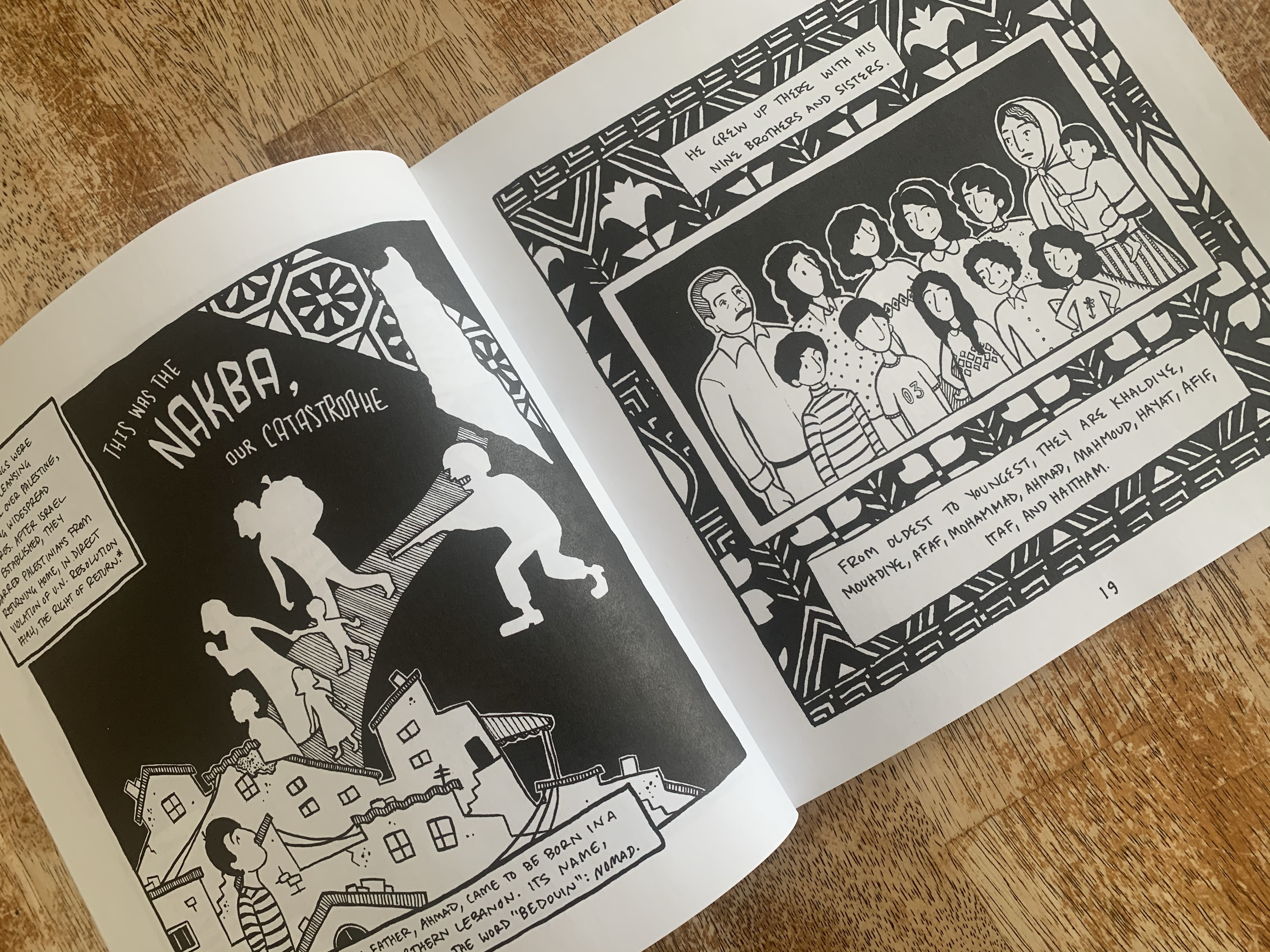
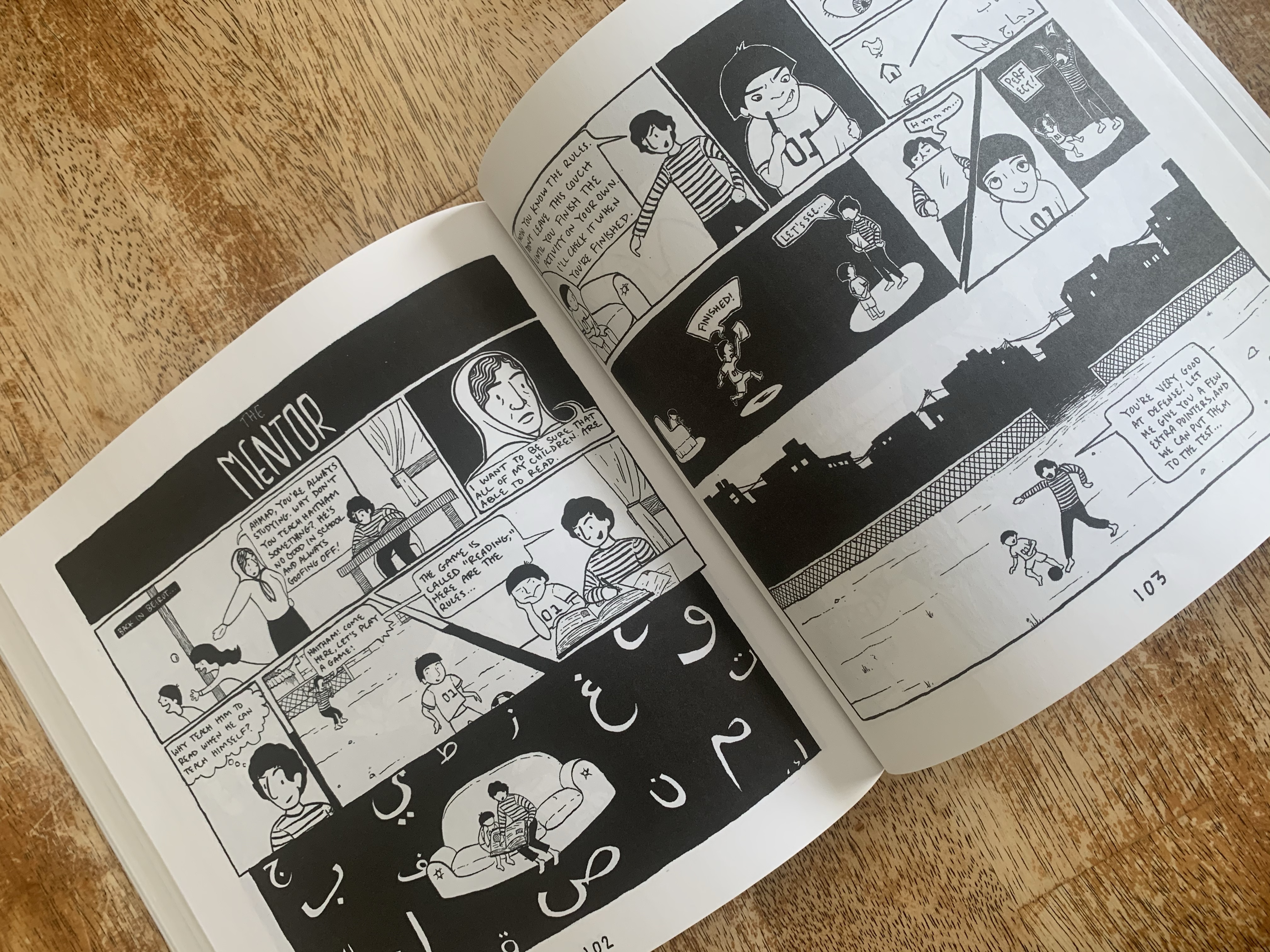
This 8.5 x 8.5 middle school graphic novel biography tells a powerful story of a young boy coming of age and striving to find his place in the chaos of the Nakba and its aftermath.  Over 128 pages the reader will learn and be outraged about the displacement and genocide of so many Palestinians as they see the events through Ahmad’s eyes and relate to his dreams and experiences despite the terror around him. The book has violence, destruction, death and mentions rape, yet the humanity shines through as it is also heartfelt and memorable.  I had my 14, 12, and 10 year olds read it and we have discussed it at length in context to what they already know about Palestine and the ethnic cleansing occurring.  It is a seamless mix of history and character driven narratives brought to life by the black and white illustrations of the author/illustrator’s family history.

img_1656

SYNOPSIS:

There are 10 children in the author’s father’s family, and her father, Ahmad, was born in a refugee camp in northern Lebanon, called Baddawi.  The story starts on October 29, 1948 when Safsaf was ethnically cleansed.  Ahmad’s father, the author’s grandfather had been in Akka at the time of the massacre, and her grandmother hid from the Israeli soldiers, the family, once reunited, would escape for a refugee camp, hoping that they would one day return.

We first get to know Ahmad as he starts first grade in Baddawi.  Things do not start well for the little guy as right away he gets teased by other students, his class is too large so he is selected to be joined with a girls class, and he doesn’t have soccer cleats so he isn’t allowed to play soccer, luckily he gets two good crayons, unlike his friend who gets a white one.  Ahmad is identifiable by his striped shirt that he wears throughout as a nod to Handala, the boy depicted with a striped shirt with his hands clasped behind his back and his face not shown.  The artist said his face would be revealed when Palestine was free, sadly the artist, Naji al-Ali passed away, and Palestine is still occupied.

Ahmad desperate to purchase soccer cleats devises a business plan that his mother takes as gambling and quickly puts an end to, in exchange she offers to pay him if he helps her collect and prepare za’atar.  It isn’t as fun, or as lucrative, but they family is busy packing up to return to Palestine.  Unfortunately the Naksa, the setback, the six day war occurs, and more Palestinians are ethnically cleansed and the families cannot return. Ahmad and all those in Baddawi carry on, playing, celebrating Eid, trying to claim normalcy.  The camp however, is not safe and soldiers raid the camp killing PLO leaders and innocent people in their way.  With no option but to keep on keeping on, these acts of violence are often taken in stride. It is so hard to believe, but what else can they do, the children still play, deal with bullies, and cope with universal struggles in addition to being shot by rubber bullets, and fearing cluster bombs and shellings.  At one point Ahmad and his siblings are left in Baddawi to finish school while his parents are in Beirut.

When the family is reunited in Beirut, Ahmad is in a better school, but violence follows as Mossad agents start raiding PLO homes in Lebanon.  Ahmad goes back and forth between Beirut and Baddawi, wherever he can go to school.  His favorite library is the one at the American University in Beirut and he hopes to attend school there, but without connections, he is at a loss to come up with funding.  His intellect finally lands him an opportunity to leave the Middle East to pursue higher education, he ends up in the United States, and when the story ends, readers are left hoping that everything works out even knowing it will be 10 years before he can return home to see his family.

img_1657

WHY I LIKE IT:

I love that the harsh horrific life is not shied away from in a war, but the little things are just as important in shaping and showing Palestinians to be resilient and culture rich.  I love how the concept of Handala is included and amplified.  The book is at times funny, and at other times devastating.  The connection to the characters is pretty remarkable, in such a relatively short book, and I am fairly confident it will be pulled off the shelf and thumbed through often.  I really wanted to know if the girl in the book that Ahmad left behind ended up being the author’s mother, or if he married someone else, but I couldn’t find it by Googling.  This book is truly powerful, and I highly recommend it.  There isn’t a lot of religion, the family is shown praying on Eid and celebrating.  It mentions the diversity in Beirut, but nothing too detailed.  Similarly, there isn’t a lot of political detail.  There is a glossary at the end, some actual photographs of Ahmad and his family.  At the beginning of the book there is a preface about Handala and how Ahmad represents more than just her father’s experience as well as information about the tatreez patterns on the pages and a map.

img_1658

FLAGS:

There is violence, torture, killing, death, bullying, and possibly gambling.  The book mentions that women were raped, but it isn’t detailed.  The war is ever present and depicted, but it isn’t sensationalized.  Ahmad and a girl study together and the family wants them to get married, but Ahmad opts instead to leave for school, nothing inappropriate.

img_1661

TOOLS FOR LEADING THE DISCUSSION:

This book might not work as a book club selection, but I hope middle school children and their teachers or parents will encourage them to read this book and think about it.  Imagine if it was their homes that were taken, imagine what they would do, and how they would manage, and to be aware that it is still going on and that we cannot be silent.

img_1660

When Stars are Scattered by Victoria Jamieson and Omar Mohamed

Standard
When Stars are Scattered by Victoria Jamieson and Omar Mohamed

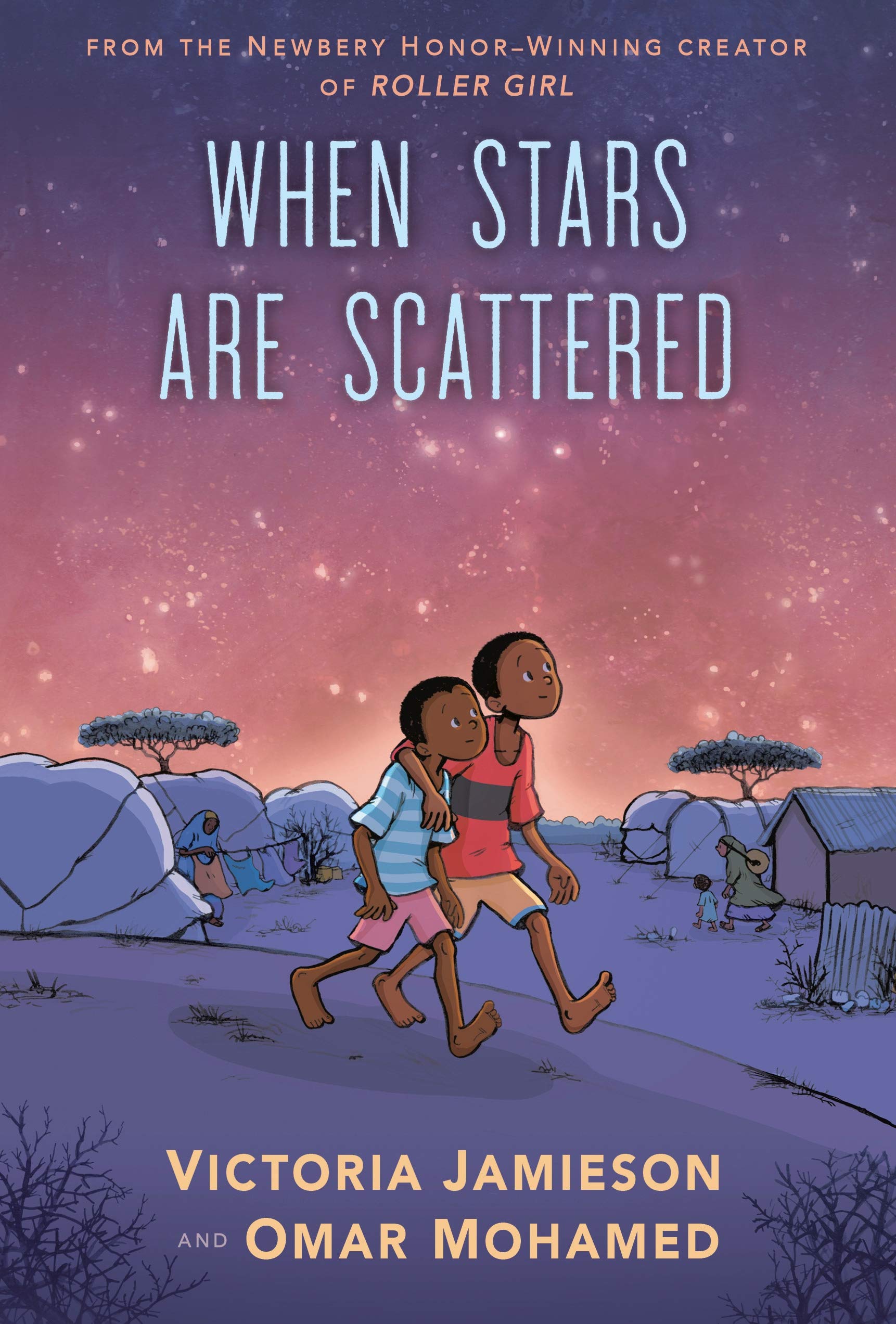
starsThis graphic novel swept me off my feet and left me in tears, not because of the hard life and sadness that life in a refugee camp entails, I had braced myself for that, but because of the hope and humanity and beauty that is so powerfully expressed and conveyed in this 264 page book.  Meant for 3rd graders and up, I think kids through middle school should be encouraged to read it.  The illustrations and colors are incredibly well done and the story is based on a true story that needs to be told and shared.  It is definitely in the top 10 books I’ve read this year and I keep catching my 11 year old re-reading this book repeatedly (like 5 or 6 times).

52BE6C8B-4246-4A92-BA66-004378A21862

SYNOPSIS:

Omar Mohamed lives in Dadaab refugee camp in Kenya.  His father was killed in the Somali war and his mother has not been seen after she sent Omar and his younger brother Hassan to run with the neighbors to escape the violence.  Hasan suffers from seizures and doesn’t speak, save one word, Hooyo, mother in Somali.  The two boys have an adopted mom Fatuma, who looks after the boys in the camp as if they were her own.  Unable to go to school, Omar spends his days looking after his brother, playing soccer with plastic bags, and waiting in lines for water, food, and news of a better opportunity.

When Omar gets the chance to go to school (5th grade) he has to make the difficult decision of pursuing his own opportunities, with the hope of helping Hassan later, or living day to day and taking care of his younger brother.  He is finally convinced that education will help them both, and that if the girls can find a way to do their chores and attend class, he can too.

Each transition from primary, to middle to secondary school requires testing, and only the top get to continue.  Determined to stay in school, Omar studies while dealing with life’s many challenges and the daily additional challenges of living with little food and resources.

When Omar and Hassan’s names finally appear on a UN interview lists for resettlement, hope seeps in, but the wait and the uncertainty prove to be yet another test.  Along the way there are side characters from the United Nations that show compassion, other families that show how generous and loving humans can be, female classmates show him how to take advantage of his privilege and friendships that move friends to family.

D74285FB-CBDC-4C4A-BD7B-070439BB08EF

WHY I LIKE IT:

The book is gripping and has heart.  I don’t know what I expected, but I truly could not put it down.  The character’s stresses are felt and emotions are conveyed so powerfully, that I don’t know that you can read the book and forget it.  The most emotional part for me was his honesty in dealing with his brother, the strength of his friends, particularly female, and the bond to Fatuma.  Truly their living arrangements and loss of family is gut wrenching, but it was the little things that touched me the most.  The honesty of Omar having to decide if he was tempted to not go to school because he was scared. Was he using his brother as an excuse to stay with something he knew.  The emotional tipping point of no return for me was when he realized Fatuma would not be able to go to the second interview with the UN and would not be a part of what came after.  Of course I knew that, but by that point I was so connected to the character, that when Omar realized it, I broke for him.  To feel that connection in a graphic novel was new for me, perhaps a first, and alhumdulillah I am better for it.

The characters are Muslim and behave traditionally with praying and Ramadan and Eid.

F9E64F9D-1722-4CBD-B905-BE754BCE6C77

FLAGS:

There is talk of khat, something the men chew on the side of the road to forget things.  There is some violence, bullying, a young girl getting married before 6th grade and having a baby.

CDD12698-52CE-4FFD-9444-29A666980797

TOOLS FOR LEADING THE DISCUSSION:

Yes! I am hoping if and when we resume school I am starting with this book inshaAllah, for my middle school book club.  There is so much to talk about and understand and empathize with.

Amira Can Catch! by Kevin Christofora illustrated by Dale Tangerman

Standard
Amira Can Catch! by Kevin Christofora illustrated by Dale Tangerman

amira_can_catch

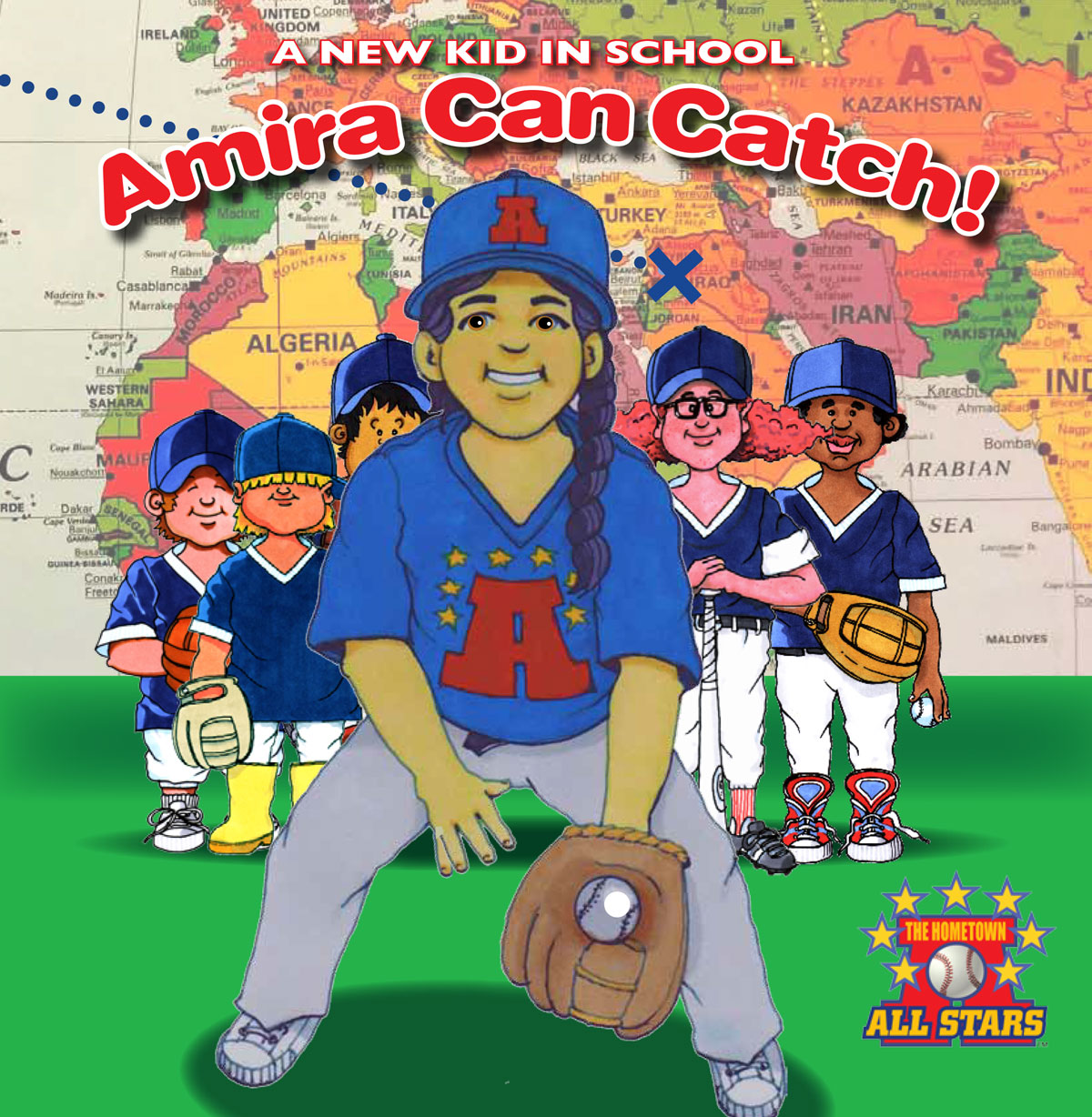
This is book four in the Hometown All Stars series aimed at 4-7 year olds.  The purpose of the series is to teach real coaching skills to help children learn about baseball, get out of the house to play, and have fun.  The 34 page book is baseball technique heavy with a fictional storyline to move it along.  Most sports books focus on team work and being a good sport, but this one takes it a step further by emphasizing the basic skills needed to play the game, as well as sneaking in lessons about inclusion and acceptance.  If your child is American and likes sports, the book will be a hit, pun intended, but there is a lot of text on each page and as America’s pastime, there is a lot of space dedicated to what it means to be American.

IMG_0410

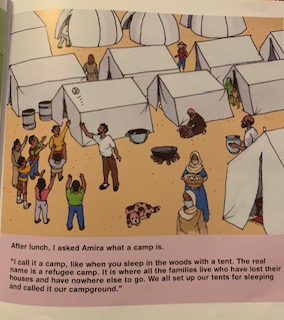
A refugee Muslim girl from Syria, Amira, is invited to play on the after school baseball team, but first needs some help at school with spelling and adding.  Luckily the kids in class are super nice and accepting and help her learn about life in America, while similarly listening to her tell about life in Syria and at the refugee camp.  Not only do they all become friends, she also gets everyone to appreciate how much food they have, and the variety, as well as gets everyone to try pickles. Yum! They like them.

IMG_0411

The kids at baseball practice are also incredibly welcoming as they get Amira a jersey, and teach her all about #24 Willie Mays.  From here, it is like a virtual baseball practice, the kids warm up with stretches, running the bases, and practicing their stances.  There are little info headers explaining things such as what hand to wear your mitt on and explaining how to squat, why the coach is using foam balls, and reminding the reader not to throw balls in the house.

IMG_0412

The kids learn three different types of catches.  How to stand, how to position their hands and how to be ready.  They run drills and practice, practice, practice. They find out Amira is really good, and she tells them that they had a lot of time to practice catching and throwing in the refugee camp.

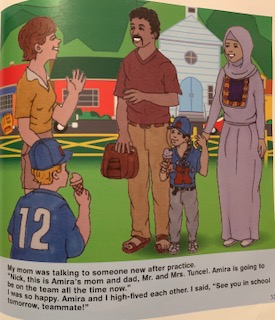
The coach then asks the kids and readers questions before Amira’s parents arrive to pick her up.  With big smiles on their faces, the mom is wearing a hijab and chatting with the narrators mom.

IMG_0415

The book ends with a whole page on “What Does It Mean to be American,” a review of new words learned in the book, and all the kids answering who’s the most American of all, with “We are!”  The back cover has a reflective patch with the statement “Americans come from all over the world.  Look in the mirror, and tell me where are you from?”

IMG_0416

The book and series are a great way to learn about a game, that really a lot of kids today may not know much about.  Some of the terms, the skills, and just familiarity is clearly conveyed, with the illustrations providing the visuals and diagrams for what the coach is talking about in the text.  The fact that the author chose to add a refugee to such an “American” book and have the supporting  characters so welcoming, really does show the best of what Americans can be.

IMG_0417