Tag Archives: lesson

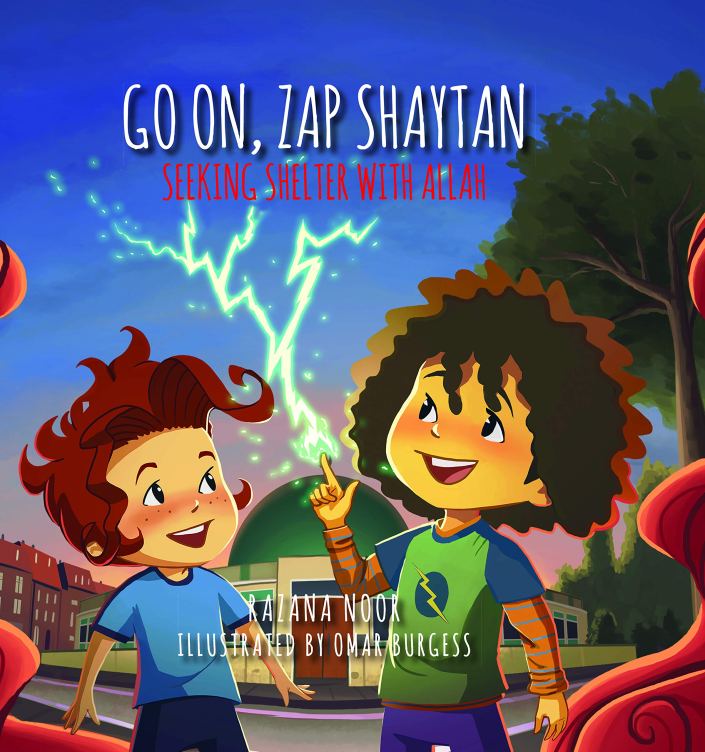
Go On, Zap Shaytan: Seeking Shelter with Allah by Razana Noor illustrated by Omar Burgess

Standard
Go On, Zap Shaytan: Seeking Shelter with Allah by Razana Noor illustrated by Omar Burgess

zap shaytan

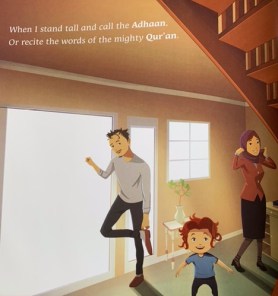
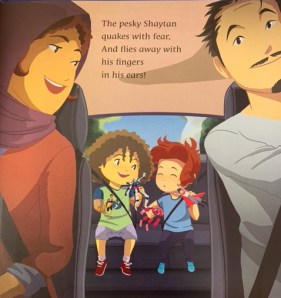
In rhyming couplets spread out over 32 pages with adorable illustrations, this book is a great introduction to the whispers of shaytan that encourage us to be naughty, and how to counter them without frightnening young listeners.  Meant for preschool age children and up, this is the second book by the author discussing an important religious concept in an easy to understand manner (the first book was about Kiraman Katibinthat empowers children to make great choices and find strength in doing so, even when mistakes are made.4CB95EFD-0B5A-4725-B110-4361E48CD9A4

The “Note to Parents” at the beginning provides great framework for the takeaway message of the book.  That yes, shaytan whispers to us and we will make mistakes, but the power is ours to overcome such temptations and inshaAllah do good.

F2A6447D-B135-462B-A488-69FAE830E3DA

The book starts out a bit shakey for me as the rhyming is a bit off on one page, and the blame for the little boy with the great hair’s naughtiness is blamed solely on shaytan.  As a former teacher, this is always a tricky concept when trying to teach children to take responsibility for their actions, but then knowing full well that shayateen are real too.

4DE197AE-7441-4994-BA67-422FE6C79D52

Once the flip side, of how to protect yourself from shaytan, starts: by saying aoudhu-billahi minashaytanir rajeem, bismillah, salam, reading Quran, calling athan, etc.. the book flows really well.

CC847284-C10B-499A-881C-742DF1C0956C

I love how much information is conveyed about the jinn and their purpose and how they cower and put their fingers in their ears to not hear the praise of Allah swt.

424EFA9E-0755-4E84-A179-CEE46F4EE2ED

There is a glossary for the Arabic words and Islamic references, some kids might need some additional understanding about jin and responsibiltiy, but a solid book that I have read over 20 times to my 4 year old in the last week, alhumdulillah.

74D999B3-5CCC-4426-977F-43FF55EE2383

Thank you again to Crescent Moon Storefor their incredibly quick fullfillment of the order.

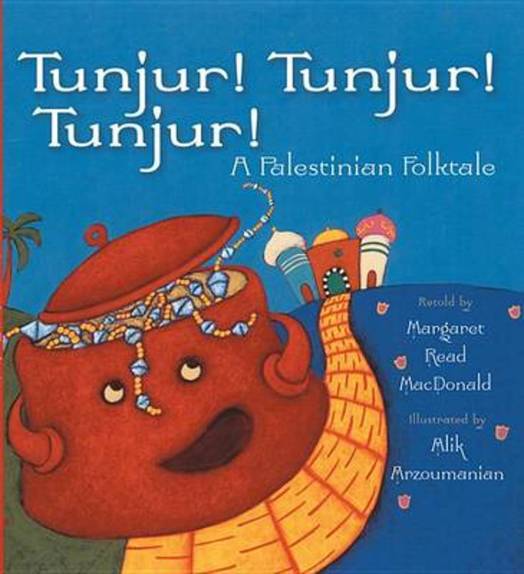
Tunjur! Tunjur! Tunjur! A Palestinian Folktale retold by Margaret Read MacDonald illustrated by Alik Arzoumanian

Standard
Tunjur! Tunjur! Tunjur! A Palestinian Folktale retold by Margaret Read MacDonald illustrated by Alik Arzoumanian

tunjur.jpg

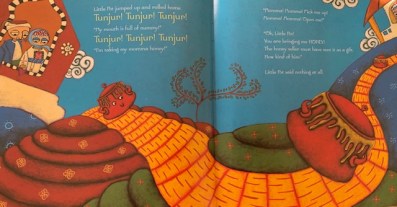
This delightful little folktale is beautifully presented in 32 pages on an AR 1.7 level.  Perfect for little ones to listen to and early readers to tackle on their own.  The pictures are fun and engaging and the story teaches a great lesson of right and wrong in a silly memorable fashion.

IMG_8036

A childless woman asks Allah to bless her with a child, even if it is just a cooking pot, and “Willa! She had a child! And it was a little pot!”

At first taken aback, the little pot professes her love for mama and thus the woman decides to take care of the little pot.  Every day the little pot bumps against the walls as she rolls and jumps around making the sound, Tunjur.

IMG_8037

One day the pot wants to go to the market by herself.  Mama refuses as she is too young and doesn’t know right from wrong, but alas she talks her mom in to it, and off she goes.

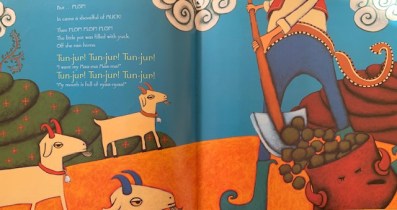
She meets a rich man who wants to fill her with honey for his wife.  The pot loves honey so she doesn’t protest, but she refuses to release her lid when the man gifts the pot to his wife.  Angrily he throws the pot out the window and the little pot finds her way home. Mama assumes the honey seller sent it as a gift and little pot says nothing at all.

IMG_8039

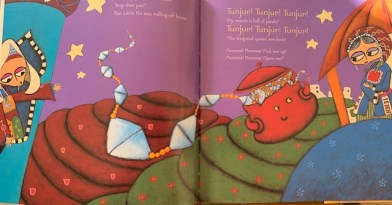
The next time little pot heads out she finds herself filled with the queen’s jewels and when she returns Mama is not happy that her little pot has taken things that do not belong to her.

IMG_8038

When little pot heads out again to apologize, the rich man takes her to the king and queen for a reward,  and they fill her with something to teach her a lesson.  When she comes home to Mama, she has definitely learned her lesson.

IMG_8040

The women in the story seem to wear hijab, most notably the wealthy man’s wife.   The Mama asks Allah swt for a child, but other than that there is nothing religious in nature in the book and seeing as I checked it out from the public library, I think it appeals to all kids.


Miss Never Pleased by Ayesha Marfani illustrated by Aisha Aamir

Standard
Miss Never Pleased by Ayesha Marfani illustrated by Aisha Aamir

IMG_1860 (1)

I’ve been accused of being brutal in my reviews.  And while I don’t enjoy being mean, I do take some pride in the attribute, as I am paying for these books myself (unless I get them at the library) and it takes time out of my day to write these reviews.  I don’t get paid, I do it because I love books, I like supporting Muslim authors and those including Muslim characters in their stories.  I take recommending books to others serious, and can’t remember things if I don’t write them down, so here I am.  With this review I don’t want to be rude, or overly critical nor do I want to sound pompous and arrogant and privileged, but at the same time, I ordered the book off of Amazon for $7.99 so a fair review shouldn’t hold punches to spare what the author is trying to do and appreciating that she is writing for a cultural audience. 

Please believe me it isn’t personal, I am reviewing it based on my same criteria I review all the books through, my own personal bias.  That being said, if the reader is living in Pakistan, or has recently lived in Pakistan and English is a second or fifth language the 70 page story with games and activities at the end is decent.  Meant for ages 7-12 in that situation, that are intrigued by the moral lesson presented, I think the plot holes can be forgiven.  For those without ties to Pakistan, or with loose ties like me (I’m half Pakistani and grew up spending my summers visiting family) the book will be choppy, culturally specific, confusing and lacking.

SYNOPSIS:

The book opens with Habiba being distraught over her world crashing down on her and the pain she has caused her relatives consuming her.  She then opens her diary that she has kept for six years, starting back when she was seven recounting how she as Miss Perfect justified her self in incident after incident.  Thirty-one incidents to be exact, detailing how she would rat out her cousins, or critique elders food, or her tell her friends how to dress and what to study because it was the honest thing to do.   How she would decide who should be friends with who, if her family should go on picnics and how she didn’t want gifts but didn’t want to not get gifts either.  All-in-all Habiba is a self righteous awful, awful girl, I don’t think it is her trying to be perfect, I think she is just awful.  At the beginning she attributes it to praise she received as a child from her mom and grandma, but for this behavior to have gone on for so many years, I don’t think it was their praise, it was their lack of discipline that leads up to her catastrophic moment.  She fails her exams and then learns what her family really thinks about her in a poem, with a way too forced rhyme scheme, left lying around.  The story then returns to her undoing and a faqeer coming to cure her and her parents taking the blame for her poor upbringing.  She crosses out the title on her journal from Miss Perfect to Miss Never Pleased, to presumably denote how nothing could satisfy her.  The story then skips forward to her returning after University as the best international psychologist.  

WHY I LIKE IT:

I love the concept of the book, that a girl thinking she was so perfect could realize in fact she is not.  The idea is great.  I think it is a bit sad that her parents and involved extended family took so little interest in correcting her behavior, but at the same time I didn’t think it believable that she was absolved of all responsibility either. 

I feel like this book was a great first draft.  It needs some fleshing out, and some continuity corrections.  Incident #3 makes no sense, it starts with a party, then her ruining the mood of everyone at the party, and then her crushing her cousin’s dream of being in a play for her own twisted reasons.  But the jump from one idea to another seems like something got edited out and the rest of the four-and-a-half-page story didn’t get altered to reflect the missing details.  I have no idea what the party was for, what a wish gift is, and why anyone in their right mind would take a child’s opinion regarding someone else’s life so strongly. 

There are also contradictions, for example on page 14 she makes a big huff about her cousin wanting to study to be a teacher saying she wouldn’t be good at it, then on page 49 saying she would be marvelous, and this is before her climactic change of heart.  There are some awkward passages as well, that I had to read a few times, which could have been do to a different style of English, but sometimes I think it was confusing on its own.  Page 24 was all over the place with her not wanting to thank people for giving her a gift because she deserved the gift, but then telling them she appreciated it, along with her saying the gift, a dress, appealed to her, but that they should not have gotten it because it was an inferior quality.  Inferior to what we don’t know. So she didn’t say thank you, but said she appreciated it, isn’t that the same thing?  She didn’t like the dress, but it had appealed to her? Very confusing and just one example.

I say it is for Pakistani’s because I don’t know that anyone outside the subcontinent would know what a faqeer is, yes there is a glossary at the back, but it seems assumed in the story as a religious practice, which I find some issue with.  When Habiba was trying to dress everyone she says that a fishtail would look nice on her cousins and she gets a blue one.  I have no idea what a fishtail is.  It is not really explained, an illustration would have been helpful, but is not provided. She also once refers to her cousin as “dark” in a negative connotation, and that seemed very out of place and inappropriate to me.  And ultimately, if you don’t know the Pakistani school system I’m not sure you would understand how important the exam she failed is, nor why the scores are in the newspaper,  or that they have to pick their fields of study so early.  That being said, how did she get to University and do so well? If at 13 they had to choose their college and she didn’t pass wouldn’t she not be allowed to continue? I am so confused. And then she comes back after University, but is already being written about in the papers as if she has had a long and successful career.

The book doesn’t tell how she makes things right with all those she wronged either, after so many incidents, I think a little self reflection and humbling should have occurred to those that felt her wrath for so many years.  There isn’t really even a solution, her dad comes and talks to her, she reads what people think about her and then boom, happily ever after.

The illustrations are sporadic, but not consistent in the book.  The style seems to be different in each sketch.


FLAGS:

The girl lies and is incredibly mean but there isn’t anything inappropriate in terms of language or violence.  Islam is mentioned at the end when she thanks Allah swt for His help.

TOOLS FOR LEADING THE DISCUSSION:

I wouldn’t do this as a book club because it is so short, and I don’t know that kids would be compelled to read past the first few pages if it was in a classroom library.  

Book Video https://www.youtube.com/watch?v=QWoCiEnvg5U

If this book would have been written 20 years ago or so, I think readers everywhere would have given it a try as there was so little to choose from in Islamic Fiction, but there are options now, and much better ones.  I feel awful that I didn’t love the book, but I can’t suggest it either.  I plan to read one more book of the author’s to see if this one just didn’t work for me, and I’ll let you know what I think.
The Blessed Bananas: A Muslim Fable by Tayyaba Syed illustrated by Melani Putri

Standard
The Blessed Bananas: A Muslim Fable by Tayyaba Syed illustrated by Melani Putri

IMG_1798.jpg

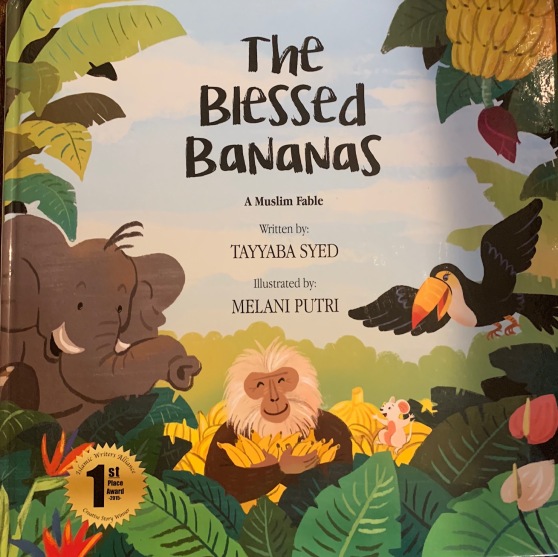
 A fable with lessons of kindness centered around the Salawat, definitely is a great premise and for the most part I really enjoyed the book. 

IMG_1799

The 8.5 by 8.5 hardcover, 50 page book feels great in your hands and the illustrations are sweet and expressive.  The book is long, and is text heavy so I’d say the target audience is maybe 6 to 10 years old.   The font is incredibly small and irritating.   It should have been larger and more inviting to children in my opinion.  It doesn’t match the size, binding, and illustrations, and actually becomes a distraction if trying to read it in a group setting.  
IMG_1801

The story itself is smooth and intentional.  Rico, a blessed, yet ungrateful monkey, lives atop an ever abundant banana tree.  However, he attributes his blessings to his own hands and does not thank Allah swt.  He is mean and greedy toward people and animals alike.  Yet, something is missing in his life and he doesn’t know what. 

IMG_1800

When a little mouse, Chico, comes to him to ask for a banana and gets scolded at instead.  Chico makes dua for Rico asking Allah to guide the monkey to goodness.

IMG_1802

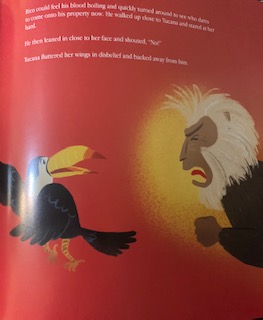
Tucana, a toucan, then stops in Rico’s banana tree after a long flight to be rebuffed by a foul tempered monkey who wants to be left alone.  When Tucana  leaves she forgives Rico for his rudeness and asks Allah to be merciful to him as well.

IMG_1803

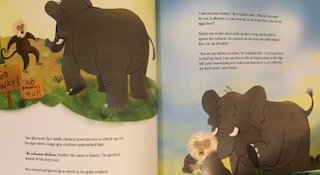
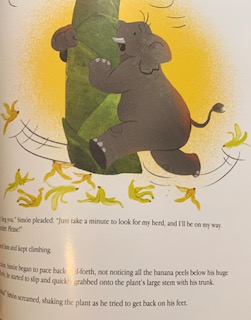
Rico then makes signs to keep people and animals away.  Which works for a while, but along comes Simon, an elephant, one afternoon to ask the monkey to climb his tree and help direct him back to his herd.  Rico of course refuses, and Simon reminds him that they are brothers in Islam and to please help. He begins shouting at the elephant to leave, and as Simon is pacing back and forth, he slips on the banana peels, grabs the tree to support himself and shakes the tree back and forth in the process.

IMG_1806

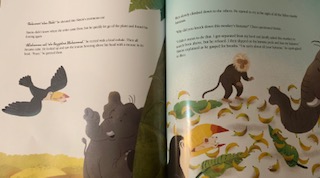
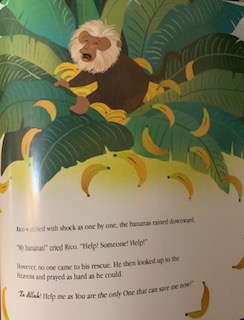
Rico begins hollering for help and sure enough the animals he had turned away previously, return to help him.  They had forgiven him as they hope Allah will forgive us all.  To calm the monkey, chico shouts, “Salawaat’alan Nabi!” in Simon’s ear and when he recites “Allahuma sali’ala Sayyidina Muhammad,” peace and calmness is restored.

IMG_1811 (1)

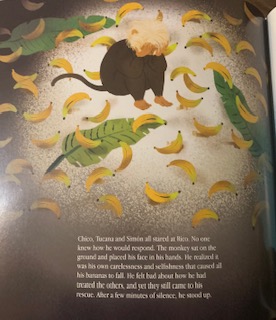
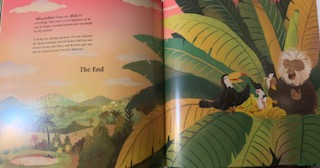
With all the bananas on the floor, many mushy and trampled, Rico has to decide if he learned a lesson, and how he will put his new knowledge into action, or if he will resume his life of ungratefulness.

IMG_1807

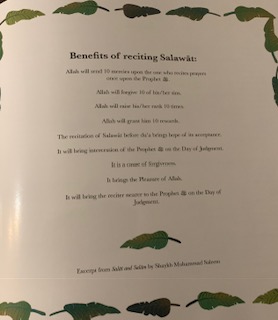
The book ends with each animals favorite banana recipe, information about the author and illustrator and benefits of reciting Salawat and an ayat from the Quran.

IMG_1810

The story and how it weaves Islam into the lessons is beautifully done, my only hiccup is the constant refrain of Rico counting his bananas.  I realize it is a fable, and maybe with talking animals interacting with humans, reality is notably suspended.  But, it seems misplaced to me.  How do you constantly count a perishable item? Does Rico only eat a certain amount a day? How many new ones grow a day? What is the number that he is adamant to have at all times? So, many questions, that I didn’t get why he was counting them, why he was irritated when he lost count, and why this detail was in the story and a big part of the story none-the-less.  Like the font, its a minor detail, but a distracting one for me unfortunately.  Clearly, however, I’m in the minority as the book has won the Moonbeam Children’s Book Award and the Islamic Writer’s Alliance Creative Story, so give it a read, and let me know your thoughts, jazakhAllah kher.

IMG_1809


A Race to Prayer: Sulaiman’s Rewarding Day by Aliya Vaughan

Standard
A Race to Prayer: Sulaiman’s Rewarding Day by Aliya Vaughan

a race to prayer

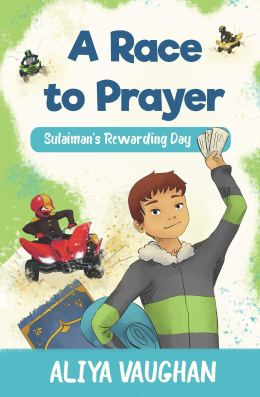
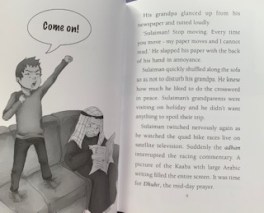
This 56 page (only 38 pages of story) early chapter book is a simple book with a lesson.  For kindergarten to 2nd grade readers the book could be a short story, but the added minuscule details (how he got in the car, slid over, and buckled up) and the illustrations, flesh the book out in to seven chapters with a note for parents/educators at the beginning, and sections of: evidence from the Quran and Sunnah, comprehension questions, inspiration behind the story, glossary and information on the author at the end.  The book isn’t bad, just kind of dry and bare bones.  Satisfactory for young readers that enjoy quad races, and ideal for those that whine whenever it is salat time.

SYNOPSIS:

Sulaiman loves watching quad races and playing football (soccer, the book is British), but feels like, “Every time I want to do something exciting, it either rains or it is time to pray.” one afternoon when he is feeling particularly grumpy, his dad offers to take him to watch the quad races at a nearby stadium.  Grandpa joins them and grandma sends them off with lunches and duas.  First the car won’t start, then they take a bus and wait in line.  Once they are inside the day looks up, the races are fun and then it is Thuhr time.  Sulaiman wants to wait until a break, but it is winter and the days are short meaning Asr will be approaching fast.  They go find a place to pray and when they return their seating section is closed.  Part of the roof fell in due to the rain.  Feeling fortunate that they had left to pray, Sulaiman sees the value of praying on time in this duniya.  They later are given better seats and Sulaiman feels blessed that they had gone to pray.

The story was inspired by a real event, according to the “Inspiration Behind the Story” at the end, where the author says that her husband was at a football match in Algeria when an earthquake struck.

IMG_0029

WHY I LIKE IT:

I love that the character is relate-able to most of our young Muslim children.  He is a good kid, but has a hard time stopping what he is doing to pray.  He has to be reminded to make wudu and brush his teeth.  I like that grandpa gets to come along, but I wish he would get to tell some of his stories, rather than just have Sulaiman shush him and be annoyed.  Similarly, I like that the dad is a “fixer” but some character development would have been really great.  I understand the reading age isn’t tempted by back story, but a little investment in the characters would make the climax that much more intense.  I was surprised by the roof falling in, but it snuck up so quick and was resolved equally fast, that I didn’t really feel it.

Also, I am not entirely sure what quad racing is. I mean I get that they are 4 wheelers racing on a stadium track.  But, I didn’t realize it was such a thing to be watching it on tv and then heading to watch it live nearby.  I’m glad I learned that kids dig it in Britain, but I’m thinking that it might be a little foreign .  A soccer match or another race, might have made the story a bit more appealing.

The book is for Muslims by a Muslim despite the glossary at the back. The pictures aren’t great, but they make the page breaks appeal to the younger kids.  The font, binding, and presentation makes for a nice looking and feeling book.

IMG_0030

FLAGS:

None, alhumdulillah.

TOOLS FOR LEADING THE DISCUSSION:

This book would be really great in small groups.  I can see it being used in Sunday schools or in Islamic schools, where Language Arts teachers and Islamic Studies teachers crossover to drive the importance of salat home.  I think this would easily inspire this age group to then write their own copy-cat stories of why salat is important.  The questions at the end could even make it like an extra credit novel study or a read aloud story with the questions used to verify comprehension.

Power Forward: Zayd Saleem, Chasing the Dream by Hena Khan illustrated by Sally Wern Comport

Standard
Power Forward: Zayd Saleem, Chasing the Dream by Hena Khan illustrated by Sally Wern Comport

power forward

I enjoy Hena Khan’s books, I love basketball, and I love that this three book series is written for 3rd-5th graders.  I didn’t love the cover, however, which I attribute to the reason I waited so long to start reading the book, I know, lame.  But luckily the books were in the public library and I had a few hours on my hands and was able to consume the first two books, and look into ways to get the third one ASAP!  Written on an AR 3.8 level the 126 pages fly by, the second book On Point is 130 pages and an AR 4.0, and the third book in the series, Bounce Back comes out in October.

SYNOPSIS:

Zayd Saleem is in 4th grade and is desperately trying to move from the D squad basketball team to the Gold team with his best friend Adam.  The only problem is he is a pretty scrawny kid, and he has committed a lot of his day to practicing violin.  His desperation forces him to be less than honest and the consequences that follow may strip him of the chance to even try out for the team at all.  The basketball story is intertwined with a rich cultural Pakistani-American backdrop and familial characters that are relatable and fairly fleshed out.  Zayd’s mamoo, maternal uncle, has agreed to meet someone to consider marriage, which brings out some humor as the whole family, including grandma and grandpa, have big roles to play.  Zayd also has to figure out why he gets such stomach aches as he makes regular notes in his food diary, and has to balance the universal themes of friends, school, and homework, as well.

WHY I LIKE IT:

The font and spacing is wonderful for the target demographic, sprinkle in the illustrations and the book is not intimidating in length or size.  The book is very real and relatable, kids of all backgrounds will relate to the basketball storyline and the video games and players mentioned.  I loved the cultural environment.  My kids absolutely loved the mentioning of the Pakistani food that they eat, and customs they participate in, and dynamics they know all too well.  I don’t know that a non Desi (someone from the Indian subcontinent) will get it, love it, and not be turned off by it.  The books are published through Salaam Reads and I would imagine the author and publisher know what they are doing, and the library has numerous copies, so clearly, I’m over thinking it, but I really want to get feedback on the cultural aspect, because it is done really well and I think it would show promise for future books.  

I love that the book is about a boy and basketball, but it isn’t limited to being a boy book or a sports book.  The story moves seamlessly through all facets of the characters life that makes it pretty memorable for what could have just been a sports story with a moral.  The “life lessons” are clear and obvious, but not overly elevated.  The little mistakes that Zayd makes are a part of his life, as are the consequences, but his family helps him through them, and help him learn.

There isn’t anything preachy or blatant about Islam in the book, but the characters are Muslim and it mentions that the parents are heading to the mosque at one point to help with a fundraiser.  

FLAGS:

There is lying, but that is kind of the lesson being worked through.

TOOLS FOR LEADING THE DISCUSSION:

I recently agreed to help a teacher with her “Lunch Bunch.”  Once a week students can opt to eat lunch in the library and have a book read to them.  They must commit for the duration of the book and I think for a 4th and 5th grade group this book would be a lot of fun.  It would probably only take two sessions to read and with the diverse class I can see if they get the cultural stuff or if it just bogs down the story to them.

Author’s website: https://www.henakhan.com/power-forward/


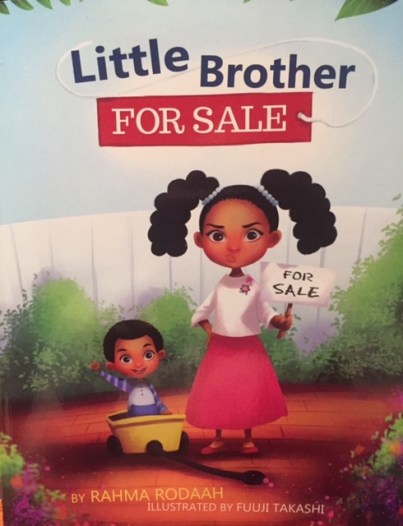
Little Brother for Sale by Rahma Rodaah illustrated by Fuuji Takashi

Standard
Little Brother for Sale by Rahma Rodaah illustrated by Fuuji Takashi

IMG_1867.jpg

Oh how I love to read sweet books and repeatedly thumb through warm engaging illustrations.  This book is beautiful, fun, and (possibly) very relatable.

IMG_1860

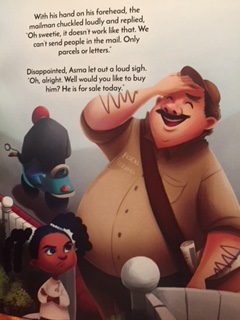
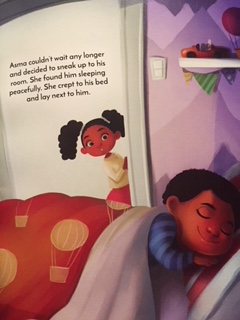
A big sister, Asma, is ready to get rid of her little brother, Hamza, so that she can enjoy all her parent’s attention.  But when the mailman won’t let her ship him to grandma, and neither the lady walking down the street nor the neighbor next door want to buy him, she is determined to find someone to take him off her hands.  Alas though, it is Hamza’s nap time and while mom makes salat Asma finally gets some time to herself.

IMG_1862

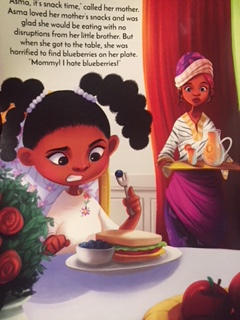
Except she misses having someone sharpen her crayons, or eat the blueberries she doesn’t like, and there is no one to dance with her around the living room.  She decides that maybe she does like her little brother, and lays down next to him with promises of loving and protecting him forever.  Ahhh…..

IMG_1866

Yeah, the book is pretty predictable, but the details make it charming.  I love the diverse characters and the love and warmth they all exude.  I love that when she drags her brother out in the wagon and holds up the for sale sign, mom is peeking out from the kitchen.  I reassured myself that she was there, so it was ok for Asma to be talking to the mail man, a potential stranger, and the lady walking down the street, muslimah or not. 

IMG_1861 

The only slight hiccup to me was what one-year-old, he was seemingly taking his first steps in the first picture, can sharpen crayons? Maybe I just failed to prepare my children, but other than that, the book is smooth, and well done.

IMG_1864

The binding quality, the font, the amount of text on the 26 pages, is definitely preschool to first or second grade, and the illustrations will mesmerize even toddlers who won’t understand why the book is so silly. 

IMG_1863

The book has been floating around my house and I’ve seen my 11 year old pick it up and read it on her own, and then read it to the three year old mutltiple times.  She possibly was getting ideas, but maybe it also reminds us that siblings really can be both annoying and lovely as well.

IMG_1865

The Butter Man by Elizabeth and Ali Alalou illustrated by Julie Klear Essakalli

Standard
The Butter Man by Elizabeth and Ali Alalou illustrated by Julie Klear Essakalli

butter man

This 32 page book written on an AR 4.2 is very text heavy and poorly illustrated, in my opinion, but if you have a patient audience, the story is really sweet and flows pretty well.  Plus, the moral and introduction to 4th through 6th graders about hunger and food scarcity in a gentle non condescending manner, makes the book stay with the reader in a humbling way.

On Saturdays, Mama works and its just Nora and her baba hanging out.  And every Saturday night, Nora’s baba makes couscous, but tonight Nora is starving and the couscous is taking too long.  As they wait Baba tells her a story about the butter man.

the-butter-man-interior-by-alalou-and-klear

Growing up in the High Atlas Mountains of Morocco, how much food the family had depended on the rain and the crops.  Once during a drought, Nora’s grandfather had to leave his family to try and find work, so the family could eat.  As the portions of bread Nora’s baba was given decreased in size and the butter disappeared completely, his mother would urge him to go outside and wait for the butter man, to ask him to spare a little.  As he would sit and wait he would nibble and the bread and would finish it still waiting for the butter man.  This daily ritual passed the time as his stomach rumbled, and finally after a while his father returned with flour, couscous, vegetables, and meat.  Baba tells Nora that while the butter man never came, the rains did.  And just as Nora hopefully appreciates true hunger, so does the reader, Mama then comes home, the couscous is ready, they say Bismillah and dive in.

butter.jpgThe only real Islamic reference is Bismillah, being said before they eat.  The story is followed by an Author’s note and a much needed Glossary.  A bit of Moroccan culture comes through as the baba waits for the butter man, and with all the talk of food, but it isn’t done well for me in the illustrations.  The characters’ closeups are distracting, and while the Author’s note explains their clothing and what not, I feel like they didn’t help the story come to life.

Here is a book trailer:


The Silly Chicken by Idries Shah illustrated by Jeff Jackson

Standard

silly-chicken.jpg

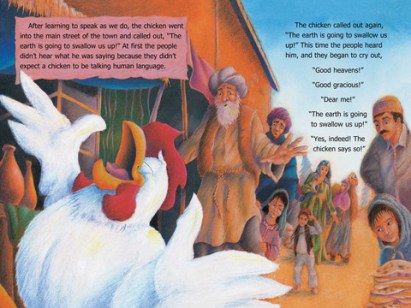
This story reads wonderfully aloud as it is silly, repetitive, and the message is more clear than in some of Idries Shah’s other Sufi inspired teaching books.  Written on an AR 4.0 level with 32 pages.  Some pages are heavily text laden while others just sprinkle a few words across a beautifully illustrated page.  Like his other books, the illustrations are truly spot on.  The lively faces on the characters, and colorful scenes bring the story to life and keep the audience engaged and giggling.

chicken

A man decides to learn how to speak “chicken,” when that doesn’t work, he teaches the chicken to speak our kind of language.  Fluent and conversational, the chicken then tells the villagers that, “The earth is going to swallow us up!”.  Everyone runs in all directions, up the mountain, down the mountain, across the meadow, around the world, but they can never get away from the earth.  When they return, they are upset with the chicken and ask how he knows that the earth is going to swallow them up, to which he replies that he doesn’t.  After they recap all the trouble he has put them through he poignantly laughs at them and asks, ” You think a chicken knows something just because he can talk?” Realizing how foolish they have been the chicken begins telling more outlandish things, just to make the people laugh, and isn’t taken seriously again.

silly chicken1

The message is clear, the characters funny, and the illustrations engaging. I finally found an Idries Shah book that I like! Yay, I guess for me they are hit or miss, and this one was definitely a hit!

chick