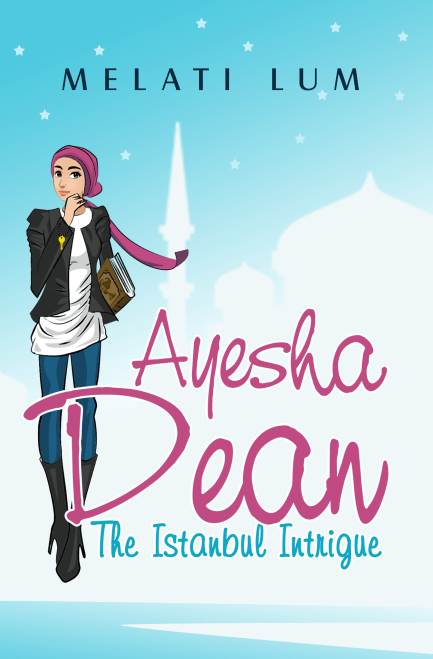
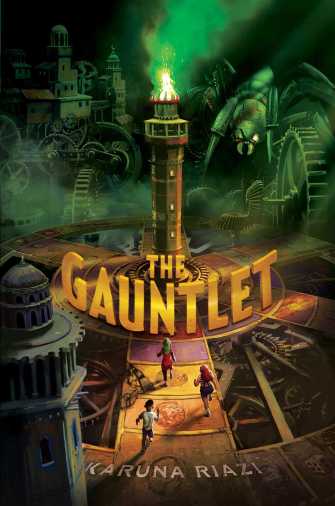
I’ve tried numerous times to get my preteen daughter to read a Nancy Drew book with little success, yet she devoured this mystery and is eagerly waiting for more. The protagonist is relevant, resourceful, fun, and a practicing Muslimah too. At 240 pages, the spacing and large font make the book easily accessible, and tempting to dive in to. The pacing is pretty good, and while there are a few hiccups with storytelling style, the book overall is worth adding to yours and your child’s reading list.
SYNOPSIS:
Ayesha’s parents are deceased, but her Uncle Dave has raised her as a Muslim following her parent’s wishes. Having graduated high school she is off on a celebratory trip with her two closes friends: Jess and Sara, her uncle and her friend’s dad to Istanbul, Turkey. The adults have a business conference and the girls are hoping to explore and enjoy all the sights of the Turkish Bazar, the Hagia Sophia, the Blue Mosque and more. While looking for a book to gift Uncle Dave, Ayesha and her friends discover a secret message sewn into an old book of maps and set off to collect clues and solve a 100-year-old ibn-Arabi mystery. Obviously, I don’t want to give too much away but there are villains, and shady characters, and dear friends, and lots of yummy food.
WHY I LIKE IT:
I love that the heroine is a hijab wearing, salat praying, Tae Kwon Do trained, fashionable, kind, young lady. She has integrity and resourcefulness, that make the reader want to cheer her on. Her friends are significantly less developed, I really couldn’t tell you much about them, and honestly had to look back to recall their names. I understand why they are in the story for Ayesha to play off of, but I’m hoping that they will have a bit more substance in future novels. Other side characters had more depth than Sara and Jess did, and even getting them out of the way for the climax seemed to further diminish their roles and importance.
I loved learning about Turkey through the characters, the history, architecture, the food. The author really shined when talking about Islamic history as well. When Ayesha and Emre explore the Sultan’s Privy Chambers at the Topkapi Palace, and look at Prophet Muhamad’s (saw) sword and bow, the excitement and reflection is palpable. In other places however, I felt like the narrator’s voice was completely jarring and distracting to the engaging story at hand. In the midst of pursuing a lead, the story comes to an almost standstill to say, “the friends chatted amiably as they walked, admiring the city as they went (69).” The majority of the descriptions are so vivid that the few places where they cease are noticeable and awkward.
I also loved the diversity of the friends, even Ayesha’s own personal makeup adds some depth and appreciation that she has chosen to practice Islam. Ayesha prays and tries to make sure she is not alone with a boy, she is conscious of her hijab and notes the Islamic elements in her own life and in her environment. Obviously the book takes place in Turkey and she is unraveling an Islamic mystery of sorts, but I think the book works well for Muslim and non Muslim middle schoolers alike. The book is not preachy, and the translations of prayers and poetry are framed in a historical or inspiring, not doctrine manner. Similarily, I think you might be able to get boys to read it too. It inspires girls who perhaps can identify with the main character, but I think even boys will be impressed with what Ayesha can accomplish.
FLAGS:
The book is fairly clean, there is some intense moments with kidnapping and having guns drawn, but nothing too haunting. Ayesha obviously makes a good “friend” but nothing happens or is even detailed as wanting to happen between her and Emre. Just Emre’s dad regularly teasing them as he looks for a wife for his son. The only real flag for me was the exploring of the harem at the palace and the mention of concubines, and eunuchs. A lot of detail is not given just that the women must have felt trapped, but it is a heads up if your child asks you about it, to be ready to answer.
TOOLS FOR LEADING THE DISCUSSION:
I think this would be a fun book club book to explore deeper some of the sites and history of Turkey. I would have to explain the harem before hand I think, but I think it can be done factually to avoid to much over thinking for the young readers. I think to track the clues and “map” out the trail in a group completely with pictures of the real places would really bring the story to reality.
Interview with the author: http://mvslim.com/meet-melati-lum-criminal-lawyer-who-also-has-a-passion-for-writing/
Why we need more heroines like Ayesha Dean: http://www.muslimkidsguide.com/why-do-we-need-more-muslim-heroines-like-ayesha-dean/


 The only real Islamic reference is Bismillah, being said before they eat. The story is followed by an Author’s note and a much needed Glossary. A bit of Moroccan culture comes through as the baba waits for the butter man, and with all the talk of food, but it isn’t done well for me in the illustrations. The characters’ closeups are distracting, and while the Author’s note explains their clothing and what not, I feel like they didn’t help the story come to life.



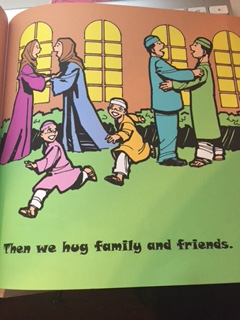 There are 19 pages of text, and the first few pages start off pretty well with a little boy seeing the Eid moon. Then the family goes to the mosque and learn that Eid marks the end of fasting and the month of the Quran. The boys father then gives money to the mosque, it doesn’t say that it is charity, but if one is familiar with Eid, one could assume. However, the book seems to be for those unfamiliar with Eid, so for me, this is where the book started to be lacking. The next page also is where the list seems to start, and some of the items on the list are a bit of a stretch. “We hug family and friends,” followed a few pages later by a whole page dedicated to “My mother sets the table.”


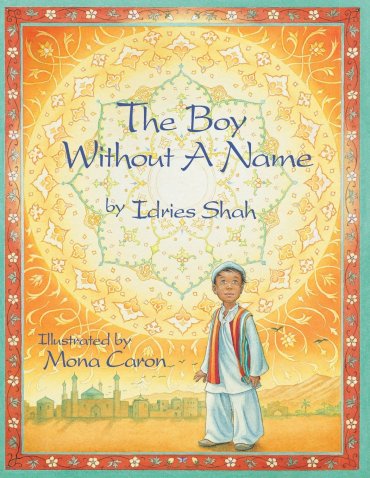
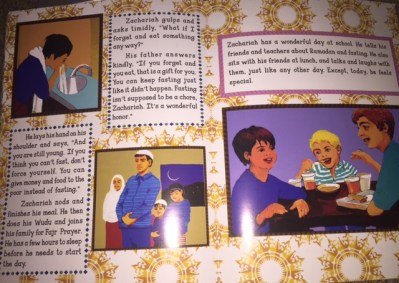
 I was really excited to learn about this book from the author, as it seemed to be a book that would stand out in a very crowded genre and work for both Muslim and non Muslim kids. When I tore off the package however, the face on the cover seemed a bit off for my taste, the glossary is on the back cover and while the pages are full size and full color, the book starts on the first page and somehow seemed more “home done” than “professional.” Which isn’t a bad thing, and I’m happy to support local writers, but alas I do often judge books by their covers and format, and my first impression had to be stuffed away so I could give the book a fair chance.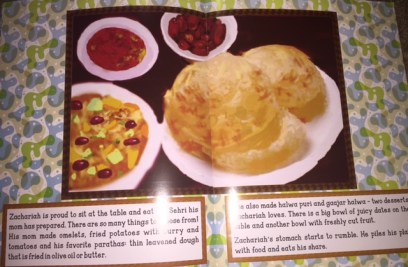



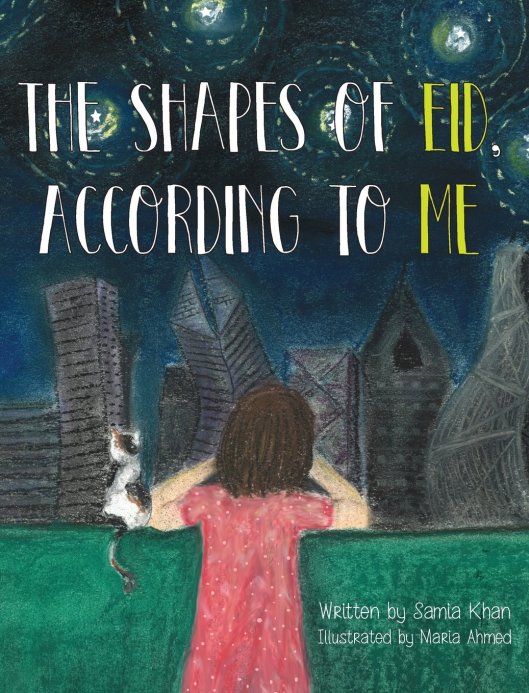
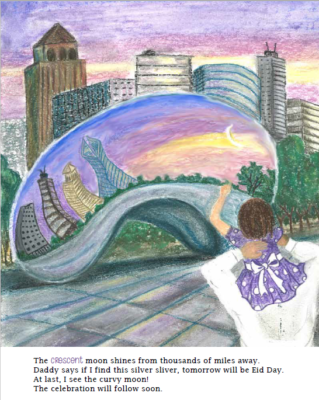


 The book warms the soul and uplifts the spirit. The text seems geared to 7 year olds and up, as there is a lot of it, and at 26 pages does require some ability to focus. But with minor tweaks and condenscing the story appeals to children 4 and up and the pictures help hold their attention as they create a mood of wonder and whimsy.