Tag Archives: culture

The Muslims by Zanib Mian

Standard
The Muslims by Zanib Mian

the muslims.png

After reading this book, I really, really want to meet (and be friends with) the author, she writes from the point of view of Omar, a nine year old boy, and his perspective and voice are so authentic and relevant that while the book targets 3rd through 5th grade, I am certain kids and adults, Muslims and non-muslims, boys and girls, and everyone else, will all thoroughly enjoy this laugh-out-loud 164 page book.  

muslims mum.png

SYNOPSIS:

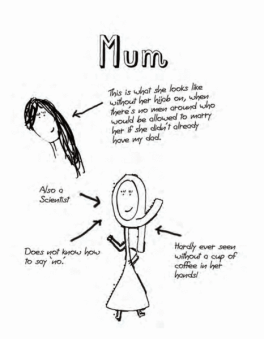
Omar is starting at a new school, we don’t know why, and while he is nervous, he has a good attitude about it.  His parents are supportive scientists and he has an older sister, Maryam who can be a bit mean in a big sister way, and a little brother Esa, who he secretly loves.  All are practicing muslims who remind me a lot of the people I know.  We say our duaas, we pray, we laugh at the funny stereotypes and just try and be good neighbors and people.  Omar’s neighbor is hilarious, Mrs. Rogers, doesn’t like Omar’s family, or “the Muslims” as she calls them, but they just keep being themselves and when she falls and gets hurt, she starts to realize they are good people who care about her.  She even starts showing up for iftar every night in Ramadan and counts down like a space ship launch until it is time to eat. 

Using his Islamic upbringing, and seeing how is family handles problems, gives Omar a lot of tools for starting at a new school.  But Omar is the protagonist, the hero, so he also has a super imagination that involves H2O, his dragon, that shows up to help him out when things get rough.  And unfortunately, a bully by the name of Daniel makes things rough for Omar.  He tells Omar that all Muslims and all Asians are going to be kicked out of the country, and this really sticks with Omar.  He verifies it with a cousin, and learns it could be a possibility.  So, the underlying anxiety is there, but most of the book that focuses on the bullying aspects involve the day-to-day comments, physical pushing, and efforts of Omar to avoid Daniel.  When they do meet up, however, the result is often comical, as Omar and H20 confidently navigate the situation at hand.  Between visiting a different mosque in London each week, learning to read the Quran, celebrating Ramadan, and just being a kid with new friends and a fun family, Omar eventually does win Daniel over after the two of them get lost in the London Underground.  And all of us that came along for the ride are better for it, alhumdulillah.

FullSizeRender (46)

WHY I LIKE IT:

There is so much to love about this book.  Seriously.  The accuracy of family life depicted is spot on and the Islamic elements are so interwoven that non Muslims would truly learn about Islam through learning about Omar, but not in a preachy way, and Muslims will see themselves on every. single. page.  I love that Omar doesn’t ever seem embarrassed to be who he is.  He is a cool kid for his confidence alone, and being able to laugh at a bully and not have it shake your core belief and self image is so powerful.  The characters are well developed, from little Esa to Omar’s teacher, by viewing them through his eyes, you see enough of their personality to remember them, and appreciate them.  The only exception to this was Maryam, I really didn’t feel like I got much on her, but I have a feeling there will be more books, and she will develop too.  The book reads like a diary, until a tinge of foreshadowing of the changing relationship between Omar and Daniel pops up to setup the climax.  The chapters are short, the fonts and doodles endearing and engaging, and the size of the book, really makes it fun for elementary aged children.  The only possible gripe for American children, is that it is a British book, and you might have to google or ask what a few things are, yeah we are selfish like that, but its good for us to learn what pains au chocolate are, or crumpets, or nappies.  

FullSizeRender (47)

FLAGS:

The book is clean. 

TOOLS FOR LEADING THE DISCUSSION:

Oh this should be required reading for every kid.  I know I will be trying to implement this every where I go.  This would be awesome for a elementary book club, and especially great in Islamic schools for struggling readers.  In much the same way that teachers use humor to engage students, this book has heart and humor and a surprising amount of information, that I can see it being connected to a lot character building supplements in various curriculums, at least I hope it is, we need voices like this, both within our community and to serve as a representative of us to the larger society.

Book Trailer:  https://www.youtube.com/watch?v=AIKtoxt3InM

Author’s website: http://www.muslimchildrensbooks.co.uk/


Ayesha Dean: The Istanbul Intrigue by Melati Lum

Standard
Ayesha Dean: The Istanbul Intrigue by Melati Lum

ayesha dean.png

I’ve tried numerous times to get my preteen daughter to read a Nancy Drew book with little success, yet she devoured this mystery and is eagerly waiting for more.  The protagonist is relevant, resourceful, fun, and a practicing Muslimah too.  At 240 pages, the spacing and large font make the book easily accessible, and tempting to dive in to.  The pacing is pretty good, and while there are a few hiccups with storytelling style, the book overall is worth adding to yours and your child’s reading list.

SYNOPSIS:

Ayesha’s parents are deceased, but her Uncle Dave has raised her as a Muslim following her parent’s wishes.  Having graduated high school she is off on a celebratory trip with her two closes friends: Jess and Sara, her uncle and her friend’s dad to Istanbul, Turkey.  The adults have a business conference and the girls are hoping to explore and enjoy all the sights of the Turkish Bazar, the Hagia Sophia, the Blue Mosque and more.  While looking for a book to gift Uncle Dave, Ayesha and her friends discover a secret message sewn into an old book of maps and set off to collect clues and solve a 100-year-old ibn-Arabi mystery.  Obviously, I don’t want to give too much away but there are villains, and shady characters, and dear friends, and lots of yummy food.

WHY I LIKE IT:

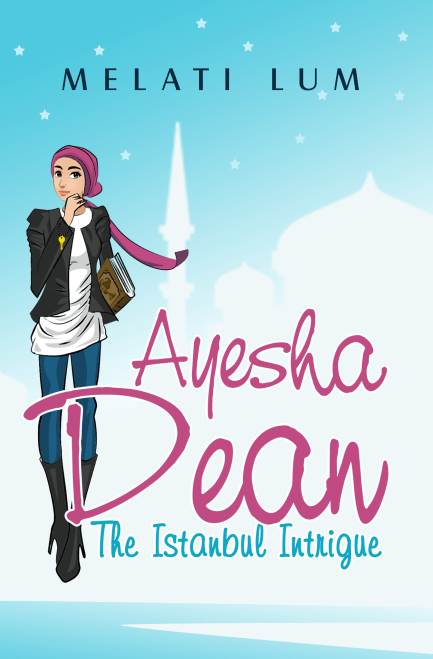
I love that the heroine is a hijab wearing, salat praying, Tae Kwon Do trained, fashionable, kind, young lady.  She has integrity and resourcefulness, that make the reader want to cheer her on.  Her friends are significantly less developed, I really couldn’t tell you much about them, and honestly had to look back to recall their names.  I understand why they are in the story for Ayesha to play off of, but I’m hoping that they will have a bit more substance in future novels.  Other side characters had more depth than Sara and Jess did, and even getting them out of the way for the climax seemed to further diminish their roles and importance.

I loved learning about Turkey through the characters, the history, architecture, the food.  The author really shined when talking about Islamic history as well.  When Ayesha and Emre explore the Sultan’s Privy Chambers at the Topkapi Palace, and look at Prophet Muhamad’s (saw) sword and bow, the excitement and reflection is palpable.  In other places however, I felt like the narrator’s voice was completely jarring and distracting to the engaging story at hand.  In the midst of pursuing a lead, the story comes to an almost standstill to say, “the friends chatted amiably as they walked, admiring the city as they went (69).”  The majority of the descriptions are so vivid that the few places where they cease are noticeable and awkward.

I also loved the diversity of the friends, even Ayesha’s own personal makeup adds some depth and appreciation that she has chosen to practice Islam.  Ayesha prays and tries to make sure she is not alone with a boy, she is conscious of her hijab and notes the Islamic elements in her own life and in her environment.  Obviously the book takes place in Turkey and she is unraveling an Islamic mystery of sorts, but I think the book works well for Muslim and non Muslim middle schoolers alike.  The book is not preachy, and the translations of prayers and poetry are framed in a historical or inspiring, not doctrine manner.  Similarily, I think you might be able to get boys to read it too.  It inspires girls who perhaps can identify with the main character, but I think even boys will be impressed with what Ayesha can accomplish.

FLAGS:

The book is fairly clean, there is some intense moments with kidnapping and having guns drawn, but nothing too haunting.  Ayesha obviously makes a good “friend” but nothing happens or is even detailed as wanting to happen between her and Emre.  Just Emre’s dad regularly teasing them as he looks for a wife for his son.  The only real flag for me was the exploring of the harem at the palace and the mention of concubines, and eunuchs.  A lot of detail is not given just that the women must have felt trapped, but it is a heads up if your child asks you about it, to be ready to answer.

TOOLS FOR LEADING THE DISCUSSION:

I think this would be a fun book club book to explore deeper some of the sites and history of Turkey.  I would have to explain the harem before hand I think, but I think it can be done factually to avoid to much over thinking for the young readers.  I think to track the clues and “map” out the trail in a group completely with pictures of the real places would really bring the story to reality.

Interview with the author: http://mvslim.com/meet-melati-lum-criminal-lawyer-who-also-has-a-passion-for-writing/

Why we need more heroines like Ayesha Dean: http://www.muslimkidsguide.com/why-do-we-need-more-muslim-heroines-like-ayesha-dean/


The Butter Man by Elizabeth and Ali Alalou illustrated by Julie Klear Essakalli

Standard
The Butter Man by Elizabeth and Ali Alalou illustrated by Julie Klear Essakalli

butter man

This 32 page book written on an AR 4.2 is very text heavy and poorly illustrated, in my opinion, but if you have a patient audience, the story is really sweet and flows pretty well.  Plus, the moral and introduction to 4th through 6th graders about hunger and food scarcity in a gentle non condescending manner, makes the book stay with the reader in a humbling way.

On Saturdays, Mama works and its just Nora and her baba hanging out.  And every Saturday night, Nora’s baba makes couscous, but tonight Nora is starving and the couscous is taking too long.  As they wait Baba tells her a story about the butter man.

the-butter-man-interior-by-alalou-and-klear

Growing up in the High Atlas Mountains of Morocco, how much food the family had depended on the rain and the crops.  Once during a drought, Nora’s grandfather had to leave his family to try and find work, so the family could eat.  As the portions of bread Nora’s baba was given decreased in size and the butter disappeared completely, his mother would urge him to go outside and wait for the butter man, to ask him to spare a little.  As he would sit and wait he would nibble and the bread and would finish it still waiting for the butter man.  This daily ritual passed the time as his stomach rumbled, and finally after a while his father returned with flour, couscous, vegetables, and meat.  Baba tells Nora that while the butter man never came, the rains did.  And just as Nora hopefully appreciates true hunger, so does the reader, Mama then comes home, the couscous is ready, they say Bismillah and dive in.

butter.jpgThe only real Islamic reference is Bismillah, being said before they eat.  The story is followed by an Author’s note and a much needed Glossary.  A bit of Moroccan culture comes through as the baba waits for the butter man, and with all the talk of food, but it isn’t done well for me in the illustrations.  The characters’ closeups are distracting, and while the Author’s note explains their clothing and what not, I feel like they didn’t help the story come to life.
Here is a book trailer:


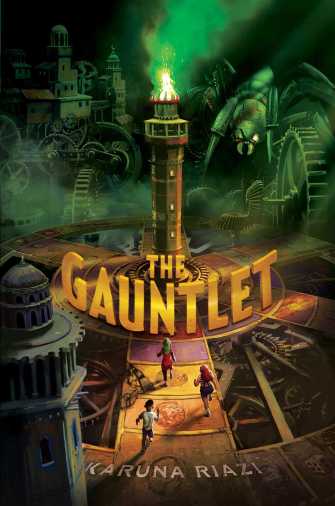
The Gauntlet by Karuna Riazi

Standard
The Gauntlet by Karuna Riazi

the gauntlet

Take Jumanji, turn it into a chapter book, flavor it with steam punk, set it in a Middle Eastern inspired marketplace, and have the protagonist be a Bengali-American, hijab wearing Muslim on a quest to save her little brother with her two BFFs from New York. Bam, you now have a 298 page AR 5.4 reading level booked called The Gauntlet.  

Published by Salaam Reads (Amina’s Voice) this book is written for all kids, the main character’s religion and culture just add depth and a connection to the game they have fallen in to.  I found this book on Scholastic, and when I got it, I handed it to my daughter to screen for me.  I asked her once she finished if it had any Muslims in it and how were they presented, to which she gaped at me and said, “umm mom the whole thing is about a Muslim girl and it is awesome!” So naturally I moved it higher up in the “to be read pile” and while I agree with her assessment, the book is more plot than character driven, and there isn’t a lot of theology in it, just a race against time to get out of the game alive.

SYNOPSIS:

It is Farah Mirza’s 12th birthday and while she should be downstairs visiting with her guests from her new school, she is holed up in her bedroom with her little brother Ahmad and her best friends from the old neighborhood, Essie and Alex, playing board games, the Mirza family’s favorite pastime .  When Aunt Zohra tries to coax them from the room she mentions a gift for the birthday girl is in her room, and the kids sneak off to get it.  Only it isn’t the book she brought to give Farah that they find, it is a bewitched game called the Gauntlet of Blood and Sand that lures kids in, and keeps them if they cannot out play the Architect.  When Ahmed falls in, the trio has no choice but to follow him in to try and rescue him and escape, before time runs out.

Once inside the game, they are in a city called Paheli. It resembles an old Middle Eastern city with large souks, market places, even a small masjid, surrounded by sand and levels absolutely breathtaking in both their beauty and in their threat to the children.  The inhabitants are those that played the game and lost. The challenges the kids must face range from a life size game of mancala to a taste test of Bengali/Indian sweets.  As they rush from challenge to challenge they meet a kind tea shop owner, giant lizards, spies and police of the architect and see fairly detailed descriptions of different parts of Paheli. The gamemaker/designer known only as the Architect senses that the kids will win, so he starts to cheat, and then feels bad and arranges to meet the players.  When the children meet him, and hear his story, they feel some sympathy for him, but not for the Jinn that holds the ultimate power over the game.  Obviously they do escape, but I won’t spoil the fun the process is, nor the sweet surprise of the reunion.  

WHY I LIKE IT:

I like that at the core, the story is driven by love for a sibling and requires the teamwork and cooperation of friends.  The rest is just frills from this central and clear message that is woven throughout the book.  While it is idealistic, there are hints that it isn’t overly so.  Yes Ahmad with his ADHD is a lot to handle at times, and the friends do have their squabbles, but ultimately both friends and family are worth risking it all.  I love that Farah is Bengali, many of the foods are Indian, and they are set in the Middle East, but yet somehow it seems interchangeable, this made me laugh, and while in other instances might have annoyed me, I liked how connected it made everyone seem, more alike than different.  Essie and Alex know some of the foods and cultural lexicon from growing up in New York.  They don’t find things different, they had lots of kids in school that wore hijab. Readers unfamiliar with some of the words and names found in the subcontinent and Islamic history might be put off a bit by the regular use of these words and the lacking glossary, but if you identify with any of it, you will celebrate seeing yourself in this book, just as Farah relished in seeing something of familiarity in Paheli.  

The book is fast paced and the detail given to the setting and cultural aspects are fun, but I really don’t feel like I connected much with the characters as a result.  There is very little character development and I actually had to look back in the book for some of the names to write this review.  There also isn’t much religion in terms of belief or practice.  The buildings and the food and the tone all hint at Islam, but I would have loved to hear an athan, or even her pausing to pray.  Not even that is there.  She wears hijab and that is about it in terms of religion.  

Ultimately I love that it is a mainstream book, with a strong storyline that is action packed and fun for older elementary and early middle schoolers that is clean and familiarizes and thus normalizes a culture not often seen in young adult fiction.  

FLAGS:

None, it is clean, at times possibly a bit scary with human bones, but not anything overly haunting.

TOOLS FOR LEADING THE DISCUSSION:

This would be an amazing book for a book club, and I would play the games that they play in the gauntlet at the meeting.  There isn’t a ton to discuss in terms of introspection and growth, but there is enough, and it is fun.  Plus, there aren’t a lot of books like this for Muslim kids to see themselves in, that I think it would be a blast for them to read, and enjoyable for the adults to watch them get swept away.

Interview with the Author: http://ew.com/books/2017/03/27/karuna-riazi-gauntlet-jumanji/


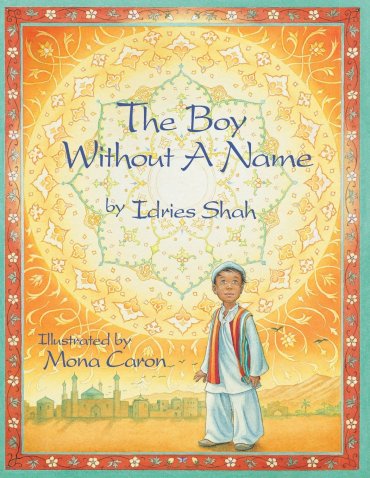
The Boy Without A Name by Idries Shah illustrated by Mona Caron

Standard
The Boy Without A Name by Idries Shah illustrated by Mona Caron

the-boy-without-a-name_orig.jpg

It is hard to know what a child would get out of this 32 page 3.2 AR level, but even if they just get lost in the pictures, and swept away by the idea of a boy searching for his name and a dream, I suppose there is value.  Some, ok most of Idries Shah’s, Sufi teaching stories are beyond my comprehension, but they are lyrical and often silly just the same. He has written over 30 and the libraries have quite a few, and people online seem to love so many of them, so perhaps I’m just not clever enough or philosophical enough to grasp them.  Which is neither here nor there, but maybe don’t buy one until you read one and see what you get out of them.  I keep checking them out and hoping I too will fall in love with one, I’ll keep you posted.

no name1

Before they can name their son an old man comes and tells the parents to not name him and to wait.  The boy grows up searching for a name, hoping someone has one he can have.  At one point he is made aware that he has nothing, even to trade for a name.  He responds that he has an old dream he no longer wants.  He and his friend Anwar then go to the wise man and he receives his name and a new dream.

The synopsis claims that patience and determination is learned, but I couldn’t get over the fact that the parents just didn’t name their child, and I never felt like I learned why he was such an important boy.

boywithoutname2

The pictures are wonderful with the scenic village’s tall minarets and colorful hijab clad women in the market place.  I particularly like the magic spilling out of the boxes in the old man’s house when the boys are finding names and dreams.  There is nothing overtly Islamic in the text, I’m not aware of how strong the Sufi origin is, not being Sufi, or having studied it.  But the illustrations definitely place the book in an Islamic cultural environment and the names reinforce this.


Yo Soy Muslim: A Father’s Letter to His Daughter by Mark Gonzales illustrated by Mehrdokht Amini

Standard
Yo Soy Muslim: A Father’s Letter to His Daughter by Mark Gonzales illustrated by Mehrdokht Amini

yo soy muslim

I feel like I preordered this book years ago, I have been so anxious to see what all the hype was about. When it arrived I tore open the box and read it on the short walk from the mailbox to the house, read it again standing in the kitchen, left it for a few days, and reread it now to write the review. SubhanAllah, it didn’t disappoint.

yousoy4

It reads, as intended, as a powerful letter to a child.  There aren’t long winded morals or overly fancy words. It is direct in its many ways of telling you, that you matter, where you come from matters, that your foundation matters. That you are strong, and beautiful, always, even when the world may not think so. That you are Muslim, that you are from Allah, that you speak in Arabic and Spanish and dreams.  The verses become poetry that dance on the page with the illustrations telling the story as powerfully as the words.  The words in turn float and lilt around images as old as time and as innocent as dancing in the wind.

soy

The 32 pages fly by that you can’t help but read it again, slowly, savoring all the harnessed power and hope of a multi culture world, a multi cultural faith, that is truly beautiful.  Recognizing the humanity that we all share, yet feeling pride in your own unique skin is a balancing act that doesn’t need to be apologized for, and should be celebrated.

yo soy2

I love that this book exists.  That it is available on Amazon.  That it is bold and colorful and hardbound, and so well done.  There is diversity in Islam.  There is diversity of belief in Indigenous populations, that there is so much inspiration in the world around us and in our past.  Are all messages that come through even for the youngest readers.

yosoy3

yo soy1


Yippee! Ramadan is over, It’s Eid by Farjana Khan

Standard
Yippee! Ramadan is over, It’s Eid by Farjana Khan

yipee

A friend loaned me this book from the local public library, so I was not only excited that a book about Eid was readily available, but also hopeful that it was good quality.  Then I saw the title.  I mean I get that the “Yippee!” is a title part of a series of books on the different holidays Muslim’s celebrate, but for as excited as Muslims are for Eid, they are usually very sad that Ramadan is over.

Nevertheless, I opened it up and hoped to be swept away.  The list of Eid activities and rituals however, were very dry and anticlimactic.  The characters are not named, the pages are meant for pre-schoolers I would imagine, but the lack of excitement in the language is disappointing.

yippi hugThere are 19 pages of text, and the first few pages start off pretty well with a little boy seeing the Eid moon.  Then the family goes to the mosque and learn that Eid marks the end of fasting and the month of the Quran.  The boys father then gives money to the mosque, it doesn’t say that it is charity, but if one is familiar with Eid, one could assume. However, the book seems to be for those unfamiliar with Eid, so for me, this is where the book started to be lacking.  The next page also is where the list seems to start, and some of the items on the list are a bit of a stretch.  “We hug family and friends,”  followed a few pages later by a whole page dedicated to “My mother sets the table.”

yippi table

The book is also obviously desi as they eat parathas and firni.  At one point the kids play a game, not sure what game, it only says what sister’s favorite game is, and then a page is dedicated to the fact that “sister’s team wins.”

yippi fries

Perhaps I am too harsh, as the book is colorful and shows family and friends happily interacting.  There are women covered, not covered and with niqab, and there isn’t anything erroneous in what is written.  I just would hope for more.  The book is small in size, 8.5 x 8.5, and could have been fleshed out a lot more.  It reads like a child’s rough draft, each page or so, being a topic sentence, without the details.

I really don’t know what one would learn or get out of this book, that they wouldn’t get out of a fictionalized account or even a character driven story at Eid time.  Online prices don’t convince me the book is a stand out either.  There are much more fun, engaging, and memorable Eid books out there, not sure why the library chose to invest in this one, but alhumdulillah, I suppose it is better than nothing.

Zachariah’s Perfect Day by Farrah Qazi illustrated by Durre Waseem

Standard
Zachariah’s Perfect Day by Farrah Qazi illustrated by Durre Waseem

IMG_4757I was really excited to learn about this book from the author, as it seemed to be a book that would stand out in a very crowded genre and work for both Muslim and non Muslim kids.  When I tore off the package however, the face on the cover seemed a bit off for my taste, the glossary is on the back cover and while the pages are full size and full color, the book starts on the first page and somehow seemed more “home done” than “professional.”  Which isn’t a bad thing, and I’m happy to support local writers, but alas I do often judge books by their covers and format, and my first impression had to be stuffed away so I could give the book a fair chance.

The book is 20 pages with the 20th page being recipes.   I would guess children 5 and up would be considered the target audience.  It basically is a book telling about Ramadan with the author trying to blend in a story, that for me, sometimes worked and sometimes really didn’t.

FullSizeRender (3)

It starts with Zachariah, a 12 year-old-boy waiting for his mom to wake him up to fast, a day he has been waiting his whole life for.  Why he had to wait to fast at age 12 is not clear to me or made clear in the story.  His 10 year-old-sister only does half days, but in the illustrations she seems to only look about 3 years old, so I’m not sure where the arbitrary age requirements for fasting come from.  There is also a third sibling in the pictures that is never mentioned, not sure why, my kids and I speculated a lot more on that than we probably should have.  It isn’t told from Zachariah’s point of view but he is the focus as his day gets started.

The characters are undoubtedly desi as the book is very steeped in subcontinent cultural over tones.  Sehri, the pre dawn meal, is described in abundance of detail, “His mom made omelets, fried potatoes, with curry and tomatoes and his favorite parathas: thin leavened dough that is friend in olive oil or butter”  It’s a bit detailed of how the items are prepared for a kid’s book, and that is just page one of two pages dedicated to detailing the food on the table for breakfast.  Iftar the meal to break the fast is also two pages of description and cooking methods, but about double the amount of text.

FullSizeRender

Culture is often food, and Ramadan has its own food traditions, but there is a lot of space dedicated to food in this book,  and it kind of takes away from the message of fasting, and moderation, and not going in excess.  Later in the book the mom does pack up some of the food to take to the less fortunate which is great, but she does it while the rest of the family is breaking their fast.  Not sure why she couldn’t have done it before or after and joined them.

After sehri is presented the family talks about Ramadan and what it means and what they like best about it.  There is a bit of dialogue that is actually sweet and funny, and gives some warmth to the story.  It is clear the author is just trying to flesh out the facts about Ramadan, but for a kid’s book, I think getting the facts in and presenting them in a fictionalized setting is a useful tool.

FullSizeRender (2)

The story seems a bit lopsided when it shrinks Zachariah’s day at school to one five line paragraph saying it was wonderful and then moves on saying “Later, he helps his mom.”  After spending 10 pages on the predawn meal, I would have liked to know a bit more how school went for him, it is his perfect day after all.  Also, the lapse in time by the narrator seemed a bit off to me in the sequential flow of the story, as it was following him in real time so to speak, and then fast forwards the bulk of the day only touching on lunch time, and

FullSizeRender (1)

Alhumdulillah, the family is sweet and excited for Ramadan. They pray together and are seen with smiling faces.  There isn’t much diversity in the pictures, the family has darker skin, the friends at lunch are more fair.  The mom wears hijab and is in the kitchen, dad doesn’t seem to be, but Zachariah helps his mom.

The book is colorful, and busy.  I’m not sure if the pictures are meant to be a stylized reality or look computer generated, but they seem a little blurry in places.  The font and backgrounds are nice.  There is a verse from the Quran in English and Arabic, as well as the athan and some Islamic calligraphy.

Overall, there is nothing “wrong” with the book, it just isn’t memorable.  There are some really good Ramadan books out there, and this one does it’s job of explaining Ramadan, but lacks the characters to leave an impression.  I definitely don’t regret buying it, but I don’t know that my kids or I will read it again this Ramadan, it doesn’t create that reaction.  It will probably stay on the shelf until next year, when we can’t recall many of the details and give it another go.

IMG_4748 (1)


The Shapes of Eid According to Me by Samia Khan illustrated by Maria Ahmed

Standard
The Shapes of Eid According to Me by Samia Khan illustrated by Maria Ahmed

shapes of eid

A new Eid book that talks about the religious aspects of Eid, such as praying and going to the mosque, as well as the cultural fun of getting henna done and eating samosas, presented through the shapes a little girl finds all around her.  I liked the idea of presenting Eid through a different lens so to speak, and finally gave in and ordered the $17 hardback 28 page book.  I had touched base with the author before I ordered it to see if it would work for little kids at a masjid story time and she thought it would.  The text is one to four lines per page and rhymes, which allows the little ones to stay engaged.  Some of the lines are forced or seem to break the rhyme scheme, but overall a book about shapes with rhyming lines makes sense.

The-shapes-of-Eid-According-to-me1

The part that I was underwhelmed with was the illustrations.  A book with such a visual concept at its core, to me would require breath taking pictures.  But alas, the pictures seem done with crayon and colored pencils, and on many pages finding the shape is almost difficult for little ones.  The detail is lovely, but the presentation seems lacking. They aren’t bright and shiny, they are muted and flat.  The disconnect of the text and binding with the pictures seemed jarring to me. Perhaps it was just the price point made me expect more, I don’t know.  I like the book, but I don’t love it.  I will be reading it to a group of kids and if they love it I will take back my criticism of the pictures, happily.

shapes 3

I think the book works up to about 2nd grade, as the geometric shapes are both flat and 3-D, plus getting excited for Eid is something everyone enjoys.  There is no reason this book is limited to Muslim children, but non muslims might be left with more questions after reading it about how Eid is celebrated and what aspects are religiously required and which are just fun customs.  There is a small intro at the beginning to what Eid is, but no glossary or further info is included.

Drummer Girl by Hiba Masood illustrated by Hoda Hadadi

Standard
Drummer Girl by Hiba Masood illustrated by Hoda Hadadi

drummer girl.jpg


Before she was Grandma Najma, she was just Najma.  A girl in Turkey with a secret dream of being a musaharati, the person who walks the streets waking up the neighbors for suhoor in Ramadan.  But, a girl had never done this and thus the dream stayed hidden until she was 12 and the neighborhood musaharati was feeling ill.  Confiding in her baba, his love and support makes her dream come true against cultural norms and naysayers.  The line from her Baba, “Girls can be anything they like,” is so clear that her one girl revolution grabs the hearts of the reader and turns readers into cheerleaders.  The added beauty is her father’s support is not limited to his words, he accompanies her out every night almost challenging anyone to say she can’t do it.  Overtime she becomes the pride of the area, and her brothers accompany her if she doesn’t want to go alone, and then eventually her husband and her children.

drumemrgirl2The book warms the soul and uplifts the spirit.  The text seems geared to 7 year olds and up, as there is a lot of it, and at 26 pages does require some ability to focus. But with minor tweaks and condenscing the story appeals to children 4 and up and the pictures help hold their attention as they create a mood of wonder and whimsy.

drummer text

Structurally the book is hardback and dust jacket free, yay! the cover is printed on and thus easier to maintain.  The book is longer horizontally with most illustrations on the left side making it great for story time where the kids can see the pictures and the reader can hold and easily see the text without blocking the children’s line of sight.  There is a glossary, an author’s note telling where the story comes from, and a little biography of the author and illustrator and publisher in the back.

drummergirl1

A beautiful, beautiful book to share with children this Ramadan and all year long, alhumdulillah.