Category Archives: YA FICTION

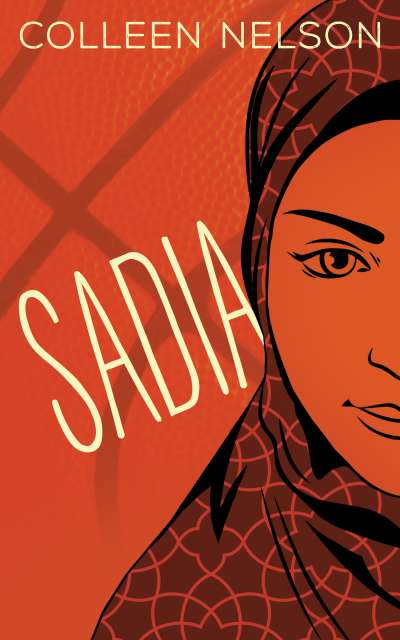
Sadia by Colleen Nelson

Standard
Sadia by Colleen Nelson

sadia.jpg

A middle school sports book with a female lead who wears hijab written by a non muslim.  The book could really go a lot of ways, I held my breath for all 239 pages waiting for something to go totally awry, and thankfully it never did.  In fact I read the book nearly straight through and while meant for ages 12 to 15, I quite enjoyed it.

SYNOPSIS:

Ninth Grader Sadia Ahmadi is an immigrant from Syria, her family left before things got “bad,” and while she has adjusted to life in Canada, High School is testing her in other ways.  Her best friend Mariam, an immigrant from Egypt, has started dejabbing, taking off her hijab to fit in it seems any chance she gets.  This is taken as a betrayal by Sadia and their friendship waxes and wanes throughout the book as each girl has to figure out who she is in relationship to hijab, and how to judge and/or accept each other and their choices.  Throw in a new refugee girl Amira from Syria who doesn’t speak English, a co-ed basketball tournament that doesn’t allow any headgear to be worn during games, a cute boy on the team and an awesome teacher with interesting assignments and you have the book in a nutshell.

WHY I LIKE IT:

I like Sadia, she is believable and strong.  She is well liked, athletic, she has a good relationship with her parents, brother and teachers, she prays and fasts and owns who she is, but she isn’t perfect.  She is hypocritical at times, and acknowledges it, she is tempted by parties, and boys and taking off her own hijab to play ball, and has to confront it about herself.  She doesn’t do things like pray on time, like she knows she should, but there she is and I am so impressed that the author picked up on so many nuances of Muslim life in her research or in her own observations as a teacher.  Yes, Amira has an awkward observation about Miriam being Muslim and not wearing hijab that seems really one dimensional considering large numbers of Muslims in Egypt and Syria don’t cover, but I don’t know if that was the author’s attempt to draw the issue to the light or if it was just a misstep.  

I like that there is a cute boy that accepts Sadia and who she likes as well, but they don’t do anything.  So often, these books become overrun by the romance story line and this one doesn’t, thankfully.  It seems to find a realistic balance, that she has feelings, but isn’t going to act on them, and based on her mom figuring out when she is lying that she won’t try and sneak behind her mom’s back.

Issues of halal food are mentioned in passing and it fleshes out that the girl is Muslim, not just going through the motions.  At times it is hard to know if her choices are based on belief and faith or expectation, but for an early YA/Middle School book, I think it suffices.  She mentions modesty as a reason for hijab, but also a lot of parental and cultural expectation.  One central theme the reader just has to go with, is that Sadia and the rest of the characters in the book, and there are a fair amount of Muslims, don’t know about any other ways to wear hijab for sports.  I get that Mariam and her sewing ability is a huge arc in the story, but they have smart phones, and its a contemporary piece, they have to know about Ibtihaj Muhammad in the Olympics, Bilqis Abdul-Qaadir, and Nike making athletic hijabs.  So, to make the story work you do have to turn a blind eye to the fact Muslima’s have taken to sports in the mainstream and that there is no way they can all be that clueless about her fabric, style, and covering options.

I love that the issue of refugees is addressed in the periphery, and the issues are given a human face.   I love that Sadia’s parents are religious, but not left as simple stereotypes, they deal with Islamaphobia, but aren’t looking for sympathy.

There is always the case, that the hijab becomes a stereotyped item as the story involves characters torn to wear it or not, but I loved how judgements were called in to questions and there wasn’t an easy answer.  The side friends in the story are all way too good to be true, but I think the whole book has a bit of a pollyanna feel to it, and in this case it was ok to error on the side of kindness than become overtly sensationalized and whiney.

The biggest hurdle this book faces is, is it the author’s story to tell. And I don’t know, I review a lot of books, and many are by Muslims and they get stuff wrong in my opinion, or they go so extreme to be accepted.  So, I don’t know, I think the book had heart, I didn’t know if the tournament would let Sadia play, I didn’t know if she would sneak off to the party, I didn’t know if she would cross the line with Josh, and I was curious, and invested and sucked in to it all.  Is it a book to teach others about Muslims or a book for Muslims to see themselves? I think all of the above.  Muslim’s should control their own narrative, but I think when author’s get so much right, we have to take some reassurance in the idea that we are being accepted by the larger society, and our stories are being told with love by other’s too.

FLAGS:

There is romance and lying, but no kissing, just hints at emotions or an errant arm flung over a shoulder during a huddle or photo.  There is mention of drinking at the parties, but Sadia doesn’t end up attending.

TOOLS FOR LEADING THE DISCUSSION:

I don’t know that I would do this as a book club selection, but if I met the right group of kids, I would definitely reconsider.  There is a lot of basketball, which I quite enjoyed, but I could see other’s maybe getting bored by the play-by-play.  I’ll make my daughter read it in a few years, and I look forward to discussing hijab and how she feels about it after.  It does raise the subject, and ask you to check your judgements on yourself and on others.

Author’s Website: http://www.colleennelsonauthor.com/


The Boy at the Back of the Class by Onjali Q. Rauf illustrated by Pipa Curnick

Standard
The Boy at the Back of the Class by Onjali Q. Rauf illustrated by Pipa Curnick

boy at the back.jpg

A perfect introduction to the refugee crisis for upper elementary aged kids.  The story is told from the perspective of an unnamed 9 and 3/4 year old narrator about her friends and how the filling of an empty chair in the back of the room changed their lives.  Ages 7 through 12 will enjoy the plotting and planning of the friends, the awesome climax and the gentle opening of their eyes to the atrocities and bigotry around them.  At 297 pages, with a few pictures and some engaging notes and tidbits at the end, the book is both big, yet completely non intimidating at the same time.  

SYNOPSIS:

Right near the end we learn that the narrator’s name is Alexa, and not too much before that, I learned that she is a girl.  I kind of like that vagueness of it, especially as we also learn that she is half Indonesian and half Austrian.  You realize that it doesn’t matter, that it doesn’t change anything, and that we all bring our own assumptions to the story and learn a bit about our selves as the narrator’s identity is revealed.  But really, thats a tiny bit of the book, the book is really about a group of diverse friends battling bullies, bully teachers, and trying to help the new kid in their class Ahmet.

Ahmet is a refugee from Syria, but the information isn’t easy to establish, he doesn’t talk to anyone, he disappears at lunch and recess, so Alexa, Josie, Tom, and Michael, first have to figure out who he is, and how they can be his friends.  Along the way we learn the Tom is from America, the book takes place in England.  Josie is the best football player and her parents are nervous to have her interacting with Ahmet, Michael is incredibly wealthy and his parents are Nigerian and French, and Alexa lives with her mom a librarian who works really long hours, her dad passed away and money is incredibly tight.

Once friendships are established, Alexa learns that Ahmet’s mom and dad are missing and that his sister and cat died while fleeing Syria.  When she learns that the government is planning to close the borders to immigrants and refugees, the group of kids come up with plans to keep the gates open until Ahmet’s parents can be found and they can come to the United Kingdom.  The kids come up with a variety of plans, but “The Greatest Idea in the World,” is the one they decide to go with.  It involves a lot of danger, but the general gist is to get a message to the Queen of England, who will keep the gates open, find Ahmet’s parents and reunite the family.  

Naturally, there are a lot of moving parts to the plan, and a lot of naivety on the part of the 9 year olds, but they do get the Queen’s attention, and they do have a wonderful support system of parents and teachers and while their are bullies around every corner, they do come together to make the world a bit better for Ahmet and for us all.

WHY I LIKE IT:

I love that it is realistic, with the plotting, and understanding of war, alike.  The war and Ahmet’s journey is very very simplified, but the tone, introduces kids to the intensity without overwhelming them.  Just like the plot to get the Queen’s attention is not celebrated, but appreciated.  What the kids did was wrong and dangerous and they lied, and the kids don’t ever know after if they are in trouble or being praised.  I like that the integrity of both situations is upheld and the book doesn’t get too far fetched.  Similarly, the book is fun and adventurous, and in many ways Ahmet is just a catalyst for the kids to come together to solve a problem and save the day. 

There aren’t a lot of details about his life in Syria, because he doesn’t speak English, there isn’t anything about Islam, except he draws his mom with a scarf on her head.  But there is a lot of learning to accept each other, and stick up for whats right and to not give up on people.  I love the diversity of the friends and how they don’t expect each other to change, they accept each other and move along.  

There is a slight typo on page 3, “…could be half as useful as a Tintin’s dog, Snowy,” that had me afraid that this book was going to be unrefined, but alhumdulillah I was wrong.  The book reads easily and wonderfully, and my children loved it as much as I did.  The author is a first time writer, and I hope she has a bunch more stories in her, because I look forward to reading them.  

FLAGS:

The book is clean and reads believably from a 9 year old’s perspective.

TOOLS FOR LEADING THE DISCUSSION:

I would do this in an elementary book club in a heartbeat. I’ve suggested it to many and I hope to read it aloud to my 4th and 5th grade lunch bunch crew. It is well written, timely, and memorable.

Teacher’s Notes: https://www.hachetteschools.co.uk/wp-content/uploads/2018/07/The-Boy-at-the-Back-of-the-Class-Teachers-Notes.pdf

A bit about the author: http://beingthestory.org.uk/speakers/onjali-q-rauf


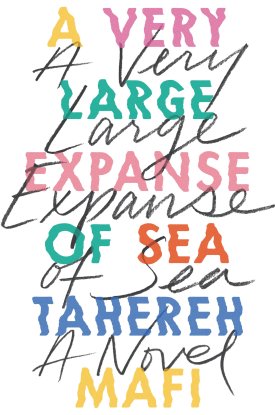
A Very Large Expanse of Sea by Tahereh Mafi

Standard
A Very Large Expanse of Sea by Tahereh Mafi

avleos

The book is often marketed as a Muslim coming of age story in a post 9/11 world.  The contemporary work is semi-autobiographical, but really I think the positioning is a bit misleading.  It’s a love story, and the main character is Muslim, and her environment is awful and she is angry. Its an engaging read, I read all 310 pages in one sitting, but I don’t know that the take-away will enlighten anyone about Islam, or really what it was like to be Muslim in the years after 9/11, I think people will remember how sweet the couple is and wonder how much of it mirrors the author and her husband, author Ransom Riggs (Miss Peregrine’s Peculiar Children), but not suddenly become knowledgable about more than what the main character experiences and endures.   I appreciate that the book challenges the stereotypes of Muslim women, there is authenticity as it comes from a writer who lives it, and I do think it shows evolution of attitudes that teens can benefit from.  The book is not yet in the AR database as it just came out, but I would imagine high school and up.  

SYNOPSIS:

Shirin’s Persian-American family moves a lot.  Her and her older brother are incredibly close as their parents are rather aloof to the day-to-day experiences the kids endure.  That isn’t too say her parents aren’t around, they eat two meals a day together and the parent’s are warm, but Shirin’s brother Navid is a much more present.  The story starts with 16-year-old Shirin starting her 12th new school.  Conditioned to not make eye contact, remember faces, or get affected by the trivialities around her, the reader sees how angry she is as she curses at a teacher that assumes she needs ESL not Honors.  Knowing how fleeting her time in any location can be, as her parents are constantly trying to find better jobs, Shirin doesn’t feel compelled to make friends or get attached to anyone or anything.  This intimidating vibe similarly keeps offers at bay, for the most part.  When she gets paired up with Ocean to dissect a cat, he tries to talk to her, and this throws her off her game.  Most every interaction she experiences at school are people making racist comments and being very one dimensional and bigoted.  Ocean tries to be nice, an attitude so foreign to Shirin that it begins to force her to change.  Simultaneously, Navid, who is charismatic and has no problem finding friends wherever they go, decides to put his and his sister’s dream into action and they start a break dancing club at school.  Three other kids join, and start becoming, not just Navid’s friends, but Shirin’s as well.  

Shirin and Ocean fall in love, despite Shirin fearing what the backlash will be for ocean.  She doesn’t really know anything about him, but feels strongly that all the racial slurs thrown at her on a daily bases will effect him and ultimately make them wish they didn’t pursue a relationship. She draws line after line in the sand, and crosses them all.  Only then does she learn how blind she has been, he is in two of her classes, not just one, he is a year older than her, and he is the golden star of the high school basketball team.  Being that the story is told from Shirin’s perspective, this is surprising to the reader as well.  The town turns on the pair and things get really ugly for Ocean who is willing to risk it all for Shirin.  Threats by the basketball coach, pictures of Shirin without her hijab being taken, accusations of terrorist ties and sympathies all challenge the couple and shape Shirin.

WHY I LIKE IT:

I really like the twist of having the relationship be difficult for the non Muslim, rather than going with the assumed Muslim girl having to sneak around.  Not saying that I support it, but interestingly she never mentions that what she is doing is going against anything religious.  She mentions twice that her parents wouldn’t like her with any guy, and that they view her as a child still, but she doesn’t explore Islamically any boundaries regarding their relationship.  She hides talking on the phone to Ocean, because her parents are adamant she gets enough sleep at night.  That is about it.  Shirin discusses that she wears hijab like an armor that she gets to pick who she shows her hair too.  I love the strength in that, but wish there was a bit of doctrine to back it up too.  At one point a Muslim, non hijabi, at school calls her out for wearing hijab and having a boyfriend, but she essential tells her it is none of her business, which it isn’t and who is to say that one sin is worse than another, but still it befuddles what exactly Shirin believes and why.  The book just paints her as a Persian Muslim, but never explores what that means other than the superficial outward appearance.  They do fast in Ramadan, no explanation about why is given, just that they not eat or drink during daylight hours, and right near the end, Shirin remarks how her mom asks her and her brother every morning if they have prayed and they lie and say yes, their mother sighs and tells them to make sure they pray the afternoon one, to which they lie and agree, only to have their mother sigh again.  AstagfirAllah, that is awful lying, and lying about Salat, but it is so real, I audibly chuckled.  

I like that the parents aren’t harsh, they just seem disinterested.  I didn’t want to read another book about the parent’s being the gatekeepers and bad guys, so that was really refreshing.  They mention they don’t celebrate Christmas, but they have an open door policy on Thanksgiving for any friends wanting to come.  I did hope for a bit more about them, why they don’t talk to the kids about moving, what makes them tick, because really they seem to have a solid relationship with the kids, they are just clueless to their social experiences and school environment stresses.

I love the growth and self reflection of Shirin, she holds a mirror to herself and she and readers are better for it.  She has to realize that she is doing so much of what she is accusing others of doing.  I love the support and genuine concern of the breakdancers and her brother.  It resonated to me as a girl with an older brother and the relationship feels very genuine. I just wanted to know more about Navid. 

FLAGS:

There is a lot of cursing. kissing, hand holding, romance, lying, and ditching school.  There is a brief mention of graffiti being sprayed.  There is racial slurs, threats of violence, violent physical outbursts by people of authority.  When a student throws a cinnamon roll at Shirin, Navid and his friends beat the kid up severely, it isn’t detailed, but it is mentioned.  Ocean  also gets suspended for a few games for a fight he engages in, and there is some detail of Shirin getting jumped in a previous city for wearing hijab.

TOOLS FOR LEADING THE DISCUSSION:

I don’t think I could in good conscience present this to a group of Muslim students.  I wouldn’t want them to think I was endorsing the violence and language and romance.  Like so many books of the genre though, if someone found it and read it on their own, I’d love to chat with them about it, as it is well written.

Youtube video about the book by the author: https://www.hypable.com/tahereh-mafi-a-very-large-expanse-of-sea-tour/

Whichwood by Tahereh Mafi

Standard
Whichwood by Tahereh Mafi

whichwood.jpg

I am admittedly late to the Tahereh Mafi fan club, and to rectify that I checked out all her books from the library (There’s quite a few).  Yeah, I have four kids and not a ton of time, so I decided to start reading Whichwood thinking then I could review it here due to it’s jacket claiming “Persian Fantasy,” plus noticing characters having names tinged with Islamic culture: Benyamin, Roksana, and Laylee Layla Fenjoon.  So, while I guessed the 368 AR 7.5 wouldn’t have anything Islamic, I figured it would at least give Muslim kids a taste of themselves in some of the words and representation by the hijab wearing author. And I think I was right. 

SYNOPSIS:

Laylee is a mordeshoor, which means she is responsible for caring for the dead and moving them to the next world. Its hard physical work, and since her Maman has passed away and her Baba has gone a bit crazy, the grueling job is left to her.  She is desperately tired and overworked and behind, and the people of the town, Whichwood, abuse and ridicule her relentlessly.  Laylee’s world is a frozen wonderland filled with odd characters and occurrences and magic of all random and gruesome sorts.  Two children, Oliver and Alice, from a different magical land show up unexpectedly to help Laylee with her burden, but Laylee is not well and is on the verge of death, and their help is not initially wanted.  As Laylee starts to die, it will take her living friends, with their variety of magical gifts to bring her back to life, and the dead ghosts that she can speak with, to help her live a life worth enjoying.

WHY I LIKE IT:

I love that Rumi is mentioned and quoted.  I love that words such as hamam and halva are tossed in, it gives flavor to a book that doesn’t need it, but is enhanced by it none-the-less.  The world created is so bizarre, that I was pleasantly surprised how the author kept the descriptions from becoming confusing albeit at times circular and tedious, the book starts out slow, but speeds up as you progress.  The narrator is telling the tale, and speaks often directly to the reader, which is a literary device that one doesn’t see that often in YA books, and I really enjoyed it.  It kept the book inline and avoided plot holes, as the narrator could just tell you how she knew and keep the timeline of the story intact.  

The characters are amazing.  Laylee is 13 and on her own, washing and scrubbing and pulling nails out of corpses before burying them in the frozen earth.  All while being harassed by the ghosts around her.  She has dropped out of school, the community doesn’t even pay her financially or with respect for the work she does, and yet she plugs along.  The reader wants to feel sorry for her, but there isn’t time, there is a lot going on.  Alice’s magic is she can color the world, and Oliver has the gift of persuasion.  Benyamin, Laylee’s closest neighbor on the peninsula, has insects and spiders that live in him and that he can communicate with.  His ailing mother can speak with whales, and rides inside them as a form of transport.  Yeah, it’s a bit nuts.  And because it is so fantastic, at times the story isn’t predictable or even really seeming to move to a clear climax, there is just so much to take in.  

I don’t really even know what to critique in terms of what I wish I would have seen or felt was lacking because there was no expectation.  The book is a companion book to Furthermore, which I think I will do as later as an audio book with my kids.  Perhaps once I read that one I’ll know more about Oliver and Alice’s gifts as the book is about them, as I do have some lingering questions about their whimsical abilities and backstories.  I would have also like a bit more on the mordeshoors, how they are trained, when they marry what enchantments that entails etc.  Seems like the concept in its most basic form could have benefitted from a little more detail.

The book is dark, and there is some darkness in Laylee, and I think that is what makes me like her as a character.  There are some emotions that she really has to work through, and I like that it is fuzzy and messy, I think the target audience of the book will really identify with some of Laylee’s internal struggles. The heart of the book is solid and is very grounded in reality even with all the fantasy on the surface.  I love that Laylee isn’t affected by what other’s expect her to be, there is amazing strength in this being brought to the forefront.  Also, the crystallization of giving someone what they need, not what you think they need is a lesson that will hopefully linger in the readers. 

FLAGS:

The book could be seen as grotesque, but I didn’t find it overly icky, I think middle school and up will  be perfectly ok with all the death.  Oliver is completely star struck and in love with Laylee and her beauty.  But, the book hints only at a future romance.  Similarily, Benyamin and Alice might have a future, but it isn’t mentioned more than a crush and isn’t dwelled on or annoying to the action of dead bodies coming out of their graves or anything like that.

TOOLS FOR LEADING THE DISCUSSION:

Author’s Website: http://www.taherehbooks.com/

A youtube review: https://www.youtube.com/watch?v=bgwtFqiFIi0

Anything But Okay by Sarah Darer Littman

Standard
Anything But Okay by Sarah Darer Littman

anything but ok.jpg

This 345 page contemporary book is brand new from Scholastic and isn’t yet in the AR database, it is billed as appropriate for ages 12 and up and is probably pretty accurate.  The cover, in my opinion, is rather a disservice for the audience.  The book would appeal to girls and boys, and isn’t really about school drama, which is the vibe I got from the cover.  The story is actually pretty deep and thought provoking, on a wide range of issues facing many young adults today.

SYNOPSIS:

Told from Stella Walker’s perspective, the book opens with her and her friends, Ken and Farida, reviewing old movies.  Farida, an Iraqi immigrant, is constantly pointing out the stereotypes, tropes, and bias they engage in regularly and see depicted around them.  She is constantly nagging her friends to recognize their privilege and check it.  Stella tries to get it, but it’s not that easy. Nor are the obstacles that the book explores. 

Stella’s parents are vets, and her brother, Rob, has just returned from his second tour in Afghanistan and is suffering from PTSD.  Additionally, Rob’s best friend commits suicide and yet, Stella’s family doesn’t involve her in the conversations and concerns, and as a result she doesn’t talk to her best friend Farida.  This tension is amplified when Farida wants to run for class president, but her parents advise her against it, as Islamaphobia is on the rise with the mayor, up for re-election, spouting hate speech, and his son, already in the race to lead the school. 

Stella, as a result, is convinced to run with the help and support of her friends.  All should be going well, but in a desperate attempt to get Rob out of the house, a trip to the mall to watch a movie results in Rob sticking up for a Sikh kid being bullied, and breaking the instigators nose.  The police are called in, and the real drama of the book takes center stage, as social media, a bigoted mayor, and a family’s member friendship with a Muslim paint Rob as a radicalized terrorist.  The Walker’s house is vandalized and Farida’s family’s restaurant is suffering and the mayoral election and class office election will all require some tough decisions and insights into honesty, framing, perseverance and friendship.

WHY I LIKE IT:

I don’t think I was expecting the book to explore so many topics and to do it, in a rather real and raw way.  The arc of concepts covered provides a lot of juice and relevance and the quick pace, makes it a quick read.  Some pages are letters written by Rob, a number of pages are the various police reports taken after the mall assault and the various points of view are great.  It explores how media editing and framing can change a narrative to one side or another. 

I love Farida, bless her, she is annoying and one-dimensional, but yet so relatable.  She is the token minority that ties it all together and is the billboard representation of “other.”  I can so relate to her, being the minority and the one that constantly had to be the gadfly on the masses.  

The school election is a little cheesy and overly elevated in importance, but it is the catalyst, so while I wasn’t really invested in who won, I liked the concepts it brought to the forefront of the characters lives.  The family struggles and retaking the truth and owning it, was the real strength of the book, and introducing kids to the horrors of war, returning from war, mental illness, the blind eye of politicians, the struggles of the VA, the power of the media, friendship, and concepts of patriotism, privilege, pride, suicide, and moving forward.

My biggest complaint is the awkward and forced romance.  It isn’t even romance really.  After the mall incident, Stella confides in a classmate, Adam,  who comes over to see if she is okay and they hold hands and kiss.  It is so out of left field and so awkward I would imagine for most readers, not just me the conservative muslim mama looking for books for my kids and their school book club.  In all they kiss five times I think, and mentions them holding hands twice.  It isn’t lamented or dwelled on, it just kind of boom, jumps in to the story and then yes, they kind of snuggle after the election results, which is a little more fitting (but still irritating).  Rob meets a girl, and again later on when she comes to celebrate the plea deal its nice that she is there, but they talk like once and he completely falls for her, kind of intense and random.  The discussions about letting someone in to your life and all is good, and more natural and they don’t kiss, but they do have “feelings” for each other.  

There isn’t much about Islam other than that Farida is Muslim and that her mom wears hijab.  Even the Islamaphobia is mentioned more for political and prejudicial purposes than as a segway in to understanding Islam.

FLAGS:

Kissing (see above), suicide, war, violence.  Beer is mentioned at the end when a college veteran gets one out of the fridge.  

TOOLS FOR LEADING THE DISCUSSION:

I really want to do this as a Middle School Book Club choice, yes I’m hosting those again.  I need to talk to the school counselor about the kissing stuff.  I think they can handle it, but I don’t know the kids well enough just yet, to verify this.   Being it isn’t the Muslim characters, I can’t imagine it is any different from what they see on TV or in Disney Movies, but still, I can’t confidently say it will happen.  Twelve and up is the non Muslim age point, I’ll have to think it over and update this once I investigate. 

Author’s website: https://sarahdarerlittman.com/books_2/young-adult/anything-but-okay-coming.html

Reading Guide: https://sarahdarerlittman.com/books_2/young-adult/abo-teaching-reading-guide.pdf


Power Forward: Zayd Saleem, Chasing the Dream by Hena Khan illustrated by Sally Wern Comport

Standard
Power Forward: Zayd Saleem, Chasing the Dream by Hena Khan illustrated by Sally Wern Comport

power forward

I enjoy Hena Khan’s books, I love basketball, and I love that this three book series is written for 3rd-5th graders.  I didn’t love the cover, however, which I attribute to the reason I waited so long to start reading the book, I know, lame.  But luckily the books were in the public library and I had a few hours on my hands and was able to consume the first two books, and look into ways to get the third one ASAP!  Written on an AR 3.8 level the 126 pages fly by, the second book On Point is 130 pages and an AR 4.0, and the third book in the series, Bounce Back comes out in October.

SYNOPSIS:

Zayd Saleem is in 4th grade and is desperately trying to move from the D squad basketball team to the Gold team with his best friend Adam.  The only problem is he is a pretty scrawny kid, and he has committed a lot of his day to practicing violin.  His desperation forces him to be less than honest and the consequences that follow may strip him of the chance to even try out for the team at all.  The basketball story is intertwined with a rich cultural Pakistani-American backdrop and familial characters that are relatable and fairly fleshed out.  Zayd’s mamoo, maternal uncle, has agreed to meet someone to consider marriage, which brings out some humor as the whole family, including grandma and grandpa, have big roles to play.  Zayd also has to figure out why he gets such stomach aches as he makes regular notes in his food diary, and has to balance the universal themes of friends, school, and homework, as well.

WHY I LIKE IT:

The font and spacing is wonderful for the target demographic, sprinkle in the illustrations and the book is not intimidating in length or size.  The book is very real and relatable, kids of all backgrounds will relate to the basketball storyline and the video games and players mentioned.  I loved the cultural environment.  My kids absolutely loved the mentioning of the Pakistani food that they eat, and customs they participate in, and dynamics they know all too well.  I don’t know that a non Desi (someone from the Indian subcontinent) will get it, love it, and not be turned off by it.  The books are published through Salaam Reads and I would imagine the author and publisher know what they are doing, and the library has numerous copies, so clearly, I’m over thinking it, but I really want to get feedback on the cultural aspect, because it is done really well and I think it would show promise for future books.  

I love that the book is about a boy and basketball, but it isn’t limited to being a boy book or a sports book.  The story moves seamlessly through all facets of the characters life that makes it pretty memorable for what could have just been a sports story with a moral.  The “life lessons” are clear and obvious, but not overly elevated.  The little mistakes that Zayd makes are a part of his life, as are the consequences, but his family helps him through them, and help him learn.

There isn’t anything preachy or blatant about Islam in the book, but the characters are Muslim and it mentions that the parents are heading to the mosque at one point to help with a fundraiser.  

FLAGS:

There is lying, but that is kind of the lesson being worked through.

TOOLS FOR LEADING THE DISCUSSION:

I recently agreed to help a teacher with her “Lunch Bunch.”  Once a week students can opt to eat lunch in the library and have a book read to them.  They must commit for the duration of the book and I think for a 4th and 5th grade group this book would be a lot of fun.  It would probably only take two sessions to read and with the diverse class I can see if they get the cultural stuff or if it just bogs down the story to them.

Author’s website: https://www.henakhan.com/power-forward/


Mirage by Somaiya Daud

Standard
Mirage by Somaiya Daud

mirage+cover.jpg

I don’t read a lot of sci-fi books, ok so maybe I haven’t really ever read one…or maybe a few have snuck through and then been forgotten.  So, I was excited to read this book by a Muslim author with Arabic poetry and Moroccan inspired backdrop sprinkled in, if nothing else it had me intrigued.  The book is a 308 page YA book that came out two months ago and was available in both hardback and on audio at my public library.  I was thinking to listen to the audio version with my kids, but the book was ready first, and the reviews on the back cover by other authors, all mentioned that the book was “romantic” and “sexy,” huh? The synopsis online and even on the inside flap, hinted much more at rebellions and body doubles, and life on a small moon in a distant fictional galaxy.  Needless to say I didn’t check out the audio book and decided I should proof it for my self first.  I started the book, no less than five times.  Like I said, it isn’t a familiar genre and I was a little confused.  I decided to just keep plugging through the fifth time, and sure enough when my eyes started to get sleepy I realized I was more than half way done with the book.  I guess when you are building worlds and culture you have to start somewhere and the confusion worked itself out after that.  I’d say the book is for teens.  The romance isn’t explicit, save some kissing, but a lot is implied and better for kids a little older than middle school.

SYNOPSIS:

Amani is turning 18 and about to attend her majority ceremony, where her cultural daan, facial tattoos will be marked on her face.  Surrounded by her loving family of parents and two older brothers, and close friends, drones from the main planet attack the festivities and kidnap Amani to the palace that the Vathek empire has taken over after conquering the planet and two moons.  The storyline is pretty straightforward, the confusion for me was the world building of establishing the culture, the religion, the symbols and characters all intertwined at the start.  The understanding of what life was like before the occupation and now under Vath rule, about the tribes, the birds, and how so much has changed.  

Once Amani is enslaved in the palace and had her near identical features to the princess, surgically made to match the ruthless half Vathek, half Andalaan ruler, the setting is developed through stories and flashbacks that clear up the confusion and make the book a fast and fairly easy read.  As the princess’ body double Amani must learn to act and carry herself as Princess Maram so as to not be discovered when sent in to complete tasks that would put the real princess in danger.  The job of Amani, however, also develops in to her filling in for Maram, whenever the spoiled princess, doesn’t want to do things.  In the process of these engagements, Amani spends a lot of time with Maram’s fiance, Idris, who is Kushaila and as part of the war truce betrothed to Maram.  Maram and Idris are friends, who understand their roles, but when Idris figures out Amani is playing a role as well, the two of them fall in love, complicating matters considerably.  Throw in some Andalaan cousins, forced to the outskirts under the new rulers, a royal half-sister vying for the crown, and a rebel who looks like a beloved Prophetess recruiting Amani to join them as a spy, and you have a protagonist trying to stay alive while following her conscious as well.

WHY I LIKE IT:

I like that the world created seems plausible and real.  I love that I was engaged and intrigued and able to finish the book (yay!), but ultimately the book reads more like a romance book, than a sci-fi one.  Aside from the planet, droids, holograms, and modes of transport, it could be any culture and religion even here on Earth being fleshed out and established as the back drop for the story.  I love that Amani holds to her culture and the love she feels for her people, their language, poetry, and their history is palpable and descriptive. 

I love that society is focused so much on the strength of women.  Yes Maram’s dad is the evil overlord, but she is the future.  Amani is the protagonist, it is her mom’s strength that she calls on so often in her trials and torture.  The Prophetess that delivers hope is a female, that the poetry comes from women, and is gifted by women.  I love that the leaders of the rebellion are women, that the cousin that has not given up on the true bloodline of rulers is female and that the Dowager is such a strong, yet loving beacon that deserves the truth about Amani’s identity.  At one point, when presenting herself as Maram to Idris’s aunt, the two have a conversation:

“You must eat more,” she says in heavily accented Vathekaar.  “If you are to be any good at bearing daughters.”

“Why daughters?”

“Only your daughters will have the stomach for the future,”  she said.  “It is why your mother had you.”


I don’t really like the love story between Amani and Idris, it seems too easy, even though obviously it is plagued with impossibility, there should have been more tension.  Maybe it isn’t even the relationship, but more that Idris isn’t nearly as developed as Amani and Maram, and it shows.  I’m hoping there will be more books in the series and that he will be given some depth, because a lot is told about him, but the authenticity seems lacking.  The disjointedness of the romance could also be the pacing of the book.  I felt like somethings dragged and climaxes seemed rushed. Again, I’m hoping this is more setting the stage for further adventures, and that the next book will delve more in to the political-warring-rebel story line that the author definitely can delve in to and capitalize on along with Amani and Maram’s relationship.

Maram is my favorite character, how delicious that the antagonist is not one, or even two dimensional.  She is cruel, and scared, and vulnerable and everything in between.  I loved the interactions between the two young women.  I wanted to know more from Maram, how she felt about, well, everything, and I’m really hoping holding back on those insights was intentional for a purpose.  While she evokes both hatred and pity from Amani, she evokes so much curiosity and exasperation from the reader it is refreshing.

There is nothing Islamic in the book, the characters have their own fictionalized religion, and religious texts.  The names are familiar to the Muslim world, and arabic words sprinkled in with no definition, definitely will make Arabic aware children feel a connection to the characters and setting of the book.

TOOLS FOR LEADING THE DISCUSSION:

I think one could do this as a book club book for high school aged students.  And while I dislike labeling books for one gender or another and all the stereotypical tropes that that implies, I feel like because of all the romance and the amount of time spent on Amani and Idris the book might appeal more to girls.  The book spends a lot of time on these two as it is their talking that creates understanding of their world for the reader.  It is more telling than showing, and these two snuggled up or caressing each others faces is the manner in which the information seems to be expressed.  I’m holding out hope that the rest of the series will break away from this set up.

author’s website:  http://www.somaiyabooks.com/

article with excerpts: https://ew.com/books/2018/02/19/mirage-somaiya-daud-preview/

FLAGS:

There is kissing and affection.  There is also some violences broadly as the Andalaan’s are tortured and attacked and specifically, as Amani has a bird sent to attack her, and she is regularly hit and beaten. Nothing too extreme for high schoolers.


The Worst-Case Scenario Ultimate Adventure Novel: Amazon & The Worst-Case Scenario Ultimate Adventure Novel: Mars by Hena Khan and David Borgenicht

Standard
The Worst-Case Scenario Ultimate Adventure Novel: Amazon & The Worst-Case Scenario Ultimate Adventure Novel: Mars by Hena Khan and David Borgenicht

There is nothing Islamic or religious, with either of these books, but I wanted to review them, as the author Hena Khan, who has brought such lovely picture books to our book shelves (Night of the Moon, Golden Domes and Silver Lanterns, Crescent Moons and Pointed Minarets), inspiring elementary books to the mainstream (Amina’s Voice, On Point, Power Forward), and who showed Curious George what Ramadan is all about, is Muslim.  She has done a tremendous job of blending culture and religion with everyday life making her stories relatable and found on bookshelves across America.  She also has written books that are just good books void of any religion and culture, that hopefully they remind our youth that you can write books about anything, appeal to everyone, and be successful as well.

Both books are like the “Choose Your Own Adventure” books that I remember from the 1980s except these are much better written, and I think I might have learned facts about Mars, space travel, and the Amazon from them, without even realizing it.  Aimed at 3rd to 5th graders, these two books were checked out from the library and read countless times by my kids and myself alike.  They are entertaining and not easy to predict.  It is worth noting that while I did make it the entire length of the Amazon, after four tries I gave up trying to survive the journey to Mars and back.

IMG_1796

SYNOPSIS:

In both books the cast of teammates is given at the beginning and shows a good diversity of men and women from all over the world with a variety of skills and backgrounds to be on the expedition.  The books then give the set up of where you are going, and how you got chosen.  You then are advised to flip to the back of the book to look through the files and notes that will give you knowledge about what you will encounter.  These pages are in full color and are in diary, note style.  The adventure then begins and you make choices that lead you down different paths to success, or demise, it is up to you to decide how to survive.  

WHY I LIKE THEM:

I love that you learn while making decisions and attempting to make the story continue.  The books are fun and most of the choices aren’t obvious, naturally a few are, but they are well done.  There are comic book style pictures sprinkled throughout and regular black and white illustrations on many of the pages.  I particularly liked that the kids read them more than once and learned a bit about space travel, mars, what would be needed to set up a colony, the Amazon, various animals, and survival skills in the rain forest.

FLAGS:

You might get burned up, or bitten by a snake, but nothing too graphic, as you are the reader and obviously know it isn’t real.  

TOOLS FOR LEADING THE DISCUSSION:

These books wouldn’t work as book club selections, but I think 3rd and 4th grade classrooms and school libraries would benefit from having these fun books on hand.  Struggling readers will enjoy the fast pace and the number of pages (about 200 each), irregardless of if they are read or not, and advanced readers will enjoy trying again and again to reach the successful end.


The Day of the Pelican by Katherine Paterson

Standard
The Day of the Pelican by Katherine Paterson

pelican.jpg

There is a lot to be grateful for in this 145 page AR 5.2 book before you even begin reading it.  The fact that Katherine Paterson, of Bridge to Teribithia fame, would write a middle school book about the horrors that took place in Kosovo in the late 90s and conclude with the events of 9/11 is both bold, and daring.  There isn’t a lot of mainstream YA literature about the events that happened in the Western Balkans and this book is much needed in shedding light on a history that cannot and should not be forgotten.  While the book doesn’t compel the reader to pick it up, I think as a novel study in school, or as suggested reading, kids 4-8th grade will benefit from the story and retain the humanity presented in the characters.

SYNOPSIS:

The story follows 13-year-old Meli Lleshi, an ethnic Albanian, and how her world changes as Serbian atrocities escalate. The story opens showing how while there is tension in the air, a lot of the Lleshi family’s life is relatable to today’s western readers.  The children go to school, they have a big family and help out at home.  The dad owns a grocery store under the house and the neighborhood is made up of Albanians and Serbs, Muslims and Christians.  Quickly, however, bad news of the Serbs kidnapping people and destroying homes becomes reality as Meli’s 14-year-old brother Mehmet, goes missing.  The police refuse to help and with no other recourse the family is left to wait and see if he returns.   Luckily he does, but as fears continue to grow the family leaves home to go live at the familial farm in the country.  This stop is temporary and the first of many as the family moves from one refugee camp to another.  Fighting to stay together and look forward, as that their homes, livelihood, and material goods have all been destroyed, the Lleshi’s end up in America, only to be faced with the discrimination following 9/11.

WHY I LIKE IT:

I had the priviledge of helping with a lot of Bosnian and later Albanian refugee families that came through Salt Lake City, Utah in 1998-2001.  Not in any official capacity but as outreach to help get them settled, enrolled in school, a friendly face to call on for help, and eventually a friend.  Later, I even interviewed many of them in a series I did for my journalism classes at the University of Utah.  This story rings incredibly true to what I recall hearing them speak about.  What they saw, what they had to sacrifice, what they hoped to achieve in America.  So I was almost giddy to learn about this book knowing that it wouldn’t be a “fun” read, but an important one bringing a fictionalized account of a historical horror to children that probably have never even heard about it.  I only wish so desperately that the book had a map in it.  There is a great historical note, but a map would have made it so much more impactful. 

I like that the family is Muslim, they do not practice, but they identify as Muslim and are thus tortured both in Kosovo and harassed in America.  They are served a ham at one point in America, and they eat it, noting that culturally they don’t eat it, but don’t really see the big deal in doing it.  I remember the first time my family went to meet a Bosnian family and there were no men in the house, all had been killed at the children’s elementary school at dismissal for being Muslim, and they served us beer.  The ham incident reminded me of that, that these are so often the religious rules we tell others and children about what it means to be Muslim, but in the grand scheme how important are they compared to belief in the oneness of God?  I don’t want to turn this literary blog into my theological thoughts, but its hard over the years to forget that these people died for being Muslim, but yet really didn’t know a lot about Islam.  In my safe sheltered world, I know a lot of people that know a lot about Islam, but would we be willing to die for being Muslim?  The Lleshi family don’t pray or go to the mosque, but they do sprinkle their talk with Arabic words like inshaAllah (God willing), and their names are Islamic in nature: Mehmet, Adil, Isuf, etc., they are forced to relocate because of both their nationality and their religion, where the line is between one identity and the other isn’t clear in the book, nor is it in real life.  

FLAGS:

There is a bit of articulated violence, but the book is clean for 4th grade and up.  

TOOLS FOR LEADING THE DISCUSSION:

I would absolutely do this for a Book Club selection, and if I was a upper elementary or middle school teacher for a novel study.  The book balances character narrative and historical context to the point that the book is not boring, sensationalized or easily dismissed.  I think kids will need the school environment and structure to compel them to pick up the book and finish it, but will not fight the actual reading of it.

A guide for book discussion: https://media.btsb.com/TitleLessonPlans/454.pdfTeacher’s Lesson Plan: http://mrscarafiello.weebly.com/day-of-the-pelican.html


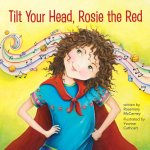
Tilt Your Head, Rosie the Red by Rosemary McCarney illustrated by Yvonne Cathcart

Standard
Tilt Your Head, Rosie the Red by Rosemary McCarney illustrated by Yvonne Cathcart

rosie.jpg

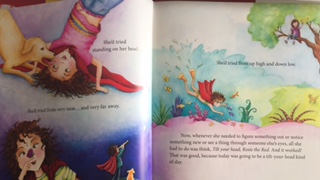
This book is nearly the mirror of Nanni’s Hijab, just told from a different perspective and swapping out the heroine.  Written in 2015 this book definitely came out first, and while the 24 page book is targeted for  4-8 year olds, if your teaching point of view, this book and Nanni’s hijab could be used for older kids to make for a great lesson.  

IMG_1753

I love that this book is written by a non Muslim and the main character is non Muslim.  The binding the pictures, the size, all make this a wonderful addition to any library in showing that differences can and should be celebrated.

IMG_1752

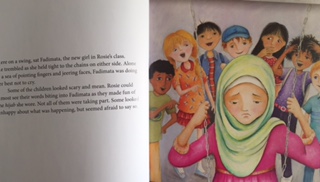
Rosie loves wearing her red cape, and she loves looking at things from all angles and perspectives.  One day at school she arrives at school to see kids making fun of the new girl, Fadimata and her hijab.  

Unable to stop the kids she reaches out to Fadimata, and transforms her cape into a hijab in solidarity.  After the teacher also talks to the class about being kind, the next day is a surprise for Rosie, when many of the girls are wearing scarves and hijabs in a variety of manners to show acceptance and celebrate differences.

IMG_1751

This is the first book in a Rosie the Red Series, and I kinda really love that in the second book, Being Me, about volunteering at a food pantry and helping a friend, Fadimata is minor character.  She is now one of Rosie’s best friends and is both mentioned by name and illustrated.  This is awesome to me, because while books about Muslims are great, having us be in books as supporting characters solving other problems, learning lessons, and going on adventures, makes us more mainstream and inshaAllah part of the accepted landscape.

rosie1

*Side note, if you look at this book on Amazon, and read the comments you can see how truly upset many people are by this book calling it “indoctrination” and criticizing it for not encouraging assimilation.  If you read the book and like it, and like the tone and message it promotes, maybe write a review, and make the world a little warmer.