Category Archives: Non Fiction

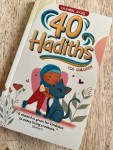
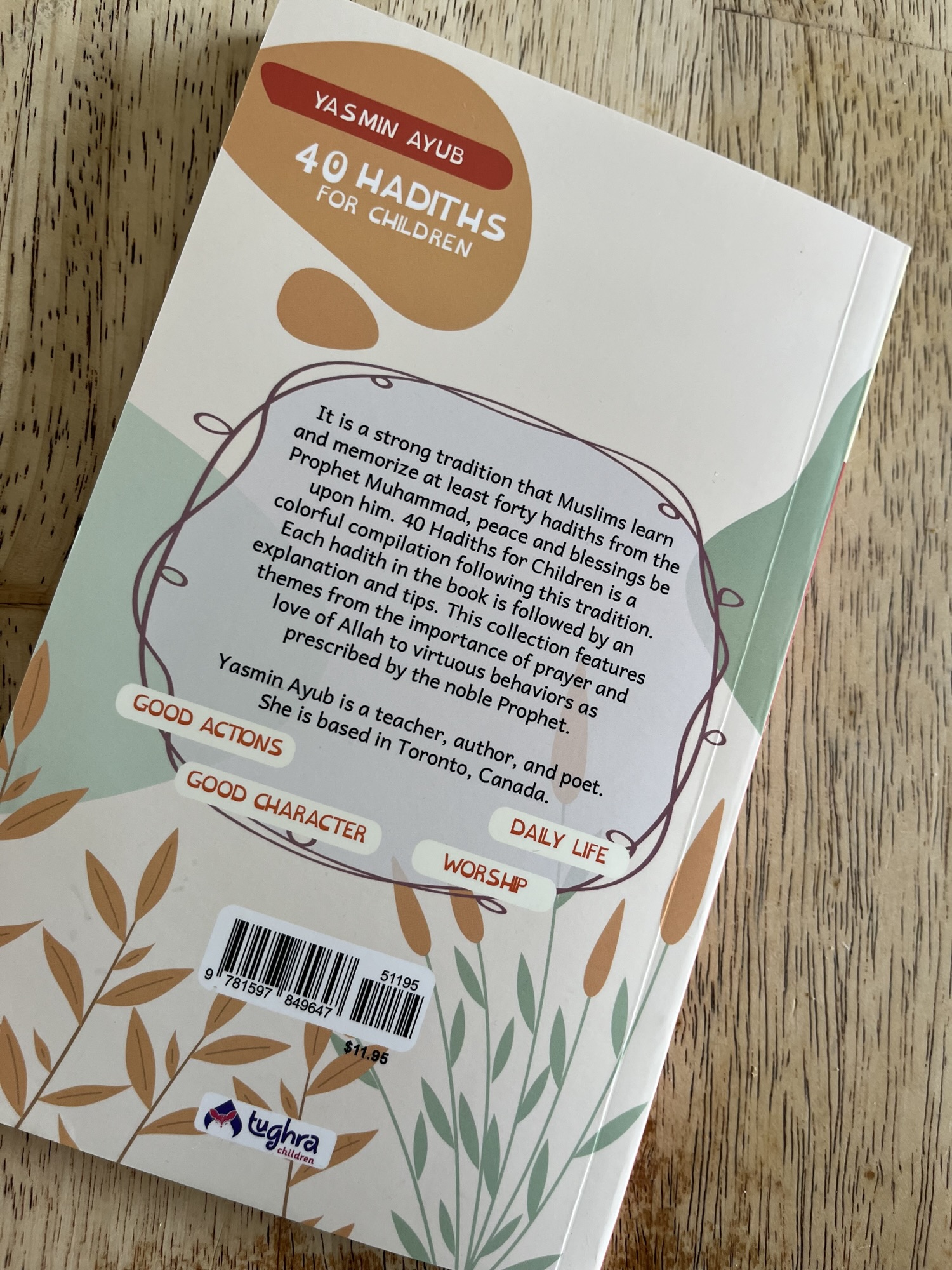
40 Hadiths for Children by Yasmin Ayub illustrated Sabahat Hareem

Standard
40 Hadiths for Children by Yasmin Ayub illustrated Sabahat Hareem

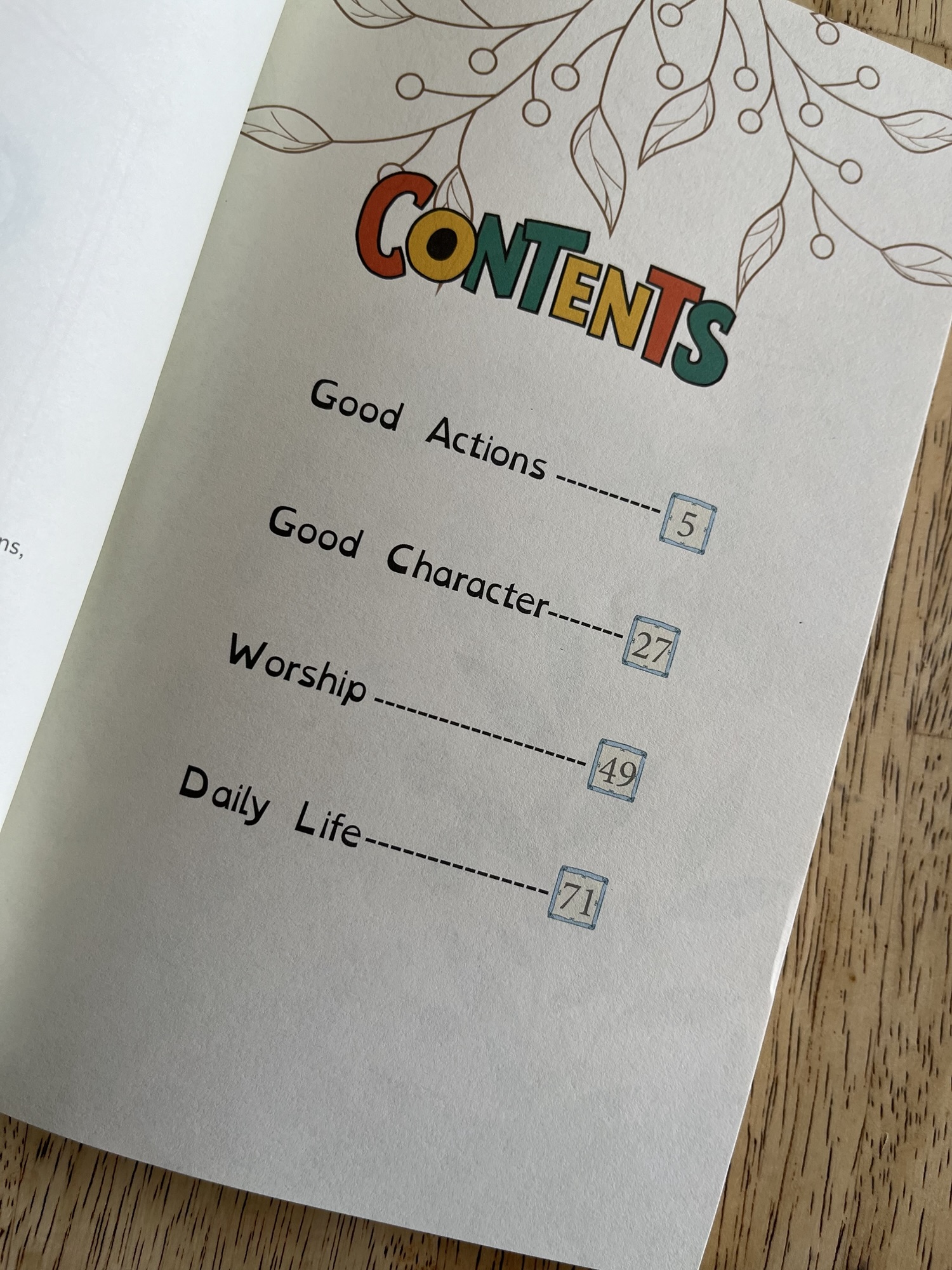
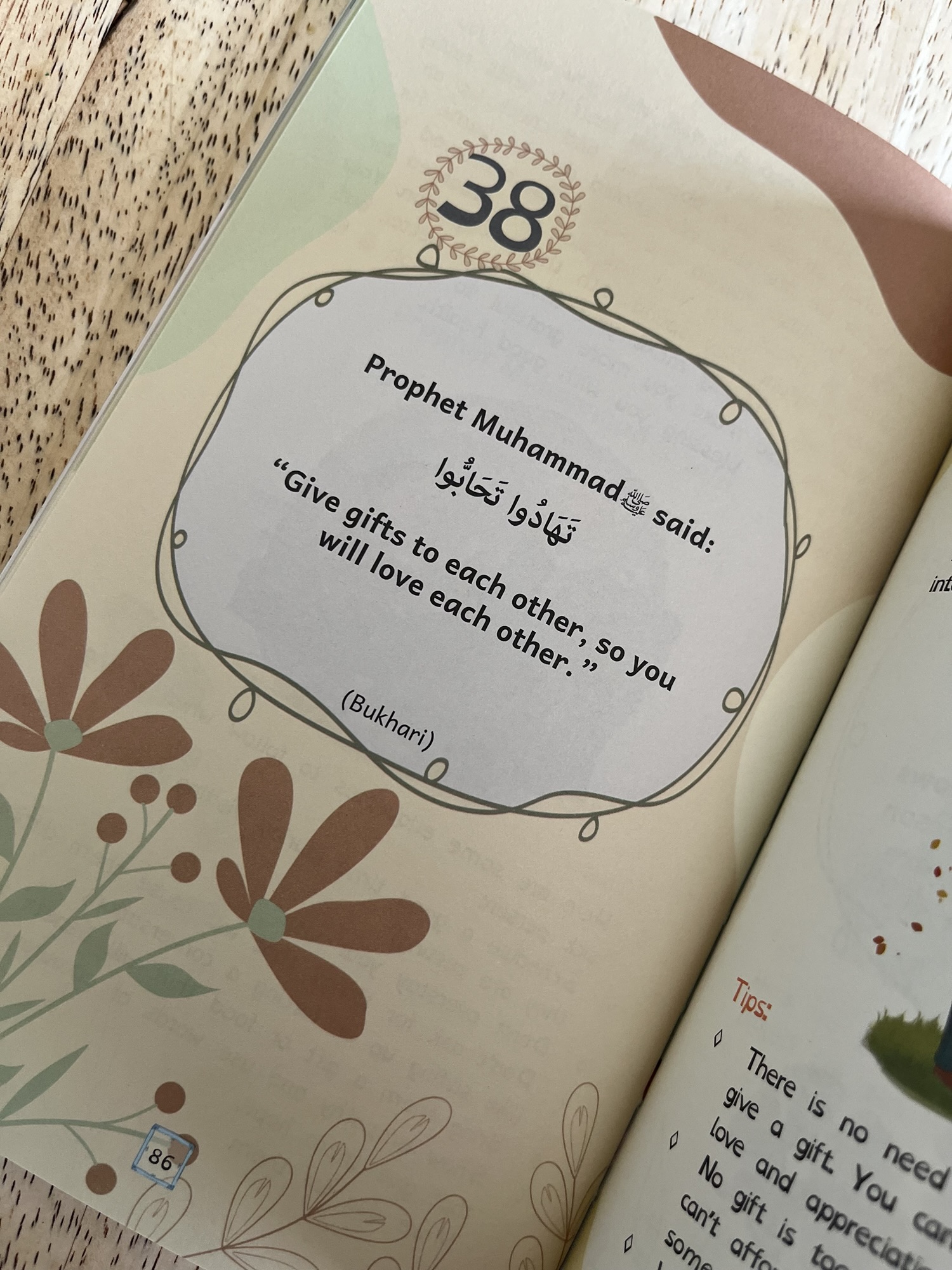
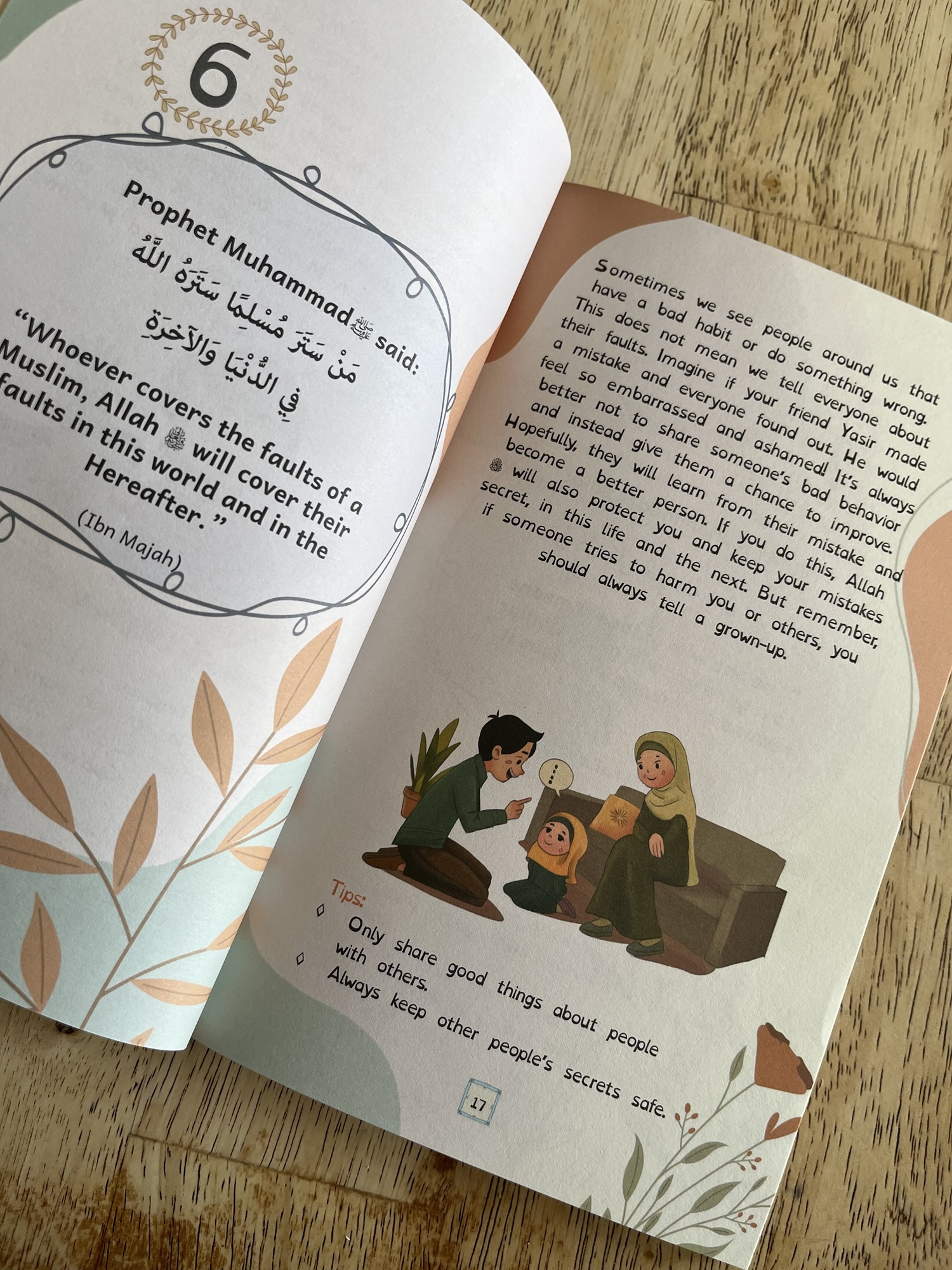
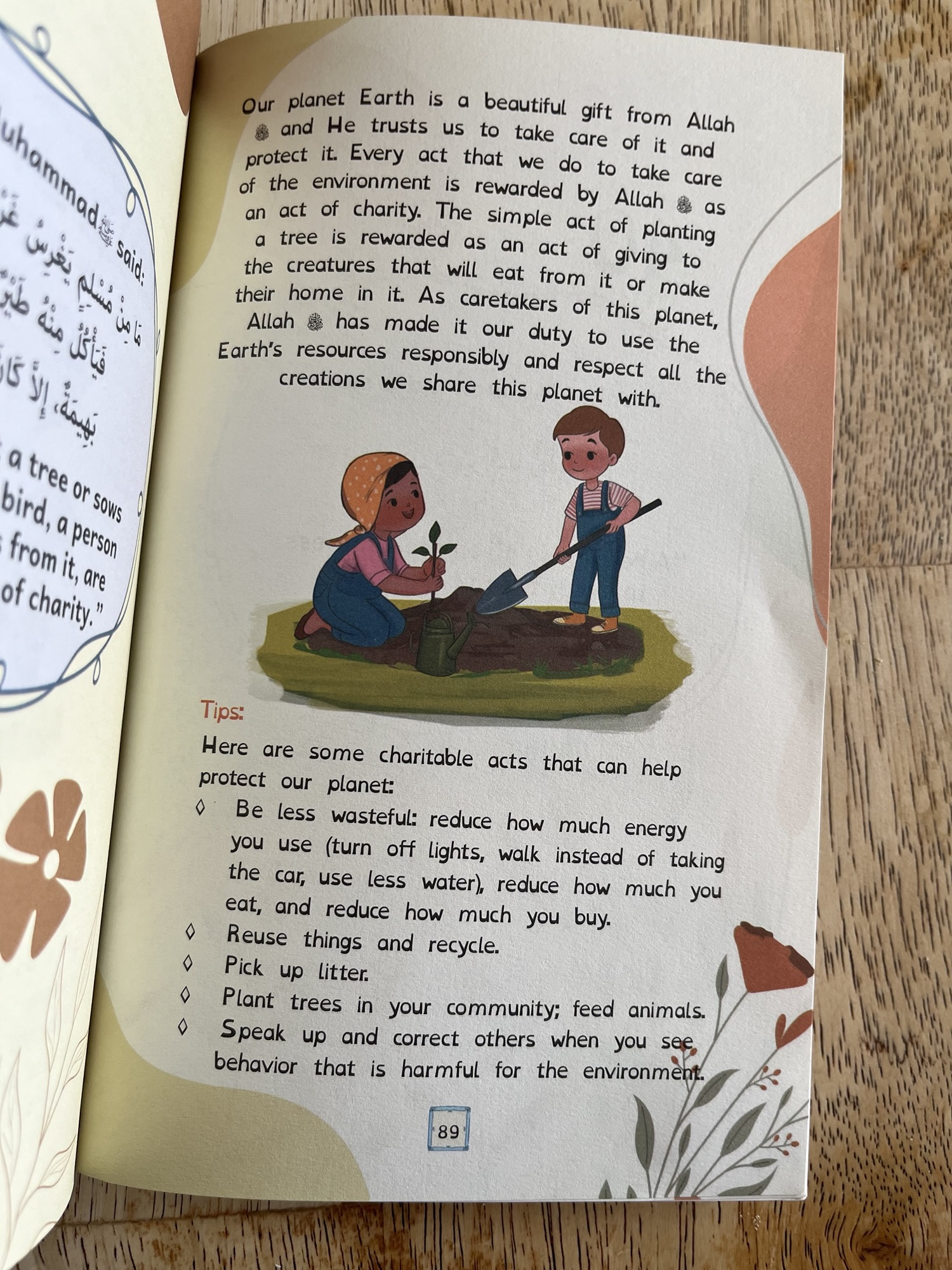
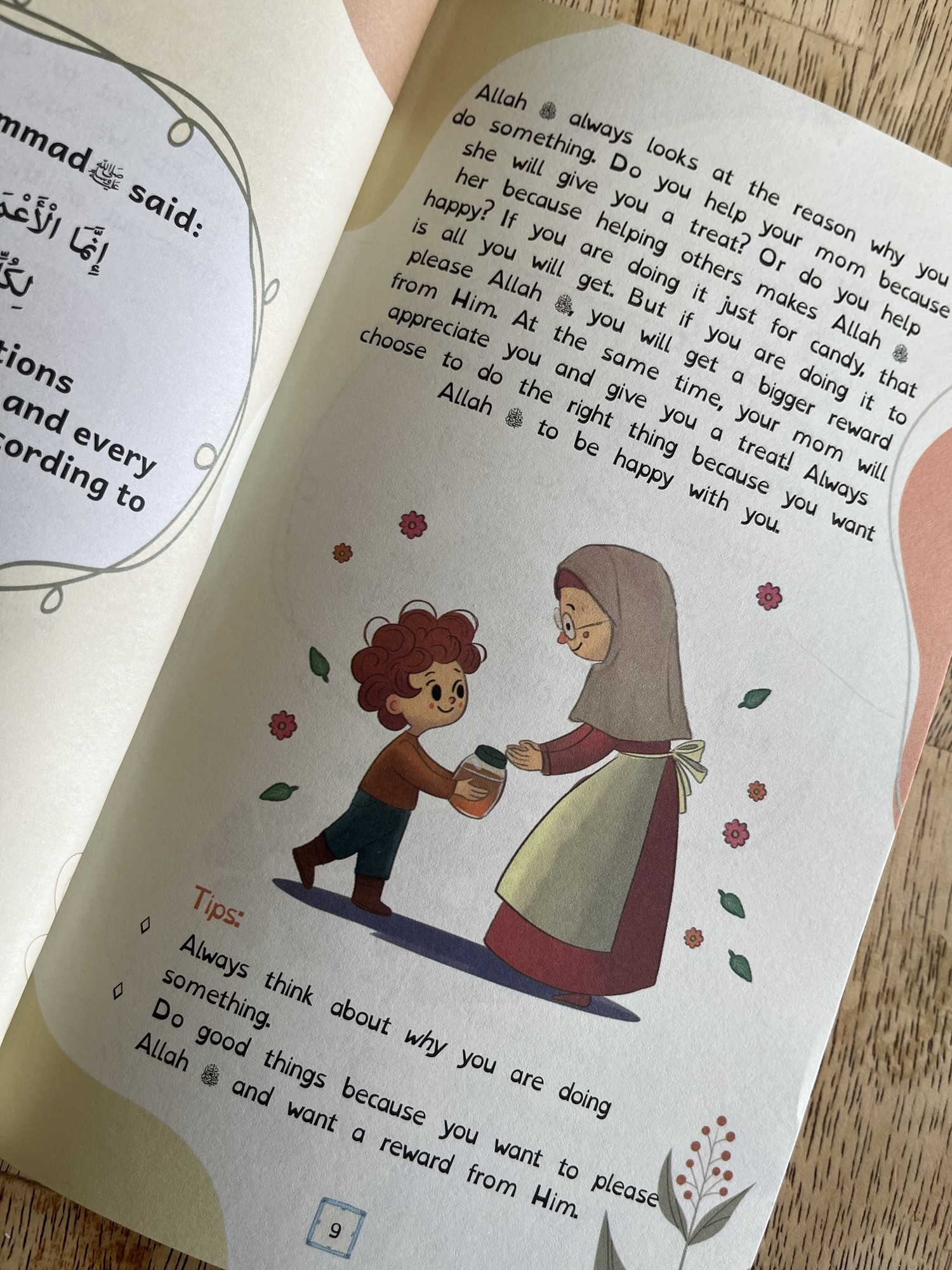
My first thought when I received this book is that it is tiny and will get lost on the shelf, but the prodding of a friend encouraged me to give it a chance, and subhanAllah, it is a delightfully well done book that I now nightly read with my kids, reread myself, and have floating around so that my teenagers also thumb through the contents within.  Divided into four sections: Good Actions, Good Character, Worship, and Daily Life, each two page spread has an attributed hadith in Arabic with English translation opposite a page giving some relatable context, scenarios and further explanation, along with tips to put the hadith into practice.  The sweet illustrations break up the text, making it enticing to read and easy to consume.  The writing is on level for elementary, but not condescending for older readers, and the organization makes the book easy to spend time with in a variety of settings at home, school, or at masjid activities.
I particularly enjoy that the messaging is on level for today’s children in an appropriate and relatable tone.  For example, the page encouraging the covering of faults makes it clear that if someone tries to harm you or others, you should tell and NOT cover that, which is so important.  That the author is a teacher shines through throughout as little tidbits such as that allow the book to be shared independently, and don’t require that an adult provide the context and discussion for the hadith included.  I find that when I read the pages as written, my children speak after, and I get to listen. They don’t seem to have any further questions, but rather want to share what they have done or can be better at, which speaks to a book well done, alhumdulillah.

As for the “tips,” they are a mix of more generic, but on point, and some are very specific such as the visiting the sick allowing the child to immediately put into action certain behaviors, and allowing others to be regularly worked at and contemplated.

Muzoon: From Refugee to Leader by Muzoon Almellehan illustrated by Asma Enayeh

Standard
Muzoon: From Refugee to Leader by Muzoon Almellehan illustrated by Asma Enayeh

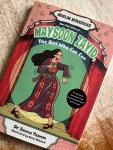
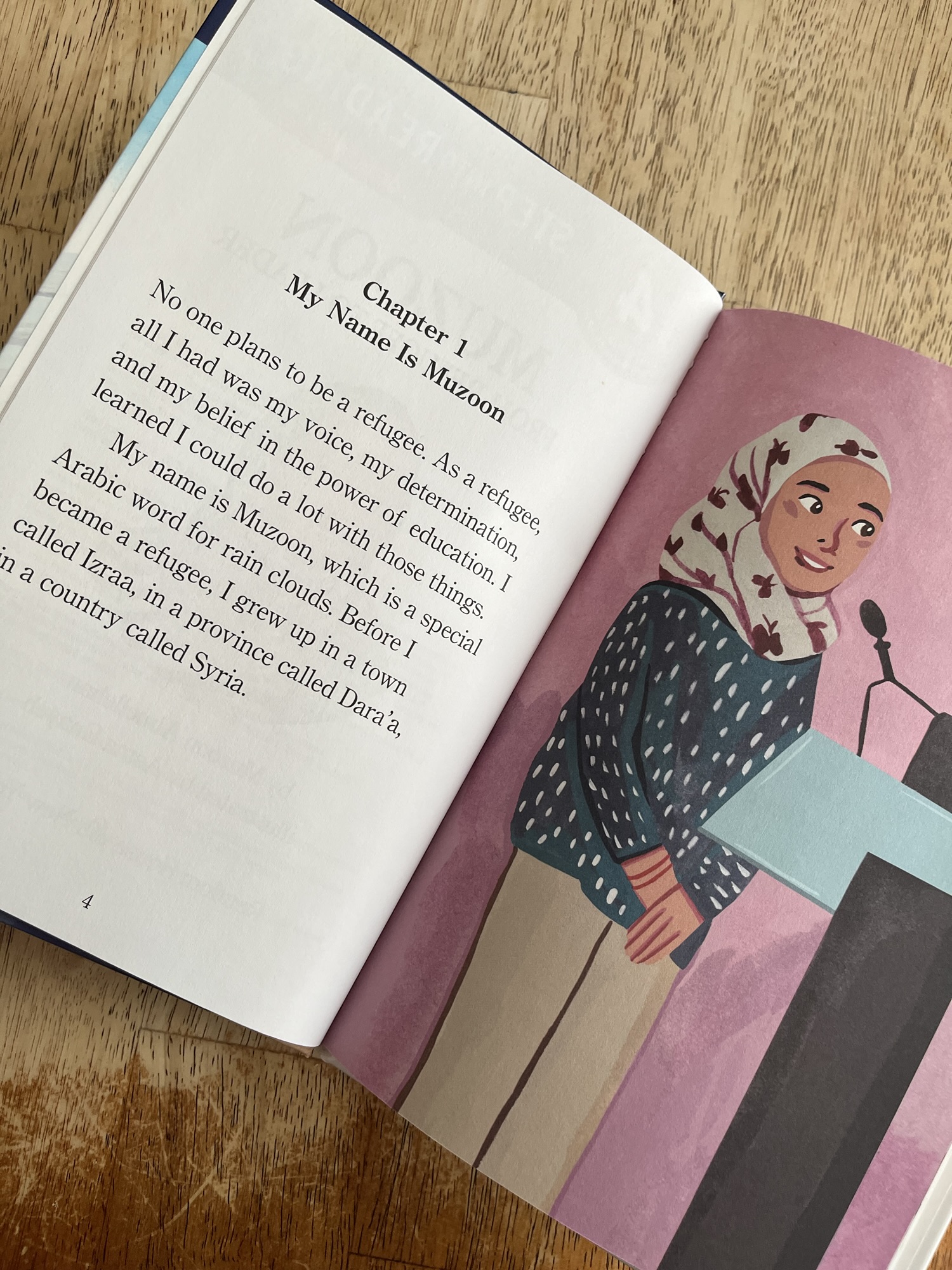
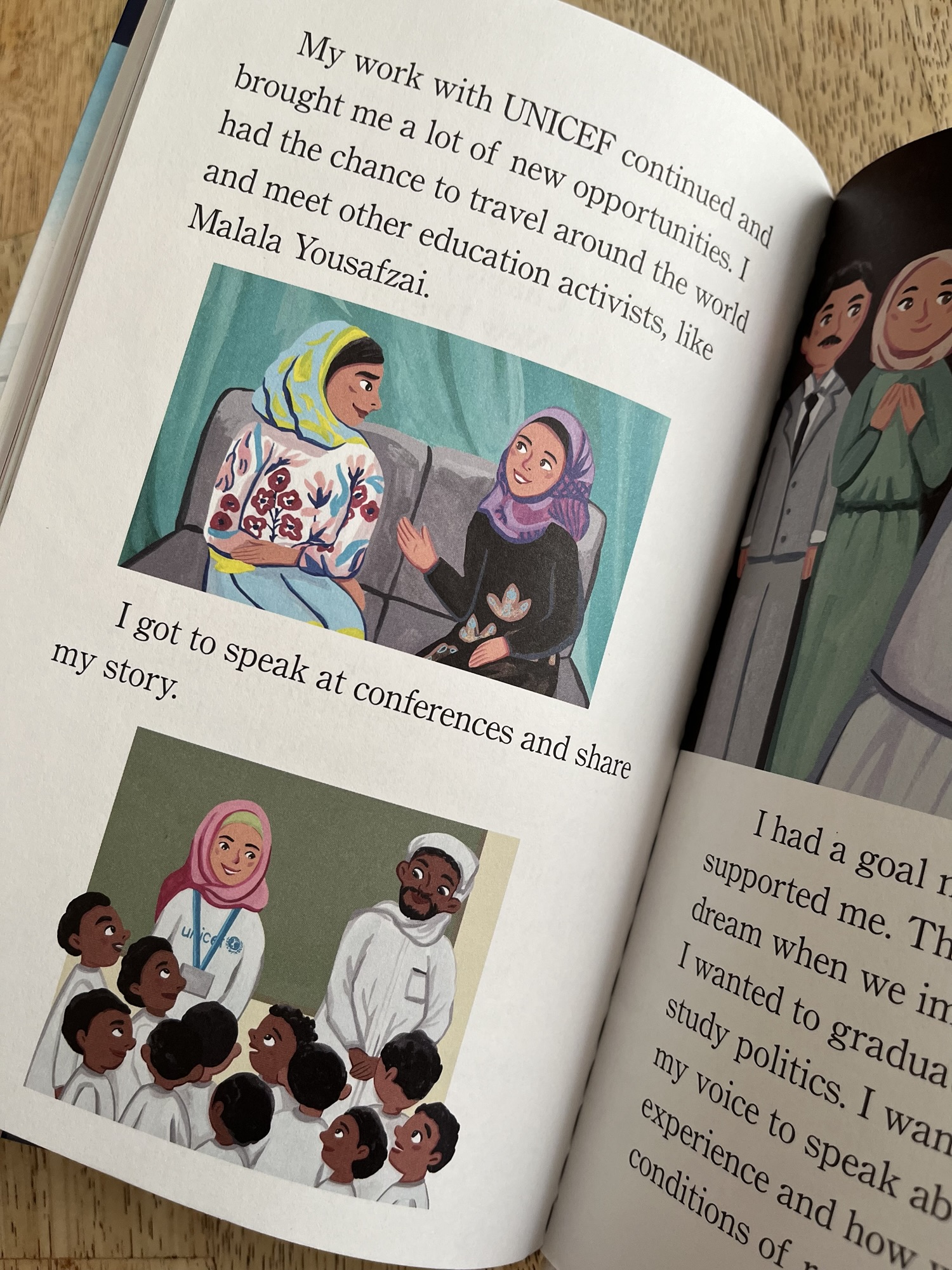
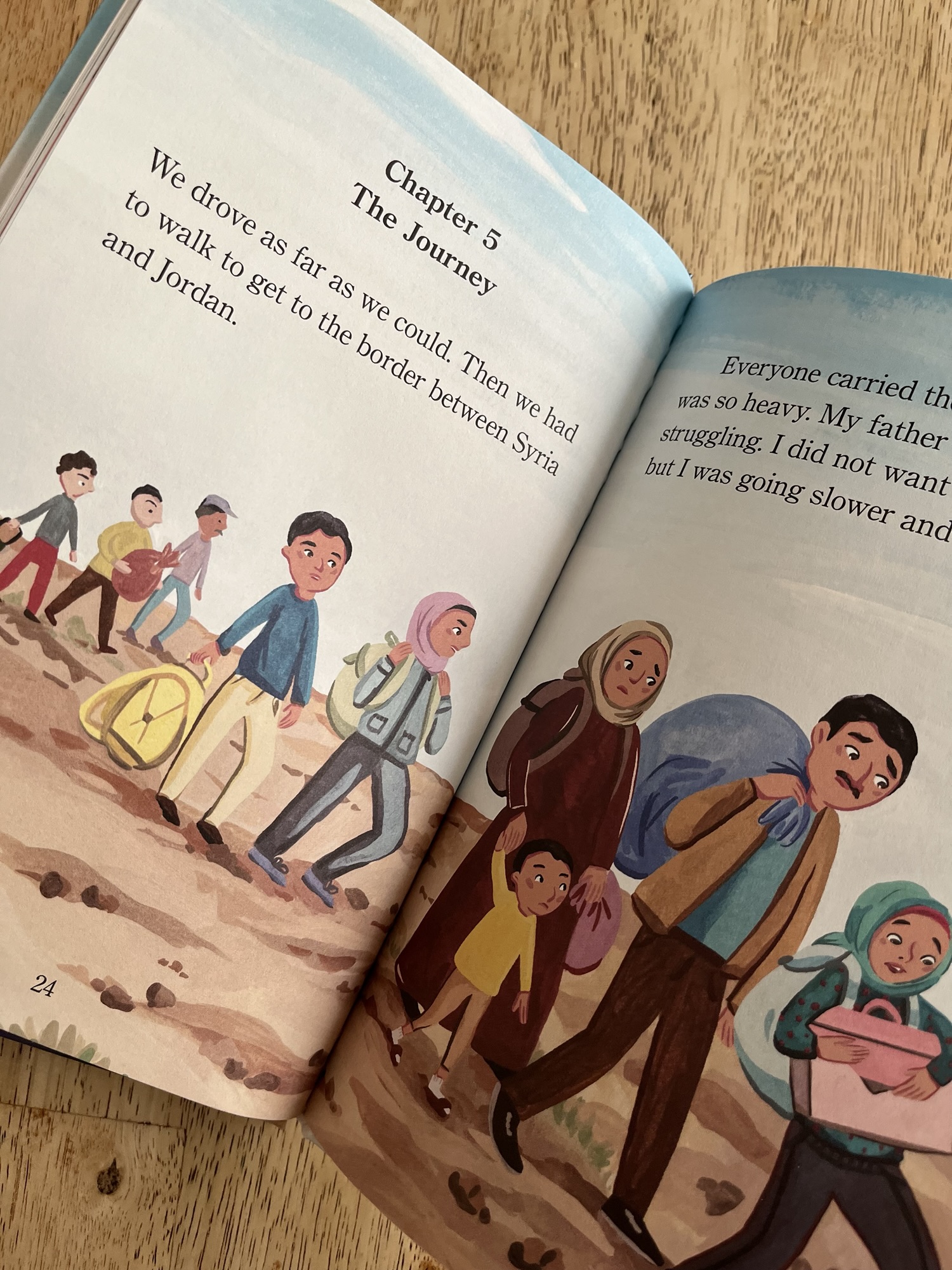
Such a delight to see Muzoon’s story coming to children in the West in the form of a Step into Reading Biography. The approachable format aimed at second and third graders reading paragraphs tells Muzoon’s story with quotations from her middle grade biography, Muzoon: A Syrian Refugee Speaks Out.  From her life with extended family, playing soccer, studying and enjoying Ramadan, to the changes that turned her country unsafe and forced them to become refugees. It follows her to refugee camps trying to find routine and hope and the role education and encouraging other’s to study plays in her life.  Eventually her activism and efforts catch the attention of UNICEF and today she works as a UNICEF Global Goodwill Ambassador and travels the world advocating for education and refugees and rebuilding Syria.

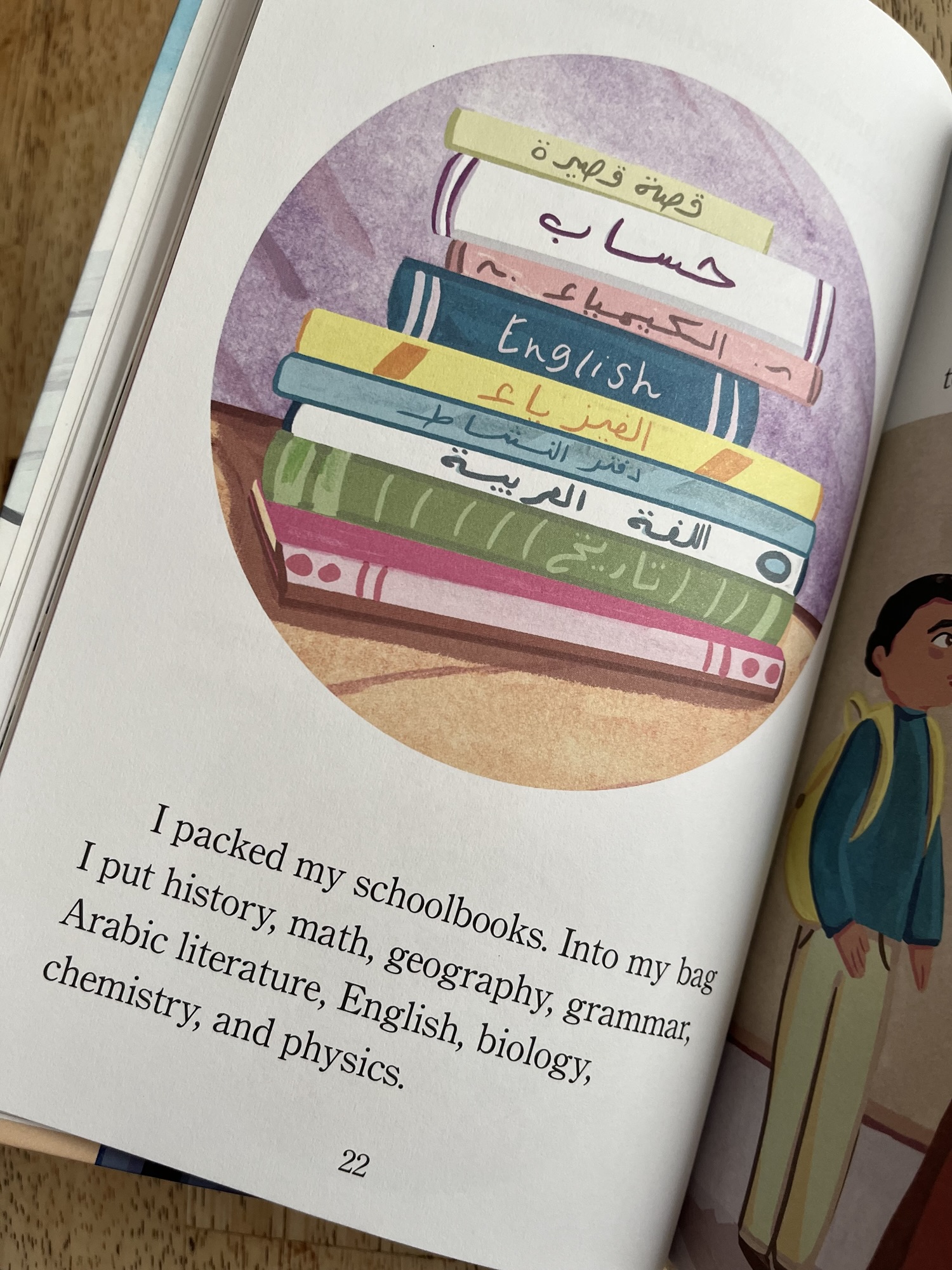
Divided into eight chapters, the 48 page book shows how relatable Muzoon’s life is and how the political events forced her family to abandon all they knew.  The presentation, in both the text and the illustrations, show the unexpected and hardships Muzoon and her family face as they make their way to the refugee camps and work to adjust. The book is not graphic, but the weight is conveyed as readers also see the power education and learning has in providing hope and opportunity. In a fictional story, a protagonist using their voice for the good of society is something to cheer, to see it from a real life person in the middle of a war, is something to admire and be inspired by.

I particularly like the inclusion of Ramadan in the story and the details showing her family joyfully gathering to break their fast together, as well as conveying some details about the Islamic holiday.

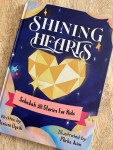
Shining Hearts: Sahabah Stories for Kids by Marium Uqaili illustrated by Mirha Asim

Standard
Shining Hearts: Sahabah Stories for Kids by Marium Uqaili illustrated by Mirha Asim

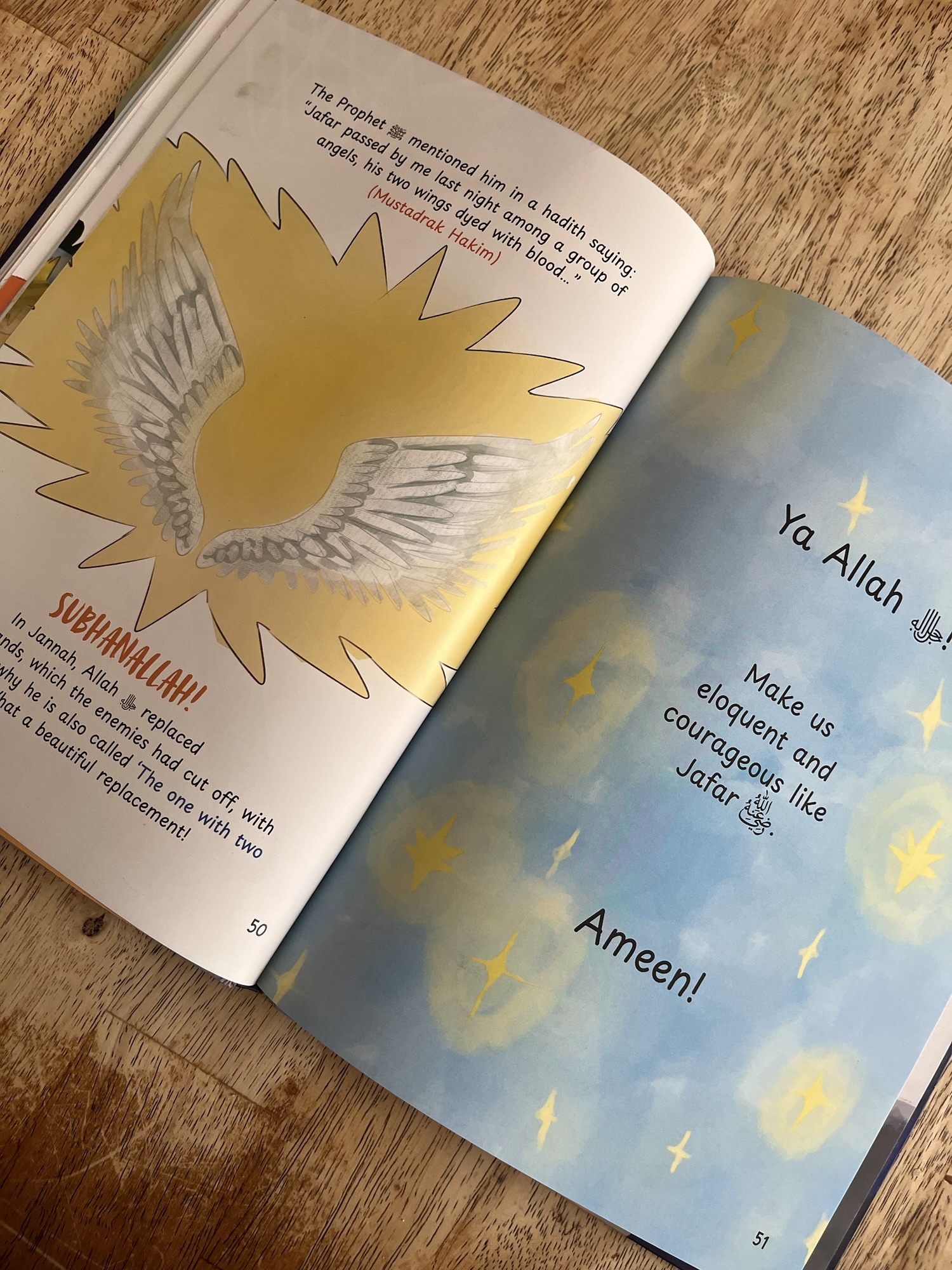
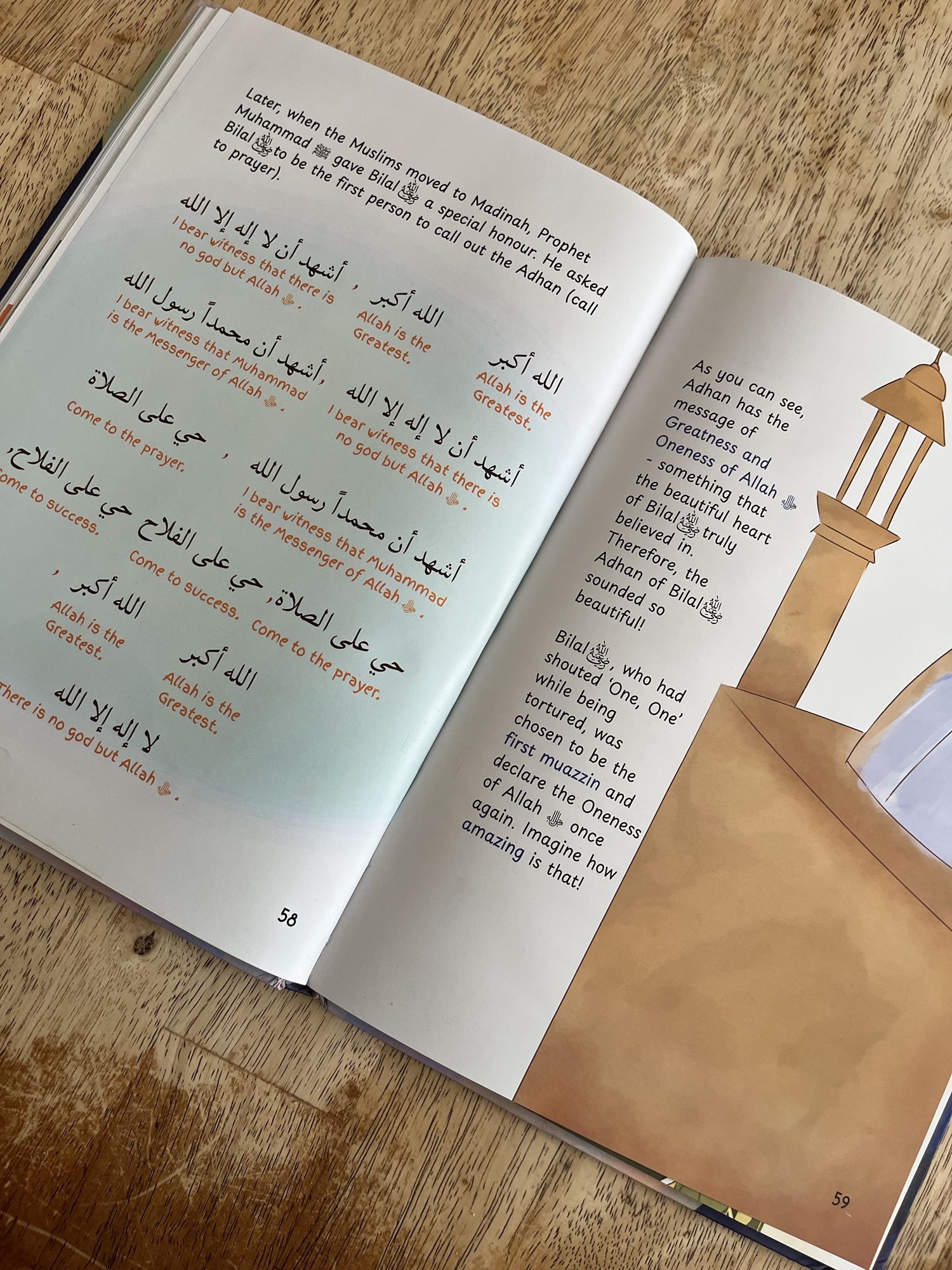
This book contains ten Sahabah stories, five males and five females, conveyed over 121 large 9×12 pages in an easy engaging manner for elementary aged children.  The stories are told one at a time, with simple illustrations, easy to read font, and pullouts featuring engaging blurbs that increase understanding, connection, or challenge the reader to think about something further.  The conversational tone and breaking of the fourth wall helps keep the readers interested while focusing on engaging bits and not a Sahabah’s entire biography.  Inclusion of hadith and ayats and seeing that a named Shaykh has written the forward really makes this book a great one to have in one’s home to read at story time, and to keep on the shelf as a resource. 

The Sahabahs included are: Mus’ab Bin Umair, Salmaan Al-Faarisiy, Abu Dharr Al-Ghifaariy, Jafar Bin Abi Talib, Bilal Ibn Rabaah, Sumayyah Bint Khayyat, Safiyyah Bint Abdil Muttalib, Asma Bint Abi Bakr, Umm Ayman (Baraka Bint Tha’laba) Lubabah Bint Al-Harith, may Allah swt be pleased with all of them.  The first page of each section has the Sahabahs name and one line description before the story begins.  Each section concludes with a dua to Allah swt to make us like the Sahabah we have just learned about in a specific way.  The pages about the Sahabah contain what they are most known for, some attributes about them, and function as a snapshot for young children to grow familiar with these “super heroes” and how we can emulate them in our own lives.

The tone is similar to the staple Migo and Ali Prophet Stories, and proves how desperate we are for Islamic texts that appeal to our children (and how few quality English resources we have).  The pictures aren’t great, but they are sufficient, and I appreciate that there are no faces or depictions. Even an image that could be seen as Sumayyah (rA) has an arrow saying “your grandmother” so there is no confusion. The binding is a bit weak, I was warned before starting, so I read the first few times for review and picture purposes at a table, before handing to my children and reading to my youngest at bedtime.  I’d encourage wrapping the book in contact paper upon receiving it. I appreciate all the letters of approval at the start, and the simple activities at the end, and am impressed overall with the book and how it engaged my children, alhumdulillah.  

Here’s Our Religion by Jenny Molendyk Divleli illustrated by Dasril Iqbal Al Faruqi

Standard
Here’s Our Religion by Jenny Molendyk Divleli illustrated by Dasril Iqbal Al Faruqi

This HUGE 14 page board book is such an engaging, teachable, and shareable book for toddler to early elementary aged children.  Similar to the author’s First Words in the Qur’an I can see this book being shared at story times and in classrooms regularly.  Each two page spread is literally a board book in and of itself.  With headings of: Ummah, Shahadah/Qur’an, Salah, Ramadan, Zaqat/Sadaqa, Hajj, and Prophet Muhammad (saw)/ Sunnah, kids will be able to deduce from the pictures and simple captions how the details relate to the theme, learn new information, review what they already know, and delight in the illustrations.

I don’t know that I would sit down with a toddler or preschooler and just read the book straight through very often, but when I was doing multiple story times a week, I had planned books for every theme highlighted in this book. I would have loved to be able to pull it out after a few stories had been read and used it as a review, where I could point to a picture and the kids could holler out what the illustration was teaching.  The large size would have saved me from having to make story board pieces, and the critical thinking would encourage comprehension and retention.  Example: learning about salah, and then opening to the salah spread, kids could see the vacuuming child and decode that we pray in clean places, that the picture of four people praying together is to learn/remind/teach that it is better to pray together.  


All the Ways to be Pretty by Shamaila Khan illustrated by Reyhana Ismail

Standard
All the Ways to be Pretty by Shamaila Khan illustrated by Reyhana Ismail

The premise of this book is fabulous, an Islamic approach to internal beauty to counter the societal emphasis on external appearance, by drawing on the examples of Ai’shah (RA), Khadija (RA), Sumayyah (RA), Maryam (RA), Hajar (RA), and Rufaidah (RA), may Allah swt be pleased with them all.  The illustrations are decent, focusing on the girl understanding what her mother is saying and her imaging herself with those qualities.  The part that I struggled with, is I flipped through it before I started reading it, and the pages are often walls of text.  Additionally, I didn’t realize it is rhyming text over 34 pages.  SubhanAllah though, somehow, it works.  I can see this book being shared at preteen gatherings in masajids, homes, and schools everywhere.  The rhyme at times is forced and lacking, but the flow makes the walls of text zoom by and the information shared is not overwhelming and Alhumdulillah, it doesn’t stray too far from the central messaging. You could share it with younger readers, but I think it works best if the audience knows some of the women and facts highlighted, and the information shared is a mix of reminder and new tidbits urging further exploration. The publisher lists the reading age at 7-10 which is probably a good fit based on the amount of text, but the rhyme, mirrors at the end, and starting point of battling beauty standards on the screen and “Princess” messaging is a bit of a target audience disconnect, which is why I point it out so consumers are aware.

The book starts with a lengthy author’s note before the rhyming scene of a mother and daughter walking to school and discussing what the daughter would like to be.  The girl doesn’t answer a profession, but rather responds that she wants to be pretty, and gives some justifications.  The mother gently then encourages her not to just want to be pretty, but rather pretty smart, pretty wise, pretty brave, pretty pious, pretty resilient, and pretty kind, before concluding with the girl throughout the day thinking of how to be like them, and her mother, to earn Allah’s pleasure.  Each attribute is a two page spread with one of the historical women featured.  The book ends with a hadith and six mirrors with the characteristics beneath them.

I like that the book does not try to give an entire biography about the women featured.  I also like that Islamic references are also brought in, some explained some not. It is “Islamic fictionalized non fiction” it is meant for Muslims with Islamic framing, not just Muslim characters, and it has substance.  Lately so many self published or even Islamic published books seem to not feature Islamic foundational themes, and I realize how much I have missed reading books that do.  Yes, I normally would have a solution to offer as to how to make the pages less text filled and I know I should say that maybe it shouldn’t rhyme, because it makes for some awkward phrasing, over explaining, and useless lines, but alas, I have no suggestions.  We need books that present our Sahabas and Prophets in a manner that allow our kids to know them and think of them and emulate them. Alhumdulillah, I can see this book being read and shared and discussed, and that to me is a “pretty “good thing.

The Prince of Stars: Ulugh Beg’s Quest to Map the Stars and Seasons by M.O. Yuksel illustrated by Zelma Firdauzia

Standard
The Prince of Stars: Ulugh Beg’s Quest to Map the Stars and Seasons by M.O. Yuksel illustrated by Zelma Firdauzia

This gorgeous 40 page picture book biography is both flowing in its storytelling and informative in its sourced details of a fairly unknown, underappreciated figure.  I was humbled reading this book and learning about the accomplishments of someone I had never heard of before.  Truly this book, bringing to the attention of our young and old ones alike, such a remarkable figure, is a much needed gift.  The publisher suggests the book for 4-8 year olds, but I think it also will appeal to older readers familiar with Copernicus, Galileo, and Ptolemy and who will appreciate the efforts driven by curiosity from someone so long ago. The diction in a few lines did give me pause, but nothing that overshadows how well the author has once again proven to master the storytelling of non fiction Muslim accomplishments in an engaging, accessible, exciting way for today’s audiences.

The book opens with a map of the Timurid Empire in 1405, before showing the reader a young prince, Ulugh Beg, gazing out and the stars and wondering how many there are.  The next spread makes no sense to me, but I acknowledge others might not be bothered, how can the young boy be watching days fade into weeks, into months, into years, and then wonder how many days are in a year? Seems that either those terms weren’t yet around, or some details about the generalized meaning made him curious about the specifics.  Either way, him wanting to know how many days in a year and the changing of seasons, along with counting the stars are the questions he wonders about as a child and works to answer throughout his life.

The king of the Timurid Empire, Ulugh Beg’s grandfather, insured his intelligent grandson had the best teachers and was allowed to travel, learn, and follow him curiosity.  At 15, when Ulugh Beg became the ruler of Turkistan, he built a madrasa and invited scholars, artists, students, philosophers, and inventors to attend making Turkistan “a mecca of learning.”  Yes, the usage of mecca here made me laugh.  I know it is appropriate, but it seemed a little on the noise in a book where Mecca, the direction we pray is also mentioned.  The book then details the controversy of studying the stars, as astrology and astronomy at the time, were seen as one and the same.  And with only God knowing the future, he had to assert that he was curious about the science of the stars and planets.

I love that faith and Islam is centered and that the inscription on his school is “Seeking knowledge is the duty of every Muslim man and woman.” But it alludes that this is a hadith, and while I agree it is inspired by a saying of Prophet Muhammad (saw), I think adding the man and woman part, where to the best of my knowledge the hadith is just “every Muslim,” is something that should be clarified. None-the-less, that it was Ulugh Beg’s motto, so to speak, and that he made a point to articulate “woman” is remarkable.  He determined the exact time of the five daily prayers, the direction to Mecca, and the dates of holidays.

He also built the world’s largest observatory, and numerous tools, including the Fakhri sextant to measure the location of the stars and movement of planets.  He encouraged being challenged and challenging others’ findings, and over 17 years wrote a star catalog of more than 1,000 stars. He answered how many days in a year, down to the seconds, why the seasons change, and inspired future astronomers and scientists.

As incredible as the story is, the backmatter is equally impressive with an Author’s Note, Ulugh Beg’s Biography, a Glossary, Astronomical Timeline, Bibliography, Further Reading, and Acknowledgements.

The illustrations are the cherry on top, somehow I don’t love the cover, but the inside spreads are nice and match the tone of the words and the detail of what he was accomplishing.  The book is on preorder and I hope, teachers, librarian, and families will prioritize learning about him, and giving him credit for what he helped us to understand, about our world.

Eliyas Explains: What was Prophet Muhammad (saw) Like? by Zanib Mian illustrated by Daniel Hills

Standard
Eliyas Explains: What was Prophet Muhammad (saw) Like? by Zanib Mian illustrated by Daniel Hills

Zanib Mian once again fills a void in the literary world for our children using her easy to read and relate to protagonist’s voice.  Over 149 pages, filled with illustrated doodles, details about our beloved Prophet Muhammad (saw) flow through the fictional framing of Eliyas and his family heading to the airport to pick up their Mamoo.  It starts with the standard introduction of characters that all Eliyas books have, so while it is part of the series it can be read as a standalone as well. But really if you have children 5-14, you should invest in the entire collection.  Also, as with the rest of the series, the book is checked by a Shaykh who is named at the beginning so that the reader can enjoy the Islamic details that are to follow. I know there is some debate about the cave and the spider, a story shared briefly within the pages, but I will leave it to those more knowledgeable to decide upon.  The book works well read aloud and independently, either way I’m confident children will enjoy the story, learn something new, and grow in their love of our Rasul Allah, alhumdulillah.

SYNOPSIS:

Eliyas’s dad’s uncle, Haroon Mamoo is coming for a visit, and while Mum wants to make sure they leave at a specific time to get to the airport, Dad isn’t stressed, he had a dream about Prophet Muhammad saw the night before and the kids want to hear all about it.  The story progresses weaving in things around them with Mum and Dad tying them to the sunnah.  From a fight at the airport, to a pigeon getting stuck, to Haroon Mamoo seeming to have gotten lost. The book is preachy, in the best way possible, as Eliyas and Aasiya banter, crack jokes, and learn along with the reader.

WHY I LIKE IT:

I love Eliyas’s voice and the weaving of a fictional story to convey the non fictional sunnahs that are truly the heart of the book.  The information presents in an easy way for children to hopefully remember it, and to also see how they should be behaving and acting in their own lives. The fun fonts, illustrations, and layout make it inviting to pick up and keep reading.

FLAGS;

None

TOOLS FOR LEADING THE DISCUSSION:
This book is not a journal, like some in the series are, but provides ample opportunity to discuss points on each page.  

Sunnah and Science: What Modern Research Tells Us about Prophetic Traditions by Aquila Fatima illustrated by Azra Momin

Standard
Sunnah and Science: What Modern Research Tells Us about Prophetic Traditions by Aquila Fatima illustrated by Azra Momin

The title and premise of this hardbound 54 page resource book for children definitely caught my eye.  The contents covered, the two page fully illustrated compelling spreads, and the intext labeling of hadith and Quranic ayats make this book versatile in homes and classrooms for a wide variety of ages.  As the daughter of a convert, the knowledge that science is not in contradiction to Islam is something I grew up hearing about a lot in casual conversation, and I love that this book addresses it head on for children with pull out bubbles, reminders, fun facts, duas, and the like.  My only concern that I truly can’t wrap my head around, is why isn’t their sourcing for the “scientific” information? Nothing is overly scientific, and nothing “feels” off, but none-the-less, the book repeatedly says “Research shows,” and “Science proves,” “Scientists are still,” “Scientific research says,” but never once shares what scientist, or research, or science.  The book has the space for footnotes or sourcing or a bibliography, and in a book trying to give readers the confidence to show how the sunnah and science support one another, to not have the sourcing to back it up, is a glaring admission.  Buried in the author bio it states the author has “a Masters degree in genetics” and worked as a “science teacher for elementary school students,” but to me, the book needs to back up the statements to successfully empower and accomplish what it sets out to do.  I hope future printings will include sufficient backmatter, even without the book is well done, but the standard is the standard for good reason, non fiction needs sourcing.

The book covers 25 topics, dedicating two pages to each topic, with a title heading, and an Islamic source subheading.  The topics include, smiling, rain, sleeping, swimming, wudu, salah, fasting, honey, cleanliness, bathroom etiquette, yawning and hygiene to name a few.

Most pages contain facts, ayats from the Quran, sunnahs, benefits, supporting scientific tie ins, and adorable illustrations.  The book concludes with an author’s note, thoughts by readers on the book, and an author bio.

Ramadan Reflections: A Guided Journal by Aliyah Umm Raiyaan

Standard
Ramadan Reflections: A Guided Journal by Aliyah Umm Raiyaan

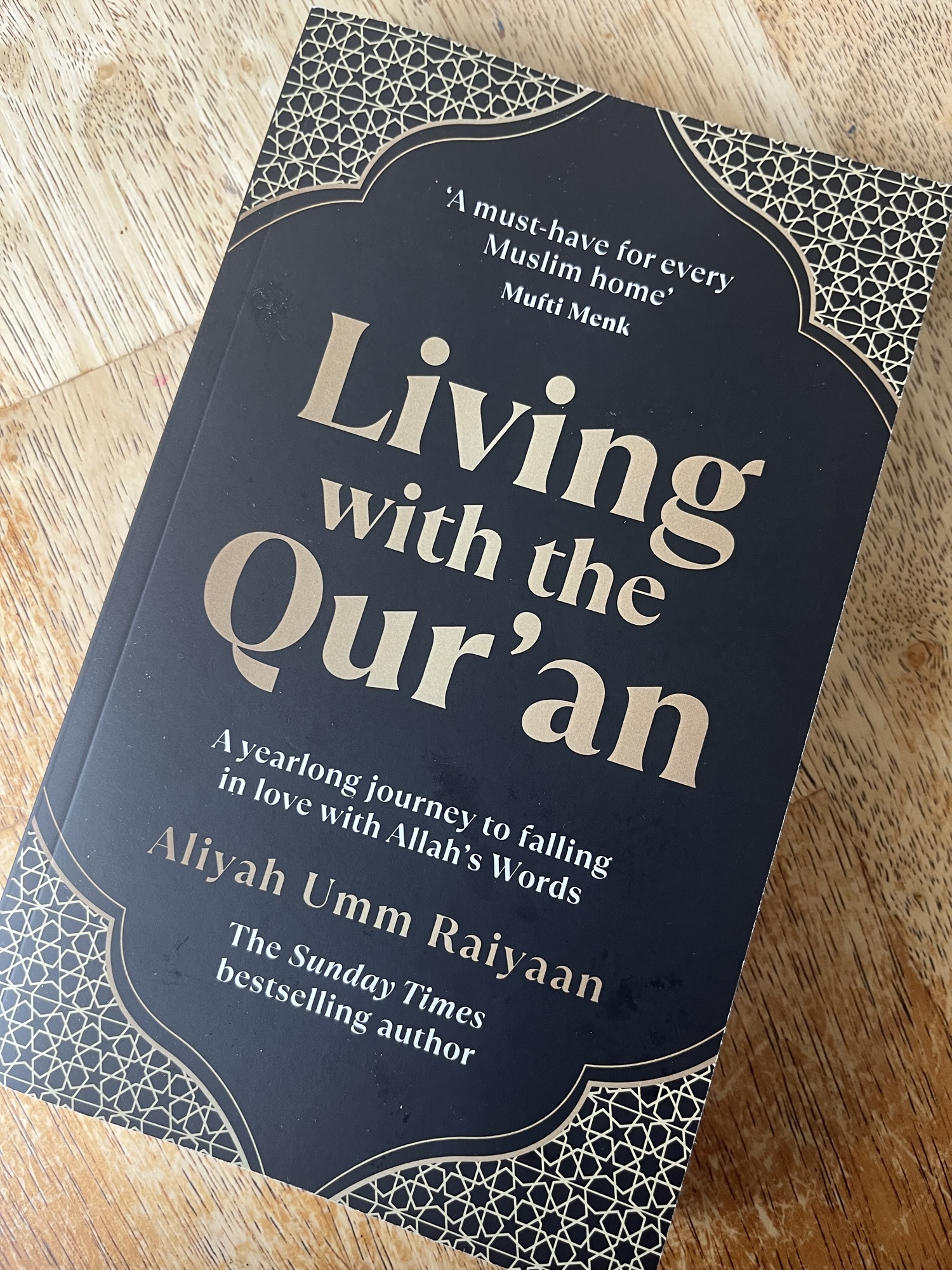
I had started this book on the first day of Ramadan thinking I could double up some days and finish it early with enough time to offer up a review for those wanting to know if they should acquire the book  and take advantage of it during the blessed month.  But alas, here I am nearly 10 days post Eid, finally finishing, and getting around to sharing my thoughts.  The 277 page book spans 30 days, it is divided into three parts, with each chapter/day covering a theme with the author’s personal connection, outside sourcing illuminating the thought, then moving on to a section entitled, “Let Your Heart Ponder,” followed by a “Dua Invitation” and then a few pages of guided journaling prompts, questions, and considerations.  I did not write in the book, I struggle to mark up pages since leaving school, and even annotate by taking pictures and attaching notes on my phone.  But even not using the journal as intended, the book requires you to slow down, to savor the reflections and insights, and put them in to practice.  To read it in one sitting, or to rush the chapters would not accomplish for the reader what the book sets out to do.  Even the chapters that did not directly resonate with me, I found still offered nuggets of empathy, or consideration, and the short chapter style allows it to not be a burden to spend time with.  The days that hit me the hardest, that taught me something, or reminded me of something long forgotten, or inspired me to be better, more intentional, more forgiving, more present, I look forward to discovering again and again in future Ramadan rereadings.  That isn’t to say that this book can only be read in Ramadan, or that next Ramadan chapters that I found unremarkable, won’t suddenly hit different, but there are some chapters that felt rather repetitive and memoir style anecdotes that were not developed enough to reach the reader beyond surface level understanding.  Had the whole book been like that, perhaps I wouldn’t remark on it as the Islam centered hadith, ayats, and quotes are consistently strong, but when the author’s personal reflections on her own life, and those close to her, were more deeply explored, a deeper resonance to the theme of the chapter emerged.  Perhaps because I read more fiction, but when character development, so to speak, was present, the connection to the message, and the empathy to others and one’s self bloomed very naturally, and thus those chapters became more memorable.  

I felt the latter half of the book was stronger than the beginning, perhaps intentional as the end of Ramadan draws near and our hearts desperate to cling to the closeness of Allah swt.  I love the thorough glossary at the end, I believe it is the same one in the author’s second book, “The Power of Dua” and it is such a benefit to truly understanding the words used that non Arabic speakers might think they know, but can benefit from having clearly articulated. 

It is never fair to compare books, but having read the author’s two books nearly together, I anxiously await and sincerely hope that there is a third.  I read them out of order, and the second is definitely stronger, but I struggled with the “memoir” style in both.  Reflections was the author’s own story, and Power of Dua was other people’s stories, and both felt forced and distracting for me more often than not.  I hope if there is a third book, that disconnect can be resolved and the author’s commentary and Islamic references in her signature palatable style can be expressed without being contingent upon a story that the reader may or may not relate too, or more personal info will be shared so that if the reader can empathize more readily.  The repetition of hearing the name Solace UK and that she started a charity from scratch, started to feel almost promotional, as I still am not sure, two books later, what the day to day work of the charity is, or what topics Honest Tea Talk seeks out to cover, only that they are constantly name dropped.  I would love to know who the author studied with and where.  The little snippets make the reader wanting to Google, but I think it distracts from the connection to the words in the moment.

Overall a solid addition to spend time with in Ramadan, or any time, and to reference when the heart needs to feel connections.  The writing makes for an easy read, the duas and parts to ponder allow you to put in to practice the teachings immediately, alhumdulillah.


My First Salah Book: Why and How we Pray by Learning Roots

Standard
My First Salah Book: Why and How we Pray by Learning Roots

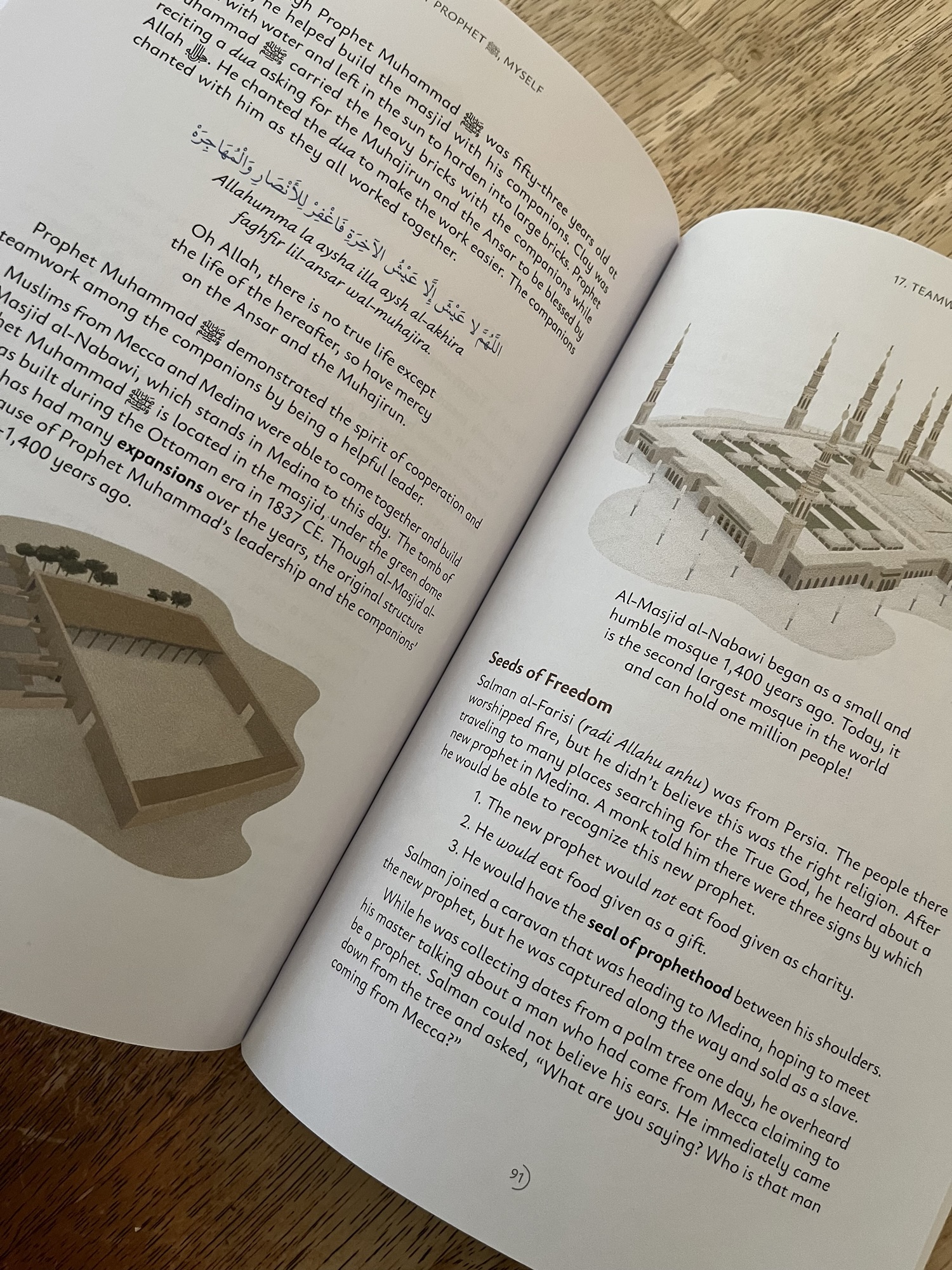
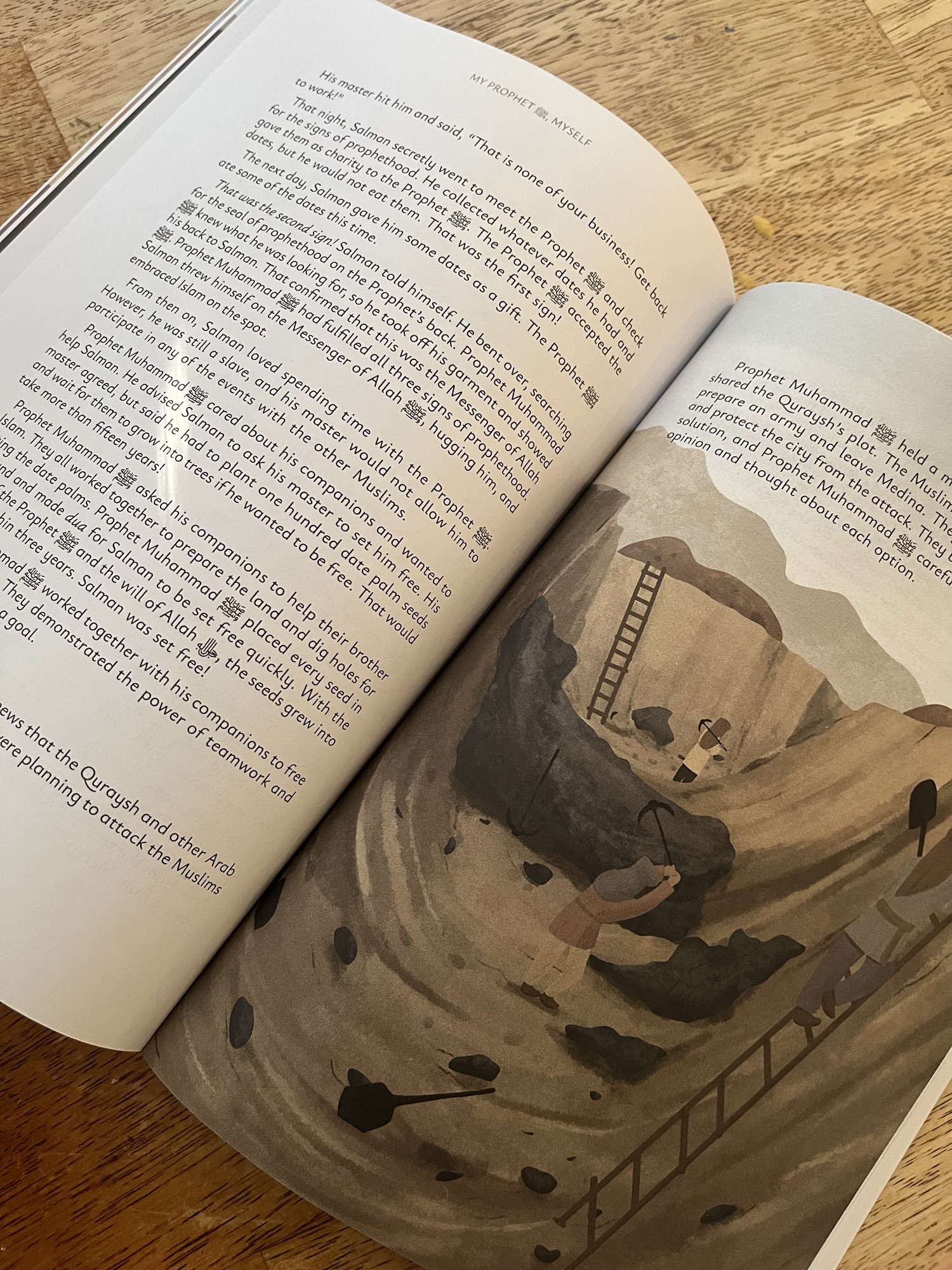
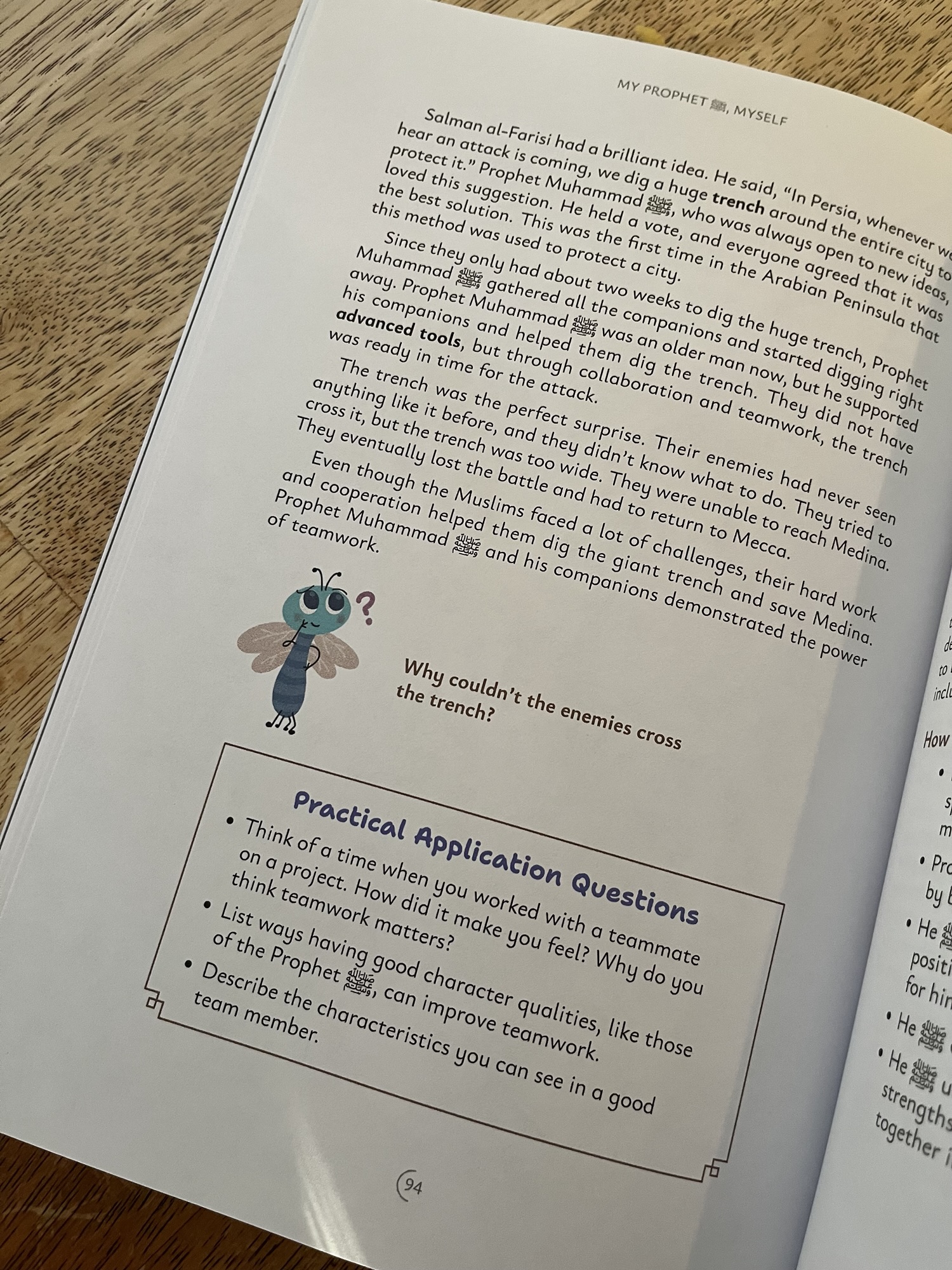
Over 91 pages this informative book tells “The Story of Salah” through the miraculous night journey, how to do wudu and its benefits, step by step how to make salah, and then a story style portion of “Life with Salah.” I do not have the digital “kitab” pen that allows readers to have the book read to them and activities made interactive without parental involvement, but even with out it, the book is a pretty solid resource.  The hardback binding, and full color pages are not crowded, they introduce nine characters at the beginning and feature them throughout the pages learning the steps, imagining witnessing the events, and putting the lessons into practice.  Some of the recent Learning Roots books have the characters watching or imagining themselves in story’s of the Sahabas and Prophets, that make me uncomfortable.  The first chapter of this book, is more limited as it illustrates a light in the sky as the Buraq being seen by some children, not the characters in the book, and a silhouetted tree as Sidrat al-Muntaha.  As I am not knowledgeable enough to know if it is “right” or “wrong” to have a child seeing the silhouetted tree and pointing to it, or who it is meant to be, I’ve included pictures for you to decide what is best for your family.  I particularly like that on the pages where Arabic is spoken it is found written in easy to read Arabic with English translation and transliteration.  Within the text there are attributions of hadith and after each chapter there is an activity and questions.  The book concludes with a glossary.

Whether as a tool to learn for the first time, or a book to revise with children already praying, the approach is gentle and easy, inviting children to engage with the pages.  The four chapters are packed full of information, but the illustrations, diagrams, and steps, also allow the book to be referenced, or read cover to cover.

The last chapter, “Life with Salah” shows the character group engaging with salah in a very idyllic way, but given the tone of the book, it works, and will allow readers to see salah as more than just an obligation, which is important.

I got my copy from crescent moon store, if you use my initials (ISL) at checkout you can save 10%.