I usually have a running lists of books to check and see if the library has in their catalogue, and another list for when I have a few extra dollars and/or a reason/excuse to purchase books for my own. I’ve seen this book recommend by countless critics, educators, refugee resettlement volunteers etc., and was thrilled that I could get it from the local public library. However, it isn’t enough to have this book and mull over the artwork and prose for three weeks, it deserves a permanent place on the shelf. Or better yet, open hands to pass the book around to within your home, to reflect on the humanity that binds us all, and the plight of so many in the world.

The story is fairly simple, Rama and her family have a good life in Syria and the war changes that, forcing her and her family to flee on foot to Europe with what they can carry. The emotions on the other hand, are not that simple. The book is illustrated in stone, but the reader would have to have a heart of stone to not be moved. Written on an AR 3.2 with 28 pages, the book is written in both English and Arabic. The book is not sensational, but it does discuss the shortage of food, and going hungry, how they are not free, not really, how bombs fall and kill people going to the market, and it does show that people were lost in crossing the sea. The family has to walk, there is no going to the airport or cars to take them across borders so easily, this is contrasted to the beginning of the book where Rama was free to play and go to school, things the reader can relate too.
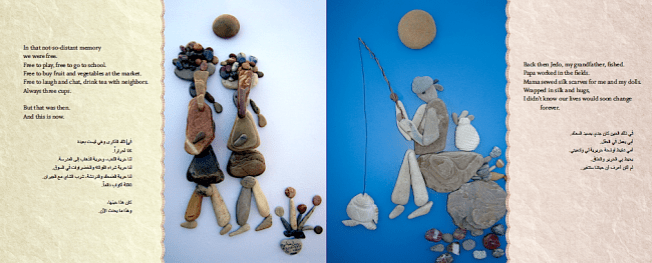
Ultimately the book is full of hope. The fictionalized account of a horrific reality still on going, pales only to the story of how the book came to be. The Foreword is wonderful and gives the book so much more warmth and heart. How the author saw the artisans work, sought him out, and built the story around his pieces, gives even the youngest reader a sense of reality for an unfathomable situation. After the story is more information about the author and the illustrator, as well as a list of resources to volunteer, donate and help. Portions of the book sales go to help resettlement organizations across North America.

The publishers page gives info and has a youtube book trailer as well: https://steppingstonesthebook.com/
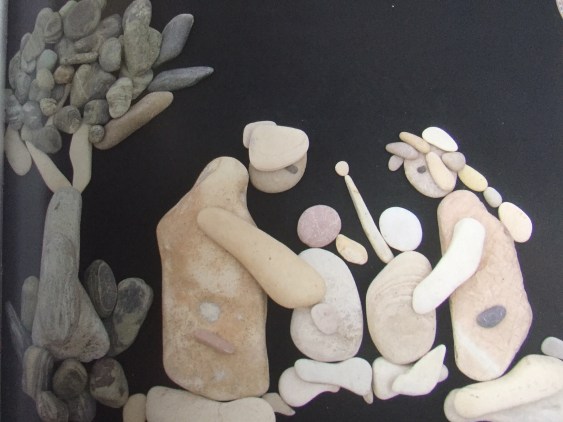
The book would be great at story time or in a classroom setting followed by an activity with making pictures with stones previously collected. At bedtime the book is great to read aloud and let the words sweep your listener toward empathy and compassion. Check your library first, and if it isn’t there, I don’t think you’ll regret your purchase.



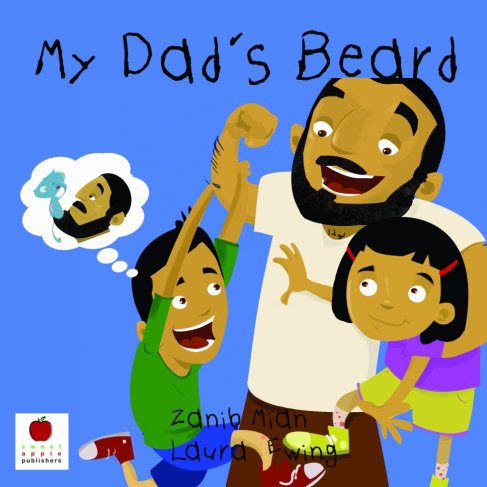


 The large bold pictures and simple words make this story perfect for kids a year old and up. The book definitely deserves a place on every bearded baba’s book shelf. I challenge you to read this book and not smile, I am confident it will win you over, no matter how many times your little one asks you to read it.

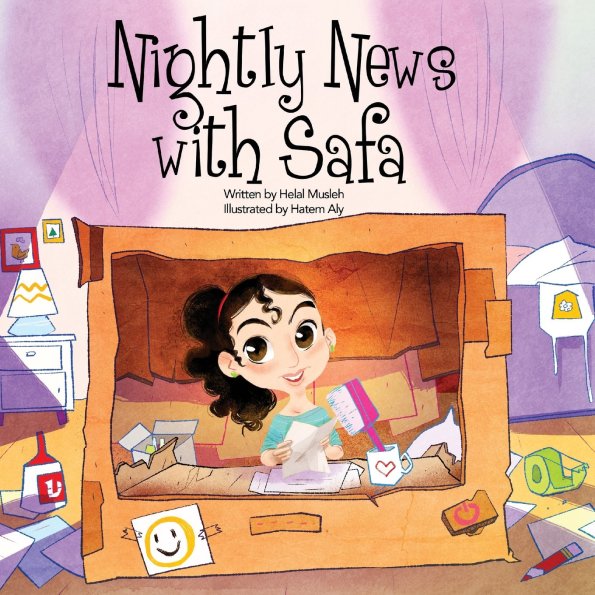
 I was really excited to learn about this book from the author, as it seemed to be a book that would stand out in a very crowded genre and work for both Muslim and non Muslim kids. When I tore off the package however, the face on the cover seemed a bit off for my taste, the glossary is on the back cover and while the pages are full size and full color, the book starts on the first page and somehow seemed more “home done” than “professional.” Which isn’t a bad thing, and I’m happy to support local writers, but alas I do often judge books by their covers and format, and my first impression had to be stuffed away so I could give the book a fair chance.