Tag Archives: relationships

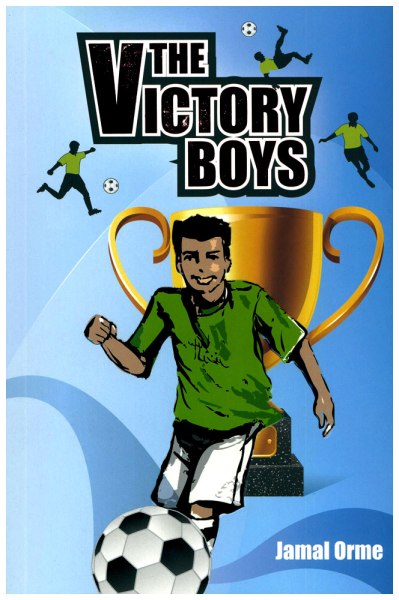
The Victory Boys by Jamal Orme illustrated by Eman Salem

Standard
The Victory Boys by Jamal Orme illustrated by Eman Salem

victory boys.jpg

I’m not sure why Amazon states the book is for pre-school and up, when the publisher, Kube, posts this book for ages 7 and up.  I think 3rd or 4th grade soccer/football fans will enjoy the book.  There are some slightly mature ideas presented and worked through, and the soccer lingo assumes the reader knows the sport.  Plus the quality of the illustrations and the small font isn’t going to entice someone not already excited to read the book based on the content within.  My boys, ages 8 and 9, enjoyed the book, as did I, once the story got going.  It doesn’t really grip you from the first sentence, but as the story progresses and the way Islam is woven in makes for some learning experiences in the midst of a few intense football matches.

SYNOPSIS:

The boys at the Sunday Madrasa do not enjoy their time there.  They find the Imam boring and thus are not inspired to learn. When they sneak a football into break time however, they suddenly feel more engaged and present in their lessons.  A change the Imam notices and appreciates, but doesn’t know the reasoning for as he strictly forbids football and finds it a waste of time.  Outside of Madrasa, Junayd is having a hard time at home.  He has to help out a lot at his father’s restaurant and his older brother Saleem has gotten in trouble with the police.  His mom prays for the kids, but is also at a loss as to how to help with the stresses at home.

During a secret game of football in the masjid courtyard, an arrant ball breaks the neighbor’s greenhouse window, and the boys are forced to come clean about their covert game.  The Imam demands the kids stop playing and that they tell their parents what they have done, so that they may earn some money to replace the window.  As the kids come through with the money and the Imam sees the kids resort back to their lackluster attitudes to learning.  He gets an idea to start a football club after madrasa classes.  The only problem is that he knows nothing about the sport and no parents are willing to help.

Saleem by chance comes to collect his brother one day, and as he hollers advice from the sidelines, the Imam recruits him to coach the team.  In response the Imam ever so gently uses football to teach not only the madrasa kids, but Saleem as well.  When the boys learn of an upcoming tournament, the Madrasa enters an A and B squad and the Shabab Al-Nasr, Victory Boys, will be tested not only in their play, but also in their manners, and understanding of what it means to be a team and Muslim.

WHY I LIKE IT:

I love that the Imam grows and changes.  I mean it is a kids book about soccer, but really it is the adult in the story that shows the most heart.  He goes out of his comfort zone, reevaluates his opinions, and admits when he is wrong.  High five Imam!  I also like that he didn’t give up on Saleem, and the way he leads him is with such kindness and compassion, that even youngsters, will be impressed.  

The book does not talk down to the reader, which is nice, but at the same time I think it pushes the age appropriateness a bit with the detail devoted to alcohol being sold at the restaurant, Junayd’s father’s flaws, and even Adam’s dad’s tantrum of sorts.  There really aren’t any nice parents in the book.  We don’t learn much about the moms, but none of the dads seem too supportive.  Really the only nice adults are the Imam and the neighbor who’s window they broke.

The timeline isn’t entirely smooth, the kids come together and play well as a team remarkably fast for how intense the tournament is, and how well they perform. And some of the characters could have used some fleshing out, I couldn’t really tell you much about them.  The font is really small and the spacing often forgotten.  The book is about 95 pages with a glossary and an acknowledgement at the end, fortunately the 2nd book in the series seems to space the words and lines out more and is 155 pages.

The story is solid and for the most part well written.  I read it in one sitting and thoroughly enjoyed the lessons learned and then put into practice.  The book isn’t preachy, but you are glad to see the Imams words given life in the other characters’ actions.  Saleem changes quickly, but the author and story account for it in a way that is believable for the audience and the message of not giving up on one another comes through loud and clear.  There is a lot of technical detail about the sport, but it doesn’t drag on, it adds to the excitement even if you just know the basics.

FLAGS:

The talk of alcohol, of Saleem being with a group of kids and a stolen car, there is some yelling and aggressiveness from the adults.

TOOLS FOR LEADING THE DISCUSSION:

The story is a bit short for a book club selection, but I would definitely consider it for Lunch Bunch (where I read to 4th and 5th graders while they eat lunch).  And I think most Islamic School libraries and classrooms should stock the series.  

https://thevictoryboys.com/

https://www.youtube.com/watch?v=oSpK6-fNiSQ

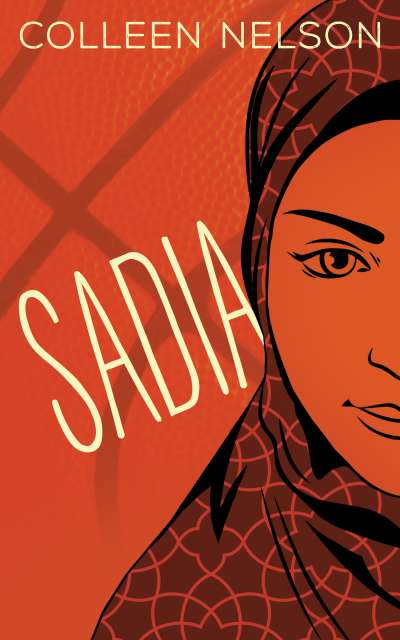
Sadia by Colleen Nelson

Standard
Sadia by Colleen Nelson

sadia.jpg

A middle school sports book with a female lead who wears hijab written by a non muslim.  The book could really go a lot of ways, I held my breath for all 239 pages waiting for something to go totally awry, and thankfully it never did.  In fact I read the book nearly straight through and while meant for ages 12 to 15, I quite enjoyed it.

SYNOPSIS:

Ninth Grader Sadia Ahmadi is an immigrant from Syria, her family left before things got “bad,” and while she has adjusted to life in Canada, High School is testing her in other ways.  Her best friend Mariam, an immigrant from Egypt, has started dejabbing, taking off her hijab to fit in it seems any chance she gets.  This is taken as a betrayal by Sadia and their friendship waxes and wanes throughout the book as each girl has to figure out who she is in relationship to hijab, and how to judge and/or accept each other and their choices.  Throw in a new refugee girl Amira from Syria who doesn’t speak English, a co-ed basketball tournament that doesn’t allow any headgear to be worn during games, a cute boy on the team and an awesome teacher with interesting assignments and you have the book in a nutshell.

WHY I LIKE IT:

I like Sadia, she is believable and strong.  She is well liked, athletic, she has a good relationship with her parents, brother and teachers, she prays and fasts and owns who she is, but she isn’t perfect.  She is hypocritical at times, and acknowledges it, she is tempted by parties, and boys and taking off her own hijab to play ball, and has to confront it about herself.  She doesn’t do things like pray on time, like she knows she should, but there she is and I am so impressed that the author picked up on so many nuances of Muslim life in her research or in her own observations as a teacher.  Yes, Amira has an awkward observation about Miriam being Muslim and not wearing hijab that seems really one dimensional considering large numbers of Muslims in Egypt and Syria don’t cover, but I don’t know if that was the author’s attempt to draw the issue to the light or if it was just a misstep.  

I like that there is a cute boy that accepts Sadia and who she likes as well, but they don’t do anything.  So often, these books become overrun by the romance story line and this one doesn’t, thankfully.  It seems to find a realistic balance, that she has feelings, but isn’t going to act on them, and based on her mom figuring out when she is lying that she won’t try and sneak behind her mom’s back.

Issues of halal food are mentioned in passing and it fleshes out that the girl is Muslim, not just going through the motions.  At times it is hard to know if her choices are based on belief and faith or expectation, but for an early YA/Middle School book, I think it suffices.  She mentions modesty as a reason for hijab, but also a lot of parental and cultural expectation.  One central theme the reader just has to go with, is that Sadia and the rest of the characters in the book, and there are a fair amount of Muslims, don’t know about any other ways to wear hijab for sports.  I get that Mariam and her sewing ability is a huge arc in the story, but they have smart phones, and its a contemporary piece, they have to know about Ibtihaj Muhammad in the Olympics, Bilqis Abdul-Qaadir, and Nike making athletic hijabs.  So, to make the story work you do have to turn a blind eye to the fact Muslima’s have taken to sports in the mainstream and that there is no way they can all be that clueless about her fabric, style, and covering options.

I love that the issue of refugees is addressed in the periphery, and the issues are given a human face.   I love that Sadia’s parents are religious, but not left as simple stereotypes, they deal with Islamaphobia, but aren’t looking for sympathy.

There is always the case, that the hijab becomes a stereotyped item as the story involves characters torn to wear it or not, but I loved how judgements were called in to questions and there wasn’t an easy answer.  The side friends in the story are all way too good to be true, but I think the whole book has a bit of a pollyanna feel to it, and in this case it was ok to error on the side of kindness than become overtly sensationalized and whiney.

The biggest hurdle this book faces is, is it the author’s story to tell. And I don’t know, I review a lot of books, and many are by Muslims and they get stuff wrong in my opinion, or they go so extreme to be accepted.  So, I don’t know, I think the book had heart, I didn’t know if the tournament would let Sadia play, I didn’t know if she would sneak off to the party, I didn’t know if she would cross the line with Josh, and I was curious, and invested and sucked in to it all.  Is it a book to teach others about Muslims or a book for Muslims to see themselves? I think all of the above.  Muslim’s should control their own narrative, but I think when author’s get so much right, we have to take some reassurance in the idea that we are being accepted by the larger society, and our stories are being told with love by other’s too.

FLAGS:

There is romance and lying, but no kissing, just hints at emotions or an errant arm flung over a shoulder during a huddle or photo.  There is mention of drinking at the parties, but Sadia doesn’t end up attending.

TOOLS FOR LEADING THE DISCUSSION:

I don’t know that I would do this as a book club selection, but if I met the right group of kids, I would definitely reconsider.  There is a lot of basketball, which I quite enjoyed, but I could see other’s maybe getting bored by the play-by-play.  I’ll make my daughter read it in a few years, and I look forward to discussing hijab and how she feels about it after.  It does raise the subject, and ask you to check your judgements on yourself and on others.

Author’s Website: http://www.colleennelsonauthor.com/


Skunk Girl by Sheba Karim

Standard

skunk girl

Having been pleasantly surprised with a few recent reads in the romance/islamic fiction genre I thought to give this slightly more cultural take a try.  Unfortunately, this book didn’t surprise me pleasantly, but rather left me disappointed and slightly annoyed.  At 231 pages and an AR 5.2, the book would have worked much better framed as a memoir or semi autobiographical dairy, as it stands as a novel there is no point to the story, no real character connection, no real lasting impression.  There are a few comical concepts, but only because I am Pakistani-Muslim and female did I get them, and sadly those few instances, aren’t enough to carry the book and make it worth recommending.

SYNOPSIS:

Nina Khan is in high school in a small New York town and her strict parents don’t let her do the typical high school stuff like date or talk to boys.  Her parents are not religious, unless her mom’s family is visiting and they put on an act.  Her parents aren’t awful, however, they are educated, kind, and quirky, but culturally strict none-the-less.  Nina has two amazing school friends, that she has grown up with that accept her and her social limitations for the most part.  When Nina falls for the new boy in school, Asher, though, they work overtime to figure out how to get them together.  In addition to the boy dilemma the other stress is Nina feeling like she is in her older sister’s shadow.  An older sister who is a genius and is away at Harvard. There’s a girl at school that annoys Nina, but really their interactions are petty and annoy the reader more than anyone else.

As Nina’s friends hook up with boys and Nina has various interactions with Asher, one involving him seeing down the back of her sweater and thus her stripe of back hair, we are also introduced to some of her Desi friends.  In my opinion the passages about her conversations with the ethnic kids trying to find their way in life and in love and still maintain their culture and religious values, is way more entertaining than the bantering back and forth with Helena and Bridget.  If the author were to rewrite the book as a diary or biography, and focus more on the Desi friends, the book would probably be more interesting, compelling, and relevant.

The climax, if there is one, is when Nina’s parents go out of town and she is able to sneak off to a party and try alcohol, getting blackout drunk, and then going on a ski weekend with Asher, making-out with him and then deciding that that’s not for her.  At least I think that is what she decided.  She decided she can’t be with him, and she heads off to Pakistan with her sister to meet her parents, but thats it.  There isn’t really a climax, there isn’t an ending. Literary structure might allow you to do one, but not having either a point or a conclusion, makes the book fall flat.

WHY I LIKE IT:

I read the whole book, so it wasn’t so atrocious that I couldn’t get through it, it just seemed to focus on the wrong things in the narrative and not make the main character relatable.  I wanted to grow with her, but her reflection at the end didn’t really make a strong point for her, so it didn’t make one for the reader either.  I think part of this is that the author, frustratingly to me, interchanges religion and culture a lot.  And while she might get them kind of right, I think non Muslims and non Pakistanis might find the two muddled.  She asks Allah to help her make a good impression with and Asher, yet constantly uses the Pakistani culture as the reason why she can’t date and drink in the first place.  My thinking is that the religion should trump the culture, but because being brown and Paki and Muslim are all viewed as being the same, the logic is kind of lost.  And granted in some households it really is that way with religion and culture, but the nuances aren’t explored, explained, or even acknowledged, unfortunately.

It is clear that the author knows Islam and Pakistan, her love of them (assumption) just doesn’t come through.  Her off hand remarks about a lota, and ayatul kursi, and her Pakistani ranking system are funny, and momentarily relatable.  Unfortunately, so often it seems the story is positioned so that the religion and culture are stifling and the western world is being denied to her.  Honestly after reading the book, I’m not really sure why she doesn’t rebel and do what she wants, the story doesn’t really show what she gets out of doing what her parents want her to do, and why it would matter to her in the long run to do what she wants as a “rebellious” teen.  

FLAGS:

There is alcohol mentioned and consumed.  There are a lot of relationship topics  explored throughout the book including the minor characters deciding to have sex and the  main character kissing.  For mature readers, high school and up.

TOOLS FOR LEADING THE DISCUSSION:

I wouldn’t present this book to a book club, nor can I see myself suggesting anyone to read it.


An Acquaintance by Saba Syed

Standard
An Acquaintance by Saba Syed

acquaintance.jpg

A young adult Islamic fiction romance novel, yes its a genre, albeit small one. I braced myself for stereotypes, cheesiness, over simplifications, sweeping condemnation, and preachy reprimands.  They never came.  I think this book is different, because from what I felt while reading it, and from what I’ve read the author say, this book is written for us: Muslim females, raised in the west, devout, strong, involved, and vulnerable.  It isn’t trying to convince anyone of Islam, or prove our place in America.  It isn’t trying to justify relationships or make us hide in our houses, rather it is taking us up to the line, showing us our strengths and weaknesses, and leaving us there to think.  In 282 pages, I saw myself crystal clear in the protagonist, the vilifying community, the determined best friend, and the steady parent.  It is easy to judge, but this book gets the nuances, the temptation, the justification, the internal battles, and it does it all without resorting to extremes that would make it inappropriate for upper middle and high schoolers. Yay!

SYNOPSIS:

Sarah Ali has grown up in small town Wickley, Pennsylvania, her whole life.  Her dad owns the local hangout, she is well known and well liked ,and very involved at school and in the masjid that her father helped start.  She has a best friend who is Muslim and although her mother has passed away, her home life with her dad and older brother is solid and supportive.  Senior year, however, is where the book takes place, and with Islamaphobes protesting and a new boy, Jason, in town coming to her rescue, the stage is set for her to have to decide how much their “friendship” crosses her internal boundaries of right and wrong, and when feelings are on the table, what choices she will make.

Throughout the book, there are numerous supporting characters that have their own roles in shining light on the situation from the outside and adding context to the world that Sarah lives in.  But this is ultimately Sarah’s story, told from her perspective, and the internal conflicts are believable because they are hers, the reader can see a mile a way what is going on and what will happen, but to see it unfold within her is at times a little naive, but considering her age, plausible.  It is her denial and acceptance of the situation at hand and what her role and hopes are that make the story very hard to put down.

The book in many ways is subtle, I don’t want to give to much of the plot away because it is obvious, it is a love story between two teenagers that can’t have a future based on the fact that she is Muslim and not willing to compromise that.  But that doesn’t mean there aren’t real feelings involved and real consequences to the choices that are made.  Throw in the gossip mongers at the masjid, an older brother who is concerned, an ever patient father, and a handful of others and the book feels incredibly real. 

WHY I LIKE IT:

Things are never black and white in real life, nor does reality prevent emotions and desires from breaking out.  There is no shaming in their tale (other than by the judgemental aunties), but there are consequences that are also given their time and spotlight.  From a parenting perspective it shows how a few questionable decisions can really get you in a heap of trouble and heartache, even if on the outside you can argue you did nothing wrong.  Even in the book Sarah remarks that they didn’t do anything, but yet, they did so much, this understanding is really powerful, and so needed for the teenage demographic. The book does not celebrate Sarah and Jason’s relationship, although I must admit I did kind of cheer for them at some points (I know, haram).  It shows that they are good people, but that there is a bigger picture.  It also shows there is life and hope, and forgiveness after, in the healing.

I love that Sarah’s dad is awesome and that his ultimate weapon is dua.  Not the stereotypical immigrant father trope, he is awesome.  I also love that Sarah’s best friend, Jasmine, is a person of color, so diversity gets a bit of a shout out.  The masjid politics is spot on, and the hypocritical aunties are as annoying in the book as they are in real life.  Yes, there are times where the dialogue is a little syrupy and long-winded, but overall, this book is calm and reflective and so, so important for high school and college girls to read.

Islam is the religion practiced, from praying, to how they talk, to how they dress, the subtlties there are brilliant as well.  You can tell the author is Muslim because it is natural and real, not researched and blotched.  The message is ultimately that Allah knows all, and that we do things for His sake alone.

FLAGS:

Truly the most Jason and Sarah do is hold hands, but the masjid ladies constrew that they do a lot more, and that Sarah ends up pregnant and gets an abortion. All untrue, but this revelation, that this is the gossip going around, is explored at the end of the book.

TOOLS FOR LEADING THE DISCUSSION:

Oh how great would this book be as a book club for high school or even college age girls.  But, alas I’m not involved in anything like that so I will have to just recommend this book to anyone that meets that criteria looking for a good book. 

Having said that, part of me really thinks this book doesn’t need to be discussed.  Saints and Misfits was a book that needs to be read and discussed with our youth, this book, I kind of like it to stir and fester within each reader.  The lessons are there, and are clear, and some days I could see a girl really feeling one way and switching another.  Like the father in the book, our kids, inshaAllah, have been taught right and wrong, we have to see what they do when tested.  And this book can really speak to them, and offer them a bit of conciousness when faced with a seemingly small decision that could have big consequences.  This book will stay with a reader, and that’s a good thing.  I just don’t know if it will manifest the same with everyone, and I think that is a great thing.


Book trailer: https://www.youtube.com/watch?v=fraVJZI1xNU

From the Author: https://muslimmatters.org/2017/11/10/an-acquaintance-a-young-adult-novel/


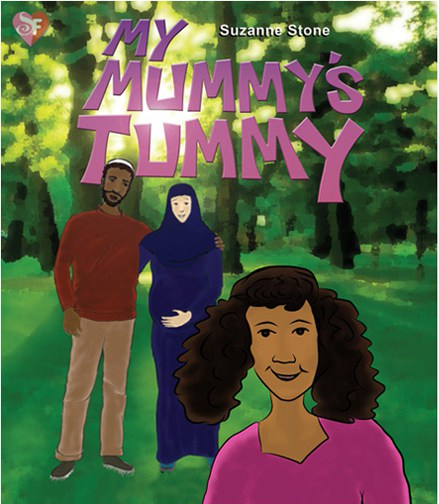
My Mummy’s Tummy by Suzanne Stone illustrated by Suzanne Stone and Omar Faruq

Standard
My Mummy’s Tummy by Suzanne Stone illustrated by Suzanne Stone and Omar Faruq

mummy-tummy.jpg

The copy I have is called My Mummy’s Tummy, but the binding says My Mummy’s Fat Tummy, I would assume that they are the same book except for this one word, and I’m hoping they opted to remove it at the last minute.  Actually, while on the title, it only  works well for the first four pages and yes, it sets up the story of a new sibling, by page five, the baby is born and mom’s tummy is the least of big sister, Maryam’s worries.

mummy tummy

The 24 page rhyming book, is a good introduction to what kids ages 3-6 can expect with a new sibling.  From Mummy’s large tummy, to having to stay with an Aunt when Mummy’s tummy starts hurting, Maryam is excited to have a new baby sister, except it ends up being a baby brother.  And while she is promised someone to play with, initially all he does is cry and sleep.  With gentle prodding by her parents and islamic reminders of patience and kindness, by the end of the book the baby is nearly one and his favorite person is his big sister Maryam, alhumdulillah.

mummy tummy

I love the diversity of the parents, and the acknowledging that changes are hard without being condescending or dismissive.  The book stays positive and hopeful and reminds us to keep Allah close to us when dealing with challenges and dreaming of the future.


My Mum is a Wonder by Michele Messaoudi illustrated by Rukiah Peckham

Standard
My Mum is a Wonder by Michele Messaoudi illustrated by Rukiah Peckham

my mum.jpg

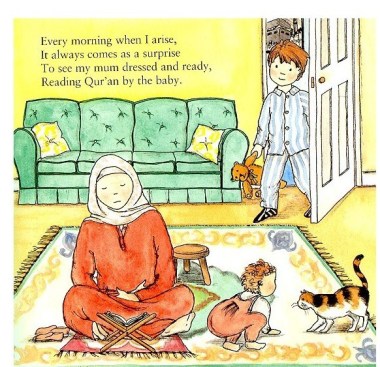
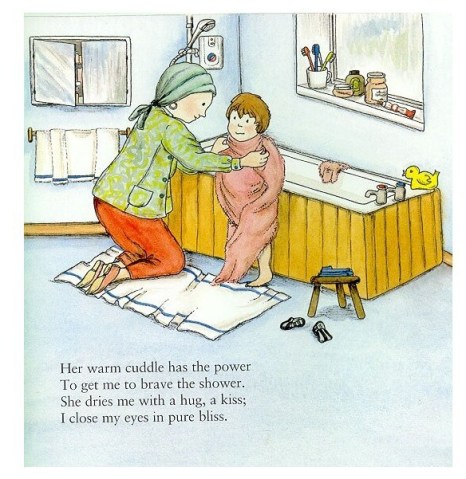
This book published in 1999 was one of the first books I remember reading regularly to my Sunday school class, and reading it now as a mum myself makes it warm me all the more.  In 34 warmly colored illustrations, this 8×8 book shares the story of how a little boy sees his mom.  How impressed he is by her and how truly he loves her for all that she does, all that she is, and all that she shares with him.

inside-mum.jpg

As the story progresses from what she does within the home and family, to what she does for others, the little boy also imagines himself all grown up and his mum as a nan.  He imagines that she will need him and he is ready and willing for when that time comes, to take care of her.

mum-inside-3.jpg

The book and illustrations target ages 3-6.  Written in rhyming couplets, four lines per page, the story moves at a steady pace and the pictures are detailed and familiar enough to engage most kids at bed time or in small settings.

mum inside 2

There are little Islamic specific tidbits sprinkled throughout that give parents or readers a chance to use it as a more specific teachable moment.  Saying “salam, reading Quran, thanking Allah for the food they have, praying salat, giving charity, visiting the elderly, celebrating eid, obeying her, and caring for her in her old age to achieve jannah, inshaAllah.


Nanni’s Hijab by Khadijah Abdul-Haqq illustrated by Vitchapol Taerattanachai

Standard
Nanni’s Hijab by Khadijah Abdul-Haqq illustrated by Vitchapol Taerattanachai

Nanni's Hijab

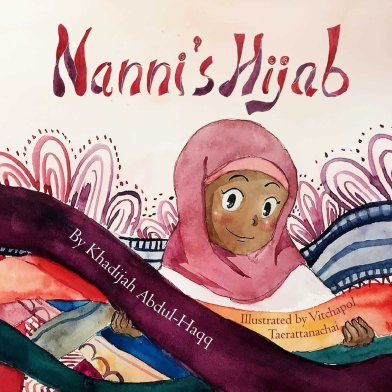
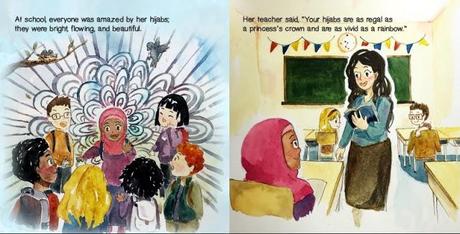
MashaAllah, there are so many things to like about this 36 page, brightly illustrated, elementary aged story.  Nanni, the main character, is spunky.  Not only is she strong enough to wear hijab to school, but she also is brave enough to confidently handle a bully on her own.  Surrounded by a supportive teacher, friends, classmates, and her mom, Nanni’s creativity and understanding that Allah swt will help her find a way to handle her predicament results in a happy ending, and many empowering messages.

nannis-hijab-childrens-book-review-L-Yo6YBS

The book would work for most children, but I think second grade and up would get the most out of it.  The girl might be young to be wearing hijab, but it seems like she wears it because she wants too.  I like that the illustrations have her and her mom uncovered at home, and that there is a glossary at the back, opening up the book to muslim and non muslim kids alike.

DVBz_rcVwAILbLM

I also really like the larger messages of acceptance, trying new things, and doing better when you know better.  The supporting cast in the book resonates with muslims who go to schools where they are the minority, but have support and encouragement to practice their faith none-the-less.  Nanni’s teacher remarks that her “hijabs are as regal as a princess’s crown,” and the other students like seeing what color or design she is wearing each day.  Although a children’s book, the author does very clearly explain that the hijab is part of Nanni’s faith, although not mentioned by name, and that it is an act of worship. Nanni wants to handle the problem on her own, and for as bad as she wants to punch Leslie, she knows it isn’t the right thing to do.  As she wrestles with what is the best approach, she puts her trust in Allah, swt, which perhaps is the greatest lesson for us all in the book, alhumdulillah.

The Lines We Cross by Randa Abel-Fattah

Standard

LinesWeCross.jpg

It is kind of remarkable now that I look back on the book, that before reading it, I knew exactly what was going to happen based on the jacket flap synopsis, yet somehow the book held my interest and I finished it easily.  There were no surprises, no plot twists, not even any amazingly poignant passages, yet, I kept reading, so there is some merit, perhaps in ideas, even if the story line wasn’t meticulously crafted.  At 390 pages, this 4.8 level AR book is not for elementary or even middle school readers, it is a high school and up for content understanding and appropriateness.

SYNOPSIS:

The dual storylines are told from the intertwined perspectives of Mina, a Muslim refugee to Australia who fled Afghanistan in a boat, and Michael, an Australian upper middle class high school student whose parents run an anti-immigration group and oppose the arrival of refugees.  The two see each other on opposite sides at a protest, and reunite when Mina earns a scholarship to a prestige posh school, and the family moves so that she can attend.  Naturally the two clash, then fall in love.  Along the way there are slight changes as the characters grow, some side stories about friends and family members, and like the title suggests, crossing of lines, so to speak.

WHY I LIKE IT:

I like that the book in terms of its political plot is actually pretty nuanced.  You could say it is framed as a good vs. bad, but it isn’t that simple, and I think the characters shed light on the gray area in between.  In many ways Michael changes and grows and challenges himself to go out of his comfort zone created by his family.  He forces himself to see where immigrants live, he steps foot in a mosque, he researches the detention centers and what not, to learn that he doesn’t agree with his parents.  I wish, however, that all of these scenarios would have been slightly more memorable, maybe an interaction at the mosque, or follow-up by talking to Mina about it.  The lack of reflection made his journey seem like he was changing his views for a girl, and not because of a deeper understanding.  At the end his mom even asks him about it, and I kind of had to side with her in wondering about his motives.  Mina’s personal growth is more in that she learns to trust new people, and let them in.  Her growth is not as obvious as Michael’s and I think some would put her on the “good” side and see her as a stagnant character.  She is greatly shaped by the death of her father and brother, by the escape and journey to Australia, and then having to move again for school, but in the course of the books timeline, she really doesn’t change much.  Her Islam is really culture, she doesn’t pray, or mention anything about her belief or faith.  Halal is not explained, but is just seen as a political tool to protest and argue about.  Mina never goes to the mosque, and even for religious reasons never questions if she should have a boyfriend, but worries what her mother will say and thus does keep it secret.  For all realistic purposes, she is portrayed as a Muslim as a political identifier that illicits stereotypes and assumptions by others, not as a description of what she believes, behaves, or thinks.  Michael’s parents are where the real meat of the story for me was.  Understanding how they see themselves as “not racists” ordering ethnic foods from all over, but actively working to keep non-assimilating foreigners out.  Their organization claims to promote the idea of upholding Australian values, not of disliking other countries values, and I think this is really what so much of the world is facing right now. The ethnocentric idea of being so great and understanding in words, but not in behavior and policy making.  Michael’s dad goes overseas and feels sad, but doesn’t feel compelled to help, rather than to keep those people from changing, “his” world.  As the book mentions a lot, his parents in other ways are kind, good people.  It really isn’t good against evil in all facets of life.

I think my favorite part in the book are the female relationships.  I love Mina’s friend Paula, who quotes Oscar Wilde and while on the outside has it all together, lets Mina see the real her.  She is smart and feisty and seems to stay genuine throughout.  I like that Mina’s friends from the “old neighborhood” are still in her life and I even like how close she and her mom are.  It’s nice to see females helping each other, there is power in that, that fiction helps remind readers about.

FLAGS:

There is mention of sex, nothing explicit, but side characters hook up, are accused of being sluts, and it is definitely there.  The main characters kiss regularly.  There is some swearing and lots and lots of lying.  Mina can’t go out after library hours because that is where she says she is, when she is elsewhere.  There is fighting, alcohol, clubbing, and smoking mentioned throughout.  None of the aforementioned flags are glorified or even praised, but all are there.

TOOLS FOR LEADING THE DISCUSSION:

I wouldn’t do this as a student book club, but I think it could be done as an adult book club.  The politics need some background and understanding, that I think some discussion would be enlightening in a community or larger society setting.  Sometimes even in the real world, meeting people different than ourselves does wonders for changing preconceived notions and stereotypes.

Wishtree by Katherine Applegate

Standard
Wishtree by Katherine Applegate

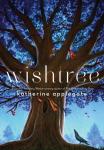
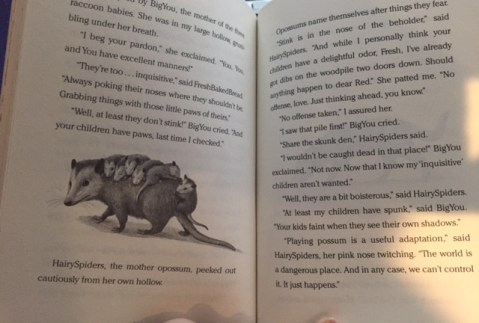
wishtreeI saw this book on Scholastic when I searched for “Muslim” on the website, a regular endeavor of mine, and was surprised to see it pop it since the synopsis on the back doesn’t mention Muslims or Islam.  So I researched it a bit, and sure enough the discrimination of a Muslim family in this tree’s neighborhood is the catalyst of this giant Oak Tree, sharing her story and enlightening the characters and readers with her wisdom.  At 215 pages, this slow and thoughtful book is a short read on an AR 4.2 level.  The pages are well spaced and the black and white drawings keep the reader engaged. And while I bought the beautiful hardback book, I didn’t read it, I listened to the two and a half hour audiobook version, and it was fabulous as well.

FullSizeRender (40)

SYNOPSIS:

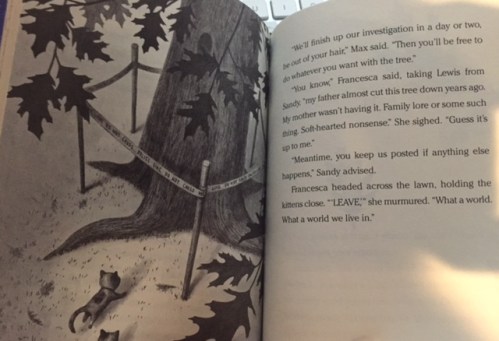
Aside from maybe Shel Silverstein’s The Giving Tree, I can’t recall too many books being narrated by a tree, but like The Giving Tree, the lessons and wisdom come through loud and clear and stay with you long after the story has ended. Red, is an old Oak Tree that has been around for over 200 years.  She has many stories that she shares with her inhabitants: the possums, the raccoons, the skunks, the birds, her best friend a Raven named Bongo, but never humans, for they must not hear her speak, that is kind of a rule.  But when 10-year-old Samar’s family moves in and people don’t respond well to the new Muslim neighbors, the tree considers getting involved.  Samar spends a lot of time near the tree, and the animals enjoy her presence, while most people tie wishes to the wishing tree on May 1st (Wishing Day), trees are good listeners and Samar tells Red that she wishes for a friend.  This coupled with the act of vandalism someone commits against Red by carving “LEAVE” into her trunk, pushes the tree to ponder what makes people friends and how can she help Samar.  When the owner of the home who’s land Red resides on decides to have her cut down, Red throws caution to the wind and speaks.  Hoping to bring two kids together that need one another, and by extension their families and the whole neighborhood, Red has her work cut out for her.  Luckily she isn’t alone, her animal friends are up for the challenge and the lucky reader gets to laugh with the funny animals, ponder roots, and inclusion, and friendship, and diversity through the loving gentle manner of a tree.  It may be written for fourth graders, but I think everyone can draw upon the lessons, the depth, and the compassion needed to help Samar, to save Red, and to learn to be better to one another.  

FullSizeRender (43)

WHY I LIKE IT:

It flows like prose, the deliberate manner in which the story is told, grabs hold of you and halts time.  I love the relevance of inclusion and differences, there isn’t a magic wand, that makes everyone like everyone at the end, but there is hope.  And sometimes that is more powerful.  I listened to the book with my daughter, a 6th grader, and it was nice to chat about it with her after.  What makes people friends? How do people become friends? We move a lot, so she was really insightful about how sometimes friends are just friends because of proximity or because their parents are friends, she really had to think about what has kept certain people in her life, and I loved that this book gave us a starting point to have such a meaningful dialogue.  There isn’t much about Islam in the book other than that the Samar’s family is Muslim and that her mom wears hijab.  

FullSizeRender (42)

FLAGS:

None. It’s clean.

FullSizeRender (41)

TOOLS FOR LEADING THE DISCUSSION:

I would absolutely do this for a 3rd to 5th grade Book Club.  It has so many lessons presented in a non preachy way that the students would add themselves so naturally and effortlessly into the narrative and grow from it.  The book has won numerous awards, and the author is well known, so it also will encourage children to read other books of hers.

Author’s website: http://wishtreebook.com/

Teacher’s Guide: https://images.macmillan.com/folio-assets/teachers-guides/9781250043221TG.pdf


Khadijah: Mother of History’s Greatest Nation by Fatima Barkatulla

Standard

khadijah.jpg

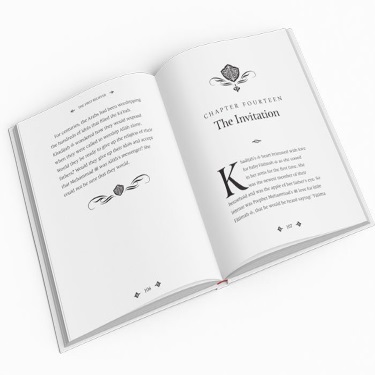
I depart from the Islamic Fiction that I enthusiastically seek out and read, to share and review a work of non-fiction that swept me off my feet.  Perfect for children eight and up, and particularly ideal for girls, this book is absolutely physically beautiful and the content is as well.  This 176 page book flows like a story not a history book, and at times a love story between Khadijah (RA) and our beloved Prophet (SAW).  The font and spacing invites young readers to absorb each word without feeling rushed or overwhelmed.  

SYNOPSIS:

The book is a biography of our mother, Khadijah bint Khuwaylid.  It starts just before she is made aware of Muhammad and ends with her death, followed by a few reflections of RasulAllah missing her.  For the most part the story keeps her at the focus and for the age group the slips into seerah are no problem.  But I wanted more about her.  I learned that she was married twice before she wed Prophet Muhammed, but I wanted to know more of her children with these other men.  I wanted to know if they ever accepted Islam.  I wanted to know of Khadijah’s childhood and her parents, and her tribe.  I wanted to know more about her sister who sounded like her, and if she had any other siblings.  It scratched the surface, and even my 10-year-old daughter wanted more, in a good way.

It covers their marriage, and it reads like a sweet fairy tale that is absolutely full of noor and love.  It shares how she supported the Prophet at every turn and the hardships of the boycott.  It drops names and places, but not in an over burdening way. In many places I actually wanted more detail as to how they all fit together in time and place. As she has children and grows ill and time passes, the story comes to an end.  Almost too quickly, as her day-to-day life as a mother and wife are missing, and I was hoping there would be more.  Yes the  growth of Islam and the plots of the Quraysh are so important, but I wanted more Khadijah, in a book claiming to teach us about our “legendary mother.”

WHY I LIKE IT:

Obviously the story is great, and really the way it is presented is how our kids need to know our history: with love and compassion and enthusiasm.  You feel the love between Khadijah (RA) and Prophet Muhammad (SAW) you see how patient and devoted she is in a very emotional way.  Truly the author has given life to a story many of us know, and filled us with a connection and relationship that is very personal and inspiring in nature.  When you finish the book, you feel like Khadijah is a friend, an amazing friend, but someone you know intimately and proudly, not just as a historical figure.

innerpages2_1024x1024

FLAGS:

None

TOOLS FOR LEADING THE DISCUSSION:

I would absolutely do this for like a 4th -6th grade book club.  I think it should be mandatory reading.  I would probably invite someone well versed in the seerah and Khadijah to answer the children’s questions.  How wonderous it would be to hear the kids discussing her life and offering parallels, lessons, and inspiration to one another from their new found knowledge of Khadijah (RA).