Tag Archives: maghrib

Gift of Salah by Yusra Khan illustrated by Aisha Aamir

Standard
Gift of Salah by Yusra Khan illustrated by Aisha Aamir

img_8247-1

This basic 10 page board book, is simple, and age appropriate to teach toddlers the order, name, number of rakats each of the five prayers are, and the time of day that they should be offered.  The gift on each of the two page spreads lifts to reveal the name of the prayer and the repetitive refrain will allow the audience to jump in on cue to supply the answer to the question being asked.  We have a lot of high tech and fancy lyrical options to entertain and teach our kids these days, but sometimes a solid book, that can teach and reinforce such a foundational concept is a just what our kids need.  I do wish the flaps were a little thicker, but the 6 x 6 inch size is great for little hands, alhumdulillah.

The book is consistent with each two page spread discussing the time for each of the five prayers on the left, with the number of fard rakats and the refrain of “Do not miss/ Do you know which salah is this?” I think some punctuation would help, but none-the-less, the present is then meant to be lifted for the name of the prayer to be revealed.

The illustrations do not have faces, and show the little boy praying from different angles and in different positions.

img_8252-1

Ilyas & Duck: Spectacular Salah by Omar S. Khawaja illustrated by Mattia Cerato

Standard
Ilyas & Duck: Spectacular Salah by Omar S. Khawaja illustrated by Mattia Cerato

img_3321-1

It has been a minute since we have had a new Ilyas & Duck book to read and share with our kids, and this one focusing on prayer is informative, fun, and was well worth the wait.  It is also long, 48 pages long to be exact.  There is a lot of information and works best for ages six or seven and up.  The clever rhyme and engaging illustrations tell about wudu, the times of the five daily prayers, Surah Al Fatiha, facing the Kabah, having the right intention, connecting with Allah, and not being distracted. I love the framing that salah is not just an obligation, but is an opportunity to talk to Allah swt and should be spectacular.  The author reads his books aloud a lot to kids, so if you have ever seen one of his readings, I highly recommend channeling the voices and energy, to hold the audiences attention if using the book at story time.  If reading at bedtime, or if handing to an independent reader, take the opportunity to discuss the points, check understanding, and reflect upon what Duck is learning.  As always the banter between Duck and Ilyas keeps the kids laughing, the story moving, and the information flowing, alhumdulillah.

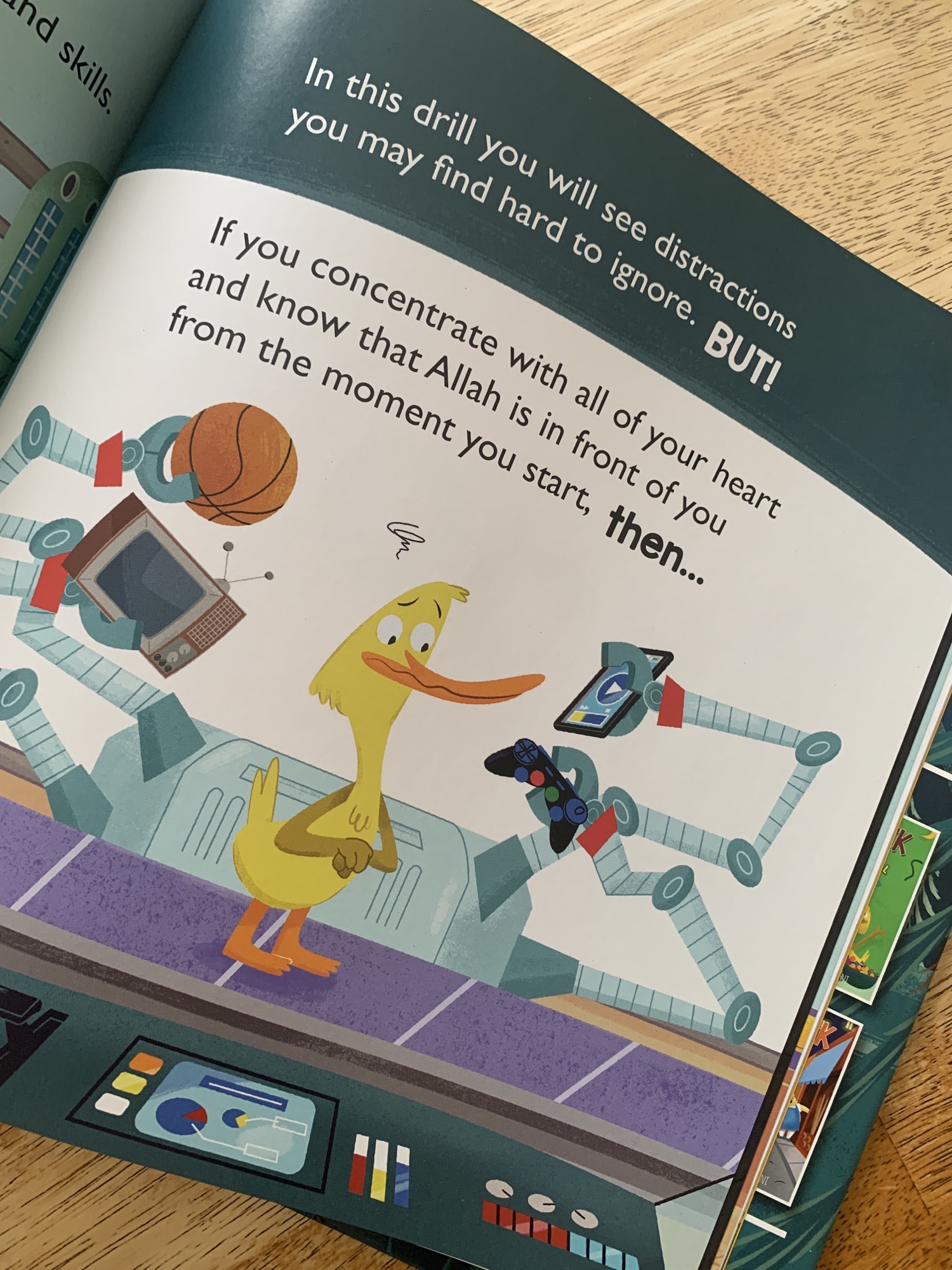
The book starts with two verses from the Quran and the hashtag #freepalestine, before entering the world of Ilyas and Duck one summer afternoon,.  An alarm goes off and Ilyas heads off to make wudu and pray.  Duck couldn’t get up though, he prayed earlier, so he thought he was done.  Ilyas explains that there are five prayers in the day, and Duck is seriously worried that Fajr, Dhuhr, Asr, Maghrib, and Isha are going to cut in to his game time, snack time, and movie time.

When Ilyas tells Duck that prayers don’t take long and it is when you speak to Allah swt, Duck in his enthusiastic way is determined to make each and every prayer spectacular. He drafts a plan, learns the steps and what to say, finds the direction, makes his intention, says Allahu Akbar and starts training. 

He is praying all over the Earth whenever the time comes, but then he learns he can do more and goes to visit the Professor.  He learns about connection and closeness to Allah.  He also learns about using his heart and staying focused, before rushing back to tell Ilyas all that he has learned.

The book covers a lot of ground, and gets kids excited to pray.  I like that the information is a mix of highly detailed specifics, general knowledge, and humor.  The way the salah times are described and the emphasis on connecting with Allah swt and making your prayers heartfelt is not often seen in books for this age group, and I think it gives the book a wider lasting appeal.  My 8 year old did point out after reading it independently and laughing, that if Duck prayed Fajr didn’t he know a little bit about prayer already?  Also, given the length of the book, a line clarifying that infact not all places on Earth are ok to pray upon, would have been nice. 
img_3327-1

I hope this book signals more books in the series are heading our way.  I notice that the illustrator is not the same, but the pictures are similar enough I doubt most kids will notice. The book is widely available and can be purchased from Amazon here or from Crescent Moon here

A Boy Named Ibrahim by Sitti Aminah “Flexi” Sarte illustrated by Aaron Asis

Standard
A Boy Named Ibrahim by Sitti Aminah “Flexi” Sarte illustrated by Aaron Asis

img_9818

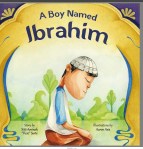
This 24 page Filipino book originally published in 2014 was republished with a new traditional publisher earlier this month and reads and feels like solid Islamic fiction.  The book focuses on the five daily prayers throughout the day of a young boy’s life, with the repetitive refrain being the steps of wudu. Ibrahim leaves his activities to pray, wakes up early to join his parents in salat, loves his mother, and listens to her reminder about prayer being an important way to remember Allah swt.  The book is preachy, religious, and unapologetic.  The timing of fajr is a bit questionable, but roosters do crow at all hours, and the light outside the window might be a street lamp and not the rising sun.  Islamic phrases are used, but it does say “Alaikum Salam” in response to “Assalamu Alaikum” which is a variation of the norm.  Overall, the book is a nice addition to share with young children highlighting the importance of prayer, it also works well to learn and review the steps of wudu, and the names and order of salat, alhumdulillah.

The sun is about to rise, Ibrahim says, “Bismillah,” makes wudu and joins his father for prayer.  It is the first day of school and Ibrahim is excited.  He spends half his day at school, then prays Dhuhr.  He makes wudu and prays.  While playing soccer in the afternoon, he leaves the game to pray his Asr, but first he makes wudu.

Once home he chats with his mother about prayer, and coming closer to Allah swt, while he enjoys a snack and then makes wudu and prays maghrib.  Baba then comes home, they eat and pray isha all together.

I enjoyed the illustrations and the simple story.  The book is straightforward, and the contentment and unapologetic portrayal of prayer in a person’s day is sweet and important to highlight. For preschool to early elementary this book would be a great addition to shelves, story time, and bedtime as well.

The book can be ordered on Amazon here

img_9830

My First Book About Salah: Teachings for Toddlers and Young Children by Sara Khan illustrated by Ali Lodge

Standard
My First Book About Salah: Teachings for Toddlers and Young Children by Sara Khan illustrated by Ali Lodge

img_3719

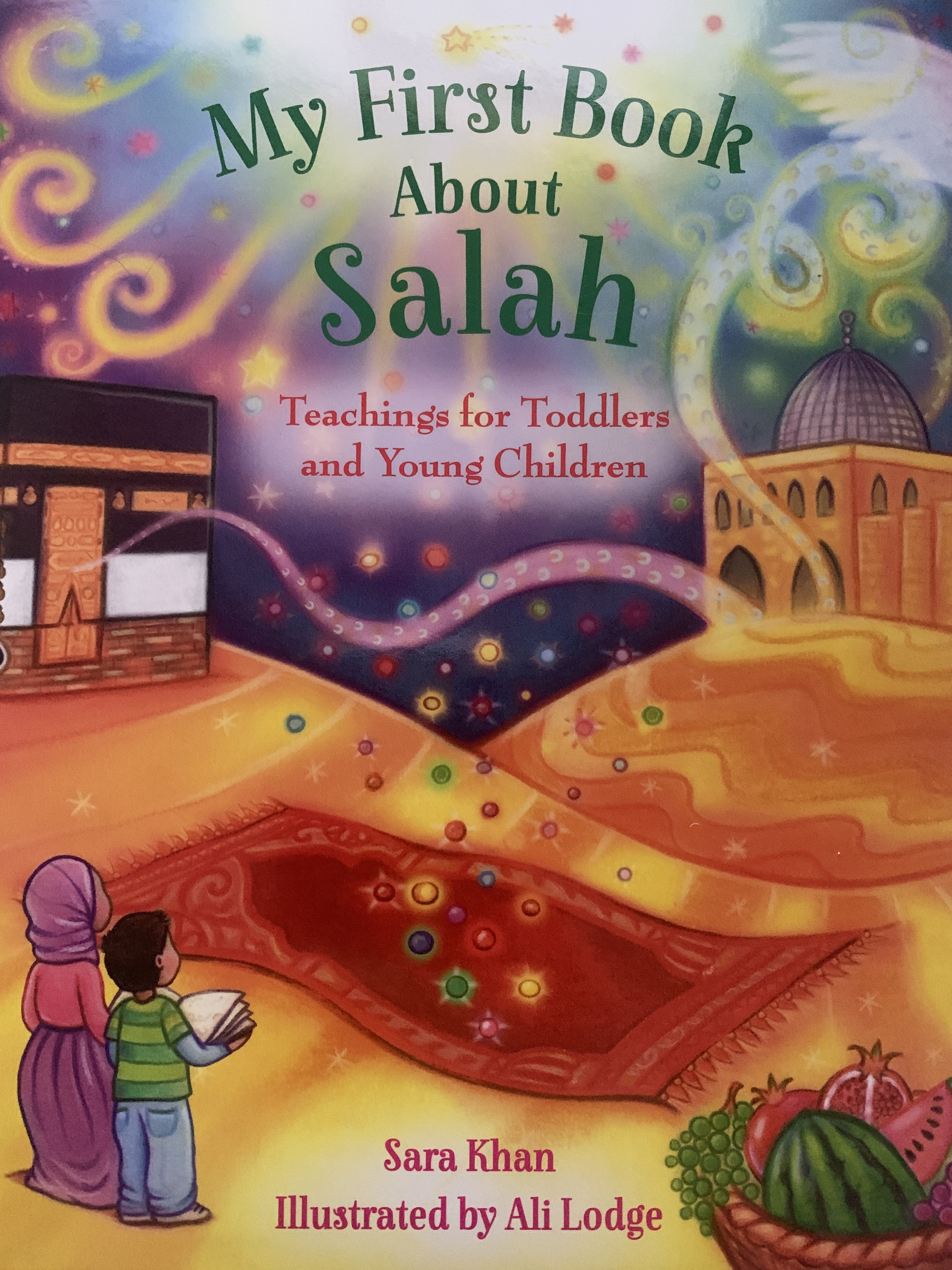
Looking at the books in the series, reading them to my children, getting the latest one delivered to my doorstep: every step along the way makes me smile, alhumdulillah.  The soft warm illustrations and impressive amount of information lovingly conveyed in board book form really makes the series a staple for young children.  The newest addition to the series is about Salah, and I love that the framing is that prayer is a blessing, it doesn’t open with listing the five daily prayers, it begins with Isra wal Miraj.  It sets the tone that prayer is special and beautiful and a gift.  It does eventually list the five required prayers, the words of the athan, Fatiha in English and Arabic, steps of wudu, and parts of salah, but the way it is woven together is seamless and so much more than just lists of information.  With ayats from the Quran sprinkled in, the book flows from one focus to the next, leaving the end as always, for facts and questions.  Appropriate for ages two and up, this 26 page board book can and will still inspire and teach older kids.

The only pause this book gave me were the illustrations.  There is not a single page where the people praying are standing shoulder to shoulder, foot to foot.  I could see if in a few pictures the creative liberty, or Covid reality manifest itself in the pictures, but whether it is a family praying, or people in a masjid, there is a gap between the individuals, and that seemed off to me.  Additionally because of the spacing in all the pictures, the pictures where perhaps the people are not praying together, but are just shown to be making tasleem or the illustration that all Muslims of all colors and all professions and all abilities pray, it almost seems to show men and women praying together.  I don’t know that the toddlers in the audience will notice, but perhaps be aware of it if when reading it to your children.  Aside from that the illustrations show the global faith of Islam and the beauty that we all worship together.

Available to purchase here and I’m sure it will be stocked by Crescent Moon as well.  Oh PS it also comes with a sheet of stickers.

Ahmed and the Very Stuck Teapot by Sarah Musa illustrated by Rania Hassan

Standard
Ahmed and the Very Stuck Teapot by Sarah Musa illustrated by Rania Hassan

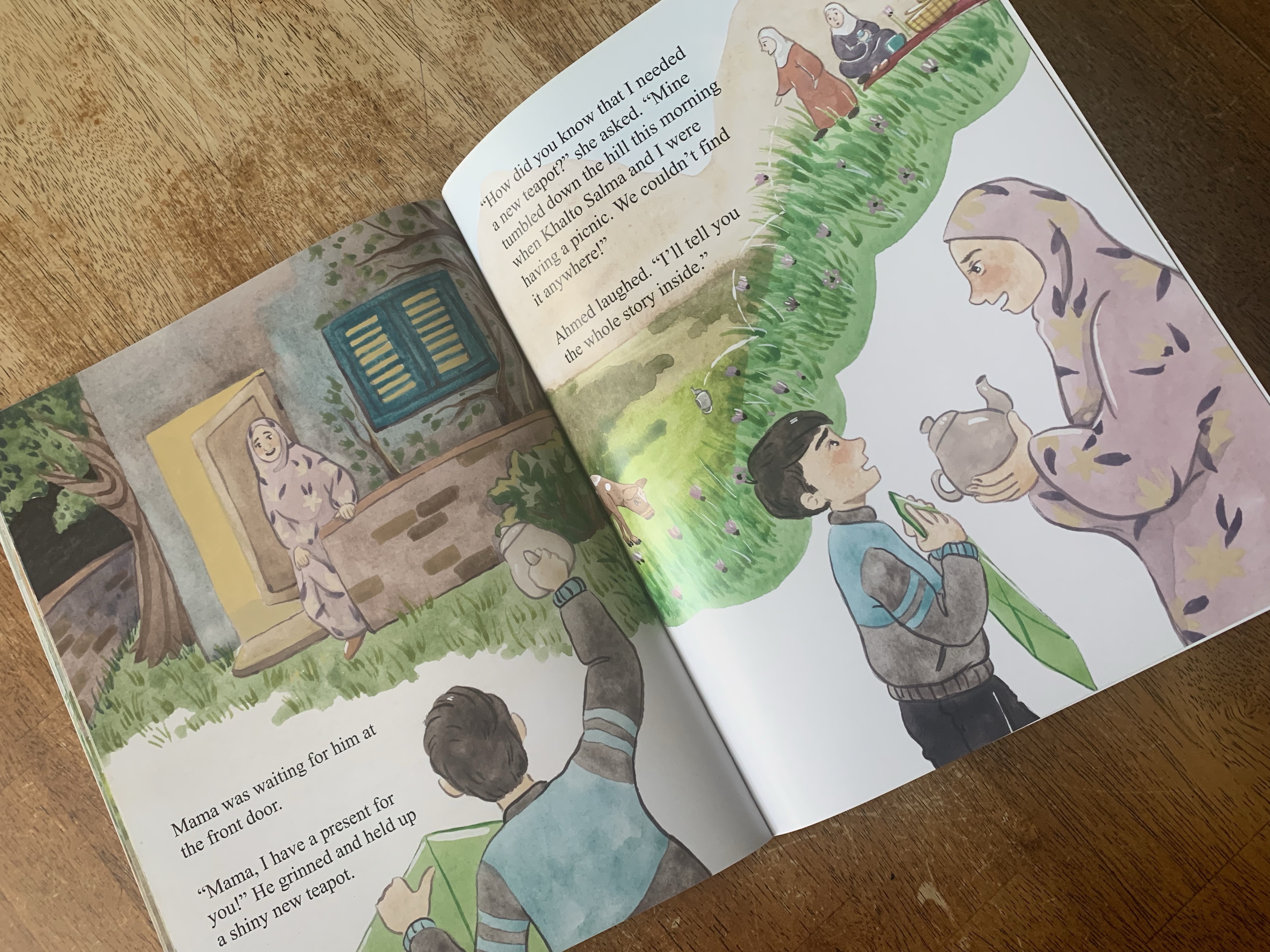
This 36 page early elementary book is packed full of choices and lessons packaged in a sweet story that kids and adults will enjoy reading and discussing over and over. My only real critique is the title. I’ve had this book sitting on my shelf for nearly a year thinking it was just a silly book about a calf with a teapot on her hoof that is stuck and would probably involve different people and methods and attempts to get it off. But the teapot is off by the tenth page, and the story is really just getting started. Like all Ruqaya’s Bookshelf picture books, the large thick shiny pages with a stiff soft cover binding make the story a great choice for storytime and bedtime alike. There are Islamic threads and references, but the story overall is universal.

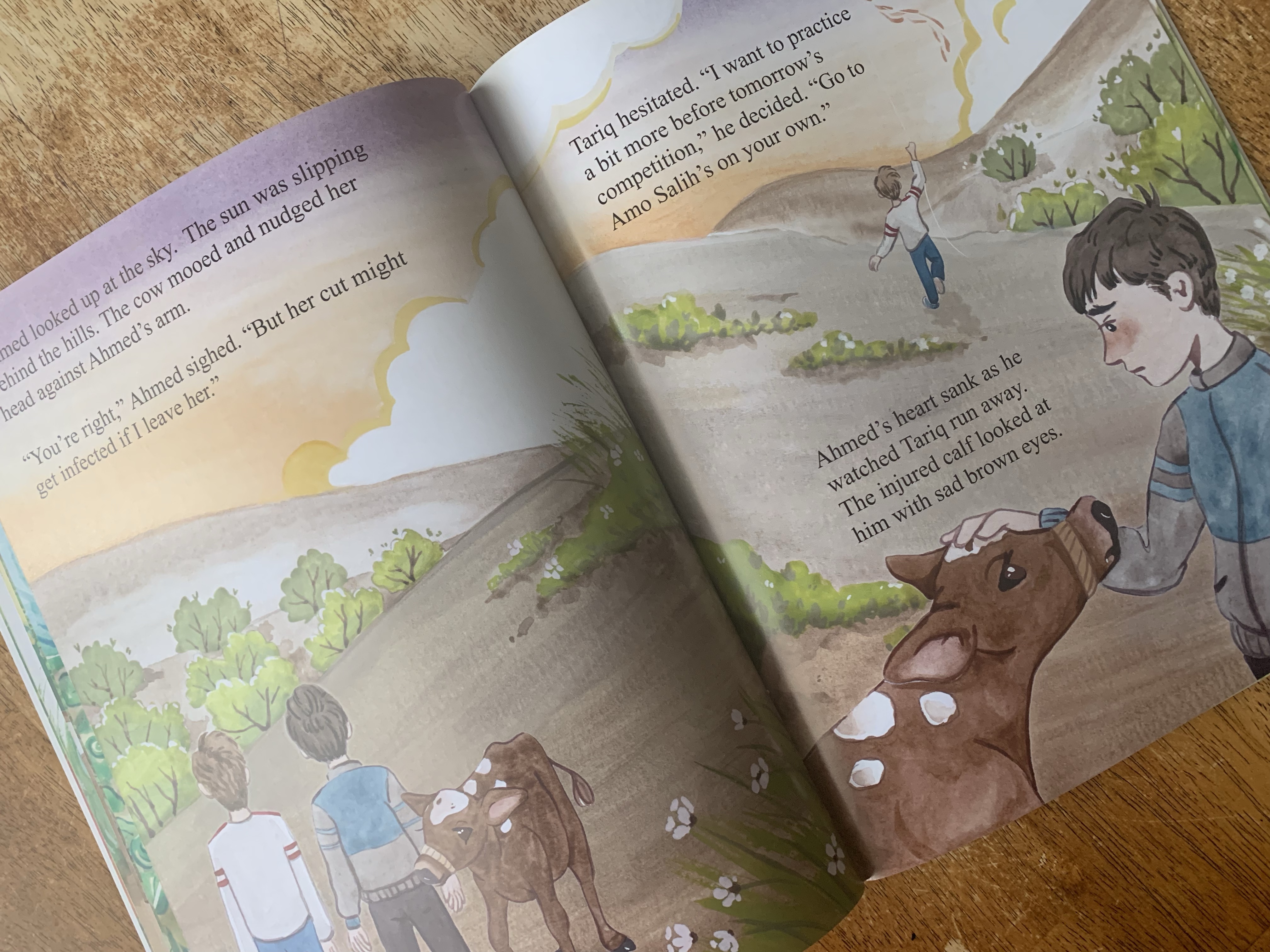
Ahmed and his friend Tariq are practicing their kite flying skills for tomorrow’s annual competition, when Ahmed’s kite gets destroyed in a tree. Heartbroken Tariq suggests he hurry to buy a new one before the store closes at Maghrib. As the boys rush off they come across a brown calf with a teapot on her hoof. Ahmad recognizes the teapot as his mother’s and feels like he should help the poor animal. Tariq keeps reminding him that the shop will close, but Ahmed decides to take the cow to Amo Waseem’s to get help.

Amo Waseem, is able to help the cow get free, but in the process, the cow get’s hurt. The cow needs help from a shepard, Amo Salih, but Amo Waseem can’t go, and Tariq wants to practice more. Ahmed knows the cow can’t be left untreated, and takes the little cow to get help. The cow then needs to get to his owner, and the story continues until the shop is closed, and Ahmed realizes he won’t have a kite for the competition. He goes to the mosque for salat and starts to feel better, he knows that he did the right thing, and inshaAllah Allah will reward him in some other way. His reward comes quickly, however, much to Ahmed’s surprise and in gratitude he also manages to find a way to help his mother.

I love the gentleness of the lessons of doing what needs to be done, even when you don’t really want to, and your friends are not supporting you. Ahmed had chances to walk away, but he didn’t and he was at peace with the outcome. His friend wasn’t mean or bad, he just made different choices. There are discussion questions at the end as well. I think this book would foster great conversation with even the littlest listeners, and I can’t wait to share it at our masjid’s storytime.