Tag Archives: jinn

How to Free a Jinn by Raidah Shah Idil

Standard
How to Free a Jinn by Raidah Shah Idil

This 276 page book drew me in from the first page and held my attention until the last. I can’t recall ever reading a fantasy book in a single sitting.  The Islam, heart, Malay culture, and family dynamics have me hoping that maybe there will be a sequel, and that hopefully this debut novel is a first of many from the author. Of course I have minor critiques, the book definitely in the middle had some repetition and pacing hiccups, the rising action and climax could have been stronger, and there are a few noticeable loose threads, but Insyirah is a loveable protagonist that you really hope can sort through her family secrets, save the day, and be at peace with her decisions.  There is a lot of Islam, and it is well woven into the characters’ identities, the plot, and the lens of the book.  If you are Muslim reading it, you will see the fasting on Monday and Thursday, and staying in wudu a little different than non Muslim readers, but no matter who you are, you will enjoy the plot, the adventure and fun ride that will undoubtedly become a beloved favorite.

SYNOPSIS:

Twelve year old Insyirah and her mom are moving back to Malaysia to care for her elderly grandma.  Insyirah is anxious and not thrilled to be leaving Australia.  She hardly has time to miss her old life though as family secrets, discovering she can see and interact with jinn, and learning that an old jinn with a big grudge is after her.  Navigating the seen and unseen words, the rules of her mother opposed to those of her grandmother, and figuring out what she wants will take time to ponder, learn, and reflect upon.  Unfortunately, Syirah doesn’t have that kind of time, as she keeps falling into the unseen world, realizing that a jinn bound to her blood line will soon be under her control, and that pesky jinn haunting her school is trying to get her to leave Malaysia.

WHY I LIKE IT:
I am intrigued by the the way the book holds space for Islam, culture, and fiction, and interweaves the three.  Islam is adhered to, along with the worship, and uncompromising faith in Allah swt, and while the jinn are kept as being real, as understood by Muslims,  their day to day antics cultural and fictional positioning, is richly developed and not put in conflict with deen, seemingly trying to keep everything halal.  I am not a scholar, I would not venture to proclaim that this does or does not cross lines, but the author is very aware of the threads at play, and has a solid awareness of writing craft, so the result is a great story, that feels authentic, without being “shirk-y.”

There are some pop cultural references that might age the book a bit, but I love the shootouts to Hanna Alkaf books.  For me, a Western reader, that really is my only other Malay juvenile literature reference, and the vibes are similar, so it was nice to see the connection.  

FLAGS:

Jinn, loss, death, fear, murder, threats, lies, enslavement, haunting, scaring, secrets, fighting.

TOOLS FOR LEADING THE DISCUSSION:

This book is solid middle grade, but I think older kids will enjoy the story and find plenty to relate to, learn about, and be captivated by.  I think this book will be a great addition to home, school, and library shelves, and while my copy is from Australia, I believe a US version will be available in 2025, inshaAllah.

Vultures in the House of Silence by A.R. Latif

Standard
Vultures in the House of Silence by A.R. Latif

img_7966-1

This 312 page richly imagined Islamic fantasy is both engaging and compelling.  It is too advanced for me to review as it weaves a complex tale based on history, religion, fantasy, and imagination.  I do know that it was for the most part well written, I have some issue when the character’s diction would include words that felt too contemporary slang, but it didn’t happen too often.  The pacing though, unfortunately for me, was definitely off.  Undoubtedly the author has tremendous skill.  The emotional pulls, the world building, the consistent cliffhangers at the end of each chapter, kept me curious to see what would unfold.  The story beats just dragged more often than they should have for no clear reason in developing the plot, defining character arcs, or adding to the rising action.  I don’t think I ever stopped reading at the end of a chapter, those hooks were well placed, but when I stopped in the middle of the chapter, it often took four or five days for me to be motivated enough to open the book back up.  I truly think it just needs a good editor to help cut certain scenes, and smooth out the tempo.  The idea and layers are great, and if I, as someone who struggles with middle grade fantasy, couldn’t walk away from this YA/Adultish read, I’m sure lovers of fantasy, jinn, monsters, Islamic history, found family, gray characters and action, will find this book an enjoyable read, even the slow parts, that  I struggled with.  So no this is not a negative review,  I am hopeful my teenagers will read it and enjoy it, I just really hope the author will consider working with an editor to elevate the text as it truly has potential.

SYNOPSIS:

I don’t know that I can retell the story, it has a lot going on and I’ll probably inadvertently spoil something, so here is the summary from the back of the book:

“A boy wakes up surrounded by corpses. Unable to move, he is assaulted by vultures who stop pecking at him only when he speaks. To survive this nightmarish ordeal, he tells them the story of how he ended up on their menu…

What follows is the wild tale of the young gardener Khurafa, coping with the aftermath of the Mongol invasion of Baghdad and the death of his parents amidst the bloodshed. After a vivid dream and several supernatural encounters, he becomes convinced that an ancient group of nine sorcerers called the Servants are bent on world domination. Accompanied by his scholarly mentor Shaykh Nariman, and the sly, uncannily perceptive Zakiyya, he seeks saintly help against the Servants, but finds mostly monsters instead.”

WHY I LIKE IT:

I love the opening, it really grabs you, the emotion of Khurafa and the loss of his parents and his predicament with the vultures connects you to him and his vulnerabilities.  The twists are also well developed and keep the book interesting.  I feel like the end needed more, and the middle needed less.  SPOILERS: I didn’t get the cat, or the going from village to village.  All the names, and all the drama at each village, dragged for me.

It appears the book is meant to be a series, so I wonder if many of the characters that died will return, but I feel like the final battle was a little disappointing, and anti-climatic.  All the build up and then it went so quick.  I appreciated the full circle on the House of Silence, and the answering of some of the questions, but for all the emotion  at the start, the end didn’t mirror that in the cathartic way I hoped it would.

I say all this with full acknowledgement that I am not drawn to fantasy, I am not well versed in Islamic history, and it is absolutely possible, that I just don’t get it. In brief, I am not the target audience.

TOOLS FOR LEADING THE DISCUSSION:

I think this book could be a good book club selection, with some motivation to get to the end, I think readers will be happy that they did, and I would imagine they would be willing to read the next book in the series. For many I would imagine it would be the first Islamic fantasy they will have read that has the layers, richness, and intrigue that this book does, and inspire them.

Amir and the Jinn Princess by M.T. Khan

Standard
Amir and the Jinn Princess by M.T. Khan

amir

This 304 page middle grade fantasy book is a quick fun read.  There is no religion in this Muslim authored book, jinn are not portrayed as creatures from Islamic doctrine, and with the exception of Quranic decorations hanging in a room and Zam Zam water being mentioned, once each, in passing, there is nothing hinting or signaling religion.  Even the jinn come across as characters who just happen to be jinn, who have control over fire and live in an alternate world, the book uses their fantasy elements to create an added layer, but the heart of the story is making choices, doing what’s right, being a good friend, and changing injustice when you can. This is a companion book to Nura and the Immortal Palace, and even with the lacking religion, I think I enjoyed this book more.  The plot is clearer, the characters are relatable, the thread of the missing mother is emotional, and the commentary on corporations and labor practices are awesome to see in a middle grade book.  

SYNOPSIS:
Amir is wealthy, really wealthy, and arrogant, and unlikeable, and yet, the over the top framing of him being all these things, makes even the target audience reader realize, that he is also a 12-year-old little boy who is grieving his missing mother, longing for friends, wanting to be seen in his competitive family, and ultimately smarter and more emotionally intelligent than he will ever force himself to admit.  Until, a cat, or rather a jinn princess in the shape of a cat, shakes up his world, by convincing him to come to hers.

Shamsa strikes a deal with Amir, she will help him look for his mother, if he helps her battle against her siblings to be the next heir of the Kagra Kingdom.  Amir knows she is a trickster, it is her nature, but he wants, no needs, to find his mother, so he is willing to pose as her slave and do her bidding.  There are three tasks to test the future heirs physicality, artistry, and diplomacy, and the irony that Amir does not want to be heir to his own fortune, while helping Shamsa claim hers, is not lost on him and will in fact force him to make choices about who he wants to be and what he wants to stand for.

WHY I LIKE IT:
I like that the book discusses monopolies and business and corporations and systemic gatekeeping.  It stays on level and articulates the points it wants the reader to explore with Amir, but does so without taking away from the story.  Also the ability to see all that Amir has, because he is wealthy, also allows the reader to see what he is also missing, and this is done with a little more subtly, some self-awareness, and some quality writing which results in making Amir a little more relatable.

I do wish there was some Islam, jinn are Islamic based and to not have any signaling seems a bit lacking.  Perhaps it kept it so that accuracy or rep was not a factor, I don’t know, but when Amir says that he thought only the uneducated believe in such creatures, it rubbed me the wrong way, just like when he makes a comment that, “those are the kinds of games God like to play with me.” The lines are minor, but when that is the only religion mentioned and it is done in a negative trivial, dismissive way, they carry more weight than perhaps intended.

I like that the characters and plot are solid.  It doesn’t feel like Amir is free-falling through a crazy chaotic world, there is direction and purpose.  There really isn’t a lot of world building or even Pakistani culture, it really is about the characters and their arc of growth and coming in to their own.

FLAGS:

Fantasy, jinn, lying, sneaking, death, abuse, manipulation, plotting, casinos, fears of water, abandonment, abuse.

TOOLS FOR LEADING THE DISCUSSION:
Probably wouldn’t do it as a book club, there are teachable moments and concepts that would be fun to discuss perhaps with economic or business tie-ins, but I don’t know that there is that much to discuss outside of what the book offers.  I do plan to shelve this though, so my own kids have easy access to pick it up and read and hope teachers, librarians, and parents will as well.


Farrah Noorzad and the Ring of Fate by Deeba Zargarpur

Standard
Farrah Noorzad and the Ring of Fate by Deeba Zargarpur

img_5607-1

This 323 page middle grade fantasy written by a Muslim author features Muslim characters in a jinn filled adventure, but is not very Islam filled.  Jinn are widely accepted these days in western literature even by non Muslims, so it doesn’t hold the Islamic rep weight it perhaps once did, and while the characters mention prayer once or twice, they are never shown to rely on faith, practice it, or have it be a central part of their identity.  None-the-less, at times I truly could not put the book down, the fast paced adventure coupled with the compelling characters really hooked me and pulled me in, until it didn’t.  I’m not entirely sure of why the rapid unravel of my connection to the book happened, but I’m guessing it is because of A: I struggle with fantasy. B: the plot was really kind of weak. C: the “Alice in Wonderland” style world building is not a style I enjoy. D: So much of the tension in the book is predicated on conversations not happening because the time is not right, but ultimately I’m pretty sure it is E: A little bit of all of the above.  The book is fun, I think kids will like it even though so much wasn’t clarified, resolved, and seemed unnecessary to me, I’m not the target audience, and I recognize that.  It is worth noting that the premise of the book stems quite heavily on the fact that Farrah is a “harami” as it is called, she is a child born out of wedlock. The details of the parents’ relationship prior to her birth are glaringly absent, but that stigma affects her relationships and is central to the story.

SYNOPSIS:

Farrah only sees her father one day a year on her birthday, Yalda, the winter solstice.  While hiking and climbing her father presents her with a gift, a ring, and when she hears a voice and makes a wish, her world will never be the same.  Her father, who she thought was a judge in the UAE, is actually a jinn king, who is now trapped in the ring that Farrah wished upon.  When he is imprisoned, a jinn boy named Idris is freed and together the two of them set out to free her father and get some answers.  They journey to the jinn world where they meet the other jinn kings and learn they are next to be imprisoned by the ring. While there they meet Farrah’s half brother Yaseen, who joins Farrah and Yaseen before returning to Earth, picking up Farrah’s human friend Arzu, and heading to battle Azar in the underworld.  New friends, new worlds, and new perspectives give readers a lot of reasons to cheer for Farrah and her found family as they take on jinns and try to make sense of it all.

WHY I LIKE IT:

I like the main characters: Farrah, Yaseen, Idris and Arzu.  I need more answers and more development of Farrah’s mom, dad, their relationship, Yaseen’s mom, Idris’s parents and situation, though a lot was resolved plot wise in the last 19 pages, the unresolved character arcs nagged at me.  I’m guessing there is going to be a second book, so perhaps some insights will come, but for as enjoyable as the main character’s voice is in understanding her own motives, and those of her friends, the lack of development for the remaining characters was quite a contrast.

I felt that the plot was a little weak as well, why did they go to the jinn world, just to return, whey did they seek the protection charms but then abandon them, why was Idris imprisoned in the first place, even if they got the ring back at the mall what were they going to do with it, what was the answer to the first riddle, who was making the rules about the riddles and the trades? I’m not saying some of that wasn’t answered and I just didn’t get it, but it is a sample albeit a small sample of all the unanswered questions I had about what was going on, at all times.

I’m biased against Alice in Wonderland type stories where the reader is just taken from one climax to the next without any world building showing or hinting at why this is now happening.  Like falling down a rabbit hole, it seemed like each event was building the fantasy world for Farrah and the reader in real time and I would have like a little grounding.  It worked for a large part of the book, but I think not understanding enough about the jinn and jinn world, is what made the climax fall a little short for me unfortunately.

I needed people to have conversations, I know when characters are fighting shadow creatures, they can’t explain their family dynamics, but when the same literary device happens again and again, and the characters never have conversations, never get answers, it gets a little frustrating for the adult reader reading a middle grade book, i.e. me.  Maybe kids don’t care, but mom and dad and the grandparents all needed to have a conversation, and that sadly never came.

FLAGS:

Lying, poisoning, entrapment, fighting, mention of being born out of wedlock, sneaking out, near death experiences, stealing.

TOOLS FOR LEADING THE DISCUSSION:

I don’t think I understand the book well enough to teach it, but I would absolutely have it on a classroom, library, and home shelf.

Every Rising Sun by Jamilya Ahmed

Standard
Every Rising Sun by Jamilya Ahmed

The lush writing and ever present threads of Islam captivated me from the first page of this Shaherazade retelling.  I truly could hear my own voice in my head reading each word, and falling into the masterful story-telling of the protagonist/author.  With about a third of the book left though, I was sadly stopped abruptly in my tracks.  I found myself annoyed by Shaherazade, and having to convince myself that even though this is an adult read, she is very much coming of age and finding herself, only she doesn’t evolve and grow, and doesn’t have a character arc, and by the end I felt deflated.  Is the book good? Yes.  Would I recommend it to readers 18 and up that enjoy OWN voice, strong female, historical fiction? Absolutely.  But I find myself frustrated, because when the book was good, it was so good, but as the end drew closer, I realized there were holes, big ones, that could so easily have been fixed.  The author has the skill, the knowledge, all the tools, but alas, I didn’t appreciate Dunyazade because she is largely absent.  I didn’t know the interworking of her assistants and friends so I didn’t care about them, side characters were so painfully underdeveloped. And with 50 pages left, I was for the first time perhaps ever, glad that the narrative moved from showing to telling (I know, who am I even). I needed the articulation to connect the dots particularly of Shahryar and Shaherazade’s relationship.  The 423 page book could have, and should have, been a hundred pages longer to not feel so rushed at the end, and there should have been a map.  The book has adult themes but they are handled in almost a YA manner.  The beheadings, affairs, wedding nights, battles, war, are not detailed, but rather identified and moved on from even though they are so central to the plot.

SYNOPSIS:

In twelfth-century Persia the daughter of the Malik’s adviser stumbles on the Khatoon and her lover, she anonymously alerts the King to the affair and the beheading of wives begins.  To keep the country from revolting at their mad king, Shaherazade offers to become his next wife, to assuage her guilt for what she set in motion, on the hope that her storytelling will keep her alive come morning.  Life doesn’t pause however, as Shaherazade spins her tales, but rather amplifies.  She accompanies her husband, Malik Shahryar as they join Saladin in the Third Crusade.  The caravan, the journey, the battles, the romance, all bring the climax of returning home to a Kirman under siege will test Shaherazade’s story-telling abilities to the brink and with it the Seljuk Empire.

WHY I LIKE IT:
The prose is on point, time stood still while getting lost in a world of history, imagination, and the author’s skill.  The constant presence of Islam in the characters life was incredible. It was not established and then left to the side: the times are marked by prayers, the athan is ever-present, the duas are heartfelt.  Yes the characters drink wine, and sleep around, but they also fast and treat their prisoners of war with compassion.

I really struggled with how little I cared about people dying, there should have been more connection and more emotion for the side characters, and as the story progressed, I became increasingly irritated that I wasn’t forced to care about them, to know them, to appreciate what they meant to Shaherazade.

I also felt that the majority of the story took place over one year.  How do you forget that you are telling stories to save your life and (SPOILER) start sneaking around with some other guy.  You have a guard detail that follows you everywhere, you are in a caravan and you live in a tent, everyone knows everything!  Shaherazade is also clueless a lot of the times asking soft questions and then told how intelligent she is and allowed to plot and scheme with various rulers.  I love that she has a voice, she isn’t silenced, that she is never apologetic for being opinionated and her very presence is never a kindness, she takes up space and doesn’t look back, but the inconsistencies in her judgement needed some smoothing out.  Show her understanding grow, and increase her intellect to wisdom, don’t have her charming and manipulating leaders one minute and then being so naive the next.  She should have been so much smarter by the end of the book than she was shown to be in her personal dealings.  Her political knowledge was strong, and she was a force, and that level of insight into her own life would have been a character arc to see.

The book is adult, but it almost reads YA and I’m not sure why, it is sourced, the historical presence is exciting, the words and flavors intoxicating.  I normally love when the characters are shown and the reader doesn’t have to be told things, but the only reason I finished to the end was honestly because I got some telling.  I was relieved to hear from Shahryar what he knew, what he felt, what he could own up to.  Perhaps had there been more showing of the intricacies of palace life with the side characters the book would not have gotten to that point, but the lush writing could only carry the book so far.

FLAGS:

Relationships. sex, kissing, fornication, killing, beheading, lying, hangings, war, battle, drinking wine, scheming, kidnapping, attempted rape, it is Adult, but nothing is overly detailed or glamorized.

TOOLS FOR LEADING THE DISCUSSION:

I would love to chat about this book, I think I could be swayed to love it, or play the devils advocate and argue for the sake of arguing.  Being how highly recommended this book came to me from a dear friend, I’m ready to battle and anxious to discuss!

I got my copy from the library, but can be purchased here.

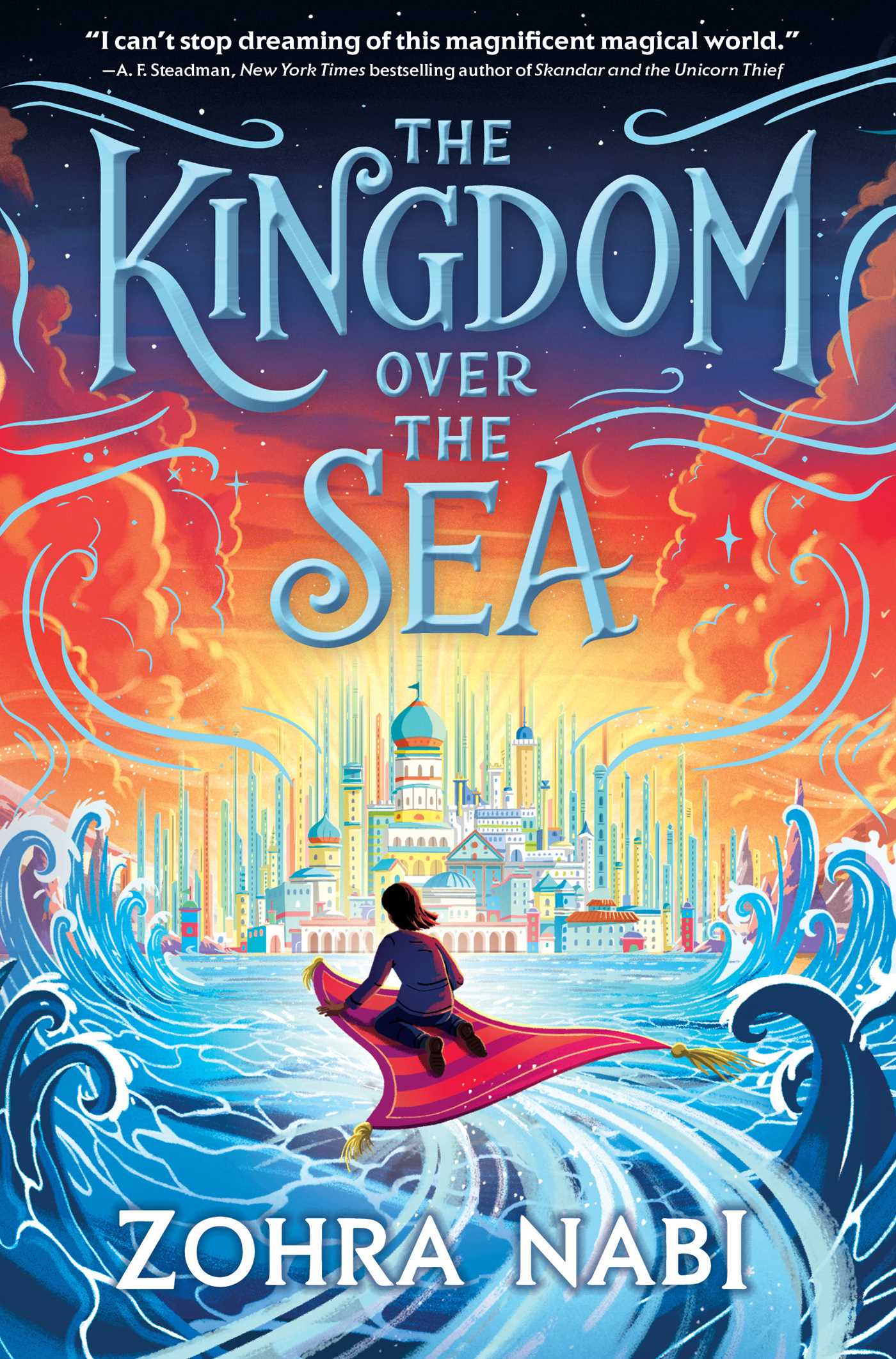
The Kingdom Over the Sea by Zohra Nabi

Standard
The Kingdom Over the Sea by Zohra Nabi

kigdom

This 336 page middle grade fantasy book had a lot of promise for me, but ultimately fell a little flat.  The protagonist was likeable, there was emotion, the story was compelling, and I know it is widely said that debut novels tend to be a little weak or be underdeveloped or having pacing problems, yet I hesitate these days to use this as an excuse.  I’ve been around the industry a few years and it seems many author’s debut novel, is not, in fact, the first book they’ve written or even the first book they’ve “sold.” Books are written and finalized years before they are released for some genres particularly of late, so I’m trying not to let myself get caught up in the author’s writing journey (I’m sure I’m all sorts of wrong about what I think it would be anyway), and just review the book in front of me. This book has no religion, and I don’t know if the author identifies as Muslim.  There are a hodgepodge of Arab and Desi cultural references in the characters’ names, and in the sprinkling in of salwar qamis, abaya, head scarf, sambusak, and there is a ma’a salama at one point along with the presence of jinn (not religiously referenced). There is also mention of medicinal wine, magic, a lady who has a crush on another lady in her youth, music, and dancing. The book held my interest as I wanted to see how it unraveled, and I recognize that there is a book two, so some of my thoughts might be premature, but I struggled with the premise of the protagonist trying to understand the journey her deceased mother has sent her on, and how the person she was supposed to find for the answers simply won’t talk, even though the two are living together.  It made the story really drag in places and seem underdeveloped.  The world building, the backstories, the adventure at hand, really is imaginative, but the development of the relationships in the story are absolutely non existent, and the book overall suffers because of it. Also the ease in which rising action is resolved is often the kids just throwing an idea out and it being right.  I read and review through a critical lens and many recent middle grade fantasy books have been absolutely incredible, perhaps it isn’t fair to compare, but this book just came up short for me in developing memorable characters and plot, even though all the elements were present, capitalizing on bringing it all together stayed just out of reach unfortunately.

SYNOPSIS:

Yara’s mother has died and when she finds a letter with instructions of what to do and where to go should this moment arrive, she decides to dodge her social worker and journey to a world of magic across the sea.  Unsure of her own background, she thinks she might be Iraqi, but doesn’t speak Arabic, she longs to find a place to belong, and when she arrives in Zehaira and hears the language of her mother, she is hopeful that this Leyla Khatoun, who lives in the third to last house on Istehar Way, will provide her with answers. But alas Leyla is not there, the Sultan’s alchemists are, and Yara is now on the run in a foreign land.  Help finds her and with a little magic she finds Leyla.  Leyla begrudgingly takes her in, but refuses her any insight into her past, her relationship with her mother, or why the letter directed Yara to her.  As the alchemists poison the sorcerers, Leyla and some other kids (friends?) have to find a way to save the settlement and magic in the land.

WHY I LIKE IT:

Yara as a character is likeable, she is plucky, resourceful, determined, and despite her circumstance does not want or need pity or handouts.  She advocates for animals, the poor, is a grassroots organizer, and unapologetic in how she carries herself.  I love that she isn’t whiney or helpless, and that she trusts herself to problem solve and isn’t afraid to think outside the box, while maintaining her kindness and appreciation for those around her.

As someone who doesn’t like Alice in Wonderland type stories, this book grounded the world building in an easily consumable way, so even though it is Yara leaving the UK and stepping into a new world, the functioning of the new world didn’t feel random or surprising.  While this was beneficial for someone like me, it made the focus of the story more on the characters’ relationships in enhancing the plot, and the book wasn’t strong in showing those connections.  Yara meets a map maker for a moment and a cat, and months later recalls the cat and the map maker by name and face.  A boy, Rafi, who is also studying magic and Yara don’t get along, yet are friends because it says so, the book doesn’t show us their bond.  Rafi meets some great uncle and the great uncle is painfully underdeveloped (along with his “friend”) and the tangent weak in reinforcing the major climax. The relationship between Yara and Leyla is the center of the story and so glossed over, there is no tangible connection, or cathartic release when details emerge, it was very disappointing to say the least. Yara and Ajal, the jinn, what is that relationship even, she frees him à la Aladdin freeing the Genie, but they are friends, not friends, he looks out for her, but doesn’t like her, the telling and the showing don’t align.  Even Yara’s relationship with the settlement and the inhabitants is disconnected from the plot of saving magic.  The climax is weak because we, the reader, don’t feel any connection to any magical folk.  The emotion of the mother dying at the beginning and the slight retrospection (I’m not going to spoil it) of the mother’s love at the end, was developed and made me invested in Yara, that same energy did not present itself, sadly, in any other relationships in the book.


FLAGS:

Death, loss, poison, imprisonment, magic, mention of medicinal wine, one line mention of a female character liking another female character as more than a friend, dancing, singing, jinn, torture, male and female friendships, destruction, lying, sneaking.

TOOLS FOR LEADING THE DISCUSSION:

I wouldn’t use this as a book club selection and wouldn’t go out of my way to shelve it in the school library or classroom library.  I will probably read the second book though and see where the series goes and reevaluate. I will also probably read future works from the author as the sparks of good story telling and writing definitely show promise for the author even though this particularly book wasn’t “magical” for me.


The Adventures of Amina Al-Sirafi by Shannon Chakraborty

Standard
The Adventures of Amina Al-Sirafi by Shannon Chakraborty

sirafi

It has been a long time since I have stopped reading a book because I simply do not want it to end.  Clearly I have no self control, so a day later I picked it back up and finished the 496 pages, but oh what a treat to be swept away aboard a magnificent tale with rich history, Muslim characters, Islamic references, developed fantasy world building, complex side characters, excitement, plot, adventure, and everything else you would expect from the author of the Daevabad series.  The book is an adult read, and I really can’t suggest it to YA readers, the protagonist is a middle aged mom with a foul mouth and a bad knee, there is cursing, and killing,  hetero, gay and demon love interests among the main characters, a transgendered character, sex mentioned, drinking, and magic, it is all part of the story, but it isn’t so in your face that older mature Muslim readers will be uncomfortable.  So why am I reviewing it here, I honestly don’t know.  Clearly it is not to be shelved in the Islamic School Library, but there is so much authentic Islamic centering on every single page, that I want to give it space to remind/encourage us all that we don’t have to hide or water down our faith in mainstream books- not if the writing, story, and characters are so incredible.  I really thought a historically set pirate fantasy would be hard to read, that the vocabulary and references would leave me lost and confused, but it is written so beautifully that the pages fly by and you forget you are reading; it is as if you are watching the story unfold in front of you.  Please consider preordering this book so that publishers know support exists for authentic OWN voice Muslim character led books, I have an e-version, but have also preordered a physical hard back copy here.

SYNOPSIS:

It has been a decade since the infamous nakhuda Amina al Sirafi has taken to the Indian Ocean to plunder and sail. The stories of her have grown and traveled in her retirement, but life is now more about protecting her daughter and fixing her leaking roof.  When her previous life finds her and threatens her, however, she must return to her Marawati, call on her old friends, and put together a crew.  Told through a storyteller, with banter between Jamal and Amina, the fourth wall is broken and the reader knows that the hero will survive, yet the adventures of outsmarting Aden’s defenses, peris, demons, Franks, pirates, and marids to prevent the Moon of Saba from being manipulated is a fast paced chaotic adventure that pulls you in from the first page.  The fairly linear story from one point of view (mostly), connects the haunting past to the trials at hand, as the crew and characters are understood through their captain.  I don’t want to give anything away, but the side characters are nuanced and developed in a way that you feel just as close to them as Amina does, and as she becomes frantic to save them, the reader too is invested in their choices and actions.  Pirate adventure, saving the day, a mom as a hero and a missing demon husband refound, yeah, don’t read summaries of this book, just read the book.

WHY I LIKE IT:

I was surprised at the religious redemption arcs and details that were included on truly every page, from the meaning of the translation of Ayat ul Kursi, to acknowledging past sins and striving to not repeat them, Amina al Sirafi practices her Islam in her five daily prayers, regular supplications, regular repentance, and view of the world and her place in it.  She isn’t preachy, and much of what she faces tempts her to drink wine and fornicate again, but her struggles are really refreshing to see.  It isn’t that she is Muslim and that is the framing for the al-ghayb elements alone, it is so part of her and thus of the book, that you can’t help but feel seen.

The gay character’s lover is mentioned, neither are Muslim, but it is only a few lines in the entire book.  The transgendered character starts off uncomfortable with being forced to marry and hints that she doesn’t feel feminine, Amina pieces together what she is saying and then at the end it shows that she is now identifying and carrying herself as a man.  It isn’t a big part of the text, it has a strong effect on the story and it does touch on God’s view of such things, as the character is Muslim.  The demon love interest SLIGHT SPOILER is Amina’s husband that she thought she had killed, she has had a lot of husbands, but when he turns up alive, she realizes technically they are still married.  He asks her quite often to have sex.  It is usually is just that blunt with no romance or longing, and when they do partake in the act, it isn’t overly graphic, it is “closed door.”  There is killing and murder and deceit and lying and drinking, all things assumed would be in a pirate story.  None of it is overly glorified, but it is normalized.

I really just love the characters and the fast paced action, the book leaves off implying there will be more tales to come and I hope there are.  (I keep writing what I love about the book and deleting it, because you know….spoilers, ahh).

FLAGS:

As previously mentioned: cursing, sex, hetero and gay relationships, magic, fantasy, killing, murder, lying, drinking, drugs, jinn, peris, marids, fantasy, occult, demons, death, loss.

TOOLS FOR LEADING THE DISCUSSION:

I would never do this for a school book club, but would do it in a heartbeat for an adult book club!


Rebel of Fire and Flight by Aneesa Marufu

Standard
Rebel of Fire and Flight by Aneesa Marufu

rebel

I struggled with this 384 page young adult fantasy.  It skirts and plays with Islamic doctrine as the characters and plot points dance with fantasy and fiction; and because I never felt that the author was completely in control of the story and where it was going, I could never relax and be swept away.  The author identifies as Muslim and in the backmatter addresses how experiences with Islamophobia influenced her writing, yet I don’t know why jinn and hijab were in the book when fictionalized creatures and cultural dress would have sufficed.  Clearly the character on the cover is in hijab, the names of half the characters are Muslamic, the culture is very desi, the broad concepts of jinn, the ghaib, sihr, Prophet Sulaiman, call to prayer, are all Islamically rooted, but characters go to worship at temples, jinn and jinniya eat corpses and are described so often as looking like smoke.  There is no clear identifier that these characters are in fact Muslim, it is simply hinted at, which makes the fictional parts seem like extensions of religious doctrine and ultimately made me uncomfortable with much of the story.  It also makes me think readers will not know where the lines are, if my brain was muddled, I can’t imagine a  young teen reading it and keeping it clear.  There is a few rushed romantic scenes of kissing, there is a trans character who’s gender identity and born gender is a significant plot line in the story, and there is a lot of oppression, racism, death, abuse, misogyny and fear.  It is a dark read that metaphorically takes real societal concepts and sets them in shades of gray with the added use of fantasy. There are a lot of layers in the story, and while it wasn’t poorly written, there were definitely places it needed to be better.  I really didn’t like any of the characters, I didn’t understand their motives, their relationships, their drives, the commentary on occupiers and rebels was weak as was the push back on misogyny after the first few chapters.  I didn’t feel a love of hot air balloons or feel that the battle scenes accounted for many of the characters that would suddenly be missing from the scenes.  I think the dual perspectives kept the intensity of the climaxes at bay and halted the rising action.  Too many misses for me to recommend this standalone book, but if you’ve read it and can talk me through it, I’m willing to listen.

SYNOPSIS:

In a land where girls are running out of time to be arranged in marriage at 17 and transportation is done in hot air balloons, there are two groups of citizens: the darker Ghadaean’s are the rulers and the lighter skinned hāri are oppressed.  The book establishes this power dynamic early on in a quick synopsis: the hāri came from the Himala mountain range to trade to Ghadaea, but their greed and lust for power drove them to try and seize the land.  They failed, and now 90 years later the hāri are punished for the mistakes of their grandfathers (4%).  Both groups fear sihr and jinn.  Everyone is vegetarian because jinn are attracted to rotting corpses, animal and human, and thus anything dead is quickly burned.  When a radical hāri group, the Hāreef, is formed with a new leader, sihr and jinn are no longer enemies but tools to rebel against the racist oppression, and assist in the war to change the balance of power.  

Khadija is 16 and with her mother and younger brother deceased at the hands of some hāri, her older sister married and off in a balloon, her father is desperate to get her married.  Most females are not allowed to read, nor are they even allowed out of the house alone.  The fear of the jinn is weaponized to keep them in, and misogyny prevents from proving themselves.  While out meeting with a suitor, Khadija in a burst of desperation leaves her father and jumps in to an escaping balloon.  Khadija does not know how to fly a balloon, having never even ridden in one, but when it lands in different town she meets Jacob.

Jacob is hāri and the second of the dual perspectives telling the story, he is orphaned and is unique in that he is an apprentice of a glass blowing Ghadaean.  He meets Khadija and offers her food, and in the span of a few hours she saves him and he saves her and both seem to have a dead glass blower on their hands.  Add this to his growing rift with his best friend William, who has joined the Hāreef, and is now dead, and you have Khadija and Jacob escaping in a balloon, not trusting each other nor knowing who and what they support.

From here on the two’s friendship and motives wax and wane as they are drawn in to battle together, and against each other.  Neither are “good” or “bad” nor are their decisions always clear, but they will be forced none-the-less to figure out what they want and what they stand for as peri’s are tortured, nawab’s are killed, jinnya queens are called upon, wishes are granted and a group of hāri and Ghadeans known as the Wazeem offer a unified collective.  Unfortunately, change and power never come easy and when a dead son is brought back as an ifrit and an ancient princess in the jinn world is ready to battle, all the shades of gray that exist in politics, revolution, rebellions, families, hate, racism, gender identities, and control all come spilling out from balloon baskets and the ghaib. 

WHY I LIKE IT:

I honestly kept reading to see how the author was going to bring it to a conclusion and wrap up all the loose threads.  And while the book lagged at times, she definitely got it concluded.  Aside from the religious signaling, but never owning identity problems, I struggled with the writing too.  The hāri Jacob doesn’t read like a little brother, he and Khadija read the same age, and so his importance in the Hāreef seems an ill fit.  Plus he is very duplicitous and I get that that is part of the story, but I never liked him so it just got annoying how many second, third, fourth chances he got, and I mean, why would anyone care? 

Khadija seems like she is going to battle misogyny early on, I hate that marriage and arranged marriage is equated to oppression, but the not being allowed out and not being educated seems to fizzle in the middle and then come out a bit in the final scene.  I hoped it would have been commented on in every new city they arrived at.  The set up was there, but because it wasn’t, it made it seem more of a shortsightedness of her own father, and not a larger problem when strong women existed elsewhere.  This also reinforced a “brown Muslim” man stereotype that is never pushed back on.  

The racism, power struggle oppression is more consistent, but with the foundation that the hāri came and tried to take over nearly  90 years ago makes it hard to feel too bad for them.  They tried to occupy and now are enslaved.  Neither is ideal, but why didn’t they just go back? We aren’t talking more than one generation, it is the “crimes of their grandfathers,” they had a home, they were kicked out, they should leave.  Yes, I know they are human and racism is wrong, my point is a literary one, that the foundation should have been stronger, more detailed.

The love interest I also felt was lacking, Darian comes out of nowhere, they are in love, he gives her his heart so he is saved, I didn’t feel the tension, I didn’t get it, not at all.  It was forced and cheesy and I just know he kept getting hurt, they would kiss, and then he was back to getting hurt or possessed or something, had no personality what so ever.

The seal of Prophet Sulaiman and the hundreds of pieces of it didn’t sit right with me, nor the jinns being smoky and eating corpses.  I truly don’t understand why very real Islamic concepts were brought in and twisted.  Why not just create your own characters and say they were loosely inspired.  I felt like the religious rep and OWN voice kept one foot in the religious inspired world and one in the fantasy is fiction so I can do what I want, and it didn’t work for me.  I think it crossed in to being disrespectful, and had the author not identified herself as Muslim, I would have been furious as the book reads like an outsider who doesn’t get that jinn are real, Prophet Sulaiman was real, sihr is real, the ghaib is real.  It really needed some some clarification on where the story existed and where the religion or religious inspiration started and stopped.

The trans character is worth highlighting because it does touch into Islamic rulings regarding hijab, even though we don’t know if Anam or any of the characters are Muslim. Anam is born a male, but leaves her family of exorcists and is a leader of the Wazeem as a female. She presents as a female, but when she enters a room where numerous Wazeem women are changing many hide, draw their hijabs, make horrified gestures etc., it has to be explained to Khadija why this is.  It does not bother Khadija. Story wise it is a critical point because the Jinniya Queen Mardzma is the queen of female warriors and it is unknown if Anam would be seen as female or male. When Anam went from being an exorcist to the greatest human warrior present is beyond me, but there was a lot of assumptions you had to accept while reading.

FLAGS:

Death, erroneous religious rep, kissing, murder, killing, lying, torturing, threat of sexual assault, murder, coming back from the dead, oppression, racism, trans, misogyny, abuse, hetero relationships, stealing.

TOOLS FOR LEADING THE DISCUSSION:

I would not shelve this book in an Islamic school library or classroom, nor would I use it as a book club selection.  Although if my local public library or some adult Muslims read it and were planning to discuss, I would join to hear their thoughts about it.  I would not be able to lead, but I would enjoy picking it apart with others.

The book releases shortly, just because it didn’t work for me, if you think it sounds like something you would like, you can preorder and purchase it HERE.

Nura and the Immortal Palace by M.T. Khan

Standard
Nura and the Immortal Palace by M.T. Khan

nura and the immortal palace

This 272 page unapologetically Muslim MG tale takes on some heavy concepts: child labor, jinn, education, and gulab jamun- I mean greed.  Through the eyes of feisty, determined, clever, and strong Nura, though, the trials of life and society are never without hope, a sense of adventure, and good intentions.  The characters are likeable, the Islam wonderfully present and often centered, the social commentary remarkable, but the framing for me, made it a bit of a struggle to read at times.  It is set up like Alice in Wonderland or even Silverworld, where the characters living in a real world stumble in to an alternate reality, and thus the world building occurs in real-time so to speak.  The reader has no idea what is going on until it is happening, no clue what the rules and constraints of the fantasy world are until some detail is needed to help or hinder the protagonist, and personally I struggle with this wandering style of narrative.  I have mentioned before that as a child I really never read fantasy, and I think this is why, I  need the context to ground the story so that I might lose myself in the adventure at hand.  If you are fine with this framing and at ease with Islamic jinn fantasy, then this book will be a lot of fun.  If you find fantasy “shirk-y” do know that Ayat ul Kursi is used to save the day, but that there is a lot of imagination regarding the beings made of smokeless fire, a casino is present along with dancing, indentured labor, and the fear of death.

The book releases in July 2022, and as always pre-orders help show support for books, authors, and the OWN voice content that they entail, so if this book seems like a good fit for your 3rd/4th grade reader and up you can pre-order it here: https://amzn.to/3MVvxQo

SYNOPSIS:

Nura lives in the small industrial Pakistani city of Meerabagh.  Her father has passed away and her family is too poor to send her to school, instead she must work so that her siblings might eat.  Her mother works in a sweat factory and Nura in the mica mines.  The illegal child labor and cruel owners provide less than ideal working conditions for the children forced to mine the sparkly mineral.  Nura’s mom wants her to quit, Nura herself doesn’t enjoy the torment, but somehow she takes it on as a challenge to be the best miner in Meerabagh, pushing her self deeper into the fragile tunnels.  With bestfriend Faisal always warning her about going too far, she decides to finally listen to her mother and quit the mines, but not after she makes one final effort to find the rumored “Demon’s Tongue” treasure.  She digs too deep though, and the mines collapse, children are lost, Faisal among them. Determined to find her best friend, she plunges in to the fallen mines and finds herself on the pink waters outside the luxurious jinn hotel, the Sijj Palace.

Nura has always been warned about jinn, qareens and the tricks they play on humans, but when a life of luxury is dangled in front of her, Nura pushes her better judgement aside to enjoy a life she has always dreamed of.  It isn’t just the food and clothes, but it is the respect and honor she is given as she wins a food eating contest, gambles in a casino, and gets decorated for a dance party.  It all comes crashing down however, when in an attempt to impress the painted boy, she cuts off his horn.  Status revoked, Nura is sent to the labor force, where she will remain for eternity, imprisoned and at the disposal of the hotel.  What is more, after the three day festival of Eid al Adha, her memories of her life before coming to the jinn world will disappear. Nura is determined to escape, but nothing in the jinn world is easy, and for a 12 year old girl with fading memories, this might be more than she can endure.

WHY I LIKE IT:

I love that Nura is unapologetically Muslim.  Even though she is poor, there is time spent on the pages detailing the feeling of Eid al Adha, the familial togetherness and community festiveness even if it all is meager, it still has value.  I also really like the relationship between Nura and Faisal.  They drive each other crazy and have nothing in common, but they never give up on each other.  They act like siblings, tolerating each other’s annoying quirks, while never wavering on their concern and worry for one another.  It is sweet and well fleshed out.

The threading of education was also done well.  Nura finds the idea of school repulsive, but it grows and changes as the obstacle of being illiterate slows her down, and ultimately she changes her mind.  The growth arc is subtle, but powerful, and Nura’s intellect, cleverness, and ingenuity is never dimmed as a result of her lack of formal schooling.

The characters, even the “bad” ones are given some depth and sympathetic qualities, and Nura has to recognize some of her own flaws and choices as she journeys through the book.  Desi culture is present primarily in food and clothing, but it adds depth to the story and flavor to the experience.

The food eating competition, however, didn’t really impress me.  I get that it was to flesh out the jinn world and show Nura’s smartness, but I thought the jinn in the water were eaten, only to have them reappearing, and the founding premise is that jinn are tricksters, so to have Nura tricking them seems to blur the lines of integrity.  Also the bird was critical, and then never seen again, the scene just didn’t read as tightly edited or as clear as it should have in my opinion.

I didn’t love that a casino either, or that it was so central to the story. If it would have said something about gambling being haram and jinn being free to do what they want, like it did when discussing how Eid is celebrated by non practicing jinn, I might have not been as bothered,  but it seems an odd setting nonetheless, for a middle grade book.

FLAGS:

Gambling, child labor, indentured servitude, magic, fantasy, jinn, destruction, bombing, fire, death, fear.

TOOLS FOR LEADING THE DISCUSSION:

I think this could work as a middle school book club read.  It is a little below level and age, but there is a lot to discuss and connect with, that I think it would be a lot of fun.  Our school is ok with fantasy reads, so for us it definitely deserves a place on the bookshelf in a classroom, school library, and possibly (depending on your views of fantasy) a home library.

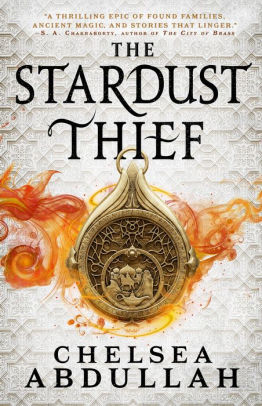
The Stardust Thief by Chelsea Abdullah

Standard
The Stardust Thief by Chelsea Abdullah

I was a little nervous to read an adult fantasy book with jinns, both in terms of length and knowing I would undoubtedly compare it to the Daevabad trilogy, but I got an ARC and dove in.  I was put off by the use of gods, and that there was no Islam present at all.  I’m not sure if the author identifies as Muslim, or what her background is, so I told myself I’d read at least 25% and then state I didn’t finish it because I primarily review juvenile fiction with Islamic content or by Muslim authors.  Well, lets suffice it to say that arbitrary percentage came and went and I had no intention of putting the book down.  So why am I featuring it? Simple, it is clean and I liked it.  Aside from the plural little g gods, the book is Arab culture rich as a retelling of the Arabian Nights, according to @muslimmommyblog the Arabic is accurate, the story is engaging, and really my only question is, why isn’t it YA?  I have a handful of reasons why I focus on children and teen lit, but one very strong one is that the books are “cleaner” in theory.  Lately though, it has been hard finding YA that followers of my reviews can confidently share with teen readers.  I think this one, although it isn’t a religious mirror, the salaams, culture, Arabic, and storyline, tinge the framing and make it a fun “safe” read to suggest to our kids.  At 480 pages, it probably is best for ages 15 and up, and it ends on a cliff hanger, so I’m not sure what the next book might introduce, just be aware this review is for this book alone.

SYNOPSIS:

Layla aka Loulie aka The Midnight Merchant hunts and sells magic jinn relics that she locates with the help of her jinn bodyguard Qadir.  After her tribe was slaughtered by a mysterious army, and she the only survivor, Qadir and her have been a team.  When her skills align with the needs of a powerful sultan she is forced to go on a journey with his son, the prince and one of his 40 thieves, to find a magic lamp that will lead her to answers about her past, offer her chances of revenge, test her abilities, plague her with loss, and fill the pages with adventure.  Stories of the One Thousand and One Nights are weaved in through oral storytelling, world building is built and explored through the characters’ understanding their world and the jinn, and the non stop action keeps the story moving forward with minimal dialogue and a lot of high energy showing.  Clearly if I say too much, the excitement will be lost, and I don’t want to spoil the characters’ arcs, their foibles, their illusions, and the climax- seeing as it is a linear story and if the motivation to move forward is lost, the book will lose its charm.

WHY I LIKE IT:

The book keeps pace pretty well, a lot of the spoilers are not dragged out and I appreciate that they are not used to dangle the reader’s interest.  The story has depth, the characters are fleshed out, and the truth and illusion reveals are done without insulting the reader.  I’m still undecided about the (SPOILER) comic book quality of death for the main characters, but it keeps it interesting, so for now at least, I’ll play along.

There aren’t a lot of characters, but there are a lot of names for each character and at times in the thick of fast paced action sequences, I did get a little confused as to what was happening to whom and who was saying what.

I don’t truly understand why the divinity is plural or why they say salaam, but nothing else “Islamic” is remotely present save the concept of jinn.  I suppose though for all the fantasy books that use Islamic terms and imagery and then present them horribly, I should be glad that this one really doesn’t conflate the two, but an athan in the background or a few inshaAllahs, sigh I suppose a girl can dream.

FLAGS:

Language, violence, murder, killing, deceit, minor seduction, betrayal.  Very clean not just for an adult fantasy, clean for most any YA or Teen book.

TOOLS FOR LEADING THE DISCUSSION:

It would be a bit of a pivot for me to feature this book as a book club selection because there is plural deities and NO Islam, but it is very tempting to suggest it to the high school advisor.  The book comes out May 17, 2022, you can preorder it which helps show support, or order after it releases on Amazon.