Tag Archives: jews

Safiyyah’s War by Hiba Noor Khan

Standard
Safiyyah’s War by Hiba Noor Khan

safiyyah

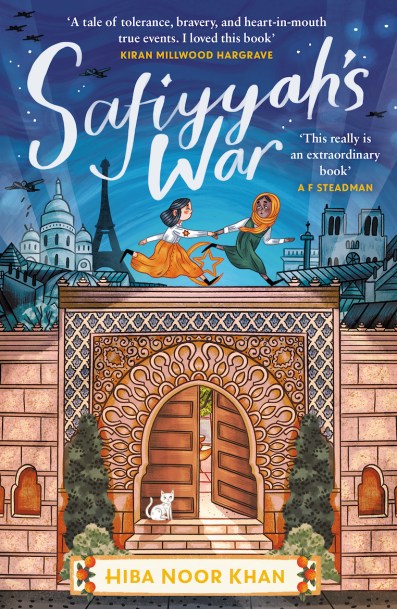
A.M.A.Z.I.N.G! SubhanAllah the subject matter is incredible, but the characters, writing, and Islamic inclusion really make this 327 page book a must read for all upper middle grade and lower middle school aged children everywhere. The book is historical fiction, set in Paris during WWII, the Nazis are invading and the Muslims at the Grand Mosque of Paris are covertly helping, hiding, and saving their Jewish neighbors.  Based on real facts, the book does not get lost in politics, or propaganda, or the enemy, the story stays on level for an MG reader with character arcs that are not confined to the atrocities at hand. The familial love, the friendships, the bravery of so many, really lingers long after the last page is read. Knowing that Muslims in France did this and that their stories have by-and-large been lost over time, makes this book all the more important to share with our own children.  This book fills such a void for children in Western countries wondering why WWII lessons in school never mention Muslims, and that this is traditionally published in the UK, soon to be in the USA, really is a benefit to us all.  I do wish the book was more strongly sourced, there are Historical Notes at the end, but I’d love to know where to go to get more facts about it all.  Little kid me would have been obsessed, adult me can’t wait to share this book with teachers and book clubs to discuss, teach, enjoy, and be inspired by, alhumdulillah.

SYNOPSIS:

Safiyyah lives in the apartments in the compound of the Grand Mosque and while Muslims are more-or-less safe from the imminent threat of the Nazi’s, because of their connections to North Africa, their world is still changing quickly. Safiyyah loves maps, helping run errands for her father, Ammo Kader, and Ammo Imam, and spending time with her Setti.  She also loves spending time with her best friend, Isabelle at school and on weekends.  When the Nazi presence is no longer avoidable, Isabelle and her family leave, errands are no longer safe and Setti’s beloved oranges are harder and harder to get. To top it all off, her father starts acting secretive and Safiyyah starts sneaking around to find out what is going on, unraveling a clandestine network helping those needing to get away.  Her family has no intention of involving her, but when soldiers start getting suspicious of the Muslims assisting the Jews, Safiyyah takes on dangerous roles that just maybe a young girl can accomplish without drawing too much attention to herself, the cause, and the Muslim community’s commitment to helping the innocent.

WHY I LIKE IT:

I love that the book is fast paced and the fear of being caught is always present, yet the book is able to flesh out relationships, character growth, and religious understanding.  Little details weave in and out, and the confidence that the writer is in control of all the threads allows the reader to be swept away, completely. The interfaith aspects are not just check marks, the story shows the ease in which the communities work together and their connections are tangible.  There is no internalized Islamophobia or othering, and the way that Islam emboldens the characters’ actions is so beautiful: from the larger commitment for justice, to the personal internal reflections of wearing of hijab, praying, listening to the athan, making duas for the deceased, etc..  Spending time to ruminate on the idea that breaking an unjust law to save lives through an Islamic lens is empowering, and knowing that this is the risk that real Muslims in Paris took is so very humbling. I love that the conflict of France and Algeria is not left out as the Kabyle protagonist and her grandmother note that they are now supporting those wearing French uniforms to fight the Germans.

FLAGS:

Wish making, lying, death, fear, occupation, war, destruction, oath taking on a Quran, tasbeehs, working with wine barrels and smugglers.  There is a strong familiarity with Christian and Jewish holidays, some crossover celebration.  Some Christian angel imagery being used by Safiyyah for Ammo. Sneaking, hiding, forgery, skipping school.

TOOLS FOR LEADING THE DISCUSSION:

Having only ever read one other book on this topic, The Grand Mosque of Paris, that would definitely be a reference I would present when introducing the book.  Whether in a classroom, a library, a home, a book club, I hope this book gets read, passed around, shared, and discussed.  Muslims and non Muslims alike will fall in love with persistent over-eager Safiyyah and hopefully remember the resistance the characters in the book and real life sought with courage and dedication for the good of humanity.

I own my UK copy and have preordered US copies for myself, my mom, my teacher friends and hope you will do the same (you can preorder here).  Please also request your local public libraries to shelve this important book.
Sitti’s Key by Sahar Khader Ali illustrated by Noor Alshalabi

Standard
Sitti’s Key by Sahar Khader Ali illustrated by Noor Alshalabi

sitti key

I try and buy, read, and review every children’s book about Palestine that is published, it is the least I can do.  I also try not to compare them to each other as they present different aspects of oppression, perspectives of strength, examples of joy, and messages of hope, even among many similar themes of food, keys, traditions, and culture.  I really appreciate that this book though is incredibly blunt.  It isn’t lyrical, it isn’t poetic, and as Israel is bombing Jenin as I write this I’m glad it doesn’t mince words about the Nakba. I do think caregivers though, should probably read it first as it might be a little triggering for sensitive children.  The story is OWN voice and probably best suited for middle elementary aged children.  It is perhaps also worth noting that the book could be seen as making Jews synonymous with Zionists.  The characters are Muslim, Islamic phrases and Arabic terms are sprinkled throughout, and even despite the pain the family has endured, the book stays hopeful and proud.

Sitti is coming and Amal is excited, it has been two years since she last saw her.  She loves how excited her mom and grandma are to unpack gifts of olive oil, dates, and zataar from friends.  Amal isn’t sure what to do with the “old lady thoub” she has been gifted, but she smiles in appreciation none-the-less.  When Sitti pulls out an old key, Amal starts to ask her about it, but her mother shuffles her off to bed.

The next day at school, Amal has to work on a presentation about “culture,” but there are no Palestinian books in her school library, so she just watches the other kids.  At home they eat and listen to Sitti’s stories of long ago in Haifa, and Amal asks her why she left Palestine.  Despite her mother trying to redirect, Sitti says it is time she knew about the Nakba.

Sitti tells about living on the land for generations and how the Jews believed the land belonged to them.  In 1948 the British decided Palestine would be the homeland for the Jews.  Armed men came and arrested anyone who tried to stay in their homes. Sitti’s brother was handcuffed and never seen again.  The family grabbed what they could including the key to their home as they made their way to a refugee camp in Lebanon.  They stayed for three years, before making their way to America.

When Sitti concludes her story she hands the key to Amal and her hope that she will return to their home inshaAllah.  Feeling the pride and warmth of home, Amal has a determination to reclaim her heritage and share her “culture” with her classmates.

The illustrations are sweet, the mom and Sitti wear hijab even in the home, and the inshaAllahs and salams come naturally. The book does not stop to define zataar or marimya, which helps the flow. I also like how it shows that there aren’t books about Palestine in the school library, it is strong and important detail.  I don’t understand where Sitti is coming from though, it would seem Palestine as she is bringing gifts from friends, but in the story it says after Lebanon they made their way to America, so I’m not sure where Sitti lives, and how the logistics of the family work to be honest.  I also kind of wish there was a  recipe for zataar in the book and lyrics with translation for the song the family sings.

Book is available on Kindle or can be ordered from www.littlehibba.com

An Andalus Adventure by S.N. Jalali

Standard
An Andalus Adventure by S.N. Jalali

andalus

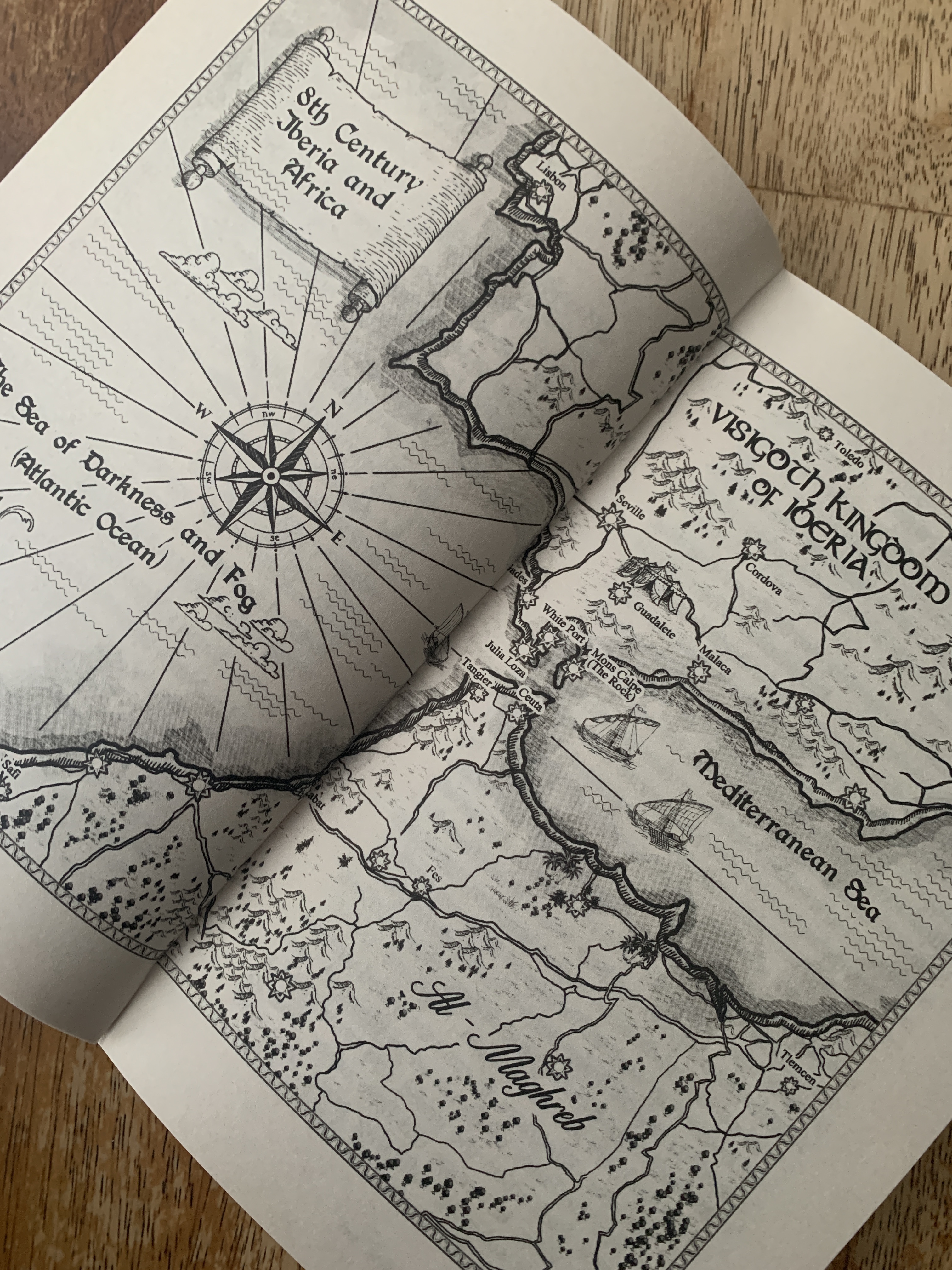
I truly am glad I read this book. I love historical fiction, visiting Spain is on my bucket list, this book has a map, details about what is historical what is fiction, has Islam woven in to the heart and soul of the story and characters, and yet it was a hard read.  The first few pages grip you, the last 50 bring it all together, but the middle 250 were hit and miss in this lower YA/upper MG book.  I honestly had to force myself to keep reading.  My teen and tween son couldn’t get past 38 pages or so, and I’ve asked around and no one I know that started the book, finished it.  I think ultimately there are just too many characters, too many points of view, that even though the history is rich, the literary points all in order, their isn’t enough character connection to hold the readers through the wandering details.  This author’s style is a bit more slow, but I think in the House of Ibn Kathir series, the setting of being in school and having friend problems is relatable to readers; boarding horses on to a boat, deciding to wage war, and going in to battle are not familiar concepts, and without the emotional connection it loses momentum.  The climax is nice but ultimately rather lackluster, and the beauty of characters taking shahada, Jews being freed, Solomon’s table, an old lady with a premonition, and a character dying are just not enough to keep the story in reader’s hands, unfortunately. 
img_4397

SYNOPSIS:

The summary might make the book seem fast paced, and while it does constantly move forward to a clear destination, it isn’t a “buckle your seatbelt and hang on” type of story.  The setting is Northern Africa and the Iberian Peninsula in 711 CE, 92 years after the Hijrah.  The book opens with two young siblings Ben and Bella, overlooking the coast, dreading their lives under Visigoth oppression, and hiding their Jewish culture and faith.  It then jumps to the Governor of Ceuta, Count Julian (Ilyan), awaiting to meet with Umayyad leader Tariq ibn-Ziyad.  He is hoping to rescue his daughter from the court of King Roderick and convince the Muslim General to enter Iberia, restore the rightful king, and free the people essentially.  Add in voices from Qasim, a young Berber, and Jacob a captured Iberian, and the stage is set to get everything in order to cross the straights, survey the enemy, take on the King, and introduce Islam to the new land.

WHY I LIKE IT:

I absolutely love the Islam and the history and the fictional liberties.  I love that the book is clean, although, I do wonder if more information about Lady Florinda would have helped the reader understand her father’s desperation, I do understand the vagueness, but it is a glaring omission that keeps the reader curious.  Ultimately I wanted more backstory.  The little given about the characters was engaging.  I loved the teasing about being a shepherd, Jacob coming to love Islam, Bella not wanting to marry, but it seemed to always stop short of sweeping me away.  I didn’t cry (SPOILER) when Hisham died, I barely knew him.  I didn’t feel the urgency to hide and escape from Leander’s proposal.  It set up to add depth regarding Old Mother Magda, the Cave of Secrets, and the unverified death of the king, but after being stated it was never mentioned again or resolved for any real purpose. 

All that aside, I think the book has value, it is just really dry in spots, a lot of spots, and given the vocabulary, the changing narrators, the choppiness between chapters, and the history, it is hard to keep reading or be anxious to pick up once you have put it down.  So with all that in mind, I think the book would be great to use in a classroom setting.  You could read a chapter Monday, and then pick it back up on Thursday and not worry that no one remembers anything because it is focusing on new characters anyway.  In a middle school, or upper elementary the book would be a great crossover between History, English, and Islam classes. The book would naturally lend itself to the students keeping character journals, the supplements and backmatter would allow for references and insight in to real history, and I think the book would do really well in this set up to connect with the audience. 

The Epilogue was nice, but a little disjointed.  I appreciated the updates on the characters and it showing Muslims and people of other faiths coexisting and being accepting even within families, but the connection to the story was a little lost.  Similarly, I love that it mentioned  Abbas Ibn Firnas, but I don’t know that most kids know enough about him to know what is being hinted at and what the outcome was of his flight at the end.

FLAGS:

Death, war, battles, killing, nothing graphic, very tame, not graphic or detailed gore.

TOOLS FOR LEADING THE DISCUSSION:

I don’t know that I could get middle school students to read the book for a book club, it would have to be motivated by a grade to get through it in a classroom setting I’m afraid.  See above to read my thoughts on how to present it.

I purchased my book on Amazon and will receive a few pennies if you decide to purchase a copy using this link.

Ida in the Middle by Nora Lester Murad

Standard
Ida in the Middle by Nora Lester Murad

ida-in-the-middle-9781623718060_lg

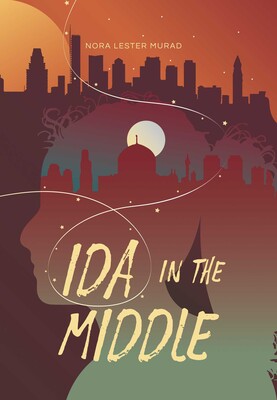
Ideal for middle school readers (upper mg/lower ya), this magical realism book takes readers from middle school in American to a Palestinian village outside of Jerusalem through the consumption of some magical olives.  Written by a Jewish author married to a Palestinian Muslim who raised their three daughters in Palestine, the book features a lot of Islam, but is Palestinian centered in its insight, critique, culture, and dreams.  Over 224 pages, Ida starts to find where she fits in both in understanding her self within her family, her place in America, her passion in life, and what it means to be Palestinian.  The story is important, and is told in a way that will encourage readers to learn more about the occupation.  Nuances are shown in characters and groups, but the line that the occupation is oppressive is never compromised.  I appreciate that the author writes from her own experiences and openly acknowledges that she is not trying to take away from Palestinian born and raised OWN voice stories, but she is an advocate, she has raised her children and lived in the West Bank, and her characters reflect a sense of intimate knowledge, love, and appreciation.  Even with Ida having to decide to stay in America or Palestine, the two countries are not pitted against each other or seen as black or white, as to which is better or worse, the middle is where much of the story takes place, and appreciating your culture no matter how much others are trying to erase your existence, is always stressed.

SYNOPSIS:

Ida is the middle child of her Palestinian immigrant family and isn’t artistic like her younger sister, a ballet dancer like her older sister, or a soccer player like her father.  She wishes she was invisible.  Especially when her classmates turn on her every time there are conflicts in the middle east.  When it seems that everyone wants to diminish her heritage, she finds herself at a new school, unsure of where she fits in.  With anti Palestinian attitudes and Islamophobic people, Ida just wants to go unnoticed, unfortunately middle school requires a passion project to be presented and Ida has no idea what her passions are, and how she will face the crowds.

One day when looking for a snack she finds a jar of olives stuffed in a cupboard- olives brought by a family friend from her now deceased aunt in Busala, one bite and she is magically transported to the familial village.  It is an alternate reality of what life would be if her parents never came to America.  Not only is she in a country she has never seen before, meeting family members she has never met before, but even her own parents and sisters are somehow different.  She enjoys the warmth, the communal activities, the extended family.  Her mom in hijab, the athan being heard, the men all going for jummah, but then they sit down for a meal and the same olives are served and Ida accidently takes a bite and is whisked back home.

Once home, she longs for so much of Palestinian life, but relishes in the convenience and ease of America as well.  Her passion project still looms and she finds herself hoping to escape it by going back to Palestine.  When she finds herself back near Jerusalem she ventures out with her Aunt, who isn’t dead in this reality, and learns more about the occupation and oppression, and how the families interact with the various Israelis: some sympathetic to Palestinians, some actively working to help Palestinians, and some settlers- forcefully killing and bulldozing Palestinian homes.

When Israeli military troops enter their village, the families meet to discuss the best course of action, the families do not agree, there is no clear way to prepare, there is no guarantee of survival.  Ida starts to find her voice, and when the soldiers enter, Ida finds herself rushing out to help a small boy. Guns, demolition, rocks, tear gas, fear, so much fear, what can one person do? What can one village do?  What will Ida do?

WHY I LIKE IT:

The book is relatable and moving, not just for those with a tie or interest in Palestine.  It is a coming of age story that shows a girl grappling with forces so much bigger than herself, while at the same time dealing with homework and friends and stereotypes.  Ida has a lot to figure out and the book doesn’t sugar coat a happy ending, it simply provides a moving story based on reality, through a character whose quirks and personality you find yourself rooting for.

I love the presence of Islam and the way it is apart of Ida and her surroundings, even though she makes it clear early on that her family is not religious.  The Quran is mentioned, the athan, various salat, hijab, Hajj, Ayatul Kursi, Ramadan, Eid, wasting food as being haram.  In Boston her friend knows she doesn’t eat pork, she went to Sunday school to learn Arabic at the mosque when she was younger.  It doesn’t gush with Islam, but it is present, for example Ida’s sister and her joke about a good Palestinian girl shouldn’t have a boyfriend, it isn’t tied to their religion. The story is a Palestinian one, and as someone who is not Palestinian, the images, the foods, the smells, the love all seemed to embrace everything I’ve ever heard Palestinian friends talk about, and it feels like a warm hug to read the effects being in Palestine has on Ida.

I love that the author is upfront about her perspective, and I love that she is putting this story out there.  The writing is sufficient: I was invested in the story, and it was an easy read. I don’t know that I’ll remember it months from now for it’s imagery or power, but I’m certain I’ll remember the commentary about life under occupation and the struggle to not be erased by a world that doesn’t seem to care about the settlers still taking Palestinian homes and their way of life away by force.

FLAGS:

Fear, crushes, death, injuries, loss, magic, bullying, racism, Islamophobia, guns, physical assault, threat of force, destruction.

TOOLS FOR LEADING THE DISCUSSION:

Our school is majority Palestinian.  Years ago when we read Where the Streets Had a Name, I learned so much about the students, their families, their own experience living under oppression, that I can’t wait to present this book with the middle schoolers and take notes on their thoughts.  I would not lead the discussion, I would let them, their voices will not be erased by me.

Preorder available here: Amazon

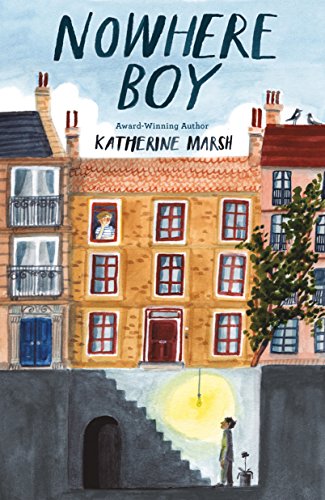
Nowhere Boy by Katherine Marsh

Standard
Nowhere Boy by Katherine Marsh

boy

I was not expecting to be so absorbed by this 362 page AR 5.4 book.  I knew it was about a Syrian refugee in Brussels and his friendship with an American kid living in Europe for a year, so I knew that Islamaphobia and immigration would all be factors.  I also knew that as a middle grade book it would be optimistic, and a bit of a stretch at times,  but when I had to pause in the first chapter to wipe the tears off my cheek, I knew that while it could be billed as, another refugee story, it really was going to be a poignant story about humanity and friendship and family and making a difference, so I settled in and was swept off to Belgium and the adventure of two determined kids.

SYNOPSIS:

The book opens with 14-year-old Ahmed on a boat with his father hoping to reach Greece from Turkey, when the boat stalls, his father and two other men, the only other people on the dinghy that know how to swim, jump into the sea to drag the boat.  When a storm swell hits them, his father is lost and Ahmed, who left Syria when an explosion killed his mom and sisters, is all alone.

Max is 13 and his parents and sister have just arrived in Belgium for a year.  Not a great student, Max learns that he will be going to a local school where French is spoken, and will be repeating 6th grade.  Less than thrilled with the news, he is additionally hurt that his parents didn’t tell him first.

The two stories start off separate with Max trying to find his footing in school and scouts where he understands very little, and has no desire to learn, and is also getting picked on by a kid named Oscar.  He learns about the history of his street and house during World War II from his after school tutor and a police officer that used to live in the house they are renting and makes regular checks on how it is being maintained.  

 Ahmed has been staying with Ibrahim and his family, another man that tried to drag the boat in the sea, but with news that they are probably going to be forced to return to Iraq, suggests that Ahmed register in as an unaccompanied minor so that he could find a place to stay.  Ahmed knows that if he registers in Beligium he will never make it to England, he hires a smuggler for 300 Euros to get him there.  When the smuggler steals his money and his phone, Ahmed worries his organs could be next, and jumps out of the moving car,  

Ahmed runs through a neighborhood looking for shelter and safety and some warmth from the frigid air.  Ahmed finds the basement of a house unlocked, he then finds a wine cellar room that is empty and decides to stay for the night as he figures out his next step. One day turns in to two and before he knows it, he has a routine of finding food upstairs during the night, which he records so that he can repay the family one day, caring for the family’s discarded orchids, and working on his English.  Then one day Max goes downstairs and discovers Ahmed living there.

Deciding he isn’t a terrorist, Max decides not to turn Ahmed in nor tell his parents, and the two become friends.  The two enlist Farah, a nice Muslim girl at school to help, and they get Oscar too, to forge papers to get Ahmed in to school.  While the biggest problem should be keeping a kid hidden in the basement, and keeping him fed and entertained, the situation is compounded as terrorist attacks by Muslim extremist plague the city and Europe, making everyone on high alert.  The police keep checking in and anti immigrant sentiment rises.  When Ahmed gets accused of being a bomb maker his secret is out, but can his knowledge of how a jewish boy was hidden in the neighborhood during the war keep him free? Nope, I’m not going to spoil it, you have to read it, trust me, you’ll thank me for it!

WHY I LIKE IT:

I love, love, love, the history parallel, and the truth in the story of Albert Jonnart and Ralph Mayer that is woven into this modern fictional story.  I love that Max so plainly says that the stories are the same and that laws that aren’t right shouldn’t be followed, yes! The book reads a lot like Refugee by Alan Gratz crossed with The Boy at the Back of the Class by Onjali Q. Rauf with the kids being so heroic and determined and awesome, throw in a dash of The Diary of Anne Frank, switching out a boy for a girl, a Muslim for a Jew, the basement for the attic, and a diary for a fictional story, and you have this book.

I love that the adventure and excitement shows how resourceful kids can be even when they don’t share common language.  Max speaks English and is learning French, he is helping Ahmed learn better English and some French, when they talk to Farah who speaks Moroccan Arabic /Berber, they often have to go through Oscar who speaks French and English.  Yay, for American television and kids who’s hearts are bigger than the obstacles they are taking on.  Additionally, when the kids hit a dead end, they reach out to Jews in America for help, knowing that the two religions have more in common than politicians and the media would like to think.  Seriously, kids should rule the world.

Ahmed is a religious boy that prays, refuses meat even when hungry to ensure it is halal, and makes sure that Max knows in Islam kindness and charity are the norm and commands, not the violence that people are doing in the name of his religion.  A lot of the moms of the kids at school where hijab, and the author gets the Islam right and believable.  It doesn’t get preachy, but a fair amount of information about Islam is shared.

FLAGS:

A lot of lying. Some violence, death, hate speech. There is mention of smoking and the adults I think drink wine at one point.

TOOLS FOR LEADING THE DISCUSSION:

I’m hoping to do this as a middle school book club selection, because it really is so good.

Author’s website: https://katherinemarsh.com/books/nowhere-boy/

Teaching: https://www.teachingbooks.net/tb.cgi?tid=60364