As a window into Nigerian life, this 32 page book is beautiful, celebratory, and an incredible resource to learn from and emerge yourself in, as the beautiful pages, and delightful language sweeps you away to Ijebu and Olu’s grandparent’s house for Eid al Adha. As a Muslim, this book’s framing might require some conversation with little ones that may or may not be right for your family. The protagonist in the book, Olu, is Catholic, her siblings and parents are as well, her mother’s family however, is Muslim. The multi-faith family celebrate each others’ holidays, for example Olu goes to the mosque to pray after taking communion at church, and the cousins haven’t seen each other since they came to Lagos to celebrate Christmas. Eid al Adha is celebrated with a big meal, prayers, and being together, but nothing specific about belief or doctrine is included in the text. The tender heart of the story is the subtle bond between Olu and her grandfather, Baba, even though language differences prevent them from talking. The writing style is as beautiful as the full page illustrations, with part of each page dedicated to more traditional story telling, and another complimentary part expressed in a more lyrical fashion that reads often like a song. The backmatter is robust with information about Nigeria (including a map), Food, Fun, Faith and Family, Oriki, Fashion, an Author’s Note, a recipe for Puff Puff, an Illustrator’s Note, and a list of people who helped create the book. The book is OWN voice written and illustrated, but I do not think either are Muslim, and while the publisher lists the book as being for ages 4-10, it is a bit text heavy, so take that into consideration.
The book starts with Mummy calling Olu and her brothers for breakfast. Daddy is in America at their old home visiting his brother, and today they are going to Ijebu to visit Baba and Iya Akin for Eid. This year Olu is eight and will finally get to help make the Sallah feast. The traffic is bad in the hot weather, with smells of vendors cooking filling the air. The family listens to Afrobeats and 90s pop music until they are finally there. When they arrive Baba is waiting and sings Olu’s oriki as they embrace. Food is a big part of visits to Ijebu, as they pick ripe cashews, sugar cane, guavas, and mangoes on Baba’s farm.
When it is finally Eid the family walks to the nearby mosque for prayers in matching outfits. Then it is time to cook the two rams for the Eid feast. Olu is going to braid the ram intestines. It is a lot to cook and a lot to eat. When the week is over, and it is time to leave, once again it is Olu and Baba’s hug that make the love tangible and the book emotional as they say their wordless goodbye.
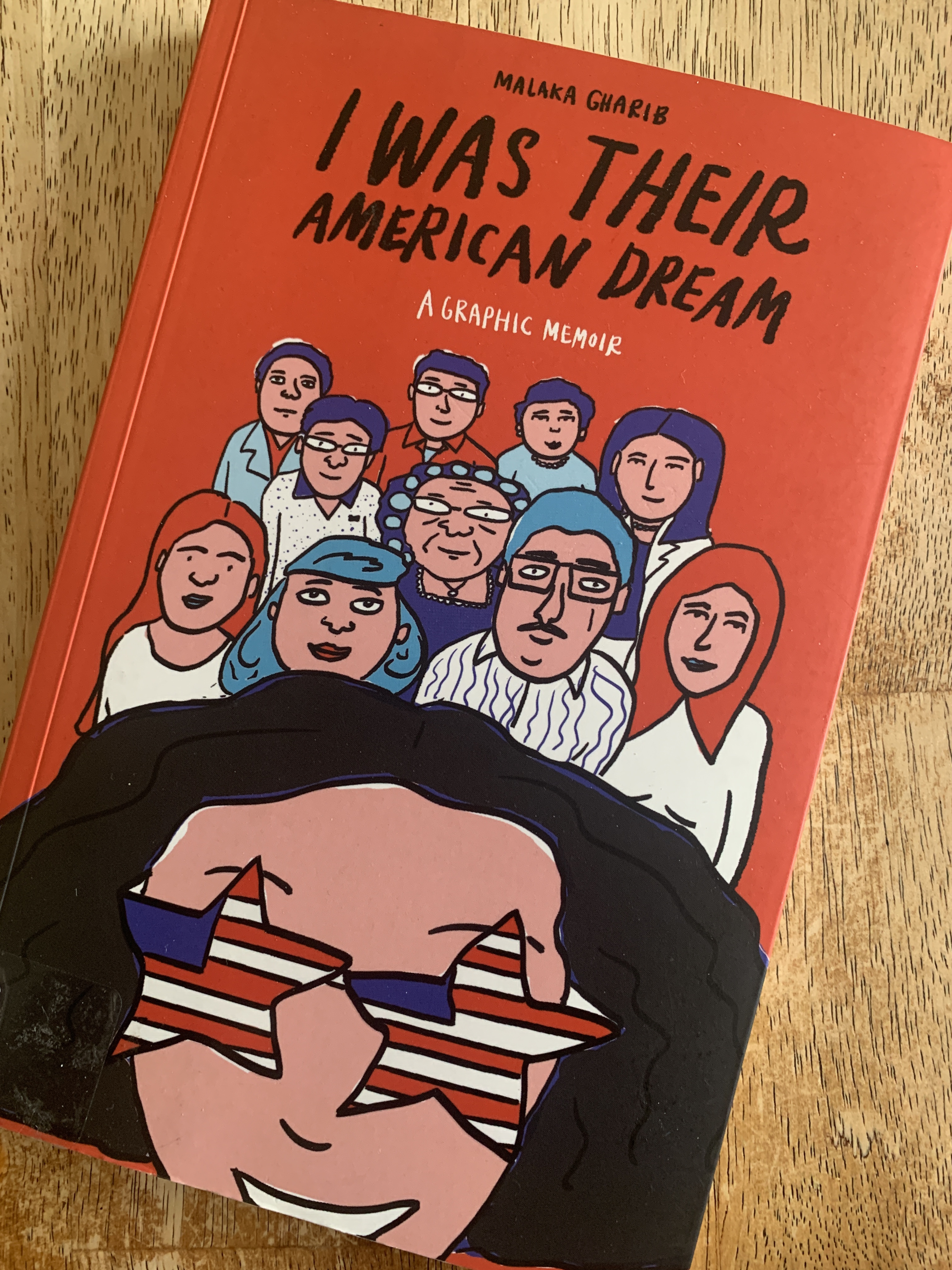
I was hesitant to read the book, afraid it would pit the author’s two cultures (Egyptian and Filipino) and faiths (Catholic and Muslim) that her parents identified with against each other. Raised as the daughter of immigrants from very different backgrounds in California I was very pleasantly surprised that the book leads with heart and positivity for the unique, yet universal feelings she experienced in her life. The short 156 page red, white, and blue filled pages are funny, poignant, and reflective, that I think high school readers and up will enjoy spending time in Cerritos and Egypt through the eyes of Malaka. It is easy to say that you can’t be Muslim and Catholic, but she doesn’t opine on the right or wrong of it in large terms, she discusses her life and her own situation. As a teacher I would see students that would attend Islamic school five days a week and then go to church on Sundays, whether you agree with the choices this author/character makes is not what I intend to review, it is her life, but rather the manner in which it is shared. There are many kids out there from “conflicting” backgrounds, and to see someone take the love and benefits offered to forge their own path in creating their own American dream, was a nice twist on the immigrant identity finding narrative.
SYNOPSIS:
The book starts with introductions to the characters, her family members that influence her, and then begins the tales of what brought her Filipino mother and Egyptian father to America, how they met, married, started a family, and divorced. Malaka exists outside her family in school, balancing her heritage and coming of age. Raised during the school year by her mother and extended Filipino family, she spends summers in Egypt where her father resides with his new wife and children. Coming of age as an immigrant, balancing cultures, religions, school, and dreams, the book concludes with her marrying a white Southerner and adding to the mix.
WHY I LIKE IT:
Even though she identifies more as Filipino American and goes to Catholic school, there is a fair amount of Islam and Egyptian culture included in the book. I love that she loves her step mom and step siblings and finds beauty in Islam, learns to pray, read Quran, and mentions her love of Prophet Muhammad saw. Sure as an Islamic school librarian, I wish she chose Islam, lived it and centered it in her life, but this is not a character, this is a real person, and to see her lovingly showing the goodness in Islam and how it has positively influenced her, is nice to see nonetheless. There are a few storylines I didn’t quite understand, the skateboarding in Egypt a big one, but the quick pace of her narrative life-story flows well and is easily consumable. Often stories like this are overly dragged down by dated pop cultural references and over criticizing “othering” paradigms, but this book contains enough to keep it grounded without it alienating contemporary readers.
FLAGS:
Stereotypes, lying, relationships, periods, music, dancing, nothing really stands out, there might have been some language, I read it a few days ago and honestly don’t recall anything overly problematic, but content wise it is a mature teenage read with retrospection and marriage being a part of the narrative.
TOOLS FOR LEADING THE DISCUSSION:
I don’t know that I would shelve or teach this book, but I think it is one to file away in my head for people I might encounter looking for a book about blended faiths and cultures benefitting from the many worlds they have one foot in and one foot out of, and those ultimately looking for a place to see their experiences mirrored.
I found my copy of this book at my local public library and it is also available here from Amazon.
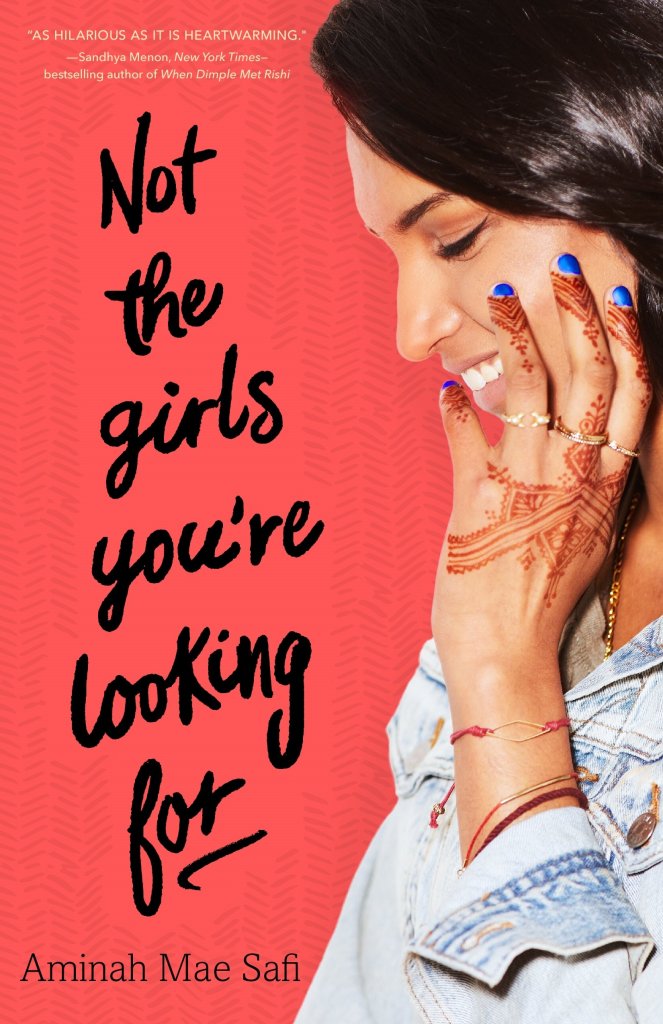
This book did not work for me. Despite the fact that the main character is Muslim and it is Ramadan, no matter how much I wanted to connect with this multicultural lead and her friends, and see myself in her as she navigates high school, I just could not. The writing was choppy 3rd person which distanced the main character for me, the crude language on every page, the drugs and alcohol in every scene, the detailed sexual encounters throughout, the lacking growth of the characters and the muddled point of the book in general made the book difficult to read. The book is an AR 4.9 but content wise is more suited for mature 18 year olds. Even this review might be a little too much, I’ll do my best to keep it clean. Ultimately this book missed the mark for me in showing females defining themselves, celebrating friendships and diversity, or even just creating characters to cheer for as they navigate life.
SYNOPSIS:
Leila is half Iraqi Muslim from her dad’s side and half American Catholic from her mother. She doesn’t know how to pray as her father isn’t religious, but celebrates Ramadan and Christmas and defines the world on her own terms. She is fearless and owns herself, hence she hates her name and goes by Lulu instead. The book opens with her making out with a boy in a closet which she kind of regrets and then goes to join up with her friends at the party to drink and get high and attack one another for their poor choices resulting in drama. In this instance Lulu’s anger pushes a boy in the pool, and then the four friends devise a way to get home and work out the lies they will need to tell to the parents involved. This scenario with only slight variations repeats five or six times in the book.
Lulu is the fearless one, Lo, short for Delores, is the leader, Audrey is an alcoholic math whiz and Emma, not to be underestimated and often is forgotten (literally) is coming out in her first lesbian relationship. Yes these labels are limiting and stereotypical, especially in a book calling for girl power or what not, but sadly that is really the only space they flesh out, not a whole lot more is known about them. The girls defend each other fiercely to outsiders, but are truly awful and angry to one another all the time. They break apart and Lulu doesn’t really know why, so the path back to one another isn’t really cathartic. They pull a prank to get back at a boy that crossed the line with Lulu, but it fizzles when the threat of what the prank could do is enough to keep him away and they don’t have to complete it completely.
Between the parties there are some sub plots that weave in and out. Lulu has to spend time with Iraqi family friends who don’t accept her and are critical, in Arabic, of her mother. This gives some cultural layer to the story, but the characters are pretty flat and petty and hypocritical. The bombings in Paris a few years earlier, and the resulting bullying by classmates hardened Lulu, but there isn’t much info on how awful they treated her or how it defined her, so not much sympathy is garnered by the event nor does it help the reader get inside Lulu’s head. There is also a sweeter love story brewing than the one night stands that define Lulu, but then she goes with her mother to get birth control so she can sleep with him all while making it clear that he isn’t her boyfriend, she just wants to have sex with him- which she does on her seventeenth birthday.
Eventually the girls are back together and gushing with tales of sorrow and personal growth and vows that they will always be like sisters.
WHY I LIKE IT:
I don’t mind the premise so much as the execution of it. I get that people practice Islam differently, but I really don’t get the need to even bring her religion in to such a story. Culture maybe, but even that is a stretch. I don’t know if the story would be better if it was first person, I would like to think so, as not connecting with the main character was such an obstacle for me. I wanted to see her grow and change or at least have clarity in her decisions even if I didn’t agree with them or couldn’t relate to them. I wanted to feel her remorse or the weight of her decisions, but was often just told in passing that something scared her or was hard for her, not shown it. The theme of not belonging anywhere is a legit one, but I don’t know that this book explored it, it just sort of brushed by it almost as a trial to see if the emotions would stick. Which for a character built up to be unapologetic and unafraid to suddenly want a victim label without any real emotional ties, didn’t work for me. There are such holes in the story, that at times things didn’t seem believable or details were so specific with no context that I didn’t get their purpose. I would have loved to know more about her brothers and the tests they went through, or why her family was so loyal to the Arabs around them. I desperately wanted something that showed a different side of Lulu not just the anger and “F everyone who wants to change me” mantra. People are scared of her and she enjoys that power, but I don’t get why they are scared and why she enjoys it. It seems like a big part of her story and of the book in general to miss. Yes she is independent, and I get that can be misread, but she almost seems one dimensional and flat which defies the concept of defining yourself on your own terms and carving out where you want to belong among groups that see you as other, right?
The character is pretty open that she knows little about Islam, she also claims she isn’t interested. She fasts not so much because it is a commandment but more to appreciate poor people. She says this, but actions don’t seem to back it up. She tries not to drink during Ramadan but she still smokes, gets high, makes out, and lies once the sun goes down. At one point she calls a bride and her mother whores, and refuses to apologize, so her dad gets a fatwa issued. Lulu’s mom mentions that something went all Shiite on the situation, so I’m not sure if the fatwa issuing for such a specific thing is a shiite thing or something I’m just not aware of or familiar with as a tool for handling family dramas.
FLAGS:
The whole book really. Sex, drugs, alcohol, sexual assault, lying, cheating, blackout drunk, vaping, talk of orgasms and going down, lesbian relationship, hetero relationships, sexual encounters, language etc etc etc.
TOOLS FOR LEADING THE DISCUSSION:
Would never cross my mind to share or suggest this book. Even religion representation issues aside, I don’t know that there is really a single “healthy” relationship highlighted among the main characters, some of the side characters maybe, but not enough information is given to really make that case. The characters just all seem so angry, not saying teenage years aren’t angry and messy, but this one doesn’t seem to add much perspective to that singular thought unfortunately.
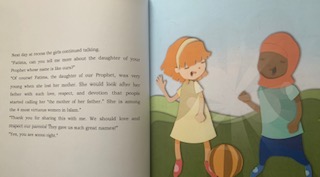
This book is interfaith, and learning your own roots, and asking questions about your heritage and faith all rolled in to a cute little package for children. But despite it’s length, 28 pages, and cute little girls on the cover, the book is for more first grade/second grade and older children, rather than toddlers.
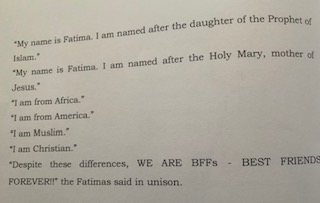
The message that we are more alike than different is a great message, even for the littlest of readers, but this book goes a little deeper, and the didactic approach will bore them a bit. Older kids for sure 2nd and up will benefit from the exchanges between Fatima and Fatima and learning both valuable religious lessons about their namesakes as well as respect and friendship for those with different beliefs.
Fatima is from the Democratic Republic of Congo and on her first day of school in a America she tries to remember her father’s advice, that meeting new people can be a challenge, but also an opportunity.
At lunch a little girl asks to sit with her, excited to meet someone with her same name. Fatima asks her why she wears a scarf, and listens to her explain it is because she is Muslim and the hijab is part of her religion.
At recess, Muslim Fatima tells non Muslim Fatima that she is named after Prophet Muhammad (saw)’s daughter and asks her who she is named after and if asks she is Muslim, too. The other Fatima says that she is Catholic and that she doesn’t know why her parents named her Fatima, but that she will find out and let her know.
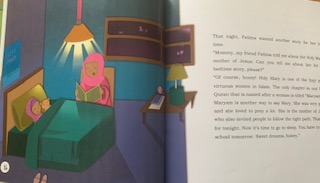
That night Catholic Fatima learns that her mom had gone to Fatima, a city in Portugal, a famous city for all the miracles that have happened there and the apparition of Mary, the Mother of Jesus. Fatima’s mom had gone there to pray for a baby and promised if she got pregnant that she would name the baby Fatima.
The next day Catholic Fatima tells Muslim Fatima and also asks her if she has heard of Mary, the mother of Jesus. Muslim Fatima says she has heard of her, but doesn’t know much and that she will ask her parents and let her know.
Muslim Fatima learns that Mary is one of the four virtuous women in Islam and that there is a chapter in the Quran named after her. When she tells Catholic Fatima the next day at school, the girls marvel at how much they have in common. They are BFFs despite their differences and beautiful ones at that.
I love that the book is framed in opposites to show similarities. I also love that it shows women in our respective faiths with similar values, similar names, and Mary’s role in both our traditions. So often, when we are building bridges we discuss how Yusuf is Joseph and Musa is Moses, Yahya is John and we go through the old Prophets, this was a nice change in perspective.
The illustrations are nothing to get excited by, but they do show smiling warm characters and family members. They serve as a distraction from the text heavy pages that do nothing to grasp the reader with their plan font and majority white backgrounds.
This book would work for Muslim children, Catholic children, really all children. It talks about faith, but as the characters view it, not in a one is better or more right than another. There is a second book in the series about Fatima inviting Fatima to an Iftar party that I look forward to checking out soon. I hope it is a little more rich in dialogue and character building instead of just a foil to disseminate the information between the two faiths, but even if it isn’t I still think the book has value and you should check it out.







 Islamic School Librarian