Tag Archives: Ayesha N. Rahmaan

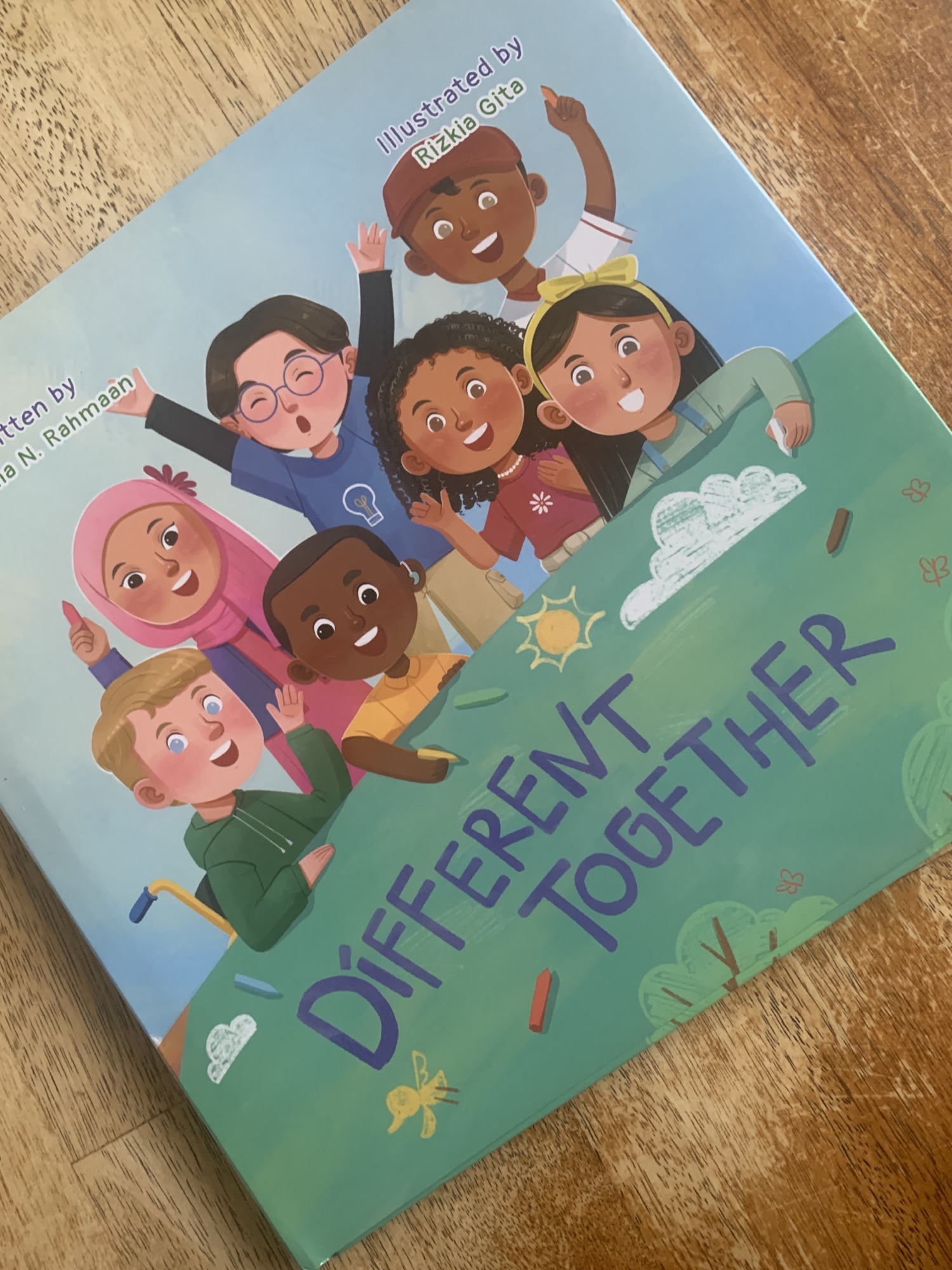
Different Together by Ayesha N. Rahmaan illustrated by Rizkia Gita

Standard
Different Together by Ayesha N. Rahmaan illustrated by Rizkia Gita

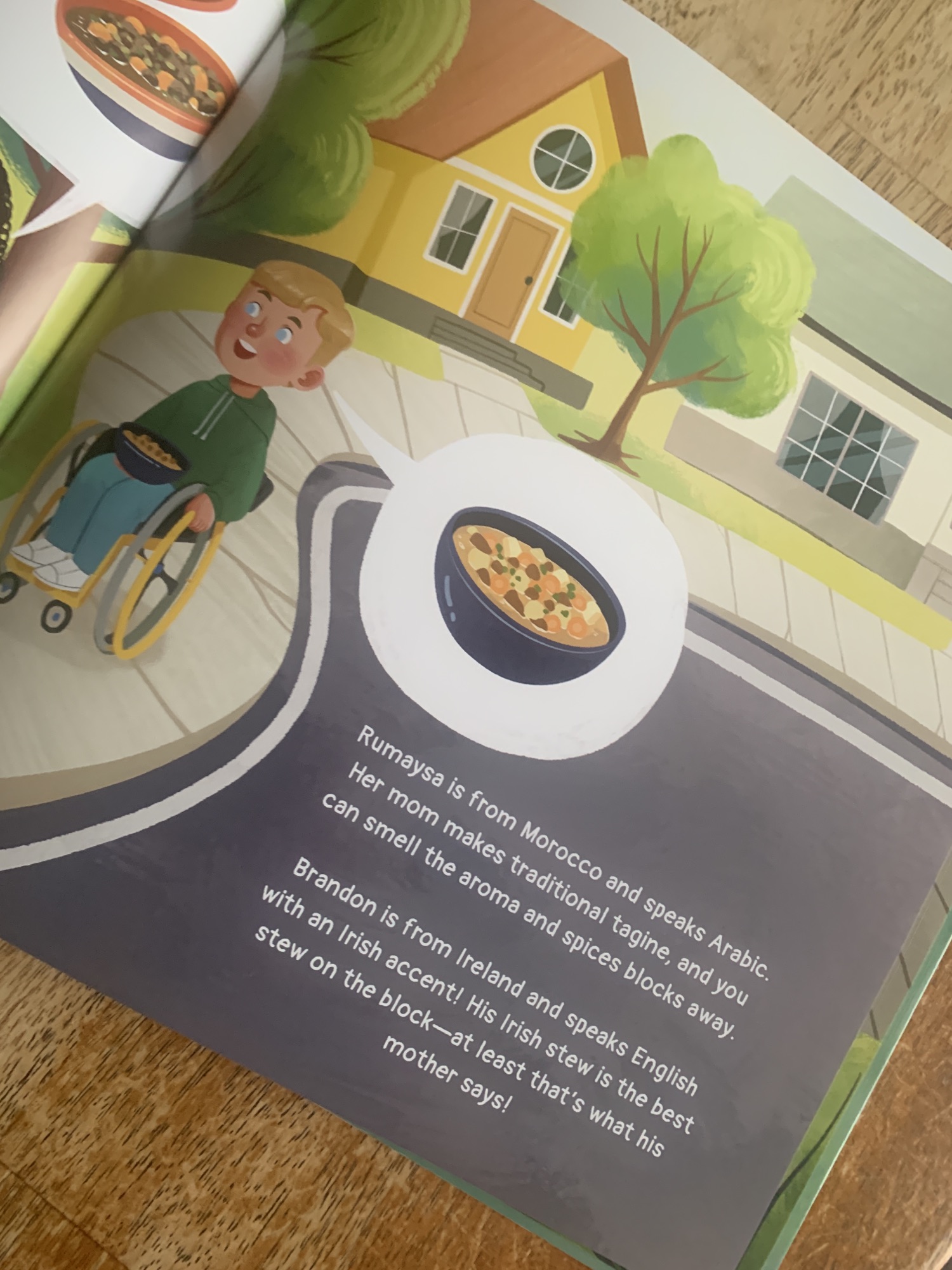
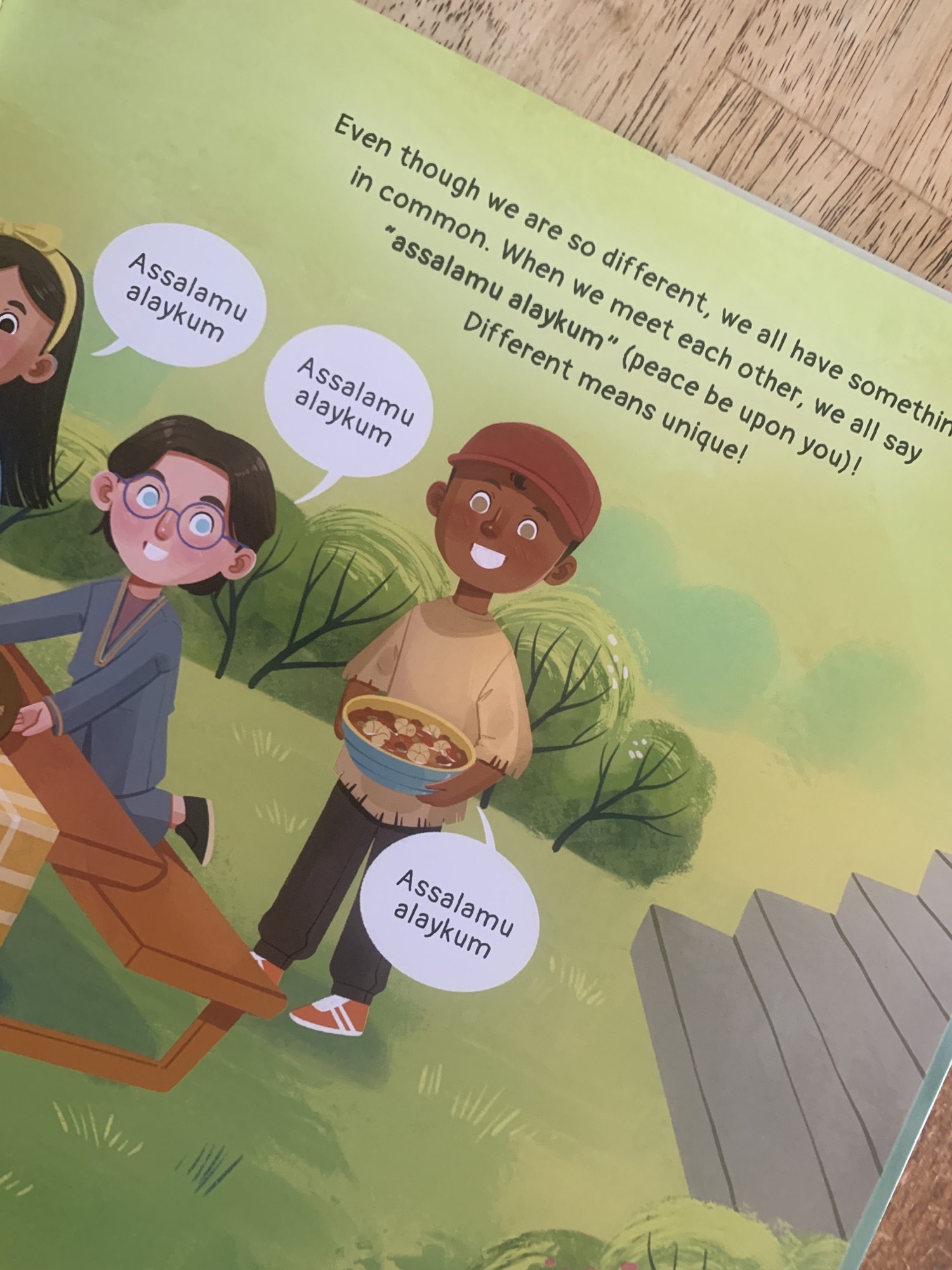
This 32 page large 10 x 10 hardback book explores how we are all different and unique, while also being the same too.  The illustrations and text present a nice way for children to learn that Allah swt created us all to be different in our appearances, what foods we like, how we dress, how we speak, but come together to all say Assalamu alaykum and stand foot-to-foot to pray.  Some of the refrains are a bit abrupt, and it really focuses a lot on physical descriptions and food, the target audience though of preschool to early elementary, will see themselves in the book, probably even a character that looks like them, and expand their understanding of al-Khaliq creating them all.


The book starts with an ayat from Surah al-Hujurat and then starts by asking the audience to imagine a world were everyone is the same.  It highlights that Allah created each of us starting with prophet Adam (as) to be just as we are, with different traits. From there, neighbors are introduced: their names, country of origin and favorite foods that all come together to make a table of sharing.

In school the students look different and play different, in the city the different building types are shown to come together, and in the masjid our hearts are in sync when we pray. The text concludes asking the reader to highlight five ways they are unique and a hadith in Arabic along with its English translation.

The Prophet;s Sunnah by Ayesha N. Rahmaan illustrated by Laila Ramadhani Ritonga

Standard
The Prophet;s Sunnah by Ayesha N. Rahmaan illustrated by Laila Ramadhani Ritonga

This joyful 20 page board book shows our littlest (and biggest) Muslims some of the Prophet’s sunnahs in a way that they can also do in their lives.  The adorable illustrations appeal to kids and the simple text showing the acts are relatable and engaging.  I did cringe at times with the changing size of the basic font and the perspective of some of the lines being told to the reader as “your” and others as “our,” but I’m a bit of a sucker for kid’s books about Rasulullah.  Some of the vocabulary might need some explaining, but overall my little ones enjoyed the book when I read it, and I have caught them looking through it on their own, so yes I’m aware that I’m over looking a few basics.

The book starts with a hadith on the dedication page and is then followed by an ayat in Arabic and English meaning of the translation about following Prophet Muhammad (saw) if you love Allah swt.  It  introduces Prophet Muahmmad saw to the little readers, not stressing the call to Prophethood and revelation, but him as a “neighbor, friend, father, husband, leader and teacher.” Starting with Bismillah, sharing, and helping, visiting the sick, being humble, some pages are filled with multiple images, and others a single scene.  Some have Arabic transliteration and one has Arabic script accompanying the English.

The illustrations show different sizes, colors, abilities.  Some of the girls wearing hijab, some not.  Readers are bound to find someone in the book that looks like them.  The binding quality and page thickness is well done and the 8.5 square size makes it great for story time or reading in small groups.

Sajjadati and the Power of Dua by Ayesha N. Rahmaan illustrated by Laila Ramadhani Ritonga

Standard
Sajjadati and the Power of Dua by Ayesha N. Rahmaan illustrated by Laila Ramadhani Ritonga

img_7520

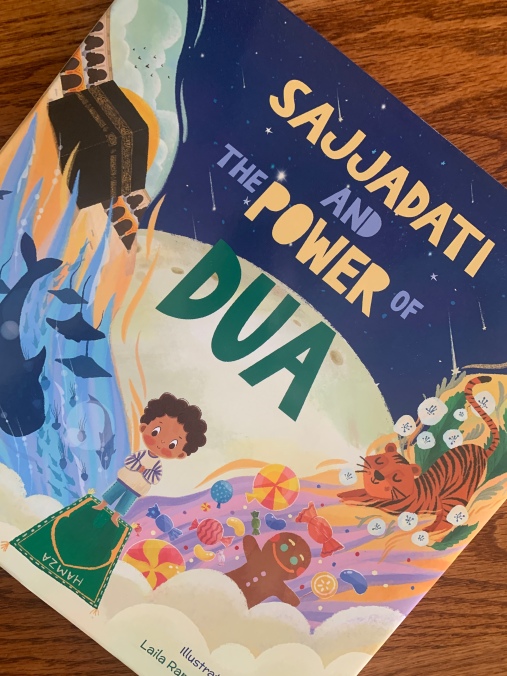
This 38 page large hard back picture book is absolutely beautiful: the illustrations, the tone, the thickness of the pages, all come together to create a child’s wonderment about the power of salah and dua with grounding in the actual parts of prayer.  On my first reading the imaginative “magical” aspects of the prayer rug, “Sajjadati,” was sweet and endearing, but as I thought about the story and then reread it, I had some concerns.  I know the book is meant for children, I know I am a reviewer and thus am over analyzing it, so I point the following out as a “heads up” so to speak, and for you to make your own decisions if the literal text will be misleading or if the overall mood of the book will be taken as loving dua and the closeness prayer brings one to Allah swt.
img_7521

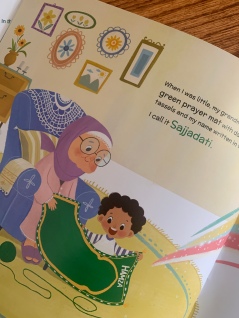
The book starts with a little boy recalling when he got his green prayer rug from his grandma, that has his name on the corner (in the illustration it is centered on the top, not in the corner) and him naming the prayer rug, “Sajjadati.” The following page, same spread, then says,  “When I have Sajjadati with me, I can pray anywhere.  And when I pray on Sajjadati, I can go anywhere.” These lines give me pause, because even if the prayer rug is lost or not with him as he grows up, he is still going to need to pray. The importance of the prayer rug seems over elevated, albeit sweet, religiously a little unsettling.  The second of the two lines, about going anywhere, is also a bit of a gateway to the rest of the book and almost encouraging one’s mind to wander during salah.
img_7522

The next page gets back on track saying that starting to pray and saying “Allahu Akbar” leaves this world behind, the little boy says surahs he has memorized, and knows Allah swt is watching him.  He asks Allah for what he wants, and his imagination takes him on adventures after each salah. He imagines flying, and being a superhero.
img_7524

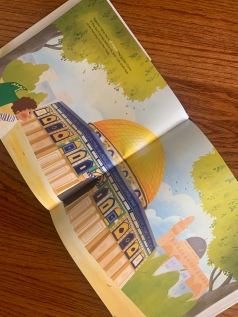
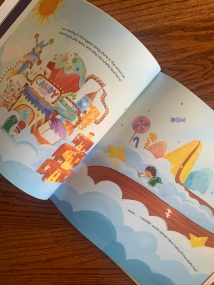
The story then returns to being in prayer, not after, and going in to ruku.  The text has him imagining he is in the “biggest candy store in the universe” wondering if Jannah has rivers of chocolate before standing up straight again saying “Sami Allahu liman hamidah,” and contemplating if there is a place where his prayers would be worth more and Sajjadati taking him to al-Aqsa.
img_7523

In sujud Sajjadati tickles his nose, but he doesn’t mind because he is closest to Allah swt in this position, and while he won’t let his “annoying little sister,” bother him, his mind does drift to being on a boat in the sea with seagulls squawking, “salaam.”

Hamza is then making dua for those suffering.  Since nothing is impossible when making dua, he is also asking for pets from the savanna, but knowing that Allah swt will provide what is best.  He makes duas to go for hajj and concludes his salah by folding up Sajjadati and finding peace in Allah swt being al-Mujeeb.
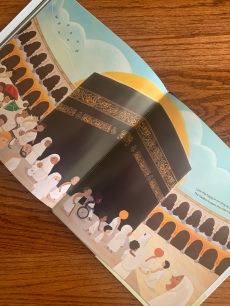
img_7525

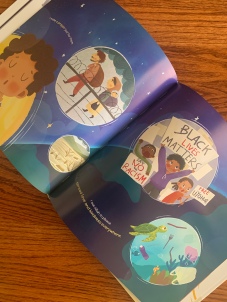
I love the heartfelt framing of salah and the interweaving of both real and whimsical wants, as well as the sprinkling of facts about prayer into the story, but I honestly struggled a bit with the juxtaposition of the parts of prayer with the day dreaming elements.  I also struggled with the tenses, and find myself constantly rewording this review to reflect the book’s timeline.  Hamza is with his family, for example, hearing the current event news, while the next set of pages has him back making dua at the end of the prayer he started at the beginning of the book.  And the hearing the news and the praying for people is all being conveyed in the present tense, not clear if he recalled hearing about strife in the world and then made dua, or paused heard and resumed his prayer, it all seemingly happening at once, but that doesn’t really make sense. The title also says dua, not salah, and so much of the book is about prayer, that I feel like the two get conflated erroneously, and dreaming big during dua is different than having your mind wander during your salah.
img_7526

The book starts with an ayat from the Quran in Arabic text and meaning of the translation in English and concludes with a glossary and space to complete a Dua List.

If this book seems like a good fit for your young child, I ordered mine from Crescent Moon Store and you if you use my initials ISL (Islamic School Librarian) at checkout you’ll save 10%.

Call Me By My Name: 99 Names of Allah by Ayesha N. Rahmaan illustrated by Azra Momin

Standard
Call Me By My Name: 99 Names of Allah by Ayesha N. Rahmaan illustrated by Azra Momin

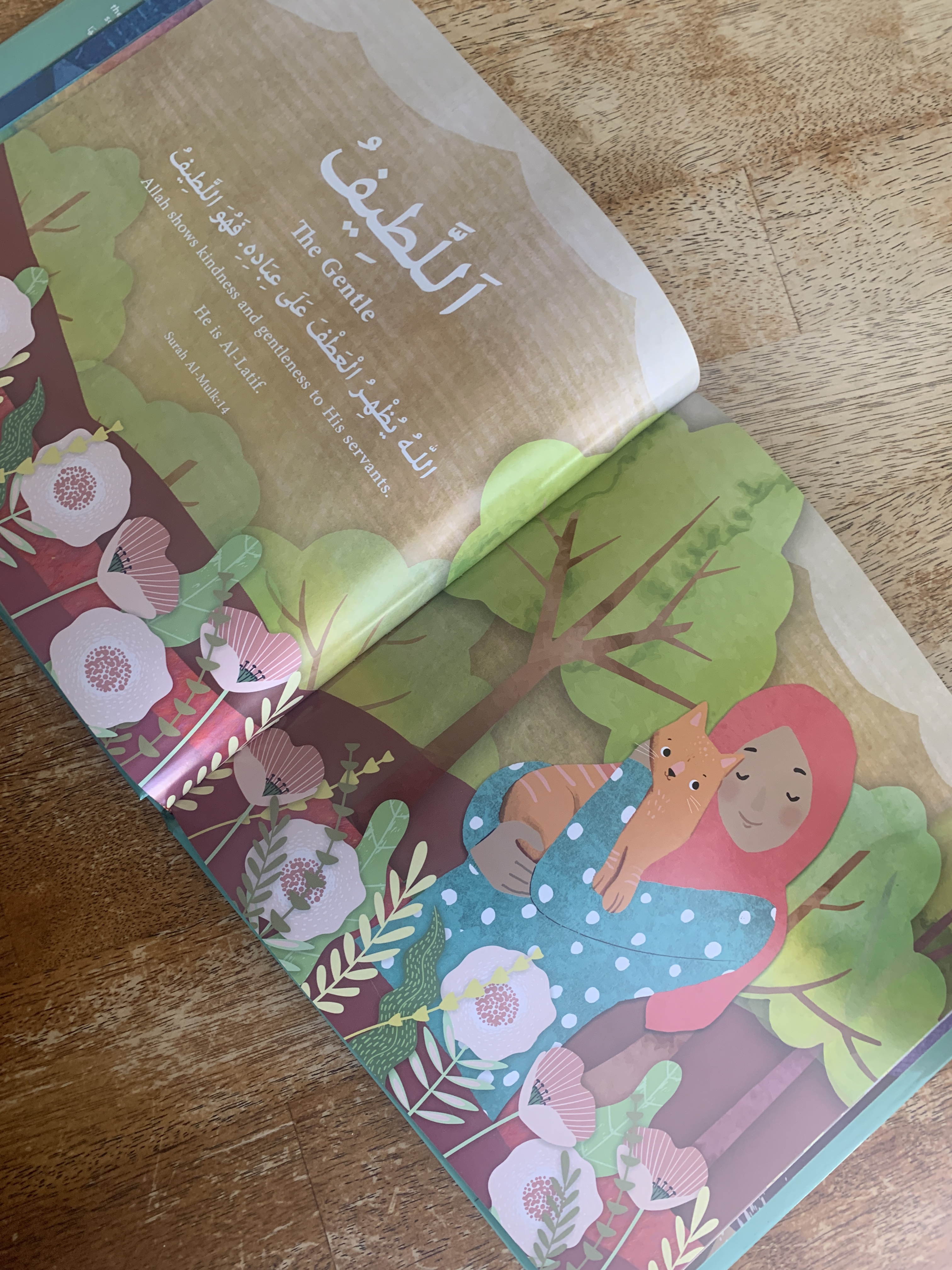
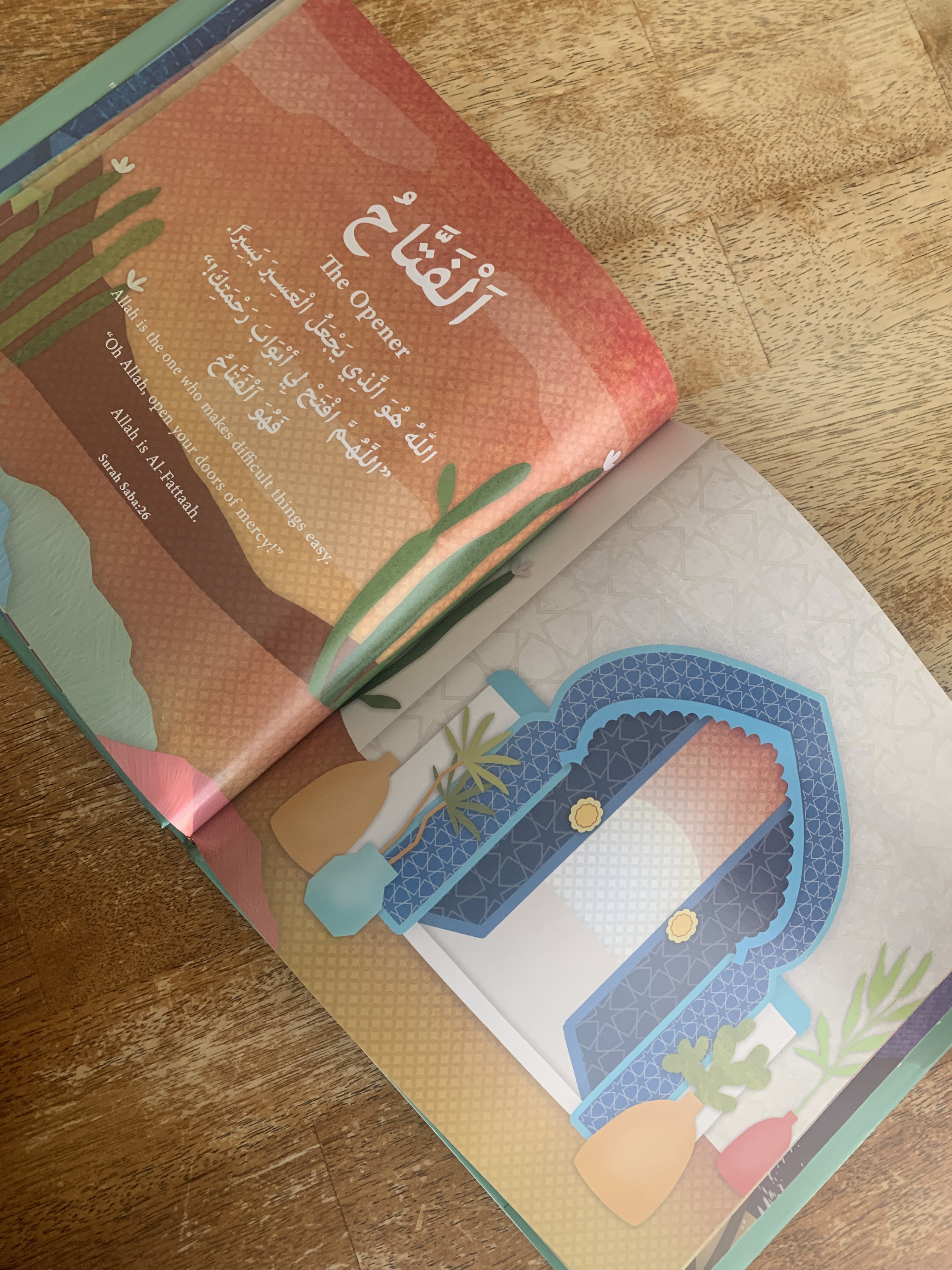
If you are going to put out a book that has been done hundreds of times before; think numbers, alphabets, Islamic phrases- then be sure and make your book stands out.  And while yes there are numerous English and Arabic books of all sizes about the beautiful names of Allah, this book does in fact stand out.  The shiny cover, with or without the dusk jacket, the sturdiness in your hands, the illustrations, the large font and easy to read English and Arabic (with harakat), is an absolute joy to read, look through, and talk about with children four and up.  The book works in a lot of settings for a lot of ages because of its simplicity, presentation, and appeal.  Kids will pull this off the shelf and look at it without prompting, just as adults can discuss the names, and build lessons off of the ayats included.  The versatility of the book is why I’m stretching out of my comfort zone of fictional reads to review this Islamic non fictional book.

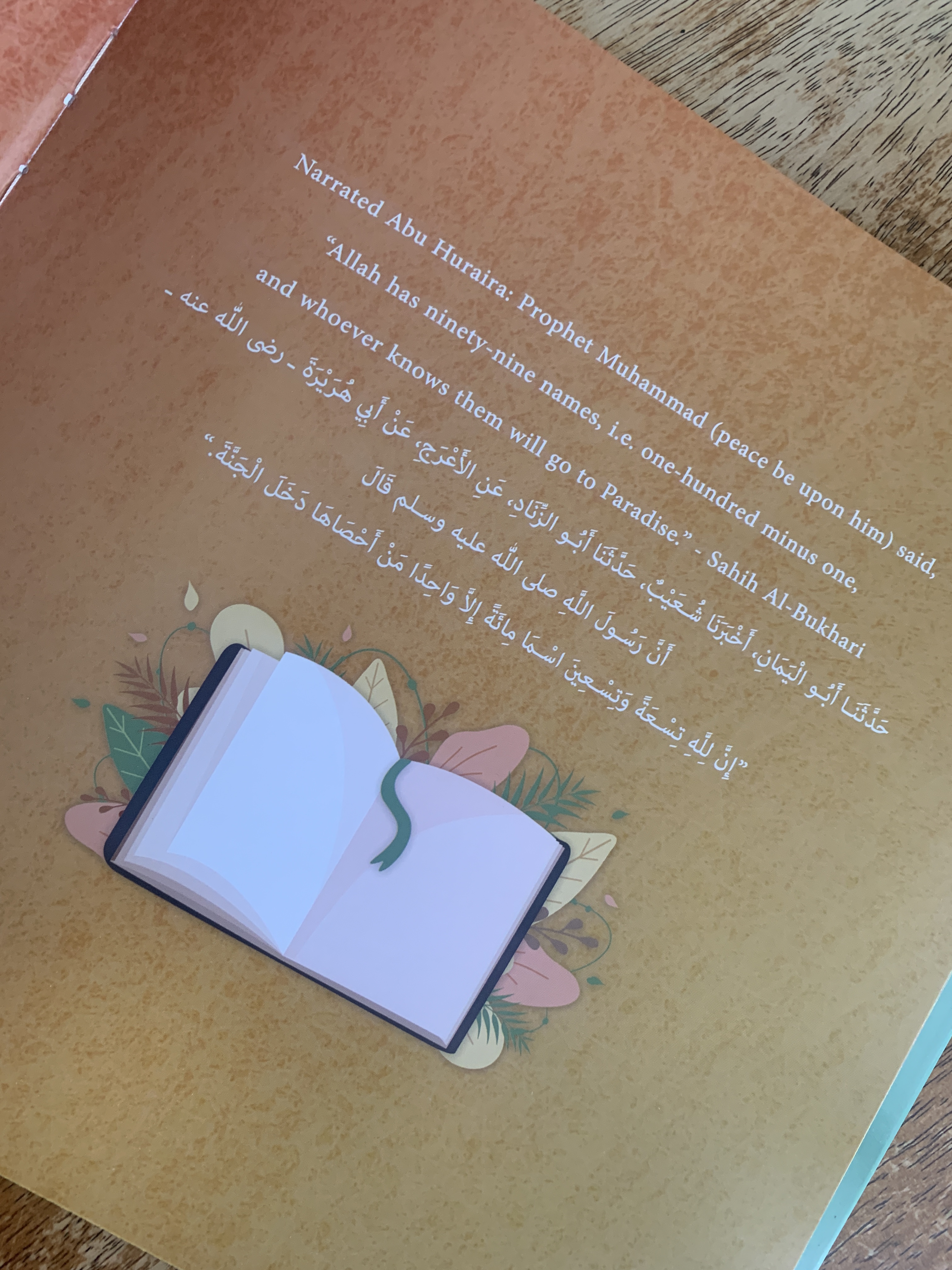
The book starts with establishing that the 25 of 99 names included are those “specifically mentioned in the Holy Quran, with a reference to the surah and aya where each name can be found.”  It shares an aya about the Asmaa Al Husna and a hadith narrated by Abu Huraira and then starts right in.

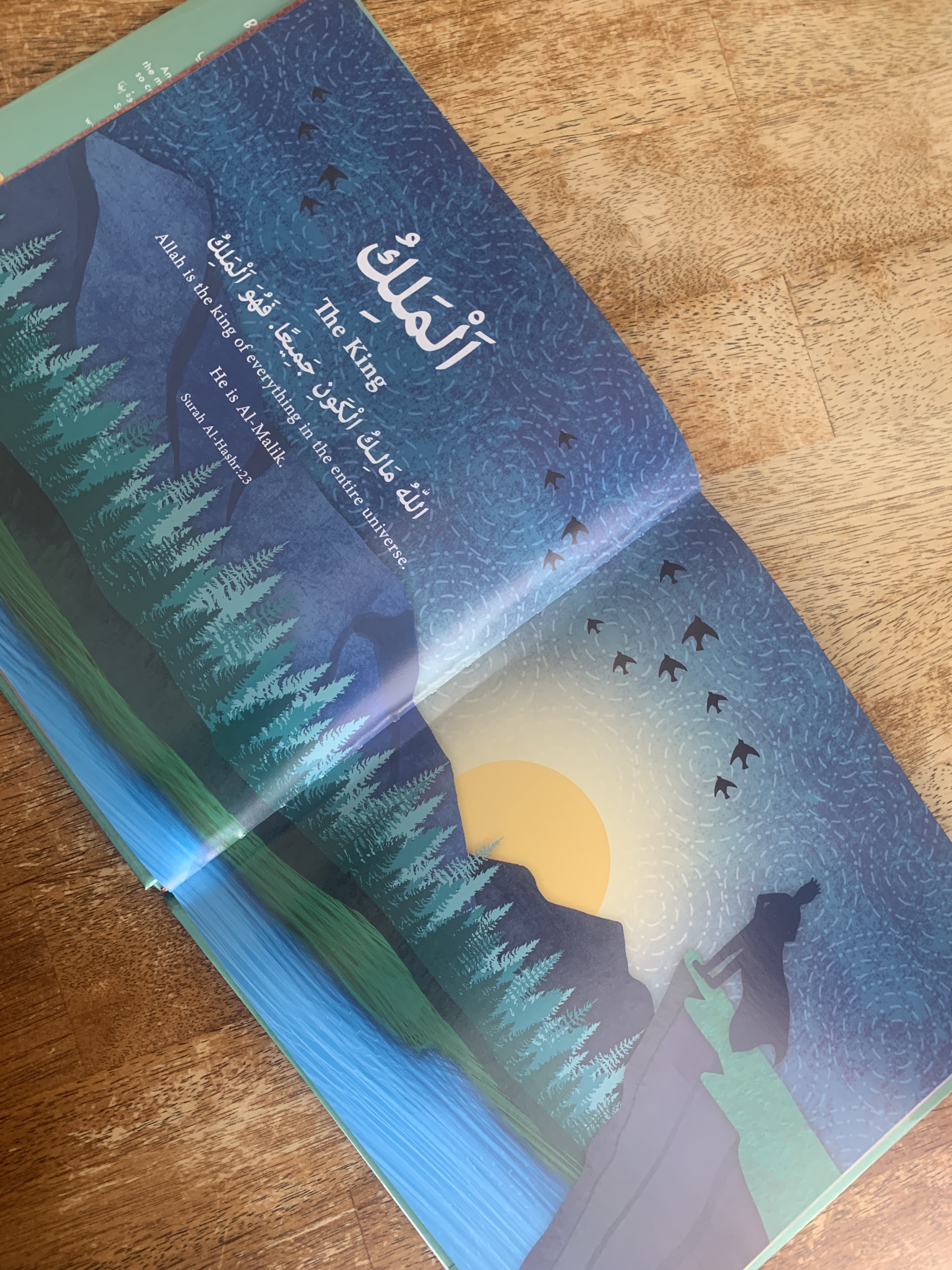
Most of the names are given a two page spread, a few are only given one, and the English, Arabic, aya, and source are provided.  The illustrations are joyful children and nature scenes.  The book concludes with a spread of all 99 names in English and Arabic with the translations.

You can purchase a copy here.