Tag Archives: New School

We Are Big Time by Hena Khan Illustrated by Safiya Zerrougui

Standard
We Are Big Time by Hena Khan Illustrated by Safiya Zerrougui

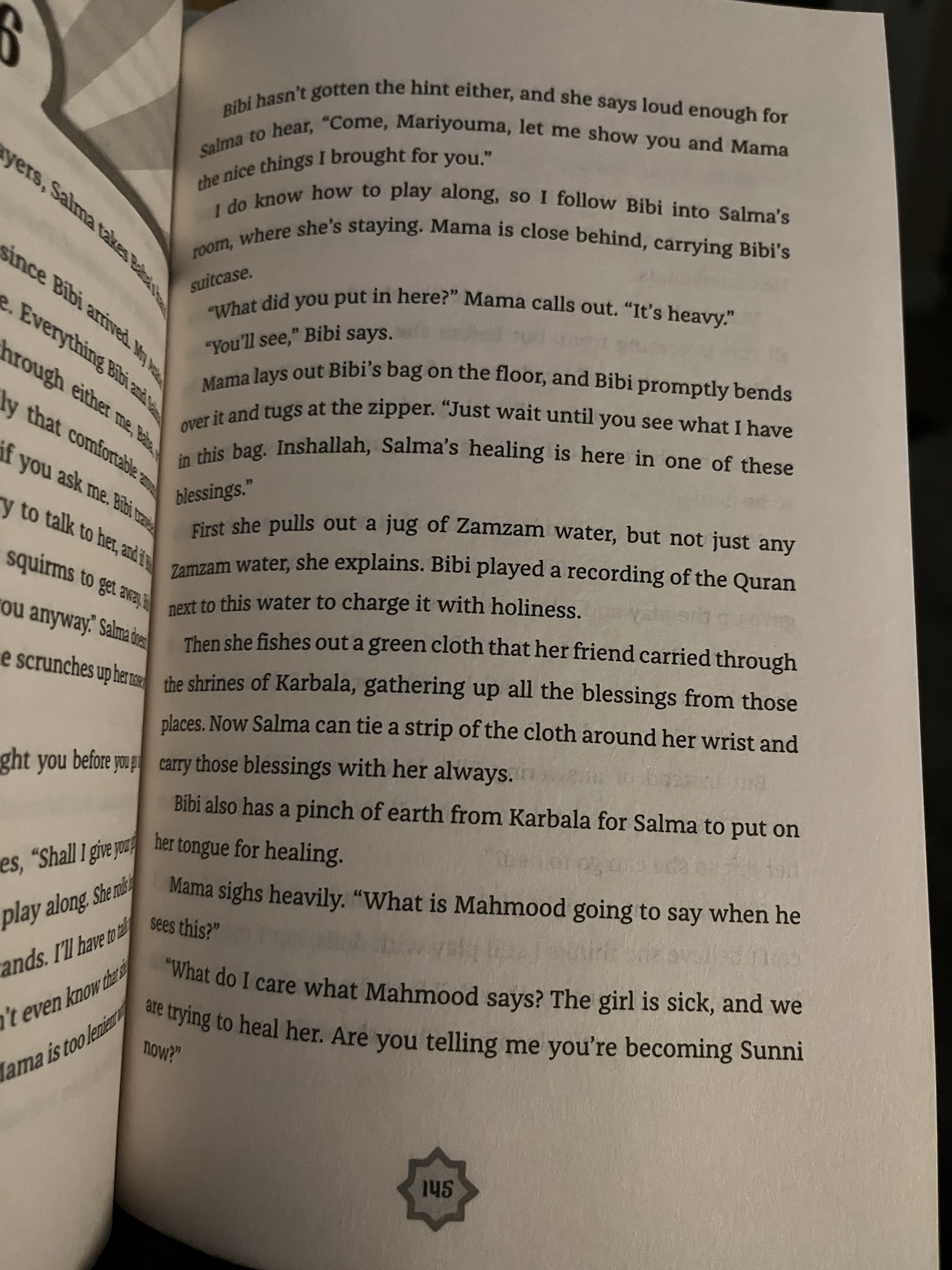
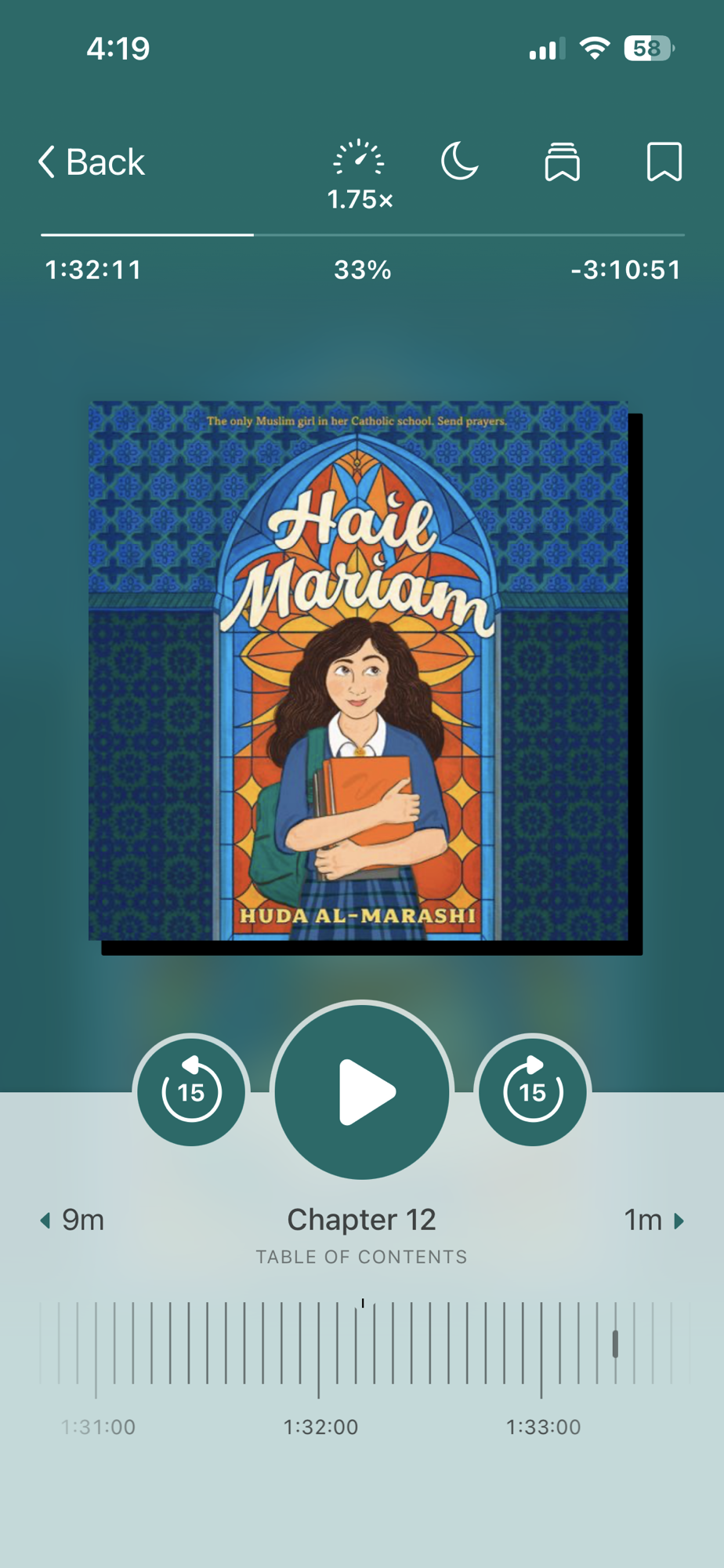
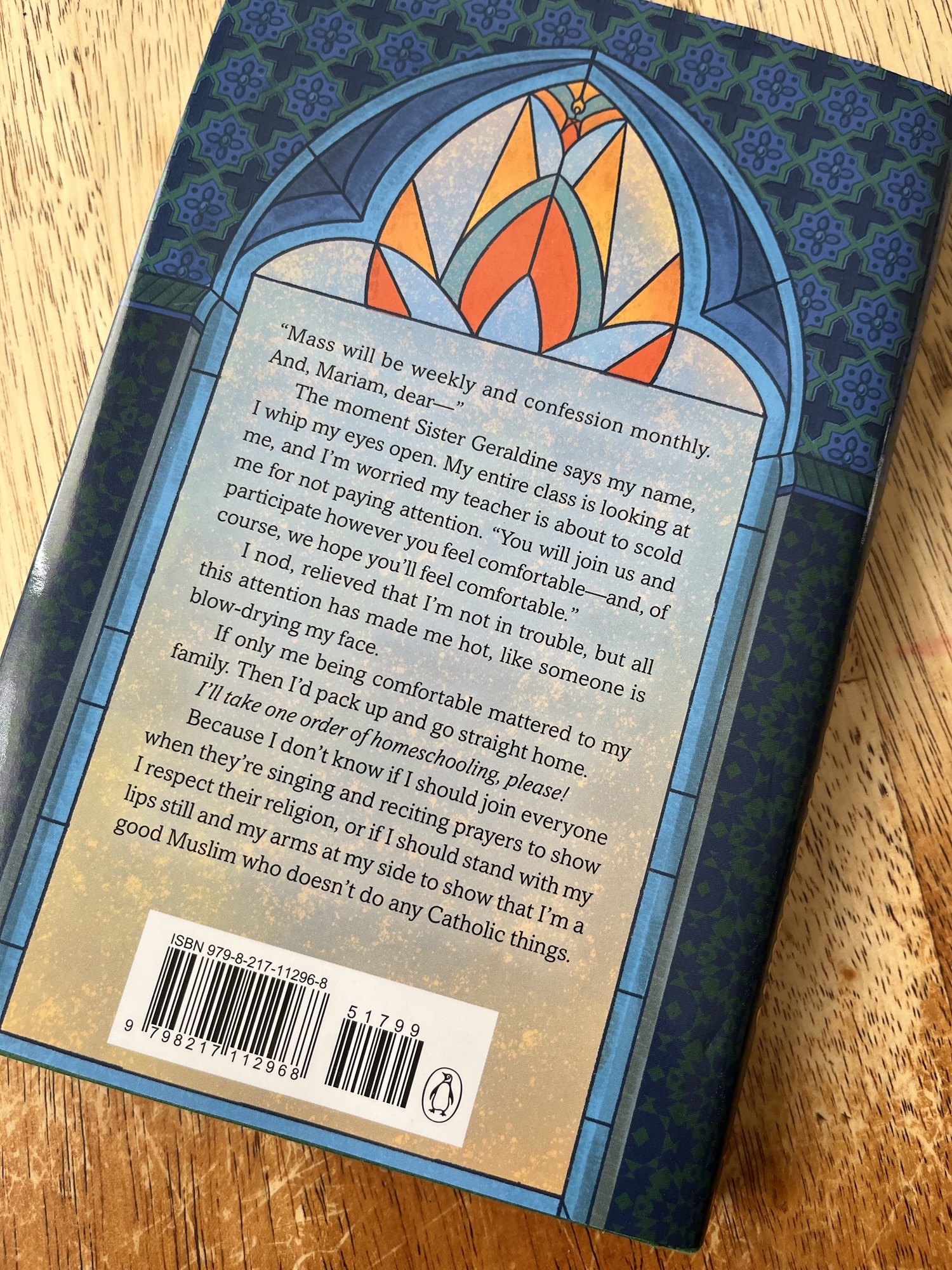
With themes of being new in school, balancing sports and school, teamwork, focusing on the positive and pushing back on media stereotypes, this 240 page middle grade graphic novel inspired by a true story is a feel good story that can be enjoyed by all.  The all hijab wearing Muslim high school girls’ basketball team is researched and noted in the backmatter, and while often Hena Khan books feel performative, the tone of this is not identity based. The characters are Muslim, they are not questioning their religion, and in fact push back on the media who try and make it about what they have to overcome by practicing their faith, rather than on their abilities on the court.  That isn’t to say that the Islamic representation is strong.  For characters in an Islamic school, a whole page is dedicated to being the new kid in each class, but only one “salaam” is offered.  The team informs their non Muslim coach when they need to pray which is nice, but surprisingly with a Muslim author and Muslim illustrator when the protagonist prays at home with her family, the men and women erroneously stand together.  The framing, the setup, the accomplishments are all Muslim centered, but the book is not particularly Islam centered. The take away of teamwork, hard work, and normalizing Muslim hijabi women in sports is well done, and I think an easy book for kids to identify with as they read the panels of Aliya dealing with stresses and changes, on and off the court. This book releases next month, and I encourage you to consider for yourself if you feel the author has done enough with her platform to speak about Palestine before supporting or not supporting the book.

SYNOPSIS:
The book starts with Aliya, her two brothers and parents stuck in a car headed from Tampa to Milwaukee.  They are relocating to be closer to her grandparents, and the kids are not excited.  The first day for the trio at Peace Academy stands out because the school is big.  Aliya who has played rec basketball in the past, now decides to try out for the school team.  Tryouts are a bust, only nine girls show, so they all make the team.  With hopes of turning a failing program around, the school has hired a new coach, a non Muslim who used to play Division 1 ball.  It seems Aliya might start to make friends with her teammates, but then she is named co-captain which ruffles some feathers, her grades start slipping, and the team still isn’t winning. When the media takes an interest in the team, the pressure mounts to represent themselves, their school, their faith, and show what they can do on the court.

WHY I LIKE IT:
I love that identity is not in question and that the characters articulate the worries they have about their representation in the media, not because of something they’ve said or even Islamophobia, but just based on the framing of the questions, and assumptions that abound.

I read a black and white arc, so at times I didn’t know who was the dad and who was the older brother, but even with that confusion, the beginning is a bit stilted.  The dad doesn’t know if his daughter was any good at basketball, and the dialogue is so flat to set the stage, that I was glad it only lasted a few pages.  I appreciated that the parents were stressing grades, but were not overly narrow minded, they were presented in a very level headed supportive way as to not fall into a common desi/immigrant stereotype.

I don’t know why the prayer scene is wrong, but the more I try and tell myself it was just a mistake, the more mad I get.  This is why beta reading is so important, Muslim kids will notice, it will make the book feel just that much less authentic, and it so easily could/should have been fixed.

FLAGS:

None, a little bit of Islamophobia, but it is pretty clean

TOOLS FOR LEADING THE DISCUSSION:

The graphic novel format makes the book a pretty quick read, and most of the discussion points are handled in the text, so I don’t know that a book club would benefit.  I do think having it on the shelf for kids to pick up and read, will keep the book bouncing from one reader to the next.  I know my kids have all read it…that’s the beauty of graphic novels, just having it around means it gets picked up, read, and often finished, despite the readers age or even interest.

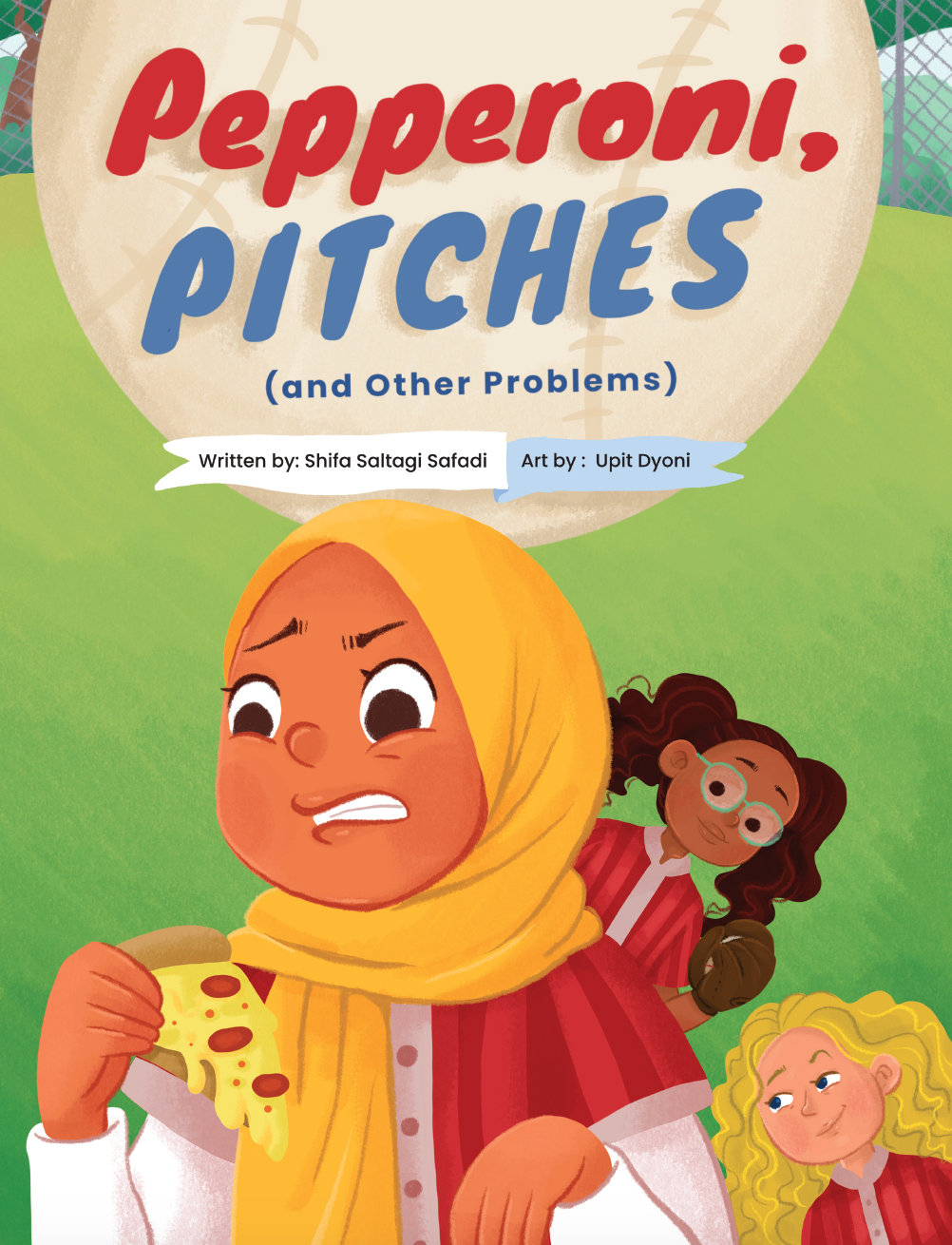
Pepperoni, Pitches (and Other Problems) by Shifa Saltagi Safadi illustrated by Upit Dyoni

Standard
Pepperoni, Pitches (and Other Problems) by Shifa Saltagi Safadi illustrated by Upit Dyoni

pitches

I absolutely love how smart this book is, and how it allows for elementary aged readers to feel that “aha moment” when they read it, get it, and realize that they need to remember the lessons because it could happen to them.  The illustrations are an added bonus and are perfectly aligned with the tone and text of the story.  My only issue, is the title.  Pitches reads as a euphemism for another word and since the book involves girl drama, teasing, and misunderstandings, it really is hard to not have that thought zap your brain when you see the title.  Perhaps if the “and Other Problems” would have used a bigger font on the word “Problems” the alliteration would have been more obvious, and hidden the word “Pitches” a bit.  If I’m alone in this, I apologize to the author and publisher, (I’ve mentioned my concern to them), but for others that saw the word and questioned the content, rest assured it is about baseball and the book doesn’t have even a speck of questionable content.

img_4682

Amira is at a new school, and luckily it is Tuesday, Pizza Tuesday to be exact, and she can’t wait to dive into a cheesy slice.  Unfortunately, Olivia takes the last cheese piece and when Amira asks if she will let her have it, Olivia says she had it first.  Stuck with an egg salad sandwich that smells, Amira sits alone and broods.

In gym they are playing baseball, but no one knows how good Amira is, and she is picked last.  When Amira is up to bat, Olivia is the pitcher and her pitches are terrible.  Amira still mad about lunch and afraid that the others will blame her for not hitting the unhitable balls, shouts, “you’re supposed to aim at my bat.”  Everyone laughs, but Olivia runs off clearly upset.  The new pitcher sends a decent throw and Amira hits a home run.  The captain of the team praises her, and Amira is hopeful she’ll have someone to sit with her at lunch.  After class, Amira sees Olivia crying in the bathroom and no one asking her if she is ok, Amira doesn’t feel so well, and doesn’t ask either. On the bus ride home Amira is greeted with cheers for her home run, but Elena the captain, isn’t among them.

img_4683

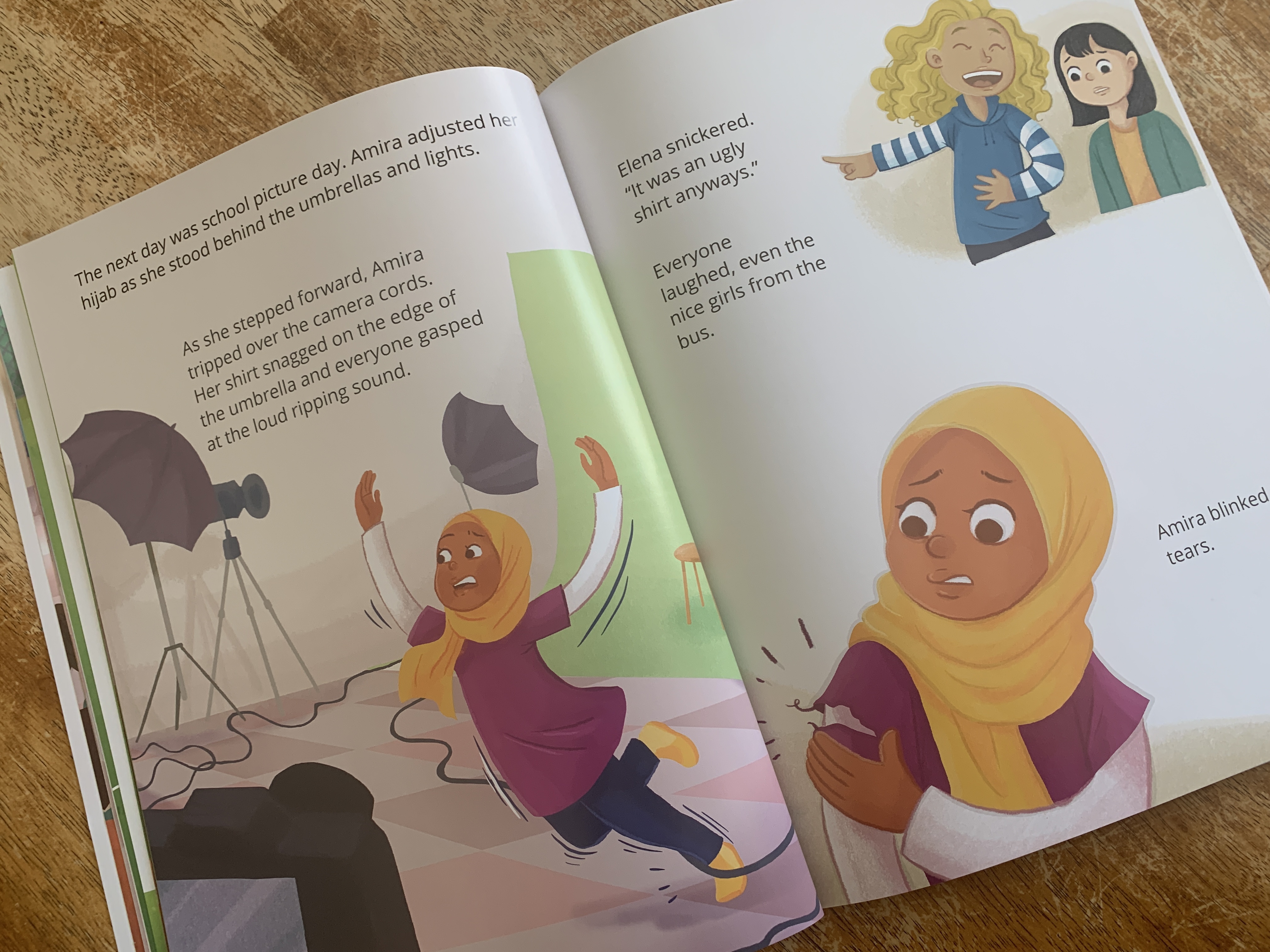
The next day is picture day, and Amira trips and rips her shirt.  Everyone laughs, Elena says, “it was an ugly shirt anyways.”  Only one person offers her help.  Could Amira have misread the whole class dynamics?  How should she move forward?

Sorry, I’m not going to spoil the ending, but the message about owning up to your choices is stressed, along with making kind decisions, and sometimes needing to take a step back and understand things from someone else’s perspective.

img_4684

Like nearly all Ruqaya’s Bookshelf books, the story is universal, but the characters, illustrations, and point of view is a relatable Muslim one that allows our young Muslim readers to feel seen and celebrated.  The reliable large glossy pages make the book a great deal for your money and is available on the publisher’s website: http://www.ruqayasbookshelf or from my favorite bookstore http://www.crescentmoonstore.com

img_4685

Marvel Avengers Assembly: Orientation by Preeti Chhibber illustrated by James Lancett

Standard
Marvel Avengers Assembly: Orientation by Preeti Chhibber illustrated by James Lancett

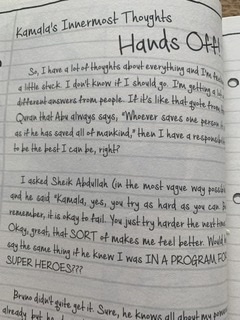
This is the first book in a new middle grade Marvel series told from Kamala Khan’s perspective. Part graphic novel, part screen shots, emails, diaries, fan fiction and doodles, the book features a diverse group of young marvel characters and even some quotes from the Quran. At 175 pages the book has action, humor and themes of team work, self improvement, friendship, second chances, and balancing life that will appeal to boys and girls that are fans of comics, but might be a little scattered for those that only know the main superheroes from pop culture.

SYNOPSIS:

Kamala Khan aka Ms. Marvel is doing a good job keeping villains out of her New Jersey neighborhood, but she is also causing damage to property in the process. When she gets caught on camera destroying a building, a letter from Captain Marvel follows with an invitation to join the Avengers Institute. Already balancing school, her writing of fan fiction and her super hero obligations, Kamala worries if she can handle one more thing and if she is up for making new friends. But, it is Carol Danvers asking, so she reflects on a quote from the Quran her dad always says and talks to Sheikh Abdullah, and ultimately decides to give it a try.

At the Institute she makes friends with Miles Morales (Spiderman) and Doreen Green (Squirrel Girl). The three of them are assigned to be a team for the Academic Decathlon at the end of the semester and to succeed they have to learn about trusting each other, team work, making smart decisions and communicating. Their biggest and most sinister rivals are Max Frankenstein, Kid Immortus, Death Locket and Kid Apocalypse. with the group leader, Kid Immortus being focused on Ms. Marvel and convinced that if he can clone her atoms he too can engorge. Kid Apocalypse however, has a class with Kamala and the two of them are kind of becoming friends. Throw in teachers like Beast from X-Men, Lockjaw teaching interdimensional travel and diplomacy, and an independent study class with Ant-man and there is a lot of fan girling going on.

WHY I LIKE IT:

I love that they are super heroes, but the book is about everyday real world struggles. The book doesn’t have a plot or climax so to speak, but more lays the foundation for the rest of the series and gives young readers a lot to relate to with new school awkwardness. There are strong themes of being a good friend, a good loser, seeing the good in others and really understanding what it takes to make a team work. There are some great lines, “politicians don’t have anything on aunties,” that speak to Kamala’s desi environment and I absolutely love that Kamala Khan mentions an imam, quotes the Quran twice, has a friend that wears hijab, and a mom that does too.

FLAGS:

The book is pretty clean.

TOOLS FOR LEADING THE DISCUSSION:

I don’t think it would work as a book club selection, but I think readers 3rd or 4th grade and up that love super heroes will enjoy the fun dynamic read.

I’m New Here by Anne Sibley O’Brien

Standard
I’m New Here by Anne Sibley O’Brien

Im-New-Here-by-Anne-Sibley-OBrien-on-BookDragon

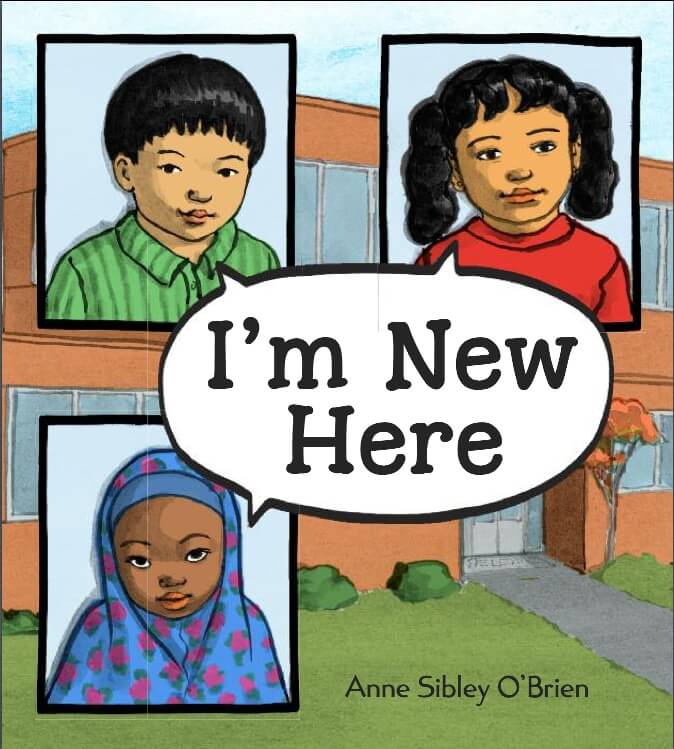
Three new kids, not just at school, but to America as well. Maria is from Guatemala, Jin from Korea, and Fatimah from Somalia.  All three telling about what they are faced with as they settle in to their new life and routine, and all tell a bit about how things were back home.  FullSizeRender (48)

This book is not entertaining or fun, it is educational.  Written for ages 5-8 this book is very straightforward as the three characters stories are interwoven to show the growth and settling in that they experience.  The simple sentences, allow the reader to learn real, tangible ways that this children are finding the transition hard.  It also alleviates any sense of pity as it shows the full lives they had before coming to America. 

FullSizeRender (49)

I love that the other kids in the class are involved in real life ways to help welcome the new kids to class. Sometimes we are harsh on kids that don’t show empathy or compassion, forgetting that often they don’t know how.  This book works for adults and children in all situations.  We all need to put ourselves in other peoples shoes and see what struggles they are facing, we all need to help one another, and we all need to facilitate environments where these actions can take place.

FullSizeRender (50)

The book in many ways would fit well with One Green Apple, as it gives the perspective from the character who is new and articulates some of the obstacles they are facing, while also showing the interactions that help one to feel welcome and comfortable.

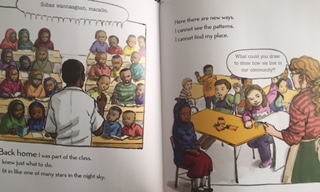
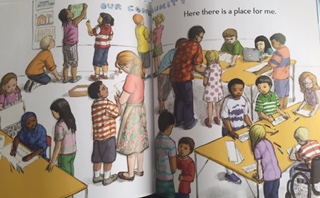
The pictures are crucial to the story as they show the feelings of the children and give context to the simple storyline.  I love that their is so much additional diversity in the illustrations: children of all body shapes, there is a student in a wheel chair, Fatimah wears a hijab, and there are male and female teachers in the book.

FullSizeRender (51)

The Author’s Note at the end of the 32 page story tells of her experience as a white American child living in South Korea, and some of her feelings and thoughts of being in a new country.  There is no mention of Islam, just implies Fatimah is a Muslim based on her dress, her mother’s clothing, and her country of origin.  

My Name is Bilal by Asma Mobin-Uddin, Illustrated by Barbara Kiwak

Standard

bilal

The other book I discussed during my Story Time theme of bullying was, My Name is Bilal, by Asma Mobin-Uddin,  The book is an AR 3.5 so I summarized parts when reading it aloud, but at bedtime one-on-one my five-year-old was able to grasp what the characters were going through and how best to handle “mean” people.

The premise of this 32 page, fairly content heavy picture book, is a new family starting at a new school.  The main character Bilal does not stand up to some boys teasing and pulling off his sister’s hijab, and then chooses to tell people his name is Bill instead of Bilal so that no one knows he is Muslim.  Fortunately, Bilal has a Muslim teacher who doesn’t jump in to “save” Bilal, but instead shares with him a book about Bilal Ibn-Rabah, the slave who was tortured by the people of Mecca in their attempts to get him to renounce Allah (swt) and Islam.  Young Bilal, finds strength in this story to stand up to the bullies as well as compassion in giving them a second chance.  He even finds there are more Muslim’s around him and being true to yourself is something even those different than you can understand and respect.

Yes, the book is to neat and tidy and it all works out in the end.  But, I think it is a good introduction to being proud of who you are and not backing down.  I like that the kids essentially handle things on their own and that no one is painted singularly as “good” or “bad,” both Bilal and the other kids are flawed and figuring things out. When I read this during Story Time we talked about it from the “bullies” point of view of what a better way to handle someone or something that you don’t understand would be, a scarf in this case, and how asking questions is always more respectful than teasing. We also talked about being the different one in a new environment and how to be prepared if someone does give you a hard time.  The characters in the book are older presumably than 4th or 5th grade allowing this to be a gateway into discussing bullying a bit abstractly, inshaAllah not once it has already begun.

The illustrations are colorful and realistic, not detracting from the seriousness of  the subject matter.  Overall the book serves a purpose and tells a good story.  Plus, the reader learns a little about Bilal and how the early Muslim’s struggled and encourages them to seek out what their own names mean and represent.