Tag Archives: Muslim Illustrator

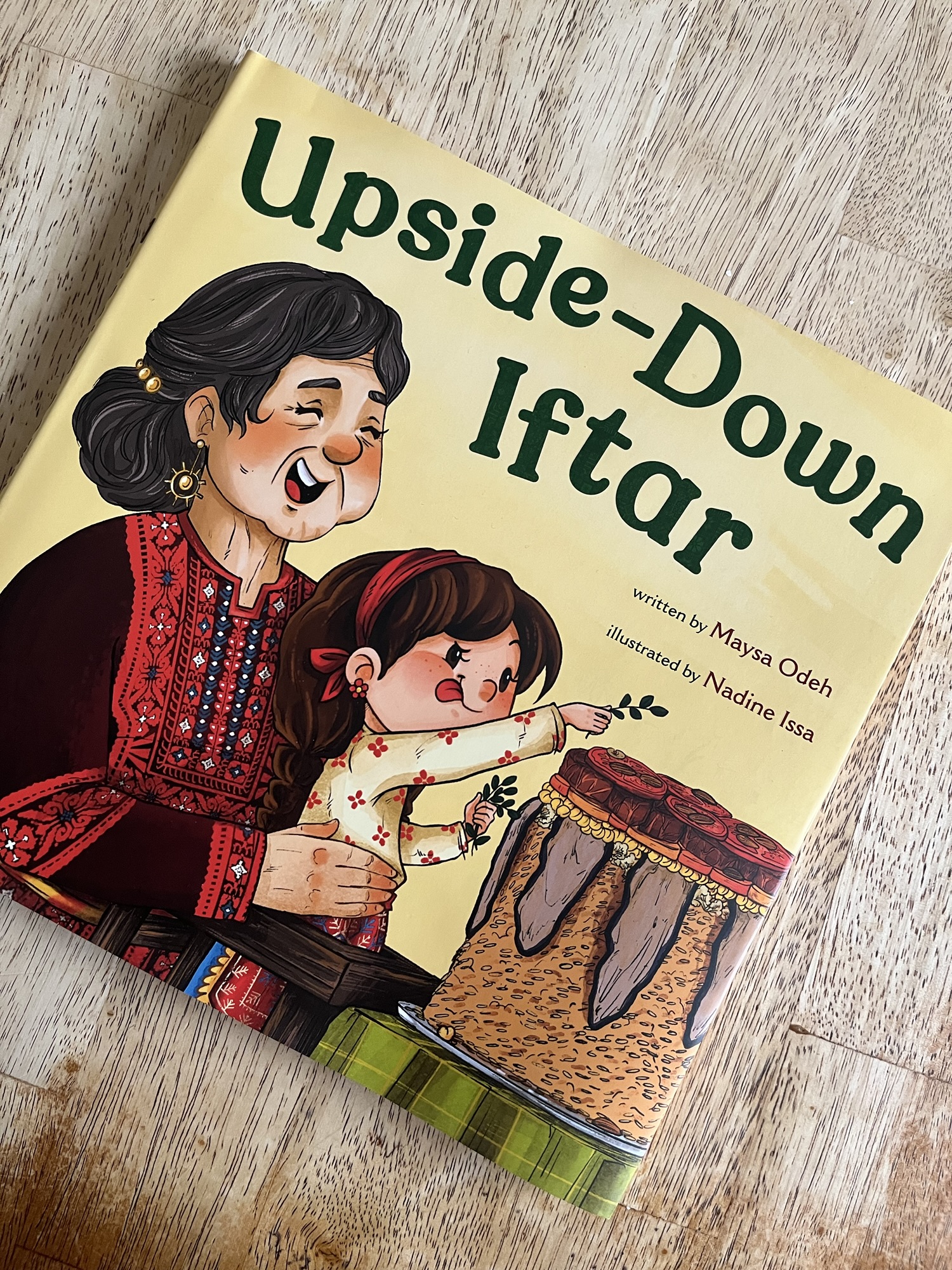
Upside-Down Iftar by Maysa Odeh illustated by Nadina Issa

Standard
Upside-Down Iftar by Maysa Odeh illustated by Nadina Issa

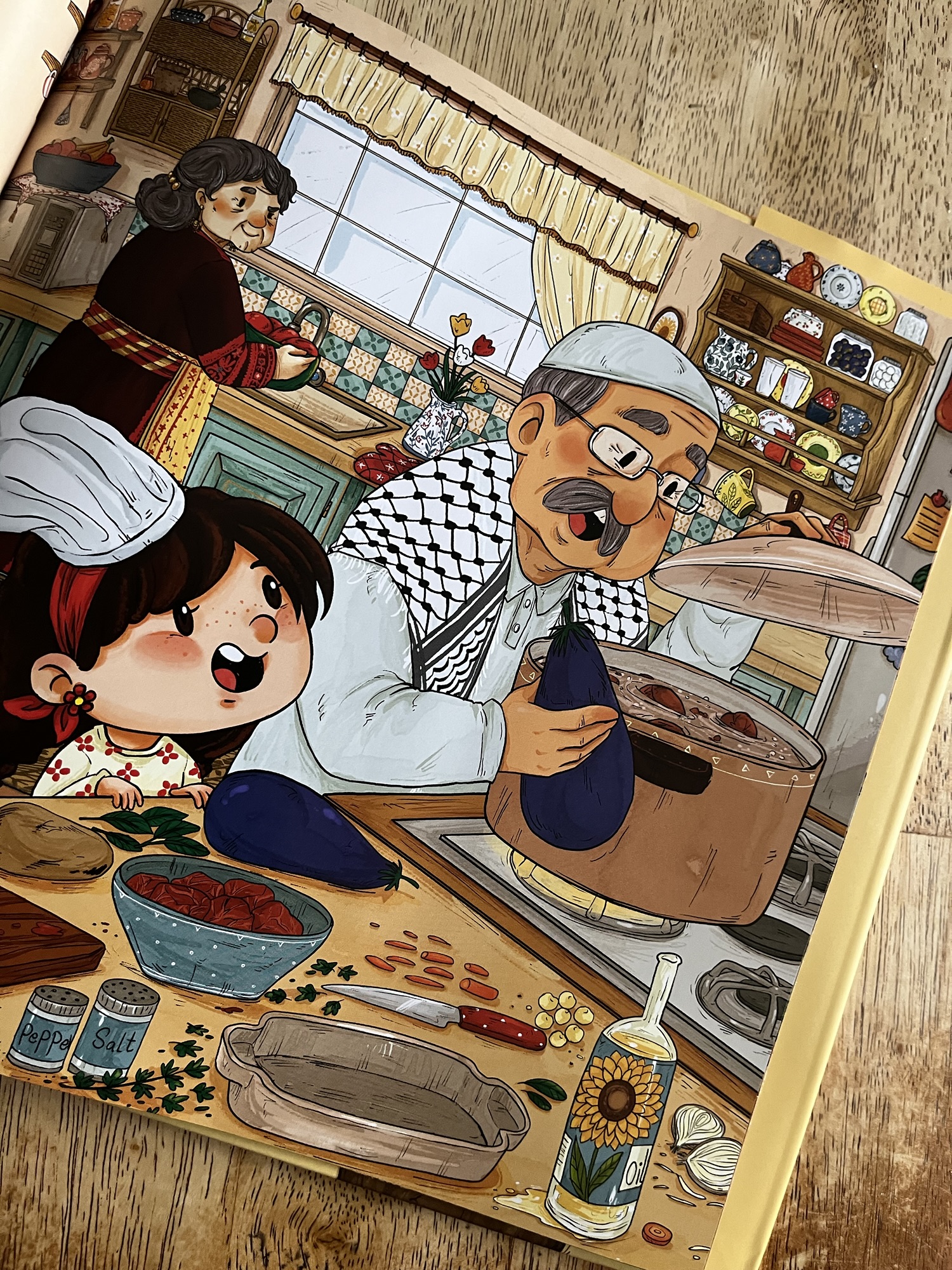
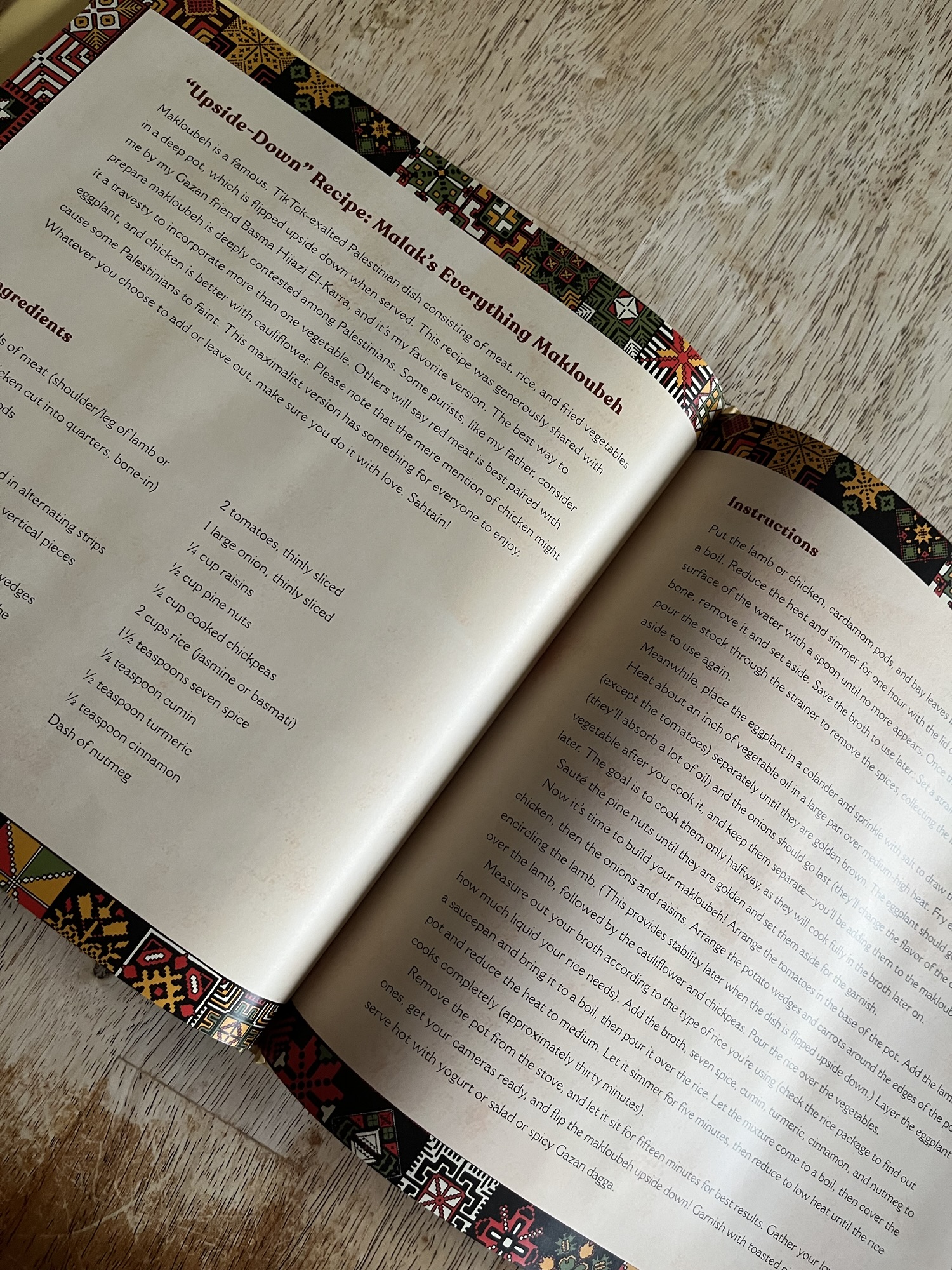
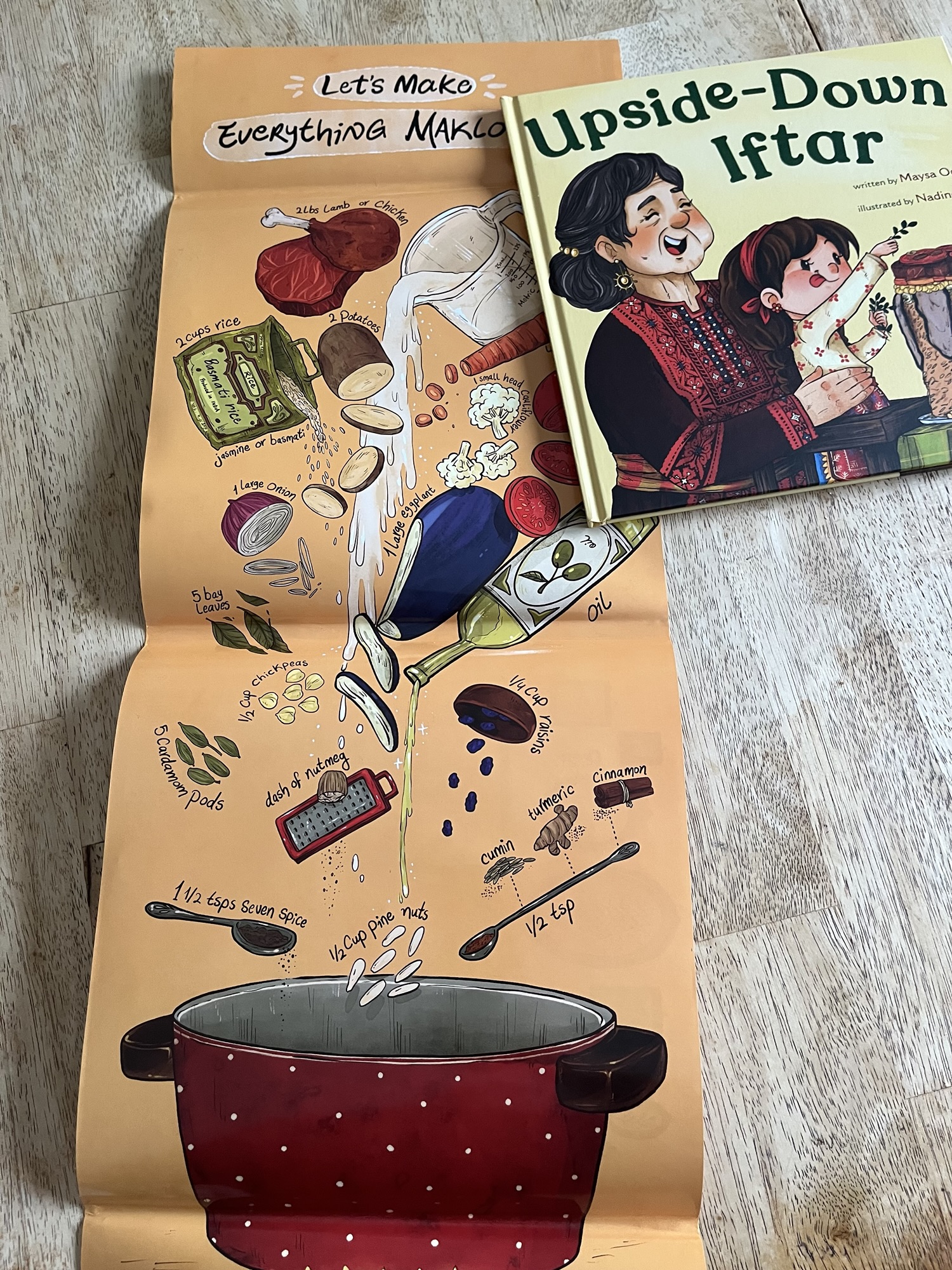
This 32 page picture book is beautifully illustrated and set in Ramadan with the premise being Teta can’t fast because of a new medication she is on, so Malak, who is also not fasting, and her are going to make makloubeh for iftar.  From there the story follows most food centered books with everyone adding their favorites until the iftar meal is one of a kind and brings the family together.  The Palestinian rep in the illustrations, and the mention of asr and maghrib salat, along with the refrain of “inshallah” and Arabic phrases threaded throughout make for a joyful read any time of the year. Unfortunately the first page was hard for me to get past.  Why is Mama staying “up late singing prayers in her closet” a sign for the little girl that it is Ramadan? Why is she singing prayers? Why is she in a closet? Alhumdulillah, the rest of the story was less awkward and I love that it highlights that sometimes ailments and medications make fasting not possible.  The messaging that every family is unique, just like makloubeh is relatable and easy for kids to grasp as well.  The backmatter contains a recipe, the dust jacket slips off to show a vertical filling of the pot with “everything Makloubeh” and the detailed illustrations will both introduce some kids to the popular dish, and celebrate a favorite familiar meal for others.
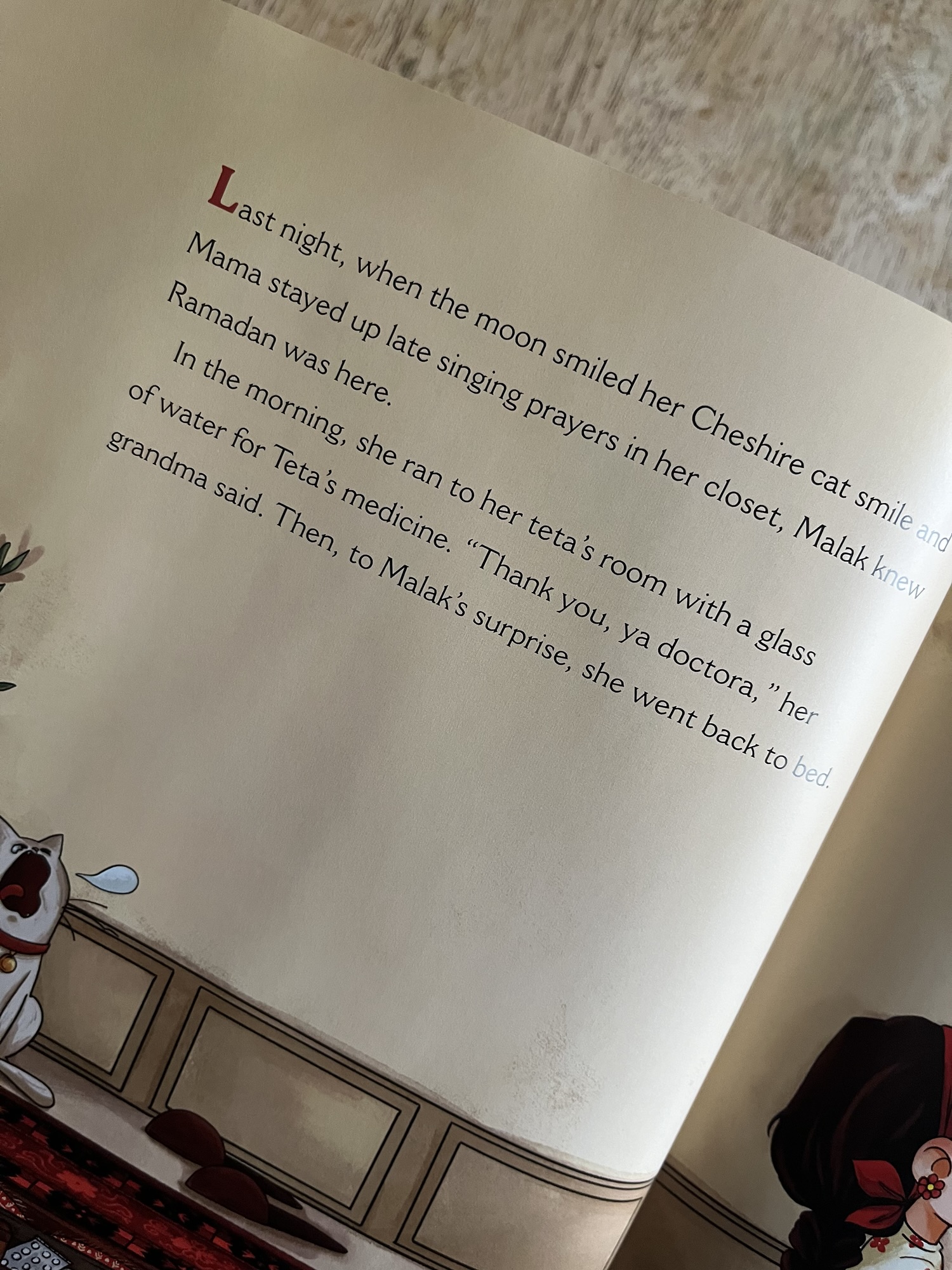
The book starts with the moon smiling her Cheshire cat smile and Ramadan beginning.  This is the first year that Teta is not fasting, and Malak decides she will have Teta teach her how to make iftar, but not just any iftar, upside down Makloubeh!
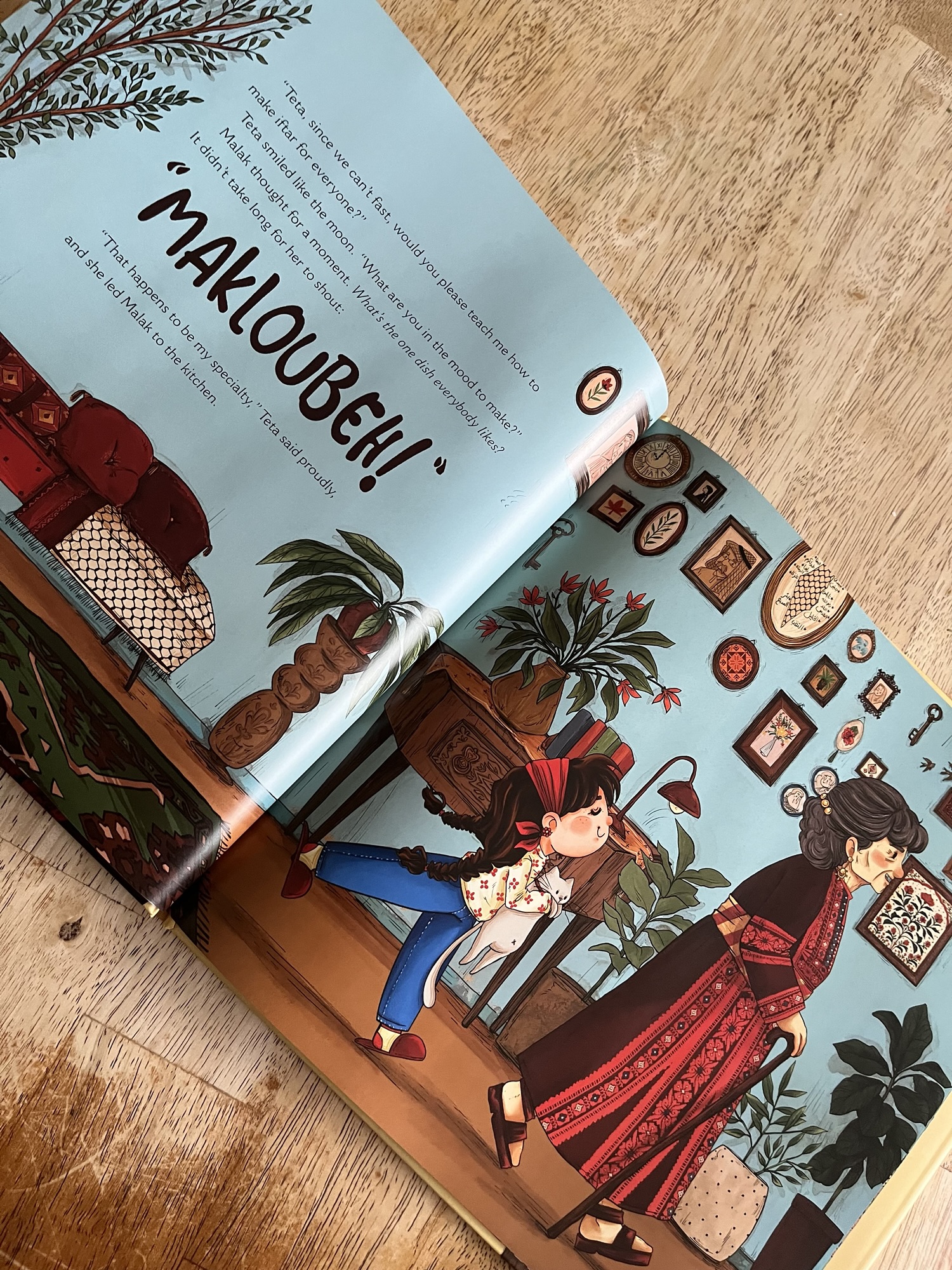
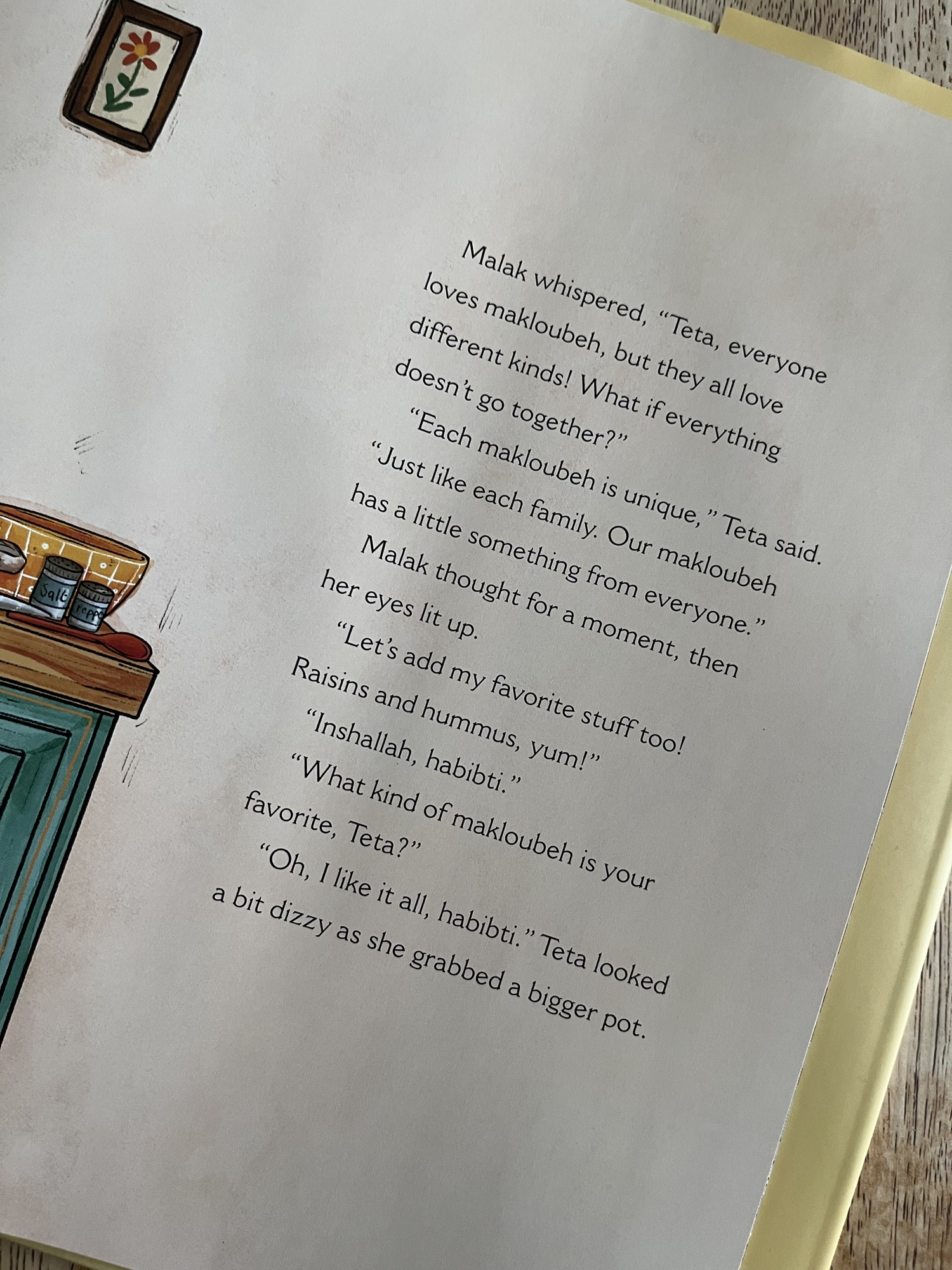
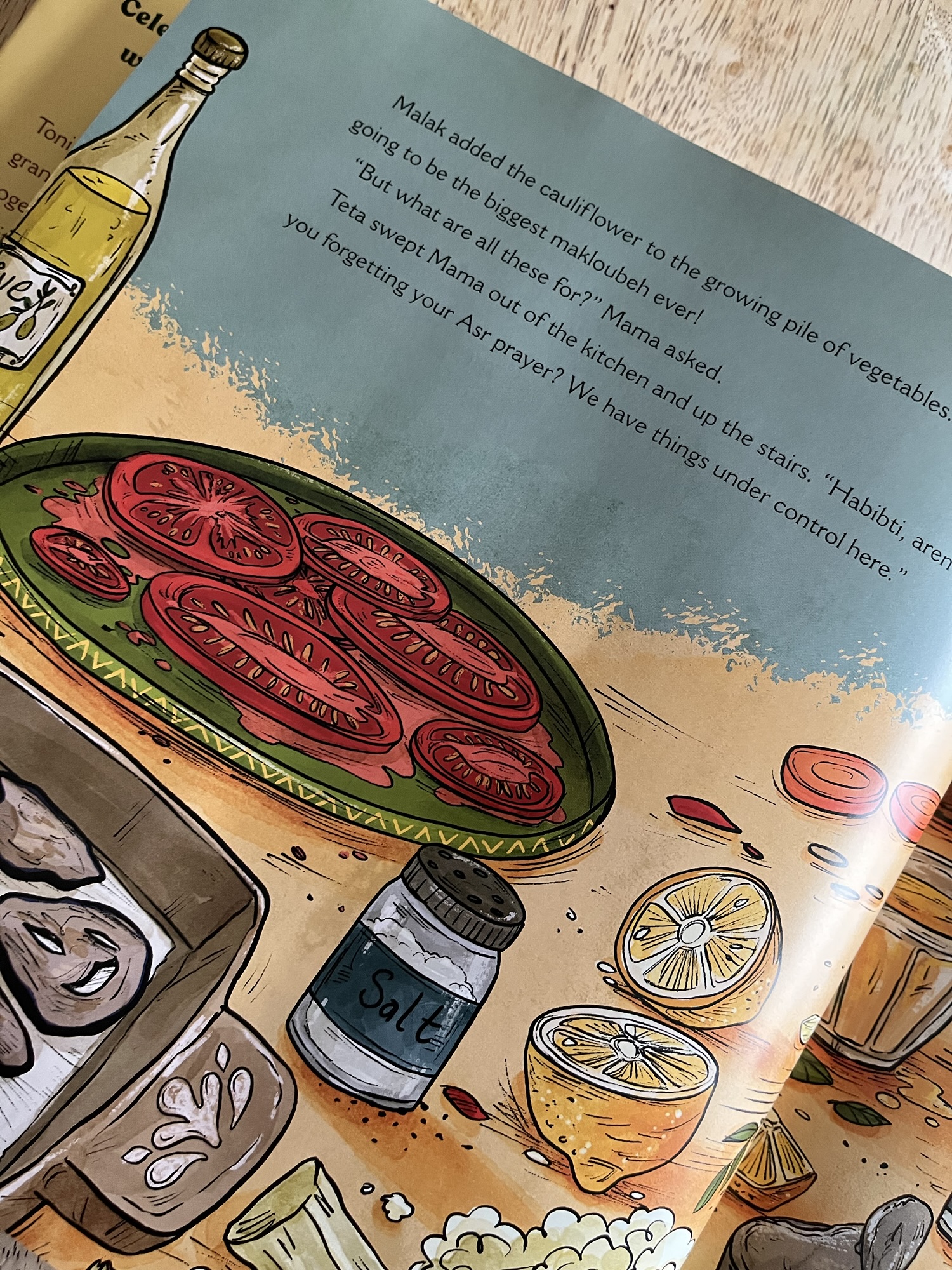
It starts out with Teta explaining the process and getting started, but then Jido comes in and wants eggplant added. Then khalo sneaks in to let them know that he likes potatoes in his. When Mama gets home from work with cauliflower, she is swept off to pray asr, and Malak decides she wants to add her favorite to the mix.
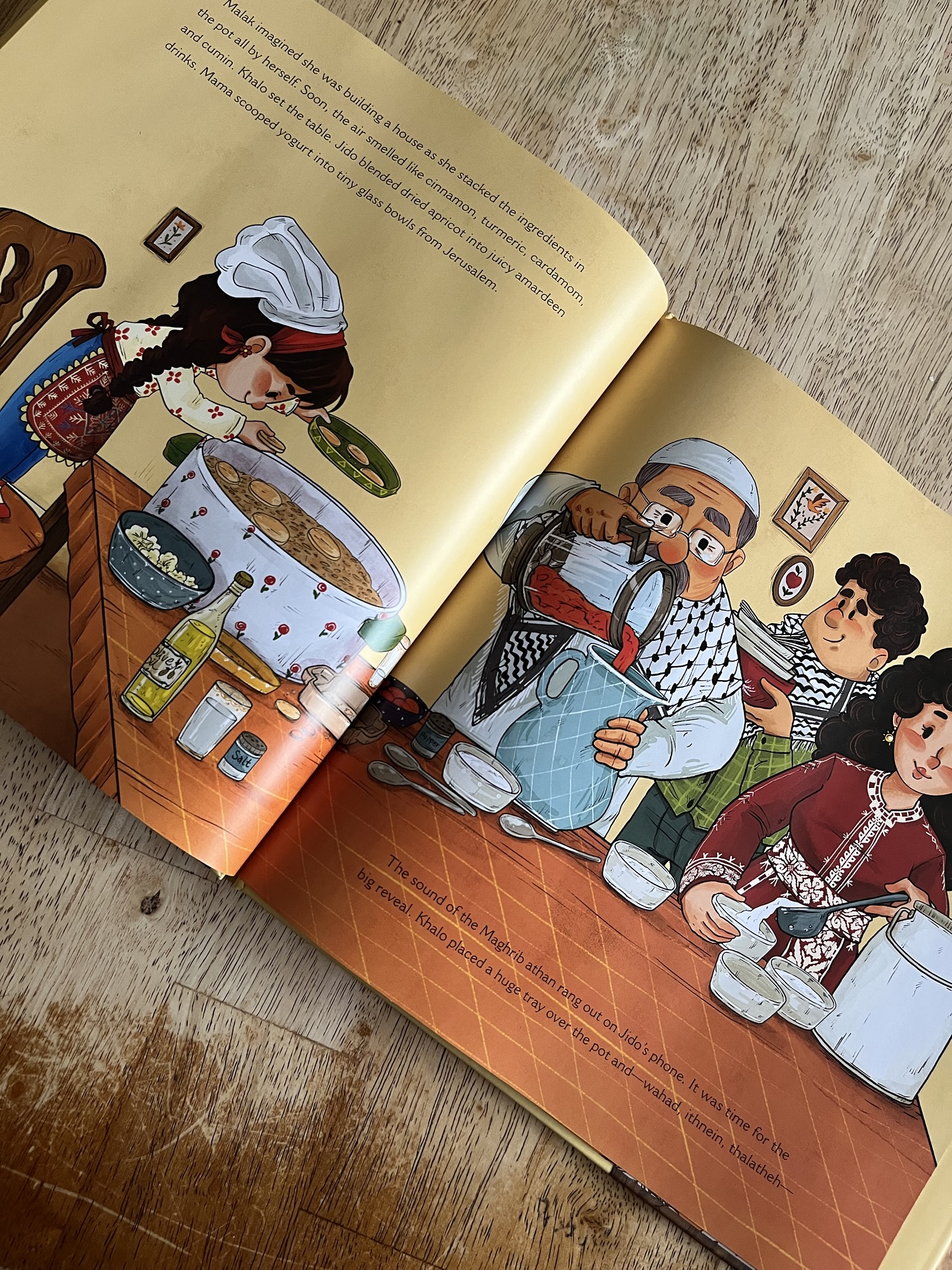
When Maghrib athan time comes, the big reveal, the flip, and then the first bites take place, revealing a “makloubeh with a little bit of everything.” A dish so yummy that Teta and Malak might be making iftar every night.
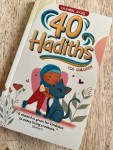
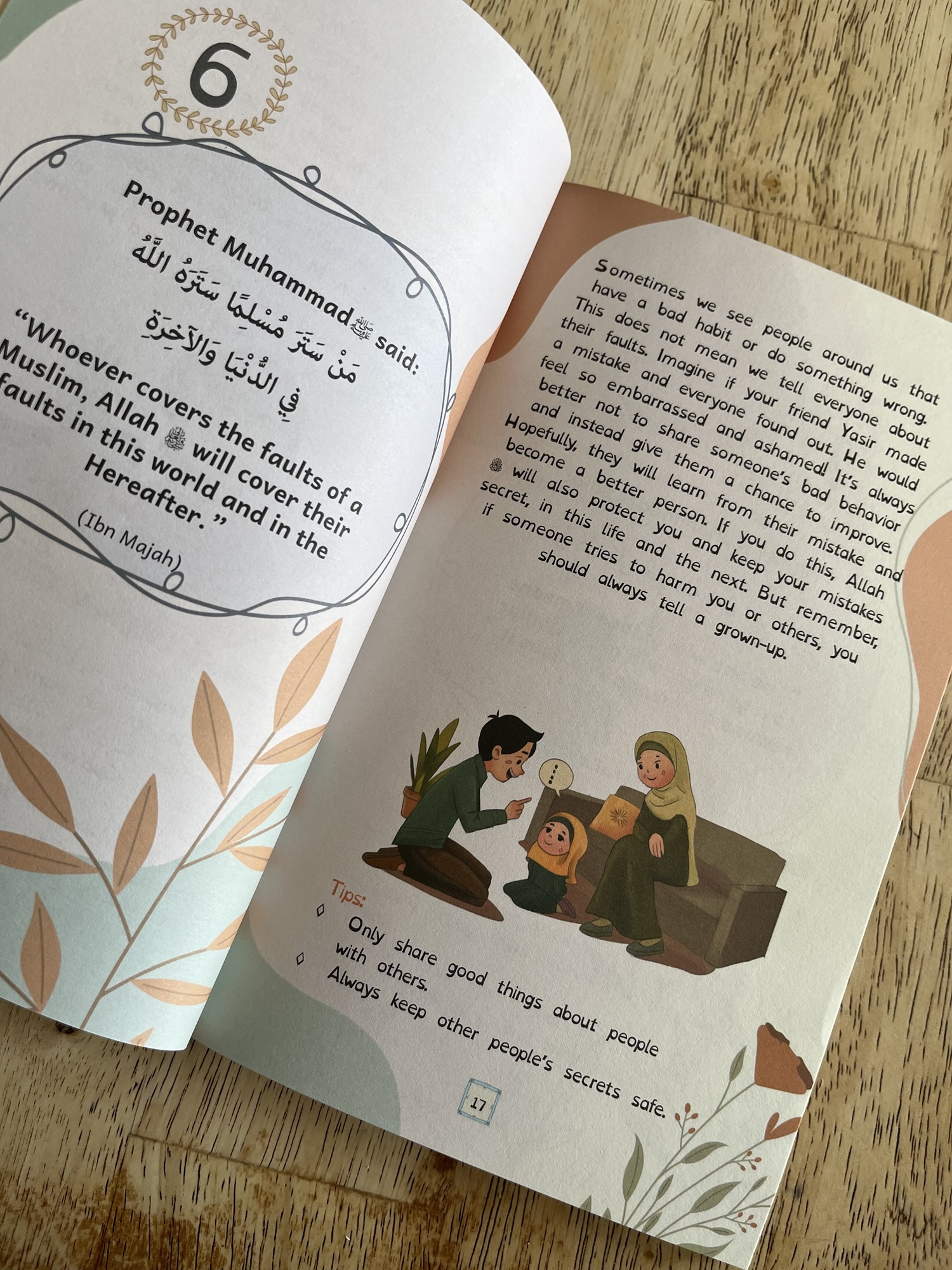
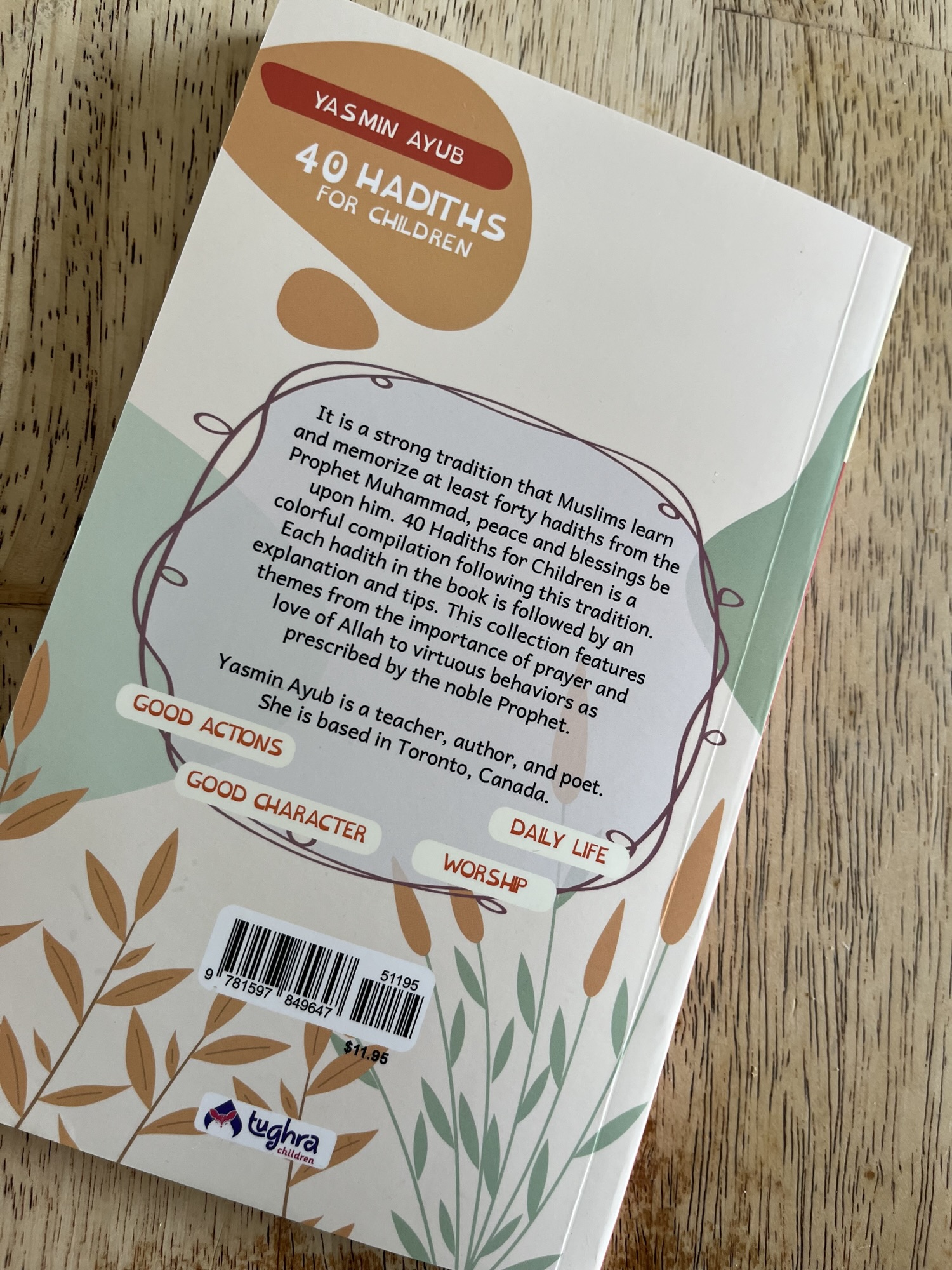
40 Hadiths for Children by Yasmin Ayub illustrated Sabahat Hareem

Standard
40 Hadiths for Children by Yasmin Ayub illustrated Sabahat Hareem

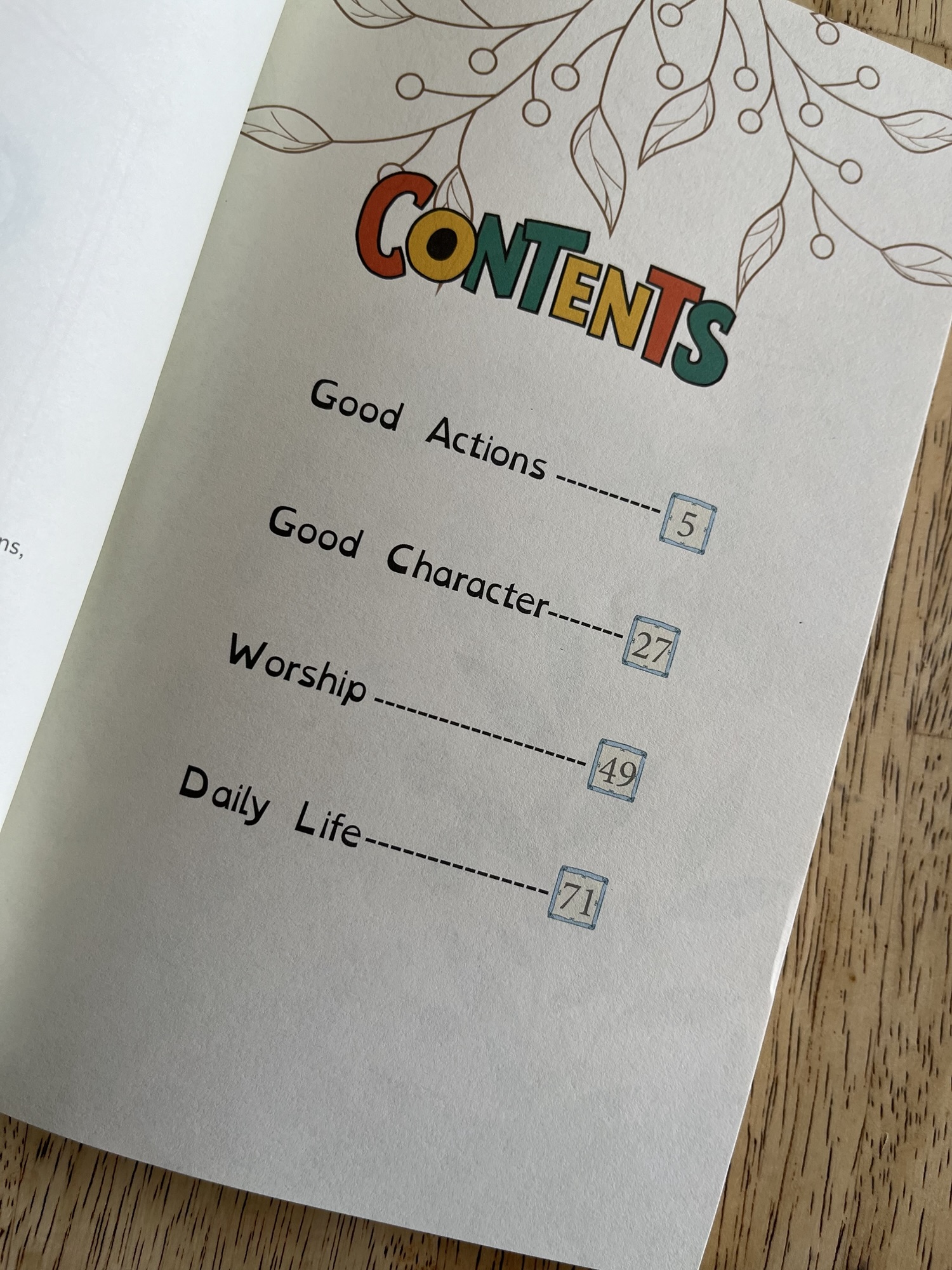
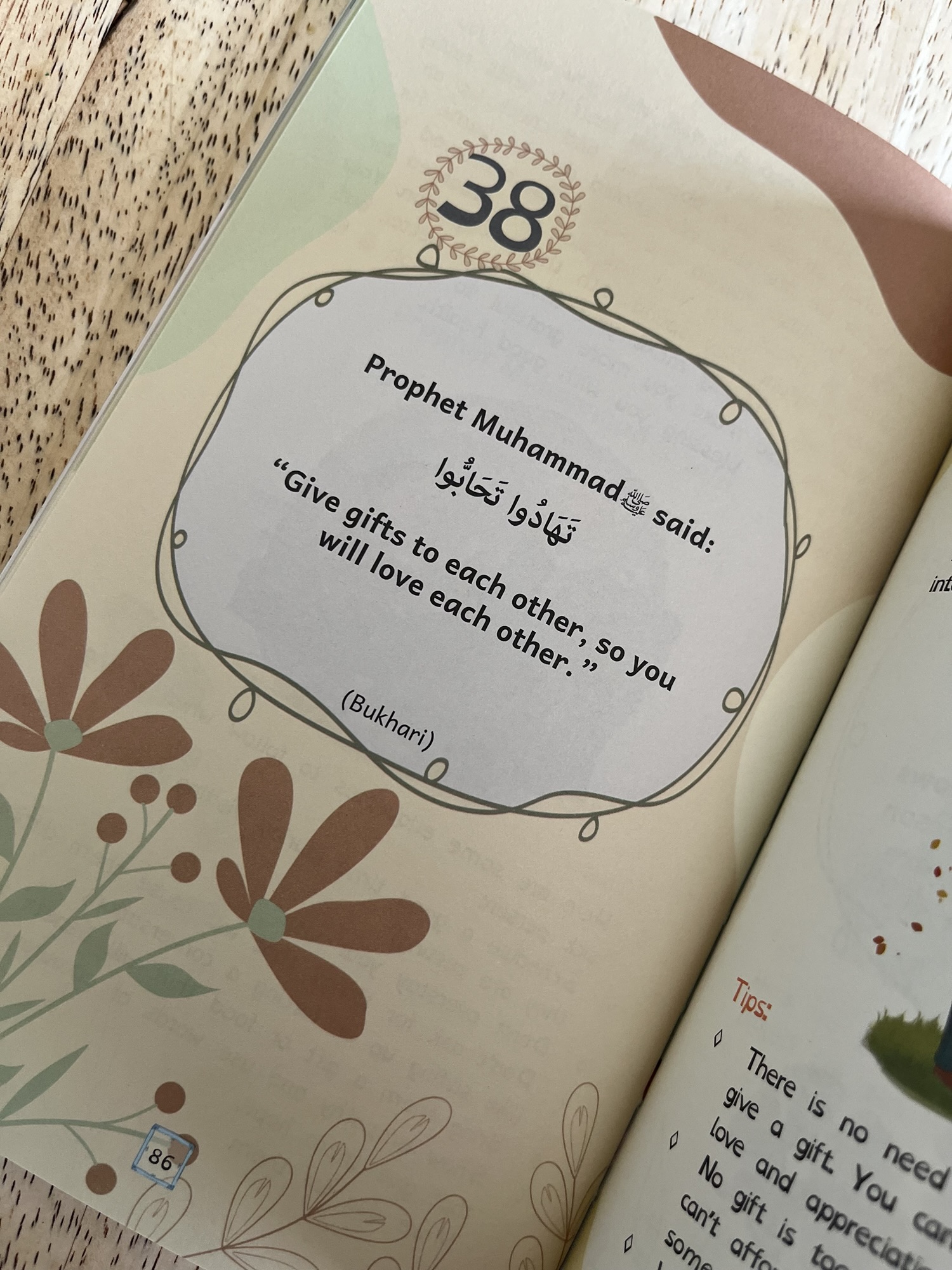
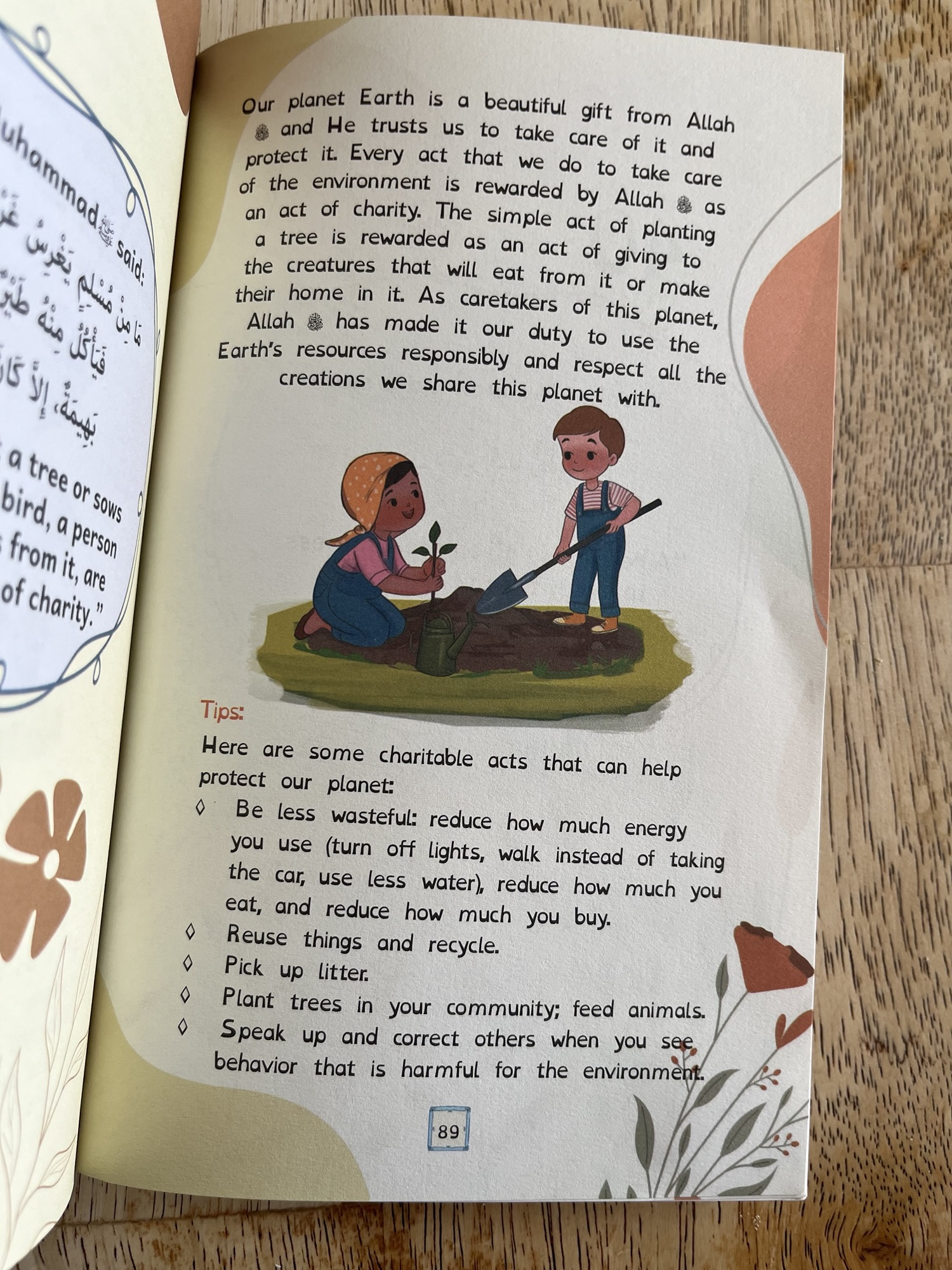
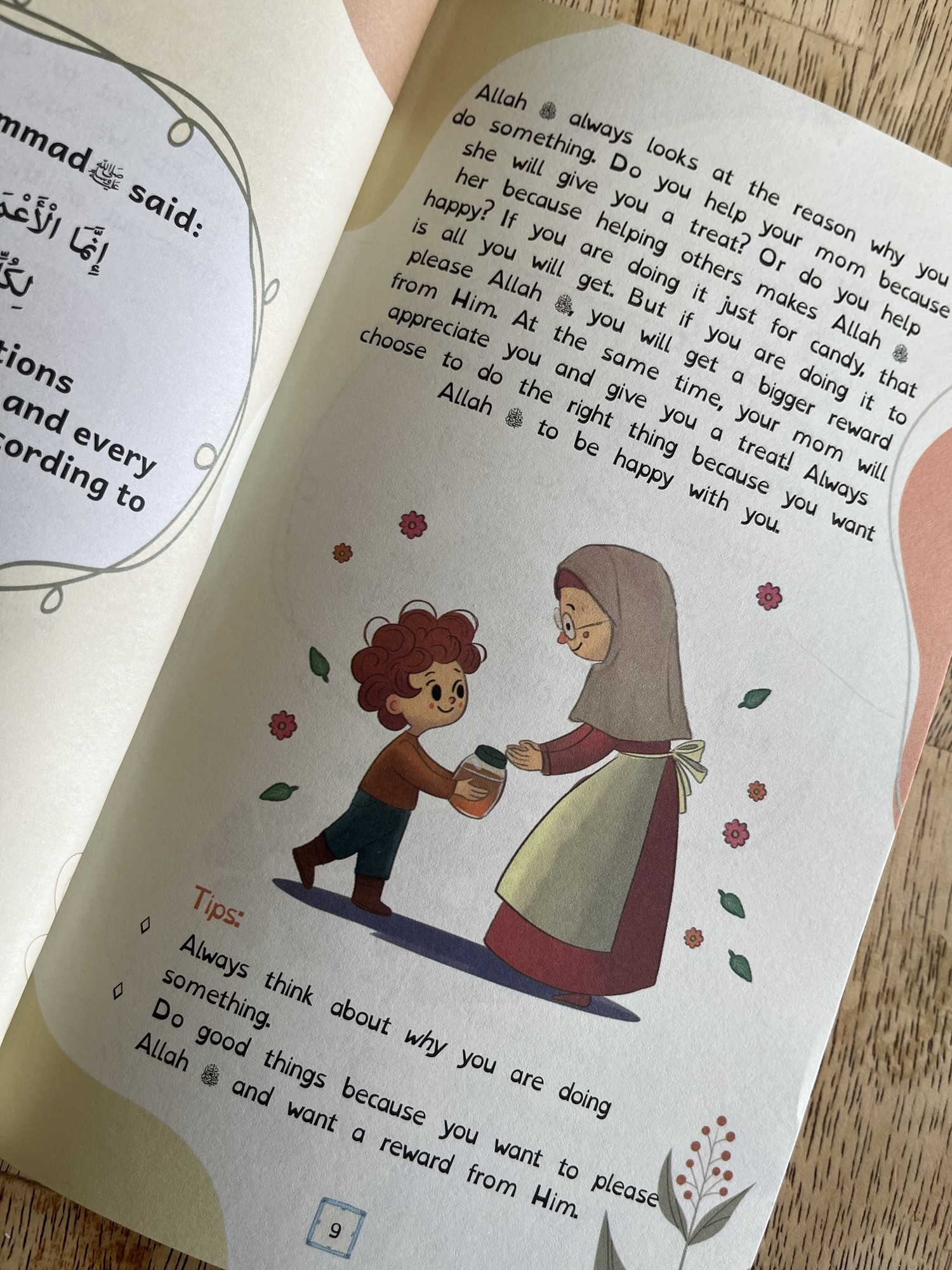
My first thought when I received this book is that it is tiny and will get lost on the shelf, but the prodding of a friend encouraged me to give it a chance, and subhanAllah, it is a delightfully well done book that I now nightly read with my kids, reread myself, and have floating around so that my teenagers also thumb through the contents within.  Divided into four sections: Good Actions, Good Character, Worship, and Daily Life, each two page spread has an attributed hadith in Arabic with English translation opposite a page giving some relatable context, scenarios and further explanation, along with tips to put the hadith into practice.  The sweet illustrations break up the text, making it enticing to read and easy to consume.  The writing is on level for elementary, but not condescending for older readers, and the organization makes the book easy to spend time with in a variety of settings at home, school, or at masjid activities.

I particularly enjoy that the messaging is on level for today’s children in an appropriate and relatable tone.  For example, the page encouraging the covering of faults makes it clear that if someone tries to harm you or others, you should tell and NOT cover that, which is so important.  That the author is a teacher shines through throughout as little tidbits such as that allow the book to be shared independently, and don’t require that an adult provide the context and discussion for the hadith included.  I find that when I read the pages as written, my children speak after, and I get to listen. They don’t seem to have any further questions, but rather want to share what they have done or can be better at, which speaks to a book well done, alhumdulillah.

As for the “tips,” they are a mix of more generic, but on point, and some are very specific such as the visiting the sick allowing the child to immediately put into action certain behaviors, and allowing others to be regularly worked at and contemplated.

Here’s Our Religion by Jenny Molendyk Divleli illustrated by Dasril Iqbal Al Faruqi

Standard
Here’s Our Religion by Jenny Molendyk Divleli illustrated by Dasril Iqbal Al Faruqi

This HUGE 14 page board book is such an engaging, teachable, and shareable book for toddler to early elementary aged children.  Similar to the author’s First Words in the Qur’an I can see this book being shared at story times and in classrooms regularly.  Each two page spread is literally a board book in and of itself.  With headings of: Ummah, Shahadah/Qur’an, Salah, Ramadan, Zaqat/Sadaqa, Hajj, and Prophet Muhammad (saw)/ Sunnah, kids will be able to deduce from the pictures and simple captions how the details relate to the theme, learn new information, review what they already know, and delight in the illustrations.

I don’t know that I would sit down with a toddler or preschooler and just read the book straight through very often, but when I was doing multiple story times a week, I had planned books for every theme highlighted in this book. I would have loved to be able to pull it out after a few stories had been read and used it as a review, where I could point to a picture and the kids could holler out what the illustration was teaching.  The large size would have saved me from having to make story board pieces, and the critical thinking would encourage comprehension and retention.  Example: learning about salah, and then opening to the salah spread, kids could see the vacuuming child and decode that we pray in clean places, that the picture of four people praying together is to learn/remind/teach that it is better to pray together.  


All the Ways to be Pretty by Shamaila Khan illustrated by Reyhana Ismail

Standard
All the Ways to be Pretty by Shamaila Khan illustrated by Reyhana Ismail

The premise of this book is fabulous, an Islamic approach to internal beauty to counter the societal emphasis on external appearance, by drawing on the examples of Ai’shah (RA), Khadija (RA), Sumayyah (RA), Maryam (RA), Hajar (RA), and Rufaidah (RA), may Allah swt be pleased with them all.  The illustrations are decent, focusing on the girl understanding what her mother is saying and her imaging herself with those qualities.  The part that I struggled with, is I flipped through it before I started reading it, and the pages are often walls of text.  Additionally, I didn’t realize it is rhyming text over 34 pages.  SubhanAllah though, somehow, it works.  I can see this book being shared at preteen gatherings in masajids, homes, and schools everywhere.  The rhyme at times is forced and lacking, but the flow makes the walls of text zoom by and the information shared is not overwhelming and Alhumdulillah, it doesn’t stray too far from the central messaging. You could share it with younger readers, but I think it works best if the audience knows some of the women and facts highlighted, and the information shared is a mix of reminder and new tidbits urging further exploration. The publisher lists the reading age at 7-10 which is probably a good fit based on the amount of text, but the rhyme, mirrors at the end, and starting point of battling beauty standards on the screen and “Princess” messaging is a bit of a target audience disconnect, which is why I point it out so consumers are aware.

The book starts with a lengthy author’s note before the rhyming scene of a mother and daughter walking to school and discussing what the daughter would like to be.  The girl doesn’t answer a profession, but rather responds that she wants to be pretty, and gives some justifications.  The mother gently then encourages her not to just want to be pretty, but rather pretty smart, pretty wise, pretty brave, pretty pious, pretty resilient, and pretty kind, before concluding with the girl throughout the day thinking of how to be like them, and her mother, to earn Allah’s pleasure.  Each attribute is a two page spread with one of the historical women featured.  The book ends with a hadith and six mirrors with the characteristics beneath them.

I like that the book does not try to give an entire biography about the women featured.  I also like that Islamic references are also brought in, some explained some not. It is “Islamic fictionalized non fiction” it is meant for Muslims with Islamic framing, not just Muslim characters, and it has substance.  Lately so many self published or even Islamic published books seem to not feature Islamic foundational themes, and I realize how much I have missed reading books that do.  Yes, I normally would have a solution to offer as to how to make the pages less text filled and I know I should say that maybe it shouldn’t rhyme, because it makes for some awkward phrasing, over explaining, and useless lines, but alas, I have no suggestions.  We need books that present our Sahabas and Prophets in a manner that allow our kids to know them and think of them and emulate them. Alhumdulillah, I can see this book being read and shared and discussed, and that to me is a “pretty “good thing.

Sunnah and Science: What Modern Research Tells Us about Prophetic Traditions by Aquila Fatima illustrated by Azra Momin

Standard
Sunnah and Science: What Modern Research Tells Us about Prophetic Traditions by Aquila Fatima illustrated by Azra Momin

The title and premise of this hardbound 54 page resource book for children definitely caught my eye.  The contents covered, the two page fully illustrated compelling spreads, and the intext labeling of hadith and Quranic ayats make this book versatile in homes and classrooms for a wide variety of ages.  As the daughter of a convert, the knowledge that science is not in contradiction to Islam is something I grew up hearing about a lot in casual conversation, and I love that this book addresses it head on for children with pull out bubbles, reminders, fun facts, duas, and the like.  My only concern that I truly can’t wrap my head around, is why isn’t their sourcing for the “scientific” information? Nothing is overly scientific, and nothing “feels” off, but none-the-less, the book repeatedly says “Research shows,” and “Science proves,” “Scientists are still,” “Scientific research says,” but never once shares what scientist, or research, or science.  The book has the space for footnotes or sourcing or a bibliography, and in a book trying to give readers the confidence to show how the sunnah and science support one another, to not have the sourcing to back it up, is a glaring admission.  Buried in the author bio it states the author has “a Masters degree in genetics” and worked as a “science teacher for elementary school students,” but to me, the book needs to back up the statements to successfully empower and accomplish what it sets out to do.  I hope future printings will include sufficient backmatter, even without the book is well done, but the standard is the standard for good reason, non fiction needs sourcing.

The book covers 25 topics, dedicating two pages to each topic, with a title heading, and an Islamic source subheading.  The topics include, smiling, rain, sleeping, swimming, wudu, salah, fasting, honey, cleanliness, bathroom etiquette, yawning and hygiene to name a few.

Most pages contain facts, ayats from the Quran, sunnahs, benefits, supporting scientific tie ins, and adorable illustrations.  The book concludes with an author’s note, thoughts by readers on the book, and an author bio.

Your Friend From Palestine by Nabila Adani

Standard
Your Friend From Palestine by Nabila Adani

This book is absolutely gorgeous, from the raised text on the cover, the sweeping illustrations with tangible details, the Islamic threads, and the heart, but…yeah you knew something critical was coming, the rhyme is not consistent, and the biggest hurdle for me, is that there is no backmatter.  I can’t say that I’m “bringing this up again,” because I don’t know that the debate ever dies down: can you write a book about something personal that you have not lived through? In this case can a non Palestinian write a book from a Palestinian perspective? As a former journalist and long time reader, I still maintain that you can, but backmatter detailing your own limitations, what efforts were made to have the book verified by those with OWN voice experience, and background information on why this is pertinent and relevant are mandatory. And this book does not offer them.  Nothing feels off about the contents, and anyone with a heart, has seen and felt everything on the pages about our brothers and sisters living under occupation and through genocide. So is it a good book, yes. Do I think it has value, yes. But, is it authentic? Is it accurate? Is it enough? Does the focus on hardship and destruction open eyes or diminish Palestinian joy? Why wasn’t a Palestinian brought in to cowrite the book with the author illustrator? Was it sensitivity read? I am not able to answer these questions, I simply bring up my concerns for you to decide for you and your children. While the book ends on hope for a free Palestine, and a safe Gaza, the oppressor is unnamed.

The book starts with children on a beach playing when they find a message in a bottle.  The message is from Khalid, a child in Gaza telling the finder about his life and asking about theirs. He likes to play football, but sometimes it isn’t safe, he likes to read stories but often can’t because there are no lights, and he dreams of swimming in a swimming pool, because they often don’t even have water to drink.

Khalid then tells the finders of the bottle, and thus the readers, to not lose hope, “to hold on to your imaan.” And it highlights what we can all do to help.  “You can pray for us! Send charity! Spread the news!” and tell people about Palestine. So that one day we can meet at the Dome of the Rock, pray at Masjid Al-Aqsa, and be together in a free Palestine, inshaAllah.

The illustrations are beautiful and the framing effective in connecting with readers, and highlighting the similarities before revealing the obstacles. Again why I wish there was backmatter, so that it didn’t feel simplistic, but rather bringing it down to a younger audience level.  With dialogue, explanation, and context, the book can be powerful, but on its own, I feel the lacking authenticity, transparency, and details about Palestine, make the book in need of an update before future reprintings.

Lulu in the Spotlight: A South Asian Wedding Story by Natasha Khan Kazi

Standard
Lulu in the Spotlight: A South Asian Wedding Story by Natasha Khan Kazi

This adorable 40 page culture focused picture book explores a Desi tradition with layers of competition, frustration, mystery, problem solving, kindness, and joy woven in.  Lulu likes the groom and his family, but at her cousin Amirah’s wedding, the games are about to begin, and she has a plan to win the money for team bride, and prove she is old enough to share in the spotlight. Each of the traditional teasing games though find Lulu pushed aside, until the joota chupai, where the shoes go missing.  With Nani’s encouragement to stay true to herself, Lulu gets a chance to shine by doing it her way, and bringing the families together. There are a few visible hijabis in the illustrations of this Muslim author/illustrated book and the backmatter really makes the traditional references accessible to all readers.  As a Pakistani American, my children haven’t attended cultural weddings with all the traditions, fun, and games, and this book is already a favorite in discussing what this family does, where our families might do it a bit different, and how they can twist it to fit an upcoming wedding we have this summer.  The bright large pages, add to the text and illustrations truly conveying the excitement, emotions, and colors of South Asian weddings.  By focusing on one tradition, and not trying to include everything about the multiday affairs, the book stays on message and maintains an in the moment tone, keeping the readers engaged, well done.

The book opens at the mehndi ceremony of Lulu’s cousin, and while the dances are taking place, Lulu is scheming.  She knows the next day there will be chances to make some prize money from blocking the groom and stealing his shoes, and she is determined to capitalize. Normally it is just the bride’s side against the groom’s side, but Lulu has to battle her own cousins for a role in the games.  Tarek says she is too little.  Zara is clever at negotiating, and Farah is athletic and gets places fast.  In the past, Lulu hasn’t been included, but this time, this wedding, she is ready.

On the groom’s side it is Kamal, Sameer’s little brother that serves as Lulu’s biggest competition, and who trips her as she heads for the shoes. Frustration and sadness have damped the festivities for Lulu, yet she still is helpful and kind.  With the games wrapping up, a dejected Lulu finds solace in her grandmother’s lap.  When Nani shares why the shoe stealing tradition still is carried out, Lulu knows just what to do to find the spotlight her way.


The Best Eid Ever by Sufiya Ahmed illustrated by Hazem Asif

Standard
The Best Eid Ever by Sufiya Ahmed illustrated by Hazem Asif

This book blends some facts about Ramadan and Eid with cultural practices, showing a day in the life of a family celebrating, and a sprinkling of a story line to keep elementary aged kids invested. The back of the book labels it as an introduction to Ramadan and Eid and I think that is a pretty solid summary.  Aisha is eight, and apparently too young to fast from sunrise to sunset.  I wonder if she is old enough to fast from dawn to sunset as Islamically prescribed? Yes, I’m petty, but it is wrong to say sunrise to sunset, and I’m not backing down. This year her aunt, Chachi Amal has made a scavenger hunt for her and her brother to find their Eid presents, but first there is henna to apply, decorations to hang up, Eid prayers to attend, desserts to be shared with neighbors, and lunch to be had, before the three question scavenger hunt can commence, and presents can be located.  The backmatter has information about Ramadan, Muslims, Eid, and a glossary.  The book would work well for a generic class or library story time. I don’t imagine Muslim kids will find it particularly memorable and ask for it more than once.  It is a Desi family, with the Chachi being Libyan and sharing desserts. hinting at the diversity of Muslims, and I can see kids wanting parents to hide their gifts and make a scavenger hunt, which is sweet and a nice idea to build on.

The book starts with Aisha looking outside to see if the moon can be spotted and Eid determined.  Samir and Dad come in and say that the mosque has declared Eid tomorrow.  Eid is Aisha’s favorite festival, she loves Ramadan, eating iftar with her fasting family, and she loves dates. This year her Chachi has hidden their gifts and made a scavenger hunt for the kids to follow.

Aisha can’t wait, but her Mom says they have other traditions first, and Aisha has henna painted on her hands.  They have to dry for at least two hours, so she watches a show while Dad and Samir decorate.  Then it is time for bed, and the scavenger hunt will have to wait.

Early in the morning is no time for a scavenger hunt, Mom is in the kitchen and they have to get to Eid prayers. After salat, and wishing everyone Eid Mubarak, Aisha is ready for the clues, but her and Samir are sent to deliver sweets to the neighbors.  When they return home, they can’t get to presents because it is lunch time. Finally, the scavenger hunt begins, the clues are solved, the presents found, and the day “the Best Eid Ever.”

I purchased this book from Crescent Moon Store, code ISL will save you 10%.

Cookies and Crescents: An Eid Story by Nada Shawish Dutka illustrated by Zelma Firdauzia

Standard
Cookies and Crescents: An Eid Story by Nada Shawish Dutka illustrated by Zelma Firdauzia


We can always use more Eid al Fitr stories, but to stand out in an increasingly crowded field, really requires something special, impeccable story telling, and repeatability.  Unfortunately for me, this book just comes up short.  Food centered books are already so over done, toss in small font that nearly bleeds into the binding where you would hold the book for story times, top it off with a vague story lacking the OWN voice charm that a religious holiday centered book, by a Muslim, that is noted to be slightly autobiographical should have, and the recipe is just going to feel lacking.  There isn’t anything “wrong” with the book, it just doesn’t really seem like it will be memorable or asked for again. Focusing on a mom and daughter moving the night before Eid, the book has elements of adjustment, new traditions, change, nerves, salat, iftaar, looking for the moon and making a new friend- layers that should resonate with readers, but somehow for me, stayed on the surface of this 32 page book for preschool to early elementary aged children.

The book starts with the protagonist talking about the city where she was born, the community, the family atmosphere, and her mama’s famous Eid cookies.  But this year will be different, it is almost Eid and Reem and her mama are moving away from the city to a house with a yard. Reem is not excited, in fact, she spends much of the drive feeling carsick.  Once they arrive it is time to unpack, break their fast, pray and look for the moon.  The excitement of making making cookies with her Mama sustains her, until she notices the walnuts are missing. Change is inevitable, and Mama is determined to show Reem that they can make do with what they have.  When neighbors come over to welcome them to the neighborhood, a new friend might be just what Reem needs to settle in.

The book seems to be deliberately vague, and I don’t know that it will bother children, but it bothered the journalist in me.  Why are they moving, what city are they leaving, is Sarah Muslim or just knows to say Eid Mubarak, but doesn’t say walaikumasalam.  I also feel like the publisher didn’t properly invest in the book.  The text is tiny, when ample space is available on nearly every spread.  Blocks of text on the lower inner binding make one’s hand cover the words when reading to a group, and certain paragraphs seem to be erroneous or at the very least awkward.  Take for example this paragraph when they are unpacking, that I stumbled over every time I read it. “Tonight, it’ll be just me and Mama who look from between tall boxes.” Maybe it is in reference to looking for the moon, but the next page does have her and Mama planning to look for the moon.  Similarly, when the walnuts can’t be found, Reem wants to go back, but Mama says the store is too far. The mother in me was fuming that she didn’t see it was more than about the nuts, go give the girl a hug. Earlier Reem remarks that “Finally, Mama kept her promise,” in regards to the cookies, but is it finally they are making cookies or does Mama not normally keep her promises. I know I’m being picky, but it starts to add up, the reader doesn’t feel that Mama and Reem are in this together. That they listen to each other. So it is hard to get emotionally invested. And when I review I try and unearth why a book doesn’t work for me, and all these little hiccups for me, become obstacles that keep the book from being great.  Sadly all it needs is some good editing and my critiques really could have been resolved, sigh.

Even though the book is set at Eid, and shows the mom and daughter praying, they say salaam, they look for the moon, there is no real Eid as a religious holiday stressed, the focus is the cookies and the new friend.  Culture also seems to be noticeably absent, the cookies are Arab, the phrase “Al Harakah Barakah” is Arabic, but it isn’t sourced, the reader is never told where that sentiment comes from and it isn’t explored as much as the inner flap would suggest. The book concludes with an author’s note and a recipe for ma’amoul.


Join Us for Ramadan by Sana A. Faqir illustrated by Amna Asif

Standard
Join Us for Ramadan by Sana A. Faqir illustrated by Amna Asif

This 18 page chunky board book is about 7.5 x 7.5 inches and a little over an inch thick.  Each spread features interactive touch, feel, lift, slide, and rotate features that keep little toddler hands engaged, while the text shares Ramadan basics. Interestingly enough though, the back says it is not for 0-3 year olds, presumably because parts could tear and be choking hazards, but making it unusable for the demographic(?).

It starts with a slider that reveals the Ramadan moon and encourages readers to find the moon in the sky. The next spread has you lifting a cover to see what Mummy has made for suhoor.  The prayer mat is then pulled out, The Qur’an opened, Sadaqah collected, dates and chocolate rotated, masjid doors opened, and once again the moon slides into view to know it is time for Eid.  

The illustrations are cute, the manipulatives are clever and not repetitive, but the flaps on any of the lift the flap reveals are incredibly thin, and the outer strip that holds the entire book is similarly skimpy and I don’t know how long it will hold up with regular use considering the thickness of the actual pages.