Tag Archives: Muslim Friends

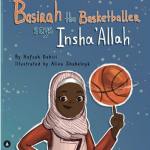
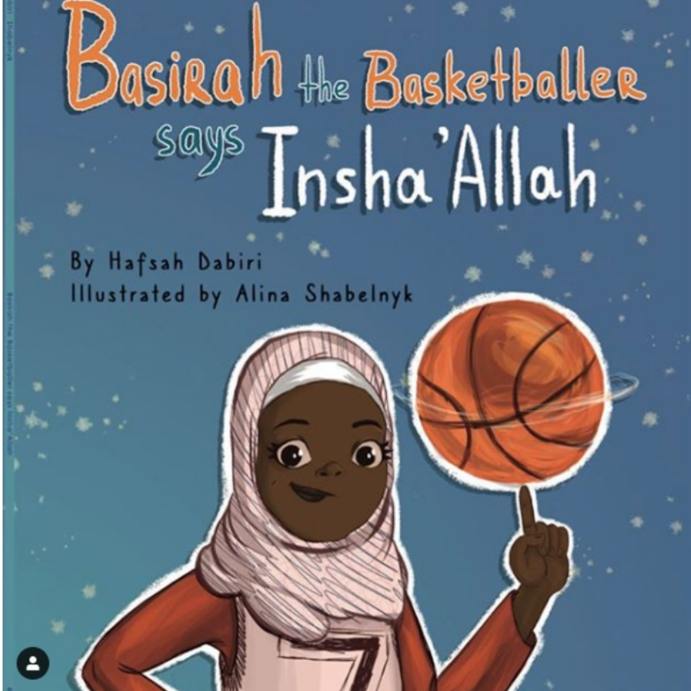
Basirah the Basketballer says Insha’Allah by Hafsah Dabiri illustrated by Alina Shabelnyk

Standard
Basirah the Basketballer says Insha’Allah by Hafsah Dabiri illustrated by Alina Shabelnyk

basket.jpg

Another sports book starring a smart girl with a supportive father, seems like a trend, and I like it.  The book is relatable to ages 5 and up whether they play basketball or not, and will remind even slightly older children how “insha’Allah” really works.  It features a girl, but boys will gain a lot from the book as the lessons are for us all.
basirah1

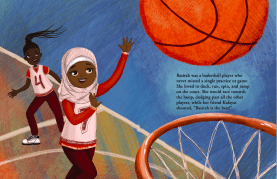
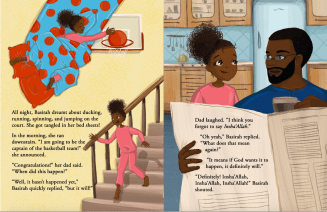
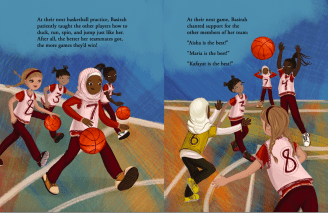
Basirah loves basketball and with supportive teammates and mad skills, she should be a shoo-in for team captain.  But when her dad reminds her that if it hasn’t happened yet she needs to say insha’Allah, she realizes the power of leaving things to God.  

Testing out her new knowledge of asking God to make happen things she really, really wants, over many of the 30 pages in the story, makes the climax that much stronger and her dad’s wisdom that much more memorable. I’m trying not to spoil the story, even though it is a children’s picture book, it isn’t without a bit of tension and resolution that really makes the book shine.
basirah2

This book can be taken at face value with a little bit of a lesson for little ones, or a lot deeper for more reflective readers.  Understanding that things we ask God for often come or don’t come to test us, is a lesson we all need. I hope if read with an adult, the adult will also push the listener to consider why we should do things in the first place, what are intentions are, as Basirah leaves the door open for that discussion at the end, but doesn’t quite articulate it for independent readers.

basirah3

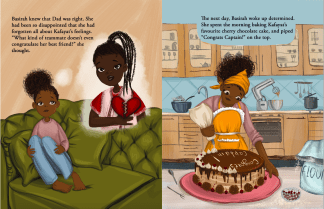
I love that at home Basirah is not covered, but is when she is out.  I love that her school is diverse with students of different colors and head coverings and that her coach is female and a muhajaba as well.  I love that Basirah and her father seem incredibly close, and that she listens to him, and he to her, before lessons are espoused and course of action plotted.  The book is not preachy, but lessons are there and the reader will get “it” right along with Basirah allowing her strength to radiate off the page and inshaAllah empower the reader as well.
basirah4

I find it interesting that the book doesn’t mention Allah and uses the word God, given that the phrase the book focuses around is insha’Allah.  I would imagine the intended audience is Muslim, but there is not specific mention of Islam.  It would work for non Muslims, but I think they would wonder why she says such a phrase and where it comes from.
basirah5

Basirah is presumably in middle school, as she has multiple classes and can bake a cake independently, her age seems a bit fluid, but many 11-14 year olds do tend to be independent in some areas and rather clueless in others, so while I did notice that she seems very naive in knowing what insha’Allah means and how it works in some parts of the story and very mature, and hijab wearing, and willing to grow from her situation in others, I’ve concluded it is plausible.

The book is 8.5 x 11 vertical, well bound, shiny glossy full color pages with clear and easily readable font.  The sentence length and amount of text on the page is not too overwhelming and the spacing keeps it inviting for new fluent readers.  

I love that Ruqaya’s Bookshelf (https://ruqayasbookshelf.com/) has new books out, three to be exact.  Whether the stories work or don’t work for you, I think their presentation and quality, give the books a longevity and find themselves being pulled out for different kids, at different times, when different lessons are needed.  They are well packaged in terms of illustrations and colors and size for the most part, and when I hear they are publishing new stories, I find myself ordering them without even reading the content synopsis.  Thank you for helping get these stories out, may Allah swt reward you!
 

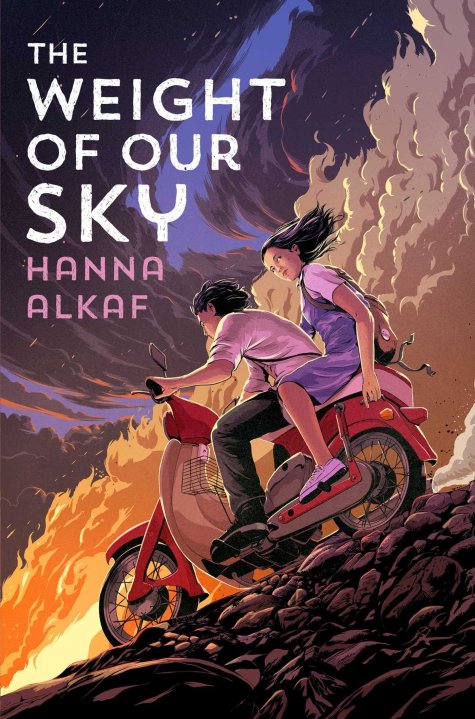
The Weight of Our Sky by Hanna Alkaf

Standard
The Weight of Our Sky by Hanna Alkaf

sky.jpg

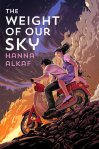
This brand new middle school read is like a quick picture of a young girl’s life.  You get to know her as she is, you briefly meet those around her, you see a week or so of her life and then the book ends and you aren’t the same.  You wonder about her, you worry about her, and you find yourself wanting to reach out to those that maybe remind you of her.  Truly a wonderful book of 277 hard-to-put-down-pages that give insight into Malaysia in 1969, OCD, and the beauty of people willing to show their humanity in dire circumstances. My only concern is that I don’t know that there is anything relevant to the typical target audience western reader that would compel them to pick up the book and see it through.  All the reviews online that praise it seem to be from people older than the YA demographic.  Yes, I really enjoyed the book, but I know who the Beatles are, who Paul Newman is, I am a Muslim, I recently went to Kuala Lumpur, Malaysia and saw the diversity of religions and culture, I know people struggling with mental illness to the point of disability and the exhaustion that ensues; yet I don’t know if I could convince my 12 year old daughter to read it.  If I forced her, I don’t know that she would find the book as beautiful and powerful as I do.  I think a lot of it, she simply wouldn’t get, and even less of it she would relate to.  I probably will force her to read it at some point, and I’ll happily revise this review and swallow my assumption about what the youth these days can handle and identify with, but until then, please let me know if you are in the YA demographic and what you thought of the book. Thanks.

SYNOPSIS:

Melati is a 16 year old Malay girl in 1969, living with her mother, a nurse.  Her father, a police officer, has recently died, and with his loss, she has become crippled by OCD and the fear that her mother too, will die.  Counting numbers move from consoling her and keeping the horrific thoughts at bay, to becoming almost like an incantation that must be performed nearly constantly to keep her mother safe.  As race riots between the Chinese and ethnic Malays engulf the city one fateful afternoon when Melati and her best friend Safiyah are at the movie theater after class, watching the latest Paul Newman movie, the reader is shown how even in calm situations, keeping the OCD from consuming her is a full time job.  With no knowledge of treating and even diagnosing mental health, Melati tries to hide her visions and ticks from those around her as it has alienated extended family, and worries her mother.  The conclusion instead is that she is being haunted by a djinn and thus her mother takes her to different imams and healers, to no avail, and knowing that the common treatment at the time is to have those suffering carted off to an asylum and experimented on, something Melati’s mom, Salmah vows never to let happen, Melati suffers alone.

Once the movie ends, gangs enter the theater and Saf and Melati are separated.  Melati is saved by a stranger, a Chinese lady named Auntie Bee, and Saf is left at the hands of a Chinese gang.  Violence erupts, lasting for days, and curfews prevent Melati from searching for her mother.  While Auntie Bee and her family care for her and take in other neighbors, it is made clear that tensions between the two ethnic groups are high and have been for some time, but that good people exist on both sides too.  People who see people as people not just their culture. 

It is a YA book, so there is a little suspension of reality to reunite a number of the characters and give them the happiest ending such a gritty book can muster, but the author does warn the reader before the story begins that this book has violence and anxiety triggers, and death, she actually urges those that will be inversely affect by such things, to not read her book.  And it makes sense, it is graphic at times, and characters also die, and the tone is powerful, and the OCD is intense.

WHY I LIKE IT:

I love that the book embraces all its themes wholeheartedly, there is no happy ending, or magic cure for Melati’s illness, within one family there is racial tension and beautiful examples of selflessness, that two people can save each other but not like each other, and that families can be really disappointing.  At times the presence of the djinn is so annoying that the reader feels how crippling it must be to Melati, as it cripples the story as well, the balance is perfect though, it doesn’t drag the book to the point of wanting to put it down, if anything it makes you cheer harder when her little victories take place.  

I like that there isn’t a huge sappy reunion, because the danger is still going on and the characters presence of mind to the tasks still at hand is actually a subtle, yet powerful nod to the hope that Melati and her mom will be ok.  Can you tell I’m trying not to spoil too much, just suffice it to say, the women in this book are strong and determined and inspiring.

I like that Islam is present and that Melati has to grapple at times with her faith to find where it lies and how she accepts some of the events that have taken place, and the djinn fighting to consumer her. In many teens it is a right of passage, but for her it is amplified by the horrors she has lived through and seen and her own mental state.  Clearly the author is Malay and Muslim as she sprinkles words and phrases and traditions seamlessly into  the narrative that makes it flow with authenticity and vibrance.

I wish at times we knew more about the history of what lead up to the violence, or maybe even more about some of the characters, but alas I think this is Melati’s story and those that have turned their back on her and her mom really don’t deserve the ink needed to share their roles.  Some details about the resolution of the riots or how the country came back together might be nice, but a quick Google search can quell any curiosities.  I appreciate that the writing is smooth and intentional and well crafted and not a distraction to the internal turmoil and story being conveyed.

FLAGS:

Violence, racial tension, graphic death, anxiety triggers.  Melati and Vincent hold hands, it is a bit fuzzy if it is out of reassurance or something more.  There isn’t explicit sexual violence, but Melati does see a soldier pressing his body against a school girl who is of a similar age to her.  

TOOLS FOR LEADING THE DISCUSSION:

I want to do this as a book club, but I don’t know that the students will read it voluntarily.  I may have to bribe them and get permission from the school counselor.  I think they would benefit immensely from the insight in to mental illness and feel comfortable talking about their understanding of it, being it is presented in a fictional format.  I think the violence, because it is rooted in history can be understood and be discussed.  

Interview with the author: http://richincolor.com/2019/02/interview-with-hanna-alkaf-the-weight-of-our-sky/

Author’s website: https://hannaalkaf.com/the-weight-of-our-sky-2/


Under My Hijab by Hena Khan illustrated by Aaliya Jaleel

Standard
Under My Hijab by Hena Khan illustrated by Aaliya Jaleel

UNDER MY HIJAB final front cover JPEG.JPG

I know, (sigh) another hijab book, but I promise it is good and you won’t be sad you bought…”another hijab book,” and  alhumdulillah, it’s a Hena Khan book, so public libraries will have it or at least they should be willing to order it if requested.  

IMG_2878

Written in rhyming four line stanzas the story is told from a young girl’s perspective about the women in her life.  The first two page spread shows the strong female as she interacts in the world and covers her self, with the following two page spread, showing her in her home, uncovered.

IMG_2879

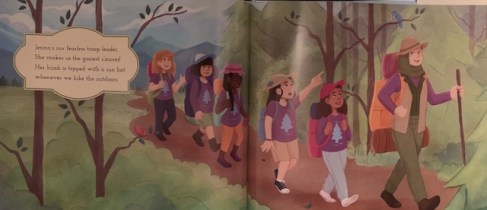
From Grandma, to Mama, to Auntie, to troop leader, to siblings and friends, the reader sees hijabs wrapped in styles as different as the person wearing them.  They also see Muslim women as doctors, artists, Tae Kwon Do students, bakers, leaders, and everything in between.

IMG_2880

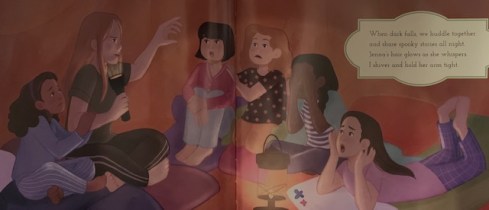
The illustrations are beautiful and perfect.  They radiant warmth and familiarity, while adding details to make the pages hold your attention a few minutes longer and smile with the diversity presented. The martial art scene is spot on!

IMG_2876

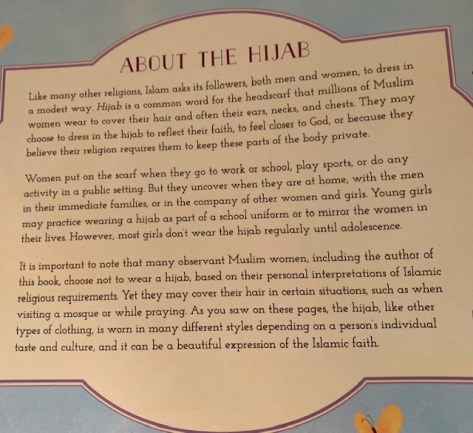
I wish they showed a niqabi, and maybe someone that doesn’t cover all the time, but at certain times of prayer or entering a mosque, like the author, who talks about herself and hijab in general in the afterward entitled: About the Hijab.  

IMG_2882

I love that the book is for children and I desperately hope adults will read it too.  It breaks down so many stereotypes, and answers so many questions in a seemingly effortless presentation.  How many times have all hijabis been asked if we sleep in our scarves or shower in them.  I love that there are shades of brown skin tones, and blond haired hijabi’s too.  

IMG_2877

And most importantly I love that it shows Muslim women to be strong and varied and to have full, independent beautiful colorful lives.  That hijab is a choice and it is strength and beauty and personal.

IMG_2881

The book does not talk about the reasons for wearing hijab, or get into the religion.  The book is a great size for story time and bedtime at 10 x 8 horizontal, hardbound, and 32 pages.  Ages four and up will enjoy this book repeatedly,  and older kids, especially girls considering covering or just starting to cover will enjoy it as well.

Alhumdulillah! Well done!

Forgive the glare in the pictures, they aren’t in the book 🙂

Boy vs Girl by Na’ima B. Robert

Standard
Boy vs Girl by Na’ima B. Robert

9781847801500.jpg

I read this book a few years ago and was blown away that Islamic fiction could explore these topics compellingly in a YA package.  I remember loaning out the book to a mom with middle school kids to see if she could tell me how accurate the storylines were.  Yeah, I never got the book back, and never got the feedback, and the book slipped my mind and thus I never wrote a review on it.  Fast forward to last month and I’m trying to find a middle school book club selection and I can’t believe that I don’t have a blog entry of this book to look back on.  Clearly, this shows why 1- I don’t loan out books anymore and 2-Why I have a blog, cause I remember nothing about the flags, relevance or appropriateness of the book, thus I bought another copy, read it, and am now documenting my thoughts.

The book is 260 pages and an AR 5.3, but the drug use and violence I’d say would warrant an older reader, 9th grade and up perhaps.  And while by the end, the book leaves a pleasant taste in your mouth and you would place it back on the shelf in a contented manner, I would be misleading if I didn’t confess that it took much self motivation to pick the book up and keep reading more than once, that it honestly took me a month to read.  The last third was hard to put down, but you have to get through a fair amount of frustration, stereotypes, and extremes to get there.

SYNOPSIS:

Sixteen year old twins Farhana and her brother Faraz live in London and are incredibly different from one another.  Farhana goes to a school where she excels both academically and socially.  She is queen bee, beautiful, and articulate.  Faraz on the other hand, goes to a different school and doesn’t really fit in anywhere, but in the art studio.  One thing that unites them, however, is their determination to grow and learn about Islam this Ramadan, and their home environment of a large extended Pakistani family that places culture above religion.

Both twins are close with the “black sheep” of the family, their Aunty Najma, a niqabi rebel set on marrying a white convert.  But, both twins have their own stresses as well.  Farhana has recently called it off with a boy named Malik, but isn’t really over him and Faraz has gotten himself involved in a street gang to find a place to belong, but the stakes are getting higher.  Both twins on the eve of Ramadan and with the coaching of their Aunt are determined to get their lives straightened out, fast properly, reconnect with their faith, and with each other.  They do, alhumdulillah, however, the spiritual high only lasts so long, as earlier decisions come back to haunt them.

Farhana makes the bold decision to start wearing hijab, but once the novelty wears off, she starts to question her choice.  It isn’t helped by her mom who is very, very against the need to veil and makes it difficult for her daughter.  Faraz meets some street artists at the masjid and while it looks like he could find a place to excel, his alliance with a gang, also comes with enemies from rival crews.  Physical fights and drug runs have him out at all hours of the night and the priority of fasting and praying fade as the the pressures of not getting killed or caught prevail.

As each kid has their ups and downs, and the parents prove to be out of touch with the lives of those in their homes, tidbits of Islam come through, but unfortunately so does a lot of cultural dogma that isn’t always clarified or pushed back on, making there a lot going on in this book, and making me wish it was a just a bit longer and more fine tuned.

WHY I LIKE IT:

The book, I could argue set the foundation for the amazing pieces of literature currently available.  Published in 2010, the book really was a first of its kind.  Written by a Muslim, unapologetically written for Muslim and non-Muslims, and available in the mainstream.  The book tackles real issues, but seems to fall into stereotypes too.  That Farhana covers and is so beautiful, she looks like Aishwariya Rai, the Bollywood actress, why would she cover.  Malik decides to figure things out and wait for her, ahhh, so sweet.  There’s the rebel Asian girl who gets a lot of page space early on for her incredibly minor role, going on about Asian Girl Bachelor Parties and hooking up with everyone and anyone. There is the best friend who is religious and the Imam’s daughter and is also chubby.  The nice brother at the masjid who saves the protagonist.  I don’t know, they all seem predictable.  What I like about fiction is it allows Muslims to be seen in shades of gray not just black and white, and while this book tries to do it, I feel like only the main characters are allowed to grow and change, the minor characters hold on to their positions so resolutely that, they kind of seem dry.

I like that the tables on hijab are switched up, it isn’t the parents that want the girl to cover, but rather the girl her self, and some of the conversations about hijab and Farhana’s choice to do it compared to her friend who is forced allow for some powerful moments.  I also like, that she has doubts soon after opting to wear it.  I wish some religious reasonings were brought in to her understanding of hijab, but the aspects of choice and how to wear it, are present.  I’m grateful that Faraz’s storyline takes most of the action, so that it isn’t a romance novel, with Farhana pining relentlessly for Malik.  I had hoped for a little growth from the gang head, Skrooz, especially after Aunty Naj sheds some light on him, but his criminal act at the end after showing Faraz his cousin or maybe it was his brother seemed a bit off.  Again, it was only to benefit the protagonist, not to show that we all have our own battles.

The parents and extended family are irritating to say the least. To the extent of delaying iftar to get the food to the grandmas house and then serving the men first, like really? I don’t think so.  There is nothing that says the women have to eat after serving everyone else in religion and that is never challenged.  Yes, Farhana challenges her mom’s notion of women not going to the mosque, but the food bugged me.  I am Pakistani American, and the culture has its flaws, but the presentation in the book, is one big wide stripe of female oppression, which isn’t fair either.  Absolutely, their are families that the women cook all day and then eat in a corner, but I feel like the staging of this book as “authentic” either needs to show variation, or account that this is how one family views it, not that it is universal.

FLAGS:

There is talk of casual sex, physical violence with knives and fists, details about drugs: cocaine and heroin.  None of it is celebrated, but it is present and very much the norm in how it is presented.

TOOLS FOR LEADING THE DISCUSSION:

I still sway back and forth on if this could be done as a book club selection, and in the end I would opt that no it can’t.  Not for the drug use, or boy girl relationships, but ultimately for how the backwards and closed minded the Pakistani culture is presented as being.  If the group was high school Pakistani heritage kids maybe, but I think Arabs and non Muslims in general will not think very highly of the culture after reading this book, and I think that is a disservice to be promoting in a book club selection.  


The Victory Boys by Jamal Orme illustrated by Eman Salem

Standard
The Victory Boys by Jamal Orme illustrated by Eman Salem

victory boys.jpg

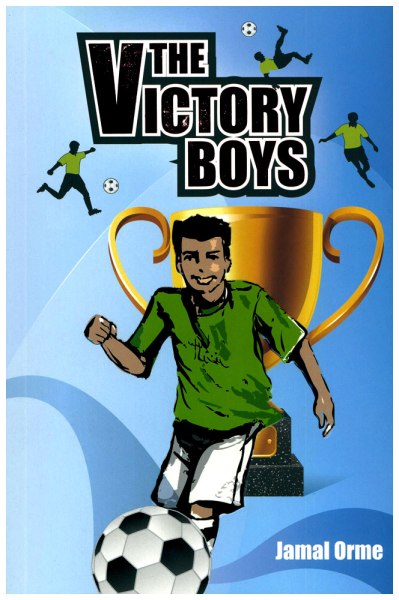
I’m not sure why Amazon states the book is for pre-school and up, when the publisher, Kube, posts this book for ages 7 and up.  I think 3rd or 4th grade soccer/football fans will enjoy the book.  There are some slightly mature ideas presented and worked through, and the soccer lingo assumes the reader knows the sport.  Plus the quality of the illustrations and the small font isn’t going to entice someone not already excited to read the book based on the content within.  My boys, ages 8 and 9, enjoyed the book, as did I, once the story got going.  It doesn’t really grip you from the first sentence, but as the story progresses and the way Islam is woven in makes for some learning experiences in the midst of a few intense football matches.

SYNOPSIS:

The boys at the Sunday Madrasa do not enjoy their time there.  They find the Imam boring and thus are not inspired to learn. When they sneak a football into break time however, they suddenly feel more engaged and present in their lessons.  A change the Imam notices and appreciates, but doesn’t know the reasoning for as he strictly forbids football and finds it a waste of time.  Outside of Madrasa, Junayd is having a hard time at home.  He has to help out a lot at his father’s restaurant and his older brother Saleem has gotten in trouble with the police.  His mom prays for the kids, but is also at a loss as to how to help with the stresses at home.

During a secret game of football in the masjid courtyard, an arrant ball breaks the neighbor’s greenhouse window, and the boys are forced to come clean about their covert game.  The Imam demands the kids stop playing and that they tell their parents what they have done, so that they may earn some money to replace the window.  As the kids come through with the money and the Imam sees the kids resort back to their lackluster attitudes to learning.  He gets an idea to start a football club after madrasa classes.  The only problem is that he knows nothing about the sport and no parents are willing to help.

Saleem by chance comes to collect his brother one day, and as he hollers advice from the sidelines, the Imam recruits him to coach the team.  In response the Imam ever so gently uses football to teach not only the madrasa kids, but Saleem as well.  When the boys learn of an upcoming tournament, the Madrasa enters an A and B squad and the Shabab Al-Nasr, Victory Boys, will be tested not only in their play, but also in their manners, and understanding of what it means to be a team and Muslim.

WHY I LIKE IT:

I love that the Imam grows and changes.  I mean it is a kids book about soccer, but really it is the adult in the story that shows the most heart.  He goes out of his comfort zone, reevaluates his opinions, and admits when he is wrong.  High five Imam!  I also like that he didn’t give up on Saleem, and the way he leads him is with such kindness and compassion, that even youngsters, will be impressed.  

The book does not talk down to the reader, which is nice, but at the same time I think it pushes the age appropriateness a bit with the detail devoted to alcohol being sold at the restaurant, Junayd’s father’s flaws, and even Adam’s dad’s tantrum of sorts.  There really aren’t any nice parents in the book.  We don’t learn much about the moms, but none of the dads seem too supportive.  Really the only nice adults are the Imam and the neighbor who’s window they broke.

The timeline isn’t entirely smooth, the kids come together and play well as a team remarkably fast for how intense the tournament is, and how well they perform. And some of the characters could have used some fleshing out, I couldn’t really tell you much about them.  The font is really small and the spacing often forgotten.  The book is about 95 pages with a glossary and an acknowledgement at the end, fortunately the 2nd book in the series seems to space the words and lines out more and is 155 pages.

The story is solid and for the most part well written.  I read it in one sitting and thoroughly enjoyed the lessons learned and then put into practice.  The book isn’t preachy, but you are glad to see the Imams words given life in the other characters’ actions.  Saleem changes quickly, but the author and story account for it in a way that is believable for the audience and the message of not giving up on one another comes through loud and clear.  There is a lot of technical detail about the sport, but it doesn’t drag on, it adds to the excitement even if you just know the basics.

FLAGS:

The talk of alcohol, of Saleem being with a group of kids and a stolen car, there is some yelling and aggressiveness from the adults.

TOOLS FOR LEADING THE DISCUSSION:

The story is a bit short for a book club selection, but I would definitely consider it for Lunch Bunch (where I read to 4th and 5th graders while they eat lunch).  And I think most Islamic School libraries and classrooms should stock the series.  

https://thevictoryboys.com/

https://www.youtube.com/watch?v=oSpK6-fNiSQ

Ibrahim Khan and the Mystery of the Haunted Lake by Farheen Khan

Standard
Ibrahim Khan and the Mystery of the Haunted Lake by Farheen Khan

ibrahim-khan-and-the-mystery-of-the-haunted-lake.jpg

It has been over four years since I reviewed the first Ibrahim Khan book, and while I didn’t love The Mystery of the Roaring Lion, it was just ok, this book was more fun and adventurous and stayed relevant even for a book published in 2010.  At 68 pages the book works ideally for 2nd to 4th graders looking for a quick read, or advanced younger kids that will enjoy the short chapters, detailed illustrations and easy to hold book.

SYNOPSIS:

Third grade cousins, Ibrahim and Zayn, are off on a camping trip with their class. Thinking how nice it will be to take a vacation from solving crime, the boys enjoy hearing the story of the haunted lake around the camp fire and not thinking its more than just a story.  But the next morning when they wake up for fajr and hear some weird groaning from the woods, they realize they have a case after all.

The mysterious noise presents itself at different times and at different locations, as the boys and their friends work to unravel the clues.  The climax gets tense as the whole class is on a moonlight hike when the noise sends them all running and screaming “ghost.”  Ibrahim and Zayn, the smart sleuths that they are, find themselves at the culprits tent with the culprits near by.  Saved by a classmate, the boys now must now figure out how to prove that the “ghosts” are not just having fun scaring the campers, but are up to some serious crimes that will require police action and being patient.

WHY I LIKE IT:  

I love that the boys are Muslim and they wake up and pray and eat vegetarian to ensure they keep halal, and I love that they are also just friends and classmates and kids.  There are Muslim and non Muslim kids in the class, at least one girl  wears hijab, but it is a diverse group.  I like that the characters have their own personalities and they do annoy each other and have to apologize.  There does seem to be a lot of characters, and a few times in the short book I had a hard time keeping them all straight, but knowing the real story is the mystery I just keep reading, and figured all the details aside from the clues wouldn’t hold up the story too much.  

I don’t know why the author has only written two books in the Ibrahim Khan series, but I hope eventually more will pop up.  The books are fun little mysteries that show Muslim characters in action.  They learn good manners, cooperation, compromises, prioritizing, and problem solving without the book being in your face about learning all those things.  The kids embody them, by being good Muslims and having to rely on one another to save the day.

The book is written in British English and is set in Canada.  I bring this up because I didn’t know artifact is spelled artefact and I thought it was an error.  

FLAGS:

The book is clean alhumdulillah.

TOOLS FOR LEADING THE DISCUSSION:

The length is too short for a book club book, but I think it would be nice to have in a school or classroom library as the bright well-done cover will entice children to pick it up off the shelf and the short quick paced story will motivate kids that start the book to finish it.  

IMG_1920.jpg


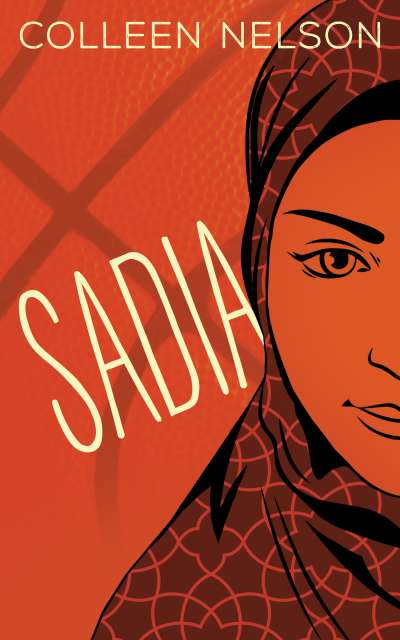
Sadia by Colleen Nelson

Standard
Sadia by Colleen Nelson

sadia.jpg

A middle school sports book with a female lead who wears hijab written by a non muslim.  The book could really go a lot of ways, I held my breath for all 239 pages waiting for something to go totally awry, and thankfully it never did.  In fact I read the book nearly straight through and while meant for ages 12 to 15, I quite enjoyed it.

SYNOPSIS:

Ninth Grader Sadia Ahmadi is an immigrant from Syria, her family left before things got “bad,” and while she has adjusted to life in Canada, High School is testing her in other ways.  Her best friend Mariam, an immigrant from Egypt, has started dejabbing, taking off her hijab to fit in it seems any chance she gets.  This is taken as a betrayal by Sadia and their friendship waxes and wanes throughout the book as each girl has to figure out who she is in relationship to hijab, and how to judge and/or accept each other and their choices.  Throw in a new refugee girl Amira from Syria who doesn’t speak English, a co-ed basketball tournament that doesn’t allow any headgear to be worn during games, a cute boy on the team and an awesome teacher with interesting assignments and you have the book in a nutshell.

WHY I LIKE IT:

I like Sadia, she is believable and strong.  She is well liked, athletic, she has a good relationship with her parents, brother and teachers, she prays and fasts and owns who she is, but she isn’t perfect.  She is hypocritical at times, and acknowledges it, she is tempted by parties, and boys and taking off her own hijab to play ball, and has to confront it about herself.  She doesn’t do things like pray on time, like she knows she should, but there she is and I am so impressed that the author picked up on so many nuances of Muslim life in her research or in her own observations as a teacher.  Yes, Amira has an awkward observation about Miriam being Muslim and not wearing hijab that seems really one dimensional considering large numbers of Muslims in Egypt and Syria don’t cover, but I don’t know if that was the author’s attempt to draw the issue to the light or if it was just a misstep.  

I like that there is a cute boy that accepts Sadia and who she likes as well, but they don’t do anything.  So often, these books become overrun by the romance story line and this one doesn’t, thankfully.  It seems to find a realistic balance, that she has feelings, but isn’t going to act on them, and based on her mom figuring out when she is lying that she won’t try and sneak behind her mom’s back.

Issues of halal food are mentioned in passing and it fleshes out that the girl is Muslim, not just going through the motions.  At times it is hard to know if her choices are based on belief and faith or expectation, but for an early YA/Middle School book, I think it suffices.  She mentions modesty as a reason for hijab, but also a lot of parental and cultural expectation.  One central theme the reader just has to go with, is that Sadia and the rest of the characters in the book, and there are a fair amount of Muslims, don’t know about any other ways to wear hijab for sports.  I get that Mariam and her sewing ability is a huge arc in the story, but they have smart phones, and its a contemporary piece, they have to know about Ibtihaj Muhammad in the Olympics, Bilqis Abdul-Qaadir, and Nike making athletic hijabs.  So, to make the story work you do have to turn a blind eye to the fact Muslima’s have taken to sports in the mainstream and that there is no way they can all be that clueless about her fabric, style, and covering options.

I love that the issue of refugees is addressed in the periphery, and the issues are given a human face.   I love that Sadia’s parents are religious, but not left as simple stereotypes, they deal with Islamaphobia, but aren’t looking for sympathy.

There is always the case, that the hijab becomes a stereotyped item as the story involves characters torn to wear it or not, but I loved how judgements were called in to questions and there wasn’t an easy answer.  The side friends in the story are all way too good to be true, but I think the whole book has a bit of a pollyanna feel to it, and in this case it was ok to error on the side of kindness than become overtly sensationalized and whiney.

The biggest hurdle this book faces is, is it the author’s story to tell. And I don’t know, I review a lot of books, and many are by Muslims and they get stuff wrong in my opinion, or they go so extreme to be accepted.  So, I don’t know, I think the book had heart, I didn’t know if the tournament would let Sadia play, I didn’t know if she would sneak off to the party, I didn’t know if she would cross the line with Josh, and I was curious, and invested and sucked in to it all.  Is it a book to teach others about Muslims or a book for Muslims to see themselves? I think all of the above.  Muslim’s should control their own narrative, but I think when author’s get so much right, we have to take some reassurance in the idea that we are being accepted by the larger society, and our stories are being told with love by other’s too.

FLAGS:

There is romance and lying, but no kissing, just hints at emotions or an errant arm flung over a shoulder during a huddle or photo.  There is mention of drinking at the parties, but Sadia doesn’t end up attending.

TOOLS FOR LEADING THE DISCUSSION:

I don’t know that I would do this as a book club selection, but if I met the right group of kids, I would definitely reconsider.  There is a lot of basketball, which I quite enjoyed, but I could see other’s maybe getting bored by the play-by-play.  I’ll make my daughter read it in a few years, and I look forward to discussing hijab and how she feels about it after.  It does raise the subject, and ask you to check your judgements on yourself and on others.

Author’s Website: http://www.colleennelsonauthor.com/


Miss Never Pleased by Ayesha Marfani illustrated by Aisha Aamir

Standard
Miss Never Pleased by Ayesha Marfani illustrated by Aisha Aamir

IMG_1860 (1)

I’ve been accused of being brutal in my reviews.  And while I don’t enjoy being mean, I do take some pride in the attribute, as I am paying for these books myself (unless I get them at the library) and it takes time out of my day to write these reviews.  I don’t get paid, I do it because I love books, I like supporting Muslim authors and those including Muslim characters in their stories.  I take recommending books to others serious, and can’t remember things if I don’t write them down, so here I am.  With this review I don’t want to be rude, or overly critical nor do I want to sound pompous and arrogant and privileged, but at the same time, I ordered the book off of Amazon for $7.99 so a fair review shouldn’t hold punches to spare what the author is trying to do and appreciating that she is writing for a cultural audience. 

Please believe me it isn’t personal, I am reviewing it based on my same criteria I review all the books through, my own personal bias.  That being said, if the reader is living in Pakistan, or has recently lived in Pakistan and English is a second or fifth language the 70 page story with games and activities at the end is decent.  Meant for ages 7-12 in that situation, that are intrigued by the moral lesson presented, I think the plot holes can be forgiven.  For those without ties to Pakistan, or with loose ties like me (I’m half Pakistani and grew up spending my summers visiting family) the book will be choppy, culturally specific, confusing and lacking.

SYNOPSIS:

The book opens with Habiba being distraught over her world crashing down on her and the pain she has caused her relatives consuming her.  She then opens her diary that she has kept for six years, starting back when she was seven recounting how she as Miss Perfect justified her self in incident after incident.  Thirty-one incidents to be exact, detailing how she would rat out her cousins, or critique elders food, or her tell her friends how to dress and what to study because it was the honest thing to do.   How she would decide who should be friends with who, if her family should go on picnics and how she didn’t want gifts but didn’t want to not get gifts either.  All-in-all Habiba is a self righteous awful, awful girl, I don’t think it is her trying to be perfect, I think she is just awful.  At the beginning she attributes it to praise she received as a child from her mom and grandma, but for this behavior to have gone on for so many years, I don’t think it was their praise, it was their lack of discipline that leads up to her catastrophic moment.  She fails her exams and then learns what her family really thinks about her in a poem, with a way too forced rhyme scheme, left lying around.  The story then returns to her undoing and a faqeer coming to cure her and her parents taking the blame for her poor upbringing.  She crosses out the title on her journal from Miss Perfect to Miss Never Pleased, to presumably denote how nothing could satisfy her.  The story then skips forward to her returning after University as the best international psychologist.  

WHY I LIKE IT:

I love the concept of the book, that a girl thinking she was so perfect could realize in fact she is not.  The idea is great.  I think it is a bit sad that her parents and involved extended family took so little interest in correcting her behavior, but at the same time I didn’t think it believable that she was absolved of all responsibility either. 

I feel like this book was a great first draft.  It needs some fleshing out, and some continuity corrections.  Incident #3 makes no sense, it starts with a party, then her ruining the mood of everyone at the party, and then her crushing her cousin’s dream of being in a play for her own twisted reasons.  But the jump from one idea to another seems like something got edited out and the rest of the four-and-a-half-page story didn’t get altered to reflect the missing details.  I have no idea what the party was for, what a wish gift is, and why anyone in their right mind would take a child’s opinion regarding someone else’s life so strongly. 

There are also contradictions, for example on page 14 she makes a big huff about her cousin wanting to study to be a teacher saying she wouldn’t be good at it, then on page 49 saying she would be marvelous, and this is before her climactic change of heart.  There are some awkward passages as well, that I had to read a few times, which could have been do to a different style of English, but sometimes I think it was confusing on its own.  Page 24 was all over the place with her not wanting to thank people for giving her a gift because she deserved the gift, but then telling them she appreciated it, along with her saying the gift, a dress, appealed to her, but that they should not have gotten it because it was an inferior quality.  Inferior to what we don’t know. So she didn’t say thank you, but said she appreciated it, isn’t that the same thing?  She didn’t like the dress, but it had appealed to her? Very confusing and just one example.

I say it is for Pakistani’s because I don’t know that anyone outside the subcontinent would know what a faqeer is, yes there is a glossary at the back, but it seems assumed in the story as a religious practice, which I find some issue with.  When Habiba was trying to dress everyone she says that a fishtail would look nice on her cousins and she gets a blue one.  I have no idea what a fishtail is.  It is not really explained, an illustration would have been helpful, but is not provided. She also once refers to her cousin as “dark” in a negative connotation, and that seemed very out of place and inappropriate to me.  And ultimately, if you don’t know the Pakistani school system I’m not sure you would understand how important the exam she failed is, nor why the scores are in the newspaper,  or that they have to pick their fields of study so early.  That being said, how did she get to University and do so well? If at 13 they had to choose their college and she didn’t pass wouldn’t she not be allowed to continue? I am so confused. And then she comes back after University, but is already being written about in the papers as if she has had a long and successful career.

The book doesn’t tell how she makes things right with all those she wronged either, after so many incidents, I think a little self reflection and humbling should have occurred to those that felt her wrath for so many years.  There isn’t really even a solution, her dad comes and talks to her, she reads what people think about her and then boom, happily ever after.

The illustrations are sporadic, but not consistent in the book.  The style seems to be different in each sketch.


FLAGS:

The girl lies and is incredibly mean but there isn’t anything inappropriate in terms of language or violence.  Islam is mentioned at the end when she thanks Allah swt for His help.

TOOLS FOR LEADING THE DISCUSSION:

I wouldn’t do this as a book club because it is so short, and I don’t know that kids would be compelled to read past the first few pages if it was in a classroom library.  

Book Video https://www.youtube.com/watch?v=QWoCiEnvg5U

If this book would have been written 20 years ago or so, I think readers everywhere would have given it a try as there was so little to choose from in Islamic Fiction, but there are options now, and much better ones.  I feel awful that I didn’t love the book, but I can’t suggest it either.  I plan to read one more book of the author’s to see if this one just didn’t work for me, and I’ll let you know what I think.

Raihanna’s Jennah by Qamaer Hassan illustrated by Yasushi Matsuoka

Standard
Raihanna’s Jennah by Qamaer Hassan illustrated by Yasushi Matsuoka

IMG_0047

Raihanna is back and learning about Jennah with her two best friends, Safiya and her cousin Maryam.  In this beautiful 8×10 book, the character who last fasted her first Ramadan fast is now having a sleep over and learning just how wondrous and worth the wait heaven will be.

IMG_0048

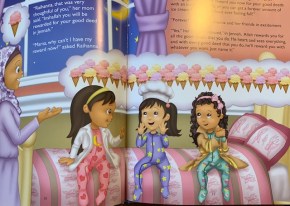
The story starts with the three girls parallel playing as a veterinarian, firefighter and world class chef.  When hunger strikes and the cookie jar only has one cookie, Raihanna has to decide to eat it or divide it into thirds.  

With mom looking on as Raihanna decides to share, a teachable moment about jennah presents itself.  The mom, in her consistent purple uniform, tells Raihanna she will be rewarded in jennah for her good deed.  Which leads Raihanna to ask why she can’t be rewarded now.  The explanation is a bit text heavy, but using ice cream to explain a reward in this world, and having whatever you want in the next, sets up the format and story line for the rest of the book.

IMG_0049

The girls start off asking for pretty simple things like kittens and bikes.  But mom encourages them to think of something beyond their imagination.  The girls come up with castles and world’s made of candy, and flying like birds, and golden kitchens. 

IMG_0050

The mom responds virtually the same after each girl expresses what she would want.  She says, “…beyond your wildest dreams,”  then, “…beyond your imagination,” then “beyond belief,” then “beyond description,” then back to, “…beyond your imagination.”   It gets a bit repetitive, but not necessarily in a good way because it doesn’t function as a refrain that the little ones will pick up on.  It just gets annoying I think for the reader if the book is requested too often.  I wish she would have maybe picked one, giving the book a comforting pattern, and something that the young ones could remember and benefit more from.  The book is for preschool to early elementary kids, but because of the amount of text on the page, it will be read to that age group, not read independently.

IMG_0051

As with the first book, I love the warm colorful cartoonish illustrations, they both attract and engage children as young as two or three.  The hard back binding and glossy pages also make it sturdy and a wonderful gift.  This is a book for Muslim children that I think little girls especially will enjoy. I sincerely hope there will be more books in the Raihanna series.

She Wore Red Trainers by Nai’ma B. Robert

Standard
She Wore Red Trainers by Nai’ma B. Robert

red.gif

After having fairly good luck with the Muslim YA Romance Novel Genre in An Acquaintance and Saints and Misfits, I was willing to give She Wore Red Trainers a try.  Na’ima B. Robert has written a lot of books and this 261 page book was an easy and entertaining read.  There are no plot twists, deep thoughts, or intense drama, its a light read that infuses religion and environment into a story that will be great for 14-16 year olds that have slim pickings of relevant, Islamic, “halal” fiction options.

SYNOPSIS:

The story is told from two 18-year-olds’ perspectives, Ali and Amirah. It goes back and forth and while the perspective is obvious, the bottom of the page identifies the character so there is no chance for confusion.

Ali has begrudgingly moved to London with his brothers and father.  Not very religious before his mother’s death, he and his father and younger brother have made a new start and commitment to Islam since losing her to cancer.  The middle brother, resists this, but isn’t too critical in the story, other than to add a voice to the concept that people have to come to Islam on their own, that the relationship between a person and Allah is not cookie cutter or often simple. 

Amira too has a past and a lot on her plate as she strives to balance her chaotic family life and moving past decisions of her rebellious self.  The two meet and in the brief second before gazes are lowered, they fall in love.  Ok, so it isn’t that cliche’ but it is close.

The two, as the dedication of the book states, “are striving to keep it halal.”  They have a few encounters and the sparks are there, but they both have their own stories and supporting cast of friends as well. It isn’t until the very end, SPOILER, they get married.

Yup. impromptu wedding of 18 year olds.  It isn’t out of left field though, there are passages that contemplate the Islamic merits of a young marriage, and perhaps that is the depth of the book, as far as giving the reader something to think about. That and choosing Islam and actively living it.

WHY I LIKE IT:

The stuff that makes the book interesting, isn’t really even the two love birds, it is the context.  The struggle of Amirah’s complex family situation with a mom that has had multiple husbands, and is suffering from depression.  Amirah also has a creepy stepdad (makes her uncomfortable and seems to make sexual advances toward her) and a sketchy past that isn’t really articulated but is hinted at enough to know that she did rebel briefly by running away and experimented with drugs and alcohol before realizing it wasn’t the life she wanted.  She takes tremendous care of her younger siblings, one who is deaf, and respects her older brother tremendously.  Her friends are not overly developed but provide enough diversity that the reader will see themselves in someone even if just fleetingly.

Similarly Ali is fleshed out by the company he keeps.  He has very religiously devout friends, a few rebellious ones and countless opportunities to define who he is.  His home life is a little chaotic, but they’ve gone through the destruction and are in the rebuilding phase. 

I like that the characters are fallible and represent a wide spectrum of religiosity.  The book isn’t political, nor does it discuss culture really, but it is meant for Muslim readers.  The characters throw in Arabic terms and while there is a glossary at the back, the religious rules, the contemplation of hadith and ayats, understanding Islamic divorce and the stress to be well established before marriage make it a book for those that can relate.  I love that part of keeping it halal is that they don’t talk and text.  I know that makes it a bit unbelievable, but I like that the line is drawn and established.

I wish that the past of many of the characters was clearer.  Not overly sensationalized, but a tiny bit more.  I wanted more information on what Ali’s dad’s new job was, and how far away they would be moving.  I wanted to know how Amira’s family would manage without her and the creepy stepdad, would the mom be able to step up and care for her kids.  I wanted more details about Amira’s family in general and why her older brother had to leave his studies permanently in Saudi Arabia, and wasn’t able to just delay graduation.  

I can’t criticize the writing too much because I did read the book in one sitting and it kept my interest.  I didn’t expect it to be deep or thought provoking, so for a light summer read, it was good enough.  I felt like the ending was a bit rushed, and yes there are some far fetched ideas, but I think it’s a romance novel, halal or not, so yeah, there are going to be some places that forgiveness is needed.

FLAGS:

There is mention of hooking up, drug and alcohol use, virginity, and a creepy sexual predator in the stepdad. It isn’t appropriate for middle school, but not so vulgar that one would need to be 18 to read.  I think high schoolers won’t find it too cheesy, and not be shocked by the content either.  Granted it depends on the reader. but I think it is better to be safe than sorry.

TOOLS FOR LEADING THE DISCUSSION:

I would consider the book for a high school book club. Might have to get parental permission, but I think it works well to consider how to have it all so to speak.  How to live within Islam and be smart about your choices.  The book doesn’t offer a lot to think about and mull over, but if you were a teenager, I would imagine that the book presents a lot of what you are feeling.  There is a lot to relate to in the friends, the deen, the emotions, and the temptations.  It also shows that just because families are Muslim, doesn’t mean that they are not complicated and troubled, a scenario that many would find reassuring at least superficially in the book.

Interview with the Author: http://www.kubepublishing.com/an-interview-with-naima-b-robert-about-her-forthcoming-book-she-wore-red-trainers/