

I would not know where to shelve this 40 page in a library, it has beautiful pictures, it is informative, resourceful, useful, and interesting- I’ve only delayed sharing it because I really have had to think, how best to use this book to its maximum potential, to make it truly effective. It is formatted externally as a picture book, but it reads much like an chapter book anthology with the stories connected by the road the diverse folks live on, Rahma Road, all coming together for a communal iftar, with some fasting and some not. The spreads feature vignettes on the left of what each house is making, including tidbits of culture, facts about Ramadan, insights about method or ingredients, with the facing page being the recipe. The book is incredibly meticulous and intentional in appealing to Muslims and non Muslims alike, as well as a variety of ages. It works as a book for Muslims to see themselves in, non Muslims to get a peek at iftaar excitement through, messages about community and diversity celebrated, foodies to see new recipes that they can try, cultures to explore through food and native words, a story framing to feel connection, I really could go on and on with the layers and inclusions this book provides, alhumdulillah. I think the best way to use and share the book is going to be for me to read it with my 5 and 9 year old children a week or so before Ramadan. Where I can read the story portion, getting us excited for Ramadan, slipping in some reminders, appreciating Islam’s global presence, and then talking about the recipes so that they can pick dishes to try in Ramadan and add needed ingredients to the shopping list (I wish I made the effort to be this organized all year long). I then will plan to leave the book out and have my teens flip through to find any recipes that they think sound good and will commit to making. The book would work all year long, but as a new release, I’m sharing my plan with hopes that it can help your family as well.


The book contains 25 globally inspired recipes, featuring 11 with accompanying stories. I absolutely love that at the bottom of the recipes are page numbers for additional items that would pair nicely, or be condiments or beverages or desserts for the dish. This allows easy personalization, fusion meals, and more importantly a way for different age groups to be able to help each other in the preparation. Maybe koshari is a bit advanced for your kid, but the mint lemonade paired with it might be something they can tackle a bit more independently.


The framing of everyone on the road coming together book ends with the neighbors sharing a meal at the end, I love the backmatter explaining Ramdan, about the recipes, even about Rahma Road. The message to the reader and the naming of consultants really is a credit to the time and effort put into this book.


A few of the dishes and countries featured are: Atayef from Palestine, African American Sweet Potato Pie, Nigerian Puff Puff, Japanese Temaki Sushi, Morrocan Harira, Uyghur Lamp Stir-Fry, Guatemalan Dobiadas, Turkish Chicken Gozleme, Malaysian Teh Tarik, Australian Mini Strawberry Pavlovas, South African Bunny Chow, Mexican Elotes .I can’t wait to report back if my plan was successful, if the dishes prepared were a hit, and ideas for further maximizing the use of the contents it contains.


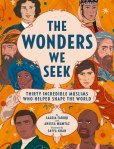

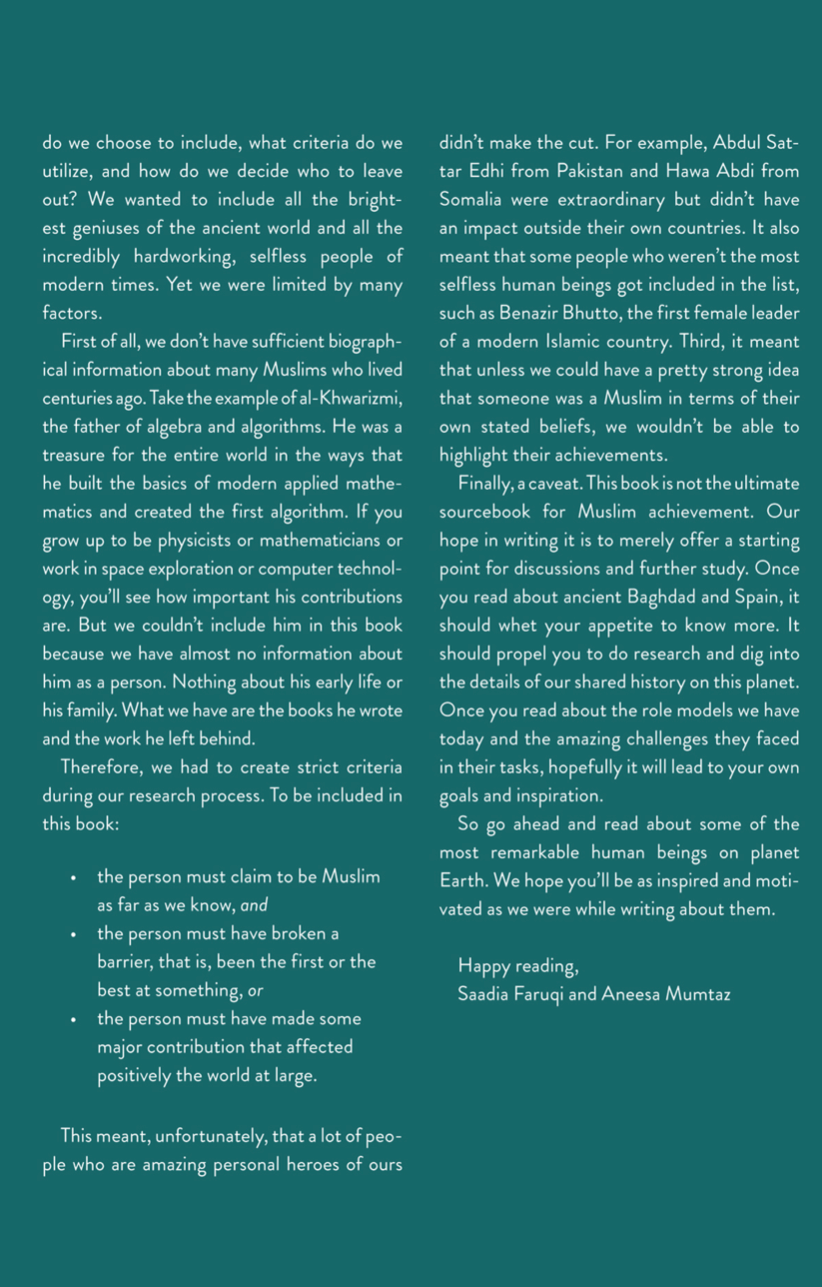


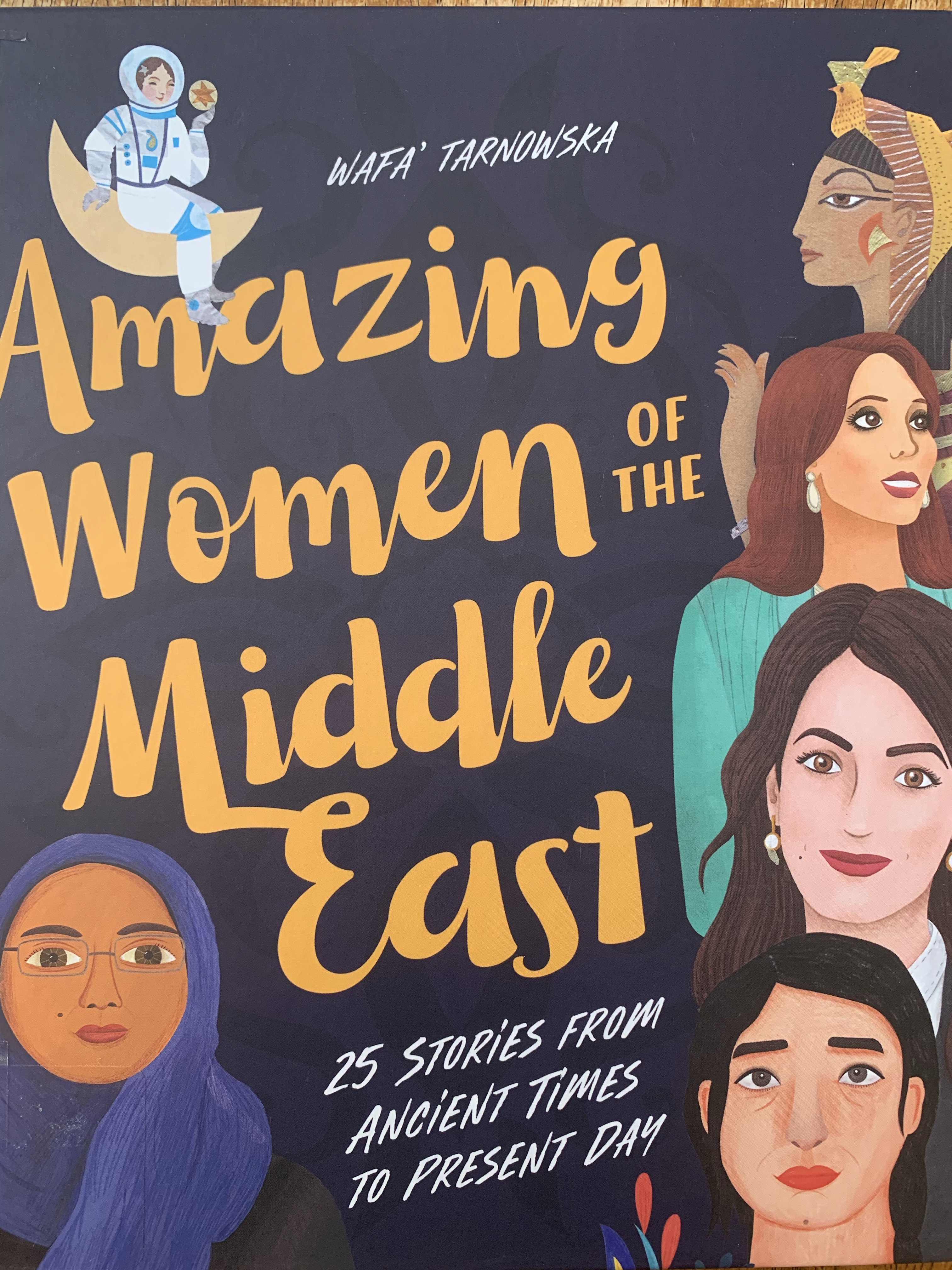 A nonfiction picture book for teens that features amazing women from ancient times to the present day. Many of the women featured are Muslim and each entry receives a teasing summation page with a full page portrait from one of five international artists before a two page, more in-depth biography is presented. The 112 pages feature an introduction, and a map to start the book off, and acknowledgements and a glossary at the end. There are large time gaps that I wish would have been commented on, the geographical pool includes India which surprised me, and in one of the entries the way hijab is discussed seemed judgmental to me, but other than that the stories are absolutely remarkable. There are amazing women in every culture and throughout all time periods, but to see one that highlights a region that is stereotypically oppressive to women is a sight for sore eyes. I learned so much and marveled at the intellect, bravery and determination shown from being rulers of empires to intellectuals to scientists and artists everything in between.


 Islamic School Librarian