Category Archives: middle grades

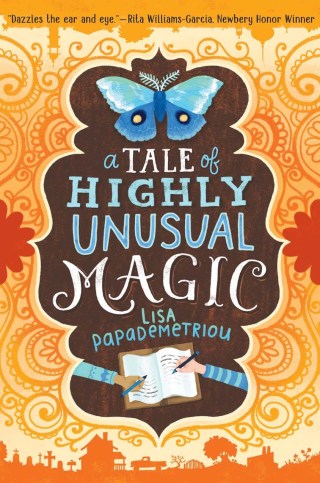
A Tale of Highly Unusual Magic by Lisa Papademetriou

Standard
A Tale of Highly Unusual Magic by Lisa Papademetriou

a-tale-of-highly-unusual-magic-L.jpg

For a book about magic, featuring a girl who admittedly knows very little about Islam, a surprising number of tidbits sneak through and work to introduce Islam and Pakistani culture to those unfamiliar, while similarly exciting Muslims readers who can see a major climax point a mile away and get to feel “in” on the unavoidable “aha” moment.  Written on a 4.9 level this 297 page book, is clean and engaging, a rare combination, especially for advanced readers who are having a hard time finding books that are content appropriate.  I’m fairly confident that anyone, of any age, who reads this will learn something, whether it be about lepidopterology, violins, occupation and partition of the subcontinent, Rudyard Kipling, caskets, friendship, Islam, and finding a place to belong.

SYNOPSIS:

There are three main storylines in the book, Leila’s, Kai’s and The Exquisite Corpses’.  Leila is a Pakistani-American girl growing up in America who decides to visit her Pakistani dad’s family in Lahore for the summer.  Unfamiliar with the language and customs, she has a good attitude of learning as much as she can, and absorbing new things.  Her dad’s family speaks English, is not very religious, is wealthy, and pretty modern.  They have servants, and drivers, and while she gets to go to museums and landmarks, the lifestyle is partially simplified for reader understanding, and partially to not take away from the real point of the story: Leila moving out of her sister’s shadow, and finding comfort in her own multi-cultural skin.  

Kai is spending her summer with a great paternal Aunt in Texas that she has never met.  Her father passed away and her mom has recently lost her job, so a change of scene is what she is presented with.  Her Aunt is a character in and of herself, but by and large leaves Kai to her own devices and supports her adventures from a distance.  The real story for Kai is a budding friendship with the neighbor girl, Doodle who is determined to find and save a rare moth no longer found in the area.  Nervous to make friends Kai learns sometimes the value of things isn’t in the winning, or being the best, but in doing something because you enjoy it and it is the right thing to do.

The two girls story is tied together by them finding two parts of a magic book, The Exquisite Corpse.  The old book tells the story of Ralph T. Flabbergast and Edwina Pickle, in bits prompted by the girls’ own writings.  Like the game of writing a few sentences, folding over the page and having the next person add to the story, the book connects the girls and the readers in a tale that is as much about the two long ago sweethearts, as it is about families, overcoming obstacles, and believing in happy endings.

WHY I LIKE IT:

I like that it is told from various voices, and as much as the story is plot driven, I truly felt connected to the main characters.  The only magic is the book, so the realism is very critical to gaining the readers interest and thankfully once you read about 70 pages or so I feel like the book does suck you in and take you for a fun ride.  The first few chapters are a bit confusing and I wasn’t sure where the story was going, Finally, at my 11-year-old daughter’s prompting I had to just barrel through without asking and wondering too much.  You don’t find out about Kai’s mom and dad or how Rudyard Kipling and “Kim” tie in to it all, almost until the end.  I like that the author doesn’t talk down to the reader, and as a result I learned a bit about so many things.  The twists and interweaving of stories and characters, and things as random as moths and music and saurkraut, remind me of well written adult novels that often aren’t found in books for fourth graders.  

Their isn’t much religion in a doctrine or even practicing sense, but through culture some is learned and shared, and I like that it isn’t completely washed out or removed.  The main character’s father says that he wasn’t religious in Pakistan so when he came to America he wasn’t about to start.  Leila mentions that her mom wants him to take the girls to the mosque or to see Eid, but again, they don’t, but do celebrate Christmas.  So, when she is in Pakistan and sees masjids, and fakirs, and people feeding birds as a sadaqa it is a nice inclusion.  Especially because the vocabulary is used and explained.  She mentions that her extended family goes for Jummah, yet doesn’t pray five times a day, she also touches on Ramadan as being a time of fasting but doesn’t know that there are two Eids.  As she learns, the reader does too.  It definitely isn’t how any practicing Muslim would want Islam portrayed, but it isn’t disrespectful and it is realistic.  Again, because the author doesn’t seem to talk down through her characters, there doesn’t seem much judgement and thus, hopefully also shows most readers some diveresity to the Pakistani stereotypes in the media.

FLAGS:

None, the book is clean, the love story between Ralph and Edwina, is just that they love each other. Nothing more than a sweet sentiment.

TOOLS FOR LEADING THE DISCUSSION:

I would definitely use this book as a Book Club selection because I think there is so much to connect to and discuss.  It would be fun to do as an interfaith book club with kids for the same reason.  While the main characters are girls, I think boys would enjoy it as well, there is some spying, sleuthing, action, and a whole goat debacle, that I think would be a blast to explore with students.

I don’t see any online reading guides, but there is so much to discuss it won’t be a problem.  Enjoy!

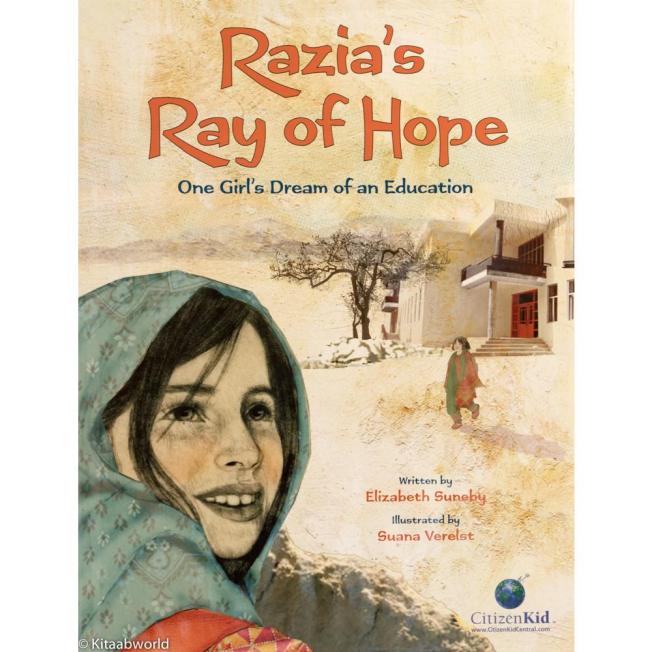
Razia’s Ray of Hope: One Girl’s dream of an Education by Elizabeth Suneby illustrated by Suana Verelst

Standard
Razia’s Ray of Hope: One Girl’s dream of an Education by Elizabeth Suneby illustrated by Suana Verelst

razia

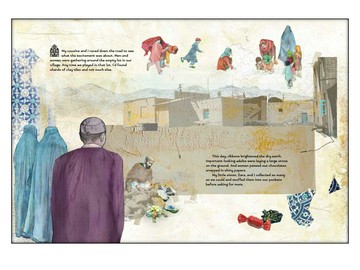
I usually love books about girls, and education and hope, but for some reason, I didn’t love this book.  I really like the pictures with their mixed media feel and textures, but I found small things annoying in the book, that based on other online reviews really put me in the tiny minority.  Most people seem to drool over this 32 page AR 4.1 picture book, I, however, think there are a lot of inspiring books about girls in Afghanistan dreaming of an education that one needs to do something different, and do it well to win me over.

So the basic premise, in this text heavy, tiny font, book, is that Razia learns they are building a new school close to her home in Afghanistan for girls, and wants to go.  Her grandfather also wants her to go, but one of her older brothers, Aziz, won’t allow it, so she isn’t allowed to go.  No historical lead up explaining why her grandfather talks about days when women were educated, and now it is a rarity.  No summation on the Taliban or the 17 years of war that the grandfather mentions.  So, unless the reader knows some background on Afghanistan, the story may not resonate with them or provide needed context for connection and appreciation.  Even the afterward, about the real founder of the school, offers very little context.  The brother’s decision is final until one day he falls ill and can’t read the medication directions, and Razia can, eventually he relents and she is allowed to go. The story hints that the rocks around the school are from the quarry he works at so he now feels confident she will be safe, and that his initial refusal was a concern for safety.  They hug and seem loving, and once school starts Razia has to learn as much as she can to be able to go home and teach Aziz and her mom.

razia1

I like that when she initially is told no, she doesn’t sit and assume a helpless manner, but rather goes to the school and meets the founder herself.  I find it odd, and irksome that the head of the school is also named Razia and it isn’t even noted. I get that is her real name, but why have the two main characters in a book have the same name and then not even acknowledge it? I didn’t get why the little girl couldn’t have a different name, seems distracting to me, and imply that every girl has the same name in Afghanistan.  I also didn’t get the hierarchy. The grandfather wants her to go, the father and uncles have legit concerns of where she is needed in helping the family farm and orchard, but why did the brother’s opinion trump them all? There is no mention of Islam, but they wear hijabs and burkas, so I think the stereotype is implied.  And that was another thing, they made it seem like she would be corrupted if she went out alone or without the burka on, but then Aziz shakes the headmistress’s hand, as if that isn’t against religious and custom norms. I felt that the kindness of the brother at the end was disjointed too, a bit too forced. The grandpa seemed kind, but the rest of the family seemed cold and rigid and not overtly concerned with Razia’s well being and growth.  Yes, they did have a jerga, to discuss and consider it, but I felt like Razia never had a voice, and while education is important, having a voice is too.  More has to change in society and in literature to give me real hope, and this book sadly fell short.

razia2

Brave by Svetlana Chmakova

Standard
Brave by Svetlana Chmakova

bravecover.jpg

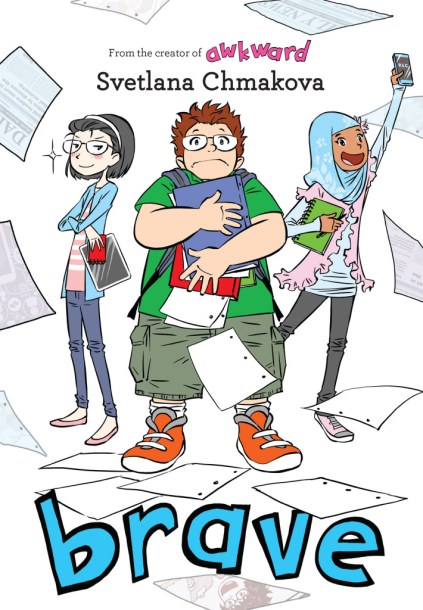
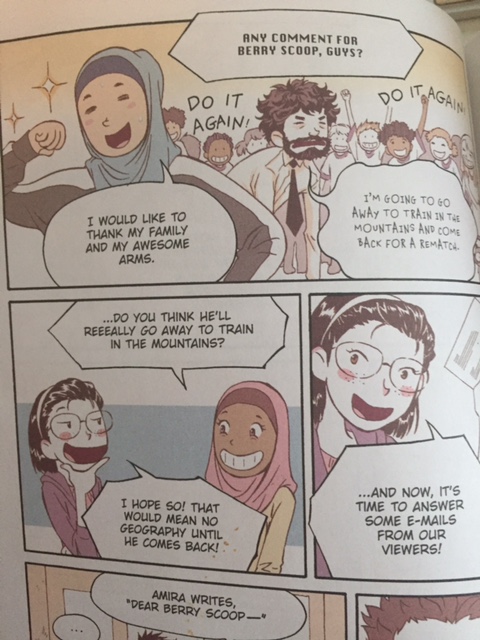
Often these days, minority groups are feeling more and more marginalized in a blaring world that is increasingly divisive and polarized.  So to see a book in my child’s Scholastic Magazine with a muhajaba on the cover, and not a main character, in a book about bullying, where she isn’t the instigator or recipient, made my minority heart swell with hope.  This 238 page graphic novel (AR 2.8) is a quick, quick read for middle schoolers, and one with a good message, that is more self empowering than preachy.  A companion book to Awkward (which I haven’t read, but hope to soon), the author takes us into Middle School through the eyes of Jensen, a kid who is struggling to find his place and escapes into his daydreams to conquer every day stresses.


SYNOPSIS:

Jensen wants to be a NASA scientist, but he isn’t good at math.  He loves to draw, but the Art Club is consumed with an upcoming event he knows nothing about, he is harassed by two bullies every chance they get, and occasionally he is asked by the newspaper staff to do menial work.  Yet, somehow despite having no friends, and a constant barrage of things going against him, he doesn’t see himself as a victim or as the recipient of bullying.  Rather, he falls into regular day dreams where he is the main character in a video game and all these battles have to be overcome to reach the end.  The surrounding characters have their own little stories, and you get to know a bit about them through Jensen, but the author doesn’t let any of them be painted with a singular stroke.  You see the athletes, being kind and sticking up for kids getting picked on, one being a math wiz.  The journalism staff of Jenny, Akila, and Felipe, run the school, but have their own stresses and internal struggles.  The circle of activity comes to a head when a student is expelled over the dress code, and all the various groups in Jensen’s world have to come together to make change.  In the process he realizes that he is being bullied, and that something needs to be done.  He also realizes nobody has it all together and he has a part to do to help others as well.

WHY I LIKE IT:

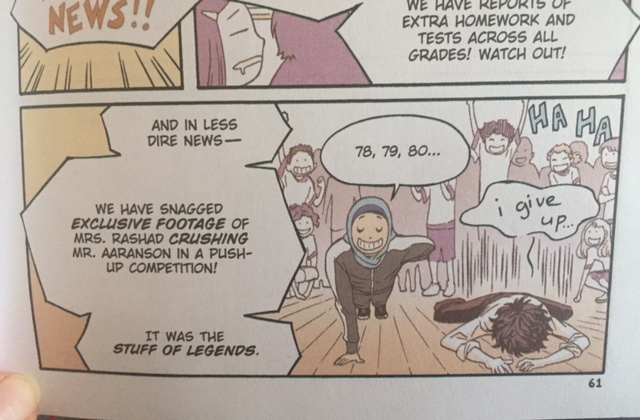
First I like it because there are Muslims in the book, that are just characters in the book.  They don’t represent all Muslims, they aren’t “different” or “other.”  Akila wants to be a journalist and she is smart, and she is kind, but she fights with her best friend, the bossy Jenny, and it is Jensen that has to help them see their errors.  I also like that the P.E. teacher, Mrs. Rashad, is a hijab wearing Muslim, that beats the social studies teacher in push-ups. I mean what an amazing way to break a hundred stereotypes, by not mentioning them, and just showing them as normal. A muslim woman, working, being physical fabulous, and being modest, ya we need more of this. There is no mention of their religion, their clothing, their hijabs, nothing.

FullSizeRender (27)FullSizeRender (28)

I also like that the students in some cases didn’t realize that they were bullying.  I think this happens a lot, where maybe someone won’t let you sit by them because they are saving a seat for someone else, but the second or third time it happens, the recipient feels alienated, where the aggressor may not even be aware.  The book explores lots of ways of bullying, but because it is filtered through the character, it leaves a lot of room for discussion about how people treat us, and how we treat others, and where a lot of pain can come from the misinterpretation on both ends.

There is a lot of diversity in the book, boys, girls, skin tones, body sizes, physical abilities, handicaps, intelligence, etc. that come up to varying degrees, but do at least offer the readers real ways to see themselves in the pages.  The book has a very tidy, happily ever after feel, which is ok I think for middle school. The book has a specific audience. Elementary will just find everyone mean, high schoolers will find it childish, but as social relationships get more challenging in middle school, I think this demographic will often have to find the courage to be brave to get through unscathed.

FLAGS:

None. One character has a boyfriend, maybe. But it is clean with pretty much everything, it even says for All Ages ont he back.

TOOLS FOR LEADING THE DISCUSSION:

I would love to do this as a book club book.  I don’t think it would need any prompting or guides. My 6th grade daughter said it was “ok” yet has brought it up at least ten times since she read it, and has come and sat by me to watch me read it.  I think, she has had some similar issues and to be able to talk about them through the characters, has been liberating for her, and furthered my conviction that fiction has power.

The Author’s website: https://svetlania.com/


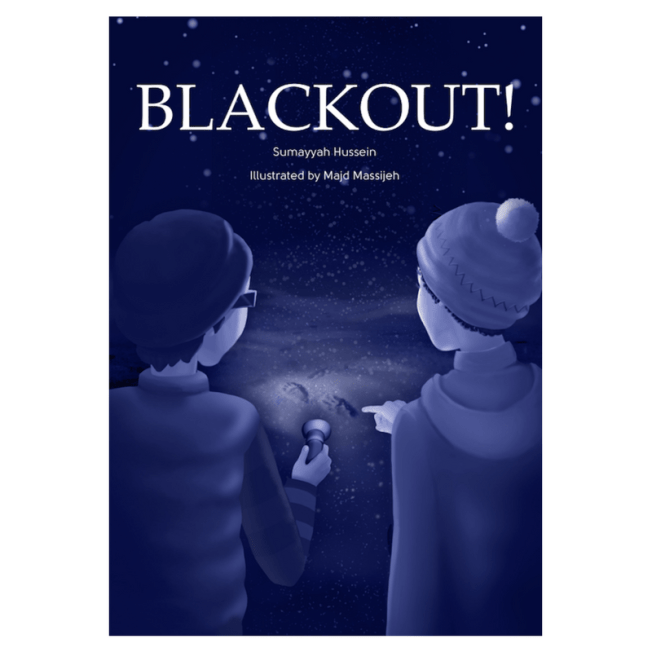
Blackout! by Sumayyah Hussein illustrated by Majd Massijeh

Standard
Blackout! by Sumayyah Hussein illustrated by Majd Massijeh

blackout.png

Presenting the stories of refugees to young children often involves a balancing act of fact, emotion, and restraint, all while finding the common ground to create empathy in the reader.  Increasingly on bookshelves are successful picture books that use illustrations to build bridges of understanding and bright colors to convey hope.  For older children there are books that can devote time to explain issues or offer first hand accounts along with political back stories and historical events.  For elementary age children 2nd and 3rd grade particularly, chapter books on refugees are not very common.  Children this age seem to relish in silly outlandish characters with a few font happy sentence and pictures on each page or stick to series that are easily predictable as they present tidbits of history or simple mysteries.  All reasons to encourage your child to read Blackout! and break the monotony and gain some empathy.  As delicate as the subject matter is, the book manages to resonate with most children how good they have it and how fortunate they are, without getting preachy or pretentious.

SYNOPSIS:

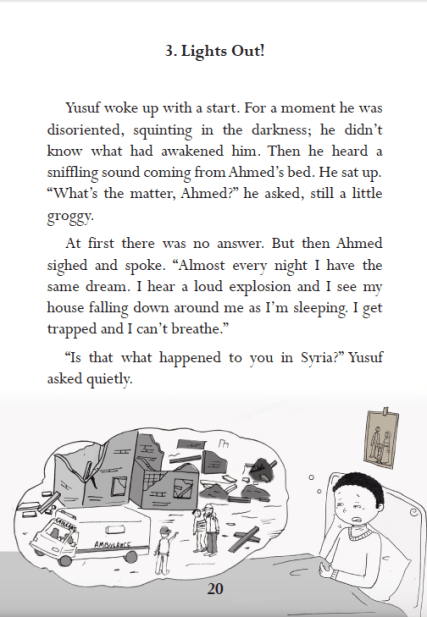
Yusuf, a 12-year-old Canadian boy is anxiously waiting the arrival of his cousin Ahmed from Syria.  Ahmed recently lost his father when their makeshift boat capsized, and while coming to Canada is a blessing, he is still haunted in his dreams and memories by all that he has seen and endured.  This idea that being safe now, doesn’t erase all the pain and fears experienced, is a concept most adults understand, but I was surprised that my children had to talk it out a bit.  They understood that he would be sad, but hadn’t really thought how hearing loud noises would immediately remind him of the explosions he heard in Syria and of his home and buildings crumbling down.

blackout inside

The story’s focus is the present however, and follows Yusuf.   The backstory of Syria and Ahmed’s escape is juxtaposed with an ice storm turning Toronto powerless and cold.  As Yusuf deals with the annoyance of a few days without electricity he learns a bit of compassion for others in the world, who endure a similar situation indefinitely.  In a beautiful way, Ahmed’s enduring optimism changes Yusuf as they find reasons to smile at the raccoon rummaging through their food put outside to stay cold, or playing in the snow to pass the time.  The characters have a lot of heart, for a short book, and you really feel like you get to know them and feel for them.  Yes, Yusuf whines, but he is a kid who’s winter vacation plans have gone awry and is frustrated and bored.  Ahmed, while a survivor, still struggles, but maintains a personality much more than just victim.  The other family members are background, but they aren’t flat, they have warmth and humor and pain in equal parts, implying if the book was longer, we’d get to know more about them too, and probably like them as well.

Despite the refugee story line, and the blackout, the crux of the story is actually helping one another and being neighborly.  Ahmed at one point is telling a story of how he began helping someone in a refugee camp and that it gave him purpose.  This reminds Yusuf that they have an elderly neighbor and the radio alerts had encouraged people to check on one another.  The boys rush over to find Mr. Caldwell, suffering from carbon monoxide poisoning brought on by his kerosene heater. Luckily an ambulance is able to get there just in the nick or time. On the third day of the blackout, the Imam speaks about helping one another and making this obstacle into something positive.   Ahmed tells Yusuf how the neighbors in Syria would gather in the winter to share what food they had.  This brilliant idea gets the support of Yusuf’s dad, the Imam and the whole congregation as they rush home to invite the neighbors to a neighborhood BBQ.  The perishable food needs to be consumed, so what better way to enjoy it, than to share it.

When the power comes back on, Yusuf is not the same kid, he has grown in compassion, and patience, and inshaAllah the reader will be similarly affected for the better.

WHY I LIKE IT:

I love that the book addresses a hard topic on a kid level.  It does not overwhelm the reader or frighten them.  MashaAllah, it balances what they can understand, with something bigger.  The illustrations keep it light in their doodle like appearance and the font, spacing, chapter length and presentation are perfect for the target audience.

blacout2

The women wear hijab, they pray, they go to the mosque, yet they don’t quote hadith or Quran or say a lot of mashaAllah and Alhumdulillah, making the book work easier for non Muslims.  The coming together of community is nice.  No one asks or worries what religion, race, or ethnicity anyone in the neighborhood is, they just come together to share a meal and welcome Ahmed and his mom to Canada.  The Imam is relatable and the dad is involved and generous, the mom is competent and respected, all normal behaviors that reinforce community and normalize diversity and acceptance.

FLAGS:

The violence of war may affect young children differently.  Nothing is sensationalized or graphic, but Ahmed does get stuck in the rubble when his house is destroyed, and his father’s drowning is discussed.  Nothing is talked about in depth, but the ideas are presented.

TOOLS FOR LEADING THE DISCUSSION:

This book would be perfect for a young book club.  I’m looking forward to reading it with my six-year-old son and my eight-year-old niece so that I can see how what they get from the book.  There is a brief explanation on refugees at the back of the book, and I think current events would naturally make a book club discussion easy to facilitate.  I think gathering items and meeting refugees after, would also be a wonderful way to turn the fictional story into real action.  It is also worth noting 100% of profits from this book will be going to the Syrian Canadian Foundation‘s mental health and wellness initiative for Syrian newcomers.

blackout1

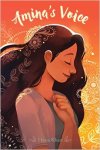
Amina’s Voice by Hena Khan

Standard
Amina’s Voice by Hena Khan

amina voice

This book really marked a shift in Islamic fiction for me and the genre.  First of all I was waiting for the book to come out.  I didn’t stumble upon it or hear about it from someone else.  I knew when it was going to be released, and I knew I wanted to read it. Additionally it was the first books published by Salaam Reads, an imprint of Simon and Schuster. Which according to their website was “founded in 2016, Salaam Reads is an imprint that aims to introduce readers of all faiths and backgrounds to a wide variety of Muslim children and families, and offer Muslim kids an opportunity to see themselves reflected positively in published works.”  This is big, huge in fact.  The bar has been raised, and a platform has been given, no more excuses.

Alhumdulillah, Amina’s Voice is a beautiful 197 page book for children ages 8-12.  The book is not AR, but probably will be in a few weeks.  I think it is spot on for 3rd through 5th grade in terms of content, message, and appeal.  The book caters to females and Muslims, but naturally is not limited to those two demographics exclusively.  There are characters of a variety of ethnic and religious backgrounds in the novel that play significant roles in saving the day and keeping the book powerfully optimistic and inspiring.

SYNOPSIS:

Amina is starting middle school and everything is changing for Amina. Her friends are acting different, her older brother is skirting with trouble and her religious uncle is coming to visit from Pakistan.  Internally, she doesn’t like the spotlight but desperately wants to get out from behind the piano to sing.  All of this combines in a climax that pivots around the destruction of the mosque she attends and her having to find her voice, and use it to take center stage in her own life.

WHY I LIKE IT:

There is a lot going on in the book, but it doesn’t get over whelming with Amina’s voice keeping the reader focused on her and her view of the events around her.  The author does a good job of getting inside a 12 year-old girls head without being condescending or heartless.  The reader feels her stress that she is losing her best friend, Soojin to Emily, a girl who used to torment the two “ethnic” girls, without belittling her concerns.  You also feel her love of Islam and struggle to understand if music and singing is permissible within Islamic rules.  The book is realistic fiction with school, friendships, and family guiding the story.  Everything from the ups and downs of group projects, inside jokes between siblings, and trying to pronounce the big HAA in Arabic.  The macro of middle elementary years combined with the micro facets of culture, religion, and current events, and you speak to a section of readers that will connect with Amina and what she goes through in a very authentic, relatable story.

The only points that gave me pause is the premise and music in the book.  It is a point of disagreement amongst nearly every group of Muslims, so to have the Imam sitting and listening to her play the piano, is a bit hard for me to accept as the norm, no matter how cool Imam Malik is.  Additionally, I wish that Amina’s mom had some depth, and the relationship between Amina and her uncle, Thaya Jaan, was fleshed out just a tad more.  In both cases I felt something was lacking, and I wanted more.

FLAGS:

Nothing major, but a few minor issues, that a parent may want to be aware of for younger readers.  Mustafa, Amina’s brother, is seeing skipping Sunday school class and reeking of cigarette smoke.  He denies it, and the issue is definitely not glorified.  There is also crushes discussed amongst Amina’s friends and when Amina spills a secret, she has to own up to it and work it out to maintain her friendships.  The destruction of the mosque could also be upsetting to younger readers.  It isn’t graphic, but her emotional response and the intensity of it, is the climax, and a very real part of our world sadly. For parents, this fictional vandalization could possibly be a great place to start a discussion from if your children are somehow unaware of the current status of Islam in the west.  It also shows that people are good, as the whole larger community, comes together to show unity, love, and respect are values to us all, alhumdulillah.

TOOLS FOR LEADING THE DISCUSSION:

This book would be perfect for a 3rd through 5th book club.  If I was starting a new book club I would start with this book.  It has it all. It has real issues, religious issues, universal issues, and heart.  All while staying on age level and all in a realistic fiction safe space to have an opinion about objectively.  The discussions after the book is read will flow naturally, but just in case:

Reading Group Guide:  http://www.simonandschuster.com/books/Aminas-Voice/Hena-Khan/9781481492065/reading_group_guide

Author’s Page: https://www.henakhan.com/


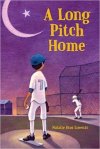
A Long Pitch Home by Natalie Dias Lorenzi

Standard
A Long Pitch Home by Natalie Dias Lorenzi

a long pitch

The correlation between baseball and cricket provides the foundation for detailing the relationship of  Bilal’s first year in America after having to leave Pakistan in a hurry: the same, but different.  This 248 page book written on an AR 4.6 pivots around sports, but has a lot of heart as themes of family, friendship, and longing, take center stage.  Throw in a whole new culture, the English language, Ramadan and prom and you have a whole lot to cover in this well crafted story.

SYNOPSIS:

Bilal has a good life in Karachi, Pakistan.  He is the oldest of three kids and at 10 years old, his world pretty much involves Cricket, friends, and his dad.  When his father disappears things get frantic, and when his father returns, the family decides to move to America.  Unfortunately Bilal’s dad can’t come.  As Bilal, his mom, his younger sister Hira and younger brother Humza, board a plan to Virginia, everything Bilal knows is left behind.

Virginia is home to Bilal’s maternal Uncle, his wife, and their teenage son, Jalaal.  Jalaal plays baseball and arranges to have Bilal join him at baseball camp for the summer.  Learning the new sport, and a new language, and the nuances of life in a new land are frustrating and often comical as Bilal points out how confusing navigating American life can be.  He also keeps an ongoing list of new things in America to share with his dad over Skype, as they swap memories of an old life in preparation for a new one.  The supporting characters on the field are generally kind and accepting of Bilal, because they have a bigger problem then a foreign boy, there is a girl on the team, Jordan.  Jordan is new too, and the coaches niece at that, naturally they become friends, but its not easy, Bilal has to learn what being a friend really means.

The majority of the book stems from the tension of waiting to hear from Bilal’s father, and to see if he can come to America.  The passing of time with baseball games and school are anecdotal to the larger arc that sets the pace of the book.  Will Baba be able to come, and if so, when?

WHY I LIKE IT:

Interestingly religion has a pretty big role in Bilal’s life and the author does explain some tenants in Islam.  He wakes up for fajr (although he does miss it occasionally), he only eats halal zabiha, the family fasts in Ramadan, and they celebrate Eid.  Bilal wants to fast, but him mom tells him he is too young when they are coming to America, and the following year he doesn’t because of baseball, which is unfortunate, because a lot of kids fast and play sports all over the world.  They go to the mosque on Eid only, and it mentions that the women in his family do not wear hijab like some of the women at the mosque.  His older cousin Jalaal wants to take the neighbor girl, Olivia, to prom, which the family explains awkwardly as something that Muslims don’t really do until they are older, or at least that is how Bilal understands it.  In the end, they let Jalaal go with Olivia and a group of friends, and the whole family Skype’s the family in Pakistan and sees them off.  Even more funny is that they don’t join their friends for dinner before the dance, because Jalaal is fasting and can’t eat until later.  I don’t know if this will confuse 4th and 5th grade readers, but as an adult I found it hysterical, because these cultural contradictions are more common than not.  I did like that nothing was done behind the parent’s backs.  Things were discussed and worked out instead of lied about.

Another thing that I found interesting, but since finishing the book, I have come to appreciate, is that there is no Islamaphobia in the story, or even xenophobia.  The kids are accepting of Bilal’s faith and culture.  He is far more self conscious about being different or not understanding than those around him are.  Its idealistic perhaps, but at the same time, I think it would distract from the core of the story.

While the book focuses on sports, I think even non sports fans will be able to enjoy the story.  The author doesn’t get too technical and it moves steadily with mini climaxes and triumphs through out.  Girls and boys will enjoy the book, Muslims and non Muslims too, the readers might even learn something about baseball or cricket or Pakistan, or even about themselves along the way.

FLAGS:

The book is remarkably clean and what you would expect for a good quality, solid 4th grade and up story.  There is the “prom” issue, but there is no hugging, kissing, longing etc.  They “like” each other, but it isn’t more explicit than that.

TOOLS FOR LEADING THE DISCUSSION:

I don’t know if I would use this for a Book Club.  One could, but I think it would require a lot of coaxing to get kids to give a book about baseball/cricket a try.  I have no doubt if they started it, they would finish it, but it might be a tough sell.  The confusion in American life would make for an awesome discussion after being read, because everyone can relate to some of the oddities of the English language, and challenges of learning a new language and culture.  I think how Islam is handled would also make for some good discussion in addressing how each family handles things differently as they arise.  Although written on a 4.6 level if I were to do it in a school setting, I would probably do it for middle school kids who could articulate their own life parallels to the story.

An interview with the author:

http://wordspelunking.blogspot.com/2016/09/a-long-pitch-home-blog-tour-interview.html

Overall a solid decent book about an immigrant Muslim boy making his way in America, while not losing or giving up on who he is, alhumdulillah.


The Storyteller by Evan Turk

Standard
The Storyteller by Evan Turk

the-storyteller-9781481435185_hr

Set in Morocco a long, long time ago near the edge of the great Sahara, a young boy goes in search of water.  But just as the city grew and grew and people forgot about the threat of the desert, people forgot about storytellers too.

This 44 page book weaves a tale of story within a story within a story, and combines different times in the past to illustrate how vital stories are to our existence.  Much like the thirst that only water can quench, the human soul needs connections.  With a Djinn threatening to cover the town in a sandstorm and the mysteries of the blue water bird, can a well told story really restore water and safety?  Written on a 4.9 level this book could get a bit confusing to a struggling reader, or a child trying to keep everything straight.  I found this book works best with kids that can get caught up in the story and the imagination of it all, without over thinking all the layers. It, like the story within the story suggests, works best to be listened too.  There is a lot of text, but it is very soothing and engaging.  The pictures are splendid, but in a dream like manner.  The book works well with sleepy children listening to your voice and getting lost in the pictures, making a storyteller out of the reader, and proving the engaging power of a story.  Second graders and up will enjoy listening to the story, and learning about desert life, and oral storytelling in lyrical way.  There is no Islamic element other than the hijab wearing women in the pictures, and the mention of a djinn.  There is is an author’s note at the end telling of the resurgent efforts of public storytelling in Morocco.

When a storyteller dies, a library burns-old Moroccan saying

Jannah Jewels by Umm Nura illustrated by Nayzak Al-Hilali

Standard

Strong muslim girls  (check)

Historical fiction (check)

Elementary level chapter book (check)

Beautifully illustrated (check)

Action, adventure, fun (check, check, check)

Really what more can you want from a book, or better yet a series of books?

The premise of Jannah Jewels is four Muslim girls each with specific skills that travel back in time to various places in the world to retrieve artifacts to save the world before the “villians” do.  Along the way they share knowledge of hadith, Quran, and Muslim achievements and advancements while meeting with influential Muslims.  I mean really, what is there not to like.  This is historical Islamic Fiction for 2nd through 5th grade at its finest, yay!

So far there are nine books in the series, and based on the premise that they must find 12 artifacts to put in a golden clock, I would assume there will be 12 books.  I decided to review only the first two as I think they set the stage and give the reader a good feel for the series’ standards, the tone, and direction the consequent books will follow.  The series is to be read in order and they range in length from 69 pages to 165.  Each book has a description of the main characters, a visual of the supporting characters and is followed after the story by a sneak peek at the next book, a glossary, and some manga anime of the heroines.  Some of the books are co authored (Ustadha S. Karim & Tayyaba Syed), but based on the website http://www.jannahjewels.com Umm Nura is the main author and creator of the series.

SYNOPSIS:

Hidayah sees a woman with a bow and arrow and watches her for many days until finally she musters the courage to meet her.  This meeting is the start of Hadiyah’s training in present day with the Master Archer.  The story however, starts with a prologue of the past and how different approaches to archery have lead to a rift between those entrusted to keeping evil at bay.   The collision of those actions and today occur as Hidayah and her friends Jaide, Sarah, and Iman are chosen to retrieve artifacts scattered around the world and throughout time.  They must bring these artifacts and place them in the golden clock before Jaffar and his son Khan do, to obtain a secret locked away inside.  Each girl has incredible skills and strength as well as fears and doubts.  The stories are action pact as well as enlightening and empowering.  The girls are smart, strong, and supportive of one another and they use team work to make for a smart inspiring read.

In the first book the foundation is laid and the details of time travel and the task are put forth, it is a tiny bit cumbersome, but is quickly believable and accepted as the action picks up.  The Jannah Jewels travel to Timbuktu and meet with Mansa Musa to rescue a lost manuscript.  In the second book they journey to China aboard the ships of Chinese Muslim Admiral Zheng He to recover a medicinal plant.  The recap of the first book and the premise of what has to be done is seamless and quick.  Thus allowing the story to move further below the surface to provide more insight into who the four girls are, and understanding into what occurred in the past that made the Jannah Jewel adventures necessary.

WHY I LIKE IT:

I love historical fiction, so Islamic historical fiction is like a gift, when done right.  To give young muslims a glimpse at some of the remarkable accomplishments and contributions Muslims have made throughout time, in a manner they don’t even know they are learning it, is so needed.  Our kids should know about Mansa Musa, Al-Kindi, Fatima Al-Fihri, Sultan Muhammad II, and more, and sadly many are not tempted to pick up a non fiction book to learn about them.

The Jannah Jewels are also admirable and have the ability to inspire our girls to be better Muslimah’s through their examples of intelligence, strength, and deen. Each book reveals more about their hobbies, passions, and past, and does a good job of giving them each their own personalities. That being said, these books are engaging for both boys and girls.  My own children have read the first four multiple times as have I.  Initially I didn’t think my son would be interested as it seems like a very “girl power” type read, but the story is strong enough and the characters have depth that they work well for all kids and their parents.

In addition to the stories, visually the books are absolutely gorgeous and appealing.  The manga anime style of art is bright and colorful on the covers, and detailed and complimentary throughout the text.


FLAGS:

None, alhumdulillah

TOOLS FOR LEADING THE DISCUSSION:

The website is engaging for those wanting to know about the characters and writing team.  The FAQ section is good background as well.  www.jannahjewels.com

The books aren’t complicated as they are for elementary aged children, that anything more than the story is not needed.  If your readers are like mine, however, you will need some reference books or google on hand for those that would like to learn more.  I think these books would be great in a classroom setting to get students reading.  I also think they would work well in 1st grade for read a loud story time.  I don’t know that they would be ideal for book club, but definitely could be used to compliment lessons in Language Arts and Social Studies.

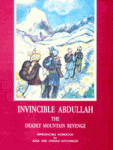
Invincible Abdullah: The Deadly Mountain Revenge by Haji Uthman Hutchinson

Standard
Invincible Abdullah: The Deadly Mountain Revenge by Haji Uthman Hutchinson

invincible-abdullah-the-deadly-mountain-revenge-workbook-aziza-and-uthman-hutchinson-2

I’m pretty sure I’ve seen and handled this book hundreds of times in my involvement in four Islamic Schools, as a teacher, a librarian, and host of book fairs.  So, it is a little embarrassing to admit that this is the first time I actually cracked open the cover and read the book.  Written in 1992 with a less than attention grabbing cover, I had minimal expectations, but with a newborn and down time, I thought I needed to give it a chance, and I’m glad I did.  The book is definitely geared to boys (there isn’t even a female character in it), and is pretty action packed and quick paced.  You know the boys will get out of the predicament at hand, he is “Invincible” after all, and there are three more books in the series, but you don’t feel bad reading it anyway, because it is sufficiently entertaining.  The book isn’t amazing, but it holds its own largely because it doesn’t talk down to the reader.  The characters are independent and thoughtful and yes they are teenagers battling drug carriers in the tribal areas of Pakistan, and yes they are wielding guns and hiking over glaciers, but mind you they never miss their salat or fail to thank Allah (swt) for their success which kind of makes the book that much more fun.  The book is 218 pages with a glossary at the back.  It is not an AR book, but I probably will make it into one at about a fourth grade fifth month level (4.5).  I also am considering doing it for book club, but might wait and read the rest of the series to see which one will have a wider appeal.

SUMMARY:

Abdullah travels to Pakistan from England to visit his cousin Hasan.  At the airport Abdullah’s bag gets switched with someone else’s and the boys find themselves getting accosted by the rightful owners who have a half a million dollars in their suitcase.  The boys talk to the police and learn that the money is part of a heroin operation going on in the tribal areas and that the inadvertent switch messed up the police’s sting to catch the criminals.  The boys run in to the drug runners again in the bazaar, and after an all out brawl decide when an opportunity to go into the tribal areas presents itself, that they should take it and do what they can, to put a stop to the criminal’s drug ring.

WHY I LIKE IT:

There is drugs, violence, and guns, but it is all done for the right reasons, in an action filled manner.  The “good” guys are all religious, and while the “bad” guys have religious sounding names, clearly are not, which lends it self to a decent discussion about what makes a good person and what makes one religious, clearly not just their name or culture.  It also lends itself to a realistic conversation about drugs, their effects on the users, and on drug culture as well.  The guns, well the guns are there to make threats, and to hurt people, at best it gives you a seg-way to discuss your views on guns with your children, but in the book, it is what it is, not a moral or religious issue as the drugs are made out to be.  The boys, the heroes of the book, are all very devout mashaAllah, and their actions, manners, and thoughts reflect this.  I like that this is consistent with their character.  They are respectful to their families, to each other and are ever mindful of themselves as Muslims in all facets of their adventures.

FLAGS:

Just the content of drugs, violence, and death. Mild compared to most TV shows or movies, but present, none-the-less, nothing a third grade and up can’t handle. (Spoiler, only one person dies and it isn’t directly at the hands of anyone, nature steps in to save the day).

TOOLS FOR LEADING THE DISCUSSION:

There is a workbook that apparently can be purchased to accompany and teach the book: http://www.islamicbookstore.com/b9648.html

The author gives pause as the characters have to decide what to do next and to weigh the pros and cons and possible repercussions of their decisions.  These moments would lend themselves well to a book club discussion to find out what the students would do, what they would be willing to risk, and at what cost.

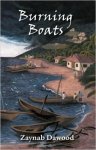
Burning Boats by Zaynab Dawood

Standard
Burning Boats by Zaynab Dawood

burning boats

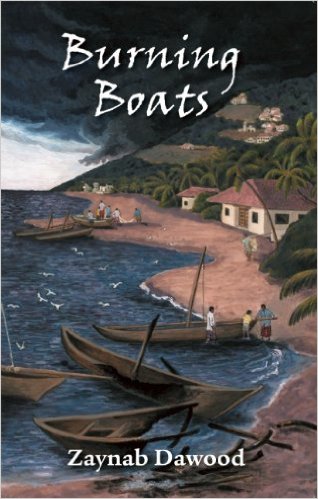
This book came highly recommended from a friend that read it aloud to her Kindergartener and I ordered a class set based on her raving review.  After trying to get into the book on three separate occasions I concluded that yet again I should have waited and read the book myself before ordering it.  So I handed it over to my avid reading eight-year-old who read it in a day and said it was pretty good, asked a few questions, and continued on her way confused as to why I couldn’t finish it.  So, I started it again determined to get through it and with Ramadan quickly approaching I thought I could motivate myself to do so.  However, I could not, and it sat on the shelf for the entire month with a book mark only a few chapters in.  At the prodding of my guilty conscious to return the book to my friend, I continued reading from where I left off, rather than starting over, again, and found that by dismissing completely who any of the characters are and how they are related, the story does get off the ground and I was able to finish it.  That being said, I think the story might have appeal if read aloud one chapter at a time. To read it in one setting did not help the story that can’t seem to decide it if wants to be character driven or action driven.  The sheer number of characters is completely over the top, there are at least 20 characters mentioned by name and the book is only 137 pages.  And honestly I never bonded with any of them.  There is action in the book, but the details seem misplaced.  The author details characters all saying salam and walaikumasalam to one another and giving moral reproaches based on Quran and Sunah, but I never felt I understood why the main characters were leaving, why the villain was so bad, or how (spoiler alert) a pivotal character in the book died. I guess by never connecting to the characters or feeling an emotional tie, positive or reproachful, the book didn’t live up to it’s potential.  The book is recommended for ages 12 and up, but I think younger children could read it and even younger could listen to it being read to them without any major concerns.  With guidance the book is by no means a waste of time, but if you recommend it to a child and they struggle to get into it, you might just have to let them find something else to read.

SUMMARY:

A small fishing village is being harassed by a corrupt businessman’s attempts to take over the entire industry in Tobay.  The principal of the school and a few close friends are trying to stop him, but have decide they cannot and thus are planning to move elsewhere.  The children are forbidden to go to the harbor as boats are being burned and crimes committed to persuade the local fisherman to abandon their solo endeavors.  With few places to play, the loss of the harbor affects the children greatly as well.  A tropical storm complicates matters as it tears through the village destroying the poor inhabitants meager dwellings as well as the damaging the school and the mosque.  With friends taking in homeless neighbors and the main family planning to leave the children plan one last game that turns dangerous when all the boats in the harbor are set a blaze.

WHY I LIKE IT:

There are some definite good qualities in the book, despite the holes.  It opened up a good discussion between my daughter and I about preparing a body for ghusl and Janaza.  It does show that people can change and that when people are sincerely apologetic and are striving to correct their behaviors, those around them should offer forgiveness in not just their words, but in their actions as well.  It also shows that good kids can make bad choices, and that the consequences can also be very real.  Similarly it shows that adults also don’t always know what to do, and that they can be forced to reconsider as well.

FLAGS:

There is violence in the book and death.  Nothing too graphic, but one might have to explain to younger, more sheltered reader,  that just because someone has a Muslim name doesn’t mean they are practicing Islam and are good people.

TOOLS FOR LEADING THE DISCUSSION:

There aren’t any online tools, but I would suggest having the readers keep a character journal.  Every time a new name appears, write down who they are, (and who they are related to), so later they can look back on it if they become confused.

Because of the “holes” in the story I would probably ask the students to give their thoughts as to what happened or why the characters decided to do what they did and then turn it back on them and ask them what they would do.

Why was Ibrahim leaving? Would you have left? What made Nasser change? Would you have forgiven him? How do you think Ayesha died? Etc.