Category Archives: 2nd through 4th grade

Zachariah’s Perfect Day by Farrah Qazi illustrated by Durre Waseem

Standard
Zachariah’s Perfect Day by Farrah Qazi illustrated by Durre Waseem

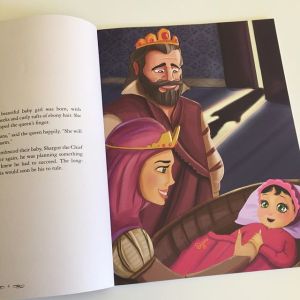
IMG_4757I was really excited to learn about this book from the author, as it seemed to be a book that would stand out in a very crowded genre and work for both Muslim and non Muslim kids.  When I tore off the package however, the face on the cover seemed a bit off for my taste, the glossary is on the back cover and while the pages are full size and full color, the book starts on the first page and somehow seemed more “home done” than “professional.”  Which isn’t a bad thing, and I’m happy to support local writers, but alas I do often judge books by their covers and format, and my first impression had to be stuffed away so I could give the book a fair chance.

The book is 20 pages with the 20th page being recipes.   I would guess children 5 and up would be considered the target audience.  It basically is a book telling about Ramadan with the author trying to blend in a story, that for me, sometimes worked and sometimes really didn’t.
FullSizeRender (3)

It starts with Zachariah, a 12 year-old-boy waiting for his mom to wake him up to fast, a day he has been waiting his whole life for.  Why he had to wait to fast at age 12 is not clear to me or made clear in the story.  His 10 year-old-sister only does half days, but in the illustrations she seems to only look about 3 years old, so I’m not sure where the arbitrary age requirements for fasting come from.  There is also a third sibling in the pictures that is never mentioned, not sure why, my kids and I speculated a lot more on that than we probably should have.  It isn’t told from Zachariah’s point of view but he is the focus as his day gets started.

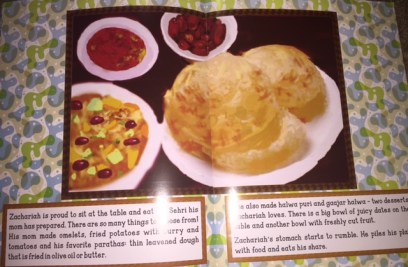
The characters are undoubtedly desi as the book is very steeped in subcontinent cultural over tones.  Sehri, the pre dawn meal, is described in abundance of detail, “His mom made omelets, fried potatoes, with curry and tomatoes and his favorite parathas: thin leavened dough that is friend in olive oil or butter”  It’s a bit detailed of how the items are prepared for a kid’s book, and that is just page one of two pages dedicated to detailing the food on the table for breakfast.  Iftar the meal to break the fast is also two pages of description and cooking methods, but about double the amount of text.

FullSizeRender

Culture is often food, and Ramadan has its own food traditions, but there is a lot of space dedicated to food in this book,  and it kind of takes away from the message of fasting, and moderation, and not going in excess.  Later in the book the mom does pack up some of the food to take to the less fortunate which is great, but she does it while the rest of the family is breaking their fast.  Not sure why she couldn’t have done it before or after and joined them.

After sehri is presented the family talks about Ramadan and what it means and what they like best about it.  There is a bit of dialogue that is actually sweet and funny, and gives some warmth to the story.  It is clear the author is just trying to flesh out the facts about Ramadan, but for a kid’s book, I think getting the facts in and presenting them in a fictionalized setting is a useful tool.
FullSizeRender (2)

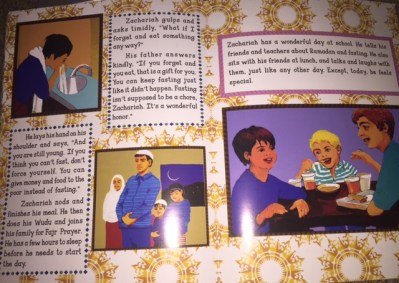
The story seems a bit lopsided when it shrinks Zachariah’s day at school to one five line paragraph saying it was wonderful and then moves on saying “Later, he helps his mom.”  After spending 10 pages on the predawn meal, I would have liked to know a bit more how school went for him, it is his perfect day after all.  Also, the lapse in time by the narrator seemed a bit off to me in the sequential flow of the story, as it was following him in real time so to speak, and then fast forwards the bulk of the day only touching on lunch time, and

FullSizeRender (1)

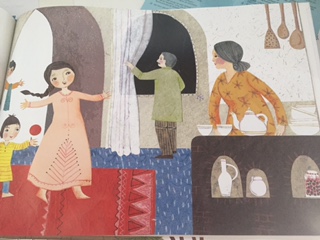
Alhumdulillah, the family is sweet and excited for Ramadan. They pray together and are seen with smiling faces.  There isn’t much diversity in the pictures, the family has darker skin, the friends at lunch are more fair.  The mom wears hijab and is in the kitchen, dad doesn’t seem to be, but Zachariah helps his mom.

The book is colorful, and busy.  I’m not sure if the pictures are meant to be a stylized reality or look computer generated, but they seem a little blurry in places.  The font and backgrounds are nice.  There is a verse from the Quran in English and Arabic, as well as the athan and some Islamic calligraphy.

Overall, there is nothing “wrong” with the book, it just isn’t memorable.  There are some really good Ramadan books out there, and this one does it’s job of explaining Ramadan, but lacks the characters to leave an impression.  I definitely don’t regret buying it, but I don’t know that my kids or I will read it again this Ramadan, it doesn’t create that reaction.  It will probably stay on the shelf until next year, when we can’t recall many of the details and give it another go.

IMG_4748 (1)


Zaid and the Gigantic Cloud by Helal Musleh illustrated by Sabrina Pichardo

Standard
Zaid and the Gigantic Cloud by Helal Musleh illustrated by Sabrina Pichardo

zaid

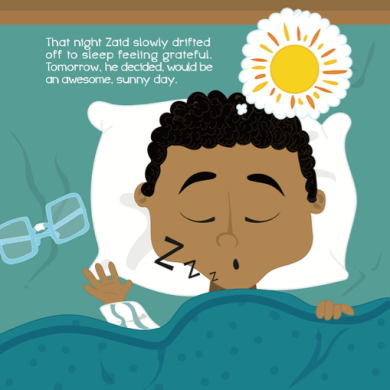
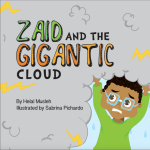
We all experience disappointment and frustration and feeling like a gray cloud is weighing us down, and for Zaid, it really is!  In 36 bright colorful pages, children ages 5 and up can see that bad days happen to everyone, and that sometimes it seems like nothing is going right.

Zaid has been waiting for months for a weekend camping trip with his uncle and cousin, but when Ahmed comes down with the chicken pox, the trip is cancelled.  That night Zaid barely sleeps he is so upset, and in the morning notices a small grey cloud hovering above him.  As he waits for the bus, the autumn leaves remind him that it will soon be too cold to play soccer outside, then he has to sit at the back of the bus, and needless to say its just the beginning of many disappointments in his day, that make the cloud above him grow.  But then, a little something out of the ordinary, in the form of a small bird needing help, presents Zaid with a change of pace and a chance to turn his day around.  Slowly but surely the cloud starts to shrink and Zaid copes with the rest of the day with a bit of perspective and a growing smile.

zaid2

The book is a much needed one in showing children coping with emotions in a somewhat autonomous manner.  The book doesn’t judge his feelings, but shows how he finds a way to see the silver lining and make do with a string of frustrations.  The adults don’t lecture him or solve his problems for him, but are definitely supportive and caring should he need them.  The story does a good job of flowing and not getting preachy.  I can’t wait to read it to my 6-year-old who has a gray cloud pop up at the slightest disappointment, but currently my 10-year-old has been sent to her room with the book to see if she can relate Zaid’s predicament with her own.  The handy discussion questions at the end also can help talk about feelings through Zaid, and hopefully making the child’s connection from a fictional character to their own experiences more poignant.

This book really cemented in my head the growing subcategories of Islamic fiction picture books.  Naturally there are books that are geared for Muslim kids only and ones that work for Muslim and non Muslim kids alike.  But this book, along with a few of the new releases like it, cover universal themes with Muslim characters (at least by name) and have diversity in their pictures.  They show a few characters in hijab but do not mention or explain it, in this book the marshmallow package says halal, again with no explanation.  However, there is no specific ayat or hadith that the book stems from or an Islamic pearl that is meant to get through.  The characters do not greet each other with salam, or say alhumdulillah and mashaAllah, making it more appealing to a wider audience, but words I hope when the story is being read aloud to Muslim kids, can be sprinkled in.  I think it is a great addition to the literary world when Muslims are seen in a larger community and is not jarring.  I hope parents of non Muslim children also appreciate this diversity in literature and I pray that it leads to more acceptance in the “real” world, ameen.

zaid3

Drummer Girl by Hiba Masood illustrated by Hoda Hadadi

Standard
Drummer Girl by Hiba Masood illustrated by Hoda Hadadi

drummer girl.jpg


Before she was Grandma Najma, she was just Najma.  A girl in Turkey with a secret dream of being a musaharati, the person who walks the streets waking up the neighbors for suhoor in Ramadan.  But, a girl had never done this and thus the dream stayed hidden until she was 12 and the neighborhood musaharati was feeling ill.  Confiding in her baba, his love and support makes her dream come true against cultural norms and naysayers.  The line from her Baba, “Girls can be anything they like,” is so clear that her one girl revolution grabs the hearts of the reader and turns readers into cheerleaders.  The added beauty is her father’s support is not limited to his words, he accompanies her out every night almost challenging anyone to say she can’t do it.  Overtime she becomes the pride of the area, and her brothers accompany her if she doesn’t want to go alone, and then eventually her husband and her children.

drumemrgirl2The book warms the soul and uplifts the spirit.  The text seems geared to 7 year olds and up, as there is a lot of it, and at 26 pages does require some ability to focus. But with minor tweaks and condenscing the story appeals to children 4 and up and the pictures help hold their attention as they create a mood of wonder and whimsy.
drummer text

Structurally the book is hardback and dust jacket free, yay! the cover is printed on and thus easier to maintain.  The book is longer horizontally with most illustrations on the left side making it great for story time where the kids can see the pictures and the reader can hold and easily see the text without blocking the children’s line of sight.  There is a glossary, an author’s note telling where the story comes from, and a little biography of the author and illustrator and publisher in the back.

drummergirl1

A beautiful, beautiful book to share with children this Ramadan and all year long, alhumdulillah.

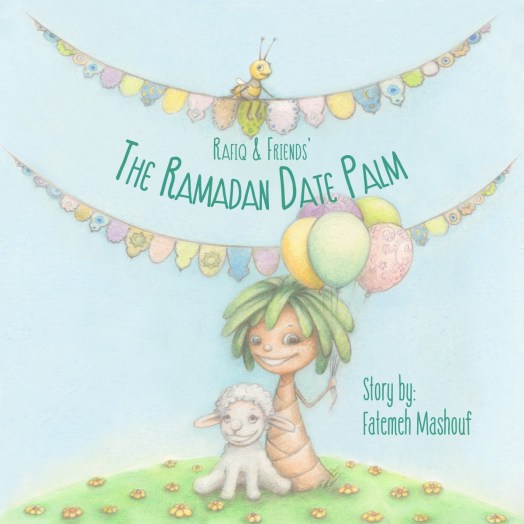
Rafiq & Friends’ The Ramadan Date Palm by Fatemeh Mashouf illustrated by Vera Pavlova

Standard
Rafiq & Friends’ The Ramadan Date Palm by Fatemeh Mashouf illustrated by Vera Pavlova

datepalm-cover

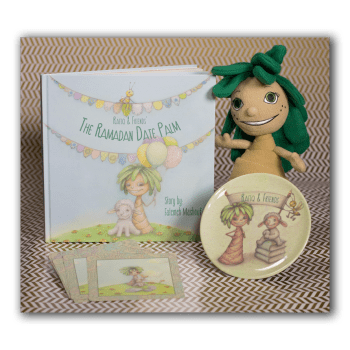
It is nearly Ramadan, inshaAllah, the most blessed time of year.  I don’t normally do product endorsements and thus I didn’t review this book that comes with a whole Ramadan kit last year when my cousin gifted it my children.  However, as I look for Ramadan Story Time books, I reread this and while it references the activity cards, it really offers a lot as a stand alone book too.  So, yes I am going to review it and plug the kit as something your kids up to age 9 or so will really enjoy, at least mine did and even went searching last week for all the components….without being asked! That’s a pretty strong endorsement right there.

rafiq-_-friends-5

Rafiq is a date palm tree that is so excited for Ramadan and is going to get you excited too.  He starts off by mentioning the fun you will have with the daily activity cards, and the role you will play in serving iftar dates on the special plate. The reader is then introduced to the cast of characters, Najjah the sheep, and later Asal the bee.

rafiq-_-friends-sample-2

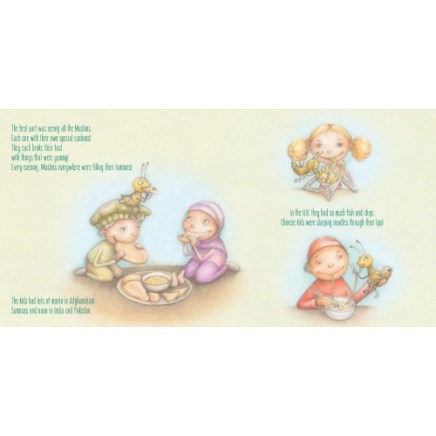
The middle of this 36 page book are my favorite, the illustrations are so sweet and welcoming you want to hang them up in your children’s rooms.  This is where the “story” begins, it talks about Ramadan and how the Quran was revealed to Prophet Muhammad (saw), and fasting, and praying and patience and having fun with friends and playing too.  It then moves on to Eid and all the different yummy foods that are eaten all over the world.  It ends on a note of community and how we all pray the same with our families and use the word salam.

rafiq-_-friends-sample-4

The book is visually beautiful from one hard back cover to the next.  It is written in rhyme and most of it flows without feeling ridiculously over forced, but there are definite sentences that are awkward, and the rhythm seems to vary a bit that you have to stay alert when reading it out loud or you will get tongue tied.  I think if you just skip the lines that reference the cards at the beginning and end, the book can work without the kit and accessories.  Kids might be confused, but I think the bulk of the book is engaging and the pictures are stunning, that kids will be able to grasp on to the overall message of the book and forget about the “product placement” so to speak.  There is a glossary at the back, and it works for ages 3-10.

Rafiq-Product-Set_dropshadow-350x350

(I wasn’t paid or asked to do this review, I wish I was, but it really is fun for multiple aged children, and gives a bit of daily Ramadan connection for those of us that want to make every day in Ramadan a craft and spiritual extravaganza, but know realistically we just won’t be able to do it all https://www.rafiqandfriends.com/)

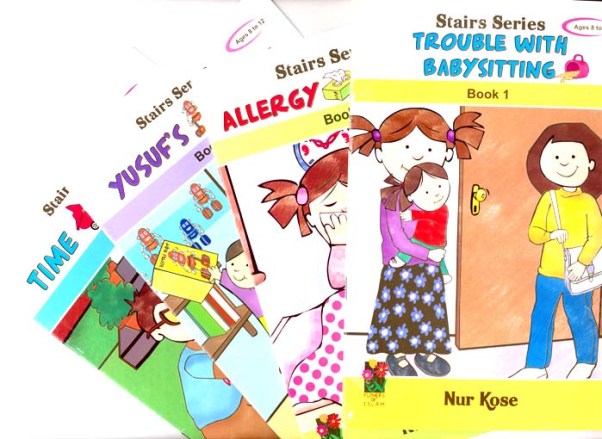
Stairs Series: Trouble with Babysitting, Allergy Attack, Yusuf’s Robot & Time Travel by Nur Kose illustrated by Shaista Asad and Ayesha Khatib

Standard
Stairs Series: Trouble with Babysitting, Allergy Attack, Yusuf’s Robot & Time Travel by Nur Kose illustrated by Shaista Asad and Ayesha Khatib

stairs series

This set of books claim to be for children ages 8 to 12, but I think they work better for 7 to 10 year olds.  They look like leveled readers, and resemble them in their simple linear story lines.  They are broken up in to chapters, that really are not necessary, but because of the volume of text on each page, allows for a young reader to take a break.  All four books in the series are connected chronologically and contain the same characters.  They more or less present a problem, bring over their friends, have one of the friends offer some advice tied to a hadith or ayat from the Quran, and the advice is tested, and then shared once more.  They are about 20 pages and have activities at the end that range from solving clues to writing paragraphs.  The sentences and vocabulary are about a second grade level, with translations of Arabic and Turkish words, along with references to the Quran and Hadith appearing in the footnotes on the page they are mentioned on.

stairs series characters

The best part of the books is that they are written by an 8th Grader, mashaAllah.  I think they teach a lesson in a simple way, and while not terribly suspenseful or comical, they do succeed in showing Islamic lessons in relatable situations for kids.  Some of the details seem excesses or meandering, but again, the fact that it is written by a kid, will inspire readers to listen differently to lessons about patience, accepting Allah’s will, recognizing one’s own limitations, and putting Allah (swt) above all else.

stairs inside

The pictures are colorful and simple.  They appear every few pages in the book and provide a nice break from the text.  They are sweet and not detailed, but sufficient for the story and level.

stairs pictute

Yaffa and Fatima: Shalom, Salaam by Fawzia Gilani-Williams illustrated by Chiara Fedele

Standard
Yaffa and Fatima: Shalom, Salaam by Fawzia Gilani-Williams illustrated by Chiara Fedele

Yaffa and Fatima cover.jpg

Oh how full my heart is after reading this book, and wiping a tear from my eye.  When the daily news angers and frustrates, a story as sweet as two friends helping and worrying about each other gives hope to the future of the world. I know that is probably over reaching the impact of a children’s book, but sometimes it really is just one person helping another person, just finding similarities instead of differences, and above all having a big heart.

Yaffa and Fatima are neighbors and both grow dates.  The two women, one Jewish and one Muslim, share a lot of similarities they both fast, pray, celebrate, and help others. They often sell their dates next to each other in the market and then share their food and customs with each other.  During one growing season, rain is scarce, and each woman begins to worry about if the other has enough- not just to sell, but to eat as well.  Secretly they both help each other and prove the power of friendship and kindness is universal and powerful.

Dino-Wresting

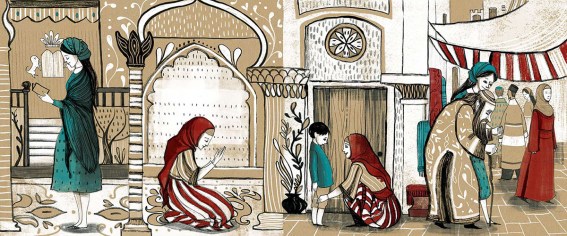
The illustrations are smartly done.  This isn’t the book for bright and colorful or overly cartoonish depictions.  The simplicity of the words introduce the reader to Islamic traditions and Jewish traditions, but the purpose is to show their similarities and the illustrations mimic that sentiment beautifully.  The contrast of red and blue show the differences with the larger muted tones being the same. The warmth in the characters faces mirror the warmth of their actions and the detail is balanced with intriguing the reader without distracting from the text.  The illustrator does a good job of also showing the women covering their hair in public, albeit differently, but not within their homes. And of also showing the different ways the women worship without the words having to do so.

Dino-Wresting

The author has a note at the beginning acknowledging the roots of the story as a tale about two brothers in both Jewish and Arab traditions.  And at 24 pages it works for children of all faiths and all ages, two years old and up.  The book was recommended by a woman, who I hope to meet next week, when she and her Jewish community join us at the mosque for our monthly story time.  With a theme of friendship, this book will be the focus of what bridges and connections we can all make in our personal lives to make the wold a little better.  I can’t wait to share it with our children of both faiths!


The Storyteller by Evan Turk

Standard
The Storyteller by Evan Turk

the-storyteller-9781481435185_hr

Set in Morocco a long, long time ago near the edge of the great Sahara, a young boy goes in search of water.  But just as the city grew and grew and people forgot about the threat of the desert, people forgot about storytellers too.

This 44 page book weaves a tale of story within a story within a story, and combines different times in the past to illustrate how vital stories are to our existence.  Much like the thirst that only water can quench, the human soul needs connections.  With a Djinn threatening to cover the town in a sandstorm and the mysteries of the blue water bird, can a well told story really restore water and safety?  Written on a 4.9 level this book could get a bit confusing to a struggling reader, or a child trying to keep everything straight.  I found this book works best with kids that can get caught up in the story and the imagination of it all, without over thinking all the layers. It, like the story within the story suggests, works best to be listened too.  There is a lot of text, but it is very soothing and engaging.  The pictures are splendid, but in a dream like manner.  The book works well with sleepy children listening to your voice and getting lost in the pictures, making a storyteller out of the reader, and proving the engaging power of a story.  Second graders and up will enjoy listening to the story, and learning about desert life, and oral storytelling in lyrical way.  There is no Islamic element other than the hijab wearing women in the pictures, and the mention of a djinn.  There is is an author’s note at the end telling of the resurgent efforts of public storytelling in Morocco.

When a storyteller dies, a library burns-old Moroccan saying

What Does a Muslim Look Like? by Mohamed Abdel-Kader illustrated by Abdullah Badawy

Standard
What Does a Muslim Look Like? by Mohamed Abdel-Kader illustrated by Abdullah Badawy

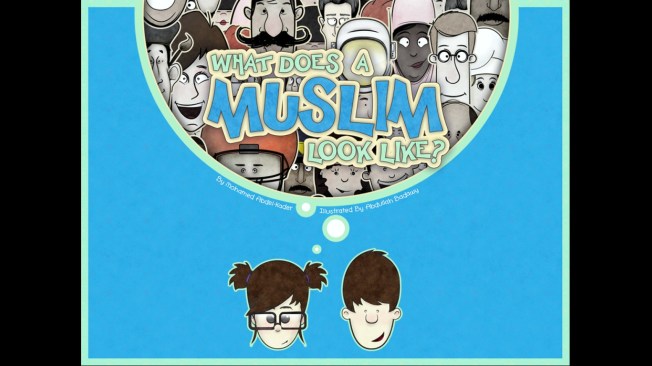
what does a muslim look like.jpeg This 22 page, simplistic book written in rhyming couplets, is such a timely and necessary book.  Much like Owl and Cat: What Islam Is… this book has value that extends far beyond its audience level (not AR but, I’d say three years and up), as the content breaks down stereotypes while being framed in a positive, non condescending way.
IMG_3160

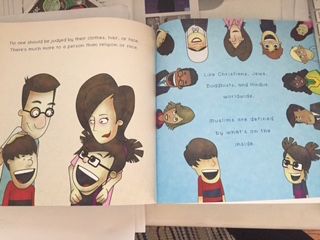
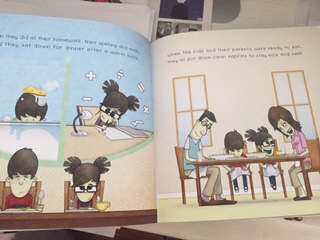
A brother and sister pair, Jack and Jane, go about their day when at dinner Jack remarks that he learned that two of his classmates are Muslim and they look like them.  Thus arises the question, what do Muslims look like?  The book then goes on to break down stereotypes and broaden views in the same rhyming manner that keeps the book light and child friendly.  The conclusion is that like people of other faiths, everyone is different, and that no one should be judged on what is on the outside.

IMG_3161

The book appears to have been started on Kickstarter in 2012 and Alhumdulillah it got the needed funding to get published.  I got my copy through the public library system, and I am beyond thrilled that I found it where hopefully a lot of people can get their hands on it.  Reading the author’s campaign on where the concept came from, he would have had no idea how much more timely the book is now, then when it was first published.  I get asked quite regularly from old school friends, how they can introduce Islam or get the ball rolling  to talk to their kids about Muslims, and this book would be a great start.  Told from non Muslim kids perspectives, with very hip parents, the book does not discuss any tenants of faith or belief, it just identifies the many shapes and sizes and colors that Muslims come in.  It would work well to show that Muslims are everywhere not just in the news, without overwhelming even the youngest of readers.

IMG_3162

The pictures in the book are absolutely perfect in complimenting the story. They are not only silly, but also diverse as the book’s text would require.  Interestingly there are ladies with hijab and those without, and scarves are not mentioned in the text, and also noteworthy is there are no bearded men in the pictures.  Overall, a wonderful book that I would love to have on my shelf with extras to hand out.

Never Say A Mean Word Again: A Tale from Medieval Spain by Jacqueline Jules illustrated by Durga Yael Bernhard

Standard

scan0019_487d580c-5aa9-45f2-b4c1-87e328c94b7e.jpg

I love when tales from the past provide timeless lessons in relevant ways.  Inspired by a medieval legend about the Jewish poet Samuel Ha-Nagid, a royal advisor in Muslim Grenada, Jules creates a story that works for children of all ages and backgrounds.

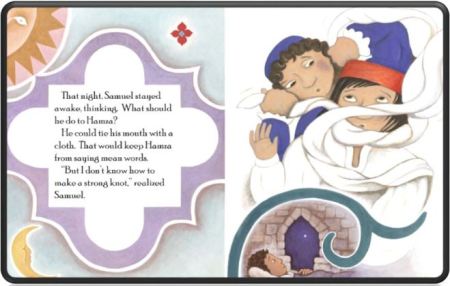
The Grand Vizier’s son, Samuel, bumps into the tax collector’s son, Hamza, and the boys don’t rub each other the right way.  Later that day, Samuel spills his drink on Hamza and can’t convince him both were accidents.  Hamza calls Samuel some mean names and storms off.  Samuel and his father think the name calling is uncalled for, but the vizier does not solve his son’s problem and instead assigns him to “make sure Hamza never says a mean word to you again.”  Samuel imagines ways to teach Hamza a lesson or punish him, but some ideas are too complicated and some just silly.  This is proving to be a hard task.  The next day Samuel shows up to Hamza’s house with a lemon.  He thinks forcing Hamza to eat it is a good punishment for a mean mouth, however Hamza thinks the lemon is to help with the stain that ruined his clothes, and tells him his mother already tried that.  Caught off guard by Hamza’s reaction, the two somehow end up playing catch with the lemon and enjoying the afternoon together.  The next day he shows up to Hamza’s house with ink and paper thinking he will make Hamza write him an apology.  Hamza however, thought Samuel showed up to draw, and once again the boys enjoy an afternoon together.  This carries on until the boys are so used to seeing each other and having fun together, they become friends.  Samuel fears that he disobeyed his father and did not handle Hamza only to realize that by befriending his “enemy” he did in fact make sure Hamza never said a mean word again.

idea

The book is 32 pages with an Author’s Note about the real life events that the story draws upon.  The book is not AR, but the large bold typeface and the warm simple pictures make this book work great for story time with young children.  It compliments themes about bullying and making friends as well as being silly.  It works well for third graders and older ones too, as they might understand people of different faiths struggling to get along or people of different socio-economic classes, or even just imaging how they would solve a problem without their parents doing it for them.  I was pleasantly surprised by the book and how it handled the Muslim/Jew staging of the characters.  Especially right now in today’s world, this story has a poignant lesson for us all. If we all spent time together having fun, we too could end up being friends, or at least getting along.  I think the story and its lessons have merit and relevance, and thus a place on the bookshelf.


Princess Siyana’s Pen by Zainab Merchant

Standard

Princess_Siyana_s_Pen.jpg

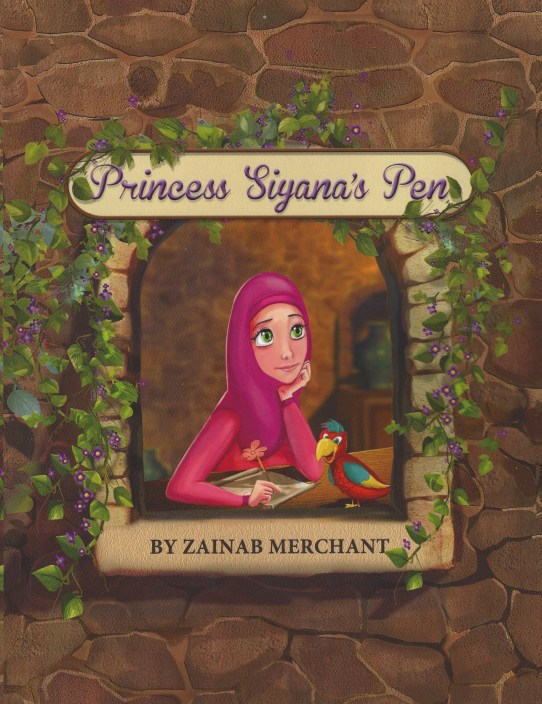
It is hard to not compare a big, brightly colored Princess book to the golden standard of a Disney princess story, which obviously isn’t fair. But for as much as I wanted to love this strong Muslimah and her doe-y eyes as she saves herself and the kingdom, I felt the author let me down.  The plot feels overly familiar, it is like a mix of Rapunzel in Tangled (minus the tower and Mother Goethel), Anastasia (not Disney, but in the same genre), throw in Jafar and (a nice) Iago from Aladdin, sprinkle in Islamic wisdom and insights, and tada you have Princess Siyana.

Siyana is the daughter of King Tariq and Queen Fatimah, the wonderful rulers of Lusitania.  While still a baby, the evil Chief Advisor Shargor kidnaps the young princess and leaves her in the neighboring mountainous kingdom of Baetica.  As her kingdom searches for her, a traveler in Baetica finds her and gets her to Ms. Salma at El Sol Orphanage.  Her life is good growing up. She shares her knowledge of modesty and salat with the younger girls at the orphanage, and has a very close relationship with Ms. Salma.  Meanwhile, in Lusitania, Shargor has imprisoned the King and Queen and is ruling unjustly and ineffectively.  When Siyana is 16 years old Ms. Salma surprises Siyana with a trip to Baetica for an interview at Baetica Academy, Siyana’s dream school.  While there, a tornado tears the two apart, and Siyana is rescued by an elderly couple.  This couple is struck by her name and fill her in on the story of the missing princess.  Siyana boldly journeys to the castle, storms in, frees her parents, forgives Shargor and presumably they all live happily ever after.

The author puts not just Islamic values of forgiveness, and kindness to others in the story, but pushes the point of hijab and talking to Allah (swt) as well.  Siyana discusses how at the orphanage they don’t cover, but when they go out they do.  One of the younger girls even asks her, “why wear such a pretty dress if no one can see your hair?”  Hijab comes up a few times through the book and isn’t too awkward.  However, I felt the concept of writing letters to Allah (swt) a little forced and less smooth, especially considering it is the title action of the book.  Once a week the girls at the orphanage write letters to God with special pens Ms. Salma had given them. They then drop these letters in the lake.  A bit odd for the environment in my opinion, but I get it I’m cynical.  In her first letter she writes about wanting to help others and even remarks, “Oh my Lord, my Guide, my Everything, How I’ve missed you, even though I talked to you just an hour ago in my Salaah!” The author has Ms. Salma explain that you can always talk to Allah (swt) and that duaas and letters are good, but remembering Him in your heart is the best.  Siyana writes two letters in the book, and the letters aren’t long, but it seems like the lead up in to them and after them, explaining the connection to God through many different forms is good, and which are better, and which are required, etc., gets a bit wordy.  Again I do acknowledge my own unease with writing letters so formally to Allah (swt) in literature. I have now reviewed a few books were it presents itself, and in all cases I find it weird, and I don’t know why.  Interestingly the Author never uses the word Allah (swt), but she does use hijab and salaah.  And there is space at the back of the book to write your own letter to God.

I do like that the plan is for Princess Siyana to rule the kingdom and that she is traveling for educational reasons when the tornado strikes.  I also like that Ms. Salma seems to be a strong independent woman and that Siyana, doesn’t wait around for someone to save her parents, she takes control, trusts Allah, and saves the day.

12729432_218382801843197_1944575424_n

The book is beautiful and big.  The illustrations are radiant and well done.  At 40 pages long, there is also a recipe for Macaroons and amaze at the end, the story is quite long in both the number of pages, and in the amount of text on each page.  I would place it on at least a 3rd or 4th grade level for reading, and possibly a KG or 1st grade level for story time.  The book isn’t dry, but it would definitely test a 3 or 4 year old’s attention span.  Obviously it is an Islamic alternative to the mainstream princess story, but at $19 and the way it is beautifully presented, I guess I wanted more than just Islamic morals infused into something so familiar.  I feel like the author could do more, it is definitely within her writing ability and the publisher, Sun Behind the Cloud, who it seems is responsible for the illustrations as well, definitely know what they are doing.

There is a youtube teaser: https://www.youtube.com/watch?v=6qS_Jw2rp8Q

and an interview with the author https://www.youtube.com/watch?v=HCclUg9pUXI

siyanas-pen-1-600x600