Author Archives: islamicschoollibrarian

Love by Matt de la Pena illustrated by Loren Long

Standard
Love by Matt de la Pena illustrated by Loren Long

love.jpg

This 40-page-book may have a simple title, but most of us know, there is nothing simple about love, and this book shows love in many forms from a child’s perspective as they grow.  Sometimes picture books are basic and inspired to teach, or simply entertain.  Sometimes when picture books try to do more, the audience is confused when the pictures and amount of text on page don’t seem to align.  And sometimes, large pictures, with thoughtful poetry make the pages come to life and sing.  The book is written on an AR 3.7, so people thinking this book is for preschool aged children seem to be upset by the concepts hinted at and illustrated, but for older kids, this book has amazing power, and beauty that can show just how complex this universal feeling is.  

Love is your parent’s voice, love is burnt toast, love is the stars after your house burns down, love is in your grandpa’s wrinkles, love is staring back at you in the bathroom mirror.  But sometimes love also burns out and love is shielding you from things that might hurt you, and love separates people too. 


As humans, we can all relate to the same emotions, whether we give and receive love the same, the book shows the value and meaning it has to us all.  Hurray for illustrator Loren Long, because page after page, shows diversity of color, mobility, socio economics, age, and religion.  On a page where the love of the child is keeping her from seeing the TV that the family is crowded around a cross is present, and then a few pages later,bam, there is a girl in hijab looking up at the trees and listening to the love shared in their rustling. 

IMG_1901

I had no idea this illustration was present, and gasped aloud.  I said nothing to my daughter, finished the book, and handed it to her to read.  She turned the page and gasped aloud as well saying, “there’s a muhajaba, haha, we are in it too.”  Granted she is my daughter, so environment and genes account for something, but EVERY PAGE I think resonates with someone, and that gasp in my living room from me, from her, could come from anyone who turns a page in this book and bam suddenly feels represented, feels included, feels validated.  That my friends, is LOVE. 

IMG_1900

We are more alike than different.


Mirage by Somaiya Daud

Standard
Mirage by Somaiya Daud

mirage+cover.jpg

I don’t read a lot of sci-fi books, ok so maybe I haven’t really ever read one…or maybe a few have snuck through and then been forgotten.  So, I was excited to read this book by a Muslim author with Arabic poetry and Moroccan inspired backdrop sprinkled in, if nothing else it had me intrigued.  The book is a 308 page YA book that came out two months ago and was available in both hardback and on audio at my public library.  I was thinking to listen to the audio version with my kids, but the book was ready first, and the reviews on the back cover by other authors, all mentioned that the book was “romantic” and “sexy,” huh? The synopsis online and even on the inside flap, hinted much more at rebellions and body doubles, and life on a small moon in a distant fictional galaxy.  Needless to say I didn’t check out the audio book and decided I should proof it for my self first.  I started the book, no less than five times.  Like I said, it isn’t a familiar genre and I was a little confused.  I decided to just keep plugging through the fifth time, and sure enough when my eyes started to get sleepy I realized I was more than half way done with the book.  I guess when you are building worlds and culture you have to start somewhere and the confusion worked itself out after that.  I’d say the book is for teens.  The romance isn’t explicit, save some kissing, but a lot is implied and better for kids a little older than middle school.
SYNOPSIS:

Amani is turning 18 and about to attend her majority ceremony, where her cultural daan, facial tattoos will be marked on her face.  Surrounded by her loving family of parents and two older brothers, and close friends, drones from the main planet attack the festivities and kidnap Amani to the palace that the Vathek empire has taken over after conquering the planet and two moons.  The storyline is pretty straightforward, the confusion for me was the world building of establishing the culture, the religion, the symbols and characters all intertwined at the start.  The understanding of what life was like before the occupation and now under Vath rule, about the tribes, the birds, and how so much has changed.  

Once Amani is enslaved in the palace and had her near identical features to the princess, surgically made to match the ruthless half Vathek, half Andalaan ruler, the setting is developed through stories and flashbacks that clear up the confusion and make the book a fast and fairly easy read.  As the princess’ body double Amani must learn to act and carry herself as Princess Maram so as to not be discovered when sent in to complete tasks that would put the real princess in danger.  The job of Amani, however, also develops in to her filling in for Maram, whenever the spoiled princess, doesn’t want to do things.  In the process of these engagements, Amani spends a lot of time with Maram’s fiance, Idris, who is Kushaila and as part of the war truce betrothed to Maram.  Maram and Idris are friends, who understand their roles, but when Idris figures out Amani is playing a role as well, the two of them fall in love, complicating matters considerably.  Throw in some Andalaan cousins, forced to the outskirts under the new rulers, a royal half-sister vying for the crown, and a rebel who looks like a beloved Prophetess recruiting Amani to join them as a spy, and you have a protagonist trying to stay alive while following her conscious as well.

WHY I LIKE IT:

I like that the world created seems plausible and real.  I love that I was engaged and intrigued and able to finish the book (yay!), but ultimately the book reads more like a romance book, than a sci-fi one.  Aside from the planet, droids, holograms, and modes of transport, it could be any culture and religion even here on Earth being fleshed out and established as the back drop for the story.  I love that Amani holds to her culture and the love she feels for her people, their language, poetry, and their history is palpable and descriptive. 

I love that society is focused so much on the strength of women.  Yes Maram’s dad is the evil overlord, but she is the future.  Amani is the protagonist, it is her mom’s strength that she calls on so often in her trials and torture.  The Prophetess that delivers hope is a female, that the poetry comes from women, and is gifted by women.  I love that the leaders of the rebellion are women, that the cousin that has not given up on the true bloodline of rulers is female and that the Dowager is such a strong, yet loving beacon that deserves the truth about Amani’s identity.  At one point, when presenting herself as Maram to Idris’s aunt, the two have a conversation:

“You must eat more,” she says in heavily accented Vathekaar.  “If you are to be any good at bearing daughters.”

“Why daughters?”

“Only your daughters will have the stomach for the future,”  she said.  “It is why your mother had you.”


I don’t really like the love story between Amani and Idris, it seems too easy, even though obviously it is plagued with impossibility, there should have been more tension.  Maybe it isn’t even the relationship, but more that Idris isn’t nearly as developed as Amani and Maram, and it shows.  I’m hoping there will be more books in the series and that he will be given some depth, because a lot is told about him, but the authenticity seems lacking.  The disjointedness of the romance could also be the pacing of the book.  I felt like somethings dragged and climaxes seemed rushed. Again, I’m hoping this is more setting the stage for further adventures, and that the next book will delve more in to the political-warring-rebel story line that the author definitely can delve in to and capitalize on along with Amani and Maram’s relationship.

Maram is my favorite character, how delicious that the antagonist is not one, or even two dimensional.  She is cruel, and scared, and vulnerable and everything in between.  I loved the interactions between the two young women.  I wanted to know more from Maram, how she felt about, well, everything, and I’m really hoping holding back on those insights was intentional for a purpose.  While she evokes both hatred and pity from Amani, she evokes so much curiosity and exasperation from the reader it is refreshing.

There is nothing Islamic in the book, the characters have their own fictionalized religion, and religious texts.  The names are familiar to the Muslim world, and arabic words sprinkled in with no definition, definitely will make Arabic aware children feel a connection to the characters and setting of the book.

TOOLS FOR LEADING THE DISCUSSION:

I think one could do this as a book club book for high school aged students.  And while I dislike labeling books for one gender or another and all the stereotypical tropes that that implies, I feel like because of all the romance and the amount of time spent on Amani and Idris the book might appeal more to girls.  The book spends a lot of time on these two as it is their talking that creates understanding of their world for the reader.  It is more telling than showing, and these two snuggled up or caressing each others faces is the manner in which the information seems to be expressed.  I’m holding out hope that the rest of the series will break away from this set up.

author’s website:  http://www.somaiyabooks.com/

article with excerpts: https://ew.com/books/2018/02/19/mirage-somaiya-daud-preview/

FLAGS:

There is kissing and affection.  There is also some violences broadly as the Andalaan’s are tortured and attacked and specifically, as Amani has a bird sent to attack her, and she is regularly hit and beaten. Nothing too extreme for high schoolers.


Little Brother for Sale by Rahma Rodaah illustrated by Fuuji Takashi

Standard
Little Brother for Sale by Rahma Rodaah illustrated by Fuuji Takashi

IMG_1867.jpg

Oh how I love to read sweet books and repeatedly thumb through warm engaging illustrations.  This book is beautiful, fun, and (possibly) very relatable.

IMG_1860

A big sister, Asma, is ready to get rid of her little brother, Hamza, so that she can enjoy all her parent’s attention.  But when the mailman won’t let her ship him to grandma, and neither the lady walking down the street nor the neighbor next door want to buy him, she is determined to find someone to take him off her hands.  Alas though, it is Hamza’s nap time and while mom makes salat Asma finally gets some time to herself.

IMG_1862

Except she misses having someone sharpen her crayons, or eat the blueberries she doesn’t like, and there is no one to dance with her around the living room.  She decides that maybe she does like her little brother, and lays down next to him with promises of loving and protecting him forever.  Ahhh…..

IMG_1866

Yeah, the book is pretty predictable, but the details make it charming.  I love the diverse characters and the love and warmth they all exude.  I love that when she drags her brother out in the wagon and holds up the for sale sign, mom is peeking out from the kitchen.  I reassured myself that she was there, so it was ok for Asma to be talking to the mail man, a potential stranger, and the lady walking down the street, muslimah or not. 

IMG_1861 

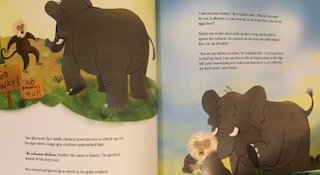
The only slight hiccup to me was what one-year-old, he was seemingly taking his first steps in the first picture, can sharpen crayons? Maybe I just failed to prepare my children, but other than that, the book is smooth, and well done.

IMG_1864

The binding quality, the font, the amount of text on the 26 pages, is definitely preschool to first or second grade, and the illustrations will mesmerize even toddlers who won’t understand why the book is so silly. 

IMG_1863

The book has been floating around my house and I’ve seen my 11 year old pick it up and read it on her own, and then read it to the three year old mutltiple times.  She possibly was getting ideas, but maybe it also reminds us that siblings really can be both annoying and lovely as well.

IMG_1865

Digging Deep by Jake Maddox text by Wendy L. Brandes illustrated by Katie Wood

Standard
Digging Deep by Jake Maddox text by Wendy L. Brandes illustrated by Katie Wood

IMG_1855

It is great to see a beautiful hijabi on the front of a sports book, written by a non Muslim, published by a major publisher, and having the story have nothing to do with the cloth on her head, but rather the skills on the court.  Teaching lessons about teamwork and self-worth, there is a whole series of these books about different sports with different main characters, and this one focuses on volleyball and a girl named Asiyah Najjar.  I’d maybe recommend this 63 page book to kids starting to feel confident with early chapter books, but more on that later.

SYNOPSIS:

Asiyah plays rec volleyball and enjoys it, but when her friend Lucy convinces her to try out for the traveling team, she has to not just be good enough to make the team, but focused enough to not let her teammates down.  With daily practices, comedian Asiyah feels like everyone is taking the new team way too serious and she questions if she wants to continue.  She loves playing the piano and with school work, her time is being consumed by volleyball.  When she overhears her friends doubting her commitment to the team, she, with the support of her brother, decides to dig deep and give it one last, serious, try.

WHY I LIKE IT:

I love that Asiyah mentions in the first chapter that she is nervous about the traveling team, because of her hijab and that people in town know “what it is, and why I wear it,” she says.  She never mentions that she is Muslim or why she wears it, just states that the people around her know. Religion and faith are never brought up again.

IMG_1856

There are some slightly off things in this book for me.  According to the publisher, the book is meant to appeal to 8-11 year olds,  but to me, the style of the book is aimed for 6-8 year olds.  Those who need pictures and a large font and big spaces between lines and short chapters.  The illustrations, however, in the book make the main character and her friends seem like high school students, with their heavily makeup looking faces, or at least middle school with the main character wearing hijab.  After reading the book, twice, I still don’t know how old the main characters are.  They seem pretty independent, but then when Asiyah’s parents have to run some errands, her brother Rad walks her and Lucy to volleyball practice, like an escort.  

That’s another thing, of all the ethnic or religious names that could have been chosen, Rad seems like an odd choice in that it will come across as funny to readers and kind of mitigate the amazingness of having a socially accepted female Muslim athlete on the cover, again, just my opinion.

Another slightly confusing thing for me is that the book is a “Jake Maddox book,” but he isn’t really the author.  After looking in to it, I think it is more like a series or type of sports book that other’s write for and include his standards, “each of his stories is stamped with teamwork, fair play, and a strong sense of self-worth and discipline (http://www.capstonepub.com/consumer/products/digging-deep/).” The book is ok for 2nd graders, the lessons learned will resonate in the moment and teach a point, but the characters will be quickly forgotten.  The book has questions at the end and a glossary of volleyball terms which would be great for kids interested in volleyball.  

IMG_1858

FLAGS:

Clean, the characters listen to music and Asiyah plays the piano.

TOOLS FOR LEADING THE DISCUSSION:

I wouldn’t do this for a book club book, but with the standards of sportsmanship and the integrity I’d probably have it in my classroom.  The book is a super short read, so reading it would help boost struggling reader’s confidence, and with so many books in the series, if the child likes sports, they will have lots of options with positive messages to engage with.

IMG_1857

Freeze-Land: A New Begininng

Standard

IMG_1828

Let me start off by saying that the fact alone that this book (and series) was written by a 9 year old is amazing.  As a former 4th grade teacher, if I saw this type of writing come across my desk, I would have probably pushed her to keep writing and publish one day too.  But, for all the support and love I wanted to give the book and the author, I really didn’t like the story.  So much so, that even with the second book, Good or Evil, in my hands, I couldn’t justify spending less than an hour to read the 124 pages, which is heartbreaking to say, but honest, none-the-less. 

The series is published by Archway Publishing which is a self publishing company through Simon and Schuster, so I have no idea if they have editors, or what the publishing process was for this book.  But, while you might forgive a few plot holes, and story gaps because of the author’s age, there are sentences that simply don’t make sense, words that are missing, and passages, that seem to be arbitrarily made-up on the spot.  So often the book reads like a child telling a bed time story and realizing they hadn’t explained something earlier and have to wiggle out of a tight spot, “and then, and then” become mechanisms to move the story along, when no other logical connection can suffice.

img_1823.jpg

At 93 pages the books is written for 2nd – 4th graders, and while they might inspire others to write, I don’t know that they will get enough out of the story to read the four book series.  The covers depict a girl that looks like Disney’s Belle and the title might excite fans of Disney’s Frozen.  I would like to think the writing improves as the author develops and grows, and I’m fairly confident that I’ll check out one of her future books, however, I think I’ll sit the rest of this series out.

SYNOPSIS:

Fourth grader Samantha Ringle loves snow, and can’t wait for the next storm to arrive on Christmas day.  After opening presents and celebrating the holiday, she meets Rebecca, a snow flake fairy from Freeze-land.  Six children have gone missing in Samantha’s area, six children that were chosen by Santa and infused with his saliva.  The children have gone to a distant planet to try and save it from the evil Lord Ninstagger, and return it to the snowy wonderland the Freezians once knew.  

Lord Ninstragger has a wand and a creates rhyming spells to make it work, he also has some other weapon an any-weapon-a-tor that I never really understood, and he can only be defeated if a word is said, but the word will also kill all the inhabitants of the planet.  To save the planet and free the other six children that have gone missing, she must defeat Ninstragger and his ninsting minions or Earth too will be destroyed.

Needless to say, she succeeds by having the good little cloud fairies cover their ears so she can say the word that will destroy the evil.  She then has to get all six of her friends and her annoying brother who got caught in the wind that brought her to Freeze-land, home.

WHY I LIKE IT:

I love that this author can articulate a creative imaginative story in her head and that her family supported her endeavors and got the book published.  I love that the author is Muslim and feels confident writing and sharing her words with the world.  Outside of that, I’m not sure the story would have the same appeal if it was written by a 19 year old, or anyone older than a teenager. 

There are huge plot holes.  The book says that all the children are taken to the dungeon, but when Ninstragger is defeated it says that only Jake is in the dungeon, the rest are in jail.  When freed all six show up instantly but the walk to the exact same place to free Jake is long and arduous and the climbing over the mountain is unbearable.  Samantha seems to be surprised that Jake is there, but early had overheard a ninsting talking about Jake by name, to Ninstragger.  Samantha doesn’t recognize the freed children or them her, even though some were her friends and they have been gone a year or less.  Some things also don’t seem to make sense, such as how are their rain cloud fairies in a frozen wonderland? Why does the word kill the inhabitants, what does it mean, how did they learn it? Why are their ghosts that come out of the letters and give the wrong advice? How did Rebecca get all six to Freeze-land, but claim she hadn’t thought how to get Samantha there?  Really the story is all over the place, and I could go on for many many paragraphs, but I think you get the point.  

There is nothing Islamic about the book, and I understand that there doesn’t need to be, but I don’t understand why all the Christmas and Santa stuff is needed.  I understand that the author may have used winter to set the stage for the story, but it seemed awkward to me that Santa randomly died going down a chimney into a lit fire, but yet sensed his time was coming and made a ton of arrangements for a future he would not have known would occur.

TOOLS FOR LEADING THE DISCUSSION:

I would not use this book as a book club selection, but if a child read it, I’d like to know there thoughts.  To see if the wholes and inconsistencies are noticed by the target reader.  My 11-year-old daughter struggled to make sense of the book, and while I tried so hard to force her to read the second one, after I read the first one I realized her hesitance and apologized.

Authors website: https://www.ayazsisters.com/

FLAGS:

The girl lies a lot and acknowledges that she lied to save Freeze-land, but then says that the book is completely true and not a lie.  Obviously there is Christmas and Santa mentioned and celebrated as well.

The word “stupid” is used a lot, and when Samantha and Jake are interacting they are pretty rude to one another.  While at the end, Samantha gains confidence and stands up a bit to a class bully, there is no reconciliation of her and her brother’s relationship.  She shows no concern other than consenting to take him back to Earth, and doesn’t seem to have been worried or relieved to see him in any of the situations presented.

IMG_1827

Mustafa by Marie-Louise Gay

Standard
Mustafa by Marie-Louise Gay

mustafa book.jpg

This 40 page book caught my attention because I have a son named Mustafa, and the illustrations looked endearing and fun.  The author/illustrator was inspired to write the story when she visited Croatia and saw the resilience of the children.  She also remarks on her website, that children in new places can all relate to the nuanced uneasiness and gradual fitting in process that takes place universally (http://marielouisegay.com/blog/).

IMG_1816

The text is prose-like as young Mustafa ventures from his apartment each day to the park nearby.  He notices things he has never seen before and compares them to the destruction he recalls of his homeland.  He also finds things that remind him of home and things that look familiar. From little ladybugs and a heart-shaped leaf, to the changing leaf colors and kids dressed up in costumes, there is so much to take in and understand.

IMG_1818

As the days go on, he begins to wonder if he is invisible.  Finally, a little girl with a cat makes a small beckoning gesture to him that doesn’t need language to be understood, and just like that, the world gets a little more welcoming.  This gentle story shows what being new can feel like, and reminds us that sometimes all it takes is a simple act of kindness to change so much.

IMG_1820

The book mentions that Mustafa came on a long journey, but does not specify where he has come from.  He draws his house being bombed in the dirt with a stick and mentions loud noises and fire.  The mother wears hijab, and obviously his name would identify them as Muslims, but other than that there is no reference or mention of religion.

IMG_1817

Overall, the book would be great for ages 4-8.  The passages are a little long, but with the illustrations and relatable concepts, I think children will reflect on what the author is trying to convey, and be able to process what Mustafa has been through, and how hard even the littlest things can be in a new place.

The Worst-Case Scenario Ultimate Adventure Novel: Amazon & The Worst-Case Scenario Ultimate Adventure Novel: Mars by Hena Khan and David Borgenicht

Standard
The Worst-Case Scenario Ultimate Adventure Novel: Amazon & The Worst-Case Scenario Ultimate Adventure Novel: Mars by Hena Khan and David Borgenicht

There is nothing Islamic or religious, with either of these books, but I wanted to review them, as the author Hena Khan, who has brought such lovely picture books to our book shelves (Night of the Moon, Golden Domes and Silver Lanterns, Crescent Moons and Pointed Minarets), inspiring elementary books to the mainstream (Amina’s Voice, On Point, Power Forward), and who showed Curious George what Ramadan is all about, is Muslim.  She has done a tremendous job of blending culture and religion with everyday life making her stories relatable and found on bookshelves across America.  She also has written books that are just good books void of any religion and culture, that hopefully they remind our youth that you can write books about anything, appeal to everyone, and be successful as well.

Both books are like the “Choose Your Own Adventure” books that I remember from the 1980s except these are much better written, and I think I might have learned facts about Mars, space travel, and the Amazon from them, without even realizing it.  Aimed at 3rd to 5th graders, these two books were checked out from the library and read countless times by my kids and myself alike.  They are entertaining and not easy to predict.  It is worth noting that while I did make it the entire length of the Amazon, after four tries I gave up trying to survive the journey to Mars and back.

IMG_1796

SYNOPSIS:

In both books the cast of teammates is given at the beginning and shows a good diversity of men and women from all over the world with a variety of skills and backgrounds to be on the expedition.  The books then give the set up of where you are going, and how you got chosen.  You then are advised to flip to the back of the book to look through the files and notes that will give you knowledge about what you will encounter.  These pages are in full color and are in diary, note style.  The adventure then begins and you make choices that lead you down different paths to success, or demise, it is up to you to decide how to survive.  

WHY I LIKE THEM:

I love that you learn while making decisions and attempting to make the story continue.  The books are fun and most of the choices aren’t obvious, naturally a few are, but they are well done.  There are comic book style pictures sprinkled throughout and regular black and white illustrations on many of the pages.  I particularly liked that the kids read them more than once and learned a bit about space travel, mars, what would be needed to set up a colony, the Amazon, various animals, and survival skills in the rain forest.

FLAGS:

You might get burned up, or bitten by a snake, but nothing too graphic, as you are the reader and obviously know it isn’t real.  

TOOLS FOR LEADING THE DISCUSSION:

These books wouldn’t work as book club selections, but I think 3rd and 4th grade classrooms and school libraries would benefit from having these fun books on hand.  Struggling readers will enjoy the fast pace and the number of pages (about 200 each), irregardless of if they are read or not, and advanced readers will enjoy trying again and again to reach the successful end.


All Are Welcome by Alexandra Penfold and Suzanne Kaufman

Standard
All Are Welcome by Alexandra Penfold and Suzanne Kaufman

all are welcome

This is the perfect book for back to school.  It can set a beautiful tone of letting all children know that they are welcome, that they are accepted, that they are safe, that they are wanted and that they have value in your classroom.  It could also work to allay children’s fears heading in to a new environment, assuming of course that the environment is as fabulous as the one presented in the book.  

IMG_1788

The large, hardback 44 page book with a poster and large pullout concluding page, is fantastic for ages preschool and up, but would have value as part of any grades back to school message.  

IMG_1789

While the rhyming couplets are sweet and sincere, the real beauty of the book are the illustrations.  Bringing all that diversity to life in smiling kids faces, children with hijabs, and yarmulkes, patkas, baseball caps, glasses, curly hair, straight hair, every color of the rainbow, various physical abilities, all show what a day of inclusion can look like.  No one culture or background is articulated or placed higher than another and the coming together of the kids and then their parents and community is inspiring.

IMG_1787

I love that their is a little muhajaba on the the cover and included in the cultural acceptance of the book.  It shows her praying in one picture and then joining in and smiling with the rest of the diverse group of characters in the other pictures.  Feeling included and accepted whether in a classroom, or in a children’s book, feels good, at any age, alhumdulillah. 

IMG_1790

A special shout-out to all the educators and people in positions of power who go the extra mile to create a safe and accepting space, thank you.

IMG_1791

The Day of the Pelican by Katherine Paterson

Standard
The Day of the Pelican by Katherine Paterson

pelican.jpg

There is a lot to be grateful for in this 145 page AR 5.2 book before you even begin reading it.  The fact that Katherine Paterson, of Bridge to Teribithia fame, would write a middle school book about the horrors that took place in Kosovo in the late 90s and conclude with the events of 9/11 is both bold, and daring.  There isn’t a lot of mainstream YA literature about the events that happened in the Western Balkans and this book is much needed in shedding light on a history that cannot and should not be forgotten.  While the book doesn’t compel the reader to pick it up, I think as a novel study in school, or as suggested reading, kids 4-8th grade will benefit from the story and retain the humanity presented in the characters.

SYNOPSIS:

The story follows 13-year-old Meli Lleshi, an ethnic Albanian, and how her world changes as Serbian atrocities escalate. The story opens showing how while there is tension in the air, a lot of the Lleshi family’s life is relatable to today’s western readers.  The children go to school, they have a big family and help out at home.  The dad owns a grocery store under the house and the neighborhood is made up of Albanians and Serbs, Muslims and Christians.  Quickly, however, bad news of the Serbs kidnapping people and destroying homes becomes reality as Meli’s 14-year-old brother Mehmet, goes missing.  The police refuse to help and with no other recourse the family is left to wait and see if he returns.   Luckily he does, but as fears continue to grow the family leaves home to go live at the familial farm in the country.  This stop is temporary and the first of many as the family moves from one refugee camp to another.  Fighting to stay together and look forward, as that their homes, livelihood, and material goods have all been destroyed, the Lleshi’s end up in America, only to be faced with the discrimination following 9/11.

WHY I LIKE IT:

I had the priviledge of helping with a lot of Bosnian and later Albanian refugee families that came through Salt Lake City, Utah in 1998-2001.  Not in any official capacity but as outreach to help get them settled, enrolled in school, a friendly face to call on for help, and eventually a friend.  Later, I even interviewed many of them in a series I did for my journalism classes at the University of Utah.  This story rings incredibly true to what I recall hearing them speak about.  What they saw, what they had to sacrifice, what they hoped to achieve in America.  So I was almost giddy to learn about this book knowing that it wouldn’t be a “fun” read, but an important one bringing a fictionalized account of a historical horror to children that probably have never even heard about it.  I only wish so desperately that the book had a map in it.  There is a great historical note, but a map would have made it so much more impactful. 

I like that the family is Muslim, they do not practice, but they identify as Muslim and are thus tortured both in Kosovo and harassed in America.  They are served a ham at one point in America, and they eat it, noting that culturally they don’t eat it, but don’t really see the big deal in doing it.  I remember the first time my family went to meet a Bosnian family and there were no men in the house, all had been killed at the children’s elementary school at dismissal for being Muslim, and they served us beer.  The ham incident reminded me of that, that these are so often the religious rules we tell others and children about what it means to be Muslim, but in the grand scheme how important are they compared to belief in the oneness of God?  I don’t want to turn this literary blog into my theological thoughts, but its hard over the years to forget that these people died for being Muslim, but yet really didn’t know a lot about Islam.  In my safe sheltered world, I know a lot of people that know a lot about Islam, but would we be willing to die for being Muslim?  The Lleshi family don’t pray or go to the mosque, but they do sprinkle their talk with Arabic words like inshaAllah (God willing), and their names are Islamic in nature: Mehmet, Adil, Isuf, etc., they are forced to relocate because of both their nationality and their religion, where the line is between one identity and the other isn’t clear in the book, nor is it in real life.  

FLAGS:

There is a bit of articulated violence, but the book is clean for 4th grade and up.  

TOOLS FOR LEADING THE DISCUSSION:

I would absolutely do this for a Book Club selection, and if I was a upper elementary or middle school teacher for a novel study.  The book balances character narrative and historical context to the point that the book is not boring, sensationalized or easily dismissed.  I think kids will need the school environment and structure to compel them to pick up the book and finish it, but will not fight the actual reading of it.

A guide for book discussion: https://media.btsb.com/TitleLessonPlans/454.pdfTeacher’s Lesson Plan: http://mrscarafiello.weebly.com/day-of-the-pelican.html