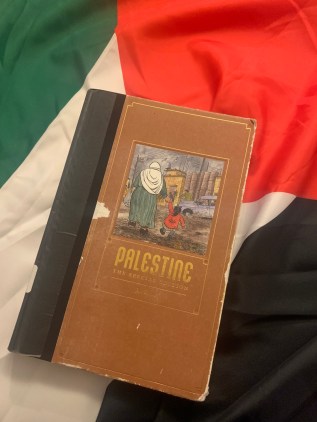
Written between 1993 and 1995, and compiled as a complete set in 2001, this 285 page adult non-fiction graphic novel is not really something I can review, even if I knew how. As we have passed 100 days of the escalation in Gaza, on top of the ongoing horrors of Israeli occupation, I am hoping to broaden my literary awareness to include not just children’s fiction and non-fiction about Palestine, but also adult works by those living it, those moved by it, and those reporting on it.
This particular “special edition” has a forward by Edward Said, and an introduction by the author and illustrator. Once I started the actual story, I’ll be honest it took a few attempts to hook me, with the starting being in Cairo and being a little aggressive with alcohol and talk of women, but once I decided to just keep going, the book finds a bit of a rhythm. It shows the author himself shaping his own opinion as he interviews, and sees, and reports on the events around him. It is non-fiction, it is written by a journalist, at some points he acknowledges his bias, but the overall picture presented, is heart wrenching. That the humiliation and torment and occupation of a people has been so well known and documented and ignored, in light of current events, and even in isolation, is devastating. The exhaustion the writer feels just witnessing it, is palpable, and the complete ignorance of Israeli, former IDF soldiers none-the-less is stark.
The book is both a reflection of the time with internal political factions playing roles differently than they do in todays conflict. There are also views about Iraq and Saddam Hussein, which might surprise readers today. But the power of this book is what hasn’t changed, the torture, the imprisonment of children, checkpoints, illegal settlements, humiliation, restrictions from working, from moving, from being treated as equal.
I’m glad I read it, and spent time among the the ink filled pages. I am certain that many of the stories, particularly the ones from inside the prisons will stay with me and haunt me as I read headlines and scroll endlessly through the statistics occurring in real time. How can we be so blind, for so long, how can a people endure so much and keep fighting, how does any of this make sense?
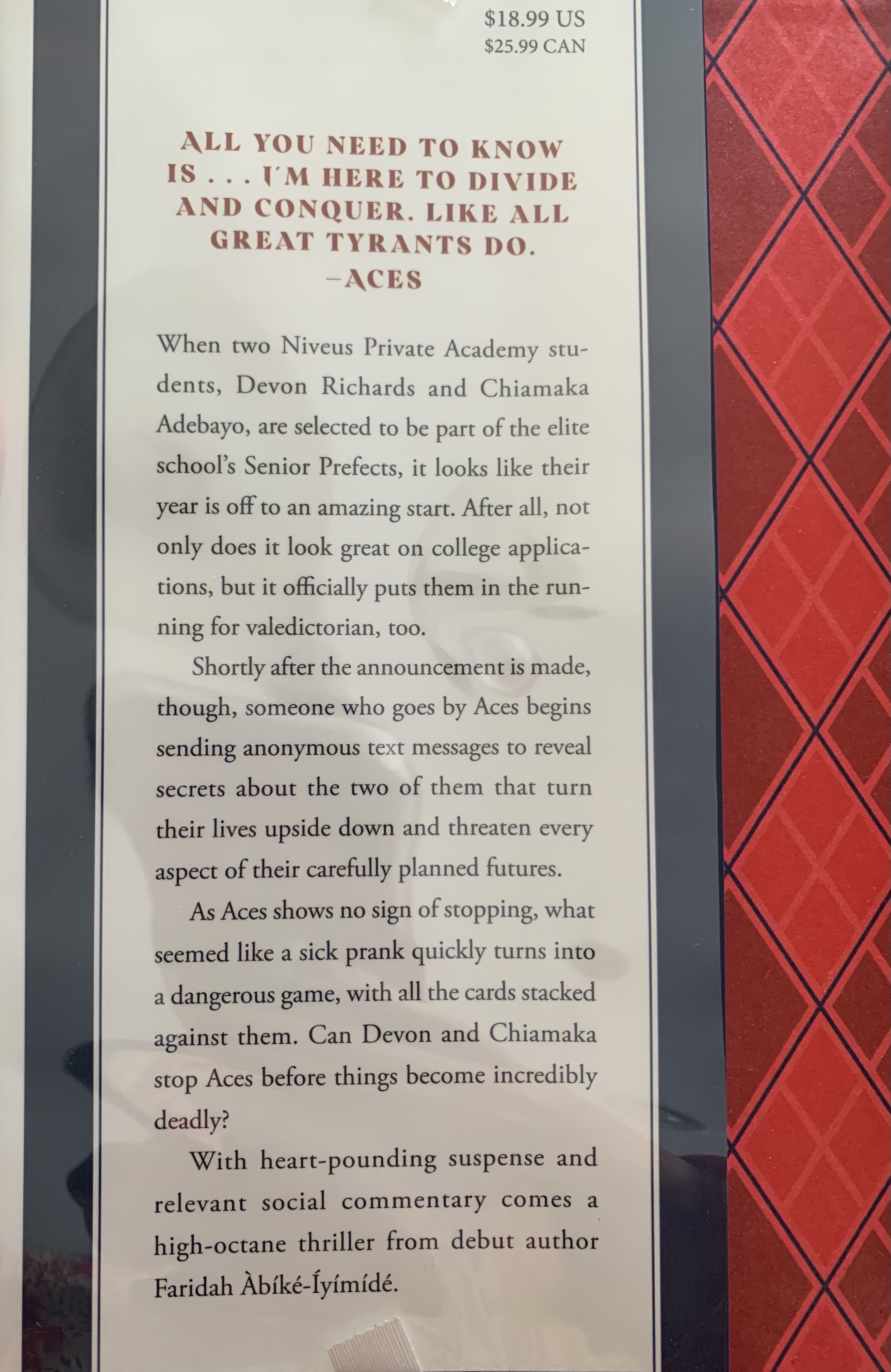
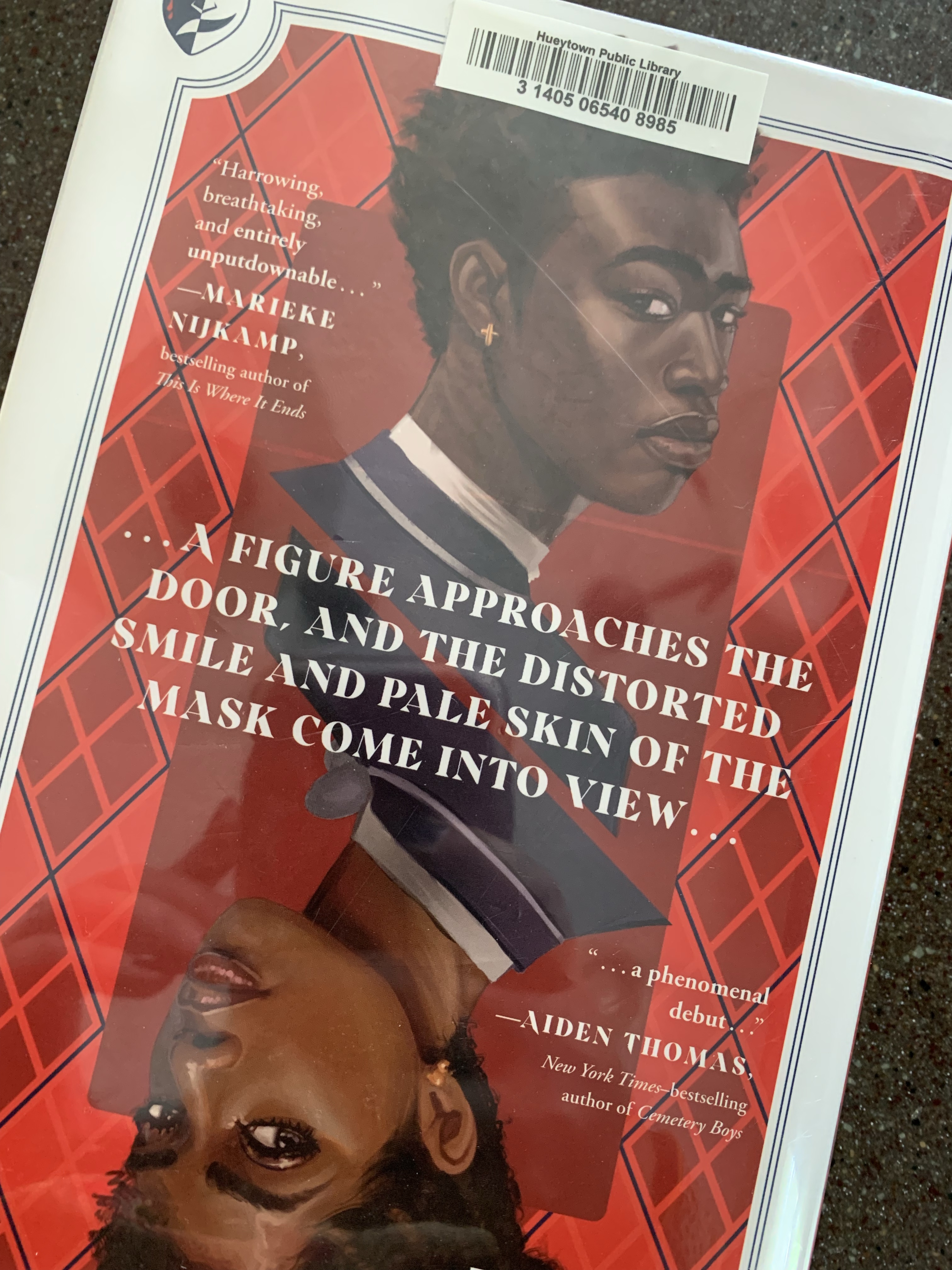
I had heard about this 420 page YA thriller and how it was written by a Muslim student at University and the seven figure book deal that she earned. It is constantly described as a combination of Gossip Girl and Get Out, having never seen either of those, I relied on the back of the book and the inside flap to see if it was something I would like to read and suggest my young teenage daughter, (and followers to read). Based on the suspense teasing and plot involving racism, I figured a contemporary YA book set in high school would have some relationship, sexuality, language and drugs, so at the last minute I decided to read it first. Alhumdulillah, I’m glad I did. The book has sex and relationships and sensual encounters between gay, queer, lesbian, bisexual, and heterosexual characters on EVERY SINGLE PAGE. I considered stopping, it was a over the top, forced, and honestly a little hard to read at times, but I continued because the commentary on racism and suspense storyline was well done that I was genuinely curious to see the climax and resolution. I write this review as a heads-up and to opine on the lack of mention of the amount of romance and sex in the book and in its blurbs. As a reader and someone who recommends books to people a lot, knowing what the majority of the book is about is helpful. To completely not mention something that is such a huge part of the book is frustrating, and so I’m writing this up more as an FYI, than a thorough and in-depth review. There are no Muslim characters, and the only mention of religion is a side character reading the Bible. Coming from an Islamic School Librarian standpoint, without exception this book would be considered inappropriate.
SYNOPSIS:
The book is told in two alternating personalities, Devon and Chiamaka. Two senior black students at a prestigious private high school. The only two black students. Chiamaka is the top of the school hierarchy, head prefect, planning on Yale for pre-med and the girl everyone wants to be. Devon is a scholarship student who plays music and dreams of Julliard. He flies under the radar and has one friend. When the book opens both are named Senior Prefects at the opening assembly of the school year, and no one is more surprised than Devon. The glory of such an honor is short lived however, as anonymous texts start popping up exposing secrets about the two. The two characters have skeletons they would rather not have exposed, and even though they barely know each other, they eventually resolve they must work together to figure out who is out to destroy them.
WHY I LIKE IT:
I like that the whodunit aspect really had me on my toes. I honestly, however, didn’t like either of the characters at all. The book has a lot going on, aside from the texts and secrets being exposed, that I wish would have gotten more page time. The two characters have very different, but very impactful home lives. Devon’s father is absent and it is learned he was executed on death row, his mom works three jobs, he has younger brothers and they struggle financial so that he has a chance at education. He lives in a tough neighborhood and runs drugs to help out with money. He hooks up with multiple guys in the book, and tries to keep it a secret so that he doesn’t get further harassed by the neighborhood guys, but it seems everyone knows he is gay even before the texts start coming. Chiamaka is Nigerian from her mom and Italian from her father. Her father’s family doesn’t accept her and her mom because of their skin color, so they no longer go to Italy to visit. Both parents are physicians and are never around. Chiamaka has no friends, picks boyfriends to further her power agenda, and spent her entire junior year having sex with her best friend, Jamie, with the hopes that he likes her too. She eventually realizes she likes a girl and hooks up with her. By-and-large for both main characters, only their sexual relationships are really explored, and most of them are brief. Thus it kind of limits the relatability to the characters in other facets of their lives. Not that people and characters have to be like-able, but they have a lot of layers, and it would have been nice to get to know them better as people, not just as shell minority representatives in a system built for them to fail.
Only a few side characters are developed, presumably just enough to make them suspect, but to drop information like one of them getting incarcerated and not explored, one diagnosed with diabetes and told without prompting and then dismissed, makes it feel like a lot is crammed in for no real purpose. As a debut novel by a young author, the writing is obviously amazing. I just didn’t connect to the characters, and the parts of the book I did like were overpowered by parts that I felt were overly forced. I will definitely read anything she writes in the future, although I will definitely research the books more thoroughly know what I’m getting in to.
FLAGS:
There is violence, sex (hetero, gay, and lesbian), cursing, drinking, drug use, drug selling, romance, kissing, hit-and-run, conspiracy, making out, drug dealing, physical beatings, passing out drunk, drunk driving, lying, cheating, racism, bigotry, hate speech, gaslighting, privilege, death, gun violence, destruction, murder, attempted murder, crude language, assault, blackmail, misogyny, homophobia, voyeurism, institutionalized racism, and probably more. Mature content.
TOOLS FOR LEADING THE DISCUSSION:
There is no way I would suggest, recommend, or encourage this book to Islamic School high schoolers.
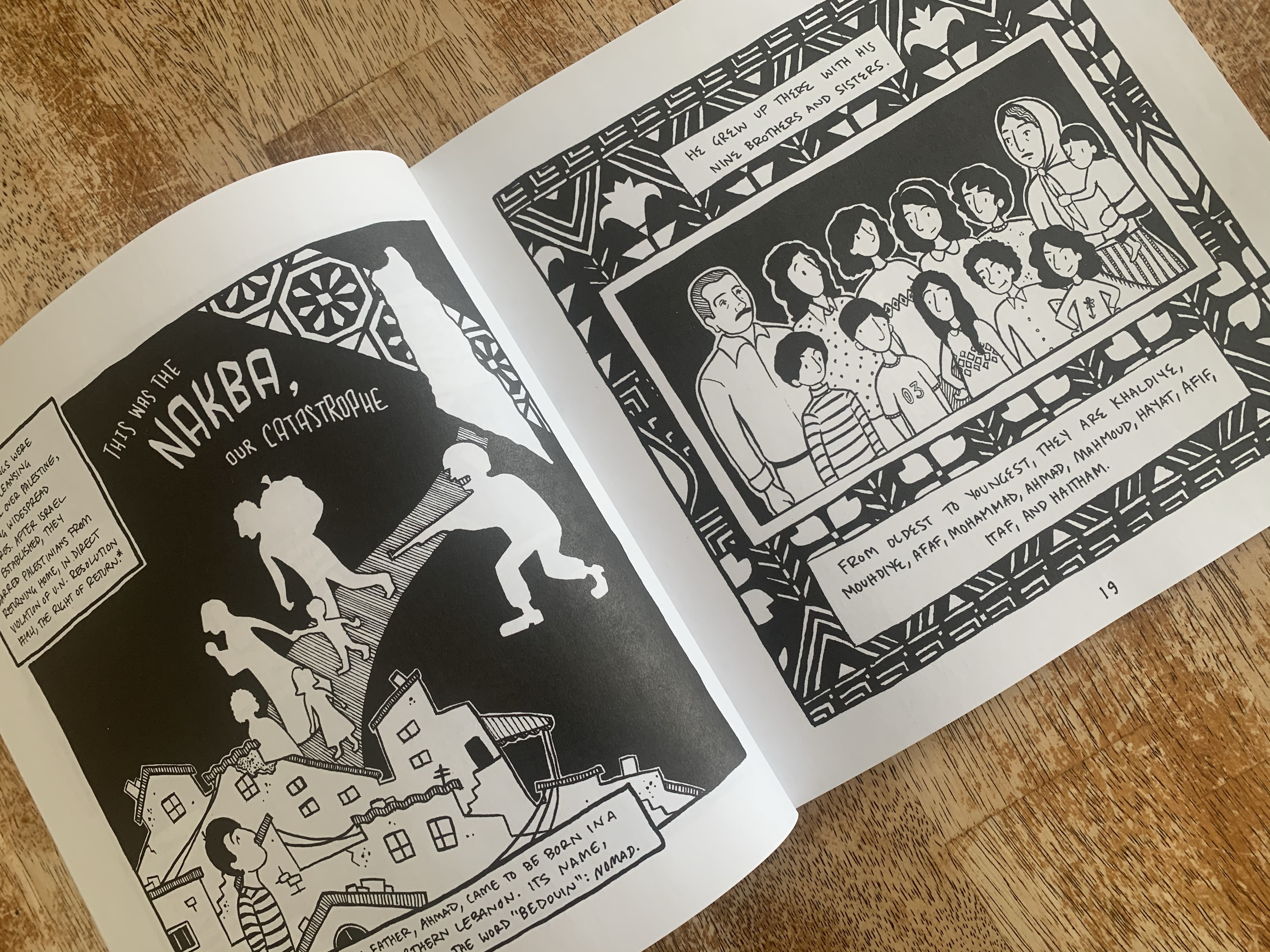
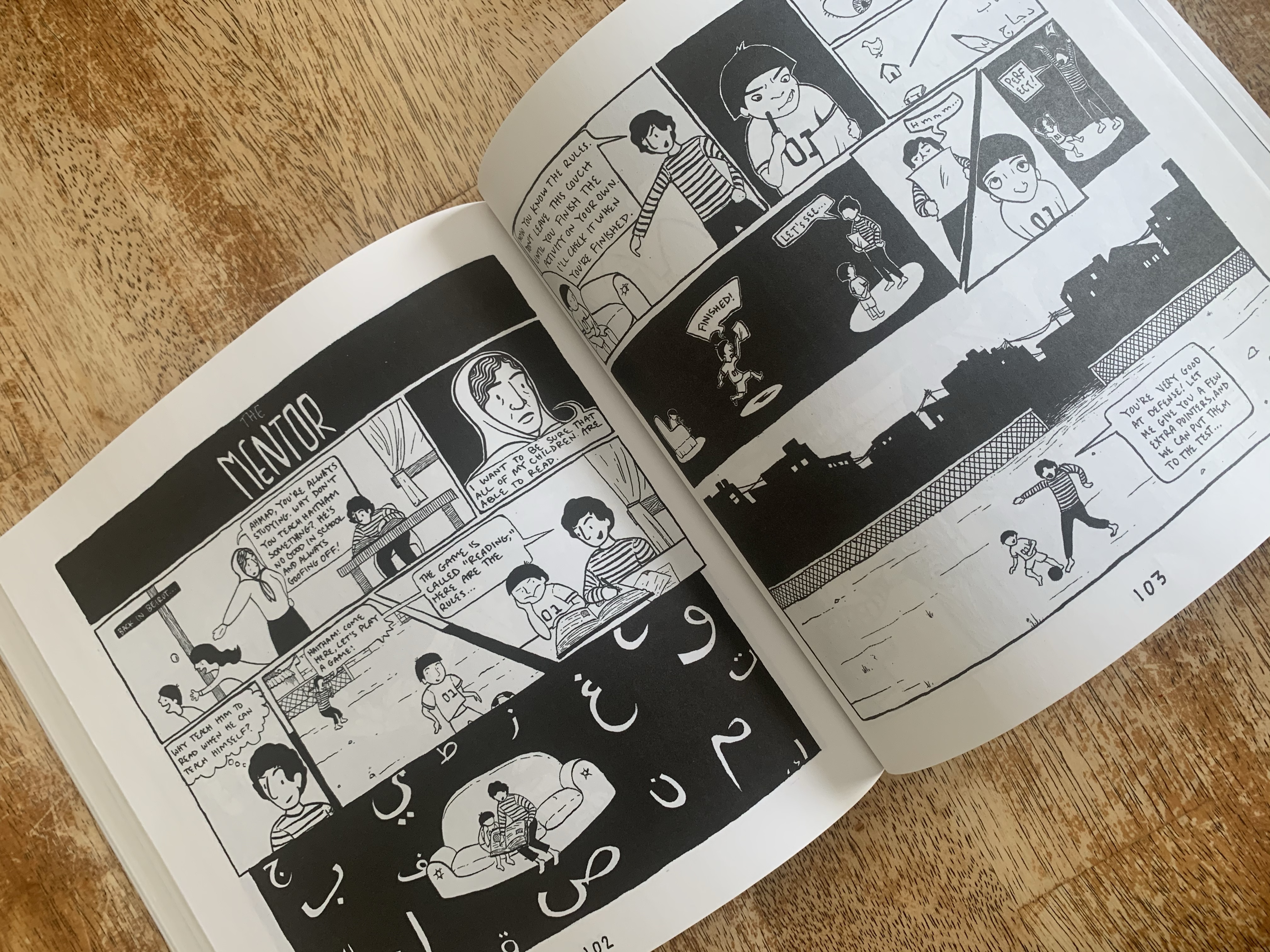
This 8.5 x 8.5 middle school graphic novel biography tells a powerful story of a young boy coming of age and striving to find his place in the chaos of the Nakba and its aftermath. Over 128 pages the reader will learn and be outraged about the displacement and genocide of so many Palestinians as they see the events through Ahmad’s eyes and relate to his dreams and experiences despite the terror around him. The book has violence, destruction, death and mentions rape, yet the humanity shines through as it is also heartfelt and memorable. I had my 14, 12, and 10 year olds read it and we have discussed it at length in context to what they already know about Palestine and the ethnic cleansing occurring. It is a seamless mix of history and character driven narratives brought to life by the black and white illustrations of the author/illustrator’s family history.
SYNOPSIS:
There are 10 children in the author’s father’s family, and her father, Ahmad, was born in a refugee camp in northern Lebanon, called Baddawi. The story starts on October 29, 1948 when Safsaf was ethnically cleansed. Ahmad’s father, the author’s grandfather had been in Akka at the time of the massacre, and her grandmother hid from the Israeli soldiers, the family, once reunited, would escape for a refugee camp, hoping that they would one day return.
We first get to know Ahmad as he starts first grade in Baddawi. Things do not start well for the little guy as right away he gets teased by other students, his class is too large so he is selected to be joined with a girls class, and he doesn’t have soccer cleats so he isn’t allowed to play soccer, luckily he gets two good crayons, unlike his friend who gets a white one. Ahmad is identifiable by his striped shirt that he wears throughout as a nod to Handala, the boy depicted with a striped shirt with his hands clasped behind his back and his face not shown. The artist said his face would be revealed when Palestine was free, sadly the artist, Naji al-Ali passed away, and Palestine is still occupied.
Ahmad desperate to purchase soccer cleats devises a business plan that his mother takes as gambling and quickly puts an end to, in exchange she offers to pay him if he helps her collect and prepare za’atar. It isn’t as fun, or as lucrative, but they family is busy packing up to return to Palestine. Unfortunately the Naksa, the setback, the six day war occurs, and more Palestinians are ethnically cleansed and the families cannot return. Ahmad and all those in Baddawi carry on, playing, celebrating Eid, trying to claim normalcy. The camp however, is not safe and soldiers raid the camp killing PLO leaders and innocent people in their way. With no option but to keep on keeping on, these acts of violence are often taken in stride. It is so hard to believe, but what else can they do, the children still play, deal with bullies, and cope with universal struggles in addition to being shot by rubber bullets, and fearing cluster bombs and shellings. At one point Ahmad and his siblings are left in Baddawi to finish school while his parents are in Beirut.
When the family is reunited in Beirut, Ahmad is in a better school, but violence follows as Mossad agents start raiding PLO homes in Lebanon. Ahmad goes back and forth between Beirut and Baddawi, wherever he can go to school. His favorite library is the one at the American University in Beirut and he hopes to attend school there, but without connections, he is at a loss to come up with funding. His intellect finally lands him an opportunity to leave the Middle East to pursue higher education, he ends up in the United States, and when the story ends, readers are left hoping that everything works out even knowing it will be 10 years before he can return home to see his family.
WHY I LIKE IT:
I love that the harsh horrific life is not shied away from in a war, but the little things are just as important in shaping and showing Palestinians to be resilient and culture rich. I love how the concept of Handala is included and amplified. The book is at times funny, and at other times devastating. The connection to the characters is pretty remarkable, in such a relatively short book, and I am fairly confident it will be pulled off the shelf and thumbed through often. I really wanted to know if the girl in the book that Ahmad left behind ended up being the author’s mother, or if he married someone else, but I couldn’t find it by Googling. This book is truly powerful, and I highly recommend it. There isn’t a lot of religion, the family is shown praying on Eid and celebrating. It mentions the diversity in Beirut, but nothing too detailed. Similarly, there isn’t a lot of political detail. There is a glossary at the end, some actual photographs of Ahmad and his family. At the beginning of the book there is a preface about Handala and how Ahmad represents more than just her father’s experience as well as information about the tatreez patterns on the pages and a map.
FLAGS:
There is violence, torture, killing, death, bullying, and possibly gambling. The book mentions that women were raped, but it isn’t detailed. The war is ever present and depicted, but it isn’t sensationalized. Ahmad and a girl study together and the family wants them to get married, but Ahmad opts instead to leave for school, nothing inappropriate.
TOOLS FOR LEADING THE DISCUSSION:
This book might not work as a book club selection, but I hope middle school children and their teachers or parents will encourage them to read this book and think about it. Imagine if it was their homes that were taken, imagine what they would do, and how they would manage, and to be aware that it is still going on and that we cannot be silent.
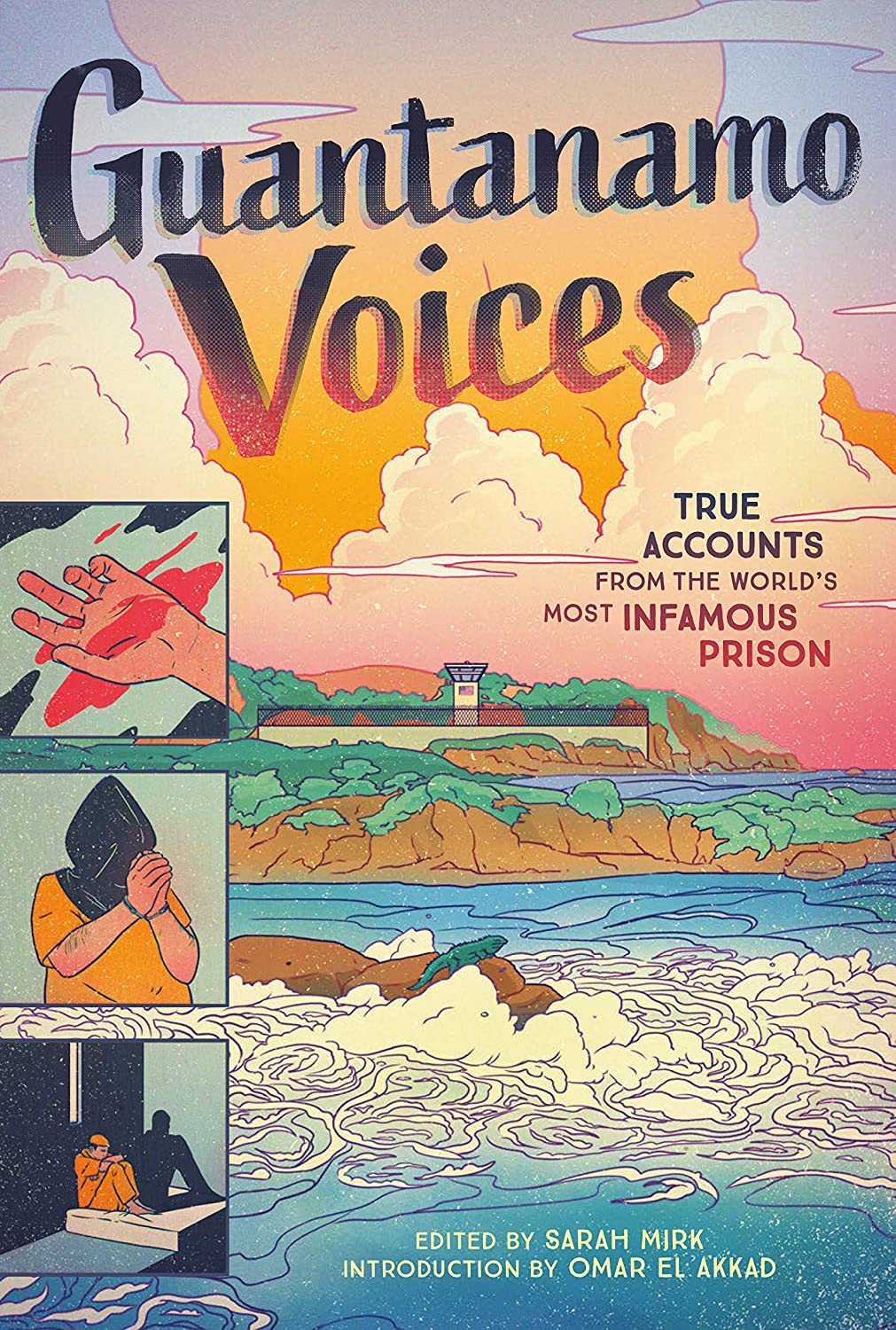
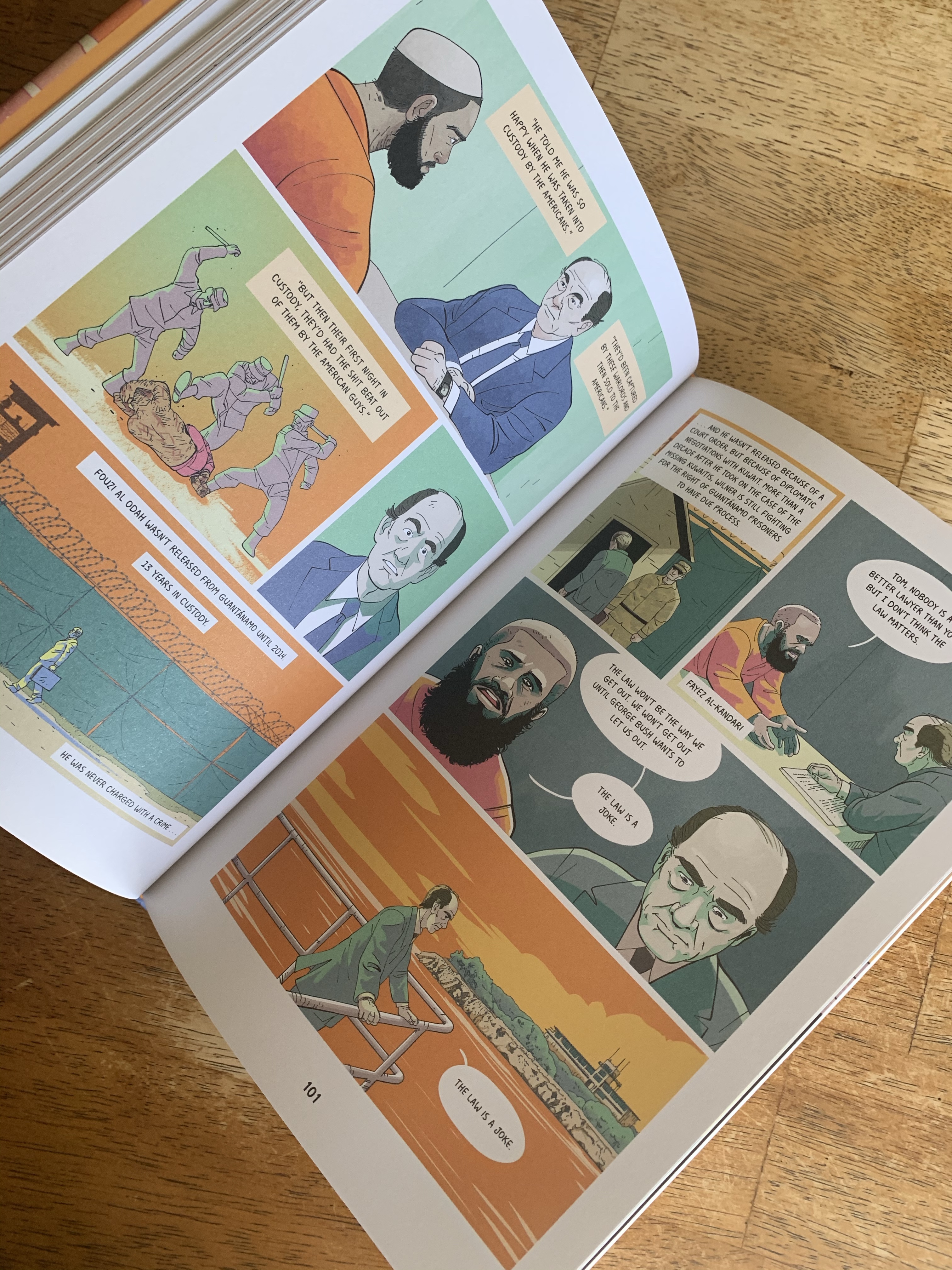
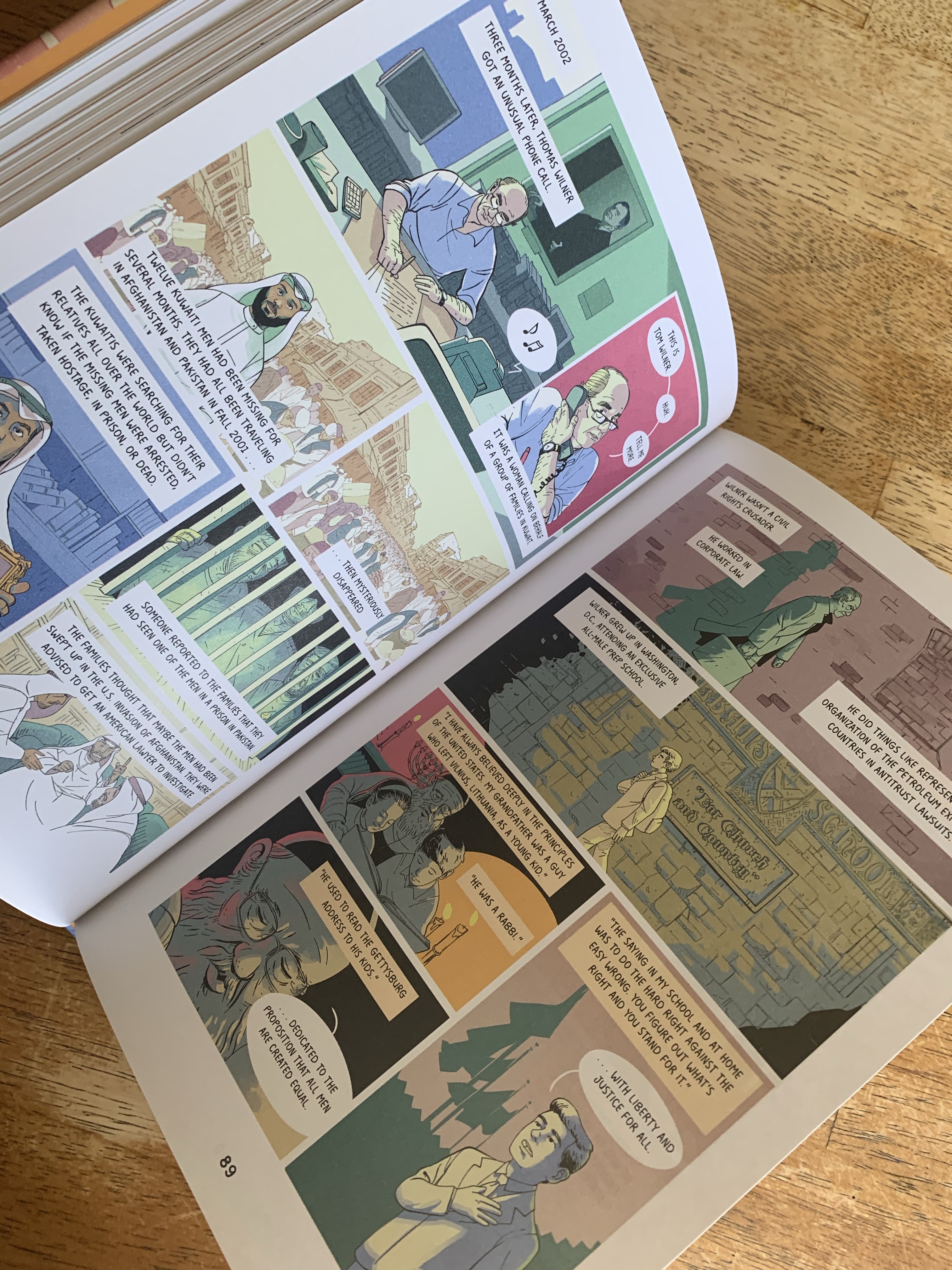
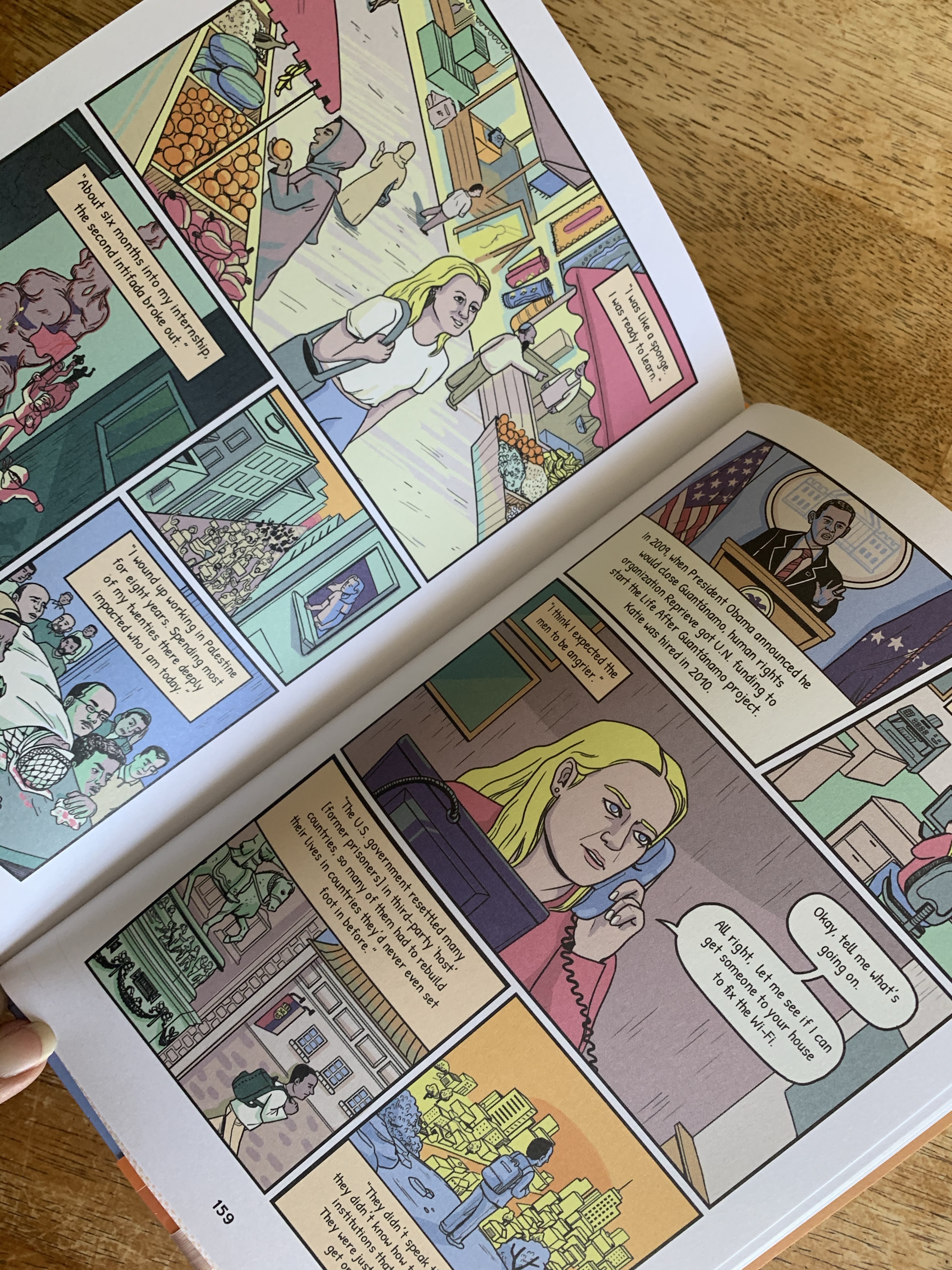
This 208 page graphic novel, is indeed graphic. The unbelievable horrors detailed in the stories shared are all sourced and referenced in the nonfiction anthology. The intent isn’t shock and awe like the war that created such abysmal breaches of justice to be done in our name (Americans’), but is definitely a painful reminder of how fear and mismanagement allows the US treatment of individuals to grow and continue outside of the rule of law, and all that the US claims to represent. The careful use of words such as “detainees” instead of “prisoners,” “enemy combatants” instead of “terrorists” or “criminals,” have allowed Muslim men to be held since 2002 without charges, legal representation, habeas corpus, or basic human rights. When the prison was being filled, you’d hear about it in the news, when the government released heavily redacted reports on torture, you’d catch a headline or two, but there are still people being held, and for the most part, we, the world, have perhaps forgotten. This book is a reminder, it is insight, it is so important that high school and college aged children are aware of what we are capable of, that adults are not allowed to forget what we are doing. As it says in the intro, “To indict the people who did this is to indict the country that allowed it to happen.” We are all guilty, and this book is not an easy to read as it will make you angry, and devastated, and exasperated. Don’t let the graphic novel format and simple text fool you, this is a difficult read, emotionally, and you should force yourself to sit with it- sit with the outrage and frustration, and see if it can spur you to action.
SYNOPSIS:
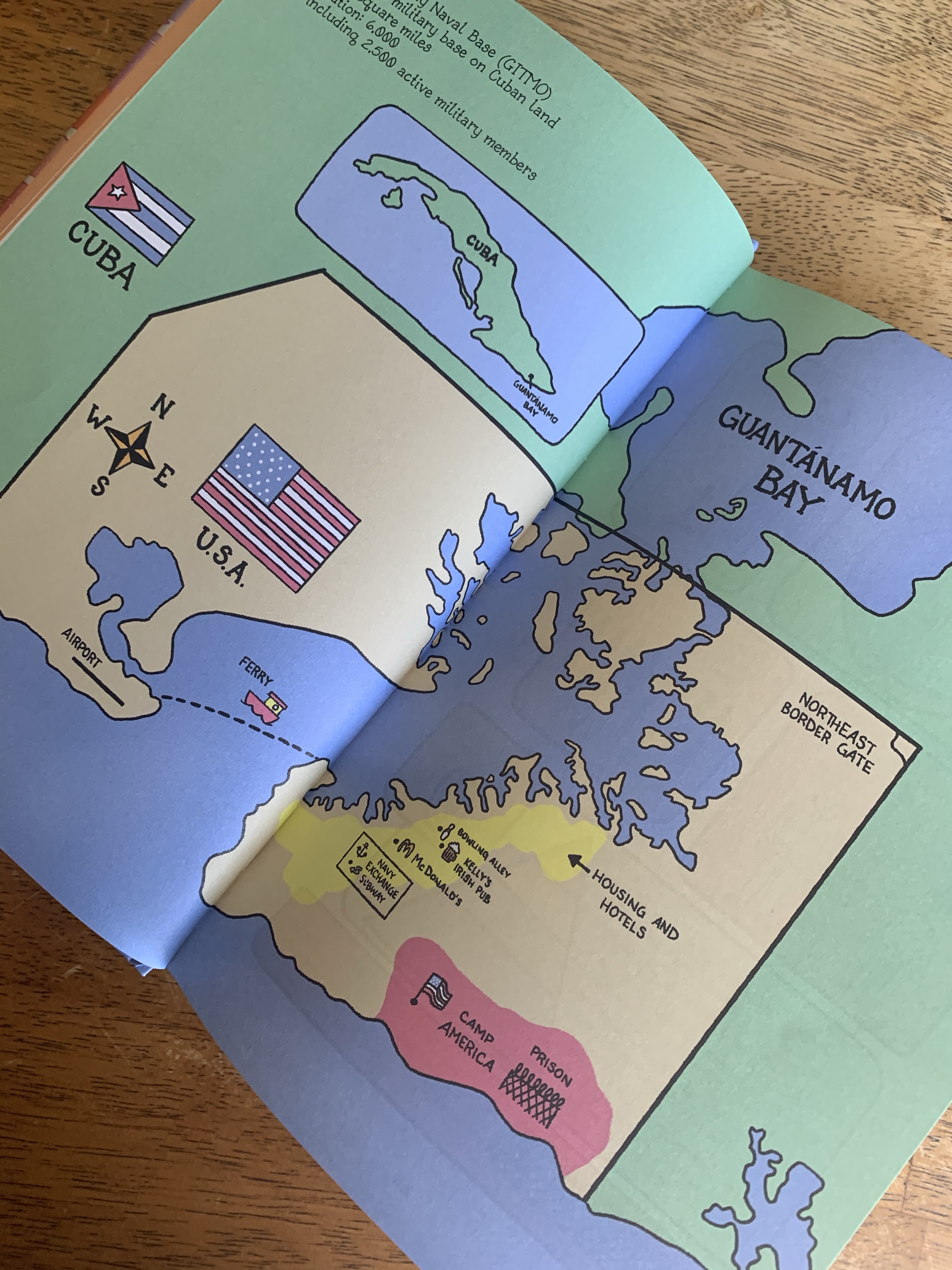
The book is broken up to provide an introduction, map, facts, and a timeline, it then starts with the author arriving for a media tour to Cuba. Some background stories about key individuals in understanding the effects of torture and better and more accurate ways to interrogate, and then the fateful day September, 11, that changed everything. From here the stories are individual accounts of prisoners, lawyers, politicians, etc., each depicted by a different illustrator, to show a very rounded view of the effects of the prison, and thoughts by different people in a variety of associations.
Some of the prisoners were swept up by neighbors responding to leaflets promising wealth for turning people in. Some were taken from their homes for no reason, a few were taken from the battle field, but every single one has never had charges against them, nor a day in court, the few that have been able to be represented have been released without being accused of anything, hence, found to be innocent. The doubling down on the concept of Guantanamo being the worst of the worst, administration after administration has made it so prisoners have to be released to countries they have never been to, with unknown rights or a way forward. Those that are still detained have been there for nearly 20 years.
WHAT I LIKE ABOUT THE BOOK:
I like that the book is personal, it is harder to dismiss or forget, or be unaffected when you are looking at images and surrounding yourself with guards and lawyers that are saying over and over, that these prisoners are innocent. I like that it challenges Americans to demand more of America, it isn’t just putting the USA down nor does it read like the narrative has it out for the USA, it is very much an personal calling out, that we have made errors and continue to make errors out of arrogance.
FLAGS:
The images and language are at times graphic and one should be aware of the potential triggers of torture, and abuse. There are curse words spoken, and violence detailed. High school and up.










 Islamic School Librarian